Daneshevskaya (Dawn-eh-shev-sky-uh), the project of New York's Anna Beckerman, writes songs steeped in the folklore of her own personal history. Her artist (and real middle) name comes from her Russian-Jewish great-grandmother, a person whose presence she has always felt although their paths never crossed in real life. Beckerman grew up in a musical family; her father is a music professor, her mother studied opera and her own songs often feel spiritual, less so by any religious connotation and more as a hymn-like, archival record of Beckerman's own past, present and future. Her first release on Winspear, Long is the Tunnel, contemplates how the people you meet impact the pathway you travel. Through songs like the poignant "Somewhere in the Middle," the lilting "Challenger Deep" and the surreal "Big Bird," the EP paints a distinctive collage between traditional songwriting and modern turns of phrase that remain spellbound in the unadulterated luster of self discovery. The seven songs read as both patchwork memories/diary entries and elegies to those in her life. Co-produced by Ruben Radlauer and Hayden Ticehurst of Model/Actriz and Artur Szerejko, the final versions of these initial demos also saw contributions from Lewis Evans of Black Country, New Road (saxophone), Maddy Leshner (keys) and Finnegan Shanahan (violin), adding to the gleaming instrumentation that makes each song sound like a world within itself. Long is the Tunnel is filled with hyperreal imagery that denotes a form of escapism: two of the songs reference birds, which Beckerman describes as about being transfixed by something you can't take your eyes o‑ while also being able to leave at will. Long is the Tunnel prolongs this feeling of being completely immersed: by desire, emotion, and fantasy, though the somber melancholy of her love songs are often more manifestations to her internal self than anyone else.
Поиск:more music
Все
and Sebastian Kokus and the prolific Ulf Schütte, the Hamburg-based trio has tirelessly expanded upon its sound and extended its musical style. After 2022’s »S/T« documented the results of their first jam sessions as a newly-founded group, »V.A.« started even more modestly and became an even bigger undertaking. Originally conceived as a small one-off release, it grew into a full record which sees the group embracing dub music, collaborating with Peaking Lights’ Aaron Coyes and inviting other artists—No UFO’s, Seekers International, Coco Em—who reworked select tracks in true dub style. »V.A.« is marked by inconsistency, openness, and heterogeneity in the best sense of those words: ever-changing, constantly surprising and consistently in motion.
The starting point for »V.A.« was a Hamburg concert in December 2022 together with Coyes, who played a solo set as Peaking Lights. On the request of the event organiser, Cloud Management teamed up with him for a jam session after the gig, laying the foundation for a track that the group took to the studio before sending it to Coyes to record vocals for it. Another song quickly followed and even though the band initially intended to release »PST« and »0rten Pitch« as standalone 7” single, they soon decided to have others create versions of the two tunes to round them off in the form of a 12” EP. Once more though, one thing led to another and now »V.A.« collects five original pieces by Cloud Management as well as three—four on the digital version—remixes by other artists.
Collaborating with Leipzig-based Canadian producer No UFO’s, the Canadian Seekers International collective, and Kenyan multi-disciplinary artist Coco Em came about organically. As fans of their friend Konrad Jandavs’ work for labels such as Spectrum Spools, Root Strata and his own Nice Up International, Korf, Kokus and Schütte asked him for a remix and granted him full creative freedom for his take on »PST«. Jandavs also connected them with the prolific Richmond-based soundsystem worshippers, who present their take on the same track on this record as well as a version of »Electric CD.« Also this track appears three times on the record, having been re-rubbed by Emma Mbeki Nzioka, who was introduced to the the trio by its label Altin Village & Mine.
There isn’t really a common thread running through the rough digi-dub of No UFO’s take on »PST«, Seekers International’s traditionally-minded yet infinitely playful dub-psychedelia and Coco Em’s bass-heavy, percussive, pulsating take on »Electric CD.« However, as a group dedicated to staying in flux at all times, Cloud Management ended up embracing the creative differences between their own work and those of their respective collaborators. In calling it »V.A.,« they paid tribute to their somewhat loose, but conceptually consistent concept of giving various artists full creative licence over their own work. Neither a true album in the strict sense of the world nor just a compilation, »V.A.« is actually the essential Cloud Management record: ever-changing, constantly surprising, consistently in motion.
Celebrating the 30 anniversary of this legendary cult band from Argentina, with more than 150 releases in labels from Japan, Europe, Oceania, Latin America and USA and shows played and their music presented all over the world. A nondescript, experimental, truly original band with a story to match their legacy. LP includes fold out insert. At last! A comprehensive compilation documenting the exciting career of the legendary experimental Argentinian cult band. A career overview through eight of their most mesmerizing compositions. The fact that their drummer and singer Miguel Tomasin has down syndrome not only makes them one of the longest-running and most notable inclusive rock bands of all time, but also allows us to appreciate the importance of Miguel's creative contribution, both for his singular way of singing and for his inimitable verbal inventions. For his work with the band, Miguel stands as one of the most relevant personalities with down's syndrome in the world and his name appears mentioned in diverse books of neuroscience and neurodiversity. Their long list of collaborators includes luminaries such as Lee Ranaldo (Sonic Youth), Pauline Oliveiros, Damo Suzuki (Can), The Nihilist Spasm Band, Michael Snow, N U Unruh (Einstürzende Neubauten), Alan Licht, Pajarito Zaguri, Acid Mothers Temple, John Oswald and many more.
Berlin-based Swedish bassist and producer Petter Eldh returns with a new Koma Saxo album Post Koma, out on We Jazz Records, 10 November. The title Post Koma aptly describes the vibe of this one: The Koma Saxo sound continues its evolution, morphing into a holistic vision of jazz now and soon, where live instrumentation and repurposed sampling lose their boundaries.
Over the course of its three iterations (self-titled debut in 2019, LIVE in 2020, Koma West in 2022) Koma Saxo has sounded at times "liquid" and postproduced, at times raw and direct, at times acoustic and at other times oddly electronic (even while still being made with acoustic instruments). Post Koma is a culmination of this sonic study by Eldh, resulting in a music vision that never second-guesses throwing tasty hooks and everlasting melodies out the window after a mere bite of them. But fear not: there are even more new ideas just around the corner.
Eldh's compositions and ideas merge together in a way that just flows. There are quality musicians in the mix, including Koma Saxo live band members Sofia Jernberg, Jonas Kullhammar, Otis Sandsjö, Mikko Innanen, Maciej Obara and Christian Lillinger, but that's like saying that a cake includes flour and sugar. This music is not about playing, it's essentially about how the music is and how it takes its shape, so you quickly lose track of who did what, and that's all in the benefit of encountering this music as an entity that is constantly challenging itself while moving forward. The musicians are valued contributors, and an integral part of what's here, but this is far from traditional jazz playing where a band sits in a room playing takes after takes of compositions on sheet.
That being said, this is jazz to the fullest. That is, music that understands its past but always moves forward, and is never afraid of taking risks. Petter Eldh uses jazz as a starting point, not the end goal. This gives his music edge and mobility beyond what can be contained on one album. In a way, an album, then, becomes a snapshot of a creative process in constant flux and evolution.
Opening track "Koma" is literally drum & bass. It only consists of those two elements, yet what comes out of it is an open invite, a way of clearing your palette. It would be useless to describe individual tracks beyond that, but there's a strong sense of deliverance to the set. It feels like an ending, and also like a new beginning.
Berlin-based Swedish bassist and producer Petter Eldh returns with a new Koma Saxo album Post Koma, out on We Jazz Records, 10 November. The title Post Koma aptly describes the vibe of this one: The Koma Saxo sound continues its evolution, morphing into a holistic vision of jazz now and soon, where live instrumentation and repurposed sampling lose their boundaries.
Over the course of its three iterations (self-titled debut in 2019, LIVE in 2020, Koma West in 2022) Koma Saxo has sounded at times "liquid" and postproduced, at times raw and direct, at times acoustic and at other times oddly electronic (even while still being made with acoustic instruments). Post Koma is a culmination of this sonic study by Eldh, resulting in a music vision that never second-guesses throwing tasty hooks and everlasting melodies out the window after a mere bite of them. But fear not: there are even more new ideas just around the corner.
Eldh's compositions and ideas merge together in a way that just flows. There are quality musicians in the mix, including Koma Saxo live band members Sofia Jernberg, Jonas Kullhammar, Otis Sandsjö, Mikko Innanen, Maciej Obara and Christian Lillinger, but that's like saying that a cake includes flour and sugar. This music is not about playing, it's essentially about how the music is and how it takes its shape, so you quickly lose track of who did what, and that's all in the benefit of encountering this music as an entity that is constantly challenging itself while moving forward. The musicians are valued contributors, and an integral part of what's here, but this is far from traditional jazz playing where a band sits in a room playing takes after takes of compositions on sheet.
That being said, this is jazz to the fullest. That is, music that understands its past but always moves forward, and is never afraid of taking risks. Petter Eldh uses jazz as a starting point, not the end goal. This gives his music edge and mobility beyond what can be contained on one album. In a way, an album, then, becomes a snapshot of a creative process in constant flux and evolution.
Opening track "Koma" is literally drum & bass. It only consists of those two elements, yet what comes out of it is an open invite, a way of clearing your palette. It would be useless to describe individual tracks beyond that, but there's a strong sense of deliverance to the set. It feels like an ending, and also like a new beginning.
The Madlib Invazion Music Library Series . Entry #5: Dan Hastie and Terin Ector (Orgone) pick up where Piero Umiliani left off with Exotic Grooves and Lush Funk. This is the next up in a series of music library releases, with future volumes produced by DJ Muggs, Karriem Riggins and more. The Madlib Invazion Music Library Series was created by Madlib and Egon to give their creative friends a chance to stretch out and indulge in whatever type of music they wanted. This music was created for easy, one-stop clearance in film and television synchronization usage and for sampling. You can also enjoy these albums in the way that many do with the best of the best vintage library catalogs – listen, ponder, repeat.
In ¿Quién?, Sylvia Meyer combines music, image, sound and poetry. Her lyrics, so subtle, acquire a singular dimension. They grow and become an essential lyricism that vindicates art and music. Almost 30 years after her last album release, Sylvia Meyer released ¿Quién?, an album where everything happens between his piano and his voice. Its exquisiteness, sensitivity, luminosity, and refinement coexist with arranging complexity and virtuosic, achieving a unique texture and a voice that penetrates souls to nest there, and grow beauty. The musical atmospheres and the universes of beauty to which the songs that make up this album transport us rescue that sound so complete and, at the same time, so inevitably montevidean, which travels absolutely free. Meyer is one of the most important Uruguayan artists of the last four decades. Composer and owner of a unique and special voice. Everything that sighs fills it with beauty and mystery. His music manages to transcend the borders of cinema, theater, concerts and art. "Because a the music, the only thing that interests is music" repeats Sylvia Meyer
Quality Street Music bowed at #15 on the Billboard Top 200 and Top 3 on the Top R&B/ HipHop Albums Chart powered by the hits “We In This Bitch”, which featured Young Jeezy, T.I. Ludacris and Future, along with “My Moment”, featuring 2 Chainz, Meek Mill and Jeremih, which made it to the Top10 spot. In 2016, Quality Street Music 2 boasted collaborations with Post Malone, Mac Miller, Young Thug and more as well as secured his highest charting hit, “Wishing” featuring Chris Brown, Skeme, & Lyquin, which peaked at #77 on the Hot 100. Now available in color GOLD!
- A1: Mel & Tim - Keep The Faith
- A2: Impact - Sara Smile
- A3: Billy Paul - It's Too Late
- A4: Esther Phillips - I Hope You'll Be Very Unhappy Without Me
- B1: John Edwards - Tin Man
- B2: Roy Ayers - What You Won't Do For Love
- B3: Arnold Mcculler - Gringo
- C1: Richie Havens - Dreams
- C2: Brenda Russell - I Want Love To Find Me
- C3: Patti Labelle - Monkey See - Monkey Do
- C4: The Main Ingredient - Euphrates
- D1: The Isley Brothers - Listen To The Music
- D2: Dionne Warwick - Dedicate This Heart
- D3: Chaka Khan - Fate
- D4: Keni Burke - Love Is The Answer
lim. two color Vinyl. Gatefold Cover with sticker and download code on postcard.
Welcome Back, friends, to the Yacht Soul cruise that never ends!
This theme, explored at length in the previous installment of this series, is a fertile one that just keeps on giving, and give it certainly does on the tracks we have dug up for your perusal, enlightenment, edification and enjoyment on Yacht Soul 2.
For those just joining us, the concept here concerns R&B and soul artists mining the songbooks of their white contemporaries for cover versions that serve the dual purposes of potentially garnering some crossover radio airplay as well as introducing great songs to segments of the listening public who might otherwise miss them. Some of these versions might have come about because they were personal favorites of the artist in question, others might have been strongly suggested by their labels or by the publishing company, but all of them provide an entirely new perspective on what were already fantastic songs to begin with.
So there you have it--a further dig into this nebulous concept that reveals more unexpected connections and crossed paths. Understanding the hows and whys of the way these particular covers and collaborations came to be is as fascinating as just enjoying the music itself, and there really is a lot of great music to dig into this time around! We hope you enjoy listening to it as much as we did putting it together.
VITAL SALES POINTS:
- Second volume from the YACHT SOUL series. First volume is the second best selling "Too Slow To Disco" compilation so far.…
- Extensive Global Promo by Tobias Kirsch/Germany and Special Requests UK
- Record Relase Parties planned.
By the early '70s, Milford Graves had more or less stopped gigging. Having learned his lesson the hard way in multiple-night runs like a legendary Slugs' residency with Albert Ayler, he knew that the level of energy that he put out during a performance would be difficult to sustain over the long haul. A concert was a kind of absolute ritual for him, after which he would be totally spent, emotionally and physically. Graves rarely left anything on the table. Any musical performance was an opportunity to present an amalgamated version of all the things he had learned. He was an innovator and a teacher at his core, and the concert venue was one of his first classroom settings.
In March 1976, Verna Gillis invited Graves to perform on WBAI's Free Music Store radio show. For the date, he chose to present a trio lineup which he had been occasionally playing – featuring two saxophonists who were dedicated to the drummer's vision. Hugh Glover is almost exclusively known for his work with Graves, while Arthur Doyle would gain exposure later for an obscure record that he made two years later, Alabama Feeling, which would become a highly collectable item among free jazz enthusiasts.
Originally released in 1977, Bäbi remains one of Graves' most seminal recordings. The music played by the trio was ecstatic. Extreme energy music, buoyant and joyful. It relied on Graves' new way of approaching the drum kit, in which he had opened up the bottoms of his skin-slackened toms and eliminated the snare. Graves' art was always unblemished by commercial interests, and this album is its finest mission statement.
TVAM announces ‘Costasol’, his new EP for Invada Records. The 10” EP is pressed on translucent blue vinyl, and housed in a reverse board, spined sleeve. TVAM returns to the sun lounger to deliver a horizontal view from the pool of self-reflection. Joe Oxley, aka TVAM, offers, “‘Costasol’ began life as two atmospheric interludes that I wrote for my last album, ‘High Art Lite’. Over time these ideas took on a life of their own and demanded that I take another look at them. I slowly began putting the pieces together and ended up with a track which became much more than the sum of its parts.” The resultant ‘Costasol’ is a song about longing, loss and regret wrapped-up in heatwave bass and shimmering guitars, all perfectly enhanced by Mona’s dreamlike vocal. TVAM self-released his much-acclaimed debut, ‘Psychic Data’, in the Autumn of 2018. Something of a cult-classic, the album joined the dots between Suicide’s deconstructed rock ’n’ roll, Boards of Canada’s irresistible nostalgia and My Bloody Valentine’s infinite noise. ‘High Art Lite’, released in October 2022, took a different tilt to its predecessor by emphasising the immediate and the personal. The colours were blown-out and the brightness was cranked up. It’s in this world where TVAM’s new ‘Costasol’ EP exists. Full of colour and noise, with a vibrant, distorted palette. Though the title track may find a home at some poolside retreat, the subsequent tracks return to TVAM’s claustrophobic realm. ‘Ephemerol’ evokes its own mutant groove, part ‘Midnite Vultures’ Beck, part ‘Pretty Hate Machine’ Nine Inch Nails, with ‘Heart Attack’ and ‘VHF’ rounding off this bold, bright, brief encounter. Radio - BBC 6 Music Lauren Laverne, New Music Fix, Emily Pilbeam, Amazing Radio B-List. Tourdates - October 22 SWN Festival Cardiff, November 11 Hebden Bridge Trades Club, 18 What Music? Liverpool.
- 1: The Lineman - Prelude And Development
- 2: He Saw An Opportunity - Counterpoint In C Minor
- 3: Vice - Main Title Piano Suite
- 4: Master Of The Butterfly Knife
- 5: Flipping Cards
- 6: B-Flat Prelude
- 7: The Lineman In E-Flat Minor
- 8: Taking Over The Damn Place
- 9: Scalia
- 10: 0James Earl Carter Jr
- 11: The Wyoming Campaign
- 12: The Other Half Fears Us
- 13: Dick's Heart Is Healthier Than Ever
- 14: He Wants To Impress His Father
- 15: My Friend, My Running Mate
- 16: The Washington Game Board
- 17: The Many Offices Of The Vp
- 18: The War In Afghanistan / His Magnum Opus
- 19: The Iraq War Symphony
- 20: Major Combat Operations Have Ended
- 21: At Death's Door
- 22: Conclusion - The Transplant
- 23: Vice - Main Title Orchestra Suite
- 24: Imperium
- 25: G Minor Prelude
- 26: Parade Music
The soundtrack features orchestral, big band, rock, and hip-hop compositions, the score was recorded at Abbey Road and Air Studios and evokes both the intensity and the sardonic humor found within the main themes of the film. Speaking of the music, Nicholas Britell says, “When I first began working with Adam McKay on the score for VICE, Adam’s initial instinct was that the score should have a symphonic scope to match the size of the story we were telling. Over the course of more than one year of composing, I wrote a score which utilizes a full symphony orchestra, while also exploring the sounds of big band jazz, rock, and hip-hop. There is a subtle – and at times not-so-subtle – dissonance in the music which weaves in and out of the themes, harmonies, and textures. This idea of dissonance became a central element within the nature of the score.”
A hidden gem of Uruguayan music, Los Terapeutas's second album, released in 1990, is an original take on candombe and its hypnotic groove, blending pop songcraft with expansive soundscapes, never losing their rhythmic pulse. Los Terapeutas is a band of songs, where new wave, candombe beat, funk and rock were mixed in a unique way, with a strange frontman who had traces of Eduardo Mateo, Damo Suzuki, Frank Zappa and David Byrne. "Candombe del no sé quien soy" is related to what the group did live at that time: looking for a state of hypnotic hanging with their songs. The playing of the candombe drums was obviously an inspiration to look for that trance state, as was the music of Mateo and that of Opa, but influences can also be traced from the rhythmic experiments of German band Can of the 70s. The album was released in the late 1990s, a complicated time for Uruguayan music. The album was released on vinyl, a format that was losing weight compared to the CD. They would not release an album together again until 1997. In the 2000s, Los Terapeutas slowly expanded their audience, while also leaning towards a more electric sound. The new generation of Uruguayan musicians recognized the pioneering work of the band and Alberto Wolf was seen as a kind of godfather by several of the rock groups that were beginning to become massive.
With a voice of pure gold and a startling sensitivity for heartfelt pop songwriting, on No Reino Dos Afetos (In the Realm of Affections), Berle firmly embraces earnestness, through starry-eyed Brazilian love songs, ambient vignettes, warm, home-cooked beats and gentle strokes of MPB genius.
Maceió, the capital of Brazil’s Alagoas state on its sprawling east-coast, is home to pastel coloured colonial houses, white sand beaches and a brilliant young composer, poet and multi-instrumentalist named Bruno Berle.
With a voice of pure gold and a startling sensitivity for heartfelt pop songwriting, on No Reino Dos Afetos (In the Realm of Affections), Berle firmly embraces earnestness, through starry-eyed Brazilian love songs, ambient vignettes, warm, home-cooked beats and gentle strokes of MPB genius.
“It’s an album that was built from my desire to find beauty”, Berle explains - his simple, graceful words mirroring the graceful simplicity in his music. But amongst the simplicity, the compositions, arrangements and productions on No Reino Dos Afetos tingle with nuance and detail.
On the contemporary R&B inspired lead single “Quero Dizer” - produced by Berle and longtime friend and collaborator Batata Boy - the swirling, lo-fi, kalimba and guitar-fronted beat is turned into a feel-good hit by the ingenuity of Berle’s honey-soaked vocal melody.
Powerfully intimate, “O Nome Do Meu Amor” (My Love’s Name) is a guaranteed tearjerker, with Berle’s stunning voice soaring over gently plucked acoustic guitar and the textural flutter of soft movement, as if we hear him writing the song in the moment.
Drawing upon a close-knit, collaborative scene of Maceió artists and musicians, (of which Berle and Batata Boy are vital members), Berle also recorded some of his friends songs on the album, including João Menezes’ “Até Meu Violao”, the album’s beautifully laid back sunshine soul opener, which has all the charm of early-70s João Donato.
Having cut his teeth in soft-rock group Troco em Bala, and more recently finding himself embedded in both Rio and Sao Paulo’s contemporary music scenes - collaborating with the likes of Ana Frango Eletrico, who took the photo for the album cover - No Reino Dos Afetos is as musically diverse as Bruno himself. It’s hazy indie rock (“É Preciso Ter Amor”), calming ambient and field recording (“Virginia Talk”) as well as Berle’s own take on West African High Life (“Som Nyame”).
Instantly recognisable as a truly special artist, Berle’s character fills every corner of the sound, which is unsurprising considering he played most of the instruments.
"Stop Violence Against Women" has been the life-long credo from Rico Puestel and "Make A Way (For Women)" is a stomping protest of 11 minutes and 11 seconds that proclaims the fortitude of women! Playing this one out there is more of an solidary act than just "a track being played"...
What Rico himself has to say about it: "With my 2022 Friebe-projects 'Jenni' and 'Jenni II', I started to make a public appearance on this topic of violence against women musically. Back in childhood days, I already felt an intensely unjust manner and imbalance regarding women in society and an almost predetermined non-equality. The violence always seemed so ever-present, even in the smallest details of behaviour and the associated self-understanding of men within their deeper planted attitude towards. I always felt an honourable glory and profound importance in women that seems impeccable and unreachable for men. It's clear that men would just be memories and ghosts without women... Musically speaking, while grewing up with Gabba and Trance i. a. in the 1990s, I simply feel no charm to nowadays reflection on these times with productions and releases that somehow just sound insincere and scheming. I'm missing the real attitude, feel and groove that doesn't even care if it's Techno, House or whatever and I'm also missing some of the stylistic approaches as well as the spirit from the "Minimal"-era. Based on all those thoughts, "Make A Way (For Women)" became this clenched fist - raised for good!"
Stepping out of the bedroom and into the Real World, Liverpool’s Strawberry Guy headed down to Peter Gabriel’s idyllic Real World Studios with Manchester’s Northern Session Collective in tow and set about trying to soften and expose the bare bones of his two biggest streaming tracks 'F Song' and 'Mrs Magic'.
Stripped of drums & synths, the music is pared down to piano and romantic new strings arrangements, bringing the careful melodies & indrawn lyrics to the fore.
Having recorded the original tracks in his Liverpool bedroom, swapping the originals’ string samples for their real-life counterparts lends the tracks an even more ethereal quality than the self-produced originals. The trip to Real World marks a first foray into studio recording for Strawberry Guy, and a new high-fidelity direction for the project, as he begins the process of making his sophomore album.
The vinyl edition of these new songs is out November 10, and features the two new strings versions along with the originals of both tracks, meaning fans can finally get their hands on a physical version of early single “F Song.”
While the music of Strawberry Guy favours a hermetic, headphones-forward sound lying somewhere between Bryter Layter-era Nick Drake, The Clientele, Slowdive’s Pygmalion, and the psychedelic 70s output of fellow Liverpudlian Paul McCartney, it’s nonetheless become a smash on TikTok and streaming services with a fanatical young and diverse fan base.
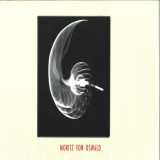
What are the differences and similarities between human and artificial sound, between oscillations generated by vocal cords and synthesizer voices, voltage amplified by speakers? On Silencio, his latest album for Tresor Records, Moritz von Oswald works with a 16-voice choir to explore this concept.
Drawing from the ensemble works of long-standing inspirations Edgard Varèse, György Ligeti and Iannis Xenakis, von Oswald and Vocalconsort Berlin delve into the space between sounds, creating a deeply textured collection that shifts between light & ethereal and
dark & dissonant.
As masterfully demonstrated in the early work of von Oswald and Mark Ernestus’ influential Basic Channel project, repetition and reduction are key elements here, much in the tradition of techno and minimalism. The vast dynamism of the human voice adds to the
profound weight of electronics while offering up a rhythmic source and sonic noise palette unexplored in von Oswald’s repertoire. In Silencio, von Oswald dredges a dank murk, pulling clouds over a distant pulse. It hangs, ready to take on new forms.
The compositions were written in von Oswald’s Berlin studio on classic synthesizers, such as the EMS VCS3 & AKS, Prophet V, Oberheim 4-Voice and the Moog Model 15. These abstract recordings were transcribed to sheet music for choir by Berlin-based Finnish composer and pianist, Jarkko Riihimäki and performed by Vocalconsort Berlin in Ölberg church in the city’s Kreuzberg district, only few metres down the road from where Dubplates & Mastering and Hard Wax opened their doors for music enthusiasts for many years so long. The recordings of the choral versions were then incorporated into the synthesized parts of the album and brought into anew electronic context; in Silencio, the focus is not on using one means to imitate the other, but to sonically discuss the tensions and harmonies between the two worlds and create a dialogue between them.
The relationship between von Oswald and Tresor Records goes back thirty years, all the way to Blake Baxter’s Dream Sequence in 1991 - which von Oswald engineered alongside Thomas Fehlmann. The collaboration with Fehlmann lived on, seeing the duo team up as 3MB with Eddie Fowlkes or Juan Atkins. More recently, the Detroit-Berlin connection continued as Juan Atkins & Moritz von Oswald present Borderland.
For von Oswald, Tresor Records and also the participating guest musicians of the choir, this release brings together audiences from other musical areas, cross-pollinating; Silencio is an album that stands for itself beyond the musical genre boundaries.
First music in 10 years from cult favourites Dark Dark Dark.
B Side is a solo cut from the bands lead vocalist Nona Maie Invie.
10” EP limited to 500 in UK/EU.
Fans of contemporaries Weyes Blood (of which DDD multi-instrumentalist Walt McClements is now a full-time member) and Angel Olsen (in whose live and studio band Invie is now a staple) will find much to love in these songs, as well as the b-side, Invie’s solo piece, “For Now” which, not unlike Invie’s 2017 solo release under the moniker IN / VIA, makes use of seamlessly interwoven piano and swelling, liquid synthesizer.
Invie sounds a bit like an alternate dimension Sharon Van Etten here and elsewhere. The three song set has the understated intensity of Nick Cave’s The Boatman’s Call and the promise of emotional liftoff that characterizes Kate Bush’s The Sensual World.
Dark Dark Dark’s rich history is punctuated by house shows and train hopping; touring as support for The National in Portugal;
playing both the National and TV on the Radio’s ATP Festivals, and years of indefatigable coast-to-coast U.S. touring. It’s a
history rich with recordings, including a pair of celebrated full-lengths produced by Tom Herbers (Low, The Cactus Blossoms),
three EPs, and a feature film score. Now, ten years later, –– surprise –– a new 10” single.
In 2013, when Dark Dark Dark released the What I Needed EP, anyone might have guessed it was a bridge between the previous year’s lauded LP Who Needs Who and the next big venture. The band had closed out 2012 as part of Australia's touring Harvest Festival, during which they stepped up to fill an unexpectedly vacant slot much later in the day, enchanting thousands of unsuspecting festival goers. Alas, after that, the band went silent.
The release of these new songs is certainly delightful and perhaps startling, as is the promise of more solo work from singer Nona Marie Invie. On the gorgeous and stately “Didn’t I Try,” Invie’s voice is elegant as ever, couched in the familiar sounds of Marshall LaCount’s distorted banjo and Mark Trecka’s rolling drums. The loping and haunted “Something Was There” follows –– a staple of Dark Dark Dark’s live sets in the last year of their touring.
Considering this band's history, their distinctive and dramatic sense of identity, this music is really and truly for fans of Dark Dark Dark.
The late percussionist Milford Graves was one of the most unique artists the world has ever seen. Born in Jamaica, Queens in 1941, he began his career in the early '60s as a part of New York's vibrant Latin jazz scene. His focus quickly turned inward, shifting towards a practice that explored the very nature of self. From his work in the New York Art Quartet and collaborations with Albert Ayler, Sonny Sharrock and more to his important contributions during NYC's loft era – he is, simply put, free jazz royalty.
In April 1966, the duo of Graves and pianist Don Pullen played at Yale University. As John Corbett writes in the liner notes, "This performance was something of a turning point for Graves. Until then he had been working in other people's bands or collective ensembles. He was phenomenally busy. In 1965 alone, he recorded with NYAQ (two LPs), Giuseppi Logan Quartet, Paul Bley Quintet and Lowell Davidson Trio, and he made his first recording released under his own name, Percussion Ensemble. Every one of these is important in its own way, but none of them quite anticipate how radical was the music that he and Pullen would unleash that evening in New Haven."
Originally released on the artists' own Self-Reliance Program label, this legendary one-night performance would be split into two volumes: In Concert At Yale University and Nommo. While rooted in African rhythms, Graves' music has its own sense of time. As the drummer stated in a 1966 DownBeat interview, "Time was always there, and the time I see is not the same as what man says time is. It works by impulsion."
The late percussionist Milford Graves was one of the most unique artists the world has ever seen. Born in Jamaica, Queens in 1941, he began his career in the early '60s as a part of New York's vibrant Latin jazz scene. His focus quickly turned inward, shifting towards a practice that explored the very nature of self. From his work in the New York Art Quartet and collaborations with Albert Ayler, Sonny Sharrock and more to his important contributions during NYC's loft era – he is, simply put, free jazz royalty.
In April 1966, the duo of Graves and pianist Don Pullen played at Yale University. As John Corbett writes in the liner notes, "This performance was something of a turning point for Graves. Until then he had been working in other people's bands or collective ensembles. He was phenomenally busy. In 1965 alone, he recorded with NYAQ (two LPs), Giuseppi Logan Quartet, Paul Bley Quintet and Lowell Davidson Trio, and he made his first recording released under his own name, Percussion Ensemble. Every one of these is important in its own way, but none of them quite anticipate how radical was the music that he and Pullen would unleash that evening in New Haven."
Originally released on the artists' own Self-Reliance Program label, this legendary one-night performance would be split into two volumes: In Concert At Yale University and Nommo. While rooted in African rhythms, Graves' music has its own sense of time. As the drummer stated in a 1966 DownBeat interview, "Time was always there, and the time I see is not the same as what man says time is. It works by impulsion."