Following January’s acclaimed vinyl debut from Exterior and summer’s much-loved Kota Motomura EP, Edinburgh’s Hobbes Music label ends 2019 with its first album release, also a debut, from GAMING, a fresh new braindance electronica project straight outta Glasgow.
GAMING is a new solo outing that brings together a lifelong love of music and technology and creating left field, rhythmic electronica. It’s the sound of IDM, nineties techno and mensch maschine computer music that is as spontaneous as it is programmed. It's a bit of a grower and may take time to get under your skin....
“Scenes From A Deserted City is a collection of tracks that started as a set of riffs, loops, rhythms and grooves and unfurled around a sense of growing unease about the future of the urban environment around me.
It’s an album that started out as sound…and ended up as a way of telling stories about the age of anxiety we live in, how our world is changing, and how we find a way through that.
This is DIY electronica from Glasgow – it was made on a growing collection of digital and analogue synths and FX units, including a bunch of modular racks, each with its own idiosyncrasies and character that belies the assumption of the binary.
The studio where it was recorded – an abandoned, and often very cold, school building reclaimed by the community some twenty years ago – offered up stories of resilience, even when all seems lost. (I’m not sure what the mice contributed but they definitely climbed in and out of some synths).
This album is ultimately about my changing relationship with Glasgow, a city I’ve lived in for more than 25 years. It’s about how I feel now about the increasing sense of urban decay and how the city can be a very isolating place. It’s about how I reflect on my younger creative self trying to find a direction but mainly feeling a sense of dislocation and not fitting in. And it’s about the questions I have about how that relationship is changing, how it will be forced to move forward.
The result is a soundtrack for walking home on your own, in that headphone bubble when it’s just you focusing on that music that makes sense to you alone. It’s for early in the morning, after the night before, or going to work with the memories of that slipping and sliding inside your head. It’s about how it feels to be both elated and lonely, to be lost in the familiar, despairingly hopeful.”
Поиск:more relation
Все
Beyond Space And Time is the new record label from Japanese music festival, Rainbow Disco Club (RDC). RDC has been welcoming music loving people to Japan for over a decade. Throughout the festival's history, the organisers have been fortunate to collaborate with amazing performers and DJs who’ve provided a beautiful dancefloor year in, year out. These relationships have lead RDC to start their own label, and they are now given the opportunity to reveal one of the best-kept secrets: What is in a DJ's record bag?
This time around, festival regular DJ Nobu kindly opens up his collection, and shares the music he loves with us all. On visual duty we welcome Senekt - his representational yet contemporary drawing illustrates the emotion we feel from DJ Nobu.
DJ Nobu selects Pan Sonic's epic Lähetys /Transmission, for this limited one sided 7". It is the first time this track has been released on vinyl. The release is meant as a preview to his forthcoming vinyl compilation from DJ Nobu - a 2LP voyage that navigates much of his musical background, and includes all time favorites.
DJ Nobu describes the track this way…
"Electronic music has existed for decades, and if you are to choose some of the best from all scattered & hidden pieces, Pan Sonic's 'Lähetys / Transmission' must be considered. The track emerges beautifully - breaking structures and transcending the past. Every layer of the piece is produced with such delicacy and care, that as a whole it magically drags you into the world of the unknown."
We have much more music to come in future from artists and DJs that we trust and respect.
Planning the imminent arrival of the 50th release on Touchin’ Bass, label boss Andrea Parker was digging through the warehouse during a stock take and it became apparent that there was something missing. There was a gap in the catalogue numbers. Where was TB036? Searching the archives it transpired that, for one reason or another (not least Parker’s inability to count), there actually wasn’t one.
So what better way to backfill this now documented gap than to welcome the multitalented guitarist and drummer, mathematician and multidisciplinary improviser Maria Gamboa Perez into the Touchin’ Bass fold with an updated focus for 2019.
Perez combines elements of rage, chaos, tension and anguish to form a visceral style. Her musical terrain and talent is shaped by dissonance and NO art. Under the moniker NonZero!, Perez brings Matrix Equation to the fore; a heavy 8 track EP with electro aesthetics from none other than Carl Finlow Scarletron/Silicon Scally/Voice Stealer.
Beginning her artistic career as a teenager playing as a bassist and guitarist in groups with influences from Noise, Avant Garde and the No-Wave, Perez was introduced into several areas of electronic music during the club culture years in Madrid and opted for styles such as Electro or Industrial, at which point she began to be interested in the introduction of rhythm boxes together with traditional drums.
Her passion for sound synthesis and musical exploration led Perez to introduce electronics into a solo project under the pseudonym NonZero!. Under this name she aims to make electronic music her field of sound research and for years has been continuously searching for existing relationships between sound and mathematics, focusing on the perceptual limit between music and noise.
Matrix Equation indulges in an evidential brooding angst, shifting between abstraction and the kind of elevated introspection carefully harvested over the years. With dramatic frontage in parts, blasts of boisterous energy and machine mayhem, its deployment of surprise, shifting focus and spontaneity operate in an assured statement.
Splintered beats and a foreboding sense of tension give way to a more DJ friendly logic of instinctive introductions and codas of gradual builds and breakdowns as Finlow further reworks the results to great effect.
"Portico Quartet stake claims to territory occupied by Radiohead, Cinematic Orchestra and Efterklang". The Guardian *****
Portico Quartet return with Memory Streams, their fifth studio album and one that continues the journey that first started with 2008's Mercury nominated debut Knee Deep in the North Sea. It's a creative path that has seen the band embrace new technology and explore ambient and electronic influences alongside minimalism, jazz and beyond. It is a process that has encouraged change. Each album has seen the band expand its palate or explore new trajectories. From the gentle charm of their breakthrough's inimitable mix of jazz, world and minimalist influences, to the tight-knit brilliance of Isla, the electronic infused eponymous Portico Quartet to 2016's return Art in the Age of Automation (the band's most electronic statement to date) they have never been a band to look backwards. Each record has been its own world, its own statement and offered its own meaning. It's the mark of a band that has always both stood apart from any scene and been prepared to challenge its self and find new things to say and to push the limits of what they could do.
It is an approach that has encouraged the band to plough their own furrow. Drummer Duncan Bellamy notes that "For better or worse I think we have always been quite an isolated band. Perhaps that comes from never feeling like we really belonged to or fit in to a scene when we first started making music" While for saxophonist Jack Wyllie " I feel more connected to other musicians these days and those relationships influence the sound we have in some way. But I wouldn't say we feel a part of scene, it still feels quite out on its own, which is cool, because it helps the music feel unique".
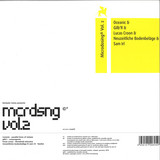
Microdosing is a series of compilation 12”s selected by Julienne Dessagne aka Fantastic Twins, and designed in collaboration with French visual artist Geff Pellet. Microdosing is a collective experiment aimed at helping you fighting back your modern obsession with happiness. You may deserve a nice day but the day does not need a nice you, nothing should be forced, everything is permitted. Microdosing will provide you with sonic healing weapons on regular basis and at irregular dosage. Those doses will favour psychedelic social techniques against self help tyranny, creation over soma, provoking over numbing, our outer-selves over our inner-selves. Microdosing refuses the fatality of the pleasure principle. Life is a struggle, time to embrace it. —— "My battery is low and it’s getting dark” We at Microdosing will make Opportunity’s famous last words fully ours. Some would see these as an epitaph on a black screen, we embrace them as a reclaimed fragility. Are we grains of sand wandering in space, hoping for a goal? No. We are the cosmos, the cosmos is us, unafraid of the end, unafraid of the void. Before the rise of the infinite silence, Microdosing brings you new guiding lights, white sun or black hole being a simple permutation of the kinetic rainbow. Oceanic’s “Parallel Lines Of Stripes” is a meandering mantra, an synthesised Moebius ring, a mission to your heart, that furthest star in the sky. Gilb’R’s “Cosmogonie” simply reminds us of the profound relation between spatial systems and the holy act of birth (cosmo, world and gon, conceive). The universe is a body, your body is your universe. Lucas Croon’s “Threshold Stimulus” is the soundtrack of a never ending voyage, the man is on a trip to the core sanctum. Imagine Space as a reverberation room cladded with bakelite. Losing yourself in delay repeats sometimes is the shortest way. Neuzeitliche Bodenbeläge & Sam Irl’s “Faeden” is another hymn to the umbilical chords joining us to the outer world, a black monolith of kraut acid, a pagan dance as portal to a destination only you can choose. Microdosing will be back soon with more enablers, helping to turn your petty struggles into a search for a meaning of life. The Quest lives on.
Raised in the multicultural and mind-broadening London borough of Enfield, Loraine James grew up hearing everything from steel pan music to Metallica, from jazz and electronica to drill and grime, and the results of this exposure can be heard on ‘For You And I’. In part the album explores the complexities of being in a queer relationship in London - “I’m in love and wanted to share that in some way … to make songs that reflect layers of my relationship.” – and as a whole ‘For You and I’ is rhythmically free flowing and sprawling, with melodies that evolve into rippling keys, feeling like a live jam session with a jazz mentality, contrasting the delicate and abrasive. Opener ‘Glitch Bitch’ is a warm ear-worm, brandishing swirling textures with undulating keys and compressed percussion, with an introspective theme revisited soon after on third track ‘So Scared’, whose glitched percussion and syncopated dub bassline build to a frantic meltdown melody. On ‘London Ting // Dark As Fuck’, inspired by Dizzee Rascals's ‘Boy In Da Corner', James explores the darker side of her production with her frequent collaborator Le3 BLACK laying verses over the skeletal track. ‘Hand Drops’ is an instrumental, about public displays of affection in a queer relationship. ‘Sensual’ reflects on intimacy with vocals by UK singer Theo, who's lyrics capture love and gentleness over a soft, minimal production of ethereal keys and scattered glitches. The albums’ title track is also the most colourful, it’s ecstatic and effusive chaos driven by fervent synths expressing elation and the joyful side of her relationship, while ‘My Future’ is a more reflective moment, where warping synths wash in and out with compressed kicks, as the artist considers the dangers that may come with her relationship : “I wanna tie the knot / But the rope is dangerous”. ‘For You And I’ is a deeply intimate and personal offering, expressing happiness, anxiety, joy, sensuality and fear through a vivid sound palette and an experimental sense of rhythm.
Johnny Clarke is one of the great vocalists that ruled the Jamaican Dancehall scene from the mid – 1970’s to the early 1980’s. While Bob Marley was out conquering the world, Dennis Brown, Gregory Issacs and Johnny Clarke were winning the hearts of the Jamaican people .Johnny Clarke’s use of the ‘Flying Cymbal‘ sound took the Island by storm and produced a run of hit singles few could match.
Johnny Clarke (b.1955, Jamaica, West Indies) cut his first record ‘God Made The Sea and Sun’, after winning a local singing contest in the Bull Bay area of Jamaica. Although the single was not a hit, it led to two follow up tracks for producer Rupie Edwards, ’Everyday Wandering’ and ‘Julie’ that fared much better, both on the island and oversees in England and Canada. These tracks also brought the singer to the attention of producer Bunny Lee and a working relationship that would go on to produce a prolific catalogue of music. Johnny Clarke’s Dread Conscious / Love Song style were to grace many hits around this time in 1974. Such tunes as ‘None Shall Escape The Judgement’, ‘Move Out of Babylon’, ‘Rock With Me Baby’, ‘Enter The Gates With Praise’ to name but a few. All new songs added to a host of cover tunes, recommended by Bunny Lee, many taken from the singer John Holt’s catalogue, that suited Clarke’s vocal style. The rhythms were cut at various studios around the Island. Randy’s Studio 17, Channel 1, Treasure Isle, Dynamic Sounds and Harry J’s, by a group of musicians loosely called the Aggrovators and some tunes incorporating the ‘Flying Cymbal’ sound again introduced by Bunny Lee, working the Hi-Hat in fine style. The tracks were then taken to King Tubby’s studio where Johnny Clarke’s vocals would be voiced.
Another phenomenon that was happening in the early 1970’s, was the version cuts to vocal tracks. This is when the tunes were cut back to the bass and drums and the vocals were dropped in and out in a dubbed style, and reverb and echo and various effects were added to these tracks. The main exponent to this style was King Tubby himself, and as was the fashion at the time, each vocal track would carry a version as its B-Side. Producer Bunny Lee lead this style working closely with King Tubby and all of his singles from then on would carry a Dub cut on its flipside. As Johnny Clarke was one of Bunny’s main singers at the time, we would hear a great selection of popular songs getting the dub treatment and in many cases the single was purchased for its more exciting dub cut, again made popular at the various dances where the dubplates were played out. We have compiled some of the best of these dubs from the time and put them together for this release, hope you enjoy the great voice of Johnny Clarke alongside the productions of Bunny Lee and the creative genius of King Tubby, a great combination we hope you will agree….
- A1: Rainbow Deux (6 57)
- A2: Let Love In (6 14)
- A3: Sigh (4 08)
- B1: The Darkest Night (7 32)
- B2: Surrender Now (6 08)
- B3: Summer Is Her Name (4 37)
- C1: Are You Ready (3 18)
- C2: Streets (Keep Me Runnin’) (7 00)
- C3: Samba Dreams (3 20)
- D1: Let’s Go Deep (5 27)
- D2: We Should Be Laughin’ (3 45)
- D3: Wishful Thinking (4 00)
TThe melodically adventurous soul of Leon Ware continues its expression in his final opus Rainbow Deux, released on double vinyl on September 13th. The album features new songs recorded and performed by Leon before his health turned, leading to his transition on February 23rd 2017. Co-produced by Taylor Graves, it has stellar musical contributions from the likes of Kamasi Washington, Thundercat, Ronald Bruner Jr, Rob Bacon and Wayne Linsey.
Taylor Graves came into Leon’s musical family in 2002 when he, his brother Cameron and the Bruner brothers Ronald Jr and Stephen (Thundercat) were playing along with their schoolmate Kamasi at an L.A. jazz club. Taylor, Cameron, Ronald and Stephen became Leon’s band for his debut shows in Japan in 2002 and Taylor continued to work with Leon as his mentor and collaborator over the next 15 years.
“Leon was ALWAYS writing something or developing his musical palette” his wife Carol Ware tells us, so it’s impossible to pinpoint any single moment of Rainbow Deux’s genesis. Six of the songs go back to 2012/2013 and were released in 2014 as part of Sigh, a Japan-only CD collection heavy with Rob Bacon’s tasteful licks and Wayne Linsey’s piano vibes. The rest of the material comes from Leon’s sessions with Taylor.
Describing Leon’s and his process, here’s Taylor: “We’d start by having some great homemade food! Then a glass of wine ‘to slow down time’. After we’d have our fill and smoked our joints we’d go into his studio room to listen and create.”
The album was finished-up around August of 2016 in a back-and-forth between Leon and his go-to mastering engineer Toni Economides in the UK.
Leon worked on Rainbow Deux with life’s greatest challenge looming over him, yet it is one of his most focused and cohesive solo offerings since the 1980s. The entire record is a vibe: mellow, deep and smooth as silk. The lyrical themes are eternal, and the music is elegant, soulful and sensual.
The album opens with the hypnotic throb of “For The Rainbow”, coming on like a percussive, slow-mo house shuffle. Gilles Peterson is a fan. The exotic “Let Love In” follows, with its gradual-build Island Funk, intricate guitar picks and sassy female vocals. It explodes when it hits its stride. “Sigh” is the stylish slow jam close-out to side A. Serene guitars and polished drums create neck snapping funk, with a swaggering finger-snap strut.
Side B opens with the easy-burning broken-beaty “The Darkest Night”, the centrepiece of the album. Kamasi Washington’s lurking sax, restrained and beautiful, unfurls into the dank, sticky atmosphere of Thundercat’s signature creeping bass laid over his brother’s in-the-pocket drums. Leon’s vocals are perfect, a masterclass in seductive sax-soul.
“Surrender Now” conjures waves of vocals to swell and wash over the glossy piano, subtly bumping hip-hop drums and bubbling synth-bass stabs. It’s got the trademark Leon layers. “Summer Is Her Name” has Kamasi’s effortless, melancholic sunshine sax give way to rising tempos and propulsive rhythms.
“Are You Ready” is a total highlight (and we’ve been playing it out for ages). It’s a nimble groove of piano and synth rolling around Theo Croker’s sensual trumpet playing. Digi-soul at its finest. With lush G-Funk sensibilities “Streets (Keep Me Runnin’)” sounds like a lost Dam-Funk produced gem. All tough kicks and snares and street sounds. Leon’s hood pass will be forever intact.
“Samba Dreams” is the first of two tracks that bring a little Rio magic to Rainbow Deux. Leon created a whole body of work in partnership with Brazilian legend Marcos Valle that includes “Rockin’ You Eternally” - a hit for Leon - and “Estrelar” – a hit for Marcos. Leon channels his obvious love of Brazilian music here through more of Croker’s sumptuous trumpet, played over loose percussion. “Let’s Go Deep” is next up. A dreamy between-the-sheets quiet storm anthem and a real showcase for Leon’s vocals.
The dripping, honeyed harp-funk of “We Should Be Laughin’” marks the star turn of the brilliant Kimbra. Leon first met her on-stage to do an impromptu duet of “Inside My Love” during an open-air celebration of Minnie Riperton in July of 2014. Kimbra was working with Taylor on her music and he brought her to Leon’s house to do some writing. This was the result.
Warm synths radiate shuffling samba soul on “Wishful Thinking” as those Brazilian rhythms return to bring Rainbow Deux to a close.
During an apartment move Leon and Carol rediscovered some watercolours Leon had done years ago. One of these paintings had been dubbed “Deux Hearts” and Leon decided it should be on the cover of Rainbow Deux, getting as far as approving a draft concept for the artwork.
Carol has overseen developing that draft into the final gatefold sleeve. It brings together quotes, photographs and tributes in what is a reflection on the music, relationships and philosophy of the sensual minister.
Gerry “the gov” Brown, Leon’s long-time sound engineer, was by his side throughout the project, recording and mixing. The album was mastered by Toni Economides and Simon Francis’ additional sensitive work makes sure this double LP sounds like it should on vinyl.
Be With’s first ever release was Leon’s eponymous LP. Re-issuing that album planted the seed of a relationship that has grown to grant us the privilege of presenting his crowning achievement. We know that Leon’s fans all over the Earth will love Rainbow Deux. But we also hope that this album, the final entry in a phenomenal body of work, will reach new fans and find fresh conduits for the spirit of this oft-unsung hero of Soul.
Leon always said “they will get it when I'm gone.”
He also said that “the spirit never dies”…
Formed in Bradford in 1980, New Model Army's beginnings were inspired by Northern Soul, Punk Rock and the incendiary atmosphere of the times. Since then, they have had a long, creative and eventful journey. They have been massively influential in 'post-punk', 'folkrock', 'political-rock', 'goth', 'metal' and all kinds of musical sub-cultures but they have steadfastly refused to belong to any club or style. Members have changed over the years and musical styles have evolved but at the heart of the band Justin has remained, along with a distinct and sincere belief in the power of music to inspire and effect change on both a personal and political scale, locally and globally. 'From Here' was recorded earlier on the tiny Norwegian island of Giske at the beautiful Ocean Sound Recordings studio and reflects the spectacular isolation of that environment yet has profound messages for the world we all live in and the times we are experiencing. The album was mostly written in just two months and recorded in only nine days and is the follow up on the two hugely acclaimed albums Between Dog And Wolf (2013) and Winter (2016). New Model Army decided to work again with Lee Smith and Jamie Lockhart, with whom they have developed a productive relationship over a few years and who persuaded them to leave a lot of the details of the music to spontaneity. “This album has a feel that is different to our other albums, but it still contains all the elements that characterise our peculiarly unidentifiable music – perhaps even more than ever. And “From Here” was an obvious title. The record belongs to a very special place and a particular time – what is happening in the world, where we are as a band and where we are as people.” Print ads:Vive Le Rock, Classic Rock, Record Collector, Classic Pop). Artist undertaking promotion/interviews/press (Classic Rock, Record Collector, Vive le Rock, Louder than War, Long Live Vinyl). Extensive UK live tour Oct 8th - Dec 21st.
- A1: Theme For Us Feat Joshua Idehen & Chip Wickham
- A2: The Socials Feat Soothsayers
- A3: Life Is Valuable Feat James Alexander Bright
- A4: Before
- A5: After Feat And Is Phi
- B1: I Never Feat Madison Mcferrin
- B2: Won’t Get Better Feat Emma-Jean Thackray
- B3: Don’t Stop Here Feat Ego Ella May
- B4: Thru You Feat Georgia Anne Muldrow
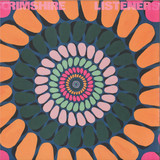
Albert’s Favourites co-founder Adam Scrimshire is set to release his fourth album 'Listeners'. Musically, 'Listeners' draws from Scrimshire's passion for jazz, soul and electronic music of all styles; from an energetic combination of Afrobeat and garage on 'Won't Get Better', to the lushly orchestrated neo-soul of 'Thru You', and the harmonious jazz experimentations of 'I Never'. The album features a host of esteemed guest vocalists and musicians telling their own personal stories, including Georgia Anne Muldrow, Emma-Jean Thackray, Joshua Idehen, Madison McFerrin, Chip Wickham, and James Alexander Bright.
"With this album I wanted to get a more focused sound after six years of relearning and development in the studio. But I also struggled to find my own words, to speak about where I/we are now. So I allowed my collaborators total freedom to tell their own story and as they came back to me, they were telling the same stories I wanted to. It's resulted in some deeply personal confessional pieces: mourning family, collapsing relationships, extremes of self doubt and analysis, trying to balance public and inner persona, and a reminder that life in all forms is important.
It’s called 'Listeners' as I am a listener here, I feel like I've been given these very personal experiences to care for. Listeners because, the travesty of the last few years is that we stopped listening to each other, everyone is shouting at each other and no one is learning. And Listeners because I hope I've made something that is for other people more than I have before. I've tried to craft something warmer and more enjoyable, made for those who give me their time in listening to my music."
- Adam Scrimshire
Since joining the Wah Wah 45s label in 2007, Scrimshire has released three albums of experimental cinematic jazz, and electronic sounds. Following his 2009 debut ‘Along Came The Devil One Night’, his second album ‘The Hollow’ (2011) was a BBC 6 Music Album of the Week, with Gilles Peterson calling it “A late contender for album of the year”.
In the time since the release of his last album ‘Bight’ (“An eclectic range of influences ranging from disco to fusion to more contemporary electronic styles” XLR8R) in 2013, Adam has worked with long-time musical accomplice Dave Koor on new project Modified Man, and launched Albert’s Favourites releasing projects by The Expansions, Hector Plimmer and Jonny Drop. He has continued to gain radio and DJ support for his successful “Scrimshire Edits” series and has produced and mixed records for artist including Stac, Daudi Matsiko, Bastien Keb, Ronin Arkestra, Jonny Drop. He has also continued to develop the Wah Wah 45s label, where he is now a co-owner and director.
Preceded by singles 'Thru You' featuring Georgia Anne Muldrow and 'Life Is Valuable' featuring James Alexander Bright; 'Listeners' is set for release on LP and digital formats via Albert’s Favourites on 19th July 2019.
DJ Support / Press:
Huey Morgan (BBC Radio 6 Music)
Jamie Cullum support on BBC Radio 2
Jamz Supernova on BBC Radio 1Xtra
Thru You Premiered By Mary Anne Hobbs on BBC 6 Music “So Beautiful
Primarily based in Leeds, The Lewis Express is comprised of many of the musicians that have graced previous ATA releases: George Cooper, Piano (Abstract Orchestra) Neil Innes, Bass (The Sorcerers, The Magnificent Tape Band, Tony Burkill), Sam Hobbs, Drums (Dread Supreme, Tony Burkill, Matthew Bourne) and Pete Williams, Percussion (The Sorcerers, The Magnificent Tape Band, Tony Burkill).Recorded over an intense two-day session, 'Clap Your Hands' is heavily influenced by the classic soul jazz recordings of The Young Holt Trio / Young Holt Unlimited, and Ramsey Lewis, from who this group take their name. As with many of the classic Ramsey Lewis cuts this album was recorded live, capturing the rich inter-relationship between the players and leaving in some of that chunky room noise.
'Clap your hands' builds on the template set by their eponymous debut album and further explores the 60's soul-jazz of Ramsey lewis, Young-Holt and Ray Charles as well as the latin boogaloo of Eddie Cano and Pete Terrace. The band's intention was to produce an album of dancefloor friendly, uplifting, funky soul-jazz with a stripped back line up of Piano, Bass, Drums and Percussion. Ranging from the mod-jazz of 'Stomp Your Feet' (a Ramsey-esque groover that's just made-to-measure for dancers) and 'Out From The Rock' (Funky drums and plenty of blues-dipped soul from the Piano) to the driving boogaloo of title track 'Clap Your Hands' and the Ellignton-esque 'Moola Umemo' (Remeniscent of Ellington's 'Money Jungle'). Each track is, in it's own way, aimed squarley at the dancefloor and sure to go down well with both DJs and listeners alike.
"Clap Your Hands" is certainly a more contained album from The Lewis Express, whose debut moved around different camps. It's a tighter, more focussed record that wears it's inspiration proudly on it's sleeve.
Radio support expected from Gilles Peterson (BBC6 Music, Worldwide Fm), Craig Charles (BBC6 Music, Radio 2), Jamie Cullum (Radio 2) and Huey Morgan (BBC6 Music).
“In October 2018 we took several recordings in and around Eddie Prévost’s home village of Matching Tye in Essex, where he has been living for the past fifty years. The majority of the pieces that made it to this LP took place in All Saints Church, High Laver, the burial site of John Locke. This fact was notable in the choice of title for this set of recordings, and it seemed necessary to put forward Eddie’s own take on Locke that he offered in our correspondences:
“Scholars of Locke’s philosophy will be familiar with the idea of mixing labour with materials as a fore-running notion of possessive individualism and basis for private property. Such ‘mixing’ is a persuasive description of a creative act. But the theory is more worthy of a social dimension.” As for the individual titles for each of the studies on the LP, each takes ideas and elements from music past. For example, MaxPlus makes a nod towards bebop pioneering drummer Max Roach who offered an earlier hit-hat study. Eddie utilises such examples, offering further creative insights which can then be woven back into the common wealth of sound. The final track, returning to the bowed cymbal method of the first, was recorded outdoors on a breezy green, and is pictured on the back cover of the sleeve. It was an attempt to capture the playing in its ‘metamusical’ relationship with the untempered sounds of the external environment.
Eddie has written about Metamusic in his book The First Concert (Copula, 2011): invoking childlike ‘protomusical’ behaviour, or the sense of music that a person might possess before the inevitable influences come to play any role in their productive, and appreciative, musical development.
Ross Lambert provided a few words along side his cover drawing entitled ‘The Metamusician’: “The eyes would symbolise for me things like searching, examining, closeness or friendship I think; engagement with the world. Decisions in making the image were completely intuitive, this is just me looking for the meaning, post-analysing, post rationalising.””
- Daniel Kordik & Edward Lucas, March 2019
Craig Leon revisits the extraterrestrial origins of civilization on Anthology of Interplanetary Folk Music Vol. 2: The Canon, a continuing chronicle of his early 80s albums Nommos and Visiting. Exploring the cosmic lore of Leon’s earlier work, The Canon expands upon the conceptual cycle based on the alien and mathematical relationships that backbone the creation of art, architecture, science, and music.
In 1981, producer and composer Craig Leon, known in the downtown New York zeitgeist for his production on The Ramones and Suicide’s debut albums, released Nommos, a minimal, primitive electronic exploration based on a speculative, wildly imaginative anthropology.
After viewing an exhibition of Dogon art at the Brooklyn Museum in 1973, Leon remained fascinated by the Mali tribe’s creation myth that the Earth was visited in ancient times by the Nommos, a semi-amphibious alien race who travelled from the white dwarf Sirius B to impart their wisdom to mankind.
Nommos, curiously released on John Fahey’s Takoma Records, manifested Leon’s obsession and investigation: an abstract, ascendent collection of music that could have soundtracked the interstellar visitors’ journey to Earth. Shimmering, mechanical, and anchored by an entrancing pulse of the Dogon’s ceremonial music, Nommos and its sequel, the privately pressed 1982 album Visiting, careened into obscurity.
In the intervening years, while Leon pursued his career as a successful producer, cult interest in the albums grew, culminating in the Anthology of Interplanetary Folk Music Vol. 1., the 2014 archival collection which presented Nommos and Visiting as they were intended to be heard, two sides of the same coin.
The Canon picks up where Nommos and Visiting left off, tracing the path of ancient wisdom imparted by the Dogon’s alien visitors spreading from Mali into Egypt and across the water to Greece as imagined in William Stirling’s ""The Canon,"" an anonymous exposition of cosmic law published in a nearly invisible print edition in 1897.
Though the music – propulsive and spacious – is clearly of a part with Nommos and Visiting, the alien sounds of the Nommos become more familiar to western ears and musical vocabulary as the album narrative thrusts forward. The Canon implies – through ecstatic, contemporary sound and synthesis – that the origins of Western thought, and civilization itself, lie in the great beyond.
Nearly four decades since their first collaboration on Nommos and Visiting, Leon is once again joined by his partner Cassell Webb on vocals and album production. Leon composed, and both he and Cassell performed, and produced all of the music of The Canon, consciously engaging many of the same synthesizers and programs of Anthology of Interplanetary Folk Music Vol. 1 for Vol. 2.
Primarily based in Leeds, The Lewis Express is comprised of many of the musicians that have graced previous ATA releases: George Cooper, Piano (Abstract Orchestra) Neil Innes, Bass (The Sorcerers, The Magnificent Tape Band, Tony Burkill), Sam Hobbs, Drums (Dread Supreme, Tony Burkill, Matthew Bourne) and Pete Williams, Percussion (The Sorcerers, The Magnificent Tape Band, Tony Burkill).Recorded over an intense two-day session, 'Clap Your Hands' is heavily influenced by the classic soul jazz recordings of The Young Holt Trio / Young Holt Unlimited, and Ramsey Lewis, from who this group take their name. As with many of the classic Ramsey Lewis cuts this album was recorded live, capturing the rich inter-relationship between the players and leaving in some of that chunky room noise.
Claps your hands/Stomp Your feet was recorded during the sessions for the upcoming Album 'Clap Your Hands'. building on the template set by their eponymous debut album these tracks further explore the 60's soul-jazz of Ramsey lewis and Young-Holt and the latin boogaloo of Eddie Cano and Pete terrace. A-side 'Clap your Hands' opens with cowbell, handclaps and bass before drums and electric piano enter to carry the track onto the dancefloor. This is one for the Djs and it'll do the business in the clubs for sure, but, also perfect for a late night, sweaty house party - shoes off and beer in the sink. B-side 'Stomp Your Feet' is much more in the classic mod-jazz frame with a faster pace and funkier drums, but still with handclaps and electric piano to the foreground. Drummer Hobbs opens up 'Stomp Your Feet' in fine style, and The Lewis Express start to swing with a Ramsey-esque groover that's just made-to-measure for dancers. Everything comes together here, with a mid-60s Cadet record feel throughout. Both tracks were recorded live to tape and were recorded and mastered for a tougher sound perfectly suited for djs to fill a dancefloor.
Following the reissue of ZiadRahbani's "Abu Ali" album, Wewantsounds is pursue its exploration of great Lebanese music with the reissue of "Wahdon," released in 1978 by legendary Middle Eastern diva Fairuz and recorded during the Abu Ali sessions and including the Lebanese dancefloor cult classic “Al Bostah“. 1978 is a turning point for the Lebanese Diva. The 70s had seen her rise as an international star, playing sold out concerts in the US and in Europe, and appearing on national TV in France. She had had a long-lasting artistic collaboration with her husband AssiRahbani and his brother Elias (aka The Rahbani Brothers) who, together, had penned most of the singer's classics. In 1978, Assi who had suffered a brain haemorrhage in 1972 got weaker and the collaboration finally ended (together with their personal relationship). Their 22 year old son Ziad took over Fairuz's musical reins and set to work on their first album together, "Wahdon" ("Alone"), serving as her mother's producer, composer and musicaldirector. Wahdon typifies this key moment in Fairuz's career when she switched from traditional to more modern arrangements. The first side of the album encapsulates the more traditional side of the singer with such mesmerising songs as "Habaitak Ta Neseet Al Naoum" ("I loved you so much i forgot to sleep") or "Ana Indi Haneen" ("I'm Nostalgic"), filled with gorgeous arabic strings and percussion. The Second side though is a whole different affair. Recorded in Athens at the EMI Greece studio at the same time as the Abu Ali sessions, the two long tracksbrings a hipper, contemporary funk and disco feel that has made the album such a collector's item with DJs and diggers around the world. Clocking at almost nine minutes "Al Bostah" ("The Bus") tells the story a woman in love remembering a bus journey with her lover under a scorching heat, enhanced by an hypnotic uptempofunkified disco beat, while "Wahdon" brings a slower and jazzier underlay to Fairuz's superb singing. These tracks shocked some of the diva's fans at the time but they've since passed the test of time and have become highly sought after. Whadon has since become both aclassic Fairuz album and a cult ZiadRahbani production that Wewantsounds isdelighted to bring to a wider audience for the first time.
Where To Now? Records present the debut release from Akiko Haruna. Akiko’s world is one where cacophonic distress lingers, shuffling itself over scapes of percussive damage and driven groove. Akiko presents a fresh take on the current Technoid function through her use of emotive and intentionally disruptive vocal chops and a dizzying ‘wall of sound’ approach to the dancefloor, consuming all yet somehow keeping vibes alive.
Akiko’s artistic background is primarily in Dance, and undoubtedly this performance led background has had an acute impact on her approach to melodic detail & storytelling. Akiko’s tracks rapidly shift & morph states, always restless and searching with fluidity and intent. From the ever present Micro Electronic details to sweeping swathes of Bass flutter the notion of progressive movement remains at the forefront of her sound, minute elements of detail become briefly isolated, intentionally directing the listener to their subtle presence.
‘Delusions’ Leads with ‘A Mother’s Love’ and begins a theme of resentment and dissonance. The Japanase vocal cuts throughout the track roughly translate to “you should die”, here obviously flipping assumed and supposed relationship rules and roles and exposing an inner turmoil, reflected through a continuous anxiety ridden, almost panicked siren detail which pulses over Akiko’s heads down, deep and uniform forward march.
‘Husband Established’ and the opens with the emotive vocal line “I just hate your Voice”. This is the sound of a poisonous & damaging relationship hurtling towards combustion, where Akiko’s elements gather momentum and impact as layer upon layer of detail pummel and puncture this heightened state, pausing and spiralling to evoke a standoff of aggression and imminent outburst. ‘Husband Established’ stands as a frankly stunning piece of sound design, which manages to capture a raw human emotion, and provide release for the associated junk, stress, and occasional banality of Relationship angst.
‘Hetero’ picks up where ‘Husband Established’ finished, further exploring societal character types and submissive gender tropes that are thrust into our sub consciousness from day to day. The concept of Hyperreality and its themes are continuously explored within Akiko’s practice and It would perhaps be fair to say that these themic explorations within her Music are Akiko’s own outlet for traversing human relationships within a complex, heightened, & layered reality, and it is certainly Akiko’s intention for her audience to feel some kind of relief and release within her sound world. Sonically ‘Hetero’ is a much sparser, subtler affair, where swathes of sampled voice & machine swing in and out of focus, against a weightless backdrop of affecting isolated electronics.
The EP closes with ‘Ripehus Alley’, seemingly void of any deeper meaning or message this serves more as a dreamlike parting song to what is otherwise a highly charged collection. Floating itself away from a frantic & incomprehensible world into a calmer space for final thought and reflection. ‘Delusions’ is a complex, exploratory trip, one which fans of Logos, Fis, Alva Noto, Jlin, Jesse Osborne-Lanthier etc will relish exploring.
Last year, we got together with The Netherlands Institute for Sound and Vision’s RE:VIVE initiative for the second time, inviting four local artists to breathe new life into four archival films from the Sound and Vision and EYE Filmmuseum archives. Jordan GCZ, Suzanne Kraft, Parrish Smith and Upsammy were all assigned short animated films dating back to 1921. The films and their new scores debuted at EYE on August 2nd as part of Dekmantel Festival 2018. Unsurprisingly, each artist imparted their unique styles onto the films that they previously had no relation with. From Suzanne Kraft's sparse atmospherics that have become more apparent in his new SK U KNO project to Jordan GCZ’s free flowing hardware jams. Parrish Smith showed his contemplative side and sparse orchestrations that he demonstrated on his RE:VIVE release, Genesis Black, a sonic departure from his bombastic releases and DJ-sets while upsammy showed yet again her deft hand for melody and texture, a style that dominates all her releases to date.
These four scores can live apart from their films, fitting seamlessly into each artists' growing catalogs of work. But when combined, it’s as if the films and music were made simultaneously with the artist and filmmaker together in the same room. Dekmantel and RE:VIVE are proud to present these new works as the electronic music scene in The Netherlands continues to show its multifaceted talent that continues to expand far beyond the dance floor.
“Ta Da” is the debut full length from J. McFarlane Reality Guest, the collective name for the trio headed by the eponymous McFarlane. As a member of the group Twerps, McFarlane has traversed guitar-centric, melodic pop music for some years while honing a highly unique, personal musical language. Ta Da is the first recorded unveiling of McFarlane’s affecting, oblique songwriting panache. Originally released in her native Australia on Hobbies Galore, Ta Da will be released worldwide by Night School in June 2019.
Wheezing into view with a troubled reed instrument set against a s of whoozy synth lines, Human Tissue Act is a foggy curtain the listener is invited to peel back. The dissonant notes are left to dance entwined, with clarinet heralding a Harry Partch-esque mallet percussion interlude. It’s a mood. With no resolution in sight, an audience dragged closer into uncertainty is suddenly drenched with the light of inter-weaving wah wah synth and saxophone. I Am A Toy introduces us to McFarlane’s vocal, an effortless and matter-of-fact, accented statement that quietly takes the reins. While McFarlane’s previous work in Twerps might reference 80s UK and antipodean guitar pop, Ta Da showcases a different influences immersed in psychedelic music and synths. It’s a brilliant, deft concoction swimming in Young Marble Giants-type minimalism washed with bare pop and harmony similar to Kevin Ayers making sense of a Melbourne suburb full of faces half-recognised in the blanching sun.
What Has He Bought begins with a Casio-keyboard rhythm pattern, palm-muted guitars and immaculately enunciated vocal give way to a burnt melodica part that elevates the spirits. Simple patterns repeated, like a well-tempered pop song that does what it needs to do and no more, build into the sound of summer leaking orange juice. They’re moments of joy, layered on top of each other like a melting cake. Do You Like What I’m Sayin’ recalls Marine Girls covering a classic ‘66 Garage nugget, organ lines fighting funk with guitar chords played just behind the percussion. “In a talking world, meanings are the same. Words want to hold on to the people they contain. Do you like what I’m sayin’?” We’re in a Beckett play perhaps, obtuse absurdities rendered pretty. Alien Ceremony is a heart-melter, given a melancholic timbre by bowed double bass it’s a tragi-comic piece that almost reeks of Robert Wyatt at his mid-whimsical twisting a fugue completely out of shape. Beneath the layers of harmony and twinkling instrumentation you sense there’s a genuine sadness somewhere even if it remains veiled.
Through out Ta Da, McFarlane plays with counterpoint and contrast to sometimes delirious effect. On Your Torturer, a simple, upbeat chord progression is hard panned, underpinning a flute solo which seems out of place, hence making it completely in place on this warmly surreal album. My Enemy is a slowly swinging eulogy to a failed relationship punctuated by analogue synth burbles, with our protagonist simply asking, in the aftermath, “can we be nice?” Here McFarlane’s vocal is straight forward, lyrically conversational but still not completely in focus, a surreal kitchen sink drama filtered through a dream where everything is in the wrong place. It’s a fine precursor to Heartburn, which similarly borrows BBC Radiophonic Workshop-style noise synths and the use of space to carve up the simple “You Will Make My Heart Burn” line. At this point, the listener has been in such close proximity to McFarlane’s show, the reality guest in a performance where they’re the sole audience member, that when Where Are You My Love rises on the horizon as a sleepy, psychedelic send off it’s uplifting. The vocal drifts away into the sunset, simple and direct. It leaves the listener slightly confused, perhaps, but grateful for the gentle surprise.
Influenced by the social and political climate of the modern
world, MOTSA’s debut album, ‘Perspectives’, is inspired by his
acute awareness of modern society’s dependence on
technology and the social media bubble also responsible for
the civic polarisation seen globally. The 11 track album takes
the listener on an emotional journey with dark, yet hopeful,
detailed compositions, each representing their own personal
story. The title “Perspectives” refers to a problem we all face:
differing perspectives of the same situation, which in turn
leads to conflict, be it in personal relationships, families and
even political discussions globally. With individuals and
groups often losing perspective in disagreements, MOTSA’s
debut LP calls for more empathy, highlighting our current
trajectory of an ego-driven society. Encouraging listeners to
spend less time behind computer screens and more time
outside in nature to broaden our horizons and reflect on
human decisions, many of the album’s samples were recorded
from MOTSA’s own environment. Using the sounds of children playing in the sand on a Balearic beach, crickets in the grass,
or the ambient soundscapes of bells recorded from his
father’s apartment in Moscow, the producer also recorded and
sampled his own voice to create distant, choir-like melodies in
many of the tracks. The artist’s signature sound – a soulful yet
driven harmonic blend – continues to propel the multi-talented
artist to the highest acclaim into 2019 and beyond.
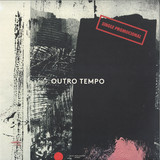
In the lead up to part two of the highly anticipated Outro Tempo compilation, MFM drops this teaser EP with the never before heard cassette madness of São Paulo's Bruhahá Babélico and Individual Industry's ethereal electro pop on the flip.
Music From Memory announces a series of Brazilian releases for this Spring that pick up where their 2017 Outro Tempo compilation left off. Circling around the musical projects that emerged out of the art world in Brazilian cities during the late 1980s and 1990s, 'Outro Tempo II: Electronic and Contemporary Music from Brazil, 1984-1996' takes anotherdive into the depths of the Brazilian underworld, exploring the rhythms that lurk beneath the Ipanema sunset. It shines light on more illustrious unknowns and on the genre-defying music that maintained asymbiotic, yet uneasy, relationship with mainstream popular culture.