Cerca:morton subotnick

Generi
Tutto
  • 1
Morton Subotnick - The Wild Bull

Based on an ancient Sumerian poem, MORTON SUBOTNICK's follow-up to his highly influential milestone "Silver Apples Of The Moon" is no less an adventurous sonic trip on the Buchla synthesizer. Limited edition (300 items) audiophile 180gr LP, especially remastered for vinyl. 2022 repress, 300 items.

Born 1933, MORTON SUBOTNICK is a key figure in the progress of electronic music: along with PAULINE OLIVEROS and RAMON SENDER he co-founded the San Francisco Tape Music Center in 1961 and from 1963 on he worked with DON BUCHLA on the development of the early synthesizer "Buchla Series 100". In 1967 the composer and musician released his debut "Silver Apples Of The Moon", which proved to be one of the most influential albums and an undoubted milestone in electronic music (which was even selected for the Library Of Congress in 2009). A year later MORTON SUBOTNICK presented his adventurous follow-up "The Wild Bull". Loosely based on / inspired by an ancient Sumerian poem of the same name - a lament about loss and death caused by war - the two parts embark on further explorations into the hitherto unimagined creative possibilities of the synthesizer. 54 years after its initial release, "The Wild Bull" has not lost a single bit of its visionary magnitude and is still an adventurous sonic trip.

pre-ordina ora13.01.2023

dovrebbe essere pubblicato su 13.01.2023

21,81

Last In: 2026 years ago
Morton Subotnick - Silver Apples of the Moon (50th-anniversary Edition)

In support of their forthcoming documentary 'Subotnick - Portrait of an Electronic Music Pioneer', Waveshaper Media — the same team behind the wildly-popular, acclaimed modular synthesizer documentary 'I Dream Of Wires' — presents a special reissue: a deluxe, 50th-anniversary-edition vinyl LP of Morton Subotnick's landmark 1967 debut electronic release, "Silver Apples of the Moon." Here are some of the features that make this 50th-anniversary-edition vinyl LP special:

All-new, full-colour gatefold jacket.
Vinyl edition is strictly limited to 1,000 copies.

Audio has been REMASTERED from the original, pre-mastered digital tape transfers. Unlike previous reissues of this LP (both vinyl and CD), remastered for Wergo's 1994 CD edition and narrowing the recording's stereo field, our reissue has been remastered maintaining the full stereo field of the original recording.
Brand new liner notes by Morton Subotnick.

The original, iconic liquid-light cover artwork by Tony Martin has been re-scanned for full-resolution clarity.
Featuring rarely-seen, newly-scanned photos of Morton Subotnick in his Bleecker Street studio where "Silver Apples..." was recorded.

Also includes a scan of the LP's original Nonesuch-edition liner notes

non in magazzino

Ordina ora e ordineremo l'articolo per te presso il nostro fornitore.

20,88

Last In: 6 years ago
Bruno Pronsato - Autoportrait En 2 Coupes

Never to rest on his laurels, Pronsato returns with two motif based tracks on Logistic. In this new work, Pronsato stitches four motifs together over two tracks (plus two digital only outtakes). Vocals, marimba, piano and pads are the forces at work here. Each playing a game of peek-a-boo throughout the four pieces...

Pronsato's approach to each of these compositions highlights his mastery in balancing complexity with accessibility, allowing each motif to shine individually while contributing to the overall narrative arc of the four pieces. Think ECM in the 80s meets Morton Subotnick...With dance stuff thrown in for good measure.

In Stock

Disponibile in Stock e pronto per la spedizione

12,40
JOE MEEK - I HEAR A NEW WORLD

The first and most independent of all independent producers, Joe Meek needs little introduction. He was the first to chart in both the UK and the USA with an independently produced song -which was actually recorded in his home’s kitchen- when The Tornados' Telstar took the world in 1962. Meek was, of course, one of the most in vogue producers of the first half of the 1960s, providing the soundtrack to the evolution of UK Rock’n'Roll to Swinging London, scoring hits with actors like John Leyton (Johnny Remember Me), showmen like Screaming Lord Sutch and bands like The Outlaws and The Tornados. He also produced a wide stream of R&B and freakbeat 45s that are nowadays hardly sought after by the collectors with the biggest bank accounts.

Joe Meek experimented with all kinds of recording techniques in his home studio, his tricks and gimmicks won his productions chart placement and critical and public acclaim, but none of his projects was so advanced and way out as the avantgarde experimentation showed in his I Hear a New World electronic symphony from 1960. Aided by The Blue Men formed by Rod Freeman (group leader, guitar, vocals), Ken Harvey (tenor sax, vocals), Roger Fiola (Hawaiian Guitar), Chris White (guitar), Doug Collins (bass), Dave Golding (drums) -also known as Rodd-Ken and The Cavaliers- who provided a tight base to his electronically produced sounds, Meek came up with what he envisioned as the soundtrack of the future, the sounds he envisioned were to be heard in outer space. It was too way out for its time, certainly. To the point that of all the opus, only four tracks saw the light of day on a 7" EP released on Triumph, Meeks very own label. It wouldn’t be until 1991 that the whole recordings from the I Hear a New World sessions would see the light of day on a CD issued by the RPM label.

Wah Wah offers a new reissue of this now classic early electronics masterpiece, housed in a beautiful front-laminated back-flapped sleeve and offered as a limited 400 copies only black vinyl version and an ultra-limited 100 copies only transparent purple vinyl. Get yours before they fly!

RIYL : Delia Derbyshire and The BBC Radiophonic Workshop, Louis and Bebe Barron’s soundtrack to Forbidden Planet, Raymond Scott, Tom Dissevelt & Kid Baltan, Morton Subotnick…

pre-ordina ora27.06.2025

dovrebbe essere pubblicato su 27.06.2025

30,13

Last In: 2026 years ago
JOE MEEK - I HEAR A NEW WORLD

The first and most independent of all independent producers, Joe Meek needs little introduction. He was the first to chart in both the UK and the USA with an independently produced song -which was actually recorded in his home’s kitchen- when The Tornados' Telstar took the world in 1962. Meek was, of course, one of the most in vogue producers of the first half of the 1960s, providing the soundtrack to the evolution of UK Rock’n'Roll to Swinging London, scoring hits with actors like John Leyton (Johnny Remember Me), showmen like Screaming Lord Sutch and bands like The Outlaws and The Tornados. He also produced a wide stream of R&B and freakbeat 45s that are nowadays hardly sought after by the collectors with the biggest bank accounts.

Joe Meek experimented with all kinds of recording techniques in his home studio, his tricks and gimmicks won his productions chart placement and critical and public acclaim, but none of his projects was so advanced and way out as the avantgarde experimentation showed in his I Hear a New World electronic symphony from 1960. Aided by The Blue Men formed by Rod Freeman (group leader, guitar, vocals), Ken Harvey (tenor sax, vocals), Roger Fiola (Hawaiian Guitar), Chris White (guitar), Doug Collins (bass), Dave Golding (drums) -also known as Rodd-Ken and The Cavaliers- who provided a tight base to his electronically produced sounds, Meek came up with what he envisioned as the soundtrack of the future, the sounds he envisioned were to be heard in outer space. It was too way out for its time, certainly. To the point that of all the opus, only four tracks saw the light of day on a 7" EP released on Triumph, Meeks very own label. It wouldn’t be until 1991 that the whole recordings from the I Hear a New World sessions would see the light of day on a CD issued by the RPM label.

Wah Wah offers a new reissue of this now classic early electronics masterpiece, housed in a beautiful front-laminated back-flapped sleeve and offered as a limited 400 copies only black vinyl version and an ultra-limited 100 copies only transparent purple vinyl. Get yours before they fly!

RIYL : Delia Derbyshire and The BBC Radiophonic Workshop, Louis and Bebe Barron’s soundtrack to Forbidden Planet, Raymond Scott, Tom Dissevelt & Kid Baltan, Morton Subotnick…

pre-ordina ora27.06.2025

dovrebbe essere pubblicato su 27.06.2025

28,19

Last In: 2026 years ago
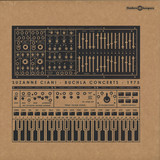
SUZANNE CIANI - BUCHLA CONCERT AT GALERIA BONINO NEW YORK 1974 LP

The very first Buchla synthesiser performance by revolutionary composer Suzanne Ciani finally makes its fifty year journey from its switch-on New York art gallery to its long deserved and discerning global phonographic audience.

With this previously unheard vinyl pressing, Finders Keepers Records are proud to present an archival project of ‘art music’ that not only redefines musical history but lays genuine claim to the overused buzzwords such as pioneering, maverick, experimental, groundbreaking and esoteric, while questioning social politics and the evolution of music technology as we have come to understand it. To describe Italian-American composer Suzanne Ciani’s resurrected Buchla concert records as genuine gamechangers would be a gross understatement. These records represent a musical revolution, an artistic revelation, a scientific benchmark and a trophy in the cabinet of counterculture creativity. This sonic installation album, alongside her recently liberated WBAI/Phill Niblock 1975 sessions (FKR082), are triumphant yardsticks in the synthesiser space race and the untold story of the first woman on the proverbial musical moon. While pondering the early accolades attached to these golden era New York recordings it’s daunting to learn that these records were in fact not even records at all.

What exists on this disc now was a manifesto and a one-time gateway to a new world, which somehow was only partially pushed ajar. Captured here is a genuine live act exploring new territories with a fully performable music instrument. If the unfamiliar, modernistic, melodic pulses, tones and harmonics found on these 1970’s artistic gallery collaborations/ live presentations (then soon to be followed by academic grant applications and educational demonstrations) had been placed in a phonographic context alongside the widely marketed work of Morton Subotnick, Walter Carlos or Tomita, then the name Suzanne Ciani and her infectious influence would have already radically changed the shape, sound and gender of our record.

With the light of Buchla and Ciani’s initial flame Finders Keepers continues the journey through the vaults of this increasingly celebrated music legacy, illuminating these ‘non-records’ that evaded the limelight for almost half a century. You can’t write history when you are too busy making it. With fresh ink in the bottomless well, let’s start at the beginning. Again

pre-ordina ora01.09.2024

dovrebbe essere pubblicato su 01.09.2024

14,75

Last In: 2026 years ago
Suzanne Ciani - Buchla Concerts 1975

2024 Repress

Finders Keepers invite you to witness the incredible first ever Buchla synthesiser concerts/demonstrations providing a distinctive feminine alternative to The Silver Apples Of The Moon if they had ever been presented in phonographic form. This is history in the remaking.

This spring Finders Keepers Records are proud to release an archival project that not only redefines musical history but boasts genuine claim to the overused buzzwords such as pioneering, maverick, experimental, groundbreaking and esoteric, while questioning social politics and the evolution of music technology as we've come to understand it. To describe this records as a game-changer is an understatement. This record represents a musical revolution, a scientific benchmark and a trophy in the cabinet of counter culture creativity. This record is a triumphant yardstick in the synthesiser space race and the untold story of the first woman on the proverbial moon. While pondering the early accolades of this record it's daunting to learn that this record was in fact not a record at all... It was a manifesto and a gateway to a new world, that somehow never quite opened. If the unfamiliar, modernistic, melodic, pulses, tones and harmonics found on this 1975 live presentation/grant application/educational demonstration had been placed in a phonographic context alongside the promoted work of Morton Subotnick, Walter Carlos or Tomita then the name Suzanne Ciani and her influence would have already radically changed the shape, sound and gender of our record collections. Hopefully there is still chance.

In short, Suzanne was a self-imposed twenty-year-old employee of the Buchla modular synthesiser company, San Francisco's neck and neck contender to New York's Moog. Buchla was run by a community of festival freaks and academic acid eaters whose roots in new age lifestyles and the reinvention of art and music replaced the business acumen enjoyed by its likeminded East Coasters. In the eyes of the consumer the creative refusal to adopt rudimentary facets like a piano keyboard controller rendered the Buchla synthesiser the more obscure stubborn sister of the synth marathon, steering these incredible units away from the mainstream into the homes and studios of free music aficionados, art house composers and die-hard revolutionaries. Championed and semi-showcased by composer Morton Subotnick on his albums The Bull and Silver Apples Of The Moon, Buchla's versatility began to open the minds of a new generation, but the high-end design features and no-compromise modus operandi was often confused with incompatibility and, in the pulsating shadow of Moog's marketing, the revolution would not be televised nor patronised. Suzanne Ciani, as one of the very few female composers on the frontline (and also providing the back line) did not lose faith.

These concerts' are the epitome of rare music technology historic documents, performed by a real musician whose skills and academic education in classical composition already outweighed her male synthesiser contemporaries of twice her age. At the very start of her fragile career these recordings are nothing short of sacrificial ode to her mentor and machine, sonic pickets of the revolution and love letters to an absolutely genuine vision of and 'alternative' musical future. In denouncing her own precocious polymathmatic past in a bid to persuade the world to sing from a new hymn sheet, Suzanne Ciani created a bi-product of never before heard music that would render the pigeon holes ambient' and futuristic' utterly inadequate. Providing nothing short of an entirely different feminine take on the experimental records' of Morton Subotnick and proving to a small, judgmental audience and jury the true versatility of one of the most radical and idiosyncratic musical instruments of the 20th century. These recordings have not been heard since then.

The importance of these genuinely lost pieces of electronic musics puzzle almost eclipses the glaring detail of Suzanne's gender as a distinct minority in an almost exclusively male dominated, faceless, coldly scientific landscape. Those familiar with Suzanne's work, a vast vault of previously unpublished non-records', will already know how the creative politics in her art of being' simultaneously reshaped the worlds of synth design, advertising and film composition before anyone had even dropped a stylus in her groove. Needless to say this record, finally commanding the archival format of choice, courtesy of the Ciani and Finders Keepers longstanding unison, was not the last first' with which this hugely important composer would gift society, and the future of a wide range of exciting evolving creative disciplines.

You have found a holy grail of electronic music and a female musical pioneer who was too proactive to take the trophies. With the light of Buchla and Ciani's initial flame Finders Keepers continues to take a torch through the vaults of this lesser-celebrated music legacy shining a beam on these non-records' that evaded the limelight for almost half a century. You can't write history when you are too busy making it. With fresh ink in the bottomless well, let's start at the beginning. Again. You, are invited!

non in magazzino

Ordina ora e ordineremo l'articolo per te presso il nostro fornitore.

14,75

Last In: 5 years ago
Pauline Oliveros - The Well & The Gentle 2x12"

The Well & The Gentle, two of the major works of Pauline Oliveros, are presented here in a first time reissue on double vinyl in a gatefold sleeve with extensive liner notes.

If Oliveros had followed a more conventional path she may have, all social obstacles aside, been considered among the major composers of her time. However, Oliveros approached composition in a more egalitarian manner. She wrote music for musicians to interact with or, in the composers words, she wished to create "an inclusive and interdependent and unfolding world of relationships."

Oliveros' propensity towards inclusion is part of what makes this work so remarkably distinctive. The Well & The Gentle is carefully crafted, allowing performers to participate in the creation of the work. Players are asked to collaborate, focus, react and make imaginative choices. Only then can the performers "pass through stages of awakening to the possibilities inherent in making music, working together, leading to the essence of what can shape musical impulses and individual freedom simultaneously."

Unlike most major composers of the era, Oliveros' work focuses on collaboration and improvisation. For Oliveros, the processes involved in making music are as fundamental as the music itself. Oliveros creates, as Arthur Sabatini put it so eloquently in the liner notes, "A world in which sound and the practices entailed in making music merge; become, at once, source and atmosphere, energy and essence, presence and dynamic."

Pauline Oliveros was an electronic music pioneer, accordionist, composer and educator who resided in Kingston, New York. Her instrument was tuned in Just Intonation and she often included it in her meditative improvisational music. Her music is not meditative in the sense that it is intended for listening to while meditating, rather each piece is a form of meditation, such as her aptly titled Sonic Meditations.

A central figure in post-war electronic art music, Oliveros is one of the original members of the San Francisco Tape Music Center (along with Morton Subotnick, Ramon Sender, Terry Riley, Steve Reich and Anthony Martin), which was the resource on the U.S. West coast for electronic music during the 1960s. The Center later moved to Mills College, where she was its first director, and is now called the Center for Contemporary Music. Oliveros often improvised with the Expanded Instrument System, an electronic signal processing system she designed, in her performances and recordings.

pre-ordina ora17.03.2023

dovrebbe essere pubblicato su 17.03.2023

36,55

Last In: 2026 years ago
Pauline Oliveros - Accordion & Voice

Pauline Oliveros' Accordion & Voice is available on LP for the first time since it was originally released in 1982. Cut at Golden and pressed at RTI for maximum fidelity.

Pauline Oliveros was an electronic music pioneer, accordionist, composer and educator who resided in Kingston, New York. Her instrument was tuned in Just Intonation and she often included it in her meditative improvisational music. Her music is not meditative in the sense that it is intended for listening to while meditating, rather each piece is a form of meditation, such as her aptly titled Sonic Meditations.

A central figure in post-war electronic art music, Oliveros is one of the original members of the San Francisco Tape Music Center (along with Morton Subotnick, Ramon Sender, Terry Riley, and Anthony Martin), which was the resource on the U.S. West coast for electronic music during the 1960s. The Center later moved to Mills College, where she was its first director, and is now called the Center for Contemporary Music. Oliveros often improvises with the Expanded Instrument System, an electronic signal processing system she designed, in her performances and recordings.

“Accordion & Voice was the first of my recordings as a soloist. I was living in an A-frame house in a meadow just below Mount Tremper at Zen Mountain Center. I had a wonderful view of the graceful saddle mountain top. When away on a performance trip I would imagine the mountain as I played Rattlesnake Mountain. I followed the feelings and sensations of my many experiences of the mountain - the changing colors of the season, the breezes and winds blowing through the grasses and trees. Horse Sings From Cloud taught me to listen to the depth of a tone and to have patience. Rather than initiating musical impulses of motion, melody and harmony I wanted to hear the subtlety of a tone taking space and time to develop. The tones linger and resonate in the body, mind, instrument and performance space. My thanks to Important Records for bringing these pieces to be heard again.” ~ Pauline Oliveros, 2007

pre-ordina ora27.05.2022

dovrebbe essere pubblicato su 27.05.2022

27,69

Last In: 2026 years ago
Ghedalia Tazartes & Rhys Chatham - Two Men In A Boat

"The beauty of all this, as well as its sorrowful brutality, is even more powerful and stupefying since Ghédalia's sudden departure. Because retrospectively, not only is this recording the trace of a rare moment in a Parisian garden, it also summons a ghost, that of a loved one that is gone, and of his voice, which is fully alive here."

Tazartes and Chatham had met once in 1977 at CBGC's and had not seen each other since then when they were asked by their mutual agent to play a private show in Paris. This happened in September 2018 in a house with a garden where sax player Steve Lacy had lived back in the 1990s. This album presents the recording of this show plus another show at La semaine du bizarre festival in Montreuil, France a year later, mixed with a couple of studio sessions. This was probably the last music Tazartès, who died in February 2021, recorded. His unique singing blends perfectly with Chatham's loops on electric guitar, trumpet and flute.

Rhys Chatham is a composer, guitarist, trumpet player and flutist from Manhattan, currently living in Paris, who altered the DNA of rock and created a new type of urban music by fusing the overtone-drenched minimalism of the early 60s with the relentless, elemental fury of the Ramones — the textural intricacies of the avant-garde colliding with the visceral punch of electric guitar-slinging punk rock. Starting with Guitar Trio in the 1970s and culminating with A Crimson Grail for 200 electric guitars in 2009, Chatham has been working for over 30 years to make use of armies of electric guitars in special tunings to merge the extended-time music of the sixties and seventies with serious hard rock. Parallel with his rock-influenced pieces, Chatham has been working with various brass configurations since 1982, and recently has developed a completely new approach to collaborations, improvised and compositional pieces involving trumpet through performances and recordings that started in 2009. Chatham’s trumpet work deploys extended playing techniques inherited from the glory days of the early New York minimalist and 70s loft jazz period. Starting in 2014, Rhys has been touring a solo program featuring an electric guitar in a Pythagorean tuning, Bb trumpet, and bass, alto and C flutes. Rhys was introduced to electronic music and composition by Morton Subotnick in the late 60s, and in the early seventies he studied composition with La Monte Young and played in Tony Conrad’s early group. These composers are, along with Terry Riley, the founders of American minimalism and were a profound influence on Chatham’s work. Chatham’s instrumentation ranges from the seminal composition composed in 1977 entitled Guitar Trio for 3 electric guitars, electric bass and drums, to the epoch evening-length work for 100 electric guitars, An Angel Moves Too Fast to See, composed in 1989… all the way to Chatham’s recent composition for 200 electric guitars, Crimson Grail, which was commissioned by the City of Paris for La Nuit Blanche Festival in 2005. A completely new version of the piece was commissioned by the Lincoln Center Outdoor Summer Festival in 2009. What does a composer do after mounting many performances with forces of 100-200 electric guitars? The composer gets back to basics, at least that’s what Rhys does! Along with the G100 and G3 programs, Chatham is currently offering a solo program, an evening length work with the composer performing himself on electric guitar, trumpets and bass alto and C flutes.

French cult artist Ghedalia Tazartes is an uncompromising character who defied categorization. He recorded alone more than 20 albums, calling his Art “Impromuz” for lack of a better term. Before the years 2000s, his public appearances remained exceptional events. Ghédalia Tazartès’ music has always been a mystery. It switches from musique concrète to – existing or invented – ethnic music, from poetry to noise, or from loops and collages to sad and extremely beautiful tunes in a second, but it constantly is in flux and coherent. In 2004, Ghedalia finally decided to do live performances again. He first worked with other musicians (Les Reines d’Angleterre, David Fenech & Jac Berrocal, Norscq & Black Sifichi, Nicolas Lelièvre) then went solo for ten years. Since then Tazartes has played many shows across Europe including a show in the Patti Smith exhibition at Fondation Cartier in Paris and a cinemix to the “Haxan” silent movie in 2008. In 2018 Ghedalia decided to stop playing solo and to collaborate with other musicians again: Maya Dunietz, Rhys Chatham, Chris Corsano and Dennis Tyfus, Quentin Rollet and Jérôme Lorichon. Ghedalia died at his home in Paris on 9th February 2021.

pre-ordina ora12.11.2021

dovrebbe essere pubblicato su 12.11.2021

16,77

Last In: 2026 years ago
André Stordeur - Oberheim SEM 8 Voice 1979-80

Sub Rosa presents in their Early Electronic series, the final chapter of music by Beglian key composer of early electronic experiments, André Stordeur (1941-2020). Side A features a previously unreleased, stark and poignant composition from 1979; while the B side is vibrant and almost playful of pieces from the 2000s.

André Stordeur His musical career started in 1973 with a tape composition for the soundtrack to a film on Gordon Matta-Clark titled Office Baroque. Later in the 1970s, he participated to avantgarde music ensemble Studio voor Experimentele Muziek, founded in Antwerp, Flanders, by Joris De Laet. Since 1980, Stordeur composes exclusively on Serge synthesizer, either a Serge series 79 and a Serge prototype 1980, which was especially built for him by Serge Tcherepnin himself. In 1981, Stordeur composed the music of Belgian film director Christian Mesnil's documentary Du Zaïre au Congo. He studied at IRCAM in 1981 with David Wessel and then flew to the US to study with Morton Subotnick. Stordeur became an influential sound synthesis teacher and, in 1997, completed his Art of Analog Modular Synthesis by Voltage Control,4 a guide to everything modular.

Oberheim While 'Oberheim' is the centerpiece of this LP, we pressed for the first time on vinyl three pieces from the session André called 'Synthesis Studies,' previously featuring on Complete Analog and Digital Electronic Music, 1978-2000. 'I was helped in my studies by a must-have book: The Techniques of Electronic Music, by Thomas Wells and Eric Vogel (University Stores, 1974). That book aside, I learned synthesis on my own. After a trip to India in 1968, I discovered Indian music and took tabla and sitar classes in New Delhi; my teachers were students of Chatur Lal and Ravi Shankar. Later, in the 2000s, while living in the US, I tried to recreate through synthesis all the Indian musical instruments I loved so much.' 'Drone' is one of his most spectacular works.

pre-ordina ora28.05.2021

dovrebbe essere pubblicato su 28.05.2021

16,77

Last In: 2026 years ago
SUZANNE CIANI - FLOWERS OF EVIL

In her varied career that would combine art gallery installations, major film soundtrackings and commissions for Atari, Suzanne Ciani’s earliest experiments remain some of her most challenging, beguiling and timeless... Flowers Of Evil ticks all the above boxes and flicks switches that would power-up a new uncharted universe of her own musical modernité. Finders Keepers present the first-ever release of these vital archive recordings.

As a genuine vanguard of electronic music composition at the forefront of the modular synthesiser revolution in the late 1960s, Suzanne Ciani’s forward-thinking approach to new music would rarely look to the past for inspiration, which makes this unheard composition from 1969 a rare exception to the collective futurist vision of Ciani and synthesiser designer Don Buchla. In choosing to adapt the controversial prose of French poet Charles Baudelaire, Suzanne would join the ranks of ongoing generations of pioneering musicians like Olivier Messiaen, Karlheinz Stockhausen, Serge Gainsbourg, Etron Fou Leloublan, Celtic Frost and Marc Almond (not forgetting Star Trek’s William Shatner!), all equally inspired by the 19th century writer’s works of “modernité” (modernity), a self-coined term dedicated to capturing the fleeting, ephemeral experience of life in an urban metropolis, best exemplified in his symbolic, erotic and macabre ode to Parisian industrialisation, Les Fleurs du mal (Flowers Of Evil).

In her varied career that would combine art gallery installations, major film soundtrackings and commissions for Atari, Suzanne Ciani’s earliest experiments remain some of her most challenging, beguiling and timeless... Flowers Of Evil ticks all the above boxes and flicks switches that would power-up a new uncharted universe of her own musical modernité. For the many enthusiasts that have already drawn the parallels between Baudelaire’s writings and experimental/electronic music (a relationship rivalled only by the likes of J. G. Ballard and Aldous
Huxley) some might instantly recognise an unconscious sistership between this recording and another 1969 electronic adaptation of Flowers Of Evil by celebrated female electronic composer Ruth White. An interesting distinction of White’s excellent version of Flowers Of Evil (released via Limelight records, home to the likes of Fifty Foot Hose and Paul Bley) is that its dark tone generation and vocal manipulation was created with a Moog synthesiser, the commercially triumphant
rival to Suzanne and Don’s Buchla Systems (Buchla and Moog’s historic, simultaneous, neck-and-neck synth developments are well documented.) The fact that Ciani’s version was never intended for commercial release (not unlike her 1975 Buchla concerts, which could easily have taken Morton Subotnick’s Bull by the horns!) is also poetically reflective of the nature of Ciani and Buchla’s alternative perspective. The choice to present this extract from Flowers Of Evil in its intended French language further distances Ciani’s faithful reaction from some of its better-known variations. Having attempted to voice the poem herself, the multilingual Italian-American composer’s French accent did not meet her own standards, resulting in the request for a fellow unnamed French student who lived on campus at Mills College in Oakland to accurately verbalise the section of Baudelaire’s collection entitled Élévation.

non in magazzino

Ordina ora e ordineremo l'articolo per te presso il nostro fornitore.

14,58

Last In: 6 years ago
Wolf Eyes - Undertow (lp+mp3+poster)

Nach unzähligen Releases auf Labels wie Sub Pop, Troubleman Unlimited oder Jack Whites Third Man und zahlreichen Kollabos mit Acts wie Sonic Youth, Anthony Braxton, Andrew W.K., Hieroglyphic Being oder Morton Subotnick, veröffentlicht das Detroiter Post-Industrial/Noise-Trio Wolf Eyes sein neues Album "Undertow" auf dem eigenen Imprint namens Lower Floor Music. Auf den fünf neuen, teils überlangen Tracks graben sie weiter in den Untiefen ihrer ureigenen, durch Electronica und Free Jazz infizierten Noise-Welt. Die LP erscheint mit Download-Code und doppelseitig bedrucktem A2 Poster.

non in magazzino

Ordina ora e ordineremo l'articolo per te presso il nostro fornitore.

23,15

Last In: 9 years ago
Anenon - Petrol

Anenon

Petrol

12inchFOF146LP / 126981
Friends of Friends
20.04.2016

Anenon is Brian Allen Simon, an artist and the founder of
the Non Projects record label. Constantly shedding the non-essential in search of a deep and individualized core, Anenon's music feels potent and refined, yet still raw. His work reaches audiences through speakers and venues where music is given serious consideration. An experimental artist using contemporary tools, Brian mines the intersection of electronics, jazz, improvisation and spiritual atmospherics.Simon has performed internationally throughout Japan, Europe and North America, sharing the stage with the likes of Morton Subotnick, Julia Holter, Laurel Halo, Baths and many more. He is a distinguished entrant of the 2011 Red Bull Music Academy and has guest lectured at CalArts. Alongside multiple LP's and EP's released on Non Projects, Simon has also released songs on Ghostly International, Innovative Leisure and Brownswood. October saw Anenon's debut on Friends of Friends with the 'Camembert' EP, an effort that will be followed with the 'Petrol' LP in 2016. Born out of a series of improvisational sessions with friend and collaborator Jon-Kyle Mohr, Anenon's 'Petrol' is an album about his native city of Los Angeles, but not the Los Angeles you know. It's a city built as much upon the frenzied kinetic energy of its freeways as its moments of thoughtful, early morning solitude. In Anenon's mind, an Angeleno is 'one who understands the beauty of distance and the consistencies of irregularity' and those juxtapositions can be
found throughout 'Petrol', a spacious album that needs to be lived in to be believed. Those juxtapositions extend to the sonic makeup of 'Petrol', from the tactile bliss of opener 'Body' to the album closing title track's climactic bombast. Out March 4 on Friends of Friends, 'Petrol' is the culmination of years of work and a deeply refined sensibility,
a combination that seems to fit both label and artist like a glove.

non in magazzino

Ordina ora e ordineremo l'articolo per te presso il nostro fornitore.

18,11

Last In: 7 years ago
  • 1
Articoli per pagina:
N/ABPM
Vinyl