First-time reissue of Aroma Di Amore's 3rd EP, originally released in 1985.
Aroma Di Amore is/was Belgian’s premier cult band. Since the early eighties ADA innovatively combined electronics with rock. With a mix of razor-sharp Flemish lyrics and unconventional song structures the group earned a cult status in Belgium and abroad. 40 years later they conclude their career with a few last concerts and a vinyl box set spanning the years 1983-1987.
At the notorious Rock Rally of 1982 Aroma Di Amore stands out with their wonderful handling of the Flemish language, a deep bass, typical cold new wave drums, biting guitar riffs with the occasional flavor of absolute madness. Frontman Jos Verlooy adopts the stage name Elvis Peeters. The explanation for this remarkable pseudonym choice: in 1977 – the period of the singer's musical awakening – one of the two famous rocking Elvises (not Costello, but Presley) succumbs to his pill addiction. So, dixit Verlooy, there is an Elvis vacant. A banal surname belongs next to that exotic first name. A combination that breathes rock 'n' roll, according to the singer.
His companion Gerry Vergult – who very much determines the sound with his metallic riffs, somewhat indebted to Jean-Marie Aerts – adopts the stage name Fred Angst. Completely in line with the depressing zeitgeist of the 1980s. Gerry eats and breathes music. Besides composing most of ADA’s songs, he records & self-produces a few fantastic dark en loner solo minimal wave tracks as Fred Angst. He is still musically active, more towards the electronic leftfield nowadays under the moniker Zool.
It is clear from an early age that companion Elvis Peeters possesses the gift of the word. As an adolescent he published the punkzine “Dus”. The punk spirit stimulates Peeters. He begins to transform the poetry that he has been entrusting to paper for some time into song lyrics. It is on a whim and without any stage experience that punk friends Peeters and Angst register for the Rock Rally as Aroma di Amore. On a bed of post-punk and cold wave (Joy Division, Wire and Sisters of Mercy are the main influences), they initially let out playful, minimalist and nonsensical slogans such as "Doe De Mafia" (1982) and "Gorilla Dans De Samba" (1983). Later on, the tone becomes more serious, although Peeters' choice of words continues to show a penchant for absurdism and sarcasm. No one in Dutch songwriting imitates this verbal elasticity, certainly at that time.
The numerous songs about war are downright horrifying. In the 1980s, an arms race is underway. When the Belgian government decides to install nuclear missiles in 1981, Aroma di Amore asks for one minute of silence in the hall during performances. In "Lauwe Oorlog" (1983), Peeters exposes the core of his unrest: “paraat voor de parade / de vrede wordt begraven / met militaire eer”. To this day, the frontman of AdA still proudly wears his at least 30 year old 'atomic energy, no thanks!' button.
In 1984 Aroma releases Koude Oorlog on the new and independent Brussels label Play It Again Sam. The traditional press and radio ignore the record, but in the alternative circuits the mini-album does not go unnoticed, and the group starts to build a solid fan base, resulting in more and more offers for gigs. There's also interest in the Netherlands, and due to the international contacts of PIAS, the record also ends up in France, Switzerland, Spain and Canada.
Encouraged by this modest success, the group returns to the studio for a 12" single. With new group member Frits De Cauter on sax, they record "Voor De Dood". To this day, Voor De Dood remains the most popular AdA song, as evidenced by the countless compilations on which the song has appeared.
AdA goes to the Netherlands to record their next album “De Sfeer Van Grote Dagen”. The people from Nasmak have built a new studio in Eindhoven and one of the members, Theo Van Eenbergen (later Henry Rollins), will be the producer. “De Sfeer Van Grote Dagen” is the group's most adventurous album, and the reviews are again unanimously favorable. However, sales are disappointing and PIAS proposes to recruit Chris Reed of Red Lorry Yellow Lorry and record a new single with him. "Zonder Omzien" is recorded at the prestigious Pyramid Studio. However, PIAS is waiting to release the album and in the meantime AdA is recording a number of extra tracks with producer Ludo Camberlin, including "Koekoek In De Stad". Towards the end of the year, Lo and Elvis travel to Africa for a few months and as a result the group comes to a standstill. In this period, Zonder Omzien is released.
At the beginning of 1986, Peeters and Meulen return, and Andrea Smits leaves the group. Luc Pillards is hired as a replacement, and when Ludo Camberlin presents himself as a new label boss and producer (Anything But Records), they start recording their first full album for the label. “Harde Feiten" kicks in immediately, and the group is back up to cruising speed. In the first week of release, the record even appears in the bestseller list of the record stores.
At the beginning of 1987 the recordings for the second album start, this time in a production by Peeters and Angst themselves. Shortly after the shooting, AdA goes to Switzerland for a short but successful tour, with Men 2nd and Cas & Organized Crime as support act. "Koudvuur" is published in the autumn and considered to be their strongest record so far by the group, the reactions are rather low. Both the reviews in the press and the sales are disappointing and put a damper on the joy. Nevertheless, the group is invited to perform in Valencia, Spain, where they have an unexpected success.
MUTANT SOUNDS BLOG
Aroma Di Amore have always been outsiders, even within the confinement of the alternative rock circuit. Their peculiar blend of raw guitars, electronics, Dutch lyrics and unconventional song structures was too hybrid for many. Those howewer who, without prejudice, would lend an ear to the band's music, discovered an energetic, authentic and uncompromising collective that stood above all trends. While so many Belgian "connaisseurs" had their doubts about the possibilities of international recognition for a band singing in Dutch, Aroma Di Amore toured France, Switzerland and Spain; their records figured in alternative charts from Poland to Canada.
From beginning to end the nucleus of Aroma Di Amore consisted of Elvis PEETERS, who in a inimitable, possessed way delivered his highly original lyrics, and Fred ANGST, guitarist mastering the heaviest riffs as well as refined tapestries of sound. Furthermore, the line-up varied throughout the band's carreer with:- H.K. (Guitarist from 1982 until 1983)- Andrea SMITS (Organ from 1982 until 1985)- Luc PILLARDS (Synthsizer in 1986)- Jan WANDELAAR (Guitar and synthesizer in 1986)- Pulcherie (Saxophone in 1983)- Wout DOCKX (Bass from 1987 until 1988)and especially- Lo MEULEN (Bass from 1983 until 1987)and the late Frits DE CAUTER (Saxophone from 1984 until 1986)contributing to the music
Buscar:mos famous
First-time reissue of Aroma Di Amore's 4th EP, originally released in 1986.
Aroma Di Amore is/was Belgian’s premier cult band. Since the early eighties ADA innovatively combined electronics with rock. With a mix of razor-sharp Flemish lyrics and unconventional song structures the group earned a cult status in Belgium and abroad. 40 years later they conclude their career with a few last concerts and a vinyl box set spanning the years 1983-1987.
At the notorious Rock Rally of 1982 Aroma Di Amore stands out with their wonderful handling of the Flemish language, a deep bass, typical cold new wave drums, biting guitar riffs with the occasional flavor of absolute madness. Frontman Jos Verlooy adopts the stage name Elvis Peeters. The explanation for this remarkable pseudonym choice: in 1977 – the period of the singer's musical awakening – one of the two famous rocking Elvises (not Costello, but Presley) succumbs to his pill addiction. So, dixit Verlooy, there is an Elvis vacant. A banal surname belongs next to that exotic first name. A combination that breathes rock 'n' roll, according to the singer.
His companion Gerry Vergult – who very much determines the sound with his metallic riffs, somewhat indebted to Jean-Marie Aerts – adopts the stage name Fred Angst. Completely in line with the depressing zeitgeist of the 1980s. Gerry eats and breathes music. Besides composing most of ADA’s songs, he records & self-produces a few fantastic dark en loner solo minimal wave tracks as Fred Angst. He is still musically active, more towards the electronic leftfield nowadays under the moniker Zool.
It is clear from an early age that companion Elvis Peeters possesses the gift of the word. As an adolescent he published the punkzine “Dus”. The punk spirit stimulates Peeters. He begins to transform the poetry that he has been entrusting to paper for some time into song lyrics. It is on a whim and without any stage experience that punk friends Peeters and Angst register for the Rock Rally as Aroma di Amore. On a bed of post-punk and cold wave (Joy Division, Wire and Sisters of Mercy are the main influences), they initially let out playful, minimalist and nonsensical slogans such as "Doe De Mafia" (1982) and "Gorilla Dans De Samba" (1983). Later on, the tone becomes more serious, although Peeters' choice of words continues to show a penchant for absurdism and sarcasm. No one in Dutch songwriting imitates this verbal elasticity, certainly at that time.
The numerous songs about war are downright horrifying. In the 1980s, an arms race is underway. When the Belgian government decides to install nuclear missiles in 1981, Aroma di Amore asks for one minute of silence in the hall during performances. In "Lauwe Oorlog" (1983), Peeters exposes the core of his unrest: “paraat voor de parade / de vrede wordt begraven / met militaire eer”. To this day, the frontman of AdA still proudly wears his at least 30 year old 'atomic energy, no thanks!' button.
In 1984 Aroma releases Koude Oorlog on the new and independent Brussels label Play It Again Sam. The traditional press and radio ignore the record, but in the alternative circuits the mini-album does not go unnoticed, and the group starts to build a solid fan base, resulting in more and more offers for gigs. There's also interest in the Netherlands, and due to the international contacts of PIAS, the record also ends up in France, Switzerland, Spain and Canada.
Encouraged by this modest success, the group returns to the studio for a 12" single. With new group member Frits De Cauter on sax, they record "Voor De Dood". To this day, Voor De Dood remains the most popular AdA song, as evidenced by the countless compilations on which the song has appeared.
AdA goes to the Netherlands to record their next album “De Sfeer Van Grote Dagen”. The people from Nasmak have built a new studio in Eindhoven and one of the members, Theo Van Eenbergen (later Henry Rollins), will be the producer. “De Sfeer Van Grote Dagen” is the group's most adventurous album, and the reviews are again unanimously favorable. However, sales are disappointing and PIAS proposes to recruit Chris Reed of Red Lorry Yellow Lorry and record a new single with him. "Zonder Omzien" is recorded at the prestigious Pyramid Studio. However, PIAS is waiting to release the album and in the meantime AdA is recording a number of extra tracks with producer Ludo Camberlin, including "Koekoek In De Stad". Towards the end of the year, Lo and Elvis travel to Africa for a few months and as a result the group comes to a standstill. In this period, Zonder Omzien is released.
At the beginning of 1986, Peeters and Meulen return, and Andrea Smits leaves the group. Luc Pillards is hired as a replacement, and when Ludo Camberlin presents himself as a new label boss and producer (Anything But Records), they start recording their first full album for the label. “Harde Feiten" kicks in immediately, and the group is back up to cruising speed. In the first week of release, the record even appears in the bestseller list of the record stores.
At the beginning of 1987 the recordings for the second album start, this time in a production by Peeters and Angst themselves. Shortly after the shooting, AdA goes to Switzerland for a short but successful tour, with Men 2nd and Cas & Organized Crime as support act. "Koudvuur" is published in the autumn and considered to be their strongest record so far by the group, the reactions are rather low. Both the reviews in the press and the sales are disappointing and put a damper on the joy. Nevertheless, the group is invited to perform in Valencia, Spain, where they have an unexpected success.
MUTANT SOUNDS BLOG
Aroma Di Amore have always been outsiders, even within the confinement of the alternative rock circuit. Their peculiar blend of raw guitars, electronics, Dutch lyrics and unconventional song structures was too hybrid for many. Those howewer who, without prejudice, would lend an ear to the band's music, discovered an energetic, authentic and uncompromising collective that stood above all trends. While so many Belgian "connaisseurs" had their doubts about the possibilities of international recognition for a band singing in Dutch, Aroma Di Amore toured France, Switzerland and Spain; their records figured in alternative charts from Poland to Canada.
From beginning to end the nucleus of Aroma Di Amore consisted of Elvis PEETERS, who in a inimitable, possessed way delivered his highly original lyrics, and Fred ANGST, guitarist mastering the heaviest riffs as well as refined tapestries of sound. Furthermore, the line-up varied throughout the band's carreer with:- H.K. (Guitarist from 1982 until 1983)- Andrea SMITS (Organ from 1982 until 1985)- Luc PILLARDS (Synthsizer in 1986)- Jan WANDELAAR (Guitar and synthesizer in 1986)- Pulcherie (Saxophone in 1983)- Wout DOCKX (Bass from 1987 until 1988)and especially- Lo MEULEN (Bass from 1983 until 1987)and the late Frits DE CAUTER (Saxophone from 1984 until 1986)contributing to the music.
Exclusive to INDIE STORES: Hiss and Shake Records to release ‘Logically Yours’ – a limited edition, 5 x LP boxset of 50 essential recordings from seminal post-punk icon Lora Logic including 2 classic Essential Logic albums, early single releases, EPs, B-sides, rarities, vinyl exclusives + first new Essential Logic studio album in 43 years! Includes the classic Rough Trade Records releases ‘Beat Rhythm News (Waddle Ya Play?) + ‘Pedigree Charm’ + 2 retrospective compilations of early single releases, EPs, B-sides, rarities + vinyl exclusives ‘Aerosol Burns & Other Misdemeanours’ + ‘No More Fiction’ + new studio album ‘Land of Kali’ (first in 43 years) + 20 page booklet with introduction from Celeste Bell + Lora Logic Q+A. Susan Whitby, aka Lora Logic was one of the most distinctive talents from the post-punk era known for her intoxicating, rough-around-the-edges, yet exhilarating sax playing and haywire vocal style. Her offbeat, occasionally arresting lyrics tackled alienation, sexism, poverty and urban isolation, and with a complete disregard for convention, she carved her own path not only in her short-lived music career but also personal life. She was still in her teens when she answered an ad in Melody Maker “Looking for young punks,” and in 1976, with her friend Marion Elliot (aka Poly Styrene), she formed the punk band X-Ray Spex and acquired the pseudonym, Lora Logic. The duo soon achieved notoriety with the irresistible feminist protest single, ‘Oh Bondage Up Yours’ (1977) – Logic arguably stealing the show with her thrilling punk sax. “X-Ray Spex was my first band, I happened to be accepted, It happened to work, I happened to get famous overnight. I’d been playing sax in a cupboard in my room; I thought I better do something.” However, just prior to recording 'Germ Free Adolescents' (1978), X-Ray Spex's debut album, she found herself unexpectedly ousted from the band. With abundant enthusiasm and encouragement from Geoff Travis, founding director of Rough Trade Records, she went on to form Essential Logic, creating some of the most liberating and exciting music of the early post-punk era, not only as Essential Logic, but also as a solo artist. Hiss and Shake Records are pleased to present a limited edition boxset of 50 essential recordings from the irresistibly engaging Lora Logic archive, allowing for a new generation to become aware of her incredible creative output. Across 5 LPs, ‘Logically Yours’ includes in their entirety, the classic Rough Trade Records releases ‘Beat Rhythm News (Waddle Ya Play?) (1979) – Essential Logic’s sole studio album, and Lora’s solo album, ‘Pedigree Charm’ (1982) – her last studio album before turning her back on the music business, sad and disillusioned and fighting drug addiction, which saw her turn to a Hare Krishna lifestyle, alongside Poly Styrene, embracing a fresh new chapter. This totally absorbing and definitive collection also includes two retrospective compilations; ‘Essential Logic – ‘Aerosol Burns & Other Misdemeanours’, which comprises early single releases, B-sides and oddities including the gloriously chaotic ‘Aerosol Burns’, the essential punk/disco ‘Music Is A Better Noise’, and ‘Fanfare In the Garden’, showcasing Lora at her most pop. In addition, ‘Essential Logic – ‘No More Fiction’; contains 10 vinyl exclusives, including ‘Do You Believe in Christmas?’, recorded with the Krishna Kids Choir in 1985, alongside tracks recorded circa 1997, with Martin Muscatt, Dave Farren (Bad Manners) and Gary Valentine (Blondie), forming the basis of what would have been Essential Logic’s third studio album, ‘No More Fiction’. Having recently returned to the studio refreshed and rejuvenated, ‘Logically Yours’ also includes ‘The Land of Kali’ (co-produced by Youth), the first new Essential Logic studio album in 43 years, and features the forthcoming new single ‘Prayer for Peace’, a re-imagining of the X-Ray Spex track from the tragically overlooked album, ‘Conscious Consumer’ (1995) on which Lora also played sax. “Poly Styrene and I were living in a Krishna community in Worcestershire in the early 80s. We came together for the first time musically after X-Ray Spex to record the original version of this song. In 2019, I decided to record my own take as a tribute to the special times we shared. I hope Poly likes this new version too.” Further tracks penned for release from the album include the dystopian, lockdown-inspired ‘Alien Boys’ and ‘Sky Rocket’, written with daughter Malini, about the fairground of life. Despite her short-lived career in the music business, Lora still managed to perform and appear on releases with many artists including US experimental rock band Red Crayola between 1978 and 1981, and also appeared on recordings by The Stranglers, The Raincoats, Kollaa Kestää, Dennis Bovell, Swell Maps and later, Boy George. Undoubtedly an iconic figure of the UK post-punk scene, Lora Logic’s boldness, adventurousness and sense of fun can be seen as an influence on numerous female artists today including Karen O from Yeah Yeah Yeahs, Peaches and St. Vincent among others. Tracklisting: Essential Logic ‘Beat Rhythm News (Waddle Ya Play?)’ (1979). A1 ‘Quality Crayon Wax OK’ A2 ‘The Order Form’ A3 ‘Shabby Abbott’ A4 ‘World Friction’ B1 ‘Wake Up’ B2 ‘Albert’ B3 ‘Alkaline Loaf in the Area’ B4 ‘Collecting Dust’ B5 ‘Pop Corn Boy (Waddle Ya Do?)’…… Lora Logic – ‘Pedigree Charm’ (1982). A1 ‘Brute Fury’ A2 ‘Horrible Party’ A3 ‘Stop Halt’ A4 ‘Wonderful Offer’ A5 ‘Martian Man’ B1 ‘Hiss and Shake’ B2 ‘Pedigree Charm’B3 ‘Rat Allé’ B4 ‘Crystal Gazing’…..Essential Logic – ‘Aerosol Burns & Other Misdemeanours’. A1 ‘Aerosol Burns’ (1978) – Debut single A2 ‘World Friction’ (1978) – ‘Aerosol Burns’ B-side A3 ‘Eugene’ (1981) – Single A4 ‘Tame the Neighbours’ (1981) – ‘Eugene’ B-side A5 ‘Music Is A Better Noise’ (1981) – Single A6 ‘Moontown’ (1981) – ‘Music Is A Better Noise’ B-side B1 ‘Fanfare In the Garden’ (1981) – Single B2 ‘Stereo’ (1982) – ‘Wonderful Offer’ single B-side B3 ‘Rather Than Repeat’ (1981) – ‘Wonderful Offer’ single B-side B4 ‘The Captain’ (1979) – ‘Fanfare In The Garden’ B-side B5 ‘Soul’ (1983) – Previously unreleased on vinyl B6 ‘Stay High’ – Previously unreleased on vinyl….. Essential Logic – ‘No More Fiction’. A1 ‘Essential Logic’ (1991) – Vinyl exclusive A2 ‘On The Internet’ (1998) – Vinyl exclusive A3 ‘Under The Great City’ (1997) – Vinyl exclusive A4 ‘No More Fiction’ (1998) – Vinyl exclusive A5 ‘Love Eternal’ (1997) – Vinyl exclusive B1 ‘Barbie Be Happy’ (1998) – Vinyl exclusive B2 ‘Not Me’ (1998) – Vinyl exclusive B3 ‘The Beautiful and the Damned’ (1997) – Vinyl exclusive B4 ‘Marika’ (1997) – Vinyl exclusive B5 ‘Do You Believe in Christmas?’ (1985) with the Krishna Kids Choir – Vinyl exclusive……Essential Logic – ‘Land of Kali’ (2022). A1 ‘Prayer For Peace’ A2 ‘Alien Boys’ A3 ‘Mother Earth’ A4 ‘Never Know’ A5 ‘Charming Every Cupid’ B1 ‘Sky Rocket’ B2 ‘Serious’ B3 ‘Fallible Soldiers’ B4 ‘Land of Kali’ B5 ‘Beyond’
A slice of Norwegian cultural history in album form – a unique
interpretation of traditional Norwegian Travellers' songs.Elias Akselsen,
Ola Kvernberg and Stian Carstensen take us on a journey through
Norwegian music history
The album's title, "Horta", means "authentic" in the language of the Travellers,
Romani. Elias Akselsen (74) is a member of the oldest generation who knew and
can remember the "authentic" life of the Travellers, and is today one of the
foremost representatives of the musical heritage of the Norwegian Travellers/
Roma. He was born on the road and learned to play and sing the traditional songs
while gathered around the bonfire with his relatives. He has a deep and inborn
appreciation of these songs. Musician/producer Stian Carstensen and musician/
arranger Ola Kvernberg join him in raising these old songs to a new level. With the
addition of guest artists Anita Kleppe and Sara Wilhelmsen, three voices from
three generations of Travellers meet one another. Together they have recorded
their unique interpretations of nine Travellers' songs, some known and some
unfamiliar, with the aim of preserving and carrying on the rich, but partly hidden,
cultural heritage of the Travellers, and of making it more widely accessible.
The musical tradition of the Travellers is vivid and complex, featuring elements
from a variety of countries and cultures – from broadside ballads and folk songs
to Russian folk tunes and Balkan rhythms. In many ways this music bears
witness to the way the Travellers drew musical inspiration from their travels. In
addition to the treasure trove of songs the Travellers have kept alive, they have
also had a strong influence on Norwegian folk music. Many traditional fiddle
tunes that are well known today can be traced back to the Traveller fiddler FantKarl, and one of Norway's most famous fiddlers, Myllarguten, often learned tunes
from Travellers passing by.
This is the Norwegian equivalent of blues and soul, and has at least as much
authenticity as the American genres we know so well. But it belongs to us
Norwegians, and to the Norwegian landscape, nature and people. Today Akselsen
is the leading practitioner of the musical heritage of the Norwegian Travellers/
Roma. He was born on the road, with genuine Travellers on both sides of his
family; he was the great-grandchild of the "Traveller king" Stor-Johan on one side,
and of "sea vagabonds" in Bergen on the other. Today he is the last remaining
representative of the original song tradition, and also practises traditional
handicrafts, making knives and whisks.
The album was produced by Skøyerstaten Teater, a voluntary organisation that
works to present the cultural treasure trove of the Travellers/Roma in an artistic
form
“Arguably his generation’s best lyricist” – Mojo // “The year’s stand-out album for me” – Stewart Lee // “A sort of modern-day pastoral” – Simon Armitage, Poet Laureate // The follow-up to last year’s first volume, English Primitive II continues the themes introduced previously in a harder, more electric and psychedelic style. The songs were mostly recorded during the same sessions but, if EPII showcased the ‘songs of innocence’, this new set comprises ‘songs of experience’. Callahan's lyrical themes here are frequently the sleaze and corruption of our ‘betters’, the intentional and unintentional brutality meted out on those weaker and the sometimes perverse ways in which this happens. There are moments of reflection among the broken mirrors, but they allow scant solace or reassurance. Dressed in another of Scottish artist Pinkie McClure’s witty and detailed stained glass creations and recorded at home and under a railway arch, EPII rises above its origins and invades the wider world, in all its colour, gritand glory. Each song serves as a monument to its internal tale – in fact, the whole LP is as much a collection of musical short stories as it is an album of songs. Opening with Invisible Man, the impression of a regular person with hidden grievances, biding his time and waiting to lash out is given. Waves of distant samples ebb and fall as the warped guitars swell and crash behind the main themes. We don’t know when this explosion will happen – we only know it will. A sleazy celebration of Britain’s position as the laundering capital of the world follows in the form of Beautiful Launderette. It’s good that we keep everything nice and clean for the whole planet, isn’t it? Business as usual, keeping the globe turning – that’s our role and we love it. The Parrot rocks like only a prolonged evisceration of governmental mouthpieces and their court stenographers can. It’s a thankless task making sure that the powers that be retain their authority in all things and patrolling the borders of what is allowed to be said and believed, but somebody’s got to do it. If you’re providing a service, you’ll need to present a united front against the grievances of the public, so you’ll need The Scapegoat. Mistakes and accidents can’t be the company’s fault, so you’ll need to pay someone to be publicly and repeatedly sacked to make it appear as if you’re solving problems and getting better. Lessons will be learned, going forward. The disturbing tale of Bear Factory begins side two and is the real-life story of the murder of one of the singer’s primary-school classmates in the 1970s, and true in every detail. The victim’s body was never found but the killer justifiably imprisoned for life. A more ancient scent of death pervades The Burnet Rose. This ground-hugging plant covers the graves of the victims in a seventeenth-century plague village on the Yorkshire coast to this day, commemorating their sacrifices when all around have forgotten. It’s this particular songwriter’s favourite flower. Orgy of the Ancients describes the intimate intricacies of ageing politicians and the press as they decide whether to go to war. In grotesque scenarios worthy of Caligula, they decide the fates of our children. And it’s not even half the truth. To finish, the songwriter looks back to an admired predecessor, when he sets William Blake’s famous poem London in a groovier setting than we’re used to – in the form of London by Blakelight. If London swings, it’s from the Tyburn tree. Tracks: Invisible Man / Beautiful Launderette / The Parrot / The Scapegoat / Bear Factory / The Burnet Rose / Orgy Of The Ancients / London By Blakelight
Originally recorded by D-Train, some might say this is one of the most important post disco records from the 1980’s, which appeared on the legendary Prelude records originally. What makes this version particularly special, is the fact it features another important artist from the post disco era Colonel Abrams, who is most famous for his cult classics ‘Trapped’ and ‘I’m Not Gonna Lie’ which both topped the charts in the mid 80’s. Aussie disco lord Dr Packer, who is currently on tour across Europe teams up with newcomer Sonic Soul Orchestra, who flip this into a fresh disco house cut that includes all new instrumentation whilst respecting the smooth vocal stylings of the Colonel. Plus remixes from Ross Couch, & Ricky Morrison (M&S).
Early DJ Support:
Jamie Jones, Mark Knight, Michael Gray, Roger Sanchez.
- A1: We Rock It Feat Sammy Dread
- A2: Bushmaster (Kid Kenobi Session Remix Feat Mc Shureshoc
- A3: Dunk
- A4: The Only Redeemer Feat Vido Jelashe I /Adrian Sherwood
- B1: Love To The Rhythm Feat G.rizo (Paolo Baldini Dubfil
- B2: All A Dem A Do Feat Juggla (Paolo Baldini Dubfiles R
- B3: Prelaunch Sequence
- B4: Jah Dub (Adrian Sherwood Remix)
The sound company operating under the project name "Noiseshaper" is poised to release a very special vinyl album into record shops worldwide. The band received great acclaim for their first albums, which were released on the legendary and famous Rockers Hifi label Different Drummer. They later became celebrated for their musical contribution to the US television series CSI - Miami ! The Viennese coffeetable boys Axel Hirn und Florian Fleischmann achieved cult status with their 12-inch single "The Only Redeemer", which was later released in the US by Quango (Island Records /Palm Pictures) and fast became a permanent fixture on the playlists of the best and most popular DJs in Berlin, Vienna, Tokyo, Paris, London and New York. The next dancefloor filler followed with "All A Dem A Do", sung by Juggla, which was the band"s first release to get heavy rotation on many European and US radio stations. Next up were remixes by and for heavyweights such as Sly & Robbie, Outkast, Seven Dub and Carl Douglas. Noiseshaper"s defining sound has been distilled and condensed an utterly distinctive blend of "housey downbeats with a fat reggae flavour" has brought the Noiseshapers international acclaim and popularity. The very special VINYL release is the essential of what NOISESHAPER has ever done all over the years with a special focus on HEAVY bass remixes by Adrian Sherwood & Paolo Baldini. It is another very impressive display of how a musical style has progressed. Dub as a style with all its reference points between commerce and innovation ! 8 pounding dub flavour tunes all are best for bringing the dancefloors of the dub universe to boiling point. Heavy bass for heavy dancing!
- A1: Raymond Guiot - Quintett Flash
- A2: Herve Roy - Repetition Echo
- A3: Raymond Guiot - Primitive Spirit
- A4: Jean-Pierre Martin - Jelly Roll Dance
- A5: Pierre Dutour - Savage Trumpet
- A6: Pierre-Alain Dahan & Slim Pezin - Slim Bertha
- B1: Jean-Pierre Martin - Sesame
- B2: Sauveur Mallia - All The Bass
- B3: Michel Gonet - Cuica-Racas
- B4: Pierre-Alain Dahan & Mat Camison - Baby Rider
- B5: Pierre Bachelet & Mat Camison - Miami Blues
- B6: Guy Pedersen - Bass Session
- C1: Andre Arpino & Maurice Plessac - Pop Drums
- C2: Guy Pedersen - Indian Pop Bass
- C3: Michel Gonet - Nuclear Tension
- C4: Michel Gonet - Red Sunset
- C5: Pierre-Alain Dahan & Mat Camison - Rythmiques No. 10
- C6: Pierre-Alan Dahan & Slim Pezin - Soul Car
- C7: Pierre-Alain Dahan - Slowrama
- D1: Sauveur Mallia - Double Polygone
- D2: Pierre-Alain Dahan & Mat Camison - Long Time Playing
- D3: Michel Gonet - Devil Dance (Version B)
TELE MUSIC is a label of Éditions Musicales Sforzando now owned by BMG Production Music. It is entirely devoted to the music library, that is to say, music for sound illustration used in audiovisual productions. Created in 1966 by Roger Tokarz,
just before advertising was allowed on French television, Editions Sforzando specialized from the outset in sound illustration for radio and television.
This collection, soberly entitled “Volume 2”, is the sequel to “Volume 1”, produced with equal care, passion and fervour by Lord Funk & DJ L.C. In the mid-90s, Tele Music vinyl was sold at ridiculously low prices. Often disparaged by collectors and record shops, considered by some as lift music or vulgarly called “music by the meter”, the music store was only of interest to fans of instrumental music! But in the 2000's, it had a second life and saw its prices soar on Discogs, thanks to sampling and digging in Hip-Hop mainly. This advent of the library is an era that Lord Funk, curator of this compilation, experienced when he brought several music library collections to New York City (NYC) to his A1 Records stronghold in 1997.
In this 2nd volume, Lord Funk & DJ L.C. have chosen a range of music from 1969 to 1983, from psychedelic jazz to electro funk via rnb, soul and jazz-funk. Most of the titles in this collection were recorded in the magic place that was the famous CBE recording studio set up by Georges Chatelain, Janine Bisson and Bernard Estardy. Bernard, nicknamed the giant, was a sound genius and a mixing perfectionist. Georges Chatelain was an electronic engineer. Together, they brought a sound,
a colour, a trademark. Bernard Estardy was also considered as one of the greatest French sound engineers and an energetic organist for Nino Ferrer or Nancy Holloway. We warmly thank Julie Estardy for her total and unreserved involvement in these reissue and compilation projects.
The combination of all these prodigies has given TELE MUSIC a phenomenal and unique sound colour in the service of a sound repertoire that is now part of the French heritage.
Twisted and irreverent, The Rabbits combined ear-splitting guitar shrapnel with one of punk’s greatest-ever snot-nosed vocalists. With hints of PIL or Chrome, but beamed in from a parallel dimension and filtered through the warped lens of visionary loner Syoichi Miyazawa. First-ever vinyl release, fully remastered from the band’s original early ’80s cassette releases, and housed in a sturdy tip-on sleeve. Includes a double-sided, printed insert. Edition of 500
Singer-songwriter Syoichi Miyazawa’s tale is a confounding one.
He grew up in a small town in Yamagata Prefecture (in northern Japan), loved Dylan and The Beatles, and had very little exposure to, or interest in, underground music. And yet, shortly after 24-year-old Miyazawa arrived in Tokyo in 1978, he began performing solo shows at tiny clubs in the city, singing and playing guitar. His performances quicky devolved from brisk acoustic jaunts to lengthy, heavy dirges sung in a snot-nosed wail over a blown-out electric guitar detuned to produce a kind of sonic sludge.
At one of his earliest gigs, a mutual friend introduced him to Endo Michiro, who would soon become the legendary front man of Japanese punk icons The Stalin. It turned out Miyazawa and Endo had attended Yamagata University at the same time just a few years earlier, but hadn’t known each other at school. In Tokyo, they became fast friends, moved into the same apartment building, and for years were inseparable. Endo played guitar and drums on Miyazawa’s debut release, the “Christ Was Born in a Stable” flexi disc. But while Endo was social and outgoing, Miyazawa preferred to be alone, avoiding concerts unless he was performing.
Despite these antisocial tendencies, Miyazawa came to despise playing solo. In 1982, an eccentric high school student named Chika introduced herself at one of Miyazawa’s gigs, and Miyazawa asked if she’d play bass. She agreed and drafted two of her friends to play second guitar and drums. The Rabbits were born.
Miyazawa wrote the tunes, and had a clear vision for the group, but struggled to get the sound he wanted from the other members. His second guitarist was more of a fusion player, and Miyazawa took great pains to get him to tone down the shredding. The group quickly went through multiple line-up changes. Frustrated with the sound of their first proper recording (self-released as the “X1(x)” cassette), Miyazawa spent a full year mixing their second cassette, “Winter Songs,” on his own.
The hard work paid off — the sound of “Winter Songs” is striking, and unlike anything the band’s peers produced. There’s liberal use of delay on the vocals, giving the music a psychedelic feel, but the guitars are caustic, cutting through the mix like metal shrapnel. The rhythm section seems on the verge of teetering out of control throughout, an overdriven and pummeling current below abrasive slabs of guitar and vocals. Even at their most aggressive, though, The Rabbits had strong pop sensibilities, complete with cooing backing vocals and the occasional harmonica solo. Miyazawa delivers his borderline nonsensical lyrics with equal amounts of menace and gaiety, consistently riding that fine line as only a natural oddball can. At times, the band sounds like a distant cousin of PiL, Chrome or The Homosexuals, but beamed in from a parallel dimension and filtered through Miyazawa’s warped lens.
Although The Rabbits briskly sold all 500 copies of the "Winter Songs" tape, live audiences at the time seemed dumbfounded by the group, and would stare at them in silence. After two years together, The Rabbits called it quits in 1984.
When asked if any of the many legendary groups (Les Rallizes Desnudes, G.I.S.M., etc.) he shared stages with left an impression, Miyazawa recently revealed that he always left the venue as soon as he finished performing, so he never caught any of the other bands…
All of which is to say —
The Rabbits are one of the great punk bands of the early ’80s, but their leader had no interest in the punk scene and always thought he was making “normal” music. They rubbed shoulders with a slew of notable groups of the era, and their singer was best friends with arguably the most famous Japanese punk of all time, but Miyazawa shunned fraternization and purposefully distanced himself from his peers.
Could this be why so few underground music fans are familiar with the group, even in Japan? Why they seem to have been written out of the official history of Japanese punk? One can never know for sure, but Mesh-Key hopes to remedy this travesty by offering this compilation, the first-ever official LP by The Rabbits, to a new generation of punk and psychedelic music connoisseurs.
credits
Reissue of the oud / viola virtuoso SIMON SHAHEEN's interpretations of pieces by one of the Middle East's most important 20th Century composers, MOHAMED ABDEL WAHAB. Produced by BILL LASWELL, remastered for vinyl at D&M Berlin.
MOHAMED ABDEL WAHAB (1902-1991) was "a giant in the world of Middle Eastern entertainment" (Al Jadid Magazine) - as singer, actor and composer – and is commonly considered "the father of modern Egyptian song". After a visit to Paris, he revolutionized the film industry by introducing the genre "musical film" to the Arabic world, the movie "The White Rose" in which he starred broke all records and to this day is frequently presented in Cairo's cinemas. But in 1950, WAHAB left the film industry to focus on singing and composing – he wrote over 1800 songs (among others for Umm Kalthoum, an iconic artist in the Arabic music in her own right) that were deeply rooted in classical Arabic music but also laid the foundation for a new era of Egyptian music as WAHAB was open to Western elements such as waltz rhythms or even rock'n'roll in Abdel Halim Hafez's song "Ya Albi Ya Khali". He also composed several national anthems (Tunisia, Oman, Libya, United Arabic Emirates) and re-composed the Egyptian national anthem "Belady Belady Belady", based on the original by Sayed Darwish. WAHAB received several decorations of Arabic states, and at his death in 1991, Egypt honored its famous son with a huge military funeral at the Rabia al-Adawiya Mosque in Cairo, the six-horse carriage procession carrying his coffin was actually led by the prime and foreign ministers, followed by the ministers of defense, interior and culture!
SIMON SHAHEEN (born 1955) is the perfect choice for WAHAB's compositions. Born into a family of gifted musicians, he learned playing the oud at the age of 5 and the violin shortly thereafter. He earned degrees in Arabic literature and music performance at the Tel Aviv University, and later pursued further studies at Hebrew University of Jerusalem and after his emigration to the USA (in 1980) at the Manhattan School of Music and Columbia University. SHAHEEN lives in New York where he founded the Near Eastern Music Ensemble and Qantara, a formation that blends traditional Arabic Music with elements of Jazz and classical music, and he also has been organizing the Annual Arab Festival of Arts called Mahrajan al-Fan since 1994. The same year he received a National Heritage Fellowship from the National Endowment for the Arts at the White House. Solo albums like Saltanah (Water Lily Acoustics), Turath (CMP) or Taqasim (Lyrichord) underline his importance as one of the most significant Arab musicians, performers, and composers of his generation. His work incorporates and reflects a legacy of Arabic music, while it forges ahead to new frontiers, embracing many different styles in the process. SHAHEEN has participated in many cross-cultural musical projects with artists as diverse as Henry Threadgill, Vishwa Mohan Bhatt, or the Jewish klezmer ensemble The Klezmatics, contributed to the soundtracks for The Sheltering Sky and Malcolm X and composed the entire score for the United Nations sponsored documentary, For Everyone Everywhere, celebrating the 50th anniversary of the United Nations Human Rights Charter. SHAHEENS biggest success was the Qantara album Blue Flame (2001) which has been nominated for eleven Grammy Awards.
Besides all his activities as performer, he dedicates a good part of his time to working with schools and universities, including Julliard, Columbia, Cornell, Princeton, Brown, Harvard, Yale, University of California in San Diego, University of Michigan in Ann Arbor and many others.
The Music Of Mohamed Abdel Wahab was originally released in 1990 on Axiom, the record label curated by iconic producer and bass player Bill Laswell, and has been carefully remastered for this vinyl reissue at D&M, Berlin.
Press quotes:
"Master oud player and composer Simon Shaheen finds the perfect mix on this collection of Mohammed Abdel Wahab's pieces … seven wonderful interpretations sparkling with oud and strings interplay." Stephen Cook / AllMusic
"Shaheen's violin soars over a slicing string section and a bed of percolating percussion, while accordion, oud, finger cymbals and a chorus of singers weave in and out. Produced with sparkling clarity by Bill Laswell … this record opens a new world of harmonic and melodic possibilities to ears accustomed to Western pop." Greg Kot / Chicago Tribune
Musicians:
Simon Shaheen: Oud, Violin, Viola
Najib Shaheen: Oud
Sheikh Taha: Accordion
Anton Hajjar: Ney
Paula Bing: Flute
Ramzi Bisharat: Tabla
Hanna Mirhige: Mizhar
Michael Baklouk: Daff
Bobby Farah: Sagat
Ibrahim Salman: Quanoun
Artemis Theodos, Gabriel Palka, Nessim Dakwar, Kamil Shajrawi: Violin
Mike Richmond: Double Bass
Michael Finkel, Vladimir Greenberg: Cello
Laura Shaheen, Louise Salman, Maurice Chedid, Nermine Rawi,
Simon Shaheen, Youssef Kassab: Chorus
Talkbox is multidisciplinary artist Michael O’Mahony’s third album and his first for 33-33. It’s his most complete and cohesive music project to date, a culmination of ideas, happy accidents and compositions that have been cut up and re-arranged over many years. The album’s sonic signature is the Vocaloid software synthesizer – the titular ‘talkbox’ – famously by Japanese cartoon Hatsune Miku. O’Mahony became aware of Vocaloid in 2015 through the popular Nyan Cat meme, which em marketed ploys the software. Excited by the emotive potential and realism of Vocaloid’s voice synthesis, he began to imagine an album that combined its capabilities with italo disco- and UK garage-inflected sounds. As the version of Vocaloid O’Mahony had access to sang only in Japanese, O’Mahony relied on Google Translate to obtain the required characters to enter into the software. In early experiments with the software, the north Londoner translated BBC match reports from his beloved Arsenal FC. Eventually, he amassed a library of syllables and phonetic sounds, from which he created the melodies crystallised on the record. As far as we know, these vocal lines have no meaning in lyrical terms. O’Mahony works largely in an iterative way; song ideas are reworked over and over in different styles, sometimes over a period of years. Multiple versions of a song might appear on an album, each one with its own particular nuances in feeling. Music perhaps does not always flow out of O’Mahony, but emerges over time. O’Mahony’s album forms part of his wider project: an analysis of his subjectivity through art and psychotherapy. The music complements his writing and video work, which feature in his performances. He writes in chains of association, speculating on topics such as family dynamics, or the meaning of recurring dreams about a childhood game console. His video practice features footage of objects found in his parents’ house, such as his sister’s childhood My Little Pony toy and his retired psychiatrist father’s lecture tapes. The music, at once synthetic and heartfelt, imbues the writing and video work with a strange tenderness. Taken together, these various aspects of O’Mahony’s work form a meditation on the emotional attachments we make to consumer objects and the role of early life in character formation. Tracklist 1/Talkbox 2/More Succinct 3/Electricity 4/Not Giving Up 5/Dinosaur 6/Trumpet 7/Electricity (Rock Version) 8/Aliss 9/Be Good 10/Not Giving Up (Slow Version)
“The Icelandic artist with the crystalline falsetto” - NPR
“From the luminous and atmospheric soundscapes
that he cultivates, to his meticulously chosen phrasing,
there is a distinctive sense of circumstance and
identity ingrained within his very nature” - The Line Of
Best Fit
As one of Iceland’s most successful exports, singersongwriter Ásgeir has spent the time between his
record-breaking debut and today pushing the
boundaries of his textured, thoughtful brand of folkpop.
New album, ‘Time On My Hands’, sees Ásgeir in a
state of self-reflection and experimentation, having
spent much of the last few years in his home and in
the studio deeply engrossed in writing, recording,
translating and producing.
On this album he’s entered new realms of composition,
sensitively layering acoustics with electronics and
brass.
As with some of his previous work, most notably
2017’s ‘Afterglow’ and 2020’s ‘Bury The Moon’, Ásgeir
plays with euphoric and choral elements of electronic
pop music while keeping a tight grasp on the
introspective, vocal-led style of the acoustica that
made him famous.
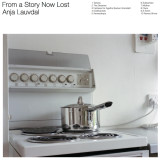
Produced by Laurel Halo and released via Norway's respected Smalltown Supersound label, Anja Lauvdal's first solo release, From a Story Now Lost, is a gorgeous musical essay reflecting on time, its perception, and lost histories rediscovered. Finally exploring her own voice after more than a decade of collaborative improvisational playing - starting at her time in jazz conservatory in Trondheim - the album is a jewel of subtle beauty and innovative detail. A freeform musician on piano, synthesizers, and electronics, Lauvdal's discography stretches back to 2013 and includes her participation in a myriad of ensembles and collaborations exploring the limits of sound and music in many forms, including noise, jazz, and more. Following her move to Oslo after graduation, she became deeply embedded in the music community there, touring with Jenny Hval as well as playing on her records. When pandemic hit and isolation was the norm, Lauvdal began working on her own, recording her improvisations in an attempt to capture something new for herself. Connecting to Laurel Halo via Smalltown's founder Joakim Haugland, the acclaimed American artist agreed to work with Lauvdal in shaping her solo record, becoming integral to its creation through all of its stages. Lauvdal credits Halo as a deep listener and gentle "thought-provoker", who contributed ideas as well as helping to shape the finished versions (Halo also worked alongside Rashad Becker on the final mix of the album). Together, they found a method of recording Lauvdal's improvisations, making small loops from those, feeding them back into the synthesizers, and making synthesizers out of the improvisations, which Lauvdal would then re-improvise with. She describes the end result, "like seeing different pieces of time around in the universe." While the record is based on Lauvdal's improvisations, some tracks were inspired Agathe Backer Grondahl, a Norwegian classical pianist and composer from the latter half of the 19th century. Lauvdal notes that Grondahl is not widely known, although her best friend Edvard Grieg is still considered Norway's most famous composer. Yet now, partly through Lauvdal, her story resurfaces and persists. "From a Story Now Lost means the story is still there," Lauvdal explains. "It hasn't gone anywhere even though nobody heard it, or maybe you're hearing it for the first time. And actually it was told a long time ago - maybe you weren't ready to hear that story at the time." This hints at the limitless nature of her music, as well as its new emotional texture. Direct in its vulnerability, immediate in its tenderness, From a Story Now Lost is a sophisticated evocation over restrained artistry spilling over with meaning.
NNAMDÏ has never been able to stay in one place. The Chicago
multi-instrumentalist and songwriter set a blistering pace in 2020
with his critically acclaimed genre-fusing LP, ‘Brat’, a punk EP,
‘Black Plight’, and ‘Krazy Karl’, a full-length tribute to Looney
Tunes composer Carl Stalling. Add in his role as co-owner of label
Sooper Records, as well as recent tours with Wilco, SleaterKinney and black midi, and it’s an overwhelming schedule.
However, his latest album, ‘Please Have A Seat’, is the result of a
much needed pause. “I realized I never take time to just sit and
take in where I’m at,” says NNAMDÏ. “It’s just nice to not be on
‘Go, Go, Go!’ mode, and re-evaluate where I wanted to go
musically.” This period of reflection allowed him to take stock of his
life and his relationships. “I wanted to be present,” he says. “Each
song came from a moment of clarity.” ‘Please Have A Seat’ serves
as an invitation to listen. It’s a request to sit down, be present, and
take in a moment. With this quiet introspection, NNAMDÏ found
inspiration in silence and nuance.
While making the record, he decided to stretch the limits of his pop
songwriting: every track had to be hummable. Though he’s written
earworms throughout his career from playing in bands in
Chicago’s DIY community or releasing goofy raps as Nnamdi’s
Sooper Dooper Secret Side Project, here, his shapeshifting hooks
are undeniable. Each of the album’s fourteen songs, which
NNAMDÏ wrote, produced, and performed entirely himself, are
relentlessly re-playable, careening into unexpected and
disorienting places. With NNAMDÏ’s singular vision, ‘Please Have
A Seat’ is yet another leap from Chicago’s hardest working
musician. By taking a minute to sit down and catch his breath, he
re-emerged with the most ambitious, accessible, and nuanced
work of his career.
Coloured vinyl LP format pressed on Walnut Brown vinyl.
After "La Légende d'Eer" in 2016, the PERIHEL series presents one of the milestones of electroacoustic music: IANNIS XENAKIS' mindblowing 54-minutes oeuvre "Persepolis", mixed from the original 8 track tapes by MARTIN WURMNEST and mastered / cut by RASHAD BECKER.
"Persepolis" is the longest electroacoustic composition by IANNIS XENAKIS (1922-2001) who ranks among the most influential 20th century avantgarde composers. Commissioned by the Persian Shah, the piece was part of a multimedia performance - XENAKIS' so-called "polytopes" - which premiered in 1971 in Shiraz-Persepolis (Iran) as a performance including light-tracks, laser beams, groups of children walking around with torches and 59 loudspeakers to project the music in an open-air situation. XENAKIS had realized "Persepolis" on 8-track analogue tape in the Studio Acusti in Paris and released a stereo reduction on vinyl in the famous Philips series "Prospective 21e Siècle" in 1972, adding the new subtitle "We bear the light of the earth", his most hymnal title ever.
Out of print for decades now, the LP became - especially the Japanese edition from 1974 - one of the most expensive collector's item of electroacoustic music. There were some later CD versions with different durations - too long due to a wrong sample rate, others shortened by 3 minutes due to other reasons. The PERIHEL series now presents a new version: mixed from the original (!) master 8 track tapes by longtime zeitkratzer sound engineer MARTIN WURMNEST and mastered by RASHAD BECKER at D&M, Berlin - the same experts who had already taken care of the 2016 KARLRECORDS release of "La Légende d'Eer", another milestone composition among the works of the Greek-French avant-garde composer.
When IANNIS XENAKIS (1922-2001), who had fought against the occupation as part of the communist Resistance, moved to Paris in 1947 it was the start of a highly creative and impressive career. XENAKIS not only studied composition with MESSIAEN and became one of the most innovative composers of the 20thcentury, he also worked as assistant to LE CORBUSIER and realized a.o. the Philips Pavilion for the World Exhibition in Brussels 1958. His compositions often are based on mathematical principles (in 1966 he founded the CEMAMu - Centre d'Etudes de Mathematique et Automatique Musicales), which give his music an unprecedented aesthetic and "shocking otherness" (The Guardian). The most famous works of XENAKIS, who won the Polar Music Prize (considered the unofficial Nobel Prize for music) in 1999, are his compositions for orchestra Metastasis, Pithoprakta and Terretektorh (where the 88 musicians are spread within the audience) and the electroacoustic compositions Persepolis (to be re-released later on as part of the PERIHEL series), Concret PH, Bohor and La Legende d'Eer where XENAKIS integrated his stochastic synthesis sounds for the first time. As legendary as this piece itself is the impenetrable thicket of versions and stories around La Legende d'Eer - it exists in different releases, wrong sample rates, digitized backwards ..., this now is a new version, using the 8-track-version that XENAKIS himself presented at Darmstädter Ferienkurse in august 1978. As the automatic spatialization is lost, this became the only original version of this composition and is presented here (mixed down to stereo by MARTIN WURMNEST who tried to preserve the spatial movements as perceptible as possible - mastered by RASHAD BECKER at D&M) for the very first time. La Legende d'Eer not only became a milestone of electroacoustic music but is also an important reference for noise and industrial musicians up to the present day!
Delia Derbyshire's work at the BBC's Radiophonic Workshop in the 60's was recognised initially for her realisation of the now iconic Doctor Who Theme which was written for the show by Ron Grainer. More recently though, she has been celebrated for her own compositions and experiments at what was then the cutting edge of electronic music. The AA side, Blue Veils and Golden Sands, was written for a TV documentary in 1967, a composition in which she used her own voice and a handy green BBC lampshade: "I analysed the sound into all of its partials and frequencies, and took the 12 strongest, and reconstructed the sound on the workshop's famous 12 oscillators to give a whooshing sound. So the camels rode off into the sunset with my voice in their hooves and a green lampshade on their backs."
On the A side is The Delian Mode, which was used as incidental music during The Sky At Night in 1969, finding critical acclaim in Gramophone Magazine's review of the album BBC RADIOPHONIC MUSIC (often known as The Pink Album), in September of the same year: "… Blue Veils and Delian Mode are probably the finest music here. It may be no accident that the latter is reminiscent of the beginning of Xenakis's OrientOccident for Delia Derbyshire follows the analytical approach of the more sustained electronic compositions. If her best pieces seem the most imaginative here—and they are—it is because she more fully explores the implications of her material."
Herbert Bodzin's "Revival II" is the next exciting vinyl highlight on our young label. It features completely unreleased electronic music which was recorded between 1979 and 1982. On the album we can hear the sounds of legendary analogue machines like the ARP 2600, the Korg PS-3300, the Roland System-700 Modular synthesizer, the PPG Waveterm and the PPG Wave 2.2 as well as classic synths like the Roland Jupiter-8, the Polymoog and the Prophet-5. The album additionally features Bernd Hollendiek, as well as Bodzin's two sons, Stephan and Oliver Bodzin. Most of the music they performed was completely synthesizer based while Oliver Bodzin played drums on a few tracks. The songs are a mixture of mostly ambient, deep, psychedelic, yet experimental and futuristic sounds as well as more vibrant recordings that featured the complete band. One of these vibrant tracks is "Lifting Blue" which qualifies as a unique version of space rock. On other tracks like "Voices of the Mind" we hear deep melodies topped with dreamy vocoder voices. "Against the Wall" sounds like it could be taken off of an Italian horror movie soundtrack while the mid-tempo "Orbital" pre-dates the sounds of techno and trance. As a side note, the album may also show early musical influences of Stephan Bodzin, who became world famous in the 1990s as one of the leading techno producers. Without any doubt, "Revival II" should be an exciting lost masterpiece of German electronic (rock) music and a must have for synth music lovers - revived and finally alive!
With selections ranging from Praetorius to Britten,
plus all-time favourites by J.S. Bach (The
Christmas Oratorio) and Handel (Messiah), this
album brings together some of the most beautiful
and justly famous musical settings of the Nativity
story.
Festive or intimate, exuberant or elegiac, these
highlights from iconic recordings in harmonia
mundi’s voluminous catalogue are an ideal
sampling of the Christmas magic across epochs
and styles.
Orange Vinyl[27,94 €]
CELEBRATING SUN RECORDS - THE LABEL WHERE ROCK 'N' ROLL WAS BORN! The Rock 'n' Roll Collection features 40-songs from the most important record label in the history of music, with everyone newly remastered from the original Sun Records master tapes. A comprehensive introduction to some of the most iconic and influential music ever recorded. These are the list remaining copies of the strictly limited edition pressed on orange vinyl exclusive to UK retailer Sainsbury’s. Elvis Presley introduced the rockabilly sound to the world in 1954 with the recordings he made at Sun Records. These epitomised the famous “Sun sound” and set the scene for the rock ‘n’ roll explosion to follow. This raw and exciting new sound was a remarkable fusion of white country music and black R&B and quickly found an eager audience with the youth of the day. Presley’s extraordinary success at Sun Records led to the tiny Memphis-based label becoming a magnet for aspiring rockabilly singers from all over America’s South. Despite a relatively short heyday, that “Sun sound” has endured the test of time and remains as popular as ever with listeners of all age groups. As well as featuring Elvis and such other household names as Jerry Lee Lewis, Johnny Cash, Carl Perkins, Charlie Rich and Roy Orbison, the gatefold-sleeved double-album also includes significant contributions from the label’s other important artists such as: Billy Lee Riley, Sonny Burgess, The Miller Sisters, Warren Smith, Malcolm Yelvington, Jimmy Wages, and Earl Hooker. Includes such all-time rock ‘n’ roll classics as: Mystery Train, That’s All Right, Blue Suede Shoes, Great Balls Of Fire, I Walk The Line, Yakety Yak, Rock Island Line, Good Rockin’ Tonight, Red Hot, Ooby Dooby, Whole Lotta Shakin’ Goin’ On …and many more!