
Buscar:must records

- 1: Intro
- 2: I Cut Up Rough
- 3: Bitch In A Bullet Belt
- 4: In The Night Back In The Day
- 5: I Can Hear The Angels Cumming
- 6: Motorboatin
- 7: I Fucked Her Mind
- 8: Motorboatin
- 9: I Fucked Her Mind
- 10: Killed To Death
- 11: Beer Monkeys
- 12: Doomhill
- 13: Into It
- 14: Fullmoon Crazy
Geboren im Sommer '96/'97 - dem Jahr des Höllenschweins - brannten Mustang als soziales Experiment aus der Innenstadt Tasmaniens heraus. Sie kamen mit ziemlich viel davon, andere hätten für weniger wohl nicht mehr gleich ausgesehen.Sie sauf-ten, machten Sachen kaputt und brachten dieses Chaos in das Schreiben von Banger-Songs - während sie sich bei den ,Proben" XXX Ales reinzogen und bei sehr wichtigen ,Bandmeetings" Protokolle führten.Mustang schütteten Benzin über ihre tasmanische Ödnis, bevor sie 7,69 Millionen Quadratkilometer Landmasse der Erde in sich aufsogen und dort ,dominierten", auf die einzige Art, die sie kannten: laut, wütend und zu ihren eigenen Bedingungen - und nahmen dabei Horden williger Partygänger mit auf die Reise.Über drei Non-Studio-Alben und eine Handvoll kleiner Veröffentlichungen hinweg bauten Mustang einen Katalog auf, der von Bier, Speed und störrischer Unabhängigkeit geprägt war. Kein Glanz. Kein Trendgehechel. Kein Buckeln vor dem Mann. Sie ritten ein, tranken, was da war, und hinterließen klingelnde Köpfe.Cut Up Rough (2015) war ihr Schwanengesang - geboren in einer Heuscheune am ausgefransten Rand von Tasmaniens Rock-Hochburg. Aufgenommen über zwei schlaflose, bierselige Tage wurde das Album mit improvisierten Drum-Takes, aufgedrehten Gitarren und purem Instinkt in die Existenz gerissen. Die Band lebte während der Aufnahmen buchstäblich in der Scheune - schiss ins Gras, schlief zwischen leeren Dosen, und ließ Isolation und Absurdität direkt in billige Mikrofone bluten.

- A1: Les Masques - Il Faut Tenir (1969)
- A2: Isabelle Aubret - Casa Forte (1971)
- A3: Christianne Legrand - Hlm Et Ciné Roman (1972)
- A4: Jean Constantin - Pas Tant D'chichi Ponpon (1972)
- A5: Billy Nencioli & Baden Powell - Si Rien Ne Va (1969)
- B1-: Marpessa Dawn - Le Petit Cuica (1963)
- B2: Jean-Pierre Sabar - Vai Vai (1974)
- B3: Sophia Loren - De Jour En Jour (1963)
- B4: Isabelle - Jusqu’à La Tombée Du Jour (1969)
- B5: Sylvia Fels - Corto Maltesse (1974)
- C1: Frank Gérard - Comme Une Samba (1972)
- C2: Ann Sorel - La Poupée Des Favellas (1971)
- C3: Charles Level - Un Enfant Café Au Lait (1971)
- C4: Andrea Parisy - Les Mains Qui Font Du Bien (1970)
- C5: Audrey Arno - Quand Jean-Paul Rentrera (1969)
- C6: Aldo Frank - T’as Vu Ce Printemps (1970)
- D1: Christianne Legrand - Cent Mille Poissons Dans Ton Filet (1972)
- D2: Clarinha - Lemenja (1970)
- D3: Hit Parade Des Enfants - Aquarela (1976)
- D4: Jean-Pierre Lang - Tendresse (1965)
- D5: Magalie Noël - Une Énorme Samba (1970)
- D6: Françoise Legrand - La Lune
Ever since the late 1950s bossa-nova revolution, Brazil’s influence on French music has been undeniable. Pierre Barouh, Georges Moustaki and a vast array of lesser known artists, all made the Musica Popular Brasileira (MPB) an axis of promotion at the service of a cool and metaphysical, modern and mixed Brazilian lifestyle. Some were seduced by the poetic languors of the bossa, some were looking for fun, and others just loved the American hybridization of jazz-bossa, jazz-samba.
What is bossa nova? One of its creators, Joao Gilberto said: "Its style, cadence, everything is samba. At the very start, we didn't call it bossa nova, we sang a little samba made up of a single note - Samba de uma nota so .... The discussion around the origins of bossa nova is therefore useless”. It is nevertheless useful to remember that these magnificent Brazilian songs, which the guitarist describes as samba, were shifted and balanced around improbable chords. "I like things that lean, the in-betweens that limp with grace," said Pierre Barrouh, quoting Jean Cocteau.
With emotion, arrangements for violin and supple guitar licks, bossa nova rapidly changed. A transformation that can be heard in the Tchic, tchic, French Bossa Nova 1963-1974 compilation, the result of a cultural reappropriation, which traveled through the United States and supplemented itself in France.
A musical revolution that has remained significant, bossa nova was born in Rio. From 1956 to 1961, Brazil lived through its golden years. In five years, the country had invented its modernist style. Elected president in 1956, Juscelino Kubitschek de Oliveira, an elegant man with a broad forehead, brandished a promising slogan: "Fifty years of progress in five years". He quickly got to work. Not worried about increasing debt, he launched the project for a new federal capital, Brasilia, designed by the communist architect Oscar Niemeyer. Volkswagen opened state-of-the-art factories and created the “fusquinha”, the Beetle. In Rio, the Vespa made its first appearance. The Arpoador Surf Club crew run into the “girl” from Ipanema, Helô Pinheiro - the tanned garota ("chick"), between a flower and mermaid, who at 17 walked by the Veloso bar, where the fiery author and composer, Tom Jobim and Vinicius de Moraes, were getting drunk on whiskey. From then on, bossa symbolized cool.
In 1958, Joao Gilberto recorded Chega de Saudade, which the directors of Philips denied, calling it "music for fagots". The marketing director, who believed in it, secretly pressed 3000 78-inch vinyls and distributed them at schools around Rio, creating a tidal wave.
American jazzmen then took over. In particular, trumpeter Dizzy Gillespie and guitarist Charlie Byrd. In November 1962, the Brazilian Ministry of Foreign Affairs funded a "Bossa-Nova" concert at Carnegie Hall in New York, inviting the genre’s pioneers. Unprepared, the show soon turned to disaster. But the troupe was invited to the White House by Jackie Kennedy. The first lady loved "the new beat" and in particular Maria Ninguem, a song by Carlos Lyra, later covered by Brigitte Bardot.
In Brazil, the 1964 military coup quickly ended this euphoria. The destructive atmosphere that ensued pushed many Brazilian musicians to leave, if not to exile. Thus, Tom Jobim, Sergio Mendes and Joao Gilberto arrived to the United States. In New York, Joao Gilberto met saxophonist Stan Getz. At the time, he was married to the Bahianese Astrud Weinert Gilberto, who had a German father. She had never sung before, but she knew how to speak English. Getz therefore asked her to replace her husband on The Girl From Ipanema. The Getz/Gilberto record with Tom Jobim on piano, was released in March 1964. Phil Ramone, the "pope of pop" was in charge of sound.
Bossa nova arrived in Paris through the classic “guitar-voice” channel (Pierre Barouh, Baden Powell, Moustaki…) But France loved jazz and Paris had already welcomed its American contributors. All these good people were to pass through Saint-Germain-des-Prés. The cabaret l'Escale became the Mecca of Latin American sound where one could find Pierre Barrouh and his friends, such as the Camara Trio, samba-jazz aces, whose only record was published by the Saravah label. With a band strangely called Les Masques (a band that included Nicole Croisille and Pierre Vassiliu, among others), the Camara Trio recorded an interesting Brazilian Sound, including the track Il faut tenir which is present on this tasty compilation of rarities.
Other enlightened musicians can also be found on the compilation, such as Jean-Pierre Sabar (songwriter for Hardy, Auffray, Leforestier ...) and the French pop rock organist Balthazar. In 1975, Sabar recorded Aurinkoinen Musiikkimatka on a Finnish label, which featured the crazy Vai, Vai, included on this record. We are now following the footsteps of Brazilian electronic musicians such as Sergio Mendes, Eumir Deodato or Marcos Valle who created funk and disco sounds on their keyboards and synthesizers. A style that influenced Véronique Sanson when she wrote Jusqu’à la Tombée de la nuit in 1969 for Isabelle de Funès, the niece of Louis and a great friend of Michel Berger - Sanson did end up singing this track on her 1992 Sans Regret record.
The pinnacle of exoticism and travel, Sylvia Fels’ Corto Maltese includes bongos, sea mist and ocean sounds. The title was taken from Jacky Chalard’s concept album written in 1974, Je suis vivant, mais j’ai peur (I am alive, but I am scared), based on Gilbert Deflez’s science fiction novel.
However, bossa nova extended the scope of popularity. "In the 1970s, I was a fan of Sergio Mendes, Getz / Gilberto. I fell in love with this music that I knew because I had been an orchestral singer, " explained Isabelle Aubret, who in 1971 delivered a composite record of covers by the very funky Jorge Ben, Orfeu Negro, Tom Jobim, Vinicius de Morais and Jean Ferrat. "I recorded this album for Meys Records in Paris, far from Brazil, with wonderful musicians, François Raubert, Roland Vincent, Alain Goraguer...". The latter wrote the arrangements for Casa Forte, a very percussive title borrowed from Edu Lobo, one of the initiators of the bossa who spent time in California. "Jazz and bossa came together and produced very rhythmic music. I love singing, it allows me to dream, to have fun, to feel a high on stage, and these songs brought me joy, made me swing, my singing felt like a dance.”
The world tours of French singers and their desire for the tropics, often brought them to Rio with its hills, forests, caipirinhas and tanned bodies. There are surprises though, like this Iemenja (Iemenja is the goddess of the sea in the Afro-Brazilian candomblé religion). Not unlike the composer and musician Jean-Pierre Lang, based in Sao Paulo, Claire Chevalier taught Brazil to Brazil. In 1970, the singer and painter published a 45-inch vinyl, Mon mari et mes amants (My husband and my lovers), under the improbable pseudonym of Clarinha (little Claire). She was then living in Rio, with her husband, Joël Leibovitz, who founded a band called Azimuth, and who owned a record label specialized in "sambas enredos" songs for samba school parades.
For its B side, she asked Pierre Perret to come up with lyrics for a song composed by Carlos Imperial: "Oh goddess of the sea, o goddess Iemenja, I bring a white rose to adorn your long hair ..." . "Perret came to see us, and we had fun, remembers Joël Leibovitz. We wrote Lemenja for fun, we recorded it at the Havaí studio, behind the Central do Brasil the central station. Erlon Chaves, the arranger who worked with Elis Regina, joined us" adding his share of Afro-Brazilian percussions and funky brass to the mix.
There is a common misunderstanding in Franco-Brazilian history: that bossa, admittedly hedonistic, is perceived as funny, even though the poets who wrote the texts are often philosophizing on the human condition. Its French interpreters pull it towards a carnival inspired universe, far removed from its fundamental essence. Thus, Jean Constantin covered the famous Samba da minha terra, an ode to the art of samba written by the classic Bahian composer Dorival Caymmi, renaming it with the enticing title of Pas tant de tchi tchi pompon: "On your pier there is no tchi tchi / when you arch your back, you know everything is alright ”(lyrics by Gérard Calvi). This expedited bossa aims for the absurd, but retains a certain elegance.
Indeed, Jean Constantin was not an idiot, the rather large man had a huge mustache and liked fantasy, (Les pantoufles à papa, Le pacha, inspired by cha-cha-cha-cha, salsa and jazz) but he was also the lyricist of Mon manège à moi interpreted by Edith Piaf, the composer of Mon Truc en plume by Zizi Jeanmaire and the soundtrack of François Truffaut’s 400 Blows. Le Poulpe, published in 1970, from which this bossa is extract, was arranged by Jean-Claude Vannier, an accomplice of Serge Gainsbourg’s Melody Nelson. In short: "There is enough of samba / By looking at the parasol / Because my poor cabeza / Is going to die in the sun".
Even the American actress Marpessa Down, who was at the heart of the bossa nova revolution with her role as Euridyce in Marcel Camus’ film Orfeu Negro, winner of the 1959 Cannes Palme d'or, fed the clichée with Je voudrais parler au petit cuica - "Tell me how you manage to always make people want to dance / It's true, I must admit that I cannot resist your magic" - in consequence, once can hear the cuica, a little drum inherited from the Bantu.
But bossa nova had many angles. Societal, of course, pushing actresses who were symbols of women's liberation like Brigitte Bardot, Jeanne Moreau, or Sophia Loren to engage in the exercise of accelerated bossa. In February of 1963, Sophia Loren made a record in French in Rome, Je ne t'aime plus, featuring the song De jour en jour, a bossa written by two Italians, Armando Trovajoli and Tino Fornai, which was released a little later by Barclay. Bossa accompanied the 1960s, a decade of moral liberation. Ann Sorel, who interpreted La Poupée des favellas, caused a sensation with L’amour à plusieurs, a provocative song written by Frédéric Bottom and Jean-Claude Vannier. As for the actress Andrea Parisy, she displayed her bourgeois cheekiness in Marcel Carné's Les Tricheurs before interpreting Les mains qui font du bien. And Magalie Noël, the friend of Boris Vian, who sung Johnny fais-moi mal, was hired to sing Une énorme Samba, composed by Alain Goraguer (arranger to Gainsbourg, Bobby Lapointe and Jean Ferrat) with lyrics by Frédéric Botton.
But in the end, of what wood is bossa nova made of? The answer is given by Christianne Legrand, daughter of Raymond the conductor, and sister to Michel the composer: "With me, with jà" - jà means "immediately" in Portuguese. In 1972, the singer, an expert in vocal jazz and a member of the Double Six, published Le Brésil de Christianne Legrand. Two songs included on the Tchic Tchic compilation that demonstrate how bossa, jazz, funk, rock, etc. work like a swiss army knife: the music is used to denounce broken systems, or miracles, HLM et ciné roman, Cent mille poissons dans ton filet, two songs from the O Cafona soundtrack, a successful telenovela broadcast, at the time in black and white, on TV Globo. The first was adapted in French by the fighter and friend of the Legrand tribe, Agnès Varda. The second is content with a play on words, jostling them into a summer fun.
Véronique Mortaigne
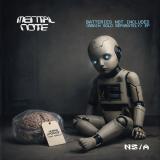
‘Batteries Not Included (Brain Sold Separately)’ EP Arrives Via No Static Automatic
No Static Automatic is proud to announce the new EP from UK Electro legend Phil Klein under his Mental Note alias. Titled “Batteries Not Included (Brain Sold Separately),” this release marks the dynamic follow-up to the acclaimed 2020 debut “Voices In My Head (Noises In My Pants).”
Few authentic Electro producers from the UK can wear the badge ‘legend’ with the same level of justification as Phil Klein, aka Bass Junkie. Active since the late 80s, Klein has tirelessly shaped his distinct vision of Electro, both as a solo artist and through storied collaborations with icons like Dynamix II, Keith Tenniswood (Radioactiveman), and Si Brown (Dexorcist). As a DJ, remixer, live act, and the driving force behind the seminal Battle Trax label, his influence is woven into the fabric of the genre.
With essential releases on labels including DMX Krew’s Breakin’ Records, Andrea Parker’s Touchin’ Bass, and Billy Nasty’s Elektrix, the Bass Junkie sound seamlessly bridges the old-school beats of Electro’s origins with a potent, borderline-industrial edge. As noted by Andy Barton of Bass Agenda: “From funky to ferocious, Bass Junkie’s discography is a must-have for anyone claiming passion for the genre – influential, individual, and infectious with every beat.”
Now, as Mental Note, Klein continues his exploration of electronic psychedelia. The new EP, “Batteries Not Included (Brain Sold Separately),” is a four-track expedition through the Electro cosmos:
“Brainwash” immerses the listener in swirling, hypnotic synths.
“They're Not Blue, They’re Purple” delivers a masterclass in crunchy, textured drums.
“Primordial Soup” showcases frantic, intricate programming.
“Kluster Funk” offers a moment of deep, sonic relief and groove.
Each track reinforces Mental Note’s signature: a journey that is cerebral, raw, and irresistibly rhythmic.
About Bass Junkie/Mental Note:
Phil Klein, operating primarily under the alias Bass Junkie, is a cornerstone of the UK Electro scene. For over three decades, his work has defined and evolved the sound, earning him a revered status among peers and purists. His Mental Note project is a focused outlet for a deeper, more experimental strand of his production genius, further solidifying his legacy as an electronic music innovator.

José González has delivered a new album, Against the Dying of the Light, a companion and further meditation on the themes of his critically acclaimed album, Local Valley. Where Local Valley turned inward toward place, language, and personal reflection, this new record widens its gaze, becoming an urgent call to preserve the light of humanity with all its flaws, at a moment when, technology increasingly shapes how we think, feel, and relate to one another.
While José has always embraced technological advancement, he questions the assumption that every new possibility must be pursued to its maximum potential, especially when progress comes at the expense of human flourishing, attention, and empathy.
Keeping in the tradition of folk music as protest, José’s new single — sharing its title with the forthcoming album — urges listeners to resist systems that dehumanize and divide: “Disconnect from every algorithm, every perverse incentive that drags you down. Let’s rebel against the replicators, against the dying of the light. Kill the codes that feed the hate, keep the codes that make you thrive, celebrate the **king fact that we’re alive.”
Across the album, González works within a deliberately minimal framework, pushing his familiar palette to new heights through subtle variation, restraint, and detail. Each song unfolds with its own distinct character, proving how much emotional and musical range can be achieved within self - imposed limitations. Written in English, Swedish, and Spanish, the record reflects his Swedish - Argentine roots and frames its humanist message as a global one rather than a purely personal or political statement.
José González is one of the most quietly influential artists of our generation. The Swedish - Argentine artist has built a singular musical world from hypnotic, minimal guitar work and his unmistakably gentle voice — a sound that has become deeply personal to millions of listeners worldwide. With billions of streams across platforms and hundreds of thousands of physical records sold, González’s songs often act as emotional landmarks. Ask almost anyone, and they can name at least one of his tracks tied to a defining moment in their lives.

- 1-: Fire Graphics
- 2: Secret Speech
- 3: Ex-Human Shield
- 4: History's Biggest T-Shirts
- 5: Not A Sound In Heaven
- 6: Company Town
- 7: You Can't Say Dallas Doesn't Love You
Bristol experimental band SUGAR HORSE are delighted to announce that their third album, Not A Sound In Heaven, will be released on 10th April 2026 via Fat Dracula Records.
To celebrate the news, the band are sharing the bruising lead single ‘Secret Speech’, available to stream on all good digital service providers from 12th February 2026.
Also announced today are a run of April 2026 UK album headline tour dates and an appearance at StrangeForms Festival 2026, with tickets on sale now (see below for full listings).
“We are fortunate enough to live in what is generally known as ‘The West’,” says front man Ash Tubb of the lyrical themes behind the new track. “I say fortunate with gritted teeth, because I know—as I’m sure the reader knows—that living in the West isn’t always rosy. The vast majority of people struggle everyday to feed, clothe and house themselves. Let alone receive adequate healthcare, schooling and workers’ rights.”
“We are, however, where all the world’s wealth is hoarded. We are at the centre of Empire. The people outside of this empire—those of the Global South—have had their resources extracted and their populations exploited by our own governments, with very little given back in return. This won’t go on forever. It will inevitably end, as all great empires do.”
“We in The West have a choice to make in the meantime; either help create a new, fairer world, or let the greed of our ruling classes become the undoing of all of us.”
The first glimpse of new material from the quartet, ‘Secret Speech’ starts as Not A Sound In Heaven means to go on—a politically-charged wrecking ball of a song that smashes its way through the often unbelievable chaos and brutality of the 21st century with vitriolic malice.
How do you capture the machinations of the geo-political industrial war machine—and all the horrors that go with it—in the studio, without seeming trite or crass? That’s the question that Sugar Horse have posed themselves on their forthcoming third album Not A Sound In Heaven, and they must surely be one of the only bands in existence capable of delivering on just that premise with both musical substance and cutting philosophical insight.
“Ever since I was born I can remember visions of war, famine, and death being beamed directly into my living room via the magic of television,” says Tubb of the record. “These visions were accompanied by newsreader narratives designed to either humanise or dehumanise the people involved. We humanise our government’s allies and dehumanise their enemies. This is taken as common sense, or even wisdom to some degree. People watch the news and accept it as fact, simple and true.”
“As a person gets older they move in one of three different directions with this acceptance of reality; They embrace what they’re being told, they fall into a kind of trust free nihilism or they learn that there are deeper narratives at play.”
“Not A Sound In Heaven is an aged acceptance of the latter. An acceptance of sitting at the centre of a global empire of both military and economic dimensions. An acceptance that the stories we’re told as a nation, or what’s generally in the zeitgeist, isn’t necessarily reality itself.”
“How does a person cope with the weight—and, frankly, the guilt—of a society that perpetuates such distinct inequalities? A society that thinks a bit of killing abroad is fine, as long as it improves the lives of people at home. You can see why so many choose to embrace it. Hell, nihilism seems pretty sensible. Once a person decides upon pursuing a degree of truth however, things get a bit depressing. Beyond depressing...maddening.”
“This album explores this kind of breezy, frivolous subject matter in a manner that will no doubt be uplifting to the listener and massively financially rewarding for the artist.”
The new album follows on from their standalone AA single ‘What’s Your ETA? Let’s Have A Tear Up’/‘Would You Like Me To Be The Cat?’ which was released late last year as a surprise double drop.

- Bland Stenar
- En Munfull Sand
- Dunans Torka
- Bland Träden
- Boreala Ändlösheten
- Du Ska Fa Se
- Frusen Mossa
- Lodröda Rubiner
Mit Taiga Trans legt das schwedische Kollektiv Fauna ein Debütalbum vor, das unmittelbar in seinen Bann zieht: ein hypnotischer Mix aus krautrockender Motorik, psychedelischer Ritualenergie und der pulsierenden Wucht eines nächtlichen Raves. Die neun Musikerinnen und Musiker erschaffen einen Klangraum, der gleichzeitig archaisch und hypermodern wirkt - ein Ort, an dem traditionelle Instrumente und elektronische Texturen ineinandergreifen und ein multisensorisches Musikerlebnis formen. Elektronische Windgeräusche, feine perkussive Muster, das sirrende Schnalzen einer Maultrommel und die flirrenden Linien des türkischen Saz treffen auf verzerrte Gitarren, tiefen Bassdruck und vier-Viertel-Grooves. Fauna verbindet diese Elemente zu einer energiegeladenen Soundreise, die sich jenseits kultureller und zeitlicher Grenzen bewegt. Die Wurzeln des Projekts liegen in freien Jams des Gitarristen Tommie Ek und Bassisten Ibrahim Shabo, dessen syrischer Hintergrund ebenso in die Musik hineinwirkt wie die französischen, finnischen, polnischen, schwedischen und türkischen Einflüsse der anderen Mitglieder. Vocals in gebrochenem Arabisch, Schwedisch und Französisch verstärken die tranceartige Wirkung der Kompositionen, ohne sich in eindeutige Bedeutungen zu drängen. Taiga Trans destilliert die improvisatorische Live-Energie der Band in acht verdichtete Stücke, die gleichermaßen clubtauglich wie spirituell aufgeladen wirken. Ein Album zum Abtauchen, zum Loslassen - und zum Wiederhören.

- A1: Eat Me!
- A2: Non Sugar Life
- A3: Welcome Vip
- A4: Sugar Life
- A5: Capone Gang Bege's Theme
- A6: Luffy's Feelings, Come Back Sanji!
- A7: Charlotte Pudding - Hidden Face
- A8: Sanji Moist Cigarette
- A9: Sanji's True Feelings
- B1: Germa 66 Transform!! Ver 1
- B2: Germa 66 Transform!! Ver 2
- B3: Badend Musical Ver 1
- B4: Badend Musical Ver 2
- B5: Soul Pocus “Song Of The Queen”
- B6: Katakuri's Theme
- B7: We Are! Reconciliation Ver
16
Whole Cake Island: Sweets and Dangers in an Unforgiving World! As Luffy and his crew face an Emperor, Big Mom, for the first time, they must join forces to save Sanji in the extravagant kingdom of Totto Land.
Composer: Kohei Tanaka
Kohei Tanaka has been a lyricist, composer and arranger for a multitude of animated works and video games, including Sakura Wars, Assassination Classroom and the One Piece saga, since its inception.

- 01: Glass Mask On
- 02: Celebrity Culture Simp Farm
- 03: Please Just Make It Stop
- 04: No Laughter Left In Me
- 05: Weaponizing My Failures
- 06: Unthinking My Every Thought
- 07: Insignificant Other
- 08: It Keeps On Stinging
- 09: I Took A Pill In Vilvoorde
- 10: Suffering In Technicolor
DOODSESKADER clearly haven’t had enough of redefining boundaries – they’ve only just gotten started. Tim De Gieter and Sigfried Burroughs return on April 3rd, 2026 with their third full-length album, The Change Is Me, a rollercoaster that can only be described as the unstable lovechild between witch house, hip-hop, industrial dream pop, and stadium rock that can’t decide if it wants to watch the world burn or shout from the rooftops that we need to save it. Their combination of grungy 90s melodies with distorted synths, sludgy bass, hard tuned vocals, rapping, singing, and explosions of undiluted rage at the current state of the world leave you wondering just exactly what it was you smoked last night, and if it was too much or not enough. The Change Is Me is an album that grabs you by the arm and asks if you’re ready to go on a grand adventure, then pulls you into its chaos before you can say “yes” or “no.”
Tim and Sigfried aren’t just breaking the boundaries between genres; they’re breaking out of their own Year cycle, a path they had laid out for themselves at the band’s inception in 2020. Up until now, the duo had set out to document their “journey to getting better” through writing one album each year: Year Zero (2020), Year One (2022), and most recently Year Two (2024). After spending eight months throughout 2024 and 2025 writing, recording, producing and mixing Year Three, the band scrapped the finished record entirely. Playing shows while simultaneously navigating the process of mixing Year Three created a sort of disconnect – the people that they were when they wrote that record and the people that playing shows made them become were no longer one and the same. “We’re people with faults and strengths, and we realized we needed to accept it. That’s equal parts bleak and liberating. If you’re so focused on self-improvement, you can’t even applaud yourself for how far you’ve come,” the band explains. “This project is meant to be a document of us and of the human condition, not a self-improvement handbook designed to keep us all stuck on what may or may not have happened to us or because of us in the past.”
DOODSESKADER chose instead to embark anew on a week-long creative journey in Tim’s own Much Luv Studio with one goal in mind: to make an album that captures who they are right now. Finally writing everything together in the same room for the first time in years, the process of bringing "The Change Is Me" to life was captured by Diana Lungu in their latest documentary, "Now I Know You See Me", out December 2nd, 2025.
"The Change Is Me" marks the beginning of DOODSESKADER’s shift into a more positive era, both musically and conceptually. Over the course of the 40-minute record we hear the two friends unite in a fight against a world that grows more and more disappointing, a concept made crystal clear in tracks like “Celebrity Culture Simp Farm,” “It Keeps On Stinging,” and of course the album’s epic closer “Suffering In Technicolor.” While their previous albums saw them trying to outrun their pasts and arrive at a better version of themselves, here the search for some external or internal revelation that will “make them better” is no more. It’s been replaced by the realization that change isn’t something we force: it’s gradual, and more importantly, it’s something that’s already there – we just need to reach out and accept it.
The band’s live appearances over the last several years have been instrumental in shaping their ideology. On stage is where the duo find connection; not only with the audience, but also with each other. Their sold-out release shows at Ancienne Belgique (2022) and VierNulVier (2024) have proven that they are one of Belgium’s must-see acts. Abroad, their energy has translated into a month-long EU/UK tour with French band Alcest in 2024, as well as appearances at festivals such as Roadburn Festival (NL), Eurosonic (NL), Hellfest (FR), Mystic Fest (PL), Jera On Air (NL), ArcTanGent (UK), Fluff Fest (CZ) and more.
"The Change Is Me" is out April 3rd, 2026 on DOODSESKADER’s own label, 45 Records.

- 1: Paints A Picture
- 2: Clipping
- 3: Isolation
- 4: Theoretical
- 5: Breakfast
- 6: Mold
- 7: Nothing
- 8: Unwound
- 9: Mustard
- 10: Village
- 11: Sanctuary
- 12: Ooo
Special Friend have become the masters of weaving elegant and sophisticated pop musical webs while staying true to their low-fi indiepop roots. The French/American duo (Guillaume on guitar and vocals, Erica on drums and vocals) manage to create a sound like no other band. When they play live, audiences marvel at the huge, intricate structures the band construct, while falling in love with the crystal-clear vocal melodies that are threaded in between the shards of guitar and the rattle of the drums. How can a duo achieve so much? UK audiences will be able to ponder this question in March: Special Friend are coming over from France to do a substantial tour of the UK. These shows are highly recommended!
The new album is more diverse that the last, with the high-tempo indiepop of first single ‘Breakfast’, the majestic, Yo La Tengo-like dreampop of ‘Clipping’ and the country-ish, gentle, homesick melancholy of ‘Isolation’. Final track ‘OOO’ is a bold piece of Krautrock-inspired experimentation; ‘Mold’ is a beautiful slice of slowcore and opener ‘Paint A Picture’ is modern pop at its catchiest and most direct.
‘Clipping’, the album title, refers to the discipline of pruning growth back, removing dead wood to create a perfectly shaped tree with abundant blossoms: an accurate description of the album, and of the songs that hang from its elegant branches. The album artwork is by Erica: Special Friend are in control of every aspect of this elegant artefact.
‘Clipping’ was recorded in 2025 at Studio Claudio by Alexis Fugain and Margaux Bouchaudon. Set in an isolated rural environment conducive to immersion, the band had seven days in the studio—significantly more than for previous records—allowing for greater care in the recording process, particularly for vocals and arrangements. Several tracks feature synthesizers and organs, acoustic guitar, and even an electric bass on “Sanctuary,” a first for Special Friend. Overall, the record benefits from a more developed and detailed production while preserving the band’s direct approach and spontaneity.
The album was mixed by Syd Kemp, who has worked with artists such as Thurston Moore, Ulrika Spacek, Caroline, Crack Cloud, and Vanishing Twin.
Special Friend’s previous album on Skep Wax, ‘Wait Until The Flames Come Rushing In’ was an underground hit, with a significant amount of airplay in the UK and in the US.
‘Clipping’ is a co-release with Howlin Banana Records and Hidden Bay Records (both in France). Skep Wax is proud to present the album in the UK and in North America.

- Eat Your Greens
- Mustard Sauce
- Drop Top
- Parlor Change
- Emeralds
- Letter To Brother Ben
- Francisco Smack
- Jolene
- Lion's Mane
- Red Dog
- Queen Of My Heart
Auf ,Emeralds", dem zweiten Longplayer von Parlor Greens, präsentiert das Trio eine sorgfältig zusammengestellte Auswahl dessen, was funkige Orgelmusik leisten kann. Drei wahre Meister ihres Fachs: Tim Carman (ehemals GA-20) am Schlagzeug, Jimmy James (True Loves, ehemals Delvon Lamarr Organ Trio) an der Gitarre und Adam Scone (Scone Cash Players, The Sugarman 3) an der Orgel. Erfahrene und gefühlvolle Profis, die sich zusammengetan haben, um mitreißende, funkige Instrumental-Jams zu kreieren. Parlor Greens sind in Bestform: Sie sind eingespielt und selbstbewusster denn je, was ihre Identität und ihre Ausrichtung betrifft. Der Opener des Albums, ,Eat Your Greens", beginnt mit einem von Charles Earland inspirierten Four-on-the-Floor-Beat, wobei Jimmy und Scone den Song wie einen überladenen Güterzug vorantreiben, der einfach nicht zu stoppen ist. Greens", startet mit einem von Charles Earland inspirierten Four-on-the-Floor-Beat, wobei Jimmy und Scone den Song wie einen überladenen Güterzug vorantreiben, der einfach nicht zu stoppen ist. ,Lion's Mane" zeigt eine etwas raffiniertere Seite des Trios, mit Anspielungen auf einen von Scones Orgelmentoren , den unvergleichlichen Dr. Lonnie Smith. Um seinen Bandkollegen in nichts nachzustehen, demonstriert Tim Carman in ,Letter To Brother Ben", einem gospelartigen Shuffler, warum er den besten Shuffle diesseits des Mississippi spielt. Und obwohl die Ergebnisse stärker denn je sind, war die Stimmung bei dieser zweiten Aufnahmesession ganz anders. Als sich die drei zum ersten Mal in Loveland im Colemine's Portage Lounge Studio trafen, war die Atmosphäre von einer gewissen Frische geprägt. Es war neu, es war das erste Mal, dass sie alle zusammen spielten. Es war aufregend, es war Neuland. Die Session für Emeralds lastete viel schwerer auf allen drei Mitgliedern. Da alle drei mit persönlichen Tragödien in ihrem individuellen Leben zu kämpfen hatten, war die Session für die Gruppe ein echter Moment der Freude. Nur drei talentierte Musiker, die nun als Freunde in einer vertrauten Umgebung Musik schreiben und spielen. Nirgendwo wird die Bedeutung dieser Session deutlicher als beim letzten Titel des Albums, ,Queen Of My Heart", einem Stück, das Jimmy für seine Mutter kurz nach ihrem Tod geschrieben hat. Mit schwerem Herzen und voller Emotionen ist Colemine Records sehr stolz darauf, das zweite Album dieser drei Meister präsentieren zu dürfen. Parlor Greens präsentiert_ Emeralds.

11
Auf ,Emeralds", dem zweiten Longplayer von Parlor Greens, präsentiert das Trio eine sorgfältig zusammengestellte Auswahl dessen, was funkige Orgelmusik leisten kann. Drei wahre Meister ihres Fachs: Tim Carman (ehemals GA-20) am Schlagzeug, Jimmy James (True Loves, ehemals Delvon Lamarr Organ Trio) an der Gitarre und Adam Scone (Scone Cash Players, The Sugarman 3) an der Orgel. Erfahrene und gefühlvolle Profis, die sich zusammengetan haben, um mitreißende, funkige Instrumental-Jams zu kreieren. Parlor Greens sind in Bestform: Sie sind eingespielt und selbstbewusster denn je, was ihre Identität und ihre Ausrichtung betrifft. Der Opener des Albums, ,Eat Your Greens", beginnt mit einem von Charles Earland inspirierten Four-on-the-Floor-Beat, wobei Jimmy und Scone den Song wie einen überladenen Güterzug vorantreiben, der einfach nicht zu stoppen ist. Greens", startet mit einem von Charles Earland inspirierten Four-on-the-Floor-Beat, wobei Jimmy und Scone den Song wie einen überladenen Güterzug vorantreiben, der einfach nicht zu stoppen ist. ,Lion's Mane" zeigt eine etwas raffiniertere Seite des Trios, mit Anspielungen auf einen von Scones Orgelmentoren , den unvergleichlichen Dr. Lonnie Smith. Um seinen Bandkollegen in nichts nachzustehen, demonstriert Tim Carman in ,Letter To Brother Ben", einem gospelartigen Shuffler, warum er den besten Shuffle diesseits des Mississippi spielt. Und obwohl die Ergebnisse stärker denn je sind, war die Stimmung bei dieser zweiten Aufnahmesession ganz anders. Als sich die drei zum ersten Mal in Loveland im Colemine's Portage Lounge Studio trafen, war die Atmosphäre von einer gewissen Frische geprägt. Es war neu, es war das erste Mal, dass sie alle zusammen spielten. Es war aufregend, es war Neuland. Die Session für Emeralds lastete viel schwerer auf allen drei Mitgliedern. Da alle drei mit persönlichen Tragödien in ihrem individuellen Leben zu kämpfen hatten, war die Session für die Gruppe ein echter Moment der Freude. Nur drei talentierte Musiker, die nun als Freunde in einer vertrauten Umgebung Musik schreiben und spielen. Nirgendwo wird die Bedeutung dieser Session deutlicher als beim letzten Titel des Albums, ,Queen Of My Heart", einem Stück, das Jimmy für seine Mutter kurz nach ihrem Tod geschrieben hat. Mit schwerem Herzen und voller Emotionen ist Colemine Records sehr stolz darauf, das zweite Album dieser drei Meister präsentieren zu dürfen. Parlor Greens präsentiert_ Emeralds.

11
Auf ,Emeralds", dem zweiten Longplayer von Parlor Greens, präsentiert das Trio eine sorgfältig zusammengestellte Auswahl dessen, was funkige Orgelmusik leisten kann. Drei wahre Meister ihres Fachs: Tim Carman (ehemals GA-20) am Schlagzeug, Jimmy James (True Loves, ehemals Delvon Lamarr Organ Trio) an der Gitarre und Adam Scone (Scone Cash Players, The Sugarman 3) an der Orgel. Erfahrene und gefühlvolle Profis, die sich zusammengetan haben, um mitreißende, funkige Instrumental-Jams zu kreieren. Parlor Greens sind in Bestform: Sie sind eingespielt und selbstbewusster denn je, was ihre Identität und ihre Ausrichtung betrifft. Der Opener des Albums, ,Eat Your Greens", beginnt mit einem von Charles Earland inspirierten Four-on-the-Floor-Beat, wobei Jimmy und Scone den Song wie einen überladenen Güterzug vorantreiben, der einfach nicht zu stoppen ist. Greens", startet mit einem von Charles Earland inspirierten Four-on-the-Floor-Beat, wobei Jimmy und Scone den Song wie einen überladenen Güterzug vorantreiben, der einfach nicht zu stoppen ist. ,Lion's Mane" zeigt eine etwas raffiniertere Seite des Trios, mit Anspielungen auf einen von Scones Orgelmentoren , den unvergleichlichen Dr. Lonnie Smith. Um seinen Bandkollegen in nichts nachzustehen, demonstriert Tim Carman in ,Letter To Brother Ben", einem gospelartigen Shuffler, warum er den besten Shuffle diesseits des Mississippi spielt. Und obwohl die Ergebnisse stärker denn je sind, war die Stimmung bei dieser zweiten Aufnahmesession ganz anders. Als sich die drei zum ersten Mal in Loveland im Colemine's Portage Lounge Studio trafen, war die Atmosphäre von einer gewissen Frische geprägt. Es war neu, es war das erste Mal, dass sie alle zusammen spielten. Es war aufregend, es war Neuland. Die Session für Emeralds lastete viel schwerer auf allen drei Mitgliedern. Da alle drei mit persönlichen Tragödien in ihrem individuellen Leben zu kämpfen hatten, war die Session für die Gruppe ein echter Moment der Freude. Nur drei talentierte Musiker, die nun als Freunde in einer vertrauten Umgebung Musik schreiben und spielen. Nirgendwo wird die Bedeutung dieser Session deutlicher als beim letzten Titel des Albums, ,Queen Of My Heart", einem Stück, das Jimmy für seine Mutter kurz nach ihrem Tod geschrieben hat. Mit schwerem Herzen und voller Emotionen ist Colemine Records sehr stolz darauf, das zweite Album dieser drei Meister präsentieren zu dürfen. Parlor Greens präsentiert_ Emeralds.

8
Past Due Records is thrilled to announce the release of Midnight Blue's "One Wish - South Carolina 1975-83," a compilation showcasing the legendary funk and modern soul band from Columbia. This limited edition double LP compilation is an exclusive collection highlighting the band's peak during the mid-1980s American boogie funk era. Formed in 1975, Midnight Blue blended the talents of local musicians Myron Alford, Robert Hoefer, Jr., Ronnie Amiker, and many others. Despite their underground status, their music left a lasting impact, performing alongside legends like Midnight Star and Prince. The compilation includes their debut single "Feel It and Groove Together," their powerful rendition of "I Who Have Nothing," and unreleased tracks recorded with Cameo's Larry Blackmon. Fan favorites such as "All Because of You" and "Coolin' Out" will also be featured. This double LP comes with a full story and many never-before-seen pictures of the band, making it a must-have for any fan of eighties funk, courtesy of Past Due Records.

- 1: Duck Tape
- 2: Pcb
- 3: Macho Nacho
- 4: The Wind
- 5: Everything I Must
- 6: In Love
- 7: Live Laugh Love
- 8: Five Guitars
- 9: Toads On Roads
- 10: Pretty People
Topsy Turvy sind zurück und bereit für den Kampf. Mit ihrem Space-Age-Glam-Look ist ,Fighting the Ginormous Macho Nacho" das zweite Album des Wiener Trios, das respektlos, clever und immer verspielt ist. Mit Instrumententausch, opernhaften Vocals und jeder Menge Van-Halen-Synthesizern webt die Band eine unruhige Mischung aus Garage-Punk, Surf, Vintage-Rock und Psychedelia, die sich an den legendären ,Girls In The Garage"-Compilations orientiert und bis hin zum knurrenden Trotz von Amyl and The Sniffers oder Automatic reicht. Entstanden aus der kollaborativen Szene einer produktiven DIY-Szene in Wien, ist es nicht nur das bisher fokussierteste Werk der Band, sondern auch ein Hochgesang des unabhängigen Geistes, eine lebendige, atmende Rebellion gegen toxische ,Macho Nacho"-Männer auf der ganzen Welt. Topsy Turvy's "Fighting The Ginormous Macho Nacho" ist die zweite Veröffentlichung der Band, nicht lang nach ihrem gefeierten Debütalbum "But Sore" aus dem Sommer 2024. Vinyl-LP inklusive Din A2 Poster.

- A1: Hela
- A2: Sea Of Corpses
- A3: Gramr
- A4: Helheim
- A5: Surtr
- A6: Shadow
- A7: River Of Knives
- A8: The Northmen
- A9: Valravn
- A10: Dillion
- B1: The One They Call Master
- B2: Who Is Changed And Who Is Not
- B3: The Past Is Never Past
- B4: A Rite Of Blood And Fire
- B5: Seidh
- B6: The Heart Of Darkness
- B7: Wisdom Has A Price
- B8: Sacrifices Must Have Meaning
- B9: When It All Went To Hell
- B10: Leap Of Faith
- B11: Illtauga
- B12: The Ones Who Hide
- B13: Thorgestr
9
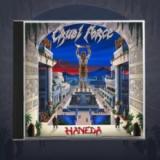
While many have tried to emulate the ancient German (black)thrash sound, CRUEL FORCE brimmed with an authenticity that could not be denied, as well as songwriting that added to that noble tradition rather than lazily picking at its corpse. Their two successive albums, 2010's The Rise of Satanic Might and 2011's Under the Sign of the Moon, made CRUEL FORCE a certifiably CULT name in the international metal underground. Sadly, the band fell into a hiatus following that second album, but returned reinvigorated with the comeback 7" EP Across the Styx in 2022 and, a year later, the glorious full- length Dawn of the Axe at the hands of new label home SHADOW KINGDOM. Continuing to make up for lost time, CRUEL FORCE storm back with swords gleaming high on their fourth full- length, Haneda.
Where a line could be drawn between the band's "first era" of The Rise of Satanic Might / Under the Sign of the Moon, so continues this Second Era that began with Dawn of the Axe - one that harkens to the "Jurassic period" of heavy metal, when everything was rawer, less polished, and more energetic and powerful. As displayed by that pivotal predecessor, Haneda further proves that CRUEL FORCE are more so an old-style speed metal band, largely bereft of that blackened edge during their First Era. The tradeoff is that there's a prominent mysticism coursing through that speed, and the blue-collared aspect of Dawn of the Axe is now spit-shined to a lethal slickness that makes Haneda hit that much harder.
However, it must be stressed that, while it follows logically from Dawn of the Axe, Haneda is very much its own headspace, its own continuation of a still-vital aesthetic. At times more epic, exuding both more and different atmospheres, CRUEL FORCE here take the listener on a journey from old temples to desert planes, from deep jungles to mountain tops, and other mysterious locales beyond; indeed, the whole record is like a journey through mystical realms. Although no concept album, Haneda is very conceptual in its aesthetics, even down to its production: BIG and naturaltoned, from the guitars to especially the drums, everything here is as '80s and authentic as possible, underlining

- A1: A Perfect Storm
- A2: Etyd
- A3: Against The Dying Of The Light
- A4: For Every Dusk
- A5: Sheet
- A6: Pajarito
- A7: Losing Game (Sick)
- B8: Ay Querida
- B9: U / Rawls Slöja
- B10: Gymnasten
- B11: Just A Rock
- B12: You & We
- B13: Joy (Can’t Help But Sing)
También disponible
White Vinyl[28,99 €]
José González has delivered a new album, Against the Dying of the Light, a companion and further meditation on the themes of his critically acclaimed album, Local Valley. Where Local Valley turned inward toward place, language, and personal reflection, this new record widens its gaze, becoming an urgent call to preserve the light of humanity with all its flaws, at a moment when, technology increasingly shapes how we think, feel, and relate to one another.
While José has always embraced technological advancement, he questions the assumption that every new possibility must be pursued to its maximum potential, especially when progress comes at the expense of human flourishing, attention, and empathy.
Keeping in the tradition of folk music as protest, José’s new single — sharing its title with the forthcoming album — urges listeners to resist systems that dehumanize and divide: “Disconnect from every algorithm, every perverse incentive that drags you down. Let’s rebel against the replicators, against the dying of the light. Kill the codes that feed the hate, keep the codes that make you thrive, celebrate the **king fact that we’re alive.”
Across the album, González works within a deliberately minimal framework, pushing his familiar palette to new heights through subtle variation, restraint, and detail. Each song unfolds with its own distinct character, proving how much emotional and musical range can be achieved within self - imposed limitations. Written in English, Swedish, and Spanish, the record reflects his Swedish - Argentine roots and frames its humanist message as a global one rather than a purely personal or political statement.
José González is one of the most quietly influential artists of our generation. The Swedish - Argentine artist has built a singular musical world from hypnotic, minimal guitar work and his unmistakably gentle voice — a sound that has become deeply personal to millions of listeners worldwide. With billions of streams across platforms and hundreds of thousands of physical records sold, González’s songs often act as emotional landmarks. Ask almost anyone, and they can name at least one of his tracks tied to a defining moment in their lives.


5
2026 Repress
Bosconi Records, the Florence-based imprint run by Fabio Della Torre, is back with something truly special. Over the years, the label has built a reputation for pushing house, funk and electro in all their shades, always keeping a strong link between the local scene and international legends. And when it comes to legends, there are few names that shine brighter than Alexander Robotnick.
The Italian electro pioneer – aka Maurizio Dami – has already collaborated with Bosconi on The Hidden Game and Italcimenti Under Construction. Now he returns with My La(te)st EP, a vinyl-only release that pulls five standout cuts from his 2007 CD My La(te)st Album and finally makes them available on wax. All tracks have been remastered for the vinyl format, enhancing their depth and dynamics to deliver the best possible experience on wax.
The EP opens with “Jette Le Masque (Extended Version)”, driven by a pumping bassline and jagged sawtooth synths, with whispered French vocals by Robotnick himself. Stretched out and more DJ-friendly than the original, this version is tailor-made for the dancefloor.
On “We Love The Music” things get fun and funky: vocoder vocals, an electro-funk bounce and that unmistakable Robotnick irony. A killer cut to start a set on the right foot.
Flip the record and you dive into the acidic depths of “I’m Getting Lost In My Brain”. Old-school Chicago vibes, a hypnotic groove and basslines that just don’t quit – a peak-time weapon that feels raw and timeless.
Then comes “A Coffee Shop in Rotterdam”, one of those secret gems: melodic, laid-back and warm, built on a slapping bass and dreamy arpeggios. It has that Riviera house touch from the ’90s, but with Robotnick’s unmistakable twist.
Closing the EP is “Addio” – a track that wears its heart on its sleeve. Romantic, emotional, and driven by a bassline that nods back to Robotnick’s all-time classic Problèmes d’Amour. A perfect goodbye track, the kind that leaves a smile on your face as the lights come on.
This is a must-have for vinyl lovers and Robotnick fans alike – five cuts carefully remastered for the vinyl format, pressed exclusively on wax and ready to work the floor from start to finish. Don’t sleep on it: limited copies, vinyl only.
