Mutable Ground is an album created through an exchange of recordings between Anna and Yannis. The project is rooted in the idea of sudden shifts in current events and the ever-growing emotions tied to loss, change, and tension. Each track title is inspired by unstable phenomena and objects, reflecting the potential for unexpected movement and the transitions of both nature and humanity. Repetitive, chaotic drum patterns, vocals that echo sounds of wounded or lost animals, hollow soundscapes reveal a sonic world where creation and destruction coexist—where people dance around fires, caught between fragility and resilience.
quête:mutable
- 1
We have the honour to welcome the German based Johannes Volk. Johannes debuts on Eternal Friction Records with a 4 track EP called "Mutable Motor Units". The result is a powerful EP, that clearly demonstrates Johannes Volk unique and personal approach to techno.
"Mutable Motor Units" is filled with powerful grooves, smooth leads and uplifting rhythms. We're very happy to welcome Johannes Volk to Eternal Friction Records. Who knows what the future will bring us. Hopefully these banging tunes can destroy some dancefloors.
The mystifying oracle blesses us with more supernatural selections ! As the spirits return to the other side, it seems they left us a goodbye gift...
By turns a salvia soaked stroll through sweaty disco shamanism, an uptempo synth powered wig-flipper, backed with a Disco-Soca grail & a persuasively pokey paean to North Africa.
As usual, no info to be had, other than a cleverly plotted out Ouija of the label name, some very fetching old school blue master bag sleeves & four incredible cuts of secret origin via the mystifying oracle that is Mutable...
It's been 4 years since the last music compilation on MindTrip. Mutable Minds brings together a mixture of five exceptional and talented artists whose sound matches perfectly with the MindTrip philosophy. Head honcho, Pfirter, and Swedish Pär Grindvik contribute the first track of the release with their diversified collaboration embodied in a hypnotic and extraordinary tune whilst Diego Amura takes the lead with a track that is characterized by driving rhythm and haunting sequences. Savas Pascalidis debuts on the label with a trippy-sci-fi interpretation and the release closes with one of the latest guests on MindTrip Podcast, Fanon Flowers, who takes us into a dark, mental and conceptual techno journey. The final outcome is mesmerizing and all four tracks can be seen on different aspects of an all night long set. This is MindTrip!
Always a rare treat when a ready-formed and devastatingly good project comes our way
Three emails and a delivery truck later, we're very happy to be lending a hand getting this one to good homes the world over
No info to be had, other than a cleverly plotted out Ouija of the label name, some very fetching old school purple master bag sleeves & three incredible cuts of secret origin via the mystifying oracle that is Mutable...
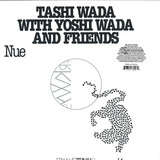
Composer Tashi Wada has performed for years with his father Yoshi Wada—artist, composer, and early member of the Fluxus movement. However, they have rarely appeared together in studio settings. Nue, the fourteenth entry in RVNG Intl.'s intergenerational FRKWYS series, finally brings Tashi and Yoshi, along with an eclectic group of close friends and extended family, together on tape.
Nue draws on aspects of Tashi's background for his widest vision to date—among them the minimalist bagpipe music of Yoshi, who co-composed three of the tracks, the psychoacoustic and perceptual explorations of his mentor, composer James Tenney, and reimagined forms of ancient and devotional music. The album, however, is not a tribute to the past or a recapitulation of familiar sounds. Instead, Nue is an intertwining of people and ideas as a means of growing, of looking inward to move outward, and of looking back to move forward.
To achieve this growth, Tashi assembled a core group of fellow travelers, including Yoshi, composer Julia Holter, producer Cole MGN, and percussionist Corey Fogel, to give life to this multifaceted suite. As an experience, Nue subtly navigates the interactions, intimacy and spaciousness of this group.
The album's title itself is a nod to Tashi's abiding interest in duality and the unknown: nue is a mythological Japanese chimera with the face of a monkey, the legs of a tiger, and a snake for a tail, a composite form, at once disturbing and otherworldly. But, as the composer points out, nue is also French for naked—stripped of complexity, bare and exposed, but also raw and essential.
From the doubling of tones—and the world of harmonic nuances such an action produces—to the rich interplay between individual musicians, all baring their own personalities and experiences through shared performance, Tashi's compositions allow space for these elements to join and grow. The multipartite creature that is an ensemble melds in the simplicity and purity of the music itself.
As explained by Tashi, each part was written with an individual in mind, not simply an instrument. And each individual performer makes their mark, from Holter's vocal performances on the cresting, oceanic 'Mutable Signs' and 'Ondine' with guest vocalists Simone Forti, Jessika Kenney and Laura Steenberge, to Fogel's resonant, precise percussion on 'Bottom of the Sky.' Producer Cole MGN, who has worked extensively with artists like Beck and Ariel Pink, helped to create a world of sound with minimal yet multi-dimensional materials. Like many of its influences, Nue uses deceivingly simple means to create complex, coherent worlds and narratives.
Tashi notes the influence of legendary Brazilian writer Clarice Lispector, whose work looked inward, investigating memory and emotion and dream, to understand the often overwhelming world outside the self. Like Lispector's classic novel Near to the Wild Heart, Nue cleaves these archetypal dualities—world/self, old/new, complex/simple—to create a work that allows them to coalesce into something singular.
As Tashi states in his liner notes: 'My desire was to create something both old and new sounding—ancient and futuristic—and ultimately something of its own world and other. Nue is a vision, an endless night of dreams, and a personal history of sorts, full of joys and demons.'
The Bunker New York is proud to announce the second EP from Mehmet Irdel, also known as Løt.te (pronounced Loat-tey), following his debut release on our label in 2014.
Løt.te's 'History of Discipline' EP features two distinct moods and detailed, industrial-inspired sound design with a firm focus on the dancefloor.

"When I discovered the heavy, dark techno coming out of the U.K. and Japan in the '90s and '00s, like Regis, Surgeon, Female, and Takaaki Itoh, it was a revelation," Irdel says. "Until then, I hadn't realized that techno could reference the grittiness and physicality of industrial music and make it work so well, and feel natural on the dancefloor." These muscular, upbeat techno artists are the perfect reference point for Løt.te's music, but Irdel takes his work one step further, featuring an emotional complexity that many other producers lack. "I'm interested in techno that feels both masculine and feminine at the same time," says Irdel. "These days, most techno feels either very intricate and clean, or very noisy and macho. What interests me is finding an in-between."
True to its name, "History of Discipline" is the darker track here. Built on a foundation of heavy, swinging kick drums and shuffling hi-hats, the track builds to an enormous climax before winding down into a rattle of metallic percussion. "A Mutable Constant" is more ambiguous, featuring a rubbery bassline and steadily-building background percussion - until a moody, longing synthesizer pad begins to take center stage. "I don't honestly know where the emotion in 'A Mutable Constant' came from. That wasn't the plan when I started working on it," recalls Irdel, "but I incorporate a mix of analog synths into my productions, like the Korg MS-20 or Doepfer Dark Energy, and their sounds sometimes surprise me. My production process begins and ends with a computer, but I love being able to have that '90s analog sound' in my work. I'm very conscious of not having any 'overly digital' sounds in my tracks."
Løt.te's latest EP embodies the spirit of techno while simultaneously pushing its sound forward. "Techno, for me, is an experiment in human perception. A way to find the fringes of perception in rhythm, melody, and emotion, to push all the way to the edge, to find the breaking point. I'm trying to push techno's boundaries without ever losing sight of 'what makes techno techno': its restraint and groove."
Nicaraguan-American artist Dagmar Zuniga makes music that feels both intimate and expansive: songs drift like disrupted signals, carried by harmony, tape hiss, and a strong sense of touch. Her debut solo album in filth your mystery is kingdom / far smile peasant in yellow music — written and recorded in New York, Norway, and Athens, Georgia over a period of five years on her longtime companion, the Tascam 424 — was uploaded to Bandcamp and YouTube in January 2025, quickly garnering over two hundred thousand views and the attention of artists such as Mount Eerie, who invited her to tour with them that summer. This year, what was once a jewel of tapped-in algorithms and message boards will meet the world at large, with in filth arriving digitally on March 4, and physically on April 10, via AD 93.
in filth is an atmospheric, devotional collage where one voice multiplies into a chorus of selves, sometimes delicate, sometimes severe; an effect created by Zuniga’s masterful layering of texture and complex harmonies. Synths glitter out like spears of sunlight from beneath clouds of moody, time-distorted guitars, and songs spin about themselves like tightly-wound music boxes, making use of a kind of hypnotic repetition, before melting apart into their components or slipping into the following track.
Zuniga began recording to tape as a teenager, drawn to the physicality of the medium — how a tape recording is fragile, mutable, and alive. Though her ethereal sound may draw easy comparisons to other female pioneers of psychedelic folk, she is influenced just as much by the darker sounds of Syd Barrett and The Fall. Like Barrett, Zuniga is a painter, and she is interested not only in recording music but in creating a full, self-contained artistic universe: she creates her own artwork, merchandise, music videos, and bootleg tapes of new and unfinished music that she exclusively sells at live shows (“If something is not material, it does not exist,” she insists). Her world has not gone unvisited, garnering her a monthly show on NTS Radio ‘World of Pain’, as well as a forthcoming appearance at Rewire Festival in April 2026.
Though Zuniga’s work explores themes of solitude and suffering, the suffering in her songs is not borrowed or displayed; it is held, then opened outward through empathy — an exacting practice of attention that insists on shared ground. Solitude, in her work, is not withdrawal but a starting point for connection. Likewise, over time, her recording process has become increasingly communal, with in filth featuring musicians Hayes Hoey, Austyn Wohlers (Tomato Flower), and Zach Phillips (Fievel Is Glauque). Newer recordings widen the circle even more. For Zuniga, collaboration is a way to “find a place between worlds,” echoing Badiou’s idea of love as a vision refracted through the prism of difference. Meaning emerges there — in the space between voices, between artist and listener. “I hope my music helps people work through difficult experiences,” she says. “The same way it helps me.”
The fifth release on Objekt’s Kapsela imprint is (re)weave, an EP of crystalline club tracks from Detroit-born, London-based producer Tristan Arp.
(re)weave was written during a prolonged period of flux for the artist. “When I started making this record, my life and the world felt like a maze,” he recounts. As he routed and re-routed through past and future homes – Mexico to New York to Detroit to Mexico and finally to London – his output bore the marks of this repeated uprooting. “I was thinking about making music that reflected these twists and turns, and the knotty pathways through them. I was also re-reading Borges around this time, which must have influenced my interest in labyrinths.”
Accordingly, the EP is a mycelial puzzle, a tangle of spidery, undulating ostinatos and earthy percussion, stitched through with syncopated kicks. Employing the sounds of multitudinous critters and kin – whales, insects, thunder, water, forests – the arrangements sum to a sentient mesh of organic matter, the compositions living and breathing like earthly beings. Kaleidoscopic tendrils explore in every direction but are always underpinned by a driving, percussive backbone. It’s not easily classifiable: it’s bass-driven, but to simply call it “bass music” would sell it short.
In keeping with the winding geographical paths traced over the EP’s creation, (re)weave saw Tristan Arp revisiting and reinterpreting unfinished sessions and incorporating them into newer ideas. Rhythms and sounds have been transplanted and self-recycled from previous projects and woven into the fabric of the record. In this way, (re)weave also describes a looping back over time, a recalibration of the self from past to present through interlocking rhythms, channeling and communing with versions of oneself from times gone by.
The closing track, Wish Server, slows the EP to walking pace and hints at tentatively emerging from the deepest jungle into a delicate, innocent light. Tristan Arp imagines it as a dialog with a baby-self. “Some of my earliest memories are of sitting at my mother’s loom,” he offers. “The sequence of these tracks traces these feelings and follows the thread back to the primordial soup… through mazes… to a feeling of levitation.”
Two years after he first appeared on Balmat with 1977, Mike Paradinas returns with 1979. The sense of continuity between the two records is clear, and not just from their titles. Both capture the Planet Mu head venturing into the wilderness, seeking something—half-formed memories, thoughts caught in midair—in some of the most abstract, searching music he has released.
Just like 1977, 1979 surveys a synth-heavy array of ethereal soundscapes, ominous crevasses, and strange, psychedelic fugues. Like its predecessor, the new album’s atmospheric cast sets it apart from much of the work Paradinas has released as μ-Ziq on Planet Mu. It’s not strictly an ambient record, but it’s close, as close as this famously mutable artist ever comes to inhabiting a particular genre.
Paradinas’ inspiration for the record began on visits to the Spanish cities of Ávila and Majadahona, where his family hails from. That might account for the sense that there are spirits flitting through this music, presences you can intuit if not quite grasp. But 1979 is also a record to meet on your own terms, and to find your own meanings in.
It’s a stunning record, every track a world unto itself: the mysterious contours of “Majadahonda at Dawn”; the playful melodic fillips of “Clari”; the airy melancholy of “Galletas”; the full-scale breakbeat abandon (yes, you read that right) of “Houzz 14,” the rarest of dancefloor detours for Balmat. There are echoes of classic braindance and isolationist ambient and golden-age IDM; there are easter eggs and recurring themes and hidden symmetries. Every time we listen, we discover something new. Despite what the title might suggest, it’s less a trip back in time than a portal to another universe, a destination for(to?) which only Mike Paradinas knows the exact coordinates. – Philip Sherburne, Balmat
Theory Therapy is pleased to present ‘we’re here all the time’ by jp (aka J.P Wright) – the New York producer behind one of last year’s shinetiac remixes on the OST label, and a member of Housecraft Recordings’ trip-bient group Ahem.
Compiling several years of well-worn material, the Brooklyn artist’s debut solo LP was the result of many hours of hardware jams and happy accidents, later meticulously edited down into these seven arrangements. Blending first-thought-best-thought spontaneity with extended DAW labouring, Wright delivers some of the most immediate music yet on Theory Therapy.
The album is reminiscent of ’90s and early-’00s IDM. Syncopated rhythms and atmosphere swirl into a mutable whole, as hardcore breakbeat, ambient trance and acidic electro bleed together into a liquid mélange. The sequencing drifts from gauzy, ethereal openings into tensile, club-ready pressure before swerving toward moments of stillness – like lingering in an emptied club hours after the crowd has gone.
There’s a distinct physicality to the music too. Kick patterns jitter like loose live wires, delays ripple through the fog-soaked air, yet the album’s finest moments lie in its more subtle textures and tonal shifts. This is proper braindance that keeps you suspended in its pulse, caught in non-linear time. Wright lets the music wander in unpredictable arcs, moments folding back on themselves, stretching in multiple directions at once – tracing and retracing a memory that refuses to settle.
Mastered and cut by Beau Thomas
Mister Water Wet returns to Soda Gong with "Things Gone and Things Here Still," an album that radically expands the project’s purview while preserving the homespun warmth and oblique tactility that have long defined Iggy Romeu’s work. Where earlier records tilted toward the dusty swing of sample-based beatcraft or spectral minimalist jazz, here Romeu opens the frame to a more ensemble-minded approach, inviting a stellar cast of supporting musicians, including SG alumni Memotone and K. Freund, into the fold.
The result is an album that feels both broader and more intimate, with live instrumentation such as piano, strings, and reeds woven into MWW’s signature lattice of hand percussion, production sleights, and slippery time signatures. Acoustic and electronic textures bend toward each other like plants angling for the same light: bowed strings blur into vaporous pads, brushed drums scatter under riffing guitars, a horn phrase lingers in the same space as a cracked cassette loop.
A tension between decay and presence - the “things gone” and the “things here still” - runs throughout the record. At times, the music evokes a chamber session refracted through waterlogged tape; at others, it recalls the afterimage of a hip-hop instrumental slowed into an oneiric haze. In the world of MWW, memory functions less as nostalgia and more as a living fabric - mutable and resonant. "Things Gone and Things Here Still" finds Iggy Romeu at his most expansive, offering up a generous record of open spaces and porous boundaries.
“Mi Pez Murió Anoche” is the first full-length album by Brayan Valenzuela, marking a definitive shift in his sound from the raw, hard-edged techno of his early work toward a more intimate, textured, and emotionally charged form of electronic music. Released on the Detroit Underground label, the album is a deeply personal sonic exploration, inspired by the mutable and emotional energy of Pisces, shaped by fractured rhythms, ethereal melodies, and a sensibility that blends the introspective with the physical.
Throughout the album, Brayan weaves in elements of jungle, breakbeat, and ambient, maintaining an underground aesthetic while embracing a freer, more narrative approach to composition. The intention is clear: to craft a sonic experience that flows from beginning to end, but also includes moments built for the club. “Rav,” for example, stands out with its driving rhythmic structure and raw energy, designed for the dancefloor, while tracks like “All I Need Is Peace” and “Nancy, She Become a Groupie” explore more contemplative and emotional territory.
“Mi Pez Murió Anoche” is a statement of identity. A work where the visceral meets the cerebral, where nostalgia intertwines with rhythm, and where personal reflection opens into collective experience. It’s an album that resists categorization, aimed at discerning listeners and DJs seeking depth without compromising impact. For anyone following the evolution of forward-thinking electronic music, this is a vital release.
*MILKY CLEAR VINYL - 300 COPIES ONLY FOR WORLD!!* Technology + Teamwork’s fizzling synths, interweaving textures and punchy rhythms are beguiling on their long-awaited debut album We Used To Be Friends. However, at the heart of it all it’s the connection between the group’s two members, Anthony Silvester and Sarah Jones, the friendship the much-travelled duo have managed to maintain for nearly 15 years and a showcase of the slow-burning construction of the electronic world that they’ve surrounded themselves with. We Used To Be Friends is ultimately the tale of two storied artists in their own right, holding onto each other through personal and career twists and turns, relocations and broader movements through respective phases of their lives. Silvester and Jones first met and then collaborated as part of biting post-punk five-piece XX Teens in 2008, eventually breaking off to forge their own path together even as the latter’s demand as a drummer grew. Performing with everyone from Hot Chip, Harry Styles and Bloc Party among many others, Jones has been a constant percussive presence across the sphere of alternative UK pop music – she’s also found time for her own solo project Pillow Person and played on records by the likes of Puscifer and Kurt Vile. Silvester meanwhile has performed in art galleries across Europe including: Fridericianum in Kassel, Kölnischer Kunstverein in Cologne, and Vleeshal in Middelburg, as well as providing sound design and composing work for several art films. Technology + Teamwork is the constant throughout all of that though. “Technology + Teamwork's name perfectly describes how we work” Silvester explains. “Sometimes the teamwork is between each other and sometimes it’s between us and the technology.” Although going by the name Technology + Teamwork as far back as 2014, two events conspired that pulled the project into focus for the pair of them: firstly, Silvester spent a year constructing a soundproof studio shed on the border of London and Essex where he lives. Secondly, inevitably, the pandemic brought the globe-trotting Jones back home to just seven miles away from her long-time collaborator and friend. “We probably hung out more than we had for a few years” says Silvester. “Also, after all her Pillow Person releases Sarah had gotten really good with recording vocals and knowing what did and didn’t work and had a really good home studio set up. We still worked separately though, exchanging ideas via email and WhatsApp.” As with many artists through 2020 and early 2021, working separately was a new necessity that they were forced to adapt to. However, it became clear that there were creative benefits to it. “It really changed our sound and our sounds became a lot more focused as a result” Jones says. “I wanted to use the same ideas of improvisation that I might use while playing the drums for myself and apply that to melodies and lyrics.” The album bristles with hyperpop modernity. You can hear it in the manipulated vocals most prominently on Big Blue’s disco strut and on Moving Too’s heady mix of pitched up voice and burrowing sub bass. However, the pair also looked to San Francisco and the West Coast synthesis movement of the 60s, Silvester inspired by the likes of Suzanne Ciani and Don Buchla. The plaintive lo-fi and melancholy of Amsterdam incorporates Mutable Instrument’s Marbles by Émilie Gillet which – inspired by Buchla’s own synthesis work – outputs random voltages to give the track an air of unpredictability. It’s something that occurs throughout the album, the duo revelling in the happy accidents that disrupt the flow of their hook-laden pop. “The ‘Buchlian’ ideas of music having randomness and uncertainty, completely freed us up” Silvester explains. “It felt a bit like having more members in the band, machines that didn't do what you expected or intended.” Perhaps more subtly, is the influence of 17th and 18th century Baroque music, with Silvester drawing a line between it and the 90’s R’n’B he and Jones both love – exemplified perhaps best on K+B’s percussive claps and sultry grooves. The portentous juddering synthpop of the title track, meanwhile, alludes specifically to Handel’s Sarabande. It’s typical of an album that only needs a scratch of its seemingly glossy surface to unearth a myriad of contorted touchstones and reference points that’ve fermented beneath it. Thematically there’s an anxious sense to the record, with tracks often balancing above a quiet sense of unerring tension even at their most bombastic. Moving Too is the result of an existential doubt that hit Silvester while out cycling, with the outro refrain "it's not enough to die you also have to be forgotten" a take on something Samuel Beckett once said. These worries are echoed on the album’s closing track What A Year, which borrows a lot of lines from the late drag performer and fashion designer Dorian Corey including the grimly defiant "you're gonna leave your mark somewhere in this world just by getting through it”. Those clouds offer a counter point to We Used To Be Friends, but then isn’t that what great pop albums do? Technology + Teamwork undoubtedly love the craft of the hook and the song, but they always position themselves left of centre, prepared to scuff things up, pull something out of shape or manipulate something to leave it sounding warped. Much like their friendship, nothing here is particularly linear – and it’s all the better for it. Bio: Anthony Silvester & Sarah Jones first collaborated as part of biting post-punk five piece XX Teens in 2008, eventually breaking off to forge their own path together even as the latter's demand as a drummer grew. Performing with everyone from Hot Chip, Bat for Lashes, Harry Styles and Bloc Party (among many others), Jones has been a constant percussive presence across the sphere of alternative UK pop music - she's also found time for her own solo project Pillow Person and played on records by the likes of Puscifer and Kurt Vile. Silvester meanwhile has performed in art galleries across Europe including Fridericianum in Kassel, Kölnischer Kunstverein in Cologne, and Wleeshal in Middelburg, as well as providing sound design and composing work for several art films. Technology & Teamwork is the constant throughout all of that though. "We Used To Be Friends" proves that Technology & Teamwork undoubtedly love the craft of the hook and the song, but they always position themselves left of centre, prepared to scuff things up, pull something out of shape or manipulate something to leave it sounding warped. Much like their friendship, nothing hear is particularly linear - and it's all the better for it.
- 1: Workaround One
- 2: Workaround Two
- 3: Workaround Three
- 4: Workaround Four
- 5: Workaround Five
- 6: Clouds Strum
- 7: Workaround Six
- 8: Workaround Seven
- 9: Workaround Eight
- 10: Workaround Nine
- 11: Square Fifths
- 12: Workaround Bass
- 13: Pause
- 14: Workaround Ten
‘Workaround’ is the lucidly playful and ambitious solo debut album by rhythm-obsessive musician and DJ, Beatrice Dillon for PAN. It combines her love of UK club music’s syncopated suss and Afro-Caribbean influences with a gamely experimental approach to modern composition and stylistic fusion, using inventive sampling and luminous mixing techniques adapted from modern pop to express fresh ideas about groove-driven music and perpetuate its form with timeless, future-proofed clarity. Recorded over 2017-19 between studios in London, Berlin and New York, ‘Workaround’ renders a hypnotic series of polymetric permutations at a fixed 150bpm tempo.
Mixing meticulous FM synthesis and harmonics with crisply edited acoustic samples from a wide range of guests including UK Bhangra pioneer Kuljit Bhamra (tabla); Pharoah Sanders Band’s Jonny Lam (pedal steel guitar); techno innovators Laurel Halo (synth/vocal) and Batu (samples); Senegalese Griot Kadialy Kouyaté (Kora), Hemlock’s Untold and new music specialist Lucy Railton (cello); amongst others, Dillon deftly absorbs their distinct instrumental colours and melody into 14 bright and spacious computerised frameworks that suggest immersive, nuanced options for dancers, DJs and domestic play. ‘Workaround’ evolves Dillon’s notions in a coolly unfolding manner that speaks directly to the album’s literary and visual inspirations, ranging from James P. Carse’s book ‘Finite And Infinite Games’ to the abstract drawings of Tomma Abts or Jorinde Voigt as well as painter Bridget Riley’s essays on grids and colour. Operating inside this rooted but mutable theoretical wireframe, Dillon’s ideas come to life as interrelated, efficient patterns in a self-sufficient system.
With a naturally fractal-not-fractional logic, Dillon’s rhythms unfold between unresolved 5/4 tresillo patterns, complex tabla strokes and spark-jumping tics in a fluid, tactile dance of dynamic contrasts between strong/light, sudden/restrained, and bound/free made in reference to the notational instructions of choreographer Rudolf Laban. Working in and around the beat and philosophy, the album’s freehand physics contract and expand between the lissom rolls of Bhamra’s tabla in the first, to a harmonious balance of hard drum angles and swooping FM synth cadence featuring additional synth and vocal from Laurel Halo in ‘Workaround Two’, while the extruded strings of Lucy Railton create a sublime tension at the album’s palatecleansing denouement, triggering a scintillating run of technoid pieces that riff on the kind of swung physics found in Artwork’s seminal ‘Basic G’, or Rian Treanor’s disruptive flux with a singularly tight yet loose motion and infectious joy. Crucially, the album sees Dillon focus on dub music’s pliable emptiness, rather than the moody dematerialisation of reverb and echo. The substance of her music is rematerialised in supple, concise emotional curves
and soberly freed to enact its ideas in balletic plies, rugged parries and sweeping, capoeira-like floor action. Applying deeply canny insight drawn from her years of practice as sound designer, musician and hugely knowledgable/intuitive DJ, ‘Workaround’ can be heard as Dillon’s ingenious solution or key to unlocking to perceptions of stiffness, darkness or grid-locked rigidity in electronic music. And as such it speaks to an ideal of rhythm-based and experimental music ranging from the hypnotic senegalese mbalax of Mark Ernestus’ Ndagga Rhythm Force, through SND and, more currently, the hard drum torque of DJ Plead; to adroitly exert the sensation of weightlessness and freedom in the dance and personal headspace.
- 1: Be Faster Than Your Own Depression (Roland Alpha Juno-) 03:4
- 2: The Tenderness Of Our Own Autobiography (Roland Alpha Juno-1) 03:8
- 3: Eternal Life Makes Your Past Grow Too Big (Roland Alpha Juno-1) 0:24
- 4: You're Mist To Us (Roland Alpha Juno-1) 02:06
- 5: Blissfully Tired (Roland Alpha Juno-1) 06:28
- 6: Breakfast In A Night Club (Roland Alpha Juno-1) 03:59
- 7: Always Ready To Drop It (Roland Alpha Juno-1) 02:33
- 8: A Visit To The Brion-Vega Tomb (Roland Alpha Juno-1) 03:54
- 9: Don't Ask, Don't Pray (Roland Alpha Juno-1) 04:54
- 10: Keep Your Spirits (Roland Alpha Juno-1) 04:48
One Instrument welcomes Morning Seance, composer and sound artist, originally from Italy and based in Vienna. On this debut LP, Morning Seance traces a drifting narrative composed of unstable harmonies, fluid structures, and ghostlike forms. The album unfolds like a dream told in fragments, oscillating between fluctuating pulses and decaying transmissions, from nocturnal stillness to acoustic mirages. The first half of the record moves through zones of suspended tension and evanescent contours, where tracks like “Be faster than your own depression” and “The tenderness of our own autobiography” sketch fragile architectures of affect. The second half enters a more spectral terrain — “Breakfast in a night club,” “A visit to the Brion-Vega tomb” — not places, but agglomerates of sonic sensation, detached from any personal frame.
With each piece, the music dissolves and reconstitutes itself, resisting finality or form, and doing so with an indestructible joy that hums beneath the wreckage. This is degenerate ambient music: anti-geometric and subject to emotional weather — not a refuge, but a slow collapse of structure and purity, where atmosphere gives way to excess and disobedience.
The album is crafted entirely from a single source: the Roland Alpha Juno-1. Despite this constraint, it achieves a vast sound spectrum, transforming one synthesizer’s voice into a layered landscape of textures and moods.
The electronic music of Morning Seance is built on constant variation and intricate, looping patterns with no clear beginning or end. This variation is not simply applied to an audio element, but enacted as a compositional logic — avoiding mechanical combinations and obvious rhythms. The result is a mutable mass of audio matter and tonal debris, guiding the listener through richly divergent environments.
Synthesizer Evolution: From Analogue to Digital (and Back) author Oli Freke returns with a new volume in his Synthesizer Evolution A6 zine series. The modular resurgence of the past 25 years has been a wonder to behold. Where musicians were once chained to their DAWs, we are now liberated once again to wire, patch, and modulate in the real world, choosing from a mind-boggling array of options.
Modular Greats celebrates the fusion of art, logic, science, and serendipity in modular synthesis, highlighting some of the best-selling, most creative, and most impactful modules of the 21st century. Featured manufacturers include Make Noise, Mutable Instruments, TipTop Audio, Intellijel, Rossum Electro-Music, Doepfer—and many more!
DOVS are the duo of Vienna’s Johannes Auvinen, aka Tin Man, and Mexico City’s Gabo Barranco, aka AAAA. Psychic Geography is their second album together, but it differs considerably from both their respective solo work and their 2019 debut LP together, Silent Cities: Where that album’s hardware-based acid kept its gaze focused squarely on the dancefloor, Psychic Geography is a strictly ambient affair.
The album has its roots in a trio of beatless tracks that peppered Silent Cities; this time, the duo decided to try making an entire album with no drums. “It opened up the chance to make a different, more narrative style of music with more complex structures,” Auvinen says. Ambiguity and uncertainty are key watchwords for their music, which moves with eerie, liquid grace. Untethered from 4/4 kicks, their music drifts and morphs; familiar acid sequences give way to surprising shifts in tone and mood. And with no drums to distract the ear, the seeming simplicity of their silvery synth lines opens up to reveal remarkable depth and dynamism.
Barranco and Auvinen recorded the album together in the studio utilizing machines like the Roland TB-303, Juno G, Prophet 5, Elektron Octatrack MKII, Make Noise DPO and René, Mutable Clouds, Roland SH-101, Behringer TD3, and Sherman Filterbank. Listen on good speakers or headphones, and you can tell: Their gear yields a tonal richness that recalls the ambient and cosmic music of decades earlier. You can practically feel the heat from their circuits warming the air.
The meaning behind the name DOVS is as ambiguous as the duo’s music. (Dig, if you will, the picture of Picasso’s dove of peace—or, perhaps, the outline of a bird pressed into a small white pill.) But Psychic Geography needs little explanation. DOVS’ album is a collection of mental maps of imaginary places. Set your coordinates for the mirage on the horizon and prepare to dissolve.
Free jazz poetry by a spry, 85 year old Joe McPhee, adapting his renowned improvised practice to words - juxtaposed with Mats Gustafson’s sparing brass and electric gestures. It’s an utterly timeless and transfixing salvo, another shiny notch for Smalltown Supersound’s Le Jazz Non Series.
As a common ligature to the OG free jazz scene of ‘60s NYC, with formative binds to its European offshoots and the experimental avant garde, Joe McPhee is a true force of nature who has represented jazz at its freest over a remarkable lifetime. In duo with Swedish free jazz and noise standard bearer Mats Gustafson, he upends expectations with an astonishingly vivid and upfront example of his enduring contribution to freely improvised music. In 11 parts he variously reflects on everything from the neon sleaze and scuzz of NYC to contemporary US politicians and laugh out loud imitations of his previous sparring partners such as Peter Brötzmann, with a head-slapping immediacy that leaves you reeling, spellbound.
McPhee’s flow of rare, organic cadence, ranging from urgent to contemplative and dreamlike, is blessed with a unique turn-of-phrase that surely mirrors his decades of instrumental work. Gustafsson, meanwhile, dextrously takes up the mantle with a multi-instrumental spectrum of sounds, leaving McPhee unbound and able to float and sting on the mic. There’s obvious wisdom in his perceptively penetrative observations, as derived from a rich cultural life well spent, but also a playful naivety and levity in his ability to veer from almost melodic speech to explosive aggression and a knowing, bathetic wit. It’s perhaps hard to believe that McPhee only started incorporating and performing spoken word in his work in the past ten years, a half century since his declaration of “What Time Is It‽” announced his arrival on a legendary debut ‘Nation Time’ (1971), ushering in one of free jazz’s most singular characters in the process.
Oscillating between discordant reflections on life as a touring musician, set to Gustafsson’s skronk and culminating in a snort-worthy imitation of Peter Brötzmann’s gruff German accent, on ‘Short Pieces’ or the glowering growl and noise exhortations of ‘Guitar’, he evokes a more sweetly consonant calm in ‘When I Grow Up’ and eerie threat of ‘The Dreams Book’, and viscerality of ‘Disco Death’, where Gustafson’s tonal versatility comes into hugely mutable play, whilst McPhee’s extraordinary, unaffected voice is a constant. It’s perhaps McPhee’s balance of cool measuredness and wellspring of barbed energies that allows us, at least, to get the most out of this one; not stifling with mannered or manicured enunciation that can trigger certain icks; keeping close to the nature of spoken word in a way that avoids cliche and becomes inherently critical of it within his purposeful, non-hesitant clarity and unflinching approach.
The medium is the message! Vinyl has always been our preferred medium for releasing music and without this tactile form of presentation, Samurai Music would not continue in its current form. Vinyl is the ultimate personification of what the label wishes to represent. Music always comes first, but the vinyl artefact is king for us. Hyaku is the 100th Vinyl release on the Samurai Music label. Through the many twists and turns of the industry in our almost 17 years of existence, the Samurai Music vinyl releases have maintained their aspiration for quality, unique design that stands the test of time. Praise and thanks always to our long time designer Ryan Quinlivan and the many pressing plants we have worked with over the course of our labels lifespan.
To celebrate this milestone we have assembled a gang of producers that best represent the Samurai Music sound of now to contribute tracks that they feel best encapsulates their take on our sound.
Hyaku is a mutable mix of vibrations that navigates from the searing ambient drift of Ancestral Voices all the way through to the heads down assault of Dom and Roland. Singular takes that capture the artistry of this impressive crew of creators at their glistening best.
Finally we'd like to thank everyone who has ever and continues to support our vinyl releases. We are forever grateful!
The medium is the message! Vinyl has always been our preferred medium for releasing music and without this tactile form of presentation, Samurai Music would not continue in its current form. Vinyl is the ultimate personification of what the label wishes to represent. Music always comes first, but the vinyl artefact is king for us. Hyaku is the 100th Vinyl release on the Samurai Music label. Through the many twists and turns of the industry in our almost 17 years of existence, the Samurai Music vinyl releases have maintained their aspiration for quality, unique design that stands the test of time. Praise and thanks always to our long time designer Ryan Quinlivan and the many pressing plants we have worked with over the course of our labels lifespan.
To celebrate this milestone we have assembled a gang of producers that best represent the Samurai Music sound of now to contribute tracks that they feel best encapsulates their take on our sound.
Hyaku is a mutable mix of vibrations that navigates from the searing ambient drift of Ancestral Voices all the way through to the heads down assault of Dom and Roland. Singular takes that capture the artistry of this impressive crew of creators at their glistening best.
Finally we'd like to thank everyone who has ever and continues to support our vinyl releases. We are forever grateful!
The medium is the message! Vinyl has always been our preferred medium for releasing music and without this tactile form of presentation, Samurai Music would not continue in its current form. Vinyl is the ultimate personification of what the label wishes to represent. Music always comes first, but the vinyl artefact is king for us. Hyaku is the 100th Vinyl release on the Samurai Music label. Through the many twists and turns of the industry in our almost 17 years of existence, the Samurai Music vinyl releases have maintained their aspiration for quality, unique design that stands the test of time. Praise and thanks always to our long time designer Ryan Quinlivan and the many pressing plants we have worked with over the course of our labels lifespan.
To celebrate this milestone we have assembled a gang of producers that best represent the Samurai Music sound of now to contribute tracks that they feel best encapsulates their take on our sound.
Hyaku is a mutable mix of vibrations that navigates from the searing ambient drift of Ancestral Voices all the way through to the heads down assault of Dom and Roland. Singular takes that capture the artistry of this impressive crew of creators at their glistening best.
Finally we'd like to thank everyone who has ever and continues to support our vinyl releases. We are forever grateful!
2024 Repress
“Live at Sound City” is an instrumental collaboration between bassist Pino Palladino, guitarist/multi-instrumentalist/producer Blake Mills, and LA-based saxophonist Sam Gendel. Recorded in one day at the legendary Sound City Studios in Van Nuys, the EP presents new versions of compositions from Palladino & Mills’ Grammy-nominated 2021 album “Notes with Attachments” in an intimate chamber trio setting. Across four tracks, the accomplished trio explores common musical vocabularies, then goes about the work of defamiliarizing them in search of something new, blending the sounds of West African and Cuban music, jazz, R&B, English folk, pop, and beyond.
Pino Palladino is a Grammy Award winning songwriter, producer and bassist who helped create the rhythm-section sound of D’Angelo’s Voodoo and Black Messiah, and over a four-decade career has worked with artists including Keith Richards, Erykah Badu, Eric Clapton, Nine Inch Nails, Questlove, John Mayer, Paul Simon, Jeff Beck, Herbie Hancock and Adele.
Blake Mills is a two-time Grammy Awards Producer of the Year nominee. He has released four solo albums and produced and recorded with artists such as Alabama Shakes, Fiona Apple, Bob Dylan, John Legend, Perfume Genius, Jim James, Moses Sumney, Laura Marling, Phoebe Bridgers, Cass McCombs, The Killers, Sara Bareilles, Weyes Blood and Randy Newman. His most recent album Mutable Set, released last year, was praised by Pitchfork as “a hushed collection that floats through the subconscious like a tender dream,” and earned their Best New Music title.
Sam Gendel is a musician living in Los Angeles, CA. He is most known for his work with the saxophone, though he is proficient on multiple instruments. His work is diverse and includes collaborations with a wide range of artists including Ry Cooder, Laurie Anderson, Mach-Hommy, Sam Amidon, Perfume Genius, Moses Sumney, Knower, Vampire Weekend, and inc. no world.
- A1: Dom & Roland - Going Solar
- A2: Eusebeia - Psychoid
- B1: Presha - Ratcatcher
- B2: Hoji - Umbra
- C1: Asc - S100
- C2: Reeko - Codex Gigas
- D1: Sam Kdc - Mutilate
- D2: Torn - When The Light Was Born
- E1: Brendon Moeller - Walking On Glass
- E2: The Untouchables - Temporal Rift
- E3: Mako - Get Away With It
- F1: Ancestral Voices - Night Skies Of Eden
- F2: Last Life - Edena
The medium is the message! Vinyl has always been our preferredmedium for releasing music and without this tactile form ofpresentation, Samurai Music would not continue in its current form.Vinyl is the ultimate personification of what the label wishes torepresent. Music always comes first, but the vinyl artefact is king forus.
Hyaku is the 100th Vinyl release on the Samurai Music label.Through the many twists and turns of the industry in our almost 17years of existence, the Samurai Music vinyl releases havemaintained their aspiration for quality, unique design that stands thetest of time. Praise and thanks always to our long time designerRyan Quinlivan and the many pressing plants we have worked withover the course of our labels lifespan.
To celebrate this milestone we have assembled a gang of producersthat best represent the Samurai Music sound of now to contributetracks that they feel best encapsulates their take on our sound. Hyaku is a mutable mix of vibrations that navigates from the searingambient drift of Ancestral Voices all the way through to the headsdown assault of Dom and Roland. Singular takes that capture theartistry of this impressive crew of creators at their glistening best.
Finally we'd like to thank everyone who has ever and continues tosupport our vinyl releases. We are forever grateful!
The Pheromoans are tenants of an unruly domain. Over the last 18 years the group have evolved from garage rock primitivists to auteurs of their own curious sound; a frothy brew of loose electronics, refractory rock and humdrum musing. Their songs are mutable, capricious, unreliable narrations, often withholding as much as they reveal. Russell Walker’s understated vocal has always been the band’s unifying focus, it is wry, unsparing and wilfully honest. Walker’s lyrics are an observational tour de force, sometimes droll, yet often tipping over into unlikely pathos. With previous releases on Upset The Rhythm, Convulsive and Alter, 2024 will witness The Pheromoans return with lucky album number 13, entitled ‘Wyrd Psearch’ (out March 1st on Upset The Rhythm).
‘Wyrd Psearch’ was recorded in Lewes throughout 2023. This was undertaken by founding member James Tranmer, his keen instinct for how the band should sound shaping many of the creative decisions. Joined by new guitarist Henry Holmes, the five piece doubled down on a decidedly breezy, melodic approach. Scott Reeve’s drumming is ever brisk, whilst Daniel Bolger explores AOR peripheries on keyboard and bass. “Wyrd Psearch finds us on relatively zestful form” affirms Walker “whether it be merrily recalling the Jason Williamson / Tim Lovejoy Covid summit, or mentally bathing in the pleasures of lunch hours spent strapped to a listening post in Borders.” With The Pheromoans there is always a familiarity at play, only broken and reassembled, like a bygone sitcom gone rogue in your memory. This contributes to the group’s peculiarly British outsider perspective, one that shouts from the sidelines, but never goes unnoticed.
Subjects covered lyrically on ‘Wyrd Psearch’ include “mid-life crises, male pattern baldness, and thwarted artistic and personal ambitions” according to Walker himself. “Nothing is off limits for scrutiny, even rural arts communities” he concludes. Lead single ‘Downtown’ swings with chiming guitars and finds Walker mid-breakdown trying to persuade a loved one to accompany him into the town centre to collect controlled medication and wind back the clock to happier times. “I want to keep you in cotton wool until pay day” he confides. ‘Cropped to Death’ and ‘Father Austin’ are ruminative and more relaxed in nature, whilst ‘Twibbon Wife’ is a more energetic effort, all jabbed synth chords, circuitous basslines and rampant drum fills. ‘Faith in the Future’ similarly bounds along with reverie.
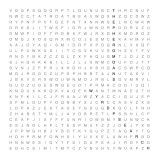
Walker claims that the album’s title is an expression of his frustration at the ubiquity of people claiming things are eerie or weird / wyrd in the present cultural milieu. The artwork for the record is designed as an actual word search too, a knowing nod to how we all grapple for meaning amongst the absurdity of each day. Leaning into ‘weird’ as a coping mechanism is not on The Pheromoans’ agenda however. This album holds little sway with the supernatural, it’s not enough. The overriding impression given by ‘Wyrd Psearch’ is of a band renewed with ideas. There’s no trouble finding the right words, they’re hitting their mark, keeping up with the commentary. ‘Wyrd Psearch’ is a document of The Pheromoans mastering their unquiet moment.
- 1: Lifers
- 2: Pendulum
- 3: Haunted
- 4: Clean-Up Crew
- 5: Middle Of Nine
- 6: Marvel
- 7: I’m Gonna Miss Everything
- 8: Rapture Chaser
- 9: Mutable
- 10: Here You Are
- 11: Exit Bags
- 12: Re-Emerging Signs Of The Apocalypse
Borrowed Tongue is the debut solo album by Korean singer-songwriter Minhwi Lee. It’s a mysterious, strangely compelling thing, an album of rare poetry, and remarkably self-assured. Originally released in November 2016, the album made waves, winning best folk album of 2016 at the 14th Korean Music Awards. Its eight songs, written and predominantly arranged by Lee, don’t reveal their secrets easily, or at first blush; rather, they take their time slowly to unfurl in her listeners’ worlds. There are hints of other music here, from time to time: the intimacy of Stina Nordenstam, perhaps; the gauzy haze of Hope Sandoval, on the blissed-out pop of “Broken Mirror”; there are touches of acid-folk, and ECM jazz, and a slyly filmic approach to songwriting and arrangement that makes every song fit perfectly into the album’s arc.
Lee arrived at her solo music through a complex, circuitous route. After studying musicology in Seoul, she learned her trade, film scoring, in New York and Paris. She also studied classical music, blowing off steam in a wild punk duo, Mukimukimanmansu, who released one album, 2012, on Korean indie label Beatball. Subsequently, Lee has been refining her music, focusing both on her solo songs, and on writing for television series and films; she’s written scores for films by such directors as Sangmoon Lee, Jeongwon Kam, and Wanmin Lee. She also plays in the jazz outfit Cubed, and recently joined doom metal group Gawthrop on bass.
Since its release in 2016, Borrowed Tongue has slowly bewitched listeners with its idiosyncratic arrangements and evocative songwriting. It’s an album that hints at plenty, but refuses to make grand statements, something Lee seems intent to pursue: in correspondence, she’s very clear that she wants these songs to enact a kind of transmutation, to be adopted into the listeners’ lives and exist within their own imaginings. She does, however, offer a few hints to what propels these mercurial songs, explaining, “this album is about a person who again opens their mouth, which was once shut. The album deals with what it means to speak: things that are known but not said, things that should be said but are not, things that cannot be said but nonetheless are.”
This may well explain the curious mood of Borrowed Tongue, the multiple ‘voices’ that inhabit the album; Lee’s singing voice is pliable and mutable, approaching each song as its own diorama and ensuring the song is sung with just the right tone. The arrangements Lee conjures for her songs are all in service to narrative and melody; they appear to her alongside the composition, which is surely why everything here fits together so beautifully. From there, Lee approaches her songs carefully, in deference to their ‘need to be sung’ a certain way. There isn’t a moment wasted: everything on Borrowed Tongue is as it needs to be, whether a melancholy folk song taking to the air, or a psychedelic reverie dreamed into being. It’s a beautiful, poised and confident debut.
Grammy-winning producer, composer, guitarist and songwriter Blake Mills returns with his first solo record since 2020’s Mutable Set, co-produced by Blake and experimental artist Chris Weisman.
Blake Mills has released four acclaimed solo albums and produced, played and recorded with artists such as Fiona Apple, Alabama Shakes, Phoebe Bridgers, Perfume Genius, Moses Sumney, Bob Dylan, Laura Marling, Cass McCombs, Weyes Blood and Randy Newman, among others. His album Mutable Set, released in in 2020, was praised by Pitchfork as “a hushed collection that floats through the subconscious like a tender dream” and earned their Best New
Music title. Most recently, Mills worked as the Executive Music Producer and chief songwriter on Amazon Prime’s limited series Daisy Jones and the Six.
- 1: On Warmer Music
- 1: 2 All My Kin
- 1: 3 It's Alright, You're O.k
- 1: 4 The Mutable Mercury
- 1: 5 The Town Crusher
- 1: 6 The Unthinkable Is True
- 1: 7 River High
- 1: 8 Every Is A Good Trip
- 1: 9 Do Go On
- 1: 0 Privileged & Impotent
- 1: Oh Dear Friends
- 2: 1 An Amateur Thief
- 2: In Our Time
- 2: 3 Morley Timmons
- 2: 4 The O.t.s
- 2: 5 Rip Off The Gift
- 2: 6 The Last Good Time
- 2: 7 The Guns Of Meridian Hill
- 2: 8 The Town Crusher (Live)
- 2: 9 Morley Timmons (Early Version)
- 2: 10 Every Is A Good Trip (Extended)
- 2: 11 The O.t.s. (Early Version
Black Vinyl[30,21 €]
In late 1996, after two years of persistent touring, Chisel was eager to document its quickly evolving sound. Decamping from their native D.C. to Brooklyn's Rare Book Room, the power trio of Ted Leo, Chris Norborg, and John Dugan teamed with engineer Nicolas Vernhes and came away with Set You Free, a remarkable, but largely overlooked, classic of the era. Originally issued on the venerable Gern Blandsten imprint in April 1997, Set You Free presaged the turn of the century 60s rock revival, providing a counterpoint to second-wave emo. This deluxe 25th anniversary edition has remastered and expanded the original's 17-song track list with five period alternates and rarities, plus a booklet of lyrics, photos, and an essay by Jes Skolnik. Get ready for the invasion.
- 1: On Warmer Music
- 1: 2 All My Kin
- 1: 3 It's Alright, You're O.k
- 1: 4 The Mutable Mercury
- 1: 5 The Town Crusher
- 1: 6 The Unthinkable Is True
- 1: 7 River High
- 1: 8 Every Is A Good Trip
- 1: 9 Do Go On
- 1: 0 Privileged & Impotent
- 1: Oh Dear Friends
- 2: 1 An Amateur Thief
- 2: In Our Time
- 2: 3 Morley Timmons
- 2: 4 The O.t.s
- 2: 5 Rip Off The Gift
- 2: 6 The Last Good Time
- 2: 7 The Guns Of Meridian Hill
- 2: 8 The Town Crusher (Live)
- 2: 9 Morley Timmons (Early Version)
- 2: 10 Every Is A Good Trip (Extended)
- 2: 11 The O.t.s. (Early Version
Brown Vinyl[31,51 €]
In late 1996, after two years of persistent touring, Chisel was eager to document its quickly evolving sound. Decamping from their native D.C. to Brooklyn's Rare Book Room, the power trio of Ted Leo, Chris Norborg, and John Dugan teamed with engineer Nicolas Vernhes and came away with Set You Free, a remarkable, but largely overlooked, classic of the era. Originally issued on the venerable Gern Blandsten imprint in April 1997, Set You Free presaged the turn of the century 60s rock revival, providing a counterpoint to second-wave emo. This deluxe 25th anniversary edition has remastered and expanded the original's 17-song track list with five period alternates and rarities, plus a booklet of lyrics, photos, and an essay by Jes Skolnik. Get ready for the invasion.
+ 10 Tracks for download
Preceded by the successive releases of lead singles "Sandcastles" and "My Mind", here comes the versatile debut full-length offering from Tel-Aviv-based producer Kadosh on Stil vor Talent, "Unanimously". Bridging the club universe with that of deeper, further immersive off-floor narratives, Kadosh entices us down a compelling path of rhythmic enlightenment and all-embracing togetherness. Casting mutable strains of EBM, house, pop and exotica entangled in one dizzying polyphony throughout the album, the Israeli vibist has us surfing our way across his musical headspace effortlessly.
From the stealth, neo-noir-like opening sequence of "Interstellar" feat. Marc Piñol to the epic Luso-Italo vibrations of "Sandcastles" feat. vocal hoodooist Abra~o, via the exquisite Afro-informed piano house and all-round atmospheric luxuriance of "My Mind" feat. Floyd Lavine and Erika Krall's supremely smooth yet characterful timbre, Kadosh swings the pendulum with constant surprise and bravura. Aside from his compositions' obvious hooking nature, there's also great lots of textural back funk to dive in at every corner. Hauntingly transporting, "From Jaffa to Frederichshain" feat. Upon You's Marco Resmann works a more jagged programming, flush with big-room reverbs and muted drums, while the slo-evolving "Pronto" feat. Emanuel Satie morphs from a low-key DJ tool into a full-fledged, melancholy-charged peak-time burner.
Bearing both Kadosh and David Mayer's signature, "1999" lets the 80s-inherited arsenal of iridescent Casio synths and lashing percussions talk in unhindered fashion, whereas "Volantage" feat. Murat Uncuoglu goes all in on the trampling kicks, sooty claps and prismatic keyboard stabs. Sensual to the fullest, "Moran" in collaboration with Rodriguez Jr. is certainly one of the album's highlights with its impeccably laid-down melange of bassy thunder and shapely Latin rhythmic backbone ushering us down an irresistibly poignant and hypnotic tunnel of sound. A joint effort with Locked Groove, "Far Too Close" is a further loopy discoid affair reminiscent of the French filtered-house scene's heyday, while the album's closer "Think it Over" feat. Stereo MC's is that perfect pop-indebted electro chugger that'll rev up any tired engine with reinvigorated, ecstasy-inducing horsepower.
Vinyl Edition of 300 copies
Aesthetical in collaboration with Sync presents "Detect" by Marco Monfardini.
Originally developed as an audio/video live performance, Marco Monfardini based his research for Detect on the decoding of inaudible sounds, sound generated by electromagnetic emissions left from electronic devices and inaudible to the human ear. By using various electro-smog detectors Marco Monfardini creates a sort of detection mapping where electromagnetic emissions are the starting point for the sonorous development of each single composition.
A path that creates a parallel with our lives by questioning how much these emissions affect unconsciously our choices, tastes and perceptions, seeking a relationship between the massive use of technology in everyday life and our emotional state.
The album Detect is developed in 15 tracks in continuous play, an imperfect, faulty mosaic inhabited by invisible beings manifesting themselves in the form of sound streams, mutable entities that find a definitive form in the pattern of the compositional structure.
The album opens with “aR1 detection", sounds of pure detection place themselves in the sound space giving the initial coordinates for the exploration of unconscious parallel areas. The boundaries transform and gradually expand until they flow into the structure of "kernel variations", a growing rhythmic pattern decodes the impulses projecting a perspective that dissolves in the unstable and fluctuating electromagnetic emissions of the subsequent "[a]3020t detection", "binary defect "and "core[2] ". “[A.box]emission” confronts the use of sound downloaded random from internet sample banks and the emissions generated during the download itself, micro sound fragments arrange themselves in an organized and regular pattern, shaping a rhythmic structure. The first part ends with the short “[sa]6030” and “[det]x1a”, absence and presence provide an alternation of movements, inaudible and elusive signals all trying to establish a contact with our perception. “det : scan” opens the second part of Detect, a sort of scanning, leaving EMF (electromagnetic field) textures, a static multilayer that progressively expands until it dissolves into the rhythmic emissions of a common smartphone “[4s]detection”.The track “[rs]zone” " is pushing itself deeper, two minutes of sound speleology that reveal the existence of sound artifacts that seem to vanish getting in contact with the light accented by the bass drum of "[det] 0100+" a constant, rhythmic pumping, a luminous pulsation that reveals an apparent void, which seems to subside entering in the winding and waving atmosphere of "conductive [area]" and "[s3] microfunktion". Detect comes to the end with “[emf]terminal” a mirror of the unarrestable technological acceleration intercepting the flow of data that feeds the system of communication , digital micro waste suffocates the living space by centering up the invisible in an unconscious map.
[a] A1
[c] A3
[e] A5 core[2]
[f] A6 [A.box]emission (2)
[g] A7
[i] B2 [4s]detection
[j] B3
[k] B4 [det]0100+
[l] B5 conductive[area]
[m] B6 [s3]microfunktion
[n] B7 [emf]terminal
EVEN THE CHIMERA is the debut album by Wild Terrier Orchestra, a new project by Dimitris Papadatos, aka Jay Glass Dubs, based on interchangeability and open improvisation. A newer, freer incarnation of Papadatos’ creative intent, the project acts more like an open container of disparate and idiosyncratic contributions from a mutable cast of musicians and artists. Often times not provided according to a pre-planned structure, these contributions are actually more likely to arrive in the form of free improvisations, unconnected musical segments and fragmented splinters of sound. This allows Papadatos to aggregate all the constituent parts according to an intuitive process that bridges between the detailed craft of electronic music production and surrealist techniques such as the Cadavre Exquis and the Cut-Up. It’s both a harmonization of contrasting tones and a research for commonality within difference, although none of the wild terriers are ever nearly tamed. Unsurprisingly, the main inspiration for this new chapter came from a a pinnacle of avantgarde literature: poet Andreas Embirikos’, considered Greece’s first surrealist and all-out paradoxical figure. Specifically, this release is guided and instigated by his poem OKTANA, in which Embirikos inscribes a manifesto for a hedonistic utopia years ahead of any accelerationist theories, bursting with contradicting presences and mutating identities. Written in the aftermath of the Greek civil war, the poem calls for a time of eternal poetry and spiritual intoxication that can only be reached through a painful process of violent deconstruction. Thus, EVEN THE CHIMERA was born: a culmination of Papadatos’ decades long research on traditional Greek and Byzantine music, free jazz and free improvisation. Firmly spread between two side-long tracks, the contributions of American singer and musician Cruel Diagonals on vocal duties as well as Greek artist and musician Fotini Korre on ney suggest the existence of a filament that connects the west and the east through the creation of ‘’possible musics’’. This happens in accordance to Papadatos’ practice of a counterfactual approach to the process of what music history dictates. It is also directly shaped by the musician’s frequent dwellings in the isle of Cyprus, a land in which the clash of worlds and culture has often taken both violent and beautiful shapes. The long drones, acoustic ghosts and unbalanced choirs that form the album seem to call from the Mediterranean itself, not only from its history but also from its possible futures and unreal narrations, invoking it as a nexus of diversity and possibility.
Cascade Symmetry is the culmination of an intense and transformative year-long period. It is an ode to new beginnings and the disintegration of the past.
Recorded and mixed September - October 2017 in San Jose, CA; additional recordings and field recordings taken September 2017 in South Korea.
Gear used: Eurorack modular synthesizer (Mutable Instruments, Make Noise, Orthogonal Devices, Intellijel, TipTop, Ladik, Malekko Heavy Industry, Mannequins, Qu-Bit Electronix, Doepfer), Novation Peak, Korg Electribe 2, Elektron Analog Heat, Strymon El Capistan, Hosa Technology Cables
Initially released on tape and digital through the artist on November 6, 2017.
The relationship between Norm and Core is in terms of sunlight playing over a mountain and a valley. Norm is the brightly lit portion, Core is the dark area occluded by the mountain's bulk. As the sun moves across the sky, Norm and Core gradually trade places with each other, revealing what was obscured and obscuring what was revealed. Norm is solid, focused, hot, dry, and active.
Fire – Sky – The Sun – Day Time.
Core, by contrast is yielding, cold, wet.
Water – Earth – The moon – Night-time.
- 1