Johnnie Taylor was an accomplished soul artist despite having little instrumental skill and he rarely wrote any of his own material. He was known variously as the ‘Blues Wailer’ and the ‘Philosopher Of Soul’ and recorded over 30 albums and 120 singles throughout a career that cemented his status as one of the leading male soul vocalists during the late sixties and throughout the seventies.
He started his recording career mid-50s with the doo-wop group The Five Echoes and gospel groups The Highway Q.C.’s and then in 1957, The Soul Stirrers, replacing Sam Cooke who had left the group for a solo career. Taylor followed that path a few years later signing for Cooke’s SAR label. and had a minor hit in 1962 with “Rome Wasn’t Built In A Day”.
in 1964 he moved to Stax Records where he started as a blues artist enjoying many fruitful years, most notably with “Who’s Making Love” selling more than a million copies. Following the unfortunate demise of Stax in 1976 he moved to Columbia Records where he went platinum with the hit “Disco Lady” (ironically not a disco track at all) and the album from which it came ‘Eargasm’ (1976) was a commercial peak he would never scale again. However, he continued with many collectable releases before moving to Beverly Glen Music in the early eighties and then Malaco Records in 1984, where his style became the more soul-blues based sound that was synonymous with the label. He remained with them until he died of a heart attack in Dallas aged 66 in 2000.
“Let’s Get Back On” Track comes from the CD ‘Gotta Get The Groove Back’ (1999) produced (and co-written with Charlie Brooks) by Frederick Knight, who also used the same backing track some 7 years later with his production of the David Sea track “Stay In My Arms” which was a modern soul favourite and will help to register the significance of this earlier production. It is now available as a vinyl release for the first time. It was taken from his final album although Malaco released ‘There’s No Good In Goodbye’ posthumously in 2003.
Robert Calvin Brooks, known professionally as Bobby “Blue” Bland spent his early career in Memphis, developing a sound that mixed gospel with blues and R&B and was known as the ‘Lion Of The Blues ‘and the ‘Sinatra Of The Blues’. His father abandoned the family not long after his birth and he acquired his name from his stepfather, Leroy Bland. His formative musical years were centered around the Beale Street scene and he was scouted by Ike Turner for Modern Records.
His progress was interrupted by a two year stint in the US Army and when he returned to Memphis he signed for Duke Records, run by Don Robey. Bland was illiterate and Robey helped him sign his contract which only gave him half a cent per record sold instead of the industry standard of 2 cents. He had his first hit in 1957 and continued a successful run of R&B chart entries without breaking through into the mainstream markets and was ranked number 13 of the all time chart-topping artists in Joel Whitburn’s “Top R&B/Hip-Hop Singles: 1942-1995”.
Duke Records sold out to ABC and with them he managed to return to the R&B charts but he still couldn’t succeed in the pop charts. In 1985 Bland signed for Malaco who were specialists in the Southern black music sound and he recorded many albums and toured for them, frequently with B.B. King, and was inducted into the ‘Rock And Roll Hall Of Fame’ in 1992.
Whilst “Heart Open Up Again” was a vinyl release in 1985 it was not chosen to be the single release from the Tommy Couch & Wolf Stephenson produced album Members Only (1985). This beautiful ballad, penned by George Jackson/Robert Miller/Michael Wooten, was never before released as a single and is a fabulous pairing with the topside – two of the best from two of the all-time greats.
Buscar:my disco
The Capitols were an American, Detroit, Michigan-based soul trio, widely known in 1966 for their Billboard hit single "Cool Jerk". After playing predominantly small gigs, they were discovered by former Ann Arbor radio DJ Ollie McLaughlin after performing at a local dance.
The mid-1960s saw many dance crazes; one of the most popular ones was a dance called "the jerk". Seeking to capitalize on the popularity of the dance, and dance songs in general, The Capitols member Donald Storball wrote the song "Cool Jerk", which was later recorded in Detroit with Motown house band The Funk Brothers. The single was released late March 1966 and became a hit, reaching number 7 on the Billboard Hot 100. Ever since, it has been used in many movie soundtracks, including More American Graffiti, Home Alone 2: Lost in New York, and Madagascar 3. The group released eight additional singles after "Cool Jerk".
So, let's crank up the stereo and Dance The Cool Jerk!
Dance The Cool Jerk is available as a limited edition of 750 individually numbered copies on red coloured vinyl.
- 1: Mimosa
- 2: After My First Murder
- 3: Someone Is Here
- 4: What Have I Done
- 5: Funeral Wedding
- 6: Disgraced Girl
- 7: How The Black Art Was Revealed
- 8: Disco Death
- Disc: 2
- 1: Inauguration Of The Pleasure Dome
- 2: The Thelemite
- 3: My Portrait In Sadness And Glory
- 4: The Stone Orchids
- 5: In The Morning
- 6: Bethrothal And The Rites Of Rape
- 7: She Travels The Fastest Who Travels Alone
- 8: Jubileum In Hell
- 9: The Terrible Secret
This is the first official reissue of The Candles Burning Blue’s highly appraised cult album Pearls Given To The Swine. For two decades the original CD pressing has been sought after but nearly impossible to find. Known for their violent and chaotic gigs, The Candles Burning Blue were an unconventional Gothic Rock band. Instead of romantic beauty they dealt with the harsher aspects of the darkness oozing from their own troubled lives. Even though they only released two CD-r, a split 7” and one full album, their impact on the Finnish Goth underground was a lasting one. Pearls Given To The Swine was recorded in 2000 and released in 2001 on CD, with only 500 official copies pressed. Some years later new copies appeared from shady sources, but basically the album disappeared from the face of the Earth. In 2001 the band started to work on the second album Pleasure Dome and also had some material recorded for the projected third album Abhorrence, but ceased to exist before any of this material was released. Until now. This reissue has a full length bonus disc consisting of these songs. The Candles Burning Blue had its roots firmly in Gothic Rock as performed by bands like Bauhaus, Christian Death, Virgin Prunes and The Cure, but they mixed in elements of experimentalism and art rock. Pearls Given To The Swine is a lost and found classic of Finnish Gothic Rock, and a fine example of Finnish dark culture around the turn of the millennium. Members went on to play in bands like Reverend Bizarre, The Puritan, Werwolf Lodge and Opium Warlords, but never reunited.
- Keep Me In The Dark
- On My Way Up
- Place I Wanna Be
- Medina
- Jackal
- Spiral
- Tin Man
- Say That You Don't Know
- White Lamp
- Pass Me By
- Don't Let Go
Emitting a soulful, nu-jazz sound that builds into an uplifting chorus refrain, "On My Way Up" is sonically inspired by the likes of Joy Crookes, Roy Hargrove and Leanne La Havas.
Hailing from Bristol, Cut Capers bring an elevating message and a big sound. The 4 piece horn-section blends with the lead vocal to create a textured juxtaposition rich in depth and layers. With infectious ear- worm melodies and warm vocal energy, Cut Capers deliver a feel-good summer hook that takes you from themes of reflection to new discoveries. With over 13 million streams across major streaming platforms, Cut Capers returned with their first release since their 2019 critically acclaimed album, Metropolis. A passionate and dedicated fanbase has
waited patiently, and the wait is over!
Recital publishes the first vinyl edition of Let the Darkness Fall, a forgotten corner from the vast discography of Suzanne Langille & Loren Connors. Joined here by David Daniell and Andrew Burnes (of the Atlanta-based group San Agustin), Darkness was recorded in the summer of 1998 on a Tascam Porta-5 in Loren and Suzanne’s Brooklyn living room, and issued the following year as a limited CD by Secretly Canadian.
The tender gloom of Let the Darkness Fall sounds like a broadcast of some private séance. The trio of guitarists here show a beautiful restraint, hovering just underneath vocalist Suzanne Langille’s ephemeral poetry. Once they hit RECORD, the sensitivity of the players melded this quartet into a sole-entity; finishing each other’s phrases in slow motion. Suzanne’s gentle voice glows through the wispy guitar shadows with a quiet determination. One could almost imagine her building a nest out of the guitar lines she’s gathered.
This collection of musicians is a precursor to the band Haunted House, a wild sort of jam-band playing the blues without playing structure. Recital continues the series of Loren Connors-related editions, stretching from his art books Wildweeds & Night of Rain, to his masterpiece solo LPs Airs & Lullaby. And Recital is equally thrilled to highlight Suzanne Langille’s mystifying command of voice and word and the intricate guitar work of Andrew Burnes and David Daniell. Come revisit the mist that filled that living room 25 years ago.
- A1: Second Language - Disco Inferno
- A2: Naturally Occurring Anchors – Spoonfed Hybrid
- A3: City Poison - Moonshake
- A4: Every Day Shines (D Mix) - Earwig
- B1: In The Light Of Time - Flying Saucer Attack
- B2: Starry Night - Laika
- B3: Spectra Decay - Main
- B4: In The Sky - Empress
- B5: Darling Effect - Insides
- C1: Loose Threads - Pram
- C2: A Cheery Wave From Stranded Youngsters - Mogwai
- C3: In The Event Of Just Looking - Appliance
- C4: (The) Weight - Hood
- C5: A Street Scene - Bark Psychosis
- D1: I Am The Sub-Librarian - Piano Magic
- D2: Play Away - Electric Sound Of Joy
- D3: Sun Drawing - Movietone
- D4: Through You - Seefeel
Als sich The Damned 1989 erstmalig trennten, gründete Leadsänger David Vanian die Phantom Chords. Ihre erste Single, ein Cover der John Leyton-Nummer 'Johnny Remember Me' erschien 1990 und ihre Version von 'Town Without Pity' folgte 1992. Erst 1995 wurde schließlich von Big Beat ein Phantom Chords-Album veröffentlicht, das gekonnt die Genres Rockabilly und Gothic Rock miteinander verschmolz. Zu den Tracks gehörten u.a. mit 'Voodoo Doll', 'Big Town', 'Fever In My Blood', 'Jezebel', 'Chase The Wild Wind' und 'Swamp Thing' eine Mischung aus Covern und Originalmaterial, die aufgrund zu geringer Verkaufserwartung der LP eine reine CD-Veröffentlichung war. Jetzt, fast drei Jahrzehnte später, wird dieser Fehler korrigiert und 'David Vanian And The Phantom Chords' endlich auf Vinyl als 2LP-Set (Black Vinyl) veröffentlicht - natürlich auf Ace Records!
Have you heard of the Nurse With Wound List? If you are a fan of creative-experimental-unlikely music, certainly. You would therefore be aware that amongst the recommendations that Steven Stapleton slipped into the first album of his group Nurse With Wound, were to be found a few restless frogs: Jef Gilson, Luc Ferrari, Jacques Thollot, Urban Sax, Horde Catalytique and last but not least Jean-Jacques Birgé and Francis Gorgé. Stapleton admired their album Défense de. The two Frenchmen just had to conceive of a fabulous precursor to the channel tunnel (check out the inside of the record, you’ll see) to enable Stapleton to come to France in 1980. The Englishman was looking for contributions to a compilation to be released on his United Dairies label that he had created with John Fothergill, and he naturally called on Birgé and Gorgé, who were then playing with Bernard Vitet in ‘Un drame musical instantané’.
It was a done deal and the compilation would be named In Fractured Silence. Alongside Nurse With Wound and Un drame musical instantané, could be heard Hélène Sage (whom Birgé introduced to Stapleton) and Sema, a project from the experimental British musician Robert Haigh who had participated in key records in the Nurse With Wound discography, such as Homotopy to Marie and Spiral Insana.
The curtain is raised and it is Un drame musical instantané who start the ball rolling. Mystery abounds; synthesisers lurk, percussion clatters and the sounds (creaks, whistles, vocal insertions...) fire in all directions. For the piano, it’s a debacle, the Drame won, Hélène Sage can take over. Heading up a quintette including Gorgé and Vitet, she creates a cushioned chamber music with strings and many silences.
On the B side, it’s the other side of the channel. Sema’s piano first off, which dares everything, even melody, before spilling out its darkest ideas in a raucous requiem. Finally, Stapleton appears, delving into his collection of female voices to devote himself to an iconoclastic transformation and concoct a song which collapses under the assault like Marianne at Agincourt. After having listened to In Fractured Silence, you will simply have to choose sides.
Have you heard of the Nurse With Wound List? If you are a fan of creative-experimental-unlikely music, certainly. You would therefore be aware that amongst the recommendations that Steven Stapleton slipped into the first album of his group Nurse With Wound, were to be found a few restless frogs: Jef Gilson, Luc Ferrari, Jacques Thollot, Urban Sax, Horde Catalytique and last but not least Jean-Jacques Birgé and Francis Gorgé. Stapleton admired their album Défense de. The two Frenchmen just had to conceive of a fabulous precursor to the channel tunnel (check out the inside of the record, you’ll see) to enable Stapleton to come to France in 1980. The Englishman was looking for contributions to a compilation to be released on his United Dairies label that he had created with John Fothergill, and he naturally called on Birgé and Gorgé, who were then playing with Bernard Vitet in ‘Un drame musical instantané’.
It was a done deal and the compilation would be named In Fractured Silence. Alongside Nurse With Wound and Un drame musical instantané, could be heard Hélène Sage (whom Birgé introduced to Stapleton) and Sema, a project from the experimental British musician Robert Haigh who had participated in key records in the Nurse With Wound discography, such as Homotopy to Marie and Spiral Insana.
The curtain is raised and it is Un drame musical instantané who start the ball rolling. Mystery abounds; synthesisers lurk, percussion clatters and the sounds (creaks, whistles, vocal insertions...) fire in all directions. For the piano, it’s a debacle, the Drame won, Hélène Sage can take over. Heading up a quintette including Gorgé and Vitet, she creates a cushioned chamber music with strings and many silences.
On the B side, it’s the other side of the channel. Sema’s piano first off, which dares everything, even melody, before spilling out its darkest ideas in a raucous requiem. Finally, Stapleton appears, delving into his collection of female voices to devote himself to an iconoclastic transformation and concoct a song which collapses under the assault like Marianne at Agincourt. After having listened to In Fractured Silence, you will simply have to choose sides.
Sinead was born in Dublin in 1966, and was discovered by Paul Byrne, drummer of U2 proteges In Tua Nua, while singing wedding covers in the city.
After cowriting the first In Tua Nua single, she left school to focus on music, studying voice and piano at the Dublin College of Music before relocating to London in 1985.
Released in September 1994, Universal Mother was described by Sinead as "the first attempt to try to expose what was really underneath a lot of the anger of the other records". The album features sparse, striking but delicate arrangements on intense and honest songs. Standout moments include the singles 'Thank You For Hearing Me' and 'Fire On Babylon', along with contributions from Germaine Greer (opening track 'Germaine'), and Sinead's son Jake Reynolds ('Am I A Human?'), plus a cover of Nirvana's 'All Apologies'.
- New Shadows (Featuring Steve Berlin)
- Manzanita Bay (Featuring David Hidalgo, Rosali)
- Lost Days (Featuring James Brandon Lewis)
- Angelina (Featuring Aquiles Navarro)
- These Blues / When You Needed My Help
- 97: Nights (Featuring Steve Berlin, Rosali)
- Walking Stick (Featuring Aquiles Navarro)
- Sing (Featuring David Hidalgo)
- Ivory Tower (Featuring Aquiles Navarro, Jeff Parker)
New Shadows peaks into corners where interior and exterior worlds collide, where miniscule revelations can be found in the darkness of ourselves and our community: lost children, unheard prayers, bugs, money, depression, romantic relationships, regret, and Zoom funerals, all become a lens for self-reflection.
The production (by Don Cento and JDD) is modeled after DeCicca's favorite early 80's albums (Lindsey Buckingham's Law & Order, ZZ Top's Afterburner, Robert Palmer's Clues, Lou Reed's New Sensations,) while the songs' architectures and pathos lean more towards Warren Zevon, Townes Van Zandt, and John Prine - all these record- makers and songwriters are embedded in DeCicca's DNA, having seen them, and in some cases met them after gigs, when his brain was still developing between the ages of 13-19 years old.
The virtual collaborators are the musicians whose kept him company while isolated in his rural town, Bulverde, TX: Brian Harnetty's Many Hands, Rosali's No Medium, Irreversible Entanglements' Who Sent You?, James Brandon Lewis's Jessup Wagon, Jeff Parker's JP's Myspace Beats and Suite for Max Brown, and the Los Lobos discography.
New Shadows isn't so much about DeCicca's new discoveries, as it is the penumbrous reminder of what's always been there.
- A1: Everybody's Changing
- A2: Somewhere Only We Know
- A3: Bend & Break
- A4: Bedshaped
- A5: This Is The Last Time
- A6: Atlantic
- B1: Is It Any Wonder?
- B2: Nothing In My Way
- B3: Hamburg Song
- B4: Crystal Ball
- B5: A Bad Dream
- B6: Try Again
- C1: Spiralling
- C2: Perfect Symmetry
- C3: My Shadow
- C4: Silenced By The Night
- D1: Disconnected
- D2: Sovereign Light Cafe
- D3: Higher Than The Sun
- D4: Won't Be Broken
Keane’s first official compilation album, The Best of Keane, pressed to 180g vinyl for the first time. Features their biggest tracks ‘Somewhere Only We Know’, ‘Everybody’s Changing’ & ‘This Is The Last Time’ as well as two new songs written during their 2012 Strangeland era, ‘Higher Than The Sun’ and ‘Won’t Be Broken’
- A1: Freddie Mercury - Living On My Own (No More Brothers Radio Mix)
- A2: U2 - Discotheque
- A3: Robbie Williams - Let Me Entertain You
- A4: Roxette - Joyride
- A5: Spin Doctors - Two Princes
- B1: Spice Girls - Wannabe
- B2: Britney Spears - …Baby One More Time
- B3: Christina Aguilera - Genie In A Bottle
- B4: N Sync - Tearin' Up My Heart
- B5: Backstreet Boys - Everybody (Backstreet's Back)
- B6: Take That & Lulu - Relight My Fire
- C1: Snap! - Rhythm Is A Dancer 7" Edit
- C2: La Bouche - Be My Lover
- C3: Culture Beat - Mr Vain (Radio Edit)
- C4: Haddaway - What Is Love
- C5: Dr Alban - It's My Life
- D1: Prince Ital Joe, Marky Mark - Happy People
- D2: Lou Bega - Mambo No 5 (A Little Bit…)
- D3: Eiffel 65 - Blue (Da Ba Dee)
- D4: Gigi D'agostino - The Riddle (Single Cut)
- D5: U96 - Das Boot
- E1: Tlc - Waterfalls (Single Edit)
- E2: Blackstreet Feat Dr. Dre - No Diggity (Radio Version)
- E3: Fugees, Ms Lauryn Hill, Wyclef Jean, Pras - Fu-Gee-La
- F3: Vanilla Ice - Ice Ice Baby
- F4: Jennifer Lopez - If You Had My Love
- F5: Salt-N-Pepa - Let's Talk About Sex
- G1: Faithless - Insomnia (Radio Edit)
- G2: Everything But The Girl - Missing (Todd Terry Remix / Radio Edit)
- G3: Dna Feat Suzanne Vega - Tom's Diner
- G4: Lisa Stansfield - Change (Radio Edit)
- G5: Cher - Believe
- H1: Bloodhound Gang - The Bad Touch
- H2: Crazy Town - Butterfly
- H3: Run-D M.c., Jason Nevins - It's Like That
- H4: Fingers, Gilette - Short Dick Man (Radio Mix)
- H5: Marky Mark & The Funky Bunch, Loleatta Holloway - Good Vibrations
- E4: Snow - Informer
- E5: Stereo Mc's - Connected - Edit (Aus 25 Years)
- F1: Ini Komoze - Here Comes The Hotstepper
- F2: Heavy D & The Boyz, Aaron Hall - Now That We Found Love
„The 90’s are back!“ – 30 Jahre später ist das beliebte Jahrzehnt musikalisch wieder voll im Trend! Auf der „FETENHITS - The Real 90’s“ sind die Originale der größten Party-Hymnen der Dekade vereint.
Ob die groovigen Sounds von „No Diggity“, der absolute Ohrwurm „Wannabe“ oder die Kult-Nummer „Mambo No. 5“ - Der bunte Mix der besten Party-Songs und Klassiker der 90‘s ist voller „Good Vibrations“!
Mit dabei sind u.a. U2, Britney Spears, Salt-N-Pepa, 20 Fingers & Gillette, Freddie Mercury, La Bouche, DJ Bobo, TLC, Backstreet Boys und viele mehr.
„We Bring It All Back“ mit den größten Party-Hits der 90er! Erhältlich als 4LP, 4CD und eAlbum ab dem 29. September 2023!
Some info on the background for the upcoming album, "Police Deranged For Orchestra"."Copeland explains that the “derangement” of The Police’s music “began as the score for a movie I made out of Super8 footage of the band that I had shot during our rise to glory. Film puts capricious demands on music, so I had to carve up the songs to serve the scenes in the movie, and once the scalpel was out, a whole new frenzy of inspiration from Police music began.” He shares that “delving into the multi-tracks of our original recordings and live performances revealed lost guitar solos, bass lines, and vocal improvisations that were just too cool to leave in obscurity... this discovery is what brings us to this performance: Sting’s songs, Andy’s inventions, and my impunity; all on the page for a wild ride with orchestra and unique musicians from around the world to adapt some of the most loved The Police hits for old and new audiences alike.
'In 1972, trumpeter Baikida Carroll and some of his colleagues from the Black Artists Group (more precisely saxophonist/flutist Oliver Lake, trombonist Joseph Bowie, drummer Charles "Bobo" Shaw and trumpeter Floyd LeFlore) took the advice of their friends in the Art Ensemble Of Chicago and left their native Missouri to come and discover the bright lights of Paris for themselves. The following year they would even get the chance to record their only album which would rapidly attain mythical status and a collector’s item: “In Paris, Aries 1973”.
Therefore, it was not surprising that they crossed paths with Jef Gilson in the capital. He was always on the lookout for new artists for his recently formed Palm label and had been active on many fronts in jazz since the end of the 50s. The French bandleader / pianist / composer / sound engineer had already recorded, in the preceding months other American musicians who would go on to have great careers: Byard Lancaster, Keno Speller, Clint Jackson III, Khan Jamal... Gilson therefore offered Baikida Carroll the chance to record his first album under his own name, which would be the 13th release on the label. Carroll logically asked Oliver Lake to join him. He also recruited Manuel Villaroel, a young Franco-Chilien pianist from the group Matchi-Oul, who had already released an album on Futura in 1971 and would release another on Palm in 1976. The group was completed with the addition of Brazilian percussionist Naná Vasconcelos, who had just released a well-received album on the Saravah label. They were ready to enter the studio for the 3rd, 4th and 5th June 1974.
The first side of the album is divided into two long tracks which send free jazz back to its long-lost African roots. The opener “Orange Fish Tears” indeed rolls out a jungle of percussion of all sorts and sizes -the whole group is involved- which weave and mix together reaching a point where all bearings are lost, lending a sense of wonder to the majestic entry of the brass and woodwinds, flying suddenly out from the undergrowth. “Forest Scorpion” (sic) is a real voodoo ceremony where a venomous percussive groove backs the fiery solos from keyboards and saxophone in a furious trance. A warning; after these two tracks listeners are physically and emotionally wiped out!
The other side is more introspective. Deliberately using dissonance and repetition, “Rue Roger” -the only composition by Oliver Lake- in a long dialogue between trumpet and saxophone, could almost remind us of Terry Riley in his favourite ballpark. “Porte D'Orléans”, the fourth and final track on the album, has the group back to their old tricks in a long hallucinatory jam which owes as much to the contemporary music of György Ligeti as to the most angst-ridden Jerry Goldsmith soundtrack music (remember the heavy chords which beat through “Planet of the Apes»).
With these two sides, and in under 45m, Baikida Carroll and his musicians show just what they can do, from cerebral to charnel without ever simplifying things. This is an essential album if you are a fan of free-wheeling avant-garde music from the Art Ensemble of Chicago to Sonic Youth and including Shabaka Hutchings and Rob Mazurek. For those with good taste, in other words.'
The Mapendo album of the Mighty Cavaliers, up to today, has been shrouded in mystery. If you look at the original cover of this very rare Kenyan funk-infused album all you will find are the names of the engineer and the producer, as EMI Kenya omitted the names of the musicians and the songwriters. Digging deeper a rather sinister story of deceit develops whereby Mapendo becomes symbolic for all what was wrong about the Kenyan record industry in the 1970s, and the music industry in Africa as a whole. As this maltreatment of artists proved endemic throughout the continent, although little talked about.
One of the three surviving members of the Mighty Cavaliers, bass player Bonnie Wanda - who started his career in 1971 with Gloria Africana - vividly remembers participating in the recording of the two albums the band made in 1976 and 1977 - Fisherman and Mapendo - and how they, especially on the last album, got short-changed by shrewd record label executives. In the 1960s it was mostly Indian and European record bosses that called the shots and usually gave musicians the chance of a one-off payment for their session time and recorded songs or wait for - hopefully - a generous royalty check. In most cases records didn't sell more than a thousand copies with an occasional hit selling in the tens of thousands, so musicians were reluctant to register themselves with the Music Copyright Society of Kenya. Although without doing so one couldn't receive royalties.
'For two years the Mighty Cavaliers performed five nights a week at the Starlight Club for five hour sets.
The re-release of Mapendo, the first of the German Want Some Records label, is another exciting puzzle piece in the tapestry of groovy Kenyan music. It proves that there are still great gems out there to be re-discovered for audiences worldwide.
Text written by Michiel van Oosterhout
This Album is dedicated to the musicians
Bonnie Wanda, Rashid Salim, Vuli Yeni, Juma Waweru Njuguna and Athmani 'guitar boy'."
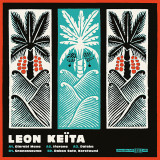
Hier hatten sich die Klänge aus dem nahen Mali und Guinea mit den lokalen Stilen vermischt und eine reiche Musikszene hervorgebracht: Bands wie Bembeya Jazz, Super Djata Band und andere Mandingue-Giganten gehörten zu den Bestsellern der Region. Leon Keïta, eine feste Größe in der malischen Musikszene, wurde 1947 in Conakry an der Atlantikküste von Guinea geboren. Leon half bei der Gründung der legendären Rail-Band, die zu einer gefeierten Stütze des Nachtlebens in Bamako wurde und die internationalen Karrieren von Salif Keita, Mory Kanté u.v.a. begründete. Leon selbst schloss sich Les Ambassadeurs Internationaux an, mit denen er durch Westafrika tourte, bevor er sich der Arbeit an seinen eigenen Kompositionen zuwandte. Als Leon bereit war, ins Aufnahmestudio zu gehen, lud er seine Freunde von Les Ambassadeurs Internationaux ein, ihm als Begleitband zu dienen; aus dieser Zusammenarbeit gingen zwei Platten hervor, die beide 1978 auf dem Label Papa Disco veröffentlicht wurden. Ein Jahr später veröffentlichte Leon "Rythmes et Mélodies du Mali", das er gemeinsam mit seinem Bruder Germain geschrieben hatte und das vom großartigen Orchestre Black Santiago begleitet wurde. Obwohl Leon nicht viele Soloaufnahmen gemacht hat, erwecken seine Lieder weiterhin die Verehrung aller, die das Glück haben, sie zu hören. In den letzten Jahren wurde der Song "Dalaka" von Carlos Estrada, dem Betreiber des Soundsystems in Barranquilla, wiederentdeckt und wurde zu einem unerwarteten Hit an der kolumbianischen Karibikküste. Zwölf Jahre nach der Veröffentlichung der von der Kritik hochgelobten Bambara Mystic Soul Compilation taucht diese neue Zusammenstellung erneut tief in die Mandingue-Kultur ein, die während Leon Keïtas legendären Sessions Ende der 70er Jahre aufgenommen wurden.
'New World Artifacts' is the debut album from Rouen, France-based group Unschooling, arriving following their 2021 'Random Acts of Total Control' EP and 2019's 'Defensive Designs' tape. Out October 6th via Bad Vibrations, it's a collection of lo-fi post-punk clocking in at 30 minutes, underscored with subtle pop melodies and structures but never far away from bouts of chaotic no-wave dissonance. Here, Unschooling claim loud and clear their desire to return to a sound which is less calibrated, less obvious. As they themselves write, "New World Artifacts is an ode to the unexpected, a tribute to many art rock bands who are always where you least expect them." Already heralded as one of the most exciting up-and-comers in the new school of post-punk revivalists, having spent the last couple of years playing to busy crowds and festival fields across the continent, 'New World Artifacts' might just mark them out as the best in class. The Unschooling quintet, as referred to on the album's collage artwork, is made up of Vincent Fevrier (Vocals/Guitar), Damien Tebbal (Bass), Paul Morvant (Guitar), Marc Lebreuilly (Guitar/Synth) and Thomas Fromager (Drums). Although their music might revel in discord, it is a calculated one. The musicianship is complex and meticulous, hardened by their time spent together playing on the road. For 'New World Artifacts', additional musicians were also brought in to expand the sound in new ways, including saxophonists Levi Gillis (The Dip, Beat Connection) and Emeline Morisset (Les Agamemnonz), and Kyleen King (Stephen Malkmus & The Jicks, My Morning Jacket) on strings. Pressing Info: 180g blue vinyl, limited to 300 hand-numbered copies ww, download card included.
Indonesian trio Grrrl Gang builds on their considerable worldwide buzz with Spunky!, their full-length debut album. Released on 22 September 2023 by Green Island Music in partnership with exclusive licensees Kill Rock Stars (United States), Trapped Animal Records (United Kingdom) and Big Romantic Records (Japan and Taiwan), the album is preceded by its title track and first single dropped on May 30, featured from the same title of the album, 'Spunky!' Spunky! arrives following some major life changes for Angeeta Sentana (vocals, guitar), Akbar Rumandung (bass, vocals), and Edo Alventa (guitar, vocals), including a switch in locale from Yogyakarta, the city where they formed the band while still in college. “This is Grrrl Gang’s first release after we graduated and got day jobs that made us have to move to Jakarta, which is undeniably 180 degrees compared to Jogja,” says Rumandung. “But moving to Jakarta enabled us to work with Lafa on Spunky! from start to finish.” The song itself essentially describes Sentana's experience during a manic episode. “I feel like I’m on top of the world, untouchable. I do things without thinking, always chasing after that feeling of instant gratification. I feel extra confident in myself to a point of grandiose thinking and that I could do anything,” Sentana explains. That would be Lafa Pratomo, the in-demand producer brought in to help shape the ten tracks that make up Spunky! With a resume that includes the likes of the chanteuse Danilla and legendary singer-songwriter Iwan Fals, Pratomo might not seem the obvious choice to take the Grrrl Gang producer’s chair. But according to Rumandung, “In terms of production, this was something new for us by working with someone outside of Grrrl Gang’s comfort zone.” Indeed, Pratomo considerably beefs up Grrrl Gang’s sound particularly Alventa’s guitar tones, Rumandung’s rumbling bass, and touring drummer Muhammad Faiz Abdurrahman’s muscular beats while preserving the band’s signature raucous energy, catchy melodies, and Sentana’s attitude-filled, equal-parts-honey-and-vinegar vocals. The music video for Spunky! premieres on the Grrrl Gang YouTube channel on the same day as the release of the song. The video, directed by Bathroom Girls, is part of a continuous movie, with Spunky! being the second chapter. It tells the story of an introverted girl who goes to a house party to validate herself among her peers. Despite facing challenges to her self-esteem, she manages to overcome her discomfort to survive the night. During the party, she watches Grrrl Gang perform Spunky! and is mesmerized by the confident performance of Angee, the lead singer. The girl imagines herself as Angee, a confident and cool person that she will never be. Hailing from the cultural city of Yogyakarta, Indonesia, Grrrl Gang is a rising force in the independent music scene with their infectious melodies, anthemic songs, and electrifying live performances. The power trio, composed of Angee Sentana on guitar and vocals, Akbar Rumandung on bass, and Edo Alventa on guitar, has been making waves in the Southeast Asian music scene since their formation in 2016. Grrrl Gang's music is a celebration of their collective roots and a testament to the power of pop music to connect people across cultures and borders. Their lyrics touch on themes such as feminism, mental health, and relationships with a raw honesty that speaks to a generation of young listeners. With their infectious energy, socially conscious lyrics, and unique sound, Grrrl Gang is poised to take the global music scene by storm and become a voice for a new generation
'New World Artifacts' is the debut album from Rouen, France-based group Unschooling, arriving following their 2021 'Random Acts of Total Control' EP and 2019's 'Defensive Designs' tape. Out October 6th via Bad Vibrations, it's a collection of lo-fi post-punk clocking in at 30 minutes, underscored with subtle pop melodies and structures but never far away from bouts of chaotic no-wave dissonance. Here, Unschooling claim loud and clear their desire to return to a sound which is less calibrated, less obvious. As they themselves write, "New World Artifacts is an ode to the unexpected, a tribute to many art rock bands who are always where you least expect them." Already heralded as one of the most exciting up-and-comers in the new school of post-punk revivalists, having spent the last couple of years playing to busy crowds and festival fields across the continent, 'New World Artifacts' might just mark them out as the best in class. The Unschooling quintet, as referred to on the album's collage artwork, is made up of Vincent Fevrier (Vocals/Guitar), Damien Tebbal (Bass), Paul Morvant (Guitar), Marc Lebreuilly (Guitar/Synth) and Thomas Fromager (Drums). Although their music might revel in discord, it is a calculated one. The musicianship is complex and meticulous, hardened by their time spent together playing on the road. For 'New World Artifacts', additional musicians were also brought in to expand the sound in new ways, including saxophonists Levi Gillis (The Dip, Beat Connection) and Emeline Morisset (Les Agamemnonz), and Kyleen King (Stephen Malkmus & The Jicks, My Morning Jacket) on strings. Pressing Info: 180g blue vinyl, limited to 300 hand-numbered copies ww, download card included.
2023 Repress
2001, the first year of the 21st century, but especially for many born in the 60's, 70's and 80's, the year that was surrounded with an aura of "the Future" and which became symbol of the new and unknown things that life has in store, the starting year of a new transgression period in both scientific, cultural and spiritual evolution. In that year Transllusion recorded music in the Dimensional Waves Productions studio of which till date two known productions saw a release: "The opening of the Cerebral Gate" and shortly after that the mysterious "L.I.F.E." album on Rephlex. More than 15 years later, an unknown wave resurfaced, washing up an incomparable emotional state of electronic depth. Music from the Future rooted in an underwater Afro-futurist realm and the grandiose cosmological truths. This time rushing over us in a much more personal, reflective and more introspective way, yet leaving behind sonic confusion. We now know who was responsible for all these futuristic recordings perfectly reflecting what the year 2001 stood for, James Stinson can be seen as one of the last few techno musicians from his generation that lived up to the high expectations of moving forward, finding the unknown and embracing the future without reliving the past. This recently discovered DAT-tape, using his Transllusion alias, is the 3rd outing of the project and, surrounded with an even brighter aureole than the previous recordings, confirms the status of its producers mastermind. No further details are known, except for the project name written on the tape, but these intimate moments in the studio tell us what the future sounds like according to James Stinson!