Search:my rhythm

Styles
All
Taj Mahal & Ry Cooder - Get On Board

Taj Mahal&Ry Cooder

Get On Board

12inch75597913552
NONESUCH
22.04.2022

“They were so solid. They meant what they said, they did what they did… here’s two guys, a guitar player and a harmonica player, and they could make it sound like a whole orchestra.” – Taj Mahal

“It was perfect. What else can you say?” – Ry Cooder

Nearly sixty years after they first played together, Ry Cooder and Taj Mahal, longtime friends and collaborators, reunite with an album of music from two Piedmont blues masters who have inspired them all their lives: GET ON BOARD: THE SONGS OF SONNY TERRY & BROWNIE MCGHEE, on Nonesuch Records.

With Taj Mahal on vocals, harmonica, guitar, and piano and Cooder on vocals, guitar, mandolin, and banjo – joined by Joachim Cooder on drums and bass – the duo recorded eleven songs drawn from recordings and live performances by Terry and McGhee, who they both first heard as teenagers in California.

Explaining where Terry and McGhee took him musically, Cooder says, “Down the road, away from Santa Monica. Where everything was good. ‘I have got to get out of here,’ was all I could think. What do you do, fourteen, eighteen years old? I was trapped. But that first record, Get on Board, the 10” on Folkways, was so wonderful, I could understand the guitar playing.”

Taj Mahal adds, “I started hearing them when I was about nineteen, and I wanted to go to these coffee houses, ‘cause I heard that these old guys were playing. I knew that there was a river out there somewhere that I could get into, and once I got in it, I’d be all right. They brought the whole package for me.”

Taj Mahal and Ry Cooder originally joined forces in 1965, forming The Rising Sons when Cooder was just seventeen. The band was signed to Columbia Records but an album was not released and the group disbanded a year later. The 1960s recording sessions, widely bootlegged, were finally issued officially in 1992. GET ON BOARD is Taj Mahal and Ry Cooder’s first recording together since then.

Harmonica player Sonny Terry and guitarist Brownie McGhee, both originally from the southeastern United States, had active solo careers as well as collaborating with some of the most celebrated musicians of their time. But they were best known for their forty-five-year partnership, which began in 1939 and included mesmerising live performances around the world and numerous acclaimed recordings.

Their Piedmont blues style became popular during the folk music revival of the 1940s and ’50s, centered in New York City’s flourishing club scene for jazz, boogie-woogie, blues and folk music. Terry and McGhee traveled in the same circles as Woody Guthrie, Pete Seeger, Leadbelly, and Josh White, among others in a rich mix of writers, actors and musicians. As a new generation emerging in the 1960’s drew inspiration from folk and blues, Terry and McGhee toured the world as the foremost exponents of the acoustic music of the Piedmont. They were named National Heritage Fellows in 1982 in recognition of their distinctive musical contributions and accomplishments.

“You got the south on steroids, when you got the music of the south, the culture of the south, the beauty of the south, through Brownie and Sonny,” Taj Mahal says. He describes McGhee as a “solid rhythm player. To really play behind the harp like that. He would set stuff up. He wasn’t making many notes. Sonny had all the notes, running around. But Brownie, he laid it down.” Cooder adds: “This thing of squeezing the thumb and first finger and a little bit of the second finger, which I still do. I’d forgotten where it came from. That’s what Brownie did. I saw him do that and said, ‘I think I can do that.’”

Taj Mahal calls Terry “a wizard harmonica player”. Cooder says, “Sonny had incredible rhythm for one thing. Making sounds with his voice and the harmonica so you couldn’t tell quite which was which. He was good at that.”

“We’ve been doing this a while,” Cooder says. “Perhaps we’ve earned the right to bring it back. Taj Mahal concludes. “We’re now the guys that we aspired toward when we were starting out. Here we are now… old timers. What a great opportunity, to really come full circle.”

pre-order now22.04.2022

expected to be published on 22.04.2022

23,95
YASUAKI SHIMIZU - KIREN LP

Acclaimed saxophonist, producer and composer Yasuaki Shimizu will release Kiren, his unreleased album from 1984, on the Palto Flats record label on February 25, 2022.

Liner notes by music historian Chee Shimizu, and credits in both Japanese and English.

By the early 1980s Yasuaki Shimizu had established himself on the Japanese new wave scene, producing many important experimental pop records and releasing several albums as the bandleader of
Mariah. Following the release of his widely regarded solo classic Kakashi, from 1982, and the otherworldly Utakata No Hibi, by Mariah in 1983, he went into the studio the following year with frequent
collaborators, producer Aki Ikuta and Morio Watanabe (bassist of Mariah), to record a mystifying collection of experimental dance music. Utilizing cutting-edge technology and studio trickery, Kiren
showcases Shimizu's trademark playfulness, marrying richly layered production techniques to off-kilter, sometimes traditional sounding rhythms and melodies. Portending his work with the Saxophonettes as well as forecasting trends in techno, new wave, and futuristic rhythmic music, this formerly lost album represents an important period of Shimizu's artistic expression, an artist at his peak, while successfully exploring the intersections of fusion, synthpop, new wave, and jazz.

As Chee Shimizu (no relation) writes in the liner notes, Kiren, and his concurrent release Latin were “born out of a free environment of collaboration that existed between Yasuaki and Aki Ikuta ... (exemplifying) his most energetic works.” In listening to Kiren, we might share with Yasuaki Shimizu the joy and excitement of experimentalism and movement that went into the making of this album, now released for the first time many years later.

out of Stock

Order now and we will order the item for you at our supplier.

24,16

Last In: 4 years ago
HATCHIE - GIVING THE WORLD AWAY

Produziert von Jorge Elbrecht (SKY FERREIRA, JAPANESE BREAKFAST, WILD NOTHING) ist "Giving The World Away" HATCHIEs bisher ausuferndstes Werk. Mit umfangreichem Input von ihrem langjährigen Kollaborateur Joe Agius, nimmt es die himmlischen, schimmernden Shoegaze- und Pop-Sensibilitäten ihrer früheren Veröffentlichungen auf, dreht aber den Lautstärke-Regler um das Zehnfache auf. Ursprünglich wollte Harriette Pilbeam mit diesen Songs eine energischere Richtung einschlagen - sie hatte die klare Vision einer HATCHIE-Show, die sich in eine Tanzparty verwandelt und mehr Bewegung und Lebendigkeit in ihre Live-Shows bringt. Aber dann, zwischen Covid und den Lockdowns in Australien, zog sich Pilbeam mehr in sich selbst zurück, und diese Selbstbeobachtung und Selbstfindung diente als wahre Inspiration für die Platte. In "Giving The World Away" kehrt sie immer wieder zu demselben Thema zurück - verinnerlichte Scham abzubauen und Dankbarkeit und Beständigkeit zu finden, und endlich in der Lage zu sein, sich selbst zu vertrauen. Harriette Pilbeam wuchs als Jüngste in ihrer Familie auf, ein selbst bezeichnetes "großes Baby", aber sie sagt, die letzten anderthalb Jahre hätten ihr den Raum gegeben, sich selbst besser zu verstehen. Nach Jahren der emotionalen Selbstverleugnung legt sie hier ihre Ängste offen. "Giving The World Away" ist ein Album über Selbstvertrauen, über Rückgewinnung, über die seltsame Zeit im jungen Erwachsenenalter, in der man endlich in der Lage ist, sich selbst klar zu sehen. "Giving The World Away" ist der bisher klarste Blick auf Pilbeam und ein Zeugnis der Kraft und des Mutes, die daraus entstehen, wenn man sich verletzlich zeigt und sein Herz aufs Spiel setzt.

pre-order now22.04.2022

expected to be published on 22.04.2022

21,13
HATCHIE - GIVING THE WORLD AWAY

Produziert von Jorge Elbrecht (SKY FERREIRA, JAPANESE BREAKFAST, WILD NOTHING) ist "Giving The World Away" HATCHIEs bisher ausuferndstes Werk. Mit umfangreichem Input von ihrem langjährigen Kollaborateur Joe Agius, nimmt es die himmlischen, schimmernden Shoegaze- und Pop-Sensibilitäten ihrer früheren Veröffentlichungen auf, dreht aber den Lautstärke-Regler um das Zehnfache auf. Ursprünglich wollte Harriette Pilbeam mit diesen Songs eine energischere Richtung einschlagen - sie hatte die klare Vision einer HATCHIE-Show, die sich in eine Tanzparty verwandelt und mehr Bewegung und Lebendigkeit in ihre Live-Shows bringt. Aber dann, zwischen Covid und den Lockdowns in Australien, zog sich Pilbeam mehr in sich selbst zurück, und diese Selbstbeobachtung und Selbstfindung diente als wahre Inspiration für die Platte. In "Giving The World Away" kehrt sie immer wieder zu demselben Thema zurück - verinnerlichte Scham abzubauen und Dankbarkeit und Beständigkeit zu finden, und endlich in der Lage zu sein, sich selbst zu vertrauen. Harriette Pilbeam wuchs als Jüngste in ihrer Familie auf, ein selbst bezeichnetes "großes Baby", aber sie sagt, die letzten anderthalb Jahre hätten ihr den Raum gegeben, sich selbst besser zu verstehen. Nach Jahren der emotionalen Selbstverleugnung legt sie hier ihre Ängste offen. "Giving The World Away" ist ein Album über Selbstvertrauen, über Rückgewinnung, über die seltsame Zeit im jungen Erwachsenenalter, in der man endlich in der Lage ist, sich selbst klar zu sehen. "Giving The World Away" ist der bisher klarste Blick auf Pilbeam und ein Zeugnis der Kraft und des Mutes, die daraus entstehen, wenn man sich verletzlich zeigt und sein Herz aufs Spiel setzt.

pre-order now22.04.2022

expected to be published on 22.04.2022

21,13
HATCHIE - GIVING THE WORLD AWAY

Produziert von Jorge Elbrecht (SKY FERREIRA, JAPANESE BREAKFAST, WILD NOTHING) ist "Giving The World Away" HATCHIEs bisher ausuferndstes Werk. Mit umfangreichem Input von ihrem langjährigen Kollaborateur Joe Agius, nimmt es die himmlischen, schimmernden Shoegaze- und Pop-Sensibilitäten ihrer früheren Veröffentlichungen auf, dreht aber den Lautstärke-Regler um das Zehnfache auf. Ursprünglich wollte Harriette Pilbeam mit diesen Songs eine energischere Richtung einschlagen - sie hatte die klare Vision einer HATCHIE-Show, die sich in eine Tanzparty verwandelt und mehr Bewegung und Lebendigkeit in ihre Live-Shows bringt. Aber dann, zwischen Covid und den Lockdowns in Australien, zog sich Pilbeam mehr in sich selbst zurück, und diese Selbstbeobachtung und Selbstfindung diente als wahre Inspiration für die Platte. In "Giving The World Away" kehrt sie immer wieder zu demselben Thema zurück - verinnerlichte Scham abzubauen und Dankbarkeit und Beständigkeit zu finden, und endlich in der Lage zu sein, sich selbst zu vertrauen. Harriette Pilbeam wuchs als Jüngste in ihrer Familie auf, ein selbst bezeichnetes "großes Baby", aber sie sagt, die letzten anderthalb Jahre hätten ihr den Raum gegeben, sich selbst besser zu verstehen. Nach Jahren der emotionalen Selbstverleugnung legt sie hier ihre Ängste offen. "Giving The World Away" ist ein Album über Selbstvertrauen, über Rückgewinnung, über die seltsame Zeit im jungen Erwachsenenalter, in der man endlich in der Lage ist, sich selbst klar zu sehen. "Giving The World Away" ist der bisher klarste Blick auf Pilbeam und ein Zeugnis der Kraft und des Mutes, die daraus entstehen, wenn man sich verletzlich zeigt und sein Herz aufs Spiel setzt.

pre-order now22.04.2022

expected to be published on 22.04.2022

8,53
Lance Ferguson - Got Myself a Good Man / Mango Meat

Lance Ferguson is back for a killer follow-up 7" to his second volume of classic re-works and re-imaginings, Rare Groove Spectrum Vol. 2 - released on Freestyle in late January on LP, CD and digital formats.

We just couldn't resist putting this take on Pucho & His Latin Soul Brothers cover of Gladys Knight's Got Myself a Good Man on a 45. Keeping true to the source, yet somehow simultaneously sounding like no-one else, this version is 100% guaranteed to put a spring in the step of any crowd as the sun starts gradually to come out from hiding. Aside from the faithfully executed and expertly recorded drum-track, which sits pretty higher up in the mix than it's precursor, the star of this particular show comes midway through when Lance's lilting and sun-kissed guitar solo comes gliding in. If you can't move to this, even just a little bit, then you might actually be lacking a pulse. Backing things up is the undeniable latin-funk strut of Mandrill's Mango Meat. Given an instrumental work-out here with Remco Keijer's Flute and Daniel Mougerman's keys putting in work over a heavy-as-lead rhythm section, those delectable salsa-inflicted horns upping the spice levels.

Lance's work across the Rare Groove Spectrum series can often be looked on as something akin to a "live re-edit" on the originals, at times switching up sections or extending the groove. These two choice cuts however are a masterclass in subtly teasing out some of the original elements on the tracks that really make them work on a dance-floor, and bringing those to the fore while retaining 100% respect for the OG arrangements.

out of Stock

Order now and we will order the item for you at our supplier.

13,03

Last In: 3 years ago
Kimyan Law - Yonda

Kimyan Law

Yonda

3x12inchBMTLP014
BLU MAR TEN RECORDS
19.04.2022

3x12"

Extraordinary musical talent returns with a deeply textured third outing on Blu Mar Ten Music.

Having made serious waves with the release of his debut album "Coeur Calme" in 2014 and the incredible 2016 follow up album "Zawadi", Kimyan Law steers his sound in a darker, more introspective direction with the twelve heavily themed set-pieces of his new album, "Yonda".

The album title, "Yonda", homophonically flits between a location in Kimyan Law's native Congo and definitions of something situated at a distance but still visible, foreshadowing the artist's move away from his typical uplifting palette into less playful territory.

While previous work seemed to be a personal exploration of joy-tinged melancholy, "Yonda", feels much more sober and pensive, infected with external events. In conversation with Kimyan Law the artist described one piece ("Krieg") as his "portrait of war", with the music moving through phases of violence, silence, panic, redemption and peace. Ever the allegorist, Kimyan Law relates themes of conflict and war not just to obvious geopolitics but also to his own physical struggles, and even an obsessive battle with the music itself, ("Yonda" has been more than three years in the making). In 2017 the artist wrote, "I've reached a point where I couldn't sleep because it bothered me so much... I have found myself unable to make any music except for Krieg".

An accomplished drummer in his own right, Kimyan Law's intricate rhythmic sensibility is the lifeblood that runs throughout the album, incorporating ever more outlandish sources of percussion recorded from his natural surroundings and filtered through technology.

"Yonda's opener, "Jaardin", is deceptively gentle, with off-kilter rhythms and pianos providing fertile ground for Elyn's delicate singing before the whole piece careens off into what can only be described as orchestral proto-jungle territory. It soon becomes apparent that this placid introduction is misleading, with subsequent tracks fluctuating between pounding tribal beats ("Arboreal Epitone" / "Kin"), chilling orchestration ("Byo" / "Krieg") and rehabilitated jungle forms ("Seven Ant Foley"). A constant mix of light and dark, futuristic yet primitive atmosphere hangs over the album, with waves of luscious synths and deeply musical string arrangements lovingly cloaked over the razor-sharp drum work.

Unusual conceptual themes litter "Yonda"; "Dor Rhythm" is about a Dung Beetle's journey, "Lampion" is about paper lanterns, "Nova" is about plant growth while "Kilele" is a song about peace, featuring Kimyan Law's own vocals in a new language he created himself, conjuring memories of Cocteau Twin's Liz Fraser.

While "Yonda" contains moments of incontestable beauty it can often be a difficult listen, an illustration of an anxious mind yearning for peace. An obsessive and intricate musician, Kimyan Law's use of African percussion, finely honed polyrhythmic patterns and celestial sprinklings of keys melded with slabs of sub-bass power and sheer energy makes for an intoxicating listen. As ever, Kimyan Law has delivered a profoundly serious piece of work that expands the vocabulary of his genre. Despite the darkness saturating the work, a soft light still breaks through the window. It is the east, and Kimyan Law is the sun.

out of Stock

Order now and we will order the item for you at our supplier.

18,95

Last In: 2 years ago
Baby Blue - End Of Sleep

Constructed in the initial chaos of the pandemic, Baby Blue’s dystopian debut LP “End Of Sleep” finds solace in the unearthly home of Planet Euphorique. 7 offerings from the Canadian artiste dive deep into a heightened reflective state; an amalgamation of memories stitched together via looped dissonance and destruction. A contrast of lightness and dark constantly working against each other and at times in harmony; a familiar connection that can be found in complex electronic music and mental states alike. Strap in and be guided through a wormhole of cyber analog journeys, thematic explorations and catastrophic calls to celestial beings.

Ethereal echoes of LSG break in the opening of the record, fleeting cries nodding to ancestry; yet A Rainy Trip To Netherworld Sequence embraces the storm. Knee jerk kick distortions disrupt the angelic hypnosis; reality rolling through the clouds. The sequential energy continues through A2 and A3, driving and rolling viciously with heavy contorted noise infiltrating the low end whilst flickers of melodious song sail unbothered, thriving amongst the destruction. The Spring Is Coming feels like a seasonal change, a melting and defrosting; thawed harmony shining through; textural and flowing with movement, a perfect bridge.
An arguably more delicate chaos emerges on the B side, elongated pads stream endlessly whilst drums cultivate and expand into sudden frisson. Fragile voices begin to gate and sweep in Equal Parts Damaged, lingering and ringing through ear drums whilst glued in rhythmic unison to induce a state of floating, a game of elevated push and pull. Syncopated howls of distortion leads the closing track, Violet summarizing the brilliantly confronting conversations pulsating through the record.

PE016 urges you to join the otherworldly personal journey and sufferings of Baby Blue, a moment to connect with her meditative dreams and struggles; sonic synergy expanding to anyone with the invitation to surrender.

out of Stock

Order now and we will order the item for you at our supplier.

13,82

Last In: 3 years ago
The High Keys - A Little Too Heavy LP

Piquant three-part harmonies, cumbersome guitar woven tightly with
organ flourishes, all poured over hot rhythm grooves! Recorded
1970-1972 under the watchful eyes and ears of Ron and Howard Albert, aka Fat Albert Productions (Wishbone Ash, Procol Harum, CSN) at the legendary Criteria Studios in Miami, this powerhouse album finally sees the light of day, pressed on orange color vinyl!

pre-order now15.04.2022

expected to be published on 15.04.2022

31,89
His Master's Voice - Carry On In My Name

His Master's Voice makes his second appearance on Delsin. Late 2019 the low-profile German producer released his first EP on the label backed with a remix by Vril -- who's taken care of the mastering on this EP again. 'Carry On In My Name' contains yet again four original works of engaging electronics. It's a fresh combination of dusty break-beats and stuttering rhythms boosted by rough, yet emotive melodies. A very well balanced pack melting together all sides of electro, drum & bass and glitchy atmospheres.

out of Stock

Order now and we will order the item for you at our supplier.

9,45

Last In: 3 years ago
Ike - The Great Escape LP

Ike

The Great Escape LP

12inchFLIES56
Four Flies
11.04.2022

The music of Isaac de Martin, aka IKE, blends jazz and electronic influences into warm, smooth, and often cinematic soundscapes. A certain eclecticism is not surprising considering that the Berlin-based composer, producer and guitarist was born in Italy into a musical family with British roots, studied classical guitar, graduated in jazz and went on to develop his personal style through creative experimentation, live touring and collaborative work with artists from a variety of disciplines and countries.

The Great Escape, his second album under the moniker IKE, is a collection of songs and instrumental pieces that have a common theme: the escape from – or possible antidotes to – our present techno-scientific society. It is an invitation to take courage, look into ourselves, and go back to our inner child, seen as the guardian of a world of freedom, imagination, spontaneity and natural rhythms.

The concept for the album first came to IKE in mid-2019, when he started collaborating with American singer-songwriter and actress Sera Kalo. Not only did Sera's soulful melodies, powerful vocals and heart-felt lyrics beautifully complement IKE's elegant nu jazz compositions, but the songs they penned together unlocked a specific creative vision. IKE went on to explore and capture it over the next year or so, getting on board great musicians from the US, UK, Scandinavia and, of course, Italy.

Recorded in various locations by IKE himself, the album was mixed by Nene Baratto at Big Snuff Studio, Berlin, and mastered by Fabrizio De Carolis at Reference Mastering Studio, Rome. The stunning artwork is by Italian graphic designer Franz Longhi, who, in line with the album's concept, created an analog feel by hand painting on Xeroxed photographs.

out of Stock

Order now and we will order the item for you at our supplier.

27,94

Last In: 4 years ago
Nik Colk Void - Bucked Up Space

2023 Repress

"banging piece of sound art" - The Observer

"...a fascinating piece of Brutalist techno that pivots between crisp machine-like minimalism and granulated noise." - Clash

"A piece of immediately engaging techno it reveals more of itself with each listen." - CMU Daily

Nik Colk Void is well established with her work as one half of Factory Floor, one third of Carter Tutti Void (alongside Chris Carter and Cosey Fanni Tutti) and with the late Peter Rehberg as NPVR, but perhaps surprisingly, "Bucked up Space" is her first solo album release.

Void explains, "When Peter Rehberg initially asked me to produce a record for Editions Mego, I didn't feel quite ready and asked if we could make a record together instead. Collaboration is so ingrained into what I do, I only felt ready to make this album after working through ideas live, using the audience in place of the collaborator."

Bucked Up Space combines Void's love of improvisation with the driving force of beat-driven music absorbed from performing in galleries, residencies and clubs across the UK and Europe. She goes on to say, "You find out more about yourself when you explain your ideas to others, and that's how I felt the live performance worked for me."

The process steadily teased out a language and Void employed a variety of tactics in the recording process including a methodical approach of collecting data at her home studio in a manner not dissimilar to keeping a diary. Her microscopic focus on raw instrumental noise, layered and reformulated, resulted in a sound catalogue that Void divided into groups for their tone, density and texture.

These initial pieces were taken to a studio in Margate to put them into a more cohesive compositional context. Something that pragmatically started as cold and detached was given warmth, unity and emotion in the studio. Via improvised repetition co-existing alongside organised production, Void conjures new sonic muscle with tracks such as 'Interruption Is Good' and 'FlatTime'. Initial recordings are rendered into sequences initiating the organic rhythms, triggering awkward jerks of high hats and percussion, or used to activate the margins of post effects detectable in the tracks like 'Demna', 'Big Breather' and 'Oversized'.

Void explains: "It was important to me that the simplicity in the work disguised a lot of complexity, I want this work to be absorbed instinctively."

The sleeve image, a still from We Are City by Brazilian artist Maria de Lima, was chosen to illustrate Bucked Up Space, which Void describes as "a distorted reality, the space that lives at start of an idea, then floats in public view, before returning to inform my understanding of the idea. Once the idea is out in the world, it moves and morphs into something else entirely."

Written, performed and produced by Nik Colk Void, the album was engineered by James Greenwood, mastered by Rashad Becker and tracks 1, 4, 5, 7 and 9 were mixed by Marta Salogni.

Bucked up Space is the result of the ideas and resulting sounds of free exploration morphing into a personal structured album that fearlessly moulds patience, listening and restraint. It's a sharp focussed work embracing collective action through the lens of the self. All this, and also one of the best abstract dance records you will hear in some time!

out of Stock

Order now and we will order the item for you at our supplier.

20,13

Last In: 4 years ago
Various - Motown Collected

Various

Motown Collected

2x12inchMOVLP2905
Music On Vinyl
08.04.2022
 
33

Motown Collected brings together the biggest names in the rich history of this legendary label. From very early singles to the artists that made Motown a household name for decades to come and the cross-over pop success of the late 70's and 80's. Featuring legendary artists like Marvin Gaye, Stevie Wonder, The Supremes, Jackson Five, Smokey Robinson and The Commodores, as well as gems from the likes of Marv Johnson, Barrett Strong, The Marvelettes and Tom Clay and pop superstars Rick James, Michael Jackson, Diana Ross, Lionel Richie and Debarge: just a selection of the 33 incredible tracks featured on Motown Collected.

pre-order now08.04.2022

expected to be published on 08.04.2022

39,29
Anthony Johnson - Gun Shot

Anthony Johnson's 'Gunshot' is one of the all dancehall-era defining records. The driving original rhythm, expertly constructed by ace deejay-turned-producer Jah Thomas with the Roots Radics at Channel One, formed a suitable platform for the strident wails of Anthony Johnson, a rising ghetto star that became one of the hottest vocalists on the evolving dancehall scene of western Kingston.

Reissued for the first time after its original release on the Midnight Rock label in 1982, with remastered audio and extensive liner notes by David Katz.

out of Stock

Order now and we will order the item for you at our supplier.

20,63

Last In: 4 years ago
Sid Le Rock - Invisible Nation

Sid Le Rock

Invisible Nation

12inchBEACH081LP
Beachcoma
08.04.2022

The idiosyncratic musical style and production practices by Sheldon, Sidney Thompson (aka Sid Le Rock) are shaped by the DIY electronic-music movement that has encouraged his creativity to develop and thrive since the late ’90s. This is a contributing factor to his impressive discography that currently stands at twelve albums under his various aliases, including Sid’s collaborations with artists from various fields and musical genres such as Depeche Mode, DJ Koze, Placebo, and persistent impressions of the journeys he has made throughout the world as a result of his live music performances.

These invaluable experiences are the supplements for his next important leap forward as follows: As a tribal member of the Algonquin First Nations, Sid seeks to explore his ancestral heritage to uncover the traditional, ceremonial soundscapes of the Native American indigenous peoples as an integral component for his new solo album project – Invisible Nation. It is his respectful endeavour to bind this seamlessly together through his knowledge of music theory and his own distinctive production sound. Sid Le Rock’s current album concept is a fusion of traditional music and organic elements utilised by the Aboriginal peoples of Canada, combined with the modernisation of electronic-based music. Mixing of both sound styles achieve balance with a shared importance to rhythm as a source of impulse and functionality. It is his equitable attempt to produce and deliver a complementary synthesis of sonic peculiarities, modern electronic methods and the repurposed use of ceremonial music, to showcase a profound pride and pay homage to his forebears.

The Algonquin First Nations otherwise referred to as Anishinaabe, are a group of indigenous peoples present in the Great Lakes region of Canada. They consider music and dance to be sacred and an integral part of their lives. It is a culture in which it heavily relies on rich oral traditions to pass on its stories, teachings, history, and cultivates their verbal language. Membranophone, idiophone, aerophone, and chanting are traditionally essential components to our sacred sound, "Drumming is the heartbeat of Mother Earth, chanting is the heart”. This musical connection produces a narrative depth that can transport an effective atmosphere to dance-floors, bridged by the unconventional virtues, to which electronic music permits limitless possibilities. Sid Le Rock’s latest release, marks his eighth studio album – Invisible Nation, is an exploration into his cultural roots, combining myth and musical expression to bring forth a prideful nation.

out of Stock

Order now and we will order the item for you at our supplier.

19,29

Last In: 4 years ago
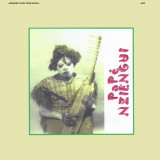
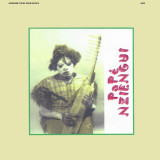
Papé Nziengui et son Groupe - Kadi Yombo LP 2x12"

Kadi Yombo, published in 1989, is the most successful album in the quest for a fusion between tradition and modernity in Bwiti harp music of the Tsogho people of Gabon. Combining beating rattles with a layer of synthesizers, Papé Nziengui blends in a contrapuntal dialogue characteristic of harp playing: male song in appeal and female choir in response, male voice of the musical arc and rhythms of female worship. But above all it’s Tsogho ritual music and modern studio orchestration. The result is an initiatory itinerary of 10 musical pieces which are all milestones likely to be simultaneously listened to, danced, meditated on, and soon acclaimed. In the years since, Nziengui has traveled he world from Lagos to Paris, from Tokyo to Cordoba, from Brussels to Mexico City to become a true icon, the emblem of Gabonese music.

Like Bob Dylan, "electrifying" folk and Bob Marley mixing rock with reggae, some purists have criticized Nziengui for having distorted the music of harp by imposing a cross with modern instruments. They even went so far as to claim that Nziengui was just an average harpist covering his shortcomings with stunts that were only good for impressing neophytes; like playing a harp placed upside down behind his back or playing two or three harps simultaneously. Sincere convictions or venomous defamations, in any case, Nziengui never gave in to such attacks, imposing himself on the contrary to pay homage to the elders (Yves Mouenga, Jean Honoré Miabé, Vickoss Ekondo) while instructing the maximum of young people. He is thus the promoter of many young talents, the most prominent of which is certainly his nephew Jean Pierre Mingongué. In a conservative society where the sacred is confused with secrecy, exposing the mysteries of Bwiti in broad daylight can be punished by exclusion or even execution.

Papé Nziengui has always claimed that he faces such risks because he never felt enslaved to a community that governs his life, that regulates his conduct, that has a right of censorship over his activities. Like Ravi Shankar, the famous sitarist, Papé Nziengui is a man of rupture but also of openness, a transmitter of culture. As proof, he has established himself in Libreville, Gabo’s capital, as the main harpist for sessions and concerts, accompanying the greatest national artists (Akendengué, Rompavè, Annie-Flore Batchiellilys, Les Champs sur la Lowé, etc.) as well as foreign artists (Papa Wemba, Manu Dibango, Kassav', Toups Bebey, etc.). In 1988, he was the first harpist to release an album in the form of a cassette produced by the French Cultural Center (Papé Nziengui, Chants et Musiques Tsogho). At the same time, he created his own group (Bovenga), combining traditional music instruments (musical bow, drums, various percussion instruments, etc.) in the framework of a true national orchestra, which gave the first concert and the first tours of a traditional music that was both modern and dynamic, thus "democratizing" the harp, to the dismay of certain purists.

On the other hand, in modern music, dominated by the logic of profit or even commercialism, artistic creation must often be adjusted for a specific audience based on reason rather than heart. But instead of allowing himself to be distorted, Papé Nziengui has always tried to produce music that is not a caricature, worthy in its expression as in its content, of the sacredness and transcendence of the music of the Origins. This is what makes Nziengui not only the musician, but the man someone whose age hasn’t altered any of his freshness or authenticity

pre-order now08.04.2022

expected to be published on 08.04.2022

32,73
Papé Nziengui et son Groupe - Kadi Yombo LP

Kadi Yombo, published in 1989, is the most successful album in the quest for a fusion between tradition and modernity in Bwiti harp music of the Tsogho people of Gabon. Combining beating rattles with a layer of synthesizers, Papé Nziengui blends in a contrapuntal dialogue characteristic of harp playing: male song in appeal and female choir in response, male voice of the musical arc and rhythms of female worship. But above all it’s Tsogho ritual music and modern studio orchestration. The result is an initiatory itinerary of 10 musical pieces which are all milestones likely to be simultaneously listened to, danced, meditated on, and soon acclaimed. In the years since, Nziengui has traveled he world from Lagos to Paris, from Tokyo to Cordoba, from Brussels to Mexico City to become a true icon, the emblem of Gabonese music.

Like Bob Dylan, "electrifying" folk and Bob Marley mixing rock with reggae, some purists have criticized Nziengui for having distorted the music of harp by imposing a cross with modern instruments. They even went so far as to claim that Nziengui was just an average harpist covering his shortcomings with stunts that were only good for impressing neophytes; like playing a harp placed upside down behind his back or playing two or three harps simultaneously. Sincere convictions or venomous defamations, in any case, Nziengui never gave in to such attacks, imposing himself on the contrary to pay homage to the elders (Yves Mouenga, Jean Honoré Miabé, Vickoss Ekondo) while instructing the maximum of young people. He is thus the promoter of many young talents, the most prominent of which is certainly his nephew Jean Pierre Mingongué. In a conservative society where the sacred is confused with secrecy, exposing the mysteries of Bwiti in broad daylight can be punished by exclusion or even execution.

Papé Nziengui has always claimed that he faces such risks because he never felt enslaved to a community that governs his life, that regulates his conduct, that has a right of censorship over his activities. Like Ravi Shankar, the famous sitarist, Papé Nziengui is a man of rupture but also of openness, a transmitter of culture. As proof, he has established himself in Libreville, Gabo’s capital, as the main harpist for sessions and concerts, accompanying the greatest national artists (Akendengué, Rompavè, Annie-Flore Batchiellilys, Les Champs sur la Lowé, etc.) as well as foreign artists (Papa Wemba, Manu Dibango, Kassav', Toups Bebey, etc.). In 1988, he was the first harpist to release an album in the form of a cassette produced by the French Cultural Center (Papé Nziengui, Chants et Musiques Tsogho). At the same time, he created his own group (Bovenga), combining traditional music instruments (musical bow, drums, various percussion instruments, etc.) in the framework of a true national orchestra, which gave the first concert and the first tours of a traditional music that was both modern and dynamic, thus "democratizing" the harp, to the dismay of certain purists.

On the other hand, in modern music, dominated by the logic of profit or even commercialism, artistic creation must often be adjusted for a specific audience based on reason rather than heart. But instead of allowing himself to be distorted, Papé Nziengui has always tried to produce music that is not a caricature, worthy in its expression as in its content, of the sacredness and transcendence of the music of the Origins. This is what makes Nziengui not only the musician, but the man someone whose age hasn’t altered any of his freshness or authenticity

pre-order now08.04.2022

expected to be published on 08.04.2022

10,29
Mathias Eick - When We Leave

Mathias Eick

When We Leave

12inch3865851
ECM Records
08.04.2022

180g vinyl pressing of Norwegian trumpeter Mathias Eick's 2021 ECM
album 'When We Leave'
Eick's expressive playing, which according to the New York Times radiates a
"pristine yet penetrating tone", is remarkably well complemented in the company
of his gifted supporting players and fellow travelers. Violinist Hakon Aase, one of
the outstanding improvisers of his generation, shadows the leader with lines that
reflect a profound background in folk as well as jazz. Drummers Helge Andeas
Norbakken and Torstein Lofthus mirror their exchanges, as they interact with
purring precision. Near the centre of the action, pianist Andras Ulvo and bass
guitarist Audun Erlien ferry ideas between frontline and rhythm section and make
statements of their own. On several tracks, the delicate swell of Stian
Carstensen's pedal steel guitar adds a dimension of mystery.
'When we leave' was recorded at Oslo's Rainbow Studio in August 2020.
Mathias Eick: trumpet, keyboard, vocals
Hakon Aase: violin, percussion
Andreas Ulvo: piano
Audun Erlien: bass
Torstein Lofthus: drums
Helge Andreas Norbakken: drums, percussion
Stian Carstensen: pedal steel guitar

pre-order now08.04.2022

expected to be published on 08.04.2022

27,69
Papé Nziengui et son Groupe - Kadi Yombo LP

Kadi Yombo, published in 1989, is the most successful album in the quest for a fusion between tradition and modernity in Bwiti harp music of the Tsogho people of Gabon. Combining beating rattles with a layer of synthesizers, Papé Nziengui blends in a contrapuntal dialogue characteristic of harp playing: male song in appeal and female choir in response, male voice of the musical arc and rhythms of female worship. But above all it’s Tsogho ritual music and modern studio orchestration. The result is an initiatory itinerary of 10 musical pieces which are all milestones likely to be simultaneously listened to, danced, meditated on, and soon acclaimed. In the years since, Nziengui has traveled he world from Lagos to Paris, from Tokyo to Cordoba, from Brussels to Mexico City to become a true icon, the emblem of Gabonese music.

Like Bob Dylan, "electrifying" folk and Bob Marley mixing rock with reggae, some purists have criticized Nziengui for having distorted the music of harp by imposing a cross with modern instruments. They even went so far as to claim that Nziengui was just an average harpist covering his shortcomings with stunts that were only good for impressing neophytes; like playing a harp placed upside down behind his back or playing two or three harps simultaneously. Sincere convictions or venomous defamations, in any case, Nziengui never gave in to such attacks, imposing himself on the contrary to pay homage to the elders (Yves Mouenga, Jean Honoré Miabé, Vickoss Ekondo) while instructing the maximum of young people. He is thus the promoter of many young talents, the most prominent of which is certainly his nephew Jean Pierre Mingongué. In a conservative society where the sacred is confused with secrecy, exposing the mysteries of Bwiti in broad daylight can be punished by exclusion or even execution.

Papé Nziengui has always claimed that he faces such risks because he never felt enslaved to a community that governs his life, that regulates his conduct, that has a right of censorship over his activities. Like Ravi Shankar, the famous sitarist, Papé Nziengui is a man of rupture but also of openness, a transmitter of culture. As proof, he has established himself in Libreville, Gabo’s capital, as the main harpist for sessions and concerts, accompanying the greatest national artists (Akendengué, Rompavè, Annie-Flore Batchiellilys, Les Champs sur la Lowé, etc.) as well as foreign artists (Papa Wemba, Manu Dibango, Kassav', Toups Bebey, etc.). In 1988, he was the first harpist to release an album in the form of a cassette produced by the French Cultural Center (Papé Nziengui, Chants et Musiques Tsogho). At the same time, he created his own group (Bovenga), combining traditional music instruments (musical bow, drums, various percussion instruments, etc.) in the framework of a true national orchestra, which gave the first concert and the first tours of a traditional music that was both modern and dynamic, thus "democratizing" the harp, to the dismay of certain purists.

On the other hand, in modern music, dominated by the logic of profit or even commercialism, artistic creation must often be adjusted for a specific audience based on reason rather than heart. But instead of allowing himself to be distorted, Papé Nziengui has always tried to produce music that is not a caricature, worthy in its expression as in its content, of the sacredness and transcendence of the music of the Origins. This is what makes Nziengui not only the musician, but the man someone whose age hasn’t altered any of his freshness or authenticity

pre-order now08.04.2022

expected to be published on 08.04.2022

32,73
Various - (El Mundo Es Sonido) The World Is Sound - First: The Trip

Sounds move across the limits of space and time to leave imprinted in the mind an album of memories full of colors and emotions, a travel journal that from the farthest corners of the world burns every kind of distance and returns through warm and strongly evocative sounds the colors, scents, rhythms, the atmospheres of distant lands. The result is a rich and evocative soundscape, where images become sounds and sounds images, where the elements of nature echo voices of different places and cultures, distant in space but deeply similar and intimately connected.

Imaginária Records has commissioned the refined experience of Giovanni Santucci and LucaEffeSunset a journey through the sounds of the world, which from the enveloping wave motion of the warm Iberian beaches carry us to the crystalline dripping of waters and voices of the Mexican jungle, crossing Balearic rhythms and Brazilian brilliance, letting ourselves be captured by the persuasive voices and the chasing rhythm of the magical formulas of the masciare, ancient mysterious witches of southern Italy. In this journey, which represents the first stage of a wide-ranging project (a trilogy that will take the shape of new musical experiences gathered around the themes of the places first and then of the return), an exciting centrifugal movement that attracts towards a single center: the beating heart of a single Mother Earth; voices, suggestions, rhythms, emotions from the far/near, in order to confirm, together with Raymond Murray Schafer, that in the end "the whole world is sound".

out of Stock

Order now and we will order the item for you at our supplier.

12,56

Last In: 3 years ago
Items per Page:
N/ABPM
Vinyl