Buscar:my robot friend

Estilos
Todo
  • 1
Various - I-ROBOTS PRESENTS: TURIN DANCEFLOOR EXPRESS, THE AGE OF VOOM VOOM MUSIC LP 2x12"

Daniele Baldelli
"A pleasant surprise to find in this release various atmospheres and sounds that have always been part of my DJing. It even made me rediscover M’Bamina, whom I used to play back in 1974 at the Tabù Club in Cattolica.
There are afro vibes as well, with Black Line – Myele, which is featured on one of my Cosmic tapes, and Nowhere by the Stratosferic Band recalls a track I used to play at the Baia degli Angeli…
Excellent work!"

Voom Voom Music was an independent Italian record label based in Turin, founded and managed by record producer Ivo Lunardi (Turin, December 6, 1940 – December 9, 2010). A pivotal figure in the Piedmont music scene, Lunardi was active both as a DJ and as the owner of several disco clubs.

The label operated for several years in the latter half of the 1970s, releasing mainly productions connected to the Italian dance and pop scene.
Since 2016, the original master tapes from the Voom Voom Music catalog have been owned by Gianluca Pandullo (I-Robots), a close friend of Ivo and Luca Lunardi. Through his labels Opilec Music and Turin Dancefloor Express, Pandullo oversees their preservation and historical enhancement.

The artistic direction of Voom Voom Music was marked by a distinct sonic identity — eclectic yet visionary. The Turin-based label founded by Ivo Lunardi embraced a sound that blended disco, pop, and rock influences, interwoven with African American grooves in a pioneering, international perspective.

Voom Voom Music was among the first Italian labels to introduce this kind of musical language in the country. A prime example is the Italian edition of the debut album by B.T. Express, Do It ('Til You're Satisfied), released in LP, 8-Track Cartridge, cassette, and 7" single formats.
The label’s productions clearly reflected the influence of black and funk music, as evidenced by the references and inspirations running through its catalogue. The track “Lady Pick-Up”, for instance, includes direct nods to “Do It Good” by KC & The Sunshine Band and Manu Dibango’s iconic “Soul Makossa”, revealing a musically refined and contemporary sensibility.

Among the label’s most representative works is Splash (1977) by the Stratosferic Band, a project conceived by Luigi Venegoni — producer, songwriter, and guitarist of Arti e Mestieri. Venegoni’s artistic journey spanned from progressive rock to space and Italo disco. The album artwork was designed by Piero D’Amore (1944 - 2022), a charismatic and multifaceted figure of Turin’s art scene (one of his works was even acquired by the MoMA in New York).
The record includes a disco reinterpretation of Van Morrison’s classic “Gloria”, and “Splashdown”, a track fusing the disco-rock energy of Rockets and Space. In contrast, “Nowhere” revisits the 1975 single by Hokis Pokis, a soul/disco band from Nassau County (New York), transforming it into a vibrant disco-funk number.

Another significant expression of the label’s catalogue is the afro-rock sound of M’Bamina, an Italo-Congolese group whose rhythmic energy and dialogue between African percussion and Western funk evoke the style of international formations such as Osibisa — themselves linked to a rich artistic history in Italy.

Disponible

En el almacen y preparando para el envío

27,69
Adam Beyer & Eli Brown - Overdose Of Bass

This first Adam Beyer x Eli Brown collaborative release has been feverishly anticipated by fans keeping tabs on their growing friendship and further excited by the pair’s first official B2B at Lisbon’s Brunch Electronik in September. Now ‘Overdose of Bass’ EP is here, a power-packed techno two-tracker enriched by diverse elements, on Beyer’s Drumcode.

It also marks Eli Brown’s welcome return to the label after his massive collaboration this January ‘When I Push’ with Layton Giordani and OFFAIAH following Brown’s 2022 EP ‘Deep Down’. The EP ‘Overdose of Bass’ combines recent developments and past influences of both techno giants.

‘Overdose of Bass’: the title track has rattling snares and a breaksy beat ushering in a spoken vocal layering different levels of processing, for a half sensual, half robotic riff – ‘there it goes/ overdose/of bass’ – with the doppler siren builds, giving a spacey, mysterious call and response. Hypnotic, disturbing, and edgy.

‘Living In The Moment’: an urgent techno beat, a Moroder-esque bass synth, and a recurrent riff like a signal becoming ever more high and desperate, are counterpointed by an ethereal, quavering, sweet female vocal, strengthened by the melodic build in the huge central breakdown. Urgent, demanding, hyper, this is dancefloor heaven.

Disponible

En el almacen y preparando para el envío

14,24
Wallis - protect me from my friends

Boudica is proud to present their first record of 2024, featuring an artist who holds a special place within the platform - none other than DJ and producer Wallis.
DJ, live-act and former mastering engineer, Wallis speaks for a generation searching for novelty and emotion in the electronic music realm.
Sharp engineering skills coupled with a unique approach to sound design allowed her to develop a trademark sound. Using an array of synthesisers, effects units, and experimental studio techniques, Wallis produces melancholic electronic music rapidly shifting between different patterns and atmospheres.
She tours as a DJ and Live Act around the world, having played large festivals such as DGTL or renowned clubs like Berghain, and will happily play at a large stage one day but at a small intimate sweaty basement the next.
In 2024, she started producing music for fashion shows and debuted that project by creating the music for the entire Natasha Zinko runway show at London Fashion Week February 2024.
The EP's opening track, "Hell is a Girl from Before (Rainy Summer Mix)," introduces a stirring blend of emotions. Starting with an emotional melody, accompanied by synths and a plucked instrument, it swiftly transitions into energetic segments driven by the drums. Vocals emerge, their words almost imperceptible, adding an intimate layer to the experience. The track maintains a steady pace, evoking the ambience of a rainy summer day. This creates a melancholic yet hopeful mood, transporting listeners through a journey of introspection.
As "Protect Me From My Friends" unfolds, it feels like being whisked away to a new dimension, greeted by otherworldly, robotic sounds. The introspective journey of the previous track mutates into raw emotions, driven forward by a relentless bassline. Clear vocals take the forefront, guiding the listener through the sonic landscape, only to be interrupted by the commanding presence of the bassline, which assumes the main character role.

In "Sleeping Pills Are Gone," an atmospheric and gloomy introduction is abruptly interrupted by an acid and hefty bassline that dynamically evolves throughout the track, plunging the listener into an eyes-open dream born of a sleepless night. The vocals echo the track's title, creating a haunting repetition. Wallis strategically grants brief breaks, constructing a powerful crescendo that heightens the experience. These are momentary escapes before immersing the listener once more into the hypnotic trance induced by the solid four-to-the-floor march.
Closing the EP with a striking finale, "Teenage Apocalypse" introduces a clunky melody that encapsulates the signature sound of the record. Characteristic vocals weave throughout, guiding the listener towards the track's crescendo. Driven by a flawless fusion of drums, the song transitions seamlessly into a powerful breakbeat moment, accompanied by yet another impeccable bassline. True to its title, it evokes the intensity of a day of judgment, leaving a lasting impact as the EP draws to a close.
This EP is a testament to Wallis's growth as a producer and her fantastic storytelling ability through sound.
In the artist's words: "Sometimes life takes a weird turn. Angry, confused and dealing with moral: this EP targets the pain and absurdity of attachment and strongly themes Gregg Araki's teenage apocalypse trilogy. The artwork poem plastered on the wall was written by wallis."

Disponible

En el almacen y preparando para el envío

10,88
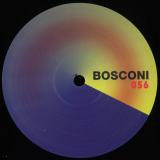
ALEXANDER ROBOTNICK - MY LA(TE)ST EP

2026 Repress

Bosconi Records, the Florence-based imprint run by Fabio Della Torre, is back with something truly special. Over the years, the label has built a reputation for pushing house, funk and electro in all their shades, always keeping a strong link between the local scene and international legends. And when it comes to legends, there are few names that shine brighter than Alexander Robotnick.

The Italian electro pioneer – aka Maurizio Dami – has already collaborated with Bosconi on The Hidden Game and Italcimenti Under Construction. Now he returns with My La(te)st EP, a vinyl-only release that pulls five standout cuts from his 2007 CD My La(te)st Album and finally makes them available on wax. All tracks have been remastered for the vinyl format, enhancing their depth and dynamics to deliver the best possible experience on wax.

The EP opens with “Jette Le Masque (Extended Version)”, driven by a pumping bassline and jagged sawtooth synths, with whispered French vocals by Robotnick himself. Stretched out and more DJ-friendly than the original, this version is tailor-made for the dancefloor.
On “We Love The Music” things get fun and funky: vocoder vocals, an electro-funk bounce and that unmistakable Robotnick irony. A killer cut to start a set on the right foot.

Flip the record and you dive into the acidic depths of “I’m Getting Lost In My Brain”. Old-school Chicago vibes, a hypnotic groove and basslines that just don’t quit – a peak-time weapon that feels raw and timeless.
Then comes “A Coffee Shop in Rotterdam”, one of those secret gems: melodic, laid-back and warm, built on a slapping bass and dreamy arpeggios. It has that Riviera house touch from the ’90s, but with Robotnick’s unmistakable twist.

Closing the EP is “Addio” – a track that wears its heart on its sleeve. Romantic, emotional, and driven by a bassline that nods back to Robotnick’s all-time classic Problèmes d’Amour. A perfect goodbye track, the kind that leaves a smile on your face as the lights come on.

This is a must-have for vinyl lovers and Robotnick fans alike – five cuts carefully remastered for the vinyl format, pressed exclusively on wax and ready to work the floor from start to finish. Don’t sleep on it: limited copies, vinyl only.

No en stock

Haga su pedido ahora y le encargaremos el artículo en nuestro proveedor.

15,34

Ültimo hace: 17 Días
Various - NOW – Yearbook 1983

Various

NOW – Yearbook 1983

3x12inchLPYBNOW83
Universal UK
11.03.2026
  • A1: Orchestral Manoeuvres In The Dark– Telegraph
  • A2: Blancmange– That's Love, That It Is
  • A3: China Crisis– Tragedy And Mystery
  • A4: Adam Ant– Strip
  • A5: Divine– Love Reaction
  • A6: Yello – I Love You
  • A7: Talk Talk– My Foolish Friend
  • A8: Japan– Canton (Live)
  • B1: Fun Boy Three– The More I See (The Less I Believe)
  • B2: Tracie*– Give It Some Emotion
  • B3: The Teardrop Explodes– You Disappear From View
  • B4: Xtc– Love On A Farmboy's Wages
  • B5: The Stranglers– Midnight Summer Dream
  • B6: The Kinks– Don't Forget To Dance
  • B7: Mari Wilson– Cry Me A River
  • C1: Bauhaus– Lagartija Nick
  • C2: Marc And The Mambas– Black Heart
  • C3: The Glove– Like An Animal
  • C4: Freur– Doot Doot
  • C5: The B-52'S– Song For A Future Generation
  • C6: Wall Of Voodoo– Mexican Radio
  • C7: Joe Jackson– Breaking Us In Two
  • D1: Oliver Cheatham– Get Down Saturday Night
  • D2: Rockers Revenge– The Harder They Come
  • D3: Freeez– Pop Goes My Love
  • D4: Malcolm Mclaren– Soweto
  • D5: Culture Club– I'll Tumble 4 Ya
  • D6: The Belle Stars– Indian Summer
  • D7: Level 42– Out Of Sight Out Of Mind
  • D8: Daryl Hall & John Oates– One On One
  • E1: Sparks & Jane Wiedlin– Cool Places
  • E2: The Romantics– Talking In Your Sleep
  • E3: The Fixx– Saved By Zero
  • E4: The Motels– Suddenly Last Summer
  • E5: Modern English– I Melt With You
  • E6: Missing Persons– Walking In L A
  • E7: Naked Eyes– Always Something There To Remind Me
  • E8: Taco– Puttin' On The Ritz
  • F1: Electric Light Orchestra– Secret Messages
  • F2: Men At Work– Overkill
  • F3: Pat Benatar– Little Too Late
  • F4: Journey– Separate Ways (Worlds Apart)
  • F5: Styx– Mr Roboto
  • F6: Giorgio Moroder & Joe Esposito– Lady, Lady
  • F7: Stephen Bishop– It Might Be You

Celebrating the first year of ‘NOW That’s What I Call Music’ – 1983. ‘Now Yearbook’ presents a stellar selection of 1983’s biggest and best hits… 80 huge chart hits from the year, alongside enduring and well-loved classics on 4 CDs. 1983 saw British artists achieving unprecedented success across the world with ‘Every Breath You Take’ from The Police being the year’s biggest seller in the U.S., and ‘Karma Chameleon’ from Culture Club being the top seller in the U.K. Breakthrough acts, achieving their first big hits – all here – include a staggering line-up of future superstars: U2, Eurythmics, Wham!, Paul Young, The Style Council, Marillion and Thompson Twins, to name a few..' Released on a LTD 4CD SET: This will be a limited run of 5000 4CD units housed in ‘hard-back book’ packaging and featuring a 28-page booklet that includes an overview of the chart music of 1983, a track by track guide including chart stats and fun facts, a selection of original picture sleeves and a quiz. 2CD Standard set and also a limited edition of 3000 units, pressed on 3LP translucent red vinyl...

No en stock

Haga su pedido ahora y le encargaremos el artículo en nuestro proveedor.

28,78

Ültimo hace: 36 Días
Beans On Toast - Kill Them With Kindness
  • The Great North Road
  • Gods, Children And Robots
  • Comfortable In The Counterculture
  • Pelican Crossing
  • The Fall Of The Establishment
  • The Glastonbury Oak
  • A Real Rock ‘N’ Roller
  • Big Night Out In Shrewsbury
  • That’s Why I Don’t Drink Tequila Anymore
  • Taylor Swift For President
  • Our Cat
  • Happy Birthday Baby
  • Magicians And Outlaws

Kill Them With Kindness is the 18th album from Beans on Toast, recorded at Greenmount Studios in Leeds with The Beans on Toast Band, a collection of musical friends he handpicked from the UK music scene a few years back.

"We've done a few tours together, but this was our first venture into a studio. Each one of them is amazing, and together... well, I'm proper chuffed with how it sounds. Have a listen for yourself," says Beans.

This album is a bit of a juxtaposition, as is the title. "There are songs that deal with the current state of the world: wars, maniac leaders, the rise of AI and the fall of the establishment. Then there are songs about trees, late nights in music venues, art, love and my new cat. As usual, it's a time stamp of my thoughts and feelings from the past year on planet Earth."

Reservar05.12.2025

debe ser publicado en 05.12.2025

26,26
Kapote - Para Mytho Disco  LP 2x12"

Toy Tonics Music Berlin presents "Para Mytho Disco". The 2nd "Kapote" album of label founder and creative director Mathias Modica.
Keyboarder, DJ, producer, music nerd, graphic designer, multi-instrumentalist, sub-culture impressario and artist (formerly known as Munk of Gomma records.)

Kapote & Toy Tonics
In the last years Kapote was in the spotlight mainly for building the Toy Tonics label with his friends. Developing a platform for new positive quality dance music with a human touch. Toy Tonics is the opposite of the dark, druggy Techno and Trance sounds of the last years.
The warm inclusive music of Toy Tonics represents a new vibe that a young generation of diverse, stylish and culturally intersted generation of dancers loves now. Kapote's Toy Tonics became the key label for that vibe. (In 2024 Toy Tonics made 150 Toy Tonics events in 18 countries. With more than 150.000 people dancing. 90 millions streams on their music.)
Toy Tonics is more than a music label: It's a audio - visual universe. A community, almost a movement.
Based on a new positive attitude and aesthetic diversity. Mixing musicianship with DJ culture, analogue music with electronic, ideas from the past with sounds from now. To create something new. Connecting dance music with graphic design, art and underground fashion.
Kapote and his gang release vinyl, posters, shirts, art fanzines and make exhibitions and partys.

Toy Tonics started in Berlin as a underground niche project. But now became the key label of the new house, wild style disco and organic dance music scene.
Probably one of Berlin's biggest electronic music phenomena along with Keinemusik and Live from Earth.

It went fast: 2020 Kapote's crew started to make small parties in Berlin's off spaces. The "Toy Tonics Jams". The parties became "talk of the town", and Berlin clubs like Griesmühle and Panorama Bar invited the crew. Then international clubs and festival called. Toy Tonics were invited to SONAR (playing the mainstage with Kaytranada and DJ Tennis), KALA festival, Montreux Jazz festival.
Now TT has a residency at Panorama Bar Berlin and sold out events in Europe leading clubs like Phonox in London, Rex Club in Paris, Tunnel in Milan.
Toy Tonics now is the reference brand of a new generation of music loving dancers. Similar to Gomma records, Kapote's former label (2003 - 2015) that was one of the key labels of the "indie dance" scene of the Y2K years (along with DFA and Output Records).

Kapote created a multi-cultural movement with graphic designers, photographers, illustrators from the Berlin scene.
They publish the Toy Tonics Pocket Poster magazine, posters and design shirts. They organize the Toy Tonics Pop Up Galleries mixing music and art. In underground venues in Berlin and in new gallery spaces and museums around Europe.
Toy Tonics has been invited by Palais de Tokio museum in Paris, Triennale Museum Berlin, Design week Milano to create events.
The new Kapote album
The 12 tracks have a very own style. Based on dance music, but going much further. "Para Mytho Disco' is a futuristic mix of sounds. It's far away from the dark monotone techno and trance music from Kapote's hometown Berlin. Instead, he creates warm friendly atmospheres full of sonic colours and little musical surprises.
Kapote's knowlege of music history and his backround as a jazz piano student and son of classic music composer is clearly inside this music. Before turning into a DJ and electronic music producer he has been playing in bands since he was 13 years old.
The album is full of emotional chord progressions played by Kapote on various keyboards. Sometimes reminding music from the past, without being retro at all. The basslines and melodies are inspired by jazz fusion from the 1970ies. And he programmed syncopated grooves that come from afro-american dance music. There are influences from Japanese electronic music (Yellow Magic Orchestra), from 1980s Synthwave and from 1990s electronica (like Squarepusher and Luke Vibert).

Kapote plays keys, bass, flutes and percussions, he plays synth solos and sings on a few tracks. The complexity of the arrangements makes this music never boring. Lot of melodies and solos that catch the listener. Colourful soundscapes that make you want to listen or dance to this album more, and discover details also after you heard it several times.

Kapote background

Before starting Toy Tonics, Kapote used to run a label called Gomma. He produced four albums under the name Munk and music for other artists.
He produced music with Peaches, Franz Ferdinand founder Nick McCarthy, with New York street art legend The Rammellzee, Italian actress Asia Argento, the first three albums of WhoMadeWho and worked with LCD Soundsystem (listen to "Kick out the chairs", the Munk song with James Murphy )
In those "Gomma days" Kapote aka Munk was also one of the main DJs for VICE magazine parties and made music for art projects and fashion brands (Margiela, Prada, Colette).
In 2015 he stopped Munk and Gomma and started Toy Tonics. He found young producers and helped to develop their sound (Coeo, Cody Currie, Gee Lane, Barbara Boeing, Sam Ruffillo). Later he founded the sublabel Kryptox to release music by Berlin based bands that make new forms of jazz or neo classical sounds.

Under the name Kapote Mathias didnt release much:
Only his Kapote debut album "What it is" (2019) and an EP called "Electric Slide" (2022) and a collabo EP with Italian producer Sam Ruffillo ("Robot Salsa").

An although his Munk and Kapote music was an underground phenomena his music has always been a favourite of many great people from the scene.
Supported by DJs like Harvey, Chromeo, Moodymann, Jennifer Cardini, Gerd Janson, MYD, Andrew Weatherall to Blessed Madonna, Justice and Laurent Garnier… to name just a few.

No en stock

Haga su pedido ahora y le encargaremos el artículo en nuestro proveedor.

20,59

Ültimo hace: 8 Meses
Mistery Friend - Nueva Dimension

New sounds emerge from the depths, an enigmatic mutation that will transport you from the past to the present and back. Mystery Friend shares their formula and materializes it in this 4-track EP, loaded with elements of house, techno, and new beat that come together to form a solid and reverberant sonic experience. With Spanish vocals, the record taps into the essence of Latin energy.

No en stock

Haga su pedido ahora y le encargaremos el artículo en nuestro proveedor.

13,40

Ültimo hace: 9 Meses
Alex Ebert - Alexander

Alex Ebert

Alexander

12inchLVC017
Community Music
23.01.2025

Alexander Ebert (born May 12, 1978) is an American singer-songwriter and composer. Lead singer and songwriter for Ima Robot and Edward Sharpe and the Magnetic Zeros. Received the Golden Globe Award for Best Original Score for his musical score to the film All Is Lost (2013).

No en stock

Haga su pedido ahora y le encargaremos el artículo en nuestro proveedor.

24,58

Ültimo hace: 14 Meses
boycalledcrow - eyetrees MC (TAPE)

'We're excited to be able to bring you the latest wonderful album from Chester's boycalledcrow, after a series of superb releases for labels such as Mortality Tables, Waxing Crescent Records and Subexotic Records, including the wonderful Kullu from earlier this year.

Knott's music doesn't sit easily in any pre-existing genres, being at once strange and experimental, yet melodic and somehow comforting. His music is intimate and evocative, deeply personal, and manages to be both bucolic and yet totally 21st century, like Kraftwerk's robots dreaming of sheep.

The songs and sounds on “eyetrees” are inspired by a rich family life and the wonderful times spent with his wife and kids, both at home and out in nature.'

Knott said of the album and its inspirations:
“We enjoy spending time in the woods with our young children, creating stories about the "eye tree”. This tree, with thousands of eyes, watches over us and cares for us like family. We make fox medicine and cherish these blissful moments. The music reflects these times, seen through the colors of an old, fuzzy reel—orange, red, and yellow with blurred edges, like an old photo scorched by the sun.

I feel a deep spiritual connection to the countryside; the hands of Arcadia cradle me when I feel sad. Some of the album was created during times of sadness when I felt death was close and the lines between worlds were blurred. This feeling—that anything can happen and that life is delicate and can be taken away in a flash—permeates the music.

The song titles are stories and memories of my family, filled with hazy pinks, yellows, reds, and oranges.

Wonky acoustic guitar, broken electronics, and a warm, otherworldly space."

Reservar16.10.2024

debe ser publicado en 16.10.2024

14,92
Various - Socialist Disco - Dancing Behind Yugoslavia's Velvet Curtain 1977-1987 LP 2x12"

A collection of 18 rare disco tracks from Yugoslavia. Compiled by Leri Ahel & Zeljko Luketic from original master tapes. Fox & His Friends label owners Ahel & Luketic selected obscure 7'' singles, b-sides, out-of-print releases and digged deep into the vaults of Jugoton to tell the story of how disco infiltrated clubs and pop music. This compilation is vinyl counterpart to their pioneering research and work in two major exhibitions tracing roots, influences and social significance of disco in music, fashion and design held in 2015 in Klovicevi Dvori Museum and HDD Gallery in Zagreb. "Socialist Disco - Dancing Behind Yugoslavia's Velvet Curtain 1977-1987" double gatefold LP with extensive liner notes contains tunes from KIM Band, Gabi Novak, Arian, Ljupka Dimitrovska, Ana Sasso, Moni Kovacic, Milka Lenac, Rok Hotel, Ivica Surjak, Grupa ST, Nano Prsa and many more in various sub-genres including classical orchestrated disco, dance reworkings of international chart hits and synth-filled italo-disco stompers performed by Yugoslavian music stars, fashion models and even sports and football heroes. Disco, a vital Trojan horse (in local notion: a pop music you can dance to), stayed quite a long time In Yugoslavia, refusing to be silenced and refusing to jump into the bandwagon of expected. It was influenced by American and European disco sound, for example, by the Boney M, Amanda Lear or Love Machine, who all visited Yugoslavia and had live concerts. The producers and the big record companies like Jugoton, PGP RTB, Diskoton or ZKP RTVL, noted the hype in music and they constantly probed the market with limited run of seven inchers or special performances. Some artists were quite successful, but the rest were in the 7'' single empire which was free enough to experiment with all things disco had to offer - genre hybrids, use of electronics, sexual innuendo, bizarre lyrics and most importantly, great musicians and major composers having fun. The no-restrictions policy of disco was there to evade the rules and surely it did.

No en stock

Haga su pedido ahora y le encargaremos el artículo en nuestro proveedor.

28,78

Ültimo hace: 16 Meses
Tom Holkenborg - Sonic the Hedgehog LP

Enjoy The Toons Records - in conjunction with Paramount Pictures and Enjoy The Ride Records - proudly present Sonic The Hedgehog: Music From The Motion Picture by composer Tom Holkenborg. Holkenborg, also known under the moniker Junkie XL, has created scores to major blockbuster hits for the last two decades (Mad Max: Fury Road, Deadpool, Batman v Superman, Alita: Battle Angel and more). Holkenborg encompasses the essence of Sonic, bringing the iconic chip sounds from SEGA to the big screen with a thrilling and exciting score that beautifully compliments the film.

Reservar14.06.2024

debe ser publicado en 14.06.2024

32,35
Tom Holkenborg - Sonic the Hedgehog 2 LP 2x12"

Enjoy The Ride Records and Enjoy The Toons Records - in conjunction with Paramount Pictures and Enjoy The Ride Records - proudly present Sonic The Hedgehog 2: Music From The Motion Picture by composer Tom Holkenborg. Holkenborg, also known under the moniker Junkie XL, is back for the second installment in the Sonic series with another rollercoaster of a score! Available on vinyl for the first time, Sonic The Hedgehog 2 is presented on 2xLP limited edition colored vinyl, pressed at 45RPM for optimal sound quality. It is housed in a 350gsm gatefold jacket designed as an homage to the SEGA video game box, and has a full-color double sided insert.

Reservar14.06.2024

debe ser publicado en 14.06.2024

49,79
FaltyDL - In the Wake of Wolves LP

If you can judge an artist's quality by the company they keep, then FaltyDL is up there with the best of them. The label history of the producer known to his friends as Drew Lustman reads like a "who's who" of 21st century electronic music imprints - Ninja Tune, Unknown to the Unknown, Planet Mu, Studio Barnhus, the list goes on.

WithIn the Wake of Wolves, we can now add Central Processing Unit to this illustrious roster. The Sheffield label joins the party at a notable juncture - while FaltyDL has kept up an impressive clip of releases throughout his career,In the Wake of Wolvesis both the NYC-based producer's first LP for two years and his first full-length release away from his own Blueberry Records for almost a decade.

In the Wake of Wolvesproves to be both a great match for CPU and also further evidence of the label's burgeoning sonic palette. While CPU has built its reputation on top quality electro joints, recent releases have delivered adventurous electronica experiments (Proswell'sPeople Are Giving And Receiving Thanks At Incredible Speeds), hard-wired breakbeat techno (Baby T'sI Against I) and golden-age synth explorations (twenty-fifth anniversary reissues of Bochum Welt'sDesktop RoboticsandFeelings on a Screen, both of which first emerged via the legendary Rephlex Records).In the Wake of Wolvestakes things further still - this is a brilliantly genre-voracious record, one which marries the rhythmic cut-and-thrust that we have long known FaltyDL for with all manner of adventurous stylistic choices.

Those familiar with the FaltyDL experience will recognise the trademark blend of synthetic grit and harmonious softness in album opener 'I Need You'. This could pass for Four Tet or even Hannah Diamond at points, the steady build of pulsing synths and looped vocals recalling a more mysterious version of the PC Music sound. 'I Need You' stands shoulder-to-shoulder with any of FaltyDL's other great atmospheric album openers - no small feat given the competition. 'Further', the following number, is yin to 'I Need You's yang. This is a pulsating track which gleefully skitters between machine-funk, tubing darkside bass and breakcore-adjacent drum programming, all of which is peppered with some genuinely beautiful work in the higher synths.

'Further' sets the scene for several of the more club-facing cuts here. 'Minds Protection' similarly features all manner of strange percussive sounds to surprise the ear, and it also boasts a thrilling mid-section in which the bottom falls out the track to incorporate a short snippet of blown-out junglism. With its tunnelling low-end and clattering drums, 'Full Spectrum' kicks off a delightful run of grime-influenced joints which take cues from Mr. Mitch, Logos and many of those other producers who took the Eski sound to exciting new places in the 2010s. 'Forget Me Not', the album's longest track which is placed three spots from the end, feels like the record's climactic point - a pitter-patter post-house joint that has a hint of Caribou in its DNA, it'll take the clubs by storm.

But as much as FaltyDL may consistently bring the heat in terms of the beat programming, the thing which has long marked Lustman out as a special talent is the musicality of his compositions. No matter how much drums clatter or bass bangs, FaltyDL always hooks the ear back in with a sonorous synth or pleasing nugget of melody. Nowhere is this more apparent than onIn the Wake of Wolves' more weightless numbers, each startling in their prettiness. 'Half Spectrum' is a new-era beat track packed full of ear candy; the keening keys of 'GasGas' are potent with feeling; and on the album's closer, the evocatively-titled 'Mila Stans In A Meadow For The First Time Eating Strawberries', we get a gorgeous synth vignette that joins the dots between the modern mastery of Yung Sherman and the most emotionally affecting moments of Aphex's Twin's catalogue.

At once wistful and hopeful, archival and futuristic, FaltyDL's brilliantly unpredictableIn the Wake of Wolvesis a feather in the cap for both this seasoned producer and the Central Processing Unit label.

RIYL: AFX, Bochum Welt, Mark Fell, Mrs Jynx, Boards of Canada

No en stock

Haga su pedido ahora y le encargaremos el artículo en nuestro proveedor.

17,61

Ültimo hace: 10 Meses
Kaleida - In Arms LP 2x12"
 
10

Kaleida are the transatlantic duo whose darkly mystic soundworld finds glimmers of hope in the disquiet. Span- ning an ocean, the pair have nurtured a long-distance partnership that withstands the shifting patterns of life. They first formed in 2013 when a friend introduced them over email. Christina Wood was working in the Indone- sian forest while recording demos in her bedroom each night, and Cicely Goulder had been composing for film productions in London. Despite the miles between them, they found an instant musical chemistry.
Kaleida first came to international renown in 2014, when their single “Think” went viral overnight and was featured in the soundtrack for the cult Keanu Reeves film, John Wick. Their debut album Tear The Roots arrived in 2017 and crystallised the pair’s moody pop aesthetic, which merges Wood’s sylph-like, operatic vocals with Goulder’s neo-Noir electronica. The record earned the duo their sec- ond spot in a film soundtrack, this time for Atomic Blonde with a tender take on Nena’s 1980s anti-war classic “99 Luftballons”. It was followed in 2020 by the pair’s second album Odyssey dubbed “a consummate work of electronic artistry.” Their new album In Arms is a record that leans into a near transcendent spiritualism, where their minimalist production conceals a raw, celestial power. With a departure from their previously insular way of working, they invited other musicians into the production process, most notably producer Johan Hugo (Self Esteem, M.I.A, Skepta).

No en stock

Haga su pedido ahora y le encargaremos el artículo en nuestro proveedor.

25,92

Ültimo hace: 2 Años
The Cars - The Cars LP

The Cars

The Cars LP

12inchLMF274
Cohearent
15.03.2024

One of the most successful and enjoyable debuts in history, The Cars' self-titled album doubles as a greatest-hits collection. That's because not one song here is unrecognized or unknown. A huge reason why the Boston quintet became America's most popular new-wave band, The Cars launched eight tracks still regularly heard on radio stations everywhere. Consider the hit list: "You're All I've Got Tonight." "Good Times Roll." "Just What I Needed." "Moving in Stereo." "My Best Friend's Girl." "Don't Cha Stop." If you're a fan of pop music, this album is mandatory. Just call it the best new-wave rock album ever made.

And now, The Cars sounds better than it has in any previous incarnation. Mastered from the original analogue tapes, Mobile Fidelity's numbered-edition LP allows the music's oscillating rhythms, futuristic keyboard passages, panned stereo images, and rippling textures to be experienced like never before. The songs take on a surreal quality, the Cars manipulating the vibrant music at will to mesmerize the listeners' senses and hold them at bay. Mobile Fidelity's pressing epitomizes the sensation of "moving in stereo."

Led by Ric Ocasek and Benjamin Orr, the Cars managed to unite then-disparate styles: bubblegum pop melodies, angular art rock, progressive arrangements, and terse minimalism. Orr's low, understated singing and Ocasek's cool, detached vocals lend shades of doubt and double meaning to the lyrics, which are further counterbalanced by orchestral keyboard flourishes and electronic beats. The brilliant arrangements also benefit from a laidback cool and understated irony that remain uncommon in the over-the-top world of mainstream music. Obsessed with incorporating the latest technologies and sounds into its palette, the band spiced its tunes with delightfully quirky accents — country-tinged guitar fills, echoing Syndrums, reggae splashes, hard-rock tones, robotic pulses.

The results are the sounds of a creative landmark. At once accessible and eccentric, edgy and catchy, The Cars explodes with emotion, energy, and hooks. It's impossible not to get caught up humming and singing along to every song, an appeal that comes courtesy of Roy Thomas Baker's stellar production. The legendary producer, best known for his work with Queen, ensured that the record seamlessly packed a smooth midrange, spacious imaging, and call-and-answer choruses in one tight package. Baker's trademark touches with harmony vocals abound.

"The MoFi disc is much better than the original in every way. It's more dynamic, much more natural on top, and all three dimensions have a lot bigger space. This disc is great from start to finish, but "Moving in Stereo" will blow you away on a great system in a big room."
—Jeff Dorgay, TONEAudio

Reservar15.03.2024

debe ser publicado en 15.03.2024

61,77
WILL BUTLER + SISTER SQUARES - WILL BUTLER + SISTER SQUARES LP

Sara Dobbs and Jenny Shore used to work summer stock theater in St. Louis, Missouri. They'd do the hand jive with TV stars past and future; they'd get coldly corrected by the ancient, legendary choreographer Gemze de Lappe. Sara went on to Broadway, including a run as Anybodys in West Side Story. Jenny went on to choreograph in the independent dance scene of early 2000s Chicago. Julie Shore is Jenny's sister. She's always made music_playing Chopin, writing songs, making bands with her friends. She's had the archetypal Millennial journey of entering adulthood in the '08 financial crisis and figuring out what stupid series of jobs you have to take to pay rent while keeping an artistic life alive. Miles Francis grew up in New York City with Backstreet Boys posters covering their walls. An extraordinary drummer since youth, Miles thrives in collaboration_ whether producing artists in their West Village studio, performing with artists like Angelique Kidjo, or powering protests with a big marching drum. These four_Miles, Julie, Jenny, and Sara_are Sister Squares. What made them a musical unit was working with Grammy winner and Oscar nominee Will Butler. They've all just finished a new record together: Will Butler + Sister Squares. "After Generations, I considered making a weird solo record. Me alone in the basement, etc., etc. Mostly I realized that what I wanted was the opposite," says Will. He increasingly turned to the band for feedback on lyrics and song structures. He asked Miles if they'd produce the record. The band played a run of shows in August 2022, airing out studio ideas in live rooms. After coming home, the band regrouped at Figure 8 Studios in Brooklyn. "I had quit my band Arcade Fire very recently, after 20 years_maybe the most complex decision of my life. I had spent the preceding two years at home with my three children. I was 39 years old. I was waking up every morning and reading Emily Dickinson, until I had read every Emily Dickinson poem. I was listening to Morrissey, to Shostakovich, to the Spotify top 50. I had unformed questions with inchoate answers," says Will. "But, honestly, I was feeling great about the record." The album projects widescreen emotional landscapes. Lead-off single "Long Grass" is like a Harry Styles song with 20 more years of life behind it. Standout track "Saturday Night" has a beat, according to Miles, "with that robot-alien-dancing-at-a-haunted- dive-bar feeling that we were going for." The back half of the album is a danceable, weird choral record with harmonies both beautiful and dissonant. Closing song "The Window" is the comedown after the party_Julie playing a Chopin Nocturne on a three-years-out-of-tune piano, slowed to half-speed on tape with Will singing over it in a voice exactly as tired as he was. It's a record with a warm, humane soul.

Reservar22.09.2023

debe ser publicado en 22.09.2023

24,79
WILL BUTLER + SISTER SQUARES - WILL BUTLER + SISTER SQUARES LP

Sara Dobbs and Jenny Shore used to work summer stock theater in St. Louis, Missouri. They'd do the hand jive with TV stars past and future; they'd get coldly corrected by the ancient, legendary choreographer Gemze de Lappe. Sara went on to Broadway, including a run as Anybodys in West Side Story. Jenny went on to choreograph in the independent dance scene of early 2000s Chicago. Julie Shore is Jenny's sister. She's always made music_playing Chopin, writing songs, making bands with her friends. She's had the archetypal Millennial journey of entering adulthood in the '08 financial crisis and figuring out what stupid series of jobs you have to take to pay rent while keeping an artistic life alive. Miles Francis grew up in New York City with Backstreet Boys posters covering their walls. An extraordinary drummer since youth, Miles thrives in collaboration_ whether producing artists in their West Village studio, performing with artists like Angelique Kidjo, or powering protests with a big marching drum. These four_Miles, Julie, Jenny, and Sara_are Sister Squares. What made them a musical unit was working with Grammy winner and Oscar nominee Will Butler. They've all just finished a new record together: Will Butler + Sister Squares. "After Generations, I considered making a weird solo record. Me alone in the basement, etc., etc. Mostly I realized that what I wanted was the opposite," says Will. He increasingly turned to the band for feedback on lyrics and song structures. He asked Miles if they'd produce the record. The band played a run of shows in August 2022, airing out studio ideas in live rooms. After coming home, the band regrouped at Figure 8 Studios in Brooklyn. "I had quit my band Arcade Fire very recently, after 20 years_maybe the most complex decision of my life. I had spent the preceding two years at home with my three children. I was 39 years old. I was waking up every morning and reading Emily Dickinson, until I had read every Emily Dickinson poem. I was listening to Morrissey, to Shostakovich, to the Spotify top 50. I had unformed questions with inchoate answers," says Will. "But, honestly, I was feeling great about the record." The album projects widescreen emotional landscapes. Lead-off single "Long Grass" is like a Harry Styles song with 20 more years of life behind it. Standout track "Saturday Night" has a beat, according to Miles, "with that robot-alien-dancing-at-a-haunted- dive-bar feeling that we were going for." The back half of the album is a danceable, weird choral record with harmonies both beautiful and dissonant. Closing song "The Window" is the comedown after the party_Julie playing a Chopin Nocturne on a three-years-out-of-tune piano, slowed to half-speed on tape with Will singing over it in a voice exactly as tired as he was. It's a record with a warm, humane soul.

Reservar22.09.2023

debe ser publicado en 22.09.2023

23,49
Heinrich Mueller - False Vacuum 2 LP 2x12"

Its been five years since Belgium's WeMe Records lovingly selected the first ever collection of Heinrich Mueller's (Drexciya/Doppleffekt) best remixes/remodels for a new generation of listeners that won't have to pay collector prices to have them on vinyl. Volume 2 of False Vacuum is now with us and still has riches to choose from.

These 13 rare and hard to find tracks (3 of which make their vinyl debut) all deliver in different ways as he systematically reinvents each one.

Beginning with his raw and now classic remix of Ultradyne's 'Clones', the hard-edged dance-floor friendly 'Woman's Scent' by Cisco Ferreira (The Advent), the more laidback and futuristic sounding 'Bohrium 274' by Jauzas the Shining and Victoria Lukas, the slow and mysterious and first time on vinyl 'Somehow' by Rough Days For Diamond Trade, reinventing the darkest of dance-floors on 'Rytumtraks 0002' by Albert van Abbe, the moody masterpiece and first time on vinyl 'Now We Continue' by White Car, Duplex's 'Autoslug' sounding like its been rearranged inside a black-hole, a balancing act between the light and darkness on Fasenuova 'Cachito Turulo', an insistent rise and falling workout for As One's 'Where Did He Go and Why', a tightly wound and almost meditative 'The Truth' by The Exaltics, an angular stomping march of the robots 'Longwang' by 6D22, a jumpy fidgety groove for first time on vinyl 'Forty Eight Hours' by Yan Wagner and perhaps one of his most sublime pieces is kept for last with 'So Long For A Small Storm' by Dollska.

No en stock

Haga su pedido ahora y le encargaremos el artículo en nuestro proveedor.

27,36

Ültimo hace: 23 Meses
Various - Reference Point compiled by Mark GV Taylor and George Arthur LP 2x12"

Curated by Reference Point residents Mark GV Taylor and George Arthur, this 15 track
compilation album features tracks the pair have played at their peripatetic, Europe wide
events since 2012.
Stretching from the 1970s to the present day the Reference Point compilation spans a whole
range of genres, tempos, languages and grooves where the quality of music is paramount
whether $1.00 bin records or $1000 rarities.
Reference Point, 'a place to hear the music', is a truly trans-global album with music from
Argentina, Brazil, Oakland, Detroit, Texas, London and more, including tracks from private
press albums, from artists who have played at Reference Point events and from current
artists such as MF Robots and Caixa Cubo.
Releasing as a CD, digital and a double LP, Reference Point is another essential compilation
from BBE Music and one that belongs in the collection of all collectors and lovers of great
music

Reservar08.09.2023

debe ser publicado en 08.09.2023

40,97
ORBITAL - OPTICAL DELUSION 2x12"

2 x Solid White LP, 5mm spine Sleeve UV Gloss Finish, 2x Heavy Weight Printed Inner Sleeve UV Gloss finish, marketing sticker.

Legendary electronic music duo Orbital return Early 2023 with new album “Optical Delusion”, the Hartnoll brothers first studio album since 2018’s Monster’s Exist. Recorded in Orbital’s Brighton studio, “Optical Delusion” includes contributions from Sleaford Mods, Penelope Isles, Anna B Savage, The Little Pest, Dina Ipavic, Coppe, and perhaps most surprisingly, The Medieval Baebes.
Earlier this year, Orbital celebrated their storied history with “30 Something” which, unlike other Best Of’s, contains reworks, remakes, remixes and re-imaginings of landmark Orbital tracks including “Chime”, “Belfast”, “Halcyon”, “Satan”, and “The Box”

SHORT BIOG:

“A human being experiences himself, his thoughts and feelings as something separate from the rest of humanity – a kind of optical delusion of his consciousness. This delusion is a kind of prison for us, restricting us to our personal desires and to affection for a few persons nearest to us. Our task must be to free ourselves from this prison…”

You many have seen this quote attributed to Albert Einstein on social media, the archetypal Smartest Guy Ever apparently having an out-of-character religious epiphany. It certainly leapt out at Paul Hartnoll of Orbital who spotted it in Michael Pollan’s 2018 book How to Change Your Mind: What the New Science of Psychedelics Teaches Us About Consciousness, Dying, Addiction, Depression and Transcendence.

“As soon as I saw ‘optical delusion’ I thought Oh hey, that’s the album title,” says Paul. “It just seemed to say so much about how people construct their own realities, how we see patterns that aren’t there, how we see what we want to see.

“But it’s actually a misquote. He never quite said that. In the German original what he’s really saying is that human experience is as relative as physics. Wouldn’t it be good if we could accept that, and find a kind of universal theory of everything for the human race? Then you look at everything from history to art to your Twitter feed and you think yeah, that’s what we’re all trying to do all of the time…”

Hence ‘Optical Delusion’, the tenth original Orbital album and the latest in a burst of renewed post-pandemic creativity for two brothers who’ve stayed at the top of their game longer than anyone from the post-1988 Class of Acid House.

Now with ‘Optical Delusion’ the Hartnolls dig deeper into the unquiet psyche of our increasingly surreal and disordered world. Sketched out partly during lockdown but fully recorded in the uncertain After Times, the album summons up conflicting emotions and sometimes beguiling images from years when the science fiction doomsdays that the Hartnolls watched on TV as kids finally came true. There are mesmeric tracks with names like ‘The New Abnormal’ and ‘Requiem For The Pre-Apocalypse’ and ‘Day One’. But there are also straight-up bangers and ethereal cosmic dreams, abstract sound wars and deeply human songs of separation and loss.

And it all starts with a bang. Lead single ‘Dirty Rat’, an outright Fall-meets-Front-242 class rant with vocals by Sleaford Mods mob orator Jason Williamson, harks right back to the Hartnolls’ days of politicised anarcho-squatpunk. It began as a remix swap (Orbital did the Sleafords’ ‘I Don’t Rate You’) and morphed into a comic, brutal, bass-driven harangue not so much against our rulers but at the petty, mean-spirited, frightened, Mail-reading voters who put them there: the people who are “blaming everyone in hospital/blaming everyone at the bottom of the English Channel/blaming everyone who doesn’t look like a fried animal.”

Also key to the album is opening track ‘Ringa Ringa (The Old Pandemic Folk Song)’ which returns to an Orbital truism, that time always becomes a loop. This chugging, cyclical Orbital groove gives way to an unnerving past-meets-present timeslip fit for ‘Sapphire And Steel’ as goth maenads The Mediaeval Baebes materialise to sing ‘Ring O’Roses’ – the innocent nursery rhyme whose roots are in the Black Death.

“I’ve always liked folk music and mediaeval sounds,” says Paul, himself an occasional Morris dancer. “I had the basis of that track and I wanted to spin it off somehow.” Trawling his archives he stumbled on The Mediaeval Baebes’ version of ‘Ring O’Roses’ “and my hackles just went up. I was like, my God, this is the original pandemic folk song.”

?his being Orbital, there are collaborations galore on the album, the roles once played by Alison Goldfrapp, Lady Leshurr or David Gray now filled by new talents. London singer-songwriter Anna B Savage contributes a compellingly fragile, Anohni-like vocal to ‘Home’, in which nature reclaims the scorched and vacant mega-cities. ‘Day One’ is a pulsing techno track featuring the singer Dina Ipavic. Paul got in touch with her after working on a score for a sculpture show of giant robotic installations by his friend Giles Walker during the pandemic. First Paul cut up his own score and Ipavic’s vocals on the track The Crane, which appears on the deluxe version of the album. Then he thought, Why not work with her for real? The result is school of ‘Belfast’, a bassy dreamscape with vocalised clouds billowing above.

The pensive ‘Are You ?live?’ adds to the Orbital product range of existential questions (‘Are We Here?’, ‘Where Is It Going?’) in collaboration Bella Union signings Penelope Isles, AKA brother and sister act Lily and Jack Wolter. “They’re our studio mates, they work upstairs!” says Paul happily. “And they’ve both got amazing voices.”


But Orbital are Orbital and never far from the dancefloor. “Eventually the more abrasive bits came back into the fold…” ‘You Are The Frequency’, first of two tracks to feature mysterious vocalist The Little Pest, surrounds the listener with warped voices ordering you to the dancefloor (Phil: “we wanted the idea that the music is kind of absorbing you”). And the second, the sinister ‘What A Surprise’, traps you in a paranoid electronic hall of mirrors.

In another nod to Orbital’s resurgent past the cover artwork once again comes from fine art painter John Greenwood, creator of fantastical grotesques for the covers of ‘Snivilisation’, ‘In Sides’ and Orbital’s most recent album, 2018’s ‘Monsters Exist’. Orbital had just had a slick Mark Farrow cover for ‘30 Something’ – this is a return to the overripe and bulbous techno-organic constructions that somehow express Orbital’s own uncontrollably fertile sound.

There are gaps in the future that Orbital are desperate to fill too; there will be tours and festivals and rooms and fields full of people. Those long paralysed months when we had little to look forward to but a Zoom DJ set made Paul and Phil appreciate the things that make life worth living.

No en stock

Haga su pedido ahora y le encargaremos el artículo en nuestro proveedor.

33,24

Ültimo hace: 2 Años
ORBITAL - OPTICAL DELUSION LP 2x12"

DOUBLE BLACK LP : 2 x 140 G Black Vinyl , Sleeve & 2 x Heavy Weight Printed Inner with UV Gloss Finish

Legendary electronic music duo Orbital return Early 2023 with new album “Optical Delusion”, the Hartnoll brothers first studio album since 2018’s Monster’s Exist. Recorded in Orbital’s Brighton studio, “Optical Delusion” includes contributions from Sleaford Mods, Penelope Isles, Anna B Savage, The Little Pest, Dina Ipavic, Coppe, and perhaps most surprisingly, The Medieval Baebes.
Earlier this year, Orbital celebrated their storied history with “30 Something” which, unlike other Best Of’s, contains reworks, remakes, remixes and re-imaginings of landmark Orbital tracks including “Chime”, “Belfast”, “Halcyon”, “Satan”, and “The Box”

SHORT BIOG:

“A human being experiences himself, his thoughts and feelings as something separate from the rest of humanity – a kind of optical delusion of his consciousness. This delusion is a kind of prison for us, restricting us to our personal desires and to affection for a few persons nearest to us. Our task must be to free ourselves from this prison…”

You many have seen this quote attributed to Albert Einstein on social media, the archetypal Smartest Guy Ever apparently having an out-of-character religious epiphany. It certainly leapt out at Paul Hartnoll of Orbital who spotted it in Michael Pollan’s 2018 book How to Change Your Mind: What the New Science of Psychedelics Teaches Us About Consciousness, Dying, Addiction, Depression and Transcendence.

“As soon as I saw ‘optical delusion’ I thought Oh hey, that’s the album title,” says Paul. “It just seemed to say so much about how people construct their own realities, how we see patterns that aren’t there, how we see what we want to see.

“But it’s actually a misquote. He never quite said that. In the German original what he’s really saying is that human experience is as relative as physics. Wouldn’t it be good if we could accept that, and find a kind of universal theory of everything for the human race? Then you look at everything from history to art to your Twitter feed and you think yeah, that’s what we’re all trying to do all of the time…”

Hence ‘Optical Delusion’, the tenth original Orbital album and the latest in a burst of renewed post-pandemic creativity for two brothers who’ve stayed at the top of their game longer than anyone from the post-1988 Class of Acid House.

Now with ‘Optical Delusion’ the Hartnolls dig deeper into the unquiet psyche of our increasingly surreal and disordered world. Sketched out partly during lockdown but fully recorded in the uncertain After Times, the album summons up conflicting emotions and sometimes beguiling images from years when the science fiction doomsdays that the Hartnolls watched on TV as kids finally came true. There are mesmeric tracks with names like ‘The New Abnormal’ and ‘Requiem For The Pre-Apocalypse’ and ‘Day One’. But there are also straight-up bangers and ethereal cosmic dreams, abstract sound wars and deeply human songs of separation and loss.

And it all starts with a bang. Lead single ‘Dirty Rat’, an outright Fall-meets-Front-242 class rant with vocals by Sleaford Mods mob orator Jason Williamson, harks right back to the Hartnolls’ days of politicised anarcho-squatpunk. It began as a remix swap (Orbital did the Sleafords’ ‘I Don’t Rate You’) and morphed into a comic, brutal, bass-driven harangue not so much against our rulers but at the petty, mean-spirited, frightened, Mail-reading voters who put them there: the people who are “blaming everyone in hospital/blaming everyone at the bottom of the English Channel/blaming everyone who doesn’t look like a fried animal.”

Also key to the album is opening track ‘Ringa Ringa (The Old Pandemic Folk Song)’ which returns to an Orbital truism, that time always becomes a loop. This chugging, cyclical Orbital groove gives way to an unnerving past-meets-present timeslip fit for ‘Sapphire And Steel’ as goth maenads The Mediaeval Baebes materialise to sing ‘Ring O’Roses’ – the innocent nursery rhyme whose roots are in the Black Death.

“I’ve always liked folk music and mediaeval sounds,” says Paul, himself an occasional Morris dancer. “I had the basis of that track and I wanted to spin it off somehow.” Trawling his archives he stumbled on The Mediaeval Baebes’ version of ‘Ring O’Roses’ “and my hackles just went up. I was like, my God, this is the original pandemic folk song.”

?his being Orbital, there are collaborations galore on the album, the roles once played by Alison Goldfrapp, Lady Leshurr or David Gray now filled by new talents. London singer-songwriter Anna B Savage contributes a compellingly fragile, Anohni-like vocal to ‘Home’, in which nature reclaims the scorched and vacant mega-cities. ‘Day One’ is a pulsing techno track featuring the singer Dina Ipavic. Paul got in touch with her after working on a score for a sculpture show of giant robotic installations by his friend Giles Walker during the pandemic. First Paul cut up his own score and Ipavic’s vocals on the track The Crane, which appears on the deluxe version of the album. Then he thought, Why not work with her for real? The result is school of ‘Belfast’, a bassy dreamscape with vocalised clouds billowing above.

The pensive ‘Are You ?live?’ adds to the Orbital product range of existential questions (‘Are We Here?’, ‘Where Is It Going?’) in collaboration Bella Union signings Penelope Isles, AKA brother and sister act Lily and Jack Wolter. “They’re our studio mates, they work upstairs!” says Paul happily. “And they’ve both got amazing voices.”


But Orbital are Orbital and never far from the dancefloor. “Eventually the more abrasive bits came back into the fold…” ‘You Are The Frequency’, first of two tracks to feature mysterious vocalist The Little Pest, surrounds the listener with warped voices ordering you to the dancefloor (Phil: “we wanted the idea that the music is kind of absorbing you”). And the second, the sinister ‘What A Surprise’, traps you in a paranoid electronic hall of mirrors.

In another nod to Orbital’s resurgent past the cover artwork once again comes from fine art painter John Greenwood, creator of fantastical grotesques for the covers of ‘Snivilisation’, ‘In Sides’ and Orbital’s most recent album, 2018’s ‘Monsters Exist’. Orbital had just had a slick Mark Farrow cover for ‘30 Something’ – this is a return to the overripe and bulbous techno-organic constructions that somehow express Orbital’s own uncontrollably fertile sound.

There are gaps in the future that Orbital are desperate to fill too; there will be tours and festivals and rooms and fields full of people. Those long paralysed months when we had little to look forward to but a Zoom DJ set made Paul and Phil appreciate the things that make life worth living.

No en stock

Haga su pedido ahora y le encargaremos el artículo en nuestro proveedor.

31,05

Ültimo hace: 3 Años
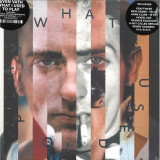
Sven Väth - What I Used To Play (12x12" boxset)
 
36

For this uniquely personal retrospective spread over twelve vinyl discs, Sven Väth takes us back to the early days of his DJ career. On What I Used To Play we meet great pioneers of electronic music, gifted percussionists, obscure wave bands, and innovative producers of a bygone 'new electronic' era. Rough beats and irresistible grooves from the identification stage of house, techno, and acid remind us not just how far electronic music has evolved over the past four decades, but how great it was to dance to EBM, techno, and house for the very first time.

If there is one protagonist of the electronic music scene who has remained curious, innovative and at the very cutting edge of music for over four decades, it's Sven Väth. His multi-layered artist albums and Sound of the Season mix compilations have been defining the genre for over two decades, and even today, he is constantly on the lookout for the next top tune to add to the highlights of his next set. At least, that's the case when he's not producing them himself as an artist or remixer. "Actually, it's always been part of my DNA to think ahead," and nothing had been further from his mind than looking back at his past, but when in spring of 2020 the international DJ circuit had to be scaled down to virtually zero, the 'restless traveler' suddenly had time. Time to stop and reflect on "how it actually was back then, at the very beginning of my career..."

"It was a great trip and with every track, beautiful memories came flooding back".
In the London apartment, he had just moved into, Sven has set up a "little music room", where he cocooned himself for several days, "to look way back for the first time and review my musical journey through the eighties, so to speak."

The interim result was six thematically oriented playlists with a grand total of 120 tracks from 'early 80s' to 'Balearic late 80s', together with excursions into afrobeat, European new wave, and EBM sounds and a few epochal techno/house tracks from the USA in between. From these 'Best of Sven Väth's favorites', the project What I Used To Play crystallized. Sven remembers how the Cocoon team reacted to his proposal: "They found the idea of making a compilation out of it MEGA from the beginning and everyone said 'Sven, go for it', but then, of course, the work really started, namely, to clear the rights and to get clean sounding masters of the up to 40-year-old tracks. There was also disappointment, of course. We couldn't clear certain titles because the rights holders in the USA had fallen out with each other or simply disappeared from the scene. In short, it wasn't easy, but now I can safely say we got the most important tracks."

Finally, after two years of research, curation, design, and administrative fine-tuning, the "little retrospective" from 1981 to 1990 is available. The exquisitely packaged, and three-kilo heavy box set is not only physically impressive, WIUTP is also the definitive record of Sven Väth's musical development. On each of the twenty-four sides of vinyl, you can trace track by track, what influenced him during which phase, and how he took off as a DJ from his parents' Queen's Pub straight into the spotlight at Dorian Gray. There and at Vogue (later OMEN), Sven became the style-defining player in the DJ booth that he still is today.


1981 - 1990: Future Sounds of Now

In the early eighties, the crowd in clubs like Vogue and Dorian Gray danced to what nowadays we call 'dance classics' - mainly disco, funk, soul, and chart pop. It was up to a new generation of DJs, including Sven Väth, the youngest protagonist in the Rhine-Main area at the time, to create their own club-ready music mix. Good new tracks and potential floor-fillers were rarities that had to be sought out and found, in order to prove oneself worthy.
Without MP3s, internet streaming, or other digital download possibilities, music didn't just gravitate to the DJ, instead, it had to be tracked down. In well-stocked record stores in Frankfurt and Wiesbaden or even in Amsterdam, London, or New York, Sven and friends sourced the material for countless magical nights. On WIUTP we can follow Sven's very personal journey through this wild, innovative era in which synth-pop, funk, hip-hop, and disco were successively replaced as 'club music' by house, techno, acid, and breakbeat. By the end of the decade, it was clear to see that these once exotic 'fringe' phenomena would soon become 'mass' phenomena.


Early 80s

Dirty Talk by the Italian-American duo Klein & M.B.O. represents the most innovative phase of the Italo-disco genre in the early eighties like no other track. Mario Boncaldo (I) and Tony Carrasco relied entirely on the original synthetic drum and percussion sounds of the Roland TR-808, coupled with the raunchy vocals of Rossana Casale and guitar accents of Davide Piatto. Of course, other tracks from this period were also influential in style, most notably Unit by Logic System, which worked as the perfect soundtrack to the laser lighting system at the legendary Dorian Gray club. With stomping beats and robotic rap interludes, Bostich by Yello also belongs on Sven's eternal playlist - after all, it caught the attention of Afrikaa Bambaataa, who invited the Swiss duo to perform at the Roxy in New York in 1983.


EBM Wave - Mid 80s

From today's point of view, the almost ten-minute-long, downtempo track Giant by Matt Johnson's band project The The, would probably not be considered an obvious club classic. However, a closer (re)listen reveals the rhythmic intricacies of the percussion overdubs by JG Thirlwell (aka Foetus) on Johnson's composition, and it becomes clear why this exceptional piece of music is one of Sven's absolute favorites. Other classics from this phase include Kaw-Liga by the mysterious The Residents, the hypnotic-synthetic Our Darkness by Anne Clark (and David Harrow), and last but not least, the somber, monotonous anthem Where Are You? by 16Bit, one of Sven Väth's projects together with Michael Münzing, Luca Anzilotti from 1986.


US House - Late 80s

You certainly can't talk about Chicago house without mentioning Frankie Knuckles. The resident DJ at the Warehouse not only gave the name to an entire genre, but also produced epochal floor fillers on the Trax label like the timeless Your Love, sung (and moaned) by Jamie Principle. Acid house protagonists Phuture also hail from Chicago, and on We Are Phuture (also released on Trax) we hear the chirping acid sounds of the legendary Roland TB-303 in full effect. Another featured classic is No UFO's by Detroit's Model 500 aka Juan Atkins, who is rightly considered the 'Godfather of Techno' even if the genre-defining track from 1985 still breathes with the spirit of hip-hop and electro from the first breakdance era.


Afrobeat

Le Serpent, by Algerian-born Abdelmadjid Guemguem, is a track that sounds completely different from everything else on WIUTP. Made in 1978, it's a monumental, rousing groove created without bass or synths, just with five congas! Even though Guem sadly passed away in 2021, his immortal, acoustic beats are understood all over the world and will continue to enrich many thousands of DJ sets for years to come. Another classic that not only Sven appreciates beyond measure is Hugh Masekela's Don't Go Lose it, Baby. In addition to being one of the most important jazz pioneers, the trumpeter and freedom fighter from Johannesburg was very experimental, integrating electronic sounds into his music in later years, in a similar vein to Miles Davis and Herbie Hancock. Dutch jazz pianist Jasper van't Hof's afrobeat project Pili Pili has also aged well. The trance-like, almost sixteen-minute-long track of the same name, manages to fill a whole side on the seventh of twelve vinyl discs in the WIUTP box.


UK-US-Euro - Late 80s

Time for a change of scene, in the truest sense of the word, and from a musical perspective, this section is like landing on another planet. First up is Andrew Weatherall's classic remix of Primal Scream's Loaded, featuring the iconic Peter Fonda sample (lifted from the 1966 biker film Wild Angels) that came to personify the mood triggered by the British Second Summer of Love in the late eighties: "We wanna be free to do what we wanna do, and we wanna get loaded...". This period also saw the emergence of M/A/R/R/S whose only single, 1987's Pump Up The Volume, became a club classic with support from DJ legend CJ Mackintosh. In this most eclectic of sections, we also encounter New York house and reggae producer Bobby Konders and his seminal Nervous Acid.


Balearic - Late 80s

Those who know him, know that Sven had already lost his heart to the 'magic island' of Ibiza as a teenager, so with that in mind, the WIUTP project couldn't end without a Balearic chapter. Inspired by Manuel Göttsching's E2-E4, the immortal, eponymously titled Sueño Latino belongs in there without question. Equally popular on the island was, and still is Break 4 Love by Raze, which thinking about it, would also fit perfectly into the house chapter. Last, but not least, there's an overdue reunion with Sven Väth himself, in his role as frontman of the successful Frankfurt trio OFF. Together with Michael Münzing and Luca Anzilotti (later of Snap!) this 'Organization For Fun' created the off-the-wall club hit Electric Salsa in 1986 which incidentally turned into an international chart smash, putting Sven in the enviable position of having to decide between pop stardom and a DJ career. Well, we all know how that decision turned out and the rest, as they say, is history. A not insignificant part of his story is What I Used To Play. Enjoy!

No en stock

Haga su pedido ahora y le encargaremos el artículo en nuestro proveedor.

184,83

Ültimo hace: 8 Meses
Lee Tracy & Isaac Manning - Is it What You Want

As the sun sets on a quaint East Nashville house, a young man bares a piece of his soul. Facing the camera, sporting a silky suit jacket/shirt/slacks/fingerless gloves ensemble that announces "singer" before he's even opened his mouth, Lee Tracy Johnson settles onto his stage, the front yard. He sways to the dirge-like drum machine pulse of a synth-soaked slow jam, extends his arms as if gaining his balance, and croons in affecting, fragile earnest, "I need your love… oh baby…"

Dogs in the yard next door begin barking. A mysterious cardboard robot figure, beamed in from galaxies unknown and affixed to a tree, is less vocal. Lee doesn't acknowledge either's presence. He's busy feeling it, arms and hands gesticulating. His voice rises in falsetto over the now-quiet dogs, over the ambient noise from the street that seeps into the handheld camcorder's microphone, over the recording of his own voice played back from a boombox off-camera. After six minutes the single, continuous shot ends. In this intimate creative universe there are no re-takes. There are many more music videos to shoot, and as Lee later puts it, "The first time you do it is actually the best. Because you can never get that again. You expressing yourself from within."

"I Need Your Love" dates from a lost heyday. From some time in the '80s or early '90s, when Lee Tracy (as he was known in performance) and his music partner/producer/manager Isaac Manning committed hours upon hours of their sonic and visual ideas to tape. Embracing drum machines and synthesizers – electronics that made their personal futurism palpable – they recorded exclusively at home, live in a room into a simple cassette deck. Soul, funk, electro and new wave informed their songs, yet Lee and Isaac eschewed the confinement of conventional categories and genres, preferring to let experimentation guide them.

"Anytime somebody put out a new record they had the same instruments or the same sound," explains Isaac. "So I basically wanted to find something that's really gonna stand out away from all of the rest of 'em." Their ethos meant that every idea they came up with was at least worth trying: echoed out half-rapped exhortations over frantic techno-style beats, gospel synth soul, modal electro-funk, oddball pop reinterpretations, emo AOR balladry, nods to Prince and the Fat Boys, or arrangements that might collapse mid-song into a mess of arcade game-ish blips before rallying to reach the finish line. All of it conjoined by consistent tape hiss, and most vitally, Lee's chameleonic voice, which managed to wildly shape shift and still evoke something sincere – whether toggling between falsetto and tenor exalting Jesus's return, or punctuating a melismatic romantic adlib with a succinct, "We all know how it feels to be alone."

"People think we went to a studio," says Isaac derisively. "We never went to no studio. We didn't have the money to go to no studio! We did this stuff at home. I shot videos in my front yard with whatever we could to get things together." Sometimes Isaac would just put on an instrumental record, be it "Planet Rock" or "Don't Cry For Me Argentina" (from Evita), press "record," and let Lee improvise over it, yielding peculiar love songs, would-be patriotic anthems, or Elvis Presley or Marilyn Monroe tributes. Technical limitations and a lack of professional polish never dissuaded them. They believed they were onto something.

"That struggle," Isaac says, "made that sound sound good to me."

In the parlance of modern music criticism Lee and Isaac's dizzying DIY efforts would inevitably be described as "outsider." But "outsider" carries the burden of untold additional layers of meaning if you're Black and from the South, creating on a budget, and trying to get someone, anyone within the country music capital of the world to take your vision seriously. "What category should we put it in?" Isaac asks rhetorically. "I don't know. All I know is feeling. I ain't gonna name it nothing. It's music. If it grabs your soul and touch your heart that's what it basically is supposed to do."

=

Born in 1963, the baby boy of nine siblings, Lee Tracy spent his earliest years living amidst the shotgun houses on Nashville's south side. "We was poor, man!" he says, recalling the outhouse his family used for a bathroom and the blocks of ice they kept in the kitchen to chill perishables. "But I actually don't think I really realized I was in poverty until I got grown and started thinking about it." Lee's mom worked at the Holiday Inn; his dad did whatever he had to do, from selling fruit from a horse drawn cart to bootlegging. "We didn't have much," Lee continues, "but my mother and my father got us the things we needed, the clothes on our back." By the end of the decade with the city's urban renewal programs razing entire neighborhoods to accommodate construction of the Interstate, the family moved to Edgehill Projects. Lee remembers music and art as a constant source of inspiration for he and his brothers and sisters – especially after seeing the Jackson 5 perform on Ed Sullivan. "As a small child I just knew that was what I wanted to do."

His older brother Don began musically mentoring him, introducing Lee to a variety of instruments and sounds. "He would never play one particular type of music, like R&B," says Lee. "I was surrounded by jazz, hard rock and roll, easy listening, gospel, reggae, country music; I mean I was a sponge absorbing all of that." Lee taught himself to play drums by beating on cardboard boxes, gaining a rep around the way for his timekeeping, and his singing voice. Emulating his favorites, Earth Wind & Fire and Cameo, he formed groups with other kids with era-evocative band names like Concept and TNT Connection, and emerged as the leader of disciplined rehearsals. "I made them practice," says Lee. "We practiced and practiced and practiced. Because I wanted that perfection." By high school the most accomplished of these bands would take top prize in a prominent local talent show. It was a big moment for Lee, and he felt ready to take things to the next level. But his band-mates had other ideas.

"I don't know what happened," he says, still miffed at the memory. "It must have blew they mind after we won and people started showing notice, because it's like everybody quit! I was like, where the hell did everybody go?" Lee had always made a point of interrogating prospective musicians about their intentions before joining his groups: were they really serious or just looking for a way to pick up girls? Now he understood even more the importance of finding a collaborator just as committed to the music as he was.

=

Isaac Manning had spent much of his life immersed in music and the arts – singing in the church choir with his family on Nashville's north side, writing, painting, dancing, and working various gigs within the entertainment industry. After serving in the armed forces, in the early '70s he ran The Teenage Place, a music and performance venue that catered to the local youth. But he was forced out of town when word of one of his recreational routines created a stir beyond the safe haven of his bohemian circles.

"I was growing marijuana," Isaac explains. "It wasn't no business, I was smoking it myself… I would put marijuana in scrambled eggs, cornbread and stuff." His weed use originated as a form of self-medication to combat severe tooth pain. But when he began sharing it with some of the other young people he hung out with, some of who just so happened to be the kids of Nashville politicians, the cops came calling. "When I got busted," he remembers, "they were talking about how they were gonna get rid of me because they didn't want me saying nothing about they children because of the politics and stuff. So I got my family, took two raggedy cars, and left Nashville and went to Vegas."

Out in the desert, Isaac happened to meet Chubby Checker of "The Twist" fame while the singer was gigging at The Flamingo. Impressed by Isaac's zeal, Checker invited him to go on the road with him as his tour manager/roadie/valet. The experience gave Isaac a window into a part of the entertainment world he'd never encountered – a glimpse of what a true pop act's audience looked like. "Chubby Checker, none of his shows were played for Black folks," he remembers. "All his gigs were done at high-class white people areas." Returning home after a few years with Chubby, Isaac was properly motivated to make it in Music City. He began writing songs and scouting around Nashville for local talent anywhere he could find it with an expressed goal: "Find someone who can deliver your songs the way you want 'em delivered and make people feel what you want them to feel."

One day while walking through Edgehill Projects Isaac heard someone playing the drums in a way that made him stop and take notice. "The music was so tight, just the drums made me feel like, oh I'm-a find this person," he recalls. "So I circled through the projects until I found who it was.

"That's how I met him – Lee Tracy. When I found him and he started singing and stuff, I said, ohhh, this is somebody different."

=

Theirs was a true complementary partnership: young Lee possessed the raw talent, the older Isaac the belief. "He's really the only one besides my brother and my family that really seen the potential in me," says Lee. "He made me see that I could do it."

Isaac long being a night owl, his house also made for a fertile collaborative environment – a space where there always seemed to be a new piece of his visual art on display: paintings, illustrations, and dolls and figures (including an enigmatic cardboard robot). Lee and Issac would hang out together and talk, listen to music, conjure ideas, and smoke the herb Isaac had resumed growing in his yard. "It got to where I could trust him, he could trust me," Isaac says of their bond. They also worked together for hours on drawings, spreading larges rolls of paper on the walls and sketching faces with abstract patterns and imagery: alien-like beings, tri-horned horse heads, inverted Janus-like characters where one visage blurred into the other.

Soon it became apparent that they didn't need other collaborators; self-sufficiency was the natural way forward. At Isaac's behest Lee, already fed up with dealing with band musicians, began playing around with a poly-sonic Yamaha keyboard at the local music store. "It had everything on it – trumpet, bass, drums, organ," remembers Lee. "And that's when I started recording my own stuff."

The technology afforded Lee the flexibility and independence he craved, setting him on a path other bedroom musicians and producers around the world were simultaneously following through the '80s into the early '90s. Saving up money from day jobs, he eventually supplemented the Yamaha Isaac had gotten him with Roland and Casio drum machines and a Moog. Lee was living in an apartment in Hillside at that point caring for his dad, who'd been partially paralyzed since early in life. In the evenings up in his second floor room, the music put him in a zone where he could tune out everything and lose himself in his ideas.

"Oh I loved it," he recalls. "I would really experiment with the instruments and use a lot of different sound effects. I was looking for something nobody else had. I wanted something totally different. And once I found the sound I was looking for, I would just smoke me a good joint and just let it go, hit the record button." More potent a creative stimulant than even Isaac's weed was the holistic flow and spontaneity of recording. Between sessions at Isaac's place and Lee's apartment, their volume of output quickly ballooned.

"We was always recording," says Lee. "That's why we have so much music. Even when I went to Isaac's and we start creating, I get home, my mind is racing, I gotta start creating, creating, creating. I remember there were times when I took a 90-minute tape from front to back and just filled it up."

"We never practiced," says Isaac. "See, that was just so odd about the whole thing. I could relate to him, and tell him about the songs I had ideas for and everything and stuff. And then he would bring it back or whatever, and we'd get together and put it down." Once the taskmaster hell bent on rehearsing, Lee had flipped a full 180. Perfection was no longer an aspiration, but the enemy of inspiration.

"I seen where practicing and practicing got me," says Lee. "A lot of musicians you get to playing and they gotta stop, they have to analyze the music. But while you analyzing you losing a lot of the greatness of what you creating. Stop analyzing what you play, just play! And it'll all take shape."

=

"I hope you understood the beginning of the record because this was invented from a dream I had today… (You tell me, I'll tell you, we'll figure it out together)" – Lee Tracy and Isaac Manning, "Hope You Understand"

Lee lets loose a maniacal cackle when he acknowledges that the material that he and Isaac recorded was by anyone's estimation pretty out there. It's the same laugh that commences "Hope You Understand" – a chaotic transmission that encapsulates the duality at the heart of their music: a stated desire to reach people and a compulsion to go as leftfield as they saw fit.

"We just did it," says Lee. "We cut the music on and cut loose. I don't sit around and write. I do it by listening, get a feeling, play the music, and the lyrics and stuff just come out of me."

The approach proved adaptable to interpreting other artists' material. While recording a cover of Whitney Houston's pop ballad "Saving All My Love For You," Lee played Whitney's version in his headphones as he laid down his own vocals – partially following the lyrics, partially using them as a departure point. The end result is barely recognizable compared with the original, Lee and Isaac having switched up the time signature and reinvented the melody along the way towards morphing a slick mainstream radio standard into something that sounds solely their own.

"I really used that song to get me started," says Lee. "Then I said, well I need something else, something is missing. Something just came over me. That's when I came up with 'Is It What You Want.'"

The song would become the centerpiece of Lee and Isaac's repertoire. Pushed along by a percolating metronomic Rhythm King style beat somewhere between a military march and a samba, "Is It What You Want" finds Lee pleading the sincerity of his commitment to a potential love interest embellished by vocal tics and hiccups subtlely reminiscent of his childhood hero MJ. Absent chord changes, only synth riffs gliding in and out like apparitions, the song achieves a lingering lo-fi power that leaves you feeling like it's still playing, somewhere, even after the fade out.

"I don't know, it's like a real spiritual song," Lee reflects. "But it's not just spiritual. To me the more I listen to it it's like about everything that you do in your everyday life, period. Is it what you want? Do you want a car or you don't want a car? Do you want Jesus or do you want the Devil? It's basically asking you the question. Can't nobody answer the question but you yourself."

In 1989 Lee won a lawsuit stemming from injuries sustained from a fight he'd gotten into. He took part of the settlement money and with Isaac pressed up "Saving All My Love For You" b/w "Is It What You Want" as a 45 single. Isaac christened the label One Chance Records. "Because that's all we wanted," he says with a laugh, "one chance."

Isaac sent the record out to radio stations and major labels, hoping for it to make enough noise to get picked up nationally. But the response he and Lee were hoping for never materialized. According to Isaac the closest the single got to getting played on the radio is when a disk jock from a local station made a highly unusual announcement on air: "The dude said on the radio, 107.5 – 'We are not gonna play 'Is It What You Want.' We cracked up! Wow, that's deep.

"It was a whole racist thing that was going on," he reflects. "So we just looked over and kept on going. That was it. That was about the way it goes… If you were Black and you were living in Nashville and stuff, that's the way you got treated." Isaac already knew as much from all the times he'd brought he and Lee's tapes (even their cache of country music tunes) over to Music Row to try to drum up interest to no avail.

"Isaac, he really worked his ass off," says Lee. "He probably been to every record place down on Music Row." Nashville's famed recording and music business corridor wasn't but a few blocks from where Lee grew up. Close enough, he remembers, for him to ride his bike along its back alleys and stumble upon the occasional random treasure, like a discarded box of harmonicas. Getting in through the front door, however, still felt a world away.

"I just don't think at the time our music fell into a category for them," he concedes. "It was before its time."

=

Lee stopped making music some time in the latter part of the '90s, around the time his mom passed away and life became increasingly tough to manage. "When my mother died I had a nervous breakdown," he says, "So I shut down for a long time. I was in such a sadness frame of mind. That's why nobody seen me. I had just disappeared off the map." He fell out of touch with Isaac, and in an indication of just how bad things had gotten for him, lost track of all the recordings they'd made together. Music became a distant memory.

Fortunately, Isaac kept the faith. In a self-published collection of his poetry – paeans to some of his favorite entertainment and public figures entitled Friends and Dick Clark – he'd written that he believed "music has a life of its own." But his prescience and presence of mind were truly manifested in the fact that he kept an archive of he and Lee's work. As perfectly imperfect as "Is It What You Want" now sounds in a post-Personal Space world, Lee and Isaac's lone official release was in fact just a taste. The bulk of the Is It What You Want album is culled from the pair's essentially unheard home recordings – complete songs, half-realized experiments, Isaac's blue monologues and pronouncements et al – compiled, mixed and programmed in the loose and impulsive creative spirit of their regular get-togethers from decades ago. The rest of us, it seems, may have finally caught up to them.

On the prospect of at long last reaching a wider audience, Isaac says simply, "I been trying for a long time, it feels good." Ever the survivor, he adds, "The only way I know how to make it to the top is to keep climbing. If one leg break on the ladder, hey, you gotta fix it and keep on going… That's where I be at. I'll kill death to make it out there."

For Lee it all feels akin to a personal resurrection: "It's like I was in a tomb and the tomb was opened and I'm back… Man, it feels so great. I feel like I'm gonna jump out of my skin." Success at this stage of his life, he realizes, probably means something different than what it did back when he was singing and dancing in Isaac's front yard. "What I really mean by 'making it,'" he explains isn't just the music being heard but, "the story being told."

Occasionally Lee will pull up "Is It What You Want" on YouTube on his phone, put on his headphones, and listen. He remembers the first time he heard his recorded voice. How surreal it was, how he thought to himself, "Is that really me?" What would he say to that younger version of himself now?

"I would probably tell myself, hang in there, don't give up. Keep striving for the goal. And everything will work out."

Despite what's printed on the record label, sometimes you do get more than one chance.

No en stock

Haga su pedido ahora y le encargaremos el artículo en nuestro proveedor.

11,72

Ültimo hace: 3 Años
Lee Tracy & Isaac Manning - Is it What You Want LP

As the sun sets on a quaint East Nashville house, a young man bares a piece of his soul. Facing the camera, sporting a silky suit jacket/shirt/slacks/fingerless gloves ensemble that announces "singer" before he's even opened his mouth, Lee Tracy Johnson settles onto his stage, the front yard. He sways to the dirge-like drum machine pulse of a synth-soaked slow jam, extends his arms as if gaining his balance, and croons in affecting, fragile earnest, "I need your love… oh baby…"

Dogs in the yard next door begin barking. A mysterious cardboard robot figure, beamed in from galaxies unknown and affixed to a tree, is less vocal. Lee doesn't acknowledge either's presence. He's busy feeling it, arms and hands gesticulating. His voice rises in falsetto over the now-quiet dogs, over the ambient noise from the street that seeps into the handheld camcorder's microphone, over the recording of his own voice played back from a boombox off-camera. After six minutes the single, continuous shot ends. In this intimate creative universe there are no re-takes. There are many more music videos to shoot, and as Lee later puts it, "The first time you do it is actually the best. Because you can never get that again. You expressing yourself from within."

"I Need Your Love" dates from a lost heyday. From some time in the '80s or early '90s, when Lee Tracy (as he was known in performance) and his music partner/producer/manager Isaac Manning committed hours upon hours of their sonic and visual ideas to tape. Embracing drum machines and synthesizers – electronics that made their personal futurism palpable – they recorded exclusively at home, live in a room into a simple cassette deck. Soul, funk, electro and new wave informed their songs, yet Lee and Isaac eschewed the confinement of conventional categories and genres, preferring to let experimentation guide them.

"Anytime somebody put out a new record they had the same instruments or the same sound," explains Isaac. "So I basically wanted to find something that's really gonna stand out away from all of the rest of 'em." Their ethos meant that every idea they came up with was at least worth trying: echoed out half-rapped exhortations over frantic techno-style beats, gospel synth soul, modal electro-funk, oddball pop reinterpretations, emo AOR balladry, nods to Prince and the Fat Boys, or arrangements that might collapse mid-song into a mess of arcade game-ish blips before rallying to reach the finish line. All of it conjoined by consistent tape hiss, and most vitally, Lee's chameleonic voice, which managed to wildly shape shift and still evoke something sincere – whether toggling between falsetto and tenor exalting Jesus's return, or punctuating a melismatic romantic adlib with a succinct, "We all know how it feels to be alone."

"People think we went to a studio," says Isaac derisively. "We never went to no studio. We didn't have the money to go to no studio! We did this stuff at home. I shot videos in my front yard with whatever we could to get things together." Sometimes Isaac would just put on an instrumental record, be it "Planet Rock" or "Don't Cry For Me Argentina" (from Evita), press "record," and let Lee improvise over it, yielding peculiar love songs, would-be patriotic anthems, or Elvis Presley or Marilyn Monroe tributes. Technical limitations and a lack of professional polish never dissuaded them. They believed they were onto something.

"That struggle," Isaac says, "made that sound sound good to me."

In the parlance of modern music criticism Lee and Isaac's dizzying DIY efforts would inevitably be described as "outsider." But "outsider" carries the burden of untold additional layers of meaning if you're Black and from the South, creating on a budget, and trying to get someone, anyone within the country music capital of the world to take your vision seriously. "What category should we put it in?" Isaac asks rhetorically. "I don't know. All I know is feeling. I ain't gonna name it nothing. It's music. If it grabs your soul and touch your heart that's what it basically is supposed to do."

=

Born in 1963, the baby boy of nine siblings, Lee Tracy spent his earliest years living amidst the shotgun houses on Nashville's south side. "We was poor, man!" he says, recalling the outhouse his family used for a bathroom and the blocks of ice they kept in the kitchen to chill perishables. "But I actually don't think I really realized I was in poverty until I got grown and started thinking about it." Lee's mom worked at the Holiday Inn; his dad did whatever he had to do, from selling fruit from a horse drawn cart to bootlegging. "We didn't have much," Lee continues, "but my mother and my father got us the things we needed, the clothes on our back." By the end of the decade with the city's urban renewal programs razing entire neighborhoods to accommodate construction of the Interstate, the family moved to Edgehill Projects. Lee remembers music and art as a constant source of inspiration for he and his brothers and sisters – especially after seeing the Jackson 5 perform on Ed Sullivan. "As a small child I just knew that was what I wanted to do."

His older brother Don began musically mentoring him, introducing Lee to a variety of instruments and sounds. "He would never play one particular type of music, like R&B," says Lee. "I was surrounded by jazz, hard rock and roll, easy listening, gospel, reggae, country music; I mean I was a sponge absorbing all of that." Lee taught himself to play drums by beating on cardboard boxes, gaining a rep around the way for his timekeeping, and his singing voice. Emulating his favorites, Earth Wind & Fire and Cameo, he formed groups with other kids with era-evocative band names like Concept and TNT Connection, and emerged as the leader of disciplined rehearsals. "I made them practice," says Lee. "We practiced and practiced and practiced. Because I wanted that perfection." By high school the most accomplished of these bands would take top prize in a prominent local talent show. It was a big moment for Lee, and he felt ready to take things to the next level. But his band-mates had other ideas.

"I don't know what happened," he says, still miffed at the memory. "It must have blew they mind after we won and people started showing notice, because it's like everybody quit! I was like, where the hell did everybody go?" Lee had always made a point of interrogating prospective musicians about their intentions before joining his groups: were they really serious or just looking for a way to pick up girls? Now he understood even more the importance of finding a collaborator just as committed to the music as he was.

=

Isaac Manning had spent much of his life immersed in music and the arts – singing in the church choir with his family on Nashville's north side, writing, painting, dancing, and working various gigs within the entertainment industry. After serving in the armed forces, in the early '70s he ran The Teenage Place, a music and performance venue that catered to the local youth. But he was forced out of town when word of one of his recreational routines created a stir beyond the safe haven of his bohemian circles.

"I was growing marijuana," Isaac explains. "It wasn't no business, I was smoking it myself… I would put marijuana in scrambled eggs, cornbread and stuff." His weed use originated as a form of self-medication to combat severe tooth pain. But when he began sharing it with some of the other young people he hung out with, some of who just so happened to be the kids of Nashville politicians, the cops came calling. "When I got busted," he remembers, "they were talking about how they were gonna get rid of me because they didn't want me saying nothing about they children because of the politics and stuff. So I got my family, took two raggedy cars, and left Nashville and went to Vegas."

Out in the desert, Isaac happened to meet Chubby Checker of "The Twist" fame while the singer was gigging at The Flamingo. Impressed by Isaac's zeal, Checker invited him to go on the road with him as his tour manager/roadie/valet. The experience gave Isaac a window into a part of the entertainment world he'd never encountered – a glimpse of what a true pop act's audience looked like. "Chubby Checker, none of his shows were played for Black folks," he remembers. "All his gigs were done at high-class white people areas." Returning home after a few years with Chubby, Isaac was properly motivated to make it in Music City. He began writing songs and scouting around Nashville for local talent anywhere he could find it with an expressed goal: "Find someone who can deliver your songs the way you want 'em delivered and make people feel what you want them to feel."

One day while walking through Edgehill Projects Isaac heard someone playing the drums in a way that made him stop and take notice. "The music was so tight, just the drums made me feel like, oh I'm-a find this person," he recalls. "So I circled through the projects until I found who it was.

"That's how I met him – Lee Tracy. When I found him and he started singing and stuff, I said, ohhh, this is somebody different."

=

Theirs was a true complementary partnership: young Lee possessed the raw talent, the older Isaac the belief. "He's really the only one besides my brother and my family that really seen the potential in me," says Lee. "He made me see that I could do it."

Isaac long being a night owl, his house also made for a fertile collaborative environment – a space where there always seemed to be a new piece of his visual art on display: paintings, illustrations, and dolls and figures (including an enigmatic cardboard robot). Lee and Issac would hang out together and talk, listen to music, conjure ideas, and smoke the herb Isaac had resumed growing in his yard. "It got to where I could trust him, he could trust me," Isaac says of their bond. They also worked together for hours on drawings, spreading larges rolls of paper on the walls and sketching faces with abstract patterns and imagery: alien-like beings, tri-horned horse heads, inverted Janus-like characters where one visage blurred into the other.

Soon it became apparent that they didn't need other collaborators; self-sufficiency was the natural way forward. At Isaac's behest Lee, already fed up with dealing with band musicians, began playing around with a poly-sonic Yamaha keyboard at the local music store. "It had everything on it – trumpet, bass, drums, organ," remembers Lee. "And that's when I started recording my own stuff."

The technology afforded Lee the flexibility and independence he craved, setting him on a path other bedroom musicians and producers around the world were simultaneously following through the '80s into the early '90s. Saving up money from day jobs, he eventually supplemented the Yamaha Isaac had gotten him with Roland and Casio drum machines and a Moog. Lee was living in an apartment in Hillside at that point caring for his dad, who'd been partially paralyzed since early in life. In the evenings up in his second floor room, the music put him in a zone where he could tune out everything and lose himself in his ideas.

"Oh I loved it," he recalls. "I would really experiment with the instruments and use a lot of different sound effects. I was looking for something nobody else had. I wanted something totally different. And once I found the sound I was looking for, I would just smoke me a good joint and just let it go, hit the record button." More potent a creative stimulant than even Isaac's weed was the holistic flow and spontaneity of recording. Between sessions at Isaac's place and Lee's apartment, their volume of output quickly ballooned.

"We was always recording," says Lee. "That's why we have so much music. Even when I went to Isaac's and we start creating, I get home, my mind is racing, I gotta start creating, creating, creating. I remember there were times when I took a 90-minute tape from front to back and just filled it up."

"We never practiced," says Isaac. "See, that was just so odd about the whole thing. I could relate to him, and tell him about the songs I had ideas for and everything and stuff. And then he would bring it back or whatever, and we'd get together and put it down." Once the taskmaster hell bent on rehearsing, Lee had flipped a full 180. Perfection was no longer an aspiration, but the enemy of inspiration.

"I seen where practicing and practicing got me," says Lee. "A lot of musicians you get to playing and they gotta stop, they have to analyze the music. But while you analyzing you losing a lot of the greatness of what you creating. Stop analyzing what you play, just play! And it'll all take shape."

=

"I hope you understood the beginning of the record because this was invented from a dream I had today… (You tell me, I'll tell you, we'll figure it out together)" – Lee Tracy and Isaac Manning, "Hope You Understand"

Lee lets loose a maniacal cackle when he acknowledges that the material that he and Isaac recorded was by anyone's estimation pretty out there. It's the same laugh that commences "Hope You Understand" – a chaotic transmission that encapsulates the duality at the heart of their music: a stated desire to reach people and a compulsion to go as leftfield as they saw fit.

"We just did it," says Lee. "We cut the music on and cut loose. I don't sit around and write. I do it by listening, get a feeling, play the music, and the lyrics and stuff just come out of me."

The approach proved adaptable to interpreting other artists' material. While recording a cover of Whitney Houston's pop ballad "Saving All My Love For You," Lee played Whitney's version in his headphones as he laid down his own vocals – partially following the lyrics, partially using them as a departure point. The end result is barely recognizable compared with the original, Lee and Isaac having switched up the time signature and reinvented the melody along the way towards morphing a slick mainstream radio standard into something that sounds solely their own.

"I really used that song to get me started," says Lee. "Then I said, well I need something else, something is missing. Something just came over me. That's when I came up with 'Is It What You Want.'"

The song would become the centerpiece of Lee and Isaac's repertoire. Pushed along by a percolating metronomic Rhythm King style beat somewhere between a military march and a samba, "Is It What You Want" finds Lee pleading the sincerity of his commitment to a potential love interest embellished by vocal tics and hiccups subtlely reminiscent of his childhood hero MJ. Absent chord changes, only synth riffs gliding in and out like apparitions, the song achieves a lingering lo-fi power that leaves you feeling like it's still playing, somewhere, even after the fade out.

"I don't know, it's like a real spiritual song," Lee reflects. "But it's not just spiritual. To me the more I listen to it it's like about everything that you do in your everyday life, period. Is it what you want? Do you want a car or you don't want a car? Do you want Jesus or do you want the Devil? It's basically asking you the question. Can't nobody answer the question but you yourself."

In 1989 Lee won a lawsuit stemming from injuries sustained from a fight he'd gotten into. He took part of the settlement money and with Isaac pressed up "Saving All My Love For You" b/w "Is It What You Want" as a 45 single. Isaac christened the label One Chance Records. "Because that's all we wanted," he says with a laugh, "one chance."

Isaac sent the record out to radio stations and major labels, hoping for it to make enough noise to get picked up nationally. But the response he and Lee were hoping for never materialized. According to Isaac the closest the single got to getting played on the radio is when a disk jock from a local station made a highly unusual announcement on air: "The dude said on the radio, 107.5 – 'We are not gonna play 'Is It What You Want.' We cracked up! Wow, that's deep.

"It was a whole racist thing that was going on," he reflects. "So we just looked over and kept on going. That was it. That was about the way it goes… If you were Black and you were living in Nashville and stuff, that's the way you got treated." Isaac already knew as much from all the times he'd brought he and Lee's tapes (even their cache of country music tunes) over to Music Row to try to drum up interest to no avail.

"Isaac, he really worked his ass off," says Lee. "He probably been to every record place down on Music Row." Nashville's famed recording and music business corridor wasn't but a few blocks from where Lee grew up. Close enough, he remembers, for him to ride his bike along its back alleys and stumble upon the occasional random treasure, like a discarded box of harmonicas. Getting in through the front door, however, still felt a world away.

"I just don't think at the time our music fell into a category for them," he concedes. "It was before its time."

=

Lee stopped making music some time in the latter part of the '90s, around the time his mom passed away and life became increasingly tough to manage. "When my mother died I had a nervous breakdown," he says, "So I shut down for a long time. I was in such a sadness frame of mind. That's why nobody seen me. I had just disappeared off the map." He fell out of touch with Isaac, and in an indication of just how bad things had gotten for him, lost track of all the recordings they'd made together. Music became a distant memory.

Fortunately, Isaac kept the faith. In a self-published collection of his poetry – paeans to some of his favorite entertainment and public figures entitled Friends and Dick Clark – he'd written that he believed "music has a life of its own." But his prescience and presence of mind were truly manifested in the fact that he kept an archive of he and Lee's work. As perfectly imperfect as "Is It What You Want" now sounds in a post-Personal Space world, Lee and Isaac's lone official release was in fact just a taste. The bulk of the Is It What You Want album is culled from the pair's essentially unheard home recordings – complete songs, half-realized experiments, Isaac's blue monologues and pronouncements et al – compiled, mixed and programmed in the loose and impulsive creative spirit of their regular get-togethers from decades ago. The rest of us, it seems, may have finally caught up to them.

On the prospect of at long last reaching a wider audience, Isaac says simply, "I been trying for a long time, it feels good." Ever the survivor, he adds, "The only way I know how to make it to the top is to keep climbing. If one leg break on the ladder, hey, you gotta fix it and keep on going… That's where I be at. I'll kill death to make it out there."

For Lee it all feels akin to a personal resurrection: "It's like I was in a tomb and the tomb was opened and I'm back… Man, it feels so great. I feel like I'm gonna jump out of my skin." Success at this stage of his life, he realizes, probably means something different than what it did back when he was singing and dancing in Isaac's front yard. "What I really mean by 'making it,'" he explains isn't just the music being heard but, "the story being told."

Occasionally Lee will pull up "Is It What You Want" on YouTube on his phone, put on his headphones, and listen. He remembers the first time he heard his recorded voice. How surreal it was, how he thought to himself, "Is that really me?" What would he say to that younger version of himself now?

"I would probably tell myself, hang in there, don't give up. Keep striving for the goal. And everything will work out."

Despite what's printed on the record label, sometimes you do get more than one chance.

No en stock

Haga su pedido ahora y le encargaremos el artículo en nuestro proveedor.

23,49

Ültimo hace: 3 Años
ME REX - Pterodactyl / Plesiosaur LP

Beginning life in 2018 in the home of songwriter Myles McCabe experimenting with shouty, electronic bedroom pop ME REX are equipped with multitudes of “surging gargantuan hooks”, McCabe was quickly joined by longtime friends Kathryn Woods (guitar/vocals), Phoebe Cross (drums/vocals) and Rich Mandell (bass/keys/vocals). In 2021 the band released their debut album Megabear: a record built from 52 short tracks intended to be played in shuffle mode in order for the listener to create their own perfect combination of songs. In 2022 they dove headfirst into follow-up EP Pterodactyl which saw them change pace and tact throughout — constructing delicate vocal layers with luscious swathes of guitars and keys to build a bridge between their raw DIY past and a bright, creative future. Across all four songs on new EP, Plesiosaur, ME REX focus their attention on catchy choruses and snappy rhythms. With Toilet of Venus acting as an extension of Lager Door, the former track looks at present struggles as opposed to the latters inherent nostalgia, Jupiter Pluvius looks theologically at the idea of projecting strength and power onto inanimate objects, all wrapped in sharp wordplay and vibrant fuzzed out guitars and keys that are addictive as hell. Described as “nothing short of an artistic triumph” by Brooklyn Vegan— as well as seeing praise from Pitchfork, DIY, Rocksound, Line Of Best Fit, BBC 6Music, Radio X, Amazing Radio, Audiotree, The I Paper and Baby’s Alright— ME REX are showing no signs of slowing down.

Reservar30.06.2022

debe ser publicado en 30.06.2022

19,75
The Science Fiction Corporation - Science Fiction Dance Party LP

Back in 1968, a pair of Germanic behind-the-scenes sound
librarians called Horst Ackermann and Heribert Thusek left a
tiny but indelible pinprick on the history of German Pop in the
misshaped form of a sexy horror cash-in concept album called
‘Dracula’s Music Cabinet’. Shelved at a micro-cosmic axis
where Krautrock meets lesbian vampire Horrortica and easy
listening meets psychedelia, the delayed reaction of this mutant
concoction eventually exploded in the mid-1990s in the hands of
a generation of ‘record diggers’ sending currency-crushing
tremors through the wallets of mods, rockers, hip hoppers and
psych nuts around the plastic-pillaging planet. The vinyl junkies
had resurrected a monster but, like addicts do, they ravenously
sucked it dry and moved on looking for the next fix to feed their
habit.

Luckily for some, Ackermann and Thusek were also creatures
of habit. And it wouldn’t take a genius to figure out that they
were holding the next dose, but by the turn of the millennium
the mad scientists had been given a thirty-five-year head start
on the pop archaeologists and their mythical sequel was literally
light-years ahead of their previous draconian instalment.
Encouragingly, the unclosed cabinet left a shiny white clue in
the form of its closing track ‘Frankenstein Meets Alpha 7’.

The Ackermann and Thusek duo were far from dynamic. They
were undercover agents hiding behind user-friendly mock-rock
monikers and, like most B-Musicians, the only way to sniff them
out would be to read the small print. But when an unidentified
record on an unknown label with a title like ‘Science Fiction
Dance Party’ crops up in the Eins Deutschmark crates it’s not
exactly rocket science - although the track titles might suggest
otherwise. ‘The End Of A Robot’, ‘Monster On Saturn 1’,
‘Galactic Adventures Of The Outer Space Fleet’, ‘The Whistling
Astronauts’, ‘Death Rays Out Of The Universe’… The tell-tale
signs are all there and if that doesn’t clench the deal then what
will?

Even rarer than its horror counterpart, this ultra-rare record
regularly reaches sums in excess of €400 plus online.

No en stock

Haga su pedido ahora y le encargaremos el artículo en nuestro proveedor.

14,58

Ültimo hace: 4 Años
MOOR MOTHER - BLACK ENCYCLOPEDIA OF THE AIR

Get yo ass in the house, robot-- you cyber-spectre, you outhouse prime minister, you hard-headed mirror ninja, snapping selfies, living in the pixelated seams between bursts the of flashing images, birthed in a pool of TV static and Tik Tok dust. BLACK ENCYCLOPEDIA OF THE AIR is here, not to save but to drown you. Heads better learn how to swim cause listen, this record is beat soup, hearty yet still minimal, a sonic mirage of prophetic soul that drop kicks your "chill beats to study to" Youtube playlist and hyper-intellectual rap podcasts into a hadron collider; it's only black matter on the other side-- 13 mesmerizing tracks about memory and imprinting and the future, all of them wafting through untouched space like the ghostly cinders of a world on fire, unbound and uncharted, vast and stretching across the universe. Moor Mother is a holographic figment of an Afrotopian dream, all at once goddess and warrior, mystic and cyborg, griot and future time traveller, etching noisy pieces of reverie into our consciousness for decades now. But check it: on BLACK ENCYCLOPEDIA she's joined by a wide-range of friends, collaborators and co-conspirators on a trip through the murky cosmos, navigating the black universe with stardust as currency. In these times, they'll say, as they click and mash their way through the same inter-webs that seek to strangle them, BLACK ENCYCLOPEDIA OF THE AIR is just what we need: a post-everything, 12:01 on the doomsday clock, anti-trip hop type of situation. "We ain't gotta fight no more," they'll say; the rest of us, we'll put this record on and imagine again that it's real.

No en stock

Haga su pedido ahora y le encargaremos el artículo en nuestro proveedor.

23,82

Ültimo hace: 4 Años
LCD SOUNDSYSTEM - ‘the long goodbye (lcd soundsystem live from madison square garden)’

The 10th anniversary of a milestone in the history of LCD Soundsystem will arrive August 6, when DFA Records partners with Parlophone / Warner Music to celebrate The Long Goodbye: LCD Soundsystem Live At Madison Square Garden; a 5-LP vinyl unabridged recording of LCD Soundsystem’s near four-hour April 2, 2011 show at New York’s Madison Square Garden, and released on 3CD for the very first time.

Produced and mixed by LCD founder and frontman James Murphy, The Long Goodbye is the ultimate audio document of LCD Soundsystem’s legendary — if not quite final — sold-out Madison Square Garden performance.

The Long Goodbye show was the lengthiest, most career-spanning LCD Soundsystem has played to date. The album finds the LCD core live band of Murphy, Pat Mahoney, Nancy Whang, Al Doyle, Gavilán Rayna Russom and Tyler Pope joined by a choir, string and horn sections — plus special guest performances including Win Butler and Regine Chassagne of Arcade Fire, Reggie Watts, the Juan MacLean, Shit Robot, Planningtorock, and Shannon Funchess of Light Asylum.

No en stock

Haga su pedido ahora y le encargaremos el artículo en nuestro proveedor.

105,84

Ültimo hace: 4 Años
Quiet Marauder (feat. Kadesha Drija) - The Gift

Quiet Marauder(feat.Kadesha Drija)

The Gift

12inchBWR054
Bubblewrap
09.04.2021

For Fans Of: The Burning Hell; Belle & Sebastian; Iron & Wine.

Following swiftly on from last year’s Tiny Men Parts EP, Quiet Marauder re-enter the sonic fray with their latest Bubblewrap Collective long-player, The Gift, on 9th April 2021. Taking a strong divergence from the bombastic pop-punk of its predecessor, The Gift sees backing vocalist Kadesha Drija step to the foreground for the majority of the album, standing afront a richly crafted, multi-instrumental acoustic-folk backdrop.

Recorded pre-pandemic, January 2020, in The Burning Hell’s (Canada) pop-up Snowbird Studios, aka an art deco villa in Riofreddo, near Rome (Italy), this release marks another chapter in the ongoing international collaboration between the bands. For this album, Quiet Marauder’s (Wales) contributions of acoustic guitar, bass, trumpet and layered lead and backing vocals are granted further textural depth from their Canadian counterparts. These include minimalist harmonic splashes of flute, piano, organ (Jake Nicoll), electric guitar, bouzouki (Darren Browne) and bass clarinet (Ariel Sharratt).

Returning to the conceptual songwriting approach of previous releases MEN and The Crack And What It Meant, The Gift charts the narrative of a troubled teenage girl (Willow) haunted by visions of a mysterious house fire. Willow’s path is traced through well-meaning foster parents, teenage love interests, time-bending superpowers, distrust of domestic appliances and, ultimately, her own memories; covering themes of self-identity and the fallibility of human recall. Though the album marks a more overtly serious tone for the band, the sensitive subject matter is delicately handled through their trademark low-key, observational and, sometimes, darkly humorous lyrics.

Reservar09.04.2021

debe ser publicado en 09.04.2021

17,61
JNEIRO JAREL - AFTER A THOUSAND YEARS

In 2018 Far Out Recordings signed a record deal with Brooklyn born, nomadic producer Jneiro Jarel. Having just put the finishing touches to the recordings, Jarel suffered an ischemic stroke while living and working in Costa Rica and his wife Indigo was forced to set up a crowd fund to cover special medical transport back to the states to receive treatment. The release was put on hold, but thanks to the generosity of friends and fans around the world, Jarel was able to get the care he needed and is now on the long road to recovery. We’re overjoyed to finally announce that Jneiro Jarel’s After A Thousand Years is now set for an October 2020 release.

Throughout a career that has spanned over twenty years and seen collaborations with MF DOOM, Thom Yorke, Damon Albarn, BadBadNotGood, Portishead’s Beth Gibbons, Kimbra and Khujo Goodie (Dungeon Family), Jneiro Jarel’s consistently distinctive, forward thinking productions, as well as his love for the music of Brazil, made his partnership with Far Out a perfect fit.

Recorded between New York, New Orleans, Miami and Costa Rica, After A Thousand Years features legendary multi-instrumentalist Bill Summers, famed for his work with Herbie Hancock, Quincy Jones and Eddie Henderson. The album also features Malawian-American guitarist Masauko Chipembere who has worked with the likes of RZA from Wu-Tang Clan and Ladybug Mecca from Digable Planets.

For Jarel, After A Thousand Years is “a culmination of the longstanding musical contributions of the African diaspora.” Permeating the Brazilian music and Latin jazz Jarel has loved and drawn inspiration from, as well as the stateside jazz, soul and funk Jarel grew up around, the influence of Africa and its musical history, on both North and South America, is key to the album’s sound.

On lead single “Banana Peel”, Jarel’s outernational perspective makes for a track that is almost impossible to place geographically: you can hear the swing of Jarel’s native New Orleans jazz, the vibrance of Costa Rican rainforests as well as the influence of Jarel’s vast collection of Brazilian records. “Viberian Waves 1&2” is equally nonconformist, morphing from funky baroque-flavoured instrumental hip hop into a bossa inspired, percussive jam.

Taking its inspiration from the biblical prophecies found in the books of Isaiah, Daniel, and Revelation, foretelling the fully realized, physical and spiritual restoration of the earth and mankind after the thousand year reign of the Messianic Kingdom, After A Thousand Years contemplates and celebrates a world where everlasting love, peace, and harmony abound under a sovereign, divine rulership.

After A Thousand Years will be released on Vinyl LP and CD on the 30th October 2020 via Far Out Recordings.

FEEDBACK

“great release. Really like this!” Antal (Rush Hour)
“Banana Peel is exactly what we need now. Visionary Jneiro Jerel at his finest channelling healing sounds and rhythms from Mother Earth. A much-anticipated lens through Jneiro’s third eye. Thank you!” King Britt
“Sounding real good!” Errol Anderson (Touching Bass)
“I love it!!!!!!!” Raffaele Costantino (RAI RADIO 2)
“Sounds great. Congratulations. Will play it on my radio shows.” Batida
“Will pitch album to my editors” Dean Van Nguyen
“Please send me the full album once it's finished.” Francisco Noronha (Publico PT)
“Beautiful man. So happy that he's ok” King Hippo (WLPN-LP / Worldwide FM)
“cracking tune. already lined up to add to playlist. might go into radio show too.. love it” Oli Brunetti (Collectivo Futuro / Olindo Records)
“Amazing! Ive not heard anything from JJ for a long time but a welcome return, this is a cracking track. Looking forward to hearing more new material.” Mickey Jukes (1BTN FM)
“Very vibrant, fresh release! It gets better every time I am listening to it.” Shantisan (Superfly FM Vienna)
“This is a pretty special track , unique sound but very accessible , like it a lot and will play in my show Look forward to hearing the LP” Andy Wilson (Ibiza Sonica Radio)
“So good to hear Jneiro again, loving this cut. Thanks!” Chris Knight (Astrojazz)
“sublime !!!! will definitely play !!!” Mark Milz (Radio Corax)
“I-Robots approved!” Thanks for sharing...” I-Robots

No en stock

Haga su pedido ahora y le encargaremos el artículo en nuestro proveedor.

19,03

Ültimo hace: 5 Años
XDB - Inspiron 2x12"

Xdb

Inspiron 2x12"

2x12inchDIALLP044
Dial Records
06.11.2020

The 20th anniversary year of Dial Records couldn’t have been more exciting for us so far! After the extraordinary well-received release of Soela’s debut-album Genuine Silk and steady excitement around our ongoing series of digital anniversary compilations, we are more than thrilled to announce the second album release of this our very special year: XDB - Inspiron. As a longtime companion and true inspiration throughout the label’s twenty-year history, Kosta Athanassiadis aka XDB enriched our lives with his brilliant productions in the form of countless 12”s and legendary remixes. His long-overdue full-length debut album Inspiron in hand, we find ourselves unpacking the most beautiful jubilee present we could have ever imagined. For almost three decades now Kosta Athanassiadis aka XDB has been involved in the constantly changing world of dance music. His curiosity and dedication to electronic music spiral deep into the depth of House Music and Techno and where ever he appears he generously shares his unique knowledge in this field with equally dedicated crowds. Whether you follow his bloggish “Tracks I do really LOVE”, a collection of club essentials and a library of taste, or you witness one of his remarkable DJ sets from Panorama Bar to Freerotation Festival - XDB will elevate you to one of those unforgettably magical music moments. In 1993 Kosta Athanassiadis started his DJ career in the medieval hometown of Goettingen. To find what he was really looking for, namely, the newest and most exciting new records he frequently had to leave this picturesque city, that is most popular for inventing the traditional Baumkuchen pastry, but has not been on the maps of music connoisseurs necessarily. Frequent trips to visit records stores and clubs around Germany built a network of likely minded people. Some of his favorite and most thought after record labels of the time like the Chicago imprint Relief, or UK's Mosaic, are still fundamental to his very specific musical taste. By the turn of the century, XDB hosted a series of nights at Goettingen's Eletroosho, where he invited Dial’s own Lawrence and Carsten Jost in 2002- the beginning of a still ongoing friendship. He had established himself as a sought after and internationally active DJ and started his fist endeavors into music production as well. Later on XDB founded his own Label Metrolux and released on iconic labels like Sistrum and Wave to be followed by countless remixes for legends like Aaron Carl, Norm Talley and Patrice Scott. An extraordinary stream of gravity connects both, his productions and DJ sets. Once breaking through a seemingly transparent surface, one get’s lost in the beauty and depth of forms and figures. There’s barely DJs and producers who keep searching for this hidden formula in such a microscopically detailed way to pass a lifetime in House Music and Techno on to the world. XDB's Inspiron embraces this unique approach, filters and develops inspirations in an entirely delicate way, and magically emphasizes the desires of the most dedicated listeners and dancers.

No en stock

Haga su pedido ahora y le encargaremos el artículo en nuestro proveedor.

18,45

Ültimo hace: 14 Meses
Various - THIS IS MAINSTREAM! 2x12"

Wewantsounds continues its collaboration with Bob Shad's grandchildren, Mia and Judd Apatow, to present a 2LP selection of 13 turntable-friendly Mainstream Records tracks recorded between 1970 and 1973 and showcasing the label's superb blend of Funk, Soul and Jazz. All tracks remastered from the original tapes, most of them released for the first time since their original release with a few highly sought-after ones. Liner notes by UK journalist Paul Bowler. The Mainstream sound is unmistakable: earthy, rich and funky, it's the signature sound of producer Bob Shad. After working with such geniuses as Charlie Parker, The Platters, Billie Holiday and Janis Joplin over three decades, Shad decided to go back to producing Great Black Music in the early 70s through his label Mainstream Records and started releasing a formidable series of jazz albums known as the 300 series. Released between 1971 and 1974, these albums are the main source of this set. Coincidentally, it opens with one of the two tracks on the tracklist not produced by Shad himself. Saundra Phillips' "Miss Fatback" is nonetheless fascinating as it's one of cult disco producer Greg Carmichael's earliest productions from 1975 (before he went on to produce Inner Life, Bumblebee Unlimited, Universal Robot Band with fellow producer Patrick Adams). The other track not issued by the Shad sound factory is Almeta Lattimore's 7" single "These Memories," a truly great soulful track from 1975 and now a sought-after classic on the international Soul scene. Shad's forte was Jazz, and the sessions usually used the best musicians you could think of, including Bernard Purdie, Billy Hart, Stanley Clarke, Dom Um Romao, Joe Sample, Freddie Robinson, Gordon Edwards, Larry Willis, Wilbur Bascomb to name just a few. Filled with gorgeous Fender Rhodes chords and heavy basslines, they define the unmistakable Mainstream sound which had one foot in the great jazz and bop tradition and the other in the sonic jazz explorations of the early 70s. Oscillating between jazzed-up covers of soul hits like Jay Berliner’s "Papa Was A Rolling Stone" or Afrique’s "Kissing My Love" and more introspective originals such as Hal Galper's "This Moment" or Dave Hubbard's "T.B.'s Delight", They all have this perfect balance between groove and depth. One perfect example is Pete Yellin's "Bird and The Ouija Board," a superb 12 min opus starting off with a deep abstract improvisation before switching to an up-tempo funk beat fueled by drummer Billy Hart and bass player Stanley Clarke.

No en stock

Haga su pedido ahora y le encargaremos el artículo en nuestro proveedor.

26,85

Ültimo hace: 6 Años
Various - We Are Electric: Gary Numan Revisited

The electronic pioneer and founding father of synthpop, Gary Numan, celebrates his 40th anniversary as recording artist. During these 40 years, Numan's impact made itself felt; his dark, paranoid vision, theatrically icy alien persona, and clinical, robotic sound were echoed strongly in the work of many goth rock, wave and industrial artists

Wave Tension Records invited 7 contemporary dark wave, gothic and dreampop artists to honour their inspirator with an exclusive tribute. The album opens with Agent Side Grinder's nostalgic analogue rendition of 'I'm an Agent', followed by Ash Code's fresh sounding fast paced post-punk/dark wave version of 'Down In The Park'. Shad Shadows turn 'Metal' into a whispering heated darkwave track. On the last track of side A, Box & The Twins create warm and dreamy soundscapes in their version of 'Complex'. SUIR opens side B with a hypnotic psychedelic slowed down art-punk version of 'Cars'. Synths Versus Me turns Numan's monster hit 'Are Friends Electric' into a fresh synthpop & EBM take with Art of Noise-esque vocals. The album's closing track is a gothic rock rendition of 'My Name Is Ruin' by Swedish rockers Then Comes Silence, which encourages you to sing along

No en stock

Haga su pedido ahora y le encargaremos el artículo en nuestro proveedor.

16,26

Ültimo hace: 6 Años
DJCJ - Northern Fight EP

DJCJ returns to his home on West End Communications, after a solid 4-tracker released on the the SMS digital series earlier this year. Powerful and energetic tracks to start, balanced with electro/ambient cuts on the flip."

DJCJ (real name Craig Johnston, CJ) (22 years young) has also released with my friends over at Craigie Knowes, both solo and under the Highfield Casuals alias as a collab project with our very own The Burrell Connection.

No en stock

Haga su pedido ahora y le encargaremos el artículo en nuestro proveedor.

8,36

Ültimo hace: 7 Años
Black Light Smoke - Depression Sleeping

The newest 12 on Voodoo Down Records marks the debut appearance of longtime friend of the label Jordan Lieb a.k.a. Black Light Smoke. Jordan played an instrumental part in the NYC label Scissor & Thread, and has spent recent years honing his live set in front of crowds ranging from BPM, Robot Heart, and fabric. The Depression Sleeping EP is a collection of tracks from his archives from the past decade that have been updated and remixed. The theme of the record is his struggle with sleep and insomnia. Per the artist:'Releasing these songs form my past reflects my effort to embrace myself, the good and the bad, and to channel my personal battles into a creative process.

No en stock

Haga su pedido ahora y le encargaremos el artículo en nuestro proveedor.

8,61

Ültimo hace: 6 Años
Rodion & Local Suicide - Abu Dhabi / True Love Floats Ep

My Favorite Robot welcome the collaborative outfit of Rodion & Local Suicide for their next EP, which comes boosted by
remixes from Los Mekanikos, Moscoman and Fairmont, as well as artwork that is made up 3D prints of the act.
Rodion is an Italian classical piano player and acclaimed producer whose albums and EPs for the likes of Gomma, Nein
& Nang have helped to reshape modern disco. Also one half of Alien Alien and boss of the Roccodisco label, he is a real
studio visionary who for ten years has mixed up classical, trance and psychedelic sounds. He makes everything from
chamber music to computer game soundtracks, has remixed Giorgio Moroder and counts the likes of Tim Sweeney, Erol
Alkan and DJ Hell as fans. Berlin-based duo/couple Brax Moody and Vamparela aka Local Suicide have been
collaborating together since 2007, either as a DJ duo, in bands, or as remixers and producers. They have played all over
the world and are in favour with the likes of XLR8R, Thump and Mixmag for their fusions of slow techno, post disco and
acid.
These original analog tracks were recorded between 2014 and 2016 in Rodion s vintage studio in Berlin. They came about
when they all met following one of his gigs just after he moved there, and after being in touch online for a while. During
one of the nights, Rodion brought friend, producer and singer Ali Bey (part of the Belgrade DJ collective Beyond House
and a famous record digger) to contribute.
Impressive opener Abu Dhabi includes samples from field recordings from all over the world. The most prominent is the
recording from an airport in Bangkok where Brax Moody and Vamparela were waiting to catch their plane to Saigon
and it ended up being the main vocal hook. The alluring track is a wonky feeling number with gurgling synth lines and
gentle releases of white noise lulling you into the groove. A searching synth line and distant siren add urgency and the
whole thing feels urban and futuristic.
Comprised of Mexico City producers Max Jones and Eddie Mercury, Los Mekanikos combine raw hypno-rhythm tracks
with pumping grooves that pay homage to Chicago, Detroit and Berlin. Their special remix is another late night and
unhinged number that encourages you to freak out amongst the panning and paranoid synth patterns and robotic grooves.
Then comes the brilliant True Love Floats with Ali Beys singing and Vamparela s vocoded vocals. The interplay between
the two is tense and alien and makes for a perfectly inhuman groove with popping bell sounds, undulating pads and spooky
deep space ambiance.
Remixing this one is Berlin via Tel Aviv artist of the moment and Disco Halal label head Moscoman, whose raw machine
grooves have impressed on labels like ESP Institute, Correspondant and I'm a Cliche. His slow and purposeful version is
deep and psychedelic with disorientating vocals and blistered synths wallowing in a menacing urban landscape. Buy it
digitally and you will also get a fine remix from label regular and Canadian Fairmont. He runs the Beachcoma label, has
worked with cult outlet Border Community over the years and mixes up dark disco and goth into his own fresh sounds. His
remix here is more direct and driven, with powerful drums and well sculpted synths making it another great rework.
This is a unique sounding package featuring plenty of heavyweight names and marks another cultured outing from the
always considered My Favourite Robot label.

No en stock

Haga su pedido ahora y le encargaremos el artículo en nuestro proveedor.

9,79

Ültimo hace: 7 Años
Various - Rogue Style Ep

Various

Rogue Style Ep

12inchDICA004
Defrostatica
18.05.2017

* Includes a DIN A2long poster inside the 12" sleeve with edition number and music download code

* Rogue Style 1 EP is an international homage to b-boy culture, where the worlds of breakbeat music and breakdance collide. Sinistarr (USA), Kiat (Singapore), Kabuki (Germany) and HomeSick (Canada) are connected in many ways, now they lay bare their hip-hop roots and give something back with a fresh take through the eyes of drum & bass and juke/footwork. Here is what they have to say:

Sinistarr: "As a teenager I grew up as a b-boy, dancing anywhere I could: schools, parks, festivals, you name it, my crew was there with cardboard and a speaker. I eventually got deeper into DJing and making music and learned to bring a sound that's not just for the crowds and the purists, but also for all the dancers!"

Kiat: "Hip Hop has taught me to keep evolving, to explore new forms in all my art. Progression is the key to evolution. -- I met Sinistarr online thru myspace and we had a musical connection which led to our first collaboration 'Black Diamonds' which is still one of my personal favourite tunes I've been fortunate to be part of it's creation. With Kabuki, i've always been a fan of his work since his 'Makai' alias on No U-Turn, despite meeting him only recently thru the label.I've always known him to be constantly progressing his ideas in his music which I respect alot."

Kabuki: "B-boy culture has always been a strong influence on how I pursued my art, mainly because of its DIY ethos and attitude of perfecting your craft. Incidentally these were also the aspects that drew me to Jungle when I first discovered it in the nineties. -- I'm happy to rub shoulders with Kiat, Sinistarr and HomeSick on this release, as I'm a fan of their music foremost, but also because we became friends through the music."

HomeSick: "I was only a child in the 90s and as a result I feel like my understanding of b-boy culture was experienced second hand thanks to 90s/early 2000s hip hop music. I appreciate the parallels I can see with footwork culture, particularly the similarities to the community mentality of break dancing. -- I know Sinistarr through booking him for our local party night in Alberta, Canada called Percolate. Our city must have left an impression on him because a year later he made the move here from Detroit. Had the pleasure of hosting him as a room mate for a little over half a year, the home was a very potent creative space during this time. Kabuki hit me up a few years ago and we very quickly got to sharing tracks and collaborating together. Mans a master of production and a super important part of the global scene."

The idea for a reminiscence of b-boy culture stem from label owner Booga:

"Why am I interested in this so much I grew up in East Germany and as the movie "Beat Street" premiered in 1985 over here I was age 13 and blown away by the energy, the music, the wit, the style - everything in this movie was better than everyday life in Leipzig. So I started saving for a cassette recorder and taped music shows from West German radio and prepared tapes for school disco gigs to the hope somebody would do the "robot" to Arthur Baker "Breaker's Revenge". Unfortunately that never worked out hahaha. But I was hooked since then and as the wall came down in 1989 I travelled to West Berlin just to buy the Beats, Breaks and Scratches 1-4 vinyl box by Simon Harris. The fascination for breakbeats never stopped and before I discovered Jungle around '94 I was down with the British cut up house thing from the likes of Marrs, Krush and Coldcut as another form of breakbeat music. The "do it yourself" spirit from hip hop culture inspired me to start a local website called breaks.org in 2000 to locally promote the drum and bass scene with emerging producers, djs and mcs for a wider audience and I threw in some interviews with Storm, Kabuki, Rob Playford, Klute and John B. That turnt into a multi author blog called itsyours.info in 2004 which still exists - that is where I had the pleasure to introduce Kiat and Ash in 2007. All these years I was listening and playing drum and bass tunes when the occasional "bboy tune" came up, some were obvious like Alex Reece "B-Boy Flavour", Lemon D "B Boyz", Commix "Change" and some were not so much self-explanatory like Digital & Spirits "Phantom Force" and the remixes by T-Power & Codeine or Fracture's Astrophonica Edit - but I felt the hidden force of breakdancing nevertheless. With the Rogue Style series I have the first class opportunity to ask established and new Defrostatica artists to present a current interpretation of b-boy culture. This is a dream coming true."

No en stock

Haga su pedido ahora y le encargaremos el artículo en nuestro proveedor.

9,71

Ültimo hace: 8 Años
Gerry Read - Stand By The Bomb

Mental jacktrax by Gerry Read. Easy to resist these non-formulaic jack tracks in the days of conformist dance music cause its not the tunes that will make your crew do the fist pump thing during the weekly big headliner rave... but we like!! Mr Read is funky as fuck and reminds us a bit of dutch Techno punks Unit Moebius (which is always a good thing!!).
Some feedback from family and friends:
Moxie Feeling the darkness of this and the percussive beats. Thanks'
Leon Vynehall really great'
Mosca Ur Head and The Grand National are wicked genreless things'
marcel dettmann thx'
Aera I love the romantic melodies. Will definitely play on my next wedding party!'
Ambivalent I've been a big fan of Gerry Read's stuff for a while. His stuff definitely doesn't sound like anyone else. I love Tango, Woosy and Ant Eater Robot. Thanks for sharing!!'
Danny Daze freaking huuuuuuuge gottttt daaaayum!!!'
Vin Sol WIld ass trax! Woosy gonna make it's way in to my sets'
RANDOMER Enjoying 'Tango''
Arttu Bonkers! and I LOVE all of it!!! :D'
Paul Woolford Truly demented in all the right ways. I'm going to play 'Stand By...' out for sure.... Thank you !'
Marco Bernardi liking this mad shit'
DJ Haus BIG'
DJ Deep Dope!'

No en stock

Haga su pedido ahora y le encargaremos el artículo en nuestro proveedor.

8,61

Ültimo hace: 18 Meses
Jon Gurd - Birth Right Ep

* Jon Gurd's Birth Right EP is the first material from the Portsmouth based Techno producer in more than 2
years since his ventures on Octopus recordings, 8 Sided Dice and Quartz. The EP therefore indicates an
audible step change not just in the approach to production but also in the mindset and emotive feeling
behind each texture and layer. Having emerged unscathed from a traumatic family related drama Jon
communicates a tortuous and re-evaluated life message across all 3 tracks, and is dedicated to his brother
with a hidden meaning conveying, Tomorrow Is - Promised - To No One'.

* Dissecting the EP further the educated are blessed with field recordings, analogue rumbling and modular
synthesis exiting from almost 24 months of lab driven experimentation. No real process has been applied or
extant formulae followed and the EP's resounding success is that this now exudes what Jon feels' innately
rather than what the industry wants, therefore the journey, endless noise making and experimentation gives
a balanced and exciting offering. Jon comments seriously my process for producing this has been all over
the place, literally stumbling on shit, slipping over my own creative vomit, workflow went out the studio
window on day one'.

* Having spent two years asking himself why he makes music, I think on first listen of Birth Right EP we will all begin to empathise why. Remixes kindly provided by Messrs Dave Clarke and Ancestral Voices (new project from Liam Blackburn formerly Indigo / Akkord).

* A long time-friend and recording partner of Alan Fitzpatrick, as well as one third of Mister Woo with Dave from Reset Robot, Jon Gurd is best known for his work on the likes of Octopus Recordings, 8 Sided Dice and Quartz. Abundant with field recordings, analogue rumbling and modular synthesis, his latest signing to Derelicht is a result of almost 24 months of lab driven experimentation, and marks an auspicious return from a musical hiatus that stemmed from a personal tragedy. From the off, 'Tomorrow Is' is a driving piece of techno complete with sinister undertones and menacing atmospherics, meanwhile 'Promised' focuses on a low-slung groove as tantalising synths operate on top. The last original, 'To No One', then exhibits a deeper vibe with ebbing pads and spectral chords. Dave Clarke's decadent rendition of 'Promised' ups the tempo whilst demonstrating commanding kicks, until Ancestral Voices, the new project from Liam Blackburn (Indigo / Akkord), strips back the beats of 'To No One' for a subdued subterranean workout.

* Press / Promotion: 3 x Co-ordinated PR Campaigns (In House campaign by Derelicht, Dispersion PR and EPM Music, 100 vinyl hand-distributed to leading editors, artists and tastemakers. Key editorials through Resident Advisor, Inverted Audio, Ran$om Note, Beat Vision, Slate The Disco, Magnetic Magazine, DJ Mag, Noise Porn, Mind Grub Audio, Portals, Elevated Culture. 1 x videos produced to support Dave Clarke remix
Tiefschwarz - 'Just Beautiful!'
Alan Fitzpatrick - Yeah massively into this, will play a lot. Thanks for sending.
Dustin Zahn - Feeling the original of "To No One." the chord/pads are hitting the right spot for me this morning! The remix is also a nice take on the original
Baikal - to no one and Derelicht are dope
Kirk Degiorgio - Dave's mix for me!
Bas Mooy - yep! A1 for me mate!
Ben Sims - a1 is the cut for me, heavy and heady but still has the groove
Benjamin Damage - Thanks for sending this, top work!
Bryan Chapman - really feeling this EP, fav is the Ancestral Voices remix, that downbeat vibe
Bryan Zentz - Wonderful, moody, and emotive...LOVE it
Carlo Lio - Actually feeling all of them. Something for every time of the night. Can see myself playing a few of these for sure
Lo Shea - Tomorrow is sick! Dave Clarke's remix is dope too.

No en stock

Haga su pedido ahora y le encargaremos el artículo en nuestro proveedor.

9,20

Ültimo hace: 7 Años
  • 1
Artículos por página
N/ABPM
Vinyl