Der Kultsong ist zurück – „Cha Cha Slide“ von MC JIG, erstmals veröffentlicht im Jahr 2000, erscheint endlich wieder auf Vinyl!
Diese 12“ Maxi Single liefert perfekt produzierte DanceVersionen des weltbekannten Partykrachers, der auf keiner Feier fehlen darf. Ob in Clubs, auf Hochzeiten oder bei Fitness-Events – der „Cha Cha Slide“ bringt jede Tanzfläche in Bewegung.
Mit seinem mitreißenden Beat und den leicht verständlichen Anweisungen ist dieser Track ein absoluter Klassiker des frühen 2000er Dance-Genres und ein Garant für gute Stimmung.
Let’s get funky – der Cha Cha Slide ist zurück!
Buscar:n b funky
Jackie Mittoo’s ‘Reggae Magic’ is a new collection from the great Jackie Mittoo. The album features a mixture of classic tunes and rarities from the period 1967-74, when Mittoo was at the height of his musical powers. Mittoo’s solo career began after the end of The Skatalites in 1965. He began pushing new musical boundaries, creating a uniquely identifiable organ-led funky reggae sound that owed as much to Booker T and The MGs, Jimmy Smith, Stax and Motown as to the post-ska and emergent rocksteady island rhythms of Kingston, Jamaica. His solo work at the legendary Studio One spanned seven albums and hundreds of singles.
Aside from producer and founder Clement ‘Sir Coxsone’ Dodd, it’s hard to think of anyone more central to the sound and success of Studio One than Mittoo; keyboard player extraordinaire, songwriter, arranger, musician, truly the Keyboard King at Studio One. Jackie Mittoo had been the youngest founding member of The Skatalites (at age 16), probably the most important group in Jamaican music. After they split, he became leader of the three pivotal groups at Studio One – The Soul Brothers, The Soul Vendors and Sound Dimension. He also became musical director for Studio One, helping create countless hits for singers Ken Boothe, Bob Andy, The Wailers, John Holt, Delroy Wilson and more – unforgettable tunes like Alton Ellis’ ‘I’m Still in Love with You’, Marcia Griffiths’ ‘Feel Like Jumping’, The Heptones’ ‘Baby Why’ and others. Between 1965 and 1968, many of the tunes created at Studio One can be attributed to Mittoo – timeless instrumental tracks, recorded either under his own name or those of The Soul Brothers, Soul Vendors and Sound Dimension, that have become the basis for literally 1000s and 1000s of Jamaican songs over many decades, giving the music an unsurpassed longevity.
The endurance of his music was as a direct result of significant developments in Jamaican music in the 1970s, namely the creation of three important new styles: Dub, Deejay and Dancehall. In the early 1970s Mittoo’s instrumental tracks were used as the musical source for a series of classic Studio One dub albums. At the same time Deejays at Studio One, including Dillinger, Prince Jazzbo and Dennis Alcapone, began toasting over these same popular rhythms to create their own new songs. In the mid-70s, a new generation of Studio One singers and deejays, including Sugar Minott, Freddie McGregor, Johnny Osbourne, Michigan & Smiley and others, began once again creating new melodies over these original instrumentals, signalling the birth of a new Jamaican style that became known as ‘dancehall’.
As dancehall swept across the island, rival producers copied these now classic rhythms. These original Jackie Mittoo-driven tunes spread like a virus throughout Jamaican music; be they the instrumental cuts to tunes such as Alton Ellis’ ‘Mad Mad’ , ‘I’m Just A Guy’, Larry Marshall’s ‘Mean Girl’, Slim Smith’s ‘Rougher Yet’, and instrumentals such as Mittoo’s classic ‘Hot Milk’ or ‘One Step Beyond’, The Sound Dimension’s ‘Real Rock’, ‘Heavy Rock’, ‘Full Up’, ‘Drum Song’, ‘Rockfort Rock’ … and the list goes on. These tracks became a constant soundtrack to the island, emitting from the ever-present sound of speaker boxes strung up around dancehalls. This recycling travelled even farther afield; The Sound Dimension’s instrumental ‘Real Rock’, updated by Willie Williams on his classic ‘Armageddon Time’ was in turn covered by The Clash. Lily Allen sampled Mittoo’s debut solo single ‘Free Soul’ for number one hit ‘Smile’; Dawn Penn’s ‘You Don’t Love Me (No, No, No)’, accompanied by The Soul Vendors, was revived by Penn and producers Steely & Cleevie in 1994, since covered by Rihanna, Ghostface Killah, Stephen Marley, Damian Marley and Beyonce. And so it goes; an endless time-leaping, continent-hopping diasporic musical map of the world with all roads essentially leading back to one man – Jackie Mittoo.
The Keith Tippett Group's Dedicated to You, But You Weren't Listening is a landmark in cutting edge fusion/avant-jazz. A vital and profoundly adventurous Jazz-Rock record that still swings very hard, it was first released on Vertigo in 1971.
Original copies are now very tricky to score and, as most of you really should know, it’s aged ridiculously well.
A legendary work, this Be With re-issue has been newly remastered from the original Vertigo master tapes, demonstrating just why this deserves to be back in press. The stunning gatefold jacket fully restores Roger and Martyn Dean's original, arresting album artwork to complete this must-have reissue.
Alive and bursting with a joyful energy that has to be heard to be believed, Dedicated to You, But You Weren't Listening flirts with perfection. It's truly magical and forever essential.
A brilliant jazz pianist, composer, arranger and bandleader "who could make the outlands of modern music feel like the most hospitable of places" (The Guardian), Keith Tippett's second album is oft-regarded as his Canterbury album.
Indeed, not only does he draw heavily on Soft Machine members past, present and future but the album title itself archly references a Soft Machine composition. Ray Babbington handles bass alongside Neville Whitehead and the drums are shared between Brian Spring (Nucleus), Robert Wyatt(!) and Phil Howard (who would go on to replace Wyatt in Soft Machine). Gary Boyle (Isotope) is on guitar whilst the great percussionist Tony Uter is enlisted for his conga and cow bell expertise. Elton Dean on Alto Saxello, cornetist Marc Charig and Nick Evans on trombone round out this quite stunning ensemble.
Dedicated to You, But You Weren't Listening presents a collective of superhuman musicians really, *really* enjoying themselves in the studio. The sheer exuberance of the performance is totally infectious. It's wild, energetic, atmospheric and, bluntly, bordering on chaotic at points. In a word, it's beautiful.
Robert Wyatt's drumming opens the record with a bang on the majestic Be With favourite "This Is What Happens". Some have described his work here as "easily the most inspired of his career on record." It's an ultra-funky conga-driven groove that truly sparks via the duelling interplay between the three horn players. In the background, Keith's insistent piano, in conversation with those unignorable drums, is the anchor that keeps this piece rollicking away. Breathtaking.
The epic, energetic "Thoughts to Geoff" is a 10-minute jammer that tends towards the dissonant and improvisational but becomes more fluid, laconic and melodic as it unravels. The interplay between soloists and ensembles is particularly dazzling here - blazing solos by Evans, Charig and Tippett himself in a flourish of angular arpeggios interspersed with chordal elocution. Phew.
Up next, the no less-urgent Mingus-referencing "Green and Orange Night Park" is a soaring example of ambitious jazz mixed with rock aggression, with Dean strutting his stuff by launching into a scorching solo. An absolutely jaw-dropping piece. Arguably the highlight of this album of huge highlights!
Though much of the album tends to fall on the raucous side ("Gridal Suite" approaches free-jazz at its most chaotic and, dare we say it, "difficult"), there are a few more sedate, at times spacey numbers, such as the deeply impressionistic "Five After Dawn". The rhythmically complex "Black Horse" is the most accessible track here, a sort of swinging Big Band number with tight grooves, soaring horn & reed melodies, a sizzling Boyle guitar solo and tasty electric piano riffs from Tippett. An hypnotic climax to a staggering record.
This Be With edition of Dedicated to You, But You Weren't Listening has been re-mastered from the original Vertigo master tapes, Simon Francis’ mastering working together with Cicely Balston's cut at Abbey Road Studios to weave their usual magic with these wonderful recordings. The stunning gatefold sleeve has been restored in all its brainchild glory so you know you're dealing with the definitive reissue, here. Now, are you listening?
- A1: Transformation Time
- A2: Ámame
- A3: Love Me Like I Love You
- A4: Renacer (Feat. Combo Chimbita)
- A5: Funky People
- A6: Anger Problem
- B1: Sad Boy
- B2: Your Day Will Come (Feat. N8Noface)
- B3: Ride
- B4: Over You
- B5: Life And Death
- B6: Doris
Nach Jahren als Frontmann der beliebten L.A.-Band Chicano Batman schlägt Bardo mit "Transformation Time", seinem ersten Soloalbum bei Stones Throw, ein neues Kapitel auf.
Mit einer Mischung aus lateinamerikanischen Rhythmen, Funk-Grooves, Indie-Rock und Punk-Attitüde spiegelt seine Musik seine Wurzeln in Kalifornien, Mexiko und Kolumbien wider und schöpft aus einer lebendigen Mischung von Einflüssen - von R&B und klassischem Rock der 70er- und 80er-Jahre bis hin zu Cumbia, Vallenato und Salsa.
Schwarzes Vinyl mit Retro-Marketing-Aufkleber und bedrucktem Textblatt.
Fresh off producing a seminal documentary about the origin story of Portuguese rave culture, Shcuro returns to his mother tongue, music, to give us four slices of fresh yet classic Lisbon underground flavour right as the summer sets in. 'Echo Chamber' EP, Para?so's 17th outing, comes with two equally excellent remixes separated by the atlantic: Brooklyn's MoMA Ready and Berlin's Mareena. Side A starts with two tracks first blueprinted this past year as Shcuro prepared a new live set. 'No Expectations' opens the record with a high-paced sweat-breaker that elegantly evokes early rave culture as stabs, funk and feelings abound. A2 'Persistence' follows suit with the work that exudes proficiency: sound design, dub techno learnings and masterful layering all conspire to create a moment of pure techno draw. Closing side A, 'Deviation' pulls some of the previous track's energy even though it's a rework from the artist's earlier unreleased catalogue: another sign that we're talking realness here. Clever percussion and refreshing washes drive us well into dubby territories. 'Suspension' opens the B side, picking up where it left off with the last original: a beautifully produced piece with fleeting mutating stabs that seem to swim alongside us in an imaginary oceanic dancefloor. Liquid, refreshing sensorial motifs seem to underpin this record and that spirit spills into the remix pack, starting off with MoMA Ready's take on 'Persistence', bringing out the rawness in the original while adding a special sauce with Robert Hood-like funky yet minimalistic bleep work. Tresor's Mareena steps in for a centered, dancefloor-geared - but still mysterious - twist on 'Deviation', perfectly rounding up the record with the expertise of a club resident.
With the Scratch EP, Scottish techno powerhouse Gary Beck delivers four razor-sharp cuts that bring raw energy and dancefloor pressure to FJAAK's label CROWD. Known for his unmistakable grooves and stripped-down power, Beck presents a no-frills EP that bridges classic techno aesthetics with forward momentum. Opening with the single 'French System', the EP kicks off in full throttle. It's a propulsive roller built around tough drums, catchy synths, a female vocal leading the way and Beck's signature percussive tension. Title track 'Scratch' follows with a twitchy, angular rhythm that spirals around a fragmented vocal motif and bold machine-funk energy with tense breaks leading to ecstatic drops. On the record's flip side, 'How Do You Feel' keeps the level high, fusing jacking rhythms with a funky vocal and a Beck's heavy signature kicks. Finally, 'Eclipse' closes the EP pushing the energy into darker territories with relentless drive, its distorted pulse and industrial edge. This release marks a fierce debut on CROWD for Gary Beck - four no-nonsense weapons crafted for peak-time moments and the rawer corners of the club. A heavy-hitting addition to the label's catalog and a must-have for techno selectors with a taste for precision and punch.
Since their reunion in 2015, Malka Family has been enchanting stages once again and releasing fabulous albums. Le Retour Du Kif (2018) and SuperLune (2022), featuring almost all of the original musicians, have marked their comeback.
Today, Planète Claire, a 16 tracks album, is undoubtedly one of Malka Family’s best works.
It was urgent for the great Funk families to return and give the new generations a lesson of kif…
Back to the Roots
In 1987, after organizing the Chez Roger Boîte Funk parties with Dee Nasty and Actuel/Radio Nova, Joseph Mannix and Isaac Ben Araz (then guitarist and trombonist of the group Human Spirit) decided to create a French-style Funk band.
The group quickly became one of the most spectacular live sensations of the 1990s.
Their self-produced debut album, Malka On The Beach, was released in 1991. Both the press and the public went crazy for these little funkateers, leading to a series of non-stop tours. Their concerts—wild, costumed performances—drew massive crowds. Warner France took notice and signed them.
Their second album, Tous Des Ouf (WEA), a true Space Opera P-Funk featuring guests like Sidney (Hip-Hop), Dee Nasty, Marco Prince (FFF), Juan Rozoff, and more, was released in 1992.
After touring the world multiple times, the band became independent again in 1995 and recorded an EP for Big Cheese Records: Fricassé De Funk.
By the late ‘90s, the rise of DJs and electronic music signaled the decline of large live bands. Due to its logistical weight—the band had over 14 members on their last tour—Malka Family was forced to part ways in 1997 after touring for their album Fotoukonkass (RCA/BMG).
But that was without counting on the resilience and extraordinary freshness of these Funk performers…
Adam Wise, you may know, is Fabulous Lover and this new record marks his first for Pete Herbert's Music for Swimming Pools. It's a mature mix of 80s-inspired Balearic electro-funk with a tropical twist straight from his Bali studio. This sun-soaked collection bridges sunset vibes and dancefloor energy with 'It's Lonely At The Top' a funky opener with a squelchy bassline and playful riffs. 'Elevate' douses you in 80s synth sounds that glow warm, and label head remixes into a more buoyant Balearic house beat. Elsewhere is the gentle swagger of 'Low Bounce' and lush synth disco buzz of 'Automatic.' Feel-good grooves, for sure.
DJ Feedback
Ed Templ�:
"Stunning release!!"
Ben Gomori:
"Another beaut from Pete, gorgeous stuff"
Dicky Trisco:
"Nice chilled Balearic vibes"
Pathaan:
"Top release! Top package!"
S/A/M:
"Chunky, squelchy delights just how we like it :)"
Mat Anthony:
"Brilliant EP of 80's infused machine funk"
Justin Deighton:
"Will be playing a selection of these"
Joey Fitzgerald:
"Nice work!"
Bill Brewster:
"It's Lonely At The Top is the best track"
Dez Andres, Detroit's groove specialist Dez Andres can make you move whether laying down deep house, hip-hop, funk or plenty in between. This new one on Deep Fried Music is another dose of high-quality goodness that finds him serving up old school tinged and funky breaks. First up, he flips Jimmy Castor Bunch's b-boy classic 'It's Just Begun' into something that hits hard and packs a solid groove, then on the flip side he reworks Men Without Hats' 80s new wave favourite 'Safety Dance' with plenty of Motor City swagger and booming 808 drum kicks that force you to jerk your body. Two very different but equally characterful reworks from this modern GOAT.
Livity Sound welcomes Joe Milli to the fold with an assured EP of crisp club workouts that land between techno's evocative depth and UK funky's offbeat, drum-focused functionality.
Over the past few years Milli has been establishing his sound across a swathe of radio shows, guest mixes and releases, and he lands on Livity with a timeless take on the label's commitment to stripped back, atmospheric soundsystem music.
There's variety across the Deep Forest EP, ranging from the balmy bassweight house of the title track to the deep-diving dub pulses and bruk drum science of 'Look Again'. 'Keep That Wire' draws nervous energy from its synth hooks and the taut, angular beat before the rolling Detroit techno pulse of 'Expressions' brings the EP home in punchy, percussion-loaded style.
In line with past releases from the likes of Bakongo, DJ Polo and Tribal Brothers, Milli's strength lies in his ability to bend the UK funky formula to different styles, all precision-tooled for the club.
Livity Sound is a label set up by Peverelist in 2011 as a vehicle for a raw and exploratory strain of UK techno, rooted in the heritage of UK dance music and sound system culture. It has since become one of the UK's foremost protagonists for cutting edge underground electronic music.
The Illegal Disco is in red hot form and is back with more illicit disco deliciousness here with a fifth outing that finds the faultless Mexican groove master Monsieur Van Pratt back at it once more. As always, he draws from a vast well of vintage funk, soul and disco and reworks it with a new school edge that brims with dance floor effectiveness. 'You Never Loved Me\ is florid, full of glossy strings and diva vocals, 'I Got Music' host aboard the soul train with its chugging drums and bright horns and 'Behind The Groove' gets the hops swinging with funky bass and more bold brass work. This is another do-not-miss drop from Illegal Disco.
Finnish visionary composer, multi-instrumentalist and singer Jimi Tenor joins forces with the bold "Critical Ass" flash mob project from Switzerland to deliver the soundtrack for a truly global happening. The "Critical Ass" crew handpicked Love Is the Language from Jimi's rich catalogue, as the language of love is the metaphysical sun, which gives us the energy to continue the cosmic project called humanity from generation to generation.
The Critical Ass Version begins as a fresh reimagining of the original Love Is the Language, enriched with cinematic horn arrangements and a playful spirit. As it unfolds, the track transforms into a dystopian soundscape, driven by thundering synths and an insistent, forward-pushing beat.
The Koti Koti Version delivers a funky house treatment with clear nods to the '90s, guaranteed to set the dance floor ablaze.
Last but not least, the Original Version stands as a timeless gem of beauty, with the potential to become a true anthem of love.
Leila Gamal’s ‘Abaleeh Abalingi’
At the height of Pan-Arabism, when the United Arab Republic fused Egypt and Syria in a fleeting but bold experiment, a new wave of popular music was emerging—vibrant, infectious, and universally danceable. Among its lesser-known stars was actress Leila Gamal, whose voice—delicate yet rich with longing—embodied the golden era of Egyptian cinema. Born in Alexandria to Syrian roots, Gamal’s vocals were a magnetic blend of sweetness and passion, with a timeless allure that echoed the silver-screen sweethearts of her time.
Abaleeh Abalingi pulses with the hypnotic drive of funky organ riffs, reminiscent of the blind visionary Ammar El Sheriyi, creating a sound both cinematic and undeniably catchy. The delicate lyrics by Khairi Fouad place the track firmly in the lineage of the Middle East’s most iconic pop divas, from Angham to Nawal El-Zoughbi who he subsequently wrote for. This reissue, lovingly remastered, brings this long-lost gem back to life, where it belongs—spinning on turntables, teasing dance floors, and transporting listeners to Egypt in the late sixties.
Adel Osman’s “Oriental Eyes”
Oriental Eyes captures the essence of the 60s Egyptian Franco-Arab movement, blending Western (often jazz) influences with Arabic melodies to mesh mystique with sensuality. Osman’s commanding yet delicate vocals deliver the bilingual lyrics with captivating sincerity, his voice effortlessly gliding over the swells of the arrangement. The trumpet, possibly connecting him to Zaki Osman of Salah Ragab’s legendary Cairo Jazz Band, adds a layer of flair, enriching the track’s Tarantino-esque eclecticism. Now remastered, ‘Oriental Eyes’ is not only a nostalgic gem but a timeless reminder of the boundary-defying spirit that defined the 1960s musical landscape.
Given the ongoing war efforts against Israel, this record wasn’t pressed by Sono Cairo till much later in 1975 once Egypt had recaptured the Sinai and restored national pride. Sono Cairo (Sawt el-Qahira) was the first Arab-owned and by far the largest record label in the Middle East, amassing an unmatched catalogue of music. With exclusive rights over much of Umm Kulthum’s works, Sono Cairo played a crucial role in disseminating the sounds of Arab Nationalism and projecting Egypt’s soft power across the region.
Muhammad Al-Najjar
London, April 2025
credits
Audio restoration and vinyl mastering: Colin Young
Lacquer cut: Timmion cutting lab
Sleeve and label artwork: Grotezk Studio
Under License of Sono Cairo
Maggid Tewfik – Mazzika Nicab Parts 1 & 2:
Released in 1973, Mazzika Nicab by Egyptian film director and iconic figure Maggid Tewfik is a trippy instrumental journey into the experimental realms of baladi music. Known for his prolific career as a director and DOP in over 30 Coptic films, Tewfik’s composition, split in two parts, presents a moody yet undeniably cheeky tune that is unlike anything found in Egyptian music over the ages.
The track is a hypnotic blend of Eastern rhythms and Latin grooves, featuring an early drum machine that guides the track through its jubilant and stormy atmosphere. This mechanical beat is paired with funky garage sounds, creating a psychedelic fusion that evokes images of an epic cinematic score, where belly dance meets the raw energy of late-60s experimental rock. Belly-dance sci-fi perhaps..?
Muhammad Al-Najjar
London, April 2025
credits
Audio restoration and vinyl mastering: Colin Young
Lacquer cut: Timmion cutting lab
Sleeve and label artwork: Grotezk Studio
Under License of Sono Cairo
Candido Cameron was a Cuban percussion maestro who had played with luminaries such as Dizzy Gillespie, Buddy Rich and Count Basie throughout his illustrious musical career which started in 1952. Fast forward to 1979 and Candido finds himself caught up in the Disco boom that had engulfed his adopted New York City. Feeling he could add his trademark quick-fire Conga and Bongo playing to Disco's straight 4 x 4 syncopated rhythm he cut some records with legendary NYC label Salsoul. The fruits of this partnership were 2 full length LP's and a handful of 12" singles that changed the face of underground Disco."Jingo" is an all-time classic dance record, sampled, edited, re-configured and coveted by too many names to mention! It's a killer funky Disco version of master Nigerian drummer Olatunji's 1969 percussion suite of the same name, Salsoul style, while over on the flip we have one of the deepest Disco records of all time; "Thousand Finger Man" a testament to Candido's percussion prowess and a spacey, beautiful voyage that has left more than an indelible mark on modern House music, often being cited as a huge influence by artists such as Masters At Work and more. Essential stuff basically, every collection should have a copy!
This 12" has got to be one of the toughest Salsoul records to find. Changing hands for up to £300 a time for a used copy. Now it has been re-mastered, re-pressed and made available again with all original label artwork intact with the permission of Salsoul Records, New York City.
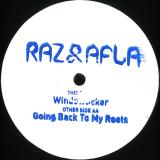
Wah Wah 45s present two very special cover versions from our beloved Afro-electronic duo, Raz & Afla, available on 12" vinyl for the very first time! Having recently released their sophomore LP, Echoes Of Resistance, to great acclaim and support ranging from Nick Grimshaw on BBC 6 Music to Tash LC on BBC Radio 1, and the follow up remix project Remixes Of Resistance, the pair offer up their unique takes on two very different slices of club culture on twelve inches of wax.
First up, the pair tackle Aphex Twin's sleazy and sinister turn-of-the-century dance floor bomb Windowlicker and take it somewhere completely unexpected, as Raz explains:
"We wanted to go to a different place from our influences for this one. When we told people we will cover this tune everyone said 'but how?!' In Raz & Afla style. We had an idea of what elements to recreate from the original and how we can reference it within our spectrum of sounds. It was so much fun to do and really kicks off at our live shows."
It's a heavily percussive reinterpretation, replete with spooky wordless vocals, funky guitars and spine tingling synths that builds into something of a future Afro-house anthem, whilst respecting the genius of the original recording.
On the flip, Going Back To My Roots has become a mainstay in Raz & Afla's live sets, and means a lot to them personally, as Raz once again explains:
"We love this song. The lyrics resonate with us, talking about the meaning of connection to a land and its people. The history of this song is also fascinating, from Hugh Masekela and Orlando Julius through Odyssey and Richie Havens. We wanted to give it our own flavour. You can't choose your heritage and where you are born. It is always a part of you and we like to celebrate that."
Written and first recorded by Lamont Dozier in 1977, Going Back To My Roots was famously covered by Richie Havens in 1980 before becoming a huge crossover hit when interpreted by disco outfit Odyssey in 1981. Raz & Afla very much give their version their own unique dance floor feeling. It's one which has received much support on BBC 6 Music.
- A1: Another Night
- A2: Gig No 9
- A3: Pistol Packing Mama
- A4: Blues Run The Game
- A5: Will The Circle Be Unbroken
- A6: Jokes And Funky Jokers
- A7: Sunday Morning Come Down
- A8: Low Down Police Paranoid Blues
- B1: Country Shack
- B2: Swamp Rise
- B3: Corina Blues
- B4: Don’t Make Promises
- B5: She Lies When She Smiles
- B6: Galactic Glides
- B7: Cripple Creek
- B8: Rain Just Eastern Rain
Roland Van Campenhout is certainly one of the most unique Belgian artists. Active since the 1960s, Roland has built an extensive and eclectic discography. With more than 20 albums featuring folk, blues, rock, world music, movie and theatre soundtracks — all blending together to create a new musical dimension that defines his true free musical spirit. He has received multiple awards, toured the world with Rory Gallagher, and performed with Tim Hardin, Leo Kottke, Ian Anderson, and the entire Belgian scene.
- A1: Super Strut - Apostles
- A2: Escucha Mi Funk - The Hightower Set
- A3: Testify - Mains Ignition
- A4: Russian Roulette - Night Trains Featuring Afrika Bambaataa
- B1: From The Ghetto (Modern Tone Family Mix) - Dread Filmstone
- B2: Delancey Street .. The Theme - The Ballastic Brothers
- B3: Trans Euro X-Press (Ballistic Step) - X-Press 2
- B4: Farside - Jaziac Sunflowers
Back in the early 1990s as Acid Jazz began a period of extraordinary commercial success where acts like the Brand New Heavies and Jamiroquai sold millions of records, and US groups such as A Tribe Called Quest, The Roots and Digable Planets were actively influenced by what was being played in London, the whole scene was being fuelled by a small number of clubs, led by Gilles Peterson’s Sunday afternoons at Dingwalls but taking in nights in Leeds, Bari, Munich, Tokyo, Stockholm and New York. In those clubs funky jazz, latin boogaloo and 70s soul soundracks competed for time on the dance floor with import records from New York, and the latest sounds coming out of bedrooms and makeshift basement studios that created contemporary sounds out of the past.
Acid Jazz’s Eddie Piller and Dean Rudland have put together this compilation of the sort of sounds that we were playing at the time. They are releases on Acid Jazz and other label’s that surrounded the scene and they were mainly made by people we knew from either around the club scene, behind the counters of our favourite record shops, or from trips to New York or Europe. They range from The Ballistic Brother anthem ‘Blacker’ to the jazz house of A-Zel - a Roger Sanchez mix that still sounds fresh today. We have the Humble Soul’s instrumental version of ‘Beads Things And Flowers’ which at the time was only available as a DJ special on Acetate. There is the presence of A Man Called Adam before they went to Ibiza, and the early Mo’ Wax (before they went Trip Hop) single by Marden Hill ‘Come On’.
These records could fill a dance floor in seconds and we feel that they are today largely forgotten, as they were non-album, underground club records. It’s time to celebrate them!