Steel Drum covers of Drake, Snoop Dogg & Dr Dre, Claudja Barry, The Game & 50 Cent, A$AP Rocky, Stranger Things Theme, and more. Bacao Rhythm & Steel Band, the mysterious steel pan outfit hailing from Hamburg, Germany have amassed a cult following around the globe. With a slew of classic 7”s and three critically acclaimed full length albums, they set a high bar for themselves, one they clearly intend on pushing even higher with this new offering. On their fourth album BRSB, Bacao are back with more of the same, but more of the same with them is inherently different. Covering songs that span genres and range from mega hits to underground album cuts, they make them their own with their unique approach to the traditional steel pans of Trinidad and Tobago. While part of the allure of a new Bacao Rhythm & Steel Band album is finding out what covers they do it is equally intriguing to see what original tunes they cooked upland this record is foul of standout originals. The album opener, “In The Crosshairs” is a rough and tough mid-tempo head nodder while both “Grilled” & “Treasure Quest” pick up the tempo with heavy African Funk in‑fluences on both. Bacao goes deep with “Hazy Memories”, a bass heavy slow burner that walks a line between hypnotic and hype. All these originals stand as testament that the term “cover band” is a shoe that could never fit Bacao. However, in the tradition of steel pan music, they do a heavy amount of covers. This time around there is a big West Coast Hip Hop influence with covers of Game & 50 Cent’s “How We Do”, Dr Dre & Snoop Dogg’s “Nuthin But A G Thang”, and Tupac’s “Got My Mind Made Up” all of which take on new energy and lend themselves to the BRSB steel treatment. Bacao puts another certified dance‑floor filler on their resume with their cover of Claudja Barry’s uber Disco classic “Love For The Sake Of Love” which they flip into a dubbed-out affair aptly changing even the title to “Love For The Sake Of Dub”. Pulling from the contemporary smash hit section of Hip Hop they cover Drake’s “Hotline Bling” and “Love$ick” by Mura Masa & A$AP Rocky. Then they go very unexpected with “Stranger Things Theme” where they take the synth heavy theme song to the hit show and give it a more hypnotizing tone than the original. By the time BRSB is through, Bacao has taken the listener on a journey spanning a myriad of energies, tempos, and moods while keeping it all under one umbrella. For all that, these songs are alive, and they will be taken out of the context of this album and sewn into the fabric of DJ sets around the globe for many years to come. Bacao Rhythm & Steel Band continues building their legacy and pushing the boundaries of steel pan music forward with another rock solid musical offering. Enjoy
Buscar:n fluence
- 1
- In The Wake Of King Fripp
- Aphanisis
- Omar Diop Blondin
- Moebius
- Fluence (Continuum Mobile/ Disjonction Inclusive)
- St Mikael Samstag Abends
- Michel Ettori
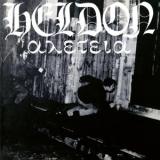
Schon bevor Richard Pinhas Anfang der 70er begann, Musik zu machen, war er Fan von King Crimson. Bis heute hat ihn die Musik der britischen Band nicht losgelassen, aber am größten war deren Einfluss sicherlich ganz am Anfang. Auf dem zweiten Heldon-Album "Allez-Teia" wird das besonders deutlich. Es erschien 1975 auf Pinhas" eigenem Label Disjuncta. Der Eröffnungssong, eine schwebende Mischung aus Mellotronklängen und einer verwischten Gitarre, trägt den Titel "In The Wake Of King Fripp". Diese doppelte Anspielung bezieht sich einerseits auf den Bandgitarristen Robert Fripp und andererseits auf "In The Wake Of Poseidon", das zweite King-Crimson-Album. Das meditative "Omar Diop Blondin" mit seinen frei schwebenden Tönen über einer repetitiven Gitarrenfigur ist ausdrücklich Brian Eno und Fripp gewidmet. Ebenfalls großen Einfluss auf Pinhas übte Robert Wyatt von Soft Machine aus. Trotzdem ist "Allez-Teia" kein Tribut-Album. Die Stücke, die Pinhas zusammen mit seinem Partner Georges Grunblatt erarbeitete, erscheinen auf den ersten Blick freudig-schön, tragen jedoch alle eine angespannte Unterströmung in sich. Sie bilden ein Wechselspiel aus federleichter Akustikgitarre, Mellotron-Teppichen, Fuzz-Sounds und schweren, sphärischen Synthesizer-Klängen.
- A1: Ballade (Sur Les Rochers)
- A2: Descente Dans Ce Monde Inconnu - Intro (Le Froid)
- A3: Descente Dans Ce Monde Inconnu - 1Ère Partie (Le Plaisir)
- A4: Descente Dans Ce Monde Inconnu - 2Ème Partie (Le Fond)
- A5: Descente Dans Ce Monde Inconnu - 3Ème Partie (Les Grottes)
- A6: Promenade Avec Les Poissons
- A7: Aplysia Depilans (Lièvre De Mer)
- B1: Les Épaves - Intro
- B2: Les Épaves - 1Ère Partie
- B3: Les Épaves - 2Ème Partie
- B4: Les Épaves - 3Ème Partie
- B5: Les Épaves - 4Ème Partie
Issued on le Kiosque d'Orphée in 1979, Voyage aux fonds de la Mer is the only LP by Alain Meunier (not to be confused with French classical music cellist of the same name), and is one of the most elusive collector pieces of the 1970s electronic experimental French scene.
This rare sought after album starts with an instrumental guitar introduction but from the second track onwards it becomes a totally electronic experimental psychedelic trip that can be aligned with the most kosmische side of kraut rock, and of course also with other works by French experimentalists of the era like Pascal Comelade's Fluence or Richard Pinhas' production (including Heldon). Guitar comes in now and then showing also a certain Robert Fripp influence.
Instruments used according to the insert sheet that came with the LP are a Korg 800 DV synthesizer, a K.O. Welson Clavinet, effects like a Fender Echo or a Electroharmonix Small Stone phaser and a fuzz pedal, plus Meunier also used a Gibson Les Paul Custom Guitar, a 12 string acoustic Eko guitar and a 6 string Morris guitar.
First ever vinyl reissue. Limited edition to 500 copies only. Remastered sound.
Big Crown Records is proud to present Dave Guy’s debut album Ruby. Having lent his talents both on stage and in the studio to artists like Amy Winehouse, Lizzo, Pharrell, and Sharon Jones to currently playing every night on The Tonight Show as a member of The Roots, Dave steps out on his own with a jazz record that is both unique and modern. Ruby mixes his musical influences with the energies of the city that raised him, capturing different moods and inviting the listener into the world as Dave Guy sees and feels it. Recorded in Queens at The Legendary Diamond Mine, the album is produced by Homer Steinweiss and Nick Movshon and features musical contributions from Leon Michels, Marco Benevento, Claire Cottrill, and more.
Ruby instantly sits with the classics as an album that is fully realized and not simply a collection of songs. Lead single “7th Heaven” opens the album with an anthemic energy as Dave’s horn lines soar over thundering drums, ethereal vocals, and dancing piano. Keeping the energy high, “Footwork” is a Latin inspired number that is sure to soundtrack many a dance floor from SoHo to Harlem. The synth intro of “Pinky Ring” cleanses your palate for the mood shift when the track drops. Deep bass tones underline the impeccable drumming and
Dave effortlessly finds the pocket wasting no notes as the verses and choruses trade off. The record leans into spiritual jazz vibes on “Diamond Encore” with a dark and deep almost “Axelrodish” rhythm track then picks the energy back up with the stomper “Still Standing”. “Dave Wants You” has a bop all its own with an unorthodox drum pattern that Dave anchors with his trumpet hits. The otherworldly arrangement of “Drony Boy” puts the production on a pedestal. The first intro almost serves as an intermission on the album while the second
intro sets up the neck snapping track that is about to drop. A menacing guitar signals the builds and the whole thing is juxtaposed by Dave’s beautiful trumpet riffs. “Quesodillas” & “Green Door” begin the autumn of the album with their mellow & intimate energy and “Ruby’s Rubies”, the album’s closer is the perfect ending to the journey.
After 40 steamrolling, liver wrecking, gut stretching years in the name of heavy metal, the Tankard beer train isn’t slowing down. Right in time for the festivities surrounding their 40th birthday, our most favourite Frankfurters let “Pawlow’s Dawgs” off the leash, their 18th overall record and debut for new label amigos Reaper Entertainment. Produced and recorded at Gernhard Studio Troisdorf again together with Martin Buchwalter. The taps are polished, the Freibier is flowing and Tankard are finally back to what they do best five long years after their last studio album: Thrashing madly, drinking thirstily and ever so cleverly intertwining metal, humour and sarcastic social commentary into one big raucous ball of entertainment. Just like they did all these years ago in a classroom where they drank beer out of emptied milk cartons. All hail Tankard. All hail the dawgs. The world is a better place with capital guys like them waiting at the bar.
Pascal Comelade and Richard Pinhas met in Paris in 1974, when Pinhas was beginning to go on stage with his group Heldon. With Heldon and, afterwards, solo, Pinhas became the pioneer and accelerator of electronic music in France, and a fundamental reference throughout the world. Comelade's electronic period was much shorter, from 1974 to 1981. From 1983 on, he developed his policy of instrumental, strictly acoustic music. In 1975, Pinhas recorded the introduction to Comelade's Fluence album. In 1996, Comelade recorded 'Back to schizo' with Pinhas. In 1999, Comelade and Pinhas recorded their first duo album, a CD for the Les disques du soleil et de l'acier label: Oblique Sessions II. In 2012, they released a second CD album for the G3G label in Barcelona, Flip Side of Sophism. In 2018, Comelade again invited Pinhas on his album Le cut-up populaire. During the last few years, they have had several concerts as a duo in Paris (Cité de la musique, La Maroquinerie) and Barcelona (Sónar Festival). They met again in 2020 for this LP album, Le plan de Paris. It contains six titles that were either previously unreleased or completely revisited, developed, remixed.
- 1


