R&B, funk and soul icons Kool & The Gang are returning with a new album release – People Just Wanna Have Fun is out July 14, 2023 on Astana Music Inc. With six decades of hits, the internationally celebrated group continues to tour the world and recently performed on Good Morning America. The band is led by founding members Robert “Kool” Bell (bassist) and George “Funky” Brown (keyboardist, drummer & producer of this album), whose book Too Hot: Kool & the Gang & Me will be released on July 11, 2023. Continuing to release music that makes the good times better and the bad times more bearable, this collection will be the band’s 34th studio album, featuring some of the last studio work by founding horn players, Kool’s brother Ronald “Khalis” Bell and Dennis “D.T.” Thomas, who passed in 2020 and 2021. Lead vocals on the album also include Sha Sha Jones, Shawn McQuiller, Lavell Evans, Dominique Karan, Rick Marcel and Walt Anderson, plus rappers Ami Miller & Ole’. Both Bell and Brown view People Just Wanna Have Fun as a summation of their long career, during which they sold 70 million albums worldwide with hit singles like “Celebration,” “Ladies Night,” “Get Down on It,” “Hollywood Swinging” & beyond. Since their start in 1964, the group has amassed two Grammy Awards, seven American Music Awards, a BET Soul Train Lifetime Achievement Award and star on the Hollywood Walk of Fame. Kool’s bass guitar is even featured in the Smithsonian Museum of African American History and Culture in Washington, DC. From Newark to Nairobi, Kool & the Gang have performed continuously longer than any R&B group in history and are the most sampled R&B band of all time, including by Madonna, Jay-Z, Beastie Boys, Janet Jackson, Cypress Hill and P. Diddy.
Поиск:nai j
Все
The album features 15 tracks, showcasing Bastien’s truly cinematic sound while exploring new sonic territories. The album touches on the melancholic funk drifting between voiceovers of longing and hurt, through surreal, hallucinogenic folk ballads. It’s the juxtaposition of these genres sewn together with ambient synth skits that really makes the album a musical journey. Playful and serious, as the album title suggests, Bastien manages to induce a rye smile with a tear in the eye.
In Seb’s words, “The album tells the story of a failed relationship, as the man narrators missing his other. Whilst he imagines her comforting him, before accepting the end of the relationship, and feeling that the love he feels, she never did.”
Sharing common ground with luminaries such as David Axlerod, Kate Bush, Roy Orbison, Madlib and The Delfonics; Keb plays guitar, trumpet, bass, drums, piano, flute and more Keb’s writing and recording approach is slightly unique. He explains a little about how his records sound the way they do...
“I have a lo-fi approach to recording, for me it’s about the moment, all my records are time capsules of a certain time in my life, so the sound of the recording is secondary. It’s all about heart, that’s all I’m interested in. If I get a melody I have to record it asap, if the mic isn’t plugged in I use the macbook mic, if I’m not by the computer I’ll record into my phone.
For me personally using/sampling other peoples music isn’t making your own music, using your own soul, showing your own heart, it's just my personal opinion. It’s not right for me. No slur on those that do. If there are any samples on my records, it’s me sampling me. For me, this means the music is mine. It’s ‘of me’. That’s really important for me, because I feel that’s where the honesty is. If my music sounds ‘dusty’, that’s why”.
This approach provides us with a wonderfully inclusive record. The album feels almost ‘performed’ to us, live, on each listen. Coupled with Bastien’s capacity to write music which is almost visual, the album is quite enveloping.
Bastien returns to Def Pressé with this new album after the brilliant, Holy Mountain. Released under the name Grandamme, with friend and collaborator Claudia Kane.
Artur & Vanessa sind zufällig entstanden. Auf die Anfrage, ob sie gemeinsam einen Roman schreiben würden, fingen Moritz Krämer und Francesco Wilking (Die Höchste Eisenbahn) irgendwann 2017 an sich eine Geschichte als SMS hin und herzuschicken. Nach 11 kurzen Szenen im Nachrichtenformat war es dann vorbei. Ziemlich schnell wurde den beiden klar, dass das eher ein Konzeptalbum als ein Buch werden würde. Also riefen sie Freundinnen an, mit denen sie noch nie zusammen musiziert hatten, mit der Frage: Wir haben eine Geschichte geschrieben, es geht um Artur und Vanessa, die einen Freizeitpark gründen in dem jeder ein neues Leben anfangen kann und fast darin umkommen, wir würden gerne Lieder daraus machen, 10 Tage, jeden Tag eins, bei Pascal im Studio Nord, hast du Zeit/Bock? Acht Mal JA! Wie schön, aus einer Flitzidee ist eine Geschichte geworden und aus einer Ferienfreizeit mit Freund*innen eine Platte, die naiv, bunt, verzweifelt, lustig ist, wie die Geschichte von Artur & Vanessa, zwei, denen wir es so gegönnt hätten, dass sie es schaffen. "Wer sind die Verlorenen, die draußen rumrennen, hinfallen und nicht wieder aufstehen können?" Große Fragen verpackt in Musik, die Dir hoch hilft, Dich in den Arm und mit auf die Tanzfläche nimmt, wo alle anderen ohne Antworten auch schon rumhüpfen.
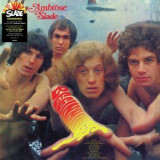
Slade waren in den siebziger Jahren unaufhaltsam und wurden zu einer der größten Bands Europas. Sie veröffentlichten sechs Hit-Alben, darunter drei britische Nr. 1-Hits und 17 aufeinanderfolgende Top-20-Singles, ihre Hits sind ein Synonym für die Glam-Ära. Slades
Debütalbum "Beginnings" wird zum ersten Mal als Mediabook veröffentlicht und enthält die Hits "Genesis", "Pity The Mother" und "Born To Be Wild". Zudem erhältlich als LP in Transparent Yellow & Orange Splatter Vinyl.
Recorded in 1989 on the remaining ten minutes left at the end of Swiz’s Hell Yes I Cheated reel-to-reel and originally released at the time as a 33 RPM 7-inch, this 2023 release presents a 12-inch 45RPM version remastered by Tim Green with an extra song recovered from the tape archives of Jason Farrell. The brief story of Fury: At some point in 1989, members of Washington DC punk bands Swiz and Ignition formed Fury as a loose experiment with no intentions beyond being a diversion. The band existed for a few months, wrote six songs, and played two shows. Shawn Brown and Chris Thomson switched their musical roles from their regular bands as vocalist and bass player. The eyes-closed leap into those unfamiliar positions imbued the recording its feeling of deranged chaos, while the well-seasoned duo of Jason Farrell and Alex Daniels nailed down each song with the signature agility and power displayed in their more familiar work together. The recording is a vexing listen that sounds like a Neapolitan swirl of Swiz, Void, and the Germs. Was it precision theatre? Or was it a natural step back into a more primitive and comfortable place for four young veterans that just wanted to fill the daily void of existential restlessness? The track “Resurrection” famously made it onto the final Swiz LP. The final track “Last One” got cut off halfway through recording and the band looped and spliced it into a dizzying psychedelic nightmare / masterpiece. The recording has faded into somewhat of an obsurity, a footnote to the larger careers of all of its members. In its time, it was revered by a small cult of obsessives from numerous early ’90s underground punk circles. It notably had a pronounced influence on the emerging Gravity Records scene, where its echoes can be heard on quite a few of the earlier releases. Resurrection is finally getting the deluxe treatment that it deserves after 34 years!
The house of Sakskøbing is witnessing a spawn of a sub label with the catalogue code RVZ. This is a coastal part of the main city, with abundance of nature & clear water, the rhythms in Zealand as one may say. The number one comes together as a four track Various Artists and consists of long-term friends of Sakskøbing as well new faces welcomed to the label.
The side A comes from a hardware live project Cattle Freq consistent of three musicians SIL, Keroz and BRTS. The trio have launched the project called Cattle Freq with performance of all original material recorded & rehearsed in the outskirts of their hometown in the end of 2021. Following up is the close friend of the label the Tommy Vicari Jnr, an artist highly praised not only in his native city Sheffield but is consistently played by hard working dj’s in the whole world. With “No matter what” the gentleman returns to label for the second time since 2016 which marks for a special date.
Repress!
Le Très Jazz Club keeps on exploring Japanese jazz and Three Blind Mice catalog with the reissue of this amazing 1976 record by drummer George Otsuka. This LP is reissued for the first time since 1976. Reissued for the first time outside of Japan, “Physical Structure” by Japanese drummer George Otsuka is an amazing jazz-fusion album, featuring Fumio Karashima on the piano and Fender Rhodes and Shozo Sasaki on tenor sax. Check the surprising and sublime cover of “Naima” which alone justifies to get this record! With : George Ostuka (drums), Shozo Sasaki (tenor & soprano sax), Fumio Karashima (piano, electric piano, synthesizer), Mitsuako Furuno (bass), Norio Ohno (percussion). Recorded on February 11, 1976
You can't get Deeper if you're standing still. That's intentional, says the Chicago quartet's Nic Gohl. "Does it feel good when you're listening to this song? Does your body want to move with it?" These are the questions he asked himself as he and bandmates Shiraz Bhatti, Drew McBride, and Kevin Fairbairn were writing and recording Careful!, their third record and Sub Pop debut. "I wanted these to be interesting songs, but in a way where a two-year-old would vibe out to it," Gohl adds.
"It's pop music, basically." That "basically" qualifier is working pretty hard, as fans of 2020's Auto-Pain might suppose. On Careful!, they're not reimagining their sound so much as testing its limits. If you want to, you can hear echoes of David Bowie's Low in the snapping rhythm and gray-sky synths of "Tele," but you can also hear a bit of Auto-Pain in the nailed-in, stippling lines being spit out by Bhatti's drum programming and McBride's synthesizer.
"Fame" seems to stumble together and nearly fall apart, the dialed-up noise making the beat feel maniacal and a little invincible, the whole thing a series of short, snipped, autonomous gestures that are by now Deeper's trademark. "Build a Bridge" pushes in the opposite direction, using a prickly guitar line to launch into big, smeary art-pop, its emotional palette clear, well-defined, and easy to latch onto.
On "Sub," Gohl sings above and below the melody like Ian McCulloch, bellowing and wondering and ruminating and rounding into swaggering confidence that the band rises to meet. It's festival headliner music that still feels like it was written in a garage. That fraternal interdependence is near the center of Deeper's music. The musical and lyrical devotion to mutuality makes this restlessly curious, stylistically broad album feels like the most coherent portrait of who Deeper is. Or, as McBride ultimately frames it, "Careful! is about looking out for one another."
You can't get Deeper if you're standing still. That's intentional, says the Chicago quartet's Nic Gohl. "Does it feel good when you're listening to this song? Does your body want to move with it?" These are the questions he asked himself as he and bandmates Shiraz Bhatti, Drew McBride, and Kevin Fairbairn were writing and recording Careful!, their third record and Sub Pop debut. "I wanted these to be interesting songs, but in a way where a two-year-old would vibe out to it," Gohl adds.
"It's pop music, basically." That "basically" qualifier is working pretty hard, as fans of 2020's Auto-Pain might suppose. On Careful!, they're not reimagining their sound so much as testing its limits. If you want to, you can hear echoes of David Bowie's Low in the snapping rhythm and gray-sky synths of "Tele," but you can also hear a bit of Auto-Pain in the nailed-in, stippling lines being spit out by Bhatti's drum programming and McBride's synthesizer.
"Fame" seems to stumble together and nearly fall apart, the dialed-up noise making the beat feel maniacal and a little invincible, the whole thing a series of short, snipped, autonomous gestures that are by now Deeper's trademark. "Build a Bridge" pushes in the opposite direction, using a prickly guitar line to launch into big, smeary art-pop, its emotional palette clear, well-defined, and easy to latch onto.
On "Sub," Gohl sings above and below the melody like Ian McCulloch, bellowing and wondering and ruminating and rounding into swaggering confidence that the band rises to meet. It's festival headliner music that still feels like it was written in a garage. That fraternal interdependence is near the center of Deeper's music. The musical and lyrical devotion to mutuality makes this restlessly curious, stylistically broad album feels like the most coherent portrait of who Deeper is. Or, as McBride ultimately frames it, "Careful! is about looking out for one another."
Zusammengebracht wurden die Musiker 1994 von Thomas M. Lauderdale. 1997 wurde ihr erstes Album auf ihrem eigenen Label Heinz Records veröffentlicht. Über 650.000 Einheiten wurden weltweit verkauft. Diverse Songs wurden ausgekoppelt und fanden ihren Platz auf verschiedenen Compilations wie zum Beispiel der legendären 'Buddha Bar'. Pink-Martini-Stücke sind auch in Filmen und Serien zu hören, darunter 'Die Sopranos' oder 'Sherlock'.
Alle französischen Songs von Pink Martini aus der gesamten Diskografie sind in dieser Compilation zusammengefasst, erhältlich auch als dreifarbiges Deluxe-Vinyl. Das perfekte Geschenk für alle frankophilen, Frankreich-Studierenden oder Paris-Reisende. 'Non Ouais' enthält einige der größten internationalen Hits dieses "kleinen Orchesters", darunter natürlich auch 'Sympathique (Je ne veux pas travailler)', welches in Frankreich für den 'Song des Jahres' nominiert wurde. Inkl. der französischen Stars Georges Moustaki und Philippe Katerine als musikalische Gäste!
Building off of the themes of identity, storytelling and experimentation on her critically acclaimed debut album, Khonnar (2018), Deena Abdelwahed’s upcoming album Jbal Rrsas is the next chapter of a reimagining of what club music could be. The album spans seven tracks of bass, techno, and experimental music, with Abdelwahed consulting with masterminds like Tunisian composer and multi-instrumentalist Khalil Hentati, aka Khalil Epi, and Iraqi-British multi-instrumentalist, composer, and researcher Khyam Allami, as well as Egyptian mastering engineer Heba Kadry, to help realise her vision.
Jbal Rrsas starts with the seductively apocalyptic opener, The Key to the Exit, a deconstructed sha’bi production. With tracks like Six as Oil and the delightfully intense Violence for Free, Abdelwahed leads users to a desert rave, where industrial rhythms are left unbridled. Abdelwahed’s vocals on Complain and Pre-Island are powerful and exposed, confidently placed on dizzying avant-garde productions. The Wire previously said “Khonnar is an assured debut that sits on the edge of a whole swathe of possibilities, not only sonic but also geographical, social and political.” With Jbal Rrsas finds Abdelwahed deftly navigating through those possibilities, frequently pushing against genres, labels, and social identifiers, while elevating club music to otherworldly heights.
Vienna-based producer and 303 maestro Tin Man returns to Acid Test for his first solo EP for the label in over 5 years. It's another impeccable outing of romantic acid variations, especially tailored for unforgettable dancefloor revelations.
Tin Man has been setting the pace for forward-looking acid lovers for close to two decades now, and on his 15th Acid Test appearance he takes the vibe back to early and proto-house roots, stripping back the musical elements while layering in the euphoria with four perfectly crafted slices of feelgood 303.
Opening track Hidden Acid already sounds like a long lost classic, with strings draped over bouncy acid and motorik drums, stretching out over nearly nine minutes, and beautifully capturing the feel of house music circa 1991. Swaying Acid comes in all propulsive, toms and congas setting the foundation for melodic acid lines to weave through your heart strings.
On the B Side, Running Acid is fully optimized for the autobahn fast lane - a gradual, slow-filtered acid meltdown that builds and releases in tandem with driving hats and vaporous pads that hang over the track like early morning mists. Wrapped Up Acid brings the EP to a fitting close, slowing the tempo for a low-key easy dance excursion par excellence - smooth yet spikey 303 riffs punctuate the chords that drift through with a hint of Badalamenti in the progression.
With the Hidden Acid EP Tin Man might hark back to more vintage times, but the emotive power is as strong as ever. The naivety of the ‘90s is instead replaced with a conviction behind the musical choices that brings even more weight to the heartwarming vibes. This is acid in some of the best shape it's ever been, enhanced and upgraded specifically for the dance.
Belgian jazz veterans W.E.R.F. records and JazzLab are celebrating their 30th anniversary together with three unique creation projects for which they are joining forces. One of them is with percussionist Chris Joris, a veteran of Belgian jazz who is releasing a haunting new project.
Until the Darkness Fades' immediately says something about Chris Joris' career path, in which the musical and the personal invariably overlap. This percussionist has written one of the most colorful chapters of Belgian jazz. For many years he was active within various genres, but is now mostly praised as the percussionist who constantly demolished boundaries. Not only between all those oppressive genre boxes - pop, experiment, theater, world music, jazz - but also between complete worlds.
Chris Joris was playing "world jazz" long before there was that term, and he signed on for some hot-blooded jazz classics, with "Out Of The Night" perhaps the best-known example. That album was originally released in 2003, was then unavailable for years, but is back on shelves in 2023 and on vinyl for the first time. And rightfully so. Joris also eagerly seized the prospect of a new tour and a brand new album for a musical self-portrait. With "Until the Darkness Fades," he highlights different aspects of his musical identity, both expected and unexpected.
Joris composed new material, but also keeps a prominent place for free improvisation. It will be a tantalizing dichotomy full of hybrid sounds, with familiar and less familiar sounds, between romanticism and uninhibited adventure. He explores these in the presence of notable associates on violin and cello. In this way, he combines earthy percussion with the freedom of jazz and the elegance of chamber music. Discover this story of a Belgian master who is far from finished.
At the end of the 60s and early 70s Brazil was a dream. It was fashionable everywhere in Europe and therefore in France too. One thinks of 'Samba Saravah' from the Un homme et une femme OST, Françoise Hardy and her record produced by Tuca, Isabelle Aubret and her 'Casa Forte' or France Gall with 'Zozoi'. Three Brazilian musicians exiled in France, Edson Lobo (bass), Fernando Martins (piano) and Nelson Serra (drums) form the Trio Camara. They met a group of friends who loved Brazilian music, all professional musicians, but who wanted to remain anonymous, hence the name of the band : Les Masques (The Masks)…
Claude Germain (Les double six), José Bartel, Marie Vassiliu, Pierre Vassiliu … Indeed the singers forming Les Masques are from being unknown. In 1969 they entered Studio Davout with le Trio Camara to record "Brasilian Sound". Composed of 11 tracks, it is a superb album, masterfully produced and recorded, a gripping record to listen in one go and transports us in atmospheres both dreamy and naïve which belong to that period. Produced in 500 copies on CBS, 'Brazilian Sound' was not, unfortunately, a success and it is today impossible to find the original French pressing (which sounds much better than the Canadian pressing released at the same time). This reissue on Le Très Groove Club is welcome, so that 50 years after its release, a larger audience can discover this beautiful record, echo of a once and for all past era.
'Brexit Music' ist kein politisches Album. Aber im Titel, der dem Künstler lange nach der Idee des Repertoires in den Sinn kam, steckt eine Vorliebe für britischen Spott: Am Ende soll die Kunst alle gesellschaftlichen Modeerscheinungen überleben. Der französische Pianist und sein Akustik Jazz-Trio wollten einen frischen, verspielten Sound, Groove und ein bisschen Humor. Ein beliebtes Lied zu covern ist für Jazzmusiker gängige Praxis, dennoch war die Idee eines ganzen Albums, das sich ausschließlich um britische Popmusik dreht, nicht selbstverständlich: Es war eine Herausforderung, ohne die Texte lebendig zu bleiben. So blieb oft das schlichte Material dieser Songs, auch wenn die meisten davon ein aufregender und freudiger Teil von Trotignon's Teenagerjahre waren. CD-Digipak und 180Gr. Doppel-LP mit vier Bonustracks!
Baptiste Trotignon - Piano, arrangements
Greg Hutchinson - Drums
Matt Penman - Upright bass
- A1: Rock Extra 3 00
- A2: Slowrama 2 10
- A3: Latin Pop Sound 3 30
- A4: Morning Melody 1 12
- A5: Islam Blues 0 55
- A6: Phasing Drums N° 1 1 10
- A7: Phasing Drums N° 2 1 16
- A8: Phasing Drums N° 3 1 25
- B1: Pacific Rock 2 25
- B2: Quasimodo Pop 3 16
- B3: Carmel Beach 3 25
- B4: Auto Moto Rallye 1 32
- B5: V S.o.p Rock 2 10
- B6: Rythmiques N° 1 0 53
- B7: Rythmiques N° 2 0 45
- B8: Rythmiques N° 3 0 53
A Tele Music CLASSIC from 1972, Pierre-Alain Dahan's Continental Pop Sound is of those library albums with something for everyone. Breaks? Check. Fuzz guitar? Check. Slower, jazzy stuff? Double check. It's a stunning collection of psychedelic rock, soulful funk and retro pop stylings that's currently going for over £200 on Discogs. And with good reason. French drummer, percussionist and composer Pierre-Alain Dahan was a key member of the legendary Arpadys, Disco & Co, Voyage, Tumblack (with Wally Badarou and Sauveur Mallia) and Jef Gilson Septet. So, you know this Be With reissue is nailed on essential.
Skip the by-numbers opener "Rock Extra" and head straight to the deeeeeep, minimalist groove of "Slowrama", a humid masterclass in low-slung, creeping crime funk with weighty breaks and beefy bass complimented by hypnotic wah-wah and warm electric piano. Sensational. It was sampled by Prince Po in 2004 for his "Love Thang" track. The galloping "Latin Pop Sound" is a percussive, Santana-esque tour de force featuring fantastic guitar shreds over a bassline to die for. "Morning Melody" is a lightweight amble whereas the brief but deliciously psych-rock heavy "Islam Blues" is a must for your mixes when requiring short segue tracks. The A-Side closes out with "Phasing Drums N° 1, 2 & 3", all completely ace. For us, N° 3 is the pick of the bunch, with particularly slooooow and deliberate drums underpinned by a droning, sinister organ. Hip-hop, before hip-hop, no less.
The genuine monster "Pacific Rock" blasts out the gate to usher in Side B, a thrilling and unrelenting pop-rock instrumental that really drives. "Quasimodo Pop" contains great slow mo funk breaks and scratchy guitars that alternate with pretty heavy riffing to create a compelling base track. "Carmel Beach" is as beautiful as the location it's named after, as insouciant guitars glide over super slo-mo beats and dramatic organ before it breaks down to a laconic, reflective electric piano showcase. Sumptuous. "Auto Moto Rallye" is a brief driving funk gem, as you might expect, complete with revved up guitars tuned and played to emulate the irresistible sound of growling race cars.
The upbeat, piano-led rock stomper "V.S.O.P Rock" is all well and good but, what you might really be here for is the trio of tracks that ensure the LP ends on an almighty high. The three most famous tracks “Rythmiques 1, 2 & 3” all come complete with *ultra*-dope breaks. N° 2 is probably our favourite, with the shuffling bassline and breaks combo augmented by the wonderful cowbell. Though on any other day, it could be N° 3! This album is often considered as the “baby brother” to Tele Music's Rythmiques, and this triptych is all the proof you need. Outstanding.
One of the very best French drummers ever, Pierre-Alain Dahan began his career at the Blue Note in Paris with Sonny Stitt, Dexter Gordon and Daniel Humair. Some start, eh?! He also participated in the recording of Serge Gainsbourg's cult album 'La Ballade de Melody Nelson' before going on to make countless KILLER library funk records and be a key member in the legendary Arpadys, Disco & Co, Voyage, Tumblack (with Wally Badarou, Sauveur Mallia et al), Jef Gilson Septet (alongside Henri Texier) and many more. Some pedigree.
The audio for Continental Pop Sound has been remastered by Be With regular Simon Francis, ensuring this release sounds better than ever. Cicely Balston's expert skills have made sure nothing is lost in the cut whilst the original, iconic Tele Music house sleeve has been restored here at Be With HQ as the finishing touch to this long overdue re-issue.
An antidote to the tough-guy hardcore spreading from CBGB's, emo outliers Native Nod's unique genre juxtaposition of damaged art-rock, daring/naive songwriting, and raw, poetic vocals have set them apart from the glut of early-'90s post-hardcore. Compiled here are the band's trio of seminal 7" EPs for the Gern Blandsten label, with liner notes by Jenn Pelly and scores of unseen photographs and ephemera.
In 1972, a foursome of design students set out to make a record. This was, in many ways, a strictly creative endeavor. The quartet — composed of Dave Pescod, Alan Lewis, Phil Rawle, and Ted Rockley — were all trained, not as musicians, but as creatives. Art school heavyweights, the four were well-versed in the methodology of intentional experimentation, in the delicate balance of pushing the limits without completely unmooring oneself from a guiding creative intention. Emboldened by a high-brow familiarity with thoughtful experimentation and all the non-conviction of non-musicians, Bowes Road Band’s stint in the world of popular music yielded a record that is as much mind-melting as it is a direct product of its time. Their sprawling LP “Back in the HCA” embodies the exigence “art for art’s sake,” but it is for art’s sake that this record, however off the deep end it seems to travel (hear: “Doctor, Doctor”), remains a unified, and stunning, body of work. The LP’s do-ityourself garage rock noisemaking meets highfalutin creative processes. “Back in the HCA” is warbling psychedelic freakout (“Two Fingers,” “Doctor, Doctor”), Donovan-esque English countryside folk stylings (“Inside My Head,” “Goodbye to Rosie”), and avant-garde jazz improvisions (“Grass is Grass,” “Tomorrow’s Truth”) in one luminous release.
Originally an 9-track LP, Jakarta, Uno Loop, and Bowes Road Band decided to mine the six most cohesive tracks for the reissue, though the extras may be released somewhere down the line. Cohesion efforts aside, “Back in the HCA” stands alone in its singular conception of a genre-bending continuum — it evades definition. That said, the LP can easily be situated in the sonic environment in which it was conceived. By the end of the 60s, England was crawling with blues-based rock outfits that were starting to venture into prog rock territory. You can hear this popular dint cast over the folkier side of the LP. But Bowes Road Band was armed with their non-musicianship: they existed completely liberated from the motivating yet ultimately paralyzing lust for stardom. Enjoying this liberation, Bowes Road Band was utterly free to make noise. This freedom meant drawn out sax interludes amidst sweetly folk stylings (“Grass is Grass”) and Shaggs-like fuzzed-out freakouts that spiral into a void (Doctor, Doctor). This freedom also meant straight-forward tuneful cuts like “Goodbye Rosie” that conspicuously introduce heavily distorted auto-organ accompaniment mid-track amidst poignant lyricism. Bowes Road Band crafts a unified sound and then cracks it open.
With a completely off-the-radar status, Bowes Road Band could only press 50 copies of the record — 10 for each of them and 10 for the school. The band’s lifespan was to end there, or so they thought. “Back in the HCA” was the accidental fruit of a Berlin flea market treasure hunt by Jannis Stürtz, DJ and co-founder of Habibi Funk and Jakarta Records. After finding and sharing the LP with a few colleagues, Stürtz managed to get in touch with the band, get ahold of the master tapes collecting dust in Ted Rockley’s attic, and start the reissuing process. The record is still adorned with its original cover art designed by Alan Pescod, both reminiscent of bygone school days and the Zoom calls of yesterday — in short, reunion. Its re-discovery was happenstance and ought to be listened to as such. That is, “Back in the HCA” was not made to be listened to on a broad scale, or, at least, was not made with this goal in mind; it is neither in its time nor of its time. Of course, the group explicitly cites the folk tunes of the English countryside, the distorted rock groups that reigned during the record’s conception, and the fringes of psychedelic music that only the uber-underground might recognize (e.g., “Dreaming of Alice”). Yet still with these obvious influences, “Back in the HCA” always existed beyond the domain of both traditional musicianship and conventional commodification. Bowes Road Band’s DIY musicality beams through in technicolor across “Back in the HCA.” The vinyl includes an 8-page booklet detailing the albums creation and interviews with the band.
Lead single “Grass is Grass,” out July 14 along with album pre-order, encapsulates the record’s range: the track unfurls into a sprawling sax-driven trip following a sundrenched, Donovan-esque intro w/ lyrics “naively about parks and gardens, not marijuana!” The keyed-down folk cut “Goodbye to Rosie” is single 2 and elevates stripped-down acoustics with golden tinges, out August 4th. Focus track “Tomorrow’s Truth” constructs the fuzzed-out underbelly of acid folk. Listen for echoes of late Beatles, Mark Fry, and Donovan (if they were armed by an unshakabele willful naiveté). Like Sgt. Pepper’s on a shoestring budget—take a trip to the underground with LP “Back in the HCA,” available everywhere physically and digitally on September 1st via Jakarta Records and Uno Loop.
Besides online promotion from label profiles, the album will be further promoted by external agencies within the UK and US.
Long festering on the West Coast, Frankie and the Witch Fingers have carved out a niche that’s equal parts molten tar pit teardown and end-stage anxious careen. As they wind out of the stoned-ape psychedelics of their 2020 opus Monsters Eating People Eating Monsters… their sound, over a series of singles, has begun to thicken and throb. It’s coalesced into a darker strain that ingests the explosive impulses of R&B, the rhythmic insistence of 70’s German Progressives, and the elasticity of funk fusionists alike. They weld their arsenal of influences to a chassis of nail-bitten bombast. On the upcoming Data Doom the band hurtles the listener head first into the wood-chipper of technological dystopia, systemic rot, creeping fascism, the military-industrial profit mill, and a near-constant erosion of humanity that peels away the soul bit by bit. With a fuse lit by these modern-day monstrosities the band seeks to find salvation through a thousand watt wake-up of rock n’ roll exfoliation.
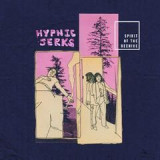
Unlike the spiraling momentum of the band's sophomore LP, pleasure suck, the spirit of the beehive takes a more grounded approach here, though the ground it's standing on is equally otherworldly. Dreamy is a fitting adjective, but the ten tracks on Hypnic Jerks never fully slip into the peaceful character of dream-pop. Hypnic Jerks has the quality of an indescribable dream fading from memory as you slowly begin to regain consciousness. Its warped guitar tones, transcendental synths and smattering of eerie audio samples conjure this purgatorial space between reverie and reality. It's an arena where the songs unexpectedly contort themselves and take on different textures, morphing in and out of one another. Once the celestial harmonies, balmy keys and creeping false climax of album closer it's gonna find you roll past, it's clear that the spirit of the beehive has secured a seat at this decade's table of musical visionaries.