“A piece of music never truly comes to An end. Revisiting a theme illustrates this idea that life goes on.” These are the words of Wayne Shorter, uttered in 2018 upon the release of Emanon, his final opus. On this record, the octogenarian uses dusky hues to shade in the passions of his youth - drawing and science-fiction, as well as the causes he has defended all his life - the fight against ecological upheaval and structural racism. This sentiment did not fail to resonate with Julien Lourau, who has reached a stage in life where he has begun to look back over certain pages written by the man he has always considered one of the masters of his trade. Five years later, this Parisian native has also chosen to revisit his glory days, offering reworked versions of specific tracks composed by his titular elder throughout the 80s. “When I play this music, I find myself back in my teenage bedroom. These are my standards, and they remind me of autumn in Rambouillet.” At that time, after practising his scales, Julien would also play Dungeons & dragons, and immerse himself in SF as well as heroic fantasy - epic influences which are not without a certain connection to the dreamworlds Shorter conjured up, as another fan of landscapes beyond the grasp of reality.
This album features four themes taken from Atlantis, which came out in 1985, and two from Joy Ryder, released three years later. To these, he has added a composition penned at around the same time for Sportin’ Life, the penultimate LP by Weather Report. This is rounded off by a tune taken
from Native Dancer, the record which, ten years earlier, in 1975, brought together this saxophonist who learnt his trade alongside Art Blakey, before joining Miles’ second quintet, and Brazilian Milton Nascimento.
“Between Native Dancer and Atlantis, Shorter did not release anything under his own name, but he took the time and care to really perfect his writing. Upon his return, he injected a very Brazilian form of subtlety into his compositions, especially rhythmically. And from a harmonic point of view, these themes are extremely sophisticated, and reveal truly singular colours. In fact, he decided to display the score as if it constituted the liner notes of Atlantis.”
Julien Lourau is a fan of every Wayne Shorter era, from his Blue Note days, where Mr Gone defined the bases of a truly unique repertoire, all the way to his final quartet - a reference like no other. He decided to focus on this “highly electric” period, which is not necessarily Shorter’s best known, nor his most widely appreciated - despite being a unanimous reference, Shorter has nonetheless never had a direct descendent. In Lourau’s line of sight there lies a desire to focus on typically South American tonic accents which characterise this repertoire, twinned with the ambition to switch up their actual sound “by attempting to open up onto a production highly influenced by eighties fusion". However, he admits that modifying the structures of these most unique of worlds constituted a fresh challenge. “There’s this labyrinthine harmonic system where you’ve no idea how it holds together, but where it’s actually impossible to touch the slightest element without the whole edifice wavering. It is in fact a very difficult thing to achieve!”
In order to successfully transcribe all this creativity free of obstacles, Julien Lourau once again called upon the help of Mathieu Debordes. From January 2023 onwards, Mathieu endeavoured to break down all the musical elements, on paper, before creating any actual music. The record was therefore constructed on the faith of these scores, without necessarily transiting through a creative residency - just two live gigs, to make sure the setup worked. Besides Mathieu Debordes and his synthesisers, Julien Lourau has assembled an ad hoc team by his side. On the bass, according to the track, we can hear erstwhile companion Sylvain Daniel or a new acolyte on the fretless bass, Joan Eche Puig.
Stéphane Edouard, on percussion, even dives headfirst into an unlikely proto-rap of sorts, on Pearl On The Half Shell (where, on the original version, Bobby McFerrin adjusted his interventions in a rather madcap style). Aesthete and drummer Jim Hart as well as pianist Leo Jassef also figure on this release - both were present on previous project devoted to label
CTI. “At sixteen, I wanted to sound like Michael Brecker rather than Ben Webster - that was equated with modernity in those days”, adds Julien with a smile, as for him, all this rings out a little like a logical next step, a joyful immersion into the fountain of youth. And if, for this record, he plays the soprano more than ever, the saxophone Shorter set in his sights on, he never tries to replicate an unattainable ideal note by note. What would be the point?
“Wayne Shorter is not just a saxophonist’s saxophonist. In fact, I don’t know a single person who has risen to challenge of his solos. I have not done it myself either, but on the other hand, I have retained a lot of his phraseology. His way of approaching the instrument reveals a more evanescent language, a work on colour and shape. Keeping this in mind has allowed me to gravitate towards certain elements, that in hindsight, I find echoes of in my work, even in Groove Gang.” Shorter etches out these phrases, creating a groove within which Lourau had traced subtle punctuation, managing, from a highly written base, to create fresh apertures, promises of a great escape. Emblematic of this standpoint, his regal version of Ponte de Areia, originally a wonderful dialogue between Milton Nascimento and Wayne Shorter. Here, the Frenchman takes liberties with the original melodies, without ever growing distant from the original spirit, extending one section with delicacy, offering a rubato development and then a groove “like a little suite”. Julien Lourau also renews with an accomplice from last century, Magic Malik, who lends his high-pitched vocals to the track. Though they had not recorded together for more than twenty years, the two of them got on as if they had only ceased collaborating yesterday, everything flowed naturally. The track was wrapped up in just one take, much like other themes, such as opener Who Goes There where the flautist deploys smooth, enchanted and smoky wisps.
Fundamentally, reflecting of the sleeve which features a child playing with a ball, image that could symbolise the sun just as much as the moon, Julien Lourau manages to translate the ambiguous candour which characterizes Shorter’s work - solar and crepuscular at the same time, that of a visionary and poet definitively situated outside of all chronology, but with whom Julien shares surprising and ‘timely’ coincidences. Shorter was born August 25, 1933, the same day as Julien’s father, “if we take time zones into account”, and who died on Lourau’s birthday, March 2, 2023. Should we take this as a random fact? Or could we not see here the sign of a destiny connecting the agnostic Frenchman to the man who, as a fervent Buddhist, believed in the transmission of his spiritual flow ?
Search:name one
Celebrating the 30 anniversary of this legendary cult band from Argentina, with more than 150 releases in labels from Japan, Europe, Oceania, Latin America and USA and shows played and their music presented all over the world. A nondescript, experimental, truly original band with a story to match their legacy. LP includes fold out insert. At last! A comprehensive compilation documenting the exciting career of the legendary experimental Argentinian cult band. A career overview through eight of their most mesmerizing compositions. The fact that their drummer and singer Miguel Tomasin has down syndrome not only makes them one of the longest-running and most notable inclusive rock bands of all time, but also allows us to appreciate the importance of Miguel's creative contribution, both for his singular way of singing and for his inimitable verbal inventions. For his work with the band, Miguel stands as one of the most relevant personalities with down's syndrome in the world and his name appears mentioned in diverse books of neuroscience and neurodiversity. Their long list of collaborators includes luminaries such as Lee Ranaldo (Sonic Youth), Pauline Oliveiros, Damo Suzuki (Can), The Nihilist Spasm Band, Michael Snow, N U Unruh (Einstürzende Neubauten), Alan Licht, Pajarito Zaguri, Acid Mothers Temple, John Oswald and many more.
Bas Jan return with a polished and poignant collection of perfectly-crafted pop songs that retains their authentic indie edginess. 'Back To The Swamp' is a heady tussle between their incorrigible DIY ethics and new responsibilities. Serafina Steer, Charlotte Stock, Emma Smith and Rachel Horwood cast an examining eye over modern times, lost love, Tarot intuition and long days in an everyday swamp. Awash with lush chorale effects, orchestral hewn loops, pin sharp electronic beats and sublime harmonies. Back To The Swamp is filled with thought-provoking stories, it's a reflective worldview. It's a polished and poignant collection of perfectly-crafted pop songs that retains their authentic indie edginess. These new studio recordings feature more accomplished pop production; filled with cerebral one-liners that pluck at the senses. And, there's a nod to an eclectic mix of influences; The Pet Shop Boys, Lizzy Mercier Descloux, Kate Bush, Heaven 17 and Jon Hassell by way of Brian Eno. Witches, Tarot readings, road signs, Salt-N-Pepa namechecks and a river all cried out, welcome to the swamp_ "Beautifully fractured art-pop" MOJO
Xavier Boyer, the lead singer of Tahiti 80 and one of the most distinctive voices in French indie pop, returns solo with a melodic and timeless new EP entitled "Soda Coda".
After "Tutu To Tango" (2007, under the name Axe Riverboy), "Some/Any/New" (2017), and not forgetting Tahiti 80's nine studio albums, Xavier Boyer has composed five songs navigating between soft rock, folk sounds and pop experimentation. "On previous albums, I'd done everything on my own, but this time I was looking for something more lively, more organic, more collective. I also wanted to exchange ideas with other musicians.
This mini-album (the vinyl version will include five alternative versions recorded on a 4-track cassette) was created with the help of three emblematic figures from the French music scene, Mehdi Zannad (Fugu, April March, A Girl Called Eddy) on keyboards, Laurent Blot (Le Superhomard) on drums and Stéphane Laporte (Domotic, Egyptology) on mix.
Recorded between tours and studio sessions with his main band, "Soda Coda" once again confirms his talent as a melodist and his appetite for sonic adventures. The power pop of "D Day" or the lyricism of "Children Of The Sun" would not be out of place on albums by Emitt Rhodes or Richard Swift (producer of Tahiti 80's "Ballroom" in 2014). "Oh Liza" is as smooth as an Elliott Smith novelty.
The singer assumes his influences: "My aim has always been to write timeless songs without pretending it's 1975, or 1998. I want my music to remain rooted in its time." "Read The Room" blends Jamaican music and avant-garde pop with its crystalline guitars and soaring synths, while "Soda Coda" brings a touch of Soul to the EP with its distorted piano and slap-back vocals.
More than a journey or a nostalgic trip, Soda Coda is a succession of luminous songs, and as Xavier Boyer sings on the eponymous track: "I'm singing something good, I can hear this tune lighting up my path".
Buckle up and fasten the spaceship seatbelts! The Third Room, the multidisciplinary techno project from the industrial heart of Germany, is about to fire another satellite in the orbit. A stunning various artists series between fierce meteors, bright suns, dark moons and shining comets will continue to define the Essen-based collective's sound vision which is as diverse and timeless as space itself. Convince yourselves of a well-considered, galactical curation that contains quality tracks from talents, locals and longstays.
On the first of four releases, established producers named Beste Hira, Stranger, Alarico and OFF/GRID put out a stunning yet humble peak-time record. Four laser-beaming tunes speak for themselves and mark the beginning of the next chapter in the T3R adventure.
Don't miss to ascend to higher spheres - secure your copy and pre-order one of the limited records now!
©️ 2023 The Third Room
Mastering by Ahmet Sisman (The Third Room Studios)
Artwork by Daniel Bornmann & Elisa Jauch (Duat Agency)
Take the 101 north out of Los Angeles, and you'll pass by Agoura Hills, where the core duo of the band Dub Thompson grew up. Whatever you see in that town won't readily prepare you for the music they wrote while there, but you're free to look."Most everyone who's in a group who's our age lives on the Internet," says guitarist Matt Pulos. "The kinds of things that have shaped our band aren't anchored to any one time or place."Pulos and his bandmate, drummer Evan Laffer, are currently both 19 years old, and are putting that line of thought to the test; their musical influences travel from the Midwestern malaise of Big Black and Pere Ubu, to Kraut pioneers Can and Kraftwerk, while bowing to the British belligerence of The Fall and This Heat.Recording the album while living with Foxygen's Jonathan Rado at his rented house in Bloomington, the band had its first taste of a heavy Indiana summer, and all the humidity and insect life that buzzes along with it. "We woke up every day, ate hard-boiled eggs and stood on a porch," says Pulos of the experience.Their first collection of songs slyly unties the shoes of genre and convention, shapeshifts mischievously, and tramples on the promises delivered on the name itself.There are only eight songs on this rangy debut.Intense blasts of hook-filled noise rock ("Hayward!"), rocksteady marionette stomp ("No Time"), hypnotic bouts of doomy poetics ("Epicondyles"), outlandishly sexy groove rock ("Dograces"), and a number of other bite-sized forays into parts unknown are made manifest across 9 Songs. The vibes are strong here. Pulos sings and plays like he's working out long-standing grudges, pulling the most sinewy tones from an acoustic guitar and ripping huge chunks of demon flesh out of his electric. Laffer matches him step for step on the drums, an exacting presence behind the kit who pushes even the band's more placid moments into bouts of tension. Together they succeed in animating their musical ideas to startling, almost unnatural life. Reverb units, keyboards, samples and processing gluing everything together, saturated in the August heat and worn in until they sound second nature, it's like somehow you've been listening to these songs forever.
Blue Cloud Vinyl. Hailing from Bozeman, MT, Kitchen Dwellers embody the spirit and soul of their home with a sonic palette as expansive as Montana's vistas. The quartet_Shawn Swain Mandolin, Torrin Daniels banjo, Joe Funk [upright bass], and Max Davies [acoustic guitar]_twist bluegrass, folk, and rock through a kaleidoscope of homegrown stories, rich mythology, American west wanderlust, and psychedelic hues. After amassing 5 million-plus streams, selling out shows, and receiving acclaim from Huffington Post, Relix, American Songwriter, and more, the group brings audiences back to Big Sky Country on their third full-length album, Wise River, working with Cory Wong of Vulfpeck as producer.In the end, Kitchen Dwellers share timeless American stories from the heart of one of its greatest treasures."When you listen to Wise River, I hope you hear some of the original qualities that made us who we are, but you also recognize aspects that are new and adventurous," Max leaves off. "I hope you hear what it sounds like when the four of us are at home and have the space to create something together. This album is really how we sound as a band."
The Moon Also Rises gathers songs that Johnny and Robert have written together since finishing their first joint album, Lost In The Cedar Wood (2021). At its heart are the oldest themes of all: death and renewal, darkness and light. The first five tracks are songs of burial, shadows and memory, while the final four are songs of awakening, light and love. The album turns around a central song, ‘The Sun Also Rises’, which stands with a foot in both dark and light. * Johnny Flynn's sixth album, and the second co-written with his friend Robert Macfarlane. Out 10th November 2023 on Transgressive * Gathers songs that Johnny and Robert have written together since finishing their first joint album, Lost In The Cedar Wood (2021). At its heart are the oldest themes of all: death and renewal, darkness and light. The first five tracks are songs of burial, shadows and memory, while the final four are songs of awakening, light and love. The album turns around a central song, 'The Sun Also Rises', which stands with a foot in both dark and light * Fuses poetry, story, landscape, history, nature and myth into a series of rich, strange songlines that criss-cross time and place, joining winter to spring, ancient to present and birth to death. As the Sun sets, so the Moon rises as its echo; as one light dies, another, altogether different light is born * Partly recorded in an old Methodist chapel -now the home of Johnny and Rob's friends, Cosmo and Flora Sheldrake * Produced by Charlie Andrew (Alt-J, Marika Hackman)
For over a decade, Dean Johnson’s rustic tenor and simply strummed acoustic guitar have been perking up ears around the Pacific Northwest and beyond. Johnson has gradually built a devoted fan base — strictly through live performances and word of mouth — singing existential cowboy waltzes, ballads about wishing one could find a way out of heaven, honest confessionals, and other heartbreakers from a unique perspective. The phrase “hidden gem” would seem appropriate here, but it’s a misnomer when talking about Dean Johnson. He shines bright, in plain sight, and it was only a matter of time before people stopped to take a look. Dean’s gentle and passionate approach to songwriting has inspired many, and his work provides the listener the opportunity to believe once more that a song can be more than the sum of its parts. If you catch even a phrase of his melodies or the sobering tone of his voice, it waltzes its way into your heart like a letter written, signed, sealed, and delivered just for you. His debut album 'Nothing for Me, Please' (Mama Bird Recording Co.) was recorded at Mashed Potato Records in New Orleans with the help of Sam Gelband and Charlie Meyer, Dean’s bandmates in The Sons of Rainier; as well as Mashed Potato regulars Sam Doores (The Deslondes), Duff Thompson and Steph Green. The record is a hazy, relaxed daydream – anthems for those who know the sweetness and coldness of quiet moments, the power and the pain of love. Whether you’ve been waiting patiently these many for Dean to release these songs, or you’re just now coming across his work for the first time, the name Dean Johnson, much like his songs, won’t soon leave your mind.
- A1: Fizzy Blood (Live In London)
- A2: The Fuck Of It All (Live In London)
- A3: Blood, Bunny, Larkhall (Live In London)
- A4: “It’s Nice To Be Back In Islington”
- A5: One Of My Eyes Is A Clock
- A6: Shower Of Scorn (Live In London)
- A7: “It’s Going Good/Top Shelf”
- A8: Song For Saturday (Live In London)
- B1: “We Got So Much To Pack In”
- B2: It’s Hard To Be A Gentleman (Live In London)
- B3: I Ain’t Your Boy (Live In London)
- B4: “I Like These Bits Where We Can Get Personal”
- B5: Nobody Loves You (Live In London)
Jamie Lenman made his name as the singer, guitarist and songwriter in alt rock outfit Reuben, who toured and released relentlessly during the 2000s as part of the so-called “British post-hardcore renaissance” along with bands like Hundred Reasons, Biffy Clyro and Frank Turner’s Million Dead.
After the band’s dissolution in 2008, Lenman took a long break from music only to return in 2013 with the colossal double album ‘Muscle Memory’, combining elements of jazz, folk and thrash. Over the next ten years he continued to tour with various backing bands and released a string of records via indie label Big Scary Monsters, including the acclaimed ‘Devolver’ in 2017 and career highlight ‘The Atheist’ in 2022.
He continues to balance his musical efforts with his work as a journalist and illustrator for publications such as The Guardian, Rocksound and Doctor Who Magazine. He lives in Surrey, UK.
- A1: Drift On
- A2: Piñata 02 50
- A3: Gunz
- A4: First Among Misfits (Ft The Narrator) 04 28
- B1: La Vacanza (Ft Kidä)
- B2: Sublime
- B3: Exit To Cisco
- B4: Lady (Ft Bbymutha) 03 44
- C1: O Vampiro
- C2: Bonehead Behavior
- C3: Vicious Chambers
- D1: Ultra Scuro
- D2: And There Goes The Challenger
- D3: Less Burners Bigger Hearts (Ft The Narrator, Azekel)
Multidisciplinary artist GAIKA returns with a new track titled “LADY” featuring bbymutha from his forthcoming album, Drift out on September 8th.
Thrashing drums and droned out guitars take immediate effect on “LADY” but it’s the two mavericks' electrifying chemistry that is the driving force of this track. Enlisting KIDÄ (Yves Tumor) on production with additional contributions from Azekel (Gorillaz) and Max Winter, alternative rock and audacious rap come crashing together as GAIKA and bbymutha flex their lyrical prowess, unapologetically expressing their devotion to their lovers on this twisted, feverish affair.
Newly signed to Big Dada Recordings, home to Roots Manuva, Yaya Bey, Kae Tempest, Brian Nasty and more, GAIKA jumps back into music with new invigoration after delving into work as a composer to unveil Drift - his most expansive work to date. The visionary invites listeners on a high-speed journey where love, pain, brutality and beauty collide to produce a vivid and provocative cinematic masterpiece. The sonic universe of Drift is the most stylistically accurate representation of GAIKA’s personal tastes to date, stitching musical influences past and present such as Prince, Wu Tang Clan, Massive Attack, John Coltrane, Pink Siifu and A$AP Rocky to land on a gritty, distorted sound pulsating with an unwavering, formidable energy that’s disruptive yet timeless.
Drift is 14 tracks of nostalgic escapism, a shape-shifting body of work with hip hop and club music cultures at its core, as those simply run through the veins of GAIKA. Analogue and retro in feeling, Drift’s psychedelic feel is formed by incorporating 90s grunge, dark wave, post-punk and alt-rock into its tapestry. It’s a representation of his heritage and environment, featuring calypso steel pans to gospel vocals, reverberating dub to frenetic rap and elements of sound design taken from recordings of the real world. GAIKA’s music transcends borders and his nomadic nature means he simultaneously belongs and doesn’t, his music cannot be confined to just one genre and this unique new record further cements him as one of the most progressive artists of our time, telling the tale of modern day renaissance man driving away from the economic hierarchy he doesn't believe in.
GAIKA endeavoured to create a waking dream by constant participation in communal art making, removing the separation between art and life, his imagination and community and breaking the boundary between real life and any spectacular representation of it. He set up a number of situational arts facilities in the heart of London including shows at ICA, 180 the Strand, Now Gallery and as the world reopened, created pop up galleries, studios, exhibitions and raves with the intention to enhance the experience of real life by dreaming. To achieve this coherently and authentically the process became akin to a form of psychological examination of memories made before music “mattered” to GAIKA - before becoming commodified, individualised and his name capitalised.
Drift became the term used to describe the creative happenings in these spaces and the name for the collective of people who made this record. GAIKA is the central writer and composer working closely with KIDÄ on production and a group of classically trained musicians with contributions from Azekel, Charlie Stacey, Brbko and The Narrator over an extended period of time where they recorded music late into the night, night after night.
“I hope you die by my side, the two of us at the exact same time, I hope we die not long from now, the two of us at the exact same time”
By the time Molly Nilsson released History, she had already established a fledgling cult status built on homemade YouTube videos and home-burnt Cdrs. Writing from a distance, it’s clear that History is the first classic album in her canon and arguably a classic of the 21st Century underground music panorama.While the methodology on History hadn’t changed from Nilsson’s previous 3 albums – it was recorded solo at The Lighthouse, Nilsson’s home studio based on a Berlin crossroads – on this record the songwriting reached a new peak and the emotional scythe cut deeper. Here, Nilsson managed to combine a cosmic, outward looking perspective with an intimate knowledge of the human condition and its place in these turbulent times. In truth, no other songwriter has excavated the modern psyche so clearly and perfectly.
The tracklist to Nilsson’s fourth album reads as an early greatest hits for Molly Nilsson followers and also serves as the perfect entry point to a whole world the artist has been building for the last 10 years. In Real Life crystalises the millenial obsession with relationships built online, with a generation paying for the baby boomer’s excesses with their anxiety towards the harshness of every day life. It’s a call to arms for a generation who fell in love on Skype. On I Hope You Die, one of Molly Nilsson’s most iconic songs, the songwriter flips the song title into a tale of doomed romance, a relationship based on discommunications and the thrill of the other. It’s also one of the most heartfelt songs full of pathos written by anyone, an ode to obsession. Doomed romance, life lived on the flipside of day and the role of the outsider in society are themes that crop up through-out History. On
Bottles Of Tomorrow, the narrator is sweeping up, in love with the night and examining the remains a society leaves behind.
On City Of Atlantis, Nilsson veers from the plaintive balladry she had begun to make her name with, embracing trance-like synth and dance music details to create an unlikely anthem using the mythological city as a means to comment on the patriarchal rendering of history by power. With by now trademark panache, she turns complicated subject matter into a glorious song that transforms into an ecstatic pop moment.
Hotel Home, another Nilsson classic, paints loneliness not as a debilitating anxiety, but as a powerful to that propels the artist forward through her travels. It’s a song that hints at an endearing self-awareness also; the writer is never at home, living life on the road, content that “the world will find me when the time is ripe.”
There’s never been a greater time.
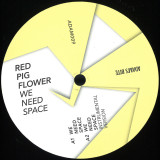
Up first is the original version of title-track ‘We Need Space’, a merging of winding bass grooves, skippy percussion, modulating, bubbling synths ebbing and flowing amongst one another while a hypnotic, spoken word vocal winds within the groove throughout.
An instrumental version follows next, as the name would
suggest, pulling back the vocal elements for a more robust, drum driven feel.
‘Separation’ then opens the flip-side with a more frenzied feel via and amalgamation of vacillating synth flutters, dubbed out percussion and bumpy low-slung drums which all dynamically evolve and retract throughout. ‘The Feeling’ then completes the EP, diving back into deeper realms with murky atmospherics, vocal chants and
gritty stabs at its core, underpinned by a bouncy stab led bass groove and crisp, crunchy drums.
The last twelve months have been a whirlwind for Henry Counsell and Louis Curran, the men who make up Joy (Anonymous). Having established themselves during the Covid-19 era by playing impromptu meet-ups on London’s South Bank, they have graduated to bigger venues, travelled to far-flung locales and recorded their second album, Cult Classics, while maintaining the spontaneous energy and irrepressible joy that made their name. Their music revels in the euphoria of being alive and all the feelings, good or bad, that come with it. It invites us into a community, draws us close and promises the night of our lives.
Recorded over the course of a year, the blueprint for Cult Classics was laid down over a two-week span at Imogen Heap’s Round House in east London. Joy (Anonymous) invited friends old and new to visit - they’d record live instruments in jam sessions upstairs and then retreat to a second room to flip and loop and generally mess with the sounds, moulding them into sizzling dance tracks. “Loads of people were coming up to me like ‘I thought this was going to be a dance record?’” Louis says, remembering the quietly beautiful music they’d be recording. “I’d be like, don’t worry about that, just keep playing.” He’d send it back to people later and they’d be floored - “That was my bit and you’ve made it... jungle!”
It was an organic and creatively fulfilling approach, one that didn’t allow any of the music to get stale or stagnate. As they built the tracks from the sounds they’d collected, Joy (Anonymous) would weave the new songs into their famously improvised live sets, testing them, refining them, taking note of the audiences’ reactions. In a year punctuated by a lot of travel, they’d also incorporate the voices of people they met along the way - “Beazley’s Poem”, which opens the record, features the words of a man who was working security at a Fred Again show at New York’s Terminal Five. “He was basically doing the opposite of his job and being a hype man, climbing on the fence and ramping up the crowd - we ended up hanging out with him - like, who’s this legend?” Louis explains. “He just speaks really amazingly about his life, all these amazing thoughts and opinions - he started jumping on the mic when we were playing, preaching these amazing messages to the crowd, like that we all need to be nicer to each other. The first time we played the record in its entirety, he introduced us and that’s the recording we’ve used.”
Joy (Anonymous) remain dedicated to the spirit of spontaneity. They shut a street down with a surprise waterside party in New York. On a trip to Copenhagen they played an impromptu set in a cafe, which turned into a house party and a night-long good time. In Lithuania, they ended up playing in a decommissioned prison. It’s harder, perhaps, to keep that spirit alive now that they are operating more within the confines of the music industry but they will keep lugging their kit to wherever the party calls for as long as they can. “I think if we lose that, we’ve kind of lost what makes us us,” Henry says.
Bursting with multi-genre reference points and disparate influences, Cult Classics is very much a dance album. The samples we made ourselves or we took from music that is quite different to dance music, but we definitely wanted to shout out a lot of the dance influences that we love,” Henry says. They listened to a lot of Daft Punk and Basement Jaxx as well as The Prodigy (“more rage stuff”), taking songwriting tips from their dance forebears, but also recording bits that felt more like jazz and motown (see: A Place I Belong and the lovely album closer, You’re In Or You’re Out). Emir Taha’s gentle classical guitar runs like a thread throughout Cult Classics, washing into the undertones of the record, tying it all together.
The album follows the beat of a night out, from frenetic, sweaty movement to the gentler winding down as the dawn breaks. At times it is euphoric, celebratory and pure, whirling fun, at others it seeks the joy in the darker emotions that life throws our way. 404 is designed to encapsulate everything about the Joy (Anonymous) journey so far. Skittering beats and ghostly vocals give way to vibrating house chords: sirens blare as we approach a dubstep drop. It’s dramatic and wild, ratcheting up, seeming to settle then hitting you with an intense and frantic breakdown before the ghostly vocal returns to lull us back into the world. It has the feel of a hungry cat playing with a mouse, toying with it before letting it get away.
What sounds like someone playing the spoons on playful, housey How We End Up Here is actually Louis’ restless habit of clicking his rings on everything, one of a myriad of calling cards and easter eggs that day one fans will recognise. They rework Miley Cyrus and Swae Lee’s Party Up The Street into a French-electro-inspired future classic, adding a note of melancholy to a tune that you can imagine hearing blaring from every car on a summer drive. The lyrics on Cult Classic are generally reassuring, inspirational, originally drawn from Henry in stream-of-consciousness freestyles. You’re fine the way you are, they seem to say - the repeated “No need to try” of A Place I Belong, the assurance that “It’s in me all the time” on In Me All The Time. Even the summery but regretful Did You Wrong hints at the growth that is possible from less than ideal behaviour. For Joy (Anonymous), joy isn’t about just being “happy” all the time - it’s about relishing every element of your being.
The name ‘Joy (Anonymous)’ is taken from the work Henry did with Alcoholics Anonymous groups: it is a way to build a community around sharing joy. Their impromptu live sets are known as ‘meetings’; they encourage fans to share moments of joy to their website. They care deeply about the scene they’ve come up in and are determined not to leave it behind. Every show is another chance to reach out and connect with people who love to come together and revel in music as loud as it can go.
Support slots for Fred Again and The Streets, wild B2Bs with Fred and Skrillex, and a set at Four Tet’s Finsbury Park all-dayer this summer have given the duo the opportunity to live out childhood dreams and introduced their infectious live shows to new audiences at huge venues.
With an album as assured and joyful as Cult Classics on the horizon (and a killer collab with The Blessed Madonna coming up), they’re only going to reach higher heights. But the essence of Joy (Anonymous) remains on the South Bank. Between shows at Ally Pally in September, they dragged their camping chairs and gear back down to the banks of the Thames: and it just felt right.
2023 Repress
Reiko Kudo first debuted on the Tokyo underground music scene in 1980 with NOISE, a duo which apart from herself under her then maiden name Reiko Omura on voice, guitar and trumpet featured Tori Kudo on organ. Their only album TENNO (1980 on Engel) is probably one of the most outstanding and uncompromising records of all time.
Like other pioneering female producers from Japan such as NON (of NON BAND), PHEW and HACO, who had all begun their startling careers in the early days of the japanese Punk era, Reiko Kudo can surely be regarded as one of the most unique, uncategorisable and daring voices in the entire field of electronic and experimental music ever.
RICE FIELD SLOWLY RIPING IN THE NIGHT was REIKO KUDO's second album under her own name. It features TORI KUDO (MAHER SHALAL HASH BAZ) and SAYA and TAKASHI UENO (TENNISCOATS) on various instruments. The recordings took place in 2000 at Reiko' s and Tori's house in the rural surroundings of Shikoku island.
All recorded music on this album sounds like it originates in a parallel dimension where time and key signatures simply don't exist, Some might describe this as outsider music, but this doesn't really begin to do justice to the quality of the tracks, there is nothing accidental or forced here, this is simply music created in a very different way. Yet again REIKO KUDO had conceived of something utterly beautiful.
"After producing the album "Souvenir de mauve" with Maher Shalal Hash Baz which we released on our label Majikick, the idea came to us, to release Reiko Kudo's work. For Reiko's work, we brought our recording equipment from Tokyo to Shikoku and recorded the entire album at her house.
The piano was positioned in a room with a high ceiling. We would set up our small recording equipment in the room and started to record. The basic tracks were recorded without any rehearsal and just a few overdubs were added on top of it. To have a distant sound on the recording, Tori played trumpet in the next room. The choir was standing outside the house, singing "Enya-totto, enya-totto" through the open window. It was early spring, I remember that it was still a bit cold and the members of the choir were freezing outside.
Reiko plays only at certain times of the day, so that we were able to complete only two or three recordings a day. Therefore we had plenty of free time. We went to a hot spring, to a cafe, or we tried pottery on a spinning wheel at Tori's workshop. It was a very rewarding time.
When this album was finished, we brought it to her to listen to. She said happily "I think this is the best work I have ever done." We felt that all our efforts were richly rewarded. Secretly, we thought the same, so we are delighted that this album will be re-issued." - Saya and Ueno (Tenniscoats), Tokyo 2018
Originally released on Majikick Records, Japan, 2000 Restauration and mastering by Detlef Funder at Paraschall Mastering, Düsseldorf. Vinylcut at Calyx, Berlin Translation by Miki Yui and Claus Laufenburg. Many thanks to Reiko Kudo, Tori Kudo, Saya and Takashi Ueno, Satoru Higashiseto.
Denovali presents Spark and Earth, the ninth full length album from NYC-based composer and performer Mario Diaz de Leon. Celebrated for his electroacoustic chamber music, Spark and Earth is the first of Diaz de Leon’s solo albums to foreground his performance as a metal guitarist, alongside a vividly textured electronic ensemble of terse synth stabs, woodwind and vocal timbres, floor rattling synth bass, and propulsive kick drums. Songs such as Cruces, Templo, Kepha, and Elemental evoke rave-metal anthems, foregrounding a vibrant alchemy of thrash guitars with percussive synths. Aqua, Breath of God, and Carnelian seamlessly weave lead and chiming guitar lines with meticulously charted electronics and hammered dulcimer timbres. Carnelian charts the alluring flow of a single melodic line through the instruments of the ensemble, while the haunting analog synth interplay of Mirror Spirit recalls the vivid electroacoustic works of previous releases. Over nine songs and 30 minutes, Spark and Earth is an alchemical journey through Diaz de Leon’s electronic chamber metal.
Since 2009, Diaz de Leon has released four recordings of his collaborations with chamber ensembles (International Contemporary Ensemble, Talea, TAK), while from 2012-2016 he produced three solo electronic albums under the project name Oneirogen. With the two-song album Heart Thread (2022), he began releasing electronic works under his own name. His music has been celebrated over the last decade for its “hallucinatory intensity” (NEW YORK TIMES), “snarling exuberance” (PITCHFORK), and “remarkable textures and vivid atmosphere” (NEW YORKER MAGAZINE). As collaborator, he is guitarist and vocalist in the extreme metal duo Luminous Vault (Profound Lore Records), and performs synth and drum machine in Bloodmist, an electroacoustic improvisation trio with Jeremiah Cymerman and Toby Driver. In 2023, he collaborated with Eartheater and members of Krallice in a performance of songs from her album Trinity. Since 2019, he has taught at Stevens Institute of Technology as Assistant Professor of Music and Technology.
Here's the thing about ill peach: this band exists because they are too weird to not exist. The seed of ill peach was first planted in the recording studios of New York City where Pat Morrissey and Jess Corazza were working together as professional songwriters, collaborating with artists like Icona Pop, SZA, Weezer, Pharrell, Big Freedia, and others. Then came the day they were offered their own publishing deal. Cool, right? Well, about that: "Everyone kept saying, 'The stuff that you're writing is slightly too left-of-center-weirdo stuff," remembers Morrissey. "Why don't you start your own project?" Thus ill peach, a pop band with a punk streak and a taste for both the rotten and the sweet, with an approach to making music that goes something like: "Do you want to pick up a guitar and do you want to be on this water jug and we'll record it on the iPhone and create some weird drum pattern?" Following a series of well-received EPs on their own Pop Can Records (a record label and artist collective Morrissey and close collaborator Jesse Schuster run with friends), a digital single for Hardly Art's 15th anniversary series, and some colorful music videos that crystallized the band's visual aesthetic along with their sound, ill peach's "weirdo stuff" comes to fruition on first full-length THIS IS NOT AN EXIT: a collection of anthemic songs built out of bright pop and gritty experimental elements (Morrissey names the sculptural use of distortion on the final albums by Low as an inspiration), punctuated with hooky choruses ready to be screamed along to in the safety of your own bedroom or with a bunch of friends at one of ill peach's intense live shows. If ill peach first blossomed in New York, it took quarantine in Los Angeles for the project to ripen. The end of the world turned out to be what ill peach needed to get real with themselves. "It helped us creatively to zone in and removed us from the industry side of things to where we could just be like: this is our new identity, let's jump with both feet." THIS IS NOT AN EXIT's title is a reflection of something Corazza realized during a period of personal and familial crises "I kept walking into buildings and I'd try to exit somewhere and the sign would be like, 'This is not an exit,'" she says. "It just felt like a metaphor for a hopeful thing-don't give up yet." This combination of hope and anxiety is all over THIS IS NOT AN EXIT, reflected in a sonic palette (Alternative! Electronica! Indie! Radio pop! Coldplay!) as eclectic as it is unpretentious. Ultimately, THIS IS NOT AN EXIT is a record about healing, a process often spoken about in New Age-y terms but one that in reality can be really confusing and, yes, weird. But it is the beautiful strangeness of being alive that ill peach capture so well on THIS IS NOT AN EXIT.
Crisix war vielleicht gezwungen, ihren Namen zu ändern, weil er zu sehr an ein klassisches Videospiel erinnerte. Aber die spanische Band hat nie eine Identitätskrise durchgemacht. Still Rising...Never Rest" wird ihrem langjährigen Ruf für mitreißenden Thrash Metal gerecht. Machen Sie sich darauf gefasst, dass Sie noch mehr mitreißende Riffs und Ganggesänge über Evil Dead und Dragon Ball Z ins Gesicht bekommen. Das ist kein Thrash, das ist Ultra Thrash! Neuaufnahme ihres 2013er 2. Albums "Rise...Then Rest"
Cold War Kids have announced their 10th studio album, Cold War Kids, that will arrive on November 3 via AWAL. The band’s singer and songwriter Nathan Willett describes: " This is our self titled record . Everybody gets one . This felt like the right time because the sound of this record is the sound that makes Cold War kids unlike any other . I’m so proud of these songs. They took a long time to come together . The longing and struggle and joy I wanted to express are personal to me and i am so excited to share it with our fans who have come with us on the journey.”
The epic tale of Cold War Kids has long been informed by deeply personal songcraft, enthusiastic experimentation, and an avowed commitment towards forward motion. The band continues their ascent, becoming one of the biggest rock bands of their generation amassing more than half a billion streams, consistently churning out alternative radio hits, selling out tours and headlining festivals worldwide.
Over the course of nine studio albums and numerous EPs, Cold War Kids have become a major part of the modern musical landscape, with “First,” their Platinum-scanned 2015 single, named as the Most Played track at Alternative radio outlets nationwide over the last decade. As well as 600+ million career streams, 2.2 million singles sold, and over 600,000 albums sold. The band’s current lineup – Nathan Willett (vocals, piano, guitar), Matt Maust (bass guitar), David Quon (guitar, backing vocals), Matthew Schwartz (keyboards, backing vocals, guitar, percussion), and Joe Plummer (drums, percussion) – coalesced in 2016 and have since maintained a dynamic presence in both the studio and on stages around the world.
Bringing together Johannesburg’s two saxophone titans for a supergroup recording project was a
visionary move by Jo’Burg Records in 1976. Following the success of Makhalemele’s debut The
Peacemaker and Mankunku’s long-awaited sophomore release Alex Express, which both appeared in
1975, the bar had been set very high. Enamoured by their jazz contemporaries, the session was
concocted by members of an exciting new South African rock group called Rabbit, who formed a
backing group consisting of guitarist Trevor Rabin, bassist Ronnie Robot and drummer Neil Cloud
alongside jazz pianist Tete Mbambisa. Recorded at the state-of-the-art Satbel Music Recording
Studios, the inspired performances of this diverse cast of young South African artists at the height of
their powers was captured with exquisite fidelity. Packaged as The Bull and the Lion, the album title
references Mankunku’s signature composition “Yakhal’ Inkomo” (which means “the bellow of the
bull”) and Makhalemele’s stage name “Ratau” (meaning "lion"). The pairing of Mankunku and
Makhalemele stands with Moeketsi/Matshikisa and Pillay/Coetzee as one of the epic collaborations of
South African jazz in the 1970s.