Steve Von Till has charted an extraordinary musical path over the last several decades, from his main duties as singer and guitarist of the boundary-breaking Neurosis to the psychedelic music of his Harvestman project and the gothic Americana he's released under his own name. But No Wilderness Deep Enough is truly like nothing you've ever heard from him before—an album that's devastatingly beautiful and overwhelming in its scope, reminiscent of the tragic ecstasy of Nick Cave and the Bad Seeds' recent work as well as the borderless ambient music pioneered by Brian Eno, late composer Jóhann Jóhannsson's glacial compositions, and the electronic mutations of Coil.
FOR FANS OF : MARK LANEGAN/MICHAEL GIRA/NICK CAVE.
Over the course of recent time, an aching, growing void has developed where our normal way of life has resided. Uncertainty abounds, and Steve Von Till's No Wilderness Deep Enough provides a voice of existential wisdom and experience to offer comfort and perspective in an era of uncharted territory. These six pieces of music shape a hallucinatory landscape of sound that plumbs the depths of the natural world's mysteries and uncertainties—questions that have vexed humanity since the dawn of time asked anew amidst a backdrop that's as haunting as it is holistic.
Von Till’s fifth solo album is a swirling and iridescent blend of ambient, neo-classical, and gothic Americana that swan-dives into the darkness of modern life, with the resulting emergence a sonic document of rural psychedelia that transcends the physical world—towards a greater spiritual acceptance that connects naturalism, spiritualism, and the corporeal form.
With a foundation of simple melancholy piano chord progressions embellished with mellotron, cello, french horn and electronic treatments Von Till's scorched ache spreads across the terrain of No Wilderness Deep Enough like a brushfire, adding a tactile level to his sonic creation as well as an inviting level of friction to the burning beauty painted across the album's framework.
With a foundation of simple melancholy piano chord progressions that came to fruition during jetlagged nights in his wife’s childhood home in Germany, No Wilderness Deep Enough was further embellished with mellotron and electronic treatments in Von Till’s home studio in North Idaho. Viewing the emerging result as an ambient instrumental album, he consulted friend and engineer Randall Dunn (Marissa Nadler, Earth) about adding live cello and french horn and piano in a proper studio. After enlisting Brent Arnold on cello and Aaron Korn on french horn, he challenged Von Till to sing over the music and make it his next solo album—which is exactly what happened, with final work being completed at Tucker Martine’s (the Decemberists, Neko Case) Flora Recording and Playback in Portland.
Поиск:ne hau
Все
The second offering by Julie Carpenter’s textural orchestral entity Less Bells takes its title from a storied strain of decorative objects worn in remembrance of lost loved ones: Mourning Jewelry.
The album shares a similar mood of devotional pageantry, stirring ornamental laments born from a need to “create beauty out of grief.” Utilising an amalgam of strings, synthesisers, and choirs, the pieces ascend and descend in grand, glimmering arcs, ebbing from passages of “baroque complexity” to expanses of haunting emptiness. Certain songs also skew more overtly western than ever before, deeply reverbed plucks of banjo refracted against glowing horizons of sunrise drone: Americana gone ambient.
Furthering the music’s mystic intentionality, the track titles comprise “the major arcana of a tarot deck from an alternate universe,” lorded over by the “Queen Of Crickets,” ruler of “The Gates,” “The Fault,” and “The Fang.” Even so, the record requires no psychic divination to glean its fragile majesty, its muted tumult of mirage and melody. The beauty it possesses is too blatant, and bountiful.
When Upset The Rhythm released Normil Hawaiians’ lost album ‘Return Of The Ranters’ back in 2015, the band members got back in touch with each other after a 30 year break and starting playing music together again. Out of this the group played a launch show for the album and followed that up with more concerts, including an appearance at Supernormal, a residency at the Edinburgh Festival, gigs at Cafe OTO and supporting Richard Dawson in London too. They even recently toured Greece in support of having all three of their renowned exploratory post-punk albums finally back in print.
Throughout this time, Normil Hawaiians revisited their original songs for these live performances. However for a group always so interested in evolving their sound and seeking nuance, it comes as no surprise that they shirked the idea of a faithful retread of old material in favour of reimagining their songs. The group experimented by pushing their songs into new inventive dimensions, still progressive at heart, but now imbued with a cosmic uncanny. A cinematic, even pastoral approach that was always quietly present has come to the fore. The quaint weirdness of folk song, the humanity of communal practice and the group’s ecological mindedness have all found a place in Normil Hawaiians’ current sound world. With this conducive atmosphere brewing, the band’s first new songs in decades started to emerge.
Being far-flung across the UK, the Family Hawaii encamped to Tayinloan, a small village on the west coast of the Kintyre peninsula in Scotland with the intention of recording new music. They set up their own studio in an isolated, windswept house overlooking the sea and started the tape rolling. Noel Blanden from the band explains how the spirit of the location was such an inspiration to the group during this initial recording session: “Our time immersed in the place and the unique energy it generated in us allowed us to write ‘In The Stone’. It goes right back to our first album, this need to document experience before it passes over and eludes us. We were grabbing at the musical ether and letting it shape itself through the band.” From loose, improvised sessions and reflective periods of listening in Tayinloan, Normil Hawaiians captured the moment. ‘In The Stone’ is a motorik thrill of distorted guitars, locked rhythms and morphic resonance. Guy Smith is joined by Zinta Egle on vocals, skilfully sharing lyrics informed by Alan Garner and Nigel Kneale’s ideas around recurring events being linked to place and historical artefact; a kind of residual haunting known as ‘Stone Tape’ theory. In keeping with the context of the song, sounds from several previous live recordings of the track were woven into its present being. Flipside ‘Where is Living?’ is a decidedly more delicate affair of questioning lyrics and eerie traces, droning strings and impressions smudged. This resultant 7” is a tantalising glimpse of Normil Hawaiians now, an echo from the past, an echo from the future.
Two things become immediately clear when you hear “Body Electric”, the third original album by White Haus, João Vieira (X-Wife / Dj Kitten)’s solo project. The first is that we’re faced with an insatiable music lover, with an exemplary historical awareness. The second is that is music, although it channels all that passion, does it in such a way that is increasingly all his own. The thing is, that if on one hand, in these twelve new tracks, we’re assailed by the presence of the tutelary Talking Heads and their satellite projects, by Vivien Goldman, Sexual Harrassement or Konk’s New York No Wave, by the electronic pop of Soft Cell or New Order, by the hybrid funk of Prince and his Minneapolis accollites, by the Italo-Disco inspired by Giorgio Moroder or Patrick Cowley or the Acid House of Adonis or Maurice.
For PM002, Antechamber ’s tectonic plate shifting grooves are carved into slabs of deep-dyed ochre vinyl. Four new tracks bring uncompromising sounds for the mature palette. Antechamber’s sound
blends opposing feelings of claustrophobia with a bold transporting musicality that reveals 25 years of perfecting a craft.
The opener, Archaic Idol, is a rude awaking in a foreign land - and alludes to the iconoclasm evident in the shattered panes of the cover artwork by Alcarcia. Track two, Ossolstone lays down the foundations for the new reality. Sparse, rich reverb, allowing the blocks to fall into place as the listener discovers and becomes acclimatized to the new sonic reality. Opening with an exquisitely dense and profound synth we are plunged into a landscape where Antechamber has free reign to show off skills.
Bordering on regimented syncopation, yet with enough space to allow the track to breathe. Susurrus pulses in an organic sense, tapping into a primordial vision. Remix duties are handled by Lemna (Japan) and Lakker (Ireland). Lemna’s take on Archaic Idol opens up the sound. The emotional heart of the original is maintained but with an unexpected direction that rewards the listener with lavish full range
mesmerizing intention.
Concluding the release, Lakker stamp their unmistakable mark on Ossolstone. A haunting circular bass competes with high-end percussion.
Having previously brought together world-renowned Theremin soloist Carolina Eyck and electronic producer Eversines for a specially commissioned collaborative mini album, yeyeh founder Pieter Jansen has now conjured up another unlikely but inspired joint album, this time featuring award-winning free-jazz vocalist Greetje Bijma and leftfield house, techno and ambient producer Oceanic.
The project has its roots in a chance meeting between Jansen and Bijma, a legendary figure on the Dutch jazz scene who in 1990 became the first woman to win the country’s top jazz accolade, the VPRO/Boy Edgar award. Apart from having previously worked with the likes of Anna Homler (aka Breadwoman), Jasper van ’t Hof, Han Bennink, Louis Andriessen and Willem Breuker and her own solo projects, she’s in a league of her own.
Jansen is a big fan of Bijma’s 1996 heavily electronic collaboration with Jasper van’t Hof and Pierre Favre, Freezing Screens, and was with the friend who first introduced him to it when he bumped into Bijma.
Excited to meet someone who had made one of his favourite records, Jansen took the opportunity to ask Bijma if she would be interested in working with young electronic music producers. To Jansen’s delight, Bijma quickly agreed.
Weeks later, Bijma stepped into the studio with Oceanic, a rising star of the Dutch electronic underground whose releases as Oceanic for Nous’klaer Audio and BAKK Plafond revolve around mechanical rhythms, opaque ambient textures, minimalist melodic movements and effervescent electronics. The pair quickly connected on an emotional and musical level, with Bijma taking her cues from Oceanic’s electronic sounds and rhythms, and Oceanic drawing inspiration from Bijma’s dexterous, mind- bending and otherworldly vocalizations.
After two hugely productive days, the cross-generational duo had completed a couple of mesmerizing songs – breathlessly haunting album opener “Swallow a Party” and chilly ambient closer “A Window Drifting” – and recorded several hours or improvisations that Oceanic later edited, layered-up and re-modelled.
The results are little less than spellbinding. The range and versatility of Bijma’s vocalizations is breathtaking, while Oceanic’s music – which cleverly incorporates the free-jazz singer’s vocal notes, tones and proclamations – swings between becalmed beauty and breathless intensity.
Some of the set’s most striking moments are those where Oceanic re-contextualizes Bijma’s varied vocal sounds with the dancefloor in mind. On the pulsating “Technicolour Memories”, up-tempo “Step Snakes” and hypnotic “Never Done”, Bijma’s scat outbursts not only ride Oceanic’s rhythms, but also form part of the densely layered percussion tracks beneath.
Like the release’s more downtempo and ethereal moments, these hybrid organic- synthetic compositions defy easy categorization, offering a unique brand of alien electronic/acoustic musical fusion that lingers long in the memory.
* The original sister label to Ram Records from the old Ram HQ studio in Essex, Liftin Spirit Records now celebrates its 25th year with a special ‘RELOADED’ limited vinyl series of remastered classics, alongside rare and previously unreleased tracks since the beginning in1992.
* DATs from artists such as Andy C, Ant Miles, Shimon, Joint Venture, Interrogator and Red One have been located in the archives. Also from the Ram & Liftin HQ came tracks for the Deep Seven label in 1993 and all these rare DAT masters have been located and now re-cut by Simon, the original Ram & Liftin vinyl masterer at ‘The Exchange’. Initially, Deep Seven remasters will present on a printed white label and unreleased tracks will have a black label.
* Two more previously unreleased tracks from Desired State that were found in the vaults continuing their exploration of the ‘unknown lands’ of Junglistic Drum and Bass. ‘Terra Incognita’ carries a haunting atmosphere over precision tooled breaks and deep sub basses with a vocal sample taken from 'Deep Space Nine' which was a new show at the time. The flipside ‘Sub Conscious’ features vocals and Indian chants from the movie ‘The Doors’ and again rides out over original beats and vibes in keeping with the Ram/Liftin Spirit sound of the ‘94 era.
This is the 1973 solo album by Ghanaian percussionist Anthony Kwaku Bah, who was given the nickname „Reebop“ by American
jazz legend Dizzie Gillespie. He passed away early at the age of 39 in Stockholm in 1983, but before made himself a name for his
works with UK 70s rock heroes TRAFFIC and German Krautrockers CAN, amongst others. If you might expect here the prototypical
Afro Beat and Afro Rock you mostly know from British bands, you will be surprised that this is only one part of the deal. Yes, there
are African elements to be found, buried somewhere in this boiling cauldron where polyrhythmic grooves are the base for jazz
improvisations by the brass section, that range from naughty swing and bebop, to freaked out free jazz and enchanting soul jazz
the way it was popular in the late 60s. The arrangements are utterly lush with so much going on here in every aspect that you
would get lost if there was no trace of melody to be discovered, but there they are and they tell you fantastic stories of exotic
places that only exist in your wildest dreams. Kwaku Bah’s rhythm patterns grab you by the horns and pull you into a world of
their own. Hypnotical, irresistible, hot and vivid. The tunes combine jazz, soul, funk and each one is constructed like a self –
contained story. One could imagine these tunes being used as library music for 70s movies from action to romance. All pieces
though are characterized by the constantly pulsating rhythm. To avoid drifting into the field of insubstantial disco dance music,
the performances witnessed here were executed with the highest possible emotional intensity and dedication. Lay back, close
your eyes and float away on a raft of sound upon the wild river of grooves and melodies. Some haunting Exotica jazz passages
with a typical „jungle“ feel get thrown in for the good measure. There are even vocals in an African language hard to identify,
which create and even more mysterious atmosphere. This is just an introduction part of another powerful speed funk groover but
the vocals stay and make this a clear standout track. Saxophone and guitars seem to have a duel here. You will not sit still while
having this tune „Iphonohimine“ coming down on you like a thunderstorm. Blues, Afro Beat, Psychedelic Rock, Funk, it can all be
found in here and the band goes wild into an everlasting improvisation that deprives you of your breath. Can this record get even better? Do not ask, just enjoy what comes next. If you think that some melodies by the giant brass section sound a bit too catchy
just reach out beyond these harmony lines and find yourself in a thicket of grooves, pulsations, bits and pieces of melody with a
dense, sultry atmosphere. Some smaller parts might make you think of cruise ship big bands and white suits, but everybody will
soon drop these and dance in their underwear for the hot blooded power funk base of the tune called „Africa“, which will take
over one’s soul and set it on fire. So clean, so nice and so filthy and dangerous at the same time, this album is a masterpiece of it’s
style. The exciting and very sensual funk rock of „Lovin‘ you baby“ with crazy fuzz guitars and a dark and haunting approach is
another reason to kneel down when you put this record onto your turntable. Great clean lead guitars give it a latin garage rock
edge Carlos Santana would commit serious crimes for. If you love bands like OSIBISA, Eric Burden & WAR, GINGER BAKER
AIRFORCE, SANTANA, Miles Davis, all around 1969 to 1973, this is what you always wanted to listen to. Grab your copy now.
Dark Morph is a collaboration between sound and visual artists Carl Michael von Hausswolff and Jón Þór "Jónsi" Birgisson. Today they have announced a new release ‘Dark Morph II’, for release on May 1st via Pomperipossa Records – the Swedish record label led by von Hausswolff’s daughter, Anna von Hausswolff.
The release is dedicated to the oceans of planet earth and to the lifeforms that live in and around them, with the duo stating: “The exploitation of the oceans, in conjunction with the heavy pollution (from plastic waste to nuclear radio-activity) has to stop, and be replaced by collaborative manners co-operating with all life on or globe.”
Carl Michael von Hausswolff is a renowned artist, active in the art and music world with solo and collaborative projects for many years, and Jónsi’s work in the Icelandic group Sigur Rós, as well as his collaboration with composer Alex Somers, is recognised across the globe. Dark Morph formed when the two artists met aboard the M/Y Dardanella ship in Fiji invited by TBA21–Academy in 2018. The ship is a creative platform equipped with sound and video recording systems, and the result of the duo’s first voyage was released in May 2019 at the Biennale di Venezia. This second album consists of material recorded in Fiji and Tonga and was produced and mixed in GeeJam Studios in Jamaica in January 2019.
- A1: Our Time
- A2: Hungry (Feat Rapper Big Pooh & Black Milk)
- A3: Lower The Boom (Feat Oddisee & Ken Starr & Sareem Poems)
- A4: Real Detroit (Feat The Left)
- A5: Seasons (Feat Stik Figa)
- A6: Brag Language (Feat Buff1 & Magestik Lengend)
- B1: Streets Won't Let Me Chill (Feat Diamond District)
- B2: Balance (Feat John Robinson & Kenn Starr)
- B3: Turn & Run (Feat Med & Rapper Big Pooh)
- B4: Odds Ain't Fair (Feat Hassaan Mackey)
- B5: Brainwash (Feat Yu & Grap Luva & Finale)
- B6: Propa (Feat Oddisee & Tranqill)
Apollo Brown, one of the first members of the Mello Music Group production team, is the Detroit producer first grabbed the nations attention on Finale's Pipe Dream & a Promise album and then again as the Detroit Red Bull Big Tune Champion. The Reset is the first Apollo Brown-produced release in 2010 on MMG.
The Reset was an introduction to Apollo Brown's production: Reworked tracks, fresh verses, new production, new hooks, and new features, recombined to create an entirely new album that captures the haunting street soul of Detroit.
Producers: Apollo Brown
Featuring: Oddisee, Tranquil, Hassaan Mackey, Buff1, Magestik Legend, Diamond District, John Robinson, Kenn Starr, Rapper Big Pooh, Black Milk, Stik Figa
(Original Release May 25, 2010)
- A1: For The Dead
- A2: Be My Light, Be My Guide
- A3: I Can't Help Myself
- A4: This Is Not My Crime
- A5: Sleep Well Tonight
- A6: Haunted By You
- B1: London Can You Wait?
- B2: Olympian
- B3: Fighting Fit
- B4: We Could Be Kings
- B5: Where Are They Now?
- B6: Long Sleeves For The Summer
- C1: Speak To Me Someone
- C2: As Good As It Gets
- C3: Fill Her Up
- C4: You'll Never Walk Again
- C5: Stop
- D1: Is It Over?
- D2: Yours For The Taking
- D3: O Lover
- D4: Somewhere In The World
- D5: Let Me Move On
Celebrating the 25th anniversary of their debut album 'Olympian', this is the definitive ‘Best Of’ Gene compilation, available exclusively on vinyl. Compiled by Matt James, Steve Mason and Kevin Miles and featuring 22 tracks, pressed on 2LP 180g heavyweight blue coloured vinyl Featuring fan favourites, plus all of the bands 10 top 40 UK singles including ‘Sleep Well Tonight’, ‘Haunted By You’, ‘Olympian’, ‘For The Dead’, ‘Fighting Fit’, ‘We Could Be Kings’, ‘Where Are They Now?’, ‘Speak To Me Someone’, ‘As Good As It Gets’ and ‘Fill Her Up’
Includes a selection of sleeve notes from the band and respected journalist Keith Cameron Inspired by the songs of The Smiths, The Jam and The Faces, Martin Rossiter’s literate vocals and Steve Mason’s fluid guitar lines were perfectly complemented by the intuitive rhythm section of Kevin Miles and Matt James. Gene released four studio albums and a collection of Bsides and radio demos between 1995 and 2001, and were named Best New Act at the inaugural NME awards in 1995, and went on to score 10 Top 40 hits.
Washed Out is Atlanta-based producer/songwriter/multi-instrumentalist Ernest Greene. Over three enchanting, critically-lauded albums and an EP, his music has proved both transportive and visual, each release inviting listeners into immersive, self-contained universes. With Purple Noon, his fourth album, and his return to Sub Pop, he delivers the most accessible Washed Out creation to date. Life of Leisure, Washed Out's 2009 debut EP, set the bar for the Chillwave era, shimmering in a warm haze of off-the-cuff Polaroids and pre-IG filters. Within and Without, his 2011 full-length debut on Sub Pop, morphed into nocturnal, icy synth-pop and embraced provocative imagery. 2013's Paracosm was Greene's take on psychedelia, with a full live band and kaleidoscopic light show, and saw him playing to the largest audiences of his career. The sample-heavy Mister Mellow (2017, Stone's Throw) delivered a 360 audio/visual experience, with cut-n-paste and hand-drawn animation to match the hip-hop influences throughout the album. With each release, Greene has approached his evolving project with meticulous detail and a steadfast vision. For Purple Noon, Greene again wrote, recorded, and produced the entirety of the album, with mixing handled by frequent collaborator Ben H. Allen (Paracosm, Within and Without). Production of the album followed a brief stint of writing for other artists (most notably Sudan Archives) which enabled Greene to explore genres like R&B and modern pop. These brighter, more robust sounds made their way into the songs of Purple Noon and mark a new chapter for Greene as a producer and songwriter. The vocals are front and center, tempos are slower, beats bolder, and there's a more comprehensive depth of dynamics. One can hear the luxuriousness of Sade, the sonic bombast of Phil Collins, and the lush atmosphere of the great Balearic beat classics. Mediterranean coastlines inspired Purple Noon, and Greene pays tribute to the region's distinct island culture - all rugged elegance and old-world charm - and uses it as a backdrop to tell stories of passion, love, and loss (Purple Noon's title comes from the 1960 film directed by Rene Clement and based on the novel The Talented Mister Ripley by Patricia Highsmith). Much like romantic Hollywood epics, the melodrama throughout is strong: a serendipitous first meeting in "Too Late"; a passionate love affair in "Paralyzed"; disintegration of a relationship in "Time to Walk Away"; a reunion with a lost love in "Game of Chance." Purple Noon adds a layer of emotional intensity to the escapism of Washed Out's oeuvre, taking the music to dazzling new heights.
Chra is the artist moniker for Austrian Christina Nemec (Bray, Shampoo Boy). SEAMONS is the latest missive in her ongoing exploration of suffocating abstract audio. At once designed and falling apart SEAMONS is rough and crude, a stumbling and staggering electronic expedition where nothing presents itself explicit in intent. It’s a tense obscure record that teases you into it’s peculiar vortex from it’s suggestive nature of exploring the enigma beyond it’s haunted facade.
VICIOUS WATER REGIMES stutters along as an ‘ugly’ mass of grey electronica. CAST(O)RO shines from light from the depths with it’s occasional foray into glistening tones. COLONIA MARINA SERENELLA is a dank squelching backdrop for a dark age. CAST twists tension with flickering electronics chaotic in their perpetual design of order confronting inevitable collapse. LET SHARKS SLEEP is not only a great title but a mind tickling adventure of descending/rising digital dance that builds in intensity with it's relentless repetition. WIDOW WALKS gallops and creaks along a path veiled in whispers. ENGE lunges through time with an air of deep uncertainty. SEAMONS hovers on the outskirts, crawling out of the speakers with endless surprising turns, few of them comfortable.
SEAMONS is progressive ambient, not the kind that makes you escape, but rather one you can't escape from. SEAMONS crawls into the very guts of sound to uncover and unravel the uneasy and unsettling underbelly within.
2020 Re-issue of Keith Kenniff's debut under his Goldmund moniker. Originally only released on CD in 2005 via John Twells' Type Recordings, this album of rare and unusual minimalist beauty is now presented as a vinyl edition for the first time.
Multi-instrumentalist Keith Kenniff is a busy man. He has appeared as Helios on a number of acclaimed releases, including Deaf Center’s ‘Neon City EP’, and released a debut album ‘Unomia’ on Merck records which has appeared on many best of 2004 lists. All this while studying at the prestigious Berklee College of Music, and playing drums, guitar or contributing production to a host of amazing musicians. Kenniff lives and breathes music, something that is very obvious when hearing tracks under any of his pseudonyms.
As Goldmund, Kenniff has disregarded the electronic elements of his music almost entirely in favour of just a piano, a microphone and occasionally a guitar. ‘Corduroy Road’ is thirteen tracks of pure recording, the sound of the piano being opened and the feet on the pedals, the sound of fingers pressing lovingly onto the keys. This is a record of rare and unusual beauty, so shocking and yet unpretentious in its simplicity. When the guitar does emerge from beside the delicately touched piano, it serves as a balancing point for the record. Weaving in and out of the melodies, it adds another layer to what is already incredibly moving music.
‘Corduroy Road’ is rooted in Kenniff’s love of folk music from the American Civil War. We can hear this directly from his rendition of Civil War era classic ‘Marching Through Georgia’, but the influence carries throughout the record. There is an unheard voice which propels each track through history, maybe the ghosts of dying soldiers whispering in a long forgotten bar. Every haunting note drifts deep into the psyche and is lost in the ether of nostalgia. In this way it is a concept recording of sorts, it certainly has a narrative and has to be listened to in sequence. The story has clear themes; loss, history, friendship, camaraderie, forgiveness and hope, all clearly marked out by musical segments. It is no surprise that Kenniff’s passion for cinema shines through so strongly.
It would be hard to draw comparisons to music so rooted in folk traditions, but the music evokes traces of Ryuichi Sakamoto, Mark Hollis, Keith Jarret or even Eno’s more piano based compositions. Yet influence seems unimportant when listening to this deeply personal work. Just let it sink in and drift into the psyche.
Washed Out is Atlanta-based producer/songwriter/multi-instrumentalist Ernest Greene. Over three enchanting, critically-lauded albums and an EP, his music has proved both transportive and visual, each release inviting listeners into immersive, self-contained universes. With Purple Noon, his fourth album, and his return to Sub Pop, he delivers the most accessible Washed Out creation to date. Life of Leisure, Washed Out's 2009 debut EP, set the bar for the Chillwave era, shimmering in a warm haze of off-the-cuff Polaroids and pre-IG filters. Within and Without, his 2011 full-length debut on Sub Pop, morphed into nocturnal, icy synth-pop and embraced provocative imagery. 2013's Paracosm was Greene's take on psychedelia, with a full live band and kaleidoscopic light show, and saw him playing to the largest audiences of his career. The sample-heavy Mister Mellow (2017, Stone's Throw) delivered a 360 audio/visual experience, with cut-n-paste and hand-drawn animation to match the hip-hop influences throughout the album. With each release, Greene has approached his evolving project with meticulous detail and a steadfast vision. For Purple Noon, Greene again wrote, recorded, and produced the entirety of the album, with mixing handled by frequent collaborator Ben H. Allen (Paracosm, Within and Without). Production of the album followed a brief stint of writing for other artists (most notably Sudan Archives) which enabled Greene to explore genres like R&B and modern pop. These brighter, more robust sounds made their way into the songs of Purple Noon and mark a new chapter for Greene as a producer and songwriter. The vocals are front and center, tempos are slower, beats bolder, and there's a more comprehensive depth of dynamics. One can hear the luxuriousness of Sade, the sonic bombast of Phil Collins, and the lush atmosphere of the great Balearic beat classics. Mediterranean coastlines inspired Purple Noon, and Greene pays tribute to the region's distinct island culture - all rugged elegance and old-world charm - and uses it as a backdrop to tell stories of passion, love, and loss (Purple Noon's title comes from the 1960 film directed by Rene Clement and based on the novel The Talented Mister Ripley by Patricia Highsmith). Much like romantic Hollywood epics, the melodrama throughout is strong: a serendipitous first meeting in "Too Late"; a passionate love affair in "Paralyzed"; disintegration of a relationship in "Time to Walk Away"; a reunion with a lost love in "Game of Chance." Purple Noon adds a layer of emotional intensity to the escapism of Washed Out's oeuvre, taking the music to dazzling new heights.
This first album proper from Polish composer/violinist Olga Wojciechowska was originally released on CD only by Time Released Sound, and has been out of print for some years. We are very pleased to be bringing you this long overdue vinyl re-press, in an edition of only 200 copies, each of which comes in a beautiful 24pt heavyweight jacket, with translucent 180gm disc.
Maps and Mazes is a stunning collection of 10 pieces that were originally written for various international theater and dance productions, and their overall feel reflects this performative nature. These electronically treated, modern-classical beauties are somewhat dark and moody at times, and with their elegiac violin and haunting horns are both elegant and absorbing, and the ultimately lingering effect is one of series of spine tingling, late night serenades.
After the success of the 2 Late 4 Love EP, Roy Of The Ravers returns to Emotional Response with a double LP with a deeper perspective, experimenting in ambient and drone textures, lucid techno travails and acid interludes.
Recorded between 1997 and 2017, the album was pieced together over the last six months after Roy's archives were first feared lost and then found. Approached by the label to release a follow up with something more introspective and personal, it was discovered that a recent move to a new studio had led to over 20 years of music being misplaced after it was believed they were mistakenly dropped at a local charity store. However, deep in a box of what were thought to be patch cables were in fact the decades worth of hard drives and here presented, is a sample of those lost recordings.
The nature of the music is introspection, eschewing the acid beats and white noise for a personal encounter between man and machine. The orchestral opening of the title track gives way to the submarine beats, pulsing TB303 and gliding hats of Robinson College 10 to set the outlook to come. Even with the scattering A Dim And Distant Past waking lulled senses, the melodies and feel all lead to a pause and reflect rather than jump and shout.
This is continued with the haunting drives of Bounce Erec and Oriental X0X-Press; the twisted, warped jams of The Weber Traum Boat Pt.3, Ichi and Roland Corp Labs 05; and the beautiful, heartfelt odes in Sade Lost Theme, The Clock House Pt.2 and closer, Nemesis '01. The album's melodic nature hums and shines as CS (6x8) appears as much a centre piece as a alternative consideration to the acid tinged, club bangs of Roy's releases to date.
A surprise package maybe, but in the rolling, word of mouth phenomena that was Emotinium II, all this and more was sensed and so White Sunrise Music II, spreading across 12 songs of contrasting moods, is a further affirmation that there is something good and worthy of exploration.
- A1: Kosei Fukuda - ?? - Enso (4 18)
- A2: Uchi - Zro (6 42)
- A3: Ypy - Circulation (6 44)
- B1: Recent Arts - My Default Emotion (5 43)
- B2: Renick Bell - Organize And Unite (4 09)
- B3: Ma + Kosei Fukuda - ????(????)- Enso No Ma (Furutsuki) (1 30)
- B4: Yvesdemey - The Chosen Home (6 11)
- C1: Tobias - He Turned Into Him (5 52)
- C2: Katsunori Sawa - The Stonewall (5 21)
- C3: Yuji Kondo - Zenith (6 09)
- D1: Rabih Beaini - Circle (8 03)
- D2: Ena - 42 1 (4 36)
- D3: Lemna - Moments In Eternal Recurrence (5 00)
Japanese sound artist and producer Kosei Fukuda’s presents a collaborated vision of the first edition of ENSo¯, a two-day audio-visual event collated around the REITEN label. The ENSo¯ Festival invites its artists and audiences alike to appreciate the merging of the improvisational, with the contemplation of rhythmic cycles, based around the conception of enso¯ – ?? – meaning a hand-drawn circle created by one uninterrupted stroke. Now, with an elongated stretch of time in front of us before the next edition of the festival, the compilation stands to provide a sustained glimpse into the world imagined by Fukuda. Blending spontaneity and gravity alike, the record features an array of idiosyncratic artists set to play ENSo¯, all purveyors of their own shaped sound-worlds.
For the A-side, we have Fukada’s own contribution ‘?? – ENSo¯’; a slice of ambient techno dotted somewhere within a faraway galaxy. Venezuelan noise artist UCHI crafts a fourth-world hymn with tribal percussion on the expansive ‘ZRO’, and Osaka based experimentalist YPY aka Korshiro Hino shapes an elusive polyrhythmic ambience on ‘Circulation’. The B-side presents a colossal improvisational track ‘My Default Emotion’ from Berlin based duo Recent Arts. Formed of Chilean artist Valentina Berthelon and German musician Tobias Freund, the duo are masters in audio-visual experimental performances that both surprise and challenge an audience. Renowned artist, programmer and teacher Renick Bell is noted as a pioneer for live coded performance, conducting mutated rhythms that cut across the landscape of electronic sound. His addition to the compilation is a luminescent IDM piece, titled ‘Organize and Unite’. A polished ambient club track from Fukada and MA titled ‘????(????)’ provides a state of organized tranquility, whilst the track ‘The Chosen Home’ from Belgium artist YvesDeMay, whose move from breakbeat to experimental producer has produced gratifying results for all, is a welcome slice of pensive dub- techno.
The C-side brings us a textured and haunting techno track ‘He Turned Into Him’ with revered German artist Tobias, veteran mainstay with an expert hand in shimmering sound design; Kyoto based 10 Label heads Katsunori Sawa and Yuji Kondo brings sample-heavy rushes of sound, the former with ‘The Stonewall’ and the latter with ‘Zenith’, both multi-faceted in their reference points. The D-Side presents the grainy and expansive ‘Circle’ from Lebanese producer Rabih Beaini, who expertly combines club tropes and avant-gardism in his DJing and music. Hypnotic skeletal beats circulate on the pulsating ‘42.1’ by Tokyo artist ENA. Japanese composer Lemna, the alias of Maiko Okimoto rounds it off with a dreamy noise ambience on ‘Moments In Eternal Recurrence’. Released on vinyl July 24th, the compilation stands as a traversable artefact of the festival, rich in spontaneous beauty.
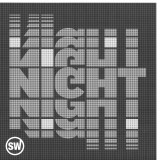
The third long player on Night Defined Recordings sees SUED affiliate SW. presenting his new mini LP ‘Night’ and walking a tightrope between jazz and club music. The tracks manifest and dematerialize themselves almost in a non-tangible and floating way, which can be seen as more than just a musical approach but rather shows the artist referring to issues of volatility and evanescence. While listening, some may find themselves in the dark and dusty atmosphere of a jazz club, where the band in the corner at the other end of the room is playing their instruments just when the beat kicks in and puts you right into the club atmosphere.
Written & produced by SW. at SUEDstudio Mastering by Mattias Fridell
Artwork by Studio Belser
ANNA HOMLER & ALESSIO CAPOVILLA - VASI COMUNICANTI
Vasi Comunicanti is the oneiric record born from the collaboration between L.A. performer and avant-garde artist Anna Homler and Alessio Capovilla, co-founder of Gang of Ducks.
Alessio Capovilla (1985, Turin, Italy ) is an Italian composer interested in sound modelling.
Imperfect sounds, unpunctual distortion and unsuitable atmospheres are constantly researched by Alessio.
A dialogue between ancient tools and new technologies through synthesis, computer music and field recording, crossing beats and genres towards something not easily definable.
Co-founder of the collective Gang Of Ducks, on which he's published two releases ("NO" and "Eocity") under the moniker of XIII, alter-ego through which he mainly examines the most tactile and digital part of his sound.
Anna Homler is a multy-disciplinary artist working on a blurred line between music, performance, spiritual and visual arts and giving birth to several different projects.
In 1985 she released, in collaboration with composer Steve Moshier, the seminal album "Breadwoman & Other Tales", shamanic and meditative songs brought to life with astonishing live performances.
The record was then re-released in 2016 by NYC label RVNG Intl, bridging the gap with a new generation of listeners, discovering the universal and unique world of Homler.
Capovilla, who was born in the same year of the original release, is one of them. His work focuses on imaginary landscapes and oneiric feelings. He has released two records on Gang of Ducks with his XIII moniker, dedicated to his digital and more computer-oriented sound.
The two of them met for the first time for an improvised live performance in Torino in 2017, after which they decided to spend studio time together exploring where this connection could lead.
The record flows along 5 tracks, with Capovilla taking care of synths, drums programming and audio engineering, and Homler singing in her melodic phonetic language, mixing unique voice and sound effects .
"De'la cocce" moves around on a slow quasi-dub rhythm accompanied by whistle and vocal interventions. In "Ricordo" Anna's voice is more prominent, travelling through a digital dimension made of flutes, Buchla Music Easel sequences and rainsticks.
The B side starts with "Bread Dance", where different layers of vocals and drums repeat themselves in an obsessive and haunting atmosphere.
"Be'ya Sa'di" is an ambient and cinematic piece, which quietly introduces "Mem", the most emotionally and intense song of the collection, transporting the listener into a different dimension.
The whole record creates a world with no geographical coordinates, where humans meet their primary feelings in a suspended time, escaping the present and the intelligible world.