Alicia Myers - I Want To Thank You & Don't Stop What You're Doin' are staple classics and for the first time since their initial release in 1981 are together on one piece of vinyl. A serious double header!
Both tracks are produced by Kevin ‘Mr Groove’ McCord, heralded as Dam Funk’s favourite producers and one of the founding members of Al Hudson & The Soul Partners & One Way before going on to contribute to hundreds of r&b, funk, disco, and boogie dancefloor movers in the ’70s and ’80s.
At the height of his career he produced his One Way band members, Alicia Myers debut solo album, Alicia featuring both tracks on this release. I Want To Thank You, a certified classic that never fails to elicit a joyous reaction anytime it’s played & Don't Stop What You're Doin' famously sampled by J Dilla for ‘What It’s All About’ by Slum Village feat. Busta Rhymes on the legendary ‘Fantastic Vol.2’ album.
Another fully licenced and remastered essential release from the South Street family!
quête:never sol
- A1: Don’t Expect To Be Feat Ely Bruna 3 56
- A2: Wiser Feat Wendy D Lewis 4.01
- A3: Lost In Music Feat Sweet Candies 3 57
- A4: Let’s Fall In Love Feat Nadyne Rush 3 30
- A5: You Came Along Feat Stevie Biondi 3 44
- A6: Now Imagine Feat Erika Scherlin 4 03
- B1: Touched By Your Love 4 20
- B2: Nothin Better Than You Feat Anna Fondi, Erika Scherlin 4 49
- B3: Touch The Sky Feat Sweet Candies 4 31
- B4: Never Give Up Feat Laura Lanzillo 3 40
- B5: Summer Madness Feat Anna Fondi 5 07
The Soultrend Orchestra is a side project of the producer and musician Nerio ‘Papik’ Poggi.
Owner of the main project, Papik, Nerio Poggi has been one of the most internationally renowned Italian producers for the Nu Jazz
Lounge sound for over ten years, with around forty albums under his own name and those produced by him with solo artists or
with monothematic collections such as the ‘Cocktail’ series.
With the project The Soultrend Orchestra, Nerio Poggi has dedicated himself in particular to the Soul Jazz and Disco sound, with
a particular eye on the 70s/80s sound that starts from artists such as Roy Ayers, George Benson and Donald Byrd to arrive at the
Acid Jazz sound of Incognito and The Brand New Heavies.
The first album '84 King Street', released in 2017, was the one most dedicated to the Disco sound, also for the title that reports the
address of the legendary New York club Paradise Garage from where Disco music in the late 70s was definitively launched all over
the world by the deejays David Mancuso and Larry Levan in primis.
With the second album of 2022 'Live For Funk' the sound ranges more towards Soul and Jazz thanks to some songs that have driven it such as About Love openly inspired by the sound of Roy Ayers.
This third album, produced like the second Live For Funk together with Peter De Girolamo (aka P.A. Jeron) is due out at the beginning of 2025 and is titled Non Imagine where he continues in the search for these same sounds.
With some of his closest collaborators such as Alfredo Bochicchio, Massimo Guerra, Simone ‘Federicuccio’ Talone and vocalists
Laura Lanzillo, Erika Scherlin and Anna Fondi, the album as always also has other illustrious guests such as Wendy D. Lewis, Ely
Bruna, Nadyne Rush, Filippo Perbellini, Stevie Biondi and Nicole Magolie on lead vocals.
In the tracking list we also find some covers in this album: Lost In Music, a symbolic song of Disco by Neil Rodgers and Bernad
Edwards (Chic) made famous in the 70s by Sister Sledge, and Summer Madness, a very particular song by Kool And The Gang,
famous for its magical atmosphere here perfectly rendered by Peter De Girolamo's keyboards and Anna Fondi's voice.
- Trouble In Mind
- If You're A Viper
- When First Unto This Country
- Shiloh Town
- Shuckin' Sugar Blues
- Everytime I Think Of Freedom
- Ribbon Bow
- 8: Blues Jumped The Rabbit
- Lonesome Valley
- When I Get Home
- In The Pines
- Katie Cruel
- Karen Dalton performance featuring seven never before heard songs - Limited pressing on Sky Blue colored vinyl - Old style, Tip-On Jacket, and 8pp heavy insert featuring a treasure trove of newly discovered photos, and a 6,000 word essay by Kris Needs // In 1962, Karen summoned Richard Tucker to join her in Colorado, extolling the healthier lifestyle, and plentiful gigs at Boulder folk club The Attic. Upon his arrival, the pair solidified their personal and professional relationship, riding horses in the mountains, and performing as a duo at parties and venues throughout Denver and Boulder. Stories of the spell they conjured - and rumours of tapes! - have circulated among friends and musicians who witnessed them, but until now, no recorded evidence had turned up. Shuckin' Sugar is the glorious result of three reel to reel tapes that miraculously found their way to us in November, 2018; which featured two complete shows from The Attic in January '63, and a benefit concert for The Congress of Racial Equality (CORE) recorded the following February. Their gigs would often include brief solo sets from Karen and Richard, in addition to the duets, and all seven solo songs of Karen's found on the three reels are included here, as well as five duets, sequenced as close to how it all went down as humanly possible. To describe the record would take a poet, but all I can say is that unveiling a missing chapter in the Karen Dalton story - with six songs we've never heard her sing before - is cause for celebration in Delmore's world.
Black Truffle is thrilled to begin 2025 with a rare solo release from Konrad Sprenger, alias of elusive Berlin composer-producer-instrument builder Jörg Hiller. A prolific collaborator, Sprenger has worked extensively with icons of American minimalism such as Ellen Fullman (with whom her recorded the gloriously eccentric song album Ort) and Arnold Dreyblatt (as a core member of the Orchestra of Excited Strings since 2009), as well as releasing their music on his impeccably curated label, Choose. As an instrument builder and installation artist, he has overseen the creation of a computer-controlled multi-channel electric guitar and, with Phillip Sollmann, a modular pipe organ system designed to be reconfigured from space to space.
In much of Hiller’s work, a scientific approach to acoustic phenomena co-exists with a pop sensibility and a sly sense of humour. Nowhere is this unique combination more in evidence than in his slim body of solo work, beginning with the startling diversity of instrumentation and compositional approaches heard on the short pieces of Miniaturen (2006) and Versprochen (2009), followed by the more single-minded exploration of the computer-controlled electric guitar on Stack Music (2017). Set brings together these various strands of Sprenger’s work into a wildly infectious, playful epic, performed by the composer and the mysterious Ensemble Risonanze Moderne. On the LP’s second side, we are also treated to a guest appearance from longtime collaborator Oren Ambarchi, on whose recent solo releases Simian Angel and Shebang Sprenger has made key production contributions. Ambarchi’s signature stuttering, swirling harmonics weave through a sparkling assemblage of electric guitars, acoustic instruments, percussion and electronics—though, given the deft use that much of Sprenger’s recent production work makes of midi-controlled sampled instrumentation, it’s anyone’s guess where the acoustic ends and the digital begins here.
As soon as the needle drops on the first side, we are inside a musical world that Set will inhabit for its 33 minutes: sparkling guitar harmonics and palm-muted notes, tuned percussion, crisp electronic drum hits, flashes of horns, and untraceable bursts of synthetic sound are arranged into a skittering polyrhythmic framework calling up the detail-rich percussive constructions of contemporary techno filtered through the pointillism of the post-serialist European avant-garde. Behind this shifting mist of particulate sound, winds and strings sound out held chords, reminiscent of Arthur Russell’s Tower of Meaning in their epic yet seemingly aimless drift. The relationship between elements is mysterious, appearing both carefully considered and almost random. Though never straying too far from where it begins, as the piece moves along, it spotlights increasingly bizarre instrument choices (shakuhachi and steel drums, anyone?) as well as momentary liftoffs into motorik propulsion. Set is a fascinating, mercurial thing: at once propulsive and fragmented, essentially static in form yet ever-changing in detail, unabashedly egghead in its construction yet sure to get the feet tapping.
- A1: This Tornado Loves You
- A2: The Next Time You Say Forever
- A3: People Got A Lotta Nerve
- A4: Polar Nettles
- A5: Vengeance Is Sleeping
- B1: Never Turn Your Back On Mother Earth
- B2: Middle Cyclone
- B3: Fever
- B4: Magpie To The Morning
- B5: I'm An Animal
- C1: Prison Girls
- C2: Don't Forget Me
- C3: The Pharaohs
- C4: Red Tide
- D1: Marais La Nuit
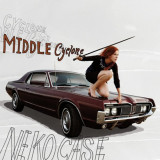
Originally release in March 2009, Midle Cyclone is repressed for 2025. 'Middle Cyclone' was produced by Case with Darryl Neudorf and recorded in Tucson, Brooklyn, Toronto, and Vermont. It features Case backed by her core band - guitarist Paul Rigby, bassist Tom V. Ray, backing vocalist Kelly Hogan, multi-instrumentalist Jon Rauhouse, and drummer Barry Mirochnick - along with numerous guests including M. Ward, Garth Hudson, Sarah Harmer, and members of The New Pornographers, Los Lobos, Calexico, The Sadies, Visqueen, The Lilys, and Giant Sand, among others. In addition to twelve new songs written by Case, 'Middle Cyclone' includes covers of "Never Turn Your Back on Mother Earth" by Sparks, and "Don't Forget Me" by Harry Nilsson.
In 2006, SPIN Magazine called Case "one of pop music's best" voices, and Interview Magazine hailed her album 'Fox Confessor Brings The Flood' as "one of the most original, beguiling, honest records of the year." The album also earned Case Female Artist of the Year honors from the PLUG Independent Music Awards, and a Top 10 placement in the Village Voice's annual Pazz and Jop Critics Poll of the year's best releases. 'Fox Confessor' was Case's first album to debut in the Billboard Top 100, and has sold nearly 200,000 copies in the U.S. alone.
The Acidboychair music project started in the early noughties as a commentary on what journalist Simon Reynolds would summarise a few years later as Retromania. Initially conceived by Thomas Baldischwyler and Andreas Diefenbach as a performative revival travesty with large-format drum computers and synthesizers reconstructed from cardboard, everything took a surprising turn when DJ Mooner (the man behind the now defunct Munich music label Erkrankung Durch Musique) took an interest in the adventurous audio material produced by Baldischwyler. In 2005, the LP 1987 (EDM1016), produced almost exclusively with long-forgotten software (SoundEdit 16, RB-338, etc.), was released on Mooner's label. As a result of the growing number of bookings, Baldischwyler had to think about improving the performability of his intentionally amateurish productions. Fortunately, the Ableton Live programme became a DAW with a MIDI sequencer and support for VST plug-ins as early as 2004 - and this made it easier for him to execute his intuitive, error-friendly version of acid house. This can be heard on the first two sample-heavy tracks on the A-side of Come Down Easy, which were recorded in 2005 and 2006 respectively at Acidboychair gigs at Hamburg's Golden Pudel Club and Munich's Registratur. The first two tracks on the B-side (produced sometime between 2006 and 2008) were actually supposed to be part of a solo release on the Acido label run by Dynamo Dreesen, but this never materialised. However, the final tracks and the 133.3 BPM lock grooves that follow are the title and central to this catalogue number TBG123: Through ethno-musicologist Arthur Boto Conley, who had already released a one-sided 12 on his label with material from one of Baldischwyler's audio installations, he met Florian Meyer (Don't DJ) and Marc Matter (Spoken Matter), who introduced him to their collaborative project Institut F?r Feinmotorik (IFFM). Baldischwyler's attempt to approach the sound aesthetics of IFFM led to the tape 60 Minutes Of Barely Modified Lock Grooves (TCCC06), recorded in Rome in 2018. A buyer of this tape introduced him to the Detroit collective Pure Rave, which he immediately contacted and introduced to the work of the IFFM. It was important for Baldischwyler to have an analogue update made and so both the Detroiters and IFFM, who now live in Berlin, were given 8 copies of EDM1016's backstock to remix the material in their own way. At their jam in Detroit, Pure Rave opted for the almost identical material that IFFM had also used for a live performance in the Hamburg project space Beek. The dominant jumps in both arrangements come from the track Eightyseven, produced in the early 2000s for the LP 1987, an awkward remix of the Spacemen 3 track Come Down Easy, which is also referred to in the liner notes on the inner sleeve of TBG123. The almost two-decade-old revival idea thus turns into false memory syndrome and runs into a - in keeping with our times - clean-cut (endless) groove. Kassem Mosse (The KM of MM/KM) on Come Down Easy after a first listening session: I think it all works very well as a mix, no matter where you start it carries you further forward back in the loop. if I understand the liner notes correctly, it's about the music's turn from tradition preservation (doing everything right) to ecstatic delusion (not doing everything right when intoxicated). Now that I'm reading again instead of listening, the titles give me a different understanding of the connections; how the skipping belongs together, which playtime is connected. Now I can name my favourites. Thank you for the journey!
- 1: Libertude
- 2: 100-99 (Ft. Goldlink)
- 3: Memo Of Hate
- 4: Downtown Fred
- 5: Old Man
- 6: Home Again
- 7: I Got You
- 8: Darlin
- 9: 5. Thoughtful Distress (Ft. Matt Helders & Steve Stevens)
- 1: Fast Kitten
- 2: Caught By Night
- 3: I'd Never Leave
- 4: Dead Air
- 5: One Chance
- 6: Never Stop
- 7: False Alarm
- 8: 13. Remember (Ft. Rainsford)
- 9: 818
- 10: 19. Alright Tomorrow (Ft. Rainsford)
Orange splatter[28,57 €]
Pop/rock singer, songwriter, and guitarist Albert Hammond Jr. is the lead & rhythm guitarist and songwriting member of the GRAMMY® and BRIT Awards-winning band The Strokes. He has released 4 solo albums to date, most recently the acclaimed “Francis Trouble” in 2018 which spawned the radio single “Far Away Truths”. In the 4 years, since then, The Strokes released their US Top 10 charting GRAMMY® nominated rock record “The New Abnormal” and toured the world extensively. Albert also began the songwriting process for his 5th solo album “Melodies on Hiatus”, a 19-track album, crafted in a most experimental style. Albert teamed up with his writing partner, Canadian songwriter, and poet Simon Wilcox (whom he never met during the process) and had lengthy conversations via the telephone; Simon would jot down notes from Albert’s stream of consciousness, and draft the lyrics on her typewriter, and drop them into his letterbox! Albert then added the lyrics to the melodies he had already crafted. The songwriting process became a long distant “anonymous love affair of ideas & lyrics.” The album covers themes of childhood, surviving adolescence, adulthood, vulnerability, fame, relationship with self and others, and is Albert’s “deconstructed broken down ego reaction” to “Francis Trouble.” The album also features songs with GoldLink, Matt Helders (of the Arctic Monkeys), Steve Stevens and Rainsford, and was mixed by Tony Hoffer (known for his work with Beck, Air, M83, The Kooks, Fitz and the Tantrums, Metric, Chromeo, etc.) and mastered by Dave Cooley at Elysian Masters (Paramore, Spoon, Tame Impala, Jimmy Eat World, Peanut Butter Wolfe).
Sourcing rare records to reissue can involve meticulous research and years of digging, but then occasionally, Lady Luck smiles upon you. We probably would have never heard of the Medium Wave Band if Gary from Mr Bongo hadn't known Wolverhampton-based record dealer, Steve Ward. Whilst offering Gary some records for sale, he remembered he had a spare copy of an old 7" single that he thought Gary might like. Steve didn't know much about the release, and it had never sold on Discogs. Looking at the record itself, it was minimalist in appearance and information, there wasn't much to go on other than that it was from the Birmingham area. The mystery drew us in…
The A-side, 'So Tender’, is a late-night, jazzy slow-jam, with beautifully sultry, soulful female vocals which sounded vaguely familiar. On listening to the B side, 'Games (Instrumental)’, you are rewarded with a superb example of Britfunk / independent UK jazz-funk. The pulsating, bass-led dancefloor groove and sensibility is a sound reminiscent of productions usually found on labels such as Elite, but the 7” was not released on a label, it was a private press by the band themselves. So who are the enigmatic The Medium Wave Band?
After some fruitful internet digging and correspondence, we got the answers. The band lineup featured Elliot Browne on guitar (lead & rhythm), Ron Lyseight on guitar (rhythm), Andrew Proverbs on keyboards, Tony Peart on drums, Paul Snook on bass, Linton Levy on saxophone, and surprisingly, the beautiful vocals we had been enjoying were those of Jackie Graham, aka the hugely successful UK vocalist, Jaki Graham. Maybe best known for her pop hit with David Grant, 'Could It Be I'm Falling In Love', but also featuring on the cult classic track 'Fire In My Heart' by Escape From New York.
Influenced by artists and bands including George Benson, Ronnie Laws, Weather Report, George Duke, Azimuth and Chick Corea to name a few, the guys booked into a studio near the Botanical Gardens in Birmingham and recorded the two tracks that make up this 7”. Only 200 copies of the original 7" were ever pressed and were sold mostly in Birmingham at Summit Records by the band’s friend DJ Frenchi, as well as at live shows. Despite its limited distribution channels, the record received solid support from fans and those in the music industry, including Morgan Khan of the influential record label, Street Sounds. DJ and journalist, Lindsay Wesker, reviewed the release and this led to the band travelling to London for several radio interviews. They played live shows across the country, including at the prestigious Ronnie Scott's in London, and supported both Shakatak and Weapon of Peace in Birmingham.
Thanks to all those involved bringing this release into fruition and for solving the mystery behind a wonderful Britfunk and UK soul record that could have otherwise been lost in the mists of time.
- A1: Killer Line (Opening Titles) Feat Adam Evald
- A2: Put Love Into Your Heart Feat Adam Evald & Jimi Tenor
- A3: The Sound Of Love Feat Hard Ton
- A4: Love Myself But I Can’t Make It Love
- B1: Footsteps Feat Alina Royz
- B2: In The Countryside Feat Lena Tronina
- B3: I Can Make My Happiest Life Feat Celebrine & Mutafrukt
- B4: Vacation Song
- B5: Reka Feat Moral Kiosk
- C1: Blue Plastic Bag In The Sea Of Green Feat Mutafrukt
- C2: Wasted Feat Mutafrukt
- C3: Before Music Dies Feat Hard Ton & Mutafrukt
- C4: Absent Ascent Feat Lovvlovver
- D1: Sleeping With Tv On
- D2: Over The Rainbow Feat Celebrine
- D3: Shorespotting Feat Adam Evald
- D4: Lovers (End Credits) Feat Kito Jempere Band
yellow vinyl 180g[23,95 €]
From a club-friendly chrysalid onto deploying his wings as a full fledged pop artist in recent years, Saint Petersburgs Kito Jempere has enjoyed a journey unlike any other and his newest album, Part Time Chaos Part Time Calmness live-documents the chameleonic changes / game-changing paradox experienced this year between his life both as a musician and as a family man.
Better known for his work as a house producer which has earned him accolades from prominent dance music outlets throughout well over a decade of intense work both into and outwith the limelights, Kito has for all that never been focussed on writing solely discoid material, throwing as much effort over the years into multi-faceted parallel ventures, far and apart from strictly dance floor-oriented functionality. Yet, from this partition between various projects and mindsets, this is through a radical shift towards downtempo pop and out of the 4x4 loop that Kito got to fully assert himself as a musician, embracing the rejoicing variety of tone and mood of his tender loves, secret and not. The movie Ive never made but have the soundtrack for, Part Time Chaos Part Time Calmness is the fruit of change as much as change itself. A return to the simple means of his young self, his old trusty guitar from his late teens serving as the backbone to Killer Line and Love Myself But I Cant Make It Love, and the natural development to last years Green Monster, which
initiated these deep tectonic movements in Kitos approach to his art, PTCPTC is an intimate trip down the kaleidoscope of his present life. Joined up by an impressive cast of artists, including Jimi Tenor, Adam Evald and Hard Ton, Kito didnt just bin his old persona, he took it back to where it belongs. From the low-slung emotional folk of the opener, Killer Line, to the eerie flamenco-jazz hybrid Before Music Dies. via the broken soulfulness of Put Love Into Your Heart and anthemic 80s balearic breaks meets coastal synthwave vibe of Sounds of Love, the album pulsates with a refreshingly genre-unbound vision. To the naive, laid-back sonic bokeh of Footsteps,
succeeds the left-of-centre cinematic narrative of In The Countryside, which includes some fun nods to fictional brands taken from Tarantinos imaginarium (Red Apple cigarettes) or other movies like High Fidelity, after Nick Hornbys eponymous novel.
Freed from gridlocked programming and impersonal tropes, PTCPTC showcases a wide array of songs, beats, grooves old and new, some dating back to 2018 and improvised sessions with his 9-people Kito Jempere Band, all of which were finished within the same timeframe and with this all-inclusive momentum in mind. Through the epic synths of Absent Ascent. in revamping the universal classic Over The Rainbow with Celebrine, on the appeasing ballad Shorespotting feat. Evald or in the waves-ready closing cut Lovers, Jempere tells a tale of hard-earned emancipation and life-affirming freedom.
- A1: Kito Jempere Feat. Adam Evald - Killer Line (Opening Titles)
- A2: Kito Jempere Feat. Adam Evald & Jimi Tenor - Put Love Into Your Heart
- A3: Kito Jempere Feat. Hard Ton - The Sound Of Love
- A4: Kito Jempere - Love Myself But I Can’t Make It Love
- B1: Kito Jempere Feat. Alina Royz - Footsteps
- B2: Kito Jempere Feat. Lena Tronina - In The Countryside
- B3: Kito Jempere Feat. Celebrine & Mutafrukt - I Can Make My Happiest Life
- B4: Kito Jempere - Vacation Song
- B5: Kito Jempere Feat. Moral Kiosk - Reka
- C1: Kito Jempere Feat. Mutafrukt - Blue Plastic Bag In The Sea Of Green
- C2: Kito Jempere Feat. Mutafrukt - Wasted
- C3: Kito Jempere Feat. Hard Ton & Mutafrukt - Before Music Dies
- C4: Kito Jempere Feat. Lovvlovver - Absent Ascent
- D1: Kito Jempere - Sleeping With Tv On
- D2: Kito Jempere Feat. Celebrine - Over The Rainbow
- D3: Kito Jempere Feat. Adam Evald - Shorespotting
- D4: Kito Jempere Feat. Kito Jempere Band - Lovers (End Credits)
180g Black Vinyl[23,95 €]
From a club-friendly chrysalid onto deploying his wings as a full fledged pop artist in recent years, Saint Petersburgs Kito Jempere has enjoyed a journey unlike any other and his newest album, Part Time Chaos Part Time Calmness live-documents the chameleonic changes / game-changing paradox experienced this year between his life both as a musician and as a family man.
Better known for his work as a house producer which has earned him accolades from prominent dance music outlets throughout well over a decade of intense work both into and outwith the limelights, Kito has for all that never been focussed on writing solely discoid material, throwing as much effort over the years into multi-faceted parallel ventures, far and apart from strictly dance floor-oriented functionality. Yet, from this partition between various projects and mindsets, this is through a radical shift towards downtempo pop and out of the 4x4 loop that Kito got to fully assert himself as a musician, embracing the rejoicing variety of tone and mood of his tender loves, secret and not. The movie Ive never made but have the soundtrack for, Part Time Chaos Part Time Calmness is the fruit of change as much as change itself. A return to the simple means of his young self, his old trusty guitar from his late teens serving as the backbone to Killer Line and Love Myself But I Cant Make It Love, and the natural development to last years Green Monster, which
initiated these deep tectonic movements in Kitos approach to his art, PTCPTC is an intimate trip down the kaleidoscope of his present life. Joined up by an impressive cast of artists, including Jimi Tenor, Adam Evald and Hard Ton, Kito didnt just bin his old persona, he took it back to where it belongs. From the low-slung emotional folk of the opener, Killer Line, to the eerie flamenco-jazz hybrid Before Music Dies. via the broken soulfulness of Put Love Into Your Heart and anthemic 80s balearic breaks meets coastal synthwave vibe of Sounds of Love, the album pulsates with a refreshingly genre-unbound vision. To the naive, laid-back sonic bokeh of Footsteps,
succeeds the left-of-centre cinematic narrative of In The Countryside, which includes some fun nods to fictional brands taken from Tarantinos imaginarium (Red Apple cigarettes) or other movies like High Fidelity, after Nick Hornbys eponymous novel.
Freed from gridlocked programming and impersonal tropes, PTCPTC showcases a wide array of songs, beats, grooves old and new, some dating back to 2018 and improvised sessions with his 9-people Kito Jempere Band, all of which were finished within the same timeframe and with this all-inclusive momentum in mind. Through the epic synths of Absent Ascent. in revamping the universal classic Over The Rainbow with Celebrine, on the appeasing ballad Shorespotting feat. Evald or in the waves-ready closing cut Lovers, Jempere tells a tale of hard-earned emancipation and life-affirming freedom.
Out of the murky, mystic world of Komodo Kolektif slides the Gamma Knife.
In the corner of a dank, dark mind, a nebulous notion condenses and solidifies, featureless and blind...and from that Komodo Klay a new kreature is hacked, molded and (mal)formed.
“The foundations of some of these pieces were laid almost a decade ago, others more recently. All of them came into being as sketches intended as Komodo Kolektif tracks to develop but for various reasons this didn't happen. The Seven Heavenly Elements was first presented to the group in 2019 but partly through personal differences in musical taste as well as COVID throwing a spanner in the works it was put aside and never worked on collectively. The two Disciple of the Drum 'dubs' are essentially rhythm tracks using the rhythm and percussion of Disciple Of The Drone, also from 2019, stripping away the drone, the gamelan melody and finally, even the bass line, which was initially intended to be the fundamental driving force of at least one of these dubs. In the end neither of these two tracks became anything like the idea that I had in mind, but that's how creativity works sometimes. The vocal parts in Cantation Dub were added most recently, just a few months ago. Fire Dub is just an exercise in me trying to rein in some insane delays and barely managing. The Ghost of Water is an anomaly because many of the fundamental parts are taken from the same jam session recorded in 2015 that led to Djakarta 3001 from the first EP. If you listen closely you'll hear Graeme Miller on guitar (back when guitar was still featured in our weekly jam sessions). I discovered this unedited hour-long jam session on an older hard drive in late 2023 and decided to fashion something from it until what became Ghost of Water materialised: the heavily delayed saron instruments, the jaw harp, the percussion and so on. What makes the track an anomaly is that it is in some ways both the oldest and newest piece of the five. The Seventh Element takes one of the seven elements of The Seven Heavenly Elements (in this case the Mopho synth tuned to the Indonesian pelog scale and ran through the Boss DE-200's depth modulator) to which I then added some gong parts and field recordings from Bali.
Once complete, I realised with an album's worth of material sitting there which was more “Komodo Kolektif” than anything I would normally produce solo, there came the problem of trying to work out what to do with this distinctly Komodo-esque, non-Komodo material. I came up with the idea of releasing it under the name Komodo Kuts...but a part of me felt I'd be cashing in on the Komodo name so ditched that part entirely...but the kuts remained, which seemed appropriate when used alongside my Gamma Knife moniker (which has a long story of its own...in a nutshell I had a benign brain tumour which only 1 in 10,000 people get and which is most frequently removed with a gamma knife (radiation). In medical parlance the device used in this treatment is often shortened to GK machine. I had been using the DJ name GK Machine, which came from my signature GK Mackinnon, since 1994, in other words long before this diagnosis. In the end I had brain surgery in Spain without use of gamma radiation...but the synchronicity of the name connection fascinated me nevertheless. Sometimes the world works in mysterious ways).
Lastly, now that I've sent these tracks out into the world, I feel somewhat liberated and can move on from this fairly niche and specific sound. The gamelan instruments have been returned to Gamelan Naga Mas, from who we'd borrowed them, and the masks hung up. This does not mean that Graeme Miller and I won't work together again in future...I'm sure we will...it just means we won't be tied to working within the constraints of gamelan, synths, percussion and dub that we became known for. So stay tuned...surely something lurks around the corner” GKM, November 2024
- A1: El León
- A2: Don't Mention It (Feat. Sadat X)
- A3: Lion Vs Panther
- A4: Hunting Methods
- A5: Melana Dorada (Feat. Rlx)
- A6: Fumemos
- B1: Camino Solitario
- B2: Vida Mantequilla
- B3: Paw Prints In The Sand
- B4: Quanto Te Quiero
- B5: Bulevar
Prepare to embark on a sonic odyssey as CRIMEAPPLE and PRESERVATION unveil the inaugural chapter of their groundbreaking trilogy with "EL LEÓN”. The album's title, a nod to the undisputed king of the jungle, serves as a meta-phorical beacon for the unyielding hunger that the lyrical predator has always shown.
On this audio hunting expedition, CRIMEAPPLE, the lyrical monarch, roars with an intensity that mirrors the lion's fe-rocity over a wild musical tapestry provided by PRESERVATION, with each track being a testament to the insatiable appetite and predatory instincts needed to navigate the wilderness of today’s music industry, a game that both artists have never bowed down to but always dominated from the outside in.
CRIMEAPPLE has always proven to be a leader of the pride, with the non-stop grind he’s been putting into his MAN-TECA imprint and with legendary collaborations with producers such as DJ Muggs and DJ Skizz carving his name as one of the prominent stars in the game today.
On the production side, PRESERVATION’s musical journey, whether with long-time collaborator Yasiin Bey (fka Mos Def), or as one half of Dr. Yen Lo with Brooklyn emcee Ka, or through legendary collaborations with the likes of billy woods, MF DOOM, Roc Marci, RZA, Sean Price, Raekwon and countless others, have made him an iconic name in musical alchemy.
As the trilogy begins, "EL LEÓN" stands as the beginning of a new hunting season for the two, where CRIMEAPPLE and PRESERVATION are sure to transcend boundaries and reign supreme.
The prolific, virtuosic original Bjarki Sigurðarson returns to the concept album format, with ‘A Guide To Hellthier Lifestyle’. It’s the first LP to be released on Differance.
‘A Guide To Hellthier Lifestyle’ explores the psychological landscape of contemporary social issues, offering a sideways rumination on lifestyle dilemmas and wellness obsessions, presenting itself as a response to the modern condition. It combines storytelling with innovative sound textures – encouraging listeners to pause and contemplate the absurdities of contemporary life. Neither a critique nor an endorsement, it represents an honest exploration of our world through Bjarki’s sonic lens, gleaming a heart of darkness, but eventually finding light.
The album utilises hyper-stereo techniques, soothing melodies, complex audio structures, AIgenerated voices and sampled vocals – influenced by Coil, Genesis P- Orridge, and Paul Lansky. Bjarki investigates how specific frequencies can impact consciousness, awareness, mood, and mental state, thereby influencing our perception of reality. His vaporous sound design provides a listening experience that bridges the physical and imaginative realms; sometimes placing the listener in contemplative sanctuary, and at others making them lost – somewhere strange, uneasy, disconnected.
Bjarki on his Guide To Hellthier Lifestyle
“This new album has been two years in the works. It’s sort of my take on all the social weirdness and wellness obsessions happening right now. It kicked off with a track I started in California – the story of a soul that got born into the wrong womb. During that time, I was noticing more and more of this whole ‘wellness religion’ everywhere – people trying to sell you ‘good vibes’ and random people offering you life coaching sessions on Instagram who maybe have less life experience than a houseplant. All these apps that track our every move; it’s like they’re repackaging control and calling it ‘self care’. Capitalism in yoga pants. Thats when I started putting ‘A Guide To Hellthier Lifestyle’ concept together. A never ending, self improvement rabbit hole. We are all being sold this idea that we are not quite enough and we need to buy our way out to being better.
At one point, I took a break from the album and started working on another album full of satirical speeches, AI generated voices, where I create my own voices and type in some ideas of speeches, taking the piss out of wellness gurus and life coaches. I messed a lot with these AI voice generators, creating these deep, faux serious monologues. Proper weird stuff, but it cracked me up. Reminded me of the early days, when I was 13, making tracks on Fruity Loops, mucking around with text-to- speech generators. After the break I came back to finish ‘The Guide’ on a much deeper level.
I moved part of my studio to Latvia and continued in the countryside for few months. I realised that I just wanted something beautiful. So, yeah, this album is all of that. It’s spiritual, bits and pieces from the past, all these weird cultural moments, and whatever strange places my head goes. It’s a reflection, a rebellion, a bit of a piss take. But mostly, it’s just me, doing what I do.” - Duncan Clark
The album will be released only in its entirety, December 13th digi, with no advance singles.
- Dorothy Moore - Girl Overboard
- King Floyd - I´m For Real
- Ray Crumley - Good Guys Don´t Always Win
- George Jackson - Play Something Pretty
- Bobby Bland - My Heart´s Been Broken Again
- Jimmy Jules - Having A Little Talk With Love
- Chuck Brooks - I Believe In Love
- Joe Wilson - Sour Love, Bitter Sweet
- Ted Taylor - Caught Up In A Good Woman´s Love
- Eddie Giles - I Can´t Get Over You
- Reuben Bell - Asking For The Truth
Soul4Real returns to the south with a selection of eleven songs from Malaco, Muscle Shoals Sound Studios and Alarm Records.
There is no doubt that in the 1970s and 1980s, Malaco in Mississippi and Muscle Shoals Sound in Alabama were both highly significant in defining the southern soul sound. Malaco’s Studio had opened in 1967, while Muscle Shoals Sound Studio opened its doors for business in 1969, when four musicians left nearby Fame Studios to go it alone. Alarm Records, meanwhile, based in Shreveport, Louisiana, provides us with four of the tracks on this album.
Independent producers and major record companies sent their artists south to record, taking advantage of both Malaco and Muscle Shoals Sound’s talented array of musicians, writers and producers. Muscle Shoals Sound, in particular, started to receive artists from Atlantic Records from the get-go; R.B. Greaves, Baby Washington, Sam & Dave and Solomon Burke led the way, along with Scotland’s Lulu. The first relesase on their own record label was the timeless “It Hurts So Good” by Katie Love. Meanwhile, Stax (amongst others) sent some of their artists to record at both studios, and Malaco would also lease some of its own productions out to Atlantic. Alarm Records was a smaller set-up which also produced some wonderful records.
This album opens with the only female singer featured – Dorothy Moore. Her exquisite “Girl Overboard” has been justifiably popular on the soul scene for decades. The other ten tracks showcase an array of fine male singers, most of whom (Bobby Bland and King Floyd aside), sadly and perhaps unjustly, never really made the big time. It is the first showing on vinyl for three of the tracks here (previously having only been issued on CD), and Jimmy Jules’ reading of “Having A Little Talk With Love” has never appeared anywhere before. As always, sit back and savour the music!
Ni A Nhw (‘Us And Them’) is a new collection of songs by Carwyn Ellis, sung mostly in his native Welsh. Drawn from his catalogue under four different guises - Colorama, Rio 18, Bendith and solo as Carwyn Ellis - it features songs spanning over a decade, most of which have not been available to stream before. Or on vinyl for that matter!
The music itself is mostly in a folk-pop / singer-songwriter vein so although it spans a number of years and projects, it holds together well. There are seasoned favourites - ‘Llythr Y Glowr’, ‘Gall Pethau Gymryd Sbel’ and ‘Ti’ have been staples on BBC Radio Cymru over the last 5 years or so. Covers include’Gorffennaf’ (‘Luglio’ in it’s original Italian) which was released with Rio 18 this Summer, and ‘Cân Am Gariad’ (Lesley Duncan’s ‘Love Song’) and ‘Hwiangerdd Takeda’ (‘Takeda no Moriuta’ in it’s original Japanese), both recorded with Bendith for their long-sold out 12” EP on Manchester’s legendary Aficionado label in 2017. Some of the songs on the album were previously only released digitally via Bandcamp as fund raisers during the Covid era - ‘Gair O Gysur’ as Rio 18 and ‘Drudwen’, ‘Cardigan Bay’ and ‘Ti’ as Carwyn Ellis himself.
As the album draws to its close, the tunes take a slightly more electronic turn, beginning with ‘Kerro’, from the Colorama mini album ‘Llyfr Lliwio’ originally released in 2011. The CD and streaming versions of the album close with the Begin remix of ‘Hapus?’ By Colorama, an epic Balearic chill out tune if ever there was one!
As Carwyn finishes work on the next Rio 18 album (due in 2024) this is a welcome reminder of his varied skills as a singer, songwriter, arranger, producer and collaborator - a colourful chameleon, comfortable working in any number of musical styles, and never prepared to sit still. This collection, following on from 2014’s ‘Dere Mewn’ CD, brings together all of Carwyn’s remaining Welsh rarities, whether solo, as a bandleader or as a collaborator. Ni a Nhw. Us and Them.
- A1: Jacob Velez & La Mambanegra Feat Nidia Gongora - Manama
- A2: Tonada - Manezco
- A3: El Hijo Del Buho Feat Los Gaiteros De Bueblo Santo - La Danza Del Espiritu
- A4: De Mar Y Rio - Bailen Y Gocen
- B1: Umu Obiligbo - Udemba
- B2: Amadou Balake - Massa Kamba
- B3: Joi N'juno - Samemala
- C1: Conjunto Latinos - Koemanoe Sami
- C2: Mendes Brothers - Balumuka Palops!
- C3: Gaby Moy - Ene Alengue
- D1: Poirier Feat Waahli -Teke Fren
- D2: Timothee Et Pot & Corentre Dans Tom Hlm
- D3: Locobeach - Idea Desperada
"Because it's the passion for music that drives the person behind the decks, a dj's debut is bound to exude authenticity. It's often themselves they're recounting in music, posing on the slip mats their DNA and what makes them who they are.
When you're just starting out, you're faced with a multitude of routes to take and styles to play. When you know just how devastating it can be to step out of line and empty the dance floor even faster than it filled up, it often takes a lot of audacity to break the unity of a funk evening with a punk track.
Over time, to evolve is to find oneself facing only two roads.
On the first one, to satisfy the greatest number of people and not lose the credit for his fees, the dj adapts to the trend. Whether he likes what he's playing or not, the road has become a freeway and, indeed, a very comfortable one. The audience already knows everything there is to hear and doesn't come to hear anything else. Thirty seconds, or even a minute of each track, is more than enough. Everything has to flow quickly. Everything is marked out and secured. Those who respect the regulations will (normally) make the journey without accident. Several times a week, several times a month, several times a year. Curiosity disappears altogether.
And then there's the other road. Where nothing is expected nor sometimes even ever heard. The road of an unquenchable passion for diggin' and the desire to always know more and more. A passion billed at the price of hours of research-finding spent in the discomfort and possible disappointment of never coming across anything exciting, as well as nights exploring platforms and multiplying clicks resulting in a good old headache. Until that moment of grace happens when, after thousands of fruitless shakes, the nugget stands alone in the sieve, without the slightest doubt as to its quality.
Coming from places never mentioned for their music, sometimes classics of their genre, they are also rarities miraculously saved from total disappearance, as much as current marvels, but threatened to never leave the immensity of the web. Even if the possibility of a text with substance is never excluded, they can tell long stories or be destined solely to make you dance till you're dehydrated. Scintillating with spirituality, some can also vaporize energy and replace it with a pure emotion capable of touching hearts in the bareness of simple percussions.
This road is marked by sincerity, singularity and surprises, but always in a communion between the dj and the audience, who embark on it together, with mutual confidence in the promise of hours of sharing and discovering. "
The Equatoguinean Norberto de Nöah established in Madrid in the early 80s, where he became a firebrand of African culture in the vibrant Movida. In 1988 he self-released his first solo album, a blend of homeland sounds —modern and traditional— with new synth and drum machine touches. The vanished album finally gets its well-deserved reissue.
Edition of 500 albums on vinyl (Bandcamp download code included) - Original artwork with new 14 pages insert and poster
In the mid-1980s, the European media, music industry and public became increasingly interested in African music. This was a period of international success for King Sunny Adé, Salif Keita, Youssou N’Dour, Ray Lema, Touré Kunda, etc. Spain, with its own particular conditions, wasn’t oblivious to the phenomenon and the Equatoguinean Norberto de Nöah may be its best exponent.
Norberto moved in the early eighties from his hometown in the island Fernando Po (now known as Bioko) to its former colonial capital, Madrid. While studying dramatic arts, he created and led the band Nohkis, made up of African and Spanish musicians. In 1985 they released the maxi-single “Mujer española” / “África, ¿dónde está tu gloria?”, and the song “El loco”, was released on a compilation LP called Esto es increíble, both on the label Lollipop. According to the journalist Patricia Godes, they were first artists to record an African music record in Spain. It received positive reviews and a great impact on the most independent side of Madrid’s La Movida movement. Very soon afterwards, Nohkis’ band split up.
Afterwards, Norberto would concentrate on his solo career, and Norberto de Nöah and The Böhöbé Spirits Müsic was released in 1988, definitely a solo album. Norberto created his own label, Kilimandjaro Productions, and composed, arranged and produced all the songs of the LP. Moreover, he sang and played all the instruments: a vast selection of organic instruments, a Yamaha RX-5 drum machine and a Roland D-50 synthesizer.
In the album he exposed his deepest roots, updating the lexicon of traditional Bubi music, the musician’s ethnic group, a compendium of ceremonial melodies that ancient troubadours composed for the court. Doing so he showed new possibilities to one of the oldest ethnic groups in the world. Besides all this, he was also inspired by American music such as funk, R&B, Latin American music and also by a wide range of African and Caribbean rhythms.
Mixing the traditional and the avant-garde in a spontaneous and natural way, the music contained in the record’s grooves flows freely and takes you to places full of magic and mystery, while still transmitting new and exciting sensations. Even more, according to the Equatoguinean musician and writer Baron Ya Búk-Lu based in Madrid, the album’s sound was “the perfect combination of all characteristics that defined the Equatoguinean Afropop music made in Madrid during the 1980s”, a story that still needs to be told in all its depth and intensity!
Following the release of two LPs and several singles, the activity of Norberto de Nöah and Kilimandjaro Productions (and the subsequent Bananas Podridas) ceased. Nevertheless, Norberto’s links to music continued, as a promoter and DJ in Madrid’s nightlife.
Norberto de Nöah contributed greatly to changing Spain’s musical landscape, breaking barriers and mental frameworks. He was the first to make contemporary and popular Guinean music known to the Spanish public.
The repercussions in the African market of a Spanish (and Bube) speaking African musical project, where English and French dominate, was very difficult. In addition, the passage of time and changes in phonographic formats have diluted the memory of Norberto's legacy. Now it’s time to reverse the situation and break all the outdated frontiers!
Norberto de Nöah and The Böhöbé Spirits Müsic, as every important music piece, was at the same time part of a universal phenomenon of recognition of African music and a very personal project, based on the artist’s nostalgic and heartfelt need to show and homage his ethnic group, the Bubis. In this process he also refreshed his hometown music legacy, giving it a new air and opening the door to lots of other great Equatoguinean artists coming afterwards, as well as being an inspiration for many musicians in Spain.
- A1: Often They Came To Visit, Even Just To See How She Was (M1)
- A2: In More Turbulent Times, She Managed To Take The Perfect Shot (M4)
- A3: What’s Really Important She Wanted To Know - Part 1 (M6)
- A4: What’s Really Important She Wanted To Know - Part 2 (M7)
- A5: What’s Up Is Not What’s Real Most Of The Time (M5)
- B1: When They Came Closer She Realised They Were Alien Creatures (M3)
- B2: The Shine Of Gold Was Too Strong (M8)
- B3: When She Curled Up They Started Dancing (M2)
- B4: He Was Painting Her Face With Colours She Had Never Seen (M9)
- B5: I Is One (M10)
Skylla is the debut solo recording of Italian-born and London-based composer, bassist, and vocalist Ruth Goller. This
album of otherworldly detuned bass harmonics and dense vocal arrangements was initially released in 2021 by longtime collaborator Bex Burch's Vula Viel Records, and quickly went out of print. Since then Goller's notoriety has only grown, and her follow-up record, SKYLLUMINA, was released by International Anthem in early 2024 and met with high praise.
Skylla is the genesis of her sound, and it is a sound that is hard to place. Listeners could be convinced that these recordings came out of contexts as disparate as 80s Downtown NYC or some mysterious Bjork-adjacent project of the Icelandic 2010s. It's hard to imagine a person making this music despite the fact that its elements are instantly recognizable.
- Unperson
- Apparition 3
- Bruise
- Blackmail
- The Itself Of Itself
- Study For Tape Hiss And Other Audio Artefacts 11.58
- Apparition 5
Steven Wilson is no stranger to composing music that appears to counter everything else before it in his catalogue. Bass Communion, his long running solo electronic project, is no exception to this perverse streak that apparently likes to turn all expectations upside down. The Itself of Itself, Bass Communion's first album for 12 years, skilfully pays testament to this. Long established as a purveyor of mostly atmospheric or ambient textures, the seven cuts that represent The Itself of Itself take detours from this approach in order draw as much from musique concrete, noise music, abstract electronics and uneasy listening. Whilst still rippled with the same shades of light and dark that can be found throughout all of Bass Communion's work, The Itself of Itself reveals a fascination with analogue sounds and, more importantly perhaps, 'unwanted' analogue artefacts like tape hiss, wow and flutter, static noise, and sonic break-up, taking the music into a space at once different yet familiar. 'Apparition 3' presents a stark nod to Wilson's established command of shifting textures steeped in penumbral gauze, while 'Bruise' is akin to a space probe adrift and headed towards a white dwarf as all communication is reduced to a disturbing and indecipherable crackle. Between the other five cuts we witness fragmented, garbled and buried voices, vast vacillating banks of grainy hum, what sounds like the dying gasps of an oboe, spooky swirls from an indiscernible source, swathes of tape hiss, moody drones, and spiralling slivers of noise. Meanwhile on the title track, a mellotron flute rusts and collapses in on itself in a way that renders it the very antithesis of the one deployed on 'Strawberry Fields Forever'. Everything adds up to a dynamic listening experience where unease, dread and comparatively claustrophobic torrents of sound make (un)natural bedfellows to moments of enchantment and serenity. Above all, The Itself of Itself sees Steven Wilson cutting his teeth on an album that's at once cinematic and moody whilst proving him to be a master in electronic music craftsmanship. It's an album that might surprise some of those who have thus far been paying attention to his work as Bass Communion, but setting out to please everyone was never part of his raison d'etre. The Itself of Itself catches Bass Communion spreading its weatherbeaten wings to embrace new strategies and a strong desire to journey elsewhere. Arriving in a wonderful Carl Glover designed deluxe cover also comprising a 24pp. booklet of his photographs and an obi strip, this version of The Itself of Itself arrives in December on Lumberton Trading Company as a 2LP pressed in an initial run of 1000 copies.