In the pantheon of classic free jazz, Noah Howard's The Black Ark looms large. Recorded at Bell Sound Studios in New York City in 1969 – just prior to the alto saxophonist's relocation to Europe – the album was eventually released in 1972.
The Black Ark exhibits not only the power and imagination of Howard's playing, but also his breadth as a composer and bandleader. Listeners expecting unrelenting blasts of "energy music" might be surprised to find a cohesion atypical of free jazz; amidst the wild, impassioned solos, Howard weaves in Latin rhythms and fat-bottomed grooves.
The first side, consisting of "Domiabra" and “Ole Negro,” sets the album's tone. Both tracks sound as if they could have appeared on some of Blue Note's proto-spiritual jazz, groove-heavy releases – evoking the likes of Lou Donaldson or Horace Silver – before ceding the floor to the horn players' anarchic firepower.
As John Corbett writes in the liner notes, "Two players stand out. Bassist Norris Jones – who would soon consolidate his name into a one-word reversed amalgamation/permutation of the two, Sirone – is given ample room, largely unaccompanied; his corporal approach foreshadows later work with the Revolutionary Ensemble. But the secret weapon on The Black Ark is Arthur Doyle. Straight from basement rehearsal sessions with Milford Graves, whose ensemble he had joined and who remained a favorite of the drummer for decades, Doyle is a human flamethrower."
Trumpeter Earl Cross' guttural, vocal effects complement Doyle's take-no-prisoners approach, while the estimable combination of Muhammad Ali (Rashied's brother) on drums and Juma Sultan on congas adds an ever-shifting propulsion. The septet is rounded out by the enigmatic pianist Leslie Waldron, who anchors the group with imaginative accompaniment and occasional boppish flourishes.
Every bit worthy of its reputation as an "out-jazz" holy grail, The Black Ark only sounds better with age. It remains the ideal record to convert the remaining free-jazz skeptics.
Cerca:new decade
Paris Ford Bass Player Musician In the earliest years of New York’s post-disco era when roller skating rinks were packed to the rafters and dance floors were alive with funk, R&B, and early electro grooves a young artist named Paris Ford laid down a recording that would quietly endure for decades.
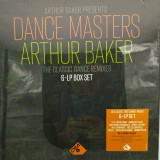
Roll a Skate was supposed to be release on Streetwise Records, the influential New York dance label founded by producer and DJ Arthur Baker
home to seminal club classics and cutting-edge dance sounds of the early ’80s.
Only few month ago, Paris Ford, the artist has uncovered the original 2-inch, 24-track master reel of that recording the very masters from which Streetwise pressed its vinyl rediscovered after nearly 40 years.
Listening back, even Arthur Baker reflected that if he’d heard what Ford had captured back then, he would have released it as a second single a testament to the timeless energy and feel of the recording.
West Hill Studio is the place where the sound that has defined all the productions and artistic projects connected to the Periodica Records label was developed. Located in the hills of Naples, it’s a private recording studio immersed in a small woodland and isolated from the city. A small wooden lodge and vintage equipment made it possible to create and convey, through music and ideas, a precise musical aesthetic that transcends contemporaneity and current trends. The catalogue is personally curated by Mystic Jungle – born Dario Di Pace – music and executive producer and founder of both Periodica and Futuribile, released exclusively on vinyl and in limited editions. Well known for a distinctive sound that has unpredictably ranged from mutant-disco to soft-rock and reggae-inflected explorations for over a decade, he now presents two new electronic funk/rock tracks in collaboration with Serbian guitarist Igor Sekulovič. A pair of deliberately raw cuts, with the B-side conceived as an homage to a seminal 1985 digital reggae riddim built from a preset on the Casiotone MT-40
"Nearly two decades after their 2007 debut and a 2010–2022 hiatus, Austin, TX’s Voxtrot return with Dreamers in Exile, a new LP that turns an underdog story into a true second act.
The band who quietly became cult heroes in the streaming era deliver a record that carries the electric rush longtime fans remember while speaking directly to the new era of youth who discovered them through playlists and word of mouth.
Musically, Dreamers in Exile folds Voxtrot’s classic DNA—C86 sparkle, Sarah Records romanticism, the pulse of The Velvet Underground, the elegance of Felt—into a sharper, more confident sound.
Guitars chime and sprint, rhythms push forward, and Ramesh Srivastava’s literate, heart-forward lyrics trace the distance between youth and maturity, exile and home, regret and renewal. Mixed by Dean Reid (Lana Del Rey, James Blake), it reads as both reintroduction and redemption.
For a band born of the 2000s blog wave alongside Vampire Weekend, The National, and Grizzly Bear, Dreamers in Exile is less nostalgia than proof of life. It’s the sound of a beloved group returning on their own terms and finding their songs resonating more widely than ever."
- 1: Fanjiry
- 2: Alohotsy
- 3: Sikilony
- 4: Kalavabitiky
- 5: Zongoya
- 6: Zipo Tralala
- 7: Tsapatsapao
- 8: Roro Soa
- 9: Alakarabo
After decades spent shaping the sound of southern Madagascar and becoming one of the defining voices of tsapiky, Damily returns with Fanjiry, his most intimate and focused record to date. Known for electrifying village ceremonies and carrying the fever of Toliara across continents, he takes a sharp turn — not away from trance, but deeper into its core.
Recorded in just three days at Studio Black Box with analog wizard Peter Deimel, Fanjiry strips the tsapiky band down to a single guitar and a single heartbeat. Damily plays alone, yet fills the space completely — bass, rhythm, melody, pulse, and breath merging into a dense and vibrating sound. Every riff is architecture, every harmonic a door opening onto memory, childhood landscapes, and nights where music heals, binds, and exhausts the dark.
There is no nostalgia here, no museum of tradition. Fanjiry is a new frontier for tsapiky: raw, precise, suspended between earth and sky, born from craft and necessity. The title — the last star before dawn — captures its essence: a quiet moment before the world awakens, where a single guitar can hold an entire history and still point forward.
- Fanjiry
- Alohotsy
- Sikilony
- Kalavabitiky
- Zongoya
- Zipo Tralala
- Tsapatsapao
- Roro Soa
- Alakarabo
After decades spent shaping the sound of southern Madagascar and becoming one of the defining voices of tsapiky, Damily returns with Fanjiry, his most intimate and focused record to date. Known for electrifying village ceremonies and carrying the fever of Toliara across continents, he takes a sharp turn - not away from trance, but deeper into its core. Recorded in just three days at Studio Black Box with analog wizard Peter Deimel, Fanjiry strips the tsapiky band down to a single guitar and a single heartbeat. Damily plays alone, yet fills the space completely - bass, rhythm, melody, pulse, and breath merging into a dense and vibrating sound. Every riff is architecture, every harmonic a door opening onto memory, childhood landscapes, and nights where music heals, binds, and exhausts the dark. There is no nostalgia here, no museum of tradition. Fanjiry is a new frontier for tsapiky: raw, precise, suspended between earth and sky, born from craft and necessity. The title - the last star before dawn - captures its essence: a quiet moment before the world awakens, where a single guitar can hold an entire history and still point forward.
- The Silver Key
- The Crosshair
- Rooftop
- The Child In You
- Return Of The Reapers
- The Trickster
- I Lit A Light
- The Rifleman's Wedding
- As I Dive
- Beginning Of The End
- Shared Fate
With `The devil's door' And Also The Trees, one true original Post-Punk/New Wave band, presents a quiet storm of an album. At times filmic, poetic and intense with an undercurrent of dark psychedelia. It completes a trilogy of works `The Bone Carver', `Mother-of-pearl Moon' and now `The devil's door' created by the current line-up. Here there are signature `And also the trees' poetic lyrics, orchestral guitar and soundtrack influenced songs inspired by newsreel, oil paintings and folklore. But with this work we have the addition of some surprising instruments that skew the album towards a world where John Barry meets Bela Bartok. And also the trees (AATT) formed during the original post-punk era in rural Worcestershire, an environment that has provided a constant inspiration to a group whose music has often explored the dark underbelly as well as the beauty of the British countryside. They are renowned for their captivating live performances, a unique style of mandolin-like electric guitar, evocative lyrics and dark jazz rhythms - not to mention a creative independence fiercely preserved for over four decades. Back then AATT immediately caught the attention of Robert Smith of The Cure, who invited them to tour with his group on several occasions. Smith was also involved with their early recordings alongside his bandmate Lol Tolhurst, who produced their first records. This longterm friendship and mutual respect was further solidified when AATT were invited to perform at the Robert Smith curated 2018 Meltdown festival in London. This July AATT appear as The Cure's special guests at the Nimes festival. Founded by singer Simon Jones and his guitarist brother Justin, AATT have maintained a continuous presence on the post-punk, and alternative rock scenes worldwide, with a solid fanbase e.g. in Germany.
Mia Zapata was the greatest rock singer of her time. She may have likely been the greatest blues singer in punk rock history, the woman who married the 78 and the '78. Tragedy did not make this true. Mia Zapata made this true, and the ferocious, spring-loaded shrapnel frame that was built around her by Andy Kessler (guitar: metronomic and furious), Matt Dresdner (bass: fluid, punching, beat-addicted and melodic), and Steve Moriarty (drums: martial and explosive) - who, with Mia, combined to form The Gits - made it true. The Gits were formed at Antioch College in Yellow Springs, Ohio in mid-1986, grabbing and swapping pieces of art, thrash, noise, punk rock, classic rock, and all the sorts of magical silly and bookish jingle bells that an old-school liberal arts education handed you; for the next few years they worked on turning it all into something tough, sensitive, both brutal and kind. Andy, Matt, Mia, and Steve moved to Seattle in middish 1989, landing in a house on Capitol Hill where they (and fellow travelers) wood-shedded and rehearsed for the next few years. The Gits put out three EPs in 1990 and '91 before signing with C/Z Records and releasing their first full-length album, Frenching the Bully. Seattle quickly claimed the quartet as their own and embraced the Gits blend of ferocious fangs and soft heart, the slug/slap of the guitars, and the gorgeous, soft underbelly of the poetic emotions. These qualities not only fit in with the doe-eyed/sharp-clawed grunge ethos but earned the Gits the respect of their peers, including Nirvana, who tapped them to open a major local show in 1990. Then other stuff happened, and their frantic, confessional barbed-heart snowball began rolling up hill very, very fast; the Gits "quickly" (hah! After half a decade learning to implode and explode hearts and stomping their boots on manifold beer-softened, Marlboro-weeded wood stages!) inspired rapture, awe, and the levitation that happened when peak emotion meets peak grindage in front of amps spitting out something that sounded like the mad marriage of Bolan swagger and Dischord tension_ all fronted by a genuinely incomparable woman who held her heart in her mouth and shared it, in all its celebration and fear, without hesitation. The Gits were an angry, inflamed slinky fully in tune with and tuned by the Bessie Patti Smith of her time, truly the only singer who could summon Joplin, Poly Styrene, Sam Cooke, Iggy Pop and Ian MacKaye all in the same goddamn song. In 1993, less than four weeks after accepting an offer from Atlantic Records, Mia died. I leave it at that, because this is not about death; it's about an extraordinary life. I do not say, "You should have been there," I say, "We are lucky so many of us were, and I am so glad we have this extraordinary evidence of the power and gifts of Mia and the Gits that you now can hold in your hands." And I note that Frenching the Bully, this extraordinary testament to the soul, shock, fury and feeling of the Gits, has been long out of print on vinyl and CD, and this new edition - remastered by legendary Seattle engineer Jack Endino - joyfully rectifies that. -Tim Sommer
For their fourth release, Slush turns back the clock to a cult classic - Phonogen, the groundbreaking debut album from German DJ and producer, Alegria. First issued in 2002, Phonogen captures the raw emotion of dancefloors around the turn of the millennium, fusing driving basslines with infectious grooves to evoke the era’s radiant energy. Now, over two decades later, it’s reborn for a new generation, newly remastered and complete with a refreshed sleeve design and insert.
Originally released in 1988 on the compilation Acid Tracks Vol. 3 via Needle Records, "The Other Side" has long been recognised as a potent example of early Chicago acid house. Now, more than three decades later, the track receives its first official 12" release - and, crucially, its first release with the original artists correctly credited. While historically attributed to Maurice Joshua, "The Other Side" was in fact produced by Da Posse (Hula Mahone), with vocals by Martell. This forthcoming release marks the first time that the original production has been properly acknowledged and presented in its intended standalone 12" format, restoring authorship to the artists responsible for the record's creation. The release is issued by Island Life Records, a Bali-based label with a growing reputation for carefully curated projects that bridge foundational dance music history and contemporary club culture. By formally reintroducing "The Other Side" with accurate credits, Island Life Records contributes an important corrective to the historical record of Chicago house and acid house music. Musically, "The Other Side" remains a striking artefact of its era: minimal, hypnotic, and emotionally charged, balancing raw machine-driven groove with an atmospheric vocal presence. It exemplifies the experimental, DJ-led ethos of late-1980s Chicago, where tracks were built for function, feeling, and longevity on the dancefloor rather than commercial visibility. The release is accompanied by a set of new remixes that respectfully extend the track's legacy into the present day. Remix duties come from Island Life Records founder Garry Todd under his Clouds Of Kouros alias, Johnny Aux (one half of Paranoid London), and Age Of Hyperion, with the digital including a remix from Garry Todd, each offering a distinct contemporary interpretation while retaining the spirit and tension of the original recording. This release stands not only as a long-overdue physical edition, but as a historically significant moment: the first time the original production has been released on 12", and the first time the correct creative contributors have been formally recognised.
A limited vinyl reissue of the third album of Dictaphone from 2012, with a new artwork.
Already formed in the late nineties in Berlin, Dictaphone was born by Brussels-bred multi-instrumentalist Oliver Doerell. In 2000 Oliver Doerell found a partner in Berlin's Roger Döring, who shares Doerell's love for the Brussels-based music of the eighties. In the following years the duo and several guest musicians (e.g. Stephan Wöhrmann (SWOD) , Malka Spigel (Minimal Compact) & more) released the critically highly acclaimed "m.= addiction" (2002), the "Nacht" EP (2004) and "Vertigo II" (2006) via the City Centres Offices label of Thaddeus Herrmann and Shlom Sviri (Boomkat, Modern Love). In 2009 the violin player Alex Stolze joined the band. During their two decades of existence Dictaphone played shows in more than 20 countries with festival appearances at Mutek, Transmediale, Unsound, Benicassim & more. Their latest release "Poems from a rooftop" from 2012 came as a very limited edition through the Berlin-based boutique label Sonic Pieces. In 2017 the band released the long awaited third album "APR 70" on denovali. The label now also offers a reissue of the trio's past repertoire.
Dictaphone never make music for the sake of it, they always want to create something which was missing before. And they did.
Directions Out Of Town is the latest and teased as (possibly) the last LP by DIY electronic abstract pop wizard Finlay Shakespeare.
Directions Out Of Town is a fierce mix of headstrong pop bangers. Fact. There is simply no one else traversing the field that Shakespeare is exploring. It can be lonely in the desert, Simon says. Lyrically, Directions Out Of Town is dealing with loss; personally, geographically, politically, culturally - a general decay of everything.
This new record is heavily inspired by structural film where the results unravel a method where metaphor is removed from the act of sound synthesis, production and mix of the tracks. Fiercely independent and brimming with integrity this is a deeply effective journey through machines of the human experience.
The track titles are telling: 'Away', 'Get', 'Direction', 'I go for a walk', etc
This is sentiment via complex synthesis wrung through patterns of pop. One also finds ways out that only turn out to be false/untrue.
"I essentially don't know where I belong any more. This record is the precursor to that."
What is ostensibly an electro pop record reveals a multitude of layers and depth as one man and his machines wrestle with the reality of this tangled matrix. If the charts had brains this would be album of the year.
Finlay Shakespeare is an electronic musician working in the UK. His fascination for synthesized sound was born out of his parents' record collection, leading him to explore the electronic music of decades past throughout his teenage years. While starting to write and record his own tracks, he also began learning analogue electronics, which led him to design and build his own equipment. To date, he has released work on Editions Mego, Superpang, and his own GOTO Records.
C.L.A.W.S. comes to Dark Entries with a new ripping LP, Splat City II. C.L.A.W.S. is the solo project of musical luminary Brian Hock, who has been a key figure in the Bay Area underground for over two decades via his involvement in projects like Bronze and The Vanishing, as well as helming the record labels Squirrels on Film and Immortal Sin. With C.L.A.W.S., Hock takes on the dancefloor, picking up cues from the Hague’s Giallo-dipped electro, the skewed minimalism of Chicago acid, and the mind-rending forays of San Francisco post-punk icons like Chrome and Tuxedomoon. Following 2019’s inaugural Splat City EP, Splat City II continues to map the psychogeography of a metropolis both alien and immediately recognizable, one where life is cheap, but so are the thrills. Previously released on Squirrels on Film in digital-only format, this expanded vinyl edition of Splat City II features two new cuts. Things kick off with “Route 505” and “One Tear,” a duo of rompers that vibe like Tom Ellard and Chip E locked in a room with a vial of liquid. Next up, Bay Area deckmaster Tyrel lends his editing chops to “Vigilant Slimy Monsters,” sculpting a moody space disco beast. Squirrels on Film co-founder Solar teams up with Hock for “Black Magic Carpet Ride III,” a cavernous downtempo banger. The slow-mo pace continues with “Wild Slugs United,” which features the no wave-esque clarinet work of Paul Costuros. Closer “Don’t Flip the Crystal Ship” pays homage to Bayview venue Bay Area 51 with melancholic strings and a quartz-solid electrofunk bassline. Splat City II comes in a sleeve with artwork by Bert Bergen, which features a vampiric cat and sci-fi cityscapes.
- A1: Concrete City Breakdown (19:55)
- B1: Omgs (7:09) B2. Demagog (8:29)
- C1: A Day In The Planet Orange Part1 (22:44)
- D1: A Day In The Planet Orange Part2 (12:21)
LIMITED EDITION (500 COPIES) 20TH ANNIVERSARY REMASTER, AVAILABLE ON VINYL (2LP) FOR THE FIRST TIME IN ALMOST TWO DECADES. HOUSED IN GORGEOUS GLOSSY GATEFOLD SLEEVE AND PRESSED ON RED & ORANGE VINYL TO COMPLIMENT THE ARTWORK
City Calls Revolution is our second full-length album, created as we absorbed the new wave revival and math rock movements that emerged in the early to mid-2000s, while simultaneously reconstructing elements of classic progressive rock, hard rock, and experimental music in our own way.
The album strongly reflects the attitude we cultivated as a live band—deeply influenced by the American and Japanese bands we shared stages with at the time—and embodies the punk spirit that shaped us.
Recorded and mixed in March 2005 at Headgear Studio in Brooklyn, New York, by Paul Mahajan (known for his work with Yeah Yeah Yeahs, TV on the Radio, and others), the album was originally released in May of the same year on both LP and CD by Beta-lactam Ring Records, then based in Portland, Oregon. Long out of print, it now returns two decades later as a newly remastered edition to be released by Riot Season Records in the UK.
In 2026, GREEN MILK FROM THE PLANET ORANGE celebrates its 25th anniversary—and also marks 10 years since Damo joined as our current bassist. It is a joy and an honor to have this album, filled with songs we still play live today, reissued in such a milestone year.
Starting January 2026, we will bring this LP on tour across 27 shows in 11 European countries, including the UK. We look forward to seeing all of you at the venues.
/// 2026 Winter European Tour ///
- Only Love
- Big Red Sun
- Stormy Sunday
- Where The Water Meets The Land
- Not On The Radar
- Daybreak
- Where Would I Be
- Jamais A L'heure
- Rainbow Days
- If I Could
Includes demos of every track from the original album, stripped back to (mainly) guitar and voice. Originally a Norman Records exclusive, these are the last few copies available from a limited pressing of just 300. Mark Fry is a France- based, English singer- songwriter/ artist whose debut album, 'Dreaming With Alice,' released in Italy in 1971, became a much-bootlegged "acid-folk" classic three decades later. Fry returned to recording in 2008 and has since released 4 more acclaimed studio albums. These days, far less "acid" than in his youth, Fry still knows his way around a beautiful melody. This album of sketches is resplendent with love songs, the beauty of nature and the passing of time Fry is certainly no stranger to the preparatory sketch. An artist in the truest sense of the word, renowned equally for his decades- long career as a painter of vibrant abstracts and as a cult psychedelic minstrel turned intimate, evocative singersongwriter, his atelier, housed in a converted stable building at his Normandy home, literally doubles as his music studio. It was in this space that Mark's fifth solo album, 'Not On The Radar,' released back in May, was recorded in the summer of 2024, with the singer pushing back his easels to accommodate a four-piece live band and vanloads of miscellaneous accompanying paraphernalia.
Before that, the studio had been a considerably emptier space in which working versions of the album's ten languidly bucolic compositions were first demoed by the solitary songwriter (although some emergent tracks were also captured at Balintore - the home studio of Mark's regular guitarist, Iain Ross, housed on the latter's London-moored canal barge). With those sketches presented here in the same running order as on the mothership longplayer, this new album stands as a document of process - offering the opportunity for track- by- track comparison for those already familiar with Not On The Radar. Crucially, it also makes for a very fine standalone album in its own right, which, if nothing else, bears testament to the inherent robustness of Mark Fry's songwriting.
2026 Repress
Next year the iconic anthem Cafe Del Mar will celebrate its 30th anniversary, a landmark that will be celebrated with a series of brand new remixes alongside the finest existing remixes in specially remastered versions.
Launching the series of vinyl releases in September is a remastered vinyl-only release of the original mix, as well as the best-known version of this classic track, the iconic Three ‘N One Remix.
Nearly 30 years ago, Paul M aka DJ Kid Paul recording as Energy 52 unleashed a record onto an unsuspecting public that would go on to define club culture for an entire generation of dance music enthusiasts. Named as an homage to the legendary Ibiza sunset spot, Café Del Mar broke down boundaries between the underground and
the mainstream, charting in the UK singles charts on three separate occasions and named as the “best tune ever” by Mixmag at the start of the new millennium. In terms of cultural and emotional impact in dance music, it’s hard to find a record that comes close.
Café Del Mar has come to represent the most euphoric and hedonistic pleasures of dancefloors - in Ibiza and all around the world - and has been remixed by some of the biggest names in the industry. Now, 30 years after its original release, Superstition Records will be putting out a new series of releases, with brand new remixes as well as remastered versions of some of the many remixes from across the last three decades. The vinyl-only remastered version of the original and Three ‘N One mixes will launch the series, with further details about the rest of the series announced in the coming weeks.
In 2021 Paul Van Dyk’s Café Del Mar remixes launched a series of vinyl and digital re-issues on the Superstition Records imprint after an almost 20 years hiatus. From 1993 until 2003 Superstition Records was a groundbreaking Techno, Tech-House and Trance Label and released some of the biggest and most revered records of the early German electronic scene.
- 1: Boom Roasted
- 2: 100%
- 3: Laugh It Off
- 4: A Love Song
- 5: Beer And Blood Stains
- 7: Treat Yourself
- 8: Dream Born Again
- 9: You Got This
- 10: Frankenstein's Monster
It’s been decades since New Found Glory were etched onto pop-punk’s Mount Rushmore, but as the Coral Springs, Florida, quartet approach their 30th anniversary, they’ve proven with their 11th studio album Listen Up! - and first for Pure Noise Records - that they still have plenty to say. Shaped by guitarist Chad Gilbert’s battle with metastatic cancer and the enduring bond with bandmates Jordan Pundik, Ian Grushka, and Cyrus Bolooki, the record captures resilience and gratitude in tightly wound riffs and sing-along hooks reminiscent of their early 2000s classics. Written face-to-face in Gilbert’s Nashville home with a riff-first mentality, the album recalls Sticks and Stones and Catalyst while pushing forward with songs like first single “100%,” road-tested alongside The Offspring and Jimmy Eat World. Produced by Steve Evetts with contributions from Dan O’Connor of Four Year Strong, Listen Up! balances nostalgia with urgency, embodying the band’s mission to inspire a new generation of fans while offering longtime listeners a renewed sense of strength, positivity, and joy—because, as Pundik sings on “Beer And Blood Stains,” at the end of the day, “it’s good to be alive.”
Juegos Nocturnos is the new project from two essential musicians of the '80s Spanish scene, coming from iconic bands like Décima Víctima and P.V.P. In this new musical venture, they deliver nine guitar-centered, refined pop-rock songs that reflect influences developed over 40+ years, recorded between 2020 and 2022. Jesús Amodia (guitar, vocals, programming, and keyboards) was a founding member of the punk-rock group P.V.P., a band often compared to The Clash and other British acts of the era thanks to their blend of punk energy with Jamaican influenced sounds. The project also features Per Mertanen (bass), member of cult band Décima Víctima, known for crafting a very distinctive sound with echoes of Joy Division, The Cure, and other British post-punk groups. Now united in this new musical adventure called Juegos Nocturnos, they present nine guitar-driven, sophisticated pop rock tracks that showcase influences shaped over more than four decades of musical career, recorded between 2020 and 2022.
- A1: Aiwa - 04:56
- A2: Hypercube - 04:52
- A3: Yucon - 02:49
- A4: Bialystok - 04:29
- A5: The Ice House - 01:24
- A6: Sunlight On Saturn - 03:13
- B1: You’ll Find A Way - 03:18
- B2: Baltasound Feat. Dextro - 04:37
- B3: Orbiting Meadows Feat. Clark - 02:05
- B4: Slow Yamaha - 09:00
- B5: Black Drift (Outro) - 01:11
As Nathan Fake rises from the nocturnal subterranea and rave catharsis of his previous records, on Evaporator, he resurfaces into the domain of daylight, bringing a tangible sense of air rushing against your face, of big skies, and endless landscapes.
The idea of pop accessibility that trickled into 2023’s Crystal Vision is refracted here through the prism of sweeping ambient, deep electronica, and trance uplift. Evaporator is Fake’s idea of “airy daytime music”, with each track a different barometer reading across the album’s varying atmospheres, which range from vibrant sunbursts, bracing rainscapes, and fine mists of clement melodics. “It’s not overtly confrontational electronic club music,” states Fake. “It’s quite pleasant, it’s accessible. As I was progressing through making the tracklist, I called it a daytime album. It doesn’t feel like an afterparty album.” For the past decade Fake has been gingerly introducing collaborations with heroes and friends alike into his lone, idiosyncratic working process.
Border Community alumni Dextro AKA Ewan Mackenzie transmutes his ferocious drumming for Pigs Pigs Pigs Pigs Pigs Pigs Pigs into the blurred choral thump of ‘Baltasound’. ‘Orbiting Meadows’, meanwhile, is his second collaboration with Clark, an eerily idyllic duet where microtonal 18EDO piano clangs slowly twirl around wailing pads. Evaporator marks the junction point of old technology and ever fresh creativity for Nathan. The trusty “dinosaur” age software, particularly Cubase VST5, that has powered two decades of music is rarely updated. “I used to sort of feel a bit ashamed of using such old software, and then I kind of had an epiphany – that’s just how I work”, comments Fake. “That’s just how I play. I’m very fond of these old tools, and I get the most joy out of them, but now I’ve incorporated new technology too.” When an artist accumulates so much synergy with their instrument, music making becomes instinctual. By Fake’s account, much of Evaporator just fell into place. The album title arrived randomly in his head (“it felt completely perfect. Airy.”), ideas looped and developed until things locked into place and just felt right. ‘The Ice House’ is a fleeting glimpse of the sonic world he taps into in this creative state, its glassy FM synths built around a counterpoint between rough-hewn crystalline arpeggios and sparse yet gravitas-bearing bass. “That riff I just wrote out on the keyboard, I just played it forever and ever and ever.
The original track ended up being really short. Here you go, and it’s gone!” These unplanned channellings of sound call forth records from Fake’s past while he looks ahead, perhaps getting at the very essence of his musicianship. The opener ‘Aiwa’ (“the breeziest,” he muses) reminds of the introspection that characterised Providence, excited by the fire and grit of Steam Days’ textural experiments, its chunky slams and clatters surging into a flood of harmonic buzzing as they reach out for old wisdom. ‘Hypercube’ stampedes in a similar chronological confluence, infusing an incessant synth line reminiscent of the golden age of rave with the crackling, ecstatic energy of modern festival anthems. Like the vaporisation of liquid to particles, everything that Evaporator presents has a mutant desire to be amorphous. Sounds rarely settle; the irradiated garage beat of ‘Bialystok’ is pitched downwards to driving, rebounding effect, while ‘You’ll Find a Way’ warps static into shivering energy, cinematic synth strings building anticipation into a gradual gush of chords. This translates into a more expansive stereo field than Fake has explored before.
‘Slow Yamaha’ saves the wildest, most kinetic transformations for last with a cornucopia of crispy melodies and fried drums; a sibilance of cymbals on the left, a susurrus of shakers on the right, and kaleidoscopic lasers pulsing and fizzing all around. Evaporation culminating in pure excited atoms.
Alex Rex, the project of acclaimed musician and former Trembling Bells bandleader Alex Neilson, is set to release his fourth and final studio album, The National Trust, on March 28th. Written in the wake of the sudden death of his younger brother, Alastair, the album is a poignant reflection on loss, love, and renewal, deeply rooted in the landscape of Carbeth—a cabin community in the Scottish countryside that Alastair called home. For Neilson, the cabin became both a physical and emotional project, a symbol of restoration and reconnection.
"For the first four years after Alastair died, his cabin lay empty and exposed to the remorseless Scottish weather. It came to look like a rotten tooth in a beautiful mouth. Cladding was dropping off its veneer, the ashen baubles of dead wasps nests clung to the rafters, all his possessions were just as he'd left them but eaten by mice, moths and time. Ashtrays still carried the crushed centimetres of his old tab ends. The cabins are so joyfully animated by their host's specific personality and this one looked like a haunted house. Guilt, unrealised hopes and encroaching nature yoked together in a wandering sadness. Combined with the fact that I didn't know the right way round to hold a hammer made the project of its restoration seem hopeless.”
Neilson, however, gradually began chipping away at the task, determined to transform the cabin into something he hoped would resemble “a National Trust site occupied by a psychopath,” with a little help from some friends, including Lavinia Blackwall and Marco Rea.
“They poured love into the cabin and helped restore Alastair's original vision. The project also helped restore my relationship with Lavinia which had fractured after Trembling Bells broke up in 2017. Alongside long-term Rex lieutenant Rory Haye, we applied the same intensity of dedication that we did in renovating the cabin, into creating The National Trust.”
As with Neilson’s previous albums, the recording process was intentionally unpolished, with songs presented in the studio with no rehearsals and captured in just a few takes. This raw, immediate approach amplifies the emotional weight of the album, which Neilson describes as being at a “personal apex of sour self-reflection, mock misanthropy, and self-exposure.” Longtime collaborators Lavinia Blackwall, Marco Rea, and Rory Haye return, alongside guest musicians like Jill O’Sullivan (Jill Lorean) and Trembling Bells guitarist Mike Hastings, to bring Neilson’s vision to life. The result is a deeply personal and multifaceted work, blending acid wit with haunting introspection.
The songs on The National Trust traverse a wide emotional and thematic range. The title track opens the album with a sharp and confessional edge, exploring love, loathing, and cultural critique with Neilson’s signature wit. “Boss Morris” pays tribute to the all-female Morris dancing troupe that reinvents British folk with vibrant energy, while “Two Kinds of Song” turns self-referential humour into an avalanche of remorse, culminating in the unforgettable chorus: “I’ve got two kinds of song. Which one will it be; one where I hate myself or one where you hate me?” Elsewhere, tracks like “Psychic Rome” draw from the decadence and hysteria of ancient Rome, while “The Coward in the Tower” breaks new ground as the only song Neilson has composed on an instrument before recording.
Throughout the album, Neilson’s lyricism is as vivid as ever, transforming personal tragedy into poignant and often darkly humorous art. Yet, there is a sense of finality to this work. "Songwriting has encouraged me to see the whole world as a resource. The things people say and throw away can be chiselled and polished and plopped into a lyric. It’s the same with building the cabin- scouring the edges of society for pallets, discarded wood, ornaments for the garden. But while song writing brings to life orphaned parts of my personality, the cabin is a synthesis of all my interests – nurturing my emotional health instead of exploiting it. With that in mind, I think this will be my last album as Alex Rex.”
With The National Trust, Neilson closes a significant chapter of his career, blending masterful musicianship with deeply personal storytelling. Known for his collaborations with artists such as Bonnie "Prince" Billy, Shirley Collins, and Current 93, as well as his decade-long tenure leading the psych-folk outfit Trembling Bells, Neilson has long been celebrated for his eclectic and uncompromising vision. This final album serves as a fitting culmination of his journey as Alex Rex, capturing the essence of his artistry while offering a profound exploration of loss, renewal, and the enduring power of love.
- A1: Stop Crying - Feat. Cappadonna & Elaine Kristal
- A2: Butterfly Effect - Feat. Rj Payne
- A3: Black Ops - Feat. Hanz On
- A4: Guillotine
- A5: Live From The Meth Lab - Feat. Redman, Krs-One & Jojo Pellegrino
- A6: Switch Sides - Feat. Jadakiss, Eddie I, 5Th Pxwer
- B1: Act Up - Feat. 5Th Pxwer
- B2: Training Day - Feat. Cortez
- B3: King Of New York - Feat. Carlton Fisk & Chunk Bizza
- B4: Find God - Feat. Intell & Iron Mic
- B5: Last 2 Minutes - Feat. Iron Mic
- B6: K.a.s.e. - Feat. Hanz On & Carlton Fisk
The Meth Lab returns for its third instalment with “Meth Lab Season 3: The Rehab,” a sharp, hard-hitting chapter that cements Method Man’s place as one of hip-hop’s most consistent and enduring voices. Executive produced by longtime collaborator Handz On, this project finds the Wu-Tang legend in rare form—polished, precise, and laser-focused.
“The Rehab” pulls listeners back into the world Meth has been building since the first Meth Lab sessions: a mixtape-style showcase blending razor-sharp lyricism with streetwise storytelling, packed with energy and attitude. Method Man’s flow remains timeless, weaving between gritty boom-bap, polished modern production, and the unmistakable Wu-Tang aesthetic. A strong lineup of guests brings extra fire to the set—Cappadonna, RJ Payne, Redman, KRS-One, JoJo Pellegrino, Jadakiss, Carlton Fisk, Hanz On, Intell, Iron Mic, 5th Pxwer, Chunk Bizza, Eddie I, Cortez, and more—each stepping into Meth’s world with their own hard-edged energy. Behind the boards, producers like P. Version, Rockwilder, Eric Sermon, Adam McLeer, Daniel C. Wells, Darnell Norman McConnell, and Joshua D. Zimmerman craft a gritty yet refined sonic framework that elevates every performance.
More than just another chapter, Season 3: The Rehab feels like a victory lap: a culmination of decades of craft, a celebration of the Staten Island movement, and a reminder that Method Man still out-rhymes rappers half his age. It’s a must-own for Wu-Tang fans, East Coast purists, and anyone who appreciates sharp writing and decades-deep mastery.
1988-1990[16,39 €]
DINTE's partnership with Philadelphia store/distro World Gone Mad yields three more essential cassette-only mixtapes exploring the global proliferation of the punk spirit - this time exploring 1980s French language post-punk and new wave in France, Belgium and Switzerland across the decade. This is part 2 of 3, focusing on 1984 to 1987.
- 1: Face
- 2: Face
1984-1987[16,39 €]
DINTE's partnership with Philadelphia store/distro World Gone Mad yields three more essential cassette-only mixtapes exploring the global proliferation of the punk spirit - this time exploring 1980s French language post-punk and new wave in France, Belgium and Switzerland across the decade. This is part 1 of 3, focusing on 1988 to 1990.
After following Luke Blair's work for approaching two decades from his 2007 debut as Lukid on Actress' Werk Discs, we're humbled to present a new album on Death Is Not The End. Following relatively hot on the heels of 2023's Tilt (his first in 11 years, not counting his work with Jackson Bailey under the Rezzett guise) Underloop brings Blair's innate knack for building loops and sound structures further to the surface, while allowing his ear for emotional expression to be dialled up a notch. Those fortunate enough to be familiar with Lukid's work as a DJ will be aware of how distinct his ability is to seamlessly disappear into loop-based abstraction and back again seemingly without blinking, and often Underloop feels much like a collection of the sludgey interludes and foggy sketches that underpin his sets. Blending apparently ramshackle melodies and textures and pulling them together into an undeniable whole, Blair's tendency for pairing the simple and the indescribable with an understated vigour is fully on show here.
Written and produced by Luke Blair. Mastered by Giuseppe Ielasi.
Tilaye Gebre is one of Ethiopia’s most soulful saxophone giants, with a musical legacy that’s hard to surpass. A founding member of the Equators, later renamed the Dahlak Band, he was a key figure in Ethiopia’s vibrant hotel music scene and a sought-after musician and arranger for artists like Aster Aweke, Mahmoud Ahmed, Tilahun Gessesse, and Muluken Melesse.
Tilaye — still going strong — was at the epicenter of the Ethiopian music scene during one of the most turbulent periods in the country’s history. Tilaye’s musical trajectory, regardless of the forms it has taken over the decades, is simply ceaseless. The road to a musical career spanning six decades started out winding, and the first steps came almost as a fluke.
With the Dahlak Band, Tilaye had managed to secure a musical residency at the legendary Ghion Hotel, where they honed their skills and developed their musical expression to unparalleled levels. From the late sixties onwards, Dahlak Band lit up Addis Ababa with a mixture of James Brown and Wilson Pickett tunes, rhythm and blues, soul, funk, and the sound of the disco era — mixed with modern Ethiopian styles — serving up majestic concoctions with full-range instrumentation, featuring trumpet, keyboard, saxophone, bass, drums, and guitar. Through their hotel sessions, Tilaye developed further as an arranger, arranging fellow band member Muluken Melesse’s first solo album, Muluken Melesse with the Dahlak Band (Kaifa Records – LPKF 39), recorded during the turbulent years of 1975–1976, following the fall of Haile Selassie. Everything was in flux in this transitional period, but a constant was how Tilaye stood in the spotlight. On that record, there’s a loose vibe to the soundscape that lets Tilaye’s skills shine, while all the other musical contributions coalesce into a slowly cooking atmosphere where the groove at times fluctuates into psychedelic territory, making the music stand out from most contemporaries.
Most of their recorded output came from one-take live cassette recordings at the Ghion, or from music shops at that time — one microphone at the front, hit record: no EQ, no reverb, just some delay. Some of the Dahlak Band’s releases featured Tilaye as frontman, such as Tilaye’s Saxophone with the Dahlak Band from the late 1970s — typical of a rare groove on the Ethiopian scene — with excursions into reggae territory, including the band’s characteristic sound featuring Tilaye Gebre (tenor and alto saxophone), Dawit Yifru (organ), David Kassa (electric guitar), Shimelis Beyene (trumpet), Moges Habte (tenor saxophone), Abera Feyissa (bass guitar), Tesfaye Tessema (drums), and Muluken Melesse (cowbell). The Dahlak Band’s output was so prodigious that they simply couldn’t be pigeonholed.
No saxophonist in Ethiopia influenced the sound of popular music more than Tilaye in the 1970s, yet his recordings have been hard to come by for ages, which has meant that newcomers to the scene have gems to uncover in retrospect. Arguably, Tilaye shifted gears when he relocated to the U.S. to such an extent that his musicianship became even more renowned, accompanying the greatest of his contemporaries internationally. Tilaye is one of Ethiopia’s all-time greats, with a musical legacy — both as musician and arranger — that’s hard to surpass. It’s a wonder to be able to enjoy a recording like this half a century later.
- A1: Ghetto Chronicle Daily
- A2: Use To Fear Death
- A3: Drug War Rages
- A4: Saturday Night, Sunday Morning
- A5: What U Saying
- B1: Nighty Night
- B2: Stick N Step
- B3: Death Of A Salesman
- B4: White Chalk Pt. (Feat. Biggie Smalls)
- B5: Same Shit
A long-overdue vinyl reissue for this underground gem from the Bronx! Originally released in the late ’90s, Ghetto Chronicle Daily stands as a timeless snapshot of New York street rap in its rawest form — a true reflection of the city’s golden era grit and lyrical craftsmanship.
The Money Boss Players — made up of Big Ah (RIP), Lord Tariq, Tre Bag, Eddie Cheeba, C-Dubb, and legendary producer Minnesota — were key figures in shaping that unmistakable Bronx sound. Their chemistry was electric: sharp lyricism, vivid street storytelling, and cinematic beats that carried the DNA of hip-hop’s golden age.
This first-ever vinyl reissue brings this underground classic back to the masses in its full glory and goes a step further with bonus tracks previously unreleased on vinyl, including “Drug War Rages” and “Same Shit” — raw, unfiltered cuts that capture the crew at their most authentic. Also included is “White Chalk Pt. 2”, featuring none other than The Notorious B.I.G., a rare collaboration that cements the group’s deep roots in the East Coast rap lineage.
Since the original release, members of Money Boss Players have continued to carve their own lanes — with Eddie Cheeba and Tray Bag evolving into Boss Money, and Lord Tariq making his mark as a solo artist. In recent years, Bronx rapper Yung JB has joined the fold, carrying the Boss legacy into a new generation.
Now, more than two decades later, Ghetto Chronicle Daily returns to turntables worldwide — remastered and pressed with care for true heads and collectors alike. A must-have piece of hip-hop history, finally on wax where it belongs.
- Sit Yourself Down
- Moonshine
- Beneath The Planet Apes
- 88:
- Easy Work
- Get In Line
- Higher Learning
- O.p.m. (Feat. The Real Shakar)
- Searching
After decades deep in the game, few names carry the same weight as D.I.T.C. veteran O.C. and East New York’s own PF Cuttin, the DJ and producer behind countless underground classics. Long respected for their consistency and craftsmanship, the two finally joined forces for Opium — a nine-track masterclass that channels the essence of true-school hip-hop.
Originally released to remind heads of what the real sound of the streets was, Opium plays like a time capsule from the era of block parties, 40s, and cipher sessions on the corner — where bars mattered and the beats hit hard. PF Cuttin’s rugged, sample-driven production perfectly complements O.C.’s sharp lyricism and timeless flow, delivering a record that bridges nostalgia with enduring relevance.
Reissued in 2025 with the same iconic artwork by Scarful, this edition celebrates a collaboration that captures the raw soul of New York hip-hop — pure, uncut, and eternal.
With her highly anticipated CiCi (Deluxe) album, Grammy Award-winning icon Ciara steps fully into her power; reclaiming her narrative with clarity, confidence, and the most dynamic soundscape of her career. A celebration of freedom, femininity, and evolution, CiCi is more than a return — it’s a full-on reinvention.
The Deluxe Edition expands her sonic universe even further — introducing four new songs that fuse sensuality, rhythm, and empowerment with global influences—featuring standout singles like the globally acclaimed “Low” (with Diamond Platnumz), “Ecstasy” (featuring Normani & Teyana Taylor), “How We Roll” (with Chris Brown), amongst other hits, the project seamlessly blends Ciara’s R&B and pop legacy with futuristic production, cross-continental energy, and unfiltered storytelling. Among them, “Low” stands as a defining moment — an electrifying fusion of Afrobeats and R&B that bridges Atlanta and East Africa in one hypnotic groove. The visual, rich with dance-floor heat and unapologetic sensuality, showcases Ciara’s signature choreography and global reach, earning millions of views and sparking an international dance challenge.
For over two decades, Ciara has defined what it means to be a cultural force — from trendsetting choreography to genre-shaping hits. With CiCi (Deluxe), she bridges generations, reignites her core, and welcomes a new wave of fans into her world. It’s bold. It’s intimate. It’s CiCi. Behind the scenes, CiCi also marks a powerful chapter in Ciara’s entrepreneurial journey. Through her self-founded, female-led Beauty Marks Entertainment, Ciara has created a home for her music, media, film, fashion, tech, and philanthropic ventures. BME empowers her to own her narrative, lead with vision, and build legacy — on her terms.
- A1: Part 1
- B1: Part 2
In celebration of Arrow Films' new 4K restoration of the seminal hip hop film Wild Style, Azorean-Canadian producer and DJ Jorun Bombay steps up with a specially commissioned megamix cut across two sides of a 7”. Featuring recently discovered unreleased material, cut up with sections of the remastered soundtrack, expert turntablism, and added live instrumentation, Jorun shines a new light on this pioneering piece of hip hop history.
Having released music since the mid-‘80s on labels such as Soundweight, Diggers With Gratitude, and JBOR Records, Jorun also produces and scores music for film and television in the USA. He’s been hosting his influential DJ podcast ‘Funkbox Reload’ for over a decade, regularly showcasing his DJ and remixing skills, which have landed him several key production jobs, including for the documentary ‘Mixtape’ directed by Omar Acosta on Paramount Plus.
ince its opening in spring 2021, JUBG, a still young Cologne gallery for contemporary art, has specialized in the broad field of artists and collaborations working along artistic interfaces, especially those between visual art and experimental and/or electronic music. For example, JUBG has already hosted exhibitions by Markus Oehlen, Kim Gordon, Wolfgang Voigt, Matthias and Aksel "Superpitcher" Schaufler, Sven-Åke Johansson, and Emil Schult. Albert Oehlen, who is a kind of mentor and supporter of the gallery, was also a guest at Albertusstraße this summer, where he presented the exhibition D-I-E ORPHEUSMASCHINE together with Michael Wertmüller, Thomas Stammer and the poet Rainald Goetz.
It is only logical that the gallery now expands its sphere of activity to include its own label, on which music appears that comes from similar contexts as the artists listed above already suggest.
As catalog number 1, JUBG is now releasing the official soundtrack to "The Painter" from 2021. The film, German title "Der Maler", is a mixture of feature film and documentary and a collaboration between German director Oliver Hirschbiegel, best known for his Oscar-nominated film "Downfall", and Albert Oehlen, with whom Hirschbiegel has a long friendship, as they both once studied together at the Hochschule der Bildenden Künste in Hamburg.
The docu-fiction shows Oehlen struggling with a painting and pondering the meaning of his work. Oehlen is played by German actor and musician Ben Becker, accompanied by the off-screen voice of Charlotte Rampling. In the film, Becker makes a painting that Oehlen himself creates step by step behind the camera, while the actor improvises the process in front of the camera.
The wonderful music for this film comes from no less than two outstanding personalities whose individual biographies and musical signatures could hardly be better suited to this project. On the A-side it is Gudrun Gut, icon not only of the German electronic music scene since at least the 90's, singer, composer, DJ, label owner (Monika Enterprise) and of course founding member of the legendary 80's New Wave band Malaria. On the B-side it’s the world famous and award winning US avant-garde trumpeter and improvisational musician Nathan "Nate" Wooley, who has played with Fred Frith and John Zorn among others.
Gudrun Gut's tracks bear such beautiful titles as "Bewegung", "Küste" or "Weinen" and she once again pulls out all the stops of her great skills and decades of experience as a producer of the most diverse electronic music genres. These are unusual and much more experimental musical paintings that she creates here than on her recent solo works. Edgy, angular, raw and unpolished, yet always elegant and clever, she subverts the male artist madness depicted extensively in the film in her own unique way.
Nathan Wooley answers with the instrument he has been familiar with since childhood, the trumpet, with which he is able to create a ravishingly virtuosic noise. His pieces are more like sketches, often only 90 seconds or a few minutes long, but in all their abstractness underpin the narrative of the film almost perfectly.
A limited edition of 20 copies in total, painted and signed by Ben Becker, can be purchased directly through JUBG.
JUBG, eine noch junge Kölner Galerie für zeitgenössische Kunst, hat sich seit ihrer Eröffnung im Frühjahr 2021 auf das weite Feld von Künstler:innen und Kollaborationen spezialisiert, die entlang künstlerischer Schnittstellen tätig sind, insbesondere an denen zwischen bildender Kunst und experimenteller und/oder elektronischer Musik. So hat JUBG bereits Ausstellungen von Markus Oehlen, Kim Gordon, Wolfgang Voigt, Matthias und Aksel "Superpitcher" Schaufler, Sven-Åke Johansson und Emil Schult gezeigt. Auch Albert Oehlen, der eine Art Mentor und stiller Unterstützer der Galerie ist, war im Sommer dieses Jahres zu Gast in der Albertusstraße, wo er zusammen mit Michael Wertmüller, Thomas Stammer und dem Dichter Rainald Goetz die Ausstellung D•I•E ORPHEUSMASCHINE präsentierte.
Es ist nur logisch und folgerichtig, dass die Galerie ihren Wirkungskreis nun um ein eigenes Label erweitert, auf dem Musik erscheint, die aus ähnlichen Zusammenhängen und Sphären stammt, wie es die oben aufgezählten Künstler:innen bereits vermuten lassen.
Als Katalog-Nummer 1 veröffentlicht JUBG nun den offiziellen Soundtrack zu "The Painter" aus dem Jahr 2021. Der Film, deutscher Titel “Der Maler”, ist eine Mischung aus Spiel- und Dokumentarfilm und eine Zusammenarbeit zwischen dem deutschen Regisseur Oliver Hirschbiegel, vor allem bekannt für seinen Oscar-nominierten Film "Der Untergang", und Albert Oehlen, mit dem Hirschbiegel eine lange Freundschaft verbindet, studierten sie doch beide zusammen einst an der Hochschule der Bildenden Künste in Hamburg.
Die Doku-Fiktion zeigt Oehlen, wie er mit einem Gemälde kämpft und über die Bedeutung seines Werks nachdenkt. Oehlen wird vom deutschen Schauspieler und Musiker Ben Becker gespielt und von der Stimme von Charlotte Rampling aus dem Off begleitet. Im Film erstellt Becker ein Gemälde, das Oehlen selbst hinter der Kamera Schritt für Schritt anfertigt, während der Schauspieler den Prozess wiederum vor der Kamera improvisiert.
Die wunderbare Musik zu diesem Film kommt von gleich zwei herausragenden Persönlichkeiten, die mit ihren individuellen Biographien und musikalischen Handschriften kaum besser zu diesem Projekt passen könnten. Auf der A-Seite ist dies Gudrun Gut, Ikone nicht nur der deutschen elektronischen Musikszene seit mindestens den 90er Jahren, Sängerin, Komponistin, DJ, Label-Betreiberin (Monika Enterprise) und natürlich Gründungsmitglied der legendären 80er Jahre New Wave-Band Malaria, auf der B-Seite der weltberühmte und Preisgekrönte US-amerikanische Avantgarde-Trompeter und Improvisationsmusiker Nathan “Nate” Wooley, der u.a. mit Fred Frith und John Zorn zusammengespielt hat.
Gudrun Gut’s Tracks tragen so schöne Titeln wie “Bewegung”, “Küste” oder “Weinen” und sie zieht hier einmal alle Register ihres großen Könnens und ihrer jahrzehntelangen Erfahrung als Produzentin der verschiedensten elektronischen Musikspielarten. Es sind ungewöhnliche und sehr viel experimentellere musikalische Gemälde, die sie hier entwirft als auf ihren jüngsten Solo-Werken. Kantig, eckig, roh und ungeschliffen und dabei immer elegant und schlau, unterläuft sie den im Film ausgiebig dargestellten männlichen Künstlerwahnsinn auf ihre ganz eigene Art und Weise.
Nathan Wooley antwortet mit dem ihm seit Kindesbeinen vertrauten Instrument, der Trompete, mit der er in der Lage ist, einen hinreißend virtuosen Lärm zu erzeugen. Seine Stücke sind eher Skizzen, oft nur 90 Sekunden oder ein paar wenige Minuten lang, die in all ihrer Abstraktheit das Narrativ des Films nahezu perfekt untermalen.
Eine auf insgesamt 20 Exemplare limitierte Edition, bemalt und signiert von Ben Becker, ist direkt über die JUBG zu erwerben.
"Chuck Roth’s music wanders. The New York-based guitarist’s inquisitive style builds from rippling patterns that center the physicality of his instrument, roaming wherever they take him. watergh0st songs, his Palilalia debut, collects songs from the past half-decade, presenting an intimate snapshot of his music that draws from an eclectic background in classical guitar, electronic music, and improvisation." "The mark of watergh0st songs is its exploratory nature. Roth began his musical journey as a classical guitarist studying the canon works for the instrument, but he was never interested in playing fast or flashy. Instead, he wanted to roam down musical paths and see where they led him. He eventually became more interested in electronic music, where he found inspiration in subtractive properties and patterning. The music of watergh0st songs translates that electronic music to the guitar: many of the songs began as synth tones and later branched out through the physicality of his instrument." "When writing music, Roth wants melodies to feel comfortable in the body, focused less on setting a structure and more on letting music unfold how it happens in any given moment. His songs are fluid and his melodies are clear, plucked with careful attention but never too deterministically. His is the music of a traveler, floating around the strings of the guitar. It is about embracing the banal, or the everyday moments that shape a life." "Though Roth’s music often feels quite direct, there is a dreaminess that lives inside of it. His lyrics don’t feel too hot or cold, instead they have a wistfulness and melancholy of what it feels like to live through every passing day. His exploratory style bolsters these lyrics, giving the music its sense of ennui, as does his focus on texture. Each track takes on a different structure: 'Bunny Hop' unfolds like a squirrel jumping from branch to branch of a tree, while 'Private Boy' has a slower approach, growing from delayed harmonics that almost sound like bowed strings. His textures range from metallic and bristling to soft and feathery, evolving with gentleness. It is about ending up somewhere different than where it started, and watching the notes that fall in-between." The embrace of the routine colors Roth’s music. In it, there is a sense of presence, of admiring the smallest details and moments. Roth loves to take walks and look around, observing the beauty of his surroundings. Similarly, watergh0st songs feels like moving through the world at the pace of a comfortable trot and soaking in every sound as it emerges. It is a quiet evolution—but one that stays."—Vanessa Ague
- A1: Wild
- A2: Bite
- A3: Fools
- A4: Ease
- B1: The Quiet
- B2: Dkla
- B3: Talk Me Down
- B4: Cool
- C1: Heaven
- C2: Youth
- C3: Lost Boy
- C4: For Him
- D1: Suburbia
- D2: Too Good
- D3: Blue
- D4: Swimming Pools
- D5: Strawberries & Cigarettes
The limited edition blush-and-blue 10th anniversary edition of Troye's debut album 'Blue Neighbourhood' with brand-new, reimagined art from original illustrator Hsiao-Ron Cheng. Celebrating a decade since its release, 'Blue Neighbourhood - Ten Years On' includes two tracks much loved and requested by fans “Strawberries & Cigarettes” and “Swimming Pools”.
For over a decade, Hyunhye Seo a core member of Xiu Xiu, in her solo work navigates the precarious edges where composition dissolves into pure gesture. Through ecstatic piano improvisations, restless percussive attacks and an expansive use of acoustic space, she constructs layered sonic environments that move across the boundaries of noise, avant-garde jazz, ambient and contemporary classical music. Her performances reveal an unfiltered process of listening and creation - a practice in which thinking becomes the enemy, and surrender the only viable strategy.
Continuation captures one such surrender. Recorded live at MAO - Museo d'Arte Orientale in Turin during the exhibition Rabbit Inhabits the Moon – The Art of Nam June Paik in the Mirror of Time, this cascading piano improvisation unfolds as a dialogue between performer, space and the particular acoustics of a museum built to house contemplative objects. Jamie Stewart processes the sound in real time; Giuseppe Ielasi shapes the final mix. What emerges is a work of charged immediacy - restless gestures giving way to passages of unexpected tenderness, noise and silence trading places in continuous exchange. The title is precise: this is music that refuses conclusion, that exists in a state of perpetual becoming. On Side B, Continuous Extension offers an unprecedented response. Phew - the pioneering figure of Japanese avant-garde music since the late 1970s - was invited by curators Chiara Lee and Freddie Murphy to reinterpret Seo's performance. Working with synthesizer and subtle processing, Phew distills the resonances of Continuation into a new electronic landscape - waves of abstraction that echo like reflections in sound, tracing the harmonic tensions of Seo's playing into territories she herself did not visit.
The accompanying booklet includes an essay by Bruno Lo Turco exploring the deep connections between improvisation and Buddhist thought, and a written reflection by Seo on her own practice of surrender and listening.
Continuation is released on Ubi Kū, the record label of the Unione Buddhista Italiana. The cover reproduces Avalokitesvara "Water and Moon" from the Museo d'Arte Orientale "E. Chiossone" in Genoa - the bodhisattva of compassion gazing at the reflection of the moon in water. Like that reflection, this music exists fully in the present, complete and unrepeatable.
- 1: After Hours
- 2: Wasting Time
- 3: First Love (Never Dies)
- 4: Photograph
MOVIE MOVIE is based out of NYC and features members of the bands TWIN GUNS, THE ELECTRIC MESS, and THE ABOVE. The band combine elements of power pop, '60s, '70s and '80s garage, classic, alternative and glam rock, but they have a sound all their own, with a focus on strong hooks and melodic vocals. "After Hours" is a 1980s New Wave comedy about a party girl on the downtown scene whose claim to fame is a bit part in a popular movie, where she uttered the immortal line, "Won't you look at the time," but she wouldn't give you the time. "Wasting Time" is an existential road picture in the mind of the protagonist, set across heartland America and a sunny beach in the Caribbean, but in reality he never leaves the girl, or town, and in the end ponders his wasted years. "First Love (Never Dies)" is a romantic drama that spans decades, about an aging rocker who reflects on his first teenage love, a girl he has never stopped thinking about. He tries to track her down and reconnect after all these years, only to find she is now married to his old childhood rival.
"Photograph" is a future arthouse hit, shot in stark black white, about the disintegration of a relationship seen from two different perspectives, captured in an old photograph, in which the truth is revealed in the looks on their faces. "Coming Attractions" is MOVIE MOVIE's second EP, after their debut six track EP, "Now Playing" (2022), on Ghost Highway/ KOTJ Records, and they have two full LPs, "Storyboards" (2023), and "In 4-D!" (2024), both Topsy-Turvy Records.
- 1: Where We Breathe
- 2: The Only Honest Love Song
- 3: This Broken Killswitch
- 4: Victor Versus The Victim
- 5: Sketch Artist Composite
- 6: A Torrid Love Affair
- 7: The Only Honest Love Song (Yamc)
- 8: Sketch Artist Composite (Yamc)
- 9: The Anatomy Of The Journey (Yamc)
- 10: Victor Versus The Victim (Yamc)
- 11: Sketch Artist Composite (Demo)
- 12: The Anatomy Of The Journey (Demo)
On one hand, it could be bumming out the people who enjoyed hearing what the band evolved into. On the other hand, nostalgia sells...and daddy needs to eat! So...Nevermind 2! Broken Bones and Bloody Kisses has seen a few vinyl pressings in the past, but landing a physical copy of You Are My Canvas (which was only released on burned CDs, crafted in the Lovat- Frasers' basement) is almost impossible. And ooooooh boy...the pre- demo demo (or PDD) versions of "Sketch Artist Composite" and "The Anatomy of the Journey"? Those puppies - with me (Connor...hi!) on vocals/drums and Jeff playing everything else - were only available on the Y2K version and basically only used to recruit other band members. Smash all these old chestnuts together in one release and see what happens! Why not? It perfectly captures the whole spirit of early BOYS NIGHT OUT. But what title does one bestow upon such a sonic siphonophore? There are 3 versions of "Sketch Artist Composite".
Do you call it Sketch Artist Composite Plus Other Songs? Do you go all in on a lyric- based title like Fuck Us Where We Breathe? Decisions, decisions! Probably best to follow Costa's sage advice and go with Nevermind 2. So, almost exactly two decades after our first show - July 19, 2001 @ The Oakville Pine Room with Sky Came Falling, Unearth, and Rise Over Run - may we present unto you, Nevermind 2! What's old is new again, probably?
Nick Curly and Marc Scholl present the next chapter on Cécille Records - a collaboration where Reboot meets a new generation of Italian talent, Shokë.
Frankfurt-based Reboot, a key member of the Cécille family, joins forces with the young and rising Naples-based duo Shokë for their debut on Cécille Records. Naples and Italy as a whole, has been home to a strong and loyal Cécille fanbase for decades, making this collaboration a natural next step.
The connection was sparked through shared ties within the Italian scene, with Blackchild playing a key role in bringing the artists together and connecting Shokë and Reboot early on. From the very first studio sessions, a strong and organic synergy emerged …one that is clearly reflected in the music.
The result is a collection of powerful, timeless house tracks with depth, groove, and character, blending experience with fresh energy while carrying the unmistakable spirit of Cécille Records.
Group Rhoda returns to Dark Entries with Phase 5, a new LP of synthesizer-driven art-pop. An integral member of the West Coast electronic music scene, Mara Barenbaum has been writing, performing, and plunging into oneiric depths as Group Rhoda since 2009. Barenbaum’s songcraft is at once stylistically diffuse and laser-focused, a synesthetic approach that allows her to effortlessly glide between genres and soundworlds while centering her singular poetics. On Phase 5, her fifth LP as Group Rhoda, we find Barenbaum waxing nondualistic. Lines between fairytale and fact, between nature and art, between subject and object all dissolve under contemplation.
The songs on Phase 5 are perpetually in-between states, deftly shifting form at the blink of an eye. With sleight of hand, “Field Tone” transmutes from brooding John Carpenter-esque electro into vocoder-driven space disco. “Dragon Pine” darts from cosmic dub to cybernetic dancehall and back again. The uptempo darkwave-leaning number “Aeolian Crossing” dissolves into the void, like sand falling through one’s fingers, like a retreating wave. The cover artwork for Phase 5 is by Shawn Reed, and features purple lilies and light refracted through water. All songs on this album were mastered by Ruud Lekx. The digital version of Phase 5 will be released via Katabatik, a label and sound system that Barenbaum has had close ties to for the past decade.
- A1: For Safety
- A2: I Don't Like It
- A3: Lies And Flies
- A4: Pain In My Heart
- A5: My Guns
- A6: Puzzle
- B1: Slither
- B2: Slow Soak Poetry
- B3: Throw It Out
- B4: Sexy Machine (Feat. Cosmo Vitelli)
- B5: Love In A Nutshell
- B6: Myaa
After nearly five decades of relentless innovation, Truus de Groot's Plus Instruments project shows no signs of slowing down. The ninth album, Unnoticed, finds the `dutch Pioneer diving deeper into the experimental synthesiser palette than ever before, delivering 12 tracks of minimalist, analogue noise and her signature vocals.
Recorded at The Ranch in Escondido, Unnoticed showcases her continued evolution as an artist. Often referred to as the "Queen of the Dutch Underground," de Groot has is a stalwart of the experimental underground music scene since establishing Plus Instruments in 1978 in Eindhoven. Her journey has taken her from the punk rock explosion of the late '70s Netherlands to the No Wave scene of early '80s New York.
The Plus Instruments project has always been characterised by its ever changing nature and collaborative spirit. She has worked with an impressive roster of artists over the years , spanning continents and genres, including James Sclavunos (Nick Cave), Jim Duckworth (Gun Club), most recently, Miguel Barella and Cosmo Vitelli, who co-writes, produces and adds programming to standout track "Sexy Machine." This creative partnership has opened new avenues for de Groot's explorations, as she continues to plough yet another field of creativity.
Now based back in the Netherlands, she continues her work while maintaining the core elements that have made Plus Instruments a touchstone for electronic music innovators. Her influence can be heard in everything from Electroclash to Cold Wave, with younger artists regularly seeking collaboration with the veteran experimentalist. Unnoticed arrives as de Groot enters her sixth decade of music-making, proving that true artistic vision only grows stronger with time.
Over the past decade, Siavash Amini’s compelling electronic music has quietly garnered praise from
Pitchfork, The Guardian and AllMusic. From his home base in Tehran, Iran, Amini has collaborated
with artists like Rafael Anton Irisarri and 9T Antiope, and regularly uses literature, film, mysticism, and
medieval Iranian culture as musical launchpads. Amini’s new album, Eremos, illustrates a passage
from Avicenna, the preeminent philosopher and physician of the Islamic Golden Age: one can move
out of darkness, he writes, by confronting the darkness within. The results are - even for Amini -
uniquely immersive, cinematic and moving: a landmark.
Sluta Leta first emerged in the mid-1990s with a series of EPs on legendary labels such as Mego (Fan Club, 1995), Uptight (Space Is The Place, 1996), Cheap Records (Lisa 94, 1998) and Chocolate Industries (…If You Like Champagne On Ice?, 1999). After the release of Sluta Leta's debut album “Semi Peterson” on Mego in 2003, the group somehow got lost in Second Life. Having missed a good decade and a half but not a beat, Sluta Leta unexpectedly reappeared in 2020 with a new album – “Entrée Contrôle” produced by Andi Pieper and Ramon Bauer with a little help from Gerhard Potuznik – released on famersmanual’s generate and test label.
Almost 30 years after their first release on Cheap Records (Lisa 94 in 1998), Sluta Leta returns to the Viennese cult label with their new album “Drift Dekoder”. Andi Pieper and Ramon Bauer have once again teamed up with Gerhard Potuznik to produce some crispy new songs that are bound to set the tone for the second half of the 2020s and beyond. On “Drift Dekoder”, the inherently artificial and somewhat otherworldly atmosphere of Sluta Leta’s songs is enhanced by the participation of several brilliant collaborators: vocals by Gerhard Potuznik on “Moment Eternal” and a duet with Luise Nehl on “Past In Reverse”, drums by ddKern (Past in Reverse, Björn i Fårkläder and Rymdpatrul), keys by Philipp Quehenberger (Björn i Fårkläder) as well as vocal contributions from various previous band members – Jonas Bergkvist (Tidsflayer), Bengt Liljstad (First Order) and Yngwie Moskowich (Driftstopp). A particularly noteworthy highlight of the album is the mix of “Tidsflayer” by Finlay Shakespeare.
Stop looking, start grooving! Written and produced by Andi Pieper and Ramon Bauer.
Lyrics and vocals on “Past In Reverse” and “Moment Eternal” by Gerhard Potuznik. “Tidsflayer (Finlay Shakespeare Mix)” mixed and produced by Finlay Shakespeare.