Makèz have come a long way since they first sneaked into Amsterdam’s studio 80 at the age of 17 to hand over their demos to Dam Swindle. Those demos led to their debut EP ‘Different planets’ on Heist in 2019 which gained major support from artists like Seth Troxler and Chez Damier. Quickly after, they signed two records on New York based label Let’s Play House. Fast forward two years, and here we are: the release of their debut album “City of all”.
"City of all” shows an admirable level of sophistication and matureness and effortlessly bridges genres across its 13 tracks. You can feel the amount of thought that has been put into this record, with songs happily blending into each other as Makèz submerge themselves in their concept of accidental encounters, inclusiveness and what it means to live in a city like Amsterdam.
On “City of all”, Makèz bring together all the musical influences they’ve picked up in their life as music fans, clubbers and art students. The jazz-funk of opening track “The entrance” feels breezy, casual almost, like the freeform rhythms that are played in a jazz club during soundcheck. That energy also oozes from “Not so different”, which features the smooth vocals of LYMA. There’s a hint of the house-meets-R’n B vibe that made Anderson .Paak the star that he is now. The song is brilliantly funky and shows the songwriting and arrangement talent of Makèz, who cleverly use pop & soul cues to create one of the album’s highlights.
What follows is 4 cuts ranging from the syncopated Balearic funk of “Orbit”, the strings of album title track “City of all”, the organ-led jam “Gonna getya" and the downbeat “Sonder”. Allysha Joy -best known for performing in Melbourne Hip Hop collective 30/70 - is featured on the deep and jazzy cut “Looking up”. If Makèz and Allysha are all looking up, it’s clear they’re seeing the same thing. These kindred spirits perfectly complement each other on this track, where the deep bass, warm harmonies and jazzy percussion prove to be a perfect foundation for Allysha’s rhymes.
Is it an album all about jazz and soulful tracks to listen to at home? Far from that. There’s a nice bit of dance floor-oriented tracks, where the distorted filter funk of “Roselane” featuring Fouk proves to be a highlight along with what is arguably the heaviest cut of the album: “Bent with funk”.
In an EP context, these house tracks would surely do their work, but they really come to life in this album format. No compromise has been made to storytelling and the house tracks all play their part while still standing their ground as powerful club tracks. It’s the expert production and smart arrangement that gives this album its casually funky feel. On “City of all”, Makèz showcase their remarkable talent for writing an album that goes to so many different places, but most of all, just really feels like home.
Enjoy the music,
Maarten & Lars
Buscar:new energy
Finnish producer Sasu Ripatti has been torching the fringes of electronic music since the mid 1990s, a process that's found him melting a wide spectrum of musical innovation into his cult brand of experimental minimalism. From the skeletal jazz deconstructions of his 1997 Vladislav Delay debut "The Kind of Blue EP" to the blurred dub techno variations of 2000's "Multila" and 2012's "Kuopio", Ripatti has betrayed a restless, voracious passion for sound. "Fun is Not A Straight Line" builds on this impressive legacy, retaining his sonic signature and adding a playfulness that harks back to his beloved deep house smash, Luomo's "Vocalcity". After becoming frustrated by the inflexibility of the 4/4 house idiom, Ripatti found solace in rap and bass music's rhythmic complexity and anarchic structures. "I bought Nas's 'Illmatic' when it came out in '94 and have more or less been listening to rap since," he explains. "I'm not really sure why now, but that rap influence wanted to come through." Chopped rap vocals, booming subs and gritty, neck-snapping beats are the primary colors of "Fun is Not A Straight Line", painted into the foreground and blended into an immediately recognizable rhythmic palette. The tracks cross into the same continuum as Chicago footwork, with stuttering samples that build thick walls of bass and flurries of wordless rhymes amid a narcotic haze of beats. On 'monolith', Ripatti's love of New York rap is in full focus as he obscures chipmunked vocals with tight, crackling percussion that disintegrates into rolling kicks; 'speedmemories' is even more upfront, channeling the raw sunshine energy of So So Def electro into rhythms that are powerfully skeletal. Elsewhere, syrupy Southern-fried TR-808 bass womps are tangled with molasses-slow vocals on 'videophonekitty', fuzzed into textured, dissociated ambience. Since the beginning, Ripatti has tried to find a balance between his experimental urges and drive to create more universal music. As his more recent albums have traveled into darker, more extreme realms, he has craved something different for balance. By drawing a crooked line between DJ Premier, DJ Screw and DJ Rashad, Sasu Ripatti has emerged with the most accessible and unashamedly enjoyable album he's produced in years.
- A1: Pennies From Heaven
- A2: Please Be Kind
- A3: (Love Is) The Tender Trap
- A4: Looking At The World Thru Rose Colored Glasses
- A5: My Kind Of Girl
- A6: Pennies From Heaven (1956 Version)
- B1: I Only Have Eyes For You
- B2: Nice Work If You Can Get It
- B3: Learnin’ The Blues
- B4: I’m Gonna Sit Right Down And Write Myself A Letter
- B5: I Won’t Dance
- B6: Nice Work If You Can Get It
180g Coloured Vinyl Series Contains New Specially Prepared Liner Notes By Penguin Guide To Jazz’s Writer Brian Morton And By Paris’
Prestigious Jazz Magazine. Frank Sinatra & Count Basie Sinatra Basie + 2 Bonus Tracks (Orange Vinyl) “Sinatra had long since mastered the microphone, which had become his instrument, capable of a full-on roar or a whisper so intimate it seemed to be spoken inside the listener’s head. Tackling things like “Nice Work If You Can Get It” and “I Won’t Dance” took him back to a kind of repertoire he had mastered
two decades before. The youthful sheen hadn’t quite left the voice and age hadn’t yet darkened it. Basie wasn’t the greatest sight-reader and may not have played on all the tracks, but his band knew the score and Sinatra-Basie remains a collaboration of great strength and naturalness.” Penguin Guide to Jazz “The following decade would see his comeback to stardom, and Sinatra-Basie remains one of the highlights of that period. In this summit meeting, the iconic sonority of Basie’s orchestra is sublimated by Neal Hefti’s arrangements, while Sinatra, impeccable from start to finish, draws from the prodigious energy of the horns, strings and drums of this triumphant big band a simply irresistible elegance.” Jazz Magazine
- 1: Anything To Say You’re Mine
- 2: My Dearest Darling
- 3: Trust In Me
- 4: A Sunday Kind Of Love
- 5: Tough Mary
- 6: If I Can’t Have You *
- 7: My Heart Cries *
- 8: Next Door To The Blues *
- 9: I Just Want To Make Love To You
- 10: At Last
- 11: All I Could Do Was Cry
- 12: Stormy Weather
- 13: Girl Of My Dreams 2:23
- 14: Spoonful *
- 15: It’s A Crying Shame *
- 16: Something’s Got A Hold On Me *
Contains new specially prepared liner notes by Penguin Guide To Jazz’s writer Brian Morton and by Paris’ prestigious Jazz Magazine.
6 bonus tracks (Green Vinyl) “The question of whether Etta James became a pop singer, a jazz singer, or a blues singer needn’t detain you long. She was all of those, as At Last bears out, and more besides. James touched on gospel, doo-wop and rhythm’n’blues
with equal facility. “Dance With Me, Henry” was a hit, but renamed “The Wallflower” and covered by Georgia Gibbs. Because James had a composition credit, it made her some money, but she didn’t like to be bested. She made sure that the next time it would be her name on the label.“ Penguin Guide to Jazz “At Last!, her debut LP, made for the celebrated Chicago label Chess, certainly is one of her most memorable. It’s impossible to not be moved by the power of her voice, beginning with the opening notes of “Anything to Say You’re Mine”.
Every phrase, every word is attacked with an energy that commands respect. But beware, this young woman (she was only 22 at the time) could also take on the sweetest forms of a melancholy ballad, such as “Stormy Weather”, and manage to achieve tenderness. At Last! is one of the key soul music albums of the early 1960’s.” Jazz Magazine ETTA JAMES, lead vocals; The Riley Hampton Orchestra. Arranged and conducted by Riley Hampton. Recorded in Chicago, Illinois, 1960 and 1961. Original sessions produced by Phil and Leonard Chess.
"Certain loud guitar rock records serve as brain erasers, a form of shock therapy zapping through aural inputs and (to mix metaphors) cleaning the proverbial clock. Lightning Bolt is one such thing." - LA Times Since their first moment it seems like they've been as electric as their name suggests. Lightning Bolt, their first album, captures that energy in a raw form. Famously lo-fi, this is the album that's been described as most feeling like being at one of their shows. It's difficult to listen and not want to jump with the crowd it feels like must be huddled around the amp producing an incredible wave of noise, astonishingly coming from just two musicians. You can hear the threads of their later work; use of repetition, a sense of grinding and building, noise melting to guitar solos. This album is loud, and the riffs repeated become mesmerizing as they warp slowly thru the songs. Long saught after, this record has not been available new on vinyl since it's first pressing. This edition includes songs which have never before been released on vinyl. A must have for any Lightning Bolt fan, or really anyone who loves noise.
With his debut release for Peckham club and label institution Rhythm Section International, Hackney-raised Jerome Thomas is declaring the dawning of a new age for British soul music.
Jerome’s school was a home filled with non-stop music; whether that was bootleg CDs of Rare Groove from East London’s Sunday markets to late 90s R&B on The Box or family favourites; Marvin Gaye, Curtis Mayfield, Al Green, Chico DeBarge, Jill Scott. He learnt his prodigious vocal craft of ad-libs and harmonies by listening to Brandy’s ‘98 LP ‘Never Say Never’ on repeat.
Working with a live 6 piece band of assorted ages and musical backgrounds from rock to classical jazz, Jerome’s sound is a 180 degree turn from the direction of travel of UK R&B which has trended towards producers tracks made inside the computer. Jerome composes the pieces, then allows space for interaction with his long term musical collaborators. The ‘organic decisions’ open up the scope of his music as they jam and record. The result is a sound that could been made in the 70s, the 90s or the 00s. He’s the new blood of the sophisticated British sound that traces back to artists like Mica Paris, Soul II Soul and Omar.
For Jerome, music has literally been a life saving vessel for self expression. Like 1% of the population, he has a stutter, which disrupts the fluent flow of his speech. The stutter disappears when he sings, freeing his voice as it’s transformed into an instrument. As an introverted, intuitive Pisces, the songwriting process lets him explore and express his internal cosmos; “a lot of my songs are like diary entries addressed to people I haven’t been able to talk to or speaking about desires I am too embarrassed to talk about”. Jerome describes his sound using the acronym FOE, standing for “Freedom of Expression” and “Fusion Of Everything”. His music is a space for him to dissolve boundaries and binaries.
“As soul beings we are all a mixture of masculine and feminine; a mixture of our Mum and our Dad”. His fine falsetto explores a register that can read as masculine or feminine. The romantic story that runs across the two vinyl sides of “That Secret Sauce” is told without specifying a gender point of view. As Jerome says “we all experience the same thing with romantic situations, so I didn’t want to pin it to one side”. Like many of the great soul records, a close listen to “That Secret Sauce” reveals its romantic narrative; from first meeting to sexual infatuation to the dissolution of the affair, the breaking up and the moving forward - keeping your energy clear. It’s a tale as old as time, retold.
7" of this funk classic re-issued for the first time from recently discovered Master Tapes.
Funky Soul (originally titled "Going To See The Man") was a routine crowd pleaser during live shows that even had its own dance "rock the ship." This was the part two of the song. It was part one that was created in the studio as a riff off of part two. The raw energy of this song when performed live created hysteria and drove spectators into a frenzy. It didn't take long for word to get around and catch the attention of the famous WYLD DJ Larry McKinley. McKinley wanted to capture this magic onto record and helped arrange the session at Cosimo Matassa's studio. He drove Isaac Hayes down from Memphis to New Orleans in 1968 and organized Issac Hayes to arrange the horn section on this record while he was working with the Okeh label and developing an emerging artist named Margie Joseph. It was during this time that Margie recorded two singles Why Does A Man Have To Lie/See (Okeh, 4-7304) and Show Me/A Matter Of Life Or Death (Okeh, 4-7313).
David Batiste & The Gladiators were a band David Batiste and several of his brothers formed while they were in High School in New Orleans back in 1961. The band won a talent show in 1965 at Harlem's famous Apollo Theater and are the pioneers of what is now known as "Funk." David Batiste & The Gladiators were legendary mainstays of every bar in New Orleans that every band was hustling trying to get booked at.
It's no wonder that this song was famously complied on BBE Records and Ubiquity in the 1990's, rediscovered and performed by Miles Tackett & The Breakestra in the early 2000's. Those compilations contained audio sourced only from the vinyl record originally pressed up twice in the early 1970s and sought after by collectors and DJs for years and years. This version is from a direct master tape transfer from recently discovered NOLA tapes. But wait… The party's just started. An entire album's worth of 1960s previously unreleased David Batiste & The Gladiators material from recently discovered master tapes is in the works and forthcoming on Family Groove Records.
After making a worldwide splash in late 2020 with their De La Soul collab "Baby Got Work" feat Kapok, Potatohead People are back with a brand new must cop release that crosses both sides of the Atlantic as the Magnificent DJ Jazzy Jeff and legendary UK producer and keyboard player Kaidi Tatham team up to remix the forementioned track.
Bringing the energy up and out into a classic Hip-Hop vibe, Jeff & Kaidi infuse a head knockin' drum break complete with classic JJ scratches, synth bass, and Rhodes chords on top of Posdnuos's rhymes about getting your head down, putting your boots on and getting to work - helping to make the world better place for all of us. Vancouver collaborator Kapok sings aboout the shortness of our lives, and the potential in all of us to get the work done that we need to do. It's an allusion to the desperate times we're live in, with a hopeful call to action for all of us to roll up our sleeves and get down to the business of change.
The original "Baby Got Work" is included on the B-Side of the remix due to popular demand!
a 01: Baby Got Work (DJ Jazzy Jeff & Kaidi Tatham Remix) feat. Posdnuos & Kapok
Hailing from Rotterdam, DJ Crisps returns to Time Is Now with another hot and heavy four tracker, teasing experimental genre play on the newest addition to his fast-growing discography. This exciting collection of modern garage reinventions is not to be missed.
No Dirty Money EP showcases DJ Crisps' clever production style, a mix of drama and fun; "Don't Need No Dirty Money" kicks the record off with staccato minimalist percs that have a metallic edge, effervescent vocal samples contrasting the momentous sub bass. "Dynamic Reflections" creates an icier soundscape, juxtaposed arpeggios echoing each other across a calm, deep bassline and cavernous pads - gentle, but still alive and kicking.
Lazy sax and ghostly pads open the expansive B side; "Release the Pain" then flips the energy with a Niche style bassline and cheeky garage synths. The jazz samples remain to create a real fusion sound. To end, "Sweet Melodies" pairs dirty garage with funk n soul, chopped up vocals and a classic James Brown sample making this high energy track even more vibrant - a joyous end to the EP
“May Kun Bass” is a play on the Arabic expression ما يكون باس which, affectionately, means “may you come to no harm.”
Newcomer OACEM bends homemade sounds into jagged industrial rhythms that pop, lock, jiggle and stomp. Nodding to dub, electro, minimal, glitch and techno palettes, forged into saturated, twisted chunks of super-heated noise, May Kun Bass exudes a special energy that rewards the active listener. On remix duty: Technique Nado with a downtempo modular dub interpretation (also her first work on wax) and Vertigo Inc on the B3.
limited to 100 copies, 12 inch vinyl in matte white jackets with unique hand-stamped artwork.
“TINDOUF” is Savana Funk’s visionary new album. Eight tracks of powerful and psychedelic grooves recorded live on analog tape.
Known for their explosive live sound they have managed to fully capture the gutsy experience and raw energy of their show with a vintage aesthetic and a deep interplay cultivated with over a thousand concerts and countless hours playing together. The original line-up of Aldo Betto on guitar, Blake C. S. Franchetto on bass, and Youssef Ait Bouazza on drums has now expanded to a quartet adding Nicola Peruch on keyboards.
Nicola has worked with the band since their first album and finally become an official member being involved in all the phases of this release, from composing to recording.
The world-renowned trombonist Gianluca Petrella from Bari appears on one of the tracks, an acquaintance made by Savana Funk at the ‘Jova Beach Party' where the band left its mark during their live performances which included jams with Jovanotti in front of tens of thousands of people.
Max Castlunger, a percussionist from South Tyrol, has already been a guest on the band’s first album. Here, he is present on nearly every track, contributing greatly to the album’s soundscape. Furthermore, Elena Majoni is the violinist on the title track.
The first release from Toronto’s newest and most exciting Record Label, EastSide Edits! Limited run pressing of hand-stamped white labels, exclusive to release 001. Blessed by some of the top DJ’s in the world, this is sure to sell out fast! Donuts for the 45 slingers, and donuts for the House DJ’s, EastSide Edits brings a unique twist to the 45’s world by catering to both markets on each release. Carefully selected familiar Edits that work well in both environments is the name of their game! This first release has gained a lot of attention, with the test pressings being championed by some of the top turntable legends in the game. DJ Koco’s recent doubles routine and feature play of the B-side to this record has his massive following asking where to find it.
Side A is brought to you by the young wonder from New York, Pinto NYC. Pinto has been making quite the name for himself, signing music to some stellar House labels across the world, including the legendary Nervous Records, Glasgow Underground, and Simma Black. His upbeat and funky edit of “Rock with you” brings familiarity and energy sure to light the dance floor on fire! Creative sampling and pumping drums are his signature sound. This one hooks the listener early and smashes it home!
Side B is brought to you by the incredibly talented Toronto Disco duo, LeBaron James. LeBaron James are at the top of their game, pumping out high quality Disco Edits to a whole host of successful labels. Home base for them has been the incredibly successful Spacedisco label, run by Juno award winning Toronto artist, Hatiras. Their super catchy Disco edit of “Never gonna give my love again” will have you singing at the top of your lungs, feeling like you’re front and center at Studio 54! The vibe gets pushed even further into overdrive with the onset of a smooth and sexy sax solo that carries through the tail end of the record. This one has already proven to catch the ears of some major players across the globe! Don’t sleep on this white label. House DJ’s have responded overwhelmingly, and after watching DJ Koco’s Instagram routine we are confident that every 45 slinger in the UK will be digging for doubles on this one!
Layton Giordani takes the next step in the evolution of his sound with ‘Hyper World’.
Despite the challenging year we all shared in 2020, Giordani continued to grow in leaps and bounds as a producer. His second studio album ‘New Generation’ was a critical success and showcased the breadth of his artistry over 11 tracks, with moods fit for both the dancefloor and afterhours alike.
His latest offering, however, flexes its raving muscle and ambles up for the summer. The title track is bad arse, with swirling pads, trippy arpeggios and subtle flourishes of acid and psychedelica that all combine for a stomping finish. Fresh in every sense. ‘Astro’ is heavy on drama, driven by a big synth lead that pierces the air with intensity, before a delicious mid-track key change pushes the energy up to eleven and shortly after drops down into a celestial break, before building back up again.
- A1: Africa Is My Root - Osayomore Joseph And The Creative Seven
- A2: Ta Gha Hunsimwen - Akaba Man The Nigie Rokets
- A3: Popular Side - Akaba Man And The African Pride
- B1: Iranm Iran - Victor Uwaifo And His Titibitis
- B2: Sakpaide No 2 - Victor Uwaifo And His Titibitis
- B3: Ta Ghi Rare - Akaba Man The Nigie Rokets
- C1: My Name Is Money - Osayomore Joseph
- C2: Ogbov Omwan - Akaba Man The Nigie Rokets
- C3: Aibalegbe - Victor Uwaifo And His Titibitis
- D1: Who Know Man - Osayomore Joseph And The Ulele Power Sound
- D2: Obviemama - Victor Uwaifo And His Titibitis
- D3: Ororo No De Fade - Osayomore Joseph And The Ulele Power Sound
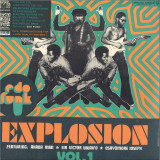
Analog Africa Presents Edo Funk Explosion Vol. 1, available on
2xLP/Gatefold LP with 20-page booklet / CD with 36-page booklet. It was
in Benin City, in the heart of Nigeria, that a new hybrid of intoxicating
highlife music known as Edo Funk was born.
It first emerged in the late 1970s when a group of musicians began to experiment with different ways of integrating elements from their native Edo culture
and fusing them with new sound effects coming from West Africa s night-clubs.
Unlike the rather polished 1980 s Nigerian disco productions coming out of the
international metropolis of Lagos Edo Funk was raw and reduced to its bare
minimum.
Someone was needed to channel this energy into a distinctive sound and Sir
Victor Uwaifo appeared like a mad professor with his Joromi studio. Uwaifo
took the skeletal structure of Edo music and relentless began fusing them with
synthesizers, electric guitars and 80 s effect racks which resulted in some of the
most outstanding Edo recordings ever made. An explosive spiced up brew with
an odd psychedelic note known as Edo Funk.
That’s the sound you’ll be discovering in the first volume of the Edo Funk Explosion series which focusses on the genre’s greatest originators; Osayomore
Joseph, Akaba Man, and Sir Victor Uwaifo: Osayomore Joseph was one of the
first musicians to bring the sound of the flute into the horn-dominated world
of highlife, and his skills as a performer made him a fixture on the Lagos scene.
When he returned to settle in Benin City in the mid 1970s - at the invitation of
the royal family - he devoted himself to the modernisation and electrification
of Edo music, using funk and Afro-beat as the building blocks for songs that
weren’t afraid to call out government corruption or confront the dark legacy of
Nigeria’s colonial past.
Akaba Man was the philosopher king of Edo funk. Less overtly political than Osayomore Joseph and less psychedelic than Victor Uwaifo, he found the perfect
medium for his message in the trance-like grooves of Edo funk. With pulsating
rhythms awash in cosmic synth-fields and lyrics that express a deep personal
vision, he found great success at the dawn of the 1980s as one of Benin City’s
most persuasive ambassadors of funky highlife.
Victor Uwaifo was already a star in Nigeria when he built the legendary Joromi
studios in his hometown of Benin City in 1978. Using his unique guitar style as
the mediating force between West-African highlife and the traditional rhythms
and melodies of Edo music, he had scored several hits in the early seventies,
but once he had his own sixteen-track facility he was able to pursue his obsession with the synesthetic possibilities of pure sound, adding squelchy synths,
swirling organs and studio effects to hypnotic basslines and raw grooves. Between his own records and his production for other musicians, he quickly established himself as the godfather of Edo funk.
What unites these diverse musicians is their ability to strip funk down to its
primal essence and use it as the foundation for their own excursions inward to
the heart of Edo culture and outward to the furthest limits of sonic alchemy.
The twelve tracks on Edo Funk Explosion Volume 1 pulse with raw inspiration,
mixing highlife horns, driving rhythms, day-glo keyboards and tripped-out guitars into a funk experience unlike any other.
Award winning saxophonist and composer Binker Goldingreturns to Byrd Out with a new trio comprising giants of theexperimental scene Steve Noble and John Edwards for analbum of unparalleled instant creativity: 'Moon Day'. The albumplays with the post truth zeitgeist, using the first major moonconspiracy of 1835 as a launch pad, throwing a sly wink at BuzzAldrin as the trio impart on their own musical odyssey. Thesheer variety of pace, tone and texture across the record isbreathtaking, from Golding's soft, almost weightless opening on'One Giant Step' through to the skittish re-entry of 'Reflection' asthe musicians ricochet off one another, the album bursts withideas and energy, yet remains coherent and singular in itspurpose. Recorded during a gap between the variouslockdowns of 2020, you can sense the release from themusicians as they combine after enforced isolation with atelepathic sense of where to push each other: Noble interjectingboth chaos and order from the drums; Edwards the rocket fuelpropelling the unit on; and Golding soaring and cutting throughon sax. You will not find a better showcase of these musicians'phenomenal abilities. This is free jazz at its most compelling andmost engaging. 'Moon Day' is undoubtedly a future jazz classic.
Shifted offers the latest distillation of his trademark sound.
Following on from the recent release of “The Dirt On Our Hands” – Guy Brewer’s fourth studio album and the first to arrive on his own Avian imprint, “Constant Blue Light” – another full length, explores new avenues in caustic minimalism.
Eschewing the booming effervescence of his own more plosive dance floor material – Shifted takes a no less nuanced, but decidedly more introspective angle on this new LP. At the centre of Brewer’s practice as an artist, there has always been a sense of dedication to the refinement of a singular idea. In some ways “Constant Blue Light” represents a move closer to the apex of this approach.
Opener “Slowly Counting Backwards” creates the framework for the record – reduced and meditative, owing somewhat to previous work, but still crisper and more precise. “Natural Elevation” riffs on airy patches that hiss and bend while “The Weight of It” transmits an unsettling hysteria with flanging leads and untethered rhythmic components. On the B side, the ominous dirge of “Soft Palate” brings a kind of uncanny energy to proceedings before “Into Your Ocean” utilises exquisite FM tones to create a captivating sonic montage. “Several Instances” hinges on dense low end and scattering white noise, before giving way to the machinations of “Clotting Time”. Closing piece “This I Know” offers a stunning, crystalline finish to the LP – upping the ante in its final minutes before giving way to a hiss of delay trails.
A continued exploration from a focused and diligent artist that provides yet another fully formed and beautifully articulated component to his own discography and that of the Avian label.
Hong Kong based hypno-tropicalia duo Blood Wine or Honey are set to release their second album 'DTx2' on 30th June 2021. Made up of seasoned multi-instrumentalists James Banbury (synths, bass, percussion, cello) and Joseph von Hess (vocals, clarinet, sax, percussion), they create a heaving, heady brew of brazen sax themes, lo-fi/hi-tech electronics, densely layered cello inflections and motorik drums.
These explorations start with the dance-floor then go above and beyond, taking notes from post-punk and tropical polyrhythms, always anchored by the bass weight of the sound system. Their distinctive sound is created in the industrial warehouses and hidden rural settlements of Hong Kong, surrounded by the low-end throb of heavy machinery, the lingering scent of hand sanitiser and the humidity of the South China Sea.
Written and recorded during 2020-21, new album 'DTx2' looks ahead to an uncertain future, drawing deep on their experiences and influences and welcoming a host of co-conspirators.
Jean Daval, aka Preservation (credits include Yasiin Bey fka Mos Def, MF Doom, RZA, GZA, Raekwon, KRS-One, Aesop Rock), provided truffle-hunted beats, synths and basses, which, when put through the BWoH mangle, emerged as 'Messenger'.
Superstar and old friend of the band KT Tunstall came to work with BWoH after they contributed a DJ mix for her lockdown 'KTRave' on Instagram. 'Attraction' was the result. Wonky bass, found-bounce beats and Buddy Rich drums smashed out by Tim Weller (Marc Almond, Future Sound of London, Goldfrapp, The Chemical Brothers, David Axelrod) resulted in a bonkers production with passionate vocals and layers of harmony.
'I Shall Rush Out As I Am' is a collaboration with legendary pop provocateur Paul Morley and Janice Lau of Hong Kong band David Boring. The track is based on the words and the spirit of sci-fi writer, satirist, literary critic and radical feminist Joanna Russ and took shape quickly, with tinges of A Certain Ratio and memories of Suicide, provoking Janice to an authentic scream-of-consciousness delivery.
Multi-talented London singer, musician and composer Kamal (Neighbourhood Recordings) took time away from being the Next Big Thing to transform 'Testing Time' with funk-edged keys. A key figure in the extraordinary '90s Hong Kong music scene, Zoë Brewster contributed vocals.
Roughly divided, the album's first set of songs make relatively short statements, punchily self-contained with common threads. The final four tracks, Testing Time, Embers, Embrasure
and Echt Embrace disperse into flights of mantric fantasy, with quicksand time-signature shifts and key-changes emerging into a more introspective zone with a fervent pulse, a shift in energy: stamina over speed.
Parisian label Chuwanaga proudly presents Latitude, Saint-James label co-founder new studio project. Keeping it close to the deep jazz-funk ethos of the label, Latitude brings to the light two luminous songs of joy and hope for a better day, highly danceable yet rich and complex grooves with a human feel to feed your soul and make you move. Their new EP Leo / Attitude presents these first effort with a Dub Remix by Mato: plenty of diverse tastes for every music enthusiasts. Available as Vinyl 12" and Digital.
Latitude is french. Not a random collection of chansons sung in french. Latitude is so french in its sheer elegance, in its simple yet so sophisticated seemingly effortless attempt to groove in a pop context, trying to create moments of grace in the process. Latitude is here with the right vibe as the chorus of "Attitude" says it in french: "It’s the bad attitude, always the good latitude". Latitude is sprung out of the wicked musicianship of Parisian jazz-funk and fusion mavericks and Saint-James tight and adventurous compositions and production. All that jazz combined with David Cukier (Greita) retro-futurist engineering skills in these intense sessions captured in his cutting edge vintage Delta studio.
On A Side, "Leo (Extended Mix)" is an uptempo disco track for the dancers but also a beautiful song for the summer. A seductive number with a pregnant classic French jazz-funk feeling with the help of Parisian singer Club Celest’s energy and beautiful voice. It comes on digital as a short edit for radio but as a serious extended 12inch mix on the vinyl with 8 minutes and 10 seconds of pure pleasure, ending in a real climax after an irresistible percussion break.
On B1, "Attitude" enchanting quality shines with a banging rhythm section and goes for the win as an anthem chorus while sweeping synths keep on growing till the very last drop. On B2, Reggae/Dub don Mato (Stix Records) delivers a sweet dub wise riddim for the Lovers Rock massive.
Imperium Droop brings two mavericks of sweeping exploration together into new avenues of musical expression. Kid Millions and Jan St. Werner explore a liminal space between improvisation and composition, a fluid yet defined sound-space, founded on the unique chemistry of their friendship and pushing into the future. Kid Millions stands as one of the most sought after drummers and improvisers in NYC, known for his work as the drummer for Oneida, his expansive solo work as Man Forever, as well as collaborations and performances with the likes of Laurie Anderson, Philip Glass, Royal Trux, Boredoms, White Hills, and Spiritualized. Regardless of who he's working with Kid Millions radically redefines the drums as an instrument. Jan St. Werner has consistently remained at the vanguard of electronic music. In his work as one half of the visionary duo Mouse On Mars, as well as his acclaimed solo work both as a composer and sound artist, and in collaborations with The Fall's Mark E Smith, Oval's Markus Popp, Stereolab, and The National St. Werner constantly pushes the limits of recorded sound. Together, Millions and Werner have crafted a monument of unpredictable beauty built on breathless forays into the unknown. Werner's application of a seemingly infinite arsenal of textures unleashes colorful swaths of energy. Mats Gustaffson joins Werner on the maximalist "Color Bagpipes," unleashing torrents of swiveling melody and breathy clicks over the exponential thunder of Millions' drum kit. Pieces like "Dark Tetrad" and "Astral Stare" demonstrate the duo's mastery of space and surprise. Dark flutters flow in slow pulses across "Apotropaic" where erratic swirls of sound twist and mutate on "Sorrows and Compensations," unified as a single force by the overwhelming diversity of sounds. Millions' drums effortlessly rides each wave of Werner's prismatic deluges and channels their energy into dynamic movements. Through his singular prowess, Millions' tireless rhythms and subtle gestures mirror Werner's boundless textural palette and drive each piece towards transcendence. On Imperium Droop, Kid Millions and Jan St. Werner have combined their powers into an incomparable work of gripping and intrepid sonic fluctuations.


![Potatohead People & De La Soul - Baby Got Work (DJ Jazzy Jeff & Kaidi Tatham Remix) [feat. Posdnuos & Kapok]](https://www.deejay.de/images/l/4/7/978647.jpg)