About time – Ebbot and I have finally been able to make an album that is largely an extension of all the time we have spent together and all the concerts we have done
You could say it's a kind of fusion of the two of us in music form. A key ingredient was that Reine Fiske (Dungen) wanted to be part of this musical adventure and record with us. His tone and spontaneous playing were absolutely crucial in making this album. Also at the heart of this album, and which made our recording sessions so edgy and good, were the beautiful poppy bass playing by Marcus Holmberg (Komeda), the dynamic and responsive drumming by Nicklas Korsell
and the funky piano playing by Daniel Kurba. And finally, working as both a musician and sound engineer, Ponus Torstensson, aka Tentakel, played a vital role in creating the psychedelic sound on the album
Buscar:new orleans funk 3
It was certainly unpredictable that a legendary jazz drummer would record one of spiritual disco's most revered songs twenty-three years into his career, but that's exactly what happened when Idris Muhammad laid down the epic "Could Heaven Ever Be Like This" in 1977. Hailing from New Orleans, Muhammad always had more than a touch of funk to his rhythms, and by the late '70s his collaborations with master engineer Rudy Van Gelder on recordings for the CTI and Kudu labels had gelled perfectly with the reigning jazz-funk sound of the day. Arranger Dave Matthews (famously part of the James Brown stable) collaborated with lyricist and former Long Island record store clerk Tony Sarafino on writing the song, which on the original recording unfolds over a nearly 9-minute build. Appearing at the crest of the disco movement, "Could Heaven Ever Be Like This" was an immediate hit with David Mancuso and the attendees of his loft parties, quickly spreading to other venues and even making a small climb up the Billboard R&B charts. For this new issue on Most Excellent Unlimited, Danny Krivit, whose own career as a dancefloor orchestrator from the DJ booth has paralleled the timeframe of the song's existence, has replaced the original loose introduction with a mix-friendly steady groove that maintains the unstoppable pulse of the song while maintaining the cathartic mid-song break and giving the track potential for even more momentum.
Another percussionist is responsible for our flip side track, "Magic's in the Air." Vince Montana was not only an in-house arranger and producer for Philadelphia International and other Philly soul labels, but was an accomplished vibraphone player. His talents are on display and doubly emphasized by Mr. K in this overlooked cut from Ronnie Walker, a falsetto singer who draws a rather strong comparison to the best songs of fellow Philadelphians Blue Magic with this uptempo, subtly synthy 1975 track. Never having appeared on a 12-inch, and indeed never having appeared even on a full-length album, Krivit's edit is the first extended mix of "Magic's in the Air" to date. Alongside "Could Heaven Ever Be Like This," itself notoriously difficult to find in 12-inch form, this latest from MEU's long running series with Mr. K is a bonafide must-have for the discerning DJ.
One of three MONSTER New Orleans Funk 45s released by Soul Jazz Records only ever exclusive available on their site on LONG out of print, these new 45s are limited edition pristine, loud dancefloor fillers housed in Soul Jazz recycled card house bag!
Surely one of the TUFFEST New Orleans Funk tunes ever made! The intensity of Marilyn Barbarin’s vocals are only matched by the super-tightness of Eddie Bo’s Soul Finders that accompany her – superb New Orleans wah-wah funk, locked in and in the pocket! A SUPERB Eddie Bo production, with original copies starting at £500!
One of three MONSTER New Orleans Funk 45s released by Soul Jazz Records only ever exclusive available on their site on LONG out of print, these new 45s are limited edition pristine, loud dancefloor fillers housed in Soul Jazz recycled card house bag!
Seminal New Orleans party funk classic tune of all time! Featuring the phenomenal vocals of Juanita Brooks, the writing and production skills of Eddie Bo and the drums of James Black, the tightest funk drummer in the world! An absolutely stone-cold BOMB TUNE!
One of three MONSTER New Orleans Funk 45s released by Soul Jazz Records only ever exclusive available on their site on LONG out of print, these new 45s are limited edition pristine, loud dancefloor fillers housed in Soul Jazz recycled card house bag!
Chuck Carbo’s Can I Be Your Squeeze, backed with Take Care Your Homework Friend are two of the most infectious break-heavy funk party tunes you will ever hear, written and produced by the legendary Eddie Bo and featuring the awesome syncopated drums of the phenomenal New Orleans drummer James Black.
"Life, Love And Faith" - Allen Toussaint (p, g, hca, arr); Alvin Thomas (ts); Francis Rousselle (tp); Clyde Kerr (tp, frh); George Plummer, Vincent Toussaint (g); Walter Payton (b); Joe Lambert, Joseph Modeliste (dr); a.o. & The Meters
Allen Toussaint had it all around him – the voices and spirits of black music, rhythm ’n’ blues, funk and soul. He was born in New Orleans and grew up there, the birthplace of jazz. As from 1960, he worked as a record producer and an A&R man at Minit Records, an independent label, which was closely associated with the transformation of the New Orleans Sound. His compositions for fellow musicians landed them in the charts, he frequently participated by performing with them on the piano, and so became a connoisseur and master of all possible sounds.
"Life, Love And Faith" marks his launch into his solo career, and quite rightly so. In the songs, Toussaint amalgamates all he had mastered with a rocking R&B, funky rhythms and expressive soul to create his highly personal sound.
Although it is a soul album through and through, one has the feeling that one is listening to an album from Reprise’s stable of singers/songwriters – including such artists as Randy Newman, Bonnie Raitt, Little Feat and Joni Mitchell – rather than what usually came out of New Orleans in the early Seventies. And also because "Life, Love And Faith" captures an eccentric genius who pursues his own idiosyncratic vision. It is a structured, multi-layered album, which does not show Toussaint in his purest form, but it is his only album that shows just how widely ranged and profound his many talents were.
This Speakers Corner LP was remastered using pure analogue components only, from the master tapes through to the cutting head.
All royalties and mechanical rights have been paid.
Recording: 1972 at Jazz City Studios, New Orleans, by Cosimo Matassa and Skip Godwin
Production: Allen Toussaint
Chicago singer, songwriter and pianist Neal Francis is ATO
Records’ newest signing, and today presents his new album, ‘In
Plain Sight’, the follow-up to Francis’s 2019 debut, ‘Changes’, a
New Orleans-R&B-leaning effort that landed on Best Of The
Year lists from the likes of KCRW, KEXP and The Current, and
saw him hailed as “the reincarnation of Allen Toussaint” by BBC
Radio 6.
After returning home from touring on the back of ‘Changes’,
Francis went through a breakup and found himself living in a
church, where he ended up writing a series of new songs about
honesty and resilience. “I’m owning up to all my problems within
my relationships and my sobriety,” he says. “So much of it is
about coming to the understanding that I continue to suffer
because of those problems. It’s about acknowledging that and
putting it out in the open in order to mitigate the suffering and try
to work on it, instead of trying to hide everything.”
Francis and his bandmates recorded In Plain Sight entirely on
tape - and mostly in that same church - and the resulting songs
are dreamlike and reflective, anchored in the rock and soul
sound that has led critics to compare him to legends like Allen
Toussaint and Dr. John. ‘In Plain Sight’ was mixed by the
Grammy-winning producer Dave Fridmann (The Flaming Lips,
Tame Impala, MGMT).
“There are hints of ’70s Brit Rock (including a very visceral
touch of Elton John) as well as New Orleans jazz-funk, gospel
soul, and some lighthearted Randy Newman - and the
amalgamation felt like a time-stamped treasure,” wrote the
Chicago Sun-Times on his recent hometown performance at
Lollapalooza. Early 2022 will see Francis embark on his first
ever UK and European tour.
LP pressed on Cherry Red vinyl and includes lyric insert with a
deluxe embossed vinyl jacket and custom inner sleeve. (Once
this pressing sells out, a standard black vinyl format -
ATO0577LP - on will become available.)
Fresh one on Music With Soul - a channel for hot 7"s that always fly out here. TIP!
"Two and a half frenetic minutes that sound like Aphex Twin and The Incredible Bongo Band dancing Capoeira in the early hours of an illegal rave, somewhere in the deep amazon forest. After the success of his first solo 45, Alex Figueira comes back to the aesthetics of the early Fumaça Preta, with an utterly bonkers 45 that can only be described as an “in-your-face acid macumba techno breakbeat funk freakout”.
The flip side contains a haunting Psychedelic ballad, with the sweet vocals of Maddie Ruthless, from NY’s leading Lovers Reggae sensation, The Far East. Equally trippy and beautiful, the soothing sounds of the Wurlitzer piano and the electric sitar will be bouncing in your head for hours after first listen. The kind of song that finds collectors dropping eye-popping sums, decades after the original release. Guarantee your retirement now by getting a few copies! The song “Maracas” is the main theme of the movie “Maracas, tambourines and other hellish things” directed by fellow record nerds Matteo Fava and Dave Potsma. They managed to convince Figueira to play the main character, and later on, to do the complete music score. The movie tells the story of a struggling underground musician / part time record store clerk, whose music career is basically going nowhere until an improbable encounter gives his life a dramatic turn. They asked Figueira to give them something with “a fresh tropicalized take on Blacksploitation”. One might argue, after listening to the insanity carved on the grooves of this piece of vinyl, that he certainly did deliver.
The characteristic mix of synthesizers and heavy percussion used by Figueira in almost all his projects, gains here a somewhat freer dimension, embracing the chaos openly, without ever neglecting the groove, nor the ancestry axis. Values that are at the core of the label. Even while laying down all the instruments himself, Figueira has managed to capture the same out of control tropical psychedelic spirit of his former band, Fumaça Preta. Fans of the group’s outfit will certainly be rejoiced by this new release.
The flip carries “Grasping & Wishing”, an evocative Psych ballad that retains the same tripped-out flair of the A side, while slowing down the tempo considerably with a decidedly african 6/8 beat. Sung by New Orleans’ own “Rocksteady Queen”, Maddie Ruthless, stepping out of her classic Reggae background, to grace the track with her beautiful voice, permeating the issues of belonging, doubt and introspective reflection portrayed in the lyrics, with a thin layer of exquisite fragility that will comfort your ears.
The production includes a significant number of sound effects, ranging from different types of percussion performed with liquids to bamboo flutes of different sizes and several layers of multiprocessed electric Sitar tracks. Listen carefully and you will discover new sonic nounces every time you put the record on."
- A1: Woman Is The Root Of All Evil
- A2: Shoo Ra
- A3: Tipitina
- A4: One Night Tale
- A5: A Little Closer To My Home (Bonus Track)
- A6: Go Ahead On (Bonus Track)
- A7: Make Your Own (Bonus Track)
- A8: Mama Roux (Bonus Track)
- B1: She's Just A Square
- B2: Bald Headed
- B3: In The Night
- B4: Helping Hand
- B5: Mean Cheatin' Woman
- B6: The Ear Is On Strike (Bonus Track)
- B7: I Pulled The Cover Off You Two Lovers (Bonus Track)
- B8: Did She Mention My Name (Bonus Track)
Cutting his teeth on New Orleans session work while still a teen in the 1950s, pianist and singer Dr. John (born Mac Rebennack) emerged in the late 1960s with GRIS-GRIS, a blend of snaky rhythms, Crescent City funk, and swampland voodoo flair. Since then, he has remained one of New Orleans’s prime musical ambassadors, an artist with his own trademark sound and style. These sessions actually have a feeling not unlike his early-'70s work. Most of the titles are self-penned, and there are also a few Professor Longhair covers. If you like vintage Dr. John, this is almost mandatory.
Ric Robertson is an American original, pulling influences from the greats
that came before, but wholly responsible for building his own
creative universe.
His new full-length record ‘Carolina Child’ is nothing short of an opus, taking
his wealth of musical proclivities from the mountain music of his home state of
North Carolina, all the way to the jazz and funk of his current homebase in New
Orleans and fueling it into a gonzo vision of Americana that is equally innovative as it is simply beautiful to hear.
As a songwriter, Robertson takes his inspiration from the fragility of our inner
lives and the small moments packed with meaning that surround us. This is
John Prine by way of New Orleans, Harry Nilsson in a Nudie suit, a stoned Dr.
John lost in Nashville, Bill Monroe on mushrooms listening to Bessie Smith. It’s
a riot of juxtapositions and a chaos of imagination anchored by Robertson’s
soft, flowing voice, and his uncanny knack for chronicling our lost lives.
‘Carolina Child’ was produced by Dan Molad of Lucius, and features Jess Wolfeand Holly Laessig from Lucius plus a whole host of Robertson’s friends and
picking partners including Dori Freeman, Oliver Wood (The Wood Brothers),
and Logan Ledger.
Listening to the album’s ten tracks, it’s clear that Robertson one of the best
kept secrets of Americana is poised for a breakout moment with ‘Carolina
Child’. Step into his boundlessly creative multi-verse and you’ll find nothing
short of American songbook excellence.
Exclusive vocal c/w instrumental mixes of Betty Lou Landreth’s ‘I Can’t Stop’ on this lead-single for the forthcoming Backatcha re-release of Betty Lou Landreth's in-demand 1979 album, "Betty Lou” (cat# BK037 – to be announced). Expanded to a double album, it features the original studio recordings along with bonus material and alternative takes. The late Betty Lou Landreth had already paid her singing dues long before she walked into Studio A at Detroit’s Superdisc, touring with the USO and performing with R&B and Jazz players on the live circuit.
‘I Can’t Stop’ producers Joel Palmer and Charlie Gabriel recruited some of Motor City’s top fellow musicians for the session, including Gabriel’s longtime friend and housemate, trumpeter Marcus Belgrave, arranger Travis Biggs, drummer J.C. Heard, Motown Funk Brothers’ pianist Joe Hunter and trumpeters Herbie Wilson and John Wilson, keys player Emmanuel Riggins, bassist Hubie Crawford, the Body sisters and many more.
"We just got together to cook up a gumbo. Detroit, New Orleans, funk, jazz, torch, country and some great, great musicians to bring the flavours together."
Joel Palmer, 2021.
7" of this funk classic re-issued for the first time from recently discovered Master Tapes.
Funky Soul (originally titled "Going To See The Man") was a routine crowd pleaser during live shows that even had its own dance "rock the ship." This was the part two of the song. It was part one that was created in the studio as a riff off of part two. The raw energy of this song when performed live created hysteria and drove spectators into a frenzy. It didn't take long for word to get around and catch the attention of the famous WYLD DJ Larry McKinley. McKinley wanted to capture this magic onto record and helped arrange the session at Cosimo Matassa's studio. He drove Isaac Hayes down from Memphis to New Orleans in 1968 and organized Issac Hayes to arrange the horn section on this record while he was working with the Okeh label and developing an emerging artist named Margie Joseph. It was during this time that Margie recorded two singles Why Does A Man Have To Lie/See (Okeh, 4-7304) and Show Me/A Matter Of Life Or Death (Okeh, 4-7313).
David Batiste & The Gladiators were a band David Batiste and several of his brothers formed while they were in High School in New Orleans back in 1961. The band won a talent show in 1965 at Harlem's famous Apollo Theater and are the pioneers of what is now known as "Funk." David Batiste & The Gladiators were legendary mainstays of every bar in New Orleans that every band was hustling trying to get booked at.
It's no wonder that this song was famously complied on BBE Records and Ubiquity in the 1990's, rediscovered and performed by Miles Tackett & The Breakestra in the early 2000's. Those compilations contained audio sourced only from the vinyl record originally pressed up twice in the early 1970s and sought after by collectors and DJs for years and years. This version is from a direct master tape transfer from recently discovered NOLA tapes. But wait… The party's just started. An entire album's worth of 1960s previously unreleased David Batiste & The Gladiators material from recently discovered master tapes is in the works and forthcoming on Family Groove Records.
Clear Vinyl
Eugene Synegal's early career as a teenager was the guitarist of Sam & The Soul Machine before moving to Los Angeles to join the group Sage and later in the 1970s recording on Lee Dorsey's Night People and The Neville Brothers records.
These previously unreleased recordings were birthed in the early 1970s, sometime during Eugene's trips back and forth between Los Angeles and New Orleans. A couple years after these recordings were immortalized onto 1/4" reel-to-reel tape an unusual crime scene involving Eugene and his girlfriend reads as if it was a chapter taken directly out of a pulp fiction novel. An Australian socialite named Patrica Galea, remained unsolved for 30 years. The robbers took $400, two diamond rings, a $1,400 cigarette lighter and two mink coats. They failed to collect Galea's $6,402 which was hidden in her freezer. This money was sent from Australia and was being used to fund Eugene's album as well as starting a new music publishing company in Hollywood. This was the life of Eugene. Playboy extraordinaire, jet-setter and guitar chops that would turn the head of Hendrix!! Around 2006 the owner of the West Hollywood apartment expressed a desire to learn more about its history and met with detectives who were unable to locate the file since it was buried in the cold cases section. The files were found, the case was reopened, solved and two men were arrested in 2007.
These recently unearthed 1970s recordings by Eugene are a reflection of his pure soul as well as a blend of psychedelia and funk that the band Sage was experimenting with in Los Angeles during that time period.
From a historical sense, these two recordings are significant because it bridges the historical and influential New Orleans music scene during the early 70's with the psychedelic rock and folk scene that was emerging just walking distance from the West Hollywood apartment that Eugene was living in with Galea during that time.
Eugene's unique guitar style paired with a deep-rooted gospel sensibility is a window into the artistry and songwriting capability of this incredibly talented man.
Lucky Brown is the alias and stage persona of American composer Joel Ricci, who conducts myriad combinations of musicians drawn from his Seattle Washington based Westsound Recording Collective in dynamic and spiritual public and private happenings. Via his dozens of self-produced experimental deep funk vinyl singles released by Tramp Records over the past 13 years, he has been hailed by music mavens worldwide as a deep funk pioneer.
Deep Blues EP Some Kinda Blues by the Mosquito Hawks is the fruit of a one-off early morning session in a practice room at the Seattle Drum School in 2010 featuring luminaries from the Seattle funk community including fiery guitar phenom Jabrille "Jimmy James" Williams of Delvon Lamarr Organ Trio renown, versatile drummer Jens Gunnoe and dynamic bass player Bob Lovelace. Rounding out the horn section is longtime friend and collaborator Thomas Deakin, who's singular tenor tone will be familiar to owners of the Space Dream and Mystery Road records. A tantalizing glimpse of the session was released by Tramp as a single under the name T.D. & The Jimmy James 3 on the extremely limited edition Mosquitohawk imprint, but this EP offers us time to appreciate the transformative alchemy of the session in its entirety. The new EP makes room for highlights that just couldn't have been contained on one 45, such as the remaining 7 minutes of brutal jamming of Mosquito Eater, the New Orleans street party shout of Hydrangea and the exalted kind of blues of Some Kinda Blues.
On this album, Ricci proves once again that he has developed his own trademark production and sound whose depth and honesty form a basis from which his work will ever remain timeless. Although this is just a 5-track EP we truly hope that the Mosquito Hawks gets at least as much attention as all of Ricci's other marvelous projects he did for Tramp during the past 15 years.
Known for the soulful jazz-grooves of their self-titled 2020 debut album, Matti Klein’s Soul Trio actually began as an idea rather than a group.
However, in early 2018 three master musicians met in Berlin’s Lovelite Studio with producer/engineer Jochen Str h (Tony Allen, Ebo Taylor, Pat Thomas, Jimi Tenor) and recorded a set of well-planned and even better executed live sessions, each finding their desired space live and direct, locking into the immediacy of the groove. ‘Soul Trio Live On Tape’ contains these very first sessions of the Matti Klein Soul Trio and comprises new arrangements of songs that had primarily been composed for Klein’s band Mo’ Blow; favourites already back then, timeless classics now thanks to these exciting ‘deep-fried contemporary soul jazz’ versions.
Their leader, known for his work as musical director for the Brazilian superstar Ed Motta as well as Mo ‘Blow, can be heard on Wurlitzer and Rhodes Bass; Lars Zander (The Ruffcats, El Cartel, Lucasonic, STEREOFYSH) not only proves he is the most soulful tenor saxophonist in Berlin, but also why he has earned kudos for a bass clarinet sound that is enhanced with analog tape delays, Wah-Wah and Harmonizer-sweetenings; and drummer Andr Seidel also shows his chops, incorporating elements of rock, hip-hop, odd meter fusion and the sound of New Orleans into his own unique groove jazz style.
As for the music, ‘Rocket Swing’ is a tenor sax feature in which a hip-hop vibe meets a jazzy fifth fall, while ‘Ray’ (dedicated to Mr. Charles) is a Meters-inspired shuffle in 7/8 time. ‘No Particular Way’ showcases the funky side of the band, with singer Pat Appleton in top form over a wonderfully creaky Rhodes bass. ‘Sunsqueezed’ is created in a wide compositional arc, evoking a ray of sunshine peeking through the clouds during a long and grey 10-month Berlin winter, giving hope for the next two months.
‘Eleven Feels Like Heaven’ is a joyful, uproarious gospel blues with a brilliant odd meter drum solo. ‘Grandpa’s Fairytale’ is a hitherto unreleased piece that is dedicated to the bandleader’s grandfather, a former school headmaster who loved to read him stories and is a Wurlitzer-warmth meets bass clarinet groove in an atypical dynamic arc. Summarising their efforts, Klein states somewhat cryptically that “the band rolls in a warm, soft couch whenever there is a risk of having to sit between the chairs.”
Initially available as a limited fan item only at live shows, this document is now being released officially with the addition of ‘Grandpa’s Fairytale’. It is a journey through time, absolutely contemporary and yet wonderfully back to the future.
Originally released in 2008 on Mr C’s and going for over £80 a throw, the band’s excellent funky debut 45, remastered for maximum dancefloor appeal. The stellar stand-out cut from the band’s 2010 album ‘The Outsiders Are Back’ was released on Luaka Bop. Think Curtis Mayfield with Fela’s horns and a percussion backing set to self-destruct; a spine tingling anthem, no less.
Cut with Willie Tee’s Gatur Records’ flipside that goes for £250 minimum. An organ-led, brass-powered groove from the New Orleans’ soul legend, originally released in 1972 A deep, soulful croon with an enveloping rhythm and a euphoric lift, remastered from the original sound files for added soul.
"Matasuna" brings together two important pioneers of funk on its latest release: "The Meters" from "New Orleans"and "The Watts 103rd Street Rhythm Band" from "Los Angeles". The song "Giggin' Down 103rd" by "The Watts 103rd Street Rhythm Band" was first released as a single in 1968 (as Misspress) and is now available again for the first time. The song "Sing A Simple Song" by "The Meters" even premieres as a 45! Both tracks have been remastered to offer the best possible sound.
The A-side opens with "Sing A Simple Song" by "The Meters", a cover version of a song by "Sly & Family Stone" written by "Sly Stone". In direct comparison, "The Meters" cover sounds much more energetic and powerful. The ingredients are simple but effective: heavy drum breaks, funky guitar riffs, deepe bassline and a lively organ. A killer instrumental joint that exudes roughness & funkyness from the first second to the last!
On the flipside "The Watts 103rd Street Rhythm Band" follows up in similar fashion with the song "Giggin' Down 103rd". Instead of an organ like "The Meters", the band offers a super thight horn section backed by killer drums, guitars & bass. A special spicy recipe that thematically fits perfectly for this Funk45!
"The Watts 103rd Street Rhythm Band" was formed by "Charles Wright". Charles, a musician & composer born in 1940 in "Clarksdale, Mississippi", moved to "Los Angeles" in the 1950s. There he played as a singer & guitarist in various doo-wop groups. Beginning in 1962, he formed his own band, "Charles Wright & The Wright Sounds", which was joined in the following years by other musicians who would become known in the future band. The name "The Watts 103rd Street Band" was established in 1967. That same year they signed a record deal with "Warner Bros. Records" and released their first album. More LPs were released in the following years.
The band played mainly cover versions of popular R&B hits in the early years, but began to create their own songs and form their own sound in the late 1960s, which would have a strong influence on other musicians at the time.
Starting in 1969, the first members left the band to work on other projects. Charles also left the band in 1972 to further his solo career and release various albums.
In 1965, the group "The Meters"was founded by "Art Neville"with three other musicians in the musical epicenter of "New Orleans". They quickly made a name for themselves in the local scene. The musician "Allen Toussaint", who was to become one of the most influential record producers of the 1960s, discovered the band and signed them to his label "Sansu Enterprises". They first played as a backing band at live and studio performances of artists of the New Orleans scene, before getting their own record deal with "Josie Records". On this label they released three albums, before releasing more in the following years on "Reprise Records" and "Warner Bros. Records". The band officially disbanded in 1977 and reunited a few years later in 1989.
Since then they have been on stage in different formations as "The Meters", "The Funky Meters" or "The Meter Man".
Their innovative musical style, which was influenced by traditional New Orleans second line music, West African rhythms, Soul and rReggae, set a standard that would influence many musicians. Also, their music had a significant impact on the Hip Hop community, which sampled their songs hundreds of times.
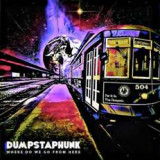
"Where Do We Go From Here" is Dumpstaphunk's first album in seven years. It will be released on April 23, 2021 on The Funk Garage, an imprint of Mascot Label Group.
Over its past 17 years, Dumpstaphunk has earned its reputation as the most well-regarded next-generation New Orleans live powerhouse, the type of band whose live shows attract sit-ins from legends like Carlos Santana, Bob Weir and Trombone Shorty. Alongside Hall, Daniels, Alex Wasily, Ryan Nyther and drummer Devin Trusclair, cousins Ivan and Ian Neville have built upon their family’s iconic NOLA legacy as they’ve transformed Dumpstaphunk into the city’s pre-eminent 21st-century funk-fusion export.
The band’s mix of classic and modern influences can be heard throughout the party-friendly mix of R&B, funk, rock, swamp-pop and blues of "Where Do We Go From Here," from the slap-bass rave "Make It After All" to the band's contemporary renderings of NOLA R&B rarities (the 1975 Blackmail gem "Let’s Get At It") and early Seventies classics (Sly and the Family Stone's "In Time”).
‘Where Do We Go From Here’ is perhaps the best evidence yet of Dumpstaphunk’s ability to strengthen and transform their singular NOLA roots in combination with the deeper outside musical and philosophical influences on which the band is founded.
Die GRAMMY-nominierte Band CHA WA veröffentlicht mit ,My People" eine neue Song-Kollektion, die aus der reichen und lebendigen Straßenkultur von New Orleans schöpft. ,My People" vereint zeitgenössische Klänge mit der Musik von Straßenparaden und der Mardi Gras Indianer-Gemeinschaft - einer Gruppe schwarzer New Orleaner, die mit ihrer Kleidung, ihrer Musik und ihrem Dialekt den indianischen Stämmen Respekt zollen. Vollgepackt mit einer lebendigen Ansammlung von New Orleans-Klängen und -Geschichten, schöpft diese Sammlung neuer Originalsongs aus den Grooves von New Orleans-Funkbands der 70er Jahre wie The Meters (besonders bei Stücken wie ,Wildman" und ,Bow Down") und nimmt deutliche Einflüsse aus der Geschichte der Stadt mit Brass-Band-Musik, Jazz, R&B, Hip-Hop, Rock, Soul und afrikanisch inspirierten Arrangements (einschließlich einer relaxten Coverversion von Bob Dylans ,Masters Of War" in diesem Stil). Cha Wa wurde von Bandleader Joe Gelini kurz vor der Veröffentlichung des 2018 erschienenen Debütalbums ,Spyboy" gegründet, das 2020 bei den GRAMMYs mit einer Nominierung für das beste regionale Roots-Album ausgezeichnet wurde. ENG The next generation of New Orleans music shares a bold vision for the future with a reverence for the past. It builds upon tradition to bring something unique to the world. The future of New Orleans music is Cha Wa, a Mardi Gras Indian funk band that takes the music of the streets into the 21st century, with guests like Alvin Youngblood Hart and Anjelika Jelly Joseph. On "My People", the band tries to "take the influence of Monk and Bo and Willie Tee [from the original Wild Magnolias] back in the day, when they were interpreting the music of their time - the deep funk, disco, Afrobeat and tinges of reggae," says drummer & bandleader Joe Gelini. "And we're also trying to interpret and write new music that we're inspired to play that's relevant to our generation, and our current social environment." "My People" feels like pure joy, a distillation of generations of New Orleans expression, but it also never fails to remind us how hard-won that joy was and still is: not least in the tense, funky and explosive title track, with its declaration "My people, we're still here." "Mardi Gras Indian songs are inherently songs about freedom," Gelini says. "And that struggle is as relevant today as it's ever been."
They Say: “New directions in contemporary scoring”.
We say: Contempo is one of the best full album listens in the KPM 1000 library. Succinct smoking soul, super tight breaks and string-drenched sleaze composed by the library master, Keith Mansfield.
The creator of the romping tunes that became the iconic themes to the BBC’s Grandstand programme and their televised Wimbledon Tennis Championship coverage, Keith Mansfield was perhaps KPM’s most prolific artist from the mid 1960s right the way through the 1980s. As well as the sort of pop orchestral sound that is all over these classic library records, he could also turn his hand to raw, edgy rock and funk. Quentin Tarantino is a big fan, going as far as including some of Keith’s work on the soundtracks to Kill Bill and Grindhouse.
Many library records are a game of two halves and Contempo is certainly one of those. The first side cooks on a high funk breaks flame whilst the flip is something altogether more tranquil, yet no less groovy. It lays back with dreamier, post-coital grooves.
Rugged funk opener “The Fix” confidently displays its low slung languid grooves with heavy drums, horns and bass. Smokin’ in slow motion. The punchy “What’s Cooking” follows and has a lighter, more whimsical touch. But the drums still roll and the clavs wiggle in fascinating opposition to those horns. The dark and moody intro to “Cut To Music” gives way to a more inclusive, relaxed funk that’s all irresistible bass and stabbing horns. The mid-tempo “Man Alive” signals the time to really get down. A percussive monster jam. If you can’t strut to this then we really can’t help you! Closing out the A side, fresh guitar licks drip all over the slick drums of “Funky Footage”, with a New Orleans piano vibe coming on to really light a fire.
Whilst the dramatic crime funk of the A side is enough on its own to have earned this record its place in the great library record canon, it’s undoubtedly the more smoothed out B side for which Contempo is rightfully adored and celebrated. It’s so chilled and mellow, with beautifully arranged, sweeping strings, sax solos aplenty and a real 70s soundtrack feel. Think Love Boat, CTI label, Bob James, Grover Washington Jr.-type jams.
The super sleek and sexy jazz funk of “Breezin’” is as light and magical as you’d hope. An open-air masterpiece, its indulgent sound is just a taster of the sophisticated funk to follow. The elegant, romantic feels of “Good Vibrations” (used brilliantly by Odd Future’s Mike G for “Swiss Army”) is a string-drenched, wah-wah fuelled ode to living your best life. Nonchalantly. Whilst it keeps a very West Coast feel, the blaxploitation strut is certainly more Blackbyrds than Brian Wilson. “Sun Goddess” will blow your mind with the sensuous sound of glorious horns and beautiful keys. The luxurious “Love De Luxe” and its horizontal grooves have been much sampled, but here it proves that it doesn’t need any help to get you in an intimate mood. Closer “Snake Hips” is a cool mid-pace slouch. Just divine.
Originally released in 1976 but, like the very best KPM records, wonderfully timeless, Contempo is also no mere LP-length collection of loosely related tracks. This is a rare example of a library record that is a genuinely great listen from start to finish.
As with all of our KPM re-issues, the audio for Contempo comes from the original analogue tapes and has been remastered for vinyl by Be With regular Simon Francis. And as usual, the sleeve reproduction duties were handed over to Richard Robinson, the current custodian of KPM’s brand identity.
: Contempo (KPM) (LP)