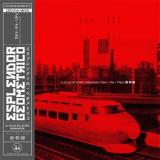
Don Cherry, armed with a voracious musical appetite and boundless imagination, first made a name for himself - though not always fully understood - alongside Ornette Coleman, playing trumpet or cornet. In Los Angeles and then New York, he stood at the heart of a revolutionary approach to improvisation based on melody rather than harmony, later baptized "Free Jazz," the final structural development of American jazz. Over time, he became a champion of improbable fusions - gradually integrating into his style a whole array of "exotic" instruments, and more importantly, the cultures from which they originated. Among them: India, Brazil, Africa, Indonesia, and even China. The time had come for the emergence of "world music": in hindsight, a patchwork rich in imagination and seduction, but once the novelty wore off, often lacking in substance.
In Don Cherry's case, however, the commitment ran deep - tied to his personal engagement with a global vision of art and the human condition. Ustad Ahmed Latif Khan, from the Delhi gharana (a musical lineage), was part of a new generation of accompanists - percussionists, sarangi players, flutists, etc. - who had extended both the technical and conceptual possibilities of their predecessors to gain recognition as soloists and soon to venture onto the international scene. Among them, Latif stood out for his taste for irregular, highly syncopated rhythmic patterns - rich in variety and originality. Don and Latif had never met before the recording session, but the two quickly recognised one another as kindred spirits - calm, focused... and full of laughter. Don clearly knew what he wanted to create, and nothing seemed to pose a challenge for Latif, who grasped the American's intentions immediately, warmed up his fingers at astonishing speed, and with his perfect pitch, naturally took on the role of tuning Don's diverse instrument collection to match whatever was found in the studio - from concert piano and Hammond B3 organ to chromatic orchestral timpani.
quête:new rhythmic
- 1: Any God Of Yours (Instrumental)
- 2: Swell (Instrumental)
- 3: Arise Dear Brother (Instrumental)
- 4: Ammi Ammi (Instrumental)
- 5: Buffed Sky (Instrumental)
- 6: Sex With Nobody (Instrumental)
- 7: Eye’s Drift (Instrumental)
- 8: The Sea Liner Mk 1 (Instrumental)
- 9: Empty Vessels (Instrumental)
- 10: New Builds (Instrumental)
- 11: Dull Boys (Instrumental)
- 12: Thames Water (Instrumental)
XL Recordings is proud to mark the 10th anniversary of Archy Marshall’s (aka King Krule) A New Place 2 Drown with the release of a newly remastered instrumental edition.
Originally released on 10 December 2015, A New Place 2 Drown remains a singular entry in the Archy Marshall catalogue. Known to many for his work as King Krule, Marshall released A New Place 2 Drown under his own name, highlighting a different facet of his creative identity. An atmospheric blend of submerged beats, woozy textures, and diaristic storytelling, the project earned widespread acclaim upon release, including Pitchfork’s Best New Music.
Developed in parallel with a visual world shaped with his brother and longtime collaborator Jack Marshall, the quietly influential project stands as a multidisciplinary love letter to their home of South London, originally released alongside a Will Robson-Scott–directed short film and a book of artworks, photography, and poetry by the Marshall brothers.
The 2025 instrumental edition offers a newly illuminated perspective on the record’s sonic core, drawing fresh attention to the production craft that underpins the project. By stripping the songs back to their foundations, the release highlights the intricate textures, rhythmic detail, and atmospheric depth that have helped A New Place 2 Drown grow into a cult favourite over the past decade.
“A New Place 2 Drown evokes a septic world filled with flickering halogen bulbs, sticky synth keys, and corroded outputs. Marshall has made tremendous strides as a producer, gorgeously reproducing the gloom and loneliness of early '90s hip-hop and finding a way to integrate it into his own style.” - PITCHFORK
»Hug of Gravity« is the second solo album by Raphael Loher and his first for Hallow Ground. The Swiss pianist and composer uses piano preparations, tape machines, and digital means to forge an aesthetic of playful reduction and rhythmic abstraction. The source material for these four sprawling pieces was culled from recordings of the artist performing the album’s predecessor, 2022’s »Keemuun.« Loher used them in a painstaking two-part working process to create an album that is both a product of and an ode to transformation, exploring themes of alternative temporalities and spatialities. »Hug of Gravity« oscillates between experimental electronic music, ambient, and minimal music and calls to mind the work of artists like William Basinski, Linda Catlin Smith, or label mate Andrius Arutiunian.
Loher laid the foundation for »Hug of Gravity« in 2020 with ten solo performances at his studio, during which he presented the pieces from his debut album. For these intimate concerts, he prepared the piano with modelling clay in order to move beyond the well-tempered tuning that dominates most of Western music. He then used a consecutive three-month residency in the Blenio Valley to refine the recordings. »I cut up and rearranged the material, then transferred the results—around 30 pieces—to a varispeed tape machine and then back to the computer. After that was done, I cut them up and rearranged them again,« he laughs. By radically reworking the material, he created an album that eschews traditional notions of time and space.
Loher points out the influence that his surroundings had on him. »The process created the music—and the place was essential to the process.« he says. He wandered through the mountains for up to nine or ten hours a day, which gave him a sense of what he calls expanded temporality. »Time just felt longer, my experiences seemed more diverse and nuanced, and it was as if I perceived my environment more clearly,« he explains. This shift in Loher’s perception of time and space—the latter also expressed in the album’s title—influenced his work with the varispeed tape machine. It allowed him to change the pitch of different recordings while layering them to let interference patterns emerge and emphasise the emotional qualities of the unconventional tunings he had used.
In this way, Loher constructed numerous interlocking narrative arcs throughout »Hug of Gravity,« an album that is ever-changing; an exercise in calm ecstasy that provides its audience with the feeling of being removed from conventional time and space. This approach is also reflected in the artwork for »Hug of Gravity,« which is based on drawings Loher made during his residency at Blenio Valley. Their fine hand-drawn lines run in parallel and let incidental patterns emerge, an effect that is only multiplied when the six different drawings that accompany each vinyl copy of the album are overlapping, forming ever-new visual constellations.
Mesh-mainstay Jinjé teams up with A. Montane for a collaborative EP born out of live improvised sessions, and composed over the period of a year.
Taking a slowed approach to the production of Neon Garden EP, the two hardware aficionados met sporadically for live jam sessions - an homage to the importance of not rushing the process, and letting ideas build over time. Each session consisted of an intense burst of musical propositions followed by a careful editing framework, giving space for each moment to flourish. Oscillating between moments of catharsis and intense rhythmic play, the EP merges disparate musical sources into exciting new structures.
‘Ikeya Seki’ launches with glistening arpeggiations and subaquatic frequencies that interact over UKG-adjacent drums. ‘Vrem’ marches to a slow-stepping half time beat, building through yearning vocals before breaking down into a storm of pointillistic percussion. On ‘Yū’, rich melodies and bouncy, bass-led rhythms dance below chopped up vocals. Closing things off, ‘Velvet People’ builds a spatial setting with bells ricocheting through malfunctioning flutters.
A nod to the joys of improvisation, Neon Garden EP takes the spirit of spontaneity and lays out new structures for its ideas to grow.
- Mean Street
- Dirty Movies
- Sinners Swing!
- Hear About It Later
- Unchained
- Push Comes To Shove
- So This Is Love?
- Sunday Afternoon In The Park
- One Foot Out The Door
The song titles on Van Halen's aptly titled Fair Warning don't lie. The likes of "Unchained," "Mean Street," "Push Comes to Shove," "One Foot Out the Door," and more indicate the mood the band channels on its double-platinum 1981 record — the nastiest, darkest, and fiercest album of the group's storied career. For the fourth time in four years, Van Halen throws down the gauntlet to all challengers and emerges victorious.
Sourced from the original analog tapes, pressed on MoFi SuperVinyl at Fidelity Record Pressing, and strictly limited to 5,000 numbered copies, Mobile Fidelity's UltraDisc One-Step 180g 45RPM 2LP set plays with unfettered clarity, dynamics, and immediacy. Benefitting from superb groove definition, an ultra-low noise floor, and dead-quiet surfaces, this vinyl edition captures what went down in the studio with tremendous realism and involving presence.
Taking a more controlled approach in the studio and still completing everything in less than two weeks, Van Halen and producer Ted Templeman relied on studio amplifiers to direct the sound. Further diverging from the live-on-the-floor approach of its earlier albums, the ensemble also employed overdubs to great effect. The result: Dense, stacked architecture that underlines the hard-hitting tenor of the songs — and which comes alive like never before on this reference edition that looks as good as it sounds.
The premium packaging and gorgeous presentation befit the reissue's select status. Housed in a deluxe slipcase, it features special foil-stamped jackets and faithful-to-the-original graphics that illuminate the splendor of the recording. Aurally and visually, it is made for listeners who want to immerse themselves in everything involved with the album, including the iconic cover art adopted from William Kurelek's haunting painting, "The Maze."
Isolated frames from Kurelek's childhood-inspired work — including a man bashing his head into a brick wall, a guy pinning down an adversary as he delivers bare-fist blows to his face and others watch with apparent glee, a boy tied down on a conveyer belt and being sent through the equivalent of a meat saw — adorn the front and back covers. The sunnier visual disposition of Van Halen's prior efforts gives way to something sinister and tortured, traits reflective of the music within. The band members, too, are visually depicted not in glamorous shots but in a serious black-and-white portrait in which the quartet is clad in black leather jackets.
Tough, aggressive, stark: Fair Warning comes on like a series of bare-knuckled punches to the solar plexus and boasts lyrical narratives to match. Though not a concept record, the concise album revolves around themes of roughing it on the streets and struggling to survive amid dim prospects. Singer David Lee Roth reportedly penned many of the initial lyrics after traveling to Haiti and observing extreme poverty. The characters and situations populating Fair Warning reflect hardscrabble existence, last-chance desperation, and underlying danger.
Witness the crazies, poor folks, and hunters of “Mean Street”; the former prom queen turned pornographic actress on “Dirty Movies”; the menace and vice of “Sinners Swing!”; the streetwise hustle of “Unchained”; the isolation and alienation of “Push Comes to Shove”; the desire for escape on “One Foot Out the Door”: A carefree California beach party Fair Warning is not.
Having said he felt angry and frustrated during the sessions, guitarist Eddie Van Halen uses the forceful arrangements as a playground for his seemingly unlimited arsenal. Supported by a crack rhythm section and a hyped-up Roth, he performs with an almost impossible combination of punk-like intensity, technical finesse, lyrical fluidity, and unbridled emotion. The virtuoso was increasingly butting heads with Templeton and seeking a freedom in the studio he believed denied him.
No wonder he plays like a bat out of hell. Listen to the rapid-fire manner in which he slaps the high and low E strings on the 12th fret of his instrument on “Mean Street,” instilling the tune with funk flair and metal-spiked sharpness. For the pouty strut of “Dirty Movies,” Eddie Van Halen contributes slide guitar magic made possible after he sawed off the lower portion of a Gibson SG so he could reach further down the fretboard.
Related intensity, urgency, and daredevil momentum punctuate the surging “Sinner’s Swing!” A heavily flanged, delicately melodic introduction frames the attitudinal “Hear About It Later,” among the most creative arrangements of Van Halen’s career. And do riffs come any bigger or magnetic than those on the high-wire kick of “Unchained”? As for the out-of-left-field “Sunday in the Park,” an instrumental composed on an Electro-Harmonix micro-synthesizer: Who but Eddie Van Halen to supply creep factor in such an ingenious way?
Despite selling fewer quantities than Van Halen’s prior efforts, Fair Warning remains for many diehards the record that epitomizes all of the band’s immense strengths —Roth’s manic energy and tongue-wagging humor, Alex Van Halen’s rhythmic heartbeat-in-your-chest bombast, and Michael Anthony’s lucid bass lines included. Arriving when the New Wave of British Heavy Metal and new-wave movements were taking flight, it signaled a shot across the bow from a band determined to stay a step ahead and provide proof nobody could touch what it delivered.
More than four decades later, Fair Warning still sounds that alarm.
A rhythmic minimal ambient piece played with organic electronic sounds. Elements of electronic, psychedelic, and ethnic music are interwoven. The vinyl debut of Japanese composer / electronic musician NAT000. Mastered by ISAO KUMANO of Phonon, a Japanese audio equipment manufacturer. NAT000 : After performing live as a one-man drone under the name sonic mainly at 20000v in Koenji Tokyo and DOM in Nishi-Shinjuku (now EARTHDOM in Shin-Okubo), he became a band member of the hardcore bands BUTTHEAD SUNGLASS and ABRAHAM CROSS, which gained popularity in the underground scene in Tokyo in the 2000s.The Band has been performing in parks, abandoned buildings, and campgrounds. Since turning solo again, he has been producing electronic music and performing live using analog synths, samplers, drum machines, software, and effectors, and has privately released a CD of self-produced recordings. This album is a compilation of past works from those CDs and newly produced works for the album.
Blue Limited Edition[21,43 €]
Spandau20 delivers its eleventh various artists release, a sonically rich and future-facing blend of broken grooves, spatial moods and modern Detroit romanticism. Four tracks, four new angles on the dancefloor. ANNA Z sets the tone with 'Kabeljau', an eclectic, IDM-flirting workout. On the opening track, elastic rhythms stretch and snap while ethereal pads drift overhead, punctured by sudden turns and glitchy surprises. Moody, weird and beautifully unpredictable. Dajusch continues with 'Fallout', diving into shimmering Detroit-inspired chords and pristine production. Clean yet full of soul, its dreamy propulsion moves with effortless optimism. It's a track that lifts heads and hearts without ever losing its club focus. Flip the record and FJAAK welcome you into a breakbeat-infused haze. 'Your Time' pairs groovy percussion and airy atmospheres with those unmistakable powerhouse vocal chops, a warehouse anthem with a gentle cosmic touch, driving yet deeply emotional. Closing the EP, Claus accelerates the pulse. 'Moist Logic' is a faster, more urgent exploration of the techno continuum. Machine funk encoded into a forward-thrusting groove, a sleek atmosphere swirling around a sharp, kinetic core. With SPANDAU20 011, the West-Berlin collective celebrates a hybrid future that is rhythmically adventurous, melodically rich and rooted in the love for the dancefloor. This record combines Berlin grit with dream-state techno, balancing rough energy and refined emotion across four cuts that leave their mark on the floor.
Black Vinyl[16,39 €]
Spandau20 delivers its eleventh various artists release, a sonically rich and future-facing blend of broken grooves, spatial moods and modern Detroit romanticism. Four tracks, four new angles on the dancefloor. ANNA Z sets the tone with 'Kabeljau', an eclectic, IDM-flirting workout. On the opening track, elastic rhythms stretch and snap while ethereal pads drift overhead, punctured by sudden turns and glitchy surprises. Moody, weird and beautifully unpredictable. Dajusch continues with 'Fallout', diving into shimmering Detroit-inspired chords and pristine production. Clean yet full of soul, its dreamy propulsion moves with effortless optimism. It's a track that lifts heads and hearts without ever losing its club focus. Flip the record and FJAAK welcome you into a breakbeat-infused haze. 'Your Time' pairs groovy percussion and airy atmospheres with those unmistakable powerhouse vocal chops, a warehouse anthem with a gentle cosmic touch, driving yet deeply emotional. Closing the EP, Claus accelerates the pulse. 'Moist Logic' is a faster, more urgent exploration of the techno continuum. Machine funk encoded into a forward-thrusting groove, a sleek atmosphere swirling around a sharp, kinetic core. With SPANDAU20 011, the West-Berlin collective celebrates a hybrid future that is rhythmically adventurous, melodically rich and rooted in the love for the dancefloor. This record combines Berlin grit with dream-state techno, balancing rough energy and refined emotion across four cuts that leave their mark on the floor.
Bringing together two distinct yet complementary forces in electronic music, Zohar and Nymfo join for their first collaborative release on Dekmantel.
Zohar’s sound is defined by razor-sharp precision and pulsating percussive energy storm-like sonics that disorient and excite in equal measure. With a background shaped by years of commanding dancefloors, she has carved a diverse and eclectic path, where rattling low-end and rhythmic tension form the foundation. Known for her technical refinement and mixing wizardry, Zohar intuitively seeks unexpected connections, always pushing her listeners into new territory. Following several contributions to Dekmantel compilations, this marks her first full-length release on the label.
Nymfo has been an essential figure in drum & bass since the late ’90s. Starting out in Eindhoven’s rave and jungle scene, he quickly became known for his fierce DJ sets and later, his productions. His catalogue spans acclaimed labels such as Metalheadz, 1985 Music, Commercial Suicide, Hospital Records, Critical, Dispatch, Shogun Audio, and many more. With two albums and a steady output of singles and EPs, Nymfo has consistently balanced raw dancefloor energy with a deep, refined production ethos.
Their paths crossed countless times in the scene, yet it wasn’t until Dekmantel invited them for a special Dekmantel Connects performance an ambitious setup with eight CDJs and four mixers that they shared the decks for the first time. The synergy of that moment carried into the studio, where their collaboration took shape. This release now returns them to the Dekmantel family, presenting their joint vision: a dialogue between low-end weight, rhythmic intricacy, and forward-thinking club sonics.
A meeting of worlds. A new kind of resonance. GODTET's upcoming release captures the alchemy of their landmark performance with the Sydney Symphony Orchestra at the Sydney Opera House.
At once bold and nuanced, this album explores the friction between improvisation and orchestration. Where the orchestra is anchored in fully composed material, GODTET remains free – navigating the work's harmonic architecture with instinct and spontaneity. Structures are fixed, but expression is fluid.
Orchestrated and brought vividly to life by Novak Manojlovic, GODTET's long-time collaborator and musical polymath, the work bridges the worlds of bedroom production and classical tradition. His arrangements offer not just translation but transformation. Amplifying the ensemble's rhythmic language through the rich sonic canvas of the Sydney Symphony Orchestra.
The result is a deeply textural suite that amplifies the best of both disciplines: GODTET's idiosyncratic groove and live sampling artistry converging with the symphonic weight and colour of the Sydney Symphony Orchestra.
Under the baton of Nicolas Buc,GODTET + The Sydney Symphony Orchestradoesn't just blend genres, it dissolves hierarchies. It's a declaration that music born in warehouses and bedrooms can belong in concert halls, and that authenticity transcends format. This is GODTET in full bloom, expansive, fearless, and profoundly moving.
a 01: New Sun (Live) feat. The Sydney Symphony Orchestra & Novak Manojlovic
b 02: Stepper (Live) feat. The Sydney Symphony Orchestra & Novak Manojlovic
[c] 03: The Fall Line (Live) [feat. The Sydney Symphony Orchestra & Novak Manojlovic]
[d] 04: Dub Angels (Live) [feat. The Sydney Symphony Orchestra & Novak Manojlovic]
[e] 05: Cantus (Live) [feat. The Sydney Symphony Orchestra & Novak Manojlovic]
[f] 06: Bliss Angels (Live) [feat. The Sydney Symphony Orchestra & Novak Manojlovic]
[feat. The Sydney Symphony Orchestra & Novak Manojlovic]
Paul Murphy’s Claremont 56 label welcomes a genuine legend of UK music to its roster – Chaz Jankel, the man whose dizzying musicality and love of soul, funk and disco did much to shape the sound of Ian Dury’s Blockheads band in the late 1970s and early ‘80s.
A virtuoso keyboardist with a deep love of Black American music, Jankel’s arrangements and compositional skills were key to the success of their records, the funkiest of which not only became crossover pop hits – see ‘Hit Me With Your Rhythm Stick’ and ‘Reasons To be Cheerful, Part 3’ in particular – but also saw heavy rotation in now iconic New York clubs including the Paradise Garage and Studio 54.
This continued during the formative years of his solo career, with ‘My Occupation’, ‘Questionnaire’ and ‘Glad To Know You’ (later famously re-edited and dubbed out for nu-disco dancefloors by Todd Terje) all becoming club hits. The great Quincy Jones also covered Jankel’s infectious single ‘Ai No Carrida’, while experimental, club-ready synth-jam ‘3,000,000 Synths’ was also influential during the early years of the electro movement.
For his Claremont 56 bow, Jankel has delivered an all-new workout recorded earlier this year, the simply titled ‘Rhumba Jam’. A typically warm, groovy and rolling affair, it features Jankel delivering infectious, stretched-out Rhodes electric piano solos over toasty bass, clipped guitar licks, warm bass, accordion-style synth motifs and a densely layered Rhumba rhythm. While relaxed and sun-soaked, it also has bags of Balearic dancefloor potential.
Murphy remixes under his now familiar Mudd alias, leaning into the track’s languid Balearic vibe while keeping a firm focus on the dancefloor. Beginning with an enticing mix of metronomic drums and jangly acoustic guitars, Murphy slowly layers up key elements of Jankel’s original – think rubbery bass, rhythmic handclaps, mazy synth sounds and those wonderful, stretched-out solos. It’s a version that pays due reverence to the quality of Jankel’s musicianship, production and arrangement while subtly extending it and reframing it for 21st century Balearic dancefloors.
Fides Records continues its 10-year anniversary with the second chapter X2 following the monumental 10Y OF FIDES: Mixed by Z.I.P.P.O. True to the label’s decade-long pursuit of underground sound and vision, this new instalment deepens the narrative with six striking contributions that embody the raw, hypnotic, and modular essence of the Fides universe.
The A-side opens with Setaoc Mass’s “Quanta” a stripped down, mental techno piece driven by tension and precision. Seddig follows with “Seismic” an intense, driving composition marked by rugged modular energy and deep rhythmic focus, while Casual Treatment’s “Hoover” injects elasticity and bounce through detailed sound design rooted in French minimalism.
Flipping to Side B, Holden Federico’s “Tactics” timeless track based on a 909 framework and a melodic core that balances power and elegance. Augusto Taito’s “No Eye Contact” unfolds as an immersive, restrained groove while Asymptote’s “Encounters” closes the record with cinematic precision, a contemplative yet physical finale true to the Fides aesthetic.
Everybody loves a disco gram or two, wink wink, but Spanish label DiscoGram is also a sign of a good time. The main label has put out more than 30 juicy tunes but here they launch a new sub-series, again with the in-house production team at the helm. 'Linda' kicks it off with bright, extroverted and slightly camp disco energy and diva vocals. 'Pages' is a slinky strider with a pained vocal bringing the soulful heat and offering a hugely impressive falsetto crescendo. 'Tabaco Y Ron' gets more florid with its Latin flutes and rhythmic vocal coos, then 'Xulipa' ends with swooning strings and a graceful air of disco cool with some recognisable vocal hooks.
- A1: Night Whisper (Trance - 1992)
- A2: Eliana (Totem - 1985)
- A3: Nomad (Trance - 1992)
- B1: Stefania’s Song (Still Chillin’ - 2005)
- B2: Seducing Hades (Luna - 1994)
- C1: Zone Unknown (Zone Unknown - 1997)
- C2: Silver Desert Cafe (Tongues - 1995)
- C3: Totem (Totem - 1985)
- D1: Dancing Path Chaos (Initiation - 1988)
- D2: Labyrinth (Luna - 1994)
- D3: Shavasana (Still Chillin’ - 2005)
Ground-breaking percussive ambient recordings from Gabrielle Roth & The Mirrors, inducing altered states of consciousness through ecstatic dance. "Selected Works from 1985 to 2005" finally available on Time Capsule
Despite featuring an extraordinary cast of musicians (with credits including Pharoah Sanders, Miles Davis, Sun Ra, Santana and Milton
Nascimento) and selling hundreds of thousands of albums, the music of Gabrielle Roth & The Mirrors remains largely unheard beyond their sphere. Conceived as live, improvised soundtracks to Roth’s transcendental dance workshops, musical acclaim was never on the agenda.Instead, for a passionate dancer and spiritual polyglot like Gabrielle Roth, movement was a means through which to channel a wide spectrum of teaching, from experimental psychology to psychedelic counter-culture. It was from this heady mix that she devised a movement meditation known as 5Rhtyhms, which came to define her life’s work.
As “guide and catalyst”, Roth would dance to inspire the percussion-led instrumentals that would in turn fuel her 5Rhythms workshops, stimulating a secular form of ecstatic dance with roots in Native American shamanic traditions, Afro-Brazilian Candomblé and Yoruba drumming. Using anything from a Sioux pony drum to East African kihembe and Japanese Kabuki drums, Gabrielle’s lawyer-turned-drummer husband Robert Ansell set the foundational rhythms for The Mirrors’ recordings, each of which would then feature a rotating cast of friends and professional musicians.
“The secret of everything we’ve done is that we never told anybody what to play,” Robert shares. “Instead of our albums being a musical vision of one person like me or Gabrielle, they were the musical vision of a whole bunch of people.”At times the recordings have a Middle Eastern flair, at others, West African and spiritual jazz modes come to the fore. Hints of kosmische musik, proto-house and electronic ambience are laced like LSD through the organic rhythmic structures. This was kaleidoscopic ambient music to stir the body and free the mind.
In practice, the task of synthesising these different elements fell to Scott Ansell, Robert’s son and a recording engineer whose credits now include Nile Rogers, Duran Duran, Grace Jones. With meticulous attention to detail he captured and translated the dynamic energy of each drum onto record. Their sessions became legendary, and with access to the best studios in the NYC, The Mirrors sparkled.
Despite being initially overlooked by the burgeoning ‘80s New Age market, which preferred pipes and gongs to The Mirrors’ heavy-grooving drums, Robert Ansell set up Raven Recording to self-release the music, creating a vast sonic archive of sixteen albums over almost forty years. The breadth of Raven’s catalogue is such that curator Pol Valls had to cut an initial selection of sixty-six tracks down to the eleven featured here. What crystallises is a stunning, mind-altering collection which spans, in Pol’s words, “a variety of genres, styles, and vibes within their catalogue, whether it is emotional, esoteric, spiritual, melancholic, hypnotic, dark, or at times a combination of these elements together.”Music for immersive and intimate environments, Gabrielle Roth & The Mirrors were born from the dance. In the hands of the right DJ, at the right time, in the right place, they might just return there.
- I Coldly Stare Out
- After All
- Walking On Both Sides
- State Of Mind
- When It Rains
- If Two Worlds Kiss
- That Was You
- Missing You
- A Moment Sometimes
- When The Hammer Comes Down
Founded in Cologne, Germany in 1985, Pink Turns Blue's blend of atmospheric pop informed by European post-punk contemporaries and buzzing punk dissonance of Hüsker Dü (the band is named after the Zen Arcade song) immediately tapped into a new canon of sound that was foundational to the emergence of darkwave. Released in 1987 and now remastered by Josh Bonati for vinyl release through Dais, If Two Worlds Kiss is a seminal offering to the canon of dark wave's DNA - a liquid lesson in melody, mood, and pacing - each track continuously adding to the journey like a unique push pin on a map of melancholy. Defined by their dynamic song-writing, their debut added a new urgency and depth to guitar-driven gothic rock by allowing fast songs such as the lead single "Walking on Both Sides" to possess the same sullen punch and melancholy as slower anthems like "When the Hammer Comes Down", which derives its power on the downbeat. More rhythmic variety is added through beat-driven dancefloor tracks with triumphant singalong choruses like "That Was You", showing they could swing hard - as well as swirl_
“Twenty-five years into their existence, The Album Leaf are an old comfy sweater. It might not be the most fashionable thing in your collection but it always feels good when you put it on. Jimmy LaValle’s synth textures are warm, nostalgic and steeped in Boards of Canada / Ulrich Schnauss-style soundscapes that are relaxing, otherworldly and melodic” – Brooklyn Vegan
The Album Leaf shares his new ambient LP, Rotations. The record is a mediative experiment into atmospheric sound. Creator Jimmy LaValle explains, “This collection of music is a true reflection of my creative process—rooted in sound exploration, experimentation, and spontaneous response. Each track captures a moment of creative discovery, free from the pressure of achieving a polished result. Throughout my career, I’ve often placed significant weight on what an album should be. With this release, I’ve let go of those expectations to share a body of work that feels genuine and authentic.
The Album Leaf began as the solo project of Jimmy LaValle, who came up in the San Diego music scene playing in hardcore bands and the instrumental rock band Tristeza. He had inked a deal to release his next solo album through the indie label Tigerstyle Records, so he put the modest advance towards a self-recording starter setup, building out the sound with occasional studio access. The music that emerged — vivid, rhythmic, soaring instrumentals guided by lines of Guitar and Rhodes — not only set the path for The Album Leaf over the next two decades of acclaimed releases (for Sub Pop, City Slang, and others), it became a touchstone for the next generation's wave of melodic and meditative electro-organic music.
Nora is back! This is a brand-new 2025 EM Records re-pressing of Nora Guthrie's ultra-rare "Emily's Illness", a lost gem of songcraft originally released in 1967, in the same 7-inch vinyl format (b/w "Home Before Dark") as the original. Featuring the radiant vocals of the then-17-year-old daughter of Woody Guthrie, "Emily's Illness" was written by Eric Eisner (The Strangers) and impeccably arranged by Artie Schroeck. A romantic amalgam of psychedelia, pop, and acid-folk, informed by the harmonic and rhythmic subtleties of João Gilberto and jazz. Both songs here are wistfully melodic gems, framed by lovely orchestration.
Sonetos del Amor Oscuro is an ode performed by four enchanted souls who have intertwined their hearts and conjured harmonies and rhythms that wander endlessly among the spellbinding words of a poet from Granada... Federico García Lorca;
He wrung, pushed and vibrated words like tectonic plates, transforming plains into poetic mountain landscapes. He then covered them with a Moorish carpet of snow crystals and had them reflected by the dark locks of hair of a gypsy girl from Albaicín who, with a voice forged in gold and silver, sings her little sister to sleep with a soothing lullaby.
Helena Casella – vocals
Myrddin De Cauter – flamenco guitar
Stijn Kuppens – cello
Stefan Bracaval – flute, bass flute
Helena Casella, the Belgian-Brazilian vocalist with a deep, soft and warm voice, translates her multicultural background and personal thoughts into music in a passionate, soulful and refined way. With her roots in an exceptionally musical family, her music exudes this unique heritage. She effortlessly interweaves genres such as R&B, soul, hip hop and modern jazz, while remaining true to the vibrant sounds of Brazil, an essential part of her roots.
Her debut album was released earlier this year on W.E.R.F. records.
Myrddin De Cauter's music is deeply moving, complex, passionately rhythmic and deeply emotional. He has mastered the compás of flamenco, which gives him the freedom to converse with elements from jazz or classical music. His speed sometimes seems otherworldly, but those who take the time to listen closely to his music will quickly discover an immense world of pure emotion, beauty and tranquillity. After six albums and countless concerts, Myrddin proves that great virtuosos do not necessarily have to come from Spain. At the tender age of eleven, his father taught him to play the clarinet in jazz and gypsy swing style; he became part of the family orchestra and gained his first experiences on stage. A classical melody composed on the guitar prompted him to ask his father to teach him the basics of flamenco guitar. Soon after, Myrddin seemed ready for the real thing and went to Andalusia to learn from Manolo Sanlucar and Gerardo Núñez. This inspired him to compose in his own unique language, deeply rooted in the pure flamenco tradition but enriched by boundless creativity.
Stijn Kuppens is a cellist, composer and producer. In his own genre, which he describes as non-classical cello, he uses the cello in his own unique way. His profound knowledge of the complex history and techniques of the style is clearly audible: Kuppens' mastery of classical music is evident in every note he plays, whether he is performing solo or collaborating with other musicians. His skill as a musician and ambition to explore the boundaries of conventional classical music is evident in his ability to seamlessly blend different genres.
Stefan Bracaval is a classically trained flutist who graduated from the Royal Conservatory of Antwerp. His fascination with the expressive potential of improvisation led him to jazz, where he became a self-taught jazz flutist. Bracaval has collaborated on projects with prominent jazz figures such as Charles Loos, Bert Joris and the Brussels Jazz Orchestra. In addition, he worked as a soloist and arranger with the VRT Radio Choir in 2016. Bracaval leads the Stefan Bracaval QU4RTET, which emphasises the flute as a central jazz instrument and brings new repertoire rooted in jazz traditions.
Live
31/10/2025 – Café Silverio, Gent (BE)
15/01/2026 – Kloosterkapel Diepenbeek (BE)
16/01/2026 – ‘t Ey, Belsele (BE)
17/01/2026 – Sint-Luciakerk (kerkconcerten Merode), Engsbergen (BE)
23/01/2026 – Muziekcentrum Dranouter (BE)
Recorded in concert at the University of Sheffield in March 2025, Reality Is Not A Theory is the first collaboration between Mark Fell and Pat Thomas. Major figures in British experimental music since the 1990s, Fell and Thomas have developed their rigorous practices from radically different backgrounds and perspectives: where Fell’s singular take on synthetic abstraction emerged from Sheffield’s electronic underground, Thomas is a virtuoso improvising pianist steeped in jazz and modernist art music who has simultaneously worked with sampler-based electronics for decades. As the record’s wonderfully academic subtitle explains, we are presented here with two sides of ‘algorithmic and improvised music for computer and piano’, exemplifying both players’ insatiable search for new (and sometimes uncomfortable) playing situations.
The performance begins with Fell’s electronics close to the timbres of acoustic percussion, attacks that suggest wood, metal or glass threaded along a rapid pulse while Thomas focuses on the lowest registers of the piano, deadening the strings. As Fell’s electronics start to ring out and occupy more harmonic space, Thomas turns to wide, repeated clusters, which slowly expand into patterns of chords. Like in his recent solo recordings and his trio work with Joel Grip and Anton Gerbal, Thomas’ playing combines extreme dissonance with a deep lyrical sense. Fell’s work gradually shifts its focus toward drum sounds, drawing on the microtemporal processes that have characterized his practice in recent decades. Heard together with Thomas’ probing piano, the computer sounds call up unexpected associations with the klangfarben antics of improv drummers like Paul Lovens or Tony Oxley. Throughout its second half, the music grows increasingly frenetic, as Thomas sounds out rapid, irregularly repeated figures and beautifully sour chords in the upper register, while Fell’s percussion develops into angular pan-pipe-like feedback and waves of glissandi.
With great confidence and patience, Fell and Thomas often let their individual contributions remain rhythmically distinct and unsynchronised, allowing unexpected correspondence and coincidence to guide the music’s development. Recorded in a hall named after Sheffield steel manufacturer and Master Cutler Mark Firth, the location might suggest a model for understanding how Fell and Thomas interact here: two workers in the same workshop, each immersed in their own part of the production process. Arriving in a striking sleeve designed by Mark Fell, with liner notes by Francis Plagne, Reality Is Not A Theory is an invigorating document of the meeting of two mavericks of contemporary music.
Amand returns to All Day I Dream alongside Belgian newcomer Capoon for their collaborative two-track Ouverture EP. The release arrives with a bonus remix from producer/DJ Khen.
Guided by a shared sense of musical storytelling, Amand and Capoon find common ground in organic instrumentation and cinematic rhythm. Across its two movements, Ouverture unfolds like a passage through dusk and dawn part meditative, part ascendant. The title track’s first part opens in a space of gentle introspection, carried by fluid percussion and softly woven synths. Its counterpart rises with quiet momentum, layering melodic phrasing, captivating vocals, and subtle rhythmic tension into a transportive finale. It’s a delicate and dreamy 12-minute journey that encapsulates the wondrous imagination of All Day I Dream curation.
Khen’s remix expands the emotional arc further, blending the original’s warmth with his signature precision and dynamic melodic control. The result feels both grounded and dreamlike, aligning seamlessly with the label’s ethos of soulful progression and timeless sound design.