Tenor saxophonist Ben Webster (born Kansas City, 1909) needs little introduction, Webster is regarded as one of the three foremost swing era tenor saxophonists - the two others being Coleman Hawkins and Lester Young. His ballad playing and sound inspired such later fellow saxophonists as Archie Shepp, Sonny Rollins and John Coltrane. Webster became famous for his unique sound, quick tempos, his solos that contained great virile rhythmic momentum, a rasping timbre and an almost brutal aggressiveness filled with growl, while his ballad playing was breathy, tender and sensual. The list of his collaborations is long, Ben Webster worked, recorded and played with legends from the likes of Art Tatum, Count Basie, Cab Calloway, Roy Eldridge and Dexter Gordon_but a dream came true when he was offered a permanent job in Duke Ellington's orchestra where his personal style matured. Webster stayed with Ellington until 1943, after which he formed his own groups and played with other small ensembles. From 1952 on he spent his time between Los Angeles and New York playing, freelancing and recording with a variety of soloists, among them high-profile singers like Billie Holiday, Ella Fitzgerald, Carmen McRae and Frank Sinatra. Despite excellent reviews of his albums, it was difficult for Webster to find steady work in the US during the early 1960's, and when in 1964 he got offered to play for a month in London he accepted and sailed to England. Webster never returned to the United States. In Europe he found plenty of work, playing residences in Scandinavia, settled in Amsterdam (1966-69) and then in Copenhagen (where he even has a street named after him). He toured frequently, playing in clubs and at big festivals with local bands or with visiting American musicians. Ben Webster suffered a stroke in Amsterdam in September 1973 following a performance in Leiden and died on September 20. Even when his health started to decline during his last years, his playing never did. To the last day Webster played with passion and intensity, delivering weight on every note. Webster is the subject of two renowned documentaries and two extensive biographies have been published about his legacy. Responsible for a plethora of excellent recordings he remains THE best-selling tenor saxophonist in jazz. Ben Webster was one of those unique jazz musicians whose presence came through on every recording (He recorded for prestigious labels including Verve, Impulse!, Prestige, Reprise, Blue Note_and countless others. On the album we are proudly presenting you today (Wayfaring Stranger recorded in 1970 by the NPS Radio network in The Netherlands) you will find mind-blowing high-quality Dutch sessions that were left dormant on a shelf and weren't commercially released for over 30 years! On 'Wayfaring Stranger' the listener is treated to no less than nine sublime tracks that document Webster's trademark relaxed-swinging but imaginative playing style that never gets boring. The album features an all-star line-up from the likes of Rob Langereis (Toots Thielemans), John Engels (Chet Baker, Dizzy Gillespie) and Cees Slinger (Dexter Gordon, Slide Hampton). Expect a 61-year-old Ben Webster in excellent form giving a warm, dusky, gritty yet funky performance where he delivers everything from up-tempo material, 12-bar blues jams to soulful expressive ballads. Webster's quartet is in constant musical dialog with each other, creating a unique back and forth between musicians at the top of their game. Tidal Waves Music now proudly presents the FIRST EVER vinyl release of this fantastic album (originally released as a limited Compact Disc edition back in 2000). This unique record comes as a deluxe 180g DOUBLE vinyl edition (strictly limited to 1000 copies) with obi strip.
Cerca:new york
Singing with an enigmatic allure, CHILLEMI’s style paints with broad strokes of cinematic themes. The solo project of Brian Chillemi (Rose Cologne, Junk Boys), his debut album With Woman was released in April 2021 on Swiss indie label Taxi Gauche Records. After moving to Los Angeles from his native home of New York City just months before the pandemic, CHILLEMI returned to Manhattan to put the finishing touches on this LP.
- A1: One Of The Bredrins
- A2: Str8 Outta Mumbai
- A3: Zion Wolf Theme - Unfinished
- A4: Garden Of Paradise - Instrumental Unfinished
- A5: Genevieve - Unfinished
- A6: Raw Beat - Unfinished
- A7: Crush - Unfinished
- A8: Good Time
- A9: Jasmine - Demo
- B1: 100000 - Unfinished
- B2: Vibin' - Unfinished
- B3: Baby Beat - Unfinished
- B4: Desert River - Unfinished
- B5: Chix - Unfinished
- B6: All Night - Unfinished
- B7: Btstu - Demo
Written, Produced, and Mixed by Jai Paul.
RECORDED AT HOME IN RAYNERS LANE, LONDON, ENGLAND.
Published by BMG Music Publishing Ltd. Except:
Str8 Outta Mumbai contains a sample of Bala Main Bairagan - Vani Jairam. Banner: Suchitra International Productions “Meera”. Music: Ravi Shankar. Lyrics: Meerabi. Licensing courtesy of UNIVERSAL MUSIC INDIA PVT. LTD.
Crush Written by Berny Cosgrove, Kevin Clark, Clifford Mueller and Andy Goldmark. P ublished by Warner/Chappell North America Ltd., Universal Music Publishing Ltd. and Shapiro Bertstein & Co. Ltd.
Baby Beat contains a sample of “All My Life” performed by K-Ci & JoJo. Courtesy of Geffen Records, A Division of UMG Recordings Inc., under license from Universal Music Enterprises.
Chix contains a sample from “Adagio For Strings, Op11.” as recorded by Leonard Bernstein and The New York Philharmonic, used courtesy of Sony Masterworks, a division of Sony Music Entertainment.
Lacquers cut by Scott Stratton at Bernie Grundman Mastering, Hollywood CA.
Miss D used to work as a model in New York. That she ended up in Vienna was sheer coincidence. That she became a recording artist was never planned, either. She moved to the Austrian capital with a well-known commercial producer in the mid-1980s, and soon she found herself recording TV ads for ice cream manufacturers.
One day in the recording studio, someone had the brilliant idea of making a proper record with her. The outcome was the highly sought-after disco oddity "Moving", most copies of which were destroyed due to a lack of commercial success.
Now getting a second chance, "Moving" is as strong as Austrian disco productions from that era come: slow, bouncy, full of personality and consistently surprising. So, three cheers to coincidences and random ideas in recording studios. This is a most memorable 7".
Singer, songwriter and author Ali Sethi had been entranced by Jaar's music long before they began collaborating. He'd absorbed the sounds over a number of years, listening casually and taking in their subtleties in bars and rooftop parties across Lahore and London. "It felt familiar to me, that sense of adventure you have when you hear his music, like a tale that teases you and plays with your expectations as it unfolds," says Sethi. "In that sense it resembled the leisurely improvised ghazals and qawwalis I grew up hearing in Pakistan." So when the two were finally introduced by Indian visual artist Somnath Bhatt, a regular Jaar collaborator who also handled the album's artwork, Sethi was well prepared. He began to sketch out voice notes using loops snipped from Jaar's acclaimed 2020 album 'Telas', improvising vocalizations and seductive Urdu poems over Jaar's weightless, time-bending productions. Jaar was astonished by the result; "It was what 'Telas' had been missing," he explains.
Improvisation has been important to the Chilean artist for many years. Before he had even started making electronic music, Jaar jammed on accordion with friends on the street in New York City. It's at the core of his practice, "a moment in time," in his own words. 'Intiha', the opening track on the album, is the first they finished together, and positions Sethi's evocative phrases over Jaar's faded, metallic percussion. It's a perfect proof of concept, re- imagining the world of 'Telas' and augmenting it with a sense of ancestral melancholy and giddy euphoria that's truly transformational.
Sethi is best known globally for his attempts to revive the ghazal, an ancient poetic form that was taken by Sufi mystics from the Arab world to Persia and throughout the Indian subcontinent, where it captivated the royal court. It's been unfashionable in the last few decades, a mannered style associated with decadence, and Sethi offers it a new lease of life through his playfully revisionist covers and renditions. (His most popular single 'Pasoori' is a global phenomenon, one of the most Googled songs of 2022, with hundreds of millions of listeners tuning into its timeless message of forbidden love.) Sethi updates the ghazal form by using his years of training in raga music, lifting metaphors that reflect his journey as an out-of- place queer kid in Pakistan who became a US citizen and now lives in New York City.
Brand New Label coming straight out of Woodside, Queens, New York but bringing together some real international flavour. Ibiza resident Mr Doris with Australian D Funk deliver a classic funk / hip hop mash up that will work a treat on dancefloors, whilst on the flip British mash up artists Dunproofin brings you the soul / punk mash ups you never knew was so essential, limited press so be quick!
Around The Sun ist das 13. Studioalbum von R.E.M., das im Jahr 2004 veröffentlicht wurde. Das Album erreichte Platz 1 der deutschen Albumchart..
Es enthält die Singles ”Leaving New York”, ”Aftermath”,
”Electron Blue” und ”Wanderlust”. Außerdem enthält es ”The Outsiders” mit dem Gastgesang des Rappers Q-Tip. Ab dem 14.07.2023 als 2LP verfügbar.
Frozen reeds presents the only recorded duo playing of two legendary musical figures. Derek Bailey and Paul Motian – two longstanding pioneers of distinct strains of improvised music – came together for a brief period of collaboration in the early 1990s. Tapes of their two known live performances (one at Groningen’s JazzMarathon festival in the Netherlands, the other a year later at New Music Cafe, NYC) were recently unearthed in the Incus archives, and their contents will surprise and delight fans of both supremely idiosyncratic musicians.
The Groningen concert (1990) is released on vinyl, while the New York date (1991) is included with the digital download, free of charge for all purchasers. A conversation between Bill Frisell and Henry Kaiser on Bailey, Motian, their intertwined backgrounds, and the significance of these recordings is included as sleeve-note insert.
“This is one of those moments that we’re always hoping for, and it's so rare. And it's so hard to talk about, because it's so beautiful. It's like you're seeing some new species of plant that you never knew existed or something.” – Bill Frisell
Each player bringing decades of crucial experience to their encounters – with histories taking in vast swathes of the development of jazz and free improvisation – these fleeting shared moments provide some of the most riveting playing in the career of either.
There is precious little recorded evidence of Motian as a free improviser, but his mastery is beyond any doubt in these recordings. From knife-edge precision to textural haze, Motian’s palette is astounding, but perhaps even more impressive is his confidence in the non-idiomatic conversation itself. Pushing far beyond the established vocabulary of free percussion, his playing allows a measured degree of repetition to take form, giving rise to almost song-like structures. The covert influence of the drummer’s work on the post-rock genre (just taking its first nascent steps in the early 1990s) is made overt here.
In turn, Bailey allows some of his most unashamedly melodic passages to unfold without a mote of his trademark contrariness or antagonism. Patterns that would be acerbically disrupted elsewhere are allowed to settle, with variations of note and timbre introduced more gradually than is typical of his playing. When forceful changes in dynamics or tone do arrive, they do so in such close tandem with Motian’s rhythmic and textural transitions as to beggar belief. The guitarist’s duos with percussionists (Jamie Muir, Han Bennink, John Stevens…) arguably provide some of the highlights of his discography. ‘Duo in Concert’ represents a strong addition to the list.
An elegant sense of construction pervades the sets, as the duo ably fulfil the promise of free improvisation: carving out hugely compelling, expertly balanced, and thrillingly paced music as if from thin air.
Clear Marbled Vinyl[23,74 €]
To celebrate the 10th Anniversary of Major Arcana, Speedy Ortiz will release a remastered edition, on Carpark Records.
On their debut full-length, Western Massachusetts' Speedy Ortiz manages a bit of magic by conjuring the spirits of classic American indie rock, while twisting those ghosts into new shapes. It's easy to hear the influences of Helium, Jawbox, and Chavez on this album, as well as nods to their contemporaries including Grass is Green, Pile, and Roomrunner. Sweet vocal harmonies run up against gnarly distortion, aided by basic, chunky bass parts and heavy, fill-laden drums.
The album was recorded in a few days in November at Justin Pizzoferrato's (Dinosaur Jr., Chelsea Light Moving) studio, Sonelab, a huge space in an old factory in Easthampton, Mass. The sessions went from very early in the day until very late at night, with the band taking its time to experiment. Pizzoferrato's collection of old distortion pedals were utilized on both the record's guitars and vocals.
The theme of the occult and the supernatural runs deep through Major Arcana, inspired by singer-guitarist Sadie Dupuis' reading on black magic. Dupuis' sometimes knotty and abstract lyrics bring to mind fellow wordsmith Stephen Malkmus, while referencing horror film tropes, chemistry, and neuroscience. Major Arcana's literal translation is 'major mysteries,' a phrase from tarot cards. 'I don't write in a narrative way and am more concerned with use of language than meaning,' Dupuis says, 'so I like the open-endedness of the title and the way it invites interpretation.'
After too much time freelance writing and watching re-runs in a windowless Brooklyn basement, guitarist and songwriter Sadie Dupuis left New York City for the wilds of Northampton, MA in order to pursue a master's degree in poetry. In doing so, she began Speedy Ortiz, a self-recorded lo-fi project named after a minor character from the Love and Rockets comic series. Speedy Ortiz soon became something else entirely as bassist Darl Ferm, guitarist Matt Robidoux, and drummer Mike Falcone teamed up to form a full band, balancing abrasive noise with infectious earworms. The newly minted Speedy Ortiz quickly found an audience in the Boston DIY scene, playing frequently with their friends Pile, Grass is Green, Fat History Month, Sneeze, Krill, and Arvid Noe.
Almost immediately, the band recorded a two-song single, 'Taylor Swift' and 'Swim Fan,' with Paul Q. Kolderie (Pixies, Hole) and Justin Pizzoferrato (Chelsea Light Moving, Dinosaur Jr.), and self-released it in March of 2012. Shortly thereafter they spent a few weekends at the dingy yet atmospheric Sex Dungeon Studios in Philadelphia recording the Sports EP, a five-track, loosely conceptual 10' released that June on Exploding in Sound Records.
The creation of Major Arcana, their full-length debut, marks the evolution of Speedy Ortiz into a wholly collaborative effort. Darl leans toward basic, chunky parts, while Mike, a talented songwriter in his own right, helped arrange while also providing aggressive, boisterous drums. And Matt is a classically trained guitarist, but his experience in noise and experimental music comes through in his anti-melodic guitar solos, which counterbalance Sadie's angular, scalar guitar riffs and poppy vocals.
The end result is a band able to distill their influences and creative impulses into something at once dissonant and melodic, noisy yet undeniably pop.
Orbiting Human Circus' new album is called Quartet Plus Two. What is Orbiting Human Circus? It is the continuing evolution of Julian Koster (Neutral Milk Hotel, The Music Tapes), whose music and storytelling under this moniker have encompassed immersive theater and a Night Vale Presents podcast, as well as more traditional albums. Central to the album are the "two" referenced in the title: North and Romika, the singing saws, whom Koster doesn't "play" so much as encourage. "I think saws sing like angels," says Koster. "I always have. Since I was a little boy. When you encourage them to sing, they do so earnestly and beautifully. It's an honest and real sound." The origins of Quartet Plus Two are as magical and seemingly unlikely as everything else in Koster's career. While walking through New York's Central Park, he stumbled upon Gauvain Gamon and Kolja Gjoni_a standup bass player and drummer, respectively_playing Gershwin and Mingus, and a musical partnership was born. Pianist Benji Miller rounds out the titular quartet, with Koster's longtime collaborators Robbie Cucchiaro (horns) and Thomas Hughes (orchestral arranging and chimes) of The Music Tapes also contributing to the record. The music they make together is at once familiar and unrecognizable, as Koster and Orbiting Human Circus interpret jazz compositions by Irving Berlin, Duke Jordan, George and Ira Gershwin, and others, alongside Koster's three originals. The use of the term "composition" is intentional and speaks to Koster's relationship with the music of Quartet Plus Two in far more evocative terms than "cover" or "standard." "To me it was always magical that there were these people called `composers' who created symphonies and popular songs for other people to breathe into life and existence all over the world and throughout time," he explains. "They traveled into our homes as sheet music, endless recorded interpretations, or were passed from hand to hand, village to village, like folk tales, changed by every hand that touched them. That music was something that came to life in our own living rooms and lives, songs that our grandmothers might have sung in a choir that we might sing just as earnestly. I just think it's nice, and I would love to share that feeling in any way we can."
Brooklyn-based bassist/composer Kenneth Jimenez presents his new work Sonnet to Silence on We Jazz Records. Consisting of 7 original compositions by Jimenez performed by his quartet including pianist Angelica Sanchez, drummer Gerald Cleaver and saxophonist Hery Paz, Sonnet to Silence echoes the original fire of New York free jazz while stepping into a terrain of its own, boldly forward-thinking.
For The Nude Party, nearly a decade has flown by in the blink of an eye. In that time, the New
York-based band has released a pair of well-received albums, an EP and played numerous shows.
The band has historically worked with a producer to help them create a distinct sound in their records
but with their latest effort, Rides On, the band decided to handle production duties by themselves. The
hands-on approach allowed the band to have as much fun creating as they ever had at any other point
in their career. They recorded over 20 songs, including some that dabbled in electro-pop and
stripped-down country before settling on the final 14 songs containing the best elements of ‘70s-driven
blues rock. The relaxed vibe of the session also unleashed a diverse sonic texture compared to their
previous releases. Sonically, the album is reminiscent of Sticky Fingers-era Stones, but the lyrics are
mini-vignettes that embody the spirit of what The Nude Party are going for — and their growth as a
band. Rides On, the band confidently says, is their best record. It’s also the most homegrown and
organic record The Nude Party has created to date.
- A1: Spiritual
- A2: Painted Houses (Feat. Conway The Machine)
- A3: Zelle Transfers
- A4: Drug Trade (Feat. Black Thought)
- A5: Harlem World 97 (Feat. Estelle)
- B1: Spiritual (Instrumental)
- B2: Painted Houses (Instrumental)
- B3: Zelle Transfers (Instrumental)
- B4: Drug Trade (Instrumental)
- B5: Harlem World 97 (Instrumental)
Flying Objects is the new collaborative project from indie heavyweights Smoke DZA and Flying Lotus - featuring Black Thought (The Roots/Jimmy Fallon), Estelle, Conway The Machine, and more. Smoke DZA is a popular independent rapper from New York City who has worked with Big K.R.I.T., Wiz Khalifa, Action Bronson and ASAP Rocky among others, and is a founding member of the Smokers Club. His album, Rolling Stoned was awarded the High Times Doobie Award for Hip Hop album of the year for 2011. Other popular album releases include Rugby Thompson (produced by Harry Fraud), Dream.Zone.Achieve (features from Cam'ron, Joey Bada$$, Ab-Soul, Wiz Khalifa, Curren$y), and Don't Smoke Rock (produced by Pete Rock). Flying Lotus is a producer, DJ, filmmaker and rapper from Los Angeles who has worked with Kendrick Lamar, Danny Brown, Mac Miller, Chance The Rapper, Blu and more. He is also the founder of the record label Brainfeeder. He has released seven studio albums. His debut project 1983 dropped in 2006 on Stones Throw Records and his next six projects all came out on Warp Records - to critical acclaim.
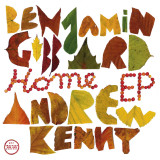
Originally released in 2003 on CD via Post-Parlo Records, and two years later on vinyl via Morr Music, the »Home EP« sees Benjamin Gibbard (Death Cab for Cutie, The Postal Service) and Andrew Kenny (The American Analog Set) each contributing three original tracks and playing one of the other's songs. This 2023 vinyl edition is released via Morr Music (EU+UK) and Barsuk Records (US). It features the artwork by Jan Kruse, that was originally made for the 2005 Morr Music version.
The EP was released as the fifth and final volume of the early-’00s series of split albums on Austin, TX indie Post-Parlo, the Gibbard/Kenny pairing followed short contributions in the series from such varied notable early-aughts indie artists as Kind of Like Spitting, Britt Daniel (Spoon), Bright Eyes, Pavo and Super XX Man.
Gibbard and Kenny’s installment came out during a prolific era for both writers: The American Analog Set had released the classic »Know By Heart« album in 2001 and followed it in 2003 with the acclaimed »Promise of Love«, while Gibbard’s profile was rising significantly via the critical and commercial success of The Postal Service’s »Give Up« and Death Cab’s »Transatlanticism«. Unlike the more lush arrangements of their main projects, both Kenny and Gibbard took a simple approach for their entry into the Home series, recording on cassette four-track machines in their respective living rooms in New York and Seattle and each performing four exclusive stripped-down tracks (including a cover of one of the other’s songs – Kenny choosing a rendition of Death Cab’s »Line of Best Fit« and Gibbard delivering his version of AmAnSet’s »Choir Vandals«).
»Home EP« showcases two brilliant songwriters whose legacies continue to shine twenty years later. The American Analog Set recently announced »For Forever«, their seventh album and first new music in 18 years, which was released last week and followed the band’s announcement earlier this year that The Numero Group will reissue their first three albums »The Fun of Watching Fireworks« (1996), »From Our Living Room to Yours «(1997), and »The Golden Band« (1999) as a vinyl boxset in early 2024.
Benjamin Gibbard has recently finished fronting both bands on the sold out Death Cab for Cutie / The Postal Service co-headline tour of arenas and amphitheaters in the United States celebrating the 20th anniversary of »Give Up« and »Transatlanticism«.
Orange vinyl. Time is supposed to mellow us, but for Petrol Girls it has distilled their feminist politics into an ever more potent cocktail. Fitting, given that their logo from day one has been a flaming molotov. Since their formation in 2012, the band has been known for playing fast-paced, chaotic punk that takes aim at everything from sexual violence to immigration policy, but over the last few years their sound has evolved in a more nuanced direction. Their 2016 debut album Talk of Violence was a blast of pure political rage, while 2019's Cut & Stitch saw vocalist Ren Aldridge exploring familiar themes from a more personal perspective. Now their latest offering, Baby - to be released through the London-based independent label Hassle on June 24th - sees the band turn another new corner. This time, by embracing irreverence. "We wanted this album to be less epic and less preachy from day one," Aldridge says. "I hate sanctimoniousness. Like, really fucking hate it. But I also know that I have been mega preachy, and felt very pressured to be sanctimonious, because we've always played in a very political punk scene. I lost my fun side, and I really needed to come back to that." Recorded with Pete Miles at Middle Farm Studios in Devon, Baby embraces a more playful sound. A focus on groove and repetition - driven by guitarist Joe York, drummer Zock and bassist Robin Gatt - give the songs a Talking Heads feel, while retaining the band's formative post-punk energy. The lyrics, too, are a departure for Aldridge. While she continues to address heavy topics like burn out, femicide and police violence, the lyrics balance directed anger with tongue-in-cheek humour where appropriate. Angular opener "Preachers" puts the self-aggrandising nature of call-out culture on blast with lyrics like "feeling dead important in the comments", while lead single "Baby, I Had An Abortion" is intentionally puerile from title to finish. On the flip side, tracks like "Violent By Design" see the band kicking back against carceral feminism in the wake of a news cycle dominated by Black Lives Matter protests and PC Wayne Cousins' brutal murder of Sarah Everard. Similarly, "Fight For Our Lives" - a harsh, borderline industrial song - was lyrically co-written by activist and vocalist Janey Starling. Aldridge deliberately wrote the verses to sound like a manifesto, and the lyrics reference Starling's Dignity For Dead Women Campaign with Level Up, which successfully called for the UK media to change the way it reports on fatal incidents of domestic violence. Baby saw Petrol Girls working in new ways - scrapping entire songs rather than trying to force things that didn't feel right, recording to tape for the first time, and deliberately leaving in imperfections. It was a more carefree process, which Aldridge - having gone through a particularly bad period of mental ill-health at the start of 2021 - welcomed. "Our whole thing for a long time, and a big focus of the last record, was making political struggle sustainable," Aldridge says. "And I think having a good time where possible, and things being not totally serious all the time, is really essential."
- Olio 5:20
- Heaven 3:47
- Open Up Your Heart 5:22
- I Need Your Love 4:39
- The Coming Of Spring 2:42
- House Of Jealous Lovers 5:04
- Echoes 3:17
- Killing 3:37
- Sister Saviour 3:46
- Love Is All 4:15
- Infatuation
“The revelation that you didn’t need formal training to start a band in 1977 and the realization that you don’t need to be Merce Cunningham to dance are one and the same.” - Ryan Schreiber, Pitchfork,2003 47 minutes. Two sides. A single spine jacket. Confident and deliberate. Lightning in a bottle. The Rapture’s ‘Echoes’ was, and is, a clear-eyed kick in the teeth, a band at the peak of their powers and producers with an ambitious vision making. a. point. The whole ‘indie crowd finally learns to dance’ narrative is overwrought and irrelevant in 2023 - perhaps context is no longer king - but what remains clear is that this album, made by a San Diego punk band who had moved to New York via Seattle, and produced by the DFA in their own studio, where time and gear and ideas both good and bad were aplenty, maintains an energy and search for catharsis that could bulldoze even the most uptight. For whatever reason, it’s remained out of print on vinyl since its initial run. (Don’t worry, though, there were a lot of CDR promos lying around.) And now, with minimal pageantry, it’s back. Recut by Bob Weston, loud and cl
Fresques sur les parois secrètes du crâne is the second album by french duo Cheval de frise, one of the most paradoxical bands rock has ever produced. This striking, enigmatic, baroque masterpiece, was recorded at Black Box studio in 2002, and released in CD format on RuminanCe (Paris), in 2003. The album is now being reissued by New York label Computer Students™, and pressed to vinyl and cassette tape for the first time, with the original track list remastered by Carl Saff. Evoking the cubist digressions of expert jazz, as well as the paroxysms of flamenco with a nylon guitar flexing its muscles on the anvils of the darkest metal, Cheval de Frise creates a frightened rock'n'roll, highly aesthetic yet half ugly, with a transfigured ugliness. Transfigured by what? The question remains unanswered. As does almost every other question that repeated listening to Fresques sur les parois secrètes du crâne raises
"Jazz Contrasts", einer der herausragenden Titel in Kenny Dorhams ohnehin schon unglaublichem Katalog, wird von Kevin Gray direkt von den Originalbändern gemastert und in einer Deluxe-Verpackung untergebracht, was diese Ausgabe zur ultimativen Edition macht. Kenny Dorham ist einer der größten Jazz-Trompeter aller Zeiten. Zu Beginn spielte er in den Big Bands von Lionel Hampton, Billy Eckstine, Dizzy Gillespie und Mercer Ellington sowie im Quintett von Charlie Parker. Dorham spielte nicht nur als Sideman in einigen der besten Bands der damaligen Zeit, sondern leitete auch seine eigenen Gruppen. Jazz Contrasts wurde zwischen dem 21. und 27. Mai 1957 im Reeves Sound Studio in New York aufgenommen. Auf der Aufnahme ist Kenny in glänzender Form neben dem ebenso großartigen Sonny Rollins am Tenorsaxophon, Hank Jones am Klavier, Oscar Pettiford am Bass, Max Roach am Schlagzeug und der meisterhaften Jazz-Harfenistin Betty Glamann zu hören.