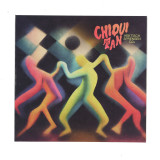
Terra Magica Rec. first 7’’ release „Chiqui Tan“ by the label heads Hektisch Sprengen DJs will be limited to 250 copies. The A-side hits the listener with some 1980s early Electronic-Downtempo-Cumbia-Colombian-Venezuelan-Tablemountain-Dub-Grooves. This reminiscence is leading to an extra full blown up 21st century Bass-Queen alert. And these HSDJ dials hit you into a stripped naked sample of Nigerian-Swedish DJ-dentist-mainstream-star Dr. Alban and his Eurotrash-90s-Pophouse-anthem “No Hash Hash, No Cocaine”. This is for sure no “Ottonormal”-90s-revival thing!
On the flip side Hektisch’s haptic wood razzle move covers the classic 1994-Liquid-Deep-Netherlands-Trance-House-Track “Paper Moon” by 51 Days which back then sampled the rare 1972-MPB-Funk-Cover-Version of Carol Kings “Corazón”. Guess what! It drops like a late 1990s-Ed-DMX-London-classic gone Electroboogie-Miamibass-Break with a SH101-baseline and Sprengen’s take on Spanish-90s-Trance-Vocals. Watch out 4 TERRAMs “Asi me gusta” title caps series as well! Trigger warning: That hidden Sequential Circuit Sixtrack loves you like a windy horse on Acid. Loads to experience on this little innocent wax disc!
Search:nigeria
Drawing inspiration from the depths of late 70’s
NYC proto-rap disco instrumentals, Nigerian boogie,
Jamaican dub and modern jazzy house - The
Lahaar is a Trans-Tasman collaboration between
Julien Dyne, Horatio Luna and Surprise Chef’s
Lachlan Stuckey, featuring Mara TK and Toby Laing on vocals.
The EP embarks on a 5-track rollercoaster - kicking
off with “Doin’ It”, fast-paced jazz-funk peppered
with marimba and organ riffs, balanced out by the
siren vocals of Mara TK.
“Step 2” suddenly brakes and swerves into cruise
mode, repurposing the trumpets and dub echoes
- picking up tempo in the soulful melancholia of
“Work Work Work”. In the last two tracks the organs
and guitars make a frenetic comeback by way of
disco-house, ending with a nod to 70s cop movie
funk.
Soundway releases a storming compilation of Cameroonian-born, Nigerian-based super producer Nkono Teles’ solo work.
The pioneer of West African electronic music was known for being tapped by over 100 other musicians to produce or arrange their music, from King Sunny Adé, Guy Lobe, even Steve Monite’s
album “Only You” and more. Having already appeared on Soundway’s best-selling compilation “Doing It In Lagos”, here more of Nkono’s
limited solo work is carefully remastered and reissued on
vinyl for the first time. One of a small handful of pioneers of the Nigerian electronic music scene in the 1980s (alongside the likes
of Jake Sollo & William Onyeabor), Teles was known for being tapped by over 100 musicians to feature on, produce or arrange their music. The list of ‘80s Nigerian records that his sound and style embellished
is seemingly endless: Steve Monite (he arranged and produced the music on the Only You album recently re-issued by Soundway), Dizzy K, Peter Abdul, Odion Iruoje, Steve Black, Rick Asikpo, Feladey, Charly Boy, Majek Fashek & Sonny Okosuns, to name just a few,
all engaged his enigmatic production and keyboard services throughout the 1980s. He became known as the first person in Nigeria to push the use of the drum machine into popular music and created a unique and original boogie-funk sound combining these new
beats with guitars and an array of new and affordable synthesiser sounds that started appearing in the early 1980s.
'Unconscious Collective' is the first album by PS5 - the new ensemble led by Pietro Santangelo (Nu Guinea, Slivovitz, Fitness Forever) - and it will be out for Hyperjazz Records on 21th May 2021.
It's a musical experiment where layered memories and hidden feelings resonate as if they arise directly from the most recondite part of the unconscious and produce a suspension of the stream of consciousness. With the aim to create a state of trance and override the human reason, this is an imaginary round trip across the Mediterranean Sea and the Atlantic Ocean, ideally connecting Naples with North Africa and Latin America.
The arrangements wrote by Santangelo are based on great freedom of improvisation: while the melodic textures of the two saxophones didn't give any clear references, the other musicians followed the rhythmic pulse and its unpredictable ways. The music moves naturally along an imaginary line highlighting the ancestral connection between Jamaica and Ethiopia or between Nigeria and Cuba. In the background, Naples is a synthesis of all the sonic ingredients, mixed and cooked in its own mystical and spicy belly.
Besides Santangelo himself on the tenor and soprano saxophones, the collective is made up of: Paolo Bianconcini, a brilliant Neapolitan percussionist with a very deep Afro-Cuban background; Giuseppe Giroffi, young and talented alto and baritone saxophonist; the bassist Vincenzo Lamagna and the drummer Salvatore Rainone, both loyal members of the former Santangelo's trio.
Recorded live at the Auditorium Novecento in Naples, the legendary studio of Phonotype Records, 'Unconscious Collective' is mixed in analog format by Fabrizio Piccolo, and mastered by Davide Barbarulo at his 20Hz20KHz Studio.
Pietro Santangelo
Pietro was born, lives and plays in Naples. As a saxophonist and composer, he has released five albums with Slivovitz and one with his PS3 trio (Clinamen, Emme records 2017). Graduated in Digital Sound Processing at the Faculty of Physics of Federico II University, he is involved and engaged in the Italian scene of radical improvisation (Franco Ferguson, Elio Martusciello and Officina Arti Soniche, Collettivo NISE).
Multi-instrumentalist since forever, he has collaborated with Nu Guinea, Enzo Avitabile, Fitness Forever, Marzouk Mejri, Dennis Bovell and many others.
He's also author of soundtracks and electronic musician. He appreciates analog photography, loves walking outdoors. He hates biographical notes.
With his new album, Gecko Turner confirms that he is a standout artist in the global groove scene, a must for the outernational sounds aficionados.
Somebody From Badajoz is the fifth studio album in his much lauded discography and his first in seven years, eagerly anticipated by both his fans and himself: "this business of dedicating yourself to music and making songs... it's a long game."
With the release of his first two, remarkable, albums, Guapapasea! (2003) and Chandalismo Ilustrado (2006), Gecko started cultivating what one astute journalist defined as Afro-maduran soul—the "maduran" bit referencing Extremadura, a region in central-western Spain.
Badajoz, Gecko's birthplace, is the biggest city in the area, on the border with Portugal, by the Guadiana River. It is a place that oozes history, where there is constant movement at the border, and people's character is friendly and open-minded with foreign habits.
Gecko's Afro-maduran soul isbuilt on Afro-American music and drenched in Brazilian, African, Latin American and Jamaican sounds. There are also echoes of a youth marked in equal parts by our man's admiration for the Beatles and the flamenco that could be heard everywhere in Badajoz in the seventies. It makes for a singular sound and a musical language of its own—spicy, succulent, full of nuances, but with a very personal flavour.
The album opens with the Nigerian talking drums of Twenty-twenty Vision, (neo) soul in a magical falsetto, carried by a sumptuous orchestral arrangement with a cinematic flavour: "I'd been thinking about doing something called 'Twenty-twenty Vision' for some time, making a play on words with the vision we have of the world after the year 2020 and the medical expression, which, in ophthalmological terms, means 'normal or complete vision.' Beyond that particular song, I think that's the mood of the album: a look at society in the twenties of the 21st century and the feelings and demons it produces."
It's followed by De Balde, a very special song born from a posthumously discovered lyric by the great writer Carlos Lencero, a regular collaborator of Camarón, Pata Negra, and Remedios Amaya, and also from Badajoz. While conceived as a fandango, Gecko has moulded it into his sound in such a seamless way it now seems as if the words could only have been written to be embraced by the percussion, brass, and backing vocals heard on the album. It's the only lyric on Somebody From Badajoz not written by Turner, still it sits rather comfortably with the rest, sharing the same emotivity and sensitivity, as well as the trademark humour and irony.
Other tracks see more protagonism for the rhythm.The beat-driven Ain't No Fun Preachin' to the Choir features Gecko's vocals walking the thin line between singing and talking over a phenomenal afro-disco-funk-infused trailblazer. In Am I Sad? it's impossible to not bob your head to the queen of Papatosina's mongrel rhythm, as close to the banks of the Guadiana river as it is to the shores of the Mississippi. Qué Siesta Tan Buena, He Babeao Y To! is an ode to the snooze in true Afro-Maduran fashion. And in Come And Try, the Caribbean influence is evident—lovers' rock that invites you to dance in good company.
In these songs, and throughout the album, for that matter, the musicians accompanying Gecko, who himself plays many of the instruments as well, shine brightly. All hailing from Extremadura, Javi Mojave (percussion), Álvaro Fdez 'Dr. Robelto' (bass), and Rafa Prieto (guitar) have been carrying him with delicate forcefulness since he started out as a solo artist. At the same time, the wonderful and essential voices of Deborah Ayo, Astrid Jones, Fani Ela Nsue, and Miriam Solís give the album a sunny variety of colours. And there are many more—a sensational group of musicians contributes dazzling harmonic bursts to many of the songs. The palette of sounds is very diverse and rich in textures and nuances, including, for example, the ngoni, bells, and various repurposed kitchen utensils.
The groove is always around, moving between the magical border sound of Everybody Knows Somebody From Badajoz and Little Dose, the silky soul of The Sibariteo Appreciation Society, and the exultant celebration of End Of The World (which surprisingly sees Gecko turning to the occasional use of autotune), a piece that could be used for the final credits of a Monty Python film and, in fact, closes the album.
Gecko Turner has done it again with Somebody From Badajoz, looking to the future without losing sight of the roots. In times of upheaval all over the globe, when people are looking for purity, he delivers a formidable piece of work: risky, optimistic in spite of everything, and with a decidedly bastard sound. Let's rejoice.
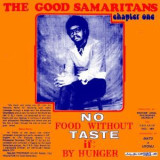
No Food Without Taste If By Hunger is the 20th compilation in Analog Africa's Limited Dance Edition series and it also happens to be a mega-rare classic from the world of Edo funk. The Good Samaritans from Benin City, Nigeria released a very small run of the original in 1982. It is an infectious album of hypnotic basslines layered up with trance-like grooves trippy psychedelic guitars that make for an utterly unique kind of funk music. Newly mastered, pressed to 180g vinyl with a silk screen printed cover, and limited to just 2000 copies, this is a rare chance to own such a landmark album.
- 1: Ebo Taylor - Amponsah
- 1: 2 Moussa Doumbia - Keleya
- 1: 3 Amadou Balaké - Super Bar Konon Mousso
- 1: 4 Mangue Kondé & Les
- 1: 5 Manu Dibango - The Panther
- 1: 6 Peter King - Ajo
- 1: 7 Itadi - Ayala
- 1: 8 Marumo - Khomo Tsaka Deile Kae
- 1: 9 Apples - Mind Twister
- 1: 0 The Wings - Gone With The Sun
- 2: 1 Kelenkye Band - Jungle Music
- 2: Super Elcados - Get Up And Do It Good
- 2: 3 The Apagya Showband - Kwaku Ananse
- 2: 4 Orlando Julius Feat. Ashiko - Get The Funk
- 2: 5 Alemayèhu Eshèté Feat. Hirut Beqele - Temeles
- 2: 6 Livy Ekemezie - Friday Night
- 2: 7 Willy Nfor - Boogie Down In Africa
- 2: 8 Shina Williams & His African Percussionists - Agboju Lo
- 2: 9 Soul Brothers - Bayeza
- 2: 10 Teaspoon & The Waves - Oh Yeh Soweto
Rare Groove Collection Explore the fusion of world music with soul, funk and disco through the Rare Groove Collection. With this new volume, discover unique groove tracks straight from Jamaica! Fully remastered original versions African RARE GROOVE A journey at the heart of Nigerian afrobeat from Orlando Julius to the ethnojazz of Alemayèhu Eshèté passing by the High-life of the Ghanaian Ebo Taylor...
Die Single ”Calm Down” war auf Platz 1 der Schweizer Single Hitparade und sogar für über 100 Tage auf Platz 1 bei Shazam. Die Single hat in der Schweiz Multiplatin Status. Ausserdem hat der Song ”Soundgasm”, ebenfalls aus diesem Album, Doppel Platin Status.
Das musikalische Wunderkind Rema veröffentlicht sein mit Spannung erwartetes Debütalbum ”Rave & Roses”.
Drei Jahre nachdem Rema von Mavin Records-Gründer Don Jazzy der Welt vorgestellt wurde, hat der aus Benin City stammende Musiker mehr erreicht, als man sich je hätte träumen lassen.
Als der wohl größte und international bekannteste Vertreter aufstrebender Afrobeat-Stars, tritt Rema mit seinem kommenden Album ”Rave & Roses” in eine neue Phase seines Lebens ein.
Dabei ist der als Divine Ikubor in Nigeria geborene Sänger bereits ein Popstar, der mit seinem Debütalbum beweisen will, warum der Hype um ihn von ganzem Herzen verdient ist. ”
Manchen mag Remas Erfolg erscheinen, als sei er über Nacht gekommen. Doch zwischen seinen Anfängen im Chor bis zu dem Moment, als Barack Obama ihn seiner ”Summer 2019”-Playlist hinzufügte und Drake ihn begeistert ins Studio einlud, lag viel Arbeit, die auch über die Musik hinausgeht.
After relocating from Nigeria to Hamburg in 2003, hip hop/soul singer and songwriter Nneka signed with Yo Mama’s Recording Company. Two years later, her debut album Victim Of Truth followed. Garnering rave reviews from the international media, the British Sunday Times declared it “the year’s most criminally overlooked album”, describing her as the legitimate successor to the legendary Lauryn Hill. The album features the popular tracks “The Uncomfortable Truth” and “Africans” amongst others.
Victim Of Truth is available on vinyl for the first time as a limited edition of 750 individually numbered copies on gold swirled vinyl and includes a 4-page booklet with lyrics.
With his new album, Gecko Turner confirms that he is a standout artist in the global groove scene, a must for the outernational sounds aficionados.
Somebody From Badajoz is the fifth studio album in his much lauded discography and his first in seven years, eagerly anticipated by both his fans and himself: "this business of dedicating yourself to music and making songs... it's a long game."
With the release of his first two, remarkable, albums, Guapapasea! (2003) and Chandalismo Ilustrado (2006), Gecko started cultivating what one astute journalist defined as Afro-maduran soul—the "maduran" bit referencing Extremadura, a region in central-western Spain.
Badajoz, Gecko's birthplace, is the biggest city in the area, on the border with Portugal, by the Guadiana River. It is a place that oozes history, where there is constant movement at the border, and people's character is friendly and open-minded with foreign habits.
Gecko's Afro-maduran soul isbuilt on Afro-American music and drenched in Brazilian, African, Latin American and Jamaican sounds. There are also echoes of a youth marked in equal parts by our man's admiration for the Beatles and the flamenco that could be heard everywhere in Badajoz in the seventies. It makes for a singular sound and a musical language of its own—spicy, succulent, full of nuances, but with a very personal flavour.
The album opens with the Nigerian talking drums of Twenty-twenty Vision, (neo) soul in a magical falsetto, carried by a sumptuous orchestral arrangement with a cinematic flavour: "I'd been thinking about doing something called 'Twenty-twenty Vision' for some time, making a play on words with the vision we have of the world after the year 2020 and the medical expression, which, in ophthalmological terms, means 'normal or complete vision.' Beyond that particular song, I think that's the mood of the album: a look at society in the twenties of the 21st century and the feelings and demons it produces."
It's followed by De Balde, a very special song born from a posthumously discovered lyric by the great writer Carlos Lencero, a regular collaborator of Camarón, Pata Negra, and Remedios Amaya, and also from Badajoz. While conceived as a fandango, Gecko has moulded it into his sound in such a seamless way it now seems as if the words could only have been written to be embraced by the percussion, brass, and backing vocals heard on the album. It's the only lyric on Somebody From Badajoz not written by Turner, still it sits rather comfortably with the rest, sharing the same emotivity and sensitivity, as well as the trademark humour and irony.
Other tracks see more protagonism for the rhythm.The beat-driven Ain't No Fun Preachin' to the Choir features Gecko's vocals walking the thin line between singing and talking over a phenomenal afro-disco-funk-infused trailblazer. In Am I Sad? it's impossible to not bob your head to the queen of Papatosina's mongrel rhythm, as close to the banks of the Guadiana river as it is to the shores of the Mississippi. Qué Siesta Tan Buena, He Babeao Y To! is an ode to the snooze in true Afro-Maduran fashion. And in Come And Try, the Caribbean influence is evident—lovers' rock that invites you to dance in good company.
In these songs, and throughout the album, for that matter, the musicians accompanying Gecko, who himself plays many of the instruments as well, shine brightly. All hailing from Extremadura, Javi Mojave (percussion), Álvaro Fdez 'Dr. Robelto' (bass), and Rafa Prieto (guitar) have been carrying him with delicate forcefulness since he started out as a solo artist. At the same time, the wonderful and essential voices of Deborah Ayo, Astrid Jones, Fani Ela Nsue, and Miriam Solís give the album a sunny variety of colours. And there are many more—a sensational group of musicians contributes dazzling harmonic bursts to many of the songs. The palette of sounds is very diverse and rich in textures and nuances, including, for example, the ngoni, bells, and various repurposed kitchen utensils.
The groove is always around, moving between the magical border sound of Everybody Knows Somebody From Badajoz and Little Dose, the silky soul of The Sibariteo Appreciation Society, and the exultant celebration of End Of The World (which surprisingly sees Gecko turning to the occasional use of autotune), a piece that could be used for the final credits of a Monty Python film and, in fact, closes the album.
Gecko Turner has done it again with Somebody From Badajoz, looking to the future without losing sight of the roots. In times of upheaval all over the globe, when people are looking for purity, he delivers a formidable piece of work: risky, optimistic in spite of everything, and with a decidedly bastard sound. Let's rejoice.
Tricky is back. Back with a new studio album, False Idols, and his own label (also bearing the False Idols name), but also back in a personal sense. I was lost for ages, he says. I was trying to prove something to people, trying to do something to please other people and also myself at the same time, which is never going to work. To be honest with you, Ive been floating around since Chris Blackwell and Island. My last two albums, I thought they were good, but I realise now they werent. This album is about me finding myself again.
It opens with a cover of a Van Morrison song, Somebodys Sins, which sees Tricky and vocalist Francesca Belmonte whispering Jesus died for somebodys sins, but not mine over a sparse groaning bass. The lead single Parenthesis, which features a vocals from Peter Silberman of The Antlers, has more rhythmic grunt, which gives a different dimension to the dark gothic atmosphere that pervades the record. No-one does this kind of thing better.
The resemblance to Maxinquaye is undeniable, though the material on False Idols is gentler; more mature. Many of the songs feature artists signed to Trickys new label, including 24-year Londoner Francesca Belmonte and Fifi Rong. The album also includes collaborations with Nigeria's new global star Nneka, the afore-mentioned Peter Silberman. In the months before the albums release, False Idols will also release an EP "Matter of Time" showcasing the labels roster on new non-album material produced by Tricky.
Why the name False Idols Because theres so much bollocks going on at the moment mate, Tricky fires back. People follow celebrities and read every little thing they do. Its living vicariously through someone else. Get your own life. All this stuff is false idols. In this new album Ill stand behind every track, Tricky says. I dont care whether people like it. Im doing what I want to do, which is what I did with my first record. Thats what made me who I was in the beginning. If people dont like it, it dont matter to me because Im back where I was.
2023 REPRESS in Ltd Transparent Vinyl
Strut are proud to announce the first ever internationally released new studio album by one of the all-time legends of Nigerian music, Orlando Julius, in a mouth-watering new collaboration with London super-group The Heliocentrics. At his club residency in Ibadan, Orlando Julius was one of the very first to begin fusing US R&B with traditional highlife during the mid-'60s with his Modern Aces band. His 'Super Afro Soul' album from '66 set the blueprint for a whole generation of Afrobeat and Afro funk stars and, in an illustrious career, Julius met and played with Louis Armstrong, The Crusaders, Hugh Masekela and Lamont Dozier among others, famously co-composing the classic 'Going Back To My Roots' in 1979 whilst based in the USA.
or 'Jaiyede Afro', Julius takes us back to his own roots, revisiting several compositions from h s early years whi ch have never previ ousl y been recorded. The title track recal l s his experiences as a boy: 'my mother would go to group meetings with other women. They would sing together and play drums, I would play along with them and we would sing this song together.' Infectious chant 'Omo Oba Blues' is a traditional song sung at Julius' school which he re-arranged in 1965 for his Modern Aces band. The epic Afrobeat jam 'Be Counted' stems from his years in the USA: 'this was written around 1976 while I was living on the West coast. I did start recording it for the 'Sisi Sade' album around 1985 but it was never finished.'
Other tracks include 'Buje Buje' and 'Aseni', both re-worked arrangements from his rare 'Orlando Julius and The Afro Sounders' album from 1973.
Recorded at the Heliocentrics' fully analogue HQ in North London, the band follow their memorable collaborations with Mulatu Astatke and Lloyd Miller by taking Orlando's sound into new, progressive directions, retaining the raw grit of his early work and adding psychedelic touches and adventurous new arrangements. They also contribute live favourite, the James Brown cover 'In The Middle' and a series of memorable shorter interludes.
- 1: Winston Jarrett - Poor Mi Isrealites
- 2: The Flames - Scare Him
- 3: The Meditators- Give Me True Love
- 4: The Helpers - Help
- 5: Jackie Mittoo - Night Doctor
- 6: Lloyd Robinson - Run For Rescue
- 7: The Meditators - Tomorrow When Youre Gone
- 8: W Wellington - Too Many Miles
- 9: Lloyd Robinson - Double Crosser
- 10: The Helpers - Sweet Talking
- 11: Winston Jarrett - Just Cant Satisfy
- 12: The Gladiators - Jane
Studio One was founded by Clement "Coxsone" Dodd1 in 1954, and the first recordings were cut in 1963 on Brentford Road in Kingston.12 Amongst its earliest records were "Easy Snappin" by Theophilus Beckford, backed by Clue J & His Blues Blasters, and "This Man is Back" by trombonist Don Drummond. Dodd had previously issued music on a series of other labels, including World Disc, and had run Sir Coxsone the Downbeat, one of the largest and most reputable sound systems in the Kingston ghettos.
In the early 1960s, the house band providing backing for the vocalists were the Skatalites[3] (1964–65), whose members (including Roland Alphonso, Don Drummond, Tommy McCook, Jackie Mittoo, Lester Sterling and Lloyd Brevett) were recruited from the Kingston jazz scene by Dodd. The Skatalites split up in 1965 after Drummond was jailed for murder, and Dodd formed new house band the Soul Brothers (1965–66), later named the Soul Vendors (1967) and Sound Dimension (1967-). From 1965 to 1968 they played 9 a.m. to 5 p.m., 5 days a week, 12 rhythms a day (about 60 rhythms a week) with Jackie Mittoo as music director, Brian Atkinson (1965–1968) on bass, Hux Brown on guitar, Harry Haughton (guitar), Joe Isaacs on drums (1966–1968), Denzel Laing on percussion, and on horns (some initially and some throughout): Roland Alphonso, Dennis 'Ska' Campbell, Bobby Ellis, Lester Sterling, among others on horns during the era of Rock Steady. Headley Bennett, Ernest Ranglin, Vin Gordon and Leroy Sibbles were included among a fluid line-up, to record tracks directed by Jackie Mittoo at Studio One from 1966-1968.
During the night hours at Studio One from 1965-1968, singers like Bob Marley, Burning Spear, The Heptones, The Ethiopians, Ken Boothe, Rita Marley, Marcia Griffiths, Judy Mowatt, Alton Ellis, Delroy Wilson, Bunny Wailer[4] and Johnny Nash, among others, would put on headphones to sing lyrics to original tracks recorded by the Soul Brothers earlier each day. These seminal recordings included "Real Rock" (by Sound Dimension), "Heavy Rock", "Jamaica Underground", "Wakie Wakie", "Lemon Tree", "Hot Shot", "I'm Still In Love With You", "Dancing Mood", and "Creation Rebel".
Jackie Mittoo, Joe Isaacs, and Brian Atkinson left Studio One in 1968, recorded drums and bass for Desmond Dekker's and Toots' biggest hits at other Kingston studios, then moved to Canada. Hux Brown stayed in Jamaica to record on the soundtrack The Harder They Come, The Harder They Fall, and toured in Nigeria with Toots and the Maytals and Fela Kuti. The Soul Brothers (a.k.a. Sound Dimension) formed the basis of reggae music in the late 1960s, being versioned and re-versioned time after time over decades by musicians like Shaggy, Sean Paul, Snoop Lion, The Clash, String Cheese Incident, UB40, Sublime, and countless other Billboard originals and remakes trying to emulate their original Rock Steady sound at Coxsone's Studio One.
The label and studio were closed when Dodd relocated to New York City in the 1980s.
Studio One was founded by Clement "Coxsone" Dodd1 in 1954, and the first recordings were cut in 1963 on Brentford Road in Kingston.[1][2] Amongst its earliest records were "Easy Snappin" by Theophilus Beckford, backed by Clue J & His Blues Blasters, and "This Man is Back" by trombonist Don Drummond. Dodd had previously issued music on a series of other labels, including World Disc, and had run Sir Coxsone the Downbeat, one
of the largest and most reputable sound systems in the Kingston ghettos.
In the early 1960s, the house band providing backing for the vocalists were the Skatalites[3] (1964–65), whose members (including Roland Alphonso, Don Drummond, Tommy McCook, Jackie Mittoo, Lester Sterling and Lloyd Brevett) were recruited from the Kingston jazz scene by Dodd. The Skatalites split up in 1965 after Drummond was jailed for murder, and Dodd formed new house band the Soul Brothers (1965–66), later named the Soul Vendors (1967) and Sound Dimension (1967-). From 1965 to 1968 they played 9 a.m. to 5 p.m., 5 days a week, 12 rhythms a day (about 60 rhythms a week) with Jackie Mittoo as music director, Brian Atkinson (1965–1968) on bass, Hux Brown on guitar, Harry Haughton (guitar), Joe Isaacs on drums (1966–1968), Denzel Laing on percussion, and on horns (some initially and some throughout): Roland Alphonso, Dennis 'Ska' Campbell, Bobby Ellis, Lester Sterling, among others on horns during the era of Rock Steady. Headley Bennett, Ernest Ranglin, Vin Gordon and Leroy Sibbles were included among a fluid line-up, to record tracks directed by Jackie Mittoo at Studio One from 1966-1968.
During the night hours at Studio One from 1965-1968, singers like Bob Marley, Burning Spear, The Heptones, The Ethiopians, Ken Boothe, Rita Marley, Marcia Griffiths, Judy Mowatt, Alton Ellis, Delroy Wilson, Bunny Wailer[4] and Johnny Nash, among others, would put on headphones to sing lyrics to original tracks recorded by the Soul Brothers earlier each day. These seminal recordings included "Real Rock" (by Sound Dimension), "Heavy Rock", "Jamaica Underground", "Wakie Wakie", "Lemon Tree", "Hot Shot", "I'm Still In Love With You", "Dancing Mood", and "Creation Rebel".
Jackie Mittoo, Joe Isaacs, and Brian Atkinson left Studio One in 1968, recorded drums and bass for Desmond Dekker's and Toots' biggest hits at other Kingston studios, then moved to Canada. Hux Brown stayed in Jamaica to record on the soundtrack The Harder They Come, The Harder They Fall, and toured in Nigeria with Toots and the Maytals and Fela Kuti. The Soul Brothers (a.k.a. Sound Dimension) formed the basis of reggae music in the late 1960s, being versioned and re-versioned time after time over decades by musicians like Shaggy, Sean Paul, Snoop Lion, The Clash, String Cheese Incident, UB40, Sublime, and countless other Billboard originals and remakes trying to emulate their original Rock Steady sound at Coxsone's Studio One.
LTD Purple Vinyl
Following on from the recent super-deluxe box set edition of The Mystic Revelation of Rastafari"s "Grounation" Soul Jazz Records are releasing a new edition of the group"s celebrated "Tales of Mozambique". This new limited edition is released as a one-off pressing purple vinyl double album and a one-off purple CD. Sleeve design also comes as a new purple version. Soul Jazz Records are releasing Count Ossie and The Mystic Revelation"s seminal 1975 album Tales of Mozambique in an expanded double album/single CD, fully remastered and with the inclusion of two bonus rare single-only tracks, full sleevenotes, exclusive photographs and interview. Count Ossie is the central character in the development of Rastafarian roots music, nowadays an almost mythical and iconic figure. His importance in bringing Rastafarian music to a populist audience is matched only by Bob Marley"s promotion of the faith internationally in the 1970s.
THE FRIIMEN MUZIK COMPANY (also known as FRIIMEN) was formed after the Biafran war in 1973-1974 in the town of ABA in the eastern part of Nigeria. Aba was the Number 1 Music Hub in the entire Eastern Region of Nigeria. While bands and artists like ‘Ofege’ and ‘Fela Kuti’ ruled the LAGOS scene, bands like ‘Friimen’ and ‘The Apostles’ were ruling the ABA scene. Before forming the band, most of its members were already working together as freelance session musicians backing up solo artists on several recordings and concerts (or were playing in military bands that gradually became civilian bands because the war had just ended). FRIIMEN members’ credits were numerous and they played, wrote or performed on recordings from well-known acts like The Funkees, The Jets, The Apostles…and countless others. When they started concentrating on writing their own songs, the group instantly took off and became an overnight hit that resulted in them doing multiple successful nationwide tours. FRIIMEN would go on to record three albums: Free Man (1976), We Can Get It On (1978) and Merry Man (1979). All three albums were released on the Aba based label Anodisc Records (THE key label to be on if you wanted your music heard and out there), Anodisc also released hit records by ‘Sweet Unit’ and ‘Voice Of The Cross’ but The Friimen Muzik Company was the label’s signature band. The album we are presenting you today (Free Man from 1976) was recorded at the famous Decca Studios in Lagos and comes swinging right out of the gate with a set of no less than EIGHT monster tunes. Expect nothing less than crazy afrobeat and over the top melodic funk influenced by a wide array of artists (both local and international). Mesmerizing solos, captivating grooves, impeccable sequences that turned many heads…everything you need to get a dancehall into a complete uproar. The musicians’ skills are just plain incredible! FREE MAN is a quintessential record that every serious collector or fan needs to have in his/her collection.
Soul Jazz Records are releasing Count Ossie and The Mystic Revelation’s seminal 1975 album Tales of Mozambique in an expanded double album/single CD/digital format, fully remastered and with the inclusion of two bonus rare single-only tracks, full sleevenotes, exclusive photographs and interview.
Count Ossie is the central character in the development of Rastafarian roots music, nowadays an almost mythical and iconic figure. His importance in bringing Rastafarian music to a populist audience is matched only by Bob Marley’s promotion of the faith internationally in the 1970s.
Count Ossie’s drummers performed on the first commercially released single to integrate Rastafarian traditional music with popular music: the vocal group The Folkes Brothers’ groundbreaking song ‘Oh Carolina’, recorded for producer Prince Buster in 1959. In 1966 his drummers greeted the momentous arrival of Haile Selassie at Kingston airport.
His legendary jam sessions up in his Rastafarian compound in the hills of Wareika, Kingston, are famous for the many Jamaican musicians who attended including The Skatalites players – Roland Alphonso, Don Drummond, Johnny Moore, Lloyd Knibbs – and many others.
The Mystic Revelation of Rastafari formed in Kingston, Jamaica, in 1970, a union of Count Ossie’s Rastafarian drummers – variously known as his African Drums, Wareikas or his Afro-Combo – and the saxophonist Cedric Im Brooks’ horns group, The Mystics.
The Mystic Revelation of Rastafari are the defining group in bringing authentic Rastafarian rhythms into the collective consciousness of popular music, their unique music is at once rooted in the deep traditions and rituals of traditional drumming and chanting alongside a forward-thinking, even avant-garde, artistry influenced by the likes of John Coltrane, Sun Ra, Pharoah Sanders and other pioneering African-American jazz artists radicalised and charged by the civil rights movement of the 1960s.
Tales of Mozambique is a truly unique and fascinating ground-breaking album.
Count Ossie and The Mystic Revelation of Rastafari are the central group featured on Soul Jazz Records recent "Rastafari - The Dreads Enter Babylon” a collection showing the influence of Rastafari in Reggae and Jamaican popular culture.
Soul Jazz Records will also be releasing Count Ossie and The Rasta Family 'Man From Higher Heights’ in the near future.
* Bonus tracks
REVIEWS
" All roads in Rastafarian roots music lead to Count Ossie.He’s the lead character in this compelling subplot, the musician who was one of the first to put Rasta tenets into the heart of popular music.
He did so from his camp in the hills above Kingston, Count Ossie and his drummers casting a spell on the musicians who gathered to check him out and then went on to spread the word about the powerful nyabinghi rhythms and mesmerising percussion.
This is a reissue of the 1975 album Count Ossie made with his Rastafarian drummers and saxaphonist Cedric ‘Im’ Brooks’s group The Mystics.
It’s a groundbreaking, majestic work, by turns righteous in tone and joyous in execution. It’s the sound of Ossie and his ensemble narrating a history lesson and you’d be daft not to want to find out more." IRISH TIMES
tobi lou cements a connection to countless listeners through his creativity. The Nigeria-born, Chicago-raised, and Los Angeles-based rapper and producer builds music meant to last with unpredictable flare and inimitable spirit. As the story goes, tobi lou flourished as a football player and baseball player until undergoing a dream-ending injury and jumping from a semi-pro career to the mic. A series of buzzing EPs—tobi lou and the Moon, tobi lou and The Loop, and tobi lou and The Juice—paved the way for his 2019 mixtape, Live on Ice. The latter included “I Was Sad Last Night I’m OK Now,” which racked up 42.9 million Spotify streams. Earning widespread acclaim, Pitchfork hailed 2020’s “Student Loans” as “a refreshing dose of joy.” Meanwhile, Lyrical Lemonade christened him, “Chicago’s Rising Superhero.” Along the way, he headlined shows coast-to-coast and shut down festival stages at Lollapalooza and beyond. He also collaborated with everyone from Smino to Dreezy. Throughout 2021, he assembled Non-Perishable out of his East Los Angeles apartment. He notably produced on every track, lending his touch to the entirety of the project. After amassing hundreds of millions of streams, packing shows, and receiving acclaim from GQ, W Magazine, and more, he architects an immersive experience on his second full-length project and the first installment of a 2022 trilogy, Non-Perishable.
For Fans of Khruangbin, El Michels Affair, William Onyeabor. Fantasy 15 is a band of mortal fighters striving to prevent an evil & merciless digital government from destroying the entire galaxy...Armed with analog synthesizers and a never ending supply of primordial rhythms reminiscent of Nigerian funk, Brazilian tropicalia and New York City new wave, the rebel group works diligently day and night to save all of humanity from the horrors of robotic automation. When they are not busy saving the world, Fantasy 15 serve as the house band for Philadelphia-based "Synth & Soul" record label Eraserhood Sound. The group are proud to beam their latest 45 "Burgundy Mist b/w Percy St." into Earth's atmosphere in early 2021. Lead single "Burgundy Mist" is a lush, tropical slow jam featuring a sophisticated rhythm section, electrifying guitars, and euphoric flutes. Flip side "Percy St." features a hypnotic groove, bolts of analog synthesizer, and angelic vocal harmonies. This 45 proves to be another masterful slice of intergalactic synth funk from Fantasy 15.
- A1: D*A*N*G*E*R*O*U*S
- A2: Fancy
- A3: Fantasy (Feat Maesu & Ckay)
- A4: Leave Me Alone
- A5: Jumping Ship (Feat Kojey Radical & Cruel Santino)
- A6: Feel A Way (Feat Moliy & Melissa)
- A7: Trust Fund Baby
- A8: Hellz Angel
- B1: Celine (Feat Kyu Steed & 6)
- B2: Dazed & Abused In Beverly
- B3: Sad, U Broke My Heart
- B4: 3Am
- B5: Sad Girlz Luv Money
- B6: Party Sad Face/Crazy Wurld Oujtro (Feat Kz Osunsi (The Engine)
140g LP, High UV Gloss Gatefold Jacket and 60cm double-sided fold-out poster.. it's a big release! TIP!
Raised across multiple cities, Amaarae’s music reflects a life split between New Jersey, Atlanta and Accra. As indebted to raw Southern rap as it is dancehall, her work also holds echoes of glossy mall rock and bubblegum pop. Embraced and endorsed by the Nigerian Alté scene as it was exploding into action several years ago, THE ANGEL YOU DON’T KNOW is an exuberant opening statement from Amaarae, anchoring her sound in her heritage and myriad influences, channelled through female empowerment. Whilst working on the record, Amaarae’s
reference points ranged from Paul Wall to Meat Puppets, reflected in the kaleidoscopic vision of the album, effortlessly jumping from the country trap of FANCY to an Afro-house comedown in 3AM. The vinyl release of TAYDK is packaged in a UV gloss gatefold sleeve with double- sided poster insert. It features an exclusive remix of FANCY, featuring London rap royalty Bree Runway.
Press:
"The future of Afro-pop” New Yorker “An instant classic” The Guardian
“One of the most compelling new acts on any continent” Pitchfork