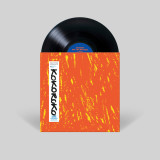
180G vinyl pressing
After releasing their well-received 7” and 12” singles ‘Night Time’ and ‘Feel It / So Hot’, Isle of Jura is pleased to present Exotic Illusions, the debut album from D.D. Mirage, the Sydney-based duo of Josh Dives and Disky Dee.
Having first played music together during the mid-2010s in the indie-psyche and punky-shoegaze bands King Colour and SCK CHX, the two Australian musicians/DJs came up in the warehouse party scene that fermented in the wake of the Sydney lockout laws. While organising mixed media events under the Yeah Nah Yeah brand, they discovered the joys of disco, dance-punk and the Balearic beat through Pender St Steppers’ DJ mixes and reissue releases and found themselves changing direction in response.
Written and recorded with a range of vintage keyboards and preamps, instruments and digital studio software, Exotic Illusions is a cosmopolitan love letter to the immaculate blend of Italo disco, Neopolitan funk, Nigerian boogie, cosmic house, synth-pop, UK street soul and lovers rock sounds that have inspired D.D. Mirage since they began this iteration of their ever-evolving musical relationship.
“The name Exotic Illusions refers to our fascination with all of this music made in other parts of the world,” they explain. “During lockdown and thereafter, we indulged in these exotic sounds as an antidote to our lack of travel. This fascination continued as the world opened up again, and we started working on tunes together. It’s also a way of acknowledging that we feel like tourists partaking in these styles and established sounds. They aren’t ours and weren’t born out of the place we’re from, but we hope we’ve been able to add something unique to them.”
In recognition of this, rather than just reinterpreting genre motifs through an antipodean lens, D.D. Mirage opened up lines of communication with some of their favourite musicians from the Neapolitan scene, bassist Daniel Monaco (Rush Hour, Periodica Records) and drummer Andrea De Fazio (Parbleu/ Nu Genea), who recorded the rhythm section for ‘So Hot’. They also wrote to the Manchester-based singer/producer Private Joy, who graced ‘Night Time’ with a smoother-than-silk street soul vocal that helped the single secure crucial plays on NTS and BBC Radio 6.
Opening with the tropical melodies, post-disco machine beats and jilted art-punk singalong chants of the title track, Exotic Illusions unfolds as a series of sturdy, internationally-minded dancefloor excursions. ‘Piranesi’ is boogie with a South American shuffle. ‘So Hot’ is Neapolitan funk with a Leichhardt strut, and ‘Antenna’ (featuring Jofi) is D.D. Mirage’s love letter to ‘80s drum machine bossa nova from Brussels.
On ‘Feel It’, the duo hit a sparking groove that reaches into an eternal sunset of the mind before throwing out a bubbly disco-not disco spoken word bounce on ‘Cat’s Cradle’, featuring psychedelic-pop singer Jermango Dreaming. From there, D.D. Mirage bring it home with a cheeky Aussie drawl on ‘Living Upside Down’ and the nocturnal excellence of ‘Night Time’, making a case for themselves as a significant new force from Australian music to the world.
full sleeve artwork from Bradley Pinkerton.
Поиск:nigeria
Все
- Amina
- Making Moves Feat. Arathejay, Kofi Jamar
- Su Nkwa
- Domebi
- Gyae Me How
- San Su
- No Money, No Honey
- Woara Wosempa
„Life has never been easy, so keep moving“ is the opening line of Making moves, the title song of SANTROFI‘s new album. Four years ago their celebrated debut ‚Alewa‘ introduced this 8 piece Highlife collective powerhouse from Accra to the world.
After five solid years on the road, SANTROFI is now ready to release some fresh material. co-produced and mixed by four-time Grammy Award winner Jerry Boys (REM, Ali Farka Toure, Buena Vista Social Club, Orchestra Baobab, Kronos Quartet). The band has continued an intense tour schedule, with 2024 seeing their first shows in the USA as well as a Japan tour of with 13 sold out shows 2024. where.
Making moves is both a celebration of SANTROFI’s roots and a leap into the future of Highlife. The opening track Amina is a Ghanaian childhood game turned Highlife Funk. It draws from the past, pushing it into the future. The title song Making moves sees Santrofi team up with the current booming Afrobeatscene in Ghana: It features Ghanas Newcomers Kofi Jamar and Arathejay. The song talks about trying to survive on the sometimes crazy streets of Accra without loosing your mind. Su nkwa sees Santrofi celebrating their love for typical Sikji Highlife music. And the nostalgic No money, no honey sums up yet another common truth from the streets of Accra. From the opening Highlife funk of Amina to the Ghanaian-childhood-game-turned- boogie-banger Gyae me how, this record will get you dancing.
Led by producer-bassist Kojo Ofori, SANTROFI unites 8 of Accra’s most gifted musicians with a passion for both vintage highlife grooves and a hip hop sensibility. Members of the band have played with leading Ghanaian artists including Ebo Taylor, Pat Thomas, Ambolley, AK Yeboah and highlife pioneer AB Crentsil with whom they recorded just before he passed away - watch out for that!
SANTROFI have shared stage and studio with rising stars of Ghana’s vibrant urban music scene such as Kidi, Yaw Tog, Black Sherif, AratheJay and even Nigerian superstar Wizkid (who has made Accra his second home). The upcoming album sees the band teaming up with some of the most exciting talents in Ghana‘s such as AratheJay and Kofi Jamar.
If you think it is impossible to play a funk groove (or even drill) over a pulsing Highlife clave: SANTROFI will prove you wrong. Listen to the phrasing of SANTROFI‘s horn section, hear the Highlife clave running through every bar of their music. Santrofi are pushing Ghanas Highlifegrooves into the future without loosing its sweet soul. And don’t forget to come and see them Making moves live in your city.
Slam poetry, rap battles, singing, song writing and drumming. The hit album “Say Yes” by Iyeoka is now being released as a high quality vinyl version (180 g) in gatefold. The YouTube hit “Simply Falling” received over 216 Million clicks.
Iyeoka (read: ee-yo-kah) is well versed in many expressive arts, but in essence she is a storyteller and poet. "My goal is very simple", says the US Nigerian American, "I want to move the world, one poem at a time". She does this enchantingly well with her album "Say Yes (R)evolved". In poems set to music Iyeoka Ivie Okoawo (her full name) reveals herself to be a strong, self-confident woman of the modern world. She tells tales of love and relationships in the 21st century and philosophizes about the daily struggle of life and being a woman in a post-feminist world digging deeply and personally into her African roots.
Musically Iyeoka handles expertly a wide variety of styles from electronic soul "Break Down Mode" to technofied R'n'B "Broken Hearts Anthem (Walk Away)", from energetic dance inducing grooves "The Yellow Brick Road Song", to a more jazzy "Happily Ever After", from melodic soft rock "Say Yes", to pop "Soundtrack to Life" and reggae "Testify". She certainly has presence and shines out with a silky smooth elegance reminiscent of Sade "This Time around", "Simply Falling". This woman has real all-round talent, and she knows how to use it!
- A1: Kpafuca - Live At Clout Africa Studio, Lagos
- A2: Beautiful Emilie - Live At Clout Africa Studio, Lagos
- A3: Dear Mr Cooper - Live At Clout Africa Studio, Lagos
- B1: Wisdom Behind The Smile (Cash)- Live At Clout Africa Studio, Lagos
- B2: Rhythm Is Love - Live At Clout Africa Studio, Lagos
- B3: Melissa
- B4: Femiliarise - Live At Clout Africa Studio, Lagos
- C1: Million Miles From Home- Live At Clout Africa Studio, Lagos
- C2: Rainy Saturday
- C3 19: 73- Live At Clout Africa Studio, Lagos
- C4: Afrosurrealismfortheladies- Live At Clout Africa Studio, Lagos
- D1: Hello Heavenly - Live At Clout Africa Studio, Lagos
- D2: The Funderlying Undermentals - Live At Clout Africa Studio, Lagos
- D3: The Bed's Too Big Without You
- D4: Below The Funk (Pass The J)
Keziah Jones is back with a new concept album entitled "Alive & Kicking" , recorded live in Lagos at Clout Africa Studio. Not only all his classics revisited 'live in studio" but including 2 brand new singles (studio) "Melissa" & "Rainy Saturday" , his first ones since 2013. And as bonus 2 covers (of Ricky James 'Below The Funk (Pass The J) & Police's 'The Bed's Too Big Without You).
Keziah Jones was born and raised in Lagos, Nigeria. Then has been living between Paris - he's been an established & cult musical brand in France - , London and Lagos. He is since the early 90's the creator of the blufunk movement, "a fusion between raw blues elements and hard, edgy funk rhythms. His catalog includes iconic songs such as Rhythm Is Love, Million Miles from Home… Keziah is known for his distinctive style of guitar playing, including his percussive right-hand technique.
The last great African rock LP from Nigeria's post civil war underground. Be Nice to the People was recorded in 1977 by Fela producer Odion Iruoje as he chased the runaway success of high school band Ofege. The Western world was in the throes of peace, love and flower power as Nigeria descended into civil war in 1967. The rock scene that developed during the following three years of bloodshed and destruction would come to heal the country, propagate the world-wide ideal of the modern Nigerian, and propel Fela to stardom after the conflict ended in 1970. The members of Question Mark were children when the Nigerian civil war ended and by the time they recorded their only album in 1977 they were college students, chasing rock n' roll dreams as Afro-beat turned to Afro-disco. Theirs is a fiery reminder of a once vibrant scene
“Ikigai, Vol. 1” is the newest EP from Nigerian artist/legend, & YBNL leader Olamide. The 7-track EP follows the 2023 LP, “Unruly” - his 10th studio album, and represents a compelling chapter in his musical journey. Named after the Japanese concept meaning "a reason to live,” each track promises a unique glimpse into Olamide's evolution, with infectious rhythms celebrating his heritage to lively lyrics. After cementing himself as a titan in the African/Afrobeats genre, Olamide is just focusing on living and enjoying life. Includes the songs “Metaverse,” “Hello Habibi,” & “Uptown Disco (feat. Fireboy DML & Asake).” 1xLP, pressed on Silver In Black Ice Color In Color Viny, and cut at 45 RPMl. First pressing limited to 500.
War Head Constriction, a trio that defined an uncompromising afro psych-rock sound, began by playing shows that combined dark proto-metal influences from Black Sabbath and Deep Purple with afro-rhythmic elements. Their raw energy caught the attention of Afrodisia, a progressive record label, which signed them to release a single in 1973: "Graceful Bird" b/w "Shower of Stone." Unfortunately, the record was too experimental for mainstream audiences and quickly faded, leading to the band's breakup. Despite this, they played their biggest show opening for Fela & the Afrika 70 at the National Stadium in Lagos before disbanding. However, the members quickly moved on, continuing to form new groups.
Amenechi recalls jamming with Soga Benson, his cousin Skid, and Ben Bruce at St. Gregory’s, where they wrote and performed together. Benson, who had previously been in rival groups, became close with Amenechi once he joined Greg’s. Benson, a talented guitarist, joined Ofege for their second and third albums in 1975 and 1977. Despite this, his main group, Grotto, had yet to record. That changed when EMI Records, the leading afro-rock label, took interest in Grotto in 1977.
Odion Iruoje, A&R manager at EMI Nigeria, recalls his first encounter with Grotto, noting their cocky attitude and raw material. He sought to help them find an authentic sound, avoiding the typical influences of British rock or groups like Ofege. Iruoje was passionate about youth bands, seeing them as a fresh opportunity to experiment and create something unique. Despite skepticism from EMI Nigeria about the youth market, Iruoje felt confident that Grotto’s originality would shine through.
- A1: Start
- A2: Mms (Feat. Wizkid)
- A3: Mood
- A4: My Heart
- A5: Worldwide
- A6: Active (Feat. Travis Scott)
- A7: Suru (Feat. Stormzy)
- A8: Skating
- B1: Wave (Feat. Central Cee)
- B2: Mentally
- B3: Uhh Yeahh
- B4: I Swear
- B5: Ligali
- B6: Whine (Feat. Ludmilla)
- B7: Fuji Vibe
Lungu Boy is the third studio album from global superstar and Nigerian singer/songwriter, Asake. The album promises to captivate fans with its vibrant rhythms, soulful melodies, and poignant lyrics that reflect Asake's unique artistry and cultural roots. Lungo Boy showcases Asake's signature blend of Afrobeats, Amapiano, hip-hop, and highlife, creating a rich tapestry of sound that is both innovative and deeply rooted in African musical traditions. Each track on the album tells a story, weaving personal experiences with universal themes of love, struggle, and triumph. The album features collaborations with some of the biggest names in the music industry, like Travis Scott, WizKid, Central Cee, Stormzy, and LUDMILLA – adding exciting dynamics to Asake's already impressive sound.
Produced by a team of top-notch producers, Lungo Boy is a testament to Asake's commitment to quality and his relentless pursuit of musical excellence. The album also narrates the transition of Asake growing up on the streets of Lagos to becoming a global icon and living life in urban cities around the world. It identifies with the sights and sounds of Lagos (Eko, Lagos Island, Idumota Street), London (Hackney, Shoreditch, Brixton, Peckham), and New York (Brooklyn, Harlem).
Kokoroko, the London-based contemporary jazz collective, has released their new single ‘Three Piece Suit’ featuring Azekel.
Warm, rich and sumptuous in sound, ‘Three Piece Suit’ is a heartwarming tribute to the Nigerian immigrant experience. An initial draft of the track first began life at Kokoroko’s studio under the working title ‘Get The Message’.
Crackling through the track’s snug and patiently arranged grooves are subtle touches of funk, adding new dimensions to the band's signature afrobeat and jazz sound in a way that recalls the work of Cymande. Further caressing the instrumentation is the incorporation of the Brazilian nose flute and woozy-sounding synth lines, effortlessly transporting the listeners back in time.
The forthcoming EP will mark Kokoroko’s first dose of new music since the release of ‘Could We Be More Remixes’. The experimental and kaleidoscopic sister project to their 2022 debut album ‘Could We Be More’ which upon initial release earned critical plaudits from the likes of The Guardian, The Telegraph, Financial Times, Jazzwise, CRACK Magazine and Downbeat Magazine. The release would also garner their first Top 40 placement on the UK Albums Chart, peaking at No.30.
Enlisting some of contemporary music’s most forward-thinking artists like KeiyaA, Ash Lauryn, Stefan Ringer and Hagan to re-imagine the original album through a club-focused lens, ‘Could We Be More Remixes’ marked the beginning of the band being cast beyond spaces unrelated to the jazz sphere. A signal of their incoming next phase.
To coincide with the release of ‘Get The Message’, Kokoroko will be embarking on a headline tour across the UK which will culminate with a date at London’s O2 Academy Brixton. This will mark the biggest headline show of their career.
- A1: Have You?
- A2: Be Nice To People
- A3: Hey Hey Girl
- A4: Love
- B1: Oh My Girl
- B2: Freaking Out
- B3: Scram Out
- B4: Mary Anne
The last great rock LP from Nigeria's post civil war underground. Be Nice to the People was recorded in 1977 by Fela producer Odion Iruoje as he chased the runaway success of high school band Ofege. The Western world was in the throes of peace, love and flower power as Nigeria descended into civil war in 1967. The rock scene that developed during the following three years of bloodshed and destruction would come to heal the country, propagate the world-wide ideal of the modern Nigerian, and propel Fela to stardom after the conflict ended in 1970. The members of Question Mark were children when the Nigerian civil war ended and by the time they recorded their only album in 1977 they were college students, chasing rock n' roll dreams as Afro-beat turned to Afro-disco. Theirs is a fiery reminder of a once vibrant scene.
- A1: Higher
- A2: Sweeter Than
- B1: My Prayer
- B2: Three Piece Suit (Feat. Azekel)
Das Afro-Jazz-Kollektiv aus London, Kokoroko, mit der ersten Dosis neuer Musik seit der "Could We Be More Remixes" EP, mit der es erstmals die britischen Top 40 erreichte. Kernstück ist die neue Single "Three Piece Suit" mit Azekel (Arbeitstitel: "Get The Message"), eine herzerwärmende Hommage an die Erfahrungen nigerianischer Einwanderer, mit einem warmen, satten und üppigen Sound. In den gemütlich arrangierten Grooves knistert ein subtiler Hauch von Funk, der dem Afrobeat- und Jazz-Sound der Band neue Dimensionen verleiht, die an Cymande erinnern. Die Instrumentierung wird zusätzlich durch eine brasilianische Nasenflöte und schwindlig klingenden Synth-Lines verwöhnt, die die Zuhörer in die Vergangenheit versetzen.
"This is the time that we, who have benefitted from the Last Poets shouldbe able to say, 'it's the Last Poets. It's them we should be honouring, because we did not honour them for so many years_"
KRS One wasn't just addressing the hip hop fraternity when he uttered
those words by way of introducing the video for Invocation - a poem
written thirty years ago, around the time of the Last Poets' last significant comeback. He was speaking to everyone who's been affected by the word, sound and power issuing from the most revolutionary poetry ever witnessed, and that the Last Poets had introduced to the world outside of Harlem at the dawn of the seventies.
In 2018 the two remaining Last Poets, Abiodun Oyewole and Umar Bin
Hassan, embarked on another memorable return with an album -
Understand What Black Is - that earned favourable comparison with theirseminal works of the past, whilst showcasing their undimmed passion andlyrical brilliance in an entirely new setting - that of reggae music. Trackslike Rain Of Terror ("America is a terrorist") and How Many Bullets demonstrated that they'd lost none of their fire or anger, and their essential raison d'etre remained the same.
"The Last Poets' mission was to pull the people out of the rubble o f their lives," wrote their biographer Kim Green. "They knew, deep down that poetry could save the people - that if black people could see and hear themselves and their struggles through the spoken word, they would be moved to change."
Several years later and the follow-up is now with us. The project started when Tony Allen, the Nigerian master drummer whose unique polyrhythms had driven much of Fela Kuti's best work, dropped by Prince Fatty's Brighton studio and laid down a selection of drum patterns to die for. That was back in 2019, but then the pandemic struck. Once it had passed, the label booked a studio in Brooklyn, where the two Poets voiced four tracks apiece and breathed fresh energy, fire and outrage into some of the most enduring landmarks of their career. Abiodun, who was one of the original Last Poets who'd gathered in East Harlem's Mount Morris Park to celebrate Malcolm X's birthday in May 1968, chose four poems that first appeared on the group's 1970 debut album, called simply The Last Poets. He'd written When The Revolution Comes aged twenty, whilst living in Jamaica, Queens. "We were getting ready for a revolution," he told Green. "There wasn't any question about whether there was going to be one or not. The truth was many of us still saw ourselves as "niggers" and slaves. This was a mindset that had to change if there was ever to be Black Power." He and writer Amiri Baraka were deep in conversation one day when Baraka became distracted by a pretty girl walking by. "You're a gash man," Abiodun told him. The poem inspired by that incident, Gash Man, is revisited on the new album, and exposes the heartless nature of sexual acts shorn of intimacy or affection. "Instead of the vagina being the entrance to heaven," he says, "it too often becomes a gash, an injury, a wound_" Two Little Boys meanwhile, was inspired after seeing two young boys aged around 11 or 12 "stuffing chicken and cornbread down their tasteless mouths, trying to revive shrinking lungs and a wasted mind." They'd walked into Sylvia's soul food restaurant in Harlem, ordered big meals, then bolted them down and run out the door. No one chased after them, knowing that they probably hadn't eaten in days. Fifty years later and children are still going hungry in major cities across America and elsewhere. Abiodun's poem hasn't lost any relevance at all, and neither has New York, New York, The Big Apple. "Although this was written in 1968, New York hasn't changed a bit," he admits, except "today, people just mistake her sickness for fashion." Umar is originally from Akron, Ohio, but had arrived in Harlem in early 1969 after seeing Abiodun and the other Last Poets at a Black Arts Festival in Cleveland. That's where he first witnessed what Amiri Baraka once called "the rhythmic animation of word, poem, image as word- music" - a creative force that redefined the concept of performance poetry and stripped it bare until it became a howl of rage, hurt and anger, saved from destruction by mockery and love for humanity. When Umar's father, who was a musician, was jailed for armed robbery he took to the streets from an early age where he shined shoes and raised whatever money he could to help feed his eight brothers and sisters. By the time he saw the Last Poets he'd joined the Black United Front and was ready to join the struggle. Once in Harlem, Abiodun asked him what he'd learnt in the few weeks since he'd got there. "Niggers are scared of revolution," Umar replied. "Write it down" urged Abiodun. That poem still gives off searing heat more than fifty years later. In Umar's own words, "it became a prayer, a call to arms, a spiritual pond to bathe and cleanse in because niggers are not just vile and disgusting and shiftless. Niggers are human beings lost in someone else's system of values and morals." And there you have it. It's not just race or religion that hold us back, but an economic system that keeps millions in poverty and living in fear - a system born from political choice and that's now become so entrenched, so bloated on its own success that it's put mankind in mortal danger. It was many black people's acceptance of the status quo that inspired Just Because, which like Niggers Are Scared Of Revolution, was included on that seminal first album. Along with their revolutionary rhetoric, it was the Last Poets' use of the "n word" that proved so shocking, but it would be wrong to suggest that they reclaimed it, since it never belonged to black people in the first place. There's never any hiding place when it comes to the Last Poets. They use words like weapons, and that force all who listen to decide who they are and where they stand. Umar's two remaining tracks find him revisiting poems first unleashed on the Poets' second album This Is Madness! Abiodun had left for North Carolina by then where he became more deeply enmeshed in revolutionary activities and spent almost four years in jail for armed robbery after attempting to seize funds related to the Klu Klux Klan. Meanwhile, the 21 year old Umar was squatting in Brooklyn and had developed close ties with the Dar-ul Islam Movement. A longing for purity and time-honoured spiritual values underpins Related to What, whilst This Is Madness is a call for freedom "by any means necessary," and that paints a feverish landscape peopled by prominent black leaders but that quickly descends into chaos. "All my dreams have been turned into psychedelic nightmares," he wails, over a groove now powered by Tony Allen's ferocious drumming. Those sessions lasted just two days, and we can only imagine the atmosphere in that room as the hip hop godfathers exchanged the conga drums of Harlem for the explosive sounds of authentic Afrobeat. Once they'd finished, the recordings and momentum returned to Prince Fatty's studio, since relocated from Brighton to SE London. This was stage three of the project, and who better to fill out the rhythm tracks than two key musicians from Seun Anikulapo Kuti's band Egypt 80? Enter guitarist Akinola Adio Oyebola and bassist Kunle Justice, who upon hearing Allen's trademark grooves exclaimed, "oh, the Father_ we are home!" Such joy and enthusiasm resulted in the perfect fusion of Nigerian Afrobeat and revolutionary poetry, but the vision for the album wasn't yet complete. He wanted to create a new kind of soundscape - one that reunited the Poets with the progressive jazz movement they'd once shared with musicians like Sun Ra and Pharoah Sanders. It was at that point they recruited exciting jazz talents based in the UK like Joe Armon Jones from Mercury Prize winners Ezra Collective, also widely acclaimed producer/remixer and keyboard player Kaidi Tatham, who's been likened to Herbie Hancock, and British jazz legend Courtney Pine, whose genius on the saxophone and influence on the UK's now vibrant jazz scene is beyond question. The instrumental tracks on Africanism are in many ways as revelatory and exciting as the Last Poets' own. It's important to remember that the kaleidoscope of styles and influences we're presented with here aren't the result of sampling but were played "live" by musicians responding to sounds made by other musicians. That's where the magic comes from, aided by Prince Fatty's peerless mixing which allows us to hear everything with such clarity. Music fans today have grown accustomed to listening to all kinds of different genres. Their tastes have never been so broad or all- encompassing, and so the music on this new Last Poets' album is as groundbreaking as their lyrics, and perfectly suited to the era that we're now living in. John Masouri
Sweet Music Volume II is the long awaited follow up compilation from one of Nigeria’s most adored 80's artists, Dizzy K. Falola. Featuring the most sought after tracks from his last three albums this double LP has both the dance floor feet movers he was known for and some more experimental African pieces but it's all glazed with that 80's Nigerian boogie sound we've come to love. With restoration by Colin Young, and Vinyl Mastering by Frank Merritt at The Carvery the pressing is a beauty. Only pressed in a small quantities. This is one you don't want to miss!
Black vinyl 180g made only in 100 numbered copies.
This record is different. It is different from what might be expected of Jan Emil Mlynarski by those who know him, from sold-out shows and platinum albums of his bands – Jazz Band Młynarski – Masecki and Warsaw Dance Combo, as an old-timer, curator and reenactor of pre-World War II Warsaw's plush dancehalls and backyards folklore. Quite likely they may not recognize him until the last song, when he removes his shaman mask and bows down: Yeah, that's really me, folks, your good ol' Jan Emil, the entertainer. They might not have even known that he ever played drums because in his flagship bands, clad in a white tux in the former or in a Peaky Blinder hat in the latter, he sings and plays mandolin banjo. In fact, Młynarski has been a drummer for a lot longer than a singer. He stands clear of the jazz mainstream but is active on the progressive scene. A record he contributed to, trumpeter Tomasz Dąbrowski's 2022 release The Individual Beings, was recognized by Downbeat magazine as "excellent" and awarded the highest rating of five stars.
However, this is the first instrumental record to bear his name. As an album by a drummer, it stands out from other records, especially as it features drums as the principal content rather than the performance by a band with a drummer as the leader. It's all about drums, there is neither an articulate melody – because the melodies that are there are only micro-linesencased in ostinato modules – nor is harmony as an intentional chord progression – because whatever harmony-wise there is, is rather a product of the counterpoint of overlapping voices. All sounds other than the drums make only a riverbed through which runs a raging stream of rhythms. And indeed, this record took off just with this stream. At first all the drums were recorded live onto an analog tape, all at once, without overdubs or editing. After that, synthesizer riffs were added, and the record was ultimately assembled on tape without the use of computers or complex postproduction, which sets it apart from most releases today.
Młynarski the drummer acknowledges that he follows the trail beaten by Art Blakey, Max Roach, Roy Haynes, and Billy Higgins, but he walks it in his own strides. He treats the jazz drumming with specific reversed engineering by decompiling the jazz drum kit originally compiled by the pioneer jazz drummers from an array of instruments that had made their way from a jungle to New Orleans, first to Congo Square and then to street brass bands.
This takes him back to the jungle, his drums don't sound like jazz drums, the snare is rare, and the hi-hat and ride aren't there at all. Instead, there are drums and bells from Nigeria, Ghana, Burkina Faso, and Côte d'Ivoire. He doesn't sound like a jazz drummer either, but like a gang of drummers, each playing their own rhythm, and it's hard to believe that all this is the work of one man.
Not only his drumware comes from the jungle, but also the software – his approach to rhythm and time. Its essence is polyrhythm and ostinato. The polyrhythmic matters were unveiled to Młynarski and Piotr Zabrodzki, his creative partner in many projects and co-composer/producer of this album, by the legendary eccentric veteran-drummer Władysław Jagiełło, who introduced them, aged thirteen, to his concept and practice of "17 Latino rhythms at once". Ostinato, an obstinate repetition of a phrase or rhythm, "arrests" time, turning its linear course into cyclical in-place rotations. This is specific not only to African music but also to cultural music of other regions and differs from Western artistic music in that it does not "run" to fulfil an aesthetic intention but "stays" to provide the framework for recurrent routines of communal proceedings.
So, this record is different. And, if you are different too, this is the record for you.
his release marks the first complete album reissue on Canopy. Originally released in Nigeria in 1987, “Oppressor” was executive produced by Myke Moul himself and distributed domestically by EMI Nigeria & Tropic Records.
“Oppressor”, the album, finds the sweet spot between synth reggae, boogie, and euphoric Balearic island vibes.
Written by Myke Moul and arranged in collaboration with reggae star Majek Fashek in Nigeria, it was later re-crafted and recorded in France with a host of French musicians. Most notably the contribution of multi instrumentalist Pierre de St Front added engaging synthesiser parts and electronic drums.
Unfortunately the pressing of the album suffered from inherent technical flaws which adversely affected the sound quality and therefore even those lucky enough to find a copy, will not be able to enjoy it without considerable sonic defects. Therefore this remastered reissue will prove welcome to both collectors and new discoverers.
The titular track “Oppressor” stands out as a mid-tempo synth-reggae-boogie jam espousing the turbulent political times in Nigeria that were present in the late 80s. Elsewhere “Shadows in the Rain” is an instrumental cut displaying a jazz-funk sensibility which was unusual for a Nigerian artist at that time, and reflects Myke’s influences outside his home country. “Heading for the Top” is a boogie dance floor gem that shows the popularity of this genre at the time, as evidenced in many Nigerian releases and still sounds just as vital today. “Rescue us. O! Lord” shows Myke’s great song writing and Pierre’s fine musical skills working in tandem to create a reggae boogie tune, displaying the reggae & ska tendencies that were present in pop music in this era, from artists such as Grace Jones, Sly & Robbie or The Police.
All in all, the album demonstrates something fresh & exciting for Nigerian album reissues, touching down in a reggae fusion direction, with some fuller sounding production aesthetics, making the dynamics full and crisp on sound systems while also well suited to home listening.
A hard rock mash up - Bandleader Paul Ngozi's split album with his drummer and co-vocalist Chrissy Zebby Tembo. The set includes an oversized 8 page booklet detailing Ngozi’s arc, rare photographs, discography and annotations.
"Zambia’s Zamrock movement that exploded in the 1970s...provided young musicians access to European and American music, and created a unique sound. At its root, Zamrock melded fuzz-toned psychedelia, chugging garage rock and roiling funk with a broad mix of African cadences and beats...enlivening a scene that included bands like Musi-O-Tunya, Amanaz and the Ngozi Family” - New York Times
Zamrock was a bona-fide rock scene: on the African continent, only Nigeria can claim one so comprehensive, and Nigeria’s was largely catalyzed and funded by subsidiaries of the European major labels. Zamrock was as independent as the newly-named country, formerly known as Northern Rhodesia. Zamrock is starting in its completeness, especially for a scene that emerged, unfurled and disappeared so quickly. From Musi-O-Tunyaís fusion of Fela’s Afro-beat, Hendrix’s rock, South African jazz and traditional Zambian melodies and rhythms to Salty Dog’s acid folk/rock, Zambia’s rock scene contained all of rock’s subgenres. Zamrock was much more than an imitation of American and European rock music: it quickly became a uniquely Zambian movement, befitting of its name. WITCH, Paul Ngozi and Amanaz sound nothing like other rock music from the African continent - or elsewhere. Zamrock came from a nation's youth carrying forth the momentum of a political and social revolution with a musical revolution that maintained the fiery power of early rock - in the mid-to late-70s. From that era, Zamrockís energy is matched only by the punk and hip hop scenes of England and America.
Maledetta Discoteca proudly announces the birth of their first daughter LA SIRENETTA (*The mermaid) and the release of her first record!
An hommage to the Italian Afro scene of the late 80s, La Sirenetta is a sub-label born to take World Music to the next level for the contemporary Dancing Club Scene.
We aim at digging, selecting and editing obscure bangers from our analogue record collections, travelling from Martinique to Ivory Coast, from Nigeria to Haiti, and giving them back to deejays and dancefloors in high-quality, highly collectable, 12” releases.
PS : This is the first release of a series that will delight collectors of Afro and World Music…we won’t stop, we just started!
One of London’s most loved underground parties, Tangent, celebrates its 10th birthday this year with a new compilation on Mr Bongo. Its residents, John Gómez and Nick the Record, have curated a selection of prized, rare and dancefloor-ready tracks that have soundtracked the past decade of their parties. Alongside remastered reissues of these original cuts, the CD version of the compilation also houses three incredible edits from Nick, John and Dan Tyler of the Idjut Boys. These were too good not to press onto vinyl, so we’ve given them the standalone 12" they deserve.
Contextualising their edits Nick states, “Tangent was not only the place for us to play the music we love the most, it also became the testing ground for our edits. It was really helpful being able to see the effect each of these had on a dancefloor before the records were released and many of them also became firm Tangent classics.”
Up first, Nick is joined by Dan Tyler (Idjut Boys), who he runs the edit label Record Mission with, for a furiously feel-good re-edit of Leo Basel’s ‘Quelle Drôle De Vie’. Basing their edit on the 1987 ‘Special Remix’, it does what any great re-work does, dropping the sections from the original that don’t quite hit the mark, whilst focussing on the gold in amongst it all. The result is a slice of peak-time, French boogie joy, that will warm even the coldest hearts.
John then joins Dan at the dials for a cosmic revamp of Love Isaacs 'Surprise Surprise'. A serving of ‘80s electro-funk, dripping in swagger with a highlife tinge. John and Dan extended the grooves for maximum dancefloor power, space echoing it into the stratosphere at all the juiciest points.
Lastly, Nick takes on Rick Asikpo and Afro Fusion 'Let's Get High' from the super sought-after 1980 album, Got To Be Me. Celestial, gospel-infused soul from Nigeria, Nick homes in on the energetic last 2 minutes of the original as the building block of his 12-minute edit. A completely reworked, feverishly paced creation, Nick switches the sections around, saving the slow, soulful segment for a brilliant cosmic breakdown before the track erupts back into its full flow. Synthesised, jazz-funk elation from start to finish!
- Ltd. Col. LP: (Opaque Orange Vinyl)
'Alagbon Close', ursprünglich 1974 auf dem Independent-Label Jofabro veröffentlicht, markiert das Aufblühen des Afrobeat sowohl als Musik als auch als prinzipielle politische Philosophie. Instrumental vereint das Album die verschiedenen charakteristischen Elemente von Felas Afrobeat, die bis dahin noch nie in einer so einheitlichen und fein ausbalancierten Form auf Tonträger festgehalten worden waren. Textlich ist es eine direkte Auseinandersetzung mit der Vollzugsgewalt des nigerianischen Staates: 'Alagbon Close' in Lagos war das Hauptquartier der nigerianischen Kriminalpolizei (Criminal Investigation Department). Viele der musikalischen Elemente, die 'Alagbon Close' so fesselnd machen, sind bereits auf früheren Aufnahmen zu hören, aber auf diesem Album hat Fela sie alle mit verheerender Wirkung zusammengeführt und damit das klassische Afrobeat-Paradigma geschaffen.
Clear Vinyl[26,26 €]
Der Afrobeat-Virtuose Seun Kuti bereitet sich darauf vor, sein neuestes musikalisches Meisterwerk, das von Lenny Kravitz produziert wurde und auf dem Damian Marley und Sampa The Great zu hören sind, auf die Welt loszulassen. Sein Album “Heavier Yet (Lays The Crownless Head)“ erscheint sechs Jahre nach dem Grammy-nominierten Album "Black Times" und einen entscheidenden Moment in Seun Kutis glanzvoller Karriere und zeigt seine Entwicklung als Künstler und Aktivist. Produziert von dem legendären Musiker Lenny Kravitz und Fela Kutis ursprünglichem Tontechniker Sodi Marciszewer (künstlerischer Produzent), verspricht „Heavier Yet (Lays The Crownless Head)“ ein Klangerlebnis wie kein anderes. Mit der Expertise von Kravitz und Sodi und dem unvergleichlichen Talent von Seun Kuti bleibt das Album den Wurzeln des Afrobeat treu und definiert gleichzeitig die Grenzen der zeitgenössischen Musik neu. Die sechs elektrisierenden Songs auf „Heavier Yet (Lays The Crownless Head)“ verkörpern den Geist des Widerstands, der Resilienz und der Revolution. Jeder Song handelt davon, sich Herausforderungen zu stellen und für Veränderungen zu kämpfen. So wie die Einzelsingles „Dey“ feat. Reggae-Ikone Damian Marley, beschrieben als "ein Song über das Umarmen und Verfechten dessen, was wir sind, ungeachtet dessen" und „Emi Aluta“ "ein Song über den Kampf (Aluta bedeutet Kampf), der eine Hommage an alle großen Revolutionäre ist", mit dem sambischen Sänger, Rapper und Songwriter Sampa The Great, einem der besten und innovativsten Lyriker unserer Zeit. Der Song „T.O.P.“ handelt davon, "wie die Gesellschaft Geld und Erfolg mehr schätzt als Menschen". Seun Kuti möchte dies ändern, indem er Empathie fördert und die Verbindung zur Natur wiederherstellt. In einem anderen Song, „Love & Revolution'“, drückt er seine Liebe zu seiner Frau aus und glaubt, dass wahre Liebe die Menschen dazu inspirieren kann, die Welt zu einem besseren Ort zu machen. "Dieses Projekt war für mich etwas ganz Besonderes, von dem Moment an, als ich es konzipierte und mit Lenny Kravitz sprach, der mir so viel brüderliche Liebe und Respekt entgegenbrachte", sagt Seun. "Er hat mich in sein Haus eingeladen. Ich habe seine Tochter Zoe kennengelernt und er hat uns mit Feuereifer geführt. Seit wir vor drei Jahren über das Album gesprochen haben, war er als ausführender Produzent dieses Projekts immer an unserer Seite und hat uns sehr unterstützt". "Ich möchte mich bei Craig Ross und Sodi, dem Produzenten dieses Projekts, bedanken. Wir hatten eine großartige Zeit. Es war das erste Mal für mich, dass ich mit Sodi im Studio war und ich war wirklich beeindruckt von seiner Arbeit und seinen väterlichen Ratschlägen und seiner Hingabe". Jeder Song auf dem Album ist ein Beweis für Seun Kutis unerschütterliches Engagement, Musik als Werkzeug für sozialen Wandel und Empowerment einzusetzen. Mit seinen kraftvollen Texten und ansteckenden Grooves führt er das Erbe seines Vaters, des legendären Fela Kuti, fort und bahnt sich gleichzeitig seinen eigenen Weg in der Welt der Musik.
Seun Kuti ist ein nigerianischer Musiker, Sänger und Songwriter, der für seine fesselnden Auftritte und seine gesellschaftskritische Musik bekannt ist. Er ist der jüngste Sohn des Afro-Beat-Pioniers Fela Kuti. Seun hat die meiste Zeit seines Lebens damit verbracht, das politische und musikalische Erbe seines Vaters zu bewahren und zu erweitern, und zwar als Leiter der ehemaligen Band seines Vaters, Egypt 80. Als aufstrebender Saxophonist und Schlagzeuger trat er in die formellen Reihen der Band ein, bevor er 12 Jahre alt war. Als Fela 1997 starb, übernahm Seun Kuti auf Wunsch seines Vaters die Leitung von Egypt 80, die er seither innehat. Im Laufe seiner Karriere hat Seun Kuti 4 Alben mit Egypt 80 veröffentlicht: `Many Things' (2008), `From Africa with Fury: Rise for Knitting Factory Records" (2011), koproduziert von Brian Eno und John Reynolds, "A Long Way Beginning" (2014) und das für einen Grammy nominierte "Black Times" (2018), das ein Feature von Carlos Santana enthält. Außerdem haben sie zahlreiche EPs veröffentlicht. Seun hat vor einem begeisterten Publikum auf der ganzen Welt gespielt und mit vielen großen Künstlern zusammengearbeitet. Im Jahr 2022 schloss er sich für die EP "African Dreams" mit dem Roots-Frontmann und MC-Extraordinarius Black Thought zusammen. Im Jahr 2023 arbeitete Seun an Janelle Monaes "The Age of Pleasure" (Grammy-Nominierung für das Album des Jahres) mit den beiden Singles "Float" und "Knows Better" mit, tat sich mit Talib Kweli und MadLib für deren Album "Liberation 2" bei dem Song "Nat Turner" mit Cassper Nyovest zusammen und veröffentlichte eine neue Version der Single "Bad Man Lighter" mit Black Thought und Vic Mensa.