Oríkì is an album blending jazz, Fuji and Afrobeat in a powerful tribute to Yorùbá heritage. Featuring Mercury Prize-shortlisted Moses Boyd, Afronaut Zu (Steam Down, Rudimental) and spoken word artist Adesayo, Oríkì merges ancestral praise with contemporary expression.
Six years in the making, the album draws inspiration from NIJI’s great-grandmother, Matilda Taiwo (Mata), and serves as his personal statement on identity, history, and homecoming. The album is threaded with the evocative rhythms of the talking drum, grounding each composition in cultural authenticity. With Oríkì, NIJI invites listeners into his journey of reconnection, presenting a work both timeless and rooted—a musical expression of past, present and future converging.
Buscar:niji
- 1
NIJI (AKA Niji Adeleye) makes a triumphant return with his new EP ‘Somewhere in the Middle’.
The first release on his own label, AERONXUTICS, this five-track offering, delves into his deep love of Jazz and his Nigerian roots, creating an engaging and absorbing sonic journey.
In NIJI’s own words : “Somewhere in the Middle represents so many things for me personally. I’m born to Nigerian parents but raised in East London, there’s a duality of influences. I’m a middle child – I’ve always done my own thing and had a unique perspective as a middle child. I’m split between London and New York – two places I love.
London shaped me growing up, New York is where I became an adult and truly myself, and settled in who I am. Not to mention all the musical influences my heritage, London-life & music career has enabled me to have. Today, NIJI, is somewhere in the middle of all of this. Very present force but can’t be placed in a box. This EP represents that blend, somewhere in the middle.”
NIJI (AKA Niji Adeleye) makes a triumphant return with his new EP ‘Somewhere in the Middle’.
The first release on his own label, AERONXUTICS, this five-track offering, delves into his deep love of Jazz and his Nigerian roots, creating an engaging and absorbing sonic journey.
In NIJI’s own words : “Somewhere in the Middle represents so many things for me personally. I’m born to Nigerian parents but raised in East London, there’s a duality of influences. I’m a middle child – I’ve always done my own thing and had a unique perspective as a middle child. I’m split between London and New York – two places I love.
London shaped me growing up, New York is where I became an adult and truly myself, and settled in who I am. Not to mention all the musical influences my heritage, London-life & music career has enabled me to have. Today, NIJI, is somewhere in the middle of all of this. Very present force but can’t be placed in a box. This EP represents that blend, somewhere in the middle.”
- A1: To The Wilder
- A2: Any Love Of Any Kind Feat Bryce Dessner
- A3: Black Drift
- A4: Story Of Rainy
- B1: Are You There
- B2: Asphalt Maelstrom
- B3: Fragile Things
- B4: Quiet Strike
- C1: Amekara Nijie
- C2: Tmrrw
- C3: Minus Sixty One
- D1: And Now The Bonus Tracks Feat Hideo Kojima
- D2: To The Wilder Feat Elle Fanning
- D3: Any Love Of Any Kind (Choir Version)
- D4: To The Wilder (Piano Version)
- D5: To The Wilder (Instrumental)
WOODKID komponiert die Musik zum heiß erwarteten PlayStation-Spiel "Death Stranding 2: On The Beach". Mit seinem neuen Album "WOODKID FOR DEATH STRANDING 2: ON THE BEACH" zum sehnlichst erwarteten Spiel von Hideo Kojima hebt WOODKID die Idee von Game-Musik auf ein neues Level. Die Songs sind inspiriert von Kojimas Erzählkunst, seinen Figuren und der Welt von Death Stranding - und entfalten sich als eigenständiges Werk voller Tiefe, Kontraste und Atmosphäre.WOODKID, bürgerlich Yoann Lemoine, ist ein französischer Sänger und Komponist. Mit seiner stilsicheren Kombination aus orchestraler Dramatik, elektronischer Präzision und emotionalem Tiefgang hat er sich international einen Namen in der Musik- und Filmwelt gemacht - sowohl als Musiker als auch als Videoproduzent für Künstler:innen wie Rihanna, Lana Del Rey, Pharrell Williams oder Harry Styles. Seine Musik wurde für zahlreiche Film-, Serien- und Videospielproduktionen eingesetzt (Arcane, Assassin's Creed, The Umbrella Academy). Für seine Arbeiten wurde er mehrfach für Grammy- und MTV-Awards nominiert, seine Single "Run Boy Run" wurde weit über fünfhundert Millionen Mal gestreamt. Auch in der Modewelt ist WOODKID präsent - etwa mit Musik für die Shows von Louis Vuitton oder Dior.Über drei Jahre hinweg arbeitete WOODKID eng mit Kojima und dem Team von Kojima Productions zusammen, um Musik zu erschaffen, die weit über klassische Soundtracks hinausgeht. "Jeder Song, jedes Thema wurde in zahllosen Varianten und Schichten komponiert", erklärt WOODKID. Das Ergebnis ist ein Album, das cineastische Orchesterarrangements mit elektronischen Klanglandschaften und eindringlichen Gesangslinien verbindet."Death Stranding 2: On The Beach" ist das neue Werk von Hideo Kojima, einem der visionärsten Köpfe der Gaming-Welt. Als Fortsetzung des vielfach ausgezeichneten ersten Teils, der über 20 Millionen Spieler:innen weltweit erreichte, führt das Spiel die Themen Verbindung, Isolation und Verantwortung in eine neue erzählerische Dimension. Das Spiel besticht zudem durch einen hochkarätigen Cast - darunter Norman Reedus, Léa Seydoux, Troy Baker, Elle Fanning und Shioli Kutsuna - und eine Geschichte, die von den globalen Erfahrungen der letzten Jahre inspiriert ist.Von zarten Melodien bis zu eruptiven Breakcore-Momenten - jeder Track erzählt eine Geschichte. Für die Aufnahmen reiste WOODKID zwischen Paris, Los Angeles und Tokio, um die kreative Vision Kojimas einzufangen. "Es ist manchmal schwer, Hideos Vision ganz zu verstehen, weil sie sich ständig verändert. Man muss dem Prozess vertrauen - und das Ergebnis ist immer überwältigend", sagt er. Was dabei entstand, ist mehr als ein Soundtrack: Es ist ein Manifest künstlerischer Freiheit, ein musikalischer Gegenentwurf zu Konventionen - und eine Hommage an das Anderssein.Die erste Single "To The Wilder" erschien im März 2025 und verzeichnet bereits über 3,7 Millionen Streams weltweit. Das Album erscheint digital, sowie als Vinyl- und CD-Edition - beide mit dem großartigen Artwork des Spiels und als liebevoll gestaltete Sammlerstücke für die internationale Fancommunity.Neben WOODKIDs Album erscheinen zwei weitere Veröffentlichungen zum Spiel: ein Score-Album sowie ein weiteres Song-Album mit noch nicht angekündigten Künstler:innen. Beide erscheinen digital, ebenfalls bei Milan Records.Das Spiel "Death Stranding 2: On The Beach" erscheint am 26. Juni 2025 exklusiv für PlayStation®5.
- A1: When I Sing, I Slip Into The Microphone. Into That Void, I Bring Comrade "Prayers", Then, Turning To Face The Outside, Together We Explode. Part I
- B1: When I Sing, I Slip Into The Microphone. Into That Void, I Bring Comrade "Prayers", Then, Turning To Face The Outside, Together We Explode. Part Ii
- C1: When I Sing, I Slip Into The Microphone. Into That Void, I Bring Comrade "Prayers", Then, Turning To Face The Outside, Together We Explode. Part Ii (Continued)
- D1: When I Sing, I Slip Into The Microphone. Into That Void, I Bring Comrade "Prayers", Then, Turning To Face The Outside, Together We Explode. Part Ii (Conclusion)
- D2: When I Sing, I Slip Into The Microphone. Into That Void, I Bring Comrade "Prayers", Then, Turning To Face The Outside, Together We Explode. Part Iii
Among the true Keiji Haino devotees, Nijiumu’s Era of Sad Wings (released on P.S.F. in 1993) has always held a special place in the pantheon. Operating for only a few years in the early 90s and apparently only performing a handful of shows, Nijiumu operated at the opposite end of the dynamic spectrum to Haino’s famed power trio Fushitsusha, dwelling in a hushed, meditative realm of mysterious droning sonorities and free-floating melodies that occasionally erupts into violence. Black Truffle is pleased to announce a new double-LP edition of a lesser-known 1994 Nijiumu recording, When I sing, I slip into the microphone. Into that void, I bring comrade “prayers”, then, turning to face the outside, together we explode. Here, Nijiumu is the trio of Haino, Tetuzi Akiyama and the obscure Takashi Matsuoka, the three performing on a wide variety of string, wind and percussion instruments, as well as electric guitar and bass, and Haino’s unmistakeable voice.
Like on the early solo Haino album that shares the group’s name (released on P.S.F. in 1993), the instrumentation swims in reverb (the use of which Akiyama recalls as ‘a kind of point of the band’), often obscuring the instrumental sources. On the short opening piece, a distant reed instrument arcs long buzzing melodies over a bed of cymbals and gongs, like a psychedelic take on Tibetan music. The epic second part, occupying almost 50 minutes, begins as a splayed, near-formless cloud of electric guitar and bass, shadowed by bowed and plucked strings, the three elements working through twisting atonal shapes. At various points in the recording, we hear what seems to be the sounds of musicians moving between instruments, their shuffling and bumps fitting seamlessly into this radically open music. Eventually, what sounds like electric guitar moves closer to the foreground, fixing on a repeated melodic cell around which hover mysterious clouds of long tones and a sporadic shaker. At the half-hour mark, the music begins to build to a violently emotive climax, Haino’s impassioned vocal cries punctuating a lumbering, bass-heavy murk, contrasted at points by what sounds like a tin whistle. Suddenly, the volume drops to a near-whisper, opening the way for the stunning final moments, which touch on the slow-motion balladry of Haino’s classic Affection, here given an eccentric twist by an occasional woodblock hit. The third piece opens with a hazy trio of rumbling bass, bowed strings and abstracted slide guitar, the latter calling to mind some of Akiyama’s later solo work. Eventually joined by Haino’s voice, its fragile, haunted tone might remind the listener of the man in black’s documented love of the madrigals of the murderous Count Gesualdo, before the recording abruptly breaks off mid-note. In this new edition, the Nijiumu trio recording is supplemented by a piece recorded solo by Haino in 1973, a bracing electronic blowout stretching almost half an hour. Using a homemade electronics setup to unleash a barrage of crunching distortion and shuddering harmonic fuzz, it takes its place in the canon of extreme live electronics next to Robert Ashley’s Wolfman and Walter Marchetti’s Osmanthus fragrans, looking forward to extreme noise years before Merzbow. Taken as a whole, these four sides of music are a stunning document of some of the lesser-known waystations of Haino’s singular creative path.
- A1: No Song Needed
- A2: It's Tough Being A Woman
- A3: Sermon Song
- A4: Walking With You
- A5: Push Down
- B1: Blues Of My Cat And Me's Departure
- B2: Kirin
- B3: Trusting In The Cicadas
- B4: Cape
- B5: Cherry Blossoms On The Back
- C1: Blue Moon
- C2: Budding Love Song
- C3: I Love You Slowly
- C4: Before I Knew It, It Was The Present
- D1: Time To Farewell
- D2: Song Of Awakening
- D3: The Soles Of My Feet
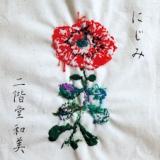
Nikaido Kazumi’s acclaimed and enduring masterpiece "Nijimi", originally released in 2011, returns on vinyl. The album eventually led to her performing
the theme song “Inochi no Kioku” for Studio Ghibli’s The Tale of the Princess Kaguya. Filled with songs capturing her heartfelt emotions and charm—such
as “Onna wa Tsurai yo” and “Totsutotsu I Love You”—this is a truly precious record.
- A1: Blue Sky, White Sun
- A2: Interstellar
- A3: Hotpot
- A4: Niji Shibai Feat. Daichi Yamamoto
- A5: 99011281
- B1: Who Am I Feat. Aaamyyy
- B2: Ü?
- B3: Gingua
- B4: Miracle
- B5: Premiere
Future pop unit "Mononkuru" has released their first album in nearly seven years since their previous album, "RELOADING CITY," on vinyl!
"Bokura wa Warai at a Dead End," a brand-new pop album featuring guest appearances by AAAMYYY and Daichi Yamamoto, is here!
Seven years after their last album, Mononkuru has finally released their long-awaited new album. Known for their jazz-infused pop, the band has changed their
name to "Mononkuru" in katakana and updated their sound. In addition to the innovative modern pop disco they showcased on recent releases "GINGUA"
and "HOTPOT," this album is packed with highlights, including "Futari Shibai feat. Daichi Yamamoto," a bold new work featuring a featured artist for the first time
for Mononkuru, and "Who am I feat. AAAMYYY," which debuts on an album.
Corey Fuller and Tomoyoshi Date are the Illuha duo but for this new Tobira album they link with percussionist Tatsuhisa Yamamoto. He is a skilled drummer who has worked alone on Black Truffle but has also collaborated with Jim O'Rourke, Eiko Ishibashi, Keiji Haino, Phew and Oren Ambarchi among others. This new record focusses on electro-acoustic sounds that are run through with all manner of precise sonic details and are carried by Yamamoto's unique playing style and singular sense of groove which were recorded over two sessions. That playing style finds him playing very lightly with closely mic'ed drums so plenty of softness is captured and then interwoven with layers of Rhodes, piano, distant synths and metallic murmurations.
Kitchen sink Scuzz n’ Bass from 1998 Tokyo. Existing somewhere between Drum n Bass, Musique Concrète, Free Jazz and Noise, Jigen (aka Taro Nijikama) ran the cult Shi-Ra-Nui imprint and was a lynchpin of Tokyo's underground music scene, working as much behind the scenes as in front of them.
There is an inherent grit to the work on display here. Jazz-inflected drums, echoing bells, dissonant flutes, and haunting piano work coarsely interact with skipping breaks and industrial atmospherics, punctuated by tense gasps of silence. Samples disintegrate and reappear, creating a kind of elliptical narrative, and the 9 tracks here perhaps trigger a disorienting sense of dèjá vu.
Originally released on CD by Shi-Ra-Nui in 1998, Double Circumflex is proud to present the first officially licensed reissue of Stone Drum Avantgardism by Jigen and introduces the prescient sound of Shi-Ra-Nui for deeper excavation into its shadowy fissures. Mastered and cut with maximum precision by Beau Thomas at Teneightseven.
Keiji Haino/Jim O'rourke/Oren Ambarchi
Caught in the dilemma of being made to choose” This makes the...
- 1: A Contradiction Has Started To Devour The Numerical Sequence We May Be Made Aware That Normal??? Exists Finally
- 2: Thinking Too Deeply I Skipped Over ¯¯ Three By Three
- 5: “Caught In The Dilemma Of Being Made To Choose” This Makes The Modesty Which Should Never Been Closed Off Itself Continue To Ask Itself: “Ready Or Not?” Part 1
- 6: “Caught In The Dilemma Of Being Made To Choose” This Makes The Modesty Which Should Never Been Closed Off Itself Continue To Ask Itself: “Ready Or Not?” Part 2
- 7: Overtightened The Screw Of The Password To Mystery Drowns In An Infinite Number
The renowned trio of Keiji Haino, Jim O’Rourke and Oren Ambarchi return to Black Truffle with their 11th release, “Caught in the dilemma of being made to choose” This makes the modesty which should never been closed off itself Continue to ask itself: “Ready or not?” Demonstrating once again their commitment to continual experimentation in instrumentation and approach, the record begins with a long-distance collaboration made in response to a commission from New York’s Issue Project Room in 2021 during widespread lockdowns and travel limitations. A unique piece in the trio’s extensive body of work, this side-long epic finds Haino performing on metal percussion, O’Rourke on electronics and Ambarchi on gongs and bells. Initially dominated by rapid patterns on resonant, high-pitched tuned percussion, the piece sets Haino’s dynamic and dramatic performance against a calm backdrop of cycling electronics, thrumming gong strikes and hanging bell tones. The performance develops a heightened, intensely concentrated atmosphere reminiscent of Haino’s classic Tenshi No Ginjinka or his Nijiumu project; when Haino moves to clashing hand cymbals in its second half, the piece’s ritualistic energy suggests aspects of the music of Tibetan Buddhism.
The remainder of the double LP documents the trio live at Tokyo’s SuperDeluxe (the location of all but their very first recording) in a wide-ranging set recorded in December 2017. The concert opens, in another first for the trio, with Haino on drums, O’Rourke on Hammond organ and Ambarchi on his signature Leslie cabinet guitar tones. Haino’s explosively untutored approach to the drumkit will be familiar to some listeners from the radical duo iteration of Fushitsusha heard on Origin’s Hesitation. Setting flurries of rapid activity against moments of silence, his drumming here at times suggests Milford Graves in its tumbling toms and thudding kick-drum propulsion. Accompanied by O’Rourke’s organ and Ambarchi’s guitar, which in their shared use of long tones and shifting modulation speeds almost blend into a single voice, the opening sections of this performance are some of the most magical music the trio has committed to tape thus far.
After an interlude of spoken vocals in both Japanese and English, Haino makes a dramatic entrance on guitar. Against O’Rourke and Ambarchi’s increasingly intense electronic backdrop, Haino unleashes a stunning passage of slowly moving chromatic melodies and sudden shrieking explosions bathed in distortion and reverb. By the time we reach the third side, the guitar/bass/drums power trio is established and lurches into a passage of massive, lumbering rock that threatens to fall apart at every beat, O’Rourke’s strummed chordal work on six string bass creating a harmonic density equivalent to a second guitar. An abrupt edit throws the listener in media res into a frantic locked groove grounded by fuzzed out bass patterns and caveman drums. As Haino moves through a variety of approaches, from massive edifices of stuttering fuzz to ominous swarms of feedback, the trio eventually stumble into a kind of Harmolodic military tattoo, Haino’s guitar weaving and slashing across the rhythm section’s irregular accents. Moving through an epic opening duet for O’Rourke on Hammond and Haino’s wailing guitar, the fourth side eventually ramps up into a frenetic finale of mad bass riffing, crackling snare hits and guitar squall.“Caught in the dilemma of being made to choose” This makes the modesty which should never been closed off itself Continue to ask itself: “Ready or not?” is a testament to the continuing power and invention of this trio, who continue to seek out new terrain after over a decade working together. 2LP set presented in a lavish gatefold sleeve on heavy stock along with inner sleeves containing live pics by Tsuyoshi Kamaike. Photography by Jim O’Rourke, design by Lasse Marhaug and translation by Alan Cummings.
Tape
Collaboration by Italian composer Giovanni Di Domenico (Die Schachtel, Superpang) & Japanese drummer Tatsuhisa Yamamoto (Black Truffle, Superpang).
Recorded at Hoshi To Niji studio, Kobuchizawa, Japan
& studio W and The Nest Cellar, Brussels, Belgium in 2021
Cello on A Murder by Emmanuel Cremer
- A1: Noriko Miyamoto - Arrows & Eyes
- A2: Mishio Ogawa - Hikari No Ito Kin No Ito
- A3: Yoshio Ojima - Days Man
- B1: Mkwaju Ensemble - Tira-Rin
- B2: Rna Organism - Weimar 22
- B3: Naoki Asai - Yakan Hikou
- B4: Takami Hasegawa - Koneko To Watashi
- C1: Mammy - Mizu No Naka No Himitsu
- C2: Dip In The Pool - Hasu No Enishi
- C3: Wha Ha Ha - Akatere
- D1: D Day - Sweet Sultan
- D2: Perfect Mother - Dark Disco-Da Da Da Da Run
- D3: Neo Museum - Area
- D4: Sonoko - Wedding With God (A Nijinski) (A Nijinski)
LTD. COLORED VINYL
Somewhere Between: Mutant Pop, Electronic Minimalism & Shadow Sounds of Japan 1980–1988 hovers vibe–wise between two distinct poles within Light In The Attic’s acclaimed Japan Archival Series—Kankyō Ongaku: Japanese Ambient, Environmental & New Age Music 1980–1990 and Pacific Breeze: Japanese City Pop, AOR & Boogie 1976–1986. All three albums showcase recordings produced during Japan’s soaring bubble economy of the 1980s, an era in which aesthetic visions and consumerism merged. Music echoed the nation’s prosperity and with financial abundance came the luxury to dream.
Sonically, Somewhere Between mines the midpoint between Kankyō Ongaku’s sparkling atmospherics and Pacific Breeze’s metropolitan boogie. The compilation encompasses ambient pop, underground electronics, liminal minimalism and shadow sounds—all descriptors emphasizing the hazy nature of the nebula. Out–of–focus rhythms wear ethereal accoutrements, ballads are shrouded in static, and angular drums snake skyward on transcendent tones. From the Avant–minimalism of Mkwaju Ensemble and Yoshio Ojima, to the leftfield techno-pop of Mishio Ogawa and Noriko Miyamoto (featuring members of YMO), and highlights from the groundbreaking Osaka underground label Vanity Records, these are blurry constellations defying collective categorization.
These tracks also exist in a space of transition when the major label grip on the Japanese recording market began to give way to the escalation of independents. Thanks to the idyllic economic climate and innovations in domestically–manufactured music gear, creators on the edges were empowered to focus on satisfying their artistic visions in the open headspace of home studios. While labels like Warner Music and Nippon Columbia explored new sounds through traditional channels, it was possible for Vanity, Balcony and other indie labels, not to mention self–released artists like Ojima and Naoki Asai, to publish their work via affordable media such as cassettes, 7" vinyl, and flexi–discs.
Expertly curated by Yosuke Kitazawa and Mark “Frosty” McNeill (dublab), Somewhere Between is a collection of music, much of it released for the first time outside Japan, that is bound more by energetic vibration than shared history, genre or scene. They are the sounds of transition and searching—a celebration of the freedom found in floating.
Note: The track “Days Man” by Yoshio Ojima is only available on the LP and Cassette versions.
CAVE Interactive CO., LTD., in collaboration with Limited Run Games and Brave Wave Productions, is proud to unveil the 19th entry in the Generation Series of video game soundtracks, DoDonPachi SaiDaiOuJou The Definitive Soundtrack for CD and vinyl. Originally released for Arcade (2012) and on Xbox 360 (2013) in Japan, DoDonPachi SaiDaiOuJou is the latest arcade release in the DoDonPachi series in the legendary hardcore bullet-hell shoot-’em-up franchise, long respected by dedicated players for its frantic action and rewarding gameplay. The soundtrack features 13 memorable songs by acclaimed Japanese game composer Manabu Namiki. Whether players are scrolling through a relatively simple section or fighting for survival as they’re assaulted by enemies on all sides, this gem of a soundtrack is seeing its first release outside of Japan for the first time on physical formats.
- A1: Noriko Miyamoto - Arrows & Eyes
- A2: Mishio Ogawa - Hikari No Ito Kin No Ito
- A3: Yoshio Ojima - Days Man
- B1: Mkwaju Ensemble - Tira-Rin
- B2: Rna-Organism - Weimar 22
- B3: Naoki Asai - Yakan Hikou
- B4: Takami Hasegawa - Koneko To Watashi
- C1: Mammy - Mizu No Naka No Himitsu
- C2: Dip In The Pool - Hasu No Enishi
- C3: Wha Ha Ha - Akatere
- D1: D-Day - Sweet Sultan
- D2: Perfect Mother - Dark Disco-Da Da Da Da Run
- D3: Neo Museum - Area
- D4: Sonoko - Wedding With God (A Nijinski) (A Nijinski)
Somewhere Between: Mutant Pop, Electronic Minimalism & Shadow Sounds of Japan 1980–1988 hovers vibe–wise between two distinct poles within Light In The Attic’s acclaimed Japan Archival Series—Kankyō Ongaku: Japanese Ambient, Environmental & New Age Music 1980–1990 and Pacific Breeze: Japanese City Pop, AOR & Boogie 1976–1986. All three albums showcase recordings produced during Japan’s soaring bubble economy of the 1980s, an era in which aesthetic visions and consumerism merged. Music echoed the nation’s prosperity and with financial abundance came the luxury to dream.
Sonically, Somewhere Between mines the midpoint between Kankyō Ongaku’s sparkling atmospherics and Pacific Breeze’s metropolitan boogie. The compilation encompasses ambient pop, underground electronics, liminal minimalism and shadow sounds—all descriptors emphasizing the hazy nature of the nebula. Out–of–focus rhythms wear ethereal accoutrements, ballads are shrouded in static, and angular drums snake skyward on transcendent tones. From the Avant–minimalism of Mkwaju Ensemble and Yoshio Ojima, to the leftfield techno-pop of Mishio Ogawa and Noriko Miyamoto (featuring members of YMO), and highlights from the groundbreaking Osaka underground label Vanity Records, these are blurry constellations defying collective categorization.
These tracks also exist in a space of transition when the major label grip on the Japanese recording market began to give way to the escalation of independents. Thanks to the idyllic economic climate and innovations in domestically–manufactured music gear, creators on the edges were empowered to focus on satisfying their artistic visions in the open headspace of home studios. While labels like Warner Music and Nippon Columbia explored new sounds through traditional channels, it was possible for Vanity, Balcony and other indie labels, not to mention self–released artists like Ojima and Naoki Asai, to publish their work via affordable media such as cassettes, 7" vinyl, and flexi–discs.
Expertly curated by Yosuke Kitazawa and Mark “Frosty” McNeill (dublab), Somewhere Between is a collection of music, much of it released for the first time outside Japan, that is bound more by energetic vibration than shared history, genre or scene. They are the sounds of transition and searching—a celebration of the freedom found in floating.
Note: The track “Days Man” by Yoshio Ojima is only available on the LP and Cassette versions.
- 1: Group A - 白い虹 (Shiroi Niji) 06 03
- 2: Kenichi Iwasa - Gamma 04 51
- 3: Kohhei Matsuda - Random Tapes Piano And Voice 05:46
- 4: Ypy - Dive2 02 16
- 5: Group A - 黒い雨 (Kuroi Ame) 04 12
- 6: Kenichi Iwasa - Grande Monte Carlo 03 43
- 7: Kohhei Matsuda - Old Can 04 53
- 8: Tot Onyx - Rot 04 55
- 9: Kenichi Iwasa - Xallab 0 24
- 10: Ypy - Dive1 05 13
Killer tape from YPY, group A, Kohhei Matsuda(Bo Ningen), Kenichi Iwasa + Tot Onyx(group A).
group A's charity compilation series "NO Recording" spotlights on over 1000 unreleased tracks, improv sessions and random recordings from our past. In order to act fast to emergency campaigns, fundraisings and people who are in need of help, the strict "no additional recordings" rule is set and instead we challenge ourselves to cook with what we have in our fridge. Rough edges and unfinishedness are left partially unintentionally; most of the demos and jam sessions were recorded direct to stereo, hence the mixing is limited, and partially intentionally as a part of the process of chance operations (we also just like it rough). This method allows us to break our own preconceptions and discover new comprehensions.
Vol.2 features YPY(goat), Kohhei Matsuda(Bo Ningen), Kenichi Iwasa, Tot Onyx(group A) and group A. This time all of us naturally took a more bricolage way of composing, which gave us a lot of new inspirations and comprehensions. It's going to be limited to 150 cassettes with hand-made covers (incl. digital DL code). This release celebrates 75years anniversary of Hiroshima and Nagasaki atomic bombing and we will donate all the proceeds to ICAN, The International Campaign to Abolish Nuclear Weapons.
About "NO Recording"
We started this charity compilation series this year in order to keep donating to communities in need of help, while we ourselves are having a financially difficult time due to the cancelation of tours and shows. We don't have money to spare but instead plenty of time. Vol.1 was self-released digitally on our Bandcamp page on Juneteenth, all the proceeds were/are donated to NAACP. Vol.1
- 1