The Dutch dance project Twenty 4 Seven scored several major hits during the Nineties. The group was founded in 1989 by producer Ruud van Rijen, who is seen as a pioneer in Eurodance. He was one of the first to put together a male rapper and female vocalist. In 1993 he gathered singer Nance Coolen and rapper Stay-C. I Wanna Show You is their third studio album, originally released in 1994. Two singles were released from this album: "Oh Baby" and "Keep on Tryin'". The group received the Dutch Export Award of 1994 for this record. In 1996, the album also received a Golden Award in South Africa. It reached its highest position at #1 in the (RiSA) South African Album Charts. I Wanna Show You is available as a 30th anniversary edition of 500 copies on translucent red coloured vinyl and includes an insert.
Search:nin
Tinsley Ellis unplugs and channels his masterful guitar skills and soul-baring vocals into a bracing collection of solo acoustic tracks steeped in the traditions of Muddy Waters, Skip James, Son House, Robert Johnson and even Leo Kottke. Nine newly-written originals sit alongside reverent, yet spirited, versions of House's "Death Letter Blues," Willie Dixon's "Don't Go No Further" and Kottke's "Sailor's Grave On The Prairie."
The long lost 1968 debut album by singer-songwriter, Scott Fagan, once tipped to be bigger than Elvis, is set for release on 9th February 2024 via Earth Recordings. 'South Atlantic Blues' will be reissued for the first time in its original artwork, with an iconic portrait of Fagan by famed rock photographer, Joel Brodsky, following a widely celebrated 2015 release. Revisiting his mystical, mythical, and deeply soulful masterpiece, this psych-folk gem doffs a Tropicalia hat direct from downtown New York. "His songs embrace a broad sonic fantasia, swirling in '60s New York R&B and '40s jazz, as well as the Caribbean rhythms of calypso, meringue and Pachanga." New York Times Scott Fagan's story is worthy of a movie in itself. A swinging hipster who landed in 60s Greenwich folk scene, escaping the abject poverty of his U.S. Virgin Islands upbringing, Fagan found himself mentored by the Brill Building's Doc Pomus and Mort Shuman, and feted as the next big thing. "Forget Rodriguez, forget Searching for Sugar Man," says Sharyn Felder, daughter of the late Doc Pomus, the legendary songwriter who signed Fagan to management in 1964. "Scott was so much more. He was cut from a different cloth." 'South Atlantic Blues' is the perfect soundtrack to this tale, an epic song cycle wrapped around an impassioned love story, driven by Fagan's dense, allusive lyrics, and production by Elmer Jared Gordon (Pearls Before Swine) and rich arrangements by Horace Ott (Nina Simone, Sam Cooke, The Shirelles). The Earth Recordings reissue coincides with a resurgence in activity for Fagan, with a new album in the works - the never-recorded soundtrack to 'Soon', the 1971 Broadway rock musical he co-wrote and starred in - and a documentary 'Soon: the Story of Scott Fagan' currently filming through Scissor Kick Films, from director Marah Strauch, writer Chris Campion (who rediscovered the singer-songwriter in 2015), and producer Eric Bruggeman. Classic Black Vinyl + DLC
Psychedelic Latin-funk holy grail from Nicaragua, 1974!!
Poder del Alma (“Soul Power”) was a supergroup formed by some of the best musicians from the Nica scene. This all-star band of nine members was assembled to play at the famous free concert of Santana in Managua in benefit for the 1972 earthquake. After that successful gig supporting the Latin-Rock superstar, what was to be a one-night stand became the seed of the most loved Nicaraguan act from the 70s. All the members had already played an important role in the history of the Nica music / hippie scene in the 1960s. Among them, we can find Roman Cerpas (previously on Bwana), Rene “Chapo Dominguez (Los Rockets), Edgar “El Gato” Aguilar…
A few months after the Managua concert with Santana, Poder del Alma traveled to Guatemala to record their first long play for Dideca (Discos De Centroamerica, S.A.) in just one week of recording sessions. Despite the low budget and precarious recording equipment, the band managed to obtain a powerful psychedelic / afro / funk-rock sound full of electric guitar, heavy drums, hot, percussion, horns, Spanish male/female vocals…featuring titles like “El Valle del Ayatimbo”, “Ia-Taa Yo”, “Zumbale”…
DNO welcomes two new signees, Slovenian producer Marka San and UK rapper Axel Holy, for one of the label’s darkest releases yet. The ‘Hidden Knowledge’ EP presents five tracks of dread bass and bad-trip sonics, as the Bristolian MC delivers cut-throat bars with the kind of calm, looming menace of a tomcat toying with its prey.
It was DEDW8, Axel’s horror-touched collab with Split Prophets’ Blanka, that first made him known in Slovenia, prompting Marka San to get in touch about working together. The same sinister vibe that drives that project has spread its tendrils right through the ‘Hidden Knowledge’ EP, from the twisted brass and squirming bass of ‘Where Did You Go’, which drags its feet like some zombified blues track as Axel repeats the titular phrase in his husky drawl, to the equally chilling ‘Classics’— all eerie samples and abyssal lows, with a pitched-down hook and braggadocious bars.
On ‘Patterns’, Axel goes to war, attacking the creeping beat with vicious battle bars and stories of the hustle, while ‘Hidden Knowledge’ sees him flex his vocabulary to take swipes at the powerful, and ‘Robert Downey’ makes his unswerving determination clear over grungy guitar.
Deliciously macabre, with intricate layers and lyrics that’ll have you spotting something new on every listen, yet still heavyweight enough for the dance, this is a match made in the nine circles and we can’t get enough of it.
Rhythms of postmodern realism at the very bottom of the DNO.
A counterculture movement united by an expansive, experimental and deeply soulful sensibility, Japan’s rebel protest music challenged the status quo and changed the country’s music industry in the process.
The birth of Japan’s nascent acid folk scene was rooted in the messy and invigorating political climate of the late 1960s. It is a story of Dadaists, communists, pharmacists and cult leaders, led by a young generation of upstart students, artists and dreamers hellbent on turning their world upside down.
Born on the campuses of Tokyo, Kyoto and Osaka, and centred around newly formed independent label and left-wing stronghold URC, this uniquely Japanese form of folk expression provided an outlet for musicians who were tired of aping Western sounds and instead found ways to sing in Japanese and integrate traditional forms in new ways.
At the forefront of this movement was Yellow Magic Orchestra’s Haroumi Hosono, a polymath innovator whose band Happy End released the first Japanese language rock album, and whose influence would go on to be felt across Japanese music for decades. Alongside, and informed by the Kansai scene’s Takashi Nishioka and Happy End collaborator Ken Narita, they experimented with cadences and accents of the Japanese language to open the door for others to experiment with their own forms of psychedelic folk too.
Some, like Nishioka, were more inspired by Dadaism than drugs, while others, like Kazuhisa Okubo, would ultimately find work as a chemist, having founded two further folk groups that flirted with varying levels of success. Obstinately uncommercial, relentlessly creative, the music featured on Time Capsule’s Nippon Acid Folk represents a broad church of influences.
Perhaps the wildest addition to this congregation however was Hiroki Tamaki, a classically-trained violinist and committed iconoclast, whose synth-prog odysseys hinted at his obsession with the divine. Subsumed by the teachings of Bhagwan Shree Rajneesh, he penned an album in praise of the infamous religious leader of which two superbly mind-bending tracks are featured on this compilation.
Charting the decade from 1970 to 1980 as the dreams of political and spiritual liberation seeded in the ‘60s turned to dust, Nippon Acid Folk surveys a little explored corner of Japanese music history, but one which ultimately laid the foundations for an independent music industry, launching the careers of Hosono and others in the process.
Nippon Acid Folk 1970-1980 is pressed on 12” vinyl and represents the start of Time Capsule’s deep dive into Japan’s rich history of folk and psychedelic soul music.
The acclaimed Cleveland-born saxophonist Joe Lovano came to Blue Note Records in 1990 and over the next 25 years became one of the most recorded artists in the label’s history, building a formidable and far-ranging catalog that explored the full breadth of his artistry. Recorded in September 1997, Trio Fascination: Edition One stands out as one of the more remarkable sessions in Lovano’s discography with the saxophonist joining forces with two all-time legends—bassist Dave Holland and drummer Elvin Jones—in a spare trio setting that finds these three masters conversing freely. Throughout Lovano can be heard on tenor, soprano, alto, and straight alto saxophones, as well as alto clarinet, and the set consists of nine creative Lovano originals including the pulsing opener “New York Fascination,” the spacious “Sanctuary Park,” the Sam Rivers tribute “Studio Rivbea,” and a stunning rendition of the lone standard “Ghost of a Chance.” This Tone Poet Vinyl Edition marks the album’s first-ever release on vinyl.
The Tone Poet Audiophile Vinyl Reissue Series was born out of Blue Note President Don Was’ admiration for the exceptional audiophile Blue Note LP reissues presented by Music Matters. Was brought Joe Harley, a.k.a. the “Tone Poet,” on board to curate and supervise a series of reissues from the Blue Note family of labels.
Extreme attention to detail has been paid to getting these right in every conceivable way, from the jacket graphics and printing quality to superior LP mastering (direct from the master tapes) by Kevin Gray to superb 180g audiophile LP pressings by Record Technology Inc. Every aspect of these Tone Poet releases is done to the highest possible standard. It means that you will never find a superior version. This is IT.
This stereo Tone Poet Vinyl Edition was produced by Joe Harley, mastered by Kevin Gray (Cohearent Audio) from the original analog master tapes, pressed on 180g vinyl at Record Technology Inc. (RTI), and packaged in a deluxe gatefold tip-on jacket.
White Vinyl[29,20 €]
"He’ll always be a man of his people, but Jamie Webster’s message has cut through hearts all over the land since the folk troubadour’s debut album ‘We Get By’ in 2020. The songwriting may have evolved from those defiant early days on the acoustic guitar, but the hard-hitting storytelling that made his name remains as he continues to give a voice to the masses through towering anthems to hold close through uncertain times.
Though born from frustration and adversity, Webster's music has always managed to encapsulate a sense of unity and togetherness through tough times. Take the breakthrough single ‘Weekend In Paradise’ which distills a living for the weekend ideology of the working classes. An anthem just about everyone working nine to five can relate to, the flagship single speaks volumes of the journey so far as it surpasses 20 million streams on Spotify alone. His second album ‘Moments’ charted in the Official UK Album Chart #3, Indie Chart #2, Official Vinyl Chart #2, Scottish Album Chart #2. The scale of public support for the songs of singular, life-as-he-sees-it-singing, aspirational indie voice of Jamie Webster looks set to reach new heights as he announces the release of his third album, 10 For The People, on Fri 2 February 2024 with Modern Sky UK. While working confidently towards his third Top Ten album chart finish early next year, Webster’s Pied Piper-pull is set to draw a previously unimaginable 40,000 fans to one place as he also announces a HUGE outdoor headline show at Sefton Park, Liverpool on Fri 12 July 2024. "
Black Vinyl[27,52 €]
"He’ll always be a man of his people, but Jamie Webster’s message has cut through hearts all over the land since the folk troubadour’s debut album ‘We Get By’ in 2020. The songwriting may have evolved from those defiant early days on the acoustic guitar, but the hard-hitting storytelling that made his name remains as he continues to give a voice to the masses through towering anthems to hold close through uncertain times.
Though born from frustration and adversity, Webster's music has always managed to encapsulate a sense of unity and togetherness through tough times. Take the breakthrough single ‘Weekend In Paradise’ which distills a living for the weekend ideology of the working classes. An anthem just about everyone working nine to five can relate to, the flagship single speaks volumes of the journey so far as it surpasses 20 million streams on Spotify alone. His second album ‘Moments’ charted in the Official UK Album Chart #3, Indie Chart #2, Official Vinyl Chart #2, Scottish Album Chart #2. The scale of public support for the songs of singular, life-as-he-sees-it-singing, aspirational indie voice of Jamie Webster looks set to reach new heights as he announces the release of his third album, 10 For The People, on Fri 2 February 2024 with Modern Sky UK. While working confidently towards his third Top Ten album chart finish early next year, Webster’s Pied Piper-pull is set to draw a previously unimaginable 40,000 fans to one place as he also announces a HUGE outdoor headline show at Sefton Park, Liverpool on Fri 12 July 2024. "
Life is what happens between curtain rise and curtain fall. And when you’re in the middle of your performance, it can be tough to un-blur, categorize, and interpret the details buried within the perpetual collapsing rubble of past, present, and future. On January 26th, Chayse Porter will release his third studio album, Endless / Boundless via Earth Libraries, nine new musical excavations and epiphanies the Birmingham-based songwriter dug up from life’s bedrock and polished to a shine in his basement lair. How to describe Porter’s solo work...mischievous pop? Cotton candy spun with barbed wire? Beatle-esque, Burt Bacarach-inspired soft rock left to freeze in the warped confines of a funhouse mirror? Whatever your preferred descriptor, Endless / Boundless is a fresher, more direct record than the high-concept psyche excavations of Chay’s Palace, his 2022 sophomore album. Lyrically, Endless ruminates on unrequited love, toxic American exceptionalism, and, in one of the record’s lighter moments, unexpected kindness from strangers. There’s jubilant dream pop (opening stunner “Bleeding Hearts”), shoegaze with threats of violence (“Lead Pipe Cinch”), and a cinematic instrumental centerpiece best enjoyed with eyes closed (“Copter”). With the record on the way and a live band assembled and ready to go, Porter has left listeners a trail of breadcrumbs in anticipation.
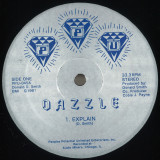
Dazzle rolled deep. Very deep. In the 1980s, it wasn't unusual for the Milwaukee-based group to show up at various Midwest night clubs in a caravan of 30-40 cars and vans. Their live following was hard won over a career that spanned 20+ years, many line up changes, and a handful of project names. Friends, family, and fans made the journey with them weekend after weekend, a testimony to both the musical prowess of the group and the tight-knit community that they emerged from.
Donald Smith, band leader, was there the whole time - joined by many of his siblings and friends - first as founder of the Ghetto Players, a early 70's nine-piece which also included siblings Michael, Ronald, and Charles. They played hard funk in the style of early Kool and the Gang, and although they sadly left no recordings, the strength of their live act managed to catch the eye of local Milwaukee R&B music entrepreneur Cobie Joe Payne. Cobie had made a couple of records locally in the early/mid 70s as a singer, including the impossibly weird and amazing rare afro-blues-funk 45 "Sweet Thing", but had never enjoyed national success. When the Ghetto Players disbanded in the early-mid 70s, Donald soon put together a new group, C on the Funk (the 'C' referring to lead vocalist and sibling Charles), under Payne's tutelage. Sister Lorrie Smith came in as the drummer, the line-up being fleshed out by brothers David and Melvin Johnson, and friend Robert Mitchell. After a few years as a strictly live attraction, they drove to Chicago and produced a single, "In the Disco" / "A Place" for Payne's small record label Sweet Thang Records in 1980. Lacking the financial backing needed to supply the local R&B disk jockey's "promotional fees" , this single sadly languished in obscurity, gathering dust inside the local tavern jukeboxes and manilla promo envelopes that comprised Payne's DIY distribution network.
C on the Funk were traveling the Mid West extensively at this point, and making some important friends on the road. Ike Wiley Jr. of the Dazz Band/Kinsman Dazz took particular interest and the band was re-christened Dazzle, partially as a tie-in with Dazz, partially to embrace the new sounds that would distinguish the 70s disco scene from what record collectors and DJs would now refer to as the "Boogie" era. There no doubt was a stigma attached to the word "Disco" as the eighties began, and as we see in this collection C On the Funk's "In the Disco" is remixed and transformed into the psychedelic synth instrumental of Dazzle's "Disco's Out", a title which embodies both the next-step approach Smith and company were pushing for, and humorously comments on the state of black dance music in the early 1980s. The Dazzle recording, done in Chicago in 1982, updated the sound and featured an expanded line up, most notably a second synth player (Charles Washington), and a percussionist/second lead vocalist (Greg McDonald). The added synth textures and deep percussive grooves give the Dazzle recordings an elegant late night vibe that resonate just as well in a good pair of headphones as they do on the dance floor. The trance inducing cough syrup-warble of "Explain" may best exemplify this here. Sadly, a pressing flaw in the 12" halted production and promotion, and the EP and the songs within were lost to the ages. The group, having done a much better line in the live music business, followed that path instead all the way to the early 90s. --bio provided by andy noble
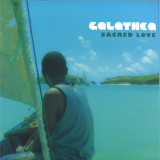
Two years after the release of his first self-titled album, DJ producer Massimo Napoli aka Galathea presents the new 'Sacred Love', in which he once again avails himself of the collaboration of his friend producer and bass player Salvo Dub, as well as a combo of respected musicians: singer Kadi Koulibaly - originally from Burkina Faso - already featured on the first album, Giulia La Rosa, author of the lyrics and performer of the title track, pianist Mario Pappalardo, percussionist Sergio Spitaleri and drummer Luciano Cantone.
'Sacred Love' is definitely a more mature, intense and profound journey than the previous album of the same name, which enhances the magical dreamlike and spiritual atmospheres of a certain African culture.
The album guides the listener along a path of multi-ethnic contaminations: "Divinité", "Ouaga" and "Koloko", well interpreted by Kadi, touch on the sacredness and mysticism of the African continent and blend well with the Spiritual Jazz sounds that have evolved in the West.
"Divinité", through the spoken word of French poet Diego Hernandez, tackles the themes of faith, life and the relationship with one's 'self', with references to French chanson productions, in which Kadi's spiritual song, at times 'Saharan', intersects and expands into cosmic space.
The title track, the first single from the album, also released on 7" (45rpm) in two versions, is an Afro-American gospel with a typically afrobeat rhythm, vaguely reminiscent of Nina Simone's 'See-Line Woman'.
North Africa is represented by "Equator", while we climb further north into the middle of the Mediterranean Sea with "Medican Blues", to land in Stromboli with the Deep Jazz of "Ginostra", whose title recalls the village of the marvellous island in the Aeolian archipelago.
Then we have the Cuban track "Caminito", a sort of Cha-Cha with a romantic piano melody (à la Chucho Valdez) well performed by maestro Mario Pappalardo; and then again "Eos", strongly Balearic with a Brazilian mood; "Impression", a dreamy journey of impact; "Sirens", already present on the first album and here reworked in a new Spiritual-Ambient version produced by Agosta.
"Sacred Love" is thus an original and musically borderless album, which expands a certain African sacred culture and naturally blends Afrobeat, Jazz and Blues atmospheres with the Balearic sounds of Mediterranean culture.
Enjoy listening!
Ltd. transp. magenta-white splatter vinyl
Gegründet im Jahr 2010 haben Electric Callboy (ehemals Eskimo Callboy) in den ersten zehn Jahren ihres Bestehens viel Lärm gemacht, unzählige Preise gewonnen, die Albumcharts in Deutschland (Platz 1!), der Schweiz, Österreich, den Niederlanden, Belgien und Großbritannien geknackt, eine Goldauszeichnung für 200.000 verkaufte Einheiten für die Single "Hypa Hypa" erhalten sowie Konzerthallen rund um den Globus ausverkauft: Für ihre aktuelle Welttournee wurden über 120.000 Tickets verkauft, darunter 17 ausverkaufte Shows in den USA und Kanada.Darüber hinaus sind Electric Callboy auch online eine bemerkenswerte Kraft, wie über 150 Millionen Videoaufrufe und 673.000 Follower auf YouTube, mehr als 500.000 Follower in den sozialen Medien und 2,2 Millionen monatliche Hörer auf Spotify zeigen.Zwei Alben und eine EP aus den früheren Tagen der Band - "The Scene" (2017), "Rehab" (2019) und "MMXX - EP" (2020) - sind endlich wieder als spezielle zweifarbige Splattered-Vinyl-Editionen erhältlich!
Featuring for the first time in the UK on 7-inch vinyl, ‘Touching And Caring’. Originally recorded in 1985 for the album Nina’s Back! In truth, Nina’s resurgence came a couple of years later in 1987 when the luxury brand Chanel No. 5 featured ‘My Baby Just Cares For Me’ in a UK TV ad campaign. Charly released the song and took it to #5 on the national pop charts. We reissue here as part of the forthcoming 50th Anniversary celebrations.
- 1: O Astronauta (Baden Powell / Vinicius De Moraes)
- 2: Tristeza De Nos Doi (Bebeto, Durval Ferreira, Mauricio Einhorn)
- 3: Chuva (Durval Ferreira, Pedro Camargo)
- 4: Tema Para Martin (J. Demonte)
- 5: Consolação (Baden Powell, Vinicius De Moraes)
- 6: Canto De Ossanha (Baden Powell, Vinicius De Moraes)
- 7: Pro Forma (Arnaldo Costa, Mauricio Einhorn)
- 8: Samba Do Avião (A. Carlos Jobim)
- 9: Niña No Divagues (Agustin Pereyra Lucena)
- 10: Berimbau (Baden Powell, Vinicius De Moraes)
Following Far Out’s reissue of Agustin Pereyra Lucena Quartet’s La Rana, the label continues its memorialisation of the late, great Argentinian guitarist’s music, with the first ever direct from tape, audiophile reissue of Pereyra Lucena’s self-titled debut album from 1970.
One of the outstanding South American guitarists, Agustin Pereyra Lucena commanded a unique position in Latin music history. He hailed from Buenos Aires, but was obsessed with the music of Brazil. A disciple of Antônio Carlos Jobim, Baden Powell and Vinicius De Moraes, the nature of Agustin’s Argentinian roots combined with the nurture of Brazil and its music to give Agustin a sound entirely his own.
After being scouted in a nightclub, by musician and guitar craftsman Jorge Demonte, Agustin was invited for an audition at Argenitinian label Tonodisc. Before he knew it, aged 22, he was in the studio recording his first album.
Agustin enlisted fellow Argentinian Brazilophiles Mario "Mojarra" Fernandez who played bass and drummer Enrique "Zurdo" Roizner. He had first heard the duo backing Vinicius de Moraes, Toquinho and Maria Creuza on their legendary La Fusa live album, also recorded in Buenos Aires. For vocals, Agustin brought in his old friend, a French teacher called Helena Uriburu, who at the time had (unbelievably) never sung in a studio before.
The atypical bossas and spiritual swinging sambas, composed by many of Agustin’s aforementioned heroes, were elevated to new heights by Agustin’s dazzling arrangements and phenomenal guitar playing. The almost cosmic reaches Agustin achieved with his sound are balanced against the stylish sophistication and breezy nature of the music.
Moments of calm serenity include Agustin’s own composition “Nina No Divagues”, Durval Ferreira and Pedro Camargo’s “Chuva” and the Brazilian bossa classic “Tristeza Nos Dois”, which feels like it draws equally upon exotica and early library records. Accompanied by Roizner’s shuffling samba jazz drums, opener “O Astronauta” is Agustin’s cover of the Brazilian guitar standard composed by Baden Powell. Another Baden Powell classic, “Consolacao” is an extended full-band set, which features Agustin’s crisp guitar dancing around a hypnotic rhythm section. Upright bass is swapped out for a big, round-sounding electric one, which sits loud in the mix for almost seven minutes of deep, groovy, distinctively early-seventies magic.
Agustin passed away in 2019, and it is only in recent years that he is starting to gain his plaudits as one of South America’s greats. On the liner notes of the album Vinicius De Moraes writes: “I think I never saw, with the exception of Baden Powell and Toquinho, anyone more linked to his instrument than Agustín Pereyra Lucena. It would give the impression that if the guitar were taken away from him, he would fade into music as one dies from the amputation of an arm.”
Agustin Pereyra Lucena will be released on audiophile vinyl LP, CD and digitally on the 26th January 2024 via Far Out Recordings.
- 1: Afrique - House Of The Rising Funk
- 2: Blue Mitchell - Soul Village
- 3: Sarah Vaughan - Magical Connection
- 4: Art Farmer - Soulsides
- 5: Shelly Manne - Mask 7:30
- 6: Alice Clark - Never Did I Stop Loving You
- 7: Buddy Terry - Abscretions
- 8: Maxine Weldon - Right On
- 9: Barry Miles - Scatbird
- 10: Jack Wilkins - Red Clay
- 11: Clark Terry - Rum And Mumbles
- 12: Ellerine Harding - I Ain't Got Much (But Whatever I Got It's Yours Baby)
- 13: Blue Mitchell - Granite & Concrete
- 14: Hadley Caliman - Quadrivium
- 15: Carmen Mcrae - Feelin' Good
A compilation of rare spiritual jazz and funk grooves culled from the archives of producer Bob Shad's Mainstream Records. Alice Clark's cult classic Never Did I Stop Loving You' features here alongside many gems uncovered for the first time.
Bob Shad worked with titans such as Charlie Parker and Lightnin' Hopkins in the 40s, founded the EmArcy jazz label in the 50s, and discovered Janis Joplin in the 60s, and started the Mainstream label in 1964.
From Afrique's classic House of the Rising Funk' and its funky wah wah frenzy, to Hadley Caliman's deep jazz Flute ode, From one of Clark Terry's famous Mumbles (Shad produced the original with Oscar Peterson) to Jack Wilkins' Red Clay' sampled by both A Tribe Called Quest and Chance the Rapper. A Soul Music lover, Shad also excelled in soul divas and produced Ellerine Harding, Maxine Weldon and of course the mighty Alice Clark. Carmen McRae, one of Shad's long time collaborators, gives a soulful, conga-led version of the classic Feelin' Good, originally made famous by Nina Simone
"Nicoles Songwriting und ihr Gesang entwickeln sich von Album zu Album stärker. Sie weiß, wie man rockt, sie kann eine gefühlvolle Ballade vortragen, die Herzen bricht, und sie kann eine Jazz-Line singen, die sie in die Nähe von Nina Simone rückt." -Living BluesDie Grammy-nominierte, 7-fache Blues Music Award-Gewinnerin Danielle Nicole zählt zu den besten Sängerinnen und Bassistinnen der heutigen Roots-Musik. Zu Beginn der Aufnahmen zu "The Love You Bleed" wusste Danielle Nicole, dass dieses neue Album anders sein würde als die bisherigen. Das von Tony Braunagel (Taj Mahal, Eric Burdon, Robert Cray) produzierte und von John Porter (B.B. King, Buddy Guy, Bryan Ferry) abgemischte Album ist voll von Liebe, Verlust, Wille, Entschlossenheit und all den anderen Dingen, die mit der Liebe zusammenhängen. Die Leadsingle "Make Love" handelt davon, den Schmerz bewusst zu überwinden und sich in den schwierigen Momenten des Lebens für Liebe, Familie und Gemeinschaft zu entscheiden. "How Did We Get to Goodbye" mit seinem rohen und ehrlichen Text dokumentiert eine gescheiterte Liebe, in der es weder einen Helden noch den Bösen gibt, und stellt die Frage, wie man in solch eine Situation gelangt, ohne es zu bemerken. Der Track "Love On My Brain" ist eine starke Mischung aus altem R&B und treibendem Blues und mit "Right By Your Side" gibt es eine klassische Soul/R&B-Ballade, in der es darum geht, nie wieder den Fehler zu machen, "the one and only" gehen zu sehen.
Belgian independent label De:tuned celebrates 15 years with an expansive series of new releases throughout 2024. Founded in 2009 by Ruben Boons and Bert Hermans, De:tuned and British influential electronic music pioneers The Future Sound Of London team up to mark the beginning of its momentous 15th anniversary.
The inimitable Future Sound Of London grace De:tuned with 'Pulse Five', the 5th installment and follow-up to the classic Pulse EP series. 'Pulse Five' contains 8 tracks of previously unreleased DAT tape material from the early 90s. These unheard vintage recordings date back to the era of FSOL's much sought after classic singles and highly acclaimed Accelerator album. Brace yourself for visionary techno-driven rave work under their iconic aliases such as Mental Cube, Indo Tribe, Yage and a rare Smart Systems track. This is the sheer brilliance of the iconic duo in full effect.
The impeccable Kevin Foakes (Openmind, DJ Food, Ninja Tune) created all the matching graphic work. Mastered by Matt Colton at Metropolis to ensure the highest quality. De:tuned would like to thank you for the continued support, stay tuned!
Listed as one of Record Collector's "100 Greatest Psychedelic Records" 1968's Five Day Week Straw People, which relates the imagined "typical weekend of the average nine-to-five worker" is now released on 180g Straw coloured vinyl.
The album is often considered a cult classic and a collector's item among psychedelic rock enthusiasts, featuring a blend of psychedelic and folk- rock influences and includes songs like "Sunday Morning," and "Carwash." While the band didn't achieve widespread commercial success, they are remembered for their unique sound and contribution to the psychedelic music scene of the late '60s. The Straw coloured 180- gram vinyl is re- issued on Morgan Blue Town including sleeve notes
If the Corona pandemic and the accompanying concert bans have at least one good thing going for them, it's the extra time musicians have to write songs and live out their creativity. This circumstance was also the driving force for the SAMURAI PIZZA CATS, who come from the Electric Callboy environment. Frontman Sebastian Fischer was behind the microphone in their predecessor band Her Smile In Grief, whose line-up also included Daniel "Danskimo" Haniß, who is now celebrating success as guitarist, songwriter and producer of Electric Callboy. The contact between the two never broke off and so Daniel also produced Sebastian's later band Fall Of Gaia in recent years, whose former drummer and multi-instrumentalist Stefan Buchwald is also involved in this new project - family business from downtown Castrop Rauxel! So while Stefan contributes the music, Sebastian writes the lyrics and Daniel, as a creatively involved producer, ensures a well-rounded overall result. Okay, before we try your patience any further, let's talk about the elephant in the room: the band name. The SAMURAI PIZZA CATS have named themselves after a Japanese anime series from the early nineties. Why? Stupid question! Of course, because they are fearless warriors on their instruments, love to eat pizza and like cats! And maybe a little bit because they have soft spots for anime and silly band names - but only maybe. Rumour also has it that "Banzai! Smack! Meow!" is an onomatopoeic description of the band's sound.