"In the early 1960s, the great composer, arranger, and bandleader Gerald Wilson began recording a series of spectacular albums for Pacific Jazz that stand as the most significant of his lengthy career. The second of those albums, 1962’s Moment of Truth, features Wilson’s dynamic big band on an action-packed nine-song set (seven of which were composed by Wilson) with highlights including the swaggering blues of the title track, the irrepressible Latin groove of “Viva Tirado,” and a fleet-footed version of “Milestones” by Miles Davis.
This stereo Tone Poet Vinyl Edition was produced by Joe Harley, mastered by Kevin Gray from the original analog master tapes, pressed on 180g vinyl at RTI, and packaged in a deluxe tip-on jacket."
quête:nine l
Black Truffle is pleased to welcome free jazz legend Joe McPhee back to the fold with Oblique Strategies, a wild trio recorded in Antwerp in 2018 in the company of Mette Rasmussen’s fire-breathing alto saxophone and Dennis Tyfus’s post-Fluxus antics on tape, voice, and percussion. Rasmussen and Tyfus have previously recorded together as Bazuinschal, and some similar strategies are on display here: mysterious metallic scrapes, extended tones in which voice and sax become indistinguishable, comic explosions of varispeed tape. With McPhee on board, however, proceedings are more sumptuous, with the two horns moving fluidly from expeditions into the extremes of their instruments’ registers to pointillistic note-splatter and Ayler-esque folk melodies; we even get to bask in some of the slow-motion free blues that McPhee has now been playing for half a century. McPhee is heard primarily on tenor, Rasmussen mainly on alto, but with Rasmussen doubling on sundry objects, and the whole trio contributing vocals, certainty about who is doing what becomes nigh impossible.
The recording and production add to this hazy unclarity. Where much contemporary improvised music aims at dryly clinical hi-fi, the lively reverberant space of Oblique Strategies calls to mind the less-than-pristine sonics of classic free jazz artefacts like John Tchicai’s Afrodisiaca or McPhee’s own Underground Railroad. A further dimension of oblique unpredictability is added by subtle changes in the sense of space: at times merely a reverb tail glimpsed between phrases, at other points the whole mix seems to be momentarily swallowed up in slap-back, blurring the lines between acoustic instruments and the decayed fidelity of Tyfus’ tape playback. Spread across four pieces ranging from four to nineteen minutes in length, Oblique Strategies moves with anarchic swagger from explosions of clattering cymbals and bellowing horns to near-silent episodes of mysterious rumble and clunk. ‘Death or Dinner?’ opens the record with a lovely duet of climbing melodic patterns shared between the two saxophones, played with a buzzing oboe-like tone. A long, wavering note sung by Tyfus cues the first of countless changes of direction, eventually leading to a crescendo of watery splutters and duelling saxes. At points Tyfus’ keening resemble the signature moves of his friend and collaborator, Ghédelia Tazartès; at others, his tape-sped huffs and puffs possess a rawness reminiscent of Henri Chopin or Gil Wolman. The dialogue between wailing saxophones and vocal cries, punctuated by percussive thuds and crashes, can at times feel less like a musical performance and more like the calls of some mysterious forest creatures, possessing a primordial energy that might remind some listeners of the outdoor antics of Brötzmann and Bennink’s Schwarzwaldfahrt.
Oblique Strategies can also be delicate at times, as on the beautiful third piece, ‘Destilled Edible’, dominated by a slow, microtonal melody played with a breathy tone resembling a shakuhachi. The closing side-long ‘Light My Fire’ ranges across classic improv call and response, skittering trumpet blurts, inept cymbal clatter, mock-operatic vocals, and crude tape manoeuvres. Momentarily pausing at the ten-minute mark for an interlude of ghostly room sound and crackling texture, its closing moments unfurl a glorious dual saxophone finale, the almost epic tone subtly undermined by Tyfus quietly tapping out swing rhythms. Arriving in a striking sleeve adorned with Tyfus’ drawings, Oblique Strategies is an invigoratingly free-spirited blast of improvisation.
Downloads
- A1: Just Like Honey
- A2: Sometimes Always (Feat. Isobel Campbell)
- A3: Black And Blues (Feat. Isobel Campbell)
- A4: Amputation
- B1: All Things Pass
- B2: Some Candy Talking
- B3: Head On
- B4: The Living End
- B5: Cracking
- C1: Teenage Lust
- C2: I Hate Rock 'N' Roll
- C3: Reverence
- C4: Blues From A Gun
- D1: Far Gone And Out
- D2: Between Planets
- D3: Half Way To Crazy
- D4: In A Hole
Recorded at the Hollywood Palladium, Los Angeles in 2018, ‘Sunset 666’ is a new live album from The Jesus and Mary Chain, due out August 4th 2023 on Fuzz Club. In 1990, a young American band, full of a precise kind of noise and darkness, were special guests on the US tour being undertaken by a group who had noise and darkness, poise and catharsis of their own. The young band: Nine Inch Nails. Those headliners: The Jesus and Mary Chain. Almost thirty years later, an invitation was extended. Would the Reid brothers care to reverse the roles and open for Nine Inch Nails on their own North American tour? Trent Reznor had been a fan of the Mary Chain, and influenced by them since hearing 'Psychocandy', so it felt a good fit and the Reid brothers accepted. The resulting tour ended with a run of six shows at LA’s Hollywood Palladium and the seventeen tracks captured on the ‘Sunset 666’ double album were recorded from the desk on two of those nights. Sides A, B and C are from the final show, December 15. Those twelve songs were the full set that night, in sequence, meaning the show began with the here-we-f*cking-go drums of ‘Just Like Honey’ and ended with the ferocious euphoria of an eight-and-a-half minute ‘Reverence’. Side D of the vinyl record is taken from the December 11 show and serves almost as a mini-showcase of the ‘Automatic’ album, featuring versions of ‘Blues From A Gun’, ‘Between Planets’ and ‘Halfway To Crazy’.
‘Over And Over’ is simply the greatest ever 7-inch disco edit, a nine-minute anthem which retains (or maybe even enhances) its appeal in the smaller format.
The tripped-out soul of ‘I Need Somebody To Love Tonight’ also has a great shorter version. Neither have been reissued since their original release.
Mary Jane Leach is a composer focussed on the physicality of sound, its acoustic properties and how they interact with space. She has played an instrumental role in NYC’s pioneering Downtown scene alongside Arthur Russell, Ellen Fullman, Peter Zummo, Philip Corner and Arnold Dreyblatt, as well as devoting years to the preservation and reappraisal of Julius Eastman’s work since his death in 1990, compiling the »Unjust Malaise« 3CD set in 2005 and editing the 2015 book »Gay Guerrilla: Julius Eastman and His Music«. »Woodwind Multiples« is her second album for Modern Love, following »(f)lute songs« (2018).
»Woodwind Multiples« features four pieces for multiples of the same instrument: four bass flutes, nine oboes, nine clarinets, and seven bassoons. Each piece works closely with the unique sound of each instrument, combining pitches that create other, sometimes unexpected, tones, primarily combination and interference tones, as well as rhythmic patterns. What you hear is what happens naturally - there is no processing or manipulation.
»8B4 (1985/2022)«, played by Manuel Zurria, is for four bass flutes. It is a revision of 8x4, which was written in 1985 for the DownTown Ensemble and was only performed once, due to its unusual instrumentation: alto flute, English horn (originally bass oboe), clarinet, and voice.
»Xantippe’s Rebuke« (1993) was written for Libby Van Cleve, for eight taped oboes and one live, solo oboe. The eight taped parts are equal and dependent, while the solo part is meant to be a solo with the tape as accompaniment. The piece works with the unique sound of the oboe, starting with unison pitches that create the richest sound, building the piece from there. Pitches and rhythmic patterns that occur naturally are notated and then played later, which in turn create other pitches and rhythmic patterns. So, in effect, the nature of the oboe and its natural sound determine the direction of the piece.
»Charybdis« (2020), played by Sam Dunscombe, is for solo clarinet and eight taped clarinets. It combines a somewhat obscured reference to Weep You No More, a John Dowland piece, which combines with the sound phenomena created from the melody and supporting chords of the Dowland.
»Feu de Joie« (1992) was written for bassoonist Shannon Peet and is an homage to the bassoon and its wonderful sound. It is for seven parts—six taped and one »live.« The taped bassoons combine to create a bed of sound that exploits the unique qualities of the bassoon, creating combination and interference tones, starting off with unison pitches, creating a rich sound that builds from there. Most of the subsequent pitches and phrases occur naturally, and are then notated later on in the piece, which in turn creates other notes and phrases.
No. is the tenth Soft Riot album by Glasgow-based Canadian synth auteur Jack Duckworth (also known as JJD). With origins from the mid-nineties in the vibrant art-punk/hardcore dominating the West Coast American/ Canadian underground at the time, he has clocked in over twenty five years of musical output in various bands and projects.
No. is the logical follow-up to When Push Comes To Shove, released in November 2019 on the Glasgow UK-based label Possession Records, which saw some critical acclaim in the increasingly diverse synthwave scene — a crystallization of the artist’s signature “SynthLord” sound.
With No. things have been shaken up and pushed into new directions. Many different factors came into play, including the conditions of the pandemic lockdowns and an urge for listening to music favourites from beyond his own scene informed developments on this new record. One key feature of these tracks is that under these conditions they were developed as individual pieces — a contrasting approach from previous albums where tracks were written with an album in mind. An evaluation of all of these individual tracks in the summer of 2022 unveiled a common pattern going through these new compositions.
One can still hear any number of echoes of the spirits of original synth artists in his sound, such as Images in Vogue, The Box, Section 25, Thomas Dolby, Skinny Puppy, Chrome, Cabaret Voltaire, Fad Gadget, Japan and Bill Nelson. However, some of Jack’s halcyon punk influences surface as well, taking inspiration from legendary punk/hardcore labels such as Dischord and Gravity, as listening habits over pandemic steered back towards more guitar-based styles. The introduction of expanded production techniques, experiments with vocal styles and tones, and stylistic shifts mark a progression of Soft Riot’s sound. The result is a snarkier, urgent and more playful, with a focus on pure synthpop, new wave, art-punk, proto-EBM as well as grittier synth-punk and post-punk tones.
The variation, energy and tone of this collection of tracks illustrates Soft Riot’s ability to transcend the hallmarks of today’s music environment, which increasingly is fragmenting into smaller and smaller micro-genres. Dry wit and dark humour take the lyrics and the tone of this album on a fun ride through music scenes, dark alleys and inside jokes.
It’s June 2022. After months of rehearsing, Tim Sanpher decided to take the band into Brighton Road Recording Studio for a weekend.
Having yet to play a gig he was interested to hear how they’d respond to being put on the spot and wanted to give them something to focus on. With the very late addition of a second guitarist they set up and recorded nine songs live in one afternoon. Only the vocals would be replaced the following day.
The recording was purely for posterity and there had been no plans to release it yet...on hearing the roughly mixed playback it was already obvious...they’d captured something special. Something more than just the five members combined. It was a true “lightning in the bottle” moment.
It was clear that Shaw’s Trailer Park had its own individual sound and character.
And here are those recordings captured on album for the first time!
Punchy rocking workouts like Don’t Do That and She’s Alright sit alongside live favourites - psych workouts Sun Device and Rainbow Man.
Rare 1986 Funk/Soul From Alabama.
Originally released as a private pressed cassette tape only.
First Time On Vinyl.
Released in collaboration with the Numero Group.
180g BLACK vinyl limited to 500 copies w/obi strip. Non-Returnable.
Armed with little more than his Peavey T-60 guitar and a Jumbo Fuzz pedal, Errol Stubbs and his bar-band cohorts cranked out a self-released tape of funked-up disco soul in 1986. With no label or distribution to speak of, Errol would simply put on his best suit and sell the cassettes by hand. The tape languished into obscurity…until now!
The story of Errol Stubbs begins in Birmingham, Alabama in 1959. The youngest of five, he was surrounded by music as a child–his aunt taught piano at Daniel Payne College while his older brother, Avery Beavers, was an accomplished jazz trumpeter. Under the guidance of Avery, Errol started playing trumpet at the age of nine, though he gravitated toward songwriting and quickly picked up the guitar. Inspired by blues greats the likes of Albert King, Buddy Guy, and Little Milton, 12-year-old Errol began mimicking the sounds that filled southern airwaves. As a teenager, he played at barbecues, fish fries, and dive bars across the Magic City. After a brief stint at Jefferson State studying music, Errol’s passion for songwriting beckoned him away from the classroom.
Stubbs bounced around bar bands before settling on a live lineup and saving enough dough to take his vision to the recording studio. Over the course of two days, his well-rehearsed band recorded Turning it Out mostly live to tape at the Sound Of Birmingham Studio. Located on Birmingham’s east side, the state-of-the-art studio kept the lights on by recording commercial jingles but was more than happy to open their doors to local talent.
Taking notes from guitar god Ernie Isley and funk legend Rick James, the resulting recordings are drenched in cosmic phaser-fuzz guitar work, slapping bass lines, and sexual disco innuendos. Big brother Avery lends a hand on Clavinet for “Sweat,” while studio owner/engineer Don Mosley adds a tasteful dose of Moog synthesizer across a handful of cuts.
Soon after the Sound Of Birmingham sessions, Errol released the private pressed EP “Dancin’ Fancy,” b/w “Spaced Out On Your Love,” the latter of which was featured on Numero Group’s 2019 compilation Visible and Invisible Persons Distributed In Space.
The seven-song cassette Turning It Out was sold in local record stores and from night club stages, but only a few copies made their way out of Birmingham.
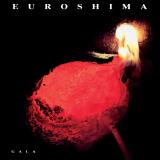
Cult Argentinian darkwave act Euroshima’s Gala sees a vinyl reissue courtesy of Dark Entries. Euroshima was formed in 1986 by Fabián Iribarne, José Wyszogrod, Ricardo Parrabere, and vocalist Wanda. Originally released in 1987 on Polygram, Gala was a success throughout South America. But to the band’s dismay, they received minimal support from the record label, which meant the album would linger in obscurity outside of the region. A CD issue via Twilight Records surfaced in 2020, but this is the album’s first reissue on vinyl.
Gala’s legendary status among cognoscenti is warranted. The album’s nine tracks display all the hallmarks of the best darkwave: spiky guitars, analog synth basslines, and wailing vocals. But Euroshima make their mark on the genre with impeccable songcraft and a honed sense of the uncanny. While the band themselves rejected the label of “gothic”, it’s hard to resist busting out the black eyeliner when listening to gems like the uptempo “Como Los Otro” or the churning album-closer “Mejor Callarlo”. Highly recommended for fans of Xmal Deutschland, Lebanon Hanover, pummeling TR-707’s, and doom-laden synths.
This reissue is co-presented with Twilight Records, responsible for the 2020 CD reissue of Gala. It has been remastered by George Horn at Fantasy Studios. Also included is a double sided insert with lyrics and photos, as well as a postcard featuring a photo of the band.
Imperial f.f.r.r. was Unrest’s breakthrough album in 1992. It has withstood the test of time and is now considered an indie-rock classic and one of the best albums of the 1990s. Formed in 1984, at Wakefield High School in Arlington, Virginia, the band started releasing homemade cassettes on their own Teenbeat label. Imperial f.f.r.r. is their sixth album and marked the arrival of original Velocity Girl vocalist Bridget Cross joining drummer Phil Krauth and singer/guitarist Mark Robinson. It was recorded by Wharton Tiers (Sonic Youth) at his home studio in Manhattan. After the release of Imperial f.f.r.r., the band released singles on Sub Pop and K and soon thereafter signed to legendary U.K. indie 4AD, releasing their final studio album Perfect Teeth in 1993. This limited edition features the original design and layout of the very first pressing from 1992. All the details have been recreated including the lyric sheet, the blue box around the amplifier on the front, the label art, and even the Ajax and No.6 Records logos. The original didn't have a barcode, so we've created a spiffy new removeable OBI card for that featuring a photograph by Mike Galinsky (The Decline of Mall Civilization) of the band playing at New York's Spiral club in 1991.
A white ship sailing in a sea of blackness, Codeine’s swan song arrived in 1994 amid grunge’s ascension to alt radio’s godhead status.
John Engle’s guitar alternates between crystalline and sludge, and Stephen Immerwhar’s distorted bass floats on top of punishing drums from newcomer Doug Scharin (Rex, June of 44), resulting in nine perfect meditations on the loneliness and uncertainty of early adulthood.
A white ship sailing in a sea of blackness, Codeine’s swan song arrived in 1994 amid grunge’s ascension to alt radio’s godhead status.
John Engle’s guitar alternates between crystalline and sludge, and Stephen Immerwhar’s distorted bass floats on top of punishing drums from newcomer Doug Scharin (Rex, June of 44), resulting in nine perfect meditations on the loneliness and uncertainty of early adulthood.
Texas born guitarist Melvin Sparks is one of the godfathers of Acid Jazz. He first came to prominence in the bands of Jack McDuff and Lou Donaldson, providing an essential element in their funky groove-based classics of the late 60s. He then became part of the Prestige Records funk team, under the tutelage of producer Bob Porter. He made his debut LP “Sparks”, for the label in 1970, alongside Idris Muhammad, Leon Spencer and Houston Person. Two further exciting albums appeared on the label with “Spark Plug” and “Akilah” and over a dozen side-man appearances.
When Porter left to set up Eastbound Records in Detroit - as part of Westbound Records - Sparks followed, recording his label debut "Texas Twister” in 1973. The following year, after Porter left, he recorded the album that became “’75” with some of the label’s top session players, including members of Funkadelic and vocalist Jimmy D Scott, who sang on ‘I Got To Have You’ and ‘If You Want My Love’. The nine tracks featured a slicker sound, that mirrored the contemporary soul jazz of the time and included club classics like 'Get Ya Some' and 'Get Down With The Get Down’.
Sparks began recording one more album for the label which languished in the vaults for decades and then mostly concentrated on session work before he was rediscovered by the acid jazz scene in the late 80s, and was brought over to Europe to tour as part of the BGP All-Stars and this late revival saw him record five further albums.
This is the first vinyl reissue of this album since 1975.
First-ever vinyl repress of her classic 1982 fan-favourite album, third in a series of remastered vinyls of her 1980s albums, and part of Cherry Red’s on-going re-issue campaign of the star’s EMI catalogue in association with RT Industries.
Remastered from the original master tapes and pressed on green coloured vinyl with refreshed artwork including new inner sleeve.
Includes the singles ‘Machinery’, ‘Are You Man Enough’ and ‘I Wouldn’t Beg For Water’ as well as her original recording of ‘Wind Beneath My Wings.’
Sheena Easton rocketed to overnight fame in 1980 with the BBC broadcast of ‘The Big Time’ – arguably the first pop reality show – subsequently breaking records with her first two singles ‘Modern Girl’ and ‘9 To 5’ simultaneously hitting the UK Top Ten. Within a year, she had topped the US Hot 100 with the renamed ‘Morning Train (Nine To Five)’, recorded the Bond theme ‘For Your Eyes Only’, released two platinum-selling albums and become an international sensation.1982 proved another whirlwind year for Sheena – beginning with her ‘Best New Artist’ win at the Grammies, followed by first national US tour, the recording of her first TV special ‘Live At The Palace, Hollywood’ and capped with the release of her third album
– the aptly-titled ‘Madness, Money and Music’. Produced by Christopher Neil, the album ranged from the hyperkinetic new wave-infused ‘Machinery’ via the smooth west coast yacht rock of ‘There When I Needed You’ to classic, Streisand-style balladry on the top 20 AC hit ‘I Wouldn’t Beg For Water.’ It also included one of the earliest recordings of the classic ‘Wind Beneath My Wings’.
- A1: Ritual
- A2: Confrontation 1
- A3: Village 1
- A4: Confidential Information 1
- B1: Confidential Information 2
- B2: Confrontation 2
- B3: Death Laguna
- B4: Information Policia
- C1: Sarayaku Hidding
- C2: Information
- C3: Demonstration
- C4: Info Resistance
- C5: Sicario
- D1: Village 2
- D2: Storming Camp
- D3: Legal Process
- D4: Trail
- D5: Swat
- D6: Ritual Reprise
Alva Noto’s award winning score for the 2022 German documentary film ‘This Stolen Country of Mine’ directed by German filmmaker Marc Wiese features nineteen compositions to be released on NOTON in April 2023.
The documentary film explores the question of a state's sovereignty in the face of foreign powers. The film portrays Ecuadorian resistance fighters and journalists who oppose the sell-off of an extensive part of the country's resources to Chinese investors.
Alva Noto's music subtly accompanies the struggle of a mountain village, immersing us into the film’s narrative and pathos. Across nineteen compositions, the music exposes and holds back when the images and statements of the protagonists speak for themselves, reflecting the dark shadows and the glares of hope of communal resistance.
The documentary was the recipient of the German Documentary Film Music Award 2022.
Focus track #19
'Ritual Reprise' is the closing composition of Alva Noto's award-winning score for the 2022 German documentary film 'This Stolen Country of Mine.' The piece merges minimal digital textures with emotional resonances, taking the listener to a sonic path filled with a serene tenor. The tone is set on the slow-burn haze of gloaming ambient-electronica scapes, compounding under a unified cinematic soundscape of warm digital ambiances and liquified electronics.
High Roller Records, black vinyl, ltd 150, 4 page insert, A5 photo card, poster, bonus
CD Bonus CD: 14. The Joke´S On You (Studio 2011) 15. No House (Studio 2015) 16. World War Nine (Live 2012) 17. Gremlin´S Night (Live 2012) 18. Hard Target (Live 2012) 19. Streets Of Doc-Town (Live 2012)
High Roller Records, blue w/ white & mustard splatter vinyl, ltd 200, 4 page insert, A5 photo card, poster, bonus CD
CD Bonus CD: 14. The Joke´S On You (Studio 2011) 15. No House (Studio 2015) 16. World War Nine (Live 2012) 17. Gremlin´S Night (Live 2012) 18. Hard Target (Live 2012) 19. Streets Of Doc-Town (Live 2012)
Western Massachusetts band Landowner play abrasively clean minimalist-punk. Singer Dan Shaw began Landowner in 2016, writing and recording Impressive Almanac with a practice amp and a laptop drum machine. Those available tools would inform the band’s unapologetic sound—clean, confrontational, and absurdly stark. With a stated goal to sound like “Antelope playing Discharge”, Landowner’s diamond hard structures, repetitious instrumentals and caricatured hardcore make space for lyrics that reflect on the global systems our lives are tangled in and the dark absurdities we take for granted.
Landowner’s fourth Born Yesterday full length Escape the Compound focuses on the powerful grips manipulators and reality-deniers have on their victims, examining the social, political and interpersonal damage of cult-like influence and control. “A lot of the lyrics focus on cult manipulators and narcissists: falling victim to their toxic dynamics, and the difficulty of escaping their grip” says Shaw. From climate change deniers and conspiracy theorists to deceptive narcissists and actual cult leaders, Landowner explores the ubiquity of modern unreality through evocative imagery and a keen sense of awareness. The band’s plain instrumentation sheds and subverts hardcore punk’s noisy veil in favor of a direct, unswerving examination of these themes.
Written and recorded following the release of 2020’s Consultant, Escape the Compound finds Landowner leaning into the studio through deeper experimentation with a wider palette of sounds. The group’s lineup of Josh Owsley (bass), Elliot Hughes (guitar), Jeff Gilmartin (guitar), Josh Daniel (drums) and Dan Shaw played often since coming together in 2017. But with pandemic restrictions in place, the making of Escape the Compound became a much more insular pursuit, one where the mixing and mastering process helped turn the band’s most varied batch of material into a cohesive, thematic collection of songs.
Album opener “Witch Museum” is a collage of dark Massachusetts historical imagery. The song evokes a kind of cult dynamic travelling like a shadow through time, where dark absurdities are taken for granted, toxic behaviours are excused, and normalcy begins to shift. The line “Gail's behaviour has changed” casts fictional “Gail” as the dark manipulator, whose whim we’re at the mercy of. She sheds her toxic behaviour and the crisis finally ends - “and peace returns to the Commonwealth”- an absurdity, given that cult leaders and narcissists rarely seem to change.
By considering the past, Landowner sheds light on the present. The band challenges egomaniacs reluctant to accept an uncomfortable reality with both cynicism and concern. The literal landowner described in “Heat Stroke” collapses in exhaustion, cooked by a suffocating bass line and sizzling hi-hats. “You'd rather die of heat stroke than to let anybody see you change your mind,” Shaw gasps, later pleading with the character in “Floodwatch” to “please reconsider” their brazen stubbornness as they plunge through the rising waters of a flooded road.
The character in “Swimmer of Note” refuses to admit their miscalculations, instead doubling down on an ever-growing and increasingly-unsteady tower of lies. The sneering “Damning Evidence” sets a scene all too familiar: a smoking gun scenario with zero consequences. Shaw’s exaggerated vocal refrains and sarcastic inflections mock false hope: “how will they be expected to keep their minds intact, at the shock of simply hearing such damning evidence?”
“Beyond the Darkened Library” creaks open a secret passageway into a dimly lit, endless labyrinth of conspiracy theories, in which the character becomes hopelessly lost. “Aftermath” sounds the alarms: “stare so long that you start getting used to it; one glance says you should never get used to it.” The pair of “Tactics” tracks express what Shaw calls “an interpersonal microcosm of the album’s themes.”
Perhaps the most ambitious arc on Escape the Compound loosely begins with the title track. The subject in “Escape the Compound” gradually recognizes their own victimhood and plans a calculated flight from the “captivating shepherd” – hop the fence, flee, and regain autonomy. As the narrator escapes their stifling and abusive cult microcosm, a much grander existential timeline begins to appear. “Thousands of Years in Fast Forward” narrates a psychedelic surrender to the shared human experience through space and time, an ego-death adjacent to our ancestry, our own existence, and the before and after. “At the site of the crater, molecular hands unclasp molecular hands as you lose conditioning,” Shaw sings on the title track, “Your grandmother's garden. Your grandmother's kitchen. Your grandmother's primordial ocean.” It’s a profound actualizing glimpse into a true, forgotten reality and a startling reconnection with the self.