Suche:niney the observer

Styles
Alle
  • 1
NINEY THE OBSERVER - Soul Syndicate Dub Classics LP

Reggae music in many ways reminds us of America’s Motown records. The music comes out of its stable fast and furious we tend to know the songs, the artists, the
studio but who? are the players. The unsung heroes that in many cases, cut most of our favourite tracks One such band this applies to in the Reggae field is the Soul Syndicate Band.

Each Jamaican record producer would have their favourite set of musicians they would use, availability permitting. Although several musicians crossed over into different named bands. For example, a set of players working with Producer Bunny 'Striker' Lee would go under the guise of The Aggrovators. The same group working with Producer Joe Gibbs would work under the name The Professionals. Soul Syndicate were the band of choice for Producer Niney the Observer, who used them for his own recordings and when you put that aside the other artists Niney produced, Dennis Brown, Max Romeo, Michael Rose, I Roy, The Ethiopians, Barry Brown, Gregory Issacs and Freddie McGregor.  To name a few and not necessary all, you begin to see the amount of material this set of musicians played on.

Built around the rhythm section of Calton 'Santa' Davis and George 'Fully' Fullwood, drums and bass respectfully. They were usually accompanied by Earl 'Chinna' Smith, Tony Chin on guitars, Keith Sterling, Gladstone 'Gladdy' Anderstone, Bernard 'Touter' Harvey, organ/keyboards and Noel 'Skully' Simms, percussion. Niney's tracks tended to be rhythm heavy and thus Sound System favourites.But when brass was needed/called for ,this was provided by the likes of Tommy McCook, Bobby Ellis, Felix ' Deadley Headley' Bennett. Niney not having a studio of his own at the time used most of Kingston's studios, again availability and money providing. But most of these cuts
selected for this release were cut at Channel 1 and a few exceptions at Randy's Studio 17 and at Joe Gibbs studio at Burns Avenue.

Niney also worked closely with King Tubby on his dub plates, so tracks after the recording sessions were taken to King Tubbys for reconstruction and sometimes
re-voicing over an existing rhythm. These were then used as version sides to the vocal cuts, but most importantly used to nice up the dances, being played out on King Tubbys Hometown Hi-Fi Sound System. We have pulled together a selection of such dub plate specials cut by the Soul Syndicate band for this release. Dub sides that emphasise how well the band worked together, and with Niney at the reigns and the added bonus of some Tubby magic sprinkled on top. Please see our Niney the Observer at King Tubbys 1973-1975 (JRO11) for further examples of this work.

We at Jamaican Recordings hope we are not alone in saluting the musicians, that played such a big part in producing many of our favourite Reggae Sounds. Having released titles by The Revolutionaries (JR003), The Aggrovators (JR005), Sly and Robbie (JR006), we are now pleased to release a selection of rare Dub cuts by another one of Jamaica's finest, the Soul Syndicate band to our catalogue...

Respect Jah Floyd.

nicht am Lager

Bestelle jetzt und wir bestellen den Artikel für dich beim Lieferanten.

13,40

Last In: vor 34 Tagen
Niney the Observer - Sledgehammer Dub In the Street of Jamaica LP

Sledgehammer Dub In The Street Of Jamaica by Niney The Observer, released 22 March 2024, includes the following tracks: "You're No Dub Baby", "Kingsgate Version", "God Bless My Dub", "Rich And Poor Dub" and more.

This version of Sledgehammer Dub In The Street Of Jamaica comes as a 1xLP.

The vinyl is pressed as a red disc.

vorbestellen22.04.2024

erscheint voraussichtlich am 22.04.2024

29,37

Last In: vor 2026 Jahren
NINEY THE OBSERVER - DUBBING WITH THE OBSERVER
  • A1: Rebel Dance
  • A2: Casanova Dub
  • A3: Silver Bullet
  • A4: Rasta Locks
  • A5: Dubbing With The Observer
  • A6: Sir Niney’s Rock
  • B1: Jam Down
  • B2: Parade Dub
  • B3: Youth Man
  • B4: Turntable Dub
  • B5: Corn Man
  • B6: Mister D Brown Skank
  • B7: Rema Dub

REPRESS

Niney the Observer’s first dub album ‘Dubbing With The Observer’ was cut at King Tubby’s Studio with Tubby
himself reworking Niney’s rhythms and adding his magic as only he could do.

Niney The Observer (b. Winston Holness, 1951 Montego Bay, Jamaica) by the early 70’s had forged a successful working partnership with singer Dennis Brown cutting some of his best songs adding a more rootsy element to the singers sound. Songs like ‘Westbound Train’, ‘No More Will I Roam’, ‘I Am the Conqueror’ to name but a few. Also
cutting a hit for Ken Boothe ‘Silver Words’ and two other singers that Niney had grown up with, Max Romeo ‘That Was Love’ and Delroy Wilson ‘Halfway Up The Stairs’. It was these tracks and a few other Dennis Brown worked rhythms, that Niney took to King Tubby’s studio at 18 Drumilly Avenue, Kingston 11, with the intention to let Tubby remix and enhance the rhythms Tubby Style.

The result was to be Niney’s first Dub album the mighty ‘Dubbing with the Observer’. On completion it was sent to London and it was then released on Trojan records and named Dub album of the Year. We are proud to put that album back out there for all to hear, what has now become a dub classic.

Hope you enjoy the experience………….

nicht am Lager

Bestelle jetzt und wir bestellen den Artikel für dich beim Lieferanten.

13,40

Last In: vor 5 Jahren
Niney The Observer - At King Tubbys Dub Plate Specials 1973-1975

Winston 'Niney' Holmes AKA The Observer, must be one of Reggaes finest Roots Rebel producers. Capable of making some of the heaviest, innovative music, not only in sound but also in the Cultural/Political sense.
Born George Boswell, Montego Bay, Jamaica 1951, and name checked 'Niney' due to losing a thumb in a workshop accident. He began his career in music by organising bands to play at school dances. But his first steps learning the musical ropes came working under the tutelage of producer Bunny Lee around 1967, organising sessions for Bunny's stable of artists. He moved on to work alongside Lee Perry at Joe Gibb's 'Amalgamated' label setup, where on Lee Perry's leaving in 1969 to start his own 'Upsetter' label, Niney became chief engineer.
Inspired by Perry's success it wasn't long before his own 'Destroyer' label was under way. It was 1970, and his first production entitled 'Mr Brown' by DJ's Dennis Alcapone and Lizzy, proved to be a minor hit, but his own 'Blood and Fire' track released in December of that year would become a major hit. After initial problems with it's likeness to Bob Marley's track ' Duppy Conqueror' being ironed out, it's reissue on his now named 'Observer' label, saw it go on to become, Jamaican Record of the Year 1971. Far out selling Bob Marley's track to the tune of 30,000 copies in Jamaica alone. A roots classic...
Niney's reputation for building great roots tracks, was furthered with more success working with singer Max Romeo. Issuing cuts such as 'Beard Man Feast', the great 'Reggae Matic' and 'Aily Ailaloo' and renewing his friendship with Lee Perry on the track 'Rasta Band Wagon', who's production credit read Perry, Niney, Maxie. In 1973, Niney began working with Dennis Brown, who was already an established star from an early age, they found a chemistry that went on to produce some of Dennis' finest work. The 1973 hit 'Westbound Train' was followed in 1974 by 'Cassandra', 'I am the Conqueror' and the timeless 'No More Shall I rOam'. Another important connection around this time was the great King Tubby who Niney would take his tapes along to and even record some of his tracks at Tubby's house, 18 Drummlie Avenue, Kingston, which doubles as his Studio of Dub.
It's these tracks that we are concentrating on here. Tubby would strip the tracks back to the bone and rebuild then sometimes leaving off the hook line. Whether that be the horn line or keyboard line and adding effects over the top that could disguise the cut even more. Even Niney stating that when Tubby had finished with a cut, he found it hard to recognise the track himself. Its these tracks as dub plate specials that Tubby would play on his Hometown HI-FI Sound System and it's these such tracks that we have compiled for this release. Dub Plated that have not seen the light of day since tragically the great Osborne Ruddock AKA King Tubby was gunned won and murdered on the 06th December 1989. For a few dollars and a gold chain, reggae music has lost one of it's most creative, inventive forces.

Niney also cut tracks with many other Reggae giants such as Gregory Issacs, Michael Rose, Junior Delgado, Horace Andy and Delroy Wilson to name but a few. As in house producer at the legendry Channel Studios and supervising sessions at Dynamic and Randy's Studio 17, his magic touched many. DJ, Arranger, Producer, his Roots Rebel music still stands the test of time.
Hope you enjoy the set.....

nicht am Lager

Bestelle jetzt und wir bestellen den Artikel für dich beim Lieferanten.

13,24

Last In: vor 3 Jahren
Niney The Observer - Sing It Wicked Style

Niney the Observer is well known for his great productions,collaborations,with the likes of Dennis Brown and for some of the best rhythms to come out of Jamaica.Maybe less known is that he began in the music business as a singer.Here for the first time is a collection of songs culled from his career that feature the outstanding voice of the Observer himself.
*Niney the Observer (b.Winston Holness,1951,Montego Bay,Jamaica) grew up in Montego Bay, Jamaica and began singing in school bands in and around the area and the nearby town of Lucea,where one of the bands he sang with,featured future Studio One guitarist Eric Frater.Two other singers that Niney grew up with were Derrick Morgan and Eric 'Monty' Morris. The Derrick Morgan connection brought Niney to the attention of Beverly's Records to whom he sold some of his songs.Producer Coxonne Dodd of Studio One began noticing Niney's talents and offered him some studio time and a base to work out of on Charles Street in Kingston Town. The year was 1957 and Coxonne Dodd released some of these early recordings featuring the vocal talents of Niney on his Studio One label .If Niney The Observers work as a singer was ever in doubt or overshadowed by his many other talents,then we hope that this album will put that to rest.Niney behind the microphone as compared to a mixing desk is a great,great,thing.....
Hope you enjoy the set...

01. BLOOD AND FIRE
02. MESSAGE TO THE UNGODLY
03. BRING THE COUCHIE COME
04. KEEP ON PUSHING
05. MIX UP
06. JAH FIRE
07. ITAL CORRECTION
08. RASTA NO PICK POCKET
09. AILY AND AILALOO
10. HAIL I
11. EVERYONE IS A RASTA
12. BEG IN THE GUTTER
13. OBSERVING THE OBSERVER
14. HIDING BY THE RIVERSIDE

vorbestellen12.11.2012

erscheint voraussichtlich am 12.11.2012

13,40

Last In: vor 2026 Jahren
Niney The Observer - Roots With Quality - Reggae Anthology (LP 2x12"-Set)
 
28

Nachgepresst und mit leicht erhöhtem Preis wieder lieferbar ist die Doppel-LP von und mit der Produzentenlegende Winston Holness aka Niney The Observer, vollgepackt mit 28 Klassikern aus der Bütezeit des Reggae inklusive Nineys Hit "Blood & Fire". Mit allen Artists mit Rang und Namen und den Musikern der Aggrovators, The Revolutionaries und dem Soul Syndicate, eingespielt in Randy's Studio 17, King Tubby's, Dynamic Sounds, Channel One, Joe Gibbs und dem Black Ark Studio!

vorbestellen27.02.2009

erscheint voraussichtlich am 27.02.2009

28,78

Last In: vor 2026 Jahren
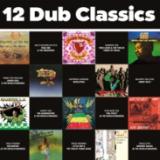
Various - 12 DUB Classics LP
  • 1: Jah's Children In Style
  • 2: Harmony Dub
  • 3: Penny For Your Dub
  • 4: Happiness (Version)
  • 5: Majority Rule Dub
  • 6: Garvey Dub
  • 7: Star Wars Dub
  • 8: Disco Fashion
  • 9: Dread Morning
  • 10: Public Eyes
  • 11: Mafia Dub
  • 12: Hunting Man Dub

Featuring legendary artists and studio collectives including The Revolutionaries, The Aggrovators, Niney & The Observers, Twelve Tribes of Israel, Ken Boothe, Gregory Isaacs, Jimmy Riley and Phil Pratt , this release delivers deep basslines, spacious mixes and timeless rhythms.

Released in time for April, the album naturally aligns with long-established countercultural tradition , while remaining a serious, archival document of roots reggae and dub at its most atmospheric and powerful. An essential vinyl dub released on 180-gram incl. sleeve notes for reggae collectors, sound-system enthusiasts and vinyl buyers alike.

vorbestellen27.03.2026

erscheint voraussichtlich am 27.03.2026

23,49

Last In: vor 2026 Jahren
The Heptones - Better Days

Earl Morgan and Barry Llewellyn joined by Naggo Morris in 1978, with the genius engineer Sylvan Morris and the mighty Niney the Observer at the controls, and a crack band featuring Sly Dunbar. Every Day Life and Mr. Do Over Man Song are crucial, tip-top Heptones.

vorbestellen30.01.2026

erscheint voraussichtlich am 30.01.2026

27,69

Last In: vor 2026 Jahren
Dillinger - Dub To One LP

Dillinger

Dub To One LP

12inchBSRLP843
SECRET RECORDS
25.07.2025
  • A1: Go Now Dub
  • A2: Tell Me Dub
  • A3: Dub Is Mine
  • A4: Lonely Dub
  • A5: My Dub Leads The Way
  • A6: Dub To One
  • A7: Black Dub
  • B1: Memories Dub
  • B2: Dub Jamboree
  • B3: Dub The Fool
  • B4: Hurry Dub
  • B5: Happy Dub
  • B6: Foreign Dub
  • B7: Same Dub

Originally issued in 2007 on Secret Records as a companion CD to Lester ‘Dillinger’ Bullock’s spirited deejay album, ‘Ten To One’, whose bold, brash braggadocio can still be heard echoing in and out, in and out and in and out of the mix here over a superb selection of dubwise rhythms from Niney The Observer…
Incl. Insert with sleeve notes.

vorbestellen25.07.2025

erscheint voraussichtlich am 25.07.2025

24,79

Last In: vor 2026 Jahren
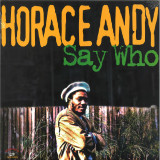
Horace Andy - Say Who

Horace Andy

Say Who

12inchKSLP041
Kingston Sounds
20.06.2025

Horace Andy has always commanded a place high on the list of Reggae singers from Jamaica. His distinctive haunting vocal style stands strong on any rhythm,song or style he chooses to cover. Of the singers on that long list, he has managed more so than any other, to crossover to a new generation of listeners due to his individual style, helped also by his collaborations with the likes of Massive Attack. Horace Andy (b. Horace Hinds,1951,Kingston Jamaica) like many otherJamaican singers began his musical career at Coxsonne Dodd's Studio One. So impressed with the youth, Coxsonne decided on a name change for theyoung artist and called him after his top songwriter of the time Bob Andy. So Horace Hinds became Horace Andy. His first tune for Coxsonne 'Something On My Mind' was a slow burner in Jamaica, but his belief in his young protégé paid off when followed later by 'Skylarking' a tune that burst the singer all overthe radio and sound systems of Jamaica. After numerous singles and two albums worth of material, Horace moved on to work with many of the topflight Jamaican producers, among them Keith Hudson, Augustus Pablo and Niney the Observer, but it was his work with producer Bunny Lee in the 70's that he cut most of his hits for and from this stable of work, that we have compiled this set. Some of his late 60's classics were recut in the popular1970's style, working with the rhythm kings themselves, Sly Dunbar andRobbie Shakespeare. They have added some shine to the tracks, 'SomethingOn My Mind' and 'Skylarking' and made them hits all over again. Such wasHorace's delivery to the covers he sang like Delroy Wilson's version of theTams 'Riding For A Fall', the Heptones 'My Guiding Star', John Holts'Man Next Door' and Bill Wither's 'Ain't No Sunshine', that these finetunes were made his own. The roots end of his musical style was covered by
Andy originals such as 'You Are My Angel', 'Zion Gate','Money Money'and the cut which we have taken our edited title, the timeless 'Just SayWho'.A bass heavy cut to Bob Marley's 'Natural Mystic' works so well inthis style also. Another nickname Horace acquired was the affectionate title of Sleepy, as he was always hanging around the yards and studios of Jamaica waiting his turn, sometimes so long he would fall asleep. His enthusiasm to get back in the studio to work some more of his magic, to a catalogue of material that has developed into one of the finest in Jamaica. I hope you will agree, this fine set of 1970's classics will sit alongside.


O B8 | AIN'T NO SUNSHINE

nicht am Lager

Bestelle jetzt und wir bestellen den Artikel für dich beim Lieferanten.

13,40

Last In: vor 6 Monaten
Dennis Brown - Tribulation Times

Dennis Brown has always been cited as Jamaica’s favourite singer. While Bob Marley set out to conquer the world, Dennis’s popularity on the island grew with every year. Overseas success also came Browns way with crossover hits like the massive ‘Money In My Pocket’. He will always be fondly remembered on the sound systems across the caribbean as the Crown Prince of Reggae.

Dennis Brown (b Dennis Emanuel Brown,1957, Kingston, Jamaica) began his illustrious career at the grand age of eleven like many of the other child singers at Coxsonne Dodds Studio One stable. His first hit in 1969 a cover of Van Dykes ‘No Man Is An Island’ still stands the tests of time and also its follow up cut ‘If I Follow My Heart’ as Reggae classics. The 1970’s saw Dennis build on his reputation by working with all the top Jamaican producers and
studio’s perfecting his sound. Lloyd Daley, Impact, Joe Gibbs, Aquarius and Derrick Harriott to name but a few. But it was his work with producer Winston ‘Niney’ Holness that he enjoyed the most success and many say recorded his best work for. Where many of the other producers stayed with the tried and tested Lovers Rock formula that did prove so popular with Dennis’s voice, producer Niney the Observer as he is fondly called, pushed him into a more roots led direction, over stark rhythms created by Niney’s studio band Soul Syndicate.

Two outstanding albums were put together ‘Just Dennis’ (1975) built on a collection of singles they had recorded together, ’Cassandra’, ’Westbound Train’, ’No More Will I Roam’ and ‘Conqueror’. The second 1977 set ‘Wolf and Leopards’ made up again of singles the prolific two had cut including, ‘Here I Come’ (a live favourite that Dennis always liked to start his set with) and ‘Children of Israel’ made these both strong roots era albums.

We have stayed with this period for our Dennis Brown album. Some of the above-mentioned cuts are present alongside the timeless crossover hit ‘Money In My Pocket’ (1979) produced by Niney but often credited as a Joe Gibbs production as it was released (and sweetened by adding Orchestration for the foreign market place) on his label. By the way this is the original Jamaican version (unsweetened) that you will find on this album a more truthful version in our humble opinion. His voice reigns supreme across these Niney produced cuts ‘Smile like An Angel’ ‘Silver Words’, ‘Play Girl’ and the fantastic ‘Poor Side Of Town’ (helped along by the great harmonies of the Heptones group), ‘Tribulation’ and ‘We Will Be Free’. Dennis Brown’s prolific catalogue of tunes that also found an outlet on his own DEB inprint (named after his initials) stands to show what a great artist he was and what a fine team he and Niney made when in the studio creating these magical moments. So sit back and enjoy a killer set of tunes compiled by Niney himself...Tribulation Times indeed and long may the records of the Crown Prince of Reggae Dennis Brown rule the world.....

nicht am Lager

Bestelle jetzt und wir bestellen den Artikel für dich beim Lieferanten.

13,40

Last In: vor 11 Monaten
Various - Black Solidarity Version Excursion
  • 1: A Letter To Dub
  • 2: Champian Dub
  • 3: Up And Down Dub
  • 4: A Spliffing Dub
  • 5: Crucial Dub
  • 6: Dance Inna Dub Style
  • 7: Aarafat Version
  • 8: No Funny Dub
  • 9: Next To Version
  • 10: Live Good Dub

At the beginning of the eighties reggae music became increasingly in tune with what was happening in Kingston’s dance halls… probably more so than at any time since the sound system operators had started to make their own shuffle and boogie recordings in the late fifties. The international audience and the critics were too busy looking for a new Bob Marley to appreciate what was happening downtown and failed to acknowledge that this was a return to the real, raw roots of the music. Brash, confident, young record producers who were totally in tune with the youth audience stepped forward and seized the moment…

Oswald ‘Ossie’ Thomas began his apprenticeship in the music business at the age of
fourteen and served his time as a record salesman for Bunny ‘Striker’ Lee and Winston ‘Niney The Observer’ Holness before moving on to Miss Sonia Pottinger’s Tip Top Records.

“I ended up working in three record stores on Orange Street from 1976 to 1981… Yeah man! Me deh ‘pon me bicycle till I buy my motorcycle! Them days records were coming out left, right and centre… every day!” Ossie Thomas.

It was during his time with Miss Pottinger that Ossie began to produce records for
himself and in 1979 Ossie and Phillip Morgan began the Black Solidarity label based deep in the Kingston ghetto on Delamere Avenue. Phillip initially inspired Ossie to start the label and soon Triston Palma, Phillip Frazer and “a youth named Gary Robertson” joined in although Gary later left for Canada.

The Soul Syndicate rehearsed in the Delamere Avenue area and Tony Chin gave Ossie a cut of a rhythm that he used for Triston Palma’s ‘A Class Girl’… the label’s inaugural release. The record was a sizeable success and paved the way for hit after hit after hit on Black Solidarity. Ossie worked with just about everybody who was anybody during this critical period of the music’s development including vocalists Robert Ffrench, Little John, Sugar Minott, Frankie Paul and most notably Triston Palma.

For this release we have compiled some of the version sides to those releases. Dub still being an integral part of the Reggae Sound System Sound. So sit back and listen to what Black Solidarity, one of the most important and often overlooked labels were bringing to the dance, dubwise, back in those heady 1980’s times.

With grateful thanks to: Paul Coote, Nick Hodgson & Hasse Huss

vorbestellen24.02.2023

erscheint voraussichtlich am 24.02.2023

13,82

Last In: vor 2026 Jahren
Dennis Brown - Dubbing At King Tubby

2023 Repress

Dennis Brown has always been cited as Jamaica's favourite singer.
While Bob Marley set out to conquer the world, Dennis's popularity on the island grew with every year.
His most prolific period is said to be with producer Niney the Observer,who led the singer down a more Roots avenue.He put Dennis on some of his heaviest rhythms.
Throwing also into the pot the fact that these rhythms were also to be mixed by the Dubmaster himself King Tubby we are bound to get one of the best Dub albums around.
Here is where the Crown Prince of Reggae Meets Niney the Observer at King Tubbys.
It's from this period that we have focused on and it's these tracks that were taken to King Tubby's studio to produce this stunning album.
Hope you enjoy the set.......


G a7 | COME AGAIN DUB

J b2 | WOLF AND LEOPARDS DUB

nicht am Lager

Bestelle jetzt und wir bestellen den Artikel für dich beim Lieferanten.

13,40

Last In: vor 3 Jahren
Freddie McGrergor - Freddie

180 gram vinyl LP of Freddie's 1979 album with extensive sleeve notes
Produced by: Winston 'Niney The Observer' Holness
Recorded, Voiced & Mixed at: Channel One ecording Studio, 29 Maxfield
Avenue, Kingston 13
Engineers: Anthony 'Crucial Bunny'/'Bunny Tom Tom' Graham & Lancelot
'Maxie' McKenzie
Musicians:
Drums: Max 'Feelgood' Edwards & Leroy 'Horse Mouth' Wallace
Bass Guitar: George 'Fully' Fullwood
Lead Guitar: Earl 'Chinna' Smith
Lead Guitar & Rhythm Guitar: Albert Valentine 'Tony' Chin & Eric 'Bingy
Bunny' Lamont
Keyboards: Jamaba Johnson & Keith Sterling
Tenor Saxophone: Enroy 'Hot Train' Grant
Trumpet: Arnold 'Willie' Brackenridge & Donald Vidan-Greaves
Percussion: Herman 'Bongo Herman' Davis & 'Brooksy'
Advertising in Black Echoes and Record Collector

vorbestellen25.11.2022

erscheint voraussichtlich am 25.11.2022

23,49

Last In: vor 2026 Jahren
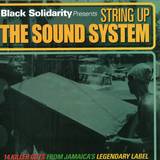
Various - BLACK SOLIDARITY PRESENTS : STRING UP THE SOUND SYSTEM

At the beginning of the eighties reggae music became increasingly in tune with what was happening in Kingston’s dance halls… probably more so than at any time since the sound system operators had started to make their own shuffle and boogie recordings in the late fifties. The international audience and the critics were too busy looking for a new Bob Marley to appreciate what was happening downtown and failed to acknowledge that this was a return to the real, raw roots of the music. Brash, confident, young record producers who were totally in tune with the youth audience stepped forward and seized the moment…

Oswald ‘Ossie’ Thomas began his apprenticeship in the music business at the age of fourteen and served his time as a record salesman for Bunny ‘Striker’ Lee and Winston ‘Niney The Observer’ Holness before moving on to Miss Sonia Pottinger’s Tip Top Records.

“I ended up working in three record stores on Orange Street from 1976 to 1981… Yeah man! Me deh ‘pon me bicycle till I buy my motorcycle! Them days records were coming out left, right and centre… every day!” Ossie Thomas

It was during his time with Miss Pottinger that Ossie began to produce records for himself and in 1979 Ossie and Phillip Morgan began the Black Solidarity label based deep in the Kingston ghetto on Delamere Avenue. Phillip initially inspired Ossie to start the label and soon Triston Palma, Phillip Frazer and “a youth named Gary Robertson” joined in although Gary later left for Canada.

The Soul Syndicate rehearsed in the Delamere Avenue area and Tony Chin gave Ossie a cut of a rhythm that he used for Triston Palma’s ‘A Class Girl’… the label’s inaugural release. The record was a sizeable success and paved the way for hit after hit after hit on Black Solidarity. Ossie worked with just about everybody who was anybody during this critical period of the music’s development including vocalists Robert Ffrench, Little John, Sugar Minott, Frankie Paul and most notably Triston Palma.

“But Delamere must be considered as a music street sheltering as it does such artists as Junior Byles, Don Angelo, Triston Palma, Phillip Frazer and producer Ossie of the Black Solidarity label…” Beth Lesser
And the man who had made his name in the business selling other people’s records now became one of the most important and influential record producers of the era.
With grateful thanks to: Paul Coote, Nick Hodgson & Hasse Huss

nicht am Lager

Bestelle jetzt und wir bestellen den Artikel für dich beim Lieferanten.

13,66

Last In: vor 3 Jahren
The Ethiopians - Freedom Train

The Ethiopians are one of the great vocal groups to come out of Jamaica. Singing songs of life and times as they found them, themes that resonated with the people of the Island that made them such a treasured group. Lenard Dillon (b. 9 December, 1942, Port Antonio, Jamaica) the founding member of the Ethiopians began his singing career at Clement 'Coxonne' Dodd's Studio One. Initially he recorded under the name of Jack Sparrow, and backed by the Wailers, cutting 'Ice Water' and 'Suffering In The Land'. Under The Wailers encouragement, he went on to form his
own vocal group. Recruiting singers Stephan Taylor (b.1944, Portland, Jamaica) and Aston 'Charlie' Morris to become The Ethiopians. They cut 'Live Good', 'Why You Gonna Leave Me Now' and 'Owe Me No Pay Me'. Although receiving favourable response, Aston Morris decided to leave the band and the remaining pair carried on and cut 'I'm A Free
Man' and 'Don Dead Already' and 'For You'. On meeting contract builder Leebert Robertson who had recently returned to live in Jamaica, ashad he wanted to get into the music business, a session was booked for Treasure Isle Studios. The session produced their seminal 'Train To Skaville' track, which became an immediate hit in Jamaica and in the UK, when in 1967 it reached number 40 in the charts. They also cut 'Engine 54', which became the title of their debut album. Its
follow up 'I Need You / Do It Sweet', did not fare so well and the band moved over to Sonia Pottinger's stable, where they cut 'The Whip / Cool It Amigo' which revived their fortunes and proved another big hit for the band. Two more hits followed 'Stay Loose Mama' and 'The World Goes Ska', after which the band decided to return to a trio, adding
Melvin 'Mellow' Reid to the line up. The band now hit another run of successes with producer JJ Johnson 'Everything Crash, 'Gun Man', 'Hong Kong Flu' and 'The Selah'. Many hits followed leading the band to work with a variety of Jamaican producers. Such tracks as 'I Want To Be a Better Man, ' Conquering Lion', 'Fire A Mus Mus' Tail', and the timeless 'Reggae Hit The Town' to name a few. Two albums 'Reggae Power' (1969) and 'Woman Capture Man' (1970), pulled a lot of these tunes together. Sadly Taylor was killed in 1975 after been struck by a van in a road accident. Dillon returned to Port Antonio till 1977, when he was persuaded to return to Treasure Isle studios with producer Niney The
Observer and cut the Rasta based album 'Slave Call'. Additional members who joined for this album were Bro Fatty, Bro Ewing, Bro T, Mello and Hychi Dread. An album that showed all the Ethiopians magic had not been lost.
For this release we have included the full 'Slave Call' set, 'Ethiopian National Anthem', 'Slave Call', 'Guilty Conscience', 'Hurry On', 'Mus Follow Babylon'(on CD Edition), 'Train To Skaville (1977 version, on CD Edition), 'Culture', 'Obeah Book', 'Let It Be' and 'I Love Jah'. Alongside some of the bands early hits including the original version of 'Train To Skaville', 'Engine 54', the great and poignant 'Everything Crash', 'Reggae Hit The Town' and 'The Selah'. An interesting set to remind us what a great group the Ethiopians really were.

nicht am Lager

Bestelle jetzt und wir bestellen den Artikel für dich beim Lieferanten.

13,40

Last In: vor 3 Jahren
Channel One Pres. - 100 Tons Of Dub

The mighty Channel One Studios,Kingston, Jamaica, has its place set in Reggae's Musical History.Its distinctive sound the studio created on opening its doors in 1972 to its closure in the early 1980's made it the Producers, Singers and Musicians studio of choice during this furtive period. Achieving that vibe and clarity, separated it from the other Kingston establishments.

Run by the Hookim Family's four sons, Jo Jo the eldest followed by Paulie, Ernest and Kenneth. Their father originally came from China and married a Chinese Jamaican lady and settled in the St Andrews district before moving to Kingston Town itself. The family business was built on jukeboxes and one armed bandit machines in and around Kingston. A lucrative venture until the gaming laws changed in 1970, outlawing the gaming machines. So the music side of the business would have to be expanded. So it was decided to open a studio to make the music to supply their already established Jukebox enterprise. The four brothers opened Channel One Recording Studios in 1972 at 29 Maxfield Avenue, Kingston 13. Initially as we stated the purpose of the studio was for the brothers use only, but this would soon change when the various Producers all looking for that Channel One sound came asking for studio time.

The brothers had used the services of Bill Garnet a renowned and well respected technical engineer on setting up the studio. They spent a lot of time laying out the space to get the right acoustics and picking the right quipment. They went with a four track API desk and the best quality microphones such as Neuman, Sony and AKG, vital in obtaining the quality sound and track separation that would prove so worthwhile after the music was recorded to give the best flexibility on the final mix downs. Jo Jo would take over the production duties after the initial hiring of Syd Bucknor a producer who had worked closely with Coxonne Dodds Studio 1 stable. The first release on the Channel One label would be 'Don't Give Up The Fight' by Stranger Cole and Gladstone 'Gladdy' Anderson.The initial two thousand run being swallowed up by their Jukebox interests and so the steady flow of hits would run up to the brake through hit of 1975 'Right Time' by  the Mighty Diamonds.

1977 saw Jo Jo extending his stays in New York to a semipermanent status, returning mainly to oversee recording sessions and then taking the results back to America for worldwide distribution. His brother Paulies senseless killing in that year also added to Jo Jo's decision to spend more time with his Hit Bound Manufacturing set up in New York. The Channel One studio would be upgraded in 1979 to sixteen tracks and although Jo Jo and Ernest still covered the mixing and engineering duties Kenneth would now supervise sessions. An often untold part of Channel Ones history is the involvement of Producer Niney The Observer. The mid to late 1970's were heavy times both musically and politically and Maxfield Avenue was in the heart of this crossfire. Some artists and musicians were weary of using the establishment especially when sessions ended late at night and exiting the studio at these times could be somewhat dangerous. But Niney’s fearlessness seen him over running and in many cases running the all night sessions with his trusted set of musicians loosely called The Soul Syndicate. Having the run of the mighty Channel One studio's allowed Niney to build up and work on a stockpile of rhythms that he still has yet to unleash on the world. We have been lucky to select a bunch of material from Niney's vaults for this release. Some great unreleased rhythms and some different cuts to some tracks you might already know. Niney's work with Dennis Brown and his own distinctive heavy roots style productions have been documented and indeed his work on Channel Ones Yellowman releases stand tall also. We hope this fine set of Niney Productions set inside the hollowed walls of Channel One will sit beside them as they so richly deserve.

nicht am Lager

Bestelle jetzt und wir bestellen den Artikel für dich beim Lieferanten.

15,08

Last In: vor 5 Jahren
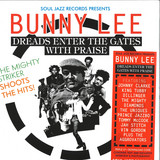
Various - Soul Jazz Records presents Bunny Lee: Dreads Enter the Gates with Praise - The Mighty Striker Shoots

Johnny Clarke & King Tubby & Dillinger & Prince Jazzbo feat. Tommy McCook & The legendary Aggrovators & The Mighty Diamonds - Soul Jazz Records presents Bunny Lee: Dreads Enter the Gates with Praise - The Mighty Striker Shoots the Hits!

Soul Jazz Records presents this new collection featuring the heavy 70s roots reggae of Bunny
Lee - a living legend, one of the last of the great Jamaican record producers who helped shape
and define reggae music in the 1970s from a small island sound into an internationally
successful musical genre.
From teenage fan to young record plugger for Duke Reid, Sir Coxsone and other early
pioneering Jamaican musical entrepreneurs, Lee has spent his whole professional life inside the
Kingston music industry. In the 1970s he rose up to become one of the major record producers
in Jamaica alongside Lee 'Scratch' Perry and the other 'small axe' producers who broke the
dominance of the 'big tree' producers that had ruled Jamaican music in the 1960s.
Featuring some of the heaviest Jamaican artists, including Johnny Clarke, King Tubby, Dillinger,
Prince Jazzbo, Tommy McCook, The legendary Aggrovators (featuring Sly and Robbie), The
Mighty Diamonds and more, the album is a rollercoaster ride of rare, deep and classic 1970s
roots, dub and DJ sounds.
During this era, 'flying cymbals', crashing reverbs, dark echoing thunderclap gunshots and
other 'implements of sound' filled his record productions as Bunny Lee explored the outer limits
of dub with his friend King Tubby in the mix on wild versions that accompanied any 45. A
Bunny Lee record provides a creative and mysterious hidden guide to reggae music itself, a
double-sided three-minute intangible history lesson etched in wax.
Bunny Lee was one of the first Jamaican producers to travel to England in the late 1960s, at
the beginning of the nascent British reggae music industry as record companies such as
Trojan, Pama and others began licensing Jamaican music in the UK to supply the expanding
West Indian communities living up and down England. Lee encouraged other Jamaican
producers to do the same, including Lee Perry, Harry J and Niney The Observer and also
became a conduit between the British music industry and numerous younger Island-based
producers - a frequent flyer reggae ambassador, a musical courier exchanging tapes for
royalties.
Bunny Lee's first recordings in the late 1960s were mainly rock steady but as the 70s
approached the music soon began to mutate and slow down into 'reggae' as the sound became
heavier, more rootsy and the sound itself began to change with the explosion of dub.
Lee was at the forefront to this dramatic musical shift into roots reggae and by this time had
become a major producer, capable of working with whoever he chose as world-famous singers,
DJs and musicians lined up to work with the charismatic man. Lee also employed a fluid but
stable set of crack session musicians who he named The Aggrovators.
Most of the recordings featured here come from the mid 70s, a time when Bunny Lee was
definitely in the zone, releasing heavyweight singles at an almost unstoppable rate. Bunny
Lee's career stretches over five decades and he has upwards of 2,000 production credits on
vinyl.
This album comes with extensive sleevenotes, an interview with Bunny Lee and exclusive
photography. The album is available as a CD pack with 24-page booklet, massive triple LP vinyl
with digital download code, house inner and full notes, as well as digital album.

nicht am Lager

Bestelle jetzt und wir bestellen den Artikel für dich beim Lieferanten.

41,39

Last In: vor 7 Jahren
Black Solidarity - String Up The Sound System

In the beginning of the 80's reggae music became increasingly in tune with what was happening in Kingston's dancehalls....probably more so than at any time since the sound system operators had started to make their own shuffle and boogie in the late 50's..
The international audience and the critics were too busy looking for a new Bob Marley to appreciate what was happening downtown and failed to acknowledge that this was a return to the real,raw roots of the music...brash,confidient,young record producers who were totally in tune with the youth audience stepped forward and seized the moment...
Oswald'Ossie'Thomas began his apprenticeship in the music business at the age of fourteen and served his time as a record salesman for Bunny 'Striker 'Lee and Winston 'Niney the Observer' Holness before moving on to Miss Sonia Pottingers Tip Top Records...
'I ended up working in three record stores on Orange Street from 1976 to 1981...Yeah man,Me deh 'pon me bicycle till I buy my motorcycle..Them days records were coming out left right and centre..everyday'
Ossie Thomas...
It was during his time with Miss Pottinger that Ossie began to produce records for himself and in 1979 Ossie and Phillip Morgan began The Black Solidarity label based deep in the Kingston ghetto on Delamere Avenue.
And the man who had made his name in the business selling other people's records now became one of the most important and influential record producers of the era..

nicht am Lager

Bestelle jetzt und wir bestellen den Artikel für dich beim Lieferanten.

12,56

Last In: vor 7 Jahren
  • 1
Artikel pro Seite:
N/ABPM
Vinyl