Celebrated Zambian guitarist and bandleader Paul Ngozi’s concept album about the stuggles of those living in Africa’s 1970s townships Includes Oversized 8 Page Booklet That Details Paul Ngozi and The Ngozi Family’s Arc, Including Rare Photographs, Discography And Annotation. The third entry in an era-defining reissue series on Now-Again centered around this Zamrock legend and his band - previous entries include Day Of Judgement and 45,000 Volts
"Zambia’s Zamrock movement that exploded in the 1970s...provided young musicians access to European and American music, and created a unique sound. At its root, Zamrock melded fuzz-toned psychedelia, chugging garage rock and roiling funk with a broad mix of African cadences and beats...enlivening a scene that included bands like Musi-O-Tunya, Amanaz and the Ngozi Family” (New York Times)
Zamrock was a bona-fide rock scene: on the African continent, only Nigeria can claim one so comprehensive, and Nigeria’s was largely catalyzed and funded by subsidiaries of the European major labels. Zamrock was as independent as the newly-named country, formerly known as Northern Rhodesia. Zamrock is starting in its completeness, especially for a scene that emerged, unfurled and disappeared so quickly. From Musi-O-Tunyaís fusion of Fela’s Afro-beat, Hendrix’s rock, South African jazz and traditional Zambian melodies and rhythms to Salty Dog’s acid folk/rock, Zambia’s rock scene contained all of rock’s subgenres. Zamrock was much more than an imitation of American and European rock music: it quickly became a uniquely Zambian movement, befitting of its name. WITCH, Paul Ngozi and Amanaz sound nothing like other rock music from the African continent - or elsewhere.
quête:no inc
MANOWAR is an American heavy metal band from Auburn, New York. Formed in 1980, the band is known for lyrics based on fantasy and mythology . The band is also known for a Loud and Bombastic sound. In 1984 the band was included in the Guinness Book of World Records for delivering the loudest performance, a record which they have since broken on two occasions. They also hold the world record for the longest heavy metal concert after playing for five hours and 1 minute in Bulgaria (at Kavarna Rock Fest) in 2008. MANOWAR have also been known for their slogan "Death to false metal » and have maintained a very strong following with dedicated fans worldwide as referred to by the band as "Metal Warriors", "Manowarriors", "Immortals" or "Brothers of Metal". The band signed with Atlantic Records in 1987. Via Atlantic, they released 'Fighting the World', which enjoyed more extensive distribution and increased the band's prominence in the international heavy metal scene. Album art was designed by Ken Kelly. In 1988, MANOWAR released the album 'Kings of Metal', which is the band's best known work. Songs like "Heart of Steel", "Kings of Metal" and "Hail and Kill" are performed regularly in concerts. 'Kings of Metal' is MANOWAR's highest-selling album worldwide. A new musical unit after the recent changes, MANOWAR released The Triumph of Steel in 1992. It gained some great success and was particularly famous for the presence of a suite lasting no less than 28 minutes entitled "Achilles, Agony and Ecstasy in Eight Parts", inspired by the events of the Iliad and the hero Achilles. After this release, the band went on a world tour for two years. Those MANOWAR’s album have become legendary and are still must have in any metal fan record collection . Vinyls formats Having been very rare and reaching high prices online, those three albums are now being made available again in quality coloured vinyls; Grab them now while you can !!
Alicia Keys released the Grammy Award winning, 'Girl On Fire' album in 2012. The album's title song and lead single, the universally acclaimed 'Girl On Fire', was a worldwide hit (600m plus streams), and the album also includes 'Fire We Make' (featuring Maxwell), 'New Day' and 'Brand New Me'. A x13 trk, double, Black LP Vinyl.
After remaining unavailable for years, here's the long-awaited vinyl reissue of the debut album (originally released in 1972) by one of the epoch-making groups in the history of Peruvian rock: We All Together. Their original compositions -all sung in English- betray their passion for McCartney, taking Beatle centrism to new heights in South America. While the Uruguayan Los Shakers could remind us of the first phase of the Fab 4, We All Together is like their '70s version. Amazing compositions, with nods to prog rock and the twilight imprint of singer-songwriters living the end of the hippy dream, that show both diversity and a defined identity. A must for any '70s rock collector. DESCRIPTION Between 1967 and 1974 Saúl and Manuel Cornejo led a series of epoch-making groups on the MAG label (New Juggler Sound, Laghonia and We All Together) in the history of Peruvian rock. All these bands were directly influenced by the British invasion and used new sounds from Hammond, phase shifters, synthesizers and tapes played backwards, which stimulated rivalry with other groups. Another hallmark of the brothers was the technical quality of their records, thanks to Saul's supervision of all MAG recordings between 1972 and 1974. At the end of 1971, when Laghonia was working on the last tracks of "Etcétera", they met Manuel Antonio Guerrero's (MAG) son, Carlos, who had just got back from the USA, and gladly joined in the choruses of the last songs Laghonia was recording. They met up again soon after to rehearse some of Paul McCartney's songs. As soon as he heard them play, Guerrero Senior urged them to form a group focused on cover versions of foreign hits not yet known in Peru. Initially, the Cornejo brothers weren't enthused by a project so different from Laghonia, but ended up accepting as it gave them the opportunity to spend time in the studio. Carlos' melodic voice was another incentive, although they made it clear that the new group, We All Together (WAT), would stick to the mixing desk: "The group isn't into presentations or shows, we're about recording music and purifying it to the max," stated Saúl at that time. Their first album included four covers of Paul McCartney and Badfinger, several compositions by Carlos Guerrero -appealing Beatles-style melodies- and two songs from Saúl and Manuel's archives. 'Children', by keyboardist Carlos Salom, opens the LP: a nostalgic description of childhood, with the distinctive piano sound (achieved through mixing) that permeates the record. Although WAT sang and composed in English, they had no intention of undermining or alienating national culture. Their aim was much more innocent: they simply wanted to make it in the English-speaking world. 'It's a Sin to Go Away' was composed during Laghonía's lifetime as a band and it features guitars played backwards and a psychedelic-progressive style closely attuned to the era. After being included on several compilations, praise for the song has flowed from Europe and the United States in recent years. The album was released in July 1972 and became one of the best-selling Peruvian rock LPs.
Ulvhedner hails from the valley Sauda in the west of Norway, where the band was formed by Svein Terje (ex-Tristania) & Arild back in 1993. Evolving through the late 90’s synth-driven and melodic second wave of Norwegian black metal, Ulvhedner made an impression on the scene through some demo’s with their folk influenced black metal sound. Their first full length album “For I Tida”, which roughly translates to ‘in old times’, saw the light of day only in 2009. The next ten years Svein Terje carried the band as a single entity with releasing a few ep’s, but also working with and under different monikers as Skygge, Mihrim, Drylar, Blodorn and Ode Vidder. During the pandemic Terje wrote Ulvhedner’s second album “Legd”. Ulvhedner resurrected now as a band again, including Arild, with renewed energy, and with Bjornar providing all lead vocals and Jan Rune Hoftun on drums. The varied and aggressive soundscape of the new album “Fjosmetall”, which also marks Ulvhedner’s 30th anniversary, is a tale of local Norwegian folklore once more, performed with the grim sound of old school Norwegian black metal. It features 8 tracks of pagan melodies in crisp cold and dark Norwegian black metal art, with Norwegian titles and lyrics inspired by the hardships of old mountain farmers and workers in the winter-land of the North that built the country.
Year is 2020, in the middle of the pandemic outbreak, “En el fin del mundo, hasta el fin del mundo” (In the end of the world, until the end of the world) is the first production of the Chilean label EMA Records, including local and international artists, active in different musical fields (improv, post rock, electronica, ambient, etc).
The structure and artist selection of “En el fin del mundo, hasta el fin del mundo” has the intention of capturing/expressing the Chilean geography from a soundscape perspective, related to the country's remote geophysical location, submerged in a new gloomy reality, the pandemics. This little exercise was somehow the starting point for each artist to develop their tracks, without any particular disclaimer or artistic restriction. All tracks on the compilation have been previously unreleased by each project, then first came out digitally and now - finally - on vinyl.
The complete compilation (21 tracks) will be released on 3 separate vinyl albums. The first LP is featuring tracks by Pita, Abul Mogard, Pan American and others.
Girl On Fire features powerful anthems and intimate ballads, led by Keys' signature soulful voice and personable and relatable lyrics. Keys collaborated with acclaimed and emerging talents, including longtime song writing partner, Krucial, Grammy Award-winner Babyface, renowned writer and vocalist Jeff Bhasker, critically-acclaimed artist Gary Clarke Jr., up and comers, Pop and Oak, as well as emerging talent from the U.K., Emeli Sandé and Jamie XX, among others. The songs on Girl On Fire are anchored by Key's powerful vocals and trademark piano, but are sonically broadened by heavy drums, electric sounds, reggae and future soul, which gives the album an evolved, modern-day feel while simultaneously sounding like a classic body of timeless music. The album features an inspirational mix of the rich sounds Keys discovered while recording and travelling the world, particularly time she spent in London and Jamaica, layered within her New York City roots.
MC Duke aka The Darkest Knight EP Picture Disc
Subbase honors the great MC Duke, Kashif Adham, a true legend in the music scene and the Godfather of UK Rap.
This incredible limited edition tribute vinyl picture disc celebrates MC Duke's legacy. He began working with Suburban Base in the early '90s and became the most prolific artist on their sister imprint, Boogie Times, before they collaborated with his own label, Hard Disk. This stunning picture disc features some of his rarest releases from Hard Disk, which have never been reissued since their original pressings in the '90s. Together, Duke and Suburban base meticulously planned and remastered these amazing tracks before Duke's unfortunate passing. He was so excited for collectors to enjoy these tunes once again.
MC Duke's unparalleled talent and unwavering dedication to music throughout his life solidified his status as a true legend in the UK music scene. He made significant contributions to UK music, from Hip Hop and Rap to Hardcore and Jungle. Let’s remember the man and his music!
This 4 track EP includes all tracks from The Darkest Knight HARDDISK 004 plus the promo only white label My Sound (HD7) which has sold for as much as £95 on discogs although none have been available for over four years since 2020
The Eminent Jay Jay Johnson Volume 1,” released in 1953 by Blue Note, is a cornerstone of jazz. Featuring J.J. Johnson on trombone, and talents like Clifford Brown and Jimmy Heath, this album brilliantly showcases the trombone in bebop. Including standards such as “Capri” and “Get Happy,” the album shines with virtuosity and sophisticated arrangements, establishing Johnson as an iconic figure in jazz and making this recording essential for jazz enthusiasts.
- A1: Jun Sato - Lorang
- A2: Fumihiro Murakami - Miko
- A3: Tadahiko Yokogawa - Stop Me
- A4: Love Peace Trance - Yeelen
- B1: Ichiko Hashimoto - Lete
- B2: Yosui Inoue - Pi Po Pa
- B3: Eiki Nonaka - Phlanged Vortex Clip
- C1: X Cara - Night In Aracaju
- C2: Poison Girl Friend - Nobody
- C3: Dream Dolphin - Take No Michi
- D1: Keisuke Sakurai - Harai Cd Version
- D2: Hiroki Ishiguro - Unity
- D3: Dido Shizuru Ohtaka Michiaki Kato - Mermaid
- D4: Keisuke Kikuchi - Retro Electric
2024 repress
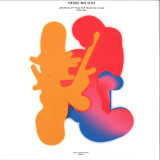
Music From Memory is excited to announce a special compilation that they’ve been working on for some time now; MFM053 – VA – Heisei No Oto – Japanese Left-field Pop From The CD Age (1989-1996). Compiled by long-time friends of the label, Eiji Taniguchi and Norio Sato, Heisei No Oto delves into a world of music released almost exclusively on CD and brings together a fascinating selection of discoveries from a little known and overlooked part of Japan’s musical history.
The last ten or so years have seen a global wave of interest in Japanese music encompassing ambient, jazz, new wave and pop records from the 1980s, some of which is increasingly considered the most innovative and visionary music of that time. Although some music from this period, in the form of ‘City Pop’ or ‘rare groove’ records, had been coveted by collectors and DJs for a number of years, most Japanese music from the time was little known outside and often even within Japan.
Sometime around the mid 2000s, two Osaka record store owners, Eiji Taniguchi of Revelation Time and Norio Sato of Rare Groove, along with a handful of deep Japanese diggers such as Chee Shimizu of Organic Music records in Tokyo, began to explore beyond the typical ‘grooves’ or ‘breaks’. Much like their counterparts in Europe and the US, they began delving into home-grown ambient, jazz, new wave and pop records, discovering visionary music, often driven by synthesizers or drum computers, that broke beyond the typical confines of their genres.
Spending tireless hours in local record stores and embarking on digging trips across the country, Eiji Taniguchi and Norio Sato, much like Chee Shimizu, have been at the forefront of unearthing and introducing many of the very Japanese records now loved and sought after around the world. Yet as YouTube algorithms and vinyl reissues would transport such music into the global consciousness and demand and therefore scarcity intensified for such records, so Eiji and Norio have recently begun to turn their attention to CDs.
The title of the compilation Heisei No Oto refers to the sound of the Heisei era, which began in 1989 and corresponds to the reign of Emperor Akihito until his abdication in 2019. Marking the culmination of one of the most rapid economic growths in Japanese history, 1989 also coincided with the music industry’s final shift away from vinyl in favour of CDs. And, although compact discs were first introduced seven years earlier it wasn’t until late into the ‘80s that, beyond dance music labels, CDs became the exclusive format for major and independent labels in Japan and throughout the world.
This however didn’t signal the end of the innovation in Japan. Many of those same musicians who have become known for their work in the ‘80s would continue to produce outstanding music well into the mid ‘90s, as greater innovation and advances in musical equipment allowed Japanese musicians and producers to refine and explore new sounds. While musicians such as the seminal Haruomi Hosono, whose productions feature on a number of tracks, would continue to push the boundaries of these new technologies, these technological advances also meant less established musicians were able to make use of increasingly affordable but state-of-the-art equipment.
Including music by Haruomi Hosono as well as Yasuaki Shimizu, Toshifumi Hinata and Ichiko Hashimoto who have become known and loved around the world in recent years, Hesei No Oto also features Japanese pop star Yosui Inoue, producers Jun Sato and Keisuke Kikuchi in aaddition to less established artists from the contemporary, jazz, new wave, pop and dance music scenes. Bringing together a selection of tracks that seem to define these specific genres and in fact move fluidly between a number of them, the music on the compilation is again underscored by experimentations with synthesizers and drum computers though with something of a gentle Pop sensibility. Reimagined here then under the encompassing term ‘Left-field Pop’, this is an exciting chapter in Japanese musical history that has only just begun to be fully explored.
VA - Heisei No Oto - Japanese Left-field Pop From The CD Age (1989-1996) is a 2xLP/2xCD that includes liner notes by Chee Shimizu and artwork by Hagihara Takuya and is released on February 28th.
- A1: This Is The Beginning
- A2: When Did I Start Loving You
- A3: Heaven Mentality
- B1: Full Circle
- B2: Hallelujah
- B32: Back On The Scene
Daisy Records are an award-winning midlands based label, not afraid of fusing genres, a mix of Hip Hop, Neo-Soul, Nu Gospel, Funk and Jazz - all with a christian ethos . We work with local musicians and producers and are blessed to collaborate with a myriad of overseas musicians and producers to create an eclectic and bespoke sound .Using digital mediums to promote an analogue sound !
We believe in fair trade for music and so therefore our physical (vinyl) products will include tracks not available on digital formats .
- A1: Parada De Tettas
- A2: To Brazil!
- A3: Up & Down
- A4: We Like To Party! (The Vengabus)
- A5: Boom, Boom, Boom, Boom!!
- A6: We Re Going To Ibiza!
- A7: Kiss (When The Sun Don T Shine)
- B1: Shalala Lala
- B2: Uncle John From Jamaica
- B3: Cheekah Bow Bow (That Computer Song)
- B4: Forever As One
- B5: Rocket To Uranus - Hitradio With Perez
- B6: Hot Hot Hot
- B7: 1999 (I Wanna Go Back)
Vengaboys is one of the most successful Eurodance acts in the world. With a string of global top 10 hits, including ‘Up & Down’, ‘Shalala Lala’, ‘We Like To Party’ and the UK No.1 singles ‘Boom, Boom’ Boom Boom!’ and ‘We’re Going To Ibiza’ they dominated the charts in the late 90’s and early 00’s. These songs have also been embraced by younger generations, with several global viral TikTok trends.
This brand new 14-track Greatest Hits compilation is pressed on transparent pink vinyl.
The self-titled “Orquesta Olivieri” was originally released in 1972, just when the Fania Records revolution and the explosion of salsa music, was reaching its peak. Very few copies were distributed at the time. Produced by boogaloo-don Bobby Marin, the album comprises a variety of Latin rhythms, including the much in-demand vocal harmonies-led ‘There is No Other Girl,’ a lowrider soul gem. Side A opens with the slow-paced Latin soul song ‘There is No Other Girl’, that style-wise connects to their previous LP, released when the boogaloo trend was still around. In fact, this song had been previously released two years earlier on a 45 and was then overdubbed (adding an organ on top) for this LP version. The song is very much in demand these days in the lowrider soul scene due to the breath-taking vocal harmonies and appealing production. The album also comprises spicy guaguancós on ‘Cuando llegué a Borinquen’, the classic ‘Los Muchachos de Belén’ and ‘Tabaritiando’. There is also room for a cha-cha-chá, ‘María Isabel, and a guaracha ‘Perrito sabueso’, and the album closes with the Latin soul ballad ‘Preferí perderte,’ interpreted in Spanish. First time official reissue.
Color Vinyl[24,58 €]
Valley of Rain was Tucson’s Giant Sand’s debut album recorded in 1983, and eventually released by 1985. It included Howe Gelb on vocals, guitar and Winston Watson on drums for most of it, Tommy Larkins on drums for some of it and Scott Garber on fretless bass for all of it. At the time of the recording, Howe was unacquainted with the possibilities of tube (valve) amps and had recorded most of the album with a Roland JC120 at the miraculous 8 track facilities of The Control Center in Korea Town, Los Angeles by Ricky “Mix” Novak. This impromptu recording had occurred because the band refused to cancel their first Los Angeles live gig, at Madame Wong’s, when the band (Giant Sandworms) had broken up days before in Tucson. Instead, Howe headed out anyway with Scott, the newest member who’d only been in the band for about a year, after band mainstays Billy Sed and Dave Seger reasonably decided ‘enough was enough’ following a rough and tenuous year spent in the lower east side of NYC attempting to further the band circa 1981/82. Tucsonan Winston Watson, (who would go on to tour with Bob Dylan in the 90s, as well as Alice Cooper, Warren Zevon etc ) was already living in Los Angeles and was brave/kind enough to jump in for the live date with no rehearsal. The result was so sparked with adrenalin, that the trio set up an impromptu studio session the next day to attempt to capture the sonic thrust on tape. The total cost of the day and a half recording was $400 including one 1” reel of 30 minute tape. When Enigma Records offered to release the album they requested another 15 minutes of music to make it a full LP. Ron Goudie was then called in to oversee the extra recordings at a Venice, CA studio called Mad Dog with Eric Westfall engineering. Tommy Larkins, who had been on the previous country punk album of Howe’s “The Band of ... Blacky Ranchette” came in to drum for those last 3 songs. It was there when Howe borrowed an amp that had been stored at the studio did he discover the bolster of a tube amp and his world changed. The amp was a slightly modified Fender Twin Reverb owned by Robbie Krieger of The Doors. 30 some years later, now that the band had been put to sleep indefinitely, those very first songs had begun creeping into the last Giant Sand tours. It somehow seemed appropriate to give them another shot with the proper amp just to see what they could’ve been. What made the idea more approachable was the availability of both original drummers living back in Tucson. The first attempt came last summer with both Winston & Tommy and Thøger Lund on bass, as well as the 2 newest members, 29 year old Gabriel Sullivan and 23 year old Annie Dolan on double neck guitars. The sound was insane. The funny part was Gabriel, who engineered and mixed the session, gave it an intentional 80s production sound. Howe later explained to Gabe he had been at war with that production trend since those first original recordings. So they all tried it again at Christmas time, this time with a newly discovered Fender 30 amp that had only been in production from 1980 – 1983. This new re-recording of that first album now sounds like it should’ve sounded. It was re-done for $400 and the same day and a half session time as the original. Scott Garber even drove up from Austin TX with his fretless to play so that the album is literally the originally line up for at least half of the songs. And yes, no pedal boards were used too. The band intends to tour this summer playing only those Valley of Rain songs. Giant Sand Returns To Valley Of Rain.
- Mr. Hood At Piocalles Jewelry / Crackpot
- Who Me (With An Answer From Dr. Bert)
- Boogie Man!
- Mr. Hood Meets Onyx
- Subroc's Mission
- Humrush
- Figure Of Speech
- Bananapeel Blues
- Nitty Gritty (Feat. Brand Nubian)
- Trial N' Error
- Hard Wit No Hoe
- Mr. Hood Gets A Haircut
- 808: Man
- Boy Who Cried Wolf
- Peachfuzz
- Preacher Porkchop
- Soulflexin
- Gasface Refill
Repress!
KMD (Kausing Much Damage, or a positive Kause in a Much Damaged society) was a Hip Hop group in the early 90s perhaps best known for launching the career of acclaimed MC/Producer MF Doom (known during his KMD tenure as Zev Love X). After guesting on 3rd Bass' "The Gas Face," the trio (Zev, brother Subroc, and Onyx) released the acclaimed and overlooked "Mr. Hood" full-length. Their political outlook was similar to the group Brand Nubian, who guested on Hood; however, the style was more comical and included a great deal of clips from old children's recordings, mostly notably a sample of the Seaseme Street character Bert on the single "Who Me" This is the official Elektra Records/Traffic Entertainment Group re-release with original artwork and track listing in it's entirety. Cutting edge, ahead of it's time production and skits from KMD and Stimulated Dummies (John Gamble and Mr. Dante Ross). Features the singles "Peachfuzz", "Who Me" and "Nitty Gritty" (feat. Brand Nubian). This is one Rap album that is not to be missed.
- 1: Nausicaa Of The Valley Of The Wind / Wind Fairy
- 2: If I Can Fly / I Don’t Need Virgin Road
- 3: My Neighbor Totoro / Carrying You
- 4: My Neighbor Totoro /Hey Let’s Go
- 5: Special Disc : Carrying You / My Neighbor Totoro
Repress!
Disc 1~4 = Reissues of the original EP
●Special Disc 5 =Instrumental versions of crystal clear sound
Theme songs from the movies “Nausicaa of the Valley of the Wind” which was released 35 years ago, “Castle in the Sky” and “My Neighbor Totoro” have been loved by many people up until now and even appeared in music textbooks. The original 7” singles will be reissued and included in the box set. Remastered for this time, you can enjoy the vinyl only sound. We hope you experience the greatness of vinyl record.
- A1: Hey Mami
- A2: Dreamy Bruises
- A3: Could I Be
- A4: Wolf
- A5: Dress
- B1: H S.k.t
- B2: Coffee
- B3: Uncatena
- B4: Play It Right
- B5: Come Down
- C1: Hey Mami (Rick Wade Remix)
- C2: H S.k.t. (Dntel Remix)
- C3: Coffee (Helado Negro Remix)
- D1: Hey Mami (Charles Spearin Remix)
- D2: H S.k.t. (Hercules And Love Affair Remix)
- D3: Coffee (J Rocc Remix)
Black/White Split Colour Vinyl. Recorded in a little bedroom studio out in Durham, North Carolina, Amelia Meath and Nick Sanborn's debut LP as Sylvan Esso arrived in 2014 at the juncture of pop and experimental. Even now, years later, the LP remains an urgent and fitting introduction to a push-and-pull that would go on to inform the duo's sound - a thoughtful headiness that also wants you to get out on the dance floor. A blend of analog and digital, Meath and Sanborn were two unexpected puzzle pieces fitting together with singular ease, producing a ten-track LP that was both minimalist and shimmering, with dark undulations rippling beneath the synthy-surface and crystalline quality of Meath's voice. Before all of the international touring and festival headlining and critical acclaim and Grammy nominations, Sylvan Esso was just a shot-in-the dark of musical chemistry gone right. The original album bio for the self-titled presciently sets the stage for the thesis that has gone on to guide Meath and Sanborn's writing since then: "a collection of vivid addictions concerning suffering and love, darkness and deliverance" arriving as "a necessary pop balm, an album stuffed with songs that don't suffer the longstanding complications of that term." And so, even as the band continues to evolve and becomes amorphous, there's still that argument about what pop can be at its core. This is just the beginning of that conversation captured on tape. In honor of the record's ten year anniversary, North Carolina-based indie label Psychic Hotline will release a deluxe reissue, complete with previously unreleased material. Featuring essential singles "Coffee", "Hey Mami," and "H.S.K.T.", the expanded edition also includes remixes from J Rocc, Rick Wade, Helado Negro, Dntel, and more. The deluxe 2LP package sports an all-over foil inversion of the original album's iconic foil "SE" logo.
Steve Reich remains one of the most important figures in 20th century music. As part of the so-called "Big Four" of New York minimalists (along with La Monte Young, Terry Riley and Philip Glass), Reich influenced both the classical world and contemporary pop music.
Back in print ! Steve Reich remains one of the most important figures in 20th century music. Though he studied at the prestigious arts institutions Julliard and Mills College, by the mid-1960s Reich set about dismantling the very orthodoxy that he had been trained in. Forming a new musical language based on repetitive processes, Reich became established as part of the so-called "Big Four" of New York minimalists (along with La Monte Young, Terry Riley and Philip Glass). Reich's influence can easily be seen today in both the classical world and contemporary pop music."Four Organs" is the ultimate minimalist composition. Performed by Reich, Glass, Art Murphy and Steve Chambers, four identical Farfisa organs strike a single chord and gradually lengthen each note to produce polyrhythms between the players. Anchored by Jon Gibson's stoically-steady pulse on maracas, the piece deconstructs its opening burst to a sustained mass of sound – stretching the tones to create (in Reich's words) "slow-motion music."
Inspired by Reich's early training on drums, "Phase Patterns" treats the keyboards like tuned percussion instruments: a basic rhythm pattern is played in unison and almost imperceptibly increases tempo to move out-of-sync. Each progressive cycle emphasizes unique figures that are not generated by an individual alone, but rather emerge from the communal expression of the group. Originally released on Shandar in 1971, Four Organs / Phase Patterns is one of the most highly regarded avant-garde recordings of the past 50 years. This first-time vinyl reissue features cover photography by artist Michael Snow and is recommended for fans of Neu!, Glenn Branca and Tim Hecker.
"RZA’s third solo effort under his Bobby Digital alias is presented on vinyl for the first time ever. Digi Snacks continues the story line from Digital Bullet (issued on vinyl for RSD 2022) and includes features from Inspectah Deck (among others). Though RZA handles the production on almost all cuts, he does pull in a few outside producers for an assist. Most notably David Banner for “Straight Up The Block.” RZA describes the project as “simply fun hip hop - a perfect blend of reality, fiction, sci-fi and martial arts.” Digi Snacks debuts on vinyl for RSD Black Friday."
Includes exclusive in-depth sleeve notes by Reggae authority John Masouri.