Search:no man

Styles
All
Guilty Razors - Complete Recordings 1977 - 1978

UILTY RAZORS, BONA FIDE PUNKS.


Writings on the topic that go off in all directions, mind-numbing lectures given by academics, and testimonies, most of them heavily doctored, from those who “lived through that era”: so many people today fantasize about the early days of punk in our country… This blessed moment when no one had yet thought of flaunting a ridiculous green mohawk, taking Sid Vicious as a hero, or – even worse – making the so-called alternative scene both festive and boorish. There was no such thing in 1976 or 1977, when it wasn’t easy to get hold of the first 45s by the Pistols or the Clash. Few people were aware of what was happening on the fringes of the fringes at the time. Malcolm McLaren was virtually unknown, and having short hair made you seem strange. Who knew then that rock music, which had taken a very bad turn since the early 1970s, would once again become an essential element of liberation? That, thanks to short and fast songs, it would once again rediscover that primitive, social side that was so hated by older generations? Who knew that, besides a few loners who read the music press (it was even better if they read it in English) and frequented the right record stores? Many of these formed bands, because it was impossible to do otherwise. We quickly went from listening to the Velvet Underground to trying to play the Stooges’ intros. It’s a somewhat collective story, even though there weren’t many people to start it.
The Guilty Razors were among those who took part in this initial upheaval in Paris. They were far from being the worst. They had something special and even released a single that was well above the national average. They also had enough songs to fill an album, the one you’re holding. In everyone’s opinion, they were definitely not among the punk impostors that followed in their wake. They were, at least, genuine and credible.

Guilty Razors, Parisian punk band (1975-1978). To understand something about their somewhat linear but very energetic sound, we might need to talk about the context in which it was born and, more broadly, recall the boredom (a theme that would become capital in punk songs) coupled with the desire to blow everything off, which were the basis for the formation of bands playing a rejuvenated rock music ; about the passion for a few records by the Kinks or the early Who, by the Stooges, by the Velvet mostly, which set you apart from the crowd.
And of course, we should remember this new wave, which was promoted by a few articles in the specialized press and some cutting-edge record stores, coming from New York or London, whose small but powerful influence could be felt in Paris and in a handful of isolated places in the provinces, lulled to sleep by so many appalling things, from Tangerine Dream to President Giscard d’Estaing...
In 1975-76, French music was, as almost always, in a sorry state ; it was still dominated by Johnny Hallyday and Sylvie Vartan. Local rock music was also rather bleak, apart from Bijou and Little Bob who tried to revive this small scene with poorly sound-engineered gigs played to almost no one.
In the working class suburbs at the time, it was mainly hard rock music played to 11 that helped people forget about their gruelling shifts at the factory. Here and there, on the outskirts of major cities, you still could find a few rockers with sideburns wearing black armbands since the death of Gene Vincent, but it wasn’t a proper mass movement, just a source of real danger to anyone they came across who wasn't like them. In August 1976, a festival unlike any other took place in Mont-de-Marsan – the First European Punk Festival as the poster said – with almost as many people on stage as in the audience. Yet, on that day, a quasi historical event happened, when, under the blazing afternoon sun, a band of unknowns called The Damned made an unprecedented noise in the arena, reminiscent of the chaotic Stooges in their early adolescence. They were the first genuine punk band to perform in our country: from then on, anything was possible, almost anything seemed permissible.

It makes sense that the four+1 members of Guilty Razors, who initially amplified acoustic guitars with crappy tape recorder microphones, would adopt punk music (pronounced paink in French) naturally and instinctively, since it combines liberating noise with speed of execution and – crucially – a very healthy sense of rebellion (the protesters of May 1968 proclaimed, and it was even a slogan, that they weren’t against old people, but against what had made them grow old. In the mid-1970s, it seemed normal and obvious that old people should now ALSO be targeted!!!).
At the time, the desire to fight back, and break down authority and apathy, was either red or black, often taking the form of leafleting, tumultuous general assemblies in the schoolyard, and massive or shabby demonstrations, most of the time overflowing with an exciting vitality that sometimes turned into fights with the riot police. Indeed, soon after the end of the Vietnam War and following Pinochet’s coup in Chile, all over France, Trotskyist and anarcho-libertarian fervour was firmly entrenched among parts of the educated youth population, who were equally rebellious and troublemakers whenever they had the chance. It should also be noted that when the single "Anarchy in the UK" was first heard, even though not many of us had access to it, both the title and its explosive sound immediately resonated with some of those troublemakers crying out for ANARCHY!!! Meanwhile, the left-wing majority still equated punks with reckless young neo-Nazis. Of course, the widely circulated photos in the mainstream press of Siouxsie Sioux with her swastikas didn’t necessarily help to win over the theorists of the Great Revolution. It took Joe Strummer to introduce The Clash as an anti-racist, anti-fascist and anti-ignorance band for the rejection of old-school revolutionaries to fade a little.

The Lycée Jean-Baptiste Say at Porte d’Auteuil, despite being located in the very posh and very exclusive 16th arrondissement of Paris, didn’t escape these "committed" upheavals, which doubled as the perfect outlet for the less timid members of this generation.
“Back then, politics were fun,” says Tristam Nada, who studied there and went on to become Guilty Razors’ frontman. “Jean-Baptiste was the leftist high-school in the neighbourhood. When the far right guys from the GUD came down there, the Communist League guys from elsewhere helped us fight them off.”
Anything that could challenge authority was fair game and of course, strikes for just about any reason would lead to increasingly frequent truancy (with a definitive farewell to education that would soon follow). Tristam Nada spent his 10th and 11th unfinished grades with José Perez, who had come from Spain, where his father, a janitor, had been sentenced to death by Franco. “José steered my tastes towards solid acts such as The Who. Like most teenagers, I had previously absorbed just about everything that came my way, from Yes to Led Zeppelin to Genesis. I was exploring… And then one day, he told me that he and his brother Carlos wanted to start a rock band.” The Perez brothers already played guitar. “Of course, they were Spanish!”, jokes their singer. “Then, somewhat reluctantly, José took up the bass and we were soon joined by Jano – who called himself Jano Homicid – who took up the rhythm guitar.” Several drummers would later join this core of not easily intimidated young guys who didn’t let adversity get the better of them.

The first rehearsals of the newly named Guilty Razors took place in the bedroom of a Perez aunt. There, the three rookies tried to cover a few standards, songs that often were an integral part of their lives. During a first, short gig, in front of a bewildered audience of tough old-school rockers, they launched into a clunky version of the Velvet Underground's “Heroin”. Challenge or recklessness? A bit of both, probably… And then, step by step, their limited repertoire expanded as they decided to write their own songs, sung in a not always very accurate or academic English, but who cared about proper grammar or the right vocabulary, since what truly mattered was to make the words sound as good as possible while playing very, very fast music? And spitting out those words in a language that left no doubt as to what it conveyed mattered as well.
Trying their hand a the kind of rock music disliked by most of the neighbourhood, making noise, being fiercely provocative: they still belonged to a tiny clique who, at this very moment, had chosen to impose this difference. And there were very few places in France or elsewhere, where one could witness the first stirrings of something that wasn’t a trend yet, let alone a movement.

In the provinces, in late 1976 or early 1977, there couldn’t be more than thirty record stores that were a bit more discerning than average, where you could hear this new kind of short-haired rock music called “punk”. The old clientele, who previously had no problem coming in to buy the latest McCartney or Aerosmith LP, now felt a little less comfortable there…
In Paris, these enlightened places were quite rare and often located nex to what would become the Forum des Halles, a big shopping mall. Between three aging sex workers, a couple of second-hand clothes shops, sellers of hippie paraphernalia and small fashion designers, the good word was loudly spread in two pioneering places – propagators of what was still only a new underground movement. Historically, the first one was the Open Market, a kind of poorly, but tastefully stocked cave. Speakers blasted out the sound of sixties garage bands from the Nuggets compilation (a crucial reference for José Perez) or the badly dressed English kids of Eddie and the Hot Rods. This black-painted den was opened a few years earlier by Marc Zermati, a character who wasn’t always in a sunny disposition, but always quite radical in his (good) choices and his opinions. He founded the independent label Skydog and was one of the promoters of the Mont-de-Marsan punk festivals. Not far from there was Harry Cover, another store more in tune with the new New York scene, which was amply covered in the house fanzine, Rock News (even though it was in it that the photos of the Sex Pistols were first published in France).
It was a favorite hang-out of the Perez brothers and Tristam Nada, as the latter explained. “It’s at Harry Cover’s that we first heard the Pistols and Clash’s 45s, and after that, we decided to start writing our first songs. If they could do it, so could we!”
The sonic shocks that were “Anarchy in the UK”, “White Riot” or the Buzzcocks’s EP, “Spiral Scratch” – which Guilty Razors' sound is reminiscent of – were soon to be amplified by an unparalleled visual shock. In April 1977, right after the release of their first LP, The Clash performed at the Palais des Glaces in Paris, during a punk night organised by Marc Zermati. For many who were there, it was the gig of a lifetime…
Of course, Guilty Razors and Tristam were in the audience: “That concert was fabulous… We Parisian punks were almost all dressed in black and white, with white shirts, skinny leather ties, bikers jackets or light jackets, etc. The Clash, on the other hand, wore colourful clothes. Well, the next day, at the Gibus, you’d spot everyone who had been at this concert, but they weren’t wearing anything black, they were all wearing colours.”

It makes sense to mention the Gibus club, as Guilty Razors often played there (sometimes in front of a hostile audience). It was also the only place in Paris that regularly scheduled new Parisian or Anglo-Saxon acts, such as Generation X, Siouxsie and the Banshees, the Slits, and Johnny Thunders who would become a kind of messed-up mascot for the venue. A little later, in 1978, the Rose Bonbon – formerly the Nashville – also attracted nightly owls in search of electric thrills… In 1977, the iconic but not necessarily excellent Asphalt Jungle often played at the Gibus, sometimes sharing the bill with Metal Urbain, the only band whose aura would later transcend the French borders (“I saw them as the French Sex Pistols,” said Geoff Travis, head of their British label Rough Trade). Already established in this small scene, Metal Urbain helped the young and restless Guilty Razors who had just arrived. Guitarist for Metal Urbain Hermann Schwartz remembers it: “They were younger than us, we were a bit like their mentors even if it’s too strong a word… At least they were credible. We thought they were good, and they had good songs which reminded of the Buzzcocks that I liked a lot. But at some point, they started hanging out with the Hells Angels. That’s when we stopped following them.”

The break-up was mutual, since, Guilty Razors, for their part, were shocked when they saw a fringe element of the audience at Metal Urbain concerts who repeatedly shouted “Sieg Heil” and gave Nazi salutes. These provocations, even still minor (the bulk of the skinhead crowd would later make their presence felt during concerts), weren’t really to the liking of the Perez brothers, whose anti-fascist convictions were firmly rooted. Some things are non-negotiable.
A few months earlier (in July 1978), Guilty Razors had nevertheless opened very successfully for Metal Urbain at the Bus Palladium, a more traditonally old-school rock night-club. But, as was sometimes the case back then, the night turned into a mass brawl when suburban rockers came to “beat up punks”.

Back then, Parisian nights weren’t always sweet and serene.

So, after opening as best as they could for The Jam (their sound having been ruined by the PA system), our local heroes were – once again – met outside by a horde of greasers out to get them. “Thankfully,” says Tristam, “we were with our roadies, motorless bikers who acted as a protective barrier. We were chased in the neighbouring streets and the whole thing ended in front of a bar, with the owner coming out with a rifle…”
Although Tristam and the Perez brothers narrowly escaped various, potentially bloody, incidents, they weren’t completely innocent of wrongdoing either. They still find amusing their mugging of two strangers in the street for example (“We were broke and we simply wanted to buy tickets for the Heartbreakers concert that night,” says Tristam). It so happened that their victims were two key figures in the rock business at the time: radio presenter Alain Manneval and music publisher Philippe Constantin. They filed a complaint and sought monetary compensation, but somehow the band’s manager, the skilful but very controversial Alexis, managed to get the complaint withdrawn and Guilty Razors ended up signing with Constantin with a substantial advance.

They also signed with Polydor and the label released in 1978 their only three-track 45, featuring “I Don't Wanna be A Rich”, “Hurts and Noises” and “Provocate” (songs that exuded perpetual rebellion and an unquenchable desire for “class” confrontation). It was a very good record, but due to a lack of promotion (radio stations didn’t play French artists singing in English), it didn’t sell very well. Only 800 copies were allegedly sold and the rest of the stock was pulped… Initially, the three tracks were to be included on a LP that never came to be, since they were dropped by Polydor (“Let’s say we sometimes caused a ruckus in their offices!” laughs Tristam.) In order to perfect the long-awaited LP, the band recorded demos of other tracks. There was a cover of Pink Floyd's “Lucifer Sam” from the Syd Barrett era – proof of an enduring love for the sixties’ greats –, “Wake Up” a hangover tale and “Bad Heart” about the Baader-Meinhof gang, whose actions had a profound impact on the era and on a generation seeking extreme dissent... On the album you’re now discovering, you can also hear five previously unreleased tracks recorded a bit later during an extended and freezing stay in Madrid, in a makeshift studio with the invaluable help of a drummer also acting as sound engineer. He was both an enthusiastic old hippie and a proper whizz at sound engineering. Here too, certain influences from the fifties and sixties (Link Wray, the Troggs) are more than obvious in the band’s music.

Shortly after a final stormy and rather barbaric (on the audience’s side) “Punk night” at the Olympia in June 1978, Tristam left the band ; his bandmates continued without him for a short while.

But like most pioneering punk bands of the era, Guilty Razors eventually split up for good after three years (besides once in Spain, they’d only played in Paris). The reason for ceasing business activities were more or less the same for everyone: there were no venues outside one’s small circuit to play this kind of rock music, which was still frightening, unknown, or of little interest to most people. The chances of recording an LP were virtually null, since major labels were only signing unoriginal but reassuring sub-Téléphone clones, and the smaller ones were only interested in progressive rock or French chanson for youth clubs. And what about self-production? No one in our small safety-pinned world had thought about it yet. There wasn’t enough money to embark on that sort of venture anyway.

So yes, the early days of punk in France were truly No Future!

out of Stock

Order now and we will order the item for you at our supplier.

21,43

Last In: 39 days ago
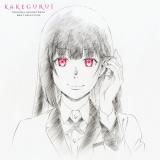
Kakegurui - Original Soundtrack (Best Selection)
  • A1: Kakegurui
  • A2: Tagiru
  • A3: Hito No Shuen
  • A4: Gepita Emi
  • A5: Henyou
  • A6: Shiro Ka Kuro Ka
  • A7: Iki Wo Nomu
  • B1: Ri Wo Ronzu
  • B2: Koreha Ikaga Shitamonoka
  • B3: Tsume Wo Kamu
  • B4: Hotobori
  • B5: Yuetsu No Waltz
  • B6: Takaburu Ru Kokoro
  • B7: Tsuyayakana Kyouki
  • B8: Hana Hiraku Hebi
  • B9: I Wo Furuu Mono
  • C1: Sokohakatonai Yuetsu
  • C2: Shinobigoto
  • C3: Futatsutonai Hana
  • C4: Akira Rui Nichijou
  • C5: Midarini Hossu
  • C6: Kyoso Hiideshitoki
  • C7: Shigyaku Shikou
  • C8: Seiseito
  • D1: Sakayoseru
  • D2: Koi No Roshian Ruretto
  • D3: Koi No Roshian Ruretto
  • D4: Koi No Roshian Ruretto
  • D5: Deal With The Devil Tv Size
  • D6: Layon-Theline Tv Size
  • D7: Layon-Theline : Re-Make A Bet On Soul

Synopsis: Welcome to Hyakkaô Academy, a prestigious institution where gambling rules supreme and determines the students’ social hierarchy. Here, those most skilled at betting accumulate wealth and power, while the losers sink into humiliation and bullying. Yumeko Jabami, a new student as elegant as she is unpredictable, shakes up the established order and quickly becomes someone to watch. Unlike the others, she seeks neither fortune nor status—only the adrenaline of risk excites her… and beware to anyone who thinks they can manipulate her.


Featuring 31 thrilling tracks across 2 LPs, "Notes for Kakegurui" takes you on a wild ride through electrifying instrumentals, stylish remixes, and unforgettable vocal duets like "Koi no Russian Roulette.”

pre-order now10.04.2026

expected to be published on 10.04.2026

48,70
Lime Garden - Maybe Not Tonight

Lime Garden

Maybe Not Tonight

12inchSOYOUNG045
So Young
10.04.2026
  • 1: 23
  • 2: Cross My Heart
  • 3: Downtown Lover
  • 4: All Bad Parts
  • 5: Maybe Not Tonight
  • 6: Body
  • 7: Lifestyle
  • 8: Undressed
  • 9: Always Talking About You
  • 10: Do You Know What I'm Thinking

Brighton four-piece Lime Garden return with their self-reckoning second album 'Maybe Not Tonight' So Young Records (the record label launched by So Young Magazine).

'Maybe Not Tonight' unfolds as a full night out, charting the pleasures and perils of partying and impulsive decisions.

Vocalist and guitarist Chloe Howard says: “The album is about a night out, from start to finish. As the night progresses, you’re having a great time, until your ex walks in with someone else. You hate the way you look but rather than going home, you press the big red button and get even more drunk. Eventually, you take yourself home full of melancholy, chaos and anger.”

Following their critically acclaimed 2024 debut 'One More Thing', which captured the raw live energy that earned them slots at festivals including Glastonbury and Green Man, Maybe Not Tonight sees Lime Garden expand their signature “wonk-pop” sound upwards and outwards. The result is their most intoxicating and luminous material to date.

pre-order now10.04.2026

expected to be published on 10.04.2026

23,49
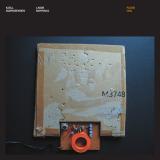
Kjell Bjørgeengen & Lasse Marhaug - Flood Coil
 
9

Some years ago, Kjell Bjørgeengen and Keith Rowe attempted to convert video signals into sound by setting up Rowe’s pickups next to an old CRT monitor, turning its magnetic field into a sound generator. Rowe further developed the system with David Jones at Alfred University, slimming down the setup using a copper coil, a circuit board, a video input, and a telephone pickup. Jones named it the »Flood Coil«, and it’s that instrument you can see on the album’s front cover and that lies at the core of these recordings, made without any physical live input from the artists themselves. In essence, it’s generative music in its purest form.

Bjørgeengen’s video feed is generated by oscillators, then routed into Marhaug’s pedals and then back into the Flood Coil, so any visual shifts alter the sound, and any modification to the sound changes the video. The duo have played this setup live many times, but for this studio version they left the system to do its thing without any intervention for two minutes at a time before moving onto the next idea. They recorded hours and hours using this process and then selected 18 highlights for this album, extracting harsh noise, power electronics, lulling feedback drone, and peculiar rhythmic snippets to show the scope of their technique.

A wall of growling, hi-octane Pulse Demon-style noise opens the set, gradually exposing us to more asymmetric textures, shifting through unstable repetitions that transform Merzbow’s metal-inspired screams into »Aaltopiiri«-era rhythmic noise. It’s remarkable, actually, how much Marhaug and Bjørgeengen can squeeze from the system, chancing on shivering, lower-case chugs and pops, galloping drums, soundsystem subs, and grinding blast beats that sound like Napalm Death’s »Scum« piped through a broken amp stack. It ain’t pretty, but noise/industrial freaks will revel in the fierce delights inside.

pre-order now10.04.2026

expected to be published on 10.04.2026

32,35
Jeffrey Lewis & Voltage - Bad Wiring LP
  • 1: Exactly What Nobody Wanted
  • 2: Except For The Fact That It Isn't
  • 3: My Girlfriend Doesn't Worry
  • 4: Depression! Despair!
  • 5: Till Question Marks Are Told
  • 6: Lps
  • 7: Knucklehead/Happy Rain
  • 8: Take It For Granted
  • 9: In Certain Orders
  • 10: Where Is The Machine
  • 11: Dogs Of My Neighborhood
  • 12: Not Supposed To Be Wise

‘Bad Wiring’ by Jeffrey Lewis & The Voltage, originally released in 2019 and long ago sold out, is re-released in UK/Europe on Blang Records. Recorded in Nashville by Roger Moutenot (Lou Reed, Yo La Tengo, Sleater-Kinny) the album blends raw lo-fi garage-punk with acoustic interludes. His trademark literate lyrics, moving between the poignant and the hilarious, shift from personal anxieties to existential dread (often in the same song eg, ‘My Girlfriend Doesn't Worry'), record stores ('LPs') and under-appreciated artists ('Exactly What Nobody Wanted'). The album was greeted with widespread acclaim in 2019 with many reviewers declaring it his best yet. Jeffrey Lewis & The Voltage play End Of The Road in September with a UK/Europe tour planned to follow.
Press For Bad Wiring In 2019:
" The “and about our relationship” refrain of ‘My Girlfriend Doesn’t Worry’ will have you replaying the album instantly." grade A- Robert Christgau, Consumer Guide (top albums of the year 2019).
" terrific wordplay." ******* Rob Hughes, Uncut
"Thick with the evergreen anti-folkie's charm." **** Mojo
"Electrifying, again." **** Q Magazine.
"one of the most consistently enjoyable records Lewis has made in his 18-year career." ********- HotPress
"possibly his best studio album yet." **** The Skinny.
"Jeff Lewis sits comfortably with Lou Reed and Leonard Cohen as an exemplary songwriter. Reed always strived for street cool and Cohen’s words were imbued with mysticism and his love of women. Lewis has the courage to open up his heart and lay out all the horrible neurosis, paranoia, and despair that we all fall prey to. Reed the cool, Cohen the mystic and Lewis the honest. A better triumvirate you couldn’t hope for.” Louder Than War.
"There’s a strong suggestion that this is the best album his written to date and after listening to just a handful of songs you’d be hard-pushed to disagree – you’ll also be left wondering why in the hell Lewis is not better known than he is, this album is filled with unforgettable songs that set his songwriting apart from anything else you’re likely to hear today." Folk Radio UK.

pre-order now10.04.2026

expected to be published on 10.04.2026

21,43
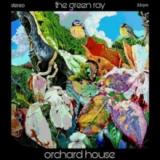
The Green Ray - Orchard Hosue LP

It seems almost inevitable that at some stage Blue Matter and The Green Ray would be working together, and we’re delighted to say that this is now about to happen. When Blue Matter co-boss, Nick Saloman, was living in Walthamstow, he sat in with The Green Ray many times at the late-lamented Plough Inn on Wood Street (now a mini-supermarket). In more recent times Nick’s band, The Bevis Frond has played live with them on several occasions, and without wishing to disrespect any former members, the current Green Ray line-up sounds as good as they’ve ever sounded, if not, dare we say, even better than before. The Green Ray was originally assembled in the mid-90s by Ken Whaley & Richard Treece, two key members of Walthamstow legends, Help Yourself. During the last 30 years or so, they have released 7 albums and one 12” single.

Sadly, the line-up has changed quite frequently due to the passing of several of their number. Ken & Richard passed away some years ago, and more recently bassist Jeff Gibbs departed this world. However, now under the all-seeing eye of guitarist Simon Whaley, the current line-up is continuing to fly the East London freak flag high. Not long ago Simon asked us if Blue Matter would like to issue their latest offering, and we came back with a resounding “yes please”. ‘Orchard House’ is a superb album, full of great playing and great songs. There are shades of Mighty Baby and Help Yourself (at their trippiest), plus a West Coast atmosphere which put us in mind of Quicksilver and The Grateful Dead. It’s taken some time to happen, but at last Blue Matter & The Green Ray have come together to issue an unmissable album. So don’t miss it.

pre-order now10.04.2026

expected to be published on 10.04.2026

23,32
FLORE LAURENTIENNE - VOLUME III
  • Fleurs
  • Régate
  • Petit Matin
  • Le Temps
  • Fleuve Vii
  • Fleuve Viii
  • Navigation Vii
  • (A Travers Les) Chablis
also available

LIMITED EDITION GREEN VINYL[21,81 €]


Die Botschaft, das Wesentliche, das sich teilen lässt, ist Licht; es ist der Samen in der Erde, der zu einer Pflanze wird und dann zu einer Blume, die in voller Blüte steht und schließlich unvermeidlich verwelkt, damit der Zyklus von Neuem beginnen kann; es ist die Suche nach Schönheit im Chaos, aus dem Harmonie entsteht, um es zu überwinden. Auf Volume III kehren Mathieu David Gagnon und sein Projekt Flore Laurentienne zurück, um die Pracht des Flusses und seiner floralen und waldreichen Umgebung zu feiern.Volume III ist zudem eine tiefere Erkundung der Verbindung von akustischen und synthetischen Elementen, die den Charakter von Flore Laurentienne ausmachen. Anders als bei den ersten drei Alben wurden die meisten Stücke gemeinsam mit den Bandmitgliedern während Residenzen und Konzerten entwickelt, bevor sie aufgenommen wurden. Dies bereicherte die Kompositionen in einer Phase, in der sie sich noch im Wandel befanden. Die Band treibt das Projekt an und inspiriert Gagnons Schreibprozess, indem sie den Klang weiterentwickelt, nährt und ihm erlaubt, neue Wege zu gehen.Dieser neue Meilenstein markiert zugleich den Abschluss einer Trilogie, die 2019 mit Volume I begann - mit dem inhärenten und parallelen Bestreben, ein drittes Volume zu erreichen, um Volume 3 von L'Infonie (einem Kultkollektiv aus Québec, das Jazz, Prog, Kunstmusik und Poesie verband) zu würdigen. Letzteres beeinflusste die Musik von Flore Laurentienne nicht direkt, sondern vielmehr das Verständnis von Freiheit in der Komposition, die Klassik und Improvisation vereint.Die Entwicklung von Volume III folgt der Evolution des Projekts: Während der erste Track ,Fleurs" dem ähnelt, was Volume II bot, gibt uns der abschließende Titel ,(A travers les) Chablis" einen Vorgeschmack darauf, wie der nächste Schritt klingen könnte. Es ist ein Album, das man zusammen mit seinen beiden Vorgängern genießen sollte - und dabei gespannt auf das Kommende blickt. Flore Laurentienne entwickelt sich ständig weiter, doch die Vision ist seit Beginn dieselbe geblieben: Musik zu schaffen, die lebendig, wahrhaftig, menschlich und kompromisslos ist.

pre-order now10.04.2026

expected to be published on 10.04.2026

21,81
FLORE LAURENTIENNE - VOLUME III

FLORE LAURENTIENNE

VOLUME III

12inchSCRLPX187
Secret City
10.04.2026

Die Botschaft, das Wesentliche, das sich teilen lässt, ist Licht; es ist der Samen in der Erde, der zu einer Pflanze wird und dann zu einer Blume, die in voller Blüte steht und schließlich unvermeidlich verwelkt, damit der Zyklus von Neuem beginnen kann; es ist die Suche nach Schönheit im Chaos, aus dem Harmonie entsteht, um es zu überwinden. Auf Volume III kehren Mathieu David Gagnon und sein Projekt Flore Laurentienne zurück, um die Pracht des Flusses und seiner floralen und waldreichen Umgebung zu feiern.Volume III ist zudem eine tiefere Erkundung der Verbindung von akustischen und synthetischen Elementen, die den Charakter von Flore Laurentienne ausmachen. Anders als bei den ersten drei Alben wurden die meisten Stücke gemeinsam mit den Bandmitgliedern während Residenzen und Konzerten entwickelt, bevor sie aufgenommen wurden. Dies bereicherte die Kompositionen in einer Phase, in der sie sich noch im Wandel befanden. Die Band treibt das Projekt an und inspiriert Gagnons Schreibprozess, indem sie den Klang weiterentwickelt, nährt und ihm erlaubt, neue Wege zu gehen.Dieser neue Meilenstein markiert zugleich den Abschluss einer Trilogie, die 2019 mit Volume I begann - mit dem inhärenten und parallelen Bestreben, ein drittes Volume zu erreichen, um Volume 3 von L'Infonie (einem Kultkollektiv aus Québec, das Jazz, Prog, Kunstmusik und Poesie verband) zu würdigen. Letzteres beeinflusste die Musik von Flore Laurentienne nicht direkt, sondern vielmehr das Verständnis von Freiheit in der Komposition, die Klassik und Improvisation vereint.Die Entwicklung von Volume III folgt der Evolution des Projekts: Während der erste Track ,Fleurs" dem ähnelt, was Volume II bot, gibt uns der abschließende Titel ,(A travers les) Chablis" einen Vorgeschmack darauf, wie der nächste Schritt klingen könnte. Es ist ein Album, das man zusammen mit seinen beiden Vorgängern genießen sollte - und dabei gespannt auf das Kommende blickt. Flore Laurentienne entwickelt sich ständig weiter, doch die Vision ist seit Beginn dieselbe geblieben: Musik zu schaffen, die lebendig, wahrhaftig, menschlich und kompromisslos ist.

pre-order now10.04.2026

expected to be published on 10.04.2026

21,81
VARIOUS - ECCENTRIC SWEET SOUL
  • 1: Wonderful To Be Loved
  • 1: 2Don't Stop Smiling
  • 1: 3Gentle Man
  • 1: 4Crying Baby Won't Help The Hurt
  • 1: 5Love Is Gonna Rain Down On Me
  • 1: 6Slow Change Up
  • 1: 7Lost Her Love
  • 1: 8All I Want Is You
  • 1: 9With A Broken Heart
  • 1: 0The Magic Of Your Love
  • 1: What About Me
  • 1: 2Hiding In Your Heart
  • 1: 3I'll Never Love Again
also available

OPAQUE PEACH VINYL[24,79 €]


Was ist Sweet Soul? Vielleicht die perfekte Mischung aus Lowrider und symphonischem Soul? Eine üppige und dennoch lebendige Produktion, die in hörbare Seide gehüllt zu sein scheint und jeden Zuhörer innehalten lässt. So oder so, wenn eines sicher ist, dann ist es, dass sein Zweck vollkommen klar bleibt. Vergnügen, langsam und gemächlich, bajito y suavecito. Jeder Kuss beginnt mit Soul oder Sweet Soul für Lowrider. Sweet Soul ist der Vorläufer dessen, was wir heute als Modern Soul bezeichnen. Er kam in den späten 60er und 70er Jahren auf, parallel zu - aber getrennt von - dem raueren, funkgetriebenen Soul, der die Radiowellen dominierte. Während diese Musik harte Rhythmen und rohe Emotionen förderte, milderte Sweet Soul die Kanten. Sie bevorzugte Melodie, Wärme und Raffinesse und verlieh ihr ein ruhiges, üppiges Gefühl, das es leicht machte, zu ihr zurückzukehren und sie auch Jahrzehnte später noch zu lieben.

pre-order now10.04.2026

expected to be published on 10.04.2026

23,49
VARIOUS - ECCENTRIC SWEET SOUL

VARIOUS

ECCENTRIC SWEET SOUL

12inchNUMLPC1521
Numero Group
10.04.2026

Was ist Sweet Soul? Vielleicht die perfekte Mischung aus Lowrider und symphonischem Soul? Eine üppige und dennoch lebendige Produktion, die in hörbare Seide gehüllt zu sein scheint und jeden Zuhörer innehalten lässt. So oder so, wenn eines sicher ist, dann ist es, dass sein Zweck vollkommen klar bleibt. Vergnügen, langsam und gemächlich, bajito y suavecito. Jeder Kuss beginnt mit Soul oder Sweet Soul für Lowrider. Sweet Soul ist der Vorläufer dessen, was wir heute als Modern Soul bezeichnen. Er kam in den späten 60er und 70er Jahren auf, parallel zu - aber getrennt von - dem raueren, funkgetriebenen Soul, der die Radiowellen dominierte. Während diese Musik harte Rhythmen und rohe Emotionen förderte, milderte Sweet Soul die Kanten. Sie bevorzugte Melodie, Wärme und Raffinesse und verlieh ihr ein ruhiges, üppiges Gefühl, das es leicht machte, zu ihr zurückzukehren und sie auch Jahrzehnte später noch zu lieben.

pre-order now10.04.2026

expected to be published on 10.04.2026

24,79
Pariah - The Kindred LP

Pariah

The Kindred LP

12inchHHR202615LPR
HAMMERHEART RECORDS
10.04.2026
  • 1: Gerrymander
  • 2: The Rope
  • 3: Scapegoat
  • 4: Foreign Bodies
  • 5: (La Guerra) Inhumane
  • 6: Killing For Company
  • 7: Icons Of Hypcrisy
  • 8: Promise Of Remembrance
  • 9: Disciples Anonymous

Pariah’s cult debut re-issued! “The Kindred” brings you pure old school Thrash Metal fury! Satan changed their name to Pariah in 1988-1989. Satan’s evolution for the time being came to an end here with this band, Pariah, in 1988. What Satan were going for with “Suspended Sentence”, could definitely be seen as a hint to the direction they would take as Pariah. That raspy, ill-tempered, aggressive Michael Jackson (indeed) is still here on vocals and these guys really wanted to tear things apart with this album. The main lineup here is entirely the same from Satan and Blind Fury (vocalists aside).

Simply put, one could easily say they took “Suspended Sentence”’s interesting idea of “NWOBHM meets Thrash Metal” and basically focused on being even more aggressive this time. We might be throwing out the obvious here again, but if you are new to Pariah or perhaps Satan, familiarize yourself with the fact that guitarists Russ Tippins and Steve Ramsey are truly an insane duo. For the most part with “The Kindred” their guitar work is pretty thrashy and extremely melodic. Then out of nowhere those classic NWOBHM solo’s, dual harmonies, and majestic melodies come into play all over the place and they manage to make it work incredibly well in between the thrashy antics. The production and mix seems to be an improvement over “Suspended Sentence” and here the guitars tend to have more of a sharper edge, Jackson’s vocals are constantly in the clear and never overpowered by anything else, and overall there is a tougher vibe surrounding this.

Everything here is pretty damn heavy. While Tippins and Ramsey are really out there in a realm of their own, there’s great performances again by Graeme English on bass and Sean Taylor on drums. Overall you’ve got a whole package of virtuous musicians here that really mastered the beauty of balance. All in all “The Kindred” goes all the way with every track being fast and aggressive. Satan and Pariah are all typically made up of the same core members and definitely created some timeless and unique Heavy Metal.

pre-order now10.04.2026

expected to be published on 10.04.2026

28,99
Sugar Horse - Not A Sound In Heaven LP
  • 1-: Fire Graphics
  • 2: Secret Speech
  • 3: Ex-Human Shield
  • 4: History's Biggest T-Shirts
  • 5: Not A Sound In Heaven
  • 6: Company Town
  • 7: You Can't Say Dallas Doesn't Love You

Bristol experimental band SUGAR HORSE are delighted to announce that their third album, Not A Sound In Heaven, will be released on 10th April 2026 via Fat Dracula Records.

To celebrate the news, the band are sharing the bruising lead single ‘Secret Speech’, available to stream on all good digital service providers from 12th February 2026.

Also announced today are a run of April 2026 UK album headline tour dates and an appearance at StrangeForms Festival 2026, with tickets on sale now (see below for full listings).

“We are fortunate enough to live in what is generally known as ‘The West’,” says front man Ash Tubb of the lyrical themes behind the new track. “I say fortunate with gritted teeth, because I know—as I’m sure the reader knows—that living in the West isn’t always rosy. The vast majority of people struggle everyday to feed, clothe and house themselves. Let alone receive adequate healthcare, schooling and workers’ rights.”

“We are, however, where all the world’s wealth is hoarded. We are at the centre of Empire. The people outside of this empire—those of the Global South—have had their resources extracted and their populations exploited by our own governments, with very little given back in return. This won’t go on forever. It will inevitably end, as all great empires do.”

“We in The West have a choice to make in the meantime; either help create a new, fairer world, or let the greed of our ruling classes become the undoing of all of us.”

The first glimpse of new material from the quartet, ‘Secret Speech’ starts as Not A Sound In Heaven means to go on—a politically-charged wrecking ball of a song that smashes its way through the often unbelievable chaos and brutality of the 21st century with vitriolic malice.

How do you capture the machinations of the geo-political industrial war machine—and all the horrors that go with it—in the studio, without seeming trite or crass? That’s the question that Sugar Horse have posed themselves on their forthcoming third album Not A Sound In Heaven, and they must surely be one of the only bands in existence capable of delivering on just that premise with both musical substance and cutting philosophical insight.

“Ever since I was born I can remember visions of war, famine, and death being beamed directly into my living room via the magic of television,” says Tubb of the record. “These visions were accompanied by newsreader narratives designed to either humanise or dehumanise the people involved. We humanise our government’s allies and dehumanise their enemies. This is taken as common sense, or even wisdom to some degree. People watch the news and accept it as fact, simple and true.”

“As a person gets older they move in one of three different directions with this acceptance of reality; They embrace what they’re being told, they fall into a kind of trust free nihilism or they learn that there are deeper narratives at play.”

“Not A Sound In Heaven is an aged acceptance of the latter. An acceptance of sitting at the centre of a global empire of both military and economic dimensions. An acceptance that the stories we’re told as a nation, or what’s generally in the zeitgeist, isn’t necessarily reality itself.”

“How does a person cope with the weight—and, frankly, the guilt—of a society that perpetuates such distinct inequalities? A society that thinks a bit of killing abroad is fine, as long as it improves the lives of people at home. You can see why so many choose to embrace it. Hell, nihilism seems pretty sensible. Once a person decides upon pursuing a degree of truth however, things get a bit depressing. Beyond depressing...maddening.”

“This album explores this kind of breezy, frivolous subject matter in a manner that will no doubt be uplifting to the listener and massively financially rewarding for the artist.”

The new album follows on from their standalone AA single ‘What’s Your ETA? Let’s Have A Tear Up’/‘Would You Like Me To Be The Cat?’ which was released late last year as a surprise double drop.

pre-order now10.04.2026

expected to be published on 10.04.2026

24,79
AMULETS - REM(A)INDERS

AMULETS

REM(A)INDERS

12inchPELV334
Pelagic Records
10.04.2026
  • 1: Former Shells
  • 2: Coiled (Ft. Patrick Shiroishi)
  • 3: Black Sheep
  • 4: Slow Motion Somnia
  • 5: Remain/Remind
also available

LAVENDER Vinyl[24,79 €]


Amulets is the solo project of Portland-based audio and visual artist Randall Taylor. Amulets employs handmade cassette tape loops and live processed guitar loops to create live, lush soundscapes and immersive drones. Through the recontextualisation of cassettes, sampling, field recording, and looping, these long-form compositions blur the genres of ambient, drone, noise, and electronic music. Amulets has steadily built a catalog defined by tactile intimacy and patient exploration. Deeply immersive, the album navigates the dreamy boundaries between the tangible and the ethereal, where sound behaves as memory itself: unstable, layered, and quietly transformative. Known for his ability to weave soundscapes that evoke powerful emotions with minimalistic instrumentation, Taylor's newest project is a masterful exploration of mood, atmosphere, and texture.Throughout the ambient soundscapes is introspection, melancholy, and an almost hypnotic calm. The album resists forward motion, instead inviting the listener to linger inside its evolving textures, to sit with what's left behind rather than rush toward resolution. Central to Amulets' identity is Taylor's insistence on working, quite literally, outside the box. While many contemporary experimental artists rely heavily on software, Taylor's process remains rooted in physical interaction with sound. "This album differs from previous albums because it's a lot of found sounds, song fragments, and other samples that I have that I wanted to fuse together. I also heavily relied on a lot of ambient guitar and live guitar recording to marry all the sounds together." (Randall Taylor) FOR FANS OF Tim Hecker * Ben Frost * Lawrence English * Alessandro Cortini * This Will Destroy You * Mono * Windy & Carl

pre-order now10.04.2026

expected to be published on 10.04.2026

22,65
ACCION MUTANTE - THE TIME MACHINE
  • 1: Fear
  • 2: Dreads And Spikes
  • 3: Die Human Race
  • What A Wonderful World
  • 5: Creature Of Inhuman Power
  • 6: Dead Dream
  • 7: Desensitized
  • 8: Ghetto Europa
  • 9: Narcissism Of Mankind
  • 10: Kranenwald
  • 11: Der Pabst
  • 12: Fuck Cancer
  • 13: Collapse
  • 14: Intox Not Detox
  • 15: Das Hohelied Der Larmoyanz
  • 16: Mankind Is The Reason
  • 17: Drug Schools
  • 18: Loser
  • 19: Theodicy
  • 20: Odin - Jesus

Die legendären Accion Mutante kehren mit einem neuen Album zurück! Sie kamen 1994 aus der Crust-Szene und prägten schon früh den Begriff "Metal Punk". "The Time Machine" verspricht erneut eine brutale, menschenunfreundliche Reise durch drei Jahrzehnte der Geschichte von Accion Mutante, darunter zehn brandneue Tracks plus zehn neu aufgenommene Songs, die von den Anfängen der Band bis zur Gegenwart reichen. Ehrliche Punk-Wut, gemischt mit rauem Metal-Sound und kombiniert mit einem unerbittlichen D-Beat sowie der kehligen Wut zweier Shouter. Auf "The Time Machine" thematisieren Accion Mutante textlich nach wie vor ihre Themen wie religiöser Blödsinn, Verbrechen gegen die Menschlichkeit oder Umweltzerstörung mit ihrem eigenen sarkastischen Ton und einer 100 % antifaschistischen Haltung. Das ist verdammt wütend und verdammt roh. Auch nach mehr als 30 Jahren sind ACCION MUTANTE noch immer Crustasfuck-Vertreter einer großartigen Mischung aus kaputtem Metal, Punk-Gestus, unerbittlichem D-Beat und den lauten Attacken beider Sänger. ACCION MUTANTE in ihrer ganzen Pracht, direkt ins Gesicht, für Fans von Britcore und Bands wie Extreme Noise Terror oder Ripcord.

pre-order now10.04.2026

expected to be published on 10.04.2026

19,96
BAD BRAINS - BAD BRAINS

BAD BRAINS

BAD BRAINS

12inchORGMLPV2179
ORG Music
10.04.2026

Vinyl LP pressing. Bad Brains is the self-titled debut studio album recorded by hardcore punk/reggae band Bad Brains. Recorded in 1981 and released on (then) cassette-only label ROIR on February 5, 1982, many fans refer to it as The Yellow Tape because of it's yellow packaging. Though Bad Brains had recorded the 16 song Black Dots album in 1979 and the 5-song Omega Sessions EP in 1980, the ROIR cassette was the band's first release of anything longer than a single. In coordination with the band, Org Music has overseen the restoration and remastering of the iconic Bad Brains' recordings. The audio was mastered by Dave Gardner at Infrasonic Mastering and pressed at Furnace Record Pressing. This Punk Note edition comes with alternate packaging artwork from designer John Yates (Stealworks). The artwork is a nod to Reid Miles and Francis Wolff, and their amazing work at the Blue Note label

pre-order now10.04.2026

expected to be published on 10.04.2026

24,79
WILD NOTHING - LIFE OF PAUSE (LENTICULAR SLEEVE) [SIGNED PRINT ED]
  • 1: Reichpop
  • 2: Lady Blue
  • 3: A Woman's Wisdom
  • 4: Japanese Alice
  • 5: Life Of Pause
  • 6: Alien
  • 7: To Know You
  • 8: Adore
  • 9: Tv Queen
  • 10: Whenever I
  • 11: Love Underneath My Thumb

White vinyl. Signed Print Edition. When Jack Tatum began work on Life of Pause, his third full-length to date, he had lofty ambitions: Don't just write another album; create another world. One with enough detail and texture and dimension that a listener could step inside, explore, and inhabit it as they see fit. "I desperately wanted for this to be the kind of record that would displace me," he says. "I'm terrified by the idea of being any one thing, or being of any one genre. And whether or not I accomplish that, I know that my only hope of getting there is to constantly reinvent. That reinvention doesn't need to be drastic, but every new record has to have its own identity, and it has to have a separate set of goals from what came before." What came before: a rightfully acclaimed, much beloved display of singular pop craftsmanship. Tatum's dreamy, unexpected 2010 debut, Gemini, was written while he was still a student at Virginia Tech University. Its equally disarming follow-up, 2012's Nocturne, marked the first time he'd been able to bring his bedroom recordings into a studio, to be performed and fully realized with the help of other musicians. There has been a set of wonderfully expansive EPs in between_each hinting at new directions and punctuating previous ideas_but with Life of Pause, Tatum delivers what he describes as his most "honest" and "mature" work yet, an exquisitely arranged and beautifully recorded collection of songs that marry the immediate with the indefinable. "I allowed myself to go down every route I could imagine even if it ended up not working for me," he says. "I owe it to myself to take as many risks as possible. Songs are songs and you have to allow yourself to be open to everything." After a prolonged period of writing and experimentation, recording took place over several weeks in both Los Angeles and Stockholm, with producer Thom Monahan (Devendra Banhart, Beachwood Sparks) helping Tatum in his search for a more natural and organically textured sound. In Sweden, in a studio once owned by ABBA, they enlisted Peter, Bjorn and John drummer John Ericsson and fellow Swedish Radio Symphony Orchestra veteran Pelle Jacobsson, to contribute drums and marimba. In California, at Monahan's home, Tatum collaborated with Medicine guitarist Brad Laner and a crew of saxophonists. From the hypnotic polyrhythms of "Reichpop" to the sugary howl of "Japanese Alice" to the hallucinogenic R&B of "A Woman's Wisdom," the result is a complete, fully immersive listening environment. "I just kept things really simple, writing as ideas came to me," he says. "There's definitely a different kind of `self' in the picture this time around. There's no real love lost, it's much more a record of coming to terms and defining what it is that you have_your place, your relationships. I view every record as an opportunity to write better songs. At the end of the day it still sounds like me, just new."

pre-order now10.04.2026

expected to be published on 10.04.2026

26,01
As Everything Unfolds - DID YOU ASK TO BE SET FREE? LP

Mit bisher über 30 Millionen Streams ihres Katalogs und einer Tournee-Geschichte, die das Download Festival, Graspop, Resurrection sowie Tourneen als Support für Electric Callboy und Bury Tomorrow umfasst, sind As Everything Unfolds sicherlich keine Neulinge in der Szene. Die Band, angeführt von der Powerfrau Charlie Rolfe, ist bekannt für ihre emotionsgeladene Musik sowie ihre dynamischen Live-Auftritte. Nun veröffentlicht die Band ihr drittes Album "DID YOU ASK TO BE SET FREE?" über Century Media Records. Das Album, benannt nach den Lyrics der Single "SET IN FLOW", zeichnet sich durch die bekannte und beliebte musikalische Intensität der Band aus, gepaart mit emotionalen Texten, mit denen sich Fans und neue Hörer gleichermaßen verbunden fühlen werden. Charlie, die sich nicht scheut, über die Inspiration hinter den Tracks zu sprechen, wechselt mühelos zwischen heavy Growls und klarem Gesang und lässt die Musik wie eine Achterbahnfahrt zwischen verschiedenen Genres wirken. Mit einem Feature von Dani Winter-Bates von Bury Tomorrow auf "WHAT YOU WANTED" würdigt die Band ihre Freundschaft und Tournee-Geschichte mit der britischen Metalcore-Band - ein Track, der sicherlich zu einem Fan-Favoriten werden wird. Nach dem Erscheinen des Albums müssen die Fans nicht allzu lange warten, um die neue Musik auch live zu erleben, denn die erste Festivalankündigung für den Sommer steht bereits fest.
Mit "DID YOU ASK TO BE SET FREE?" definieren sich As Everything Unfolds erneut als Band ohne Grenzen und als eine Gruppe, die man in der alternativen Musikszene im Auge behalten sollte - ihre größten Momente liegen vielleicht noch vor ihnen. Das Album wird als Standard-CD-Jewelcase, als trasparent-petrolgrüne LP sowie als digitales Album erhältlich sein.

pre-order now10.04.2026

expected to be published on 10.04.2026

24,16
Bodysnatcher - Hell Is Here, Hell Is Home
  • 1: The Maker
  • 2: Writhe And Coil
  • 3: Plague Of Flies
  • 4: May Your Memory Rot
  • 5: Violent Obsession
  • 6: No Savior
  • 7: Blade Between The Teeth
  • 8: Two Empty Caskets
  • 9: Survive Or Die
  • 10: Hell Is Home

Florida deathcore heavyweights Bodysnatcher return with their most punishing and purposeful statement to date. ‘Hell Is Here, Hell Is Home’, out April 10, is not an escape record, it is a confrontation. Brutal, unrelenting, and emotionally unfiltered, the album captures a band fully locked into its identity while sharpening every weapon in its arsenal. True to their roots, Bodysnatcher deliver a sound steeped in suffocating grooves, bone-crushing breakdowns, and feral intensity. ‘Hell Is Here, Hell Is Home’ pushes beyond pure aggression. The record explores cycles of trauma, self-destruction, survival, and the uncomfortable truth that for many, suffering is not a phase, it is a place.

This is deathcore grounded in lived experience, written from inside the fire rather than in hindsight. Across the album, Bodysnatcher balance sonic violence with a disciplined sense of control. Downtuned riffs grind with oppressive weight, drums hit with mechanical precision, and vocals swing between outright hostility and grim reflection. Each track feels deliberate, built not just to hit hard, but to linger. With this release, Bodysnatcher continue to cement their position as one of modern deathcore’s most uncompromising voices. ‘Hell Is Here, Hell Is Home’ is a record built for the pit, rooted in truth, unflinching and heavy in every sense, delivered with absolute conviction.

pre-order now10.04.2026

expected to be published on 10.04.2026

21,81
Items per Page:
N/ABPM
Vinyl