Spencer Miles Abraham Allen, wie er mit vollen Namen heißt, stammt aus Rochester im State New York. Schon mit seinem Mittelnamen Miles, natürlich angelehnt an den großen Miles Davis, gaben seine Eltern ihm eine Musikkarriere gleich mit in die Wiege. Während die künstlerische Laufbahn langsam ins Laufen kam, blieben diese dennoch skeptisch. Als Spencer. das College nämlich für die Musik verließ, um an seiner Karriere zu arbeiten, waren seine Eltern alles andere als glücklich darüber. Er gab ihnen das Versprechen, wenn es mit der Musik nicht klappen sollte, binnen eines Jahres zurück im Hörsaal zu sein. Zu diesem Zeitpunkt hatte er dann aber ein paar Millionen Streams bei Spotify und einen Plattenvertrag bei 4AD in der Tasche - sein Platz im College bleibt wohl vorerst leer und auch seine Eltern können wieder ruhig schlafen. Von Fader und Pitchfork als einer der Acts für 2021 proklamiert, kann Spencer. selbstbewusst vorausschauen. Mit seiner Single "Automatic" hatte er 2019 bereits einen kleinen Underground-Hit gelandet…
Suche:no nam
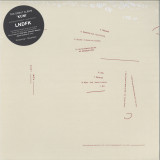
LNDFK (aka Linda Feki) presents her ground-breaking debut album, "Kuni" on Brooklyn-based Bastard Jazz Recordings. Undeniably on the rise after her 2019 breakout performance at Primavera Sound, LNDFK has already caught the attention of Pitchfork, Rolling Stone, Clash Magazine, Noisey, and Brooklyn Vegan (among many others) while being championed by the likes of Gilles Peterson, Tom Ravenscroft, and Jamz Supernova & landing spots on tastemaker playlists like Spotify's "Pollen" and "Fresh Finds."
"Kuni" is a spellbinding exploration of dichotomies: Love & Death (Eros & Thanatos), Flower & Fire, Delicacy & Violence, Poetry & Realism, Purification & Destruction. These opposites are reified in the 10-track LPs multifarious and multifaceted sounds, elegantly meandering through a variety of styles and genres, spearheaded by Linda and features the production wizardry of Darrio Bassolino who co-wrote the album.
"Kuni" opens with "Hana-bi," an ambient instrumental piece that sets the tone for the album. Inspired by the Takeshi Kitano 1997 film of the same name – particularly Joe Hisaishi's stunning soundtrack, as well as Kitano's paintings which appear in the film. "Hana-bi" expresses the dialoguing opposites of flowers and fire, the first of many dichotomous representations throughout the album. "Takeshi" acts as an extension and to "Hana-bi," albeit one of opposing sound, with its driving, highly syncopated drums (which reappear throughout "Kuni") – à la Karriem Riggins, Questlove, or Yussef Dayes – frenetic bass line, and jazz chords. Linda's sultry voice is interspersed, initially jumping around in scat fashion, being triggered as if a sample, before her lyrics come in; her vocals are used like an additional instrument, adding to the song's rich texture. "Kuni" truly hits its stride with the next song, "Smoke – a moon or a button" (its title lifted from the 1959 book by Ruth Krauss and Remy Charlip), which is structured like a jazz standard yet flows into neo-soul territory sonically with those prodigious drums a highlight once again.
LNDFK touches on experimental hip hop in two songs on the record (both of which were released as singles in 2021): "Don't Know I'm Dead or Not (feat. Chester Watson)" – track #4 – and "How Do We Know We're Alive (feat. Pink Siifu)" – track #9. Although they embrace a more hip hop-leaning sound, these songs by no means shy away from the exploratory theme, and feature two of the alt-rap scenes rising stars with Chester Watson and Pink Siifu who offer provocatively impressing verses, combining dense word play with unconventional flows. While these tracks may first appear to be outliers on the album, they are undeniably in tune with "Kuni's" message and sonic palette, acting as testaments to LNDFK's willingness to explore and experiment.
Meanwhile, "Ku" – the third and last single before the album release – furthers the pre-established future soul sound while meandering through nu jazz and left-field electronic. Inspired by the graphic novel and film, "Sin City," and its female assassin protagonist Miho, "Ku" is a musical interpretation of Miho's story, incorporating both her beauty – the first half of the song – and murderous tendencies – the second half – to create a stunning juxtaposition, culminating in an ambient finale that suggests the character's vulnerability and inner peace. The song gracefully bridges the gap between Hiatus Kaiyote-esque songwriting, Dilla's rhythmic syncopation, and Thundercat's instrumental prowess (LNDFK has shared a stage Brainfeeder labelmate Kamasi Washington).
Mixed in throughout "Kuni" are a series of instrumental pieces that function as something akin to an interlude. The aforementioned intro, "Hana-bi," and the album closer "se mi stacco da te, mi strappo tutto:" act as bookends, while "Om" indicates the half-way mark, and "Ktm" sees Jason Lindner add his sound the album. These tracks are the ambient foundation of "Kuni," representing the thematic duality of the work. Clocking in at only 24 minutes, "Kuni" packs an astonishingly diverse array of sounds, styles, and themes, all while showcasing virtuosic musicianship and instrumental prowess.
Appearing on "Hana-bi" and "Ktm," renowned international artists Asa-Chang and Jason Lindner add an additional perspective to "Kuni": Asa-Chang on "Hana-bi," and Jason Lindner on "Ktm." Asa-Chang - famously of the Japanese avant-garde group Asa-Chang & Junray - provides vocals and percussion to an alternate version of the instrumental opener, while the acclaimed keyboardist Jason Lindner offers his synth expertise on "Ktm." These features highlight the spirit of collaboration found in LNDFK's music, always willing to try out new ways of working.
LNDFK is a singer and songwriter, born of two cultures – an Italian mother and Arab father. She grew up in Naples, away from her father, the Sahara, her homeland and traditions, which has helped nourish the desire to rediscover – through art – an engagement to her roots. Her music melts with jazz, neo-soul and hip-hop influences, filtered through her experiences and sensibility.
Her first EP, "Lust Blue," was composed with the artistic production of Dario Bass and released by Feelin' Music; after that she released several singles that saw international radio support (BBC, NTS, Wordwide FM) and gained a massive audience on digital platforms. Together with her band, she toured around Europe, performing alongside such notable artists as Kamasi Washington and Mndsgn, among others. Most recently she toured Italy, and performed at Primavera Sound Festival 2019 in Barcelona.
"Kuni," is due out on NYC label Bastard Jazz Recordings in February, 2022, while the vinyl LP will follow shortly after.
Brazilian talent Classmatic is next up on Hot Creations with the two-track Toma Dale. Having already set dancefloors alight at the hands of label heads Jamie Jones and Lee Foss, the eagerly anticipated release drops this April.
Toma Dale achieves exactly what Classmatic set out to do. The track opens proceedings with enticing congas that instantly transport you to Latin America. Punchy drum pads pounce in and combine with the percussion to create a highly energetic base, as finely cut Spanish vocals are embedded to fuse everything together. Bape pays homage to the Hot Creations sound. Warm, soft, bouncy kick drums lead the track, joined by subtle acid sounds that tantalise the ears. The breakdown is perfectly placed with the addition of mesmerising vocals that fade in and out before the punchy, bass-heavy drums are hauled back in.
Classmatic has built up a lot of traction over recent years, catching the eyes and ears of major heavyweights in the field, releasing under such labels as Solid Grooves and Hottrax and in 2021 he remixed Cloonees’ major hit, When The Sun Goes Down. Receiving support from artists such as Seth Troxler, Michael Bibi, Pete Tong and Loco Dice to name a few, it comes as no surprise when we say there is a bright future ahead for the talented artist.
South London based producer and multi-instrumentalist Neue Grafik announces his new EP 'Foulden Road Part II' from his Neue Grafik Ensemble band, released 25th March on Total Refreshment Centre. The sequel to their impressive 2019 release 'Foulden Road', Neue Grafik continues to incorporate 100% live takes with the ensemble, as well as solo productions that reflect Neue Grafik's past work with both the Rhythm Section and 22a labels.
Neue Grafik explains, "This EP is a reflection of the social context which surrounds me" – created in a year of much social isolation as well as political unrest, 'Foulden Road II' explores the complex feelings that he found himself battling. He adds "In 2019, we released 'Foulden Road Part I', which was a transitional album, exploring a new culture and navigating between two worlds: Paris and London. 'Part II' is a bit darker, closer to realness with a sprinkle of hope. I couldn't have predicted that I'd finish it encased in my flat, between four walls, in December 2020 after a year of lockdown, Brexit, George Floyd protests, and without London's brilliant culture mesmerising my mind. Everything was sad and closed. Hills were difficult to climb. But it also gave me the time to work hard and deliver this second part of Foulden Road, pushing it forward".
Combining an array of influences — from London, to Paris via New York, Nigeria and Cameroon — with well-measured confidence, ' Foulden Road II' allows you to reflect on the complexities of the last year, whilst braced with energy and hope to move forward positively. Heavy horns and hypnotic poetry form the backbone record, which will ignite any room. 'Foulden Road II' begins with the grounding poetry of MA.MOYO on 'Black Bodies'. The EP is dedicated to Adama Traoré, a black man who died in police custody in Paris. Neue Grafik explains "His name is not well known outside of France. I was shocked, devastated even, to learn that his story didn't cross the Channel". 'Queen Assa' is a heavily percussive dancefloor-hitter which honours French activist Assa Traoré, (Adama's sister) her family, and her struggle to support all families hurt by police brutality. Broken beat elements flow through the horn accompanied 'Officer, Let Me Go To School', while West London rapper Lord Apex offers an unapologetic and poignantly personal perspective on 'Step To It'.
Released on the Total Refreshment Centre label, based out of Stoke Newington's Foulden Road, the EP is a testament to his versatility as an ever-shifting figurehead. Engineered by Capitol K, recorded at Total Refreshment Centre, mixed by Marcus Linon at Greasy Records and mastered by Guy Davie at Electric Mastering – a significant pillar in Neue Grafik's musical career. Having played a DJ set there in 2017, he was convinced by TRC founder Lex Blondin to start a band after he was heard playing some compositions on the communal piano. After spending a couple of sleepless nights on the living room couch, his first gig was booked in the venue space downstairs a week later. The ensemble was established and he has remained in London ever since.
Neue Grafik Ensemble's musicians include; Matt Gedrych, Benjamin 'The Chief' Appiah, Jack Banjo Courtney, Chelsea Carmichael, Dougal Taylor, Yahael Camara-Onono, Xvngo, Rebekah Reid, Dan-Iulian Drutac, Jamie-lee Glinsman and Zara Hudson-Kozdój.
Neue Grafik hosts The Orii Jam Sessions, an energising weekly jam night at Hackney Wick's Colour Factory, which has become a pivotal weekly gathering, inspired by the likes of Unit 31 and Steam Down.
At Now-Again, we avoid hyperbole, yet we believe that this album is one of record collecting’s ultimate
finds: the missing entry in jazz pianist/composer/psychiatrist Denny Zeitlin’s discography, a wonderful
and weird fusion of avant-classical, jazz, funk, rock and electronic music.
The Name Of This Terrain was recorded and pressed in a scant, custom run as a demo in 1969 –and it
so defied its own existence that, even after its producer died and his copies were discovered, Zeitlin
steadfastly resisted its release for almost 20 years, destroying his remaining demos so no...
Repress !
(November Collective Title) Meditative but heaving with energy, Son Lux's third full-length weaves disparate elements into songs both strange and welcoming. On the heals of being named NPR's 'Best New Artist of the Year', Son Lux has created an album that sits as comfortably next to the compositions of Stravinsky, John Adams, David Lang and Ben Frost, as it does to those of Jamie Lidell, Björk, Flying Lotus, and Radiohead. Equal parts producer and composer, Son Lux (aka Ryan Lott) bridges an unusual gap between old-world music theory and next-level experimentation. Meditative but heaving with energy, 'Lanterns' finds a peculiar congruency between futuristic soul and ancient sentiment. Driving orchestral electronica (Lost It To Trying, No Crimes) is placed alongside creepy minimalism (Pyre), often starkly juxtaposing densely layered arrangements with Lott's fragile voice. In recent past Son Lux has gained notoriety both for his s/s/s project (with Sufjan Stevens and Serengeti), and from being named NPR's 'Best New Artist of the Year'. His third full-length album, and his first for Joyful Noise (Kishi Bashi, Sebadoh, etc.), positions Son Lux at the helm of an impressive ensemble of instrumentalists and singers, including Chris Thile (The Punch Brothers), Peter Silberman (The Antlers), DM Stith, Lily & Madeleine, Darren King (Mutemath), Ieva Berberian (Gem Club) and yMusic (Dirty Projectors, Bon Iver).
The Diva Faïrouz.
Her real name Nouhad Haddad, she was born in the Zokak el Blat district of Beirut. The eldest of a modest Maronite family, she developed a passion for singing very early on. Her parents are too poor to afford the luxury of a radio, so she spends most of her time listening, her ear glued to the wall, to the neighbors. Nouhad quickly memorizes the songs she hears and gives a few samples at parties organized by her school. It was there that she seduced her comrades with her vocal abilities and that she was noticed in 1947 by the composer Mohammed Fleyfel.
The echo of his velvety voice reaches Halim el Roumi, talent scout, renowned singer-songwriter and director of Lebanese Radio, who asks to audition him immediately. Literally fascinated, el Roumi introduced him to the choir of Radio Beirut, baptized it with the name of Faïrouz and became its appointed composer. Then, he introduces her to Assi el Rahbani, a young avant-garde composer who, in the company of his brother Mansour, wishes to renew a Lebanese song under profound Egyptian influence.
The teenager Faïrouz succumbed to the personal charm of Assi, whom she married in 1954, and to that of his compositions (the model couple of Arab song would be separated by the death of their husband in 1986). The heavenly trio causes, from the publication of its first titles, a real musical revolution. Traditionalists howl at sacrilege and distortion while sympathizers of the rejuvenation and modernization of Lebanese folklore, weary of insipid refrains and pale copies, show their enthusiasm.
In 1957, Faïrouz opened the International Festival of Baalbek (a locality mentioned in one of his flagship titles) and sang in the middle of the six columns of the Roman temple. This initial encounter with his audience, who warmly welcomed him, earned him the nickname "seventh column". Faced with this fabulous galloping success, the Rahbanis are stepping up their offensive and courageously playing the card of constant innovation. They wrote for Faïrouz musical sketches, operettas and, from 1962 to 1976, about fifteen sung plays in which she plays the role of a woman in love with Love, the true, the pure, the innocent. , and that of hope. She also appears in a few films but she quickly interrupts her cinematic odyssey.
It is still and always one of the major references of Arabic song and many of its titles, such as "Bint el Chalabia", are hummed as much by the new generation as by the old.
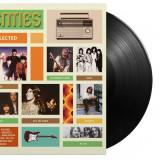
- A1: The Beach Boys - Good Vibrations
- A2: The Who - Pinball Wizard
- A3: Dusty Springfield - Son Of A Preacher Man
- A4: David Bowie - Love You Till Tuesday
- A5: Joe South - Hush
- A6: Marianne Faithfull - As Tears Go By
- A7: The First Edition - Just Dropped In (To See What Condition My Condition Was In)
- A8: Sly & The Family Stone - Underdog
- B1: Love - Alone Again Or
- B2: Traffic - Dear Mr. Fantasy
- B3: Bob Dylan - Subterranean Homesick Blues
- B4: Cher - Bang Bang (My Baby Shot Me Down)
- B5: The Band - Up On Cripple Creek
- B6: Ten Years After - I’m Going Home
- B7: The Mamas & The Papas - Monday, Monday
- C1: Tom Jones - It’s Not Unusual
- C2: Nina Simone - I Put A Spell On You
- C3: The Yardbirds - Little Games
- C4: The Animals- House Of The Rising Sun
- C5: The Crazy World Of Arthur Brown - Fire
- C6: Diana Ross & The Supremes - Love Child
- C7: The Blues Magoos - (We Ain’t Got) Nothin’ Yet
- C8: The Flying Burrito Brothers - Hot Burrito #1
- D1: Steppenwolf - Magic Carpet Ride
- D4: Bobbie Gentry - Ode To Billie Joe
- D5: Thunderclap Newman - Something In The Air
- D2: Rod Stewart - Handbags & Gladrags
- D3: Small Faces - Sha-La-La-La-Lee
Vol.2[20,80 €]
The Decades Collected compilations are part of the Collected compilation series, which is a collaboration between Universal Music and Music On Vinyl. The compilations bring together the biggest names of each decade, combined with forgotten hits and less discovered gems, giving the listener an experience of listening to their favourite tunes while uncovering new musical grounds at the same time.
Various Artists - Sixties Collected features Love “Alone Again Or”, Cher “Bang Bang (My Baby Shot Me Down)”, The Who “Pinball Wizard”, Diana Ross & The Supremes “Love Child”, Steppenwolf “Magic Carpet Ride”, The Animals “House Of The Rising Sun”, The Beach Boys “Good Vibrations”, David Bowie “Love You Till Tuesday”, Bob Dylan “Subterranean Homesick Blues”, Tom Jones “It’s Not Unusual”, Nina Simone “I Put A Spell On You”, Rod Stewart “Handbags & Gladrags” a.o.
Various Artists - Sixties Collected is available on black vinyl and includes an insert.
‘Wax Limousine’ is the third solo album from London’s Wesley Gonzalez. Set for release on 18th March via Moshi Moshi Records, the record is the follow up to last year’s critically acclaimed ‘Appalling Human’ and finds the indie stalwart delivering his most personal album to date, via a collection of 12 irresistible pop songs. The announcement arrives alongside the title track, which received its first play from Marc Riley on 6Music and its accompanying video, the second to be revealed from the record following ‘Greater Expectations’, released earlier this year. In support of the release, Gonzalez heads out on tour this November, headlining Electrowerkz on 25th and supporting Young Knives across the country (full dates below).
With its truly eclectic range of musical influences drawing on Gonzalez’s ever developing sonic palette, the album’s uplifting sound juxtaposes its themes, documenting the end of a long-term relationship and the overwhelming experience of dealing with a family member’s cancer diagnosis and subsequent treatment. ‘Wax Limousine’ navigates these hurdles with a razor-sharp wit and often brutally perceptive self-awareness, nowhere more so than on the new single. Inspired by both 'Faithless' by Scritti Politti and Aretha Franklin, it is Gonzalez’s version of an 80’s gospel song and, as he explains, written at a crucial point over the last 12 months
“This was written right after the breakup and cancer diagnosis. It was that early stage of a breakup where you can't really understand what went wrong for you or for your ex. There was resentment for the extreme change I had suddenly found myself in, and I was asking what it really was I did wrong. The title Wax Limousine came from old phrases like "as useless as an ashtray on a motorbike". I was trying to express how useless I felt within every situation that had just arrived at my doorstep.”
Wesley Gonzalez first made a name for himself as the leader of Let's Wrestle, whose tuneful and eccentric punk earned critical accolades and a devoted audience with three albums, including 2011’s Steve Albini produced ‘Nursing Home’. Gonzalez wasted little time forging his own path and quickly assembled a live band for his solo work, expanding upon the guitar-driven music of his former band, with an interesting concoction of classic 70’s pop, soul, and indie rock. Gonzalez released his debut solo record ‘Excellent Musician’ in 2017, then the follow up ‘Appalling Human’ in June 2020 through Moshi Moshi Records.
Remember Rainbow Bridge', the new album by Croatian Amor, is a homage to youth and the delicate metamorphosis that occurs as childhood trips into maturity. Focused on this tender flux, the songs on 'Remember Rainbow Bridge' are infused with the restless energy of adolescence and a dawning sense of mortality. From the sun-kissed title track, to the night burn and wet pavement of 'Paper Birds', monumental highs are shuffled with great lows that we perhaps feel most clearly and earnestly in those formative years. Since the earliest collages committed to tape under the name of Croatian Amor, Loke Rahbek's alias has at every step gravitated towards constant discovery and experimentation. The sound collages are still present while the unity of each song's construction now often conceals the juxtapositions and overlapping edges. Employing a medley of diffuse electronic music traditions, fantastical synthetic worlds are evoked and while 'Remember Rainbow Bridge' heavily relies on rhythmic structures to propel the compositions, Croatian Amor continues to tend a highly textured field in his own inimitable way. 'Remember Rainbow Bridge' is a celebration of the liminal space between phases of life, the chrysalis of youth. It is a record about coming to terms with our ever-changing place in the world, its title urging us to see the world with a child's eye, to never forget the miraculous at play only an arm's-length away. "This world as we see it is passing away"
In the past few years, Clarice Jensen has forged her own path. Recently, her focus has shifted to film scoring, successfully recording work for three feature films between 2020 and 2021. At the same time, Clarice continues to serve as artistic director of the American Contemporary Music Ensemble, while continually collaborating with an impressive array of musicians, such as Max Richter, Björk and Stars of the Lid, to name a few.
That being said, it was her 2019 tape release on Geographic North, »Drone Studies«, that initially caught the attention of a wider audience, with the work showcasing a compelling assembly of deeply immersive drones, and elegantly orchestrated compositions, in which neoclassical elements collide with electric density.
Three years later, the work has lost none of its innovative character and appeal. It also documents a turning point in Clarice's career, one where her classically trained background started to converged and overlap with her interests in improvisational electronics and drone music. As a result, the aptly titled »Drone Studies« shows Clarice at her most exploratory, introspective, and daring, channeling her areas of interest into a collage of richly textured timbers and cello movements of sublime tension.
Now for the first time, the original album can be experienced through an expanded vinyl reissue, mastered by Rafael Anton Irisarri, and carefully adjusted for vinyl by Ian Hawgood. The new reissue also features an additional track by Clarice called »Platonic Solids 2«, which was originally conceived around the same time as »Drone Studies«, and which has now been made available exclusively for the vinyl edition.
We hope that this new reissue will aid in introducing Clarice's groundbreaking »Drone Studies« to a new crowd of listeners through this expanded edition.
- A1: Queen - Somebody To Love
- A2: Billy Joel - Movin’ Out (Anthony’s Song)
- A3: Little River Band - Help Is On Its Way
- A4: Blondie - Atomic
- A5: 10Cc - Dreadlock Holiday
- A6: The Allman Brothers Band - Ramblin’ Man
- B1: Paul Mccartney & Wings - Mrs. Vandebilt
- B2: Lou Reed - Vicious
- B3: Ike & Tina Turner - Workin’ Together
- B4: Thin Lizzy - Dancin’ In The Moonlight (It’s Caught Me In Its Spotlight)
- B5: Free - Wishing Well
- B6: Grace Jones - La Vie En Rose
- B7: Bachman-Turner Overdrive - You Ain’t Seen Nothing Yet
- C1: The Moody Blues - Question
- C2: Rodriguez - Sugar Man
- C3: Patti Smith Group - Dancing Barefoot
- C4: Roxy Music - Dance Away
- C5: Mcguinn, Clark & Hillman - Don’t You Write Her Off
- C6: Elkie Brooks - Pearl’s A Singer
- C7: Rush - Closer To The Heart
- D1: Three Dog Night - Mama Told Me (Not To Come)
- D2: Gerry Rafferty - Right Down The Line
- D3: Dobie Gray - Drift Away
- D4: Minnie Riperton - Les Fleurs
- D7: Leon Russell - A Song For You
- D5: The Brothers Johnson - Strawberry Letter 23
- D6: Big Star - Thirteen
Vol.2[28,15 €]
The Decades Collected compilations are part of the Collected compilation series, which is a collaboration between Universal Music and Music On Vinyl. The compilations bring together the biggest names of each decade, combined with forgotten hits and less discovered gems, giving the listener an experience of listening to their favourite tunes while uncovering new musical grounds at the same time.
Various Artists - Seventies Collected features classic tracks and forgotten gems: Queen “Somebody To Love”, Billie Joel “Movin’ Out (Anthony’s Song)”, Lou Reed “Vicious”, Blondie “Atomic”, Paul McCartney & Wings “Mrs. Vandebilt”, Rodriguez “Sugarman”, Patti Smith Group “Dancing Barefoot”, Roxy Music “Dance Away”, Big Star “Thirteen”, Leon Russell “A Song For You”, 10CC “Dreadlock Holiday”, Grace Jones “La Vie En Rose”, Rush “Closer To The Heart”, Gerry Rafferty “Right Down The Line”, Minnie Riperton “Les Fleurs”, The Brothers Johnson “Strawberry Letter 23” a.o.
Various Artists - Seventies Collected is available on black vinyl and includes an insert.
- A1: Wham! - Wake Me Up Before You Go-Go
- A2: Huey Lewis And The News - Stuck With You
- A3: Bryan Ferry - Slave To Love
- A4: Frankie Goes To Hollywood - Relax
- A5: Pat Benatar - Love Is A Battlefield
- A6: China Crisis - Wishful Thinking
- B1: Duran Duran - Hungry Like The Wolf
- B2: Orchestral Manoeuvres In The Dark - (Forever) Live And Die
- B3: Thompson Twins - Hold Me Now
- B4: Nik Kershaw - I Won’t Let The Sun Go Down On Me
- B5: Level 42 - Take A Look
- B6: A-Ha - The Sun Always Shines On Tv
- C1: Simple Minds - Sanctify Yourself
- C2: Culture Club - The War Song
- C3: Propaganda - P: Machinery
- C4: Robert Palmer - Pride
- C5: Paul Young - Tomb Of Memories
- C6: The Christians - Forgotten Town
- D1: The Cure - In Between Days
- D2: Julian Lennon - Too Late For Goodbyes
- D3: Abc - When Smokey Sings
- D4: The Human League - (Keep Feeling) Fascination
- D5: Ub40 - If It Happens Again
- D6: Karel Fialka - Hey Matthew
- D7: Curiosity Killed The Cat - Down To Earth
The Decades Collected compilations are part of the new Collected compilation series, which is a collaboration between Universal Music and Music On Vinyl. The compilations bring together the biggest names of each decade, combined with forgotten hits and less discovered gems, giving the listener an experience of listening to their favourite tunes while uncovering new musical grounds at the same time.
Various Artists - Eighties Collected features original hits like Wham! “Wake Me Up Before You Go-Go”, Duran Duran “Hungry Like A Wolf”, A-HA “The Sun Always Shines On TV”, The Cure “In Between Days”, Pat Benatar “Love Is A Batteflield”, Culture Club “The War Song”, Robert Palmer “Pride”, Frankie Goes To Hollywood “Relax”, Simple Minds “Sanctify Yourself”, ABC “When Smokey Sings”, The Human League “(Keep Feeling) Fascination”, UB40 “If It Happens Again” and many more.
TANGERINE DREAM'S 'MALA KUNIA' IS BACK AVAILABLE ON VINYL -
'Mala Kunia', the mini-album & roughly Tangerine Dream's 140th release
was originally released in tangent with the bands' 2014 Australian
concerts - The album features seven new compositions including two of
which were co-composed by new band member Ulrich Schnauss together
with Edgar Froese
With this release, a new Tangerine Dream era began, "The Quantum Years", which
focused on a more back to basics approach to composition influenced by
quantum physics. The album itself is named after two Aboriginal tribes, which,
according to Aboriginal mythology, living a long time ago around Uluru, also
known as Ayers Rock. The Mala tribe lived on the sunny side & the Kunia on the
shady side of the rock.
Tangerine Dream have been a fundamental influence on electronic music since
Edgar Froese founded the band in West Berlin, 1967. Providing the groundwork
for multiple electronic music genres including ambient & electronica, inspiring
musicians & other art forms.
The group have also received seven Grammy nominations, written over 100
studio albums & were led by Froese, who developed an instantly recognisable
synth-based instrumental music based on a meditative musical experience that
came to prominence in the 70's & 80's.
Although Edgar Froese passed away in 2015 with a new phase in the bands
history only just beginning, he left direct orders to remaining members: "Carry on
& make my vision for the Quantum Years phase of the band happen!"
'MALA KUNIA' WILL BE ISSUED VIA KSCOPE ON GATEFOLD DOUBLE LP
20 Jahre nach Erscheinen ihrer Debütsingle 'Very Loud', wendet sich das sechste Album der in Stockholm ansässigen Band bestehend aus Sänger Adam Olenius, Gitarrist Carl von Arbin, Bassist Ted Malmros und Keyboarderin Bebban Stenborg Themen wie seelischer Unruhe und Älterwerden sowie der Zerbrechlichkeit der Liebe mit einem unerschrockenen Realismus zu, der nur erhellt werden kann von den himmlischen Melodien und einem Sound, der wärmer nicht sein könnte.
Produziert von Peter Bjorn und Johns Björn Yttling (Lykke Li, Franz Ferdinand, Primal Scream usw.), der auch die Produktion ihres gefeierten zweiten Albums 'Our Ill Wills' mit Indie-Hits wie 'Tonight I Have To Leave It' und 'Impossible' übersah, markiert House eine bewusste Abkehr von der gewaltigen und üppigen Atmosphäre von Ease My Mind aus dem Jahr 2017. So entschied sich die Band, die Songs diesmal live aufzunehmen und machte sich dabei einen Post-Punk-inspirierten Minimalismus zu eigen, der die rohen Emotionen eines jeden Songs noch verstärkte. Die überschwängliche Energie, für die sich die Band bei Headliner-Tourneen rund um die Welt, als Support von The Strokes und Depeche Mode und auf großen Festivals wie Coachella einen Namen gemacht hat, bleibt so auch auf Band greifbar.
Continuing with the theme of finding and releasing quality 21st century CD-only tracks on to 7” vinyl, Jai Alai now are proud to present their fourth release which showcases the stand-out tracks from the only two albums released under the name Sir Wick.
Chad ’Sir Wick’ Hughes is probably best described as a musician (trombone, piano, percussion), composer, teacher, adjudicator and clinician, but somehow that doesn’t seem quite enough to describe such a unique musical talent. Born in Detroit, and graduating from the same High School as Diana Ross, Paul Thompson, & Ron Carter, he went on to study composition and arranging, and holds regular clinics around the north and mid-west US states sharing his expertise.
The topside on this limited edition release is the lead track from his debut album “An Interpretation Of A Universal Language” (2007 Sir Wick Entertainment LLC) which features the sublime vocals of Sedalia Marie, a beautiful mid-pacer, whilst the other side “I Love You” features the mellow vocals of Anthony Saunders on a track from Chad’s opus work “A Tale Of Two Fools”, which he began in 1996 but only finally orchestrated and released as his second album in 2017 - a soundtrack featuring a full orchestra comprising eight woodwind parts, full strings, big band brass, and seven-piece rhythm section.
Originally intended as an operetta, it was evolving into something bigger; an opera, musical or stage play maybe, but he finally referred to it as a ‘novical’ (a musical novel), which best describes this story of a young musician falling in love for the first time. A biopic, maybe?
One could easily take these two fabulous tracks at face value as simply just another great double-sider, but isn’t it nicer to know the full story?
Steve Hobbs (Solar Radio, Totally Wired Radio)
Famed free jazz concert registration of an early New Direction for the Art performance. Recorded in 1971. Old-style Gatefold LP, with rare photographs & extensive liner notes by Alan Cummings.
The performance by Takayanagi Masayuki New Direction for the Art at the Gen’yasai festival on August 14, 1971 was an intense, bruising collision between the radical, anti-establishment politics of the period in Japan and the febrile avant-garde music that had begun to emerge a few years before. The ferocious performance that you can hear here was received with outright hostility by the audience, who responded first with catcalls and later with showers of debris that were hurled at the performers. Takayanagi though described the group’s performance to jazz magazine Swing Journal as a success, “an authentic and realistic depiction of the situation”.
In 1962, Takayanagi, bassist Kanai Hideto and painter Kageyama Isamu went on to form an AACM-style musicians’ collective called the New Century Music Research Institute. Every Friday, members gathered at Gin-Paris, a chanson bar in the fashionable Ginza district of Tokyo, to push the outer limits of jazz creativity.
But the pivotal moment for his music was the creation a new trio version of his New Directions group in August 1969, with the free bassist Yoshizawa Motoharu and a young drummer Toyozumi (Sabu) Yoshisaburō. Experiments eventually led to the creation of two basic frameworks for improvisation that Takayagi referred to as Mass Projection and Gradually Projection.
“La Grima” (tears), the piece that was played at the Gen’yasai festival, is a mass projection and listening to it, you can get a clear sense of what Takayanagi was aiming at. Mass projection involves a dense, speedy and chaotic colouring in of space that destroys the listener’s perception of time, and thus of musical development.
The ferocity of the performance of “La Grima” at the Gen’yasai Festival in Sanrizuka on August 14, 1971 was consciously grounded by Takayanagi in a particular historical moment, ripe with conflict and violence. A month after the festival, on September 16, three policemen would die during struggles at the site. This was the context that the three-day Gen’yasai Festival existed within. The line-up reflected the radical politics of the movement, with leading free jazz musicians like Takayanagi, Abe Kaoru, and Takagi Mototeru appearing alongside radical ur-punkers Zuno Keisatsu, heavy electric blues bands like Blues Creation, and Haino Keiji’s scream-jazz unit Lost Aaraaff.
New Direction for the Arts trio topped the bill on the opening day, playing an aggressive, uncompromising “mass projection” set of polyphonic improvisation. Alongside drummer Hiroshi Yamazaki and saxophonist Kenji Mori, Takayanagi soloed hard and continuously for forty minutes. This was performance as precisely calibrated metaphor: three musicians responding to the demands of the moment with instinctive force and fury, untethered by rules, leaderless yet not rudderless (the direction part of the group’s name was no accident). The piece was entitled La Grima – tears - and the fusion between the palpable anger of the performance and hopeless sadness of its title were also perfectly apt for the situation. This was a fight that the state was always going to win. Yet, by all accounts, the band’s set went down like a fart at a funeral. The band were showered with catcalls and debris throughout, and by chants of “go home” when the music finally came to an end.
However, looking back at the event in the year-end issue of Japan’s leading jazz magazine, Swing Journal, Takayanagi was surprisingly upbeat: New Directions brought a solid political consciousness to our performance and succeeded in an authentic and realistic depiction of the situation. But journalism revealed its superficiality in its inability to penetrate the core of the music. I don’t know much about anyone else, but we at least left behind a competent record.
It’s a fascinating statement in many ways. Perhaps on one-hand it can be read as stubborn, solipsistic and self-justifying, yet in conjunction with his statement in 1971 there are points that guide us towards an understanding of just what Takayanagi intended with his performance at the festival. As Kitazato Yoshiyuki has argued, it becomes an almost religious act, directed at the earth deities of the land. A union of anger, sorrow and malevolence that can be placed nowhere effective, all it can do is find expression and channeling. The forcible land seizures at Narita, the eviction of farmers from land that had been in families for generations, the destruction of communities: none of this can be prevented, not least by an artistic action. All that can be done is an attempt to mark the land itself, to soak it with the combined force of emotions and the volume of the performances, to bury something there that cannot be drowned out, even by the coming roar of jet engines.
Ferocious JP / US free jazz bomb. A rare meeting between the NYC free jazz scene and the Japanese free music scene. Old-style Gatefold LP, with rare photographs & liner notes by Alan Cummings.
Following hot on the heels of the first, mid-sixties generation of Japanese free jazz players like Kaoru Abe, Masayuki Takayanagi, Yōsuke Yamashita, Motoharu Yoshizawa, etc., an exciting second wave of younger players began to emerge in the seventies. Two of its leading members were the saxophonist Kazutoki Umezu and multi-instrumentalist Yoriyuki Harada. Both were post-war babies and immigrants to the city, Umezu from Sendai in the north and Harada from Shimane in the west. They first met as students in the clarinet department at the Kunitachi College of Music, a well-known conservatory in western Tokyo. Harada was already securing sideman gigs on bass with professional jazz groups and was active in student politics, making good use of his connections to set up jazz concerts on campus. It was around this time that the two began to play together in an improvised duo, with Umezu on clarinet and bass clarinet and Harada on piano. They also experimented with graphic scores and prepared piano.
These experiments eventually led to the creation of a trio, with a high-school student called Tetsuya Morimura on drums, that they decided to name Seikatsu Kōjyō Iinkai (Lifestyle Improvement Committee) in joking reference to the Marxist discourse of the student radicals of the time. Around 1973, Umezu and Harada decided to call it a day and go their separate ways. Umezu began playing with the Toshinori Kondo Unit and Harada with the Tadashi Yoshida Quintet. In 1974 Harada formed his own trio and began to play at jazz coffeehouses across Japan.
Then, in September 1974 Umezu travelled alone to New York, where he set about building connections with the loft jazz scene in the city. It was a fortuitous moment to arrive in New York. Rents were cheap in the Lower East Side, possibilities for squatting existed, so many musicians and artists had moved to the area. Umezu soon became known on the scene as Kappo and he started to make connections with some of the young musicians like David Murray, Arthur Blythe, and Oliver Lake. He recalls making the rounds of the lofts every evening, checking out the performances, and getting the chance to sit in with many groups including Juma Sultan’s Aboriginal Music Society and trumpeter Ted Daniel’s orchestra.
Things were going so well that Umezu wrote to Harada and invited him to come to New York. He accepted and arrived in the city in July 1975. Harada and Umezu took the opportunity to resume their artistic collaboration. Their first concert together in over two years took place on July 20th at another loft, Sunrise Studios at 122 2nd Avenue. Umezu remembers Sunrise as an unusually sunny loft with the rarest of things, a grand piano. He invited along Ahmed Abdullah, a trumpeter he had got to know while playing with Ted Daniel. Abdullah led his own group and was a long-term Sun Ra sideman. William Parker, one of the key figures in the loft jazz scene of the period, was on bass. Abdullah also brought along Rashid Sinan on drums. Sinan drummed in Abdullah’s units throughout the seventies, but he had also played on Frank Lowe’s immortal Black Beings album and collaborated with Arthur Doyle, playing on Doyle’s Alabama Feeling album. By all accounts the evening was a huge success, with speed and dynamism of Harada’s piano playing gaining him lots of support.
Since they had managed to save some money from their day jobs, Umezu and Harada decided to set up a recording session with the same line-up on August 11 at Studio We, where there was a well-equipped studio on the third floor. Umezu recalls the session as follows, Of course, we recorded our performances in one take, with zero retakes as far as I remember. On all the tracks we recorded, we moved as one unit, sharp and fast. That was the nature of Lifestyle Improvement Committee, New York Branch.
Umezu and Harada would later become known for the elements of parody and entertainment that they brought to their music, a freewheeling blend of pastiche, humour and on-stage performativity that paralleled the approaches of the Art Ensemble, Sun Ra, and Holland’s ICP. But here, on their first recordings, the humour element is not yet present. Instead, there is a febrile sense of joy in creation and connection. On the Umezu-penned “Kim”, for example, Harada opens the piece with a speedy exploration of the full-range of the keyboard, hitting hard on the bass keys to create a rhythmic bed out of which patterns begin to emerge. Umezu enters at a much slower pace, longer held notes that at first float weightlessly over the urgency of the piano before they begin in splinter and accelerate. When Parker and Sinan kick in, it’s a rollicking tempo with Parker plucking deep and hard and the left-handed Sinan skittering hard across the topside of his kit. Abdullah kicks in a glorious solo twelve minutes in, bright and breathy at once. The piece slows and grows more spacious towards the end, giving Parker a chance to showcase some arco work that shades beautifully into the air against Abdullah’s trumpet.
Closing out another breakthrough year, Anfisa Letyago has established herself as one of techno's most talked about names. An intrepid selector with a positive attitude regarding all things art and dancefloor related, the Russian born starlet has been making seismic waves within the industry for a number of years. Past releases have been featured on revered labels such as Carl Cox's Intec, Nervous Records, Hotflush and Rekids. Letyago returns now with a brand new project primed and ready for her own imprint - N:S:DA. Originally a celebration of her own dark-brooding style of techno, the label has entered a metamorphosis of sorts, welcoming in a host of established producers to remix the labels first releases.
The unapologetically raw house sound of DJ Seinfeld opens up the third and final remix EP, putting his own spin on Letyago's deep cut 'Insidia'. Cavernous synthlines occupy the track's main body, reminiscent of late seventies golden-era Chicago house. The remix is laced with hard hitting percussion and bubbling sound fx, a supercharged production primed for widespread club usage. Seinfeld welcomes us into the project with his trademark, rough and gloriously danceable sound palette.
Letyago follows suit by revisiting 'Nisida', reshaping the track into an electro-acid workout adorned with sharply tuned drums and heavily-treated shimmering vocals. The euphoria-inducing breakdown at the center point of the arrangement unfolds weightlessly, building into an energetic barrage of low-end frequencies. Letyago's ability to raise and release tensions within a track is truly exceptional, a technique she has perfected over several years of DJing, witnessing at first hand the importance of building up to moments of high intensity on the dancefloor for maximum impact.
Drum and bass royalty, Calibre offers his dark and brooding interpretation of 'Don't Hide'. The original track has been wickedly morphed into an after-dark roller fit for extensive basement usage. Commanding and minimal, Calibre's remix has been executed with devastating precision, perfectly balanced space-age pads glide seamlessly across the disjointed rattle of breakbeats and white-noise imbued hi-hats. A painter, fine artist, multi-instrumentalist, writer and producer, this multifaceted Belfast producer never ceases to disappoint.
Closet Yi concludes the compilation with a slow burning techno metamorphosis of Letyago's 'Listen'. Subterranean and primal, the track unfurls from its ambient beginnings into a low-end focused four-to-the-floor rhythm steeped in misty reverb and distant chords. Based in Seoul, South Korea, Yi has played at some of the most respected underground clubs in the capital, including Cakeshop, Faust, Pistil, Contra and more. A welcome addition to the remix project and a seductive end to this shadowy collection of tracks.
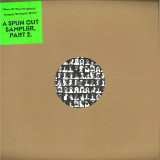
Spun Out Agency is honoured to present ‘More of that Frightful Oompty Boompty Music’, a compilation dedicated to the Guv’nor himself Mr Andrew Weatherall who should need no introduction on these pages. Released on vinyl in two beautiful parts, the first drops on April 15th with the second following two weeks after.
‘More of that Frightful Oompty Boompty Music’ (yes we are going to write that out every time we talk about it in this communique) showcases a selection of the shining greatness from the agency’s roster. Paranoid London, Fantastic Twins, Mehmet Aslan, Autarkic, Ruf Dug, Sean Johnston, and Manfredas gift exclusive tracks which highlight the sublime acid, techno and house sound that Weatherall would have described as “oopmty-boompty” music.
Spun Out is a London-based artist booking agency which has been run by Caroline Hayes for over 20 splendid years, that looked after the life and times of Andrew Weatherall alongside his partnership with Sean Johnston under their A Love From Outer Space moniker, and the likes of Optimo (Espacio), Ivan Smagghe, Josh Caffe, Man Power, Body Hammer, Kiara Scuro and many more artists, doing it differently.
Kicking off the A-side of the first record is Hardway Bros’ (aka Sean Johnston) previously unreleased remix of We Are The Axis by The Asphodells, the duo consisting of the Andrew Weatherall and former Battant member and Spun Out talent Timothy J. Fairplay. An energetic techno stomper with percussive rhythms, this exclusive remix offers the ideal tantalising dose to tease any dancefloor. The vocals and synth layers give it a punk rock approach, referencing the multi-genre essence of Weatherall’s taste in music.
Tel-Aviv-based Autarkic’s Sleepover closes the A-side with a chuggy lullaby, one that is certainly unsuitable for putting a baby to bed, given its intricate acid lines of total hypnosis. Following on the B-side is Manctalo Banger, a house bop by the Manchester-via-Ibiza computer game nerd and vinyl digger Ruf Dug, and Shizowaves, Turkish-born Basel-based Mehmet Aslan’s soulful touch to the compilation, bringing Middle-Eastern percussive melodies and catchy basslines.
The second record is introduced by Paranoid London, with a Spun Out dedicated acid techno banger appropriately titled Spinning Out and Fantastic Twins’ EBM track Kali’s Tongue Was A Weapon. On the B-side is Lithuanian chug legend Manfredas’ Hfuhruhurr, and Naum Gabo, who closes the compilation with the chaotic analogue-synth frenzy, Cold Sold. The name Naum Gabo may evoke the pioneer of Russian constructivism, who rose to fame thanks to his crazy kinetic sculptures. However, here it manifests as one half of Spun Out’s Optimo duo Jonnie Wilkes (JG Wikes) and James Savage. The duo’s impeccable manipulation of electronic hardware couldn’t give a better homage to him.
Some highlights for Spun Out artists this summer include 9 acts from the roster playing at Houghton Festival, Paranoid London’s show at Sonar Festival, Love International Festival and Ransom Note’s festival with Optimo Watching Trees.