
Buscar:no protection
Features
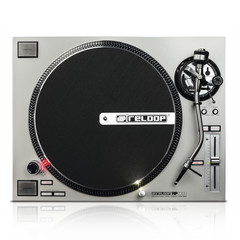
NEW features of the MK2 version
Built for the club: Rigid chassis construction with an even heavier design with additional reinforcements made of metal, rubber and molding compound for high vibration damping and isolation
More powerful starting torque (adjustable from 2.8 - 4.5 kg/cm)
Fine-tuned motor control for further optimization of wow and flutter and rotation
Newly developed, height-adjustable tone arm base (VTA) and Anti-Skating control
Particularly light weight and rigid, satin aluminium material used for tone arm pipe
Pitch scale for precise adjustments
Optional ground terminal offers additional protection in complex club & studio environments
Easily replaceable, freely rotatable LED needle light in new aluminium design
High-quality and hard-wearing silver metallic finish
Quartz driven DJ turntable with upper-torque direct drive
Adjustable stop speed (0.2 - 6 sec.)
Precise control of motor with 3 speeds (33 1/3, 45 & 78 RPM)
Precision manufactured, die cast aluminium turntable
Rubber inlays for reduction of vibrations and background noise
Statically-balanced universal S-shaped tonearm with hydraulic lift and anti-skating mechanism
Universal connection for pickup systems (SME)
Pitch range +/-8 %, +/-16 %, +/-50 % (Ultra Pitch)
Quartz lock
Additional start/stop button for vertical positioning
Reverse function: switch for forwards and reverse operation
Recessed connection cavity for easy installation in cases & seamless adjustment
Phono and line out (no grounding required)
Removable mains and RCA cable
Safety mains switch
Shock-absorbing feet against vibrations
Technical Data
Turntable:
Type: direct-drive turntable
Drive: quartz driven upper-torque direct drive
Motor: 16-pole, 3-phase, brushless motor
Turntable speeds: 3 speeds, manual (33 1/3, 45, 78 RPM)
Starting torque: 2.8 - 4.5 kg/cm (adjustable)
Adjustable stop time (0.2 - 6 sec.)
Start-up time / change to RPM: 55dB (DIN-B)
Brake system: electronic brake
Platter:
Material: die cast aluminium
Diameter: 332 mm
Weight: approx. 1.5 kg
Tone arm:
Type: universal, statically balanced, S-shaped
Effective length: 230 mm
Overhang: 15 mm
Tracking error range: < 3°
VTA setting range: 0-6 mm
Useable weight of pickups: 3.5~8.5 g (incl. headshell 13~18 g)
Anti-skating range: 0 - 3 g
Effective tone arm mass: 30 g
Connections: 1x Phono/Line Out (gold-plated), 1x GND earth connection
General:
Power supply: AC 115/230 V, 60/50 Hz (EU/US), AC 100 V, 50/60 Hz (JP)
Power consumption: 13 W
Dimensions: 458 x 354 x 144,6 mm
Weight: approx. 11.7 kg
Accessories included: turntable, slipmat, LED needle light, counterweight, PHONO Cinch cable with earth, AC mains adapter, operating instructions

The UDG Ultimate Headphone Jack Adapter Screw 3.5mm (1/8”) to 6.35mm (1/4”) connect your headphone’s mini-jack plug to a larger stereo jack output. It has a grippy surface to help you grab hold of it. The gold-plated adapter provides a solid connection without compromising sound quality.
EAN 8718969214834
Color Gold
Weight 0,01 kg / 0.0198 lbs
Outer Dimensions (W x H x D) 4.5 x 1.0 x 1.0 cm | 1.77 x 0.39 x 0.39 inch
Inner Dimensions (W x H x D) Not Applicable
Material Metal
Protection Gold-plated contacts
Adapter Stereo Mini Jack F / Stereo Jack M (Screw-in)
Nice grippy surface to help you grab hold of it
Extra's High-end realisation
Stereo jack adapter - 3.5mm (1/8 inch) mini jack socket stereo - 6.35mm (1/4 inch) jack plug stereo
Fits Fits correctly on most headphones - Just screw and play
Please note that this 3.5mm female ports only compatible the 3.5mm male cable with screw threaded
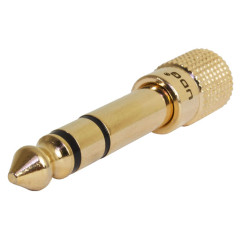
The UDG Ultimate Headphone Jack Adapter Screw 3.5mm (1/8”) to 6.35mm (1/4”) connect your headphone’s mini-jack plug to a larger stereo jack output. It has a grippy surface to help you grab hold of it. The gold-plated adapter provides a solid connection without compromising sound quality.
EAN 8718969214834
Color Gold
Weight 0,01 kg / 0.0198 lbs
Outer Dimensions (W x H x D) 4.5 x 1.0 x 1.0 cm | 1.77 x 0.39 x 0.39 inch
Inner Dimensions (W x H x D) Not Applicable
Material Metal
Protection Gold-plated contacts
Adapter Stereo Mini Jack F / Stereo Jack M (Screw-in)
Nice grippy surface to help you grab hold of it
Extra's High-end realisation
Stereo jack adapter - 3.5mm (1/8 inch) mini jack socket stereo - 6.35mm (1/4 inch) jack plug stereo
Fits Fits correctly on most headphones - Just screw and play
Please note that this 3.5mm female ports only compatible the 3.5mm male cable with screw threaded

After making waves with her critically acclaimed debut EP Sometimes I Forget You're Human Too, Bored at My Grandmas House, AKA Leeds-based Amber Strawbridge, is releasing her debut album “Show & Tell” on 7th June via CLUE Records/EMI North. The title track is out now with the reveal of the record - ‘Show & Tell’ is a breezy track which meets at the intersection between dream-pop, bedroom-pop and shoegaze, the sprightly guitar work echoing the droll lyrics and themes. It’s a hooky song which lays bare difficulties with trust, and building walls for self-protection. As Amber explains: “Show & Tell is quite a tongue-in-cheek song about me being the opposite of an open book and all the little specific things about me that I sometimes wish were different. Overall it’s about me being a guarded person and fearing the possibility of having to be vulnerable and realising that vulnerability is actually a beautiful thing and something I shouldn’t be so scared of.”
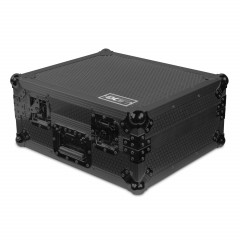
UDG Ultimate Flight Case Multi Format Turntable Black MK2 not only transport your complete set up easily & securely, but also facilitates devices to be setup within minutes. With these premium features incoporated, the UDG Ultimate Flight cases provide premium professional quality in a very stylish modern black colored combination.
Fits: Technics SL-1200MK7, Reloop RP-8000MK2, Denon DJ VL12 Prime, Pioneer PLX-1000, Audio Technica LP120XUSB, or similar size turntables
Specification
Specification
EAN 8718969212762
Color Black
Weight 7,80 kg / 17.16 lbs
Outer Dimensions (W x H x D) 51.1 x 42.6 x 23 cm | 20.1 x 16.7 x 9.1 inch
Inner Dimensions (W x H x D) 45.1 x 38.6 x 7.8 cm | 17.7 x 15.2 x 3.1 inch
Material Heavy duty construction of 9 mm thick plywood
Protection Extra-wide black solid aluminum profiles
Secure stacking due to stackable ball corners
Sturdy construction
Full padded interior keeps controller well-protected
High density diamond embossed EVA foam protective padding
Extra's Laminated in a black finish with a honeycomb/hexagonal "Stage Grip" pattern
Fits Technics SL-1200MK7, SL-1200GR, SL-1200GAE, SL-1210GR
Pioneer PLX-1000
Denon DJ VL12 Prime
Reloop RP-8000MK2, RP-7000MK2, RP-4000MK2, RP-2000MK2, RP-1000MK2
Stanton ST-150, STR8.150, T.52, T.55 USB, T.62, T.92 USB
Vestax PDX-3000
Numark TTX
Audio Technica LP120-USB, LP1240-USB, LP120XUSB, LP1240-USBXP, LP140XP, LP3, LP5, LP7, LPW40WN
American Audio Power Drive 2.2
Mixars LTA, STA
or similar size turntables
And accessories

10
Nachpressung/Neuauflage des ausverkauften SMILE-Debuts vom letzten Jahr! Neue Vinylfarbe ist Solid Yellow, als Extra oben drauf gibt es ein 20seitiges, von Sängerin Rubee Feagan gestlatetes SMILE-Zine! SMILE zeigen mit ihrem hervorragenden Debut PRICE OF PROGRESS leichtfüßig auf, dass Post Punk im Jahre 2023 noch immer erfrischend klingen kann. Sie nehmen ihre Referenzen nicht als Dogma, bleiben experimentell, eigensinnig. Erzählerisch, eingängig, rough und anschmiegsam verschmelzen dabei die feinsinnigen, poetischen Beobachtungen von Sängerin Rubee True Fegan (USA) mit dem versierten Sound einer Band, die von Produzent Olaf Opal genau dahin gebracht wurde, wo sie hingehört: an den Startblock innovativer, kluger und sinnlicher Gitarrenmusik. In PRICE OF PROGRESS manifestiert sich das Zusammenspiel aus musikalischem Sturm und Drang und der Reife einer reflektierten Erzählperspektive. Was hier entstanden ist, klingt nun, 2023, in seiner jugendlichen Frische durchaus nach einem Debut - gleichzeitig aber nach dem Werk einer erfahrenen, über lange Zeit gewachsenen Band. Nur deutsch klingt es nicht, was sicher im Wesen von Sängerin Rubees True Fegans Heimat Albuquerque (New Mexico) begründet liegt, gleichsam aber in der Vielseitigkeit, die sich SMILE erlauben - und ihrer einhergehenden Virtuosität an den Instrumenten. SMILE versuchen sich dabei - einem Post-Punk britischer Machart folgend - durchaus in homogener Geradlinigkeit (Herrengedeck), lassen Kühle zu (Machine Dreaming) und folgen einem düsteren Ernst (Säge). Diese Facetten aber vermengen sich mit einer heiteren Experimentierfreude (Stalemate, Produce, Hungry Ghosts), mit Humor (Doohickey), mit verträumter Beschwingtheit (Commuter) und Genresprengender Pop-Af finität (Protection). So zeigt sich dieses stilsichere Album in einer Vielseitigkeit, die heute selten zu finden ist - und klingt trotzdem wie aus einem Guss. Die aus der Hüfte geschüttelte Dramaturgie ist dabei Paradebeispiel für die Innovation einer der spannendsten neuen Gitarrenbands, die nun auf dem Indielabel Siluh (Wien) eine Heimat zwischen Köln, Bonn und Albuquerque gefunden hat. Wahnsinn! (Hendrik Otremba/Messer).

13
If you can judge an artist's quality by the company they keep, then FaltyDL is up there with the best of them. The label history of the producer known to his friends as Drew Lustman reads like a "who's who" of 21st century electronic music imprints - Ninja Tune, Unknown to the Unknown, Planet Mu, Studio Barnhus, the list goes on.
WithIn the Wake of Wolves, we can now add Central Processing Unit to this illustrious roster. The Sheffield label joins the party at a notable juncture - while FaltyDL has kept up an impressive clip of releases throughout his career,In the Wake of Wolvesis both the NYC-based producer's first LP for two years and his first full-length release away from his own Blueberry Records for almost a decade.
In the Wake of Wolvesproves to be both a great match for CPU and also further evidence of the label's burgeoning sonic palette. While CPU has built its reputation on top quality electro joints, recent releases have delivered adventurous electronica experiments (Proswell'sPeople Are Giving And Receiving Thanks At Incredible Speeds), hard-wired breakbeat techno (Baby T'sI Against I) and golden-age synth explorations (twenty-fifth anniversary reissues of Bochum Welt'sDesktop RoboticsandFeelings on a Screen, both of which first emerged via the legendary Rephlex Records).In the Wake of Wolvestakes things further still - this is a brilliantly genre-voracious record, one which marries the rhythmic cut-and-thrust that we have long known FaltyDL for with all manner of adventurous stylistic choices.
Those familiar with the FaltyDL experience will recognise the trademark blend of synthetic grit and harmonious softness in album opener 'I Need You'. This could pass for Four Tet or even Hannah Diamond at points, the steady build of pulsing synths and looped vocals recalling a more mysterious version of the PC Music sound. 'I Need You' stands shoulder-to-shoulder with any of FaltyDL's other great atmospheric album openers - no small feat given the competition. 'Further', the following number, is yin to 'I Need You's yang. This is a pulsating track which gleefully skitters between machine-funk, tubing darkside bass and breakcore-adjacent drum programming, all of which is peppered with some genuinely beautiful work in the higher synths.
'Further' sets the scene for several of the more club-facing cuts here. 'Minds Protection' similarly features all manner of strange percussive sounds to surprise the ear, and it also boasts a thrilling mid-section in which the bottom falls out the track to incorporate a short snippet of blown-out junglism. With its tunnelling low-end and clattering drums, 'Full Spectrum' kicks off a delightful run of grime-influenced joints which take cues from Mr. Mitch, Logos and many of those other producers who took the Eski sound to exciting new places in the 2010s. 'Forget Me Not', the album's longest track which is placed three spots from the end, feels like the record's climactic point - a pitter-patter post-house joint that has a hint of Caribou in its DNA, it'll take the clubs by storm.
But as much as FaltyDL may consistently bring the heat in terms of the beat programming, the thing which has long marked Lustman out as a special talent is the musicality of his compositions. No matter how much drums clatter or bass bangs, FaltyDL always hooks the ear back in with a sonorous synth or pleasing nugget of melody. Nowhere is this more apparent than onIn the Wake of Wolves' more weightless numbers, each startling in their prettiness. 'Half Spectrum' is a new-era beat track packed full of ear candy; the keening keys of 'GasGas' are potent with feeling; and on the album's closer, the evocatively-titled 'Mila Stans In A Meadow For The First Time Eating Strawberries', we get a gorgeous synth vignette that joins the dots between the modern mastery of Yung Sherman and the most emotionally affecting moments of Aphex's Twin's catalogue.
At once wistful and hopeful, archival and futuristic, FaltyDL's brilliantly unpredictableIn the Wake of Wolvesis a feather in the cap for both this seasoned producer and the Central Processing Unit label.
RIYL: AFX, Bochum Welt, Mark Fell, Mrs Jynx, Boards of Canada

10
Earth, Our Planet?”: A call for environmental awareness. This time, Pedro Vian - the founder of Modern Obscure Music - presents his fourth solo album (following his 2020 release, "Ibillorca"). Due for release in spring 2024, "Earth, Our Planet?" promises to immerse us in a moving odyssey, crossing the boundaries of musical genres to provoke an urgent meditation on the protection of our planet. On this occasion Vian has composed the album influenced by the myth of the eternal return, the compositions are long and repetitive, generating states of pure trance.
Pedro Vian, singular for his fusion of genres and styles, ventures into even more complex territories in "Earth, Our Planet?". From the first listen, it is evident that this work treads the line of convention and breaks the boundaries of electronic and experimental music with artistic dexterity. The album weaves together texture, hypnotic rhythms and melody. Each track reveals his distinctive ability to create immersive landscapes, guiding the listener into deep emotional introspection. This is not just music; it is a transformative experience.
The beauty of this album lies not only in the musical vision. The album features high-calibre collaborations that add layers of creativity and elegance. Trumpeter Pierre Bastien, whose early productions left an indelible mark on Aphex Twin's Reflex label, infuses "A Day in Rotterdam" with a unique emotional resonance. Violinist, Asia, renowned for her avant-garde approach and ability to conjure unique landscapes, elevates the album's opening tracks "Urobóros" and "Les Tambours Subterraniens". Their skill and sensitivity intertwine perfectly with Vian's artistic vision. In addition, Italian producer Daniele Mana, with whom Pedro Vian collaborated closely on his previous album "Cascades", known for his experimental approach and talent for creating extraterrestrial atmospheres also contributes to "Les Tambours Subterraniens". His artistic perspective adds more complexity and texture to the piece, pushing the boundaries of contemporary electronic music. There is also a collaboration with Raül Refree, an artist with whom Vian worked with last year, presenting “Font De la Vera Pau”, an album that The Guardian defined as "a wonderful piece of electroacoustic music, a captivating mix of strings and analogue synth drones which sometimes flirts with Alice Coltrane-ish spiritual jazz". With "Earth, Our Planet?", Pedro Vian not only offers up some of his best work to date, but it is also a call to reflect on our relationship with the natural world. As a part of a planet where environmental awareness is more crucial than ever, he urges us to protect and preserve our world as an extension of ourselves. This extensive work is a statement, Vian addresses the notion that too often we prioritise immediate needs over the well-being of the planet. It highlights the fact that we often consider the Earth as a possession when, in reality, we are but a part of it.

- Reaktor (1983)
- Unser Abv (1983)
- Stehen Bleiben Ist Verrat (1983)
- Warum (1983)
- Can't You See (1983)
- Die Angst Der Allgemeinheit (1983)
- Rosa Beton (1983)
- Wir Glauben (1983)
- Maschinengewehr (1983)
- Scheiss Stadt Berlin (1983)
- 16: Jahre Im Exil (1983)
- Müde (1983)
- Reaktor (2022)
- Unser Abv (2022)
- Stehen Bleiben Ist Verrat (2022)
- Warum (2022)
- Die Angst Der Allgemeinheit (2022)
- Rosa Beton (2022)
- Wir Glauben (2022)
- Maschinengewehr (2022)
- Scheissstadt Berlin (2022)
- 16: Jahre Exil (2022)
- Müde (2022)
23
A tape with the rather factual title “Rosa Beton – Demo 83” gained currency in 1983, albeit among an inner circle, or as it says in a lexical note on the band: Rosa Beton “achieved beyond-regional fame in and around Berlin”. Unlike some other bands that were merely rumoured to exist, this name was widely recognized in the East Berlin punk scene and the demo tape was received with some delight. It had been made in the suburb of Hönow, or more precisely in music enthusiast Thomas Wagner’s childhood bedroom. The band was less a classic combo than a short-lived pro- ject run, for a brief underground season, by 16-yearold Wagner and Ronald Mausolf, who was known as “Mausi” and had just come of age. An old clunker of a four-track machine served as an impor- tant nutritional supplement for the duo, allowing bass and vocals to be overdubbed separately. For a project without a professional background, especially for an illegal punk band in the East, this conventional procedure was clearly exceptional. Punk bands would usually record vocals and instruments simultaneously and on a cassette recorder. Recording gear was not readily available in the GDR, and it was disproportionately or prohibitively expensive. The adversities that had to be overcome in starting up a punk band were certainly challenging for teenagers. Rooms for rehearsals were few and far between despite wide- spread vacancies, and public space was taboo thanks to the state. Concerts, whether in flats and studios or under the protection of the Protestant church, remained rare events and, moreover, risky; starting with the party-loyal neighbour alerting the People’s Police as if there were a war on, to the ever-present “digging activity” of the Stasi. The only planned appearance by Rosa Beton never materi- alised. Whether it was the goddesses of fate who averted a show or the Stasi who prevented it can no longer be reconstructed. In any case, Rosa Beton never played live and thus joined a long list of GDR punk bands that, in the early 1980s, did not make it out of illegality into a public sphere, not even into a conspiratorial one. ausi compensated for the band’s lack of live performances by at least distributing a few copies of the demo tape. Among others, at the Kult, the Kulturpark Plänterwald, which provided an initiation field for the Berlin punk scene and a hotspot with a pull beyond it. The punks adapted the Kulturpark to their understanding of an amusement park.
They would thrash about to Schlager music and pogo to third-rate Ostrock bands, make fun of overwhelmed provincials, hang out and exchange half-baked ideas as superior knowledge. In between, the punks liked to ride the chain carousel, there was a certain liking for chains. The Kulturpark management made quite a fuss about the riot the punks put on. Initially they were banned from the chain carousel, then, when the punks switched to bumper cars, they were banned from the bumper cars, then from the roller coaster, and finally from the ghost

4
There can be no doubt about it, when it comes to making speakers move, Leo Cap is something of a scientist; lurking around the Deep, Dark & Dangerous realms. Following a number of EPs and track features on DDD, ‘Underground Business’ is his debut full-length album. 11 slices of audio genius, the kind of tracks that make you question your very sanity when they drop.
Leo Cap’s style is well represented across this release, and as an album is the perfect showcase of his sound. One which is known for pushing the physical boundaries to which you can exert sound systems and speakers. Literally pushing insane amounts of air when these basslines drop.
The album tells the story of Leo Cap the artist, creating beautiful things only to destroy and break them. Not only is the music a parallel for his life, it is also a form of armour, pieces collected from here and there. A protection from a paranoid existence in the dark and murky underground.
This music is his kind of Undergound Business, “it’s really deep, it’s really dark and it’s really fucking dangerous man”. All the demons, all the darkness, and also all the fun. But there are no mistakes, this is how things are meant to be, life is is both dark and light, with music as it’s abstraction.
You can turn on the music and feel these things, this is real, this is Underground Business

10
Flora Yin Wong’s ravishing interiority finds lucid expression on an absorbing second album for Modern Love, manifesting her instrumental storytelling in a syncretic bind of supernatural themes with hyperrealist, concrète sound design.
Through ten parts, Flora crystallises the ennui that followed an uncanny, disorienting trip to East and Southeast Asia. “On an unexpected stopover in Hong Kong after five years away, my friends took me to a Bazi reader one night - something I was curious about, but much of a ritual for them - ” Flora recalls. “My father told me that when I was born, he had obtained an auspicious reading that since stayed like a guiding talisman with me. It was almost past midnight but people were still lined up, rather shaken and visibly upset, to see the old man. He had kind eyes and asked me why I was there and I said I was at a crossroads. He asked me my time and date of birth, and told me to pick one of his four little white canary birds as a vessel for divination.”
This was the final stretch of an ultimately aimless few months across the continent, including a 20 year overdue return with her father to his adoptive family in his hometown Kuala Lumpur - for many reasons, ended up as a strange and uncanny trip. She spent solitude in a haunted house during the quiet snowfall of Kyoto, where she might have offended some spirit... and nights in mountain temples with South Korean monks, and an equally strange feeling return to the Island of the Gods.
“It culminated in what felt like a final disillusionment with Asia - sudden deaths and a breakdown in beliefs - somewhere I never really have or will be able to connect with. The process of the reading summoned a final blow to my gut - an overwhelming sense of rootlessness, and understanding that all there is is emptiness and entropy. No birth-divined protection, just a measurement of the night sky based off nothing and everything.”
Heavy with a sense of nightmarish dissociation and grief, Flora read about Giuseppe Tartini’s ‘Violin Sonata in G Minor’, aka the Devil’s Trill Sonata, a notoriously tricky c.18th composition which attempted to transcribe music heard in a dream, which the composer felt he could never fully bring into reality. It’s this soporific motif that binds and underpins ’Cold Reading’, finding Flora chasing the dragon of fleeting fantasy through passages of etched melancholy, pinched with hypnagogic jerks that linger in the memory.
From her use of the ‘Devil’s Trill’ Sonata in ‘All My Dreams are Nightmares’ through evocations of subtropical humidity in the Bryn Jones-esque, resonant hand-played percussion of ‘Konna’ and ‘Banjar’, to a breathtaking dreampop denouement ‘Nectar Dripping’ and the Enya-like lush of ‘Beautiful Crisis’, Flora blooms her ideas with an openended ambiguity so often missing from so called Ambient music, ushering the listener into a soundworld that disturbs and displaces, just as much as it calms.

- A1: I Still Can't Believe You're Gone – Willie Nelson
- A2: Love Sick - Bob Dylan
- A3: We Had It All - Donnie Fritts
- A4: Magnolia - J.j. Cale
- A5: In The Rain - The Dramatics *
- B1: By The Time I Get To Phoenix – Nick Cave & The Bad Seeds
- B2: I Don't Want To Talk About It - Crazy Horse
- B3: Dark End Of The Street - Ry Cooder
- B4: Kind Woman - Percy Sledge
- B5: Wait And See - Lee Hazlewood
- C1: Strong As Death (Sweet As Love) - Al Green
- C2: Shades Of A Blue Orphanage - Thin Lizzy
- C3: Heart Like A Wheel - Kate & Anna Mcgarrigle
- C4: When My Mind's Gone - Mott The Hoople
- D1: I'll Be Long Gone - Boz Scaggs
- D2: The Coldest Days Of My Life Pt 1 – The Chi-Lites
- D3: Roll Um Easy - Little Feat
- D4: Brokedown Palace - Grateful Dead
- D5: I Feel Like Going Home - Charlie Rich
19
Following on from the Primal Scream frontman’s brilliantly-received previous release for Ace, ‘Sunday Mornin’ Comin’ Down’ (accolades included being short-listed for Rough Trade’s compilation of the year), Bobby Gillespie brings us another slice of the music that soundtracks his life. And in this case, it’s his touring life. Drawing on the experience of ‘the way that the noise and clamour of the road can tire you out, wear you down and frazzle your nerves to shattered fragments of jangled exhaustion’, these are the records Bobby turns to for solace, for comfort, for empathy and for resourcefulness.
The compilation features an introduction from the man himself, talking us through his personal choices as though he’s sitting cross-legged on the carpet going through records with you in his lounge. Also long-time cohort of the band, Kris Needs has written extensive liner-notes, serving up an intensive track by track insight and analysis.
Titled after and kicking off with the Willie Nelson track of the same name, ‘I Still Can’t Believe You’re Gone’ leads us through a darker and deeper exploration than its predecessor, featuring Nick Cave’s funereal version of ‘By The Time I Get To Phoenix’ and Ry Cooder’s sparse and beautiful reworking of ‘Dark End Of The Street’. And we get there via such greats as Bob Dylan, JJ Cale, Donnie Fritts, Crazy Horse, Lee Hazlewood, Al Green, Thin Lizzy and so many more.
In Bobby’s own words: ‘These songs are soul savers to soothe frayed and battered nerves and to ease and settle the heart. They work on me like medicine every time. I would like to share this wonderful music that has given me strength, joy and inspiration over the years with you the listener, so that you too might get the same feelings of protection and inspiration that I do whenever I listen to these songs. We're all travellers on some kind of road through this life, and we all need respite from time-to-time - the music on this compilation is soul food of the highest order - I hope you enjoy it.’.

9
“Praying to god whether or not I believe there is one” - PH
Petra Hermanova and Unguarded announce In Death’s Eyes (UGD-009), the debut solo LP under the artist’s own name. This LP features nine tracks utilizing folk and sacred musical technique and instrumentation which drift between song and heavy distorted drones. In a disciplined display of beauty, pain, and astute musicianship, Hermanova brings forth a notable accomplishment of an album. In Death’s Eyes confronts death from start to finish with a rare fervor that leaves one feeling it was utterly necessary for Hermanova to produce - to survive. The transcendent impulse, or the influence of religious music, bears heavily on Hermanova’s compositions in her choir arrangements, but is most apparent in her use of pipe organ, opening the record on Black Glass. Having written organ parts for a significant portion of the record, she sought out the renowned organist Denny Wilke to record with her in the Merseburg Cathedral. Captivated by Wilke's profound skill as a player and knowledge of the Ladegast organ, Hermanova invited him to collaborate on Two Deaths where he delivers an impressive improvisation. While religious music offers spiritual solace from grief, folk speaks to the human and earthly as told by the individual, be they songs of suffering or joy, sin or salvation. To Hermanova, the clean promise of liturgical music is not enough to alleviate the blunt pain of grief. Contrasting the spiritual is the voice of the individual sufferer - the folk musician. For Hermanova, the autoharp embodies this contrast. The autoharp, a familiar sound in Appalachian folk music since its mass production in the late 1800’s, is an affordable instrument designed for the unskilled player. It is the antithesis of the organ which is costly, gargantuan, reserved for skilled players, and quite literally a part of the church. Through In Death’s Eyes the sounds of transcendence blend with the worldly, the tension between them poignantly expressing Hermanova’s struggle for spiritual resolution against the reality of death and loss. Like Hermanova’s lyrics, the artwork, conceptualized by Enes Güç and Evelyn Bencicova, is riddled with symbolism and allusion. We find Hermanova on the cover, digitally rendered. Reclining like an anatomical Venus, her vital organs are exposed, suggesting she is denied a transcendent death and is instead immaculately human. Bearing a sickle, her legs are metallic like armor, both symbols of protection. We see here in this image, as we hear in the nine tracks of IDE, the metaphoric state of someone ravaged by loss, choosing to tear herself open in an attempt to heal. - Reece Cox Petra Hermanova is a musician and visual artist based in Berlin. In 2018, Hermanova began working with the autoharp, which has since become the central pillar of her musical practice. Drawing inspiration from folk, medieval drone, and contemporary textural expressions, as well as Appalachian autoharp music, she creates emotionally driven arrangements accompanied by vocals. In her lyrics, she speaks to the fragility and tenderness of the human condition, religious conceptions of death, and introspective landscapes through narrative and symbolism. Hermanova debuted live at the Berliner Festspiele event The Sun Machine is Coming Down, performed at Trauma Bar und Kino accompanied with her choir, and recently took part in Sorour Darabi’s durational performance From the Throat to the Dawn. Her debut solo album, In Death’s Eyes, is set for release in 2023 on the art platform and label Unguarded. The album, where she wrote for the autoharp, pipe organ, solo voice and choir, features the acclaimed organist Denny Wilke playing the 19th century Ladegast organ of the Merseburg Cathedral. She has toured internationally with previous projects, including extensive sound and visual collaborations with Jon Eirik Boska (Hydropsyche) as well as with her award-winning band Fiordmoss. She was recently announced as a SHAPE+ platform artist.

10
GER SMILE zeigen mit ihrem hervorragenden Debut PRICE OF PROGRESS leichtfüßig auf, dass Post Punk im Jahre 2023 noch immer erfrischend klingen kann. Sie nehmen ihre Referenzen nicht als Dogma, bleiben experimentell, eigensinnig. Erzählerisch, eingängig, rough und anschmiegsam verschmelzen dabei die feinsinnigen, poetischen Beobachtungen von Sängerin Rubee True Fegan (USA) mit dem versierten Sound einer Band, die von Produzent Olaf Opal genau dahin gebracht wurde, wo sie hingehört: an den Startblock innovativer, kluger und sinnlicher Gitarrenmusik. In PRICE OF PROGRESS manifestiert sich das Zusammenspiel aus musikalischem Sturm und Drang und der Reife einer reflektierten Erzählperspektive. Was hier entstanden ist, klingt nun, 2023, in seiner jugendlichen Frische durchaus nach einem Debut - gleichzeitig aber nach dem Werk einer erfahrenen, über lange Zeit gewachsenen Band. Nur deutsch klingt es nicht, was sicher im Wesen von Sängerin Rubees True Fegans Heimat Albuquerque (New Mexico) begründet liegt, gleichsam aber in der Vielseitigkeit, die sich SMILE erlauben - und ihrer einhergehenden Virtuosität an den Instrumenten. SMILE versuchen sich dabei - einem Post-Punk britischer Machart folgend - durchaus in homogener Geradlinigkeit (Herrengedeck), lassen Kühle zu (Machine Dreaming) und folgen einem düsteren Ernst (Säge). Diese Facetten aber vermengen sich mit einer heiteren Experimentierfreude (Stalemate, Produce, Hungry Ghosts), mit Humor (Doohickey), mit verträumter Beschwingtheit (Commuter) und Genresprengender Pop-Af finität (Protection). So zeigt sich dieses stilsichere Album in einer Vielseitigkeit, die heute selten zu finden ist - und klingt trotzdem wie aus einem Guss. Auch die ersten drei Singles zeigen gut das Panorama, das SMILE mit ihrem Debut aufmachen: Dog In The Manger erinnert zunächst an Talk Talks Happiness Is Easy, wechselt aber nach dem Drum-Intro schnell die Spur. Der Opener der Platte stellt Rubee als Sängerin vor, die, trotz einer gewissen Gelassenheit in der Performance, von Wut und Traurigkeit getrieben ist. Der Text ist eine politische Reflexion, ausgelöst vom gekippten Abtreibungsrecht in den USA, das sich mit einer alten griechischen Fabel verbindet. So startet das Album mit einem Rätsel und offenbart, das Musik noch immer eine Waffe sein kann - aus Sound, Herz und Verstand. In Doohickey, einem der beschwingtesten Songs der Platte, kramt Rubee in ihrer Erinnerung, besucht ihre verstorbene Großmutter, eine unfreundliche alte Frau, die in ihrem Haus hortete, was sie fand. So entsteht eine Kurzgeschichte über die weirdest person alive und zeigt SMILE als Band, in der Text und Musik nicht konkurrieren, sondern stets Symbiose feiern. Zackig und temporeich wie das erzählte Leben kommen auch Gitarren und Rhythmussektion daher, finden zu einer soghaften Dynamik, ohne mit billigen Sing-alongs zu arbeiten. Protection, die dritte Single, ist wohl das eigensinnigste Stück der Platte, erzeugt, gesanglich pendelnd zwischen Blood Orange und Bands wie Siouxsie & The Banshees oder Bow Wow Wow, eine breite und intensive Palette, bringt einen The Fall-artigen Witz ein und wird zwischen den vermittelten Gefühlen zur Achterbahnfahrt. Das Stück schrieb Gitarrist Lars Fritzsche, mit dem Ziel, einen klassischen Hit zu schaffen (gelungen, wenn auch nicht klassisch!) - und schuf in der Offenheit des Songs dabei eine perfekte Fläche, die nun gleich mehrere Stimmen der Band versammelt. Im Zentrum: Rubee, die hier einen Text performt, der zwischen Traum und Cut-up ihren poetischen Glanz scheinen lässt. Die aus der Hüfte geschüttelte Dramaturgie ist dabei Paradebeispiel für die Innovation einer der spannendsten neuen Gitarrenbands, die nun auf dem Indielabel Siluh (Wien) eine Heimat zwischen Köln, Bonn und Albuquerque gefunden hat. Wahnsinn! (Hendrik Otremba)
ENG SMILE IS A POST-PUNK BAND WITH A SINGER, WHO PREFERS NOT TO SING. INSTEAD, SHE INTONES HER POETIC STORIES SPIKED WITH PERSONAL REFLECTIONS. With their excellent debut PRICE OF PROGRESS, SMILE light-footedly show that post punk can still sound refreshing in 2023. They don't take their references as dogma, remain experimental, stubborn. Narrative, catchy, rough and cuddly, the subtle, poetic observations of singer Rubee True Fegan (USA) merge with the accomplished sound of a band that producer Olaf Opal has put exactly where it belongs: on the starting block of innovative, clever and sensual guitar music. In PRICE OF PROGRESS, the interplay of musical Sturm und Drang and the maturity of a reflective narrative perspective manifests itself. Ltd pink vinyl LP!

10
GER SMILE zeigen mit ihrem hervorragenden Debut PRICE OF PROGRESS leichtfüßig auf, dass Post Punk im Jahre 2023 noch immer erfrischend klingen kann. Sie nehmen ihre Referenzen nicht als Dogma, bleiben experimentell, eigensinnig. Erzählerisch, eingängig, rough und anschmiegsam verschmelzen dabei die feinsinnigen, poetischen Beobachtungen von Sängerin Rubee True Fegan (USA) mit dem versierten Sound einer Band, die von Produzent Olaf Opal genau dahin gebracht wurde, wo sie hingehört: an den Startblock innovativer, kluger und sinnlicher Gitarrenmusik. In PRICE OF PROGRESS manifestiert sich das Zusammenspiel aus musikalischem Sturm und Drang und der Reife einer reflektierten Erzählperspektive. Was hier entstanden ist, klingt nun, 2023, in seiner jugendlichen Frische durchaus nach einem Debut - gleichzeitig aber nach dem Werk einer erfahrenen, über lange Zeit gewachsenen Band. Nur deutsch klingt es nicht, was sicher im Wesen von Sängerin Rubees True Fegans Heimat Albuquerque (New Mexico) begründet liegt, gleichsam aber in der Vielseitigkeit, die sich SMILE erlauben - und ihrer einhergehenden Virtuosität an den Instrumenten. SMILE versuchen sich dabei - einem Post-Punk britischer Machart folgend - durchaus in homogener Geradlinigkeit (Herrengedeck), lassen Kühle zu (Machine Dreaming) und folgen einem düsteren Ernst (Säge). Diese Facetten aber vermengen sich mit einer heiteren Experimentierfreude (Stalemate, Produce, Hungry Ghosts), mit Humor (Doohickey), mit verträumter Beschwingtheit (Commuter) und Genresprengender Pop-Af finität (Protection). So zeigt sich dieses stilsichere Album in einer Vielseitigkeit, die heute selten zu finden ist - und klingt trotzdem wie aus einem Guss. Auch die ersten drei Singles zeigen gut das Panorama, das SMILE mit ihrem Debut aufmachen: Dog In The Manger erinnert zunächst an Talk Talks Happiness Is Easy, wechselt aber nach dem Drum-Intro schnell die Spur. Der Opener der Platte stellt Rubee als Sängerin vor, die, trotz einer gewissen Gelassenheit in der Performance, von Wut und Traurigkeit getrieben ist. Der Text ist eine politische Reflexion, ausgelöst vom gekippten Abtreibungsrecht in den USA, das sich mit einer alten griechischen Fabel verbindet. So startet das Album mit einem Rätsel und offenbart, das Musik noch immer eine Waffe sein kann - aus Sound, Herz und Verstand. In Doohickey, einem der beschwingtesten Songs der Platte, kramt Rubee in ihrer Erinnerung, besucht ihre verstorbene Großmutter, eine unfreundliche alte Frau, die in ihrem Haus hortete, was sie fand. So entsteht eine Kurzgeschichte über die weirdest person alive und zeigt SMILE als Band, in der Text und Musik nicht konkurrieren, sondern stets Symbiose feiern. Zackig und temporeich wie das erzählte Leben kommen auch Gitarren und Rhythmussektion daher, finden zu einer soghaften Dynamik, ohne mit billigen Sing-alongs zu arbeiten. Protection, die dritte Single, ist wohl das eigensinnigste Stück der Platte, erzeugt, gesanglich pendelnd zwischen Blood Orange und Bands wie Siouxsie & The Banshees oder Bow Wow Wow, eine breite und intensive Palette, bringt einen The Fall-artigen Witz ein und wird zwischen den vermittelten Gefühlen zur Achterbahnfahrt. Das Stück schrieb Gitarrist Lars Fritzsche, mit dem Ziel, einen klassischen Hit zu schaffen (gelungen, wenn auch nicht klassisch!) - und schuf in der Offenheit des Songs dabei eine perfekte Fläche, die nun gleich mehrere Stimmen der Band versammelt. Im Zentrum: Rubee, die hier einen Text performt, der zwischen Traum und Cut-up ihren poetischen Glanz scheinen lässt. Die aus der Hüfte geschüttelte Dramaturgie ist dabei Paradebeispiel für die Innovation einer der spannendsten neuen Gitarrenbands, die nun auf dem Indielabel Siluh (Wien) eine Heimat zwischen Köln, Bonn und Albuquerque gefunden hat. Wahnsinn! (Hendrik Otremba)
ENG SMILE IS A POST-PUNK BAND WITH A SINGER, WHO PREFERS NOT TO SING. INSTEAD, SHE INTONES HER POETIC STORIES SPIKED WITH PERSONAL REFLECTIONS. With their excellent debut PRICE OF PROGRESS, SMILE light-footedly show that post punk can still sound refreshing in 2023. They don't take their references as dogma, remain experimental, stubborn. Narrative, catchy, rough and cuddly, the subtle, poetic observations of singer Rubee True Fegan (USA) merge with the accomplished sound of a band that producer Olaf Opal has put exactly where it belongs: on the starting block of innovative, clever and sensual guitar music. In PRICE OF PROGRESS, the interplay of musical Sturm und Drang and the maturity of a reflective narrative perspective manifests itself. Ltd pink vinyl LP!

The iconic voice of Luzmila Carpio rings out from the Andes, spreading messages of indigenous struggle, female empowerment and unceasing love for both the people and planet around us. An undeniable icon of Bolivian Andean culture whose career spans multiple decades, Luzmila has released more than 25 albums (there’s a reason that Rolling Stone described her as”one of the most prolific indigenous singers of South America”), inspiring millions while singing in both her native Aymara-Quechua language and Spanish. Yet Luzmila Carpio isn’t someone who’s content to simply rest on her laurels; she continues to take risks and push her music into vibrant new soundworlds. On new album Inti Watana: El Retorno del Sol (her first LP in a decade), she’s teamed up with Argentinian producer Leonardo Martinelli (a.k.a. Tremor), a ZZK veteran who’s spent the bulk of his career finding the common ground between Latin American folk rhythms and modern electronics. Building off the momentum created by 2015’s Luzmila Carpio Meets ZZK collection in which her music was reworked by not only Tremor, but standout electronic artists like Nicola Cruz, Chancha Vía Circuito and El Búho this new album is meant to stretch across genres, generations and continents, with Luzmila’s sonorous, occasionally birdsong-inspired vocalizations gracefully gliding amongst ambient textures, programmed beats and (of course) a bevy of traditional instrumentation from around the globe. Over the course of the LP, Bolivian charangos and quenas sit comfortably alongside the sounds of harmonium, violin, acoustic and electric guitar, Argentinian bombo leguero and sacha guitar, Armenian duduk and a litany of Asian percussion. Inti Watana: El Retorno del Sol which will be accompanied by a full length documentary might not sound like previous Luzmila Carpio releases, but on a spiritual, political and lyrical level, her core values remain unchanged. A native of Bolivia’s Potosí region, she’s long been a beacon for indigenous communities in not just her home country, but throughout Latin America, her voice inspiring joy and pride amongst ancient peoples whose culture and inherent beauty are often overlooked. Her pursuit of music a field traditionally dominated by men in Andean communities long ago made her a pillar of women’s empowerment, but Carpio has also been a vocal proponent for social change, using her influence to advocate not just for the rights of women, but for the protection and increased visibility of all indigenous people. Yet it’s the planet itself that Carpio is most passionate about, and she’s devoted much of her new album to conversations with Mother Earth and Father Sun

11
If your brain has a shortlist of bands that instantly evoke New Wave, Suburban Lawns deserve a slot right next to the likes of Devo, Talking Heads and the B-52’s. After putting out two singles on their own Suburban Industrial imprint, the Lawns signed to I.R.S. Records and released their debut LP in 1981. While the band gained cult status thanks in part to a Jonathan Demme-produced music video which aired on Saturday Night Live, their self-titled album would sadly be the five-piece’s only full-length statement. Suburban Lawns’ asymmetrical aesthetic is personified by co-vocalist Su Tissue, whose mesmerizing stage persona was at once childlike and terrifying. Her unique style embodies the awkward/arty female singer of the Reagan era, while the group’s male vocals—courtesy of Frankie Ennui, Vex Billingsgate and John McBurney—maintain the satirical themes of Southern California’s postwar mirage of limitless sprawl. Suburban Lawns’ catchiness can be attributed to their drum-tight performance and taut songwriting. Listen to the vocal trade-offs on “Anything,” which could have easily come out on any purely Punk label from LA at the time, while Tissue’s deadpan delivery on “Janitor” glides into the best art-warble this side of Lene Lovich, broaching the possibility of nuclear annihilation with a murmured “Boom, Boom, Boom, Boom.” From a West Coast scene dominated by 7-inch singles and EPs, the Suburban Lawns’ lone LP remains in a class with precious few. It’s not surprising that they found acceptance in the Hollywood punk scene, despite their Long Beach roots, and would influence other bands such as Minutemen. This is not a disc that will get parked in your collection hoping to get pulled once in a while; this is a record you will play.

- A1: The Battle Dub Feat Emilie Chick (Straight Dub Mix)
- A2: Galactic Beats Dub (Straight Mix)
- A3: Lava Dub Feat Ua (Straight Dub Vocal Mix)
- A4: Mirror Dub Feat Josué Thomas (Straight Mix)
- A5: Outer Space Dub Feat Dj Krush (Straight Dub Mix)
- B1: I'm Thinking, I'm Spacing Dub Feat Afrika Bambaataa (Straight Dub Mix)
- B2: Sumimasen Suite Dub Feat Emily Capell, Rebel Dread (Straight Dub Mix)
- B3: We Need Power Dub Feat Josh Milan (Straight Dub Mix)
- B4: Hear?There? Beyond Dub Feat Kan Takagi, Reck (Straight Dub Mix)
9
Yasushi Ide, the Japanese Street Music Icon Unleashed "Cosmic Suite 2" in a Revolutionary Blend of Genres.
Yasushi Ide, the revered figure in Japanese street music, has recently unveiled his latest musical opus titled "Cosmic Suite 2," a rebel music masterpiece that pushes the boundaries of musical genres.
This groundbreaking album features collaborations with esteemed pioneers including Afrika Bambaataa, Don Letts, Josh Millan, Jeff Mills, DJ Krush, Tony Allen, and more. By transcending the limitations of time, genre, and even mortality, Ide has crafted a truly unique and eclectic street music experience unlike anything seen before.
Notably, Ide enlisted the expertise of Grammy-winning sound engineer Steven Stanley to embark on the reconstruction of "Cosmic Suite 2" using his renowned dub mix techniques. The outcome of this collaboration is the birth of "Dr. Steven Stanley Meets Yasushi Ide - Cosmic Disco Dub," a mesmerizing rendition that showcases the genius of both artists.
Hailing from Jamaica, Steven Stanley is a highly regarded sound engineer and producer whose illustrious career spans several decades, primarily in the realms of reggae, dub, and rock music. Having worked with acclaimed acts such as Talking Heads, Black Uhuru, and Tom Tom Club, Stanley has solidified his status as a living legend within the industry. His contributions to Tom Tom Club's "Genius of Love" and his Grammy-winning work on Black Uhuru's "Anthem" further exemplify his unparalleled expertise. Additionally, Stanley has collaborated with notable artists including Grace Jones and B-52's.
In "Dr. Steven Stanley Meets Yasushi Ide - Cosmic Disco Dub," Stanley expertly integrates elements from the original "Cosmic Suite 2" tracks, employing his unique dubbing techniques to enhance the sonic experience. Through the addition of his signature dubby reverb and other distinctive sound manipulations, Stanley elevates the album to an entirely new dimension.
"The Battle" Transformed into an Enchanting Disco Dub Experience, Infused with Stanley's Horn Section Effects for a smoky ambience.
In the mesmerizing track "Galactic Beats," the legendary Afrobeat pioneer Tony Allen's powerful drums take center stage. Skillfully applying his dub effects, Stanley adds vibrant layers and new dimensions to the composition, further enhancing its sonic palette.
Another standout is the dub version of "LAVA," featuring acclaimed Japanese singer UA. The track, which was already a fan favorite in its original form, undergoes a remarkable transformation in this dub rendition, further accentuating its appeal.
"Outer Space" Transcends Time and Genre with a Dream Collaboration Between the Late Legendary Reggae Drummer Style Scott and Japan's Turntablist Extraordinaire, DJ Krush. While the original track exudes a stoic and deep cosmic dub essence, Stanley ingeniously reimagines it as a nostalgic old-school dancehall masterpiece.
"Sumimasen" is a track that exemplifies Stanley's mastery, where the unique Japanese word "Sumimasen" (meaning "I'm sorry") is transformed into a psychedelic and deeply immersive dub journey. The track features captivating echoes on the vocals and twisted synth elements, transporting listeners to a cosmic realm of sonic exploration.
Furthermore, it is crucial to highlight "Hear, There, and Beyond," a collaboration between Yasushi Ide, Kan Takagi, the pioneering figure of Japanese hip-hop, and RECK, the bassist from the legendary punk rock band FRICTION. This reconstructed version takes the original track to unprecedented heights. With a remarkable shift to tribal drums in the midst of the song, the energy intensifies, resulting in a wild and exhilarating musical experience.
The reconstruction of this album evokes memories of Mad Professor's "No Protection," a renowned dub reconstruction of Massive Attack's work that remains an enduring masterpiece in the genre. With its exceptional craftsmanship and artistic vision, "Dr. Steven Stanley Meets Yasushi Ide - Cosmic Disco Dub" has the potential to be regarded as another timeless dub reconstruction masterpiece, solidifying its place in music history.
