(2022 Repress)
Tense, at times eerie Sci Fi Electro from Melbourne's Tx on his Debut EP. Being fascinated with the exploration of space and new landscapes, he dedicates the second Save The Books release to the Cassini research mission around Saturn and her moons. Unsuccessful scans for life, the final descent of the probe and an imagined journey through the warm salt water sea under the ice surface of the moon Enceladus are the themes of the three tunes and we can feel it. (We're afraid, Dave.)
Search:no
The Hesitations&Bobby "Blue" Bland&Michael Omartian
Soul Superman / Ain't No Love In The Heart Of The City
A chiming guitar, vibes on full and that heady
Motown / Ric Tic drumbeat with a falsetto vocal…
what’s not to love?
Originally released on Kapp in 1966 and often
bootlegged, copies go for in excess of £100 for this
excellent, driving floorfiller.
The Hesitations have a few Northern nuggets to
their credit - ‘Soul Superman’ is right up there with
the best.
Backed with the super bluesy vocal of the
legendary Bobby Bland on an aching tale of loss
and regret.
A slow smoochy groove with lyrics of genuine
heartache… and all this with a resilient slow
motion dance beat and some exquisite brass
breaks.
Featuring a gorgeous vocal-only drop out, it’s a
triumphant return from the man who also released
the beautiful ‘Shoes’.
Both sides remastered for sprung dancefloorshaking longevity.
(Cargo Collective Title) RIYL: Silver Mt Zion, Rachel’s, Grails & Do Make Say Think. 180g LP, custom window-cut letterpress jacket with artworked 300gsm inner + DL. Esmerine presents Everything Was Forever Until It Was No More, its first album in five years, following a celebrated run of Juno Award winning and nominated records throughout the preceding decade. Founded by ex-Godspeed You! Black Emperor percussionist Bruce Cawdron and cellist Rebecca Foon (Saltland, Silver Mt Zion, Set Fire To Flames), the acclaimed instrumental music ensemble and has long embroidered emotive chamber works using threads of post-classical, post-rock, Minimalism, neo-Baroque, jazz, pop and a wide array of folk traditions. Esmerine conjures a distinctive and immediately identifiable sound that consistently defies the trappings of “fusion”, forging emotive cinematic soundtracks under the overriding sonic sensibilities of postpunk grit, Wall-of-Sound, drone and dark ambient. Recorded by longtime co-producer Jace Lasek (The Besnard Lakes), the new album manifestly carries on in this fine tradition. Everything Was Forever Until It Was No More completes Esmerine’s “Anthropocene” triptych: a series of album-length meditations that began in 2015. The album title itself has minor meme status in eco-artistic circles, appropriated from its original context Alex Yurchak’s 2005 book about the collapse of Soviet Russia by several exhibitions and works interrogating artistic production in the age of environmental crisis. (Foon is also well-known for her climate activism as co-founder of Pathway To Paris.) The album grapples with existential tensions between atmosphere and airlessness, seclusion and claustrophobia, forbearance and satiation, scarcity and abundance; it is one of Esmerine’s most restrained and wistful works. Instrumental densities ebb and flow, melding into each other with gauzy timbral warmth, sometimes tracing fleeting tendrils outwards, but always rotating around the saturnine gravitational force of a darkly glowing sonic center. Everything Was Forever Until It Was No More is like a somber forest lit by a closely-orbiting opalescent planet; it could be the alternate score to Von Trier’s Melancholia or Cormac McCarthy’s The Road.Esmerine planted these compositional seeds before pandemic rooted everyone in place, under the auspices of a grant from the Canada Council for the Arts and a 2019 residency at Le Château de Monthelon in France. Lasek then began documenting the band between lockdowns in various stripped-down configurations with spartan remote equipment at the rural Québec homesteads of Cawdron and Foon, culminating in final sessions at Foon’s converted barn in summer/fall 2021, notably with extensive use of the barn’s resonant acoustic piano. Brian Sanderson appears on his fourth Esmerine album since joining in 2012, continuing to expand the ensemble’s ethnomusicological sensibility and melodic sound palette with guitars, ngoni, ekonting, hulusi, and brass horns of all sorts. Everything Was Forever… also signals the full integration of bassist Philippe Charbonneau, who joined Esmerine as a touring member pre-pandemic and plays throughout the new album, along with sound design contributions via synth, tape echo and other processing. Everything Was Forever Until It Was No More features the pandemic collage artwork of Maciek Sczcerbowksi, in a second Esmerine album art collaboration following their Juno award for Album Package of the Year for Lost Voices in 2015.
Deluxe 180gram vinyl edition comes in a foil-embossed and die-cut cardstock jacket with printed inner sleeve and additional 12x12 art cards featuring the collages of Maciek Szczerbowski. All the art interacts with the die-cut jacket framing. Edition of 300. Rooted in a distinct and immediately identifiable sound_with the cello of Rebecca Foon (Saltland, Set Fire To Flames, Thee Silver Mt Zion) and the marimba of ex-Godspeed You! Black Emperor percussionist Bruce Cawdron at its core_Esmerine has long embroidered emotive chamber works using threads of post-classical, post-rock, Minimalism, neo-Baroque, jazz, pop and a wide array of folk traditions. Multi-instrumentalist Brian Sanderson, who joined the group in 2012, has furthered Esmerine's melodic and ethnomusicological sensibility ever since, expanding the ensemble's palette as its third core member with guitars, ngoni, ekonting, hulusi, brass horns of all sorts, and more. Since 2003, six stately and filmic instrumental albums have inscribed compositional landscapes through epigrammatic miniatures, longform multi-movement chronicles, and all manner of evocative musical prosody between. Marked by an inimitably turbid yet tempered pastoralism, alternately lit by dappled dawn and disquieted dusk, Esmerine's musical narratives balance asceticism and romanticism, melancholy and hope, stillness and wanderlust. Esmerine now shares Everything Was Forever Until It Was No More, its seventh full-length album and first in five years. The band surprise-dropped the full album digitally on 06 May 2022, with the CD and Deluxe 180gram LP editions hitting stores on official release date 26 August 2022. Following an acclaimed run of mid-career records on Constellation through the 2010s_the last three of which have all been finalists or winners of Juno Awards for Instrumental Album of the Year and/or Album Packaging of the Year_Esmerine began working on new music at decade's end. Under the auspices of a grant from the Canada Council for the Arts, and a summer 2019 residency at Le Château de Monthelon (an artist commune in France where the band has cherished long-standing spiritual, creative, and personal connections), compositional seeds were planted_and then pandemic rooted everyone in place. In between lockdown waves, at the respective rural Québec homesteads of Cawdron and Foon, longtime co-producer Jace Lasek (The Bernard Lakes) began capturing the band in various stripped-down configurations with spartan remote equipment. More fulsome arrangement and overdub sessions at Foon's converted barn during the summer of 2021 brought the album to full fruition_where a notable increase in the use of acoustic piano also poured forth, with just about every band member having a go. The record also signals the definitive integration of bassist Philippe Charbonneau_having joined Esmerine as a touring member pre-pandemic, he plays throughout the album on upright and electric bass, with turns on piano and synth, as well as sound design contributions via tape echo and other processing. Everything Was Forever Until It Was No More grapples with the existential tensions between atmosphere and airlessness, seclusion and claustrophobia, forbearance and coalescence. In many ways it is one of Esmerine's most restrained records. Only a few passages are driven by full percussion. There is palpably less Sturm and Drang or overt crescendos compared to its recent predecessors. The new album roils with a different sort of dynamic intensity, where instrumental densities ebb and flow within an overtonal centre, melding into each other with gauzy timbral warmth, sometimes tracing fleeting tendrils outwards, but always rotating around a saturnine gravitational force. Everything Was Forever Until It Was No More is like a dark forest lit by a closely-orbiting opalescent planet; it could be the alternate score to Von Trier's Melancholia or Cormac McCarthy's The Road.
The fifth full-length studio album from Vermont quartet Twiddle, Every Last Leaf is a bold exploration of the cyclical nature of life.
Propelled by constant evolution in its 18 years touring, the band —Mihali Savoulidis vocals, guitar, Ryan Dempsey keys, organ, synth, Brook Jordan [drums], and Zdenek Gubb [bass], welcomes a musical rebirth, leaning heavily on enigmatically stoic songwriting in lieu of the affably saccharine. Longtime listeners can expect an elevated presentation of Twiddle’s trademark sound, delicately orbiting the worlds of funk, jazz, rock, reggae, and bluegrass.
“Every Last Leaf is a metaphor for life,” Mihali explains. “When a leaf falls to the ground, something will grow from it. Everything is part of this grand circle. In the music, we’re exploring all of life’s sides—from the sad and angry to the proud and happy.”
In the end, Twiddle have creatively found their way on Every Last Leaf.
“When you listen to this, I hope you experience the beauty we did,” Mihali leaves off. “If you feel anything at all, mission accomplished. There are a lot of moments on this album that tie up the elements of life. It’s real.”
'No Sub Reino dos Metazoários' is the first and only record by musician and poet Marconi Notaro, out of Pernambuco, Brazil. Originally released independently, however, with the support and distribution of Rozenblit, the 1973 album featuring Lula Cortes, Zé Ramalho and Robertinho de Recife is part of the holy trilogy of "Psicodelia Nordestina" amongst the equally mindblowing Paebiru (1975) and Satwa (1973). For its non-comercial a raw aesthetics, the record became a true rarity among collectors worldwide and one of the most important albums of Brazilian Psychedelia. For years it was known that the master tape of 'No Sub Reino dos Metazoários' had been lost during two floods that wrecked the Rozenblit Studios. Lots of equipment were damaged and plenty of material gone. However what no one expected was that the tapes were kept on the highest shelves in the studio where the water did not reach with the thought of "equipment can be replaced, master tapes are unique". Notaro's daughters inherited and rescued the tape and made it available so that Fatiado Discos could release the first and remastered version from the original tapes since 1973. The lysergic highest moments come with nature elements textures as water and wind mixing together with the unmistaken sound of the Tricórdio Acústico - which is a very unique instrument that Lula Côrtes brought himself from India and then adapted it with the help of a local luthier to the regional sound of the Brazilian northeast. The gatefold designed by Lula Côrtes is portrayed in this release and it also has its inner side designed by Cátia Mezel, apart from an extra insert with unpublished photos of Marconi provided by the musician's family.
- 1: One Last Time (Feat Blick Bassy)
- 2: Happy (Feat Camille)
- 3: Super Rich Kids (Feat Malik Djoudi)
- 4: Chandelier (Feat Sandra Nkaké)
- 5: Malamente (Feat Camélia Jordana)
- 6: Don't Stop The Music (Feat Camille)
- 7: Royals (Feat Malik Djoudi)
- 8: Bad Guy (Feat Blick Bassy)
- 9: Dance Monkey (Feat Camélia Jordana)
- 10: Video Games (Feat Sandra Nkaké)
With their ability to move seamlessly from the triangle to the donkey jaw, cymbals to Chinese gong, vibraphone to wind machine, percussionists are undoubtedly the most atypical members of the classical orchestra. Paul Changarnier, Nicolas Cousin and Alexandre Esperet are a case in point. Having set their sights on the marimba - Latin American xylophone, cousin of the African balafon - they decided to use it as the main vehicle for their artistic dreams. With the label No Format, they embarked on a project which would see them taking on pop hits of the kind that are produced in mega studios on the other side of the Atlantic and dazzle with a thousand lights and special effects. But they wanted to do it without leaving France or their beloved instruments. They wanted to make pop without machines, guitars, bass or synths. They ended up finding a hitherto unknown instrumental formula that belongs to them and them only, one conceived as the perfect fit for the voices from the well-known French artists that were called upon to interpret the songs. Camille, with her extraordinary energy, makes Rihanna"s "Don"t Stop the Music" waltz in a new organic mode; Blick Bassy redecorates Ariana Grande"s "One Last Time" in the colours of Bassa; Malik Djoudi envelopes Frank Ocean"s "Super Rich Kids" with a subtle ethereal texture; Camélia Jordana made her mark on this bonanza of reinvention by slowing down the tempo of "Dance Monkey"; The voice of Sandra Nkaké, imbued Lana del Rey"s "Video Games" with a solemn and sublime mystery. Like an old love that"s rediscovered with new eyes, an air that comes back from far away but could have been born today, somehow familiar but never seen before. Déjà vu but never heard until now. Déjà Vu: the name of this magnificent, unprecedented experience, this unidentifiable flying platter.
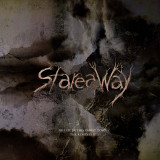
Back in 2011 Markus Guentner and Heiko Badje formed Stareaway to follow their vision of creating both enchanting and haunting music from melodies and drones. Combining Guentners complex Wall of Electronic Sound and Badjes ethereal androgyn voice and multifaceted guitar play, they indeed produced some epic works between Ambient, Pop and Shoegaze, strangely shimmering and profoundly mysterious.
Now Stareaways fantastic (and back then maybe a little overlooked) album No Life In This Ghost Town sees its rerelease and is, for celebrational purposes, accompanied by this EP of four stunning remixes by stunning artists Rafael Anton Irisarri (who also did the mastering), Simon Scott (Slowdive), Thomas Fehlmann and David Westlake (ex Sneaker Pimps). Rafael Anton Irisarris magical take on O Suomi sparkles bright, still with melancholia always present. David Westlake emphasizes the Pop-aspect of Appointments, adding lush synth melodies and light-filled grooves while Thomas Fehlmann lets All Over You spiral into Popambients most majestic heights. Finally Simon Scott builds a Kathedrale aus Klang on Dreams May Never. Amazing remixes of amazing originals.
- A1: The Supremes - Where Did Our Love Go
- A2: The Supremes - Baby Love
- A3: The Supremes - Come See About Me
- A4: The Supremes - Stop! In The Name Of Love
- A5: The Supremes - Back In My Arms Again
- A6: The Supremes - I Hear A Symphony
- A7: The Supremes - You Can't Hurry Love
- B1: The Supremes - You Keep Me Hangin' On
- B2: The Supremes - Love Is Here & Now You're Gone
- B3: The Supremes - The Happening
- B4: Diana Ross & The Supremes - Reflections
- B5: Diana Ross & The Supremes - Love Child
- B6: Diana Ross & The Supremes - I'm Gona Make You Love Me (With The Temptations)
- B7: Diana Ross & The Supremes - Someday We'll Be Together
- C1: The Supremes - Stoned Love
- C2: Diana Ross - Ain't No Mountain High Enough
- C3: Diana Ross - Touch Me In The Morning
- C4: Diana Ross - Theme From Mahogany (Do You Know Where You're Going To?) (Do You Know Where You're Going To?)
- C5: Diana Ross - Love Hangover
- D1: Diana Ross - The Boss
- D2: Diana Ross - Upside Down
- D3: Diana Ross - I'm Coming Out
- D4: Diana Ross - Endless Love (With Lionel Richie)
- D5: Diana Ross - You Keep Me Hangin' On (Almighty Mix Edit - Bonus Track)
Anlässlich ihres 50. Bühnenjubiläums machte Marianne
Faithfull ihren Fans ein besonderes Geschenk. "No Exit"
lässt eine Auswahl ihrer besten Live-Performances Revue
passieren, aufgenommen an verschiedenen Etappen ihrer
Europatournee 2014. "Ich habe den größten Teil meines
Lebens auf Tour verbracht - "No Exit" ist eine ehrliche
Reflexion dieser Zeit auf der Bühne. Ich hoffe, ihr habt so
viel Spaß an den Aufnahmen, wie ich beim Performen
hatte!", beschreibt Marianne selbst das Album. "No Exit" ist
nun als Collectors Edition auf sonnengelbem Vinyl verfügbar.
:
1968 gegründet, stiegen Nazareth von den Pubs und Clubs ihrer Heimat Schottland zu einer der erfolgreichsten Rockbands der Welt auf und erzielten dabei eine Reihe von Hits. Fleißig, ehrlich, aufrichtig und unbeeinflusst von den Launen irgendwelcher Trends, hat die Band viele große Künstler weltweit beeinflusst. Ein halbes Jahrhundert später und mit weltweit über 20 Millionen verkauften Alben rocken die legendären Nazareth immer noch!
Nazareths 18. Studioalbum "No Jive? wurde ursprünglich
1991 veröffentlicht und wird nun auf durchsichtigem Vinyl,
sowie auf CD neu aufgelegt.
As Spacemoth's Maryam Qudus was hard at work in her recording studio, synthesizers piled high, she found her mind in another place, hypnotized by the questions swirling inside her: “How could I ever face this world alone?” she wondered. “How long will I be able to stay in this place that I love?” Attempting to understand her position in the universe, the relationships that hold her together, and the climate crisis unfolding around her, she realized ruminating over these concerns was paradoxically taking her away from precious experiences. No Past No Future is the reckoning point between nostalgia and nihilism: the struggle to hang on to a moment as it warps in time.
Devotion to music has driven Qudus—a performer, composer, and producer based in the Bay Area—for as long as she can remember. At age twelve, she traded chores for guitar lessons; at sixteen, she took on after school jobs to pay for voice lessons. As a first-generation Afghan-American child of working-class immigrant parents, finding a place in music has been nothing short of a challenge for Qudus.
The bulk of performance on Spacemoth songs comes from Qudus herself, who favors vintage synths like the Yamaha CS-50 and Korg Polysix alongside fluttering tape manipulations; these create cosmic, lush soundbeds, drawing comparisons to beloved projects like Broadcast and Stereolab. On songs like “Waves Come Crashing,” a whirlwind of noise leads into darker, bass-heavy instrumentation as she confronts the inevitability of death: “These fears, they have taken our years,” she laments about the anxiety of mortality. On “Pipe and Pistol,” Qudus explores the experience of being an immigrant starting over in America. The song showcases punchy rhythms, reminiscent of Devo’s post-punk dynamism: “I see your face / my powers, they raise,” she sings with potency. Identifying cyclical habits inspired “Round In Loops,” which highlights patterns we endure in our lives and minds. “Boss is waiting / we run / love is fading / we run,” Qudus commands, encouraging escapism and a break to the cycle of mundanity.
Every track flows with Qudus’ low timbered vocals, in harmony with the watery, glowing synthesizers that anchor the album. The result is a record rich in intergalactic, avant-pop, radiating in astonishment at the vast, emotional landscape humans contain within ourselves, and in wonder at the preciousness of our time on earth.
Of the many great talents of the classic Nigerian highlife scene, none contained the existential depth, transcendence and grace of Celestine Ukwu. During his brief time in this world, he pursued education, music, and philosophy; first as a school teacher, then ultimately a singer, lyricist and musician, first as a member of Gentleman Mike Ejeagha's Premier Dance Band, and eventually fronting his own groups, The Music Royals and The Philosophers National. Beginning in the early 1970s, The Philosophers National established a radical shift in the possibilities of Nigerian highlife by moving away from the typical mid-century style and cutting a new path with a distinctly hypnotic and cerebral atmosphere. This sense of depth was apparent in the lilting, multi-layered and pulsing music of The Philosophers National, as well as the concise and clear-eyed lyrics sung so beautifully by Celestine Ukwu. The arrangements establish a living, breathing environment for each song; muted trumpet solos, hypnotic guitar runs, driving percussion; every instrument gracefully following a tide of patience, tranquility, wonder, climax, knowing and unknowing. "Celestine ditched the jaunty dance rhythms and relatively facile lyrics typical of the reigning highlife tunes, and ignoring the soul music tropes most of the highlife bandleaders were appropriating in an effort to inject new life to their ailing format. Instead Celestine concocted a new highlife style that was more contemplative and lumbering; with the layering of Afro-Cuban ostinato basslines and repetitive rhythm patterns that interlocked to create an effect that was hypnotic, virtually transcendental. Meanwhile, Celestine himself sang as he stood coolly onstage in a black turtleneck and a sportscoat, looking like a university professor. The message was clear: this was not necessarily music for dancing_even though the rhythms were compelling enough. This was music for the thinkers." - Uchenna Ikonne This LP compiles some of Celestine Ukwu's deepest and most affecting songs from the 1970s, which have been gorgeously restored and remastered by Tim Stollenwerk to highlight the brilliant details of Celestine and the entire Philosopher's National. Pressed on 160 gram black vinyl at Smashed Plastic in Chicago, and comes in heavy 3 spot-color jacket, with fold-over insert with bilingual lyrics and notes by Uchenna Ikonne (Comb & Razor Sound).
Ten years on from a remarkable debut album that traversed genres and put the duo’s trademark melodic mastery on display for the world to see, 2022 sees Spectrasoul’s ‘Delay No More’ album more than deservedly receive its 10 Year Anniversary Repress. Now being pressed to vinyl in it’s entirety for the first time, this milestone release highlights just how in-keeping Spectrasoul’s earliest album was with the forward-thinking, energetic, and beautifully deep ethos that has gone on to define their astounding career in music.
A diverse, experimental, and genre-bending debut offering, ‘Delay No More’ cemented itself as one of 2012’s finest electronic albums and a Shogun Audio bestseller. Fast forward ten years and the impact of the album on Spectrasoul, Shogun, and the wider electronic music scene is still one of meteoric proportions.
Receiving mass support from Mixmag, DJ Mag, BBC Radio 1, and countless other press outlets at the time, ‘Delay No More’ went on to be remixed the following year, with the reworked project featuring Calibre’s remix of ‘Away With Me’, a release which has gone it to
become one of the most iconic drum and bass tracks of the past decade.
Since their emergence in 2006, SpectraSoul have carved a truly unique position, not only in Drum & Bass, but electronic music as a whole. The 10 Year Anniversary Repress of ‘Delay No More’ is not only a celebration of this, but a reminder of the stunning sonic soundscape that the albums alluring, enthralling and irrevocably charming sound still exists in to this day.
Romperayo is back, with a brand new tropical 9 track album full of tropical riddims and humid Caribbean jams.
After two long sold out albums, Romperayo (Discrepant, 2015) and Que Jué? (Souk, 2019), Pedro Ojeda’s unique update on classic Colombian music returns for a full long player of future tropical instrumental tunes, heavy on the drum grooves mixed with slow, languid experimental interludes.
This is 21st century Colombian popular music taken to the next level by one of the most singular figures currently active on the Colombian scene. Romperayo’s, aka Pedro Ojeda (Los Pirañas, Chupame el Dedo) solo project uses his irreverent drumming techniques and filters them through a lens of new school psychedelia, historical sampling and acid synth solos.
With his sound obsessions clearly present over all of his work (and this record), Pedro effortless mixes the old school with the new with an avant-garde collage approach to composition, never forgetting his academic studies on Latin American drumming styles. The result expands the frontiers of Colombian tropical music and provides a new, multicultural dialogue whilst using many of the rhythms and melodies of the Colombian historical repertoire to a new generation. The Colombian Caribbean coast sonido never sounded so fresh!
'Kekete Bue' is the first new album from legendary Congolese musician Kanda Bongo Man since 2010, and his first vinyl release in over two decades.
The master of soukous, the infectious and uptempo guitar-driven music from the Democratic Republic of the Congo, Kanda's latest album features new tracks alongside reinterpretations of some of his classic songs.
On her new album No Regular Dog, singer/songwriter/guitarist Kelsey Waldon shares a gritty and glorious portrait of living in devotion to your deepest dreams: the brutal self-doubt and unending sacrifice, hard-won wisdom and sudden moments of unimaginable transcendence. Revealing her supreme gift for spinning harsh truths into songs that soothe and brighten the soul, the Kentucky-bred artist ultimately makes an unassailable case for boldly following your heart—a sentiment perfectly encapsulated in No Regular Dog’s raw and radiant title track.
21st Century pop is curiously irrelevant: autotune, twelve 'writers' on a single song, sensationalist yet skin-deep social commentary . . . with none of the joy, excitement and surprises of pop's lengthy heyday, from the Brill Building through the New Wave era. Where did it go? That would be an apt introduction to an album of calculated throwbacks to a three-minute pop ideal . . . but No Place Like Home isn't that record. We doubt even Gemma could tell you where this collection of beguiling jewels came from exactly, each fully-formed, complete and satisfying, no two quite alike, and each devoid of Wet Leg or Dry Cleaning's crafty calculation, but with every bit of those acts' charm. The first single, Stop, is based on an idea so simple that it's nearly unfathomable why no one had come conjured it earlier. Like toilet paper or a pair of scissors, the song feels entirely obvious until one ponders its late arrival. Stop's motorik beat propels verses to a chorus of pure delight, bested by a bridge occurring so late in the tune that it comes across like a surprise second dessert. My Idea Of Fun, a tale of frequent drunken regret, comes with a video of minimalist humour and visual brilliance. On other songs, Gemma channels acts Delta 5, Au Pairs and The Raincoats, along with the humour of Ian Dury and a similar verité of London life found in the best of Madness. The more serious fare is equally compelling. Rabbit Hole projects a daring newness of young freedom, Dance Of A Thousand Faces veers into Sprechstimme and expands into a swooping chorus, the feel of which subtly conveys present-day tensions reminiscent of the Weimar era. Tailspin captures the dark feeling which comes burdened with real-time consciousness of a loss of control, while the album closer, Frida, a tale of the loss of a dear friend manages to end in a guardedly upbeat tone. Gemma's debut album is sure to stir up deep interest and will be supported by a number of videos and live performances, plus free digital singles featuring otherwise unavailable non- album tracks.
After the intriguing collaborative efforts on their debut EP “Tender Trance” and the follow-up EP “Sueño”, DJ Gigola and Kev Koko are back with a 3-track record. Continuing their hybrid production style, this time, they are joined by rapper Perra Inmunda. Perra’s fast paced flow and staccato rhymes blend seamlessly with Kev Koko’s signature groove. Together with DJ Gigola's airy, ethereal chorus vocals, the result is a playful exploration of modern music that picks up right where the previous EPs left off: blurring lines between techno, pop, and now also, rap. Lyrically, the EP examines three different aspects of love. Sweaty dances on the floor, kisses lost on the way home and the solitude of being left unanswered; it seems only fitting they chose the title “No Es Amor”. The EP will be released on "Live From Earth Klub" on 8 April 2022 in both digital and physical formats.