Nils Petter Molvær and Mino Cinelu had both come a long way in their careers before they met. Cinelu gained international renown on Miles Davis’ albums We Want Miles and Amandla, also noted for his playing with the likes of Weather Report, Gong, Herbie Hancock, Pat Metheny, Sting, Santana, Lou Reed and Laurie Anderson, to name just a few. He has also released 3 solo records and collaborated with Dave Holland and Kevin Eubanks on the World Trio album. Nils Petter Molvær, meanwhile, is one of the most outstanding figures in European jazz. In 1997, he made his debut on ECM Records with the album Khmer, combining the Nordic feeling of nature with the Southeast Asian philosophy of sound. His journey into the uncharted areas of music spans almost a dozen records, on which he explores various combinations of acoustic and electrical sounds. He collaborated with Berlin’s electronic producer Moritz von Oswald in 2013, with the reggae philosophers Sly & Robbie in 2018 and with Bill Laswell on several occasions.
Cinelu and Molvær in some senses represent two worlds, which – at first glance – could hardly be more different. Their musical home is the entire planet, but while Molvær's hoarse and cloudy trumpet sound evokes boreal cold, Cinelu stands for the rhythmic fire of Latin America and Africa. On ‘SulaMadiana’, they’ve found their common playground - the album’s title itself a tribute to the two musicians’ heritage. Sula is the Norwegian island from where Molvær grew up, and Madiana is a synonym for Martinique, from where Cinelu's father hails.
SulaMadiana is a cornucopia, spilling out reverberations of Miles Davis, Gong, and previous works of Molvær, and yet Molvær and Cinelu open up doors to entirely new worlds. Cinelu becomes a singer on his percussion, while Molvær's electronically distorted sounds create a driving pulse. Cinelu plays acoustic guitar, Molvær conjures up drones on the electric guitar. The interplay between the two musicians is key, Molvær observing; “We are different, but what we have in common is that we like to give some space to things. I create space for him, he creates space for me, and we both create space for music.” Cinelu adds: “It doesn't matter who has what share in music. We both know each other’s cultures, we find bridges and crossings, and often we walk these paths that lead in the same direction. We wrote everything together and followed our feelings. There are no limits or barriers.”
Поиск:no made
Все
Statistique Synthétique draws as much from the history of computer sound synthesis as from its latest developments. But well beyond developing simply as a proof of concept, this piece aims to transcend the abstract status of synthetic sound objects and lead them to a properly hallucinatory state, that is to say to a meeting point where the object and perception dissolve into each other, in a sort of transcendental field. Beyond, also, hylomorphism, to reach the world of matter-form fusions, where perception knows how to see "shoulders of hills", as Cézanne wrote.
Teum (the Silvery Slit) is, as the title suggests, an overture, an opening to the game of multiplications, fragmentations, duplications. But it is also the opening understood as the void that blossoms between two borders, a break from which escapes a double tension, both the pulling force of these two edges which move apart and the opposite force of reconciliation, of compression. Okkyung Lee invites us to a truly telluric moment, a rare moment of expression where tectonic movements and shear stresses become music. If the earthquakes were, as we thought in the 18th century, due to underground thunderstorms, there is no doubt that this piece of music, both celestial and continental, could have been their audible manifestation.
Text by François Bonnet
HeckerStatistique Synthétique2020 / 25'15Computer-generated sound with resynthesized situated texture recordingsWritten and produced by Florian Hecker, 2019 - 2020Texture analysis and resynthesis algorithm: Axel Röbel, Analysis/Synthesis Team, IRCAM, ParisMastered by Rashad BeckerPhoto by Mauricio Guillén, 2019
Thanks to Axel Röbel for his commitment to the project and special appreciation to GRM, Luke Fowler, Mauricio Guillén, Dirk Mayer and Porta33
Location Texture Recordings, using DPA 4060, DPA 4017B, DPA 4021 and DPA 4060 microphones to Sound Devices 702 recorder; except segment 04:31 - 05:37, recorded by Luke Fowler, April 2019 using Sony M10.
00:00 - 02:00 Lopud, Croatia, June 200802:00 - 03:12 Ponta do Sol, Madeira, ER 101, April 201903:12 - 04:14 Prentiss St, Cambridge, MA, February 201504:14 - 04:31 Anjos, Ponta do Sol, Madeira, ER 101, April 201904:31 - 05:37 Atelier Cézanne, Aix-en-Provence, April 201905:37 - 08:31 Anjos, Ponta do Sol, Madeira, ER 101, April 201908:31 - 09:46 Praia dos Anjos, Ponta do Sol, Madeira, ER 101, April 201909:46 - 10:39 Private garden, Kissing, September 200910:39 - 11:15 Praia dos Anjos, Ponta do Sol, Madeira, ER 101, April 201911:15 - 15:11 Porto do Paul do Mar, Calheta, Madeira, April 201915:11 - 16:53 Prinz Eugen Strasse, Vienna, June 200816:53 - 24:27 Risco, Rabaçal, Madeira, April 201924:27 - 25:15 Bois de Boulogne, Avenue du Mahatma Gandhi, Paris, September 2015
:::::::::::::::::::::::::::::
Okkyung LeeTeum (the Silvery Slit)2019 / 20'03Performed, recorded and composed by Okkyung Lee (ASCAP)Mixed by Lasse MarhaugMastered by Guuseppe IelasiPhoto by Lasse MarhaugPart of Re-Imagine Europe, co-funded by the Creative Europe Programme of the European Union.
Cut by Andreas Kauffelt at Schnittstelle, Berlin, September 2020Sleeve design by Stephen O'Malley
Cool Ghouls - a band fledged in San Francisco on house shows, minimum wage jobs, BBQ's in Golden Gate Park and the romance of a city’s psychedelic history turns 10 this year. What better a decennial celebration than the release of their fourth album, At George's Zoo!
How did San Francisco's fab four arrive at George's Zoo? The teenage friendship of complimentary spirits Pat McDonald (Guitar/Vox) and Pat Thomas (Bass/Vox) serves as square one. The Patricks were munching on Eggo-waffle-sandwiches and downing warm vokda in suburban Benicia (San Francisco bay) years before McDonald would hear George Clinton address his fans as "Cool Ghouls". The boys played their debut gig as Cool Ghouls at San Francisco's legendary The Stud in 2011, but there's no doubt the musical moment cementing the band's trajectory was much earlier at the 18th birthday party for boy-wonder Ryan Wong (Guitar/Vox) - at the Wong household.
You might remember the Ghouls' earliest days... McDonald’s hair hung luxuriously past his waist, Thomas dreamt of no longer having to crash on friends' couches to call SF home and Wong looked forward to turning 21. Cool Ghouls' Pete Best, Cody Voorhees, thrashed wildly – but briefly - on the drums and Alex Fleshman (Drums), who still claims he's not really "a drummer", turned out to be a really good drummer. Thomas would sleep pee on tour. Those were golden days!
Flash forward to today and everything is up in flames. No shows, parties or bars. Cool people are streaming out of SF. It's been 2 years since the last time Cool Ghouls have even played. The STUD is gone, The Eagle Tavern is for sale and The Hemlock has been demolished for condos. Your boss is an app. Fascism is no-knocking down the door. There's a pandemic.
Fortunately for us, the Ghouls got an album in before it all went to shit, and they made it count. At George's Zoo includes 15 of the 27 tunes they managed to eke out while simultaneously working through major life moves. It was a 5-month, all out, final sprint down the homestretch (to Ryan's moving day) with affable engineer Robby Joseph, at his makeshift garage studio in the Outer Sunset (pictured on the cover). Instead of recording the entire album over a few consecutive days - like they'd done with Tim Cohen, Sonny Smith and Kelley Stoltz for the first three LPs - the band took it slow by working through a few songs each weekend after rehearsing them the week before. Robby would cue up the tape, McDonald would throw some steaks on the grill and they'd get to work - much to the neighbor, George's, chagrin.
These guys have a real commitment to elevating as songwriters, musicians and ensemble players. It's always been for the music with Cool Ghouls and this long-awaited self-produced outing is a track by track display of the ground they've covered and heights they can achieve. Their vocals and trademark harmonies are front and center and out-of-control-good. Ryan's guitar solos are incredible. The horns by Danny Brown (sax) and Andrew Stephens (trumpet) hit in all the right places. Maestro, Henry Baker (Pat Thomas Band / Tino Drima), plays keys throughout. There's even a mesmerizing string section ("Land Song") by sonic polyglot, Dylan Edrich.
None of this growth is to the detriment of the fun, natural, feeling that fans have come to expect from the band. This is a fully realized Cool Ghouls album. It paints a remarkable portrait of SF's homegrown heroes and the many corners they've explored over the last decade. The songwriting, harmony and playing are nothing if not solid. The lyrics are keen. Robby's recording and mixing sound great start to finish and even better after mastering by Mikey Young. It's a triumphant addition to their catalogue. Recommended for Stooges and Beach Boys fans alike. Listen and see!
Yes, many things have changed since 2011. Who knows what the 20's will have in store for life on Earth, let alone the Cool Ghouls? We at least know that 2021 has At George's Zoo for us, a beautiful keepsake from the Before Times when we used to stand in living rooms together while bands played.
When Linda Smith purchased a 4 track cassette recorder in the mid-1980s she was playing guitar in a band called the Woods, and thought it would be useful for sharing demos with her bandmates. In the end, the new hobby followed her from New York back to her native Baltimore, and over the next decade she’d release several albums worth of delicate, bewitching solo music on cassette. Till An- other Time: 1988-1996 is the first retrospective collection of Smith’s charmingly lo-fi music.
Sparse and gentle, Linda’s music is tinged with lovelorn melancholy despite the sweetness of her voice. Over ‘60s pop-indebted melo- dies on tracks like “A Crumb Of Your Affection”, she delivers ob- servations with an earnest softness. Elsewhere, her voice takes on a post punk deadpan, as on “I See Your Face.” The effect of both modes is a haunting charm, equally reminiscent of early Cherry Red Records and ‘60s yé-yé.
With a no-nonsense approach to recording, Linda recorded almost all of her songs at home. There was a creative freedom that came with recording on tape, and unbeknownst to her, this was a conclu- sion that many musicians were reaching at the time.
Unfortunately, the independence that made at-home recording ap- pealing to Linda also made it difficult for her to reach a wider au- dience. Relying on niche publications, cassette trading, and word of mouth to share music, Linda released a few 7”s on labels like Slumberland and Harriet but remained relatively local in terms of reach. Nevertheless, one can trace a direct line from Linda Smith to the ubiquity of bedroom recording today.
First pressing of 400 units comes as yellow vinyl! "I was guzzling wine at my favorite bar in San Francisco, the Rite Spot, and the entertainment that night was some local opera singers singing along with a big video screen showing a collage of various operatic moments with subtitles. One particular subtitle, 'Ah!-(etc)' made me laugh, I thought it was a perfect description of life - the joy of existence against the etcetera of it all, the struggle. With a heavy head of rose' it seemed like ecstatic poetry! I scribbled it on a napkin and thought it might make a good title for something" And so the mystery behind the title of Kelley Stoltz new record is solved. Less of a mystery is the quality contained therein_ after 12 self-titled releases and a several more under pseudonyms, Stoltz is the word for "one-man-band-home-recording-pop-songs of idiosyncratic character." A quick follow up to his more power pop and pub rock LP only "Hard Feelings" offering in the summer, "Ah-(etc)" finds Stoltz returning to his sweet spot, writing songs that never were, but should have been in the 60's and 80's. As with other LPs Stoltz makes virtually every noise on the album which was written and recorded in 2019 at his Electric Duck Studio in. San Francisco. A few friends popped in to play along_ Stoltz former bandmate, Echo & the Bunnymen's Will Sergeant adds electric guitar to "The Quiet Ones" a sort of Scott Walker lyrical take on strangers and neighbors. Karina Denike formerly of Dance Hall Crashers adds gorgeous vocals on the bossanova groover "Moon Shy", where Sergeant pops up again in a spoken word role on the outro. Allyson Baker of SF's Dirty Ghosts sings on "She Like Noise", a song Stoltz wrote for her in celebration of her love of seeing live bands. The album was mastered by Mikey Young in Australia.
An unlikely meeting of two like-minded spirits, »First Man in the Moon« sees the former Swans guitarist and Hallow Ground regular Norman Westberg and the prolific double bass player Jacek Mazurkiewicz collaborate for five evocative tracks. The pair finds common ground beyond the boundaries of atmospheric drone, abstract jazz and experimental music and blurs the lines between the acoustic and the electronic.The two first met when the composer Mazurkiewicz supported Swans with his solo project 3FoNIA on their 2014 European tour. »I really enjoyed his approach,« says Westberg about the Polish musician’s blending of the acoustic qualities of his instrument with electronically generated sounds. A decision to collaborate was made and when the US-American musician returned to Eastern Europe to support Michael Gira on his solo tour in late 2019, Mazurkiewicz reached out to him with the idea of booking some studio time before Gira’s two concerts in Warsaw. »Recording was very fun and easy,« remembers Westberg. »It was just two people enjoying hearing and reacting to what the other is doing.« »First Man in the Moon« is not however a plain document of these improvised sessions, but also shaped by Mazurkiewicz’s approach as a composer. Once the recordings were finished, he selected and edited the recorded material, refining the peculiar dialogue between the guitarist’s meditative drones and bright chords and his own rhythmic yet subtle approach to playing the double bass, sometimes plucking the strings and occasionally using his bow to underscore
Westberg’s fleeting melodies, but also using the instrument in unconventional ways to generate sound. A feeling of weightlessness prevails throughout the aptly-titled »First Man in the Moon.« Even at their most abstract however, these five improvisations-turned-compositions remain tangible, lively, and joyfully explorative. It is a record that you wouldn’t expect from either of these musicians, but
the logical result of two idiosyncratic minds sharing not only space and time, but also their respective visions with each other. Credits:
Recorded at Studio Diamentowy Pies/ Damian Pielka, engineering/Piotr Mazurek, engineering assistance/Jacek Mazurkiewicz, mix/
Lawrence English, mastering/John Fell, photographs.
Originally released in 1980, ‘Amanita’ is an early approach of Canadian artist Sherine Cisco, formerly known as Stu Cisco, to the limitless world of synthesizers in music, through ambient, progressive rock and drone noise.
A unique combination of ambient, progressive rock and even drone noises and space-age that converged in ‘Amanita’, her first full album and a piece of music history. This LP marks a milestone in the investigation, experimentation and evolution of musical instruments, where the Mini Moog demonstrated its versatility and creative potential, opening Sherine a path of limitless possibilities.
By the time ‘Amanita’ was first released in 1980 (only 300 copies were pressed at the time), Sherine had been playing synths for seven years. But far from acknowledging how traditional instruments were played, she tried to do things her own way, creating moving landscapes and a unique language of sound. This DIY approach to music was, as well how the album was made, in her own studio, with synthesizers that were originally meant for live performances such as the Elka Rhapsody or the Elektro Harmonix, channeled through a Dokorder 4 Tape Recorder.
However, what Sherine Cisco was living in her personal life, a gender transition, was as important to the record as the instruments she used to create it. “Beginning in the early 1980's, I began experimenting with taking the female hormone, estrogen. I felt like I was gradually being re-born. It affected my music, the mood of the music, and me, physically and mentally”.
A spacey vibe surrounds each of the 12 cuts that compose ‘Amanita’, waving from ambient to experimental music, introducing drone noises that add mystery to the whole piece and creating epic moments, with the Mini Moog accompanied by Randy Gray’s drums. To close things off, a synth pop infused track works as a masterpiece ending to this story.
Hot on the heels of last year’s drone masterpiece, The Free Territory (FTR 457), comes this hot bowl of noodles from Manchester’s most elegantly wasted quintet. And while there might be apt comparisons to be made to some of the best current psych purveyors, the central thrill provided by these sounds makes me think of naught but prime Bay Area ballroom scene acid spew.
The guitar lines unspool like electrical cables filled with acid punch, and remain crackling in the air for moments longer than you imagine they can remain afloat. The keys have a bit of a German overtone, but it’s the same sort of one that led to the flash of Popol Vuh’s United Artist albums (which are themselves, at heart, paeans to the Bay.) The sound here is the sort of thing true believers recall as the highest moments of Man in live concert flight. Raging, raving guitars to soak your soul once and for all.
Don’t fear the downpour. Revel in it.
-Byron Coley, 2020
As darkness falls, once familiar territory is rendered alien and foreboding; full of weird and terrifying possibilities. These are Night Lands.
Recorded live in the rehearsal room last December, the newly expanded 4 piece Dead Sea Apes lock into spooky nocturnal grooves, augmented by Nik Rayne (The Myrrors) who was over in the UK for the recording of 'Night Lands'
Night Lands is comprised of 3 off-the-cuff improvised pieces, where Dead Sea Apes effortlessly mind meld with Rayne. Taking for a deep knowledge and love which you can hear seep through - At times Amon Duul (both!) at others times Earth with touches of what you imagine the Velvet Underground sounded like in the DOM - all touched with the presence of Bo Anders Persson
BLACK VINYL[21,64 €]
One of the most highly regarded modern Brazilian jazz trios, Caixa Cubo announce ‘Angela’, their latest album and first to be licensed for European release by Heavenly Recordings.
‘Angela’, their Seventh since forming in 2007, was named as one of 6 Music’s Recommends Albums Of 2020 (Presenter Picks), chosen by DJ Huey Morgan. The single ‘Palavras’ is currently on the 6 Music playlist. Heavenly Recordings picked up on the record when DJ Giles Peterson played ‘Palavras’ on his show.
Recorded in December 2018, the album features the singer Zé Leônidas on ‘Palavras’ and includes arrangements of songs like ‘Baião Malandro’ by Egberto Gismonti and ‘Dark Prince’ by Geri Allen, in addition to the group’s original compositions.
Made up of Henrique Gomide (keys), João Fideles (drums) and Noa Stroeter (bass), the trio have split their time between Brazil and Europe in recent years, having been awarded scholarships to study at the Royal Conservatory of The Hague, Netherlands.
They have performed at many respected European venues and festivals including Jazz à Vienne Festival (France), Anton Philip Hall (The Hague), A-Trane (Berlin), Riverboat Festival (Denmark) and others in Paris, Brussels, London, Birmingham, Lisbon and Rotterdam. They also performed in Maputo, Mozambique, as well as renowned venues in Brazil, mainly in Sao Paulo (Auditório Ibirapuera and SESC Consolação, Museu da Casa Brasileira).
When the pandemic hit the US, Chastity Belt’s Annie Truscott descended into a state of mourning. Her plan had been to join her partner, Jay Som’s Melina Duterte, as violinist on tour, a privilege rarely afforded since both maintain busy road schedules and for Truscott the prospect of spending most of the year in a van wasn’t met with exhaustion so much as exhilaration. At long last, she’d be making a living playing music, no side hustle needed. The cancellation of the tour represented a sidelined dream.
Routine was born of this disappointment. Like the phoenix rising from the ashes, Truscott and Duterte’s collaborative project offers a glimpse of the creative possibilities that can emerge from a state of defeat. Written and recorded over the course of a month in Joshua Tree, Routine’s lush debut EP ‘And Other Things’ finds the couple trying on new roles. Truscott, who plays bass in Chastity Belt, wrote the bulk of the material and sings on the EP, while Duterte, normally a band leader, used the project as an pportunity to, in her words, “Take the backseat,” as accompanist, producer, and engineer.
Duterte describes the making of the EP as “seamless.” In the mornings, Truscott sat outside of the cabin in the not-yet-blazing sun and worked out chord progressions on guitar while Duterte slept in. Staring out at the horizon, Truscott could see a smattering of houses and the sharp outline of a mountain range but overall the property felt remote, far removed from home in Los Angeles. On long walks Truscott admired the recently bloomed spring flowers and pondered the legacy of friendships and experiences that made her. “I spend a lot of my time thinking about the people who’ve impacted my life,” she says. “‘Routine’ gave me an opportunity to explore those relationships through music.”
Young Knives will announce their fifth album, Barbarians, to be released on 4th September 2020. The announcement will be accompanied by a single, ‘Sheep Tick’, and its extraordinary video.
Barbarians was written, recorded and mixed by Young Knives (brothers Henry Dartnall and The House of Lords) in their studio near Oxford, UK. John Gray’s book Straw Dogs inspired the brothers to dial into the ultra-violent, brutal nature of human beings. Our progresses in science and knowledge have not made us any less barbaric: our entertainment is obsessed with it, our world is full of it. What if cruelty to others is just part of who we are? How do we live with that?
Building on a base of loved hits from their early work last decade (Voices of Animals and Men, Superabundance, Ornaments from the Silver Arcade) and the metamorphosis of 2013’s Sick Octave, Barbarians is a leap into sonic experimentation by a band who love to confuse and entertain in equal measure.
With XXI Century remastering: "La Ventana" (1973) by Los Jaivas is released now on vinyl format for the very first time. Los Jaivas has often been considered one of the most important rock bands in Chile and South America. This influential Chilean band formed in 1963 mixes psychedelic rock and progressive rock with Latin American folk instruments and rhythms. In this album Los Jaivas shows many different artistic facets from improvisation and song writing to the first steps of symphonic creation. "La Ventana" version 2020, is the first work of a series to rescue the musical heritage of the band, which includes the search for archival material saved for years and the reissue of other historical titles of Los Jaivas. More info: Finally available on vinyl, 47 years after its original release on the Chilean label IRT, here it is Los Jaivas' "La Ventana", the iconic album that includes the anthems 'Todos juntos' and 'Mira niñita'. Original master tapes have been used for this reissue, following the reels find at the IRT vaults after years unavailable. State of the art technology has also been used to guarantee a top-quality remastered sound that shows music details barely noticeable in the original pressing. The artwork restoration process has been undertaken by Martín Uribe, a member of the band's team, with great attention to detail, by using several copies of the original issue. According to Felipe Domínguez (Al Albordaje Muchachos SPA), supervisor of this reissue project, "we aimed to publish a top-quality release, improving on previous rather average reissue editions. So, when we opened the box containing the tapes of "la Ventana" and found the reels with all the annotations made at the time, we knew we would be able to make a difference." This is the first in a series of various projects that will make the musical heritage of Los Jaivas available again, including recordings that have remained archived for years and the reissue of other historical titles of the band. This is the aim of the Los Jaivas Cultural Foundation: "to pass on its experience to new generations, along with encouraging a love for music without distinction of race, faith, political color or gender", highlights Mario Mutis, bassist and vocalist of the band. This 2020 reissue is presented in its original artwork and complete tracklist.
- A1: Wolfwalkers Theme
- A2: Wolves
- A3: Running With The Wolves (Wolfwalkers Version)
- A4: Mechanical
- A5: Wolf Or Girl
- A6: I'm A Wolfwalker
- A7: Howls The Wolf (Moll's Song Wolf Run Free) (Moll's Song Wolf Run Free)
- A8: Our Forest
- B1: What Are You Doing Here?
- B2: This Is Intolerable
- B3: Please Mummy
- B4: My Little Wolf
- B5: Our Victory
- B6: Follow Me
- B7: Mebh's Tune
- B8: Robyn's Tune
In the cinema, the composer must go to meet the filmmakers, enter their world, but without giving up his own. This is the difficulty or the paradox of music for the image. By collaborating with directors from a wide variety of backgrounds, I think I have indirectly discovered a lot about myself. It helped me to progress, to explore territories that were not naturally mine. Cinema is a laboratory where I have sought to construct original orchestral formulas combining Corsican polyphonies, musicians from jazz, variety, classical, or even rappers. Like the world today, a fragmented world where all cultures mingle. So said Bruno Coulais, one of the most innovative composers of contemporary cinema, during the tribute paid to him in 2011 at the Cinémathèque de Paris
In 1978, Bruno Coulais, a young composer of concert works, discovered in film music a new means of expression, a way of bringing the demands of his writing to the masses. François Reichenbach, then Josée Dayan, Jacques Davila, Souleymane Cissé or Laurent Heynemann, first on television and then in the cinema, lead him of his own accord in the discovery of this new world.
In 1995, he composed the music for Microcosmos. This centimeter-scale initiatory journey offers him the opportunity to reveal the full dimension of his writing. He injects into his score a strange lyricism, between wonder and fantasy, confirming the lesson learned from François Reichenbach: "to any documentary image, music brings a part of fiction".
The success of Microcosmos established the musician and made him the indispensable composer of other natural tales, notably alongside Jacques Perrin (Le Peuple migrateur, Oceans, Les Saisons, etc.). Other long-term relationships will be forged, in particular with Benoît Jacquot, with whom he has worked for more than a decade, not to mention Frédéric Schoendoerffer, James Huth or Jean-Paul Salomé.
In addition to great popular successes such as Les Choristes, Brice de Nice or Sur La Piste Du Marsipulami, it is hardly surprising that this insatiable curiosity has found in the animated cinema the most inspiring playgrounds, in particular through his collaboration with two exceptional designers, Henry Selick and Tomm Moore.
The first, American director of The Nightmare Before Christmas produced by Tim Burton, invites Bruno Coulais to sign in 2009 the magnificent score of Coraline (film nominated for the Oscars). 10 years later, he is about to find him for a new and beautiful Wendell & Wild adventure. For Irishman Tomm Moore, Bruno Coulais has already composed the music for two Oscar-nominated films, The Secret of Kells (2009) and Song Of the Sea (2014), and in 2020 he will sign the score for Wolfwalkers.
Whether it is about author's films or more mainstream films, Bruno Coulais maintains the same standards, always considering his art as a window open to the world. Much less wise than it seems, he reveals in it a gift of a modern alchemist and a very personal way of mixing the most diverse cultures in universal harmony at work.
Having previously released on RNT as part of duo Balako, Diogo Strausz now makes his solo debut on the label with an absolutely stunning offering of electronic Brazilian jazz. A São Paulista now living in Paris, Strausz made international waves earlier this year with his piece ‘Pausa,’ a grand and sprawling orchestral work written and recorded by musicians around the world in isolation.
The two songs on Strausz’ new Emancipação EP showcase his gift for instrumental composition that feels at once both fresh and timeless, informed heavily by the classic Bossa Nova and Samba repertoires of his native Brazil, yet translated through a modern production lens, and executed with exceptional musicianship. The end result is an undeniably unique sound that will fit equally well in the collections of jazz and MPB aficionados, as in the crates of modern DJs and listeners alike.
To open M-Plant's 2021 schedule, Robert Hood announces the return of the Perpetual Masters series, with his 'Underestimated EP'. The series features classic back catalogue, that's been newly remastered and made available on vinyl, digital download and streaming.
The 'Underestimated EP' still sounds as fierce as it did when it was originally released in 1998, delivering Hood's personal style of minimal, stripped back Techno with crisp beats, powerful build-ups and flawless grooves; nothing is superfluous here.
Back in October 2009, Strut’s Inspiration Information series was in full swing. Following an acclaimed collaboration between Mulatu Astatke and The Heliocentrics, Finnish maverick Jimi Tenor hit the studio for a mouth-watering head to head with Afrobeat drumming legend, Tony Allen.
Tenor had already built a reputation as a fascinating enigma in modern day music. Consistently one of the most inspired and unpredictable live artists around, his work since his breakthrough album ‘Intervision’ (Warp, 1997) had involved open-minded projects ranging from live film soundtracks and orchestral pieces to a series of Afro-based albums with his band Kabu Kabu. Enjoying a burgeoning revival, Tony Allen had continued to attract new fans. Celebrated as the creator of the Afrobeat rhythm and a lynchpin of Fela Kuti’s Africa 70 band, his work at the time of this recording had included the first album as The Good, The Bad & The Queen with Damon Albarn and his debut recording for World Circuit Records, ‘Secret Agent’.
Recorded at Lovelite Studios in Berlin during November 2008 ith further sessions in Finland and Paris, the Tenor / Allen collaboration whipped up a raw, heavy analogue sound mixing the full range of Allen’s Afrobeat repertoire with Tenor’s off-kilter brew of dark humour, tongue-in-cheek lyrics and tight, firing musicianship. The sessions involved key members of Tenor’s Kabu Kabu band and Berlin-based guest MC Allonymous with tracks evolving naturally from jamming ideas together over five intense days of recording, fuelled by plenty of African food and whisky. Tenor’s trademark range of home-made instruments rubbed shoulders with vintage keyboards and traditional African percussion.
The resulting set became one of the best recordings that both artists produced during this period. Tracks range from Jimi’s S&M tableau, ‘Darker Side of Night’ to the apocalyptic commentary on our times, ‘Path To Wisdom’ and the hilarious lampooning of the UK immigration system, ‘Mama England’, composed on the Tenor tour bus. The album also featured fusions based around more traditional low-slung Afrobeat structures (‘Sinuhe’, ‘Got My Egusi’) and ended with the epic freestyle juggernaut, ‘Three Continents’, a life affirming, mesmeric groove built around another rough-as-nails Allenko rhythm base. 'Inspiration Information: Jimi Tenor / Tony Allen' is re-released on 22nd February 2021 and is dedicated to the memory of the great, incomparable Tony Allen.
First reissue of long out-of-print and sought after release from 2009
Unique fusion of Afrobeat drumming and psychedelic Jazz
Vinyl cut from original sessions
Guedra Guedra presents Vexillology, an elevation of tribal consciousness and futurism from underground musical universes. The album offers listeners an immersive experience made from hypnotic and rhythmic arrangements, rooted in ancient culture. Referring as much to Sub-Saharan as to North African cultures, Guedra Guedra presents a synthesis of his pan-African appreciation and a full immersion into the traditional rhythms of these lands, especially within the Berber culture which is found in countries such as his home of Morocco, and across Tunisia, Algeria, Libya, Northern Mali, Northern Niger and beyond. The body of work is a complete celebration of cultural roots and future bass, bubbling in hotbeds of the global underground. Guedra Guedra is synonymously known for his ability to explore tribal rhythms and instruments of the past, as well as dancefloor innovations from contemporary underground scenes. For Vexillology and in true Guedra Guedra style, a myriad of immersive recording techniques were applied. The album is built upon a multitude of field recordings capturing live and 'in the moment' cultural happenings, encountered in everyday life, at tribal festivities and also on his travels. By also using video in his field recordings, Guedra Guedra enables himself to encapsulate the heat and entirety of the moment, applying this 'moment' and evolving it into his productions.
Back in 2018, Four Flies Records unearthed the previously unheard 'Africa Oscura', considered by many as the "dark side" of 'Zoo Folle' – Giuliano Sorgini's masterpiece (reissued by Four Flies Records in 2016) – and partly recorded during the same session in 1974.
The original work portrays a fictional and mysterious continent, providing a soundtrack tinged with dark
moods and cosmic shades. 'Africa Oscura' was entirely recorded by the composer, who played all instruments in his studio in Rome. This resulted in a formal spareness, a minimalism that gives it a
modern quality, something which makes it stand the test of time, or at least resonate with contemporary taste.
Since its release, 'Africa Oscura' has become a classic – a pivotal release not only within Sorgini's discography, but also one that made his name more known and accessible to a new generation of music professionals, DJs and fans of electronic music.
Four Flies have thus decided to celebrate its modernity with a double 12" featuring 7 reworks by six of Italy's most visionary DJs/producers: Jolly Mare, L.U.C.A. (aka Francisco), pAd, Painé, and Quiroga & Dario Bass.
The original tracks have been reworked with different approaches, sometimes into full reinterpretations, and with demanding dance floors in mind. The result is a stunning collection of electronic, cosmic, downtempo and Balearic reworks that preserve the spirit of the original versions while projecting them into the future.
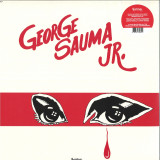
Favorite Recordings proudly presents an exclusive eponymous LP by Brazilian singer and composer George Sauma Jr., originally produced in 1985. Imagine a never-marketed release on which you’d hear not only the beautiful and genuine George’s songs but also the work from two figures of the Brazilian Music Golden Age: Arthur Verocai and Junior Mendes! A much-needed album for all Brazilian connoisseurs.
Back in the days, George Sauma Jr. was a young artist from Rio de Janeiro, learning on his side how to play chords and compose songs since he was 10. Still at the university, he’s influenced by Brazilian artists like Cassiano or Tim Maia, deeply fascinated by the arrangements and the “levada” (the groove) of all these new Brazilian songs. Simple and romantic music that resonated to his soul and creativity.
Around 1985, the story took an unexpected turn. George tells: “Dna Deyse Lucidy, the mother of Junior Mendes was a candidate for deputy and went to my father’s company to advertise. When I saw her, I shouted, “I’m a big fan of your son!” ” Of course, she could not praise more the work of her son. On her advises, George went to his studio on Rua Siqueria Campos at Copacabana. Junior loved the project and sent him to Arthur Verocai to improve the arrangements. Without money, the decision was taken to record everything at Junior Mendes’ studio on an 8-channel mixer. It was a small set-up but the emotions were there! George surely had other plans for some of his songs but without the budget, they ended up doing everything the best they could. And they did very fine with a top-notch team of musicians: Paulo Black on Drums, Arthur Verocai on Guitar, Ricardo Do Canto on Bass and Helvius Vilela on Keyboards.
Leaving the studio with the tapes, George tried to knock doors of international labels, but none did even dare to give him an answer. With less than 1000 copies pressed back in the days and without any distributor or label behind him, he went with proud to record stores, but received nothing than a strong reality check regarding the difficulties for a young Brazilian artist to achieve something on the saturated market of the 80s. Even for free, record stores didn’t want it. In the end, he ended up giving copies to friends and families, knowing deep inside that the songs were good! George tells: “I decided to leave, calm and conscious. I’ve still made three more albums, however on tapes, as it was more affordable. This time, just for my pleasure…”.
Thirty-five years after, it’s with great emotion that this first album by George Sauma Jr. is now made available as Vinyl LP with its original offset printed innersleeve & CD
Hawkwind have always been associated with music festivals, most notably the free festivals, where Dave Brock has said that, at
those events, the band is not shackled to appease an audience by giving them what they expect and have paid to see. With that obligation removed, the band can relax and experiment more than usual and gigs become even more fun. Their sessions, where they played for free, sometimes with the Pink Fairies, at Canvas City, outside the official site of the Isle Of White Festival in 1970, are a matter of legend and Nik Turner gained much attention when he painted his face silver and was much photographed as a result. During his set, Jimi Hendrix referred to him as 'the cat with the silver face'. However, when we think of Hawkwind and festivals, the word Stonehenge leaps to the fore.
The band always loved being there, enjoying the whole event as well as the freedom of how and when they played. This was not a time of business, but a time of fun. The most important one of these was Stonehenge 1984, which proved to be the last festival before the authorities moved in the following year to block the festival from being set up and Hawkwind ended up playing a few miles away instead. It was the sad end to an era. It had taken place twelve times and, had it been allowed one more time, it would have become a public event and the powers that be were determined to prevent that from happening. Happily, the 1984 festival was recorded and filmed and the Hawkwind Solstice Eve and Solstice Morning were both preserved...and we should be grateful for that.
The fact that Hawkwind were playing for free didn't mean it was a basic show. As well as the line-up of Dave Brock, Harvey Bainbridge, Huw Lloyd Langton (who played the evening session, but not the following morning), Nik Turner, Alan Davey and Danny Thompson, there were half a dozen dancers, a mime artist and fire spitting. A free event, it was the ideal time to introduce the new rhythm section to the band in the form of Danny Thompson on drums and Alan Davey on bass, with Harvey moved to keyboards. A move which was to have a long term affect in the way he made music, leading to his solo career, as well as years playing synths for Hawklords, in years to come, after his stint as the Hawkwind keyboards player came to an end.. Danny fitted the bill comfortably and drummed for the band until he left in 1988, to be replaced by Richard Chadwick. Danny went on to play for other bands including Bedouin and Pre Med. He also recorded a cassette album called Skinwalker. Alan made a good team alongside Dave Brock and it can be seen on the video just how pleased he was to be playing alongside Dave Brock, a man whom he had only met for the first time in November 1982, backstage at the Ipswich Gaumont. He went on to be the longest serving Hawkwind bass player, before moving on to pursue solo projects and form a nmber of bands. So in terms of the line-up, Stonehenge 1984 had a notable impact on the formation of the band for a number of years and, indeed, the destinies of Harvey, Danny and Alan. As if that were not enough to make the event special in the annals of Hawkwind, they played an interesting and varied main set in the evening, featuring a blend of old and new Hawkwind songs, along with numbers from Inner City Unit and
Bob Calvert's Lucky Leif And The Starfighters album. In keeping with the relaxed atmosphere, there was a considerably extended
version of Ghost Dance, lasting around ten minutes. The sunrise set was special too, with a long, laid-back, jam at dawn, in fitting with the occasion.
A lovely and relaxing start to the day and the kind of jam they couldn't really play to a paying audience. It's good to have the
memories of this significant festival gathered together in three formats.
Enjoy this special set, which commemorates a special event, not only in the history of Hawkwind, but of the saga of Stonehenge festivals.