Colored LP
'CYAN’ is the third full length LP from San Francisco Bay Area-based band The Seshen. Taking its name from a colour that is both strong and soft, the LP unravels the progression that has been made since 2016’s ‘Flames and Figures’, both as a band and as individuals; “Since ‘Flames and Figures’, a lot has been taking place both internally and externally.” Lyricist and vocalist Lalin St. Juste recollects, “we were on tour for the last album during the 2016 US election. There was an intense heaviness, a familiar one, one that extends generations and it just sunk in even further.”
The battle to overcome this heaviness, felt as a result of political and social issues and through Lalin’s own experiences with combating depression, fuels ‘CYAN’. “I was at the edge of myself,” she confesses. “This album is about pulling back the layers of who I am in order to push through sadness and grab onto what’s underneath”. From the opening lines of the LP on “Take It All Away”, these ideas are displayed - “I think it’s been too long that I’ve been your puppet / Cut these strings, I don’t want any of it”, she sings. Led by exposed yet bold musical endeavours from bassist/producer Akiyoshi Ehara, the album sees The Seshen delve into uncharted eclectic realms; “I think that there’s a lot more rawness on this record” Aki muses.
Anchored by Lalin’s sly, silvery vocals (which draw frequent comparisons to Erykah Badu) and cerebral yet playful rhythms from producer- bassist Aki, The Seshen’s music pulls from a deep well of electronic influences, R&B, and indie rock. Drummer Chris Thalmann, keyboard/synth player Mahesh Rao, percussionist Mirza Kopelman and sequencer Kumar Butler make the music three-dimensional, blending live and digital instrumentation for a mercurial, transportive sound. Since 2012, the Seshen’s live show has earned them critical acclaim and a dedicated fanbase on multiple continents, as they’ve shared stages with the likes of Hiatus Kaiyote, Petite Noir, tUnE-yArDs, and Thundercat.
Search:no made
- A1: That Lucky Old Sun
- A2: Today I Sing The Blues
- A3: It Ain't Necessarily So
- A4: Rock-A-Bye Your Baby With A Dixie Melody
- A5: You Made Me Love You
- A6: Won't Be Long
- A7: Rough Lover
- A8: How Deep Is The Ocean
- B1: Over The Rainbow
- B2: Love Is The Only Thing
- B3: Look For The Silver Lining
- B4: (Blue) By Myself
- B5: All Night Long
- B6: Right Now
- B7: I Apologize
- B8: Just For A Thrill
The 11-track album titled “Needledrop” provides a suite of both uplifting and easy-listening moments, refined and understated individually yet cohesively crafted with the honest musicianship and inarguable credentials that we know of production duo Session Victim.
The German pair of Hauke Freer and Matthias Reiling are no strangers to releasing quality long-format albums and while rising through a discerning community of DJ’s have previously released three consecutive albums on tastemaker label Delusions of Grandeur culminating in 2017’s “Listen To Your Heart”.
Their latest and fourth studio album via the label Night Time Stories (the London based sister label to the coveted LateNightTales) marks a notable move towards the home listening dynamics of their career counterparts such as Nightmares on Wax and Portishead that have played such a strong influence in Session Victims variety of output over the last decade.
As accomplished producers, Session Victim have been intent on delivering a characteristic body of work for uninterrupted easy listening and with Needledrop have landed with significant inspiration from the engaging jazz and soul compositions that found their way into early 2000’s trip hop.
Fusing downtempo beats, smooth tones and hedonistic grooves via their intuitive sampling sessions, Session Victim’s fourth album succeeds in actively engaging the listeners mood and intellect in equal measure.
The albums clear stand out is "Made Me Fly” which presents a soothing yet expressive live vocal performance by singer songwriter Beth Hirsch, best known for her collaboration with French duo Air on their 1998 album Moon Safari.
As self-confessed semi-reclusive studio geeks, Session Victim have turned their 2020 album focus towards a large arsenal of dusty influences which has inspired them to rediscover the intuitive and playful side of their production personalities while also demonstrating their cherished music knowledge.
- A1: Intro
- A2: If I Die 2Nite
- A3: Me Against The World (Feat Dramacydal)
- A4: So Many Tears
- A5: Temptations
- B1: Young Niggaz
- B2: Heavy In The Game (Feat Richie Rich)
- B3: Lord Knows
- C1: Dear Mama
- C2: It Ain't Easy
- C3: Can U Get Away
- D1: Old School
- D2: Fuck The World
- D3: Death Around The Corner
- D4: Outlaw (Feat Dramacydal)
"Me Against the World" is the third studio album by 2 Pac, released on 14th March, 1995 by Out Da Gutta/Interscope Records. Drawing lyrical inspiration from his impending prison sentence, troubles with the police, and poverty, the album is described as being 2 Pac’s most introspective album
Released while 2 pac was imprisoned, the album made an immediate impact on the charts, debuting at number one on the US Billboard 200. “Dear Mama” was released as the album’s first single in February 1995 and would be the album’s most successful single, topping the Hot Rap Singles chart, and peaking at the ninth spot on the Billboard Hot 100.
"Me Against the World" won best rap album at the 1996 Soul Train Music Awards. In 1996, at the 38th Grammy Awards, Me Against the World was nominated for Best Rap Album and the single “Dear Mama” was nominated for Best Rap Solo Performance.
Touted as “confessional,” “reflective,” and “soul-baring,” Me Against the World was as one of 2pac’s most positively reviewed albums,
with many calling it the magnum opus of his career.
The work is considered one of the greatest and most influential hip hop albums of all time. In 2008, the National Association of Recording Merchandisers, in conjunction with the Rock and Roll Hall of Fame, recognized 'Me Against the World' as one of the “most influential and popular albums,” ranking it number 170 on a list of 200 other albums by artists of various musical genres.
Now available in February with a big price reduction. Split Coloured Vinyl (Clear & “Schoolly D Yellow”). Olly was a musician, drum-programming wizard and force of nature, and he would go on to shock the world with his in-your-face approach to making music – as bombastic lyrically as he was musically. He simply gave no f*cks, and listeners were drawn into his street-influenced vortex of “b-boy rhyme and riddle.” As noted in the liner notes to this special release:
“The demand for “P.S.K.” was so large that nationwide bootlegging was a major distribution avenue, albeit an unpaid one. ‘Those bootleggers made me big because, when it came down to it, I didn’t have the money to get the records out there,’ Schoolly says.
‘The person who helped me figure that sh*t out was Luke Luther Campbell of 2 Live Crew and Luke Skyywalker Records. He took me all over Miami and showed me all the different bootlegged versions of my own records. It was crazy.’” On the flipside of “P.S.K.,” Schoolly gave the world another classic: “Gucci Time.” Flexing brutal brag muscles, it was another gangsta masterpiece, furthering his legend and bringing even more 909 boom to the still expanding rap world. The opening lines are still quoted by scholars of the game today: “Lookin’ at my Gucci/It’s about that time.”
Get On Down presents this classic for the first time in deluxe form, which is also fully Schoolly-approved: a custom 12-inch sleeve adorned with Schoolly-D’s famed artwork; unique split clear & yellow vinyl; a liner notes insert featuring Schoolly’s own look back on the year 1985 as told to author Brian Coleman; and a unique sticker sheet with 8 images taken from the artwork on this 12-inch cover (which was first seen on his early 12-inches, as well as his 1985 Schoolly-D EP and 1986’s Saturday Night: The Album).
”Are you ready to take your turn now?” asks a mischievous voice at the beginning of DJ Marcelle’s new album. But by this point you don’t have a choice: you better buckle up for a joyride through the wild, unpredictable imagination of a true electronic music auteur. ‘Saturate The Market, Now!’ is stuffed with the kind of raw, rhythmic workouts and playful humour we’ve come to know and love from the long-serving Dutch artist. Let’s start with the music: Marcelle pinballs between pumping outsider house, brilliantly weird acid and musique concrète experiments where anything could happen at any given time. Then there are her famous track titles, which take another aim at nightclub patriarchy (‘Technicians And Their Light Effects’, the successor to last year's 'Technicians And Their Smoke Machines') at the same time as displaying a keen sense of satire (‘I Fell In My Own Cesspit!’) and revealing a difficult relationship with the sour, massive rock that for her is ‘German Bread’. With artwork featuring a collage of puppets found in her Amsterdam house and Marcelle’s own on-the-road photography, this is yet another album that sets her a mile apart from the paint-by-numbers dance music producers - or “accountants” as she’s witheringly described them.
Marcelle arrived via punk, post-punk, avant garde and dub and lives by the independent, forward-thinking spirit inherent in those scenes. A sense of freedom is imbued in her work, unsurprising given that this album was written in two weeks and was made entirely on her own collection of machines (save a few choice vocal samples). It’s Marcelle’s eighth vinyl-only release for Jahmoni Music from Munich and follows on from last year’s ‘One Place For The First Time’ which swiftly sold-out and is now onto a repress. The vinyl is released alongside a 10” featuring extended and dub versions of triumphant album-cut ‘Everything Not Yet’.
So are you sitting comfortably? Well Marcelle would prefer if you weren’t. Because this is music for misfits to move to. The very opposite of business techno. A missive from a cult DJ with an enviable record collection and a fearless artist who couldn’t give a flying fuck about dance music norms. Saturate the market with pure energy – let’s do this!Seb Wheeler, Mixmag
Calum Gunn has spent the past few years becoming a key figure in the European electronic avant-garde. As well as releasing his own music through labels like Entr'acte, FLUF and Tsuku Boshi, the Berlin-based Gunn also helms Conditional Records, one of the most forward-thinking computer-music imprints to emerge in recent times.
Gunn's Addenda EP, his debut drop for Central Processing Unit, contains some of his most dynamic work to date. While his commitment to experimentalism remains, these four tracks represent a clear shift in focus for Gunn - namely that, for perhaps the first time in his career, he is making music that is club-friendly. A whole host of dancefloor innovators are recalled when listening to Addenda - particularly Autechre, Analord-era AFX and several of Mark Pritchard's projects as well as Gunn's contemporaries Rian Treanor and Renick Bell.
These tracks never sit still, their rhythms constantly evolving and turning themselves over. Addenda's first two cuts use metronomic hi-hats to keep these ever-changing grooves in check. With its thwacking kicks and snares, opener 'Esephony' enters the fray with the heft of an early Wiley riddim. Atop these drums we find squeaky half-melodies interlocking and breaking apart, meaning that the overall effect is not dissimilar to the tweaking beats that Pritchard came up with as part of Africa Hitech. 'Esephony' is followed by 'Moebu', another track that harks to grime through its fluttering lead synth. The way that this single-note line snakes above a slow, steady drum pulse pitches 'Moebu' halfway between Last Japan and rRoxymore.
Gunn increases the tempo in Addenda's second half. 'Ternenmarz' introduces itself with more blarts of bass, but whereas these were steady on 'Esephony' they now jump around unexpectedly. Gunn holds the erratic kicks in place with twittering hats and snares - indeed, when you factor in its gnarly synth lines, 'Ternenmarz' steers closer than any other cut here to the high-grade electro drops that CPU has made its name with. Closer 'Pins' supercharges the snap of 'Esephony' to 145 bpm before Gunn softens up the track with reverb-drenched synths that nod to the sombre post-grime of Mr. Mitch's Gobstopper Records.
With the Addenda EP, Calum Gunn has achieved something that proves elusive to so many producers - making club tracks that are at once innovative and immediate, their experimental tendencies serving to elevate their dancefloor impact.
RIYL: Rian Treanor, Africa Hitech, Autechre, Renick Bell, Brainwaltzera
- A1: Johanna Knutsson - Synthsakral 03 14
- A2: Efdemin - Sequence 100 05 44
- A3: Sophia Saze - Same Sane 05 28
- B1: Dj Skull - Good Pain 07 38
- B2: Patrik Skoog - Echophenomena 06 00
- A1: Inland - Overthebrainbow 07 49
- A2: Joel Mull - Cerritulus 05 36
- B1: Arbitrage - Hon 07 11
- B2: Peter Van Hoesen - Twin Motive 05 08
- A1: P Lopez - Power G 05 22
- A2: Perm - Busak 07 22
- B1: Aiken - Second Law 06 02
- B2: Jamaica Suk - Drumtaktics 06 13
- A1: Rhyw - Chisel 05 50
- A2: Tripeo - Humble Bragging 05 37
- B1: Fred Mann - Nacre 04 18
- B2: Mark Broom & Discrete Circuit - Mbdc 4 04 52
- B3: Distant Echoes - Todo Muere (Edit) 04 45
British DJ and producer Inland (Ed Davenport) has compiled and mixed 'Stream State', his biggest project to date, bringing together over 20 artists in a DJ-ready compilation of colourful, diverse modern techno on his label Counterchange.
Complete with a 90 minute continuous mix by Inland himself, the project celebrates over 15 years behind the decks and cements Davenport's reputation not only as a tireless force in the studio, but as a trusted selector and curator of contemporary club music. Spanning deep idm-rooted studies, lush chord-driven euphoria, powerful modernist workouts and tough house-groove jackers, Davenport weaves an addictive mix full of character and his precision mixing style.
From veterans and heroes like DJ Skull, Efdemin, Joel Mull, Boddika, Peter Van Hoesen, and Mark Broom (alongside Discrete Circuit), to a new echelon of up-and-coming talent like Rhyw, Sophia Saze, Jamaica Suk, Johanna Knutsson, Aiken, DJ Sodeyama, Perm and Felix Fleer, there's an underlying thread of shimmering production values and close attention to detail in every track. Inland also selected debuts from Berlin based artists Fred Mann and Arbitrage, and welcomes back BNJMN, P. Lopez and Distant Echoes to the label, now in its 7th year of operation.
'Stream State' is Inland's celebration of the DJ mix / compilation format. Enamoured with UK dance music culture in the mid 90s, the burning, illicit energy of early rave mixtapes left a huge impression. Mystical bootlegs recorded at mass gatherings in fields or late night Radio One transmissions captured on cassette - their eternal spirit was absorbed and cherished. Now more than 2 decades later, Davenport has channeled that fascination into this weighty collector's item and a captivating continuous mix.
All 22 tracks included are new and original productions made by some of Inland's favourite artists and colleagues. A network and a community - complied and presented by an artist who continues to demonstrate his longevity and unique voice in the scene.
XXX starts 2020 fresh with catalog number XXX008. A diverse EP with four original tracks by Stijn Sadée, who had a killer release on Kitjen in 2018. It’s not the first time we see Stijn Sadée releasing on XXX, but this time he delivered a proper EP. Manfredas is on remix duty on the b-side. When Stijn was playing his live set on a festival in Amsterdam Manfredas saw him play. They clicked soundwise and a remix idea was born. Artwork was made by artist Thomas Sadée in collaboration with Stijn himself. Already played and supported by massimiliano pagliara, il est vilaine, nuno dos santos, dave harvey, curses and many others.
Having made a huge impact amid Carl Craig’s celebrated 2019 entry in Planet E's Detroit Love mix compilation series, Ataxia's anthemic ‘Oblivion’ arrives on vinyl for the first time alongside a new cut, ‘Michaelangelos’. Each track takes Ataxia’s notoriously detailed production techniques and applies them to a widescreen, enveloping template.
Constructed from rubbery basslines, wormholes of rave power and a structure that applies tension and release to killer effect, ‘Oblivion’ has continued to engross dancers since it’s digital release, transmitting an increasingly rare blend of minimal yet maximal rave pleasures.
On ‘Michaelangelos’, Ataxia further demonstrates a fluid ability to keep listeners on their toes, shuffling the deck but applying the same irresistible tricks to a rhythmic, tripping cut and the unexpected sample at its core.
Consisting of Eric Ricker and Ted Krisko, Ataxia have previously released on labels including Visionquest, 2020 Vision, Leftroom and Kevin Saunderson's KMS Recordings. They currently hold down long term residencies at the legendary Marble Bar and TV Lounge in their hometown of Detroit.
“Media Burn” is the debut EP by TOTEM – 4 succinct slabs of industrial electronics and rhythmic noise forged in the spirit of hardcore punk. The project is loosely based on themes of media consumption, symbolism, illusions, and control. The artist embraces an austere process born of limited means: samples mangled beyond recognition and rearranged according to some obscure logic.
The results are self-described as “industrial skronk” – sculptures made entirely from audio debris that had another life, now twisted and repurposed by an unseen hand into something new and unfamiliar.
- Track 1 Murderous Horn Dub – Rocking Jamboree Rhythms
- Track 2 Wreaking Horns Dub – Wreak Up My Life Rhythm
- Track 3 Natty Congo Dub – Roots Natty Congo Rhythm
- Track 4 Tribulation Horn Dub - Tribulation Rhythm
- Track 5 Everybody Needs Dub – Everybody Needs Love Rhythm
- Track 6 Ambitious Dub – Breaking Up Rhythm
- Track 7 Finding Dub – You’ll Never Find Another Love Like Mine Rhythm
- Track 8 Catching Horns Dub – You Have Caught Me Baby Rhythm
- Track 9 Springtime In Dub – In The Springtime Rhythm
Tommy McCook was not only a founding member of the legendary Jamaican Ska group The Skatalites, but also a brilliant musical arranger. His informed understanding of Jazz, R&B and in fact most music styles would always add another layer to any song put his way. This made him the go to guy for most of the Jamaican producers, who would use his arrangement skills to pepper up their latest tunes.
Tommy McCook, (b1927, Havana, Cuba) came to Jamaica with his mother from Cuba aged 11 and entered renowned Alpha Boys School for underprivileged children, a school that placed great emphasis on musical tuition. At the tender of 14, such was his talent he has left to join Eric Deans Orchestra and took on stints with other bands led by Don Hinchman and Roy Coburn. All the bands played in the Swing and Jazz style of the times. He relocated to the Bahamas in 1954 where he further developed his Jazz technique and upon his return to Jamaica in 1962 began working Coxsone Dodd’s Studio One and became involved in the development of Ska. His knowledge of Jazz, R& B and Jamaican musical forms helped set the tone for the group of musicians he was working with and would name the Skatalites. The group, consisting of Don Drummond (Trombone), Roland Alphonso (Tenor Saxophone), Jackie Mitoo (Piano), Lloyd Brevett (Bass), Lloyd Knibbs (Drums), alongside Tommy himself on Tenor Saxophone. The group would back all the major Ska vocalists pf the day and would also go on to cut a catalogue of instrumental music. The Skatalites split up in 1965 and Tommy McCook moved over to work with Duke Reid’s Treasure Isle Studios where he formed The Supersonics. A set of musicians under his guidance that consisted of Lynn Tait and Ernest Ranglin (Guitar), Neville Hinds and Winston Wright (Organ), Gladstone “Gladdy” Anderson (Piano), Hugh Malcolm and Arkland “Drumbago” Parks (Drums), Clifton “Jackie” Jackson (Bass), and Tommy and Hernon Marquis (Saxophone). The more laid back sounds from 1966-1968 would be given the name Rocksteady of which again McCook was at the forefront. The top producers like Bunny Lee would use the musicianship of Tommy McCook and his arrangement skills to enhance this new sound.
We have compiled a great selection of rhythms that featured McCook blowing over tracks stripped of their vocals and replaced with some fantastic lead lines played by Tommy and some of his fellow horns men.
We hope you agree like we do that they do this in fine style.
Bram De Looze is a Belgian pianist and composer whose distinct musical vision has found its way through both solo projects and collaborations. His unique technical skill and musical maturity have earned him considerable critical acclaim back home as his work spotlights his far-ranging interests - from traditional classical piano music, to solo improvisations that have often been compared to Keith Jarrett and Jason Moran. On the 21st February 2020, Sdban Ultra will release his highly anticipated new solo album, 'Colour Talk'.
De Looze made his entrance onto the national jazz scene with LABtrio, formed in 2007 with Anneleen Boehme and Lander Gyselinck, and he immediately impressed, flirting with urban jazz, electronics and hip hop.
After a period of studying abroad at the New School for Jazz and Contemporary Music in New York, where he studied with Uri Caine and Marc Copland, in 2014, De Looze launched the international septet, Septych, that once again stressed his affinity for jazz, classical music and improvisation. With diverse and astounding improvisors like Daniel Levin, Lester St-Louis, Robin Verheyen, Gebhard Ullman, Bo Van Der Werf and Flin Van Hemmen, it was the start of an explorative musical journey.
Over the past few years, De Looze could frequently be heard with kindred spirits like Stephane Galland, Dre Hocevar and Antoine Pierre but it was a visit to the historical collection of pianofortes of Chris Maene that inspired De Looze to release his first solo album 'Piano e Forte' (2017), and it received critical acclaim for its creativity, spontaneity and passion. He would later garner further acclaim working alongside fellow Belgian Robin Verheyen and American rhythm painter Joey Baron with whom he recorded 'MixMonk' (2019), a tribute to the legendary jazz pianist Thelonius Monk.
Bram De Looze's solo career took off in an unexpected way with 'Piano e Forte', a project for which he approached historical instruments from a contemporary perspective. The switch to the Chris Maene Straight Strung Grand Piano for 'Switch The Stream' (2018) indicated a renewed search for movement, evolution and introspection. His latest solo project 'Colour Talk', continues this trajectory with another revolutionary piano model, designed by lauded architect Rafael Vinoly, and a continued attempt to renew from within.
On 'Colour Talk', what you hear is a musician who has freed himself from stylistic constraints and limitations. While still rooted in jazz, classical music and free improvisation have found a new balance, a coexistence that enables the pianist to express himself with a new vigour. Switching between shorter pieces that feel like curious, unresolved puzzles and more extended explorations, 'Colour Talk' is once again an ode to (re)invention in the grey zone were the classical idiom and improvisatory urges meet, with the 13-minute tour-de-force of 'Hypnosis' as one of several undisputed highlights.
If you asked De Looze about his current position as an artist, he would probably tell you that it's all about forward movement and the need to keep evolving, about a trajectory as work-in-progress. However, if you consider 'Colour Talk' as a freeze frame of where De Looze is at, it is hard not to consider it a highlight in a career that should have some more surprises in store.
- A1: Girls Of Iskandariah
- A2: Night Entertainer (Azef El Layl) (Azef El Layl)
- A3: The Joy Of Lina (Farha) (Farha)
- B1: Dance Of Tenderness
- B2: Jamileh
- C1: A New Candle
- C2: Once A Year (Zourouni) (Zourouni)
- D1: A Flower Of My Imagination (Ya Zahraren) (Ya Zahraren)
- D2: A Night At The Station (Leylet Al Mahatta) (Leylet Al Mahatta)
- D3: Love Of Laura (Ya Laure Houbbouki) (Ya Laure Houbbouki)
The first release in Ernesto Chahoud’s ‘Middle Eastern Heavens’ reissue series for BBE Music, we are delighted to present Lebanese maestro Ihsan Al-Munzer’s 1979 album ‘Belly Dance Disco’.
In late 70's and early 80's Beirut, Lebanese organist, composer and arranger Ihsan Al-Munzer made a series of pioneering synth-driven fusion albums that reimagined Middle Eastern music. The records came at a pivotal time in Lebanon’s musical history of avant garde experimentation that was blossoming, just as the country’s 15-year civil war took hold.
Ihsan Al-Munzer’s first release as a solo artist, ‘Belly Dance Disco’ aimed to fuse ‘Western’ modern music and bellydance to make it more accessible to the local audience in the late 1970s. “I wanted to put a mixture of European beat with Arabic percussion, but I made the European rhythm and harmony very easy to listen to for the Arabic ear – soft and understandable” says Al- Munzer.
Today, the composer’s music has made the return journey back to the West; with tracks on the album featured by hip hop artists such as Mos Def, who sampled Al-Munzer’s composition ‘Joy of Lina’ on his 2009 song ‘The Embassy’.
The 10-track album was released in 1979 on the legendary Voix De L’Orient label, which was also home to pioneering Lebanese composers The Rahbani Brothers. One of the earliest artists to introduce the synthesizer to Middle Eastern music, Al-Munzer leads the band, playing the main melody lines on the Kawai Organ and Solina String Synthesizer. Three of his original compositions feature on the album, alongside creative re-imaginings of Turkish and Arabic folklore and modern classics, pushing the boundaries of bellydance music to chime with the international scene.
Al-Munzer’s five titles from the 1970's and 1980's are part of BBE’s ‘Middle Eastern Heavens’ reissue series, a collection of groundbreaking productions from Lebanon, curated by Lebanese DJ, compiler and music researcher Ernesto Chahoud.
Notes by Natalie Shooter, a music journalist and researcher based in Beirut, edited by Will Sumsuch.
Tim Digby-Bell, Peter Kriek and Ariaan Olieroock are Cubicolor. In 2016 they released their debut album ‘Brainsugar’ via acclaimed independent label Anjunadeep. Accumulating over 40 million streams, the album won praise from Mixmag, Resident Advisor, Consequence of Sound and DJ Mag, who described it as “a startlingly accomplished debut” in their 9/10 review.
Originally an electronic duo comprised of Dutch producers Ariaan and Peter, Cubicolor became a three-piece band with the arrival of British singer-songwriter Tim in 2015, after collaborating on breakthrough single ‘Falling’.
A published poet and playwright, Tim’s musical upbringing was rooted in playing guitar and listening to Nick Drake. Combined with Ariaan’s encyclopedic knowledge of electronic music and Peter’s love of late romantic classical, created what Clash described as “a beautiful, haunting fusion of ideas.” In 2018 the band delivered, and then shelved, their second album…
“It had twelve tracks, a different name, all the artwork was done and a date was set for it to be released. We got home and listened to it, then called each other and decided to drop the whole thing. The next week we went back into the studio and started again.
We loved the record we made but for some reason, it didn't feel right, so we didn't keep anything, we shut ourselves on the boat in Amsterdam where we work and didn't stop until we'd written a new album.” A year after going back to the drawing board, the trio now presents ‘Hardly A Day, Hardly A Night’.
Inspired by the cycles of time, and the cyclical movements of the planets, the new 12 track record weaves together themes of loss, hope, and acceptance. “There were a lot of moments when we weren't sure we'd ever find what it was we were looking for. On the way, we lost friends, lost loves, battled health issues, lost an album, lost each other and came back together again.
It feels like a lifetime has passed but the world keeps spinning and I guess we knew we would eventually find our strength and make the album we wanted to make.” Showcasing their remarkable production techniques and textured sound design throughout the album, Cubicolor continues their unconventional rise to the upper ranks of the electronic music world.
The band will celebrate the album release with a listening event in London in February 2020, before taking their live show to festivals around the world in the summer.
Their 2016 debut album ‘Brainsugar’ picked up wide spread support including backing from BBC Radio 1's Annie Mac, Pete Tong and Phil Taggart, BBC 6 Music's Nemone and Tom Ravenscroft, Joris Voorn, and Kölsch and accumulated over 40M streams. 'Brainsugar' - Press pickup included Mixmag, RA, Thump, Consequence of Sound and the album was given a 9/10 review in DJ Mag.
Cubicolor are Amsterdam based producers Ariaan Olieroock and Peter Kriek, and British singer-songwriter Tim Digby-Bell. They made the album on Peter’s studio boat in Amsterdam. Ariaan built the custom modular synths, mixing desks and speakers that the band use in their studio - every Cubicolor sound is created from scratch.
They also DJ and release music as 16BL on Anjunadeep. one of the labels most loved and legendary acts, responsible for some of the biggest releases in the label's back catalogue.
LORNA SHORE’s new album, “Immortal”, is nothing short of a shock of blackened, symphonic ambitions and epic intents. It is a milestone for LORNA SHORE, who have built a sizable reputation touring the world alongside the likes of The Black Dahlia Murder, Carnifex and Chelsea Grin. Formed in 2010, LORNA SHORE were quick to surpass “local band” expectations with 2012’s “Bone Kingdom”-EP and it’s follow-up, 2013’s “Malificium”-EP. Through each release, LORNA SHORE continues to prove themselves to be an increasingly formidable force and a ferocious live proposition. 2017’s sophomore LP, “Flesh Coffin” showed a band that had moved beyond mere “deathcore” trappings and had evolved into a modern metal band, as uncompromising and accomplished as any of their contemporaries or influences. “We became the band we wanted to be, rather than just the product of our early influences,” says guitarist Adam De Micco. “’Immortal’ is the latest chapter of that story of us as a band, as players and as people.” Armed with new vocalist C.J. McCreery (ex-Signs of the Swarm), LORNA SHORE has made a record that stands apart from their earlier works. The earliest hints of that have come with the release of album tracks, “This Is Hell” and “Darkest Spawn”, twin deathly salvos released from LORNA SHORE’s early album sessions with producer Josh Schroeder (Battlecross, King 810, For Today) at Random Awesome Studios in Midland, MI. Recording for the album. “Immortal” is the beginning of another chapter for LORNA SHORE and is available in the following formats: CD Jewelcase, LP+CD, Digital Album
After a few other successful projects, Franck Biyong, French-Cameroonian Afrobeat composer, guitar player and singer is back on Hot Casa with a hot futuristic Afro-Brazilian club anthem. The similarities and filiations between traditional West-African drumming and Afro-Brazilian religious musical rites are many: under colonial rule African people and African slaves outwardly practiced
Christianity but secretly prayed to their own God, Gods, or Ancestor spirits. So we aimed at keeping the gritty urban menacing sound and poetry of Afrobeat with the percussive mass rumble of Batucada and poignant beauty of Carioca. We then got in touch with Cristina Violle, the first lady of “Samba de Roda” in Paris who graced us with a startling inspired and heartfelt melody. The first completed version of the song then briefly went on alternative radio, we also made plans to release a vinyl version, but for one way or another we shelved the project, without thinking we would get back to it again…until a few months ago. We went back to the studio last summer and started ironing the song again from scratch. That same initial spirit and energy caught hold of us again from the day we started and we worked relentlessly to create a balanced but experimental track, showcasing rootsy sound, pop instrumentation, tight world beat drumming, song structure, jazzy horns, spacey synthesizers, choral-like vocal harmonies with call and response figurative vocals.
We now proudly present this brand new record; Like our predecessors years ago, we subconsciously did our best to keep alive a longtime tradition of cultural tradition of African Artistic
Renaissance, pushing further musical themes of contemporary African sound. To be continued…
At home, in the islands of Cabo Verde, there was grog, or grogu, a strong sugarcane moonshine not dissimilar to Colombian aguardiente, copiously consumed at Funaná parties. In the diaspora, in Europe, there was leite quente (hot milk). "I can still remember the taste of the first leite quente I drank in Lisbon," says Antonino Furtado Gomes, Pilon's drummer and current band leader.
Synthesize the Soul, Ostinato Records' second compilation, revealed chapter one of the Cabo Verde cultural story in Europe, zooming in on visionaries like Paulino Vieira who made Lisbon the headquarters spearheading the musical revolution taking place within Cape Verdean emigre communities across Europe in the 1980's. Musicians from across the diaspora would eagerly travel to the Portuguese capital to record.
Grupo Pilon represents the second chapter of the Krioulu diaspora story. In smaller pockets, second generation musicians were independently contributing to one of the most lush periods of cultural innovation by immigrants in Europe. In Luxembourg, in 1986, a group of teenagers formed the largely unknown (outside of Cape Verdean circles) but consistently brilliant band named after the blunt instrument used in the islands to pound corn for Cabo Verde's national dish, cachupa.
With only five members, Pilon combined searing estilo Krioulu drumming and the hybrid ColaZouk style with blissful synth work and rugged guitar licks, creating a stripped-down, addictive sound that masterfully straddled two worlds, a seductive electro-Funaná carnival born from the first few sips of hot milk.
The band drew from the inspiring political changes of the day: the release of Nelson Mandela in South Africa and the fall of the Berlin Wall. The right to democracy became a constant theme in Pilon's songs.
With access to better opportunities than their parents' generation, Pilon's roster were part time musicians. Music was not part of their academic upbringing nor a full-time gig. Their rhythm and style were wonderfully imperfect, made out of rawer skills and inexperience. Pilon did not follow the templates established by revered Cabo Verde bands. Keyboard player Emilio Borges played off beat and the band preferred arranging their songs to start from the beat normally heard in the middle of a composition rather than the beginning.
These two elements made Pilon's music simple, unique, and inimitable. From 1997-2015, a lack of concerts and professional musicians proved near fatal. Today, Antonino and what remain of the original quintet are slowly piecing back together the puzzle of their once mighty outfit from an unlikely pocket of Europe. In it's heyday in the 90's, Pilon serenaded audiences in Paris, Lyon, Marseille, Lisbon, Rotterdam and Frankfurt, securing their reputation as a respected and unifying cultural force.
This LP, drawing from the six most powerful songs from Pilon's three-album catalog, is the serving of still fresh leite quente to spice the summer and maybe even fuel the next generation of musicians in the Krioulu corners of Europe.
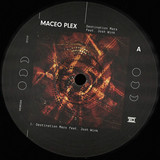
Maceo Plex hasn't dropped an original on Drumcode since 2014 when the hugely popular 'Conjure Infinity' EP was released. Despite this, he's been a significant feature at DC events over the last year.
Sharing a tight relationship with Adam Beyer, the pair have laid down memorable B2B sets at Warehouse Project, Ultra Music Festival, and the Resistance opening party in Ibiza this summer, thus cementing their tight musical bond.
Produced in the early part of 2019, 'Destination Mars' marks his terrific return to Beyer's iconic label. The track is trademark Maceo, a master class in tension and release, characterized by a slick low-end bass hum that gathers steam as crunchy drum lines and breathy vocal accents combine effectively with the main vocal lead, a contribution from Josh Wink, no less.
... No surprise, it went down a storm when debuted at Time Warp's mammoth 25th-anniversary party in April and has been highlighting the Ellum boss' sets ever since.
The ever-reliable Raxon is charged with remix duties, stripping back the track's engine to focus on a central melody, chugging bassline, and hypnotizing vocal effects. Shall Ocin's re-rub is made for misty-eyed mornings as celestial pads result in a transcendental finale to bring it home.
- A1: Haruna Ishola & His Apala Group - Ewure Ile Komoyi Ode
- A2: Adebukonla Ajao & Her Group - Aboyin Ile
- A3: Rapheal Ajide & His Apala Group - Adura Fun Osiwowo
- A4: Haruna Ishola & His Apala Group - Orin To Mo Gbon Wa
- A5: Ra Tikalosoro & His Group - Agilinti Lomu
- B1: Adebukonla Ajao & Her Group - Abd Alawiye
- B2: Haruna Ishola & His Apala Group - Asa Ko Gbodo Wole Gbeiyele
- B3: Adeleke Aremu & His Group - Egbe Arowolo
- B4: Haruna Ishola & His Apala Group - Rufai Baolgun
- B5: Ra Tikalosoro & His Group - Kiniun Kuro Leran Amu Sere
- C1: Haruna Ishola & His Apala Group - S Aka
- C2: Adebukonla Ajao & Her Group - Lekele Bale
- C3: Kasumu Adio & His Apala Group - Odale Ore
- C4: Ayisatu Alabi & Her Group - Oko Lolomo
- D1: Jimoh Agbejo Bo Ogun & His Group - Oriki Ibeji
- D2: Ayisatu Alabi & Her Group - Omo Olobi
- D3: Rapheal Ajide & His Apala Group - Orin Aje
- D4: Adebukonla Ajao & Her Group - Sunday Babayemi
Soul Jazz Records new ‘Apala: Apala Groups in Nigeria 1964-69’ is the first ever collection of Apala music ever to be released outside of Nigeria. The album focusses on a wide selection of recordings made in Nigeria in the 1960's, a time when Apala music was at the height of its popularity. Apala is a deeply rhythmical, hypnotic and powerful
musical style that combines the striking nasal-style vocals and traditions of Islamic music, the Agidigbo (thumb piano), and the equally powerful drumming and percussion rhythms and
techniques of the Yoruba of Nigeria.
The most significant figure in Apala music is undoubtedly Haruna Ishola who features throughout this album. Ishola holds an almost mythological status in his role as populariser of Apala music in
Nigeria. Ishola’s singing was believed to be so powerful that, without proper restraint, it could kill the recipient of his music.
Apala is a popular music that also functioned as a form of cultural resistance – Apala music involved no western instrumentation and is sung in the Yoruba language, its aesthetic an implicit cultural
rejection of the British Empire’s colonial rule over Nigeria which lasted from 1901 until independence in 1960. Apala music was popular and widely accepted in Nigeria due to its philosophical and profound
lyrical content alongside the complex rhythmic patterns of this heavily percussive style, which highlighted many of the percussion instruments of south-west Nigeria.
He's one of a number of popular urban styles of music that came out of Nigeria in the 20th century and sits alongside the more well-known (in the West) styles of Fuji, Highlife, Juju and Afrobeat. Of these modern forms Apala remains perhaps the most ‘roots’ style (sometimes described as ‘neo-traditional’) due to the authenticity of its sound. It has similar Islamic roots to other neo-traditional styles of Nigeria – including Waka and Sakara – examples of which are also
included on this collection contextualising the music of Apala.
These recordings were originally made and released locally by Decca and EMI Records as well as a variety of independent labels in Nigeria and have never been released outside of the country before. Soul Jazz Records are releasing this album as a deluxe double gatefold vinyl (download code), CD, slipcase and booklet, both containing full text and photography.