BLACK/RED VINYL
A match made in heaven and hell, since forming in the cradle of Europe Athens, back in 2012, dark synth duo Selofan have paved their own perditious way, reinventing the modern Darkwave scene throughout the continent and worldwide with their prolific creativity and work ethic over the past decade. Through varied experimental synth-scapes conjured with keen ears for sound design, production, and theatrical aesthetics, Selofan rest not on the laurels of just creating highly danceable coldwave infused music, but with together with Joanna Pavlidou's haunting vocals, and Dimitris Pavlidis' throbbing bass guitar, and modular synth compositions, the pair conjure whole other worlds and narratives throughout each album and music video they create. Thus far the Selofan have released 5 studio albums, issued through their own legendary label they curate themselves: Fabrika Records. Through their Fabrika family, Selofan have championed such acts as Lebanon Hanover, and She Past Away, aiding these bands in becoming two of the most popular Darkwave acts worldwide. Drab Majesty even cameoed in a She Past Away video while being hosted by Selofan during one of the band's frequent stays in Athens, and Kaelan Mikla, a handpicked favorite of The Cure, were first championed by Selofan, through the release of the Icelandic Trio's self-titled debut in 2016. In the Spring of 2020, Selofan released the video for the hopelessly plaintive "There Must Be Somebody", the first single from their forthcoming sixth studio album Partners In Hell, the follow-up to 2018's widely popular Vitrioli LP. "There Must be Somebody" is a discordant composition, mimicking the startled song of birds after a disturbance in a wooded enclave on a mountainside, while a magick ritual unfolds. The album itself opens with "Grey Gardens", a menagerie of morose melodies setting a sombre tone for the rest of a bleak record whose sound design and dreamscapes evoke the best sounds of British and German post-punk of the 80s. "Almost Nothing" is a brooding bell-driven track with a dark and pirouetting melody that is the perfect soundtrack to a figurine twirling in a music box. The German language "Nichts" means No, and this song is both sinister and cinematic with sighing keys, shuddering drum machines, and German lyrics sung with sorrowful conviction. "Zusamen", is a word often asked if you are together, or separate, is a dark ballad whose shadowy keys weave a nightmarish delirium, evoking the soundscapes of a lullaby sung in a haunted dollhouse. "4am" is a restless rhythm, whose soft percussive melody tosses and turns alongside subtle bass and string accents overlaid with despondent vocals. "Happy Consumers" sounds like the swirling of a finger drawn upon the edge of crystalline glass, with vocals and drum machines coming emanating from an adjacent room with echoing acoustics, collectively evoking the sound like lingers when the somnambulist wakes from his dream. "Absolutely Absent" hums onward like a phantom train ride that is a one-way ticket to madness, and with the next track "Metalic Isolation" the locomotive beats gather more steam, propelled forward with anachronistic melody. The album closes with "Auf Dein Haut", which translates as on your skin, and the song is both tactile and tenebrous with sensuously dark synth textures amidst howling German vocals that take flight like witches during a sabbat. Partner's In Hell was mixed and produced by Serafim Tsotsonis, and mastered by Doruk Ozturkcan. Genre: Alternative / Post-Punk / Cold Wave
Suche:no made
- A1: Ann Wants To Dance
- A2: Simply Are
- A3: Toria's Song
- A4: Stories Of Numbers
- A5: Green Juice
- A6: Trampoline
- B1: Good Times On Earth
- B2: Chubby Baby
- B3: Brother
- B4: Wanted
- B5: Louise
- B6: One Of Those Days
Who doesn’t remember their hit song Ann Wants To Dance ?
Soundtrack of the summer 2015 and which music video made by Soko got a few millions views. This cheerful and addictive tune laid the foundations for the four-handed songwriting style of Ulysse Cottin (brown hair) and Armand Penicaut (blond hair). Those two performers, who compose and sing effortlessly in English, posed with a cheerful attitude on the sleeve of their first album Green Juice (2016) recorded at the Cap Ferret and mixed by Ash Workman (Metronomy, Frànçois & The Atlas Mountains, Baxter Dury). Papooz have a talent for sway pop and irrefutable groove like very few of their compatriots, aside from Phoenix we cannot think of anyone else. Tropical pop here, wild bossa nova there, all of it deeply anchored in the American style of the Seventies, Ulysse and Armand are perfectly matched. Falsely dabbler and completely inspired, the duo fights the ambient gloom with their songs.
Two Times Juno awards listed and 2 times Polaris price listed, Canadian Soul Star Tanika Charles unleash the new album "Reason To Stay that drops on May 16 via independent soul label Record Kicks. Reasons To Stay is Tanika Charles' fourth full-length album, and her most introspective to date. Where her songs have typically touched on romantic love and heartache, the core love and loss of this record is family focused. It has taken years for Tanika to be able to publicly reflect on the childhood trauma and family breakup that occurred during her teens. The majority of the album was composed by Tanika with the tight knit team of Scott McCannell (Lydia Persaud, Henry Nozuka), Kyla Charter (Aysanabee) and Chino de Villa (Jessie Reyez). Kelly Finnigan of the Monophonics joined in to mix the bulk of the project and apply some trademark analogue grit to Tanika's sheen. Guests include Quebec-based Soulful singer/songwriter Clerel on the last track "Win", as well as Toronto soul artists Aphrose and Claire Davis providing additional vocals. "I love this album. I love singing these songs. I love that it's made me step outside of my comfort zone. It's forced me to face the root causes of my own insecurities that I carry to this day. Why am I striving so hard to seek validation, and why take it so personally when it doesn't come? That distortion has prevented me from celebrating my own successes at times. This album is me trying to change that." "I love the conversations that have begun with these songs. It's about childhood trauma, but it's not a victim story. I'm doing well, despite the baggage I carry. I want others to be able to carry theirs too." In the last few years, Canadian Soul/R&B powerhouse Tanika Charles has transformed from an emerging solo artist to a commanding performer and bandleader, cementing her status as a staple in the Canadian soul scene. Her previous studio albums - "Soul Run" (2017), "The Gumption" (2019), and "Papillon De Nuit" (2022) - have propelled her to international acclaim, earning her two JUNO nominations, two Polaris Prize listings, and a growing global fanbase. Extensive touring across North America and Europe has further solidified her reputation, with standout performances at festivals such as Trans Musicales in France, Fusion Festival in Germany, Mostly Funk & Soul Festival and Jazz Festival in the UK, Holy Groove Festival in Switzerland, and Canarias Jazz Festival in Spain. She has also shared the stage Estelle, Mayer Hawthorne, Haitus Kayote, Lauryn Hill, Bedouin Soundclash and Macy Gray. Tanika's meteoric rise and undeniable artistry have been widely championed by outlets such as KCRW, KEXP, BBC6 Music, Exclaim!, CBC Music, Uncut Mag, PopMatters, Albumism .. further solidifying her position as a global soul sensation.
- A1: Hornet Disaster
- A2: Meanie
- A3: Angel
- A4: Take Care Of Yourself (Paper - Like Nests)
- A5: Hug
- A6: Radar Ballet
- A7: Green Tea Seaweed Sea
- A8: Blood Online
- A9: Blanket
- A10: Pulka
- B1: Heartbeats
- B2: Chopland Sedans
- B3: Cooperative Calligraphy
- B4: Ripped Apart By Hands
- B5: Nostalgia Drive Avatar
- B6: Aldehydes
- B7: Tiara
- B8: Agatha's Goldfish (Sparkling Water)
- B9: Heaven Smile
2LP[36,09 €]
"“It clicked for me one day, that the album was going to be about hornets,” explains Sputnik, the mononymous songwriter behind the noise-pop project Weatherday.
“It just made sense to me.” Hornet Disaster, Weatherday’s follow-up to their 2019 debut Come in, and spiritual successor to 2022’s collab release Weatherglow, is their most expansive work to date. In Weatherday’s initial bout of inspired writing and recording, they produced over 70 songs for the record, but not before they had a complete, overarching narrative that was coherently tied back to Sputnik’s previous work.
It’s a bustling record with disparate songs each vying for space like wasps in a swarm. It can inspire caution and chaos, but there’s wonder, purpose, and a certain familiarity there, too. Weatherday has extended the knotted, thrashing maximalism of Come in by doubling down with the uncompromised, no-stone-unturned nature of Hornet Disaster. Where Come in was the product of an artist searching for their voice, Hornet Disaster represents the joyful abandon that comes from having found it."
- A1: Hornet Disaster
- A2: Meanie
- A3: Angel
- A4: Take Care Of Yourself (Paper - Like Nests)
- A5: Hug
- A6: Radar Ballet
- B1: Green Tea Seaweed Sea
- B2: Blood Online
- B3: Blanket
- B4: Pulka
- B5: Heartbeats
- C1: Chopland Sedans
- C2: Cooperative Calligraphy
- C3: Ripped Apart By Hands
- C4: Nostalgia Drive Avatar
- D1: Aldehydes
- D2: Tiara
- D3: Agatha's Goldfish (Sparkling Water)
- D4: Heaven Smile
Cassette[15,92 €]
"“It clicked for me one day, that the album was going to be about hornets,” explains Sputnik, the mononymous songwriter behind the noise-pop project Weatherday.
“It just made sense to me.” Hornet Disaster, Weatherday’s follow-up to their 2019 debut Come in, and spiritual successor to 2022’s collab release Weatherglow, is their most expansive work to date. In Weatherday’s initial bout of inspired writing and recording, they produced over 70 songs for the record, but not before they had a complete, overarching narrative that was coherently tied back to Sputnik’s previous work.
It’s a bustling record with disparate songs each vying for space like wasps in a swarm. It can inspire caution and chaos, but there’s wonder, purpose, and a certain familiarity there, too. Weatherday has extended the knotted, thrashing maximalism of Come in by doubling down with the uncompromised, no-stone-unturned nature of Hornet Disaster. Where Come in was the product of an artist searching for their voice, Hornet Disaster represents the joyful abandon that comes from having found it."
- A1: Caravan (Tizol, Ellington) 5:50
- A2: Wishes (F. Sotgiu) 3:05
- A3: Ballad For Aisha (Tyner) 5:11
- A4: Stranatole (F. Sotgiu) 2:50
- B1: Black Bats And Poles (Walrath) 4:14
- B2: 7Th Street (F. Sotgiu) 4:48
- B3: Wise One (Coltrane) 3:24
- A1: Afro Blue (Santamaria) 3:37
- A2: Duke Ellington’s Sound Of Love (Miingus) 4:48
- A3: Take Five (Desmond) 5:00
- A4: Lotus Blossom (Strayhorn) 1:06
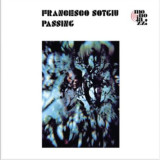
- B1: Passing (F. Sotgiu, L. Bonafede) 7:09
- B2: Calm (F. Sotgiu) 4:35
- B3: My Foolish Heart (Washington, Young) 6:37
Francesco Sotgiu has forged a unique and very swinging project of songs. With a quintet consisting of Luigi Bonafede on piano, Emanuele Cisi and Riccardo Luppi on woodwinds, Salvatore Maiore on bass, Francesco on drums, and with special guest Paolo Fresu on trumpet to cap off this heartfelt collection. There is also a nice diversity of groups within this larger collection. A nice trio piece called “Calm” featuring Paolo Birro sitting in with Marco Micheli and Francesco. And one called “Lotus Blossom” where Francesco shows his considerable skills and soul on violin. But the bulk of the material is straight-ahead jazz and is totally swinging and soulful, proving that jazz has no borders and is a worldwide language to which Francesco has added to that tradition with this project and all the great voices he has included here. Bravo maestro.
This is the comment of Gil Goldstein, American accordion player who won 5 Grammys and collaborated with giants such as Gil Evans, Wayne Shorter, and Michel Petrucciani.
This record was recorded in the middle of the pandemic times, and most of the work for preparing this record took place via the telephone: the selection of the songs on paper, the exchange of ideas on arrangements, staff and instruments, a sort of “phone rehearsal” of the structure of the songs, with the choice of a solo; everything else, everything that will happen in the recording sessions, is the result of a controlled improvisation, a jam session masterfully captured in the studio through the use of well-positioned ribbon microphones.
This is why “Passing,” literally “passing” or “crossing”: because the musicians have gone through listening to these songs as teenagers, and find themselves today, as a mature meeting of old friends who create an informal game made of nostalgic fun, great personality, confrontation, and deep spirituality. In the classic “Caravan” by Ellington and Tizol or “Afro Blue” by Mongo Santamaria, Coltrane toning, the Latin accent of the rhythm section supports the interpretation of the theme and the interplay in the solos between the soprano and tenor saxophones by Cisi & Luppi, and the piano by Bonafede.
A certain elegance in the execution distinguishes pieces such as Duke Ellington’s “Sound of Love,” yet another tribute by Mingus to the Duke, with a calibrated solo on the double bass of Maiore and the flute by Luppi, the immortal “Take Five” by Paul Desmond, with the highlighted soprano by Cisi, “Wishes,” “7th Street,” and the eponymous “Passing,” all pieces composed by Sotgiu, characterized by the precise medium/fast drive of the drums and a certain “cinematic” taste of the main themes.
In songs such as “Black Bats and Poles,” composed by trumpeter Jack Walrath for the Mingus Orchestra, and in “Stranatole,” an original piece in which Sotgiu writes a theme of Monk’s influence and enjoys overturning the traditional “Anatole Jazz” structure, the quintet opts for an effective hard bop language, with exciting moments of dazzling virtuosity in Bonafede’s solo. While in Coltrane’s “Wise One” and McCoy Tyner’s “Ballad for Aisha,” we enter a modal, mystical, and ceremonial jazz, of a cosmic depth, which seems to hover in the sweet volume of the great hall of the recording studio. These are truly magnificent interpretations.
A special separate mention for two classics such as “My Foolish Heart” by Victor Young, performed in trio by Sotgiu, Maiore, and the unmistakable trumpet by Paolo Fresu, and the (unfortunately very short) “Lotus Blossom” by Billy Strayhorn and Duke Ellington, which in the piano-violin duo of Birro and Sotgiu, in a minute gives a suspended momentary magic, sums up the roots of African-American jazz music, and also referencing an old-fashioned Italian musical sensitivity, typical of Nino Rota’s music for Federico Fellini’s films.
- A1: All Natural
- A2: Erryday 99
- A3: Falling
- A4: Fresh Rain
- A5: It Ain't Nothing
- A6: Lazy Sunday
- A7: Masterpiece
- A8: No Factor
- A9: That Won Joint
- A10: To Paris With Love
- A12: Treal (True Real)
- A13: Trump Tight
- B1: Watch Time Reveal
- B2: Work It Out
- B3: We Made It
- B4: That Movie Joint
- B5: Apartment J
- B6: Spitfire
- B7: Genres (Feat. Kris Brown)
- B8: We
- B9: Late Night
For the first time on vinyl, J Rawls 1999 beat series offers scenes 1-3 and 6 never before heard tracks. All these beats are from the archives of Rawls in his early years (1996-1999) as a young producer in Cincinnati, OHIO. These beats are the essence of that Rawls sound and embody his entire style. According to Rawls, “I did this album because I have had so requests for my music from that underground hip-hop era. This record took me back to a time when making music was just for fun.”
"The Beatles spread the use of electric guitars all through the world, and Bolivia was no exception. “The British Invasion” hit a politically convulsed country, and it fell upon a rich multi-cultural scene that was further expanded when the psychedelic counterculture youth movements coming from San Francisco also took the hearts of the country’s youngsters.
It was a big mixture of influences thrown in a cauldron that saw a link between the LSD drenched hippie generation and the country’s native ancestors. Bolivians were not new to mind-expanding experiences, the acid experiences promoted in the USA by Ken Kesey and Timothy Leary found their local counterpart in the old indigenous traditions of using plants such as the ayahuasca to open their doors of perception.
On this compilation you will find some of the more interesting young bands from a 1960s Bolivia bringing the sounds of a new generation and marrying them with the rich musical background of the country. The garage-sounding psychedelic beat made by these young musicians would soon open new horizons, and Bolivia would soon see how traditional sounds, like their local version of the cumbia, would evolve in a similar way as it would do in the neighboring country of Perú."
Now on album number seven , Metronomy has continued where many of their 2000s ‘cool’ band peers have dropped off along the way. Small World is a return to simple pleasures, nature, an embracing in part of more pared down, songwriterly sonics (some moments wouldn’t sound amiss on a Wilco release), all while asking broader existential questions: which feels at least somewhat rooted in the period of time during which it was made – 2020. For all that Mount seems to think he has made a comparatively sombre record, much of Small World still pulses with the zesty, tongue-in-cheek joie de vivre you’d expect of a Metronomy record.
So sure, things are different now Joe Mount is getting older and what’s on his mind is changing, but that doesn’t mark a change in quality for Metronomy. An immaculate set of tracks, Joe Mount’s ability as a songwriter and arranger shines through on Small World, evergreen. Metronomy might be growing up, but they’re not afraid to still have fun with it all. Through the tumultuous ebb and flow of the years, Metronomy continues to endure and make great pop music – and, really, that’s all that we could ask for.
A. Whoa! Here she comes : Norman Ray: Whoa! Here is the first 45 from On Point Records and what a “Maneater” it is. Hopefully you’ve had your Oates and this smooth rendition will have the heads bopping in the dance Hall. At 92 Bpm this is combo is not to be missed… as you’d be absolutely Playing Yourself.
B. The Magic Word : Marshall Miller: Abracadabra : The new mysterious duo at ON POINT RECORDS have made that Magic flip. Combining Em n’ Steve M for a fun party heater at 112BPM For when you can’t cool down and have to keep spinning round and round.
- A1: A Grave Fall (January)
- A2: Saddle Up
- A3: Was He Good - The Bunny Business
- A4: Bingo Bingo Bingo
- A5: They Say To The Mountain
- A6: Belly Up
- A7: Une Planete
- B1: Twist
- B2: Galveston Beach Pink Dust (April)
- B3: Hell Applaud This Turn!
- B4: A Greater Name Is You
- B5: Run It
- B6: Grab Her Neck And Tell Her I Love Her
On their most explicit venture into music for moving image, Miles Whittaker & Sean Canty rudely fracture piano and vocal recordings by US filmmaker-musician Kristen Pilon in a short-circuiting of style and pattern.
Shredding up definitions of electro-acoustic opera, spectralist chamber musique and concrète rave, Demdike hit square between the eyes/ears of film music vernaculars on a startlingly strong addition to their unique oeuvre, now in its 16th year of elusive psychoacoustic strafes and jump-cuts across putative borders. The 13-part, hour-long album dislodges source material made for the experimental film ‘To Cut and Shoot’, by Kristen Pilon, an NYC-based musician and filmmaker, to farther refract the film’s themes of serendipity and the nature of ghosts and dreams with a flickering flux of sound-imagery and aleatoric weirdness appropriate to her original meditations, but also freely messing with their forms.
Situated just a few miles north of Houston, Cut and Shoot is a relatively insignificant Texas town with an unforgettably bizarre name. Pilon grew up not far from Cut and Shoot, and it's there where she ran into 65-year-old machinist and motorcyclist Robert Lewis Stevenson, better known as Bobbo, who's pictured on the album's cover. The meeting occurred a few months after Pilon recorded her improvisations on piano, strings and voice in the basement cellar of the Halle in Manchester, with Bobbo providing the necessary narrative heft the trio needed to inspire an experimental film and its accompanying soundtrack.
Responding to Kristen’s initial piano and operatic vocal recordings, Demdike return a volley of discrete parts tilting from typically cantankerous mayhem to quieter, more clandestine buzzes sliced with crazed interstices of the imagination, all marbled with the plasmic contrails of the paranormal which have long been peculiar to their work. With a poetic flair reflecting Pilon’s own phrasing and melding of mediums, Demdike unfold and expand her melodic fragments into temporal mazes, variously resembling the most messed-up ends of The Caretaker in ‘A Grave Fall (January)’, but also liable to skew into buckshot club turbulence, as with ‘Belly Up’, or the bittersweet bruk contortions of ‘Twist’.
The storyline wickedly frays and loops into itself with a non-linearity that recalls the mid-to-latter stages of Lynch’s ‘Mulholland Drive’ or waking from a sweaty fever dream only to pitch back into its thorny bush of ghosts, often within the space of one track. It’s testament to the ever-tighter binds of Demdike’s symbiotic vision that the results nevertheless hold a thread of logic that weaves in everything from their Jon Collin jams to reams of mixes and Gruppo edits with an unresolved, open-ended quality that still keeps us on our toes, perhaps more so than ever here.
- A1: Del Jones - The Last Letter
- A2: Herb Johnson - Where Are You
- A3: Timothy Mcnealy - Will You Be There
- A4: Little Beaver - Do Right Man
- A5: Soul Superiors - Trust In Me Baby
- A6: Outback - Strangers In Our Homeland
- A7: The Montecarlos - If You Leave
- A8: Words Of Wisdom - You Made Me Everything
- B1: Soul Charges - My Heart Beats For You
- B2: The Power Of Attorney - I'm Just Your Clown
- B3: James Reese - Throwing Stones (Kenny Dope Mix)
- B4: Richard Marks - I'm With You Love
- B5: Bonnie Floyd - You're My Everything
- B6: The Ledgends - A Fool For You
- B7: Apple & The Three Oranges - Moonlight
This anthology follows Now-Again's Loving On The Flipside, issued more than a decade ago. And that anthology itself got its start in a different time, a decade even earlier - the era in which Now-Again's Egon and his friends chased down funk 45s and the odd LP for their testosterone riddled, aggressive sound. Often times the funk song on one of their chosen is would be the throw-away b-side, the hasty afterthought the band cobbled together the night before hitting - or while in - the studio because they'd put all of their energies into writing the amazing ballad that would ensure their entry in soul's history books. Every once in a while, that funk song they coveted could have been - in an alternate universe - a ballad. The Third Guitar's "Baby Don't Cry," El Pooks* "I Could Do The Impossible" and Spider Harrison's "Beautiful Day" all fit into this category. That realization notwithstanding, more often than not they shined over the ballads to get to the tough stuff. Then they started flipping those funk records over to find some loving on the flip side. Some marvellous tunes were there to be found. This is the long awaited follow up. Contained within this anthology are some of the greatest soul ballads that go sweet with a beat - or, to follow our tagline, epitomize "sweet funk." Most of these songs have never been compiled. Some have never been issued in any form. Some, like the Ledgends entry here, were sampled to great success (in that case for Freddie Gibbs and Madlib's "Deeper"). Some haven't been sampled, but, like Herb Johnson's entry, are patiently awaiting their day. It should go without saying that we're proud to present this music in good conscience; with the full participation of everyone but the most obscure names contained within. And, for those who we've not yet been able to contact, this is our message: We've found your brethren, we've placed them beside you on an album that we hope you feel is befitting of your collective contributions to soul music and now we're just waiting for you. Though the music you recorded is from the years past, vour time is now.
- Alone Together
- How High The Moon
- It Never Entered My Mind
- Tis Autumn
- I Talk To The Trees
- If You Could See Me Now
- September Song
- You'd Beso Nice To Come Home To
- Time On My Hands
- You And The Night And The Music
- Thank Heaven For Little Girls
The complete LP + 2 bonus tracks - limited edition pressing on 180g vinyl
Although Chet Baker and Bill Evans were both highly lyrical and introspective players who could have made a fabulous partnership, they only ever recorded together on a couple or so occasions. By the time the recordings here were made, Chet Baker had been a star for less than a decade and this wholly instrumental album presents him accompanied by other great jazz stars with whom he would also rarely play and record with again.
"Chet Baker's penultimate session for Riverside produced an all-star lineup to support him, including jazz heavyweights Pepper Adams, Bill Evans, and Kenny Burrell. Each of them makes important contributions to the session. A good place to hear Baker's special way with the horn is made even more attractive with the presence and contributions of top jazz artists." - ***** Dave Nathan, AllMusic
- By The Line
- Casa Di Riposo, Gesu' Redentore
- Seventeen Fabrics Of Measure
- Bruststärke (Lung Song)
- Schloss, Night
- Neither From Nor Towards
Aunes is a rare solo album from peripatetic Australian cellist-composer-performer Judith Hamann, presenting six pieces recorded across several years and countries. Developing the collage techniques and expanded sound palettes heard on their previous releases, Aunes makes use of synthesizers, organ, voice and location recordings alongside the dazzlingly pure, enveloping tones of Hamann's cello. The record takes its name from an old French unit of measurement for fabric, varying around the country and from material to material. Unlike the platinum metre bar deposited in the National Archives after the Revolution as an immovable standard, an aune of silk differed from an aune of linen: the measure could not be separated from the material. In much the same way, in these six pieces_which Hamann thinks of as `songs'_formal aspects such as tuning, pacing, melodic shape and timbre are not abstractions applied universally to musical material but are inextricable from the instruments and sounds used, even from the places and communities in which the music was made. Audible location sound embeds the music in its place of making, as in the delicate duet for church organ and wordless singing `schloss, night', where shuffles and cluttering in the reverberant church space form a phantom accompaniment, gradually displaced by a uneasy shimmer of wavering tones from half-opened organ stops. `Casa Di Riposo, Gesu' Redentore' documents a walk up a hill to an outdoor mass in Chiusure, layering voices near and far with footsteps, insects and other incidental sounds. Like in the work of Moniek Darge or Luc Ferrari, location recordings are folded on themselves in space and time, their documentary function dislocated to dreamlike effect. On other pieces, it is the emphatic presence of the performing body that grounds the music, whether in the intimate fragility of Hamann's softly sung and hummed vocal tones or the clothing that rustles across a microphone on the opening `by the line'. The idea of a music inextricable from its material conditions is perhaps most strikingly communicated on the album's briefest piece `bruststärke (lung song)', composed from layered whistling recorded while Hamann suffered through an asthma flare up, the results halfway between field recordings of an imaginary aviary and the audiopoems of Henri Chopin. More than any of Hamann's previous solo works, a strong melodic sensibility runs through Aunes, even when, like on `seventeen fabrics of measure', the music hangs together by the merest thread. At other points, Hamann's love of pop music is more obvious: the rich synth harmonies of `by the line' could almost be a melting fragment of a backing track from Hounds of Love. The expansive closing piece `neither from nor toward' exemplifies the highly personal musical language that Hamann has developed in recent years through constant solo performance (and a rigorous discipline of instrumental practice), pairing two overdubbed voices with the boundless depth and harmonic richness of just-intoned cello notes, calling up Ockegham or Linda Caitlin Smith in its elegiac slow motion arcs. Hamann's most personal work yet, Aunes arrives in a striking sleeve reproducing a section of a painting made from sewn pieces of dyed wool by Wilder Alison, a friend and fellow resident at Akademie Schloss Solitude, one of the temporary homes where much of this music was recorded.
Two new faces on the label with the two-faced eagle! Both artists have been much respected forces on the international club circuit for a while. IDA ENGBERG is best known for her affiliation with Stockholm’s Drumcode and Truesoul labels. For her Speicher debut though, she’s tapping into a quite different sound territory. “Nothing Feels The Same” will go down in history as the first 2 Step track ever released on KOMPAKT EXTRA. It’s as sensual as it’s booming. Definitely one for those late morning hours. With “Pink Monkeys” is an EBM/sawtooth trance amalgamation of the highest order with enough psychedelic headroom for the festival season.
MARCO RESMANN’s deep involvement with the late Berlin club legend Watergate has made him one of the German capital’s beacons of house and techno. He’s one half of Lunar City Express and former member of Pan-Pot which speaks volumes about his stylistical versatility.”“RIMA feat. Laatz” he delivers a frenetic rollercoaster ride of a techno track. It’s radical, it’s menacing and super fun all at once – A truly one of a kind techno track. “Dimensions” is a low-slung electro bulwark full of intricate details to keep head and feet going in unison.
Zwei neue Gesichter auf dem Label mit dem doppelköpfigen Adler! Beide Künstler sind seit einiger Zeit angesehene Größen in der internationalen Clubszene. IDA ENGBERG ist vor allem für ihre Zusammenarbeit mit den Stockholmer Labels Drumcode und Truesoul bekannt. Für ihr Debüt auf Speicher betritt sie jedoch ein ganz anderes Sound-Territorium. „Nothing Feels The Same“ wird als erster 2-Step-Track, der jemals auf KOMPAKT EXTRA veröffentlicht wurde, in die Geschichte eingehen. Es ist ebenso sinnlich wie dröhnend. Definitiv etwas für die späten Morgenstunden. Mit „Pink Monkeys“ ist eine EBM/Sägezahn-Trance-Verschmelzung der höchsten Güteklasse mit genug psychedelischem Headroom für die Festivalsaison entstanden.
MARCO RESMANNs tiefe Verbundenheit mit der jüngst verstorbenen Berliner Clublegende Watergate hat ihn zu einem der Fixpunkte der deutschen Hauptstadt in Sachen House und Techno gemacht und weit darüber hinaus. Er ist eine Hälfte von Lunar City Express und ehemaliges Mitglied von Pan-Pot, was Bände über seine stilistische Vielseitigkeit spricht. Mit „RIMA feat. Laatz“ liefert er eine frenetische Techno-Achterbahnfahrt, die gleichermaßen radikal, bedrohlich ist und ungemein Spaß macht – ein wirklich einzigartiger Track für die Ewigkeit. ‚Dimensions‘ wiederum ist ein tiefgründiges Electro-Bollwerk voller komplexer Details, das Kopf und Füße sicher im Einklang hält.
- A1: Santiago Silva Y Hnos - El Pito
- A2: Ñico Estrada - Salchicha Con Huevo
- A3: Beto Villena - Dejenme Ser Libre
- A4: Nilo Espinosa - Lindo Caballito
- A5: Pancho Acosta Y Sus Guaracheros - Heriberto Boogaloo
- B1: Melcochita Y Karamanduka - Peruvian Boogaloo
- B2: Kintos, Los - Sin Caña Y Sin Platanal
- B3: Joe Di Roma - Bugalú Cornejo
- B4: Santiago Silva Y Hnos - La Batea
- B5: Tito Chicoma - Pata Pata Pelada
- C1: Joe Di Roma - Popurri De Boogaloo
- C2: Melcochita Y Karamanduka - Peruvian Guajir
- C3: Melcochita Y Sus Astronautas - Rumba A Gogo
- C4: Sonora Casino - Guajira De Amor
- C5: Luciano Luciani Y Sus Mulatos - Guajira Cubana
- C6: Mario Allison Y Su Combo - El Boogashake
- D1: Coco Lagos Y Sus Orates - Tumba Coco
- D2: Kintos, Los - Bam Bam
- D3: Laghonia - Bahía O New Juggler Sound
- D4: Otto De Rojas - Soul Limbo
- D5: Sangre Joven - No Se No Se
- D6: Rayos Del Ande - Cadera Contra Cadera
These two vinyl records showcase the legacy left by the boogaloo movement in Peru between 1966 and 1975. They comprise twenty-two songs by seventeen artists who recorded on the remarkable local label MAG more than five decades ago and now invite today’s new generations to dance body and soul to these re-releases. You will find outstanding tracks by the likes of Tito Chicoma, Melcochita, Los Kintos, Otto Rojas, Coco Lagos among many others. MAG was one of the most important and prolific labels in Peru and, though it also was involved in releasing a lot of other types of music, its specialty was the tropical variety, which coincidentally, DJs and collectors seem to crave most. Peru developed a major boogaloo scene in the mid-60s, far from the genre’s place of origin, New York, where iconic songs like 'Bang Bang' and 'El Pito', fused soul and funk with Latin sounds, conquering dance halls and winning extensive radio airplay. The music trend soon spread to Caribbean countries and from there made the geographical leap to the city of Lima. 'El Pito', the collective creation of the Joe Cuba Sextet, was particularly popular. Shorn of overelaborate arrangements, the improvisation and spontaneity of the song resonated with the young generation who were avid for new music after the U.S. placed an embargo on the distribution of Cuban music. In July 1966, Rebeca Llave´s label, Disperú, released the 45 RPM of 'El Pito' (and Joe Cuba's LP), promoting the single in the most prestigious newspaper in the country: El Comercio. The press information stated that the record had sold seventy thousand copies in New York and fifty thousand in Los Angeles. That same year local dance versions by the bands of Alfredo Linares (MAG) and Lucho Macedo (El Virrey) were released, followed by another by the band of the Argentinean musician Enrique Lynch who was based in Peru (Sono Radio). These records were a hit with a new generation that embraced Lucho Macedo's band and the garage rock of Los York's with equal enthusiasm. Although Joe Bataan claimed that boogaloo was killed off at the end of the sixties by the labels and their veteran musicians (who conspired against the new generation of singers), Pete Rodriguez, Richie Ray and the Lebrón Brothers continued to release boogaloo records in Peru, but salsa music soon took over.
JP’s historic restoration carpentry has continued to be a baseline for his relationship to music; the yin to his yang, the Burt to his Ernie, the Dolly to his Porter. It was through this concurrent line of work that he met another twice-initialed singer with a penchant for old Americana music, obscure film, and overly elaborate ethnic meal preparations: one JD McPherson. The two became fast friends and would eventually, through many twists, turns, false starts, and biblically-proportionate plagues, enter a modest studio in Nashville to record Harris’ latest album.
Over the course of nine months in 2023, they recorded a sometimes lush, sometimes sparse, and sometimes jarring country album of Harris’ originals, loudly and violently squelching any attempt to pigeon-hole a song into any subgenre of country music. Only albums by Lee Hazelwood and an obscure folk album Waylon Jennings made when his hair was still short were allowed to be mentioned in reference. Featuring the guest vocals of Erin Rae, The Watson Twins, Shovels & Rope, and producer JD McPherson himself, the record is equal parts satire, reflection, and apology to those that would listen.
In a musical landscape of period-correct reproduction, “outlaw” internet posturing, and flavor-of-the-month variants on country,
“JP Harris Is A Trash Fire” burns bright as a dumpster in a Walmart parking lot on a moonless night; some will fear it, some will gravitate to its acrid warmth, and most will have no idea what to make of the situation. Harris has been steadily elbowing the definitive boundaries of “country music” wider with every album, both sonically and lyrically, and his latest piece of self described “Avant-Country” is no exception.
- A1: Yousui Inoue - Umi He Kinasai 5 29
- A2: Keiko Nosaka / George Murasaki - Oritatamu Umi 5 17
- A3: Higurashi - Natsuno Kowareru Koro 3 56
- B1: Blue - Mangrove 6 45
- B2: Rehabilual - Yaponesia Sakura 5 07
- B3: Sachiko Kanenobu - Asano Hitoshizuku 4 36
- C1: E S.island - Yumefurin 3 47
- C2: Akiko Kanazawa - Esashi Oiwake(Maeuta) (Virtual Reality Mix) 5 53
- C3: Voice From Asia - Sweet Ong Choh 4 43
- D1: Nami Hotatsu - Asa Hikari Ame Yume 1 53
- D2: Nav Katza - Heaven Electric 5 26
- D3: Naomi Akimoto - Tennessee Waltz 3 01
compiled by tsunaki kadowaki
artwork by yoshirotten
mastering by kuniyuki takahashi
Tsunaki Kadowaki, a staff member at Kyoto’s record store Meditations, the supervisor of "New Age Music Disc Guide", and the founder of Sad Disco, curates the fourth installment of "Midnight in Tokyo" themed around Ambient Kayō.
The Midnight in Tokyo series by Studio Mule focuses on Japanese music, serving as a soundtrack for Tokyo nights—whether for home listening, club play, or as a driving BGM, transcending location and space. After a six-year hiatus, the fourth volume takes "Ambient Kayō" as its new perspective, compiling genre-defying tracks released between 1977 and 1999 to explore the intersection of Japanese ambient and pop music.
For this long-awaited fourth installment, selections were made regardless of record label status (major or independent), era, format (vinyl or CD), original release price, or prior reissues. Instead, the focus was on music that deeply moves the listener, is open-minded and evocative, brims with inspiration and spiritual insight, and embodies the "utagokoro" (singing heart) of Japanese artists.
Opening the compilation is "Umi e Kinasai" by Yōsui Inoue, a legendary Japanese singer-songwriter whose works have recently gained renewed interest as hidden gems of Walearic and ambient pop
Composed and arranged by Katsu Hoshi—who is also known for his arrangements on Inoue’s masterpiece Ice World—the track features renowned players such as Masayoshi Takanaka, Hiroki Inui, and Shigeru Inoue. The song embodies a yearning for Balearic horizons, tinged with youthful vibrancy and sentimentality.
Next, "Oritatamu Umi", compiled from Keiko Nosaka, a 20-string koto player, and George Murasaki, a pioneer of Okinawan rock, is an instrumental track from their album "Niraikanai Requiem 1945". As the title suggests, it carries themes of requiem and remembrance, conveying poetic lyricism even without words. Blending Ryukyuan/Okinawan harmonies and indigenous elements, it unfolds as an intimate and nostalgic piece of progressive rock.
Also featured is "Natsu no Kowareru Koro" by Higurashi, a folk-rock band led by Seiichi Takeda, formerly a guitarist of The Remainders of The Clover, the predecessor of RC Succession. Like the opening track "Umi e Kinasai", this song was also produced by Katsu Hoshi. It stands as a folk/new music piece that takes a step into an "otherworldly" realm, recommended for fans of Twin Cosmos and Masumi Hara.
From the enigmatic Blue, the only work left by the mysterious composer S.R. Kinoshita, comes "Mangrove", a hidden treasure of Japan's ambient/new age scene from the CD era. With an oriental and enigmatic atmosphere, the track evokes a mystical world of deep, uncharted jungles, unfolding as an otherworldly New Age Kayō.
"Yaponesia Sakura", selected from Rehabilual’s sole album New Child, is a masterpiece of Japanese new age music. Produced by Swami Dhyan Akamo, a disciple of Indian meditation teacher Osho and a renowned balafon player, the track features Michio Ogawa (Chakra) and Atsuo Fujimoto (Colored Music). Their collective artistry creates an exquisite spiritual ambient pop sound.
"Asa no Hitoshizuku", the opening folk song from Sachiko Kanenobu’s album Sachiko, is also included. Known for her legendary folk album Misora, produced by Haruomi Hosono, Kanenobu’s fourth album after resuming her career was inspired by her experiences living in San Francisco and revolves around the theme of "love." This track carries the same intimate poetic world as Misora, imbued with a pure, crystalline innocence.
From the synth-pop band E.S. Island, known for the Haruomi Hosono-produced *Teku Teku Mami", comes "Yume Fūrin ", selected from their long-lost new age classic Nanpū from Hachijo. Created while the band’s core duo was living in Hachijō Island, the album aimed to sonically capture "the high and happy vibrations of everyday island life." This track offers a dynamic, tribal-infused New Age Kayō experience.
Dubbed "the world's first Min’yō House Mix" "Esashi Oiwake (Maeuta) " comes from Kanazawa Akiko HOUSE MIX Ⅰ, a collaboration between Japanese house music pioneer Soichi Terada and Akiko Kanazawa, a renowned min’yō singer. Through the prism of club music, Hokkaido's Esashi Oiwake, one of Japan’s most iconic folk songs, is transformed into a futuristic ambient pop piece with intricate sound design.
The compilation also includes "Sweet Ong Choh", a track from Voice From Asia, a group active between 1989 and 1992 featuring vocal artist Shizuru Ohtaka. Taken from their imaginative minimal work Voice From Asia, released under Aoyama Spiral’s music label Newsic, the song presents a tranquil, tribal-minimal soundscape enriched by ethnic instruments.
Hailed by Haruomi Hosono as having “a shaman residing in her voice,” singer-songwriter Nami Hōdatsu also appears in the selection. Known for her collaborations with Henry Kawahara, her debut album featured "Asa-Hikari-Ame-Yume", a track that now stands as a precursor to modern vocaloid/synthesized vocal music—a hidden gem of post-choir aesthetics that deserves rediscovery.
Likewise, "Tennessee Waltz", from Naomi Akimoto’s album One Night Stand, supported by members of Mariah, serves as another early prototype of vocaloid/synthesized vocal music. The track weaves fragmented vocal samples, pastoral yet sweetly minimal synth sounds, and mechanical beats into a strikingly unconventional piece in the history of Japanese music.
Closing the compilation is "Heaven Electric", a track from Nav Katze’s album Gentle & Elegance, which featured remixes by Autechre, Seefeel, and Sun Electric. Merging elements of IDM, ambient techno, and chillout, the song embodies an optimism reminiscent of space music while seamlessly blending a mystical Japanese aesthetic—an ambient pop masterpiece.
---
The album presents 12 exquisite pop tracks infused with an ambient feeling, resonating deeply with the evolving landscape of the mid-2020s—a time of post-hyperpop and Y2K revival.
Tsunaki Kadowaki (Compiler)
Born in 1993 in Yonago, Tottori, Tsunaki Kadowaki is a staff member and buyer at Kyoto’s Meditations record store. He is the editor of New Age Music Disc Guide (DU BOOKS) and a contributor to Music Magazine, Record Collectors' Magazine, ele-king, and more. Kadowaki has written liner notes for multiple Japanese releases (Brian Eno, Masahiro Sugaya etc.) and runs the Sad Disco music label under Disk Union. He also curates Spotify’s official New Age Music playlist and performed as a DJ at YCAM’s Audio Base Camp #3 in 2024.
All songs recorded and mixed by Pat Lilley at Nexus Recording Studio in Waukesha
Wisconsin between 1998-1999. Songs 1,2, and 4 originally appeared on Parallel
Chlorophyll Regions (Highwater Records 005) 1998. Song 3 originally appeared on
Akarso/Seven Days of Samsara Split 7" (Ricky Schroeder Fan Club 001) 2000. Songs
5-8 originally appeared on Akarso/Faraquet Split CD (404 Records 002) 1999.
Milwaukee's underground scene of the late 1990s harbored many hidden gems, and
Akarso is certainly one of its finest. Blending elements of post-hardcore, math rock,
screamo, and noise rock, the trio quickly made a name for themselves during their
short yet intense existence. Their chaotic and intricate sound earned them a loyal
following within math and post-hardcore circles, and they toured extensively, leaving
behind a legacy that would influence the Midwest's underground music scene for
years to come. With Leave Quietly: 1997-1999, Akarso's complete recorded catalog has
been unearthed, giving listeners a chance to experience the raw energy and innovative
sound of a band that was well ahead of its time. Released through Expert Work
Records, this LP collects Akarso's recorded output from their brief but impactful run.
Featuring Nathan Lilley on vocals and guitar (who would later gain notoriety with Call
Me Lightning), Joe Wong on drums (now a prolific composer for TV and film and host
of The Trap Set ), and Greg Roteik on bass (of Key of Evil fame), the trio's musical
chemistry is undeniable. Their dynamic interplay and knack for combining dissonance
with technical precision is immediately apparent, and this collection serves as both a
time capsule and sheer example of their musical skills.
The songs feel unpolished in the best possible way, full of jagged guitar riffs, off-kilter
rhythms, and aggressive vocals. It's easy to hear why Akarso garnered attention
during their brief career: their music demanded attention. Tracks from the collection
highlight their ability to balance complex structures with visceral energy, reflecting
their post-hardcore roots while pushing into more experimental territory. At the heart
of Akarso's sound is their seamless blending of math rock's technical precision with
the ferocity of post-hardcore and noise rock. The intricate guitar work of Nathan Lilley,
coupled with the driving rhythms of Joe Wong and the powerful basslines of Greg
Roteik, creates a tense and unpredictable musical experience. Time signatures shift
without warning, dissonant riffs collide with frenetic drumming, and Lilley's vocals
pierce through the chaos with a cathartic and desperate intensity.
It's a challenging, chaotic, and emotionally charged album that captures the intensity
of Akarso's live performances and the raw energy of their songwriting. More than two
decades later, Akarso's music remains as vital and relevant as ever, and this collection
that their legacy will continue to inspire future generations of musici