Returnal sees Daniel Lopatin fine tune his craft for creation of deep atmospheres and texture even further.
"Returnal" is the fourth album from Daniel Lopatin's Oneohtrix Point Never project, after "Betrayed In The Octagon" (Deception Island, 2007), "Zones Without People" (Arbor, 2009) and "Russian Mind" (No Fun, 2009). All 3 albums being superbly compiled on the "Rifts" double CD (No Fun, 2009). It sees Lopatin fine tune his craft for creation of deep atmospheres and texture even further. Starting off with the mind blowing triptych of "Nil Admiari / Describing Bodies / Stress Waves", which fires off into a noise / rhythm excess before entering a zone of relative calm building to the melancholy of the final part. This sets the tone perfectly for the albums title track, a stunning out of this world ballad featuring Lopatin's near desperate vocal delivery, ending what could be seen as one of his most chilling and thought provoking sides to date. The atmosphere is slightly lifted as the darkened sun comes up over the ruins on "Pelham Island Road" and "Where Does Time Go", with the album closing with edgy broken beats and fourth world possible landscapes of "Preyouandi", which fades into the distance with echoes of the "Returnal" chorus, closing the loop. What's burnt into memory here is Lopatin's love affair with the long, slow path back home... the cycle... the hypnotic sector... the ghost in the machine... and whether people are making dance music or hip hop or space head music or metal, the ouroboros is present in every sector - as it was in Bach's study, and in the elephant songs of the Ituri forests. Available on CD in digipack and LP in gatefold cover.
Cerca:noise machine
Editions Mego is proud to welcome Powell to its roster with a bizarre and strangely emotive new LP of synthetic computer works entitled Piano Music 1-7.
Via his own Diagonal Records imprint, his work on XL Recordings and, most recently, the opening of audio/film platform A Folder afolder.studio, Powell has firm footing in the contemporary electronic landscape. During a wry and obstinate musical life he has twisted myriad synthetic forms into shapes that explore and expand upon the districts of post-punk, techno, noise + computer music, and in the the last year alone he has released four albums of hi-def abstractions, each inspired by a formalisation of music proposed by Iannis Xenakis.
As an extension of this intense period of work/research/play with stochastic functions using probabilities to compose music, various processes emerged that Powell then began to apply to more traditional musical events. Where ordinarily in his work the probabilities and relationships are used to define parameters such as wave-shape, folding, FM, filter modes etc., he now began to use them to create musical formations and visual scores that could be played back using any software/MIDI instrument one of these can be seen on the rear cover of the LP release. While mapping out this cartography of relations, he used a basic Grand Steinway sampler as a placeholder instrument; the longer the process went on, though, the more he began to embrace the acoustic properties of the synthetic piano and make it the bedrock for this new constellation of work.
Piano Music 1-7, subtitled 'Music for Synthetic Piano and Assorted Electronics', consists of seven different synthetic islands strung together into a single composition. All were composed using the aforementioned processes that allowed Powell to play a piano, even if he never learned to do so with his hands. After all, 'In writing electronic music,' Robin Mackay once wrote, 'you also have to direct the invention of new tools.'
At times the piano skips gleefully over shadowing synthesis, whilst at others the synthetic sheets swarm and envelope the keys. The interplay between the two create a fantastical alternate reality, a cosmic machine in which time is eroded, shrunk and expanded, like a wax upon which operations and relations are inscribed or engraved. Many of the pieces express a playfulness or optimism verging on vitalism, as bundles of piano notes dance and interpolate with a never-repeating range of electronic gestures. The feel is of a brightly coloured flower-bed in various stage of bloom. This interplay of the artifical acoustic and the electronic builds on the pioneering processes developed by David Behrman in works such as Leapday Night, and Piano Music 1-7 could also be posited as a modern take on Conlon Nancarrow's investigations for player piano. Similarly, the razor-sharp sonic properties and unfolding of non-human events recall the computer works of Xenakis and the surgical precision of Mego mainstay Florian Hecker.
Recorded in late 2020, these new Powell works propose not just a bold and bright vision of electronic music but serve also as a map with which, for 35 minutes at least, we can navigate our way out of the current milieu. As the artist himself remarks in the sleeve-notes, '. . . What emerged from this fog or soup for me were ideas and processes that felt affirmative and life giving — sensations I had always hoped to convey in my music. Perhaps the optimism or positivity I felt at these musical events unfolding, these clusters and knots tumbling in different directions across time, can also be felt by you.'
Originally hailing from Scotland, now based in Copenhagen, Numbers present 23-year old producer and deejay Perko with his debut release NV Auto.
The six tracks on this EP hear Perko mining the grooves between his favourite genres for building blocks of inspiration. Drawing from UK soundsystem culture and modern experimental music, half of the record explores deeper atmospheric passages and meditative repetition, characterised by layers of subtly shifting chords, field recordings and delicate polyrhythms.
Three dancefloor cuts, spread throughout the rest of the record, retain this detail and interplay with added energy. Perko's sense of rhythm & space is clear with 'Rounded's glacial synths, blown out drum machines and sculpted sub sine waves. 'What Otters' forges playful UKG touches within a paperclip framework of space-echoes and sparks, whilst 'Songbirds' flips into 4/4 drive with percolated alarms and shimmering pads.
'Density, Noise, Dust, Distortion, Space...' says Perko, if you want it simple.
Zvrra debuts on Avian. The multifaceted artist and video game developer arrives on the label with a brace of glistening ambient Techno and Noise derivatives. The versatile producer, whose auteur approach to recorded output has yielded a wealth of dense and considered material over the years, marries melodic synthesis with glassy, effervescent sound design and considered polyrhythms to arrive at a cohesive but undeniably idiosyncratic nine track offering. Cinematic opener Bizzaroland combines vocal manipulations with phasing, noisy drones that stand in pleasing contrast to a mournful lead that delicately emerges at the midpoint. Follow up Society, offers a meditative take on stepping ambient Techno before Bizzaroland II treats the listener to a heady, stripped back slice of tripping beatless machine music. Tribal cut Figurine closes the A side and sees the material segue into more ominous territory with pulsing low end, percussive flourishes and harsh bursts of white noise. On the flip, B1 Inside sees the artist roll out another stripped back Techno experiment - this time dry and saturated and propelled by a single lead sequence that shifts about the high mids. Oracle returns to a more esoteric, undefined sonic palette - a cacophonous blend of heavily panning drones in line with the artist’s more experimental work. In the same vein Prohibited is a powerful noise cut that finds its contrast in subdued moments towards the end of its run time. As the record approaches its close, Tired Beetle settles the mood somewhat - an introspective, atmospheric ambient recording tethered with admirable low end, before off kilter invocation Untitled draws the collection to its logical end point.
Compound X launch new limited edition vinyl label CX BLACK, with four innovative tracks that set an immediately high standard.
Compound X is DAR and DULUM, both progressive and dedicated journeymen, their visions melting psychedelic rock and deconstructed techno to deliver a forward-thinking take on electronica. Their innovative sound first debuted in April 2020 on Distopic Utopia Records, and a live debut is scheduled for Dark Mofo festival in Tasmania, Australia, this June. The act's dynamic range and genuine sound artistry are what set Compound X beyond the status quo, something that’s clearly displayed with this latest release.
The opener 'Sending Me Signals' is dark and thrilling techno. The blistering synths bring fizzing energy to the hammering kicks, while tortured voices add extra layers of eeriness. There is haunting paranoia to the unsettling voices that loop in the background of 'Gone 2 Far.' The drums are again brilliantly brutal, and the whole atmosphere is utterly arresting.
The synths on 'Asexual Orgasm' sound as if fired from a machine gun with caustic textures, scraping hits, and dehumanised vocals add up to a wall of intense techno noise that will disorientate all dance-floors. Finally, 'Ancient Sentient' is a slightly more spacious cut with buzzsaw synths, undulating rhythms, and distorted bass that makes for maximum impact.
Kulk are a Norfolk two-piece wielding a barrage of sonic density across sludge, noise metal and psych. Jade Squires (drums and synth) and Thom Longdin (vocals and guitar) are distinctive and stark in their execution; a hungry new face of UK heavy music, cultivating acclaim from Metal Hammer, Echoes and Dust, Outline, Anti-Despair Machine, Down The Front Media, with radio plays from IORadio, BBC Introducing Suffolk and Future Radio as well as Steve Lamacq (BBC 6 Music).
Kulk’s sophomore monolith ‘We Spare Nothing’ is a demonstration of their importance within the UK underground and their progression into sharper, harder hitting noise rock. Glacial, pummeling riffs and drum passages give the spine to their stifling atmosphere, a refreshing take on the psych-tinged doom of entities like Sleep, The Melvins and Pigsx7. With their blistering live performances in tow,
‘We Spare Nothing’ will sear it’s mark into the UK scene in 2021.
Welcome to the world of Spöön Fazer!
This lost cold wave artist self-released a sought after 7” single in 1980 - Music 2 Dance 2 - and a 12” EP Sunset on Illuminated Records in 1982. In 2008 German label Anna Logue released an EP of unreleased songs that quickly sold out. Spöön featured on Cherry Reds Close To The Noise Floor compilation (2016) examining innovative U.K. electronica released between 1975 and 1984.
The music on these releases showcase Spöön's unique style that blended together art rock, drum machines, guitar, bass, washes of synthesisers and a compelling vocal style.
Spöön Fazer took to the stage over 30 times between 1980 and 1982 at venues ranging from the famous New Romantic haunt the Blitz Club to the Mind, Body and Spirit Festival at Olympia. He either appeared solo singing to pre-recorded music or with his backing band the In-Sect.
OM Swagger brings you a collection of material collated from Spööns personal tape archive. As well as tracks like Do Different Dances and Beat Dance Drumming that appeared on those hard to find recordings, we serve up unreleased tracks recorded between 1980 and 1982. Songs like Fall In Love With The East, Dancing In London, Samurai Dancing Party, Wish, Chan and Birthday show a more commercial side that never made it onto vinyl. These tracks are on a par with music released at the time by artists like Blancmange and John Foxx.
Aptly named Alternative Regression Therapy this 17-track compilation gives an insight into the lost world of Spöön Fazer detailing a career that started on a drum stool for punk band Whippets From Nowhere to a one-man crusade to enrich the cosmos with electronic music! Tracks like Michael, Row The Boat Ashore show that with the right backing Spöön might have
Continued over…
even hit the charts. Spöön even turned down the opportunity to become the drummer for the Thompson Twins just before they hit the big time.
It’s time to fall in love with Spöön Fazer.
Clap de fin for the "Cabinet des Curiosités" : 15th and last episode of Vol.1 with The Architect.
Since last fall, Al'Tarba has been able to mix his talents with those of a beatmaker, a producer or a rapper, for hybrid experimental collaborations, composed with 4 hands or more, mixing styles and sounds. In November 2020, somewhere in France, we could hear the noise of some machines breaking a silence of lead, due to the general fever of the cultural scene. In a studio-laboratory looking like a "Cabinet des Curiosités", where far-fetched ideas are piled up on as many dusted shelves, Al'Tarba and his instruments were still running at full speed.
Anxious to find the antidote, a handful of beatmakers, producers and rappers, all gathered under the aegis of the Toulouse-based scientist, have been fine-tuning, week after week and month after month, the ingredients of their new serum. Over the seasons, they have unveiled, with regular intake, hybridizations of composed styles. Between sharing sounds, ideas, sample loops and vocal takes, like a "Cabinet des Curiosités" containing a thousand and one unusual objects.
On this foggy road and until the lightning, crossed Mounika, Structural Anomaly, Aguirre and Prometheus, Yous MC, Beus Bengal, Goomar, DeZordre, ProleteR, Degiheugi, K.D.S and Stabfinger, DJ Low Cut, DJ Nix'on, Sarbacane, Mani Deïz, Slim Paul and Grin. The day when the echo of the party is heard again in the distance, the sky is discovered the time of a new story. The clouds finally dissipate, for the last chapter of this first volume.
Between two rocks, the sea and its blue, bathed in sunlight. On the horizon, the authentic "Orange Sea" sailing in the distance. It is Al'Tarba and The Architect who arrive against all odds, to tell us the last story of the "Cabinet des Curiosités", first volume. The Architect, overproductive beatmaker and informed digger, knows how to take his audience on a journey through the world and styles. A last collaboration which promises the great crossing, its hot and ardent breath like fire, bell sound of the beginning of summer found and its epics.
Melancholy of a past world and dreamlike flights of fancy, hope of the world after, will rub shoulders in a double-vinyl album that will bring together the entire adventure. Pre-orders are now open !
So many bright perspectives, which would even let us foreshadow a forthcoming release of Al'Tarba's second solo album on I.O.T Records: "La Fin des Contes".
- 1: Access To The Simulator
- 2: The Gatekeepers Are Being Assigned
- 3: Cult-Like Breathing
- 4: Piss Savant (Soplica Rave)
- 5: Navigating Your Meat Suit While Your Meat Navigates Reality
- 6: 5G-Od
- 7: 5G-Od (Extended Outro Mix)
- 8: Strategies Of Mortality Denial
- 9: I’m Happy
- 10: Cut Your Fucking Throat
- 11: The Death Of Carlo Giuliani
Tape
OPERANT – TRAUMKöRPER LP IOD050 500 vinyl on Purple crystal transparent w/ insert, 100 CS and CD.As an outfit that has existed on the fringes of the club scene, Operant continues their willingness to break genre taboos and expectations with their debut LP, Traumkörper, exhibiting a hybrid vision of electronic and organic elements that gives rise to a sound self-described as somewhere between extra-terrestrial black-metal, singularity-sludge, proto-psy-trance, anime noise-core techno and auto-tuned trap-folk. These disparate methodologies are bound together by the conceptual elements that operate at the core of Operant’s thematic universe: the transcendence and destruction of the body, consciousness melding with machines and the manufacturing of new realities. As a blueprint to new forms, Traumkörper sets a path both disorienting and euphoric. Over the course of 11 tracks the Berlin based duo and operators of record label, Instruments Of Discipline, Luna Vassarotti (IT) and August Skipper (AUS) birth their dream-body, an unsettling soundtrack for the strangeness of our times. credits All songs written and mixed by OPERANT All songs mastered by Alain Paul Artwork Photography by Michael Italia Artwork by OPERANT
Crepuscule presents a brand new collaborative project by Julie Campbell (aka LoneLady), Stephen Mallinder (Wrangler, Cabaret Voltaire) and Benge (Wrangler, John Foxx). Titled Clinker, the first 800 copies of the 6 track mini album have been pressed in turquoise vinyl.
‘The project began a couple of years ago,’ explains Julie. ‘Benge had these great sketches that were beats and synth patterns, so those were the starting point. I really went to town adding lots of guitar layers and experimenting with different sounds. On some tracks the guitar is deft and rhythmic, as if mimicking sequencer patterns. On others it’s a deconstructed noise-based approach - scratching strings, making fitful, heavy chunks, howls and scrapings of noise and texture.’
Due to competing solo commitments for all 3 members the tracks disappeared into hard drive exile for a couple of years. Julie continues: ‘Last year we revisited the mixes and Stephen added his trademark mysterious and menacing vocals. Now we find ourselves with a finished piece of work. I thought of the name Clinker as I love its meaning: 'stony residue from burnt coal'. This seemed liked an apt description of both industrial and creative processes, and a nice nod to the industrial North of England.’
Stand-out tracks include Camouflage and Condition Collapsing. ‘I’d forgotten how liberating it is to play bass guitar on something,’ enthuses Mal. ‘It compliments Julie’s beautifully angular guitar, and Benge and me ripping up live percussion onto the sound of machines… As a collection of tracks these benefited from a lengthy gestation, as they follow no particular trend and were allowed to twist and turn to develop a life of their own. After successive cycles we suddenly drew it all together so the tracks have a sense of completion and identity.’
‘The real fun for me was during the mixing process when Mal and I looked at each other as the rawness of the tracks hit us on the big studio monitors,’ adds Benge. ‘We knew we had something untameable, and wanted to preserve that feeling of edgy rawness in the mixes.’
The cover image is by Julie Campbell, with overall design by Twilight. The vinyl edition comes with a digital copy (MP3).
Mighty Lord Deathman is the solo project of Mat Colegate (ex Teeth of the Sea). New album LIFEFORCE will be released on the London based Hot Fools Records on 300 black vinyl LPs. Influenced by such diverse inputs as Arthurian myth, the short stories of Laird Barron, the pulse and rattle of Jamaica’s Equiknoxx and the heavily stylised phantasmagorias of the hallucinatory crime/western movie Let the Corpses Tan, Mighty Lord Deathman’s sound has been pushed towards a new, more cinematic, plateau. However, not content with simply being ‘music for an imaginary film’, LIFEFORCE is the thing itself: an unnerving abstractnarrative told in whispers and hieroglyphics, burnt brickwork and full-throated roars. “The scornful gatekeeper. The pissy ferryman who will be paid. The techno noise bastard and his awful fucking machines. The Mighty Lord Deathman.” John Doran, The Quietus.
More obscurities from Jerusalem's underbelly, raash records.
Debut release of Ido Mandil's solo project/counterpart - Rasham.
Five tracks naturally blending noisey, indstruial oriented patterns with folkish outsider work songs.Opening with a chilling apathetic drone, quickly pivoting to a brutal grinding of machines, strings ,gritty vocals and tired limbs.
Or, simply a memoir of a man being digested by a city.
Good for lovers of Spk, the Bugger, Test Dept and Esplendor Geometrico
Spirits Having Fun records are ones made from and for shows and spaces—arrangements rooted in a deeply collaborative process, that come to life through intuitive and locked-in live improvisation. Following their 2019 debut Auto-Portrait, Two finds the New York and Chicago based four-piece continuing to challenge ideas of what a rock band can be, pulling apart their musical experiences and reimagining them as kinetic compositions, equally studied but palpably organic.
Two is constructed around gut feelings and strong grooves, elastic rhythms and playful pacing. Its twelve songs expand, contract, and make sharp turns between melodies under singer-guitarist Katie McShane’s meditative lyrics. “Broken Cloud,” which was also released last year on a compilation in support of Chicago Community Jail Support, offers a glimpse into her reflections on the natural world: "A city grew out of the ground / to a mountain it's only a blur."
True to its name, the internal logic of the band is also just a lot of fun, built on trust and deep-rooted musical relationships. Before there was Spirits Having Fun, McShane, bassist Jesse Heasly, guitarist-vocalist Andrew Clinkman, and drummer Phil Sudderberg had performed together in various arrangements over the years. McShane, Heasly and Clinkman met in a specific corner of the Boston underground in 2013, a time when a scene had coalesced around students from local music conservatories frequently collaborating with punk bands and noise artists, exchanging ideas and warping musical worldviews. Heasly and Clinkman played together in Cowboy Band, making mutant, free jazz-inspired takes on old country tunes. When Clinkman moved to Chicago, Heasly and McShane played in experimental groups like EKP and Listening Woman; in Chicago, Clinkman met Sudderberg playing in projects like jazz scene fixture Ken Vandermark’s high-powered band Marker.
Spirits first came together as an attempt at a long-distance collaboration among friends in 2016, driven by the simple feeling of missing each other; they’d meet up for marathon weekends here and there to practice, playing small loops through dive bars and art spaces around the Midwest—just enough for McShane and Heasly to afford plane tickets back home. Being split between Chicago and New York forced the project into a deliberate pace. “We tried to take it slow and let it be what it was,” said McShane. That sense of patience unexpectedly prepared them for March of 2020, when their planned tours and the release of Two were indefinitely delayed.
Two was mostly recorded in the summer of 2019 with the help of omnipresent Chicago engineer Dave Vettraino and DPCD’s Alec Watson, whose contributions on organ, synths, and piano are laced throughout the record. The album reflects a synthesis of solitary and communal songwriting processes—each song drawing on fragments written by individuals, which McShane threaded together and shaped through her distinct compositional lens, making the songs whole before returning to them to the band to mature collectively. When composing, McShane writes first on the keyboard before adapting parts for guitars played by herself and Clinkman. Their dueling approaches to guitar are complementary: McShane, being a newer guitarist, brings a freshness to the project (“I'm just discovering the whole time,” she says) while Clinkman has been playing since childhood.
“There's a lot more collaboration on this record,” says Clinkman, “in terms of all of us letting stuff bloom a little bit more.” The record’s first single, “Hold The Phone” is a good example of this process—it started with a playful intro riff from Clinkman, a melody and bridge added by McShane, a wobbly outro groove added by Heasly, which Sudderberg brought to life. Another single, the dynamic “See a Sky,” written primarily by Heasly, underscores the rhythm section chemistry at play across the record, the song ebbing and flowing around Heasly and Sudderberg’s eclectic percussive palettes.
“Entropy Transfer Partners” is the only song on the record with lyrics by Clinkman, and the album’s most politically direct—a call for solidarity in the face of systemic failures, an acknowledgment of the shared material devastation caused by our country’s ongoing healthcare and housing crises: “These are not things we're experiencing individually. We struggle through them collectively. And we could actually declare, all of us, that it doesn't have to be this way, and fight and organize to ameliorate some of those conditions.” (“We won't work to create the shit you monetize, to run our lives,” they sing.)
From front to back, Two is an absorbing listen simply for its impressive range. But as the members explain themselves, the complexity of the record is about more than its intricate riffs, or how often they count out an odd time signature, but how they reject the notion of boxing the songs in, letting the melodies take on lives of their own. “Making music that feels alive is important to us,” says Clinkman. “Music feels most powerful to me when it deepens our sensation of feeling alive and connected to other humans. It’s so easy to feel worn down and isolated; that your life’s value is fixed to your productivity at your job, or the things that you have or don’t have. Making music that feels joyful and fun seems like one effective antidote to that feeling.”
- A1: Power Of Mind (Feat Raw Poetic)
- A2: Reporting
- A3: Enchanted Spirits (Feat Insight)
- A4: Upload Optimism
- A5: God Speed (Feat Blu)
- B1: Four Better Or Worse (Part 1 - Feat Nitty Scott)
- B2: Four Better Or Worse (Part 2 - Feat Blu)
- B3: Four Better Or Worse (Part 3 - Feat Raw Poetic)
- B4: Four Better Or Worse (Part 4)
Black vinyl[25,76 €]
The music that would become Conversation Peace began with a trip to KPM’s London HQ in late January of 2020. I had just finished wrapping up post production on my album Ocean Bridges with Archie Shepp and Raw Poetic. I actually received the invitation during the summer of 2019 during studio sessions for Ocean Bridges and scheduling for the top of 2020 made the most sense. So I packed up a few records and a few drum machines then embarked on my first trip to England. We had a quick meeting about expectations, then it was time to see the archive. As a record collector, I’m very familiar with the legacy of the KPM brand. I had been lucky enough to find a few over the past decade during my digging trips up and down the east coast, but looking at the complete vinyl catalogue was a great privilege. I anxiously began combing through records from morning to night looking for the right sounds. The whole experience was surreal.
Listening to the entire catalogue was a history lesson and the amount of great composers and compositions in the recordings was endless. I’d be lying if I said it wasn’t somewhat overwhelming. As a producer looking for textures, inspiration and grooves, the abundance of those things made it extremely difficult to narrow down what I wanted to use. From drums to sound fx to orchestras to small rhythm sections to ambient noises, I heard a wide variety of things and they were all so well produced and recorded. Every instrument you can think of was there! I spent a little over a week capturing sounds knowing that my work was cut out for me when I returned to my home in DC. Once I got home, I got to work. I captured so much, that it took me about a month just to organize all those ideas. Little did I know the world would drastically change in the next month following my return. My flight to and from London would indefinitely be my last time traveling for a while. I worked diligently with the material and took my time making sure I had strong ideas. The history of KPM and the opportunity to collaborate with the prestigious lineage made the stakes very high for me and I knew I needed to deliver a quality product. It’s an honor to be the first artist to release a KPM Crate Diggers title. - Earl Davis (Damu the Fudgemunk)
- A1: Power Of Mind (Feat Raw Poetic)
- A2: Reporting
- A3: Enchanted Spirits (Feat Insight)
- A4: Upload Optimism
- A5: God Speed (Feat Blu)
- B1: Four Better Or Worse (Part 1 - Feat Nitty Scott)
- B2: Four Better Or Worse (Part 2 - Feat Blu)
- B3: Four Better Or Worse (Part 3 - Feat Raw Poetic)
- B4: Four Better Or Worse (Part 4)
Blue vinyl[25,76 €]
The music that would become Conversation Peace began with a trip to KPM’s London HQ in late January of 2020. I had just finished wrapping up post production on my album Ocean Bridges with Archie Shepp and Raw Poetic. I actually received the invitation during the summer of 2019 during studio sessions for Ocean Bridges and scheduling for the top of 2020 made the most sense. So I packed up a few records and a few drum machines then embarked on my first trip to England. We had a quick meeting about expectations, then it was time to see the archive. As a record collector, I’m very familiar with the legacy of the KPM brand. I had been lucky enough to find a few over the past decade during my digging trips up and down the east coast, but looking at the complete vinyl catalogue was a great privilege. I anxiously began combing through records from morning to night looking for the right sounds. The whole experience was surreal.
Listening to the entire catalogue was a history lesson and the amount of great composers and compositions in the recordings was endless. I’d be lying if I said it wasn’t somewhat overwhelming. As a producer looking for textures, inspiration and grooves, the abundance of those things made it extremely difficult to narrow down what I wanted to use. From drums to sound fx to orchestras to small rhythm sections to ambient noises, I heard a wide variety of things and they were all so well produced and recorded. Every instrument you can think of was there! I spent a little over a week capturing sounds knowing that my work was cut out for me when I returned to my home in DC. Once I got home, I got to work. I captured so much, that it took me about a month just to organize all those ideas. Little did I know the world would drastically change in the next month following my return. My flight to and from London would indefinitely be my last time traveling for a while. I worked diligently with the material and took my time making sure I had strong ideas. The history of KPM and the opportunity to collaborate with the prestigious lineage made the stakes very high for me and I knew I needed to deliver a quality product. It’s an honor to be the first artist to release a KPM Crate Diggers title. - Earl Davis (Damu the Fudgemunk)
Can Love Be Synth are in love with old analogue machines and define their specific sound in the legendary Synthesizer Studio Hamburg. A synth collectors paradise hidden behind the big grey walls of a Bunker building and the club Uebel & Gefährlich between the Reeperbahn and Schanzenviertel district in Hamburg, Germany.
Their new song ‘Bunker’ is now available as a digital and vinyl release on A CLEAN CUT including fantastic remixes by Richard Fearless, Terr and quadratschulz.
The Bunker building is currently extended with a 54-meter-high superstructure for an ultra-violent instant gentrification. In the original version of the song the heavy blows of hammers are clearly audible. This sound journey from zen to noise is a beautifully shimmering ‘black hole made from music’, where implosion and explosion energetically meet. If it needed another reason for the clubs to reopen, this song would be the one - it is perfect for long nights and for days without light rays.
Audiophile 180glp pressing includes eight 12"x12" art print reproductions of analog film stills by renowned experimental filmmaker Daïchi Saïto. The first purely solo record by Jason Sharp - where every sound is created by his saxophone, breath, heartbeat & modular synthesis rig. Sharp's customized electroacoustic biofeedback system utilizes a heart monitor to turn his pulse into signal & tempo responsively synthesized in real time during peformance & recording. Produced by Radwan Ghazi Moumneh (MATANA ROBERTS, SUUNS, BIG | BRAVE, ERIC CHENAUX, JERUSALEM IN MY HEART). For Fans of Fennesz, Christina Vantzou, Tim Hecker, Klaus Schulze, Ben Frost, Gas, Windy & Carl, Colin Stetson. Montréal saxophonist and electroacoustic composer Jason Sharp presents his third album on Constellation. The Turning Centre Of A Still World is Sharp's first purely solo record and his most lucid, poignant, integral work to date. Following two acclaimed albums composed around particular collaborators and guest players, Sharp conceived his third as an interplay strictly bounded by his own body, his acoustic instrument, and his evolving bespoke electronic system. The Turning Centre... is a singular sonic exploration of human machine calibration, interaction, expression and biofeedback. Using saxophones, foot-controlled bass pedals, and his own pulse - patched through a heart monitor routed to variegated signal paths that trigger modular synthesizers and samplers - Sharp paints with organic waves of glistening synthesis, pink noise and digitalia. Melodic strokes and harmonic shapes ripple and crest across ever-shifting seas, through an inclement cycle from dawn to dusk. The album's six main movements navigate a world where placid surfaces are always roiled and disquieted by a deeper inexorable gyre: the gravitational pull and tidal perpetuity of our bodies made of water, buffeted by terrestrial atmospheric pressures, wrung out by emotions, coursing with blood, sustained by breath, inescapably yearning for and returning to ground again and again. Sharp's heartbeat literally courses through these compositions - while only occasionally surfacing as a clearly audible pulse or rhythm, it physically feeds into a spectrum of generative synthetic processes that help constitute and conduct the music.
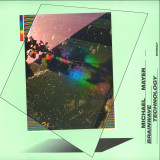
Michael Mayer’s latest EP, Brainwave Technology, comes at you purposeful, stealthy and sly. It’s a glorious left turn for the redoubtable producer, one that sees his typically lean and lithe productions buffed to a metallic, futurist sheen. There’s a gleam in the eyes of tracks like “Brainwave Technology” and “Alpha” that speaks of serious fun, of the intersection of the pleasure zone and the frontal lobe.
“Brainwave Technology” itself is informed by Mayer’s deep dive into the thorny terrain of artificial intelligence, transhumanism and posthumanism. Inspired by reading German philosopher Richard David Precht, Mayer found himself heading down the “proverbial rabbit hole,” as he describes it, “watching hours of YouTube material by self-proclaimed prophets of these ‘inevitable’ changes to come.” Never one to be taken in by the egotist’s dance, Mayer’s cynicism about the whole endeavour is tempered, a little, by the deeper questions that these figures gesture towards: “Is it really an evolutionary step that man and machine become one? Or is it rather a marketing plot by Silicon Valley billionaires?”
On “Brainwave Technology”, Mayer plays the charlatans at their own game, turning their logic against them by exposing the fruitiness of their ‘visions’. “I chose irony as my sword with which I chopped off some quotes from some of those batshit crazy prophets and self-promoters,” he explains of the drooling psychobabble he drops in the track’s lacuna. There’s a sense of humour here – how could you not laugh at these hungover egotists? – but there’s levity too, a sense that Mayer’s using sound to expose the contradictions and double-speak at the heart of these half-formed ideas. It’s a Burroughsian tactic, to slice into the heart of the voice to see what hidden truths surface.
It was Burroughs, too, who once said that “when you cut into the past, the future leaks out”; Brainwave Technology cuts into the logic of the futurologist to leak out the messiness of modern reality. On “Alpha” and “Gamma”, Mayer seems to conjure up the stark, ominous music that’d soundtrack a science fiction reinterpretation – or preinterpretation – of our modern malaise, all funereal wreaths of electronic noise and clatterboxing beats. As the EP resolves with “Device For The Young At Heart”, Mayer’s questions are piling up: “Do we want to become immortal and live on as a download? Do we really give up on Earth and put all our effort into colonising Mars?” There are no answers, of course, but plenty of imaginings-to-be. Brainwave Technology soundtracks both dystopian and utopian possibilities of what could come next.
- A1: Double Slit
- A2: Glass
- A3: Chamber Of Frequencies
- A4: Divided Light
- A5: Elements Of Matter
- A6: Magic Transistor
- A7: Scheinwelt
- A8: Posthuman
- A9: Synthesis
- B1: X Zeit
- B2: Incandescent Sun
- B3: Healing Rods
- B4: Steckdose
- B5: Amnesia Transmitter
- B6: Quantize Humanize
- B7: Glaserner Mensch
- C1: Machine Vision
- D1: Hidden Machine
This is incredibly Trees Speak's third album on Soul Jazz Records to be released in the space of one year - and it's amazing! Trees Speak's new album 'PostHuman' once again blends 1970s German electronic and 'motorik' Krautrock instrumentals (think Harmonia, Can, Cluster, Popul Vuh, Neu!), haunting and powerful 1960s & 1970s soundtracks (think Italian prog-rock Goblin and John Carpenter horror movies, Morricone and existential John Barry spy movies), together with a New York no wave electronic synth and guitar analogue DIY-ness (think Suicide, anything on Soul Jazz's New York Noise series or Eno's New York No Wave)! Drawing further upon German krautrock high-concept albums from the likes of Tangerine Dream and Klaus Schulze from the 1970s, Trees Speak create their own powerful new landscapes of sound that manage to be at once contemporary as well as both timeless and with a sense of science-fiction futurism. Trees Speak' segue together all these elements into 'PostHuman,' which follows on from their criticallyacclaimed debut LP 'Ohms', and 'Shadow Forms' released on Soul Jazz Records less than six months ago. This powerful new album is a high-concept collage of retro-futurist science-fiction music, fantastically illustrated by the artist Eric Lee, a dramatic vision of life after humanity. Trees Speak are Daniel Martin Diaz and Damian Diaz from Tucson, Arizona and their music often draws on the cosmic night-time magic of Arizona's natural desert landscapes. 'Trees Speak' relates to the idea of future technologies storing information and data in trees and plants - using them as hard drives - and the idea that Trees communicate collectively. The album includes an exclusive bonus 45 single 'Machine Vision' and 'Seventh Mirror' that will only be available with the first order of the vinyl edition of this amazing and ground-breaking new album. With 'PostHuman,' Trees Speak once again manages to take the listener deep into their unique musical world of unknown visions of the past and the future.
“Montreal’s genre-defying post-rock combo BIG|BRAVE could very well be the most noteworthy recent heavy curiosity to come out of the city in recent years.” - NOISEY
“…combines elements of Björk, Neurosis and Sunn O))) into a cohesive whole; but this whole is an ever evolving and challenging sonic mass.
- THE QUIETUS
Minimalism and instinct, structure/freedom and meticulous timing form the cornerstones of their precise, rhythmical sound.
Lyrically, the album explores the weight of race and gender, endurance and navigating other people’s behaviours, observation and protest. The band further comment “this album involves what it means navigating the outside world in a racialized body and what it does to the psyche as a whole while finding individual worth within this reality.”
This time featuring the core trio Robin Wattie, Mathieu Ball and Tasy Hudson, for their most collaborative record they’ve made so far. The band elaborate “having cut our teeth in very different musical backgrounds respectively, our intuitions vary, which has an interesting effect on our individual approaches and ears.”
For this record, BIG | BRAVE once again made the trek down to Rhode Island to record with Seth Manchester at Machines with Magnets. They remark “we fully trust his instinct as an engineer and his creative output, getting to experiment with textures, concepts, layers, and with pretty much every single recorded sound, the process of making records with Seth is an absolute journey and pleasure.”
With the initial seeds planted in 2012, with no other goal than simply experimenting with the instruments in their possession, Robin Wattie and Mathieu Ball started writing subtle ambient/minimalistic folk songs together. When long time friend Louis Alexandre Beauregard joined on drums, the goal still remained to play as tranquil as possible. After an incident where Wattie’s acoustic guitar broke, and having borrowed a friend’s electric as a replacement, larger amps that Ball had in storage from previous bands started to get incorporated to the outfit. Now with amplitude as a compositional tool, BB never lost interest in the power of minimalism and fragility. It became clear that loud volume would become just as effective as the lowest possible ones and the juxtaposition of both would become something BB still uses as their main MO to this day.
After self-releasing Feral Verdure in 2014, the band had the opportunity to open for Thee Silver Mt Zion in Montreal QC. After which, Efrim Manuel Menuck found something meaningful in the members and the band and invited them to open on future shows with Mt Zion and with Godspeed! You Black Emperor.
In 2015, the band entered the studio with Menuck and recorded “Au De La”. With no home for the record, they decided to take a chance in writing to Southern Lord. As luck would have it, Greg Anderson happened upon their email among hundreds and responded. Since then, the band has had a home with Southern Lord Records. (Along with Au De La, Southern Lord has released Ardor in 2017, A Gaze Among Them in 2019 and VITAL in 2021).
After Beauregard’s departure in 2018, the band traveled down to Rhode Island with Loel Campbell on drums to make a first record with Seth Manchester at Machines with Magnets. After the album’s release, with Campbell unable to tour, Tasy Hudson joined the ranks and the band spent most of the year touring their 2019 album “A Gaze Among Them”.
In 2020, the core trio of Ball, Wattie and Hudson once again made the trek down to Machines with Magnets to record their 5th LP “VITAL”.
Since their inception, the band has had many honours and privileges of touring a number of times in North America and Europe with bands such as Sunn O))), MY DISCO, The Body, Thou, Primitive Man and Thee Silver Mt Zion.