Search:noise

Styles
All
Angelo Harmsworth - Singe

"Singe" is the new record by Angelo Harmsworth, a musician who hails from the American Southwest and is operating now out of Berlin. Harmsworth’s work deals resolutely in extremes, but this music is not concerned with presenting binary or dichotomous relationships so much as it is with reconciling disparate sensibilities and sounds. Layers of meticulously edited and sculpted tones swirl around one another, creating kaleidoscopic patterns and hallucinated choral motifs that seem to thrive on amplitude or the position of the listener’s head. There is a visceral physicality to this music that aligns it with some of the core tenets of harsh noise, even while its tonal and timbral choices recall those of ambient music. This record follows excellent releases on enmossed/Psychic Liberation, Angoisse, Opal Tapes, Vaknar, and Harmsworth’s own Lime Lodge imprint and may be the high water mark of his published output thus far. There is drama and implied narrative in these seven compositions that seethes and hums as if reveling in a sort of violent gracefulness.

pre-order now30.09.2022

expected to be published on 30.09.2022

19,79
LOS SPEAKERS - EN EL MARAVILLOSO MUNDO DE INGESON LP

Last album recorded by Colombian rock pioneers Los Speakers in 1968 after leaving behind its affinity with yéyé and go-go music. One of the most brilliantly whacked-out psych LPs to emerge from South America. Originally self-released on their own Producciones Kris label, this is an almost impossible to find cult record. Officially reissued for the first time. By 1968, Colombian rock had left behind its affinity with yéyé and go-go music. In Medellín, Discos Fuentes had terminated its contract with Los Yetis, whose farewell record "Olvídate" set a strong anti-establishment tone. While the fire of protest that had spread rapidly among students in Paris was dying out, young people in Bogotá voiced their discontent. Aware of the effervescent political climate across the world, Los Speakers wrote their last record between June and September of the convulsive year of 1968. In order to give shape to these new songs they needed a space where they could experiment freely with sound. The music historian and critic and sound engineer, Manuel Drezner, made a providential appearance and offered the innovative Ingeson studios to the trio under one condition: that his company's name was included in the title of the record. For four months, Rodrigo, Manuel and Roberto created a record that was completely different to anything on the Colombian rock scene at that time. Los Speakers used cutting-edge equipment to record and mix "El maravilloso mundo de Ingeson", It was the first time local musicians had access to a multichannel mixing desk where they could experiment with all kinds of bold sound effects. The silences between songs were replaced with brief intervals of sound including the noise of a train running over a passer-by, a bomb exploding_ Although it's often labelled a conceptual record, the four compositions that each of the band members contribute reveal different aesthetic personalities. From the strong influence of Renaissance and Baroque poetry and music to the virulent social critique and pacifist statements, suffused with religiosity and mysticism. Armed with the demo tape, Los Speakers presented the project to CBS, Philips, Sonolux and Bambuco. The labels' verdict was unanimous: not very commercial and very costly. The group reacted to this negative response by pooling their personal savings, inventing a fictious record label called Kris and released the record just as they had imagined it. This led to the creation of a graphic concept unheard of in Colombia: the record included a booklet containing photos, texts and illustrations. Although there was a big media roll out, which included TV appearances and features in newspapers and magazines, as predicted the album was a commercial failure_ "El maravilloso mundo de Ingesón" is one of the most brilliantly whacked-out psych LPs to emerge from South America.

pre-order now30.09.2022

expected to be published on 30.09.2022

24,58
Psychic Ills - Live At LEVITATION LP

The first Austin Psych Fest was held in March 2008, and expanded to a 3 day event the following year. From there the festival quickly developed into an international destination for psychedelic rock fans, with lineups spanning the fringes of indie rock, from up-and-comers to vintage legends, and capped off with headlining performances from The Black Angels each year. The Black Angels and Levitation helped spark a movement, inspiring the creation of similar events across the globe and a burgeoning psych scene that would soon ignite. The series captures key moments in psychedelic rock history, and live music in Austin, Texas. The artists and sets showcased on Live at Levitation have been chosen from over a decade of recordings at the world-renowned event, and document key artists in the scene performing for a crowd of their peers and fans who gather at Levitation annually from all over the world. When it comes to following the beat of their own drum, New York’s Psychic Ills have exemplified the phrase since their beginnings in 2003. Initially spawned from electronic-centered home recording experiments, they progressed into all-night full-band exploration in a neighborhood where noise wasn’t a problem. They soon after evolved into a live band seemingly at home within the extended jam, exploring a variety of musical terrain. The early years saw several releases for Social Registry, tons of time on the road, and collaborations with artists as diverse as Gibby Haynes (Butthole Surfers) and Sonic Boom (Spacemen Three/Spectrum). We are proud to welcome Psychic Ills to the Live at Levitation series. The release showcases the band's appearance at Austin Psych Fest 2012. Mixed and Mastered for Vinyl. 1) Midnight Moon 2) Mind Daze 3) Incense Head 4) Ring Finger 5) Electric Life 6) Meta 7) Diamond City 8) January Rain 9) I’ll Follow You Through The Floor

pre-order now30.09.2022

expected to be published on 30.09.2022

23,07
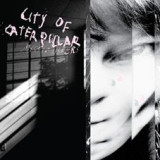
City of Caterpillar - Mystic Sisters LP

CITY OF CATERPILLAR return with their first new album in 20 years, Mystic Sisters! When guitarist/vocalist Brandon Evans, guitarist Jeff Kane, drummer Ryan Parrish and bassist/vocalist Kevin Longendyke unveiled their self-titled debut in 2002, their emotional, frenzied and often cinematic music was at the vanguard of the burgeoning screamo movement. Along with bands like Pg.99 (with whom they shared members), Majority Rule, Planes Mistaken For Stars and others, they helped develop a style of music that took hardcore into convulsive new territory. After years spent living in other parts of the country and playing in other bands—including Darkest Hour, Malady and Ghastly City Sleep, the long awaited CITY OF CATERPILLAR reunion shows snowballed into writing sessions. The result - Mystic Sisters, an album that recaptures the magic of old while taking the band’s music into exciting new territory! The winding and atmospheric title track that embodies CITY OF CATERPILLAR's experimental side features some noise violin from Evans’ former Pg. 99 bandmate Johnny Ward, while tracks like "Decider" and "Paranormaladies" showcases the band's roots with a flurry of viceral, noisey hardcore swagger. Tracked primarily at Montrose Recording in Richmond, Mystic Sisters was self-produced by the band and then mixed and mastered by Jack Shirley (Deafheaven, Bosse-de-Nage). Ultimately, CITY OF CATERPILLAR are more concerned with creating a mood than telling a story. “The band is always focused on mood,” Evans confirms. “To me, that’s the most important thing. I don’t really want people dissecting what we’re trying to say, because it’s not really about us. It never has been. What we cared about 20 years ago was innocent, raw emotion, and that’s what we care about now.”

pre-order now30.09.2022

expected to be published on 30.09.2022

23,14
KLEISTWAHR - DO NOT

Kleistwahr

DO NOT

12inchFDLP130
Fourth Dimension
30.09.2022

Comprising two untitled side-long pieces, Do Not catches Gary Mundy of Ramleh in peak 'noise' mode with his solo endeavour, taking much from his place as one of the innovators of the so-called power electronics genre

pre-order now30.09.2022

expected to be published on 30.09.2022

22,06
Preoccupations - Arrangements

Canada's Preoccupations return to the post-punk, post-pandemic world
with Arrangements - Their 4th studio album finds them restoring their
roots with the singular, guitar driven, dissonant yet anthemic washes of
intricate noise that has brought them international acclaim since their
basement beginnings
For lovers of all things Bowie, Branca, Spacemen 3 and MBV, progressive punk,
jangle rock and mangled goth. Arrangements sees Preoccupations finally and
confidently inhabiting the dystopia that they have been carefully creating from
their musical genesis. They are in a room with taped up windows, except for a
tiny pinprick of light beaming from the otherworld onto the far wall, upside down
and blurred, it's recognizable enough to fill you with warm familiarity and
nostalgia of unknown origins.

pre-order now30.09.2022

expected to be published on 30.09.2022

30,67
The Pleasure Majenta - Looming, The Spindle

On their new album Looming, The Spindle, The Pleasure Majenta shape a
terrifying and sublime mix of noise, broken electronics and guitar
feedback that begs to remain untamed
From New Zealand by way of Berlin, these dystopian goth punks take their cues
from the harsh and heavy energy of The Birthday Party, Swans and The Fall
€"casting bummer vibes into the void to create the pain- soaked statement so
many albums want to make but wind up missing the mark.The lead single € Full
of It € fills the screen with flashes of cinematic post-punk savagery up to its ears
in swampy distortion and sleazy funhouse skronk. Velvety € 70s exploitation flick
saxophones hustle with devilish no-wave spaghetti western guitars and a slippery
bassline like a coffin dragged through mud in a grungy post- punk dirge. It's a
waking tour through a dysfunctional late- capitalist bardo where disassociation
becomes an effective coping mechanism for the cyclical, paralyzing grind of
clock- in, clock- out psychosis. € I felt okay when I wasn't myself "when I was
making music or playing onstage, so I decided I would contact myself in this way,
says The Pleasure Majenta's Lawrence Loz Fergus Goodwin. It's a dangerous
game to play.
Tracks: Satellite / Fabric / Sad2say / Smiles Through A Sneer / Anxious Patient /
Osc / Full Of It / It's Ten / Erik Satie / Gardens

pre-order now30.09.2022

expected to be published on 30.09.2022

23,95
T. Gowdy - Miracles

T. Gowdy

Miracles

12inchCST165LP
Constellation
30.09.2022

(Cargo Collective Title) RIYL: Barker, burger/ink, Andy Stott, Shackleton, Monolake, Jan Jelinek, Perila, Fax. 180gLP in 350gsm jacket + 190gsm inner + DL. CD in custom mini-gatefold paperboard jacket. T. Gowdy has kept up a productive albeit mostly virtual pace since the release of Therapy With Colour (his third full-length album and first for Constellation) which dropped just as things were locking down back in spring 2020: performances at numerous festivals including MUTEK Montréal, Node Festival and NEW NOW; audiovisual pieces exhibited at various European galleries and events; a track and video for Constellation’s Corona Borealis Longplay Singles Series; sound design for the documentary Atalaya by filmmaker Emma Roufs. Gowdy now returns with Miracles, his second full-length for Constellation, which draws on source materials originally performed in 2018 for an unreleased audio/visual project based around surveillance footage—a precursor to video1capped, monitor-based horizons that soon took on new meanings. Re-immersing himself in those recordings, Gowdy disassembles and deploys them as raw source material for new experiments with vactrols, noise gates and analog-to-digital triggering and aliasing, the original recordings juxtaposed anew amidst their successive textural and rhythmic treatments. Gowdy keeps this re-composition process stripped down, elemental and purposive, guided by an ascetic Aufhebung: synthesis as sublation—subjecting a temporal material/theme to analysis and transformation, reintegrating to form a whole that overcomes what it preserves without erasure, reshaping and intrinsically carrying its origins forward. Where Therapy With Colour was strictly and rigorously a set of stereo live performances, Miracles fuses iterative—though still spartan—layers of performance. “Therapy With Colour was about healing through self-hypnosis; Miracles is about forging a future with memory through subjection to trigger mechanisms” notes Gowdy. The result is a captivating collection of minimal IDM and oscillated electronics from the Montréal/Berlin producer, working primarily in a 120-140 BPM zone of tonal percussion and corrugated pulse. Gowdy’s sensibility and sound palette gets deeper and dirtier, summoning new pathways of alluvial flicker and abraded euphoria. As the album progresses, low-pass gate vactrols coalesce into a clear and vital theme, conveying immanence through woody timbres at times reminiscent of the Shinrin-yoku aesthetic (Japanese ‘forest bathing’), though always with a grainy transcendence rather than invoking any clean pure sheen. Gowdy consistently heats and heightens the presence of each component in the mix, balancing different elements in democratic compression/distortion, attaining an unornamental and earnest form of mantric-industrial majesty. Miracles is live, corporeal, activated electronic music of the highest caliber, deployed with monastic and meditative focus. Tracklist: 1 350J 2 Miracles 3 Déneigeuse 4 Transcend I 5 U4A 6 Vidisions 7 Clipse 8 Transcend II

pre-order now30.09.2022

expected to be published on 30.09.2022

23,74
Sudden Infant - Lunatic Asylum

Joke Lanz and Sudden Infant once again return in their razor-sharp trio setting whereby the absurdist nature that Joke’s work is already cut with is reconfigured in a gnarled and beefy punk-fucked contorted rock setting. Short bursts of angular flex are heavily propelled by depth-charge rhythms, wry lyrical musings on modern living, and sensibilities hatched from years of experience in the worlds of sound art, abstract music, industrialised junk-noise and related areas have manifested in the perfect follow up to 2018’s Buddhist Nihilism album on Harbinger Sound. Aided by Christian Weber on bass and Alexandre Babel on drums, Joke lays on a battery of electronics, loops, field recordings and samples to complement mostly semi-spoken vocals that appear like they’ve been swept from the overflowing gutters of a shopping centre into a huge ball of malaise that can only be laughed at as world leaders look on perplexed. Exactly as the title suggests, 'Lunatic Asylum' depicts a world in absolute disarray as the seams binding it together slowly fall apart to reveal jesters whose best attempts to glue everything back in place are built on bigger lies more transparent than ever. Meanwhile, citizens of the developed world turn on each other for the stupidest of reasons or grow fatter with their descent into an ignorance nourished by half-baked cultural nuggets pre-packaged and sold as great and awe-inspiring work. And everything has to be recorded, photographed and shared as brain cells are decimated by false ideals, propaganda, exaggerated lifestyles and a huge tub of popcorn swimming in indiscernible yellow gloop. Such are the snapshots that resonate as Lunatic Asylum takes some well-aimed swipes at the human condition of the 21st Century. Featuring a fantastic guest appearance by Franz Treichler (The Young Gods) on ' Il y a des Enfants', each of the 12 songs that constitute Lunatic Asylum are bold, heavy, playful and rife with surprising twists and turns Joke’s mostly English splatter-poetry helps guide into a space that’s about as accessible as the outer reaches of rock can get. In a perfect world, this is the stuff even daytime airwaves should be pregnant with but, since the world is presently tripping over its own feet more so than ever, we will have to suffice with wherever this can nudge with the help of Fourth Dimension Records. One day, hopefully, more will catch up. The CD version of Lunatic Asylum features two exclusive bonus tracks. It was released in April 2022. TRACKLIST 1/Good Morning! 2/Head 3/I Ghore Es Gloeggli 4/Mood Swings 5/Damage Control 6/Happiness to Go 7/Pain is a Pain 8/Il y a des Enfants 9/The Lived Body 10/Ah-Ah-Ah 1921 11/Mika the Dog 12/Tuba Manifesto

pre-order now29.09.2022

expected to be published on 29.09.2022

18,45
Lunatic Soul - Walking On A Flashlight Beam

'WALKING ON A FLASHLIGHT BEAM' IS REISSUED FOR THE FIRST TIME
ON BLUE VINYL."It's often like the best film music..
distinctly dramatic, verging on gothic from the opening eerie noises... honours the
Pink Floyd branches of the Porcupine Tree" - Prog Magazine (UK)
Lunatic Soul is the solo project from Mariusz Duda, the creative force, lead singer
& talented multi-instrumentalist behind Poland's Progressive Rock shooting stars
'Riverside'.
'Walking On A Flashlight Beam' was the fourth album from Lunatic Soul. It served
as an incredibly emotional prequel to the first two Lunatic Soul albums & covers a
theme of self- imposed solitude & has a strong sense of foreboding with the
knowledge that the first two albums focus on death & the afterlife.
Commenting on his fourth opus in 2014, Duda said: "These are very dark &
intense compositions but very melodious too. I think it's one of the best things
I've ever written, if not the best one".
As with previous Lunatic Soul albums the artwork was created by the renowned
cover artist Travis Smith who has also created covers for the likes of 'Opeth' &
'Riverside'.
Lunatic Soul's 'Walking On A Flashlight Beam' will be issued via Kscope on 2LP
Blue Vinyl.

pre-order now28.09.2022

expected to be published on 28.09.2022

41,98
Been Stellar - Been Stellar EP (12")

Been Stellar is what you get when you leave the youth alone in a
metropolis; they grow up, they make noise
Crackly, bright and distorted - stories of violence, love, and a new, un-glamorous,
New York City. 12" EP pressed on red transparent vinyl. Hailing from the suburbs
of Detroit, the beaches of Los Angeles, and Brazil by way of Sydney, Nando Dale
(guitar), Laila Wayans (drums), Sam Slocum (vocals), Nico Brunstein (bass) and
Skyler St. Marks (guitar) have positioned themselves at the glimmering rotten
center of tonight's rock and roll. Each member so distinctly themselves, it must
be assumed that such a diverse and unlikely gang were drawn tight together in
their first year of university by nothing short of serendipitous fortune and a
shared, waggish sense of humor.
They are a band of friends - sharing, crying, fighting, and kissing - wreaking havoc
together and laughing like how only the jaunty youth can afford to. Been Stellar's
arrangements come textured, swooping - pushing past you at a downtown pace
and off to find a better night. The songs are of their own time and space, offering
a New York City - Been Stellar's New York City - the sounds of growing up young.

pre-order now28.09.2022

expected to be published on 28.09.2022

17,94
Lee Tracy & Isaac Manning - Is it What You Want LP

As the sun sets on a quaint East Nashville house, a young man bares a piece of his soul. Facing the camera, sporting a silky suit jacket/shirt/slacks/fingerless gloves ensemble that announces "singer" before he's even opened his mouth, Lee Tracy Johnson settles onto his stage, the front yard. He sways to the dirge-like drum machine pulse of a synth-soaked slow jam, extends his arms as if gaining his balance, and croons in affecting, fragile earnest, "I need your love… oh baby…"

Dogs in the yard next door begin barking. A mysterious cardboard robot figure, beamed in from galaxies unknown and affixed to a tree, is less vocal. Lee doesn't acknowledge either's presence. He's busy feeling it, arms and hands gesticulating. His voice rises in falsetto over the now-quiet dogs, over the ambient noise from the street that seeps into the handheld camcorder's microphone, over the recording of his own voice played back from a boombox off-camera. After six minutes the single, continuous shot ends. In this intimate creative universe there are no re-takes. There are many more music videos to shoot, and as Lee later puts it, "The first time you do it is actually the best. Because you can never get that again. You expressing yourself from within."

"I Need Your Love" dates from a lost heyday. From some time in the '80s or early '90s, when Lee Tracy (as he was known in performance) and his music partner/producer/manager Isaac Manning committed hours upon hours of their sonic and visual ideas to tape. Embracing drum machines and synthesizers – electronics that made their personal futurism palpable – they recorded exclusively at home, live in a room into a simple cassette deck. Soul, funk, electro and new wave informed their songs, yet Lee and Isaac eschewed the confinement of conventional categories and genres, preferring to let experimentation guide them.

"Anytime somebody put out a new record they had the same instruments or the same sound," explains Isaac. "So I basically wanted to find something that's really gonna stand out away from all of the rest of 'em." Their ethos meant that every idea they came up with was at least worth trying: echoed out half-rapped exhortations over frantic techno-style beats, gospel synth soul, modal electro-funk, oddball pop reinterpretations, emo AOR balladry, nods to Prince and the Fat Boys, or arrangements that might collapse mid-song into a mess of arcade game-ish blips before rallying to reach the finish line. All of it conjoined by consistent tape hiss, and most vitally, Lee's chameleonic voice, which managed to wildly shape shift and still evoke something sincere – whether toggling between falsetto and tenor exalting Jesus's return, or punctuating a melismatic romantic adlib with a succinct, "We all know how it feels to be alone."

"People think we went to a studio," says Isaac derisively. "We never went to no studio. We didn't have the money to go to no studio! We did this stuff at home. I shot videos in my front yard with whatever we could to get things together." Sometimes Isaac would just put on an instrumental record, be it "Planet Rock" or "Don't Cry For Me Argentina" (from Evita), press "record," and let Lee improvise over it, yielding peculiar love songs, would-be patriotic anthems, or Elvis Presley or Marilyn Monroe tributes. Technical limitations and a lack of professional polish never dissuaded them. They believed they were onto something.

"That struggle," Isaac says, "made that sound sound good to me."

In the parlance of modern music criticism Lee and Isaac's dizzying DIY efforts would inevitably be described as "outsider." But "outsider" carries the burden of untold additional layers of meaning if you're Black and from the South, creating on a budget, and trying to get someone, anyone within the country music capital of the world to take your vision seriously. "What category should we put it in?" Isaac asks rhetorically. "I don't know. All I know is feeling. I ain't gonna name it nothing. It's music. If it grabs your soul and touch your heart that's what it basically is supposed to do."

=

Born in 1963, the baby boy of nine siblings, Lee Tracy spent his earliest years living amidst the shotgun houses on Nashville's south side. "We was poor, man!" he says, recalling the outhouse his family used for a bathroom and the blocks of ice they kept in the kitchen to chill perishables. "But I actually don't think I really realized I was in poverty until I got grown and started thinking about it." Lee's mom worked at the Holiday Inn; his dad did whatever he had to do, from selling fruit from a horse drawn cart to bootlegging. "We didn't have much," Lee continues, "but my mother and my father got us the things we needed, the clothes on our back." By the end of the decade with the city's urban renewal programs razing entire neighborhoods to accommodate construction of the Interstate, the family moved to Edgehill Projects. Lee remembers music and art as a constant source of inspiration for he and his brothers and sisters – especially after seeing the Jackson 5 perform on Ed Sullivan. "As a small child I just knew that was what I wanted to do."

His older brother Don began musically mentoring him, introducing Lee to a variety of instruments and sounds. "He would never play one particular type of music, like R&B," says Lee. "I was surrounded by jazz, hard rock and roll, easy listening, gospel, reggae, country music; I mean I was a sponge absorbing all of that." Lee taught himself to play drums by beating on cardboard boxes, gaining a rep around the way for his timekeeping, and his singing voice. Emulating his favorites, Earth Wind & Fire and Cameo, he formed groups with other kids with era-evocative band names like Concept and TNT Connection, and emerged as the leader of disciplined rehearsals. "I made them practice," says Lee. "We practiced and practiced and practiced. Because I wanted that perfection." By high school the most accomplished of these bands would take top prize in a prominent local talent show. It was a big moment for Lee, and he felt ready to take things to the next level. But his band-mates had other ideas.

"I don't know what happened," he says, still miffed at the memory. "It must have blew they mind after we won and people started showing notice, because it's like everybody quit! I was like, where the hell did everybody go?" Lee had always made a point of interrogating prospective musicians about their intentions before joining his groups: were they really serious or just looking for a way to pick up girls? Now he understood even more the importance of finding a collaborator just as committed to the music as he was.

=

Isaac Manning had spent much of his life immersed in music and the arts – singing in the church choir with his family on Nashville's north side, writing, painting, dancing, and working various gigs within the entertainment industry. After serving in the armed forces, in the early '70s he ran The Teenage Place, a music and performance venue that catered to the local youth. But he was forced out of town when word of one of his recreational routines created a stir beyond the safe haven of his bohemian circles.

"I was growing marijuana," Isaac explains. "It wasn't no business, I was smoking it myself… I would put marijuana in scrambled eggs, cornbread and stuff." His weed use originated as a form of self-medication to combat severe tooth pain. But when he began sharing it with some of the other young people he hung out with, some of who just so happened to be the kids of Nashville politicians, the cops came calling. "When I got busted," he remembers, "they were talking about how they were gonna get rid of me because they didn't want me saying nothing about they children because of the politics and stuff. So I got my family, took two raggedy cars, and left Nashville and went to Vegas."

Out in the desert, Isaac happened to meet Chubby Checker of "The Twist" fame while the singer was gigging at The Flamingo. Impressed by Isaac's zeal, Checker invited him to go on the road with him as his tour manager/roadie/valet. The experience gave Isaac a window into a part of the entertainment world he'd never encountered – a glimpse of what a true pop act's audience looked like. "Chubby Checker, none of his shows were played for Black folks," he remembers. "All his gigs were done at high-class white people areas." Returning home after a few years with Chubby, Isaac was properly motivated to make it in Music City. He began writing songs and scouting around Nashville for local talent anywhere he could find it with an expressed goal: "Find someone who can deliver your songs the way you want 'em delivered and make people feel what you want them to feel."

One day while walking through Edgehill Projects Isaac heard someone playing the drums in a way that made him stop and take notice. "The music was so tight, just the drums made me feel like, oh I'm-a find this person," he recalls. "So I circled through the projects until I found who it was.

"That's how I met him – Lee Tracy. When I found him and he started singing and stuff, I said, ohhh, this is somebody different."

=

Theirs was a true complementary partnership: young Lee possessed the raw talent, the older Isaac the belief. "He's really the only one besides my brother and my family that really seen the potential in me," says Lee. "He made me see that I could do it."

Isaac long being a night owl, his house also made for a fertile collaborative environment – a space where there always seemed to be a new piece of his visual art on display: paintings, illustrations, and dolls and figures (including an enigmatic cardboard robot). Lee and Issac would hang out together and talk, listen to music, conjure ideas, and smoke the herb Isaac had resumed growing in his yard. "It got to where I could trust him, he could trust me," Isaac says of their bond. They also worked together for hours on drawings, spreading larges rolls of paper on the walls and sketching faces with abstract patterns and imagery: alien-like beings, tri-horned horse heads, inverted Janus-like characters where one visage blurred into the other.

Soon it became apparent that they didn't need other collaborators; self-sufficiency was the natural way forward. At Isaac's behest Lee, already fed up with dealing with band musicians, began playing around with a poly-sonic Yamaha keyboard at the local music store. "It had everything on it – trumpet, bass, drums, organ," remembers Lee. "And that's when I started recording my own stuff."

The technology afforded Lee the flexibility and independence he craved, setting him on a path other bedroom musicians and producers around the world were simultaneously following through the '80s into the early '90s. Saving up money from day jobs, he eventually supplemented the Yamaha Isaac had gotten him with Roland and Casio drum machines and a Moog. Lee was living in an apartment in Hillside at that point caring for his dad, who'd been partially paralyzed since early in life. In the evenings up in his second floor room, the music put him in a zone where he could tune out everything and lose himself in his ideas.

"Oh I loved it," he recalls. "I would really experiment with the instruments and use a lot of different sound effects. I was looking for something nobody else had. I wanted something totally different. And once I found the sound I was looking for, I would just smoke me a good joint and just let it go, hit the record button." More potent a creative stimulant than even Isaac's weed was the holistic flow and spontaneity of recording. Between sessions at Isaac's place and Lee's apartment, their volume of output quickly ballooned.

"We was always recording," says Lee. "That's why we have so much music. Even when I went to Isaac's and we start creating, I get home, my mind is racing, I gotta start creating, creating, creating. I remember there were times when I took a 90-minute tape from front to back and just filled it up."

"We never practiced," says Isaac. "See, that was just so odd about the whole thing. I could relate to him, and tell him about the songs I had ideas for and everything and stuff. And then he would bring it back or whatever, and we'd get together and put it down." Once the taskmaster hell bent on rehearsing, Lee had flipped a full 180. Perfection was no longer an aspiration, but the enemy of inspiration.

"I seen where practicing and practicing got me," says Lee. "A lot of musicians you get to playing and they gotta stop, they have to analyze the music. But while you analyzing you losing a lot of the greatness of what you creating. Stop analyzing what you play, just play! And it'll all take shape."

=

"I hope you understood the beginning of the record because this was invented from a dream I had today… (You tell me, I'll tell you, we'll figure it out together)" – Lee Tracy and Isaac Manning, "Hope You Understand"

Lee lets loose a maniacal cackle when he acknowledges that the material that he and Isaac recorded was by anyone's estimation pretty out there. It's the same laugh that commences "Hope You Understand" – a chaotic transmission that encapsulates the duality at the heart of their music: a stated desire to reach people and a compulsion to go as leftfield as they saw fit.

"We just did it," says Lee. "We cut the music on and cut loose. I don't sit around and write. I do it by listening, get a feeling, play the music, and the lyrics and stuff just come out of me."

The approach proved adaptable to interpreting other artists' material. While recording a cover of Whitney Houston's pop ballad "Saving All My Love For You," Lee played Whitney's version in his headphones as he laid down his own vocals – partially following the lyrics, partially using them as a departure point. The end result is barely recognizable compared with the original, Lee and Isaac having switched up the time signature and reinvented the melody along the way towards morphing a slick mainstream radio standard into something that sounds solely their own.

"I really used that song to get me started," says Lee. "Then I said, well I need something else, something is missing. Something just came over me. That's when I came up with 'Is It What You Want.'"

The song would become the centerpiece of Lee and Isaac's repertoire. Pushed along by a percolating metronomic Rhythm King style beat somewhere between a military march and a samba, "Is It What You Want" finds Lee pleading the sincerity of his commitment to a potential love interest embellished by vocal tics and hiccups subtlely reminiscent of his childhood hero MJ. Absent chord changes, only synth riffs gliding in and out like apparitions, the song achieves a lingering lo-fi power that leaves you feeling like it's still playing, somewhere, even after the fade out.

"I don't know, it's like a real spiritual song," Lee reflects. "But it's not just spiritual. To me the more I listen to it it's like about everything that you do in your everyday life, period. Is it what you want? Do you want a car or you don't want a car? Do you want Jesus or do you want the Devil? It's basically asking you the question. Can't nobody answer the question but you yourself."

In 1989 Lee won a lawsuit stemming from injuries sustained from a fight he'd gotten into. He took part of the settlement money and with Isaac pressed up "Saving All My Love For You" b/w "Is It What You Want" as a 45 single. Isaac christened the label One Chance Records. "Because that's all we wanted," he says with a laugh, "one chance."

Isaac sent the record out to radio stations and major labels, hoping for it to make enough noise to get picked up nationally. But the response he and Lee were hoping for never materialized. According to Isaac the closest the single got to getting played on the radio is when a disk jock from a local station made a highly unusual announcement on air: "The dude said on the radio, 107.5 – 'We are not gonna play 'Is It What You Want.' We cracked up! Wow, that's deep.

"It was a whole racist thing that was going on," he reflects. "So we just looked over and kept on going. That was it. That was about the way it goes… If you were Black and you were living in Nashville and stuff, that's the way you got treated." Isaac already knew as much from all the times he'd brought he and Lee's tapes (even their cache of country music tunes) over to Music Row to try to drum up interest to no avail.

"Isaac, he really worked his ass off," says Lee. "He probably been to every record place down on Music Row." Nashville's famed recording and music business corridor wasn't but a few blocks from where Lee grew up. Close enough, he remembers, for him to ride his bike along its back alleys and stumble upon the occasional random treasure, like a discarded box of harmonicas. Getting in through the front door, however, still felt a world away.

"I just don't think at the time our music fell into a category for them," he concedes. "It was before its time."

=

Lee stopped making music some time in the latter part of the '90s, around the time his mom passed away and life became increasingly tough to manage. "When my mother died I had a nervous breakdown," he says, "So I shut down for a long time. I was in such a sadness frame of mind. That's why nobody seen me. I had just disappeared off the map." He fell out of touch with Isaac, and in an indication of just how bad things had gotten for him, lost track of all the recordings they'd made together. Music became a distant memory.

Fortunately, Isaac kept the faith. In a self-published collection of his poetry – paeans to some of his favorite entertainment and public figures entitled Friends and Dick Clark – he'd written that he believed "music has a life of its own." But his prescience and presence of mind were truly manifested in the fact that he kept an archive of he and Lee's work. As perfectly imperfect as "Is It What You Want" now sounds in a post-Personal Space world, Lee and Isaac's lone official release was in fact just a taste. The bulk of the Is It What You Want album is culled from the pair's essentially unheard home recordings – complete songs, half-realized experiments, Isaac's blue monologues and pronouncements et al – compiled, mixed and programmed in the loose and impulsive creative spirit of their regular get-togethers from decades ago. The rest of us, it seems, may have finally caught up to them.

On the prospect of at long last reaching a wider audience, Isaac says simply, "I been trying for a long time, it feels good." Ever the survivor, he adds, "The only way I know how to make it to the top is to keep climbing. If one leg break on the ladder, hey, you gotta fix it and keep on going… That's where I be at. I'll kill death to make it out there."

For Lee it all feels akin to a personal resurrection: "It's like I was in a tomb and the tomb was opened and I'm back… Man, it feels so great. I feel like I'm gonna jump out of my skin." Success at this stage of his life, he realizes, probably means something different than what it did back when he was singing and dancing in Isaac's front yard. "What I really mean by 'making it,'" he explains isn't just the music being heard but, "the story being told."

Occasionally Lee will pull up "Is It What You Want" on YouTube on his phone, put on his headphones, and listen. He remembers the first time he heard his recorded voice. How surreal it was, how he thought to himself, "Is that really me?" What would he say to that younger version of himself now?

"I would probably tell myself, hang in there, don't give up. Keep striving for the goal. And everything will work out."

Despite what's printed on the record label, sometimes you do get more than one chance.

out of Stock

Order now and we will order the item for you at our supplier.

23,49

Last In: 3 years ago
STEVE BATES - ALL THE THINGS THAT HAPPEN LP

Musician and sound/video installation artist Steve Batespresents a solo ambient/noise album ofmelodic smear, radiostatic blur, panoramic noise clouds and dissolving tones. Made primarilyunder the self-imposed 'limitation' of a Casio SK-1, this is his first entirely solo full-length albumin almost a decade. All The Things That Happen showcases the more deliberate, intensive, noise-clustered side of Bates' wide-ranging sonic sensibilities and practices. An isolation record (like so many), itcombines an ineffable melancholy with claustrophobictension and simmering political rage.Powerfully composed from layers of glistening distortion-drenched melody, pulsing and droningoscillation, bursts of blown-out chords, sweeps of static and sheets of crackling hiss, Bates hasmade an impressively dynamic, ardent and iridescent noise album of real depth and underlyingdevastation."This was supposed to be an ambient record; quiet, minimal and sad. These tracks all startedoff that way but I kept reaching for more texture and noise. Somehow the noisier the record got,the less sad it was also. I was listening to, and loving, a lot of music by Andrew Chalk and I hadfinished a year-long run of listening to Eno's 1 and 4. I preferOn LandtoMusic for Airportsalthough I love both.On Landjust has a darkness and uncertainty that appeals to me. Addingmore noise also got me excited about ways this material could be played live even though italso felt like that could never happen again.In 2022, I opened for Godspeed You! BlackEmperor in Saskatoon to give it a try and waspleasantly pleased to hear it all live and loud."A fixture of Winnipeg's burgeoning punk and social justice community in the 80s-90s, Batesplayed in hardcore and indie rock bands (Pull My Daisy, Bulletproof Nothing) prior to foundingthe Send + Receivefestival in 1998. A crucial development in putting Winnipeg on the map foravant music and sound art, Bates helmed Send + Receive for seven years, then moved toTiohti:áke/Montréal, became Sound Coordinator at Hexagram (Concordia University), releasedsolowork on Oral and two albums with his Black Seas Ensemble on Dim Coast, and pursuedmyriad other ongoing audio research, installation and collaborative projects. Relocating toTreaty 6/Saskatoon the year before pandemic,All The Things That Happenis Bates' mostrecent purposive and purely 'recorded' work.Thanks for listening.

pre-order now23.09.2022

expected to be published on 23.09.2022

22,48
Hassan Abou Alam - Ice EP

Egyptian artist Hassan Abou Alam debuts on Nehza Records. On Ice, the producer and DJ delivers a 4-track collection of unusual textures that glide through multiple soundscapes, including techno, breaks, bass and unclassifiable noise.

The opener "Shmoolaire" starts with a skittery drum pattern before descending into a squelchy bassline while squeaky vocal clips snake through the track. It's weird, wonky and the perfect dancefloor curveball. Dominated by massive drums, the title track blends a sultry vocal with bleepy percussion, conjuring a sticky atmosphere. Things get spooky on "Hollow In C#" as Hassan pairs a voice saturated in reverb with chugging drums and eerie pads. Freaky but fierce. The closing track "Lost In A Jar Of Thyme" ends on a distinct note. A warbling bassline slithers throughout the track as siren-like sound FX and hyperactive drums evoke tension. A true artist aligned with the vibe of Nehza Records.

Hassan Abou Alam has spent the last decade exploring several sound palettes and genres, from breaks to techno to bass. Today, his curiosity is unwavering. Hassan produces music with a hybrid setup of analog and digital instruments, conveying organised but compelling chaos that's won him legions of fans worldwide.

out of Stock

Order now and we will order the item for you at our supplier.

11,30

Last In: 5 months ago
Petbrick - Liminal

Petbrick

Liminal

12inchLAUNCH256
Rocket Recordings
23.09.2022

In a world hurtling towards new frontiers of horror on a daily basis, there’s precious little time for pause. For the self respecting artist, the only reasonable solution is psychic warfare. Such is the terrain of Petbrick on the titanic and transformative Liminal. Here on their second album the duo of Wayne Adams (Big Lad/Johnny Broke) and Iggor Cavalera (Sepultura/Cavalera Conspiracy/Soulwax) lays waste to all or any constrictions in its path, Blending a vast sonic landscape with a relentless compunction to break the pain barrier, Liminal is a dizzying exercise in overdrive which can take in industrial abrasions, pulverising rhythmic drive, acid-damaged freakery, cinematic tension and balladic gravitas in disarmingly coherent fashion. Other heads and personalities also came on board to add richness and intrigue to the onslaught - “I believe we got an amazing team of collaborators - from old school friends like Neurosis’ Steve Von Tilll and Converge’s Jacob Bannon to new school artists like Paula Rebbeledo from Rakta and New York doom rappers Lord Goat and Truck Jewelz” notes Iggor. This is an album birthed in difficult times and expressly engaged with raging against the dying of the light. As Iggor puts it “Liminal is an insane mirror of what being isolated feels like - madness through noise experimentations” An alchemical vision fit to both elevate the spirit and destroy everything in its path, ‘Liminal’ is the sound of Petbrick blasting their way through the boundaries of a fresh hell. Tracks: 01. Primer 02. Arboria 03. Pigeon Kick 04. Raijin 05. Lysergic Aura (Feat. Lord Goat & Truck Jewelz) 06. Damballa 07. Ayan 08. Grind You Dull (Feat. Jake Bannon) 09. Chemical Returns 10. Distorted Peace (Feat. Paula Rebellato) 11. Reckoning (Feat. Steve Von Till

pre-order now23.09.2022

expected to be published on 23.09.2022

24,58
Albert Van Abbe & Jochem Paap - General Audio

Albert van Abbe & Jochem Paap join forces for General Audio.

Recorded at Willem Twee studios in Den Bosch, General Audio explores a unique and esoteric approach to sound creation. Using test and measure equipment from the 1950’s, originally designed for the maintenance of various audio and radio transmitters, van Abbe and Paap create otherworldly walls of sound and dense rhythmic abstractions with an early form of synthesis. Rudimentary signals are combined and processed before being committed to tape via mic’s set up to capture the Willem Twee studio’s unique acoustics. The equipment itself predates the invention of the analog, modular synthesizers developed in the 70’s that are now commonplace in many studios.

The record opens with 220Lock-in, a gently undulating drone composition. Effervescent at the top end and fathoms deep at the bottom, it shifts ominously with ring modulated tones that build and then give way to thick washes of white noise. A single synth flourish provides a surprising final moment. The record continues with WZ-1Wobbel Zusatz, a low-sunk percussive piece with an off-kilter rhythm and wet spring reverb doing the bulk of the sonic heavy lifting. Deep in the mix, delicate shifts in pitch and tone deliver a kind of arcane musicality, and as the recording approaches its final moments the piece descends into an exhilarating chaos, with sonic components falling slowly by the wayside. Pegelmesser riffs on a similar reverb characteristic, but this time a driven, arp-like lead propels the work forward. Crisp shifts in colour and distortion arrive unexpectedly, providing a curious musical sensation once more – and harsher moments of feedback break up the recording in its later stages. On Rel 3L 212c LC-pi the pair strip things back, with more present percussive components and subtle distortion lines, before Wandel ups the ante with a corrosive dirge broken up by sporadic submerged synth hits. The penultimate recording SR 250 Boxcar Averager shows off impressive pitch modulation, resulting in a variety of intriguing sensations. Cinematic and remarkably visual, it charts a strange and affecting course, the synth lead underpinned by a repetitive percussive motif and all manner of sends delivering fascinating details. Nim Bin closes the record and once more van Abbe and Paap invite that subtle musicality into the recording. A tight VCO modulation drives the piece while various percussive synth strikes provide a kind of rhythmic component, though they remain untethered to any time signature – a neat conclusion to an intriguing and exploratory record.

Written and Produced by Albert Van Abbe & Jochem Paap

out of Stock

Order now and we will order the item for you at our supplier.

18,95

Last In: 3 years ago
ML - Life Always Breaks Your Heart

AM006 is by Berlin's ML, titled 'Life always breaks your heart'. Two 30-minute pieces were written, constructed, collaged and fixed together by himself. It's an important story, so there's a copy from ML below and also ours was written by Bokeh Version Industrial to do it justice.

Hallucinated Brazilian poetry read by text to voice engines, supernatural thrillers ripped from Youtube, the clang of cutlery and distant canteen conversation, that noise wire fencing makes when you rake it with a stick, crickets chirping over odd dance emotions, a sample you think your recognise but can’t name…..

The trivial is cosmically important, the cosmically important is trivial. ‘It’s about the product’ - all of life’s a sample. You contain universes.

Alice in Wonderland, late night sessions with kosmische guitar legends, ethnographic chants from an unknown land, “There’s no monopoly of knowledge / there’s no monopoly of power”: forecasts from global political trends, China will be important they say, someone’s whistling a tune that doesn’t exist, I’m thinking of times long before I was born . . .

Growing naturally like a beautiful montage from his field recordings (a rich library of personal psychoacoustic details) and his 150 Session on NTS, ML's Life Always Breaks Your Heart is mixtape-concrète:

Gamelan of the soul, Bio-Curry-Wurst in Kreuzberg, zither overlays the booms of the squatter’s homegrade grenades…

Mark Leckey vs. Alvin Curran, Gustav Flaubert vs Cabaret Voltaire, free association flashbacks with the timestamps mixed up, with added bass guitar, OP-1, Ableton, distinguishing the ‘real’ instruments becomes unimportant….they’re absorbed by memory foam….

No country, no flag – outernational without a cause!

There is no purpose, there is only reverie.

ML -

"A useless ruin, things are falling apart, even in our deepest, we long for harmony. A hypothetical path, for obscure reasons, fades into transparency. The mediocrity of Western culture, sicken by P.R., life offers a chance, a place for enthusiasm. The texture of the world, them can read it in your eyes. In the heart of schizo-culture, distance, suddenly shortened, forms characters as symbols. Deafen by mass media, embittered by unsettled chemistry, the willing body, forever in transition. The pre-invented existence, owned by language, creates a passage towards chaos. Paragraphs of currents, amplify the feelings, while silence leaks into the new luxury of time. Gentrification of sentiments, beneath our palms, all these memoirs. A modern consciousness, stretching over years in narcissistic differentiation. In touch with another human spirit, blowing backwards, beneath dark waters. We put our hands on your body, onto a new landscape, employed by metaphysical mutations. At the edge of the cosmos, prairies and mountains hide the truth in tactical silence. Apparently so, a number of months ago, above our head, a landscape of journals. Mystical content, statistically insignificant. A new patio, them crawled through the walls."

out of Stock

Order now and we will order the item for you at our supplier.

13,40

Last In: 3 years ago
Marc Richter - Diode, Triode

Marc Richter

Diode, Triode

12inchCELL-06LP
Cellule 75
16.09.2022

This album presents two multichannel works recorded at the seminal INA GRM Studio in Paris and ZKM Institute in Karlsruhe respectively, mixed to stereo at the composer's Cellule 75 Studio in Hamburg with excellent mastering by Rashad Becker. While his releases under the Black To Comm moniker often touched the fringes of acousmatic techniques and Musique Concrete this is Richter's first foray into a more abstract spatial music.

Recorded in the week leading up to the Paris terror attacks at the GRM studio, "Diode, Triode" (21:57) is loosely based on a reading of (and, in parts, a failure to understand) "Le Parasite" (1980) by Michel Serres, a philosophic metaphor about human interaction and communication (which can also be interpreted as a lyrical essay on capitalism; part confusion, part enlightenment).

As core elements Richter is using speech synthesis and the transformation and distortion of concrete sounds, instruments, voices and breathing. Abstract incognisable sounds are combined with strings, reeds and percussion while dismembered musical fragments emerge and vanish rapidly. Chunks of interfering noise are followed by long periods of silence; chaos and order are alternating. Choirs of synthetic and processed human voices are recounting stock market values, seemingly random sequences of numbers and inscrutable lyrics while parasitic sounds are trying to crack, collapse and fractionise the compositional stream and sonic interactions. Finally, a haunting piano chord is wrestling with a broken Publison machine. Like the book, it's part confusing, part enlightening - and a radical piece of sonic art.

"We are buried within ourselves; we send out signals, gestures, and sounds indefinitely and uselessly. No one listens to anyone else. Everyone speaks; no one hears; direct or reciprocal communication is blocked." (Le Parasite)

"Diode, Triode" was premiered on the Acousmonium at INA GRM's Akousma Festival in Paris, January 22, 2016 alongside new works by François Bayle, Robert Hampson, Leo Kupper and Ragnar Grippe.

The second piece "Spiral Organ of Corti" (17:00) has been composed in 2014 for the 47-speaker Klangdom concert hall at ZKM Karlsruhe at the foot of the Black Forest (where Richter was born and raised).

How does one listen with closed ears? Sine tones, alienated human voices and breathing noises build a labyrinthine puzzle alternating between the natural and the artificial. Human sounds merge with winds and strings, sine tones morph into metal sounds. Acoustic illusions confuse the listener, and dense noise-clouds slowly emerge from deceptive silence. Deep base sounds define space. Temporary focus glides into chaos. "Spiral Organ of Corti" is yet another extended composition that proves Richter is on a path of his very own.

"Spiral Organ of Corti" is dedicated to the late Gary Todd.

"Tongues that came from wind and noise. To speak in tongues after the fire." (Le Parasite)

Marc Richter records as Black To Comm for Thrill Jockey, Type and Dekorder and under the Mouchoir Ètanche and Jemh Circs monikers for his own Cellule 75 imprint. He collaborated with visual artists such as Ho Tzu Nyen, Jan van Hasselt and Mike Kelley. Under his own name he is composing for film and installations.

pre-order now16.09.2022

expected to be published on 16.09.2022

18,61
Rishin Singh with Martin Sturm - Mewl Infans

Deep-listening organ piece from Malaysia-born, Berlin-based composer Rishin Singh, performed by Martin Sturm on the Lizst organ in Thuringia, Germany. RIYL: Kali Malone, Anna von-Hausswolff - "An endless and captivating exploration of one organ's timbres and tones. Both whispered and shouted, large and small, close and far, Singh's work is both unsettling and a balm, and has invited me to reconsider pitch, consonance, dissonance, tension and release." – Clarice Jensen, artistic director of the American Contemporary Music Ensemble (ACME) In the 1850s the influential composer Franz Liszt, who was living in Weimar, Germany at the time, carried out, with the famous cantor Alexander Wilhelm Gottschalg, a series of “ländlichen Orgelexperimente” (rural organ experiments) in Thuringia – investigating various instruments and their capabilities for contemporary music. They eventually settled on the organ in Denstedt because of its high quality. Many years later, award-winning organist Martin Sturm would invite the Berlin-based composer Rishin Singh to repeat these “ländlichen Orgelexperimente” with him and they again chose the organ at Denstedt, now named in honour of Liszt, as the best instrument – the most flexible and expressive – to perform and record Singh's music for organ. mewl infans is a contemporary classical piece that invites modern listeners to ponder the enduring pull of an instrument that was first conceived more than 2,000 years ago and has, in recent years, been rediscovered by a new generation of composers and listeners. Throughout the larger architecture of the four movements, melodic motifs return over and over, fractured by noise, fragmented by carefully calibrated alternate tunings, dissolving into thin air, and generating drones which then transform into new melodic variations. Over the 44 minutes of the piece the organist at times attempts to exert complete control over the instrument, and at other times relinquishes all control entirely. Conceptually rigorous and emotionally charged, mewl infans rewards deep listening and patience. At times conjuring a sense of doom, at other times suspense, pastoral drift, or aquatic submersion, the album is a universe of tiny details comprised of noise and air, of the journey each tone takes from birth to expiration. HIGHLIGHTS: – Singh has been commissioned by the GRAMMY-nominated JACK Quartet. Premiere in NYC Spring 2023 – Collaborations between Singh and Sturm are ongoing: Sturm will premiere Singh’s concerto for organ, timpani, and string orchestra later this year – Sturm is the youngest professor of organ in German history – The debut album from Singh‘s ensemble Leider, A Fog Like Liars Loving, was released by Beacon Sound in May of 2021 Bios: Martin Sturm, born 1992 in South Germany, in an International award-winning organist (ION, Schwäbisch Gmünd, Festival St Albans, Haarlem, Bavarian Culture Prize, and Keck-Köppe Foundation). He performs regularly as an interpreter and organ improviser at festivals, churches, and concert halls around the world. In 2019 he was appointed Professor for Organ and Organ Improvisation at the University of Music “Franz Liszt” in Weimar (Germany), after teaching at the Universities of Music in Würzburg and Leipzig. Rishin Singh (b. Kuala Lumpur, Malaysia) is a composer and trombonist living in Berlin. He has been commissioned to compose for the JACK Quartet (US), Piano+ (US), Claire Edwardes (AUS), DNK Ensemble (NL), Prof. Martin Sturm (DE), the Amsterdam Wandelweiser Festival (NL), Quiet Music Ensemble (IE), and others. Upcoming premieres include “every day” a concerto for organ, timpani, and string orchestra (Martin Sturm, Thuringia, 2022), and “melancholy objects” a string quartet (the JACK Quartet, New York, Spring 2023). He is currently working on his first chamber opera and is the composer and lyricist for the art song ensemble Leider.

pre-order now16.09.2022

expected to be published on 16.09.2022

27,31
Items per Page:
N/ABPM
Vinyl