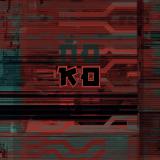
Noko is a Gda?sk-based (Poland) band operating at the intersection of jazz, electronics, and club music. Their sound grows out of improvisation, but instead of following a traditional jazz narrative, it focuses on trance, repetition, and the physicality of rhythm. The band's sound is built on a fusion of acoustic instruments-trumpet, saxophone, double bass, and drums-with electronics and synthesizers. The result is a dynamic structure that works just as well at jazz festivals as it does in a club setting. ?oko's second album is a sonic residue suspended somewhere between a jazz festival and a Berlin techno club. KO is a form of recycled jazz and electronics that opens up wide, cinematic landscapes for the listener. It's deeply physical music, driven by a trip-hop groove that keeps things grounded while allowing the mind to drift into less obvious territories. For this release, ?oko invited two outstanding artists who add a unique character to the whole. Novika brings her signature dreamlike calm, while the voice of Maciej ?winiarski appears in a song about death, closing the band's improvised journeys. This is a personal record the band wants to share with you.
quête:noko
- 1
妖精の通る道 (The Path Where Fairies Pass) is the debut vinyl release by Reimaki, the duo of Rei Yokoyama (Triggers Flowers, Stakaidan, Lapiz Trio, 新井薬師自警団, and Fujio, Chiko Hige and Rei), and Maki Miura (Tsubamegami, Les Rallizes Dénudés, Shizuka, Fushitsusha, Ohkami No Jikan and Katsurei). The duo has been an understated presence in Tokyo, playing occasional under-the-radar shows and self- releasing a few CD-Rs, but they’ve recently started to break cover, with a recent cassette on UFO Creations, released in support of a late 2024 tour of China. It’s also a welcome reappearance on the scene for both musicians; Miura’s musical history, in particular, is being reevaluated thanks to a recent string of welcome Shizuka reissues.
But the music Reimaki make together is a different thing entirely, much as it shares some psychological and aesthetic interests with both Miura’s and Nokoyama’s other projects. Their sound is split between two main interests – an extension of glacial, deoxygenating psychedelic improvisations, and a deep interest in medieval European music. They’ve also been known to cover compositions by English prog/improv musician Fred Frith. These various elements of the Reimaki aesthetic are all present through 妖精の通る道, from the fragility of the opening “Novel Amor” through to the smeared, hazy textures of the three extended pieces that comprise the album’s flipside.
There’s a beautiful sympathy in these performances, and a generous simplicity, too; you can sense that this music is informed by decades of finding just the right way to say the right thing in the clearest manner possible. Yokoyama and Miura never overstate things; make the statement, play the song, let it hang in the air for a while, and then move on to the next essential expression. The music is unburdened by self- consciousness. Their take on medieval music cuts to the core of melody and melancholy; their psych- improv side is blurred and drifting without ever lapsing into rote generic gestures.
There’s some shared space with other artists who suspend the timeless within the kaleidoscopic possibilities of the psychedelic – Kendra Smith & The Guild of Temporal Adventurers; Emmanuelle Parrenin; Rosina de Peira – and a tangled folksiness that might put listeners in mind of Jan Dukes De Grey, Comus, Current 93, and Tower Recordings. Accompanied by beautiful photography from street photographer Takehiko Nakafuji, who was also personally chosen by Mizutani to document Les Rallizes Dénudés, 妖精の通る道 is a most unique and necessary trip.
Unearthed from forgotten DAT tapes recorded in ’93–’94, Olivier Abbeloos’ archives capture the pulse of Belgium’s vibrant club years — a scene built on instinct, groove, and pure experimentation.
Melodic, playful, and full of heart, these rediscovered moments reveal a timeless energy that still moves today.
Lovingly restored and brought back to life on HOOT004.
Wah Wah 45s präsentiert die Debüt-LP des ghanaischen Sängers und Djembe-Trommlers Afla Sackey. Mit seiner Band Afrik Bawantu hat er sich den Traum erfüllt, traditionelle ghanaische Musik mit knisternden Afrobeat-Grooves zu verbinden und das Ganze mit einem unwiderstehlich funky Twist abzurunden. Die einzigartige Mischung aus vitalen, afrikanischen Rhythmen mit flotten, lebhaften Bläsersektionen und heavy Basslinien bringt eine frische Perspektive in das Afrobeat-Genre.
Afrik Bawantu veröffentlichten 2013 ihre vielgelobte Debüt-EP "Noko Hewon" und 2014 die Debüt-LP "Life On The Street". Afla selbst arbeitete mit legendären Künstlern wie Sun Ra Arkestra, Ginger Baker und Tony Allen zusammen und ist bei zahlreichen zeitgenössischen Projekten mit Ibibio Sound Machine, Sons Of Kemet, Dele Sosimi, The Estuary 21, Eparapo sowie seiner jüngsten afroelektronischen Kollabo mit Produzent Raz Olsher, Raz & Afla, dabei.
- "Vibrant, uplifting Afrobeat and highlife from the master of percussion!" - Cerys Matthews, BBC 6 Music
- "Excellent track. Will playlist on PBB Radio." - Laurent Garnier, PBB France
- "If you need a weekend livener then look no further than this Ghana vs Nigeria soundclash from Afla Sakey & his fellow funkateers, it’s a proper trip down Afro funk memory lane. The vibes are unrepentantly throwback, but when the 70s were this good & their essence captured so well I’m all in." - The Slow Music Movement
Helga Myhr is a highly regarded Hardanger fiddle player and singer
She has participated in a number of ensembles and has played in a variety of
genres. In this work, originally composed for the 2020 Osa Festival, she combines
her roots in traditional music from Hallingdal with her distinctive form of musical
exploration. This release unites music and visual art on glorious vinyl, designed
by the award-winning artist Solveig Lønseth.Helga Myhr grew up surrounded by
folk music. Today, fiddle tunes are what lie closest to her heart:
"Fiddle playing encompasses infinite possibilities, and it is these possibilities that
inspire me when I create new music. People who know fiddle music well might be
able to hear which tunes or 'layers' I have used, but sometimes it is more subtle" -
Helga Myhr.
The music on this recording was composed specifically for the outstanding
musicians who appear on the recording. Their exceptional musical and creative
qualities have had a profound impact on how the music sounds: "Malin Alander
has a fabulous voice that she can shape and stretch with amazing suppleness;
Adrian Myhr produces a warm bass sound, with lovely and intricate melodic lines;
Michaela Antalová has a superb groove, and she creates elegant tones on the
willow flute; multi- instrumentalist Rasmus Kjorstad adds compelling sound
variations and tasteful contributions on the Norwegian zither, octave violin and
Jew's harp", Helga Myhr explains.
Poems by Margit Lappegard (1918– 2011), from Leveld, Ål in Hallingdal, are
included in three of the tunes. Lappegard was a beloved poet who attracted
considerable attention with her poetry collection "Noko vil alltid lysa", first
published in 1988.
Helga Myhr's solo album "Natten veller seg ut" was released in the autumn of
2019 on the Motvind Records label, and was nominated for a Norwegian Grammy
Award (Spellemannsprisen). Myhr plays in several groups and ensembles,
including the band Morgonrode, which won a Norwegian Grammy in 2019. She is
also a member of Kvedarkvintetten, Dei kjenslevare and a duo together with Tanja
Orning.
- 1