Big Crown Records is proud to present Zero Grace, Liam Bailey's sophomore album on the label. Following the success of 2020's Ekundayo album, the tried and true chemistry of Bailey and producer Leon Michels (El Michels Affair) is on full display again as they take the sound they established and push it further. On Zero Grace they lean more into the bleeding heart singer-songwriter side of Liam. The result, much like Bailey himself, is impulsively honest without reserve. Born and raised in Nottingham, England, the son of an English mother and 2nd generation Jamaican English father, Liam will admit his early childhood was fairly chaotic and filled with "all the cliche racism that happens when people started mixing up in the '80s in England." Liam got his early influences from his mom's record collection. Bob Marley and Dillinger, Stevie Wonder and The Supremes, The Beatles and Jimi Hendrix would eventually shape the singer/songwriter we know today. Fast-forward to 2005, Liam is in London performing at every open mic and acoustic night he could, hustling with hopes of landing a record deal. It was through this time that Liam first teamed up with Michels, musician/producer luminary, and the co-founder of Brooklyn's own Big Crown Records. Liam flew out to New York and those first sessions together produced the now classic tunes "When Will They Learn" and "I'm Gonna Miss You" which still gets spins at Reggae spots around the globe and were co-signed by heavy hitters like David Rodigan & Don Letts. That first trip to NYC brought a lot of industry attention to Liam, including being noticed by a just-famous Amy Winehouse who heard one of Liam's apartment-made, lo- recordings, and liked what she heard. Regardless of the audio quality, Liam's particular sound shone through - all guitar, warm-rough and genuine soul. Eventually Liam signed to Polydor and wound up bumping against the typical major label industry obstacles. They already had an idea of the Liam they wanted to make, promote, and push With the typical large advance enticement, Liam did his best to trust that path. "Maybe I can make it work,' that's what you're thinking," Liam remembers, "but, you quickly find out that you can't." Zero Grace is full of freedom and love, in fact, working with Leon Michels and Big Crown Records has encouraged Liam to be himself. On album opener "Holding On '' Bailey speaks to his observations & fears when looking out at the world in front of him and also to the dedication it has taken to get on the other side of his personal trials & tribulations. "Dance With Me" is an instantly infectious two-stepper that nods to those incredible soul records that were coming out of Jamaica during the early Reggae days. Bailey steps into the dance with hopes of finding a new love and pulls us all out on the dance oor with him. "Disorder Starts At Home" is another close to the chest tune that addresses the difficulties he struggles with from his early chaotic childhood and his progress in getting past them. "Mercy Tree" is a powerhouse of Reggae Rebel Music. Bailey addresses the racial tensions that plague humanity and encourages everyone to step up and do their part to help foster equality. What starts out as a declaration of injustice turns into a call for action and an inspiration for hope.
Buscar:not even noticed
It is no secret that Montreal had a bubbly disco scene, but there are still some under-the-radar gems. Sophie Stanké is one of them. The charismatic Quebec-Lithuanian actress, radio host and singer hung around with some of the hippest disco people of the 80s, and worked on the sexy boogie song "L'amour d'une diva" with no other than Geraldine Hunt. Scandalous at the time, it became a local disco hit. Famous french singer Daniel Guichard noticed her and signed the song – slightly rearranged – in France on his label Kuklos. Here is the rarest original Canadian arrangement that Stima reissued, in all its glory: long and instrumental versions.
The other side includes the more obscure and even more erotic "J'adore". It was issued in 1987 under her first name, Sophie, with synth-pop and new wave influence. An instrumental was missing, thus Baerlz delivers a new dub cover and now each song has also its “version”, in the purest 80s 12 inches tradition.
After ten years spent in France, where she worked with another star singer Nicolas Peyrac, Sophie is now still active in Québec's cultural life. Stima is proud to have her permission to reissue these 2 fresh 80s tracks to hit the modern dancefloors.
- A1: Please Come Out
- A2: Wicked
- B1: Working With
- IB2: N My Head
- C1: Got Your Money
- C2: Didn't You Know
- D1: Two-Door
- E1: Memory Lane
- E2: Good Girls And Boys
- F1: All I Want From You
- F2: Don't Sell Rock
- G1: What Yours
- G2: Tweets
- H1: You Check
- H2: Hero Forever
- I1: Don't Pick Up
- I2: You Don't Know Me Anymore
- J1: Tenderly With You
- J2: Now Let's Wait
Sasu Ripatti's complete "Dancefloor Classics" series. Music for imaginary dancefloors, released on Ripatti's own label Rajaton.
”Look up, into the light” she said, while the camera shutter clicked. ”Like this? Does it look holy?” His neck felt stiff. Her reply: ”Yes, just like that. What do you mean holy? Like religious? ”No, more like trying to look very far, somewhere beyond what we can see.” ”Okay, stand still, I’m going to come close to you now. The light hits your face great.” click, click, click.
He noticed her fingernails. They were not polished. Natural. Even somewhat rugged, as if something wore out the fingers slightly. What had these hands held besides the camera? What made the edges of her fingernails drift off?
He thought it’s weird to look straight into the camera. The photographer had closed her left eye, the one not looking into the lens. Then it opened, she looked up, perusing the surroundings, then she closed her eye again, then looked up, closed, looking up, very quickly. It all seemed very professional. Maybe she calculated the light, making sure it’s close to perfect. ”What will these photos look like?” – the thought popped into his head briefly. It was liberating to think it wouldn’t matter.
”What’s that song playing?” he asked. ”Wait a sec, Ol’ Dirty Bastard?” she replied. ”Oh yeah, right. But the sample?” ”Hey, could you look up again, like that. No, lower.”
New directions: ”Look out from the window, turn left.” ”My left or yours?” ”Yours, I always try to think from the direction of my model.” How professional! This is a good shoot, so natural. Should I worry about how the photos look like? No, I don’t want to. His thoughts bounced around. What would the story be like? It’s a big newspaper, everyone will read it. Maybe someone drinks coffee and eats a stroopwafel while they do it. Will they place the waffle on top of the mug for a brief while, so that it gets hot and the syrup melts a little? Then it feels wet, and you can bend the cookie.
She broke his train of thought off midway through: ”Now turn right, but look left, and slightly up, but don’t turn your face right.” ”Umm, like this? Sounds like a set of pilates instructions.” she laughed ”You do pilates?” ”Yeah, it’s hard sometimes. Have you tried?” ”No”, she said. ”I’m not good for sports that are done in groups.” ”Yeah, but in pilates you can just be inside your mind, drowning in your private thoughts.”
”What are you thinking in pilates?” she asked, taking more photos. ”Well, mostly just which way is right. And which left.” click, click.
Q&A with Sasu Ripatti:
1) Tell us something about the EP series ”Dancefloor Classics”, what’s the idea and what can we expect?
I’ve been slowly writing these sort of dance music pieces and finally curated them together for a conceptual release. I like to create music for a dancefloor that exists only in my imagination and doesn’t try to suck up to the standardized reality.
2) Your vinyl format is 10” which is quite special (as opposed to LP / 12”). Why did you choose it?
It’s my favourite format, absolutely. The size is perfect, and you can make it sound really good @ 45 rpm. And you still can make great artwork.
3) You seem interested in sampling/repurposing, what does it mean to you as an artist to approach something already existing from a new angle? How does the source material inform you about the approach to take?
I guess i could flip it around and just say I’ve outgrown synths or electronic sounds to a great extend, and having gotten rid off all my synths already good while ago I’ve used samples as my main source material a lot. It’s obvious on this series that i’ve sampled existing music, but I also sample instruments and things in the studio and resample my own library that I have built over the years, it’s quite large. To me the end result matters, not so much how I get there. Once I have something on my keyboard and play around, it’s all an instrument, though with sampling other music it becomes a really interesting and complex one as you’re possibly playing rhythm, but also harmonic content and maybe hooks or whatever, all at once.
I never sample premeditadedly, like listening to records and looking for that mindblowing 3 sec part. I just throw the cards in the air and see what lands where, just full intuition and hopefully zero mind involved, playing tons of stuff, trying things, just recording hours of stuff. Then comes the interesting part to listen to hours of mostly crazy stuff and finding that mindblowing 3 sec part.
4) What is your relationship with the dancefloor (conceptually and/or in experiences / as a performer)?
Very complicated. I have never really felt comfortable on a dancefloor but have always wanted to. There’s something in club music, in theory, that really speaks to me. It has never really materialized for me – speaking mainly from a performer’s point of view who goes to check on a dancefloor for a moment after a concert. I never have DJ’d or felt much interest towards it. But again, I love the idea and concept of DJing. As well as producing music for imaginary DJs. Lately, as in the past 10+ years, I haven’t even performed in any sort of club spaces. So my relationship to the dancefloor is quite removed and reduced, but there’s quite a bit of passion and interest left.
All tracks composed and produced by Sasu Ripatti.
Artwork & photography by Marc Hohmann.
Mastering by Stephan Mathieu for Schwebung Mastering.
Vinyl cut by SST Brueggemann.
Publishing by WARP Music Ltd.
Repress!
In the mid-1970s, a force of nature swept across the continental United States, cutting across all strata of race and class, rooting in our minds, our homes, our culture. It wasn’t The Exorcist, Goodbye Yellow Brick Road, or even bell-bottoms, but instead a book called The Secret Life of Plants. The work of occultist/former OSS agent Peter Tompkins and former CIA agent/dowsing enthusiast Christopher Bird, the books shot up the bestseller charts and spread like kudzu across the landscape, becoming a phenomenon. Seemingly overnight, the indoor plant business was in full bloom and photosynthetic eukaryotes of every genus were hanging off walls, lording over bookshelves, and basking on sunny window ledges. The science behind Secret Life was specious: plants can hear our prayers, they’re lie detectors, they’re telepathic, able to predict natural disasters and receive signals from distant galaxies. But that didn’t stop millions from buying and nurturing their new plants.
Perhaps the craziest claim of the book was that plants also dug music. And whether you purchased a snake plant, asparagus fern, peace lily, or what have you from Mother Earth on Melrose Avenue in Los Angeles (or bought a Simmons mattress from Sears), you also took home Plantasia, an album recorded especially for them. Subtitled “warm earth music for plants…and the people that love them,” it was full of bucolic, charming, stoner-friendly, decidedly unscientific tunes enacted on the new-fangled device called the Moog. Plants date back from the dawn of time, but apparently they loved the Moog, never mind that the synthesizer had been on the market for just a few years. Most of all, the plants loved the ditties made by composer Mort Garson.
Few characters in early electronic music can be both fearless pioneers and cheesy trend-chasers, but Garson embraced both extremes, and has been unheralded as a result. When one writer rhetorically asked: “How was Garson’s music so ubiquitous while the man remained so under the radar?” the answer was simple. Well before Brian Eno did it, Garson was making discreet music, both the man and his music as inconspicuous as a Chlorophytumcomosum. Julliard-educated and active as a session player in the post-war era, Garson wrote lounge hits, scored plush arrangements for Doris Day, and garlanded weeping countrypolitan strings around Glen Campbell’s “By the Time I Get to Phoenix.” He could render the Beatles and Simon & Garfunkel alike into easy listening and also dreamed up his own ditties. “An idear” as Garson himself would drawl it out. “I live with it, I walk it, I sing it.”
But as his daughter Day Darmet recalls: “When my dad found the synthesizer, he realized he didn’t want to do pop music anymore.” Garson encountered Robert Moog and his new device at the Audio Engineering Society’s West Coast convention in 1967 and immediately began tinkering with the device. With the Moog, those idears could be transformed. “He constantly had a song he was humming,” Darmet says. “At the table he was constantly tapping.” Which is to say that Mort pulled his melodies out of thin air, just like any household plant would.
The Plantae kingdom grew to its height by 1976, from DC Comics’ mossy superhero Swamp Thing to Stevie Wonder’s own herbal meditation, Journey Through the Secret Life of Plants. Nefarious manifestations of human-plant interaction also abounded, be it the grotesque pods in Invasion of the Body Snatchers or the pothead paranoia of the US Government spraying Mexican marijuana fields with the herbicide paraquat (which led to the rise in homegrown pot by the 1980s). And then there’s the warm, leafy embrace of Plantasia itself.
“My mom had a lot of plants,” Darmet says. “She didn’t believe in organized religion, she believed the earth was the best thing in the whole world. Whatever created us was incredible.” And she also knew when her husband had a good song, shouting from another room when she heard him humming a good idear. Novel as it might seem, Plantasia is simply full of good tunes.
Garson may have given the album away to new plant and bed owners, but a decade later a new generation could hear his music in another surreptitious way. Millions of kids bought The Legend of Zelda for their Nintendo Entertainment System back in 1986 and one distinct 8-bit tune bears more than a passing resemblance to album highlight “Concerto for Philodendron and Pothos.” Garson was never properly credited for it, but he nevertheless subliminally slipped into a new generations’ head, helping kids and plants alike grow.
Hearing Plantasia in the 21st century, it seems less an ode to our photosynthesizing friends by Garson and more an homage to his wife, the one with the green thumb that made everything flower around him. “My dad would be totally pleased to know that people are really interested in this music that had no popularity at the time,” Darmet says of Plantasia’snew renaissance. “He would be fascinated by the fact that people are finally understanding and appreciating this part of his musical career that he got no admiration for back then.” Garson seems to be everywhere again, even if he’s not really noticed, just like a houseplant.
Stand by your friends that are hurting. That’s what New Jersey power punks Teenage Halloween do
through soaring arrangements of melodic angst, wracked vocals that insist “I love you so much I would
die for you”, and passion-packed two-minute dispatches tackling topics from gender euphoria, to state
abuses, and an eternal quest for mental wellbeing. The results are potent punk vistas that document
young queer life at the edge of America. In February 2023, the group headed into Headroom Studios
in Philadelphia, PA, under the guiding hand of producer Joe Reinhart (Hop Along, Beach Bunny,
Joyce Manor), and tracked the 13 dispatches on isolation, uncertainty, and hope for better days, that
make up Till You Return. This second full-length outing (due for Oct 20th release via Don Giovanni)
finds the band, which operated as a ‘rotating cast’ in it’s early years, now firmly entrenched as an
essential four-piece comprised of Henderiks alongside Eli Frank (guitar, vocals), Tricia Marshall
(bass, vocals) and Peter Gargano (drums). The quartet maintains the vital energy of their previous
incarnations but brings an even more focused punch to the arrangements that leaves greater room for
Henderiks’ lyrics. Fans of the band will also have noticed the creative assent of Marshall who takes
the vocal lead on multiple songs that have become defining features of the band’s recent live shows
and which bring a fresh new viewpoint to the band’s ongoing sonic mission for a more equal and just
world.
Mike Salta & Mortale release their debut album ‘Moloko Island’ on Music For Dreams label. Moloko Island is a getaway where good vibes can float freely. An island where only fantasy set the limits.
It is a collection of tracks, some of which have already been buzzing around the balearic / downtempo scene for a while now. The Album includes the infectious ‘Hey Moloko’ which was picked up by Hot Chip for their splendid Late Night Tales compilation, and the gamers amongst you may have noticed it in the most recent Playstation – Gran Turismo 7 soundtrack. Outro track ‘Bye Moloko’ is a brand new Re-edit of this classic.
The music of Mike Salta aka Gert Nygaard flaunts an eclectic palette, collecting strands from New Orleans funk, 80’s italo disco or Brazilian tropicalia and transforming them into rich and sun-drenched dance music.
The album is produced in collaboration with long-time studio partner Mortale, and is a sumptuous piece of chillout to call on the summer. A full-bodied groove of an album to transport you and soundtrack those sunny days & balmy evenings. Moloko Island concludes a voyage and reconcile an era where electronics and acoustics have been explored and united in the unique sound and vibe Mike Salta and Mortale has strived to unfold
Ático Corp. presents his third EP on his own label UFC, co-owned with also producer R.I.P Bestia. Simulación Ep is the name where you will find four cuts with breaks, electro and trance grooves in an always cyberdelic way. On the A side you have two versions of the same track, AT68. First original version with electro style and big bass leading the track and a second version remixed by german duo Not Even Noticed with a trance vibe oriented remix.
On the flip side, AT70 explores a more upfront breakbeat groove, with big drums, big pads and dreamy melodies. To close the Ep we have AT69, which provides a more trance-breakbeat track
- A1: The Lepers Companion
- A2: Boats In A Sunken Ocean
- A3: The Finished River
- A4: Let's Share Wounds
- A5: Verdriet
- B1: Sand Fools The Shoreline
- B2: Let's Be On Our Own
- B3: The Ferris Wheels Of Winter
- B4: We Made It Rain
- B5: How Safe We Must Seem
- C1: Pillows In The Water
- C2: Matching Eyes & Hands
- C3: The Space Around Your Sleeping
- C4: Untitled Song
- D1: Love Gun
- D2: Stedelijk
- D3: Matching Eyes & Hands
- D4: How Safe We Must Seem
»This River Only Brings Poison« was released in 2002 as the sixth full-length album of Chris Hooson’s Dakota Suite project. This first-ever vinyl edition of the record includes four bonus pieces and makes it possible for fans to re-evaluate one of the most crucial Dakota Suite albums in the project’s vast discography while also providing new listeners with an entry point into its intricate musical cosmos. With contributions by artists as diverse as steel guitarist Bruce Kaphan and drummer Tim Mooney from American Music Club, Derald Daugherty, and Laura and Chris Donohue as well as long-time collaborators such as David Buxton, Colin Dunkley or Ed Collins, »This River Only Brings Poison« turned out as a sonically rich and stylistically versatile as it is emotionally multi-layered.
»Writing music for me has always been a cathartic exercise,« explains Hooson. While the instrumental pieces generally serve to express a raw sense of his internal struggles, his vocal-led songs communicate them more directly. »Those are the words I cannot say openly. It’s not that I cannot voice them in a conversation, it’s just that they only seem half-formed and not ›true‹ unless they are located within a song,« he says. What makes Dakota Suite unique is that throughout the project’s history, the music and lyrics have always had a single addressee: Hooson’s wife Johanna, whose photographs were used for the album artwork and who is featured on clarinet on »sand fools the shoreline.«
»The title of the record was something that I had said when Johanna and I first met to make her see that the journey she was considering taking would be full of love, but also come at a cost,« explains Hooson. »The songs were written at a time when I was really struggling to think I could be the person that she deserved.« In the end however, »This River Only Brings Poison« marked a turning point in Hooson’s oeuvre after highly productive time with Dakota Suite: it would take another five years until he returned with a new album. »The reason for that was that I needed to accept that she had made her choice to be with me and that was a big thing for me to get my head around,« he says.
Hooson’s highly personal approach to writing songs also has an impact on the ways in which he works with his collaborators when recording them. »The people with whom I play really need to understand how I perceive the world to be able to play what I need,« he says. »My instructions would always be things like, ›This is what the song means to me, this is what I am trying to communicate to Johanna when she hears it, so your cello, for example, needs to sound like you have noticed that the cloud is covering the sun, and the weight of the air on your skin is heavier and it has unsettled you.‹«
For this particular record, he reached out to Mooney and Kaphan as an admirer of their group American Music Club. Expecting to be rejected, he instead found himself on a flight to San Francisco together with multi-instrumentalist Buxton shortly thereafter, about to make what he today calls one of his most cherished recording experiences. After the four musicians finished the basic tracks, overdubs were added in Hooson and Buxton’s respective houses as well as Daugherty’s home studio while Hooson was visiting his old friend in Nashville.
Hooson emphasises that revisiting his older releases can be complicated. »I feel intense feelings, as every record is a diary of who I was in that period and what I was feeling. That is why having to play the songs live is always like having PTSD: I need to re-experience the event that caused me to write the song, and I do not enjoy that.« He remains, however, proud of »This River Only Brings Poison,« pointing especially to the opener »the lepers companion« as what might perhaps be his favourite song of his. »But overall I just hope that Johanna feels it spoke to her,« he says, adding that the two do not discuss his records. »For me it's enough that she is listening to the things I mean to communicate to her.«
Sasu Ripatti presents the third volume in his "Dancefloor Classics" series with five 10" releases coming throughout 2023. Music for imaginary dancefloors, released on Ripatti's own label "Rajaton".
--
”Look up, into the light” she said, while the camera shutter clicked. ”Like this? Does it look holy?” His neck felt stiff. Her reply: ”Yes, just like that. What do you mean holy? Like religious? ”No, more like trying to look very far, somewhere beyond what we can see.” ”Okay, stand still, I’m going to come close to you now. The light hits your face great.” click, click, click.
He noticed her fingernails. They were not polished. Natural. Even somewhat rugged, as if something wore out the fingers slightly. What had these hands held besides the camera? What made the edges of her fingernails drift off?
He thought it’s weird to look straight into the camera. The photographer had closed her left eye, the one not looking into the lens. Then it opened, she looked up, perusing the surroundings, then she closed her eye again, then looked up, closed, looking up, very quickly. It all seemed very professional. Maybe she calculated the light, making sure it’s close to perfect. ”What will these photos look like?” – the thought popped into his head briefly. It was liberating to think it wouldn’t matter.
”What’s that song playing?” he asked. ”Wait a sec, Ol’ Dirty Bastard?” she replied. ”Oh yeah, right. But the sample?” ”Hey, could you look up again, like that. No, lower.”
New directions: ”Look out from the window, turn left.” ”My left or yours?” ”Yours, I always try to think from the direction of my model.” How professional! This is a good shoot, so natural. Should I worry about how the photos look like? No, I don’t want to. His thoughts bounced around. What would the story be like? It’s a big newspaper, everyone will read it. Maybe someone drinks coffee and eats a stroopwafel while they do it. Will they place the waffle on top of the mug for a brief while, so that it gets hot and the syrup melts a little? Then it feels wet, and you can bend the cookie.
She broke his train of thought off midway through: ”Now turn right, but look left, and slightly up, but don’t turn your face right.” ”Umm, like this? Sounds like a set of pilates instructions.” she laughed ”You do pilates?” ”Yeah, it’s hard sometimes. Have you tried?” ”No”, she said. ”I’m not good for sports that are done in groups.” ”Yeah, but in pilates you can just be inside your mind, drowning in your private thoughts.”
”What are you thinking in pilates?” she asked, taking more photos. ”Well, mostly just which way is right. And which left.” click, click.
--
With the programmatic title “Strictly Hits”, Strictly Strictly pushes forward with their first Various Artists EP, a 6 tracker of characteristic Electro Breaks.
Karawai is whipping you into Side A with his sweaty Trance sunriser ‘Cyberythm’ while High Fidelity’s viciously banging ‘Catching the Case’ already leaves nothing but steam when DJ Purpur catches up with his mystical but no less driving ‘Spooky’ rounds out the experience in perfect style.
Flip to Side B and space out with Not Even Noticed’s intoxicated belter ‘Loko’, followed by Strictly’s very own Klex calling for hands up with ‘Blue Figurine’ before Generali Minerali takes you on a mind-bending journey with ‘Reverse Time’ to finish off the trip.
Brace yourself before Strictly Hits.
More in tune now with the rhythm of the sun and moon, Xylouris White (Dirty Jim White and George Xylouris) speak to each other across great distances with the intuition and fellowship that can only be found over years in each other"s company. With fewer distractions, appreciative of the freedom to play with new sounds and spaces, they carve The Forest In Me from unbelievably thin air. Once you set the needle down on the record and hear for yourself, the intimacies and impressionism, abstraction and unfiltered emotion found in The Forest In Me, you may wonder what was the mood of the room in which this music came to be. George, Jim and long-time producer (and secret third member) Guy Picciotto share their thoughts: Guy Picciotto: "In late 2019, we had begun taking steps to working on new material. In a haphazard fashion, Jim and I started tracking drums in my basement, cutting them up into shapes with no set landing in mind. Some of it we sent to Giorgos in Crete - he responded with his lyra and his lute. Without intention we had initiated a process that would soon become more ruthlessly mandated by the world events that separated and isolated us to three corners of the globe in the following year." Giorgos Xylouris: "While we were recording, I noticed that the music had a certain solitude about it, both from the title and from inside. That led us to find more music from within that we had not yet discovered." Jim White: "The idea emerged, naturally nourished and nourishing a record with none of our usual angles and themes, no verbal language, no angst nor sudden dynamics, a more subtle structure. And we found The Forest In Me." The first revelation from The Forest In Me is "Latin White", in which Jim"s jaunty pattern sets the stage for George"s Cretan lyra and lute figurations, giving this short dance piece the feel of a welcome hoedown around the campfire, warding off the encroaching darkness of an emptied world. The repetitions, gathered to induce joy, have a glassy-eyed mechanical drive to them; their dervish-istic seeking betrays any suggestion of balm.
Gated kick off 2023 with a corker of a remix package, featuring an epic electro workout from Radioactive Man and lo-fi deep house from Max Wheeler of Anushka fame.
Marcela Dias Sindaco’s breathy Portuguese vocals always lent themselves to remixes and these five cuts use them to great effect.
Keith Tenniswood’s storming version of Missao Controle kicks off the EP, with a near-8-minute bass-heavy acid monster that retains the original’s funky elements but pushes them way into the future.
German upstarts not even noticed take Extincao nice and deep for those loved-up dancefloor moments, again bringing in melodic elements from the original, but twisting them just enough to flow into a dreamy acidic breakdown.
Flip to the B and Anushka’s Max Wheeler goes it alone, with a deep and crackly analogue house version of Dois Lados. Injected with just a smidgeon of jazz, this is definitely one for the heads.
Next up, longtime Gated collaborator Dip Shim, whose debut album only just dropped, brings a straight-up electro jam version of Pro Meu Bem, with haunting pads and insistent arpeggios.
Rounding off the EP is Perseus Traxx’s deeper than deep take on Missao Controle, a tripped out reverby journey laden with his signature hardware sound.
A Detroit resident, William Odell Hughes is a much-loved street educated singer-songwriter and music composer. As a regular passenger riding to work on the Detroit East Side bus route in the early eighties, he met jazz pianist Pamela Wise who also rode the bus to work every day and who he noticed was always reading music. Pamela told him about saxophonist, clarinetist, and producer Wendell Harrison (founder of the legendary Tribe collective and a regular collaborator of Pamela Wise). She introduced Odell to Wendell, who was impressed with William’s compositions and felt that it would be a great project for release on his WenHa record label.
Hughes and Harrison began producing and recording the album to be called “Cruisin”featuring musical arrangements by both Wendell Harrison and Pamela Wise. This album (released in 1981) was the first recording for Hughes and the beginning of a long musical journey that continues to this day. Cruisin’ features an all-star line-up that includes Andrew Gibson (The Counts), Pamela Wise (Tribe) and award-winning Detroit Jazz icon Wendell Harrison…all doing their bit and making this a monster of an album!
William Odell Hughes’ debut album has all the best characteristics of an 80s album: it’s filled with funky playful beats and has excellent soulful honey-dipped vocals. On Cruisin’ the listener is treated to both mellow soul sounds and electrifying disco boogie (that’ll make even the shyest of club goers want to get up and dance) and Wendell Harrison’s instantly recognizable flute-playing and synth pads give the record a warm, relaxed groove. Prepare yourself for funky vibes, cool soothing feet-tapping rhythms, fantastic interplays on vocal tempos…all backed by a beautiful array of soulful synthesized and cosmic music.
References to universal awareness are plentiful throughout and the spirituality of The Tribe remains a constant undertone; a gentle reminder of WenHa’s roots. With a sound like this, it’s no wonder that this album has long been considered a grail for crate diggers around the world. All of the above makes this incredible record both timeless and as relevant today as it was back when it was initially released.
Tidal Waves Music now proudly presents the first ever vinyl reissue of this rare funk & soul album (original copies go for large amounts on the second-hand market) originally released in 1981 on WenHa records. This unique record comes as a deluxe 180g vinyl edition (strictly limited to 500 copies worldwide) with obi strip. This vinyl edition also features the original photography by acclaimed British photographer Brian Smith known for his work with artists such as Screamin’ Jay Hawkins, Howlin’ Wolf, Chuck Berry and John Lee Hooker.
”Look up, into the light” she said, while the camera shutter clicked. ”Like this? Does it look holy?” His neck felt stiff. Her reply: ”Yes, just like that. What do you mean holy? Like religious? ”No, more like trying to look very far, somewhere beyond what we can see.” ”Okay, stand still, I’m going to come close to you now. The light hits your face great.” *click, click, click.
He noticed her fingernails. They were not polished. Natural. Even somewhat rugged, as if something wore out the fingers slightly. What had these hands held besides the camera? What made the edges of her fingernails drift off?
He thought it’s weird to look straight into the camera. The photographer had closed her left eye, the one not looking into the lens. Then it opened, she looked up, perusing the surroundings, then she closed her eye again, then looked up, closed, looking up, very quickly. It all seemed very professional. Maybe she calculated the light, making sure it’s close to perfect. ”What will these photos look like?” – the thought popped into his head briefly. It was liberating to think it wouldn’t matter.
”What’s that song playing?” he asked. ”Wait a sec, Ol’ Dirty Bastard?” she replied. ”Oh yeah, right. But the sample?” ”Hey, could you look up again, like that. No, lower.”
New directions: ”Look out from the window, turn left.” ”My left or yours?” ”Yours, I always try to think from the direction of my model.” How professional! This is a good shoot, so natural. Should I worry about how the photos look like? No, I don’t want to. His thoughts bounced around. What would the story be like? It’s a big newspaper, everyone will read it. Maybe someone drinks coffee and eats a stroopwafel while they do it. Will they place the waffle on top of the mug for a brief while, so that it gets hot and the syrup melts a little? Then it feels wet, and you can bend the cookie.
She broke his train of thought off midway through: ”Now turn right, but look left, and slightly up, but don’t turn your face right.” ”Umm, like this? Sounds like a set of pilates instructions.” she laughed ”You do pilates?” ”Yeah, it’s hard sometimes. Have you tried?” ”No”, she said. ”I’m not good for sports that are done in groups.” ”Yeah, but in pilates you can just be inside your mind, drowning in your private thoughts.”
”What are you thinking in pilates?” she asked, taking more photos. ”Well, mostly just which way is right. And which left.” *click, click.
- 1: Haizea - Egunaren Hastapena
- 2: Izukaitz - Xori Bele
- 3: William S. Fischer - Pello Joxepe
- 4: Magdalena - Lanera Sartzen
- 5: Enbor - Agurra Ii
- 6: Itoiz - Ezekielen Ikasgaia
- 7: Koska - Ogia Eska
- 8: Itziar - Ameskoi
- 9: Errobi - Andere
- 10: Lisker - Amets Jazarriak
- 11: Amaia Zubiria Eta Pascal Gaigne - Itxasoan Laino Dago
- 12: Gontzal Mendibil - Hasperen Itun
- 13: Urria - Arrano Beltza Eta Amaia
1972-1985 KATEBEGIAK - Prog-Rock, Psych-Folk & Jazz-Rock Music from the BASQUE COUNTRY. The album KATEBEGIAK, now published by ELKAR, contains 13 tunes on double LP gatefold edition from Haizea, Izukaitz, William S. Fischer, Magdalena, Enbor, Itoiz, Koska, Itziar, Errobi, Lisker, Amaia Zubiria & Pascal Gaigne, Gontzal Mendibil & Taldea and Urria, and the CD-Book edition adds an extra bonus track by the great unknown artist Juan Arkotxa. Complied by Mikel Unzurrunzaga Schmitz aka DJ Makala. Music produced in the 70's in the Basque Country got trapped between two earth shattering artistic currents; Ez Dok Amairu in the 60s and Basque Radical Rock in the 80's, and unfortunately, most of the lovely discs and tunes created at that magical time have been pushed to a remote (and sometimes even despised) corner of our collective memory. 60's and 80's music currents are almost opposite, and both work as magnetic poles with a very strong power of attraction, and maybe also as a burden for any of the later artistic currents. 60's generation of artists searched within their rich and ancient cultural roots to acknowledge and update them, in proud, hopeful and unforgettable folk songs. The 80's one on the other hand, worked in a flammable environment in constant social and political conflict and found in punk the perfect way to express their anger and weariness for so many unfulfilled promises and the lack of opportunities into short, noisy, direct and corrosive songs, technically sparse but full of energy and expressive power. Most of the "classic" names engraved in our memory come from one or the other like Benito Lertxundi, Mikel Laboa, Lourdes Iriondo and Xabier Lete or Kortatu, Hertzainak, Zarama, Las vulpes, Eskorbuto or Cicatriz. 70's generation and their music work somehow as the "missing link" ("katebegia" in Basque) between the two. They loved folky tunes and don't forget their ancient roots, but they also look outside for inspiration and experimentation. Just as the 80's boys and girls found punk the 70's guys found a completely different sonic and aesthetic landscape in the works of Grateful Dead, Fairport Convention, King Crimson, Soft Machine, Gong_ and worked closely with keen souls in other neighboring regions such as Maquina!, Pau Riba or Sisa in Catalonia or Smash and Triana in Andalusia. This resulted in more abstract and poetic lyrical content, much longer psych-folk-prog-jazz tunes, full of complex instrumental passages and mesmerizing structures of sheer ambition and masterful execution in many cases. But, most important of all, they found a voice of their own, rich, unique, and fascinating, and that's what makes them so valuable to us. Not only to us, but also to lots of vinyl collectors and crate-diggers around the world, who have in many cases paid fortunes for some of the original editions of LPs that are the source of tunes in this compilation. Mikel Unzurrunzaga Schmitz aka DJ Makala, DJ and producer of worldwide scope and wisdom, noticed this fact first and decided to pay homage to these wonderful tunes through this masterful and dedicated selection for your pleasure and as an open invitation to dig deeper into your adventures in the dark and hidden side of Basque popular music.
Harrison Whitford, LA-based multi-instrumentalist, producer and songwriter, announces his new album Afraid Of Nothing, released via Screwdriver Records, building on his previous work, his delicate vocals and signature guitar tones being joined by lush layers of instrumentation. It's both emotionally devastating and sonically impressive, an immersive record that warmly embraces the listener. He has spent the last several years lending his warm, expressive guitar skills to Phoebe Bridgers (who lends backing vocals to select tracks on the album) and even when her music started being noticed, Harrison still felt the urge to flex that creative muscle. A departure from his previous method of writing and recording quickly, Afraid of Nothing is an album that has benefitted from the time afforded to Harrison from being able to truly focus. “Recording Afraid of Nothing taught me an important lesson: don't stop until you're happy with it,” Harrison says. Recording was seen as a constantly evolving process, every single kink ironed out until he was sure every track was how he envisaged it.
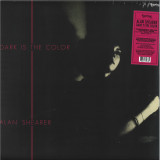
Favorite Recordings presents Dark Is The Color, the first LP by Alan Shearer reissued on vinyl for the first time. Despite being initially composed and produced for the French library label PSI, this rare
and obscure in-demand gem from 1985 sounds retrospectively like a proper album with great coherence and sophistication all along. Indeed, these 11 tracks will delight synthesizers addicts. Expect deeply emotive instrumental compositions, with ingenious analogue sequencing on stimulating chord progressions. The result is a highly retrofuturistic album, sometimes almost anticipating 90's videogames
scores. Just imagine Wally Badarou in a bunker with Talking Heads watching New York 1997 from John Carpenter.
Composed mostly step by step on a Sequential Pro-One synthesizer, Dark Is The Color is the product of the exciting state of mind from the 80's era with new sounds, new tools and new trends on the music spectrum. Influenced by bands like Talking Head or Japan, the sirens of the new wave scene strongly resonate here with Alan Shearer's familiarity and craftmanship with synthesizers.
Back in the days, Alan Shearer aka Frédéric Viger was working for his father’s music label, “Musique Pour L'image”, and their sublabel “PSI”. He started with Marathon Life under his real name before taking the Alan Shearer monitor. These records were produced for radio, TV and cinema industries but as well for companies’ internal communication. They represented a real investment from the label and these catalogues are usually full of amazing music from great artists such as Martial Solal, Vladimir Cosma, Joël Fajerman, Harlem Pop Trotters and even Manu Dibango.
About his musical illustration process, Alan Shearer tells: "Soundtracks are indeed my biggest influences and I'm a real fan of American composers as Jerry Goldsmith or Elmer Bernstein. I've always considered soundtracks as the new classical music or classical music of our century. There is a real state of mind producing music for illustration: you have to stick to the video. You should not tell what the image is saying but accompany what it is saying. You have to find a unique link, people always told me music should not be noticed for itself in a movie, that's what makes it good.”
It's all about hooking up our music to the emotional world of electronic music at the beginning of the Nineties, however, without falling for nostalgic references. We don't want to do cowardly Zeitgeist Techno, we want to have the heart to dare big sounds and more melodies. Sunrise scenarios, energy, revolution and kaput-ness, all these are parts of the Extrawelt.' (Extrawelt, 2008) However, don't panic: even if the aesthetics of the debut album of the two Hamburg born artists Arne Schaffhausen und Wayan Raabe is affected by the attentive observation of electronic dance music over the last fifteen years, the 'Schöne Neue Extrawelt' is above all this: Premium Techno 2008! The Hamburg-based producer team has been unmistakably imprinting the last three years' club sound with widely noticed releases on Border Community ("Sooper Track"), Traum Schallplatten ("Doch Doch") and Cocoon Recordings ("Titelheld") as well as with remixes for Gregor Tresher, Minilogue or Alexander Kowalski - last but not least due to an excellent live presence, that resulted in the second rank in the Groove Live Act Charts, even still without the accompanying long player. The work on 'Schöne Neue Extrawelt' started more than two years ago for Schaffhausen and Raabe. 'The initial idea was to present an album covering all styles of electronic music between Ambient, Breakbeats and Techno. When we had 25 tracks for the album ready, we had to realize that this approach did not work for us. Insofar, we finally decided to use the 4/4 bass drum in all tracks except in the little intermezzo 'Kurt Curtain". We have tested all tracks live over the last three months and constantly re-interpreted them. So, the 'danceability' is clearly in our focus, but the sound spectrum and the dramaturgy of the titles should not be solely functioning in the club. Our intention was definitely not to deliver an album full of superficial peak time hits.' Those nine tracks on 'Schöne Neue Extrawelt", all unreleased, are
Take the freaked-out punked up soul of The Stooges and MC5 mix that with 60s garage trash, blend in Sabbath, AC/DC and heavy rock n roll and then hot wire that sound to a handful of freaks located in Fredericton, New Brunswick. Here it is that The Angered Wrecks were located - in an old Victorian style house in downtown Fredericton. It was here they set up a permanent rehearsal space on the main floor taking up the dining room and living room area with a full P.A. system and the long parties would begin as the Angered Wrecks cranked out an unholy primal serving of mind-numbing, eyeball-popping guttural pure rock and roll.
Lucky for us the Angered Wrecks had a primitive DIY recording set up as they recorded live off the floor with one cardioid mic taped to the ceiling to capture the entire room sound and straight into a cheap Alpine cassette deck. The results of these previously unheard recordings capture the essence of trashy rock’n roll at it’s finest, delivered with pure dereliction, and always a side of extra sleaze.
Keeping warm in the winter at another old salt box style house they would later rehearse and play gigs in, a large circle was cut in the floor so that the rising heat from the pottery kiln downstairs would (along with the right mixture of beer and ‘Purple Jesus’, weed and often speed and hot dogs) keep these boys fuelled long enough in sub zero temperatures to keep pumping out the rock’n roll savagery.
The last show they played was in the fall of ’81 at the Bug Shack after the household was served an eviction noticed with the house to be entirely demolished (just like Stooge Manor aka The Fun House).
They got a gig together the weekend before demolition, packed the bottom floor and played a blazing set. At the very end, walls were kicked apart, old cans of paint strewn about, general wanton destruction to furniture, doors, windows etc…insane. The bug shack had come to an end and shortly thereafter, The Angered Wrecks.
That these tapes have survived to this day is all thanks to John Westhaver’s archival hoarding (even though the loss of a 90 minute session of the Angered Wrecks still haunts John to this day).
So CRANK these tracks as loud as you can – these audio tapes are not for the faint of heart
The latest thrilling incarnation of master rock'n'roll storyteller Tex Perkins (The Cruel Sea, Beasts of Bourbon, Thug, Tex Deadly and the Dum Dums, Tex, Don et Charlie.) and the Fat Rubber Band began with a rare vinyl copy of Link Wray's Beans and Fatback album, recorded in 1971. Perkins and his respected musician, songwriter, producer and bandmate Matt Walker share a mutual admiration of the American electric guitar innovator, whose iconic power chords in his signature 50s rock'n'roll instrumentals, had a profound influence on the evolution of rock guitar. The Fat Rubber Band is borned with this rare vinyl, the pair have enjoyed countless musical conversations over the decade while hanging out backstage and on the road. Walker offered the debut album's opening track, the wide-screen drama of "Pay The Devil's Due". Perkins responded with the plaintive blues of "My Philosophy". Walker replied with the album's fuzz driven debut single "Danger Has Been Kind" and Perkins countered with the glacially-paced, intimate "Poor Simple Minded Fool". The pair road-tested their works in progress as a duo before enlisting bassist Steve Hadley, drummer Roger Bergodaz and Evan Richards on percussion to complete the Fat Rubber Band line-up to record the album's ten tracks at Walker's Stovepipe Studios in Victoria's Dandenong Ranges. "At Matt's studio - you open the door to the studio and nature floods in," Perkins says. "We wanted it to sound rural, to feel the dirt and the grass and the leaves." Even after all these decades, when you think you know that gravelly baritone inside out, Perkins finds new emotional tones in the service of the Fat Rubber Band's songs vivid narratives, with their characters wrestling, but sometimes dancing, with the tougher, darker qualities of the human condition. This is truly existential blues. Bubbling underneath those upfront vocals and raw harmonies are intricately entwined guitar conversations and unexpected percussive flourishes. "Another aspect that we wanted was for the sound to be sometimes a collision and sometimes a marriage of acoustic and electric instruments. We wanted that tension between mandolins and bouzoukis meeting fuzz guitars." "We also considered percussion to be a vital element of the sound we were going for; we noticed in the recordings we loved from the 50s and 60s that often the tambourine hit, or the maracas, or whatever percussion, was right up there in the mix, right next to the vocal," Perkins says.
During the production of two singles (This being the first) unfortunately William Stuckey passed away, below are some words from my partner in the project Brian Sears regarding our work with him pm his LP.
Brian Sears - I'm not one that likes to write but I wanted to say a few things about William Stuckey. William Stuckey passed away last in August 2021 at age 73, and is an artist that I've been working with since last summer. He was a key fixture in the Little Rock music scene and most notably was one of the driving forces behind the legendary True Soul label. Lee Anthony, the owner of True Soul Records, once told me that William Stuckey was the most talented musician he had ever worked with, and if you know anything about that label or Lee Anthony, that's quite a compliment.
When I reached out to William last summer about re-releasing his material, he ignored my calls and messages. Fortunately, I was able to reach his son, Erreyon who was kind enough to listen to me. I've worked a lot of terrible sales gigs in my past and "getting to the point" is sometimes a hard thing to achieve, especially when you're trying to talk about the music business and music that's 50 years old. But the point was simple, his music matters and deserved to be preserved. This resonated with William and Erreyon and they gave Euan Fryer and myself a chance.There was a memorable handoff of the master tapes in a parking lot and from that point forward I knew William Stuckey trusted me. Trust is something he had to do a lot in his life due to the fact that he was visually impaired and I'm thankful he trusted us. As I wrote before, there was a long process of transferring the tapes, but it was successful, and the album has never sounded so good. William had incredible hearing and was able to pick out details most might not detect. He was gifted and that shined through his own playing and voice through copious recordings. Speaking with him after he finally heard the newly remastered album, the way he had intended for it to sound, is something I'll never forget. Moments like that are really the reason why I feel so compelled to work with older musicians that didn't get a fair shake the first time.
Meeting William Stuckey face to face earlier this summer was one of the highlights of my year. We laughed and hung out at his place where he had lived for the past 50 years. I told him his music was internationally known and the re-release was well received. He was humble and felt like a long lost friend that I hadn't seen in a long time. I'll never forget that. I told him I wanted to take some photos, and I'm so glad I did.We had a good time and it was a beautiful summer night and as I left his place his neighbours noticed me walking to my car and wanted to chat, so we talked briefly and it ultimately lead to one of them getting into their car and cranking "The First Time" on the stereo system in their driveway. I wasn't sure if Stuckey could hear it from his house, but part of me knew he probably could and hearing his song echo in the background as I drove off and thinking about Stuckey and the time we shared and his music being appreciated by so many, even in that moment, is a wonderful memory. I'd like to think he was smiling.His music and legacy will live on forever.
Rest in peace to a great one.
When his mother brought Stanley Turrentine’s Salt Song LP back from a trip to Canada, Julien Lourau, then a teenager, was impressed by the scope of the sound and the groove of the saxophone. He was also charmed by the lush arrangements and funky sound of the record, typical of releases on the CTI label. Created by producer Creed Taylor, CTI left an imprint in the minds of 70s jazz fans much like Blue Note did in the 60s, and it even ended up releasing work by artists who started out on this mythical label such as Stanley Turrentine and Freddie Hubbard. The two even shared the same sound engineer, the great Rudy van Gelder.
Yet CTI, though highly prolific during its 15 years of activity, has not benefitted from the same aura as its predecessor. “To breathe life into this album, I listened to a wealth of CTI releases and discovered some I had never heard before. I noticed, oddly, that many of today’s musicians know very little about CTI - a label unfairly considered as minor.”
The choice of tracks was determined by Julien’s personal tastes, always keeping in mind a desire to help people discover them yet focusing on the joy of actually playing them too.
"The album is made up of 9 pieces. Mathieu Débordes got everything down to the nearest note before we even attempted to play them. CTI didn’t hold back in fuelling their compositions with brass and violins, but I erased this aspect and pared things down to a bass, drums and two keyboards."
English drummer Jim Hart, someone Julien worked with during his London years, propels the group - from hard-bop polyrhythms with “drum & bass” inflections to a reworking of classic Red Clay.
Sylvain Daniel on the bass and Arnaud Roulin on the analogue keys are two musicians close to the saxophonist, and that he met when they were students in 1999 while organising a master class at the Conservatoire de Nantes. Since then, they have become his esteemed companions.
The collaboration with young pianist Léo Jassef began on this recording, where he also plays the Prophet 5. The dynamic and overlap of the many keyboards played by Arnaud and Léo bring the record a richness of timbre and harmony that the strings and brass provided on the CTI recordings.
For the final track on the record, Julien called upon his friend of 30 years, guitarist Bojan Z, for a fresh, Gospel take on Love and Peace, a track recorded by Quincy Jones in 1969, which here, is dedicated to Bojan’s recently departed brother.
“When it comes down to it, this album really is as I had imagined it, with, luckily, a few unexpected turns. I created a playlist I then claimed as my own. But in the end, I must admit that I would have loved to have composed some of these tracks.”
A unique new album of poetry and music featuring Marianne Faithfull set to the music of Warren Ellis, and featuring Nick Cave, Brian Eno and Vincent Ségal
With She Walks in Beauty, Marianne Faithfull with composer and multi-instrumentalist Warren Ellis releases one of the most distinctive and singular albums of her long, extraordinary life and career. It was recorded just before and during the first Covid-19 lockdown – during which the singer herself became infected and almost died of the disease – with musical friends and family including not only composer Warren Ellis but Nick Cave, Brian Eno, cellist Vincent Ségal and producer-engineer Head. She Walks in Beauty fulfils Faithfull’s long-held ambition to record an album of poetry with music.
It’s a record that draws on her passion for the English Romantic poets, a passion she fostered in her A Level studies with one Mrs Simpson at St Joseph's Convent School in Reading. From there she entered the world of As Tears Go By, of Mick Jagger and the Rolling Stones, Top of the Pops and the left-hand path of pop and stage stardom. Sixties iconography and outrage followed, as did her subsequent battles with addiction before her 1979 return to powerful female and artistic autonomy with Broken English, an album which featured her setting to music Heathcote Williams’ poem of eviscerating rage, Why D’Ya Do It?
Drawing deep on the poetry of Shelley, Keats, Byron, Wordsworth, Tennyson and Thomas Hood, Faithfull’s vocal performances set to Ellis’s subtle collages of sound draw out the heart, the quick, the vibrant living matter in all these great poems, making them fresh, renewing them with the complex, lived-in timbres of her voice, and set to a subtle palette of ambient musical settings. It’s both a radical departure and a return to her original inspirations as an artist and performer.
The greatest poetry is best heard, and Faithfull’s accounts of some of the greatest lyric poetry in our language – Keats’ Ode To A Nightingale and Ode To Autumn – are spine-tingling in their deep understanding of the poetry’s powerful currents of meaning and identification. On Nightingale, her voice opens up like an epic landscape, while in Shelley’s miniature masterpiece, To The Moon, she sounds otherworldly, as if calling down from another medium, and the atonal, otherworldly sound textures provided by Eno on Bridge of Sighs and La Belle Dame Sans Merci become a compelling foil for Faithfull’s haunting interpretations of these rich, dark poems.
“They’ve have been with her her whole life,” says Ellis. “She believes in these texts. That world, she inhabits it, embodies it, and that really comes through. There’s just something about the way she can deliver that is incredibly affecting.”
“Eventually I always end up where I was meant to be,” says Faithfull. “I’ve noticed that. It may take a long time, but I get there. I never forget these things. After all these years, I’ve drawn the strands back and they still mean something and they resonate more, actually, because I now have life experience. Life and near-death experience. Many times! Not just once.” She Walks in Beauty is scheduled for release April 30th, with artwork created for the album by British artist and lifelong friend, Colin Self, and with the full texts of the poems, and commentary, included in the liner notes. While Faithfull continues to recover from the after-effects of Covid-19, and the world around us continues to struggle with the impact of the worldwide pandemic, these are poems and performances to steady and lift the spirit.
- A1: The Jitterbug Waltz
- A2: Stompin' At The Savoy
- A3: Round Midnight
- A4: Django
- A5: Night In Tunisia
- B1: In A Mist
- B2: Blues And Sentimental
- B3: Don’tget Around Much Anymore
- B4: Wild Man Blues
- B5: Nuages
- B6: Rosetta
- C1: Autumn Leaves
- C2: A Paris
- C3: What Is This Thing Called Love
- C4: Love For Sale
- C5: Night And Day
- C6: I've Got You Under My Skin
- C7: Siboney
- D1: Sous Les Ponts De Paris
- D2: Paris In The Spring
- D3: April In Paris
- D4: Sous Le Ciel De Paris
- D5: Paris Canaille
- D6: Moulin Rouge
- D7: La Vie En Rose
Michel Legrand was one-of the most gifted musicians of his generation. Born in a musical family, he studied at the Conservatoire in Paris where his precocious talents revealed themselves. Everyone noticed his entry into the jazz world in 1954 with an album of French popular songs for which he wrote jazzy arrangements. That first album’s success gave Legrand the right to make an album of his own with Columbia (Philips making a deal with Columbia US). This new album, entitled 'Legrand Jazz', was a sequel featuring legrandissime arrangements of American jazz standards. You could already, and even with tunes heard a thousand times, hear that distinctive Legrand style and the phrases, themes and leitmotifs that later appeared in 'Umbrellas of Cherbourg' or 'The Young Girls of Rochefort'. These album’s four sides feature all the ingredients composing Michel Legrand style that still “fills the world with envy.”
Pale Spring wrote and recorded CYGNUS in Baltimore, whose fertile music scene has seen acts like Lower Dens, Ami Dang and Beach House build rich, self-contained worlds of sound.
CYGNUS expands on this foundation, with stately, smooth pop songs incorporating layered harmonies, glitches, and, on “Old Sounds” dog barks. Music runs in Harper Scott’s family: a classically trained musician herself, her grandfather studied at Juilliard under his uncle, who played for the New York Philharmonic.
Scott’s grandfather sang doo wop, and his influence paved the way for Scott to explore music; eventually, he taught himself how to sample. His accompaniment provides an underpinning for Harper Scott’s vocals and instrumentals.
Critics noticed CYGNUS when it first came out last year, with glowing reviews in Bandcamp, Tiny Mix Tapes and DAZED.
American Dreams Records’ vinyl reissues of CYGNUS and DUSK mark the first time they’ve been made widely available as physical media.
Harry Bertoia's Glowing Sounds LP contains three versions of the same composition, each transferred at different tape speeds in accordance with the artist's instructions. This is the third LP to be released from Bertoia's extensive tape archive and it's the first, of many, to be released using instructions left behind by the artist himself.
Bertoia wrote the concept for this Glowing Sounds LP on a note in 1975 and slipped it into the master tape case where it sat unread for 45 years. The idea was simple, transfer the original recording at its original speed and two slower speeds. Bertoia noticed that the results, however, were profound.
Recorded on January 20, 1975 using two large gongs, Glowing Sounds is one of the most powerfully minimal recordings yet discovered in Bertoia's collection. The artist's note left with the tape indicated that it was recorded at a speed of 15 IPS (inches per second) but slowing it down to speeds of 7.5 IPS and 3.25 IPS were quite effective for enhanced playback. Side A features the original 15 IPS recording and the 50% slower 7.5 IPS recording. Side B features a 20 minute, ultra-slow version at 3.25 IPS.
Long, deep drones and powerful overtones define the sound of this recording. Comparison of the three speeds provides a revealing magnification of Bertoia's gongs, overtones and the artist's inventive approach to performance, composition and recording.
Bio:
Harry Bertoia first gained some artistic visibility in the early 1940s, then came into prominence with his sculptural, ergonomic chairs, produced by Knoll Furniture beginning in 1952, which quickly became classics of modernist furniture. Inspired by the resonant sounds emanating from metals as he worked them and encouraged by his brother Oreste, whose passion was music, Harry restored a fieldstone "Pennsylvania Dutch" barn as the home for this experiment in sounding sculptures which he had begun in the late 1950s. Bertoia was an obsessive composer and relentless experimenter, often working late into the night and accumulating hundreds of tapes of his best performances; Oreste, too, would explore and record the sculptures' sounds during his annual visits to his brother's home in rural Pennsylvania.
Harry Bertoia's recently dismantled Sonambient barn collection was an attentive listener's paradise full of warm, expressive instruments that were gorgeous visually and audibly. Nothing could prepare you, even on return visits, for the overwhelming experience of entering the spacious wood and plaster interior where gongs, some of them giant, hung among the ranks of standing sculptures of various metals. Over nearly twenty years of adding, culling and rearranging, Bertoia carefully selected nearly 100 harmonious pieces ranging in height from under a foot to more than fifteen feet. He considered this barn a full experience, sights and sounds comprising not a collection of works, but one piece unto itself. It was here, deep in the woods, that his Sonambient recording work took place.
Learning by experimentation was common for Bertoia and he mastered the art of tape recording, turning the Sonambient barn into a sound studio with four overhead microphones hanging from the rafters in a square formation. He would experiment with overdubbing by performing along to previous recordings, sometimes backwards, constantly improving his methods while also honing his performance skills. Bertoia was a careful editor of his own work and only chosen recordings remained, each with a date and carefully considered observations written on a note included with each tape. Through these pieces of paper a the artist's logic can be uncovered, a careful approach to composition, ideas, feelings and forms. The story of Sonambient barn collection will slowly be told through the release of recordings from the archive as well as installations and performances built from Bertoia's own recordings, lectures and a book.
As electronic musician Lorenz Brunner sketched his vision for the first Recondite full-length on Ghostly in five years he took a step back to assess who and where he was as an artist. 2013’s Hinterland accelerated a progression — he’s since been touring around the world and releasing music with labels such as Hotflush and his own Plangent Records — yet, for him, the album cast a shadow of pressure that widened over time. As with most art forms, perhaps especially music, there is an expectation to change, to creatively pivot elsewhere with each project. After careful consideration, Brunner rejects this notion with his new work, opting alternately to use the icy Hinterland as an aesthetic and tonal template for a like-minded map of evocative compositions aptly titled after the German word “stillstand,” now presented as Dwell.
“I am coherent with what I do, even if I’m not reinventing myself,” Brunner says contentedly. In regards to the album title, he adds, “It’s like when you’re on a hike and you stop and look at the scenery; you may know which path you want to go next but right now you are dwelling.” The title also doubles as a reference to everyday domestic life, a restorative haven for Brunner between tours. Like Hinterland, he incorporates a subtle range of field recordings to intensify the textural atmosphere. While he worked at home on “Mirror Games,” Brunner noticed the buzz coming from across the room, where his wife was using an electric toothbrush, naturally harmonized with the track. He decided to push that frequency further and record the device directly, syncing vibrations for added urgency across the propulsive piece as well as parts of the ambient “Interlude 2.”
Windswept, moody, and melodic, moments on Dwell linger with emotional resonance. The title track sends an eerie synth loop through a field of techno kicks. The beats recede for a breather four minutes in as if to survey the surroundings. If Brunner pivots anywhere — possibly just a new perspective afforded by being confidently stationary in his craft — it’s by leaning more into hip-hop structures. He’s an avid rap fan and his love for those production techniques is notably present on “Nobilia,” a queasy shuffler (titled in reference to the Super Nintendo game Secret of Evermore), “Interlude 1,” which skitters in lockstep with contemplative synth chords, and “Surface,” an isolatory, ruminative sequence. The closer “Moon Pearl” soothes and shimmers like its namesake, a cherished gem in The Legend of Zelda series that allows carriers of the gem to retain their shape and essence in the Dark World.
In an era where constant reinvention and highly self-reflexive brand awareness reigns supreme in the music industry, Brunner as Recondite does something many artists try to avoid, he dwells in his own established identity, one that has garnered him a devoted fanbase. His murky electronic productions, built around mirage-like pads and clipped drum programming, have proven to be highly functional and spectrally enveloping; Dwell is not a return to form, it is a further study of the shapes, it is the modes, and the structures Brunner has trademarked.
As electronic musician Lorenz Brunner sketched his vision for the first Recondite full-length on Ghostly in five years he took a step back to assess who and where he was as an artist. 2013’s Hinterland accelerated a progression — he’s since been touring around the world and releasing music with labels such as Hotflush and his own Plangent Records — yet, for him, the album cast a shadow of pressure that widened over time. As with most art forms, perhaps especially music, there is an expectation to change, to creatively pivot elsewhere with each project. After careful consideration, Brunner rejects this notion with his new work, opting alternately to use the icy Hinterland as an aesthetic and tonal template for a like-minded map of evocative compositions aptly titled after the German word “stillstand,” now presented as Dwell.
“I am coherent with what I do, even if I’m not reinventing myself,” Brunner says contentedly. In regards to the album title, he adds, “It’s like when you’re on a hike and you stop and look at the scenery; you may know which path you want to go next but right now you are dwelling.” The title also doubles as a reference to everyday domestic life, a restorative haven for Brunner between tours. Like Hinterland, he incorporates a subtle range of field recordings to intensify the textural atmosphere. While he worked at home on “Mirror Games,” Brunner noticed the buzz coming from across the room, where his wife was using an electric toothbrush, naturally harmonized with the track. He decided to push that frequency further and record the device directly, syncing vibrations for added urgency across the propulsive piece as well as parts of the ambient “Interlude 2.”
Windswept, moody, and melodic, moments on Dwell linger with emotional resonance. The title track sends an eerie synth loop through a field of techno kicks. The beats recede for a breather four minutes in as if to survey the surroundings. If Brunner pivots anywhere — possibly just a new perspective afforded by being confidently stationary in his craft — it’s by leaning more into hip-hop structures. He’s an avid rap fan and his love for those production techniques is notably present on “Nobilia,” a queasy shuffler (titled in reference to the Super Nintendo game Secret of Evermore), “Interlude 1,” which skitters in lockstep with contemplative synth chords, and “Surface,” an isolatory, ruminative sequence. The closer “Moon Pearl” soothes and shimmers like its namesake, a cherished gem in The Legend of Zelda series that allows carriers of the gem to retain their shape and essence in the Dark World.
In an era where constant reinvention and highly self-reflexive brand awareness reigns supreme in the music industry, Brunner as Recondite does something many artists try to avoid, he dwells in his own established identity, one that has garnered him a devoted fanbase. His murky electronic productions, built around mirage-like pads and clipped drum programming, have proven to be highly functional and spectrally enveloping; Dwell is not a return to form, it is a further study of the shapes, it is the modes, and the structures Brunner has trademarked.
Bastard Jazz is proud to present the new EP from Vancouver's AstroLogical, also known as one half of production duo Potatohead People. With a long list of collaborations outside of the group ranging from Pomo, Phife Dogg, Illa J and Chin Injeti - Astro's new EP "Private World" resides somewhere in between jazz, soul, ambient and future electronic vibes with it's lush keys, chunky breaks, and deep musicality.
Nate Drobner aka. AstroLogical is a multi-instrumentalist producer/composer based in Vancouver, B.C. Canada.
After releasing a number of solo instrumental hip-hop projects through the net label Jellyfish Recordings in the early 2010's under the AstroLogical alias, he had began focusing his energy on the producer duo Potatohead People; a collaborative project with his old friend Nick Wisdom, eventually getting noticed signed by Brooklyn-based record label Bastard Jazz in 2012 (with the help of Nightmares On Wax). Their 2018 full-length sophomore album 'Nick & Astro's Guide To The Galaxy' was released to great acclaim and led them to be invited to Jazzy Jeff's annual Playlist Retreat alongside such luminaries as Lord Finnese, Young Guru, and Pharaohe Monch.
"The wall is high, the ditch is deep"
Just at the right moment, Bierbeben is finally back. But no! We're supposed to say "Das Bierbeben". Of course. But we have really been living for a long time in a world abandoned by predicates. It is a world of opinions, mostly of the sort that can be bought like (day-old) bread. The world hasn't even noticed. And fighting against this bread are guilds that feel betrayed by seared dough.
Such heavy thoughts on a day (like any other) when we actually close ourselves off inside and eat the shit anyway!!! On days like this, the Hamburg/Berlin-based act Das Bierbeben launches another new single - no, an EP, with the title: 'Schwarze Spinne'. Back to the old roots, strong, clear, and good. And very, very new.
The artists apparently (in the name of the people) only caved in after much begging and pleading from the Berlin-based (back then) trend label Shitkatapult. It's not true. There is only one reason for this music: and that is us. That's how it is.
After three albums and a triple sabbatical, Das Bierbeben is back with four tracks: shaped by truth, chiseled from insight, demanded by sense,
and right on the mark. But not this punk.