Solid Red vinyl, limited to 400 copies. This Record you are holding is VOLUME 10 (The Best Of) the series of compilations in which I recorded the vocals. Bands that I like and bands that like my singing voice enough to have asked me to "guest vocal" on a song for their records. Some of these have been released and some have not until now. I have sang and/or recorded bass on 50+ releases of bands I love and had the great honor to work with. The good folks at HEAVY PYSCH SOUNDS RECORDS are releasing a series called "N.O. HITS AT ALL". All these songs and bands I've recorded with over the past 25 years are together and available to you to trip out on. So get your head right and put this record on and play it loud. That is all for now. All the Best, Nick Oliveri 2025 Los Angeles, California
quête:not me
The sibling duo behind the music on Graceful Degradation — organ and drums, nothing more, nothing less — carve out a sound that feels unmistakably organic in a world drifting steadily toward the synthetic. Their interplay is entirely live, subtle in its details yet dynamic in its momentum, built on the kind of instinctive communication only brothers can share.
The music is fully instrumental, unfolding in a borderland where dreamy retro pop dissolves into the hazy textures of shoegaze and the unruly pulse of noisy, electronic leaning jazz. It’s a sonic world that feels both familiar and elusive, nostalgic yet inherently restless. Melodies shimmer and blur, rhythms swell and contract, and the space between the notes becomes as expressive as the notes themselves.
What emerges is a sound that resists easy categorization: warm but unpredictable, intimate yet expansive, grounded in the physicality of two musicians performing in real time. The organ breathes like a living organism, shifting from soft focus ambience to swirling, saturated harmonics, while the drums move with a fluid, human elasticity — sometimes whisper quiet, sometimes erupting with raw, kinetic force.
In this in between terrain, the duo has always found its identity and its freedom. Their music doesn’t chase perfection; it chases presence. It embraces imperfection, celebrates spontaneity, and insists on staying alive in a landscape where so much is becoming weightless and automated.
This is instrumental music with a pulse: subtle, dynamic, and unmistakably human.
- 1: It All Depends On The Pleasure Man
- 2: Watching Heroes Come And Go
- 3: Slide On
- 4: So It Goes
- 5: Let's Start Over Again
- 6: Taoist Tale
- 7: Welcome To Mass Media
- 8: Song
- 9: Advertisement For Amerika
Orange Vinyl with exclusive illustrated notes/lyric insert ltd to 300 w/w.“Zimmerman conjures up a kind of Arcadian folk surrealism that is utterly his own” MOJO Never released before collection featuring Ian A Anderson & Maggie Holland recorded 72-80 is among Tucker’s finest - Free-ranging, Playful, Intimate - his Songpoet imagination unbound and in full bloom now on colour Vinyl for first time with (exclusive to this version) illustrated lyric insert with notes from Tucker.Recorded between 1972-80 this is the first ever release for ‘I Wonder If I’ll Ever Come True’ a stunningly beautiful, homegrown collection by Songpoet Tucker Zimmerman and friends. The range and depth is astonishing. From the heady surreal journey of ‘It All Depends’ Upon the Pleasure Man’, to the uplifting Gene Clark-esque 'So It Goes’, to some of his most beautiful & touching love songs in ‘Let’s Start Over Again’ & ‘Song’. Only one song has seen the the light of day before now - ‘Taoist Tale’ from his 1984 album ‘Word Games’. This recording from a decade earlier loses no power in its folkier stripped down style driven by Tucker’s strong narrative.
While living in bucolic seclusion in Belgium with Marie-Claire, Tucker invited visiting musicians (Derroll Adams, Wizz Jones, Maggie Holland, Dave Evans, Ian Anderson) into his home studio to play and live tape whatever songs he had at hand. Maggie Holland and Ian A Anderson feature, while Tucker found a freeing simplicity in just guitar, ’70s organ, bass and piano. We are so grateful to Ian A Anderson, who carefully kept and curated these recordings from 50 years ago. “Every time I would leave, Tucker would hand me another tape full of songs”. Ian worked with Tucker and ourselves to present this wonderful album. The collection is among Tucker’s finest - free-ranging, playful, intimate - his Songpoet imagination unbound and in full bloom. The ethos, the playing, the freedom, feels like Ronnie Lane’s time in the Welsh Borders. Unhurried, liberated, down-home and cosmic. Extraordinary music made among friends.
"Startling collection of intimate, home-recorded songs from the cult singer-songwriter adored by David Bowie and Big Thief alike.
When I first interviewed Tucker Zimmerman back in 2015 neither of us had any idea that, a decade later, he would be venerated by a new coterie of young fans, touring with maximal folk-rockers Big Thief and recipient of a concerted reissue campaign by the wonderful Big Potato Records. Last year I eulogised the “Arcadian folk surrealism” of his 1974 LP *Over Here In Europe but, if anything, this informal collection of intimate home-studio recordings is even better. Recorded between 1973 and 76 whilst living in Belgium and hosting such visiting folk musicians as Derroll Adams, Wizz Jones, Maggie Holland, Dave Evans, and Ian A. Anderson this is the kind of assured, organic freewheeling folk music that has the mellow, introspective rough-edged feel of some lost private-press LP, the kind rightly revered by Endless Boogie’s Paul Majors as “real people” music. A true find.” Andrew Male MOJO 4/5
“Here's a charming oddity: an unreleased album dating from the mid-Seventies by an American-born songwriter beloved of David Bowie and, more recently, Adrianne Lenker of the folk-rock band Big Thief. Zimmerman's a bohemian type who eschewed the big time for a life of gigging around Europe. He, his wife, Marie-Claire, and a handful of friends recorded these songs in seclusion in the Belgian countryside, and what songs they are. Slide On could have come from the Byrds when they discovered country music, Let's Start Over Again captures the dreamlike experience of being in love with unsettling clarity. This is a real unearthed gem.” 4/5 The Times
A cocktail of rebellious queer vocal fragments, deceptive percussive granules and swaying hammered vibrations, upsammy and Valentina Magaletti's first collaboration trembles with suspense. The seeds of 'Seismo' were sown following a commission from Amsterdam's Rijksmuseum to soundtrack an exhibition of work from the Museum Boijmans van Beuningen in Rotterdam and the duo didn't want to approach their collaboration flippantly. So, wandering the museum's maze of rooms, they recorded various improvised percussive sounds with their arsenal of microphones, using the space to inform various rhythms and textures that were sculpted later into electroacoustic vignettes. This was just the starting point, though; as Magaletti and upsammy began performing together, the project evolved and 'Seismo' began to take shape. The duo had struck on a salient aesthetic concept, using mostly digital and acoustic mallet instruments to blur the boundary between their roles and create friction between the synthetic and the authentic. And the finished record is a phantasmagoric push-and-pull between its various conflicting elements: harmony and dissonance, randomness and predictability, openness and constraint. 'Seismo' isn't the first time that upsammy has studied her environment in search of revelation. On her acclaimed second album, 2024's 'Germ in a Population of Buildings', the Amsterdam-based DJ, producer and multidisciplinary artist erected her complex, unorthodox rhythms and eerie melodies around a modernist frame of field recordings collected in various cityscapes, countering heavyweight basslines with subtle, microscopic sounds. London-based Italian vanguard Magaletti, meanwhile, has applied her unique logic to innumerable projects at this point, working with everyone from batida icon Nídia and hardcore-dub outfit Moin to French writer Fanny Chiarello and British bass scientist Shackleton. For years she's approached the drums with criticism, attempting to challenge any preconceptions, something that's most visible on 2020's 'A Queer Anthology of Drums'. And both artists' thoughtful perspectives are welded together seamlessly on 'Seismo', a dizzying suite of eight eccentric statements that's fragile but never insecure, gauzy but not indistinct. An unnerving sense of space characterizes 'It Comes to an End' as Magaletti's in situ improvisations herald for upsammy's microscopic glitches and chiming pitch-bent melodies. It's almost unbalancing to witness the track's impossible dimensionality, the interplay between reverberant marimba hits and bone-dry synths, or percussion that's been recorded and processed in consciously different settings. A new architecture emerges in the sound itself that the two artists scan and explore meticulously, testing its boundaries with undulating hybridized rhythms on the invigorating 'Superimposed' and offsetting the powdery drums with liquified smacks and alien voices. The duo's vibrations are knotted with piano flourishes on 'Hyperlocalize', balanced with artificial clanks and clangs that disappear into the track's sonorous atmosphere, replaced by whispers and half-hallucinated insectoid chirps. 'Seismo' is an album that feeds off the energy generated by its juxtapositions: the tension and anticipation that's melted by rapid, hyperactive movement and the finely drawn rhythms disrupted by a layer of indistinct, barely perceptible microsounds. It's a collaboration that sounds like two minds challenging each other but not wrestling, each peering from their own distinct vantage point and imagining a third landscape shaped by optimistic, queer vibrations.
After two co-headlining tours over the past decade, (the) Melvins are continuing their long tradition with us of teaming up with another band on an album. Next up – Napalm Death! This isn’t just some split release with the bands each getting a side. Savage Imperial Death March is a full collaboration with both Melvins & Napalm Death playing together on all the tracks.
This release originally came out on super-limited CD and vinyl via AmRep in 2025 (tour and AmRep store only). This will be an extended version with 2 extra songs, brand new artwork from Mackie Osborne, new vinyl variants, and will be the official release for the first time at record stores, DSPs and more.
Napalm Death are credited as pioneers of the grindcore genre by incorporating elements of crust punk and death metal. Even after exerting an indelible influence on the entire world of heavy music for nearly 40 years, there is still no band on Earth that sounds like Napalm Death. Not just pioneers, but an enduring benchmark for invention and fearlessness in heavy and experimental music of all kinds, the Birmingham legends are still hurtling forward at full pelt.
The Melvins are one of modern music’s most influential bands. Having formed in 1983, the group — founded by vocalist/guitarist Buzz Osborne, with drummer Dale Crover joining a year later — has been credited with merging the worlds of punk rock and heavy music, forming a new subgenre all their own. Over their 40-plus-year career, they’ve released more than 30 original albums, numerous live records, and far too many to count singles and rarities.
2026 Repress
Lisa Decker returned with her second studio album "Soliloquise" one year after her debut album "Serendipity" in 2021 with Japanese Jazz trio Nautilus from Tokyo and a superb single remix of "Everytime" by Pat Van Dyke featuring rapper John Robinson.
For this project she worked on eight new songs. Half of the album is arranged by Nautilus and the other half is produced by SaturnVybz who is known for his works with/and projects like Slick Walk, The Ruff Cats and Jazzanova.
Getting a step forward and conceptually a bit different this release gets the "Oonops Drops" FLIP SERIES treatment which means: Side A and Side B are made by different artists or differentiate from each other like the first volume with Nautilus X Anna Sato & Toshiyuki Sasaki (OD006LP).
Songs like "Free", "Let's Wake Up" and "Summer Child" with their feel warm note of groovy, jazzy pop and the more swing-jazz tune "Rimy Whitewater" meet guitar-electronic touched songs like "Love And Hope", "On My Way" and "True Blue" or her dreamt away track "Stay With Me" with smooth bouncy beats and with an atmosphere for being the perfect soundtrack for a night ride on deserted streets.
Lisa is careful about the artwork and after working together with renowned artist Lindsey Kustusch from San Francisco on her first album she collaborates with local artist Sebastian Maria Otto who is known for his signature art style and exhibitions from Germany to Japan.
Lisa will perform live in Hanover, the 20th May at roof top of the Historical Museum together with Nautilus. Japan meets Germany. Lucky coincidence or: "Serendipity".
- A1: The O&Apos;Jays - I Love Music (Dave Lee&Apos;S Sweet Music Mix)
- A2: Patti Labelle - Music Is My Way Of Life (Dave Lee&Apos;S Funk In The Music Mix)
- B1: Earth, Wind &Amp; Fire - Can&Apos;T Let Go (Dave Lee&Apos;S Elevated Mix)
- B2: Cheryl Lynn - You Saved My Day (Dave Lee&Apos;S Tell The World Mix)
- C1: Gladys Knight &Amp; The Pips - Bourgie&Apos;, Bourgie&Apos; (Dave Lee&Apos;S Super Bourgeosie Mix)
- C2: Pockets - Come Go With Me (Dave Lee&Apos;S Found A Place Mix)
- D1: Phyllis Hyman - You Know How To Love Me (Dave Lee&Apos;S Extended Disco Mix)
- D2: Jean Carn - Time Waits For No One (Dave Lee&Apos;S Extended Disco Mix)
Remixed With Love has set the benchmark for disco reworks for over a decade, with Dave Lee universally recognised as the most trusted name in the field when it comes to respectfully updating dancefloor classics from the original multi-tracks.
With original vinyl editions long deleted and constant demand from DJs and collectors, this brand-new one-off, vinyl-only release has been made possible via a fresh licensing deal with Sony Music, allowing eight of the most requested mixes from the catalogue to be pressed together for the first time.
This is not a repress; it is a bespoke, limited selection, and once the pressing has sold through, it cannot be repeated.
As Nathan Fake rises from the nocturnal subterranea and rave catharsis of his previous records, on Evaporator, he resurfaces into the domain of daylight, bringing a tangible sense of air rushing against your face, of big skies, and endless landscapes.
The idea of pop accessibility that trickled into 2023’s Crystal Vision is refracted here through the prism of sweeping ambient, deep electronica, and trance uplift. Evaporator is Fake’s idea of “airy daytime music”, with each track a different barometer reading across the album’s varying atmospheres, which range from vibrant sunbursts, bracing rainscapes, and fine mists of clement melodics. “It’s not overtly confrontational electronic club music,” states Fake. “It’s quite pleasant, it’s accessible. As I was progressing through making the tracklist, I called it a daytime album. It doesn’t feel like an afterparty album.” For the past decade Fake has been gingerly introducing collaborations with heroes and friends alike into his lone, idiosyncratic working process.
Border Community alumni Dextro AKA Ewan Mackenzie transmutes his ferocious drumming for Pigs Pigs Pigs Pigs Pigs Pigs Pigs into the blurred choral thump of ‘Baltasound’. ‘Orbiting Meadows’, meanwhile, is his second collaboration with Clark, an eerily idyllic duet where microtonal 18EDO piano clangs slowly twirl around wailing pads. Evaporator marks the junction point of old technology and ever fresh creativity for Nathan. The trusty “dinosaur” age software, particularly Cubase VST5, that has powered two decades of music is rarely updated. “I used to sort of feel a bit ashamed of using such old software, and then I kind of had an epiphany – that’s just how I work”, comments Fake. “That’s just how I play. I’m very fond of these old tools, and I get the most joy out of them, but now I’ve incorporated new technology too.” When an artist accumulates so much synergy with their instrument, music making becomes instinctual. By Fake’s account, much of Evaporator just fell into place. The album title arrived randomly in his head (“it felt completely perfect. Airy.”), ideas looped and developed until things locked into place and just felt right. ‘The Ice House’ is a fleeting glimpse of the sonic world he taps into in this creative state, its glassy FM synths built around a counterpoint between rough-hewn crystalline arpeggios and sparse yet gravitas-bearing bass. “That riff I just wrote out on the keyboard, I just played it forever and ever and ever.
The original track ended up being really short. Here you go, and it’s gone!” These unplanned channellings of sound call forth records from Fake’s past while he looks ahead, perhaps getting at the very essence of his musicianship. The opener ‘Aiwa’ (“the breeziest,” he muses) reminds of the introspection that characterised Providence, excited by the fire and grit of Steam Days’ textural experiments, its chunky slams and clatters surging into a flood of harmonic buzzing as they reach out for old wisdom. ‘Hypercube’ stampedes in a similar chronological confluence, infusing an incessant synth line reminiscent of the golden age of rave with the crackling, ecstatic energy of modern festival anthems. Like the vaporisation of liquid to particles, everything that Evaporator presents has a mutant desire to be amorphous. Sounds rarely settle; the irradiated garage beat of ‘Bialystok’ is pitched downwards to driving, rebounding effect, while ‘You’ll Find a Way’ warps static into shivering energy, cinematic synth strings building anticipation into a gradual gush of chords. This translates into a more expansive stereo field than Fake has explored before.
‘Slow Yamaha’ saves the wildest, most kinetic transformations for last with a cornucopia of crispy melodies and fried drums; a sibilance of cymbals on the left, a susurrus of shakers on the right, and kaleidoscopic lasers pulsing and fizzing all around. Evaporation culminating in pure excited atoms.
2025 Reissue.
Münchenbuchsee, a suburb of Bern, Switzerland. Stephan Eicher is the youngest of three children. His father, a radio and TV repairman, is also a jazz violinist and a sound tinkerer in his spare time. In the family home's converted fallout shelter turned studio, Mr. Eicher experiments with homemade sequencers, tortures handcrafted drum machines, and abuses reel-to-reel tape recorders—all under the fascinated gaze of young Stephan.
The boy quickly develops a musical curiosity, exploring sound through various experiments and wanderings. Alongside his younger brother Martin, Stephan crafts audio plays on a homemade multi-track recorder (essentially several cassette decks hooked together!), which they write, record, add sound effects to, and perform for family and friends. Just a couple of nice kids, really...
Then comes 1972, and Lou Reed's Transformer album changes everything for the Eicher kids. For 13-year-old Stephan, it's a revelation—especially "Vicious", the opening track, which he plays on repeat for months. He convinces his father to buy him an electric guitar. Not stopping there, his father also builds him a tube amp using an old radio.
Then comes adolescence. A rough one. Stephan leaves home at 16 and moves to Zurich. With obvious artistic talent, he persuades his art teacher to help him get into F+F, a radical, alternative art school—despite his young age. Accepted, he starts learning video techniques, determined to become a filmmaker.
At F+F, Stephan organizes Dada-style happenings and concerts with a group of friends known as the Noise Boys. Among them: one of his teachers on bass, Veit Stauffer on drums (who would later found ReR/Recommended Records), his girlfriend Sacha on vocals, and Stephan on guitar. In one of their early performances, they release a remote-controlled mouse covered in dull razor blades into the audience to create panic and chaos. Keeping with this aggressive, confrontational spirit, they once played a concert while wearing headphones blasting Tristan and Isolde, trying to perform their own songs simultaneously—to maximize the cacophony. The goal was always the same: clear the room.
Their “songs,” if you can call them that, followed suit. Take "Hungeriges Afrika", for instance—performed entirely with power drills and some drum feedback.
To make ends meet, Stephan returns to Bern on weekends to work as a waiter at the Spex Club, the city’s main punk venue. On September 16, 1980, during a show by proto-electro group Starter, the police raid the club and arrest everyone. Stephan, who manages to avoid arrest, seizes the opportunity to “borrow” Starter’s gear left behind. He suddenly finds himself in possession of a Roland Promars synth, a Korg MS20, and a gorgeous CR78 drum machine, which he runs through a Big Muff distortion pedal to get that perfect gritty sound.
He then sets out to reinterpret some Noise Boys tracks, reworking them during impromptu sessions recorded on a dictaphone (yes, a dictaphone—now the lo-fi sound makes more sense, doesn’t it?). He ironically titles the resulting cassette "Stephan Eicher spielt Noise Boys" ("Stephan Eicher plays Noise Boys"). This gem features seven tracks, which are the ones reissued here.
Back in Zurich, he visits his friends Andrew Moore and Robert Vogel, who have a DIY cassette duplication setup. They make 25 copies of Stephan Eicher spielt Noise Boys for Stephan and his friends. Robert encourages him to visit Urs Steiger of Off Course Records and play him the tape.
Without much hope, Stephan shows up at Urs’s office. But Urs is instantly hooked and suggests releasing a 7” single. Due to space constraints, they reluctantly drop two of the seven tracks ("Hungeriges Afrika" and "One Second"). As for the musical score featured on the cover—it was randomly chosen and remains a mystery to this day. Calling all music theory nerds!
The 7-inch is pressed in 750 copies and released in the first week of December 1980—a date Stephan remembers well, as it’s the same week John Lennon was killed. Smartly, Urs sends a promo copy to François Murner, Switzerland’s answer to John Peel, who hosts a show on alternative station Sounds. Murner falls in love with the record and starts giving it airtime. To Stephan’s surprise, sales follow—and people actually seem interested in his music.
Even this modest underground success scares Stephan a bit. He stops making music for a year and moves to Bologna, where he works as a programmer at Radio Città, a feminist radio station.
Meanwhile, Stephan’s younger brother Martin, who’s also involved in the punk scene, joins the band Glueams as a singer and guitarist. Glueams, named after the fanzine run by two of its members (drummer Marco Repetto and bassist GT), eventually rebrands as Grauzone. Stephan is invited to their shows to project hacked Super 8 visuals live on stage.
Urs Steiger, now working on a compilation titled Swiss Wave – The Album, asks Grauzone to contribute alongside bands like Liliput, Jack and the Rippers, The Sick, and Ladyshave (Fall 1980).
For the album, Martin tasks Stephan with producing their recording sessions. Under Stephan's artistic direction, two tracks emerge: "Raum" and "Eisbär". During "Eisbär", Martin plays a minimalist bass line borrowed from post-punk band The Feelies (just an open string). Drummer Marco Repetto struggles to keep time. Later that evening, unhappy with the takes, Stephan builds a four-bar drum loop from a ¼-inch tape and uses it instead of the flawed original. He then adds bleepy synths and wind sounds to complete the track’s icy vibe before handing it over to Urs.
The Swiss Wave – The Album compilation is released quietly at first, but things snowball thanks to "Eisbär", which eventually becomes a smash hit—selling over 600,000 singles.
Meanwhile, Stephan plays in a rockabilly band called SMUV (named after Switzerland’s social security agency) and begins producing artists, including the debut album of Starter (1981), which includes a more pop-oriented version of "Minijupe".
By early 1982, Stephan starts spending time with the post-punk girl band Liliput (formerly Kleenex). They’re older than him, and he happily drives them around in his Renault Major, acting as their roadie.
By 1983, Grauzone—signed to the major label EMI, which turned out to be a misstep—is falling apart. Stephan begins to pivot toward a more mainstream pop sound with his debut solo album Les Chansons Bleues.
But that... is already another story.

- 01: Father And Son
- 02: Traces Of Brown Rice
- 03: Love Train
- 04: Right Here Right Now
- 05: Do It (Again) – For Sofia Jernberg
2ND LP PRESSING
Cosmic Ear is a new group bringing together Christer Bothén, Mats Gustafsson, Goran Kajfeš, Kansan Zetterberg and Juan Romero. Their debut album TRACES is released by We Jazz Records on 23rd of May, 2025. Including 6 deep cuts, TRACES is an album that sees Cosmic Ear tracking down the "traces" of the legendary Don Cherry's legacy while paving their own way in contemporary creative music expression.
Christer Bothén, a collaborator with Don Cherry during his Swedish period in the 1970s, brings depth to the history of the band, while his bandmates each belong at the top of the game in Scandinavian jazz. Their music is meditative and deep, much recommended for fans of the likes of Don Cherry, Alice Coltrane, and Pharoah. That being said, listeners should approach Cosmic Ear only with openness and curiosity, without set stylistic boundaries, as it's the group's natural flow and togetherness that brings their music into a fresh territory of their own.
As John Corbett writes in his liner notes:
"The Cosmic Ear. Five souls, sometimes six, on the same road. The pied piper path of Mr. Cherry. Christer Bothén, one of Cherry's main collaborators in his Swedish period and one of the most beautiful bass clarinetists on planet earth, together with next-gen saxophonist Mats Gustafsson, who has carried so many torches in Cherry's procession, and younger Swedish stars trumpeter Goran Kajfes, bassist Kansan Zetterberg, and percussionist Juan Romero. Together a tempo is set, a path is charted. There are global grooves. A berimbau, a karignan (metal scraper from Guinea), donso n'goni. There are ET grooves. Synth, live-electronics, slide flute. The globe is a glove, a hand warmer that radiates with extraterrestrial power, returning the fingers to their place at the center of the galaxy; the Cherry path is a balm that restores essential moisture to the lips that blow life back into the megacosm. Let us all praise warm fingers and moist mouths."
L. Jacobs releases his second album, Behind the Great Curve, on the Belgian label Blickwinkel. Featuring contributions from Milan W., Sarah Yu Zeebroek, and Joachim Badenhorst, the follow-up to the surprising debut Enthusiasm was initially composed and recorded in Jacobs’ small attic room and later refined at Milan W.’s Van den Nest Studio, where W. also handled production and mixing.
A line or outline which gradually deviates from being straight for some or all of its length.
Behind the Great Curve explores and celebrates the beauty and universality of the abstract notion above and what we commonly refer to as the curve. Its presence, allegedly, is everywhere. It is a form that appears visually, mathematically, and symbolically — a line that suggests motion, time, expectation, and impermanence.
This album aims to listen to all of this — the poetry, the irony, and the faint background hum of modern life — with quiet curiosity. Within a gently meandering, synthesized landscape, a collection of dreamlike compositions unfolds: delicate melodies, sparse percussion, warm buzzing synths, and fragments of field recordings coexist in carefully measured imperfection. Colorful yet minimal in aesthetic, the album does not seek to explain the curve, but to follow it.
- 1: Ragebait
- 2: Love's Underrated
- 3: Greed Battalion
- 4: Welcome To The Coven
- 5: Wizards Of The Anger Magic
- 6: Charlatan Killer
- 7: High On Silence
- 8: Forgotten Goddess
RED VINYL[23,11 €]
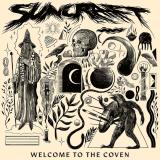
Suncraft is an underground rock band from Oslo, Norway. After appearing on the scene with their debut in 2021, they"ve ratcheted up their sound a notch in every conceivable way with their furious and fun new album Welcome To The Coven. Formed in Oslo in 2017, Suncraft built their early identity on mid-tempo stoner rock, but Welcome to the Coven shows the band has broadened their foundation significantly. The album channels classic rock swagger, punk urgency, and flashes of blackened intensity without settling into pastiche or genre collage - think Turbonegro meets Venom with the odd helping of blast beats thrown in and you"re on your way. The album"s eight tracks move fluidly between heavy riffing, hook-forward choruses and sudden shifts in mood, giving the record a restless, forward thinking character that keeps its 40-minute runtime lean and engaging. Welcome To The Coven is a confident step forward for a promising band which emphasizes their sharpened songwriting and willingness to push beyond scene expectations. The album is available on red or black vinyl from Norwegian purveyors of heavy rock label All Good Clean Records.
- 1: Fear
- 2: Dreads And Spikes
- 3: Die Human Race
- What A Wonderful World
- 5: Creature Of Inhuman Power
- 6: Dead Dream
- 7: Desensitized
- 8: Ghetto Europa
- 9: Narcissism Of Mankind
- 10: Kranenwald
- 11: Der Pabst
- 12: Fuck Cancer
- 13: Collapse
- 14: Intox Not Detox
- 15: Das Hohelied Der Larmoyanz
- 16: Mankind Is The Reason
- 17: Drug Schools
- 18: Loser
- 19: Theodicy
- 20: Odin - Jesus
Die legendären Accion Mutante kehren mit einem neuen Album zurück! Sie kamen 1994 aus der Crust-Szene und prägten schon früh den Begriff "Metal Punk". "The Time Machine" verspricht erneut eine brutale, menschenunfreundliche Reise durch drei Jahrzehnte der Geschichte von Accion Mutante, darunter zehn brandneue Tracks plus zehn neu aufgenommene Songs, die von den Anfängen der Band bis zur Gegenwart reichen. Ehrliche Punk-Wut, gemischt mit rauem Metal-Sound und kombiniert mit einem unerbittlichen D-Beat sowie der kehligen Wut zweier Shouter. Auf "The Time Machine" thematisieren Accion Mutante textlich nach wie vor ihre Themen wie religiöser Blödsinn, Verbrechen gegen die Menschlichkeit oder Umweltzerstörung mit ihrem eigenen sarkastischen Ton und einer 100 % antifaschistischen Haltung. Das ist verdammt wütend und verdammt roh. Auch nach mehr als 30 Jahren sind ACCION MUTANTE noch immer Crustasfuck-Vertreter einer großartigen Mischung aus kaputtem Metal, Punk-Gestus, unerbittlichem D-Beat und den lauten Attacken beider Sänger. ACCION MUTANTE in ihrer ganzen Pracht, direkt ins Gesicht, für Fans von Britcore und Bands wie Extreme Noise Terror oder Ripcord.
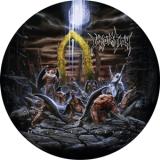
IMMOLATION: Close to a World Below - The definitive death metal classic on exclusive picture disc!
Death Metal's dissonant masterpiece returns on picture disc! Revisit the 1996 seminal classic from New York's titans of extremity.
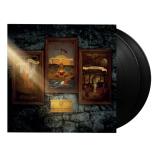
Pale Communion is the eleventh studio album by Swedish progressive metal band Opeth. The album was released in 2014 on Roadrunner Records, and was produced by Mikael Åkerfeldt and mixed by Steven Wilson.
Mikael Åkerfeldt said of the album, "I wanted to do something more melodic with this album, so there's stronger vocal melodies and more melodies overall for this album." Greg Kennelty of Metal Injection said the album does not contain "growls or death metal vocals" and he described the album as "the missing link between Damnation and Ghost Reveries or if Heritage was written directly after Ghost Reveries without Watershed having ever existed".
Broadside has never been a band to stay in one place for too long—musically or otherwise. The Richmond, Virginia-based band has spent the past decade carving out their own space in the pop rock scene. Drawing influence from The Killers, AFI, Kings of Leon, and Taking Back Sunday, their sound seamlessly fuses nostalgic rock energy with a fresh, modern edge. Their evolution has been nothing short of remarkable, taking them from underground favorites to genre staples, all while embracing the idea that growth and change are not just inevitable but necessary. With Oliver Baxxter (vocals), Domenic Reid (guitar), and Patrick Diaz (bass/backup vocals) at the helm, Broadside has built a career on crafting music that feels both deeply personal and universally relatable.
Their last full-length album, Hotel Bleu, served as a bold chapter in their story, using the transient nature of hotel stays as a metaphor for self-reflection, fleeting moments, and personal reinvention. The album marked a significant milestone in their career, amassing over 100 million streams and standing as their boldest, brightest, and most ambitious work to date. Now, as they prepare to enter their next era, the band is gearing up to release their most dynamic music yet, continuing to evolve while staying true to the energy and authenticity that first captivated listeners.