
4

The Ibex Band, with Giovanni Rico and Selam Woldemariam at the creative helm, provided the musical backbone for legends like Aster Aweke, Girma Beyene, Tilahun Gessesse, Mulatu Astatke, and Mahmoud Ahmed, including the iconic album Ere Mela Mela, shaping modern Ethiopian music as we know it today. This 1976 album (Ge’ez Year 1968) played a pivotal role in that legacy and has now resurfaced to set the record straight.
There’s a tendency to talk about the seventies as a golden age of Ethiopian music. There are good reasons for that, and just as good reasons against it. However, the notion of a golden past privileges the role of Western explorers and suggests that the pinnacle of Ethiopia’s musical culture is something only a foreigner can appreciate and unearth. It downplays the complexities of Ethiopia’s culture and history, creating an artificial divide between then and now. And it underestimates the constantly evolving sound that has followed.
The legendary musical outfit The Ibex Band, later metamorphosed into The Roha Band, has played a central role in defining the sound of many of the greatest stars on the music scene of Ethiopia from the mid-seventies onwards–but their golden output has never really waned. The story of the origins of the band that provided the musical backbone for greats such as Aster Aweke, Girma Beyene, Tilahun Gessesse, backing the solo career of group member Mahmoud Ahmed as well as backing Mulatu Astatke and many others has yet to be properly told.
Two misconceptions plague the image of Ethiopian music, one is that the music is pure because it is, by some notion, unexploited, the other is that it is all traditional. To begin with, a combination of political changes between the late sixties and the mid-nineties created an environment where only the most dedicated and skilled musicians struggled on and pursued a musical career against fierce odds. The whole Ibex Band, with Giovanni Rico and Selam “Selamino” Seyoum Woldermarian at the creative helm, are arguably the origo of the vibrant scene in the mid-seventies, and the said pair are foremost responsible for not only navigating the band through troubled times, but also modernizing the 6/8 chickchicka rhythm to a contemporary form. Giovanni laid the rhythmic foundation with heavy looped basslines that reinvented traditional melodies as dance music, and with Selamino’s innovative guitar work they influenced scores of musicians from Abegaz Kibrework Shiota to Henock Temesgen. Even Giovanni’s Fender bass and Selamino’s Gibson guitar inspired younger musicians in their choice of instruments. Not only in choice of instruments but also in sound–even as the digital revolution hit Ethiopian music, a lot of popular music still took its cue from the masters from Ibex and Roha.
Ibex emerged out of the ashes of the sixties group the Soul Echos band, adding Giovanni and Selamino to their ranks and taking their cues from a slew of influences, such as Motown and The Beatles, fused with traditional music. A tighter-knit unit than most bands at the time – Ibex has remained six to seven members throughout their whole career, compared to many bands that were as large as fifteen or sixteen men strong when Ibex set out. Their playing has been viciously focused, economical yet heavy. Just a year before the recording sessions of the album in your hands, Giovanni and Selamino made a contribution to the popular musical lexicon of Ethiopia that was simply defining the popular sound: their arrangement and recording of bandmate Mahmoud Ahmed’s solo effort and real commercial breakthrough tune and eponymous album, Ere Mela Mela, from 1975.
Selamino has never limited himself to being an adroit lead guitarist, but has always been a scholar of history, and as such he has probably contributed as much to modern Ethiopian music with his guitar playing and compositions as with a deepened understanding of modern or contemporary – Zemenawi – Ethiopian music. Selamino’s contributions serve as a metaphor for those of the whole band, at one and the same time creating and defining a new, danceable and updated sound anchored in Giovanni’s bass, whilst also elevating the broader scene through their support for others on the scene and on top of that, increasing the understanding of the music.
There is an understandable desire to romanticize the musical heyday Ibex and Roha were at the forefront of, because so much of the output is sorrowfully hard to come by. Ibex creativity was nothing short of ridiculously fierce compared to many of their Western contemporaries. Based on their sheer recorded output alone they could have usurped the title “hardest working in show business” from James Brown, recording more than 250 albums or 2500 songs in the seventies and eighties. Some only surface as cassettes today, others were never given full LP release, and some are simply impossible to find today. In the light of that, it’s nothing short of a miracle that the recording Stereo Instrumental Music from 1976 (Ge’ez Year 1968) has resurfaced. Unearthed in perfect condition on a chrome cassette, this is musical history comes alive–to set the future straight. Stereo Instrumental Music was recorded in collaboration with Karl-Gustav Lundgren, a Swedish national working for the Radio Voice of the Gospel. It took two sessions at the Ras Hotel ballroom in Addis Ababa. The Ibex Band was the first band in Ethiopia to employ a four-track recorder for their recording (the first available in the country, lent by Karl-Gustav). Later the same week, Giovanni and Selamino realized that, lengthwise, the recorded material fell short of what they wished for, so they recorded four more tracks in one more session on a single-track recorder. The Ras Hotel and Ghion Hotel, where the Ibex Band held musical residencies were to Ethiopia in general and Addis Ababa in particular what Motown was to the USA and Detroit a few years earlier – a hotbed of musical creativity and showmanship.
The most astonishing thing about Ethiopian music of the last half century is how tradition and modernity are intertwined. Because of this feature, it’s kind of hard to tell when there ever was or when we are in a “golden age”. So much of music from the past has been criminally neglected, but because of the hardships in the past, it would be an oversimplification to say that said past was a golden age. Probably, the golden age is what we are approaching, because for the first time both the past and future are accessible, and the monumental contributions from before can lay a firm foundation for a thriving music scene today. The Ibex Band stands firmly in the past, present and the future. That, if anything, is golden.
The detailed history of Stereo Instrumental Music is in many ways unique. To begin with, it couldn’t have been recorded earlier (there were no four-track recorders available) and it really couldn’t have been recorded afterwards either, at least not in the years directly following, because of the toll the musical scene took from the unfavorable political climate that followed when the nascent Derg regime and rival groups tried to assert themselves, the musical equipment lent from The Voice of Gospel Radio simply disappeared from Ethiopia when the radio station folded in 1977. Karl-Gustav Lundgren,
the Swedish foreign national who assisted during the recording, worked with the Ethiopian Evangelical Church Mekane Yesus at the time, recalls how they only had about fifteen minutes to get the microphones in place for the recording as to not alert neither the management at Ras Hotel nor the authorities and most importantly, to complete the recording before the curfew came into effect at midnight. In leaping to the opportunity to use previously unavailable equipment to push their sound forward and improvising to meet the logistical challenges, the Ibex Band displayed the very avant-gardism and adaptability that explains their longevity as a band through the years. The recording of Stereo Instrumental Music is from a given time in history, but it sounds as beyond time.
Much of the energy that burst out of the scene that Stereo Instrumental Music came out of dissipated or got sidetracked during the societal changes Ethiopia went through in the 1970s and 80s. Whilst leaders might have professed to be revolutionary, the work ethic of the Ibex Band can truly be described as that. They never called it quits, but adapted, toured extensively abroad in Africa, Europe, and the Middle East, and found ways to work even in the face of the curfew that curtailed a lot of musical life. They even played major arenas in the nineteen eighties, despite said curfew and restrictions. The whole extent of their legacy has never been told, but their music speaks louder than words, so therefore… tune in to the Ibex Band’s Stereo Instrumental Music.

4XLP. Hardcover slipcase box. Liner notes from Soichi Terada, Colour: translucent red, clear, blue, and yellow vinyl
It has been 25 years since the release of Saru Get You (サルゲッチュ), known stateside and in the UK as Ape Escape. Ape Escape marked a significant milestone for the PlayStation, as it was the first game to require use of the PlayStation's DualShock (analog) controller. In Ape Escape, the use of the analogue sticks goes beyond camera rotation and acts as an extension of Kakeru's (Spike's) own character, controlling his many gadgets like the stun club, time net, and sky flyer. It's a unique form of control that, really, didn't become popularized until the release of the Nintendo Wii. It feels like a distinctly Japanese design, the sort of off-the-wall design that is either embraced or rejected on a global scale. In Ape Escape's case, the mechanic caught on.
Ape Escape is fast, frantic, and—at times—downright frustrating. Pipo monkeys dash, taunt, and swim away from your advances. They ride water monsters, fly UFOs, and even shoot uzis! Whether it's Kakeru, his friends, or the monkeys themselves, the characters are always running across the levels. This mad dash is enhanced by the game's soundtrack, composed by legendary composer Soichi Terada. As he recalls, the director of the production said, "Spike and his friends always have the image of running." In response, Terada happily produced fast songs with an average speed of over 170bpm. The resulting gameplay and audio is a match made in heaven.
Ape Escape is the first game soundtrack Mr. Terada ever created. The producers of the game heard one of his singles, "Sumo Jungle," and thought his frenetic drum-and-bass (Jungle) would be perfect for the game. The marriage of Ape Escape's charming overworld and Soichi's upbeat compositions is nothing short
of sublime. Especially now, it is difficult to separate the mischievous Pipos and fast-paced action from Soichi Terada's silky smooth synthesizer and heart-pounding bass. Earlier this year (2024), Soichi Terada's Ape Escape work was celebrated by the six-track EP Apes in the Net, which includes music from Ape Escape 1 and 3 (Terada did not compose the series' second installment). The label, Rush Hour Music, has prestigiously championed almost all of Soichi Terada's music, especially his (specifically non-VGM) house, jungle, and drum and bass releases (Sounds from the Far East, Asakusa Light, and more).
Before Apes in the Net, Terada's Ape Escape music was only available on CD, released in Japan around 2010. This release featured reconstructed tracks created by Mr. Terada himself, identical to the music arrangements featured in the game. The biggest difference, of course, was that they were of higher fidelity than was originally available on the PS1 disk format. Completing all of the aforementioned releases is this box set, released by Far East Recording in partnership with Cartridge Thunder and officially licensed by Sony Computer Entertainment. This box set release includes four LPs, housed individually by a hardcover slipcase. This box set includes every song from Ape Escape 1, except those available on Apes in the Net. This box set release also includes one bonus song, previously unreleased anywhere else (including the game itself!).
The music on this box set was meticulously mastered by Justin Perkins of Mystery Room Mastering. Using Mr. Terada's premastered source files, the music was completely and specifically mastered for vinyl. Rounding out the audio is absolutely stunning artwork created by Gobo3D. CT worked with Gobo to recreate some of Ape Escape's most iconic characters, referencing the original Japanese guidebook and other promotional materials. The result is visually delicious 300dpi artwork that takes you straight back to 1999. As uber-fans of the original PlayStation game, Cartridge Thunder and Far East Recording are proud to celebrate Soichi Terada's music and pay our respects to such a legendary PlayStation franchise—on the original hardware's 30th anniversary no less! It's with a happy heart, then, that Far East Recording and CT present to you Soichi Terada's Ape Escape Originape Soundtracks in a Box.
Please note: due to licensing exclusivity, this release does not include tracks previously released on Apes in the Net

Big new release by Peter Van Hoesen! Continuing his exploration of intricate techno systems, their effect and direct perimeter of action, Peter van Hoesen turns in his newest four-track piece, ‘Prime Directive’: a fascinating dive into the artist’s shape-shifting headspace and inner creative chaos.
Fuelled on a furnace-hot mix of abstract-leaning immersion and hi-octane rhythmic thrust, ‘Prime Directive’ looks at contemporary techno from the angle of experimentation and intuitive abandon. The result comes in the form of four distinct movements, each carving out their own logic and associated behaviour out an endless pool of potentialities. Here comes chaology unfolding in all its unadulterated, visceral glory.
‘Definition by Absence’ breaks the trip in to the sound of a faux-random symphony: its train-like swing and fiery bass seesaw coalesce through an elliptic fluttering of sorts, iterative and not, patterns moving in and out of synchronicity as van Hoesen applies more or less pressure on both ends. All in gusty in-your-face-ness, ‘Variables Edit 1’ whirls and swirls like an ominous vengeance of nature; Its puncturing kicks and whistling menace set against stellar winds and rabid machinery on the prowl for its next victim.
An even more unsettling piece of disjointedly arrhythmic, anti-club music for the dance floor, ‘Prime Directive’ will have you zoning out like a bad dream, flush with metronome-faced monsters and molten clocks hanging from dead trees. ‘Morphology’ could be PVH’s attempt at giving his concepts a carnal carcass to hold onto. Here, rhythm becomes somewhat less erratic, offering his 360-degree vision more melodic surface and actual room for dispersion. One to keep the boundaries pushed and status-quo challenged, this is techno at its most entrancingly bold and fearless.
*This new four-track epic from Peter van Hoesen comes draped in a fine piece of artwork courtesy of Atact, and pressed according to our standards in 180g audiophile quality so you get to experience the Belgian master's chiselled sound design in all its glory.

Repress!
Layer upon layer of noise and distortion, like ashes of nuclear apocalypse raining down. The final LP Disclose released, in 2004, captured the band at a high point. When other d-beat raw punk bands were running low on ideas, Kawakami reinvented the sound, incorporating more metallic influences like Broken Bones while still sticking assiduously close to the template. Originally released for Disclose’s tour of the US west coast, ‘Yesterday’s Fairytale, Tomorrow’s Nightmare’ includes ten tracks and closes with a rampaging masterpiece, the 10-minute ‘Wardead,’ which exists on another astral plane from generic Discharge copyists. This authorized reissue reproduces the original artwork and includes a new insert with liner notes by Stuart Schrader.

As they celebrate the 10 year anniversary of debut album 'MISERY', DISENTOMB have smashed through Australian tours with Sanguissugabog in March, Europe in August with STILLBIRTH as well as annihilating the European Festival circuit, before finally unleashing new EP 'NOTHING ABOVE', in OCTOBER 2024 with a run of headline shows across Australia, as well as a headlining appearance at Souther Death Festival. The release of NOTHING ABOVE coincides with Disentomb marking 10 years since the release of their 2014 sophomore album Misery which has become a classic in the genre of Brutal Death Metal. Fresh from laying waste to some of the biggest summer festivals in Europe, Disentomb will be bringing out slam pioneers Internal Bleeding for three exclusive shows in October in Melbourne, Sydney and Brisbane, which will see the band performing Misery in full for the first time. Grab tickets to DISENTOMB, INTERNAL BLEEDING (US), HONEST CROOKS and DELIQUESCE The NOTHING ABOVE EP marks the first Disentomb release following their third album The Decaying Light and delving further into the sound of dissonant and bleakened Brutal Death with the writing from the band's bassist Adrian Cappelletti. NOTHING ABOVE is four tracks of the band experimenting with their sound while maintaining the guttural brutality that originally made Disentomb's mark when they exploded onto the worldwide scene in 2008. Vocalist Jord said the EP was an opportunity for fans to hear a more experimental side of Disentomb. "While we're hard at work writing Album IV, we wanted to put out some songs in between albums that show a more evolved sound that we have developed over the years. With the writing done by our bassist Adrian, you can hear the mix of brutality while also some more experimental elements."

Almost Like You Could ignites its art punk fire with Lucy Alexander proclaiming, “Everyone wants something to talk about / But not a minute to spare, so be brief.” Not surprising from a song that’s 1:54 (‘Higher’), but the raw honesty in her lyrics ring far after the music ends. Alexander, along with bandmate Luke Cartledge, place the propulsive power of their beliefs at the core of their debut full-length album, and their guiding motivation towards social justice is as fierce as it is welcoming. “Living as part of the queer community, and being queer myself, leads me towards supporting every person’s truth,” Alexander says. Scrounge’s songs skip to a fast beat, electrifying the entire album with a sense of empowerment. Their approach is OG punk: they make music for their peers and themselves. Only now, with a world of connections possible, they’re able to open arms wide for a far-reaching embrace. Alexander’s rich vocals give their sound its central force, anchoring the songs with confessional lines (“If this is the pinnacle, then I need a miracle/ Cause everyone’s laughing at me,” “There’s not much left/ this corpse I have to keep/ Above board.”). They sing about economic inequality, political corruption, environmental destruction, and collective change. “We’re inspired by those around us, and we write about what we care about. Art has always existed for us as a means of catharsis, a way of expressing something we might not be able to otherwise, and we hope our music can be that for other people too,” says Alexander. “I think I’ve actually written a filthy banger,” she states while re-listening to “Buzz/Cut”, a grunge-honoring hammer of a song that takes a journey from disappointment, to self-realization, to release. Alexander and Cartledge’s gratification in making an album they’re proud of mirrors the empowerment conveyed in their lyrics. A follow-up to debut mini-album Sugar, Daddy (Fierce Panda, 2022), Almost Like You Could came together over 18 months, in between “teaching, touring, graduation, and a wedding”, as Lucy explains, for the band always has a handful of shows coming up. It’s a strange outcome for a duo who first bonded over their mutual love of SOPHIE. “She radicalized the structure of sound, and revealed herself through it,” Cartledge explains. “That was a massive inspiration when we started playing together, stripping everything away to open up new possibilities as artists and as people." Having already toured Europe and the States, Scrounge is preparing to be on the road throughout 2025. In a world where the idea of true community is ephemeral, Lucy and Luke seek to foster it everywhere they play. And their belief in change is ultimately buoyed by hope. “I know that it’s never been this good,” they sing.

Rhiannon Giddens reunites with her former Carolina Chocolate Drops bandmate Justin Robinson on What Did the Blackbird Say to the Crow, an album of North Carolina fiddle and banjo music. Produced by Giddens and Joseph "joebass" DeJarnette, the album features Giddens on banjo and Robinson on fiddle, with the duo playing eighteen of their favourite North Carolina tunes: a mix of instrumentals and tunes with words.
Many were learned from their late mentor, the legendary North Carolina Piedmont musician Joe Thompson; one is from another musical hero, the late Etta Baker, from whom they also learned by listening to recordings of her playing. Giddens and Robinson recorded the album outdoors and on location at Thompson’s and Baker’s North Carolina homes, as well as the former plantation Mill Prong House. They were accompanied by the sounds of nature, including two different broods of cicadas, which had not emerged simultaneously since 1803, creating a true once-in-a-lifetime soundscape. The duo, along with four other string musicians including the multi-instrumentalist Dirk Powell, will embark on the Rhiannon Giddens & The Old-Time Revue North America tour in April.
“With the assaults on reality going on in the world today, we wanted to offer another kind of record, like walking back onto a gravel or dirt road while a stampede goes the other way,” Giddens says. “With the cicada choir, this record could’ve only happened at a certain time in the last 120 years. We doubled down on place, time, realness, and old-fashioned front porch music. It’s a reminder that another way exists, with music made for your community’s enjoyment and for dancing–not solely for commercial purposes.
“What is the role of music in our society?” she wonders. “How do we de-couple it from unfettered capitalism, where music is a product and musicians are incidental? How do we use the tools and system that we have been bequeathed in a way that reminds us of other ways of being?” Robinson adds, "Recording this album felt like being back in the saddle. Just this time Joe is not here, and his fiddle is under my chin. The album is about home, the cicadas, the storms, the music, and the people who make it feel like home."
Thompson was one of the last musicians of his era and his community to carry on the southern Black string band tradition. He played a crucial role in the lives of Giddens and Robinson, who, along with their Carolina Chocolate Drops bandmate Dom Flemons, spent their formative years learning from Thompson in traditional apprentice/mentor relationships. His influence has guided all of their artistic journeys as well as their mission to keep the legacy of the Black string band tradition alive.
In further tribute to Giddens’ North Carolina roots, What Did the Blackbird Say to the Crow will arrive just a week before Biscuits & Banjos, the inaugural edition of her first festival, which highlights the deep roots and enduring legacy of Black music, art, and culture while fostering community and storytelling. The sold-out festival will feature a much-anticipated Carolina Chocolate Drops reunion, their first performance together in more than a decade.

"As one of the founders of Philadelphia soul, Harold Melvin & The Blue Notes played & recorded for a few decades, but the musical highlight of their career must have been when Teddy Pendergrass joined ranks between 1972 and 1975. Wake Up Everybody from 1975 is the last album on which you can hear his sultry vocals before he went solo, and it is filled with profound, uplifting & thought provoking songs that in some cases are better known for their covers than for their originals. The song ""Wake Up Everybody"" was a radio hit for John Legend & The Roots, and ""Don’t Leave Me This Way""’ is a disco classic that was made even bigger by Thelma Houston. This 180 gram audiophile vinyl version has a special bonus track: an 11-minute remix of ""Don’t Leave Me This Way"" by inventor of the remix and the 12”: Tom Moulton! Wake Up Everybody is available as a 50th anniversary edition of 750 copies on dark green coloured vinyl."
[h] Don T Leave Me This Way [Tom Moulton Mix]
Tornamented Walls is the first result of a collaboration that began in 2022. The album is a freeze-frame of emergence: personal preparations prior and minor aside, the album was live and improvised. Rosa Anschütz sings, speaks, plays harmonium, and utilizes a looper as an instrument in itself. Her symbolic prose is at the heart of the music, emotionally direct yet haunted by a translucent potential of meaning. In lockstep with the voice, Tennota dissolve the dense rhythmic complexity of their recent work into a creeping mantra, the material interrogated until the patina of the sound is the music itself.
Tornamented Walls floats on top of a wave of slow-motion techno influences, a deepened ambient and experimental perspective, and a feel of subtle and subdued lyricism not strictly limited to its vocal parts. It is a record of darkly ambient and abstracted techno pop, listening music to be played loud. More disenchanted than dark, it is confrontational through its fearless incorporation of a widely varying set of different states of mind.
Tennota are Tom Wheatley & Grundik Kasyansky. Since 2019, they have been reimagining the relationship between physical and digital worlds through music, using gut strings, sine waves, tree sap, and feedback, and flexing them over contemporary technologies into an elemental suspension. Not futuristic, but rather an alternative present.
Rosa Anschütz is an artist and musician whose sound-based practice is framed by sculpture, installation, and scenography. Her meditative and sometimes haunting compositions combine the dark ambiance of post-punk and cold wave with ethereal polyphony, synth-driven melodies, and spoken word.
Теnnota & Rosa Anschütz will be touring in April, stopping over in Eupen on April 18th for a concert night at the Galerie vorn und oben. Further on the bill that night will be Tristwch Y Fenywod.

In den letzten 24 Jahren war Tunde Adebimpe vor allem als Mitbegründer, Co-Sänger und Hauptkomponist von TV On The Radio bekannt. Die mehrheitlich schwarze Art-Rock-Band überstand zwei Jahrzehnte des unbeständigen kulturellen Wandels und wurde zu einer der beliebtesten, beständigsten und einflussreichsten Gruppen der New Yorker Rockszene der frühen 2000er Jahre. Obwohl Tundes poetisches Songwriting und seine überragende Stimme im Mittelpunkt von TV On The Radio stehen, wird die Band immer eine Zusammenarbeit zwischen einer Gruppe von Musikern sein. Tundes persönliche Geschichte verläuft parallel dazu, er ist eine Art kreativer Polymath. Er ist Musiker, aber auch Illustrator und Maler. Er ist ein ehemaliger Animator und Stop-Motion-Filmemacher (Celebrity Deathmatch). Er ist ein Fernseh- und Filmschauspieler, mit Rollen in Jump Tomorrow (2001), Rachel Getting Married (2008), Spider-Man: Homecoming (2017), Twisters (2024) und Star Wars: Skeleton Crew (2024). Und jetzt ist er auch ein Solokünstler, mit seinem allerersten Soloalbum, "Thee Black Boltz". Das Album wurde von Tunde Abebimpe & Wilder Zoby produziert, mit Zoby als ausführender Produzent, mit zusätzlicher Produktion und Beiträgen von Jaleel Bunton & Jahphet Landis (von TV On The Radio) und anderen. Tunde hatte die Idee zu diesem Album im Jahr 2019, als TV On The Radio eine Pause einlegten. Zwei Jahre später, als sich die Welt von der Covid-Pandemie erholte, begann er ein Notizbuch mit Worten, Illustrationen und Ideen zu erstellen, das er als "Mixtape der Emotionen, die die Musik hervorrufen könnte. Eine Art Gefühlskarte" bezeichnet. Auf diese Weise beginnt Tunde die meisten seiner Projekte, und 2021 begann er, diese Ideen mit Hilfe des Multiinstrumentalisten Wilder Zoby (Run The Jewels), mit dem er sich in Los Angeles ein Studio teilt, in Musik umzusetzen. "Thee Black Boltz" ist kein TV On The Radio-Album. Aber die Aufregung, etwas alleine zu machen, entfachte in Tunde einen ähnlichen Funken wie in den frühen TV On The Radio-Tagen. Der Songwriting-Prozess ist derselbe, aber ohne seine TVOTR-Bandkollegen hatte Tunde "nicht dieses Gerüst, an dem er sich festhalten konnte. Das war sowohl beängstigend als auch aufregend". Das Herzstück des Albums ist sein Titel, eine Anspielung auf Tundes Neigung, über den Zustand des Menschen zu schreiben und zu singen, in all seinen Formen, unter all seinen großen und kleinen Stressfaktoren. Es ist seine Antwort auf das makroökonomische Unbehagen einer Welt nach der Pandemie, die sich auf einen gewalttätigen Autoritarismus zubewegt, und auf die persönliche Trauer, die durch den Verlust der letzten Jahre entstanden ist, insbesondere durch den plötzlichen Tod seiner jüngeren Schwester während der Aufnahmen zu diesem Album. "Thee Black Boltz" ist Tunde's verzweifeltes Festhalten an kleinen Momenten der Freude inmitten der Dissonanz und Traurigkeit, auf jede erdenkliche Weise. "Es war meine Art, mir einen Felsen oder eine Plattform inmitten dieses verdammten Ozeans zu bauen." Tunde schreibt in sein Notizbuch: "Die Funken der Inspiration/Motivation/Hoffnung, die inmitten von (und manchmal als Ergebnis von) tiefem Kummer, Depression oder Verzweiflung aufblitzen. Wie Elektronen, die sich in Gewitterwolken ansammeln und zusammenstoßen, bis sie einen Blitz abfeuern und einen Ausweg erhellen, wenn auch nur für eine Sekunde." Er fügt hinzu: "Außerdem ist es ein guter Name für eine coole Metal-Band, und ich denke, dass die meisten Leute mich als eine sehr coole Metal-Band bezeichnen würden."

Defiant Life – die zweite Duo-Aufnahme von Vijay Iyer und Wadada Leo Smith für ECM – ist eine tiefgründige Meditation über den Menschen in der Gesellschaft und das damit verbundene Leid, aber auch die
Resilienz. Zwischen Leo Smiths unverwechselbaren Trompetenflügen und Vijays feinfühligen Erkundungen
an Klavier und Fender Rhodes schimmert ein ätherisches Funkeln durch mehrdimensionale Räume hindurch,
die Platz für nachdenkliche musikalische Konversationen schaffen. ”Wir arbeiten mit unseren individuellen
Sprachen und Materien”, schreibt Vijay in seinem ausführlichen Begleittext, „aber auch mit unseren Methoden der akustischen Einstimmung und mit dem, was ich als eine gemeinsame Ästhetik der Notwendigkeit
bezeichnen würde”. Eine Notwendigkeit, die sowohl von Dringlichkeit als auch Frieden gezeichnet ist, sich
im ersten langen Stück „Sumud” unheilvoll äußert, dann mit bluesigen Untertönen auf „Floating River
Requiem” wieder auftaucht, immer noch zweifelhaft, aber mit Silberstreifen auf „Elegy: The Pilgrimage”
zu hören ist und schließlich auf dem abschließenden ”Procession: Defiant Life” schrecklich schön zum
Ausdruck gebracht wird. Defiant Life wurde innerhalb von zwei Tagen im Auditorio Stelio Molo in Lugano
aufgenommen und von Manfred Eicher produziert.
Black Vinyl[26,68 €]
After dropping hints for months and following the release of their first single "Sugar in the Tank,” Julien Baker & TORRES are excited to announce the April 18 release of their debut album Send a Prayer My Way. The album has been in the works since the two played their first show together in 2016 and at the end one singer turned to the other and said, “You know, we should make a country album.” This is the origin story, the stuff of legend in the world of country music, and the beginning of a collaboration between two artists already admired for their spare, elegant lyrics as well as the courage to share their struggles with those who love their music. It’s also the beginning of creating a work that, like the most enduring country albums, sustains and inspires, reminding both singer and listener that not one of us is ever totally alone in this world, that music is a steady companion. Julien Baker & TORRES’ Send A Prayer My Way was written and sung in the best of the outlaw tradition - defiant, subversive, working class, and determined to wrestle not only with addiction, regret and bad decisions, but also with oppressive systems of power. Mercifully, this is only the beginning of the stories TORRES and Baker are determined to tell. Because these are also songs about radical empathy and second chances, and third chances, and while there’s plenty of struggle and regret in here, there’s also humor and defiance.

After dropping hints for months and following the release of their first single "Sugar in the Tank,” Julien Baker & TORRES are excited to announce the April 18 release of their debut album Send a Prayer My Way. The album has been in the works since the two played their first show together in 2016 and at the end one singer turned to the other and said, “You know, we should make a country album.” This is the origin story, the stuff of legend in the world of country music, and the beginning of a collaboration between two artists already admired for their spare, elegant lyrics as well as the courage to share their struggles with those who love their music. It’s also the beginning of creating a work that, like the most enduring country albums, sustains and inspires, reminding both singer and listener that not one of us is ever totally alone in this world, that music is a steady companion. Julien Baker & TORRES’ Send A Prayer My Way was written and sung in the best of the outlaw tradition - defiant, subversive, working class, and determined to wrestle not only with addiction, regret and bad decisions, but also with oppressive systems of power. Mercifully, this is only the beginning of the stories TORRES and Baker are determined to tell. Because these are also songs about radical empathy and second chances, and third chances, and while there’s plenty of struggle and regret in here, there’s also humor and defiance.

Pressed on clear vinyl. Comes with a printed inner sleeve featuring an exclusive note on Coldwater Stone's legacy. The Holy Grail of Soul Music collecting. Restored to its former glory the album finally gets the respect and reverence it deserves.
One of the most revered and sought-after rare soul albums of the seventies... Freddy Briggs (aka Coldwater Stone) is perhaps best known as the former husband and business partner of the soul songstress Kim Tolliver. However, that is doing him a great injustice. As a writer he penned "Strung Out Over You" for the Dells and Mavis Staples' first solo Stax single "You're Driving Me Into The Arms Of A Stranger". But best of all were his collaborations with long-time friend Darryl Carter for the legendary Margie Joseph. Despite carving a career primarily as a songwriter/ producer, and part-time Cleveland cabbie, Briggs was also an accomplished singer as is exemplified here with his 1973 near-mythical solo LP Defrost Me. This cult classic disappeared into obscurity over 50 years ago, largely due to the financial problems of the record label GSF.
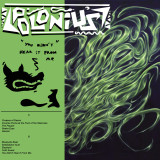
Full page feature in Wire Magazine (March 2025, Issue 493) 'the freak audio series continues with the lysergic You Didn't Hear It From Me which combines dubbed out sampledelia and metallic beats with ghostly saxophone soaked in an acid bath'
Polonius AKA Egyptian-French artist Seif Gaber, whose works spans a decade of “science fiction archeomiragical time travel" explorations and is an important piece of the healthy electronic/far out mosaic in Milan.
With a considerable number of releases under his name, both self released and through such likeminded labels as Ikuisuus, Goaty Tapes or Sun Araw's Sun Ark, Polonius grand vision encompasses a myriad of languages culled from kosmische travelings, exotica's dreamlands, soundtrack psychedelia, spiritual jazz escape routes and transmuted beat science to convey them into a sonic fiction where all these trails intertwine in a cosmological soundscape filled with wonder and speculation.
Building on last year's more beat-centric excursions of his self-titled vinyl debut on Stoned to Death, Polonius' first entry into the Discrepant extended family via Souk finds him dwelling deeper into rhythmic mystic extrapolations through a series of hallucinatory tracks. Conveying jungle's kinetic energy, dubwise meditations on bass weight, collapsing beats, globetrotting percussion accents and synth-driven night drives, 'You Didn't Hear It From Me' finds Polonius with a strong sense of purpose and direction, reconvening bits and pieces from the netherworld into a more urban scenario, not quite any we can stand or dance on. Just dream of.

Tony Holiday has been at the center of a Memphis soul blues revival anchored by a contingent of young, savvy, well-schooled musicians who have a "family-like" attitude and a strong belief in one another. Over the past couple of years, Holiday has been touring hard, taking spells in between to write and record with Producer Eric Corne in Memphis and Los Angeles. The result is Keep Your Head Up, an album that demonstrates an impressive command of styles, as Holiday leads his band fluidly through Texas, Chicago and hill country blues with plenty of Memphis soul and even a touch of Afrobeat. It features a nice array of special guests including Eddie 9V, Kevin Burt, Albert Castiglia and Laura Chavez, last year's Blues Music Award winner for 'Guitarist of the Year’ with Holiday shining throughout on vocals and harmonica.

Ugly is the second album released by the New York alternative metal band Life of Agony. Produced by Steve Thompson, the album signalled a considerable shift from the hardcore and groove metal sounds which defined their 1993 debut album. The band ditched the gang vocals and instead let Keith (now Mina) display his newly developed crooning. Keith's new expressive style sounds more emotive and is perhaps more at heart with the era's alternative bands and it suits UGLY perfectly.
Musically, this album is a pretty interesting hybrid. The first half of the album opener "Seasons" shows Keith's vocals glide quietly over the top, only to break into higher notes more frequently as the song progresses into the soaring second half. This opening track is a strong introduction to the bands new sound.
The album also features the band's trademark pulverizing riffs as heard in "I Regret", "Damned If I Do" and "Fears", the gang vocals and double-kick drumming has been completely omitted. Songs like "Lost At 22," and "How It Would Be" all feel profound. "Drained" shows the serious hooks and "Let's Pretend" is a ballad written to Keith's mother who died shortly after his birth. The album ends with a rendition of Simple Minds' "Don't You Forget About Me" that arguably kicked off the trend of Roadrunner bands doing novelty covers.
It unquestionably belongs in the collection of anyone who has a love for quality 90s-era alternative rock music. The uglier the better!

Limited repress of 2024 critically acclaimed album ‘A Firmer Hand’ on Canary Yellow Vinyl
“Writing this album, I opened up my closet, and a skeleton came out.” In a café just around the corner from his Edinburgh flat, Hamish Hawk is contemplating his extraordinary new record, A Firmer Hand. “The thing that links all of the songs is a sense of the unsaid, whether out of guilt, shame, repression, embarrassment, coyness, whatever it might have been. I realised: I am going to say these things, and not all of them are going to make me look good. The album made so many demands, and I just gave myself over to it.”

It's not often that a solo Dwarde tune appears haha, so when it does, it needs to be jumped on with quickness! Piper was in a folder of tracks he sent me last year and it was my favourite of the bunch. I was really into it and thought that the vibes of it were spot on, I knew I had to have it for Future Retro London & I'm glad he let me have it.
On the flip side, DJ Chromz (who I collaborated with on FR024) turns in a wicked version of Piper, adding a bit more ruffness to the original and spinning it in a more gritty fashion, accompanying the a side nicely.
