Audience’ was a 14-track record that signalled a shift back to Hayes Bradley's dancefloor roots. It was a collision of breakbeats, trip-hop, and ambient textures that perfectly balanced nostalgia and forward-thinking sounds, and now it gets spun into all new worlds by some of the scene's most acclaimed contemporary stars.
Special Request, aka UK powerhouse Paul Woolford, has shaken up the scene with his thrilling mix of jungle, bass, techno, rave, and hardcore in recent years. The hugely prolific producer knows exactly how to blow up the club and does that here with two reworks of '& I Love U'. The Special Request Extended Mix is a meticulously crafted jungle workout, featuring precision drums, rising synth tension, and gorgeous melodies that dart throughout and will appear on the vinyl release only. The VIP version focuses more on celestial memories for a heavenly escape.
Next is Shanti Celeste, a house and garage favourite who crafts emotional, high-impact sounds on her own Peach Discs. Her remix of 'Play It As It Lay' is a bubbly, soft-focus, late-night sound with earworm synth motifs and rich bass that sinks you in deep for a nice, heady trip.
Piori is an alias of Canadian musician Francis Latreille, who has built a sprawling discography full of hyper-detailed techno steeped in science fiction and fantasy. He flips 'Awareness' into a zoned-out affair, with broken beats and cosmic synth waves over a bold bassline that shows, once again, why his productions are in such demand.
Last but not least is Kaifeng-born sound artist, DJ, and producer Yu Su, whose truly unique sound has made her a cult underground star. She flips 'Dear Treasure' into a slow motion and sleazy chugger with dark disco energy and raw live drums, shady vocal loops and otherworldly melodies that seep into your consciousness.
Search:not with you
For this edition, the label meets this duo of producers, that has been created by the musical synergy between Zonker and Daniel Gorziza, who go by the name – “SameSame”. This disc has been titled “Unconditional Society” and has been crafted with a mission to be brought to the worldwide dancefloors and to be foreseen by the adepts of the sound it conveys. The A side is opening with a deep trancey burner “Suspect Zero”, with time passing this side of the record is morphing into the prime-time speaker ripping sound of “Rip the Jacker. The B side will see more mellow feel to it and sometimes even could be said that the vibe turns relatively melancholic by the time the record reaches its natural conclusion. The words that have been shared do not translate the profoundness of the subject that the artists have carried through, but then again, sometimes them letters have to be present even if they are kept to the slightest. The frequencies communicate much superior to the words and by now you can stop reading this and immerse yourself into the sound.
Artist, painter, curator Leo Vincent, is fired up off the back of supporting Soulwax, on their recent Paris and Netherlands shows. Proudly presenting two debut songs “Hello it’s me again” and “Loving isn’t easy”, co-produced with the brothers, David & Stephen Dewaele, of Soulwax/2manydjs.
Seven years ago, Leo Vincent bluffed his way into a video editing job at DEEWEE. Despite being told to not touch or ruin their gear, he later resurfaced with demos that sounded like he had anyway.
"Don’t know much about history”
"Don’t know much about biographies"
But we do know that by the time Leo Vincent arrives in your town, he will probably have destroyed two more Tascam 8-tracks.
Brussels-based, failed goalkeeper-turned-painter-turned-cameraman-turned-musician Leo, doesn’t seem to be afraid to leave his faders in the red zone for an unorthodox period of time while repairing the pitch knob. Some say it’s disco for night janitors. Some say it’s glam-rock for ravers. Others haven’t found the time to listen yet because they have real jobs.
But to fully grasp Leo Vincent's essence, imagine yourself sitting in the home cinema of the late Marc Bolan while watching a documentary on Scatman John, directed by Jacques Tati and scored by Ween, using only the instruments of Cabaret Voltaire.
Gianmarco Del Re
Ukrainian Field Notes: Sound, Music & Voices From Ukraine After the Full-Scale Invasion (BOOK)
ISBN: 978-1-80578-008-3
Since the full-scale invasion, music-making in Ukraine has adapted in remarkable ways: composing on mobile phones, streaming performances from bomb shelters, and organising festivals within curfew limits. Clubs became centres of volunteering and fundraising before regaining their cultural role once reopened. Meanwhile, the diaspora reshaped the musical landscape, severing old ties while creating new global networks of collaboration.
Ukrainian Field Notes: Sound, Music & Voices From Ukraine After the Full-Scale Invasion offers a 360-degree perspective on how sound has shaped musicians’ wartime lives and influenced evolving notions of identity – personal, collective, and postcolonial.
Quotes
“The Ukrainian electronic scene is young, naive, and perhaps beautiful. To appreciate this beauty, you need to distance yourself from it, much like observing a painting in a gallery while standing back. To comprehend this beauty, understanding alternative standards and applying them to the portrait is a must. To truly embrace this beauty, falling in love with it is required – an act that defies easy explanation. Gianmarco, however, did just that, and it becomes evident to anyone exploring his Ukrainian Field Notes. Behold.” Vlad Fisun
“I feel extremely grateful to Gianmarco Del Re, a true chronicler of Ukrainian music in wartime, who opens our culture in its multiple aspects to musical society in such a bright and relevant way that the support for Ukrainian artists is only growing, day by day.” ummsbiaus
Emerging from the sun-drenched haze of their previous releases, the Belgo-Italian duo descend into the shadows with Trabajando El Flex, their third record to date. This is their gloomiest strike yet, a mutant wave manifesto built on a raw DIY ethos. Imagine pulsing basslines and ghostly vocals soundtracking your deepest, most illicit desires. Channeling the spirit of a major influence which is Coil, this album could have been called "Music to Play in the Dark(rooms)." It's a lethal fusion where New Beat, EBM, Dub, Italo, and New Wave lock into a singular, hypnotic atmosphere. Their world is a wild ride from Bear-Santa Claus Fantasms to Burning Churches and Amphetamine rooms, reflected in both their playful - not-to-be-taken-seriously - lyrics and a genre-shattering sound. Their debut was a a lost reel; their second, a dream, Trabajando El Flex is the raw, slow-burning, and beautifully unclean night that consumes both. It's a flawless fit for the after-hours ruin of the Pinkman universe.
- A1: Anything (Feat. Maja)
- A2: Holding Patterns
- A3: Whirlwind (Extragalactic Mix)
- B1: Flicker Of Us
- B2: Fluffy Toy (Feat. Creams)
- B3: We Can Touch The Sky
- C1: Wawes Of Desire (Sunset Mix)
- C2: Cool Breeze
- C3: Back To Nowhere (Feat. Ben Holz)
- D1: It's In Your Eyes (Feat. Aérea Negrot)
- D2: Oh Boy (Feat. Alessandro Tartari)
- D3: Flawed People (Feat. Unconscious Honey)
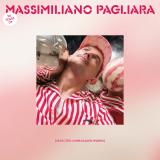
Massimiliano Pagliara celebrates 20 years of music production with a special anniversary compilation on Funnuvojere. The release brings together solo productions and collaborations spanning a rich and abundant period that began when Pagliara acquired his first analogue machines, five years after moving to Berlin from Milan, where he worked as a professional dancer and choreographer.
The compilation features 20 previously unreleased tracks, deeply infused with italo grooves, wonky bass-lines, balearic pads, drama, love, sex, and dreams. These tracks evoke a wide spectrum of moments, ranging from intimate, pleasure-driven home listening to full-blown dance-floor euphoria. Throughout the compilation, one can feel Pagliara’s enthusiasm for discovery—his excitement in encountering new machines and immediately putting them to work.
Pagliara’s sonic identity is unmistakable, present in every track and in the compilation as a whole. Like the facets of a crystal, the music reflects his many nuances while maintaining a strong, coherent core. Tracks such as Waves of Desire pay homage to Dream House, reimagined through contemporary production with cosmic tones and infectious drums. Flicker Of Us reveals a dramatic tension between a rowdy bass-line and melancholic pads, while We Can Touch The Sky features Pagliara himself on vocals, blending synth-pop with elements of new wave and glam rock. Cool Breeze unfolds as a sunlit, optimistic walk through a wide Berlin avenue—funky, warm, and filled with curiosity for what lies ahead.
A notable strength of the compilation lies in its collaborations, which highlight Pagliara’s joy in working with other producers and vocalists. Each collaboration reveals a distinct character: the balearic sensibility of A Journey of Discovery with Gatto Fritto, the French house flavour of Neon Memories with Alinka, the 70s disco inflection of It’s In Your Eyes with the late Aérea Negrot, and the driving techno attitude of Whirlwind with Fabrizio Mammarella, to name just a few.
Ultimately, this compilation stands as both a gift to Massimiliano’s long-time fans and an open invitation to new listeners. It offers entry into a world shaped by beauty, order, balance, and ecstasy—guided by an enduring love for the craft.
- 1: Lake Walk
- 2: Lazy Daisy
- 3: Ups & Downs
- 4: Silently
- 5: There Was A Nice Sunset
- 6: Somewhere Good
- 7: Slow Island
- 8: Movin’ On
If – in some parallel universe (or perhaps a not-so-distant-future version of the one we’re already sentenced to living in) – the evil overloads of artificial intelligence were actually successful in their attempts to create convincingly enjoyable “original music,” more specifically tasked with wholly encapsulating my own personal tastes by data-chugging some cocktail of – oh, I don’t know – the posters on my wall, the records in my “most listened to” pile, the mixtapes I made for others, intensive physical scans of my auditory cortex, amygdala, hippocampus, heart strings, whatever else they have splayed out on their autopsy table with the intention of generating one all-encompassing “perfect band” based on the fruitful sum of their findings – that band, for me, would be (or would at least sound exactly like) the Tara Clerkin Trio. It is, quite simply, without exception, the music I wish to hear.
Formed in Bristol UK (where none of them are from yet all of whom are deeply engrained) in 2020, the Tara Clerkin Trio – as it somewhat democratically exists today, despite the singular authority implied by its name – consists of the titular Tara Clerkin, her partner Sunny Joe Paradisos, and Sunny’s brother, Patrick Benjamin. I’ll confess, I don’t know what their respective roles are within the operation and there’s only a very small part of me that cares to learn, as one of my favorite qualities in an objective listening experience is the mystery of who is playing what, which sounds are “authentic” versus synthesized, which chunks are performed “live” in a room together versus meticulously Frankenstein’ed from measure to measure, or how exactly the overall sound is so (seemingly) effortlessly achieved. Though, I suspect, if and when I do witness a live performance by this band at any point, my enjoyment of the music will not be lost in my better understanding of it.
With two extraordinary mini-albums – In Spring (2021) and On The Turning Ground (2023) – making a splash on London’s formidable World of Echo label in wake of their self-titled 2020 debut, this upcoming Somewhere Good LP is, in many ways, the band’s most realised work. In running their usual gauntlet of idiosyncratic (*an overused adjective for which here there is regrettably no sufficient alternative) approaches, Clerkin & co. colour in and outside of compositional lines over the course of 40+ celebratory minutes - never wallowing, despite inherently somber subject matters of self-defeat, disease, displacement, restlessness, gentrification - allowing their arrangements and improvisations ample space and time to situate, stretch out, breathe, cross-pollinate, and ultimately take deeper hold on the listener’s imagination – all while somehow sounding more like themselves than ever before.
Of course, there are traceable influences herein, if one felt that such comparisons were necessary to properly examine and enjoy this music (they aren’t)… Being the big dumb American from the small boring town that I am, cornfed on ‘90s alternative radio with the enchantingly exotic sounds of Maxinquaye and Mezzanine emanating from my chunky tube television, I can’t help but to make a blatantly obvious reference to a “Bristol sound”, ie the whole trip-hop trip, the pastoral crooning over the suggestive urban grime of cracked electro/piano treatments, the digitally-yet-primitively reconstructed James Bond soundtrack string-beats, etc.. But the Tara Clerkin Trio is so infinitely much more than that. There are elements of avant-pop, modern classical, kraut-folk, audio verité, dare I say indie rock (and not of the beer guzzling, masturbatory fuzz-flex variety but perhaps more like a Trish Keenan-fronted Faust, Adrian Sherwood at the mixing desk of If You’re Feeling Sinister, or – in expanding on our alternate reality – a world in which High Llamas cut a full-length for Warp Records with Andrew Weatherall on coffee duty).
The hazy, unmappable skyline-mirage of droning harmonium, upright bass, peculiarly accentuated wind instruments, acoustic guitar, hushed yet literally mighty keys combine to hypnotizing effect. The band may make underlying nods to jazz, sure, but it’s not appropriation, it’s that they have the actual chops to build it out. Beneath the janky samples and oddball percussive embellishment lies actually great drumming. Beyond the manipulated vocal witchery and woefully reflective plain-spoke moments are Tara’s subtly inspired melodies, sung with what might honestly be the glue to the whole crazy equation. A calming consistency throughout the otherwise unpredictably dynamic, boldly intuitive, uniquely British exploration of this (their own) universe in song. – Ryan Davis (Chicago, February 2026)
Following their 2023 LP Presents, Nathan Nelson's American Cream Band bring the Twin City heat back to Quindi with an album rooted in duality. From the yin and yang party-starting A side and meditative B side to the dual-attack boy-girl vocals, the nature of opposites and equals steer the expansive, artful strain of rock n' roll that spill out of this wholly unique Minnesotan export. For the ever intriguing Quindi, it's a strident step into Spring after the frosty introspection of Roudi Vagou & Läuten der Seele's Taghelle Nacht. While the world burns and injustice prevails, Twin is a celebration of unity and radical expression-all the more urgent against the backdrop of authoritarian overreach and righteous protest that has whipped through Minneapolis in recent times.
Twin continues Nelson's drive at the helm of American Cream Band to draw in a colourful cast of players to feed into his orgiastic sound, meshing the trance-induction of krautrock with the irrepressible funk of the post-punk-new-wave explosion. But principal among the cast of characters and forming a central tenet to the identity of this album is Liz Buhmann, lead vocalist and a formidable, playful foil to Nelson's own Midwestern twang. Around the electric spark between Buhmann and Nelson, a heavy duty ensemble wrangle guitar, bass, sax, a cornucopia of synths and a battery of percussion into all manner of sonic forms.
The double-sided concept manifests throughout Twin. On 'Call Me' Buhmann sings in French to contrast Nelson's English, while the strident strut of the NYC disco groove is offset by an inherent dreaminess that turns the track into a more cosmic kind of dancefloor workout. 'Ethical Vampire' is a spiky cut with a garage rock patina that spirals into a psychedelic, synth-soaked get-down. 'Don't Burn The House Down' is a loose and limber roller that captures Can at their funkiest along with the hypnotic vibe of other such esteemed long format jammers, but American Cream Band boils that energy into a hook-laden art pop sensibility before a gentle, drawn out landing.
Even the more pensive moments on Twin find space for friction. For all its tender, smoky temperament, 'Leda and the Swan' lets the electric piano and guitar fray at the edges and bleed into the red while Mat Heinrich's tumbling drums lurch with pent-up intensity on the one. 'No Funeral Necessary' skirts around the mellow pools of new age but prefers to let liberally doused Tape Echo tweak out Alex Meffert's honeyed sax inflections and Buhmann and Nelson's disparate sermons.
Nelson describes Twin as "an oppositorum coincidentia" - a reference to the mystical Latin concept of the coincidence of opposites that suggests contradictory ideas 'fall together' in a higher reality. Beyond the sound of the album, this idea also manifests in the cover photography by Sho Nikado and the swans on the LP labels by Autumn Garrington. As freewheeling and wide-open as American Cream Band feels, nothing appears by accident. The end result feels like a nourishing whole - rich with substance and nuance, deep enough to be explored and absorbed yet also so brazen and immediate you can't help but feel its surface charms from the first thrusts of 'The Hive Is Pissed' to the last ripples of 'We're Not So Sinister'.
- A1: Rocking Chair
- A2: Le Train
- A3: Golden Sun
- A4: Miroir
- A5: Voyage Mental
- A6: Surprises
- B1: Je Comprends Pas
- B2: Respire
- B3: Sentimental Lies
- B4: Force Invisible
- B5: C’est Quoi Ces Gens
- B6: My Two Hours Of Sleep
- B7: Astrale Maison
Every so often in music, we come across voices that achieve a certain timelessness, so naturally do they encapsulate both past and present. Laure Briard is one of these voices, retro in form but contemporary at heart, spanning a career rich in aesthetic twists and turns, never without her signature magic, a special kind of eternal filter. Her first album, Révélation (2015), reveals her yé-yé influences, a testament to her love for ‘60s French pop music. Her second studio album, Sur la piste de danse (2016), follows in this vein and finds Laure accompanied as always by her long-time bandmates who share an affinity for warm, catchy arrangements that never lose their appeal. Her tour of Brazil marks a turning point in her career, introducing her to the local indie scene and thus launching her collaboration with the band Boogarins, as well as inspiring the release of multiple EPs composed and performed in Portuguese. Today, her music is embellished by touches of bossa nova and a folk sensibility, boasting increasingly intricate arrangements, as exemplified by her 2019 release, Un peu plus d'amour s'il vous plaît. Several years later, the Californian desert captures the musician’s imagination with Ne pas trop rester bleue, a poignant musical journey inspired by the rich history of Western legends and the role they play in shaping our collective consciousness.
In Voyage Mental, Laure Briard draws upon an inner energy unearthed during a new stage in her life, where the thrill of spontaneous adventure is not accessible in quite the same way. The result is a collection of sophisticated, introspective songs, narrating a young mother’s quest for balance in the face of routine. The album, nostalgic but always tethered to the present moment, is also the fruit of her collaboration with Gaëtan Nonchalant, a talented musician known for coaxing poetry out of the mundane. The two of them co-wrote and recorded five tracks at Studio Nocturne, accompanied by her long-time sidekick Pieuvre, aka Vincent Guyot, Léo Blomov, Pierre-Louis Vizioz, and Hedi Bensalem. The gentle pop opener “Rocking Chair” sways steadily to the rhythm of dynamic drums, followed by “Train,” a ballad that extends an invitation to set sail and daydream alone. The folk escapade continues with “Golden Sun,” a duet featuring the 1960s cult American musician F.J. McMahon, who Laure contacted via the internet on a whim. “Golden Sun” is an unlikely encounter between two generations and two cultures, giving new life to an old forgotten demo on the other side of the Atlantic. And while Laure sings of wide open spaces, cowboys, and sunsets sinking into the sea, we feel the city surrounding her in “Miroir,” a song composed by Hedi Bensalem that laments the suffocation of living in a crowded metropolis where the sky is a distant gray smudge. This pressing need for air, this search for rest and total disconnection, is one of the album's central themes. It may also explain the ever-present sense of nostalgia that pervades the songs, a welcome respite in our current era of doomscrolling and darkness. Along the way, Laure soothes us with melancholy guitar, delivers poetry set to scattered piano notes, and takes us by the hand during lively, uptempo passages. We climb onto her wings, never straying too far from the ground, soaring joyfully above her moods.
- 1: The Cyclones With Count Ossie – Meditation
- 2: Cornell Campbell – Natty Don't Go
- 3: Freddie Mcgregor – Africa Here I Come
- 4: Bunnie & Skitter – Lumumbo
- 5: Willie Williams – Addis A Baba
- 6: L Crosdale – Set Me Free
- 7: Leroy Wallace – Far Beyond
- 8: Lennie Hibbert – More Creation
- 9: Alton Ellis – Blackish White
- 10: Winston Jarrett – Fear Not
- 11: Devon Russell – Drum Song
- 12: The Gaylads – Africa
- 13: Black Brothers – School Children
- 14: Linton Cooper – You'll Get Your Pay
- 15: Sound Dimension – Congo Rock
- 16: Zoot Simms – African Challenge
Soul Jazz Records celebrate 25 years of working in partnership with Studio One with brand new editions of FIVE of their bestselling CLASSIC Studio One collections all released on limitededition one-off pressing coloured double vinyl. Also available in new limited-edition card wallet CD editions. The new edition featured albums are Studio One Funk, Studio One Dub, Studio One Ska, Studio One Roots and Studio One Classics. Studio One Roots set the standard for Soul Jazz Records’ long-standing series and features many of the classic artists from Clement 'Sir Coxsone’ Dodd’s mighty roster of reggae. This album includes Freddie McGregor, Willie Williams, Cornell Campbell, Alton Ellis, Devon Russell alongside some of the defining in-house groups of Jamaican reggae history - The Sound Dimension, Brentford All-Stars, The Skatalites, New Establishment and more. The album is filled with a mixture of seminal cuts and super-rarities from the vast vaults of 13 Brentford Road.
Stand-out tracks include Alton Ellis’s ‘Blackish White’, a surreal and powerful Afro-centric dream, Count Ossie’s Rastafarian drummers’ genre-defying interpretation of Booker T and The MGs ‘Meditation’, Willie Williams aweinspiring versioning of the Skatalites' seminal Rastafari anthem ‘Addis Ababa’ and many, many more. Original sleevenotes by Lloyd Bradley (author of When Reggae Was King), compiled by Mark Ainley (Honest Jons), high-quality Soul Jazz mastering, wicked images of Count Ossie and the Mystic Revelation of Rastafari on the cover, and a rare image of Clement Dodd and musicians inside the studio at Studio One on the full colour inner sleeves. “There isn't a weak number across these 16 tracks, from the Gaylads’ ode to ‘Africa’ and Devon Russell's version of the heavyweight ‘Drum Song’ rhythm, to stunning instrumentals such as Jackie Mittoo and the Cyclones with nyahbinghi drummer Count Ossie on ‘Meditation’, Lenny Hibbert’s sparkling vibe work over Mittoo's ‘Ghetto Organ’ and The Sound Dimension’s ‘Congo Rock.” Pitchfork “The music of this compilation is of a rare, rare beauty and is essential to anyone's reggae collection.” All Music
- A1: Jimmy Olsen's Blues
- A2: What Time Is It?
- A3: Little Miss Can't Be Wrong
- A4: Forty Or Fifty
- A5: Refrigerator Car
- A6: More Than She Knows
- B1: Two Princes
- B2: Off My Line
- B3: How Could You Want Him (When You Know You Can Have Me)
- B4: Shinbone Alley / Hard To Exist
Definition of spin doctor: a spokesperson employed to give a favorable interpretation of events to the media, especially on behalf of a political party. Spin Doctors weren't part of a political party but spread the word about romance.
The band was formed in New York City, best known for their early 1990s hits "Two Princes" and "Little Miss Can't Be Wrong". Those 2 songs were hits all over the world, and are still big hits in the streaming era. Pocket Full of Kryptonite is the first studio album (and second release) by the Spin Doctors, and originally released in August 1991.
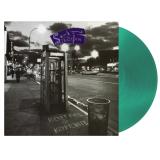
The album was a top 10 hit in many countries, including the UK, Denmark, Germany, Norway and Sweden. It was the band's bestselling album and was certified 5x Platinum in the US. Not to be confused with the 3 Doors Down song 'Kryptonite' from 2000, the Superman theme was all over the Spin Doctors' album, with the title, a song called "Jimmy Olsen's Blues" and the album cover showing a phone booth (referring to Clark Kent frequently ducking into a nearby phone booth to change into his Superman attire).
This pressing of Pocket Full of Kryptonite is a limited 35th anniversary edition of 4,000 individually numbered copies on green vinyl. The jacket has a deluxe leather-texture laminate finish.
Michigan Band EJ & the Echoes: Rediscovering a Soul Legacy
The story of EJ & the Echoes represents a remarkable chapter in Michigan's music history and the early American soul scene. Its origins date back to the late 1950s, when Everett J. "EJ" Gronda was already active as a young musician. While studying at Central Michigan University in the early 1960s, he met the talented vocalist Manuel "Manny" Holcolm. Together with other musicians, they formed vocal groups that soon performed throughout the state and even recorded near Detroit's legendary Motown studios.
In 1963, Gronda founded EJ & the Echoes, a band that quickly gained popularity at dances, clubs, and weddings across Michigan. With Manny Holcolm as lead singer, the group developed a distinctive harmony-driven sound, blending influences ranging from the Beatles to James Brown. The band served as a house band in Traverse City, opened for national acts, and performed regularly at well-known Detroit venues.
Between 1964 and 1967, EJ & the Echoes released several singles on the Diamond Jim Records label. Although major commercial success eluded them at the time, their recordings later found international recognition. Today, their songs remain staples of the British Northern Soul scene.
After the band dissolved, the members pursued different paths. EJ Gronda became a schoolteacher but remained devoted to music throughout his life. In 2006, the musicians reunited for an emotional jam session. EJ Gronda passed away in 2022, followed by Manuel Holcolm in 2024. Their musical legacy endures-on this vinyl release, dance floors, and in the memory of a remarkable era.
Our sincere thanks go to author and blues historian Fred Reif. He wrote the accompanying text and provided all the pictures of the band printed in the gatefold cover. Without him, this project would not have been possible.
- B4: I Have A God (Feat. Zara Mcfarlane)
- B3: Chapter 7
- A1: Enter The Jungle
- A2: Chasing The Square
- A3: Chapter 7 (Feat. Ty)
- B1: I Have A God (Feat. Zara Mcfarlane)
- B2: Colonial Mentality
Ezra Collective’s Chapter 7, now celebrating its tenth anniversary, captured the restless energy of a young band finding its voice - spiritually curious, rhythmically fearless, committed to community as compass. Built on grooves made for sweat-slicked basements and late-night communion, its seven movements reveal a blueprint forming: jazz as a living expression of where you come from and who you stand with.
The forthcoming Chapter 7 (10th Anniversary Edition) reissue revisits that formative statement from a band that would soon become trailblazers as both the first British jazz act to win the Mercury Prize, and then a BRIT Award. Remastered for vinyl and expanded with new incarnations - live cuts from NPR's Tiny Desk and the band’s landmark Royal Albert Hall performance - the reissue presents Chapter 7 not simply as an early document, but a living manifesto: rhythm as ritual, youth culture as sanctuary, and jazz as an open invitation.
Pressed on black vinyl, housed in a single sleeve jacket with printed inner sleeve, featuring credits and a message from the band.
k B3. Chapter 7 Live at NPR's Tiny Desk
[m] B4. I Have a God (Feat. Zara McFarlane) [Live at the Royal Albert Hall]
[k] B3. Chapter 7 [Live at NPR's Tiny Desk]
[m] B4. I Have a God (Feat. Zara McFarlane) [Live at the Royal Albert Hall]
[k] B3. Chapter 7 [Live at NPR's Tiny Desk]
[m] B4. I Have a God (Feat. Zara McFarlane) [Live at the Royal Albert Hall]
- 1: The Skatalites – El Pussy Ska
- 2: Carlton And The Shoes – Love Me Forever
- 3: Sound Dimension – Rockfort Rock
- 4: Johnny Osbourne – Sing Jah Stylee
- 5: The Heptones – Pretty Looks Isn’t All
- 6: Slim Smith – Rougher Yet
- 7: Lone Ranger – Automatic
- 8: Horace Andy – Fever
- 9: Prince Jazzbo – School
- 10: The Wailers – Simmer Down
- 11: Burning Spear – Rocking Time
- 12: Alton Ellis – I’m Just A Guy
- 13: Sugar Minott – Oh Mr Dc
- 14: Jennifer Lara – Consider Me
- 15: Don Drummond – Confucious
- 16: Michigan And Smiley – Rub A Dub Style
- 17: Sound Dimension – Full Up
- 18: Dennis Brown – No Man Is An Island
Soul Jazz Records celebrate 25 years of working in partnership with Studio One with brand new editions of FIVE of their best-selling CLASSIC Studio One collections all released on limited-edition one-off pressing coloured double vinyl. Also available in new limited-edition card wallet CD editions. The new edition featured albums are Studio One Funk, Studio One Dub, Studio One Ska, Studio One Roots and Studio One Classics.
Studio One Classics features a non-stop selection of stone-cold classic Studio One killers! Spanning 40 years of the legendary label, this album is a celebration of the music of Studio One Records and features a who’s who of Jamaican Reggae: Bob Marley, The Heptones, Horace Andy, Sugar Minott, Don Drummond, Prince Jazzbo & more. This collection contains numerous legendary tracks, including Bob Marley and the Wailers’ “Simmer Down”," "Love Me Forever" by Carlton & His Shoes, Slim Smith's "Rougher Yet," Horace Andy's "Fever,", Alton Ellis’s “I’m Just A Guy’, The Skatalites’ blazing ‘Confucious’ and loads more. Timeless stuff - every track here is indeed a classic, no-one can argue about that! Studio One produced literally hundreds of hits and this selection includes some of the label’s most enduring songs.
It is simply impossible to imagine modern Jamaican music without Clement "Coxsone" Dodd, founder of the iconic Studio One where virtually every singer and musician of note in Reggae cut their teeth. Studio One's output spans over four decades, all represented here. Coxsone Dodd pioneered nearly every new form of Jamaican music as it developed over time and this album includes Ska, Dancehall, Roots, Rocksteady, DJ, Lovers and more. This is probably the best entry of the many Soul Jazz Studio One releases if you're after a primer in the Studio One sound. Like it says on the wrapper 'Classics' pretty much sums it up
- 1: Already Dreaming
- 2: Wanting On Air
- 3: Listen To Music And Cry
- 4: My Zhe Zhe
- 5: Take The Form
- 6: When
- 7: Hack It Up
- 8: Lacan In The Family
- 9: Having A Moment
- 10: From The Font Of You
- 11: To Nothing’s Reward
- 12: Now We Cringe At The Thought
- 13: Dismissal Mosaics
"aethermead", das neue und 20. Studioalbum von Of Montreal, lässt die Sounds der frühen Jahre wieder aufleben, während es gleichzeitig die künstlerischen Grenzen ihres unverkennbaren Indie-Pop/Rock-Stils erweitert. Frontmann & Songwriter Kevin Barnes, bekannt für seinen einzigartig-produktiven Output und großartigen Kollaborationen mit Künstlern wie Solange, Janelle Monáe und Jon Brion, nahm die LP mit Toningenieur Drew Vandenberg (Faye Webster, Toro y Moi) in seinem neuen Heimatort Brooklyn auf. Die Grundspuren wurden live mit Barnes’ langjähriger Live-Band auf einer 16-Spur-Bandmaschine eingespielt. Das Ergebnis schimmert mit Indie-Pop-Elementen ihres 2004er Albums "Satanic Panic In The Attic" sowie der rohen, energiegeladenen Live-Atmosphäre von "Lousy With Sylvianbriar" (2013). Wunderschön-melodische Akkordfolgen wechseln sich mit Rock'n'Roll-Krachern ab, auf eingängige Hymnen folgen surreal-experimentelle Klangwelten. Mit einer neuen Tour am Horizont (erstmal durch Nordamerika) feiern Of Montreal weiterhin ihr Vermächtnis und gehen gleichzeitig mutig in die Zukunft.
Gatefold Sleeve
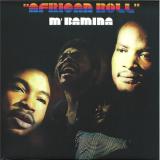
M’Bamina – African Roll (1975)
The story of an album born between Africa, Italy, and the nightclub culture of the 1970s
In the heart of 1970s Italy — a country undergoing profound social change and a music scene just beginning to open itself to distant sounds and cultures — an extraordinary, almost improbable story took shape. It is the story of a group of young African musicians who found their way to Europe, of a Turin nightclub that became a crossroads for communities and experimenters, and of an album which, released in small numbers and largely unnoticed at the time, is now considered a rare jewel of Afro-fusion.
The band called themselves M’Bamina — an ensemble of musicians from Congo, Cameroon, and Benin, who arrived in Italy in the early Seventies. Settling between northern Italy and the Pavia area, they began performing in small clubs and community events, bringing with them a vibrant rhythmic heritage: African polyrhythms, call-and-response vocals, funk-infused bass lines, and Caribbean or Afro-Latin colours absorbed along their musical journeys. Their raw, contagious energy on stage quickly drew attention.
Meanwhile, in Turin, another story was unfolding. There was a venue becoming almost legendary: Voom Voom, one of the city’s liveliest nightclubs, run by Ivo Lunardi. The club attracted an eclectic crowd — students, artists, foreigners, night owls — and Lunardi quickly understood that the dancefloor wasn’t just a place for music, but a melting pot for a new kind of cultural energy. Out of this vibrant atmosphere came his idea: to turn the club’s name into a small independent record label, Voom Voom Music, capable of capturing the spirit of those years and giving voice to unconventional projects.
When Lunardi heard M’Bamina, he immediately sensed that this was the sound he had been searching for: fresh, different from anything circulating in Italy at the time, and capable of blending African tradition with funk and European sensibility. He brought them into the studio.
Production was handled by Lunardi along with Christian Carbaza Michel, while the engineering was entrusted to Danilo Pennone, a young sound technician with a sharp, intuitive ear.
The recording sessions — held in Turin in 1975 — produced a remarkably warm and direct sound. The music feels almost live: grooves rooted in African tradition, but open to funk-rock structures and modern arrangements. It is a natural fusion, never forced. Tracks move between tribal rhythms, funk basslines, light electric guitars, congas and Afro-Latin percussion, with call-and-response vocals and melodies that echo both Congolese tradition and the lineage of Latin jazz. Not by chance, one of the album’s most striking tracks, Watchiwara, reinterprets a Latin standard through M’Bamina’s own rhythmic language.
The album was titled African Roll — a name that was already a statement of intention. It is African music that “rolls,” that moves, adapts, transforms within a new geographic and cultural setting. It is not strictly Afrobeat, nor Congolese rumba, nor Western funk: it is a spontaneous, hybrid blend, shaped more by lived experience than by any calculated aesthetic program.
When African Roll was released, the world around it barely noticed. Distribution was limited, and 1970s Italy had yet to develop a cultural framework for receiving such music. The national music press rarely paid attention to African or “world” productions. The album slipped into silence — though the band’s own story did not.
M’Bamina continued performing across Europe and Africa, even sharing a stage in Cameroon with none other than Manu Dibango. By the late Seventies, they moved to Paris, signed with Fiesta/Decca, and recorded a second LP, Experimental (1978). Meanwhile, the peculiar record they had made in Turin began to resurface quietly among vinyl collectors, Afro-funk enthusiasts, and DJs hunting for forgotten grooves.
That is when the album’s fate began to shift.
Over the decades, African Roll emerged as an almost unique document: a snapshot of an intercultural Italy before the word “intercultural” even existed, a fragment of migrant history, a spontaneous experiment in musical fusion born far from major industry circuits but rich in authenticity. Original copies began commanding high prices on the collector’s market, and the album became recognized as one of the hidden classics of European Afro-fusion from the 1970s.
Today, more than fifty years later, this reissue finally restores visibility and dignity to a project that deserves to be heard, studied, and celebrated. It is not simply an album: it is the testimony of a rare cultural encounter, born in an Italy unaware of how fertile such exchanges would one day become.
It is the story of a visionary producer, an extraordinary band, and a fleeting moment in which music, migration, and nightlife came together to create something genuinely new.
African Roll is — now more than ever — the sound of a bridge: between continents, between eras, between cultures. A record that, after rolling far and wide, has finally come home.
- A1: Here I Am Baby (Come And Take Me)
- A2: Everything I Own
- A3: Green Grasshopper
- A4: Play Me
- A5: Children At Play
- B1: Sweet Bitter Love
- B2: Gypsy Man
- B3: There’s No Me Without You
- B4: The First Time Ever I Saw Your Face
- B5: I Just Don’t Want To Be Lonely
- C1: Mark My Word
- C2: The First Cut Is The Deepest
- C3: Melody Life
- C4: Work And Slave
- C5: Working To The Top (My Ambition) (Part 1)
- C6: Don’t Let Me Down
- C7: Band Of Gold
- D1: Put A Little Love In Your Heart
- D2: I See You, My Love
- D3: It’s Too Late
- D4: Baby If You Don’t Love Me
- D5: Love Walked In
- D6: When Will I See You Again
- D7: Play Me (Part 2)
2025 Repress
140g vinyl, remastered, double LP with the original LP along with a second record of 14 rare tracks
Sweet And Nice is the vital debut album from Jamaica’s undisputed first lady of song Marica Griffiths. It’s reggae at its most soulful. Slinking through a tight ten tracks of R&B and pop-sourced material, it became an instant best seller. 45 years after its initial release the LP is available again on vinyl, now as a double LP, with an extra record collecting 14 rare tracks.
Sweet And Nice has appeared over the years with a revised running order and under different titles. But the original’s opening sequence of loping soul is legendary, even beyond reggae circles. These songs are now returned to how they were presented on that first Jamaican release, and under their intended album title. Be With doesn’t mess with magic.
Marcia’s version of “Here I Am (Come and Take Me)” has long been lusted after, played by genre-hopping selectors to snapping necks for decades now. It’s followed by the sophisticated, rollicking wah-wah funk of “Everything I Own” and the slice of smooth lovers soul par excellence that is “Green Grasshopper” and her ace, lilting Neil Diamond cover “Play Me”.
The thundering, humid funk of “Children At Play” “sounds uncannily like a precursor of Massive Attack”, as FACT Mag astutely noted when they put Sweet And Nice at number 16 in their list of the 100 best albums of the 1970s. Otherworldly, moody and essential.
Side two keeps the fire burning. “Sweet, Bitter Love” should leave you swooning, and is also one of the album’s alternate titles. Curtis Mayfield’s already-eternal “Gypsy Man” is up next, recast as proto-lovers rock.
“There’s No Me Without You” is elevated to canonical status by the majestic, forlorn horns of the Federal Soul Givers and Marcia’s heartbreaking delivery. And if this doesn’t get you then surely the next track will: arguably the definitive version of Ewan MacColl’s “The First Time Ever I Saw Your Face”. Yes, seriously.
“I Just Don’t Want To Be Lonely” re-takes its rightful place at the end of the LP’s second side… but we couldn’t leave it at that. So we added an entire second record of rare material recorded around the same time as Sweet And Nice, much of it unavailable since it was originally released. Some of these songs have only ever been found on now unattainable 7" singles and no, rarity doesn’t always correspond with quality, but in this case we’re talking about some seriously jaw-dropping music.
Amongst 14 extra tracks you’ll find the exquisite late-60s singles “Melody Life” and “Mark My Word” which, along with the sumptuous reading of “Band Of Gold”, are now £100 records, if you can find them! Just sayin’. There‘s also a fantastic version of “The First Cut Is the Deepest” and an alternate take of “Play Me” with producer Lloyd Charmers adding his own vocals.
Everything’s been remastered of course, including the original LP, so Sweet And Nice now sounds even sweeter, and even nicer.
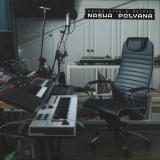
We present an EP from two house masters Artem Stan & Matpri on Analog Concept records.
This record was born like in the classic 90s from jam sessions in the studio, when musicians caught the groove and connected their deep universes, showing true love for house music. Everything is combined here - the sound of drum machines 909 and not only, atmospheric acid impulses of 303, classic pads that paint these paintings bright and filled with deep meaning, as well as much more. Amazing two sides and four compositions, each with its own story.
The Midnight Seduction track opens the telling of these stories on side A. From the first seconds, immersing in the atmosphere of synthesizer temptation, the analog bass line combined with the default drum section and elements of bright metal claps quickly gain the necessary energy and immerse in the images of a closed nightclub with long corridors and hidden dance floors. The light plume of the classic M1 organ and the accentuating Acid lead maintain balance. Secret nocturnal seduction, light ecstasy and an atmosphere of love.
French Kiss - everything is great here, as soon as you listen to the harmony of accordion-like synthesizers and deeply addictive pads, you are instantly transported to the image of Parisian streets. Elements of bells, a rhythm section filled with unpredictable percussion, acid inclusions and an unexpected immersion into a broken beat in the middle of the composition, a real deep French kiss.
Matpri is known for its sophisticated approach to music and is rightfully the guru of micro and minimal house. Having created the maximum sound quality of the rhythm section and the deep bass that was addictive from the first seconds, mixing old-school vibe, while not losing touch with his minimalistic sound image, he filled the House Template track with the smallest details and percussion, which is confidently based on the B-side.
Four certainly high-quality compositions were created in the studio of Artem Stan in the mountains of Krasnaya Polyana and one of the tracks on the B-side - "Nasha Polyana" - is dedicated to this location, it conveys a certain playful atmosphere of a mountain village with a vibe of complete freedom and daily carefree. A complete release with decent house music.
2026 Repress
Georgian powerhouse Yanamaste drops long-anticipated new EP on Mutual Rytm.
In-demand DJ/producer Yanamaste is a resident at Georgia's renowned Khidi Club and a key part of Amsterdam's Vault Sessions crew. His unique sound and fresh creative approach result in raw and visceral techno, reflecting his passion for pushing boundaries and showcased perfectly via his 'Dance' EP on Vault last year. Now, he returns with an EP born out of the creative process behind his live set with a debut appearance on SHDW's Mutual Rytm, 'Evil' - a collection of heavily-requested tracks that have already made an impact after featuring in his Boiler Room and Stone Techno Festival livestream.
'Evil' kicks things off with perfectly rubbery, funky drum patterns and an urgent sense of movement that sweeps you off your feet. 'Lahante' is more percussive, with busy snares riding the rolling, forceful drums and stark synths arresting your attention. 'Dragonfly' is perfectly reduced via minimal drums intertwined with thunderous effects and ghoulish energy, while 'Modulation Detected' has a more cosmic feel as it journeys into the future with whispered spoken words and synths searching across the face of the groove. Last but not least is the irresistible broken beat goodness of 'Walking On Mars', with its swinging kicks and vast bassline spraying about the mix beneath hypnotic melodic patterns.
Two superb bonus cuts, 'Ohohoi' and 'Pwiu', are also provided for digital buyers, bringing further gems loaded with moody depths and compelling rhythms.
In a sharp-angled, fiercely inventive reflection on the nature of club culture and digital fatigue, Simo Cell and Abdullah Miniawy reunite to deliver their new album, Dying is the internet, to Dekmantel's UFO series.
French producer Simo Cell has blazed a singular path from his dubstep-influenced origins to become a leading light in contemporary leftfield club music, twisting up adventurous rhythms and flamboyant production in pursuit of a perpetual freshness for the floor. Egyptian singer, poet, producer and composer Abdullah Miniawy has become equally omnipresent in the past 10 years, straddling the arts world and leading with his piercing Arabic lyricism while maintaining an eternally curious spirit that leads into open-ended, experimental music from the abstract to the propulsive.
Following up on their 2020 EP for BFDM, Kill Me Or Negotiate, Miniawy describes their sharply focused new album as "a playful prophecy about the triggers of a new global revolution." Cell considers the title, Dying is the internet, to be a mantra about "how the internet lost its soul," becoming "less about sharing ideas and more about surviving in a digital business ecosystem." Deliberately at odds with the reel-ready two-minute attention span of the average social media surfer (i.e. everyone), the pair set out to make an album that takes its time to reveal nuanced ideas and expressions. Rather than one-note despair for the modern malaise, Cell and Miniawy offer a philosophical reminder that this present moment in the human experience is a temporary phase, no matter how overwhelming it feels.
Dying is the internet finds Miniawy experimenting with auto-tune across the record, while Cell has developed his voice design chops and compositional instincts, moving closer to fully realised song structures without losing the fundamental 'clubbiness' of each track. The result is a cohesive, wildly original kind of heavyweight dance music that slings out hooks left right and centre, from Miniawy's laconic trumpet looming through low-slung 'Reels in 360' and 'Travelling In BCC' to the persistent handclaps that bring 'Living Emojis' to life. Miniawy's poetry explores the power of insistent, repeated phrases in a break from his more typically structured form.
Kenyan powerhouse Lord Spikeheart adds extra snarl to stripped-back, slow-burn opener 'I See The Stadium', but otherwise Dying is the internet is purely the work of Miniawy and Cell casting their considerable chops out into unexplored territory. The results are electric, bound together by a consistent economy of sound that burrows into a shroud of bass-heavy minimalism barely masking Cell's incredibly detailed studio flex. Even the beatless flourish of the Miniawy-produced 'Tear Chime' comes loaded with physicality — a sensory rush at the mid-section of the album bookended by some of the most idiosyncratic club music in recent memory.
Both Simo Cell and Abdullah Miniawy have already proved themselves as fearless innovators across different fields. The strength of their partnership lies in their ability to make space for each other while letting their distinctive sonic identities ring loud and true. Dying is the internet has immediacy and physicality to translate over a soundsystem, but its intricacies are purpose-built for repeat visits and contemplation, unveiling hidden dimensions the deeper you dive into it.