In his sixth and latest album “New African Orleans”, released by ENJA and Yellow Bird, bass guitarist and composer Alune Wade explores the multiple junctions between his native West African rhythms, the Afrobeat and juju rhythms from Lagos and the brass band repertoire immortalized in New Orleans. “I’m exploring a world that goes from my roots to the lost branches on the other side of the Atlantic,” explains the musician from Senegal. He has whittled down around 50 compositions – both original and standards - to a dozen which Alune recorded in Paris, Dakar, Lagos and New Orleans. “The idea first came to me during the Jazz à Gorée festival I organized back in 2014,” he explains. “It had me reflect on the notion of reversing the musical trip most people take from the United States to the African continent. I wanted to set out westward and begin a musical conversation with the best artists, both in Nigeria and the US.”
To achieve this, Wade has invited top artists from both sides of the Atlantic, including the Nigerian talking drummer Olaore Muyiwa Ayandeji, the percussionist Weedie Braimah and the jazz drummer Herlin Riley from New Orleans. The musical inspirations are equally transatlantic, ranging from Dr. John to Manu Dibango and Charlie Parker. But the 45-year-old also pays homage to his father who was a brass band star in his native Senegal back in the Sixties.
BACKGROUND
We only have a partial idea of the birth and remarkable development of the music born of the transatlantic slave trade. From Malinke ballads to Cuban son, from call-and-response patterns to field hollers and hip-hop, Yoruba rhythms to Argentinian tango, from Angolan percussions to the New Orleans brass band sounds… all have roots in Africa and a shackled migration that lasted four centuries. No more so than Congo Square in the Louisiana capital. In 2024, we mark the 300th anniversary of the implementation of the Code Noir which “gave enslaved Africans Sundays off to dance”. A drop in the ocean, but one which shows the importance of culture as a lifebuoy against this barbaric trade. As the Guadeloupian writer Daniel Maximin once claimed: “Our music guided us from the scream to the song, from dragging our chains to dancing.”
Поиск:notion
Все
- Almon Memela - Amapoyisa
- Cowboy Superman - Ntombi Kazipheli
- Mfongozi Guitar Players - Marabi Jazz
- Casper Shiki - Ngazula
- Elliot Gumede - Amasoka
- The Play Singer - Imitwalo
- The Play Singer - Kusile Dale
- Enoch Mahlobo And Shezi - Wenzani
- The Blind Man With His Guitar - Isoka Labaleka
- Nongomo Trio - Guga Mzimba
- The Play Singer - Nga Fika Ekaya
- Cowboy Superman - I Lele Insizwa
- Mbaqanga Guitar Trio - Come Again
- Cowboy Sweethearts - Sambamba Lomfana
- Cowboy Superman And Beauty - Kumnandi Kwazulu
- The Blind Guitar Player - Ungakhulumi
- Thoko And Almon - Mandlovu
- Zachariah And His Guitar - Abafana
- Mampondo And Sobantu - Themba Lami
- Baca Boys - Ngiyamqoma
- Dennis Khanyile - Thembile
- The Play Singer - U Ngi Cebe E Poisen
- Mike Khuzwayo And The Playboys - Zibedu
- The Blind Man And His Guitar - Unledo Wabantu
- Almon Memela - Lashona
"Amazing! Like stumbling on a treasure-trove of unheard Charlie Patton and Blind Willie McTell 78s, but imbued with the spirit of Mahlathini and Ladysmith." Joe Boyd
'But for this compilation of rescued songs masterfully restored from rare 78 rpm shellacs, few could imagine the diversely beautiful roots of Zulu Guitar Music emerging during the period 1950 – 1965. Story-tellers and master musicians appropriate outlaw personae, re-purpose country and western, Hawaiian and other styles, to stretch and challenge our notion of “the Zulu guitar”.
Twenty-five songs (18 on vinyl) plunge us into the depths of the migrant experience. Translations in the liner notes offer us glimpses of pugnacity, melancholy and heartache, all coloured by the paternalism that circumscribed the singers’ apartheid-dominated lives.
The early *mbaqanga* undertow in many of the songs subverts the wanderlust of Country and Western music into a fugitivity burdened by nostalgia. Something irretrievable has been lost, prompting a blending of ideas and cultures to make sense through thankless acts of musical divination. Inadvertently they have been thrust into the role of the antihero, where outwitting competition for lovers is as important as evading the Black Jacks (apartheid’s municipal cops) and their informants.
Considering the politically repressive period that this music emerges from, we can surmise that the specificity in the storytelling went a long way towards evading censure. But even when words are absent, there is a narrative arc suggested by the musical expression.
With most of the master tapes wilfully destroyed or lost, modern transcription and restoration techniques from the original shellac discs present the original sound most likely more clearly than ever heard before.'
Produced for reissue by Chris Albertyn and Matt Temple at Matsuli Music and Siemon Allen at Flatinternational.
Artwork design by Siemon Allen.
Liner note and translations by Kwanele Sosibo.
Audio restoration and lacquers by Frank Merritt at The Carvery and pressed at Pallas, Germany.
Original 78rpm recordings sourced from the collections of Chris Albertyn at Matsuli Music, and Siemon Allen at the Flatinternational Archive.
- 1: Playful Slowed
- 2: Ether Circus Harmonics
- 3: Celestial Piano
- 4: Stuck Run Baby
- 5: Seagulls
- 6: Downwards Spiral
- 7: Stuck
OONA Recordings is proud to announce the upcoming release of the soundtrack for The Girl With The Needle by Frederikke Hoffmeier. Hoffmeier, whom performs under the stage name Puce Mary, brings a raw, intense and atmospheric score to this Oscar-nominated film, which is contending for Best International Feature. Known for her bold, experimental approach to sound, Hoffmeier’s composition immerses listeners in the film’s dark, emotionally-charged world. Directed by Magnus von Horn, The Girl With The Needle premiered at the Cannes Film Festival, where it earned praise for its uncompromising vision. The film went on to receive a Golden Globe nomination for Best Non-English Language Film and won two prestigious awards at the European Film Awards, including Best Score for Hoffmeier’s hauntingly powerful work. The score to The Girl With The Needle is as dark as it is compelling, a masterclass in creating tension, unease, and raw emotional weight. Hoffmeier’s sound design is equal parts abrasive and intimate, drawing the listener into a world of fractured beauty. Her use of organic textures, electro-acoustic undertones, and dissonant, atonal melodies challenges traditional notions of film music, offering something deeply visceral and unpredictable. The Guardian described Hoffmeier’s score as "nerve-abrading," highlighting the relentless, uncomfortable energy that underpins the film. The Chicago Reader similarly calls the score haunting, noting how it amplifies the film’s stark atmosphere. Drawing comparisons to the intense works of composers like Mica Levi, Awards Radar Magazine praises Hoffmeier for pushing the film’s emotional core to its breaking point, deepening the agony of the protagonist. Throughout the film, Hoffmeier’s score becomes as much a character as the people on screen. Her collaboration with von Horn is marked by a shared vision of pushing the limits of cinema and sound. Screen Daily describes the score as "daring," with its aggressive, contemporary tones standing in stark contrast to conventional film scores. The result is a uniquely modern, avant-garde work that reflects the film's visceral and unsettling nature. Hoffmeier crafts a world of sound that lingers long after the credits roll. The soundtrack’s fusion of organic instrumentation with electro-acoustic elements and bold industrial sounds sets it apart from the ordinary. The British Film Institute notes how Hoffmeier’s "atonal score" creates an "enervating effect," pulling listeners deeper into the film’s raw emotional depths. The combination of brutal sound design and haunting melodies builds a layered, evocative listening experience, one that grows increasingly intense with every listen.
- A1: The Velvet Underground– Venus In Furs
- A2: The Diablos Featuring Nolan Strong– The Wind
- A3: The Theatre Of Eternal Music*– 17 Xii 63 Nyc The Fire Is A Mirror
- A4: The Velvet Underground– Heroin (Mono Version)
- B1: Bo Diddley– Road Runner
- B2: The Primitives- The Ostrich
- B3: The Velvet Underground– I'm Waiting For The Man
- B4: Nico – Chelsea Girls
- B5: The Velvet Underground– Sunday Morning
- C1: The Velvet Underground– Sister Ray
- C2: The Velvet Underground– Pale Blue Eyes
- D1: The Velvet Underground– Foggy Notion
- D2: The Velvet Underground– After Hours Version 1
- D3: The Velvet Underground– Sweet Jane
- D4: The Velvet Underground– Ocean
- D5: The Velvet Underground– All Tomorrow's Parties
- River
- Spirits
- Pas De Deux
- Tahlila
Trumpeter, santur player, vocalist, and composer Amir ElSaffar joins electronics performer and composer Lorenzo Bianchi-Hoesch in a new project exploring electro-acoustic spaces, maqam, microtonal harmonies, and improvised and composed structures in a modular musical composition that accommodates a variety of musical styles across genres. Together, they create an immersive sound that transcends notions of form, musical language, electronic, and acoustic categories in music. This new work will be a modular composition combining pre-determined structural elements with freely improvised sections, played live by ElSaffar and Bianchi-Hoesch. The work will explore electro-acoustic spaces in a microtonal environment that embraces the sonic spectra of multiple musical languages. Bianchi-Hoesch and ElSaffar are interested in creating a transcultural collaboration combining jazz, contemporary classical music, maqam, raga, and other musical backgrounds, inclusive of all the richness, complexity, and idiomatic expression, without compromising or oversimplifying in order to be compatible with others. They are in search of boundary-less spaces in music.
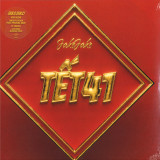
T?t 41 is the latest record by modular synthesist and Berghain resident JakoJako (Sibel Koçer), marking her album debut for Mute.
Recorded during a trip to Vietnam and bookended by field recordings from T?t Lunar New Year celebrations, the album is illuminated by references to Koçer's heritage. The melodic palette breaks away from traditional Western scales, drawing instead from the tonal intricacies of the Vietnamese language, inspired by overheard conversations. The album and track titles further honour the vibrant T?t festivities, shrines, and landmarks she encountered during her travels.
This album is, in many ways, a distillation of ideas she has been exploring for years. Tapping into a deep understanding of machine-based music, crafted with a minimalist setup consisting of a Eurorack and Waldorf Iridium Core, T?t 41 reflects on notions of rebirth, and the pursuit of a sonic core. From this simplicity emerge some of her most expansive, unworldly compositions to date.
T?t 41 is available on vinyl in a limited run of just 500 copies worldwide.
The Ibex Band, with Giovanni Rico and Selam Woldemariam at the creative helm, provided the musical backbone for legends like Aster Aweke, Girma Beyene, Tilahun Gessesse, Mulatu Astatke, and Mahmoud Ahmed, including the iconic album Ere Mela Mela, shaping modern Ethiopian music as we know it today. This 1976 album (Ge’ez Year 1968) played a pivotal role in that legacy and has now resurfaced to set the record straight.
There’s a tendency to talk about the seventies as a golden age of Ethiopian music. There are good reasons for that, and just as good reasons against it. However, the notion of a golden past privileges the role of Western explorers and suggests that the pinnacle of Ethiopia’s musical culture is something only a foreigner can appreciate and unearth. It downplays the complexities of Ethiopia’s culture and history, creating an artificial divide between then and now. And it underestimates the constantly evolving sound that has followed.
The legendary musical outfit The Ibex Band, later metamorphosed into The Roha Band, has played a central role in defining the sound of many of the greatest stars on the music scene of Ethiopia from the mid-seventies onwards–but their golden output has never really waned. The story of the origins of the band that provided the musical backbone for greats such as Aster Aweke, Girma Beyene, Tilahun Gessesse, backing the solo career of group member Mahmoud Ahmed as well as backing Mulatu Astatke and many others has yet to be properly told.
Two misconceptions plague the image of Ethiopian music, one is that the music is pure because it is, by some notion, unexploited, the other is that it is all traditional. To begin with, a combination of political changes between the late sixties and the mid-nineties created an environment where only the most dedicated and skilled musicians struggled on and pursued a musical career against fierce odds. The whole Ibex Band, with Giovanni Rico and Selam “Selamino” Seyoum Woldermarian at the creative helm, are arguably the origo of the vibrant scene in the mid-seventies, and the said pair are foremost responsible for not only navigating the band through troubled times, but also modernizing the 6/8 chickchicka rhythm to a contemporary form. Giovanni laid the rhythmic foundation with heavy looped basslines that reinvented traditional melodies as dance music, and with Selamino’s innovative guitar work they influenced scores of musicians from Abegaz Kibrework Shiota to Henock Temesgen. Even Giovanni’s Fender bass and Selamino’s Gibson guitar inspired younger musicians in their choice of instruments. Not only in choice of instruments but also in sound–even as the digital revolution hit Ethiopian music, a lot of popular music still took its cue from the masters from Ibex and Roha.
Ibex emerged out of the ashes of the sixties group the Soul Echos band, adding Giovanni and Selamino to their ranks and taking their cues from a slew of influences, such as Motown and The Beatles, fused with traditional music. A tighter-knit unit than most bands at the time – Ibex has remained six to seven members throughout their whole career, compared to many bands that were as large as fifteen or sixteen men strong when Ibex set out. Their playing has been viciously focused, economical yet heavy. Just a year before the recording sessions of the album in your hands, Giovanni and Selamino made a contribution to the popular musical lexicon of Ethiopia that was simply defining the popular sound: their arrangement and recording of bandmate Mahmoud Ahmed’s solo effort and real commercial breakthrough tune and eponymous album, Ere Mela Mela, from 1975.
Selamino has never limited himself to being an adroit lead guitarist, but has always been a scholar of history, and as such he has probably contributed as much to modern Ethiopian music with his guitar playing and compositions as with a deepened understanding of modern or contemporary – Zemenawi – Ethiopian music. Selamino’s contributions serve as a metaphor for those of the whole band, at one and the same time creating and defining a new, danceable and updated sound anchored in Giovanni’s bass, whilst also elevating the broader scene through their support for others on the scene and on top of that, increasing the understanding of the music.
There is an understandable desire to romanticize the musical heyday Ibex and Roha were at the forefront of, because so much of the output is sorrowfully hard to come by. Ibex creativity was nothing short of ridiculously fierce compared to many of their Western contemporaries. Based on their sheer recorded output alone they could have usurped the title “hardest working in show business” from James Brown, recording more than 250 albums or 2500 songs in the seventies and eighties. Some only surface as cassettes today, others were never given full LP release, and some are simply impossible to find today. In the light of that, it’s nothing short of a miracle that the recording Stereo Instrumental Music from 1976 (Ge’ez Year 1968) has resurfaced. Unearthed in perfect condition on a chrome cassette, this is musical history comes alive–to set the future straight. Stereo Instrumental Music was recorded in collaboration with Karl-Gustav Lundgren, a Swedish national working for the Radio Voice of the Gospel. It took two sessions at the Ras Hotel ballroom in Addis Ababa. The Ibex Band was the first band in Ethiopia to employ a four-track recorder for their recording (the first available in the country, lent by Karl-Gustav). Later the same week, Giovanni and Selamino realized that, lengthwise, the recorded material fell short of what they wished for, so they recorded four more tracks in one more session on a single-track recorder. The Ras Hotel and Ghion Hotel, where the Ibex Band held musical residencies were to Ethiopia in general and Addis Ababa in particular what Motown was to the USA and Detroit a few years earlier – a hotbed of musical creativity and showmanship.
The most astonishing thing about Ethiopian music of the last half century is how tradition and modernity are intertwined. Because of this feature, it’s kind of hard to tell when there ever was or when we are in a “golden age”. So much of music from the past has been criminally neglected, but because of the hardships in the past, it would be an oversimplification to say that said past was a golden age. Probably, the golden age is what we are approaching, because for the first time both the past and future are accessible, and the monumental contributions from before can lay a firm foundation for a thriving music scene today. The Ibex Band stands firmly in the past, present and the future. That, if anything, is golden.
The detailed history of Stereo Instrumental Music is in many ways unique. To begin with, it couldn’t have been recorded earlier (there were no four-track recorders available) and it really couldn’t have been recorded afterwards either, at least not in the years directly following, because of the toll the musical scene took from the unfavorable political climate that followed when the nascent Derg regime and rival groups tried to assert themselves, the musical equipment lent from The Voice of Gospel Radio simply disappeared from Ethiopia when the radio station folded in 1977. Karl-Gustav Lundgren,
the Swedish foreign national who assisted during the recording, worked with the Ethiopian Evangelical Church Mekane Yesus at the time, recalls how they only had about fifteen minutes to get the microphones in place for the recording as to not alert neither the management at Ras Hotel nor the authorities and most importantly, to complete the recording before the curfew came into effect at midnight. In leaping to the opportunity to use previously unavailable equipment to push their sound forward and improvising to meet the logistical challenges, the Ibex Band displayed the very avant-gardism and adaptability that explains their longevity as a band through the years. The recording of Stereo Instrumental Music is from a given time in history, but it sounds as beyond time.
Much of the energy that burst out of the scene that Stereo Instrumental Music came out of dissipated or got sidetracked during the societal changes Ethiopia went through in the 1970s and 80s. Whilst leaders might have professed to be revolutionary, the work ethic of the Ibex Band can truly be described as that. They never called it quits, but adapted, toured extensively abroad in Africa, Europe, and the Middle East, and found ways to work even in the face of the curfew that curtailed a lot of musical life. They even played major arenas in the nineteen eighties, despite said curfew and restrictions. The whole extent of their legacy has never been told, but their music speaks louder than words, so therefore… tune in to the Ibex Band’s Stereo Instrumental Music.
The first ever reissue of 1994 sound poetry masterpiece »BLANKSMANSHIP«, a high point in the work of legendary avant-garde poet and artist John M. Bennett. Editions Basilic and Luna Bisonte Prods previously collaborated on »A Flattened Face Fogs Through: Selected Sound Poetry (1986-1994)«, an anthology of Bennett’s sound poetry released in 2022 to widespread acclaim.
John M. Bennett’s »BLANKSMANSHIP« is a totemic representation of something impossible: a linguistic object containing a totality. Written and recorded in the early 1990s and released as a sound poetry cassette and chapbook, »BLANKSMANSHIP« begins and ends with a ten word mantra, distilling the poem’s ten cantos that act as phases of an extended meditation. Performed by the author accompanied only by minimalist shakuhachi flute and bell, a narrative emerges from a mythic place, spoken by a single voice that eventually multiplies into a horde of selves. The author states that »BLANKSMANSHIP« refers to a state of mind, the "empty yet swarming void from which the poem’s voice arises, as if it were the voice of completeness itself".
RIYL: Robert Ashley, Akio Suzuki, William S. Burroughs, Steve Dalachinsky, Max Headroom, Japanese Shakuhachi Flute Music
- A1: Hanadi 02 18
- A2: Dreams Of An Insomniac
- A3: Al Dollarji
- A4: Les Vents Dominants
- A5: Al Bahriye
- A6: Miramar
- A7: The Invisible Cut
- A8: Helia Featuring Sven Wunder
- B1: East Of What
- B2: La Calypso 02 41
- B3: Hawalat
- B4: Sfiha
- B5: La Virgule Suspendue
- B6: Preamble To The Conclusion
- B7: Chou Ostak
- B8: What Happened Next
- B9: Jana
If Hawalat sounds like a world tour that’s because it essentially is. “As much as Marzipan is a picture of Lebanon from the inside, Hawalat kind of picks up from where Marzipan finished but more looking to the outside, the diaspora, to the notion of exile.” Megarbane says he is interested in the connections between the global and the domestic, the mundane and the cosmic, and wanted to create space for non-linear progression.
Hawalat is based on the idea of hawala, informal money transfers that you can make to certain countries impacted by a lack of currency or unstable political and economic contexts. His use of the term on this album is not a financial one, Megarbane explains, but a nod to notions of creative exchange between “places, persons, generations.” It is the first time Megarbane called on other musicians in this way to inform his sound, including a collaboration with Sven Wunder on the song Helia featuring strings by the Stockholm Studio Orchestra.
The album opens with first single Hanadi, a punchy Somali-inspired track with warm non-lexical vocals and saxophone. It immediately pivots to the Dreams of an Insomniac, which balances soft, effortless vocals and keys with urgent violin intrusions. Al Dollarji feels like Megarbane’s bread and butter, that is Mediterranean sounds with intricate strings, while Al Bahriye takes this staple and introduces hip hop inflections. The result is a rich 17 track album that effortlessly blends genres and styles.
Including 8 page, 12" sized booklet with unseen photos and liner notes by Armani Syed.
- Collection 001 - 001 A 23:46
- Collection 001 - 001 B 23:48
- Collection 002 - 002 A 18:12
- Collection 002 - 002 B 20:54
- Collection 003 - 003 A 22:14
- Collection 003 - 003 B1 09:33
- Collection 003 - 003 B2 05:25
- Collection 004 - 004 A 16:11
- Collection 004 - 004 B1 07:08
- Collection 004 - 004 B2 09:52
- Collection 005 - 005 A1 08:38
- Collection 005 - 005 A2 08:54
- Collection 005 - 005 B1 07:14
- Collection 005 - 005 B2 03:53
- Collection 005 - 005 B3 03:57
- Collection 005 - 005 B4 04:03
- Collection 006 - 006 A1 17:35
- Collection 006 - 006 A2 05:12
- Collection 006 - 006 B 23:12
- Collection 007 - Merzrock B1 + Dubbing 5 11:21
- Collection 007 - Merzrock A1 + Anemic Pop 1 02:00
- Collection 007 - Merzrock A1 + Anemic Pop 2 08:32
- Collection 007 - E-Study #3-1 + Merzsolo 1 15:49
- Collection 007 - E-Study #3-1 + Merzsolo 2 05:58
- Collection 008 - Concrete Tape Ph#1~ 05:19
- Collection 008 - E8 A1 + 006 A1 06:03
- Collection 008 - Merzsolo 10/6.81 A1 10:36
- Collection 008 - E8 B2/Concrete Tape Ph#1~ 06:28
- Collection 008 - Sans Titre Merz 1 + Tape Loops 04:54
- Collection 008 E6 A3 + Concrete Tape Ph#1~ 06:46
- Collection 008 - Merzsolo 10/6.81 A5 + Violin 03:21
- Collection 009 - N.a.m.4 + E-8 06:11
- Collection 009 - Telecom 1/3 + N.a.m.5 17:32
- Collection 009 - E-3-1-1 11:24
- Collection 009 - E-3-1-2 01:50
- Collection 009 - Tape Loop + Noise 1 (Concrete Tapes) 02:39
- Collection 009 - Tape Loop + Noise 2 (Concrete Tapes) 04:25
- Collection 010 - 007 B1 + Ah Corps 11:47
- Collection 010 - E3 B2 + Ah Corps 11:28
- Collection 010 - N.a.m.6 With Radio & Tapes 22:47
Carrying on their longstanding dedication to the seminal output of Merzbow, Urashima returns with what is unquestionably their most ambitious release to date: “Collection 001-010”, a deluxe, 10 LP vinyl box set limited to 299 copies, gathering together the entirety of the project’s first ten releases, originally released in 1981. Encountering the band in its early incarnation of the duo of Masami Akita and Kiyoshi Mizutani, raw, exposed and bristling with energy, foreshadowing numerous trajectories they would follow over the coming years, these astounding full lengths - the majority of which have never been released on vinyl - come housed in a beautifully produced, deluxe wooden box, with each LP in its own individual sleeve reproducing the original artwork, and a LP-sized 32-page book containing reproductions of artworls and collages by Masami Akita, an interview conducted by Jim O'Rourke, and liner notes penned by Lasse Marhaug, Thurston Moore, and Akita himself, amounting to what is unquestionably one of the most historically significant releases we’re likely to encounter in 2025.
Deluxe Edition of 299 copies, remastered from the original analog tapes by Masami Akita, each LP comes in its individual sleeve reproducing the original artwork, also includes a LP-sized 32-page book. ** Since its founding during the late 2000s, the Italian imprint, Urashima, has become a definitive voice in the landscape of noise. Bringing forth beautiful limited edition releases, they’ve sculpted a singular vision of one of the most vibrant and revolutionary bodies of experimental sound to have graced the globe. Among the many projects that they have supported over the decades, there has been an undeniable dedication to the output of the seminal Japanese noise outfit, Merzbow, making a significant amount of the project’s out of print back catalog available across a range of formats. Now they return with what is arguably their most stunning and ambitious release dedicated to the project to date: “Collection 001-010”, gathering the entirety of Merzbow’s first ten releases, largely privately released by the band on cassette across 1981, in a deluxe, 10 LP vinyl box set. Representing what is effectively ground zero in Japanese noise and collectively amounting to some of the most sought after releases ever produced within that movement, Urashima’s truly beautiful collection comes fully remastered by Masami Akita himself from the original tapes, presenting all but a small number in their first ever vinyl pressings, with each LP housed in its own individual sleeve reproducing the original artwork, alongside a LP-sized 32-page book containing reproductions of artworks and collages by Masami Akita, an interview conducted by Jim O'Rourke, and liner notes penned by Lasse Marhaug, Thurston Moore and Akita himself. Towering with energy and groundbreaking creative vision, within the realms of noise and experimental music, releases don’t get more monumental or historically important than this!
Merzbow came roaring onto the Tokyo scene in 1979, and remains, to this day, one of the most prolific and aggressively forward-thinking projects in experimental music. Eventually becoming the solo vehicle for the efforts of Masami Akita, in its earliest incarnation the project was the duo of Akita and Kiyoshi Mizutani, taking their name from German artist Kurt Schwitters' pre-war architectural assemblage, The Cathedral of Erotic Misery or Merzbau, and quickly set out to challenge entrenched notions of what music could be. Embracing technology and the machine, even in its earliest iterations, Merzbow pushed toward new territories of the extreme, arriving at a space of pure, unadulterated sonic onslaught that has continued, for over 40 years, to set the pace for the entire genre of noise, and has remained one of the movement’s most important, definitive voices, continuously laying the groundwork for countless artists who have followed in its wake.
When dealing with historical gestures, there’s an invertible aura surrounding original line-ups and early statements, and rightfully so. It is often within a band’s debut that we catch the purest glimpse of the raw energy and creative ferment that made them what they are. This is certainly the case when regarding the coveted early releases of Merzbow, capturing the emergence of the project in its form as the duo of Masami Akita and Kiyoshi Mizutani as they helped set the blue print from the then emerging movement of Japanese noise. Over the course of its nearly five decades of activity, Merzbow has always been noted for how prolific and ambitious the project is. This was no less the case in the very beginning. While they were active for roughly two years prior, in 1981 alone they issued ten self-released cassettes numerically titled “Collection 001-010”, albums which have both individually and collectively become holy grails in the realms of noise, with only two - “Collection 007” and “Collection 009” - ever receiving vinyl reissues prior to now.
As Lasse Marhaug deftly articulates in the newly commissioned liner notes for “Collection 001-010”, despite having been recorded in different location across a span of time, the sum total of Merzbow’s first ten releases might be best regarded as a single release to be listened to in the same, durational sitting, with the material standing well apart from what most came to expect from Merzbow, while foreshadowing numerous trajectories the project would take over the coming years. Not only do these recordings feature a vast array of instrumentation - tapes, acoustic and electric guitar, violin, drums, voice, recorder, organ, found sounds, clarinet, homemade and prepared instruments, a vast arsenal of effects and electronics, and piano, to only begin to scratch the surface - the majority of which would disappear from the project’s active sources of sound generation over the subsequent years, but there is a slow pacing and raw sense of openness and exposure that reveals strong connections to the avant-garde improvisations of groups like AMM, Musica Elettronica Viva, and Gruppo di Improvvisazione Nuova Consonanza, the psychedelia of groups like Taj Mahal Travellers and Flower Traveling band (both of whom Akita mentions having seen in youth within his interview with Jim O’Rourke), and rock in general - albeit in fully abstracted forms - unspooling as brittle, pointillistic, textural, raw and abrasive forms, that occasionally flirts with unexpected tonal sensibilities. As Marhaug describes it in his excellent liner notes: «Sonically, “Collection” sounds more sparse and stripped. It’s dry sounding, up-front, no reverb, and there’s less heavy low-end grime and thin on the signature frequency sweeps. Viewed in a 1981 context, musically, it’s more akin to what the LAFMS (Los Angeles Free Music Society) pool of artists were doing at that time than what was happening in industrial music... There’s a strong playfulness throughout, like the sound objects are being explored for the first time, without neither restraint nor hurry. Events are allowed to be fully examined before the music moves on, or simply cuts off. To a large degree, the music on “Collection” feels acoustic in nature, although a Electro-Harmonix ring-modulator features prominently throughout.»
Easily described as a rarely encountered revelation into the original and earlier documented studio sound of Merzbow, “Collection 001-010” collectively amounts to an engrossing sonic journey in its own right, while also allowing for important, often overlooked connections drawn from numerous other creative wellsprings, notably free jazz, underground rock, the output of European and Japanese avant-garde music, as well as Dada, Fluxus, and Mail Art, much of which, beyond the illumination made possible by the sounds, Jim O’Rourke’s fantastic interview with Akita, published in the booklet, further explores, offering great insights into the origins of Merzbow and the thinking behind the project, as well as aspects of the earliest days of Japanese noise.

Limited Edition to 200 copies incl. Remixes by DALO, Benedikt Frey and Nathan Dawidowicz
R.i.O. welcomes Brainwave Research Center, a NYC-based duo consisting of house/techno producer Chase Smith and documentary filmmaker Christa Majoras. In early 2023 they freed their debut album "figure 1" via their own label BRC. Two more albums followed. All documenting their love for experimental yet charming music of all kinds.
Their influences span a vast spectrum, from Steve Reich, Laurie Spiegel, and Edgar Froese to Martin Rev, John Carpenter, early Kraftwerk, or the ambient techno of Pete Namlook's Fax +49-69/45046 label. Yet, Brainwave Research Center forges a sound distinctly their own, seamlessly blending analog synthesis with electro-acoustic experimentation.
On "Psychic Antenna", the duo takes a gentle rawer approach. The tracks range from the manic verbal Die-Tödliche-Doris-like loops of "I Find Myself" to the meditative cosmic trance of "Open Your Mouth." "Orange Drop" and "Transmitter Park" toy with the dancefloor, channeling slow-motion acid trance and krautrock echoes.
The release is rounded out by three remixes: R.i.O.'s own Benedikt Frey delivers a deep, trippy groover full of inner musicality, while close companion DALO crafts a dark, echo-drenched pop rework, and Berlin's Nathan Dawidowicz injects psyched nu-disco rhythms, expanding "Psychic Antenna" into seven notions of intense neural oscillations.
ML
Flutter Ridder is the duo of Norwegian multidisciplinary artists Espen Friberg and Jenny Berger Myhre, both of whom play important roles in Oslo’s contemporary art and music underground. The pair first collaborated during the production of Friberg’s debut solo record, “Sun Soon” (Hubro, 2022), quickly recognizing in one another a creative kinship rooted in a playful, intentionally naive approach towards making art. In November of 2023, the pair decamped to the coastal town of Hvisten in southeastern Norway to record what would become this debut, self-titled album in an ancient wooden church. Drawing from a palette of Friberg’s idiosyncratic Serge modular system and the church’s resident pipe organ and intoxicating acoustic reverb, they began recording and sculpting music informed by the notion that air and electricity share a common flow, a continuous current that can be directed through valves and potentiometers. The pair came to think of the Serge and pipe organ as sibling instruments, the former yielding characteristically unpredictable and complex timbres that complement the wooly, reedy drones and strange, microtonal overtones of the latter. At once sublime, liturgical, and whimsical, Flutter Ridder offers its listener a series of moving, cinematic natural landscapes, affirming the sensibilities of its makers and the indelible influence of the environment in which it was produced.
Produced by A Great Big Pile of Leaves and recorded primarily at their home studio, new album Pono was mixed by touring guitarist Matthew Weber at Gradwell House Recording and mastered by Dave Downham (Beach Slang, Into It. Over It.). With eight years between releases, the band recalls how the recording process of Pono felt like they were making their first record, adding 'we worked at our own pace with no preconceived notion of what it needed to be.'
After humble lo-fi beginnings in the Australian Art-Pop Underground, Donny Benet has expanded his cult-like following across the Globe with a resonant Array of danceable Repertoire dealing with Love- and Affection. New album "Mr Experience" marks a new chapter, informed by a wealth of musical- and personal development.
For Mr Experience, Donny envisioned a Soundtrack to a Dinner-Party- Set in the late 1980's. While his earlier Recordings drew Inspiration from DIY Pop Conspirators such as Ariel Pink & John Maus, Donny channelled the Stylings of Bryan Ferry & Hiroshi Yoshimura as the Impetus for new Material, evident on the Intimacy found on ‘Girl Of My Dreams’ and it's lush production- with a soothing whistle-along Chorus for good Measure!
Sincerity has been a key component of Donny Benet’s output since the beginning. His songs deal with genuine Emotion served on a kitsch Platter. An alter-ego manifested in the beginning of the 2010's, Donny has blurred the Lines of Artifice to create a back- Catalogue that can embrace- and challenge, often simultaneously, - the notion of Irony in Art.
"Mr Experience" moves further away from ironic Notions as Donny explores lyrical- and musical themes which embody Observations of Maturation in his audience, his tightknit musical Community- and himself. While ‘mature’ is a term that often rings hollow as an album descriptor, the term couldn’t be more apt for Mr Experience.
Previous album The Don was created with the luxury of time. The phenomenal Response to that Album across Europe- and the United States - fuelled by accompanying Music Videos clocking in Views in the Millions- meant that there were scant Windows of Opportunity to write- and record a follow-up.
With a legacy in Sydney’s music community, working with Sarah Blasko, and tightknik collaborators Jack Ladder & Kirin J Callinan, Donny Benet is accustomed to collaboration on the Stage- and in the Studio, mostnotably on the 2014 full-length release Weekend At Donny’s.
“There is such immense talent evident in every aspect of the Donny Bene experience - the vision of the character, the steadfast adherence his narrative and the musicality of Benet himself all combine to makesomething truly genius.” - Double J, Australin.
“Donny Benet makes feminine music for everybody” - Vice, Netherlands.
“The Don does not sound like amusical copying machine”. - 3voor12 National, Netherlands.
“The set was punctuated with virtuosic solos and exquisite harmonies, and added another layer of genius to the show.
We almost couldn’t handle it... Donny for president!" - Indie Berlin.
“Everyone loves Donny Benet” - Feature in Gonzai, France.
“Phenomenal Australian Showman... Offers Top-Class Dance Music with Virtuose-Bass Guitar- and Keyboard Parts & incredible Sound-Colour feel.” - Podujatie.sk, Slovakia.
Donny has toured Europe five times since the start of 2018 and has played in the UK, Austria, Germany, Slovakia, France, Netherlands, Spain, Portugal, Belgium, Denmark, Switzerland, Czech Republic, Greece and Sweden. The Don will revisit Europe twice in 2020, once for his own headline shows in May then back again in August for festivals!
Demonstrating the poignant power of experience + human connection + innate musicality + operating in the present moment, Jeff Mills' Spiral Deluxe collective unveil their second album - The Love Pretender. Driven by the free expression and creativity of improvised performance, Spiral Deluxe is an electronic jazz fusion project comprised electronic music visionary Jeff, along with legendary keyboardist Gerald Mitchell (Underground Resistance/ Los Hermanos), Japanese rocker Yumiko Ohno (Buffalo Daughter/Cornelius) on Moog synthesizer and the Japanese bassist, adopted New Yorker, Kenji "Jino" Hino - son of Terumasa Hino, the world famous jazz trumpeter. Together, the four key players formed a band centred around completely improvised journeys through sound.
During their unrestrained performances, what Jeff describes as sonic "conversations" arose between the musicians, as they each contributed to full-length live shows, and studio sessions. Within the boundless parameters of freeform spontaneity, they developed an unspoken understanding of one another, finding balance and poise within the unplanned performances. The resulting recordings have been used for three releases so far: Two EPs, Kobe Session (2016) and Tathata (2017), and their debut album Voodoo Magic in 2018. With The Love Pretender, we're presented with another stunning collection of "tracks" extracted from one long improv session.
With each musician proficient in their specialism and, of course, an all-out music lover, the communication between the group members became almost telepathic. Very little preparation was needed, and their performances flowed naturally and organically. This can be heard, and felt, throughout The Love Pretender. Tracks like 'The Soloist' evolve effortlessly, each new shift subtly influenced by one of the musicians nudging the conversation into a different phase, and the rest responding accordingly, or vice versa. It's music that embodies the true nature of mindfulness and letting go of fear. In their unstructured, liberated cocoon the artists thrive and create musical moments that have, fortunately, been captured for us all to immerse ourselves in. Jazzy notes fill the air, combined with electronic bass, synthesised beats, sparkling keys and an all-round warm and welcoming atmosphere, with the slight edge you can only get from improvised performance.
Sylvain Luc's posthumous appearance on the album is of significance too. The French guitarist died in March 2024 at the age of 59. His natural flair adds another dimension to the album, bringing a touch of that laid back 1980s American California Coast feeling to tracks such as 'Society's Man'. These contributions to the LP, recorded separately, add character - a final sprinkling of humanity to complement the aliveness and presence of this body of work. Three other musicians also added their creative energy to the project. They were; TOKU, a Japanese jazz musician who specialises in wind instruments, especially the cornet, trumpet and flugel horn. And there's Masa Shimizu, who also has wide-ranging with the guitar, as well as being a producer.
Themes on the album include the optimism one can have by simply trusting the process and trusting that everything will work out in the end. By playing together in the way they do, Spiral Deluxe place their trust in the mystery of what will happen next. Getting comfortable with not knowing is key to a sense of peace with regard to the future and this energy is vital to their collective musical output. By embracing the notion of the unknown, you become an eternal optimist, living in the moment, rather than projecting into the future. This cultivates excitement, an antidote to anxiety.
Meanwhile, the title alludes to the shifts and changes that have occurred in today's society, whereby it's possible to achieve success through pretending. The superficiality, and falsehood, that can often be presented via social media, can lead to questions about what's real and what's not. From AI to the fake personas that populate the dominant platforms, The Love Pretender speaks to a process that is symbolic of the time we're living in. Behaviour that has become acceptable in today's world, which may not have been as welcomed a few decades ago. But this is part of the cycle of life...
Jeff's intention with this music is to present it in high-fidelity, to be listened to over and over and over again. In post-recording he worked for hours to ensure the audio quality was as high as it could be. The goal is to create music that people can live with their entire lives, from his solo work to these masterful improvisations. Music that comes to life, music that has a voice we can replicate with our own vocals. Expressive, unstructured, and alive...
With The Love Pretender Jeff Mills continues his mission to experiment with music outside the bounds of what is typically expected. It's freeing, enlivening, vibrant and uniquely human. As ever, Jeff's visionary outlook and bold approach to musical performance and recording has produced a body of work that epitomises his often revolutionary capabilities. There's no pretending here, just pure unadulterated sonic transmissions from a wonderfully daring, inspiring and optimistic ensemble...
- Be Here To Love Me
- Mother's Lies
- If You Want Me To
- Over Your Head
- Monkey See Monkey Do
- The Ballarat Ghost
- Baby's Made Her Plans
- I Hope I'm Wrong
- Friends In The Floor
- Foggy Notion
- Sleazy Rider
- Baby's Made Her Plans (Home Demo)
- Friends In The Floor (Home Demo)
- Monkey See Monkey Do (Home Demo)
- Mother's Liers (Home Demo)
- A Present For Me
Punk Slime Recordings are proud to present the new full-length album from Birmingham, UK's Swampmeat Family Band. Their new album Muck! is a massive step forward both songwriting and production-wise, offering up a blend of uptempo garage rock and gentle americana. Featuring members of PNKSLM's own The Castillians and Terror Watts as well as Low Cut Connie, PWEI and Bentley Rhythm Ace.
Rob Mazurek’s Alternate Moon Cycles was our first release. The incredibly spare single-note-centered cornet, bass, and organ chant was recorded to tape at pint-sized Chicago bar Curio as part of a performance series that predates any notion of our label’s existence. Documenting this performance—highly unique even within the depths of Mazurek’s vast catalog—stirred those notions, and soon talks began of releasing the recording on a fresh imprint.
The music unfolds glacially amongst the gentle creaks, clinks, whispers, and scuffles of the active room. It’s difficult to imagine a more honest rendering of the two sidelong pieces of organic minimal music, and nearly impossible to separate the sounds from their performance context. It’s also difficult to imagine a more subtly striking way to introduce a new label to the world.
Now this long-gone gem of supernatural frequency excavation is back in print with fresh liner notes by Mikel Patrick Avery and obi design by Aaron Lowell Denton.
Featuring Rob Mazurek, Matt Lux, and Mikel Patrick Avery.
"This is ambient music, suitable for meditation, but its shifts in texture reward real listening." - New York Times
South-London, British-Bengali musician Tara Lily shares her debut album 'Speak In The Dark'. The LP is about "speaking your truth" and combines alternative R&B, jazz, electronica and traditional Indian sounds into a unique fusion. The record, produced by Dom Valentino, features American jazz trumpeter Theo Croker, UK rapper Surya Sen, and Archy Marshall (aka King Krule) on guitar.
Growing up in Peckham as part of a British Bengali family has given Tara Lily a unique perspective on music and global culture. She has spent her life absorbing a multitude of sounds and genres from her surroundings, ranging from electronica to jazz and RnB to traditional Bengali folk music. From training at the Trinity Laban Conservatoire of Music (where she studied jazz piano and voice) to learning Indian classical music and being the first act signed to Motown Records UK. Tara is a musical anomaly.
Debut album from South-London, British-Bengali musician and rising star Tara Lily, featuring American trumpeter Theo Croker & UK rapper Surya Sen
LP produced by Dom Valentino with additional contributions from Bad Sounds, Jaz Lee, Archy Marshall, Chiranjeeb Chakraborty, Akash Parekar, Mei Kerby, Ian Stratford
European Tour supporting JP Cooper (1st week of October, 2024)
UK Tour w/ Juabi - Manchester, Barbican (London) - Sept 2024
Artwork by Jay Vaz (Dreaming Vinyl)
"No Way Out" video shot in association with The North Face in the Himalayas, Nepal. Directed by Siddanth Ghosh
Press support - The Guardian, Evening Standard - "One to watch", Wonderland, ID, Notion, Clash
Radio support - 'Double Time' was track of the week on BBC Radio 1, other spots plays - BBC 6Music, Jazz FM (playlisting), BBC Asian Network, NTS
Recipient of the FAC x Amazon Music - Step Up Fund
Tours - UK, India (Echos Of Earth / Vh1 Supersonic festival / Jazz
Weekender), Nepal, Bangkok, Hong Kong, EU
Festivals - Glastonbury (3 sets - BBC introducing - Televised / Leftfield B2B Billy Bragg / PRS), We Out Here, Shambala, Daytimer Dialled In, Wilderness, Cross The Tracks
Career highlights - SHAKTI JAZZ NTS show, joined King Krule on stage at Apollo Theatre and supported RAYE at the Royal Albert Hall, Jazz Cafe w/ Mahalia, playing live on TV on BBC2 (The Kia Oval)
- La La La
- Cruz
- Lost Angel
- Taquero
- Dream Suite
- The Mystery Of Miss Mari Jane
- Cha Cha Cha
- Sea Changes
- Cinema Lover
- Die Again, Yesterday
- Hollywood Ten
As Jess Sylvester finished his Hardly Art debut as Marinero in the fall of 2020, he realized it was time for a change. Sylvester grew up in Marin County, on the doorstep of San Francisco. It was a nurturing community for a high-school punk with a pompadour and, later, for a sober songwriter with a proclivity for moody psychedelia. But he wanted to be challenged and inspired by a new setting and scenario around strangers who prompted him to approach his music in unexpected ways. So in September 2020, as the world continued to reel in lockdown, Sylvester headed several hours south to Los Angeles, a city that, despite the relative proximity, the film buff knew largely from classic and cult films situated there. When he arrived, he kept digging into that cinematic past-Robert Altman's The Long Goodbye, with John Williams' classic theme, or classic 90s movies about East LA, many featuring Edward James Olmos. They shaped his understanding of his new town just as it began to open. This is one pillar of the multivalent and endlessly lush La La La, Marinero's new album about sobriety, identity, and fantasy that is playfully named both for the city that helped shape it and the sophisticated pop it contains. Sylvester wrote about characters outside of himself, whether considering the heroine reckoning with her own version of keeping clean or the screenwriters whose work was deemed communist simply as a political convenience. He linked those songs with motivational anthems about self-acceptance and playful numbers about flirting through food, shaping a 12-song set rich with humor, empathy, and encouragement. Sure, La La La is a continuation of the slippery genre play Sylvester started with 2021's Hella Love, 2019's Trópico de Cáncer, or even before that. But it also feels like a fresh beginning for Marinero, as Sylvester realizes how boundless this project can be. He began to think about the music of his childhood, how his mother is from San Francisco with Mexican roots, and how he'd heard so much salsa growing up as an impetuous teenager. So he wrote "Taquero," a red-hot salsa tune that uses tacos and their trappings as a source of endless metaphors for come-ons. And then there was the Ray Barreto or Santana-inspired "Pocha Pachanga," with organ gliding and percussion pulsing beneath his yearning vocals, warped as if by desert winds. In Los Angeles, he found a wealth of players who spoke this music like language itself (including Chicano Batman's Eduardo Arenas), all ready to play with and push these familiar forms. Sylvester has also been sober for 21 years, since a cross-country sojourn to attend college in Boston ended in a chemical haze. Today, he sees friends facing the same decisions he made two decades ago, and he brings bits of that experience to bear in songs that feel like self-help anthems. Recorded with a musical hero (and labelmate) of his, Chris Cohen, "Sea Changes" feels like sunshine breaking through dark clouds, as Sylvester acknowledges the newfound confidence and clarity in a friend who has stepped away from destructive habits. In the past, Sylvester has been intractably linked to his identity as a Mexican-American, born to parents from Mexico and Irish- American descent who settled in San Francisco. That can be limiting, of course, tying him to notions of sound and style that aren't always correct. On La La La, he simultaneously steps into and out of those preconceptions, singing tracks above salsa in joyous Spanish or pondering the dynamics of the Hollywood Ten and blacklists above mysterious lap steel and teasing trumpet. His identity, then, should now be clear: He is a Californian, making music shaped by the diversity of encounters and experiences that are a central part of that state's fabric. Never before has he presented himself so fully and unabashedly on tape as with La La La, an album Sylvester built with new inspirations to deliver new charms.