Joke Lanz and Sudden Infant once again return in their razor-sharp trio setting whereby the absurdist nature that Joke’s work is already cut with is reconfigured in a gnarled and beefy punk-fucked contorted rock setting. Short bursts of angular flex are heavily propelled by depth-charge rhythms, wry lyrical musings on modern living, and sensibilities hatched from years of experience in the worlds of sound art, abstract music, industrialised junk-noise and related areas have manifested in the perfect follow up to 2018’s Buddhist Nihilism album on Harbinger Sound. Aided by Christian Weber on bass and Alexandre Babel on drums, Joke lays on a battery of electronics, loops, field recordings and samples to complement mostly semi-spoken vocals that appear like they’ve been swept from the overflowing gutters of a shopping centre into a huge ball of malaise that can only be laughed at as world leaders look on perplexed. Exactly as the title suggests, 'Lunatic Asylum' depicts a world in absolute disarray as the seams binding it together slowly fall apart to reveal jesters whose best attempts to glue everything back in place are built on bigger lies more transparent than ever. Meanwhile, citizens of the developed world turn on each other for the stupidest of reasons or grow fatter with their descent into an ignorance nourished by half-baked cultural nuggets pre-packaged and sold as great and awe-inspiring work. And everything has to be recorded, photographed and shared as brain cells are decimated by false ideals, propaganda, exaggerated lifestyles and a huge tub of popcorn swimming in indiscernible yellow gloop. Such are the snapshots that resonate as Lunatic Asylum takes some well-aimed swipes at the human condition of the 21st Century. Featuring a fantastic guest appearance by Franz Treichler (The Young Gods) on ' Il y a des Enfants', each of the 12 songs that constitute Lunatic Asylum are bold, heavy, playful and rife with surprising twists and turns Joke’s mostly English splatter-poetry helps guide into a space that’s about as accessible as the outer reaches of rock can get. In a perfect world, this is the stuff even daytime airwaves should be pregnant with but, since the world is presently tripping over its own feet more so than ever, we will have to suffice with wherever this can nudge with the help of Fourth Dimension Records. One day, hopefully, more will catch up. The CD version of Lunatic Asylum features two exclusive bonus tracks. It was released in April 2022. TRACKLIST 1/Good Morning! 2/Head 3/I Ghore Es Gloeggli 4/Mood Swings 5/Damage Control 6/Happiness to Go 7/Pain is a Pain 8/Il y a des Enfants 9/The Lived Body 10/Ah-Ah-Ah 1921 11/Mika the Dog 12/Tuba Manifesto
Cerca:nou
- A1: Gigi Masin - Waterland (Otto Prospettive Veneziane)
- A2: Gigi Masin - Clouds (Otto Prospettive Veneziane)
- A3: Gigi Masin - La Giara Di Gesturi (Otto Prospettive Veneziane)
- A4: Gigi Masin - Three Bridges (Otto Prospettive Veneziane)
- A5: Gigi Masin - The Song Of The Masked Man (Otto Prospettive Veneziane)
- A6: Gigi Masin - Underwords (Otto Prospettive Veneziane)
- A7: Gigi Masin - First Time Ruth Saw The Sea (Otto Prospettive Veneziane)
- A8: Gigi Masin - Goodbye Kisses (Otto Prospettive Veneziane)
- A9: Charles Hayward - Thames Water Authority
This split album featured the Italian composer Gigi Masin on side-a with delicate piano movements rippling above undulating electronics. Its second track 'Clouds,' has become an ambient standard with Bjork, Nujabes and cloud-rap duo Main Attrakionz all sampling its rich and euphoric tones.
Side-b belonged to Charles Hayward and the twenty three minute sound portrait 'Thames Water Authority'. A founding member of post-punk and avant groups This Heat and Camberwell Now, Hayward's natural inclination towards percussive instrumentation is highlighted by shape-shifting cymbal recordings that trace the expansive systems that meander beneath Greater London.
P-VINE is thrilled to reissue Les Nouvelles Musiques de Chambre Volume 2 on limited edition vinyl with an iconic Japanese obi strip attached.
Raised somewhere between Ministry Of Sound’s ‘The Annual’ and early music message boards, Kolya’s taste still extends from obscure tape-only releases to turn-of-the-millennium trance anthems.
As a DJ, it’s taken the South Londoner from Bugged Out! to Berlin – at home supporting Demdike Stare with coldwave, spinning runway house alongside MikeQ while a House Of Trax resident, or unleashing noughties fidget at the closing of Camden’s infamous Lock Tavern. All of which is to say, his debut EP for Ecstasy Garage Disco arrives steeped in musical history.
Recorded during lockdown, it draws on perhaps his greatest love, deep (deep, deep) house. A soaring synth work out, opener ‘Stick Together’ is a case in point, standing on the shoulders of giants like Peter Daou, but with a life-affirming exuberance all of its own. ‘Miss Honey Prancin’ In The Twilite’, meanwhile, is a tribute to Moi Rene, as well as a love letter to Project X Records in general, her vocal recast over a groove that alternates between outer space iciness and snare-rolling high drama.
On the flip, ‘Crying Over Spilt Poppers’ blends the flavour of amyl-soaked Gherkin with the emotional nuance of Nu Groove, joyous and reflective in equal measure. And ‘Jamais Vu’ signs off, its bumping kick pattern and intertwining melodic layers connecting glimmering 90s electronica and contemporary, future-facing house.
.
Foutra !! Hardcore bien formaté. Clair. Carré. Dancefloor. Bombe.
90s French pop nirvana, on LP for the first time! Autour de Lucie's followup to their geographical barrier busting debut sees the band
incorporating subtle keyboards and electronic beats to their wellestablished sensuous dreamy pop charm
..
Tracks: Selon l’humeur / Immobile / Qu’avons-nous fait / Chanson sans issue (ne
vois- tu pas) / La verité (sur ceux qui mentent) / Sur tes pas / Sagrada familia /
L’eau qui dort / L’autre nous / Les promesses / Je vous ai tué ce matin /
Atomium / La 2ème chance
After the success of HSW001, we thought it was about time to announce the second stage of our exciting unknown artist vinyl series. HSW002
Early
support from ; Priku, Cosmjn, Barac, Vlad Arapasu, Costin Rp, Rossi, Iuly.B, Rich Nxt, Olivian Nour, SUAT, Mikhu, Dragutesku, Mariano Mateljan, Kirik, Rhadow, Pascal Benjamin, XXX Culture, Lee Hasty & more
Limited Edition (500) (No Repress)
Multi colour 180g Vinyl
White Label
Hand Stamped & Signed with love
Specially designed outer sleeve artwork
»Herbstlaub,« the third album by Marsen Jules, was both introspective and visionary, modest and ground-breaking. Blending elements of classical music with electronic textures, the German artist created six pieces that draw on the power of repetition, yet are full of internal tensions and sweeping dynamics. Now, Keplar makes it available again on vinyl for the first time since its original release in 2005. This version, remastered by Stephan Mathieu and with a new artwork by Umor Rex’s Daniel Castrejón, shines a new light on a record that paved the way not only for the artist’s later work, but also further developments in electronic and ambient music more broadly.
»The noughties were a special time,« says Marsen Jules today. »It felt like there was a new tool made available practically every day that allowed you to create new musical worlds on your computer.« Hence, this prolific phase saw the emergence of a plentitude of genres and styles that can be traced back to individual records—»precious gems that opened up new possibilities and anticipated a lot of what later would be picked up on,« as he describes them. »Herbstlaub« surely falls into this category, having paved the way for a distinct approach to combining elements from classical and electronic music.
While Wolfgang Voigt was focusing on the marriage of romanticism and techno with his Gas project at the same time, the six pieces on »Herbstlaub« follow a very different concept. Through repetition and reduction, Marsen Jules threw any sense of time out of joint while also inserting an emotional component into the music. »What would remain if you abstract musical contents to this degree, how much of your personality would still resonate in it,« he sums up the questions that shaped his approach. »When will reduction result in monotony, and how could unique, magical moments created through repetition?«
More than one and a half decades later, »Herbstlaub« seems both melancholic and brimming with excitement. This is the sound of an artist experimenting freely with the sounds and structures of two supposedly irreconcilable musical traditions with new and exciting tools, creating something previously unheard of in the process.
All tracks composed and recorded by Martin Juhls.
Originally released on CCO in 2005.
Remaster by Stephan Mathieu. Vinyl cut by LUPO.
Cover art by Daniel Castrejón based on the original by Alphazebra.
Text by Kristoffer Cornils.
- B2:
- A1: Nekta - Who´s Sorry Now
- A2: Mop Mop - Hot Pot (Ezequiel Lodeiro "Latinazo " Dub)
- A3: Gabriele Poso - Freedom
- A4:
- B1: Aromabar - Calling
- B3: Metropolitan Jazz Affair - You Can Dig
- B4: Dublex Inc Feat. Stee Downes - Something´s Missin
- B5: Valique - Herbie's Delight
- C1: Jhelisa - Love Is A State Of Mind
- C2: Woodland Conclave - Celebration Of Life (Song For Simon)
- C3: Matthias Vogt Trio – Driver (Joash Remix)
- D1: Taxi – The Accessory
- D2: Rime - Smoke And Regret
- D3: Shantel - Considerando (Video Version)
- D4: Kosma - La Seule Fleur Dans Le Jardin (For Karen)
INFRACom!, one of the longest operating Independent labels in Germany, celebrate it´s 30yrs anniversary with a vinyl compilation consisting of tracks that have never been released on vinyl before. Label co-founder Jan Hagenkötter handpicked these from various artist in the catalog, true to the spirit of the label and its operator – We couldn´t save the entire planet but we still like to save your soul.
The artwork was once again designed by Rafael Jimenez Heckmann, a well-known graphic designer from Offenbach. He is responsible for most of the artworks and designs on INFRACom!... his covers have already been awarded several times e.g. in Lürzers Archive and others.
The inlay was designed by the long time friend & well known artist Jim Avignon. In the nineties before Jim went to Berlin and New York to get world famous he lived in Frankfurt for a few years and drew and partied a lot with Jan Hagenkötter & Namé Vaughn…the two DJ´s, friends and founders of INFRACom! He even contributed a song to the very first INFRACom! production. Since that time they cultivate a lovely friendship and Jim was happy to contribute an artwork to this anniversary release.
Most of the tracks included on the compilation were released only on CD and then digitally in the so-called 2000s or noughties, as it was very difficult to release any album on vinyl during that time due to the situation in the music market while the transition from physical to digital products and the piracy phenomenon. Fortunately, today the different formats can coexist again.
INFRACom!, once started locally in Frankfurt with artist like Shantel who released his first recordings on the label. He is featured by a collaboration with the Brazilian duo Rosanna & Zélia. Soon INFRACom! expanded to an international platform for artist from all over the world like Jhelisa (USA), Mop Mop & Gabriele Poso..both from Italy, Metropolitan Jazz Affair the brainchild of French producer and musician Patchworks, Taxi from the UK, Rime from Finland or Aromabar from Austria…all with different styles of music.
The vision of the two founders Jan Hagenkötter & Namé Vaughn was and still is artistically oriented and has never favored just only one style of music.
The roots of INFRACom as a label are based in the various form of black music culture - conditiopned to the influences and personal history of the two founders - but also deeply rooted in the club and DJ culture and various forms of electronic music. The compilation can only show a small glimpse into the universe with tunes that stand the test of time.
One of the best examples is Matthias Vogt with whom the label has a long standing collaboration and who just this year released the album PIANISSIMO on INFRACom!. He can be heard with his Matthias Vogt (Jazz) Trio in a cinematic remix from Joash and two pieces by the highly successful re:jazz band which he leads.
With Valique we are happy to feature a Belarus/Russian artist on the release these days….one who already showed ten years ago on his album artworks what he thinks about the politics of his government. As an open minded label and ethnical diverse ppl. we think “Fuck Putin and his disciples and like-minded people, but let's not condemn all Russian-born people. Some prefer to worship Herbie Hancock...like Valique and we want to support that.”
With Nekta, Dublex Inc. feat Stee Downes and Kosma this release features three more artists from various regions in Germany, each with their great moments.….and last but not least the mysterious Woodland Conclave (UK)…a waltz and a story yet to be told and hopefully will be…on INFRACom!…in the near future!
d A4 | re jazz Feat N'dea Davenport - Don't Push Your Luck (Wagon Cookin´ Vocal Remix)
f B2 | re jazz Feat Mediha - Tears
d A4 | [Re:Jazz] feat. N'Dea Davenport - Don'T Push Your Luck (Wagon Cookin' Vocal Remix)
[f] B2 | [Re:Jazz] feat. Mediha - Tears
Dirtiness and Divergency
It's a mystery what the handwriting of an artist is made of. What are the ties between artist and art? Why do we recognize the sound of a music producer even if they suddenly create music of a differnet genre?
On his new album "Kiss Dance Kiss" F.S.Blumm remains unmistakably himself, even if he assembles dub- infected, saturated, overdriven instrumental tracks. It may be his signature guitar sound, the disarmingly straightforward melodies, or the irresistible groove: This groove is compelling but unobtrusive. Three, sometimes four notes create timeless melodies.
F.S.Blumm unleashes his love for beats and dub by allowing the bone-dry riddims to dive deeply into the genre typical echo-chamber, combined with sweet guitar arpeggios and melodic basslines. These are friendly dub monsters. It doesn’t all fit seamlessly into the homogeneous sound. Take "Nimbb" with it's angular electronic groove, devoid of any melody, or the surprising horn timbres on "Twistert".
As with all of Blumm‘s works, there is a familiar intimacy even within big echo chambers.
His music searches for the sweet spot. He waits for the right time to record a piece, allowing for the exact degree of maturity of an idea, the magical moment when guest musicians meet, the collision between a well-planned process and happy coincidence. Finding the perfect spot for microphone placement, walking the fine-line between too slow and too fast, pinpointing the right delay-time are all inherent in Blumm's craft. It is a music full of these fragile constellations, interferences and synergies.
The concept of 'composition through duplication' is repeated visually on the cover:
Repetition creates blur and noise. Patterns rub against each other. Sound waves flutter in the wind. A simultaneous sunrise and sunset indicate the search for the perfect overlap.
Each track acts like a rhythmic serving suggestion for individual dance moves. Music for the daily dance around the kitchen table. A lookbook for kraut-dub, analog-electro or adult-instrumental-pop.
.. and now out into the sun.
Formed in 1985 in Athens, GA by David Barbe (Bob Mould's Sugar),
Mercyland's blast of post-punk was ahead of its time
The band was nourished by a steady diet of the Minutemen's Double Nickels on
the Dime, Husker Du's Metal Circus, Meat Puppets 2, Dinosaur Jr's Yr Living All
Over Me, Volcano Suns, and Mission of Burma. There were few experiences as
exhilarating as seeing Mercyland tear up sweaty rock clubs like Athens' own 40
Watt on a Friday night. Mercyland frequently left clubbers up and down the east
coast in a meltdown. The group disbanded in 1991 and the nine songs marking
their first official collective release here are a necessary historical document of
the end of the criminally unknown band. The time for Mercyland to be better
known is now.
Our Albarika Stores 7-inch series returns with one of the masterpieces of lo-fi Afro-funk: 'It's A Vanity' by Gabo Brown and Orchestre Poly-Rythmo.
Originally released in the early '70s, it is a fine example of the way that Benin's premier group could perfectly nail a James Brown-style groove and then twist it to make it uniquely their own thing.
'It's A Vanity' is one of the masterpieces of low-fi Afro-Funk, and has been widely sought after (and become extremely valuable) since it was comped in 2008. We've paired it with the first reissue of 'Nougbo Vehou (La Verité Blesse)' - licensed directly from bandleader Clement Melomé's family - for a must-have double-sider!
Vinyl[35,25 €]
Originaire de Mongolie, The HU ne ressemble à aucun autre groupe de rock dans le monde. Depuis leur sortie, le groupe s'est hissé à la première place du Billboard World Albums Chart, à la première place du Top New Artist Albums, et au Top 5 mondial du Hard Rock Music Album Chart. Ils ont effectué de nombreuses tournées dans le monde avec des spectacles à guichets fermés en Europe, au Royaume-Uni et aux États-Unis. Après le succès de l'album The Gereg, qui a non seulement débuté à la première place, mais dont les succès rock viraux «Wolf Totem» et «Yuve Yuve Yu» ont atteint le Top 10 des radios rock. The Hu sont de retour avec un nouvel album, Rumble of Thunder. Cet album relie le monde à la culture mongole et à ses valeurs fondamentales uniques de préservation de la nature et de connexion spirituelle avec la terre.
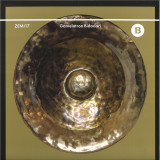
The Gamelatron is many things; one could call it a sculpture, a multimodal installation, an instrument, a robot, a feat of engineering, a vision—and it is all of these things. More importantly, though, it is a concept sustained by Aaron Taylor Kuffner, aka Zemi17, whose Gamelatrons are “sound producing kinetic sculptures” designed to create an immersive, visceral experience for the listener. Not a small feat, and yet the ambitions of Zemi17 are absolutely realized in this long-standing project, culminating now in his third release for The Bunker NY: Gamelatron Bidadari.
The Gamelatron Bidadari is not just a name—it is one of seventy-plus musical sculptures that Zemi17 has conceptualized, designed, and fabricated. Therefore, it would be inaccurate to think of this release as simply a series of arrangements composed in a finite period of time. Rather, it’s a window into a project and a process that is much larger than any single album can encapsulate. Gamelatron Bidardi is the culmination of more than a decade of work, and is central to Zemi17’s evolution, not only as a musician but as an artist.
Having studied gamelan for many years in Indonesian villages and at the Institut Seni Indonesia in Yogyakarta, Kuffner is a musician, an artist, technologist, and craftsman. The gongs in his sculptures are co-created with master Indonesian artisans. Each Gamelatron composition is site-responsive, meaning its sounds are composed for the acoustics and intentions of the space it inhabits, whether it’s an art gallery, a wooded landscape, or the inner temple of Burning Man. The Gamelatron does not stand alone: it is in constant co-creation with its physical environment, and in dialogue with gamelan’s long-standing history.
Originally exhibited at the Smithsonian Renwick as part of a show entitled, No Spectators: The Art of Burning Man, the Gamelatron Bidadari produces sounds that are delicate yet strong, and deeply hypnotic. Textured chiming creates intricate polyrhythmic patterns that are both complex and simple, or in a word, elegant. On Gamelan Bidadari, Zemi17 refrains from adhering to the strict musical structures; his approach to composition is free flowing.
He says, “I want to evoke what the music tells me it has to offer. It is like following water to its conclusion (or non-conclusion).” The arrangements on this album, written by Zemi17 and performed by the robotic arms of the Gamelatron, leaves the listener feeling enchanted, nourished and enriched.
A sense of the mystical comes through in the tonal quality of the instrument, and is conceptually felt in the sculpture’s name: the Bidadari, which loosely translates to “forest nymph.” The music conjures up natural wonder, and the four sculptures that make up the Gamelatron Bidadari, in fact, resemble trees. They are four independent yet connected entities, each with a large gong situated at their structural base—the sonic “roots” of the sculpture—while smaller gongs branch off of a golden, trunk-like spine. The Gamelatron Bidadari is as physically stunning as it is mesmerizing to the ear. A kind of divinity is invoked through its sound, or a sacred cohesion between past and present, tradition and new form. Meant to be viscerally experienced, the sounds of the Gamelatron call for sublime togetherness. Gamelatron Bidadari is not just an album but the crystallization of Kuffner’s work; it is a condensed yet spacious glimpse into the sonic power of Zemi17’s Gamelatrons, which have already been heard and experienced live by over a million people.
(Ltd 300 copies, 180 gr vinyl) From Senegal to Eastern Europe, from Brazil to India, from the classical conservatory to nomadic people, it is nourished by all their influences that Hands in Motion juggles with the codes of tradition to create a new space of expression, resolutely current and innovative
- A1: Versuch Einer Übersicht
- A2: Kristallische Bindung
- A3: Selbstbespiegelung
- A4: Aggregate (In Zwei Sätzen)
- A5: Merkwürdige Klänge (Zwölftonspiel)
- A6: Geschmack Und Funktion
- A7: Substanzsuche
- A8: Einheit Von Maß Und Zahl
- B1: Anmerkungen Zur Situation
- B2: Klangfigur (Für Klavier, Stimmen Und Regler)
- B3: Schwingungsknoten
- B4: Oberlippentanz
- B5: Satzlehre (Rückwärts)
- B6: Schwebung Und Strenge
- B7: Töne, In Die Höhe Gezerrt
- B8: Abschied (Für Stimmen, Becken Und Streicher)
Distilling Sounds From The Now 70 Years Old Archive Of The Darmstadt Summer Courses For New Music, The Berlin Based Electronic Artist Hanno Leichtmann Presents A Stunning New Album Which Is Remix, Collage And Homage At The Same Time. Mastered And Cut By Rashad Becker At D&m.
On His Latest Work "nouvelle Aventure", Berlin's Hanno Leichtmann (who Besides His Solo Works Also Plays With Jan Jelinek And Andrew Pekler In Groupshow And Recently Released His 2nd Album With Valerio Tricoli On Entr'acte) Presentshis Very Individual Approach To The Task Of Remixing And Reworking The Imd Archive. As In His Previous Installations (e.g. "skin, Wood, Traps" For Haus Der Kulturen Der Welt, Celebrating The 100th Birthday Of The Drumset), The Electronic Artist Distills His Sound Material Exclusively From A Thematically Fixed Archive, In This Case: Concert Recordings, Lectures And Discussions Fromthe Now 70 Years Old Archive Of The Famous Darmstadt Summer Courses For New Music (stockhausen, Nono, Ligeti, Xenakis Et.al.). Originally A 6-channel Installation As Part Of "historage" At Mathildenhöhe Darmstadt, The Composition Is Here Presented As A 46 Minutes Stereo Mix. Leichtmann Sent Thesubjectively-chosen Sounds Through His Unique Machinery Of Voltage-controlled (micro-) Loopers, Re-recorded Them And Then In A Last Step Pieced Them Together In His Studio, Primarily Applying The Traditional Parameters Of Early Electronic (tape) Music (amplitude, Pitch / Speed, Playback Direction, Series / Cuts, But Most Of All: Repetition. The Result Is A Stunning Albumwhich Is Remix, Collage And Homage At The Same Time - And A Highly Psychedelic Affair, As Mirrored By The Amazing Artwork By Caro Mikalef (cabina).
A sonic-minded power trio of obsessive, biting riffs and mists of asymmetrical sonic cycles. Inspired as much by French chamber music of the 19th century as by Jim O'Rourke or Moondog, Under The Reefs Orchestra's hypnotic music unleashes a cosmic energy and leads the listener to a trance among underwater volcanos. Guitarist Clement Nourry's gentlemanly demeanor masks the great fiery passion of a true musical virtuoso. "I focus on one thing, and one thing entirely" says Nourry. For him, that one thing is the guitar. Combining the deep theoretically understanding of a skilled mathematician (which he actually is) with a true musician's soulful instinct, Nourry is as comfortable with John Fahey as he is with experimental jazz. To put it simply: he shreds. This trip through the timeless realms of sound can be heard as a soundtrack of the ecological apocalypse we live in. Genry/Style: Post Jazz, Post Rock, Experimental - For those who like Moondog, Comet is coming, Yonatan Gat, ADHD, Kamasi Washington, E. Morricone, Talk Talk (Spirit of Eden), Ryuishi Sakamoto...
- A1: Kassav' - Zouk-La Sé Sel Medikaman Nou Ni
- A2: Jocelyne Béroard - Kolé Séré
- A3: Édith Lefel - Somnifère
- A4: Jocelyne Labylle & Cheela Feat. Passi & Jacob Desvarieux - Laisse Parler Les Gens
- A5: Lynnsha - Ne M'en Veux Pas
- A6: Medhy Custos - Elles Demandent
- B1: Fanny J - Ancrée À Ton Port
- B2: Jane Fostin Feat. Medhy Custos - Pas De Glace
- B3: Thierry Cham - Océan
- B4: Warren Feat. Fanny J - J'ai Trouvé L'erreur
- B5: Kim & Marvin - Ne T'en Vas Pas
- B6: Princess' Lover - Mon Soleil
- A1: Testimonial
- A2: Damned Le Monde
- A3: Transparency
- A4: Mourners
- A5: Birthday
- B1: Terminal Love
- B2: Worth Less Than Deutsche Marks To Me
- B3: Orchestra Of Knives
- B4: Stand On Ceremony
- B5: San Zero
- C1: Mourners (Sebastian Komor Remix)
- C2: Damned Le Monde (Love + Revenge Rework)
- C3: Terminal Love (Architect Remix)
- C4: Mourners (Rotersand Rework)
- D1: Terminal Love (L'âme Immortelle Remix)
- D2: Damned Le Monde (This Eternal Decay Remix)
- D3: Mourners (Electro Spectre Remix)
- D4: Damned Le Monde (Exfeind Remix)
- D5: Terminal Love (Sniffergod Remix)
STRICTLY LIMITED COLLECTOR'S 'ART EDITION' OF THE ALBUM OF THE SAME NAME + TONS OF BONUS SONGS.
Elegantly electronic as ever, the new songs draw a remarkable strength from their monumental arrangements and foreboding aura. Embellished by a vague sense of nostalgia and enhanced by old family photos from the private Ljung vaults, "Orchestra Of Knives" is ZEROMANCER's dark night of the soul, an odyssey trying to coming to terms with the ineffable fact that we're all going to die. Instead of wallowing in misery and self-pity, however, the Norwegians chose to use this intense realization to craft some of their most touching, most heartfelt and easily most monumental songs ever.
The harsh and the mellow, the dark and the light, the depression and the elation all flow together on "Orchestra Of Knives", an album worthy of the turmoil of our age. Once and for all, ZEROMANCER are the masters of electronic melancholy, the designers of a musical world nourished by the shadows we cast. It's been too long since we felt understood and at ease merely by listening to a song.
- Multicoloured vinyl
- Black, red and white in the form of rotating rays
- Each record individually made by hand
- Differences in pattern shapes and colours are therefore possible
- Every copy is unique
- 2 x180g 12" vinyl
- In total 9 bonus tracks off the EPs 'Damned Le Monde', 'Mourners' and 'Terminal Love'
- Sumptuous gatefold sleeve
- Printed inner sleeve and containing lyrics
- Printed vinyl labels
- Strictly limited to 300 copies only!!!
- 1: Connais Tu L'animal Qui Inventa Le Calcul Integral?
- 2: Evariste Aux Fans
- 3: Les Pommes De Lune
- 4: La Chasse Au Boson Intermédiaire
- 5: Dans La Lune
- 6: La Faute À Nanterre
- 7: Ma Mie
- 8: Wo I Nee
- 9: Si J'ai Les Cheveux Longs C'est Pour Pas M'enrhumer, Atchoum!
- 10: La Révolution
- 11: Je Ne Pense Qu'a Ça
- 12: Je Chante Pour Vous Faire Marcher
- 13: Je Ne Suis Pas Simple
- 14: Si Les Étoiles Pouvaient Parler
Évariste is one of the rare specimens of artist-cum-scientists. Among his kind stand others like Pierre Schaeffer, a Polytechnique graduate (an engineer but also the father of musique concrète) and the eccentric Boby Lapointe (graduate of the École centrale and inventor of the Bibi-binaire system, patented in 1968). Évariste's songwriting, joyful and full of energy (albeit extremely critical), shrouds an original tragedy: born in 1943 among résistants, Joël Sternheimer (aka Évariste) grew up without a father, lost to Auschwitz. Although he makes little reference to Jewish culture in his music, his origins leave their mark: in 1974, he sings a Hebrew song on television. In 1966, the young Joël sports Princeton's colourful paraphernalia - that's because he's freshly returning from the US, where he was sent to pursue his research on "particle mass and the interpretation of observed regularities, such as the effects of a wave" (will understand who may). When he gets there the country's in the midst of the Vietnam War. With McNamara keen to find an alternative to the nuclear weapon and calling upon the country's biggest brains to undertake the task, there's a "fund shift" within the university - a diplomatic way to give notice to whoever may not be disposed to follow the government's scheme. Joël, who's under the supervision of a rebellious physician, is dismissed. He regardless keeps following the prestigious seminaries of the Institute for Advanced Study, chaired by Oppenheimer, inventor of the atomic bomb. Likely inspired by the hippie movement and music, Joël buys a guitar and starts playing in Washington Square - after all, Bob Dylan himself started there. He blithely skips Oppenheimer and receives a warm (though surprised) welcome from a crowd thoroughly unfamiliar with French. When the ageing physicist questions him about his decreasing attendance, Joël explains how drawn he is to music, and how he thinks it could help him in self-financing his research. Évariste recalls seeing the sickened man, his face torn by remorse, lighten up to his words and say: "What's keeping you - go for it! If I was still young that's exactly what I'd do." The student takes these words as a testimony from his professor - and it's enough to convince him . And so he takes the leap during the Christmas vacations he spends in Paris. A journalist friend he often sees around the Sorbonne introduces him to the artistic director of Disques AZ. The latter passes the tapes on to the label's boss, Lucien Morisse, also program manager on Europe N°1. Morisse is blown away - and signs him onto the label right away. Michel Colombier, arranger for Serge Gainsbourg and co-author of "Psyché Rock", with Pierre Henry, contributes some of his original ideas to the 7 inch "E=mc2": Évariste's preoccupation with the percussion sound on the track "Le calcul intégral" is that it goes "poom poom" and not "tock tock" - Colombier is aware of the issue and records Évariste's guitar like a percussion in an isolated booth. The organist Eddy Louis, who is to participate, in 1969, to the success of Claude Nougaro's "Paris mai", also appears on the record. It's 1966 and the Antoine phenomenon (signed on Vogue) storms through France. The two singers share similarities: Antoine is an engineer of the École centrale, gifted with a great originality in his song-writing. A godsend for the two labels who turn this resemblance into a commercial strategy, setting them out as rivals. To this day though, Évariste still denies what was little more than slushy tabloïd gossip. Success comes around swiftly and in 1967 Évariste launches into a second 7 inch, "Wo I nee", again arranged by Michel Colombier. Quantum mechanics fans finally get their anthem with "La Chasse Au Boson Intermédiaire" (or the "Intermediary Boson Pursuit"). To sum up what's a boson, say he's a close pal of the meson, photon and other gluons. A few months later, it's May 68 and everything's turned upside down. Évariste writes a series of songs inspired by the events, which he immediately submits to Lucien Morisse. When the man behind "Salut les copains", once married to Dalida, hears the song "La révolution" - a father and son dialogue - he can't take any more: AZ simply cannot release this. But there and then Lucien Morisse makes a gesture which will remain engraved in French music's history: sorry to be unable to officially stand by the singer, he encourages him to self-produce the record, but with his tacit support. He calls the pressing factory and asks they apply the same rate for Évariste as they would for AZ. The singer and his musicians use the same studio as for the previous record, all of them playing for free awaiting a return on investment. Évariste keeps singing at the Sorbonne with "Jussieu's gang" and "the young Renaud" he nicknames "le p'tit gavroche" (or "street urchin"). Renaud volunteers to type the lyrics of the song "La révolution" so that the chorus can be sung and recorded. A boy in the group is related to Wolinski and introduces them. The two get along so well that Wolinski ends up drawing the cover for the record "La révolution", for free. The self-released 7 inch "La révolution / La faute à Nanterre" is sold under the table and door-to-door for half the price of a standard record, on and around the boulevard Saint-Michel; and it runs out fast. In the end, there will be 6 releases of the record, and 25000 copies sold. When the theatre director Claude Confortès decides to adapt Wolinski's drawing series titled "Je ne veux pas mourir idiot" ("I don't want to die a fool"), he asks Évariste to write the original soundtrack. His friend, now cartoonist for Hara-Kiri Hebdo, often promotes him in accordance with a principle dear to him by virtue of which he gives a special place to his friends. Dominique Grange (writer of the song "Nous sommes les nouveaux partisans") soon joins the team. After 150 performances, Évariste leaves his place to Dominique Maurin (brother of Patrick Dewaere). Évariste composes the songs for Claude Confortès' next play, "Je ne pense qu'à ça" ("That's all I think about"), co-wrote with Wolinski in 1969. The comedians of the play record the songs on a 7 inch, with a cover signed, again, by Wolinski. In 1971, French television produces the documentary "Évariste et les 7 dimensions", but doesn't air it. Indeed, the scientific sub-comity of the programming comity (sic) censors the show. The given justification is that "Évariste dangerously mixed science with science-fiction, numerology and other non-scientific disciplines". The underlying motive might have been a will to censor the singer-mathematician's political discourse. In the documentary and among other things, Évariste discusses hierarchy, alienation and revolution. Half a century later the documentary remains invisible, though some excerpts resurfaced in 1992 in the cult show "L'oeil du cyclone", on Canal +. Though flourishing, Évariste's career is nearing its end. 1970 is the beginning of a decade in the course of which he is to make a decisive discovery in the musical and scientific domains. Following this breakthrough, he moves away from self-produced music and gaucho magazines to focus on science. He keeps Oppenheimer's encouraging words in mind, now freely pursuing his research thanks to the sales of his records. Joël realises that when decoding protein sequences, one finds musical sequences recognisable to humans. He names them "proteodies". If, when listening to a proteody, one responds by being so sensitive as to finding it beautiful, then it reveals a deficiency of the related protein - and this peculiar music may be the cure. We could trace back the music history in light of proteins lacking in a given artist, or within a public's majority. You always thought these hysterical groupies who'd throw their underwear with passion and faint in the pit had miraculously appeared because they had never heard anything as wonderful as the Beatles? Make no mistake! For Évariste, it all boils down to an intro's protein content. Indeed, the beginning of their first hit "Love Me Do" corresponds to dopamine, the neurotransmitter linked to compulsive buying. An intro like this could only unleash the fervour of groupies, victims of fashion and biology. Évariste's success is such that the income from his sales gives him the autonomy to which he had aspired when confiding to Oppenheimer. It made it possible for him to pursue his research without any institutional constraints. He now devotes himself to his proteodies, sat in the offices of the European University for Research, just around the corner from the Sorbonne he knew so well. Évariste is no more. Joël regained control of this strange and comical beast.