Mr Bongo proudly presents, ‘AFIM’, the second solo album by one of Brazil’s most exciting new talents, Zé Ibarra. You may be familiar with the hypnotic, entrancing tones of Ibarra’s vocals through his work with the Latin Grammy award-winning, four-piece, Bala Desejo and the band Dônica. He has also toured with the musical titan, Milton Nascimento, performing guitar and vocals, which is quite the honour and a testament to Ibarra's craft. As a solo artist, he has performed headline solo shows in Japan, Portugal and the US, as well as recently completing a support tour with the great, Seu Jorge.
‘AFIM’ is comprised of eight tracks, featuring Zé’s own compositions as well as cover versions of tracks by contemporaries and friends, Sophia Chablau, Tom Veloso, and Dora Morelenbaum. It combines elements of MPB, jazz, pop and progressive rock in a bold, authoritative style. The album represents the intersection between different facets of the artist, from the stripped-down, intimate, guitar singer-songwriter, to dense arrangements with sweeping strings sections. Writing this album allowed Ibarra "to explore sides of myself that had not yet been organized in an album: a certain darkness, a more cinematic musicality, a desire for new soundscapes.
The album features the single, 'Transe', a song with an instantly comforting tone reminiscent of classic Brazilian songs of the past (think Caetano Veloso). It is built on a rhythmic guitar that supports dynamic sound layers, opening space for Ibarra's intense interpretation. Cinematic atmospheres that lend an air of mystery come courtesy of string arrangements by Jaques Morelenbaum.
His unique cover version of Sophia Chablau's 'Segredo' is equally compelling, taking Sophia's punky-indie original in a different direction and making it feel like his own. 'Essa Confusão', a song celebrating the intensity of love and co-written by Dora Morelenbaum, is steered into epic, 70's AOR, singer-songwriter territory with wind arrangements by Ibarra, Jorge Continentino and strings by Jaques Morelenbaum.
The album is the result of the collaboration of experienced musicians and long-time partners of Ibarra. Fellow Bala Desejo and Dônica member Lucas Nunes co-produced the album. The core band featured on the record consists of Lucas Nunes on organs, Alberto Continentino on bass, Daniel Conceição and Thomas Harres on drums and percussion, Rodrigo Pacato on additional percussion, Chico Lira on Fender Rhodes and Guilherme Lírio on guitar.
The overall feel of the record is archetypically quintessential without slipping into retro mode. It is a stunning album from one of the finest musicians of his generation. A true star of Brazil’s blooming contemporary scene.
Cerca:nu bal
Gegründet von Sänger/Gitarrist Askhan Avagchuud im Jahr 2010 in der autonomen Region Innere Mongolei in China, sind Nine Treasures eine einzigartige Kombination aus Heavy Metal und traditioneller mongolischer Instrumentierung. Die Band nutzt sowohl konventionelle Gesangstechniken als auch mongolischen Kehlkopfgesang und erschafft ein klangliches Kaleidoskop, in dem Gitarren, Bass und Schlagzeug auf traditionelle Saiteninstrumente wie Balalaika und Morin Khuur (Pferdekopfgeige) treffen.Mit vier Alben und über 100 Festival-Shows pro Jahr in Asien vor Publikum von bis zu 50.000 Menschen sind Nine Treasures bereit, Nordamerika und Europa zu erobern. Seeking the Absolute markiert ihr Metal Blade Records Debüt und ihre erste LP mit weltweiter Veröffentlichung - der Höhepunkt ihrer künstlerischen Entwicklung und ihr bisher ehrgeizigstes Werk.Aktuelle Besetzung:• Askhan - Gitarren, Gesang, Balalaika, Tovshuur• Orgil - Bass, Backing Vocals• Saina - Balalaika, Backing Vocals, Gitarren• Namra - Schlagzeug• Nars - Morin Khuur, Backing VocalsGenre: Progressive Metal / Indie Metal (kein Folk Metal) Aktiv seit: 2010 Land: China (Innere Mongolei) Sprache: Mongolisch Sales Points/Treiber (Karriere-Highlights/Fakten/Marketing-Info):• Metal Blade Records Debüt - Erste weltweite Veröffentlichung der mongolischen Metal-Pioniere• Einzigartige kulturelle Fusion - Die einzige Band, die traditionelle mongolische Instrumente (Morin Khuur, Balalaika, Tovshuur) mit Progressive Metal kombiniert• Authentischer Kehlkopfgesang kombiniert mit modernen Metal-Vocals• Massive asiatische Fanbasis - Auftritte vor bis zu 50.000 Fans in ganz Asien• 100+ Shows pro Jahr beweisen ihre Live-Stärke und Hingabe• TOOL-beeinflusster progressiver Ansatz - Komplexe Kompositionen ohne Kompromisse bei der Zugänglichkeit• Kulturübergreifende Anziehungskraft - Musik überwindet Sprachbarrieren durch pure Emotion und Energie• Kritikerlob von großen Metal-Publikationen wie The Quietus, At The Barrier und Noizze UK• Kulturbotschafter bringen mongolisches Erbe in die globale Metal-Szene
Phylipe Nunes Araújo's songs are as rich and varied as the diverse landscapes they were written in. The hills of Pernambuco, the lagoons of Alagoas, and the beaches of Bahia are all woven into his stripped-back, folk-inspired Brazilian songwriting. As part of a wider movement of musicians originating from Brazil's Northeast, Phylipe sees the process of music-making as the search for beauty itself.
Collaborating with fellow Northeastern artists Bruno Berle, Batata Boy and Nyron Higor among others, Phylipe's debut album represents the latest flowering of this exceptionally talented community's creative search.
The Northeast holds an almost sacred importance in Brazil's collective cultural imagination. The region bore witness to the brutal histories of Portuguese colonization and the African slave trade, while simultaneously amalgamating the diverse cultures, religions and traditions of those who have called it home. Countless Brazilian music greats - Gilberto Gil, Caetano Veloso, Hermeto Pascoal, Djavan and Luiz Gonzaga - have emerged from this vast cultural melting pot.
Born in Caruaru, Pernambuco state, and raised in the city of Santa Cruz do Capibaribe (famed for its textiles industry), Phylipe describes his music simply as "Brazilian music from the Agreste of Pernambuco". His masterful compositions thread together regional rhythm, folk poetry and sophisticated harmony.
Phylipe's musical foundations were laid in youth, listening to the local elders rehearsing their forrós, attending São João street parties in front of his house and watching the Junina Quadrilhas dance through his neighborhood. At street fairs he would read the Literatura de Cordel (handcrafted pamphlets of Brazilian folk literature), and watch the rhyme battles between cantadores, violeiros, and repentistas, who improvise verses on daily life, social commentary and philosophy. This tradition of Northeastern folk poetry proved particularly formative for Phylipe as a lyricist. "I always try to write things as simply as possible. I believe that beauty must be easily understood. If I can facilitate the path to the message, there's no reason not to. It's something I learned from the traditional poetry here: it's more beautiful if everyone understands."
At the age of 11, Phylipe first got access to the internet. As he explains: "Still in adolescence I was also able to discover things like The Beatles and Nick Drake - I started to get to know music from the rest of the world and later to correlate that with my local musical experiences." Rich with extended chords and artful dissonances, it's clear from his compositions that jazz and bossa nova also took hold, but he's quick to eschew stereotypes. "Inevitably, people associate a Brazilian musician playing a nylon-string guitar with bossa nova..." "But the foundation is another story," he asserts, "It's the Northeast."
On the guitar Phylipe experiments with the binary rhythms inherent in traditional Northeastern music. Coco, frevo, maracatu and baião are recontextualised, placed alongside Brazilian popular music (MPB), gentle lullabies and stunning ballads. "In these 10 songs, I am experimenting with making pop music on a nylon-string guitar with my foundation in the Northeastern songbook."
The contemporary musical community which Phylipe belongs to developed initially in Pernambuco's neighbouring state Alagoas. Phylipe lived in its capital Maceió for three years, where he built friendships and musical bonds with Bruno Berle and Batata Boy who together produced his album. Bruno also sings in unison with Phylipe on the duet "Valise", a song Phylipe wrote aged just 15.
In recent years, Phylipe, Bruno and Batata have migrated south to São Paulo, where the majority of the album was recorded. Other collaborators on the album include Alici, who provides vocals for the ebb and flow of "Temperim", Nyron Higor who plays drums on lead single "Asa" and the sweet indie moment "Ziz"", bassist Meno Del Picchia who plays on the mystical baião "Bixin" and the propulsive "Subindo a Ladeira", and Raphael Coelho who joins Bruno and Batata on percussion for "Santa Cruz", Phylipe's hypnotically powerful portrait of his hometown.
- Weimar Drill Head
- 3: Lesbian Sardines
- Transference (Did Marcel Steal Elsa's Urinal)
- Doing What We Are Told Makes Us Free
- Broken America
Three lesbian sardines! Shouted by a heckler at a performance by the Dadaist Hugo Ball on stage at the Cabaret Voltaire. Is a perfect title for Nurse With Wound's final appearance at the `Great Monster Dada Show' at the legendary Henie Onstad Kunstsenter in Oslo, 2019. The largest exhibit of dada art and artefacts this century, over 250 artworks by 43 artists including Kurt Schwitters, Jean and Sophie Teuber Arp, Hannah Hoch, John Heartfelt, Tristan Tzara, Max Ernst, Francis Picabia, Raoul Hausmann, Marcel Duchamp, Man Ray. This electric performance captures the band at their most eclectic and playful. Here six tracks feature the classic line up of Steven Stapleton, Andrew Liles and Colin Potter including the toe tapping crowd pleaser `Flea Circus' - a mutant hybrid of Kraftwerk and Aphex Twin and is amongst the best the band have ever recorded. `Broken America' is timely reminder of the dire situation we are all facing with the arrival of Trump's America. The cover features stunning new artwork by acclaimed artist Babs Santini. 500 copies only in NEON GREEN VINYL.
Ein Sturm zieht auf. Ein riesiger Orkan, der in den vergangenen Jahren immer stärker wurde und der nun
droht, alles in die Tiefe zu reißen. Höchste Zeit also, endlich gegenzusteuern! Mit der kraftvollen ShantyRock-Ballade „Da braut sich was zusammen“ melden sich Santiano nun in gewohnter Stärke zurück, um
auf ihrer brandneuen Single eine deutliche Warnung in unruhigen Zeiten auszusprechen.
Mit „Da braut sich was zusammen“ meldet sich Santiano eindrucksvoll zurück. Die raue See wird zum
Sinnbild für stürmische Zeiten: „Da braut sich was zusammen und die Wolken ziehen übers Land.“ Santiano
bleibt ihrem markanten Sound treu, verbindet ihn diesmal aber mit einer besonderen Message. In einer Zeit
der politischen und gesellschaftlichen Umbrüche warnen Santiano auf dem bildgewaltigen „Da braut sich
was zusammen“ eindringlich davor, angesichts der dunklen Wolken am Horizont die Augen zu verschließen,
sondern aktiv zu werden und das Ruder noch einmal herum zu reißen, bevor es zu spät ist.
Santiano ist zurück mit ihrem siebten Studioalbum ”Da braut sich was zusammen” mit der gleichnamigen
Single als Nachfolger von acht Nummer-1-Alben.
- A1: Do What You Gotta Do
- A2: Looking For A Fox
- A3: Slippin' Around
- A4: I'm Qualified
- A5: I Can't See Myself
- A6: Wind It Up
- B1: Part Time Love
- B2: Thread The Needle
- B3: Slip Away
- B4: Funky Fever
- B5: She Ain't Gonna Do Right
- B6: Set Me Free
Clarence Carter, blind from birth, was a blues singer with lascivious wit, a talented guitarist, a songwriter with a twinkle in his eye, and a champion of down-to-earth soul grooves who taught himself to play the guitar.
He sang in a gospel choir, completed a degree in music, and grounded the duo Clarence & Calvin but was not however very successful.
After a car crash involving Calvin Scott, Carter started on a solo career and signed a contract with Rick Hall and the Fame label as a soloist.
Among the earliest singles recorded at the Muscle Shoals studio were a few hits. After leaving Fame for Atlantic, he managed to enter the Top 20 of the R & B charts with "Looking For A Fox". His breakthrough came with "Slip Away", which sold a million copies and was awarded a Gold Record.
The legendary Fame Studios in Muscle Shoals remained the home basis, as it were, for Carter during his career with Atlantic. "This Is…" begins with a contemplative, soft sound. "Do What You Gotta Do", written by Jim Webb, is a lovely, melancholic mid-tempo ballad, saturated with Barry Beckett’s keyboard and smothered by lush, plaintive winds.
But the man is primarily funky here … as three danceable, finger-snapping tracks prove; "Wind It Up", with further witty improvisations and a fervid organ solo, the highly syncopated, playful "Thread The Needle", and the smoky, irresistible "Funky Fever" – all written by Carter himself.
Dan Penn’s and Spooner Oldham’s "Slippin’ Around" has an unorthodox bossa nova-like beat that is reminiscent of Ray Charles’s "What’d I Say", while Carter’s unmistakable chuckle is to be heard for the first time on the riotous funk-rock number "I’m Qualified", which has the very same unique, infectious groove as was to be heard on Wilson Pickett’s "In The Midnight Hour". "She Ain’t Gonna Do Right", composed by the same man, brings more Alabama Country to the mix, whereby Beckett contributes a catchy, persistent organ riff in the refrain.
Motorjesus aus Mönchengladbach sind zurück – und mit „Streets of Fire“ drehen sie den Motor weiter auf Anschlag! Ihr mittlerweile achtes Studioalbum führt ihren unverkennbaren High Octane Heavy Rock in eine neue, noch explosivere Dimension. Mit Vollgas voraus präsentieren sie eine Mischung aus Motörhead-infiziertem Rotzrock, hymnischem 80er-Jahre-Metal im Stil von Judas Priest und Iron Maiden sowie einer starken Prise Punk-Attitüde. Das Ergebnis: Ein kompromissloses HeavyRock-Feuerwerk, das sowohl alte Fans als auch neue Hörer mitreißen wird. Motorjesus haben den Tank randvoll gefüllt und treten das Gaspedal durch! Nach ihrem letzten Album „Hellbreaker“, das Platz 20 der deutschen Albumcharts erreichte und der Band Festival-Auftritte auf Summer Breeze, Rock Hard Festival und vielen weiteren Bühnen sicherte, setzen sie mit „Streets of Fire“ neue Maßstäbe. Das Album strotzt nur so vor kraftvollen Hymnen, die zum Mitsingen und Fäuste-in-die-LuftRecken einladen. Diesmal bewusst ohne Balladen, sondern mit noch mehr Speed, Groove und treibenden Riffs, die sofort ins Ohr gehen. Produzenten-Legende Dan Swanö (Opeth, Dissection, Edge of Sanity) ist begeistert: „Diese Songs haben einen neuen Fokus und eine unglaubliche Energie – ich habe mir beim Mischen buchstäblich den Fuß wundgetreten!“ Mit ihrem unverwechselbaren Sound, der Hard Rock, Metal und Punk-Einflüsse vereint, beweisen Motorjesus einmal mehr, dass sie zu den beständigsten und kraftvollsten Heavy-Rock-Bands Deutschlands gehören. Ihre unbändige Live-Energie konnten sie bereits auf Touren mit Motörhead, Anthrax, Mustasch und Prong unter Beweis stellen – und auch auf „Streets of Fire“ liefern sie wieder pure Rock’n’RollPower ohne Kompromisse!
- 1: The Sorting That Evens Things Out
- 2: Bring The Leeches
- 3: Ican'tations
- 4: For The Length Of Me
- 5: Newfoundland
- 6: Our Miss Givings
- 7: And Then There Were Somme
- 8: Age Of Cinders
Recorded in a sweaty flurry at a vital moment in Nuzzle’s ‘90s run, ‘Follow, for Now’ is raw, loose, and fierce. Less than 1,000 copies were originally pressed in 1995 and songs like “The Sorting That Evens Things Out” and “Newfoundland,” became the band’s most ballyhooed; both live at the time and on CD and streaming in the decades since. This 30th Anniversary Reissue has been remixed and remastered from the original tapes and keeps the original’s urgency and adds essential upgrades. FFO: Unwound, Lync, Clickatat Ikatowi.
- I Can't See Anything When I Close My Eyes (Remastered)
- Scott & Jeremiah (Remastered)
- Careful With That Fax Machine (Remastered)
- Wind & Wing (Remastered)
- Bring On The Cobras (Remastered)
- Stomachache Due To Sincere Belief That The Rest Of My Band Is Trying To Kill Me
- (Remastered)
- Wine=Water+Jesus (Remastered)
- Sausage Full Of Secrets (Remastered)
- Go Horsey Go (Remastered)
"Rumah Sakit 25" vereint das Debütalbum von Rumah Sakit und ihre lange vergriffene EP Travels In Constants in einem außergewöhnlichen Paket. Die Band hat sich erneut mit Bob Weston zusammengetan, um die Original-Masterbänder sorgfältig zu remastern. "Rumah Sakit 25" enthält neues Cover-Artwork von alten Freunden und Mitarbeitern, Jeremiah Maddock und Marty Anderson. Die umfangreiche 180-Gramm-Gatefold-2xLP in Audiophile-Qualität enthält vollfarbige Innenhüllen mit Hunderten von bisher unveröffentlichten Fotos, die die inspirierte Anfangszeit der Band dokumentieren, sowie ein massives 24-seitiges Kunstbuch im Format mit bisher unveröffentlichten Kunstwerken von Maddock. Es ist ein exquisites Werk, das eine Band meisterhaft einfängt, die letztendlich die nachfolgenden Künstler inspirierte und deren spätere Zusammenarbeit mit Foals, Pinback, Sweep the Leg Johnny, Sleeping People und HEY!TONAL unterstreicht, wie einzigartig vielfältig und produktiv Rumah Sakit wirklich waren. Rumah Sakit war eine vierköpfige Rockband aus San Francisco, Kalifornien. Die Gruppe begann 1998 Gestalt anzunehmen, nachdem Gitarrist John Baez, Bassist Kenseth Thibideau und Schlagzeuger Jeff Shannon alle von Redlands nach San Francisco gezogen waren. Nachdem Gitarrist Mitch Cheney schnell hinzukam, war die Band komplett und entschied sich für den Namen Rumah Sakit - eine wörtliche indonesische Übersetzung von ,Krankenzimmer" (alias Krankenhaus) - und einen Sound, der die frenetische Energie von King Crimson aus der "Red"-Ära mit einer meditativen Melodik verband, die in starkem Kontrast zu den meisten ,Math-Rock"-Bands dieser Zeit stand. Bald darauf betrat Rumah Sakit zum ersten Mal das Studio, um ihr gleichnamiges Debütalbum aufzunehmen. "Rumah Sakit" wurde 1999 im ehrwürdigen Music Annex Studio in zwei etwas geheimen Nachtsessions mit den Studio Praktikanten/guten Freunden/angehenden Toningenieuren Jay & Ian Pellicci aufgenommen. Das Album entstand nach einer ,No Tricks"-Philosophie, die den Ansatz der Band beim Spielen und Aufnehmen ihrer Musik prägen sollte. Aufgenommen vollständig live ohne Overdubs in nur wenigen Takes, nutzte die Band die Kunst, die natürliche Präsenz des Raumes und die strategische Platzierung der Geräte, um die reinste und genaueste Darstellung dieser Songs in diesen Momenten einzufangen. In einer Zeit, die schnell durch die aufkommende Popularität von ProTools und akribisch manikürten, maximalistischen Mixes verändert wurde, war die Welt von Rumah Sakit eine erfrischende Atempause. Ein Jahr später, im Herbst 2000, flog Rumah Sakit den renommierten Chicagoer Toningenieur und Shellac-Bassist Bob Weston nach San Francisco, um zwei kurze Tage lang eine neue EP im schäbigen Tiny Telephone Recording aufzunehmen. Diese EP wurde Teil der Abonnement-CD-Reihe ,Travels In Constants" von Temporary Residence (neben Veröfffentlichungen von Mogwai, Low, Explosions In The Sky, Eluvium und MONO). Abgesehen von der Originalauflage von 1.000 CDs, die für Abonnenten reserviert waren, waren die Studioaufnahmen auf Travels In Constants bis jetzt nie wieder erhältlich.
- Hell Bent For Sæther
- The Walls Of Crystal Keep
- Unicorn
- Sternenfels Space Gate
- Everywhere I Rest My Head The Ground Is Shifting
- The Magic Balloon
Clear Vinyl. Mit ihrem Debüt The Empty Space Between A Seamount And Shock Headed Julia hinterließen The Black Cat's Eye 2023 ein bemerkenswertes Echo in der Szene - ein energetisches und atmosphärisches Werk, das Psychedelic- und Postrock-Elemente auf einzigartige Weise vereinte und schnell vergriffen war. Nun, zweieinhalb Jahre später, präsentiert das Frankfurter Quintett sein neues Album Decrypting Dreams Of Weird Animals And Strange Objects. Auch diesmal lotet die Band die Grenzbereiche zwischen Psychedelic-, Kraut- und Post-Rock aus. Die Musik oszilliert zwischen hypnotischem Drive, verträumten Gitarrenflächen und dynamischen Spannungsbögen. Das Album umfasst sechs Songs, deren Spannweite von fünf- bis zehnminütigen Klangreisen reicht. Neu ist, dass diesmal zwei Bandmitglieder Kompositionen beisteuerten: Neben Gitarrist und Bandgründer Christian Blaser stammt die Hälfte des Materials von Bassist Jens Cappel. Sein kraftvoller, direkter Stil ergänzt Blasers atmosphärischen Ansatz ideal. Blaser: ,Auf dem Debütalbum stammten alle Stücke von mir. Als Gründer der Band lag mein Fokus zunächst darauf, eine musikalische Vision und Richtung vorzugeben. Jens war zu diesem Zeitpunkt noch nicht so in die kreativen Prozesse eingebunden, obwohl er ein außerordentlich talentierter und umtriebiger Musiker ist. Er veröffentlicht regelmäßig großartige neue Musik auf den Bandcamp-Seiten seiner eigenen Projekte, zum Beispiel The Black Black Paint. Als es dann an das Schreiben neuer Songs für das zweite Album ging, brachte Jens einige wirklich tolle Demos mit ein." Stilistisch verbindet das Album, wie schon der Vorgänger, klassische 70er-Einflüsse mit zeitgenössischer Rockmusik - man hört Anklänge an Can, Motorpsycho, Neu!, Indie- und Stonerrock, aber auch an David Gilmours Gitarrenästhetik. Die Musik ist instrumental, einzig im finalen Stück ,The Magic Balloon" übernimmt Jens Cappel den Gesang. Ähnlich rätselhaft wie bei der ersten Platte klingt der Albumtitel: Decrypting Dreams Of Weird Animals And Strange Objects. Blaser erklärt: ,Der Titel ist inspiriert von einem faszinierenden Aspekt der US-amerikanischen TV-Serie Westworld. Dort werden humanoiden Robotern Gefühle und Träume einprogrammiert. Doch weil diese Androiden dadurch immer menschlicher werden, geraten sie außer Kontrolle - die Programmierer suchen daraufhin den Fehler in den von ihnen geschriebenen Quellcodes, analysieren die künstlichen Gefühle, Gedanken und Träume mithilfe ihrer Computerprogramme. Übertragen auf unsere Realität ist der Titel durchaus ironisch gemeint. Unsere moderne Technik vermittelt den Eindruck, wir könnten jeden Bereich unseres Lebens vollständig steuern. Selbstoptimierung und die Kapitalisierung des eigenen Ichs werden zum obersten Prinzip. Eine trügerische Illusion, denn wir sind nur winzige Teile eines größeren, für uns unergründlichen Ganzen. Vor diesem Hintergrund stellt sich die Frage: Was kann Kunst zu unserer Wahrnehmung der Welt beitragen? Welche Bedeutung hat es, sich mit musikalischen Mitteln auszudrücken? Durch Technik, Mathematik, Physik und reine Vernunft kommen wir dem Wunder des Lebens und dem Sinn unserer Existenz nicht wirklich näher. Was uns bleibt, ist das Ritual, die Beschwörung, die Ekstase. Musik, Tanz, Malerei, Geschichten - sie offenbaren für kurze Momente den wahren Kern des Lebens, richten unser Verhältnis dazu neu aus und verbinden uns mit dem Universum." Aufgenommen hat die Band wieder im Tonstudio Bieber in Offenbach am Main. Oli Rüger, Studiobetreiber und selbst Musiker, hat langjährige Erfahrung mit dem Aufnehmen von Gitarrenbands. Innerhalb von drei Tagen spielte die Band die Basic Tracks live ein, anschließend ergänzten sie diese durch Overdubs. Rüger war auch als Co-Produzent beteiligt. Cappel: ,Oli hat das richtige Händchen für die perfekte Balance zwischen rohen, heftigen und filigranen Sounds, ohne gleichzeitig den Blick für das große Ganze zu verlieren." Das Werk wurde final von Krautrock-Legende Eroc gemastert - eine passende Wahl für eine Band, die sich nicht nur als Erben der 70er sieht, sondern diese Tradition aktiv in die Gegenwart weiterdenkt. Das monochrome Cover-Artwork unterstreicht eindrucksvoll die dunkle Atmosphäre der Musik. Es verdeutlicht den konzeptionellen Ansatz der Band, Musik nicht nur als Klang, sondern als Raum, Konzept und visionäre Erzählform zu begreifen. Das Titelbild - eine scheinbar endlose Spirale, Symbol für DNA-Strukturen und Ewigkeit - wurde vom italienischen Grafiker Daniele Stochino entworfen. Die Innenseite des Gatefolds verbindet dieses Motiv mit einer Illustration des in Berlin lebenden Grafikers und Musikers Max Emil Hurlebaus. Durch farbige Akzente eröffnet sie kontrastreich neue Perspektiven.
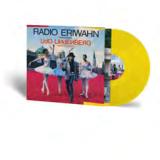
Ein fiktiver Radiosender als Titel, der mit den politischen Verhältnissen im Osten abrechnet und ein Cover,
das Lindenberg auf dem roten Platz mit drei Balletttänzerinnen zeigt. Schwer vorzustellen, ein Album
mit noch höherer zeitgeschichtlicher Relevanz zu veröffentlichen. Dieses Jahr feiert Lindenbergs „Radio
Eriwahn“ 40. Jubiläum. Schon im Titel des 19. Studioalbums des Panikrockers: eine Anspielung auf den
frei erfundenen Sender Eriwan. In einer Kategorie politischer, teils unmoralischer Witze wird mit diesem
„Sender“ des Sowjetregimes hinter vorgehaltener Hand die Politik und der Alltag in der DDR verarbeitet.
Ein treffender Titel für ein Album, welches vom humorvollen Umgang mit der Ost-West-Teilung lebt. Die
A-Seite des Albums besteht aus Studiotiteln, die B-Seite sind Live-Aufnahmen aus Moskau, wo er anlässlich
der Weltfestspiele der Jugend und Studenten 1985 mehrfach auftrat. Ein heimlicher Triumpf für Lindenberg,
dem nach seinem ersten Konzert in der DDR seine DDR-Tour abgesagt wurde. Das Cover zeigt Udo auf
dem roten Platz, der für das Cover rot eingefärbt wurde, nachdem Lindenberg bei seinem ersten Besuch
enttäuscht war, dass der Platz nicht tatsächlich rot ist. Am 17.10.2025 erscheint die Jubiläumsversion von
„Radio Eriwahn“ in gelb-transparentem Vinyl in einer streng limitierten, handnummerierten Auflage von
nur 1.500 Exemplaren. Um das 40. Jubiläum gebührend zu feiern, wird das Album zudem auch als CD
neu aufgelegt.
Eine halbe Dekade nach der Veröffentlichung ihres Albums "Anak Ko" (2019) hat sich Melina Duterte, alias Jay Som, sich selbst und ihren Erinnerungen geöffnet und Songs geschrieben, die den Klang ihrer Jugend wieder aufleben lassen, und dabei ihre Erfahrung als Musikerin, Produzentin und Performerin einfließen lassen. Kein vorheriges Jay-Som-Album klingt so wie "Belong", ein packendes 11-Song-Set über Selbstdefinition und Zugehörigkeit, das zwischen kraftvollen Power-Pop-Hits und verschwommenen Balladen, zwischen elektronischen Kuriositäten und aufheiternden Hymnen schwebt.
Melina wuchs mit Alternative-Rock außerhalb von San Francisco auf und lernte als Teenager die Hits des Pop-Punk/Emo der frühen 2000er auswendig. Passenderweise ist es Jim Adkins (Jimmy Eat World), einer dieser Kindheitshelden, der bei "Float" die backing vocals übernimmt. Während Hayley Williams sanfte Harmonien auf dem schwungvollen "Past Lives" beisteuert und Lexi Vega (Mini Trees) zu "Cards On The Table" beiträgt, sind diese drei Jay Soms allererste Gastsänger*innen und repräsentieren Dutertes Bestreben, mit Menschen ihres Vertrauens Neues auszuprobieren.
Seit ihrem letzten Album hat Melina beschlossen, sich selbst und ihrem lebenslangen Interesse am Recording etwas zu gönnen. Mit dem Kauf einer alten Neve-Konsole nahm sie sich vor, mehr zu werden als nur ihre eigene Tontechnikerin zu Hause. Fünf Jahre später kann sie nun auf eine umfangreiche Liste an Produktions- und Mixing-Credits zurückblicken, darunter auf Lucy Dacus’ neuestem Album "Forever Is A Feeling", Gastauftritte an der Seite von Troye Sivan, No Rome und beabadoobee, einen Beitrag zum Soundtrack von A24s "I Saw The TV Glow" und einen Grammy für ihre Arbeit an "The Record" von boygenius, der Band, der sie später als Tourmitglied beitrat.
- B7: 14 Your Love (Feat. Jonah Hitchens)
- A1: Keeping Me Strong
- A2: Need You Back
- A3: Where's Your Soul At?
- A4: Walls Start Rockin
- A5: Make It Shine (Feat. Greg Blackman)
- A6: Love Saves The Day
- A7: You Sexy Thing (Skit)
- B1: Can I Dance With You?
- B2: Heart & Soul
- B3: Plain To See
- B4: Idolising People Like Madlib
- B5: It's Not Happening (Skit)
- B6: Everybody
pink vinyl[28,53 €]
Here to dazzle you by the power of the disco ball, Lack of Afro is your friendly neighbourhood ‘Love Dealer’. Two years on from the funk & soul rebirth of ‘Square One’, powered by the ubiquitous ‘Loving Arms’ featuring Greg Blackman, Lack of Afro aka Adam Gibbons is now close to two decades deep in the game with soundtrack credits galore and online streams doing calculator-busting numbers. With extensive touring taking ‘Love Dealer’ up and down the country this Autumn, Gibbons’ ninth studio album is all for "the thrill of seeing people on a dancefloor, all collectively locked into a track that you've produced - there’s nothing like it!”.
‘Love Dealer’ is the authentic modern disco experience, packing a stacked sole’s worth of club beats full of stardusted sing-alongs, style-outs and French touch-style cool. Despite being “written during one of the longest winters in living memory”, ‘Love Dealer’, featuring some co-production from fellow South Coast dancefloor scholar Flevans (and influenced by producer du jour Barry Can’t Swim), exudes warmth and will make you sweat when its highs take effect.
Entering the scene with the radiance of ‘Make It Shine’ featuring Greg Blackman, washing over the airwaves of BBC 6 Music and Radio 2 and taking up a 10-week residency on the Jazz FM playlist, Gibbons and his crack line-up of discotheque players are your go-to team when you can’t wait for the weekend to begin, as subtle as they are straight down to business. ‘Love Dealer’ offers you nothing but the best in sparkling string symphonies, the hippest guitar licks, samples of those invited beyond the velvet rope and struts soaked in night fever.
Double A-side ‘Walls Start Rockin’ and ‘Heart & Soul’ guide the album’s glamour-and-groove, while ‘Love Saves The Day’ and ‘Plain to See’ dramatically take to the podium in a shimmer of pure peak 70s theatre. ‘Keeping Me Strong’ is the synergy of disco chic and the sound of a global advertising tie-in with Dyson, ahead of Gibbons taking a slightly Moroder/Cerrone-ish detour on ‘Idolising People Like Madlib’. “'Love Dealer' is aimed unequivocally at the dancefloor" says Adam. "As an artist, I wanted to push myself in a slightly new direction - more into the land of disco and a four to the floor sound. 'Love Dealer' is quintessentially an upbeat record, full of joy, optimism and hope for the future”. Seek your inner ‘Love Dealer’, kink your ‘fro and let your funk flag fly.
n B7. 14 Your Love (feat. Jonah Hitchens) BONUS TRACK
[n] B7. 14 Your Love (feat. Jonah Hitchens) [BONUS TRACK]
[BONUS TRACK]
L.A.B return with a brand new remix album L.A.B In Dub. The ten-track album features an array of dubbed-out L.A.B remixes by Italian producer & remixer Paolo Baldini DubFiles. Eight tracks are also accompanied by a Live Mixdown Video. With the tracks hand picked from L.A.B"s catalogue, L.A.B In Dub see"s Baldini bring a new light with his dubbed-out versions. Combining a range of L.A.B"s eclectic sounds including funk-inspired tune "Fashion Dread" and reggae-pop fan favourite "Why Oh Why", the album sees Baldini bring his signature dub-filtered sound, approaching each track with with his analogue techniques inspired by Jamaican pioneers King Tubby and Scientist. Following on from multiple number one singles & albums, alongside a growing list of platinum sales & awards across New Zealand & Australia, this is the band"s first ever full length remix album in collaboration with Loop and German-based Dub-focused label Echo Beach, further cementing L.A.B as one of NZ"s hardest working acts. This is a project which has been in the works for a number of years, and has continued to expand as L.A.B"s catalogue has grown.
JOHN CARPENTER
HALLOWEEN: ORIGINAL SOUNDTRACK - LP 2x12"
- A1: Intro
- A2: Aaron Meets Michael
- A3: Halloween Theme
- A4: Laurie's Theme
- A5: Aaron And Dana Enter Laurie's Compound
- A6: Laurie's Past
- A7: Prison Montage
- A8: Laurie Breaks Down
- A9: Karen's Flashback
- A10: Lumpy Explores Crash
- A11: Michael Kills
- A12: Hawkins Arrives At Crash Site
- A13: Dana's In The Shower
- B1: The Story Of Judith's Death
- B2: The Gas Station
- B3: Michael Kills Again
- B4: Gas Station Aftermath
- B5: The Shape Returns
- B6: The Boogeyman
- B7: The Shape Kills
- B8: Hawkins Called To Babysitter's House
- B9: Laurie Sees The Shape
- B10: Babysitter Aftermath
- C1: Sartain Meets Laurie
- C4: The Shape Hunts Allyson
- C5: Talking To Cops
- C6: Allyson Discovered
- C7: Gun Closet
- C8: Halloween Theme (I've Got Eyes)
- C9: Sartain's Gone Mad
- C10: Say Something
- C11: Through The Woods
- C12: Ray's Goodbye
- C13: The Shape Attacks Laurie
- C14: The Shape Is Monumental
- D1: Searching For The Shape
- D2: Mannequin Panic
- D3: Death Drum
- D4: The Shape And Laurie Fight
- D5: The Grind
- D6: Trap The Shape
- D7: The Shape Burns
- D8: Halloween Triumphant
- C2: Looking For Allyson
- C3: Wrought Iron Fence
ENDS: Orange & Red Splatter Vinyl[33,57 €]
KILLS: Orange & Green Splatter Vinyl[33,57 €]
COMPLETE EXPANDED COLLECTION[137,77 €]
Bone White & Orange Splatter Vinyl. John Carpenters Soundtracks für die jüngste Halloween-Trilogie, die er zusammen mit seinen langjährigen Mitarbeitern Cody Carpenter und Daniel Davies komponierte, markierten die Rückkehr des legendären Regisseurs und Komponisten zur Filmmusik nach fast zwei Jahrzehnten Pause. Halloween (2018), Halloween Kills (2021) und Halloween Ends (2022) wurden alle von David Gordon Green inszeniert, der Carpenter bereits früh in die Vorproduktion einbezog und ihn schließlich als ausführenden Produzenten und Soundtrack-Komponisten für die Trilogie engagierte. Halloween Expanded, ursprünglich 2019 veröffentlicht, erscheint nun in einer brandneuen Verpackung und ist damit ein neues Highlight für Fans, das sie ihrer Sammlung hinzufügen können. Halloween aus dem Jahr 2018 war ein Erfolg, der die kühnsten Träume aller Beteiligten übertraf. Der Film startete mit den höchsten Einspielzahlen in der Geschichte von Blumhouse und den höchsten in der Geschichte der Halloween-Reihe. Es war unvermeidlich, dass bald zwei Fortsetzungen, Halloween Kills und Halloween Ends, grünes Licht erhielten. Green unterschrieb für die Regie beider Filme, wollte aber nicht davon ausgehen, dass John, Cody und Daniel für die Filmmusik zurückkehren würden. ,Ich nehme nichts als selbstverständlich hin", sagt er. ,Man hofft also, dass sie eine gute Erfahrung gemacht haben. Ich weiß, dass wir Spaß an dem Projekt hatten, aber man weiß nie, wie die zeitlichen und finanziellen Interessen der Leute aussehen und all diese Dinge. Die Realitäten des Geschäfts, des Filmemachens, laufen nicht immer so reibungslos ab. Aber es gab keine Probleme. Wir sahen uns an und sagten: ,Wie können wir das hinbekommen? Lassen Sie es uns noch einmal versuchen.` Zweimal." Die erweiterte Version von Halloween enthält mehr als 28 Minuten zusätzliche Musik aus dem Film und bietet ein noch vollständigeres, immersives Hörerlebnis. Das zusätzliche Material der erweiterten Ausgabe umfasst insgesamt 24 neue Titel, die auf zwei weiteren Seiten der Deluxe-Doppel-LP verteilt sind. Diese neue erweiterte Ausgabe enthält brandneues Artwork von Chris Bilheimer und ein exklusives 24x36-Zoll-Poster, das von Creepy Duck entworfen wurde. Erweiterte Versionen der Soundtracks zu ,Halloween Kills" und ,Halloween Ends" sowie ein Box-Set mit allen drei erweiterten Editionen werden ebenfalls am selben Veröffentlichungstag bei Sacred Bones erhältlich sein.
- A1: Pink Skies Feat. Monkey Majik
- B1: Pink Skies Feat. Monkey Majik (Instrumental)
MONKEY MAJIK, who have released numerous albums with striking themes of "sea," "surf," and "travel," and have celebrated their 25th anniversary with
numerous collaborations and stunning live performances, are making their first appearance on "Sea of Love"! This work is a collaboration with DJ HASEBE,
a unique artist with a 35-year DJ career who led the hip-hop/R&B scene in the '90s and '00s while recently incorporating surf music and city pop into his music!
The entire track, "Pink Skies," was produced by DJ HASEBE and MONKEY MAJIK, with lyrics and music co-written by Maynard, Blaise, and DJ HASEBE.
The all-English lyrics, set against the backdrop of a pink sunrise, are a love song about a summer love that you hope never ends.
The cutting guitar, evocative of the start of the day, and the emotional track, reminiscent of the '90s and '00s, create a finishing touch that will liven up your
never-ending summer love.
This single is from the surf music compilation "SALT... meets ISLAND CAFE -Sea of Love 3-," produced by the magazine "SALT...," which proposes new values
for beach lifestyle and surf culture. The cover photo is an artistic surf photo by surf photographer Zack Balang, who also works for "SALT...."
The Pitch is a quartet made up of Boris Baltschun, Koen Nutters, Michael Thieke and Morten Joh. Founded in Berlin in 2009, they play a hypnotic form of structured improvisation full of acoustic exploration and electronic intervention. On Neutral Star, The Pitch are joined by Australian guitarist/composer extraordinaire Julia Reidy for a record of star gazing electro-acoustic jazz.
Reidy's playing and compositional technique between Takoma-style fingerpicking and Glenn Branca'esque microtonality, perfectly complements the loose improvisational framework The Pitch is providing. Endless ≠ Limitless, a recent piece by Reidy and Joh, is transformed from a washed-out/obscured tape delay composition into a colorful, meandering ensemble piece with a swarming character - blooming with intrigue for the patient ear. The B-side strikes a more gentle tone: the 24-minute Neutral Star begins with a siren-like overtone whose drone-like flowing slowly morphs into a deterritorial modality with jazzy undertone. Accompanied by constant eruptions of vibraphone, clarinet, electronics and double bass punctuation – while permanently questioned by Reidy's drippingly pearly steel guitar work. Slowly evolving into new territories through the expansive instrumentation and keen listening between the players.
The fact that Neutral Star was recorded in one take (by Rabih Beaini in his Morphine Raum studio/venue) in front of a live audience and without overdubs is hard to believe, even for the trained ear. The recording appears to be too multilayered for a single snapshot, with its compositional structures constantly shifting and moving against themselves, counterintuitively and anti-cyclically. Reidy´s playing has been described as "unstable harmonic territory, and the collaboration with The Pitch interprets this concept brilliantly - adding further non-places to the territory. And the listener, however, is never left alone in the process of tectonic shifts - at least as long as their listening is attentive and contemplative at once.
- A1: Cadux Plectere I
- A2: Lacinia Off Axis
- A3: Maris Stella Plectere Ii
- A4: Ere
- B1: Arborea Plectere Iii
- B2: Eve
- B3: Sidereus Plectere Iv
- B4: Lacinia In Axis
- C1: Veris Plectere V
- C2: Nova Pt I
- C3: Eve For String Orchestra
- C4: Nova Pt Ii
- D1: Matrix Plectere Vi
- D2: Maris Stella Plectere Vii
- D3: Lacinia Off Axis
- D4: Cycle Plectere Viii
Returning to Die Schachtel with his fourth full-length with the label, the Genoa born, Bologna based, guitarist and electroacoustic composer, Stefano Pilia, delivers “Lacinia”, a new, immersive cycle of compositions, delving deeper into the realm of metaphysical, spiritual, and divine meaning, weaving astounding arrangements of sonority from a palette of synths, strings, brass, organ, various electroacoustic instruments, and percussion. Resting at a refined intersection of the acoustic and electroacoustic, drone, and chamber music - overwhelmingly beautiful, delicate, and bold, - “Lacinia” stands as a high-water mark in Pilia’s already remarkable and forward-looking career.
Since its founding in Milan during the early years of the new millennium, Die Schachtel has occupied a singular place in the landscape of experimental music, issuing a carefully curated body of reissues and archival releases by historically significant figures and projects like Christina Kubisch, Luciano Cilio, Marino Zuccheri, Prima Materia, Claudio Rocchi, Lino Capra Vaccina, Gruppo di Improvvisazione Nuova Consonanza, Roland Kayn, and numerous others, balanced against bristling contemporary counterparts by the likes of Jim O'Rourke, Giovanni Di Domenico, Nicola Ratti, Luigi ArchettI, Valerio Tricoli, etc. Running like a spine through the label’s output is a deep dedication to the work of the Italian guitarist and electroacoustic composer Stefano Pilia. Now Die Schachtel returns with “Lacinia”, Pilia’s forth full-length with the label and their first release of 2024. Building on the ground of deeply personal engagement with metaphysical, spiritual, and divine meaning, explored within his previous LP with Die Schachtel, 2022’s “Spiralis Aurea”, “Lacinia” encounters the composer working in close calibration with various ensembles, including the Bologna based Ensemble Concordanze and Comunale di Bologna String Orchestra, weaving synths, strings, brass, organ, various electroacoustic instruments, and percussion into an astounding reconfiguration of immersive, contemporary minimalism that stands among Pilia’s most noteworthy releases to date. Issued by Die Schachtel in two special double vinyl editions and a CD edition, “Lacinia” features artwork by Bruno Stucchi/Dinamomilano, and is an absolute marvel that draws you in and doesn’t let go.
First emerging during the early 2000s, over the past two decades – via solo releases and numerous collations with artists like Oren Ambarchi, Valerio Tricoli, Alessandra Novaga, Z'EV, Andrea Belfi, David Grubbs, and numerous others - the Genoa born, Bologna based, guitarist and electroacoustic composer, Stefano Pilia has presented a singular voice within Italian experimental music, harnessing visceral energy and hands-on immediacy within delicately woven tapestries of sonority, each investigating the sculptural properties of sound and illuminating its relationship to space, memory, and the suspension of time. “Lacinia”, Pilia’s forth solo venture with Die Schachtel, encounters the composer reentering his longstanding practice of collaboration with various ensemble forms, including the Bologna based Ensemble Concordanze, for the albums central piece, “Lacinia Off Axis”, spinning stunning string confirmations by Pietro David Carami and Elena Maury on violin, Alessandro Savio on viola, and Mattia Cipolli on cello.
A new, important cycle of compositions by Pilia, “Lacinia” (meaning "lace" in Latin) builds upon the exploration of the metaphysical, spiritual, and divine dimensions through numbers, geometry, and the creation of tonal forms explored by 2022’s “Spiralis Aurea”, mirroring archetypal, immutable forms at the juncture of the abstract realm of mathematics and architectural structures in the physical world, expands the poetics and compositional ideas featured in its predecessor. Regraded by Pilia as both a series of individual compositions and a single work, “Lacinia” was conceived to “define a circular path (a sort of "rhizomatic lace") where the beginning and end touch, suggesting the concept of time not only as linear but also cyclical and ritualistic—an eternal return, a process of transformation where matter changes, its state changes, but without altering the invisible internal principle of mutation”, embarking upon a a series of “steps, degrees, and energetic quanta in a progression of archetypal whole numbers and transcendent creation.”
The resulting 16 tracks unfold as a series of complex sonic meditations. While deeply resonant with the minimalism of composers like Arvo Pärt, LaMonte Young, Pauline Oliveros, and Eliane Radigue, Pilia digs deep and moves far beyond the predictable tonal relationships and structures of that idiom, echoing the ancient liturgical and devotional music of composers like Gesualdo da Venosa, Monteverdi, and John Dowland, at a refined intersection of the acoustic and electroacoustic, drone, and chamber music.
Fascinatingly structured as a whole to include a number of motif returns, across which we encounter works like “Lacinia Off Axis” appearing in slightly different rendering, states, or evolutions three times, and compositions like “Eve” appearing twice in subtly different forms and arrangements - first for four oscillators, guitar and voice and then for string orchestra - as well “Maris Stella”, which similarly makes two appearances, first for horn trio, organ and percussion, and then for string orchestra, with “Lacinia” Pilia delves further into the world of chamber music than ever before, creating a deeply inward, mediative body of work the totality of which, guided by its rich string arrangements of arching, sorrowful tone, feels almost like a mass for some unproclaimed loss; simultaneously locked in the nuances of a moment, while managing to suspend time.
Perhaps most remarkable is Pilia's ability to create a remarkable sense of sonic cohesion while using such a varied number of ensembles and instrumentation. From the sprawling string arrangements delivered by Comunale di Bologna String Orchestra, under the direction of Paolo Mancini, and Ensemble Concordanze, and a flute trio (Cadux / Plectere) brilliantly played by Manuel Zurria, to pieces for sax, organ and percussion, violin duo and percussion, organ and percussion, Pilia manages to create a sense of singular, encompassing world that flows forward like a shifting stream.
Overwhelmingly beautiful, delicate, and bold, “Lacinia” is unquestionably a high-water mark in Stefano Pilia’s already remarkable, forward-looking career. Nothing short of a marvel of contemporary Minimalism that, through its shifting arrangements of harmonics, tonality, and texture draws flickering images of ancient forms of music into the present day, “Lacinia” is Issued by Die Schachtel in two special editions on double vinyl and a CD edition, featuring artwork by Bruno Stucchi/Dinamomilano. This is an immersive all-consuming listen that can’t be missed.
- A1: Etude No. 1
- A2: Etude No. 2
- A3: Etude No. 3
- B1: Etude No. 4
- B2: Etude No. 5
- B3: Etude No. 6
- C1: Etude No. 7
- C2: Etude No. 8
- D1: Etude No. 9
- D2: Etude No. 10
- D3: Etude No. 11
- E1: Etude No. 12
- E2: Etude No. 13
- E3: Etude No. 14
- F1: Etude No. 15
- F2: Etude No. 16
- G1: Etude No. 17
- G2: Etude No. 18
- H1: Etude No. 19
- H2: Etude No. 20
The Complete Piano Etudes of Philip Glass available for the first time on vinyl, housed in a 4LP Box set (also available as a 2CD format).
After more than thirty years of working with and performing the great repertoire, the music of Philip Glass has, in a way, almost revolutionized my life as a musician,” confides Vanessa Wagner.
An emblematic artist on the French music scene, winner of a Victoire de la musique award and director of the Chambord and Giverny festivals, Vanessa Wagner is as inspired in her interpretation of Mozart, Debussy, Tchaikovsky and Dusapin as she is alongside Murcof and Rone.
With her innovative and daring approach, she has established herself as a major influence on the classical music landscape, crossing boundaries and blazing inspiring trails.
A tireless pioneer of new repertoires, she has been exploring the repertoire of minimalist composers for several years. For InFiné, she has dedicated 4 albums to the major figures of this movement, John Adams, Meredith Monk, Brian Eno, Ryūichi Sakamoto, as well as to the new generation Caroline Shaw, Bryce Dessner and Nico Muhly.
After giving numerous concerts based on these works, she felt the need to record in their entirety this essential monument in the history of music, which bridges the gap between the 20th and 21st centuries: Philip Glass's 20 Etudes for piano
by Philip Glass.
His approach helps to place these two books in the great repertoire, alongside the great cycles of studies by Ligeti, Debussy, Dusapin, and before them, Chopin and Liszt.
Philip Glass was born in 1937 and grew up in Baltimore. He studied at the University of Chicago, the Juilliard School and in Aspen with Darius Milhaud. Dissatisfied with much of what was then considered modern music, he moved to Europe, where he studied with the legendary pedagogue Nadia Boulanger (who also taught Aaron Copland, Virgil Thomson and Quincy Jones) and worked closely with sitar virtuoso and composer Ravi Shankar.
The thread linking Philip Glass to Vanessa Wagner may be as simple as a detail: a moment, a pedagogy, a way of looking at the piano. In Words Without Music, Glass recalls his apprenticeship with Nadia Boulanger in Paris - a lesson in rigorous received just as the Nouvelle Vague was about to shatter the conventions of cinema the conventions of cinema, just as the composers of the minimalist movement had done with with the language of music. Nurtured by Ravel and Debussy, the great French pedagogue disciplined yet inquisitive minds, capable of embracing modernity without denying modernity without denying their heritage.
- Great Resignation
- Es Kann Nicht Immer So Weitergehen
- Unser Jahrzehnt
- Kruste
- Die Sache
- Self Checkout
- Praxis Ohne Theorie
- Chillig Chillig
- Alles Oder Nichts
- Starke Schmerzen
- Stillstand
- Von Gar Nichts Haben Wir Uns Befreit
YELLOW VINYL[20,38 €]
Schwarzes Recycling-Vinyl. Kommt mit Texblatt und Downloadcode. Great Resignation! So wird das massenhafte Kündigen von Bullshitjobs während der Corona-Pandemie bezeichnet. Die Verweigerung die eigene Arbeitskraft zu den widrigsten Bedingungen zu verkaufen, wenn es nicht mal zum Leben reicht. Auch wenn man sowieso bald wieder ran muss - nur für einen Moment spüren, die Macht zu haben alles lahm zu legen, hörten einfach alle auf: Wertschöpfung, Broligarchie, Kaufland, Deutschland. pogendroblem haben sich also nochmal zusammengerauft und ein neues Album gemacht. Drei Jahre für ein neues Album? In der Tat: Great Resignation. Oder zu wenig die Brotjobs gekündigt? Und wenn sie die Arbeit so hassen, warum haben sich pogendroblem dann noch weiter in die Musikindustrie reinbegeben? Widersprüche schärfen und aushalten. Ambiguitätstoleranz. Nachdem AWINHSMK Ende 2022 bei Audiolith erschien, ging es für die Band wild hin- und her zwischen Pop-Festivals, Punkbühnen, Preisverleihungen und Solishows für selbstverwaltete Kulturzentren oder gegen die extreme Rechte. Nun der Nachfolger Great Resignation bei Kidnap. Das Schulterklopfen der Kulturförderung darf natürlich auch nicht fehlen. Zwölf Tracks auf 1:22 bis 2:30. Ästhetisch nochmal diversifiziert und dennoch aus einem Guss, entstanden unter Regie von Gregor Hennig im Studio Nord Bremen, gemischt von Daniel Roesberg und gemastert von Christian Bethge. Musikalisch klarer und pointierter als zuvor. Obviously punk, poppige Niedlichkeit, Garage Vibes, bisschen Hamburger Schule, bisschen Kraut, etwas düsterere Gitarren und natürlich Brotschneidemaschine durch FX geballert. Wahrscheinlich Post-Punk. Doch Achtung, das ist keine Neue Neue Deutsche Welle! Große Resignation! Die große Traurigkeit zieht sich durch die Platte hindurch, auch in den auf den ersten Blick lustigen Liedern. Denn hier sind sich pogendroblem treu geblieben, es geht um absurde Alltagsgeschichten, um Subjektivierung, die nicht mehr zu funktionieren scheint. Um Fragmentierung von Gesellschaft, Arbeitsbeziehungen, der Linken. Wie durch die Zeit der Monster (Antonio Gramsci) navigieren, fragen pogendroblem. Wie weiter machen gegen Faschisierung und Klimakrise? Lösungsansätze werden diskutiert und ausprobiert. Es ist klar: Es kann nicht immer so weitergehen.