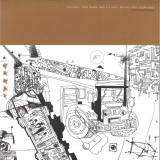
The Equations Collective is an experimental sound project formed by a multi-disciplinary group of artists, active in the fields of music, photography, sound design & software development.
In 2018, the collective set up a temporary outdoor recording studio, 1130 meters above sea level, on the slopes of Mount Helicon in Greece, with the ambition of recording their work in a natural environment. A 'mobile and modular' construction, fully powered by solar panels, the design of the studio showcases the possibilities of a progressive, environmentally sustainable future through renewable energy.
Embodying ecological incentives, and representing an immersive engagement with the landscape, the 'Helicon Sessions' document this extraordinary residency, capturing a profound dialogue with the eponymous mountain region.
Situated in Boeotia, Central Greece, Mount Helicon has a prominent archaic significance. A historic location where stories of sacred springs and the epic origins of the Muses and Narcissus converge. Steeped in the heritage of ancient narratives, Helicon is seen as a principal symbol of poetic inspiration.
On the 'Helicon Sessions' the collective draw upon the inspiring topography and fabled mythological resonances of the area, unfurling an expansive, hypnotic suite of abstract electronics. Liberated by an open-ended, improvisational dynamic, the collective move through a mysterious, elemental cycle that mirrors the imposing scale and dramatic atmospheres of the setting.
Across an entrancing, fluid sequence of five designated 'cuts', the collective traverse the borderlands of drone, techno, dub, and acid, amplifying the acoustic traces of Helicon by integrating field recordings collected at the site into this arresting body of work. With these recordings, the collective delineate an odyssey of subverted 303s, sputtering drum machines and formidable, oscillating low end that drifts and coalesces like an amorphous mirage; a spellbinding sound world of clarity and shadow.
The 'Helicon Sessions' signify a symbiosis (between the terrestrial and the engineered, between wildlife and futurism, between the intrinsic and the synthetic, between the innate and the manmade) And with their conception of a portable, eco-friendly studio The Equations Collective focalize valuable ideas centred on ingenuity and evolution. The outcome of this project illustrates a unique collaborative exchange which acknowledges the deep nuances of environment and the enduring echoes of history.
The Equations Collective is a collaboration between Artefakt, Aroma Pitch, Aphelion and Sphera De Noumenon across Berlin, Amsterdam, Cologne and Hamburg. Together they have established an all night long live event in Berlin, starting at Sameheads and Acud Macht Neu, which eventually lead to their residency at OHM (Tresor).
For this format they have collaborated with the following artists: Alex The Fairy, Anna Z, D-IX, Eliad Wagner, Jón Friđgeir Sigurđsson, Orson Wells, Phillip Jondo, Philipp Matalla, PRSMC, Rabih Beaini, Sabrina Gricourt, Sébastien Robert, and Vida Vojić.
The respective members of The Equations Collective have released a range of output on the likes of Field Records, Delsin, Semantica Records, De Stijl, & Soul People Music.
Since 2018 their visual identity has been shaped by Elias Hanzer.
The 'Helicon Sessions' is their debut release.
Search:nu collective
Annie Booth is an Edinburgh-based artist with a gift for mood-painting
and storytelling - A seasoned modern folk singer, performer and
songwriter - with a fair for the nostalgic and the melancholy - she wields
a unique voice in Scotland, bridging genre and infuence with ease, her
restless live performance and songs never cease to capture the listener
with their haunting melodies and infectious arrangements
Recorded over several months at Chem19 Studios and Green Door Booth's debut
album An Unforgiving Light (Last Night From Glasgow/ Scottish Fiction) was
released in 2017 to critical acclaim. It was lauded as Roddy Hart's Record of Note
(BBC Radio Scotland), featured in Vic Galloway's Best Albums of 2017 (BBC
Radio Scotland) and was praised by Jim Gellatly (Amazing Radio). 2018 saw her
perform at the BBC's Quay Sessions and festivals such as XpoNorth, Celtic
Connections and the Kelburn Garden Party.
Adopting a more introspective and atmospheric approach, Booth's 2019 EP
Spectral (Last Night From Glasgow/ Scottish Fiction) displays her poignant
lyricism and haunting vocals at their most raw. The EP was championed by BBC
Radio Scotland, The Skinny and The List, with Booth appearing for a live session
on the BBC's Janice Forsyth Show. Booth was subsequently nominated for a
Scottish Alternative Music Award in the Best Acoustic category late 2019.
The singer-songwriter is also known for her enthusiasm for collaboration. From
2015 to 2020 she performed backing vocals and guitar with prolifc dark- folk
collective Mt. Doubt, touring across Scotland, England and Wales and recording
on numerous records. 2020 saw the release of Clean Living (Last Night From
Glasgow) under the moniker Slow Weather: a vintage-infused EP of alt-rock cowritten with producer extraordinaire Chris McCrory. The release garnered praise
and spins from Steve Lamacq (BBC Radio 6), BBC Radio Scotland and Amazing
Radio as well as features and airplay in the US. Over the years Booth has also
collaborated on tracks with artists such indietronica outft Out of the Swim and
indie pop quintet Wojtek the Bear.
Annie Booth is an Edinburgh-based artist with a gift for mood-painting
and storytelling - A seasoned modern folk singer, performer and
songwriter - with a fair for the nostalgic and the melancholy - she wields
a unique voice in Scotland, bridging genre and infuence with ease, her
restless live performance and songs never cease to capture the listener
with their haunting melodies and infectious arrangements
Recorded over several months at Chem19 Studios and Green Door Booth's debut
album An Unforgiving Light (Last Night From Glasgow/ Scottish Fiction) was
released in 2017 to critical acclaim. It was lauded as Roddy Hart's Record of Note
(BBC Radio Scotland), featured in Vic Galloway's Best Albums of 2017 (BBC
Radio Scotland) and was praised by Jim Gellatly (Amazing Radio). 2018 saw her
perform at the BBC's Quay Sessions and festivals such as XpoNorth, Celtic
Connections and the Kelburn Garden Party.
Adopting a more introspective and atmospheric approach, Booth's 2019 EP
Spectral (Last Night From Glasgow/ Scottish Fiction) displays her poignant
lyricism and haunting vocals at their most raw. The EP was championed by BBC
Radio Scotland, The Skinny and The List, with Booth appearing for a live session
on the BBC's Janice Forsyth Show. Booth was subsequently nominated for a
Scottish Alternative Music Award in the Best Acoustic category late 2019.
The singer-songwriter is also known for her enthusiasm for collaboration. From
2015 to 2020 she performed backing vocals and guitar with prolifc dark- folk
collective Mt. Doubt, touring across Scotland, England and Wales and recording
on numerous records. 2020 saw the release of Clean Living (Last Night From
Glasgow) under the moniker Slow Weather: a vintage-infused EP of alt-rock cowritten with producer extraordinaire Chris McCrory. The release garnered praise
and spins from Steve Lamacq (BBC Radio 6), BBC Radio Scotland and Amazing
Radio as well as features and airplay in the US. Over the years Booth has also
collaborated on tracks with artists such indietronica outft Out of the Swim and
indie pop quintet Wojtek the Bear.
"The core of confusion and upheaval that drove some of the band's most fiery earlier work, however, is replaced by a more stabilized undercurrent, a mentality that's reflected in songs not afraid to try new things and honestly explore uncomfortable feelings. When combined with exciting production and songwriting choices, that mindset helps make Feels So Good // Feels So Bad one of the Shivas' best albums.” - AllMusic "Portland, Oregon-hailing psych-surf band The Shivas accomplish another time-traveling, reverb-ridden sound that refuses to get boring. Jared Molyneux’s guitar work knows when to be bright or bashful at the right times, breaking into guitar solos that possess a late-’60s groove… The Shivas seem to blissfully flourish” - Paste "a consistent treat for the ears” - The Vinyl District "Though the psych-tinged guitar riff that drives 'Feels So Bad' was written while The Shivas were still on the road, its lyrics didn’t fall into place until the band was well into lockdown, unsure of when they’d be able to return to their most imperative true love: Live shows... Accordingly, 'Feels So Bad' permeates with a sense of urgent desperation, building off a chugging prog-rock instrumental.” - Consequence (on “Feels So Bad”) "They hooked the audience with their throwback rock sounds. The guitar strums and rhythmic drum beats were layered atop smooth and hallucinogenic vocals. The eyes can tell the take at times and there was a sparkle there that said that the band members just love doing live performances." - California Rocker "This single layers on the fuzz but keeps it dreamy, with an especially sticky guitar riff sure to lodge itself in your brain with minimal effort." - Portland Monthly (on “If I Could Choose”) “'My Baby Don’t' translates the genuine vibrant joy
of the live experience into the studio, bringing the band’s ‘60s garage rock roots, sharp pop vocal harmonies, and fervent performances along for the ride." - Under The Radar "Perfectly straddling the line between a solid-head bopping track and an introspective deep cut, The Shivas’ 'Undone' is a rock & roll gem. The track sounds straight out of the late 60s and fits seamlessly in the Portland band’s electrifying catalog." - The Luna Collective "The first time I clicked play on this track, I knew it was a yes for me." - Ear To The Ground Music (on “If I Could Choose”) "The harmonies would make the “Happy Together” Turtles blush, but the unsettling guitar doesn’t shy away from the woollier implications of the ’60s." - Willamette Week (on “If I Could Choose”) "'Undone' is just the perfect song for the good days and the bad ones." - GlamGlare "another hit" - Austin Town Hall (on “Undone”) "one of the best forthcoming albums of the year" - Austin Town Hall RADIO: #3 Most Added @ NACC - 50 official adds BIO Every working musician has had their life turned upside down by Covid-19. For The Shivas, who had recently released a new LP and normally keep a rigorous touring schedule, it was a particularly screeching halt. “We were about to go to SXSW, the following weekend was Treefort in Boise, and then we were going to open for our friends’ band on tour in the US before going to Europe,” Jared Molyneux remembers. Then everything just stopped. They were faced with a dilemma. “It forced us to adapt or just quit,” Molyneux says. “The reality is that shows are our job.” In truth, live shows aren’t just The Shivas job: they are the band’s greatest love. Shivas shows are bombastic, explosive and thoroughly communal live rock and roll experiences where barriers between the performers and their audience seem to dissolve into the sweat and sound. The stage—or the basement, or the living room—that’s The Shivas’ true element. It’s their raison d’etre. It’s their religion. The band’s live urgency may have been born in 2006, when the band’s young members—who began booking West Coast tours while still in high school—waited without fanfare on sidewalks or in parking lots, before being rushed onstage for their sets at 21-and-up clubs. Maybe it developed a little later, as The Shivas blasted their way through Portland’s storied and unsanctioned mid-aughts house show scene. Whatever the origin of their famously kinetic live experience, it’s the show that keeps them coming back after over 1,000 performances spread over 25 countries in 15 years. In those 15 years, The Shivas have grown tight-knit as a group. Guitarist/singer Jared Molyneux, bassist Eric Shanafelt and drummer/singer Kristin Leonard have all been with the band since its earliest days; guitarist Jeff City, another high school friend, joined in 2017. Together they’ve learned to thread a seemingly impossible needle: They’ve honed and tightened their performances without sacrificing the element of surprise that makes each show special. And despite touring and recording for most of their lives, they speak about their project with humility, in the DIY vernacular of their Pacific Northwest upbringing. They talk up their own favorite bands, play all-ages shows as much as possible, and bring a sort of blue-collar humanism to the live performances they relish so much. “We just want to make people feel good,” Molyneux says. “We want them to forget they have to work tomorrow.” Kristin Leonard elaborates, “The live show is all about that feeling of catharsis—in ourselves and in everyone who comes out. We’re creating this safe space where we can all let go. Where we can exhale. And it feels really good when we are able to facilitate that.” So when Covid hit, the band knew it was time for transformation. After a settling realization that live music would be grounded for the foreseeable future, The Shivas booked significant studio time with Cameron Spies, who also produced the 2019 Dark Thoughts LP. They also transformed their lives: three of the band’s four members found work with a local nonprofit serving unhoused Portland residents. They became engaged in protests and fundraisers for social justice. They spent a whole summer actually living in Portland, settling into the city they had always called home, but that sometimes felt like a temporary stop between tours. “We got into a more community-minded headspace,” Leonard says. “And that did give us some purpose. It felt cool to see everybody come together to stick up for what they believe in. It feels like an incredibly formative last twelve months.” The album that emerged from this new moment finds The Shivas reborn as a band that seems seasoned and perfectly at home with itself. There is a calm, even a hopefulness, to Feels So Good // Feels So Bad that sounds new. The Shivas didn’t write or record the album with a particular theme in mind, but one seems to have emerged: where Dark Thoughts was about confronting your demons with fearless self-examination, much of Feels So Good // Feels So Bad is about what happens once you find that peace: how being honest with yourself changes your relationships and your priorities. “I do think it’s about acceptance,” Leonard says. “There’s a weird relaxation that comes with being at peace with things you can’t control or have regrets about.” Maybe that’s why the squealing, riff-laden break-up song opener, “Feels So Bad,” is such a shock to the system. But it’s more of an exorcism than a melodrama: more a song about not being able to do the thing you love (in
this case, playing live shows) than splitting with a partner. “It’s like part of you goes to sleep,” Leonard says. As bandmates who are also in a long-term relationship, Molyneux and Leonard know that their songs might be seen as glimpses into their personal lives, but their songwriting is rarely autobiography. Leonard compares their process to something more akin to screenwriting. “There’s bound to be some autobiographical material in there,” she says. “But the common denominator is the exploration of universal feelings: ones that everyone experiences or can relate to.” The goal is to use the music to drill down into something genuine and sincere, beyond genre or stylistic affectation. That’s where The Shivas have arrived. Whatever growth led the band to Feels So Good // Feels So Bad, plenty of their fascinations remain. They’re still turning love songs into psychedelic, transcendent epics. “Tell Me That You Love Me” subverts doo-wop extravagance and dabbles in Flamenco rhythms. “Rock Me Baby” is a bubblegum anthem soaked in so much reverb that we might just be hearing it from the stadium nosebleeds. “Sometimes” is almost impossibly huge, like a witchy outtake from the Brill Building era. Those songs feel like logical expansions from a band that has always excelled at a timeless sort of rock and roll that tinkers with and explodes elements from every era. But on the towering and mournful “You Wanna Be My Man,” a slow-burning six-minute shoegaze prayer for a higher sort of love, there is a level of emotional nuance that feels like something altogether revolutionary. It’s there again in the stripped-down vulnerability of the album-closing elegy “Please Don’t Go.” Yes, Feels So Good // Feels So Bad is an album about acceptance. Sometimes that acceptance feels enlightened and sometimes it feels like the end result of a lot of kicking and screaming. The Shivas have adapted in both of those ways. With new tours scheduled and a new album on the way, they’re still hoping--like all of us--for a new era of vibrant, cathartic live music. The lessons they learned from having their normal upended, though, have only helped them grow
Sony CMG label release. Pitch perfect whether hitting magnificent highs or sliding into sultry depths, Judi’s voice recalls some of music’s great divas. The majority of this album was recorded in London or Milan between 2019 and 2021, with all fifteen songs written or co written by Judi. Other notable collaborators include Reuben James (John Legend, Nile Rodgers),Tim Baxter (Jasmine Thompson, Muse) and Tom Excell, leader of the UK’s acclaimed afro jazz collective Nubiyan Twist. Specialist promo/marketing activity across all media outlets.
“One of the standout releases of the year” - The Times
“Lady Blackbird finds her calling with an extraordinary collection of songs and performances that burn deep into you” - The Guardian, 5*
The debut album Black Acid Soul from Lady Blackbird is one of the standouts for 2021. It's instant and within a minute you are hooked. Think Nina Simone, Hot Buttered Soul-era Isaac Hayes, Billie Holiday and Chaka Khan with critics drawing comparisons to Adele, Amy and Celeste, Lady Blackbird’s distinct and beguiling talent is not one to be missed. Gilles Peterson called her "the Grace Jones of Jazz".
With a voice that has stopped critics in their tracks, Lady Blackbird is a revelatory new talent with music that transcends the jazz scene through which the LA-based artist is rooted. Minimal yet rich, classic yet timely, the album connects backwards to Miles Davis (his pianist, Deron Johnson, plays Steinway Baby Grand, Mellotron and Casio Synth throughout) and forwards to Pete Tong (he made the Bruise mix of ‘Collage’ his Number Two Essential Selection tune of 2020).
It's 11 tracks have a sound, feeling and attitude that speak of Lady Blackbird's deep experiences in music, stretching all the way back to infancy. Standout tracks include the sad, elegantly simple tune, ‘Nobody’s Sweetheart’, plus two killer cuts written by Lady Blackbird and Seefried, ‘Fix It’ and ‘Five Feet Tall’. The former is an elegant piano ballad that sounds like a Great American Songbook standard sung by a woman on the side of the angels. Her ability to nail the song in the studio in minimal takes was clearly something to behold. The album also includes Wanted Dead or Alive, a rare groove classic recorded by funk/gospel collective Voices of East Harlem in 1973 and co-produced by Curtis Mayfield, an inspired reinvention on the aching 'It’ll Never Happen Again', written by Tim Hardin and a stunning take on Nina Simone's Blackbird.
In the third of the series, we move to 1973 Detroit, we have been so excited bringing this through to pressing and it has been a long but exciting and rewarding road and we hope you enjoy listening to this this 45 taken directly from the Universal master tapes and brought to you 48 years after its initial release on promo only format. Now available under licence and blessings from Universal Music Group on the Black Top series from us.
Is it good – oh yes – but don’t take our word for it, crank the volume up and hit play.
The A side – Young Train is a fabulous funkedged dancer with a message for us all even today, driven by the constant wah wah guitar and bongos. flip it over for a feelgood crossover dancer that has already been getting radio airtime on some of the UKs best soul stations.
Young Train by the Originals. This incredibly rare 45 is a poignant reminder that 48 years later the struggle continues today for equality and harmony for all.
The title “Young Train” is a brilliant collaboration of using Colemans surname and a hark back to the freedom songs enshrined in the blues and soul history of Black America, think Freedom Riders, Southbound train, Midnight train to Georgia to name but a tiny number. It captured the imagination of Detroit leading to the inauguration of the First Black Mayor of Detroit in 1974. Coleman Young captured the hearts and minds of the people of Detroit, some of his actions and associates led to questions around his fitness for office, but the moment in time lives forever in this exclusively rare 45 now brought to you with the blessings of Universal Music Group via MD Records.
On a final note, it is in many ways incredibly sad that this anthemic song still holds a valid call to action in its message in 2021. So, turn the volume up and get on board the “Young Train” for democracy and equality.
Big thanks go out to Karl “Chalky” White for material used in the sleeve.
All aboard for the third release in the Blacktop series from the MD Collective.
Norwegian duo Lost Girls, artist and writer Jenny Hval and multi-instrumentalist Håvard Volden, release their first album after collaborating for more than ten years. Volden has been playing regularly in Hval's live band for more than a decade, and their duo project goes back to an acoustic collaborative album from 2012, using the moniker Nude on Sand. Instead of resurrecting the previous band, Hval and Volden opted for a fresh start for their 2018 EP Feeling, taking nomenclatural inspiration from the 2006 graphic novel by writer Alan Moore and comics artist Melinda Gebbie.
For their first LP, Hval and Volden booked an actual studio (Øra studios, Trondheim, Norway), which they had never done before. Recording sessions took place in March 2020, even if they felt like the material wasn’t really ready for recording. This left a lot to improvisation, and so Menneskekollektivet was created in-between set structures and the energy of collective exploration.
Perhaps this is what makes Menneskekollektivet unique: The quality of trying something, to see if the structures fit. In a way this is a more physical version of what Hval has been exploring lyrically over the past decade in her solo work. The title is Norwegian and translates to human collective, which adds to the feeling of a recording made as part of a strange, improvised performance project.
The music flickers; between club beats and improvised guitar textures; between spoken word and melodic vocal textures; between abstract and harmonic synth lines. Throughout the piece, Volden’s guitar and Hval’s voice come across as equals, wandering, wondering, meandering. Sharing the space.
The debut album from hotly tipped kiwi band Jamie and The Numbers, finally sees a release via Pete Brady’s Superfly Funk and Soul Records. After years of limited release 7”s being fought over worldwide by collectors and fans, this superb LP is the culmination of years of work for highly gifted Tongan-Kiwi Jamie Mavusa. Based in Wellington she can occasionally be seen singing soul tunes for Tapestry Music Promotions at many of their Music Reviews and also in her gospel choir at Church. It was at one of the Tapestry Music shows in Wellington that Jamie met Simon from Deltaphonic Records/The Numbers and after watching Jamie perform an amazing version of "Wade In The Water”. It was suggested they do some recording together with the view of doing some cool Soul classics and a bunch of originals too, the rest is now history.
The Numbers are an incredibly tight Wellington based band. Prolific writers of their own original material they are a 4 piece that consist of three brothers from Wainuiamata and a newly adopted Kiwi originally from Birmingham England. If you get a chance check these guys out they are brimming with cool retro tunes and some barnstorming original songs played with verve and passion and their shows are always fun, 2019 they supported "From The Jam" on their visit to New Zealand and after teaming up with Jamie have played Pasifika Festivals and open-air concerts to thousands of people. The Numbers collectively have played, sessioned, recorded for other artists on such labels as Gut Records, D-Star, EG Records, Imaginary Records and have in excess of 40+ published songs with Universal, Complete Music, KWS Records NYC and Cherry Red Records.
Alto saxophonist Immanuel Wilkins follows-up his acclaimed debut Omega (NY Times Best Jazz Album of 2020) with another striking album featuring his remarkable quartet with Micah Thomas on piano, Daryl Johns on bass, and Kweku Sumbry on drums plus special guest appearances by flutist Elena Pinderhughes and the Farafina Kan Percussion Ensemble The album consists of an hour-long suite comprised of seven movements that strive to bring the quartet closer to complete vesselhood by the end, where the music would be entirely improvised, channeled collectively. The title is derived from a question steeped in Biblical symbolism: If the number six represents the extent of human possibility, Wilkins wondered how it would sound to invoke divine intervention and allow that seventh element to possess his quartet. “It’s the idea of being a conduit for the music as a higher power that actually influences what we’re playing,” he says.
A musical journey with Emile Parisien is an adventure, something way out of the
ordinary. The soprano saxophonist’s sound is instantly recognisable - as is the way
with the greats - and you know that you are in the best possible company to set off
for a destination shrouded in uncertainty.
For the past twenty years, the one-time child prodigy of Marciac has found ways to
astonish, to shake up and to enchant listeners with colourful and productive
experiments. His driving force is a passion which seems physically to take hold of
him as he plays.
Anyone who has seen his development as a performer knows what he’s about; there
is an element of the dance but also the tension of a coiled spring. And among the
musicians who seek him out are not only the very best of his own generation but also
the jazz masters, such is his reputation both as a leader and as an inspirational
partner.
As a musician he is one of a kind, with a power to be evocative and to bring
convincing shape to the unpredictable. His musical language can express sudden
frenzy, keeping the listener completely on tenterhooks, but there are also outbursts of
tenderness and a palpable emotional honesty.
‘Louise’ takes its title from Louise Bourgeois and more specifically her sculpture of a
spider, ‘Maman’. Her monumental work has motherhood as its theme, also conveyed
through the metaphor of weaving, an underlying thread that runs through Emile
Parisien’s creation.
He has assembled a group of musicians who bridge the two sides of the Atlantic. The
saxophonist has set out to combine the essence of jazz with his own purposes; so,
what shines through here are both his kaleidoscopic imagination and his appetite for
breaking down barriers. Three American musicians are in the group, all of them
friends whom he has got to know over time.
Their eagerness to engage in fruitful conversations with a trio consisting of Parisien
himself and two of his closest colleagues from France is miraculous. All kinds of
nuances and a confluence of influences are to be heard here. We find variations of
pace from skittering syncopations to the softly majestic.
Textures are meticulously calibrated, with a broad palette of instrumental colours
both in the original compositions and in a burning cover of Joe Zawinul’s
‘Madagascar’. This collective endeavour leaves plenty of room for individual
inventiveness, yet there is a happy balance between the different personalities as
well. Emile Parisien, always hyperalert, knows when to step back and to leave the
initiative to his partners, but will then re-enter authoritatively and be the catalyst who
completely re-energise them.
‘Louise’ is just magnificent in its twists and turns, and in the way it celebrates the
sheer joy of the groove. ACT have taken a path towards intoxicating freedom with a
team of artists in complete balance both individually and collectively. Through its
subtle amalgamation of diffidence and affirmation, this pellucid music tells us the
truth about life.
- A1: Mtt 420 Rr
- A2: The Wheel
- A3: When The Lights Come On
- A4: Car Crash
- A5: The New Sensation
- A6: Stockholm Syndrome
- B1: The Beachland Ballroom
- B2: Crawl!
- B3: Meds
- B4: Kelechi
- B5: Progress
- B6: Wizz
- B7: King Snake
- B8: The End
IDLES return with their new album, ‘CRAWLER’, an album of reflection and healing
amid a worldwide pandemic that stretched the planet’s collective mental and physical
health to the breaking point.
Frontman Joe Talbot says: “We want people who’ve gone through trauma,
heartbreak, and loss to feel like they’re not alone, and also how it is possible to
reclaim joy from those experiences.” IDLES albums have always been anchored by
these overarching themes, but the ability of the band to juxtapose beauty and rage
with humour and drama has never felt more satisfying than on ‘CRAWLER’.
These stories are vividly brought to life through IDLES’ most soul-stirring music to
date, recorded with co-producers Kenny Beats (Vince Staples, Freddie Gibbs) and
IDLES guitarist Mark Bowen.
Previous album ‘Ultra Mono’ was Number 1 album in the UK, with over 35k sales
week one.
Huge 2022 January UK tour including five Brixton Academy dates, three at Glasgow
Barrowlands, two at Manchester Warehouse and more. Over 20k UK tickets sold in
the first hour of release.
Three high budget music videos, written and directed by LOOSE (Lucy Hickling,
Stink Films).
CD in digipak packaging.
Deluxe LP mastered at half-speed (45rpm), pressed on deluxe heavyweight 180g
black double vinyl and housed in a gatefold jacket with printed inner sleeves.
Eco-Mix coloured vinyl LP housed in a single-sleeve jacket and printed inner sleeve.
Eco-Mix vinyl production uses leftover wax that’s already in the factory, meaning
each record is different and the colour is completely random and unique.
Standard black vinyl LP housed in a single-sleeve jacket and printed inner sleeve.
- 01: *
- 02: I
- 03: Ii
- 04: Iii
- 05: Iiii
- 06: Iiiii
- 07: Iiiii I
- 08: Iiiii Ii
- 09: Iiiii Iii
- 10: Iiiii Iiii
- 11: Iiiii Iiiii
- 12: Iiiii Iiiii I
- 13: Iiiii Iiiii Ii
- 14: Iiiii Iiiii Iii
- 15: Iiiii Iiiii Iiii
- 16: Iiiii Iiiii Iiiii
- 17: Iiiii Iiiii Iiiii I
- 18: Iiiii Iiiii Iiiii Ii
- 19: Iiiii Iiiii Iiiii Iii
- 20: Iiiii Iiiii Iiiii Iiii
- 21: Iiiii Iiiii Iiiii Iiiii
- 22: Iiiii Iiiii Iiiii Iiiii I
- 23: Iiiii Iiiii Iiiii Iiiii Ii
- 24: Iiiii Iiiii Iiiii Iiiii Iii
Chìsake Algonquin: to chant; to conjure; to cast a spell; this generally involves a shake-house, or shaking tent, in which the conjurer goes into a trance; the conjurer then has an out-of-body experience, going into the future to predict coming events, or into the past; as well as going into any locality in the universe to seek out someone or something generally practiced for ancestral divination.
The unaccompanied flute pieces within this album are adaptations of Anishinaabeg shaking tent chants. The Anishinaabeg also known as Anishinaabe are a group of culturally related Indigenous peoples that reside in areas now called Canada and the United States. They include the Odawa, Saulteaux, Ojibwe (including Mississaugas), Potawatomi, Oji-Cree and Algonquin peoples. The word Anishinaabeg translates to "people from whence lowered". The Anishinaabeg origin myths describe their people originating by divine breath.
The shaking tent or conjuring lodge was the setting for a divinatory rite performed by specially trained shamans otherwise known as Chìsakewininì. During the shaking tent ceremony the Chìsakewininì would construct a special cylindrical framework typically of birch or spruce uprights planted in the ground with respective wood hoops to bind it together. This created a tensile structure of which birch bark, deer skin, or cloth was used as a covering. Rattles of caribou and deer hooves, or cups of lead shot, were tied to the frame. The floor was usually softened with freshly cut spruce boughs. The vertical axis of the shaking tent represents the realm of mediating beings, while the horizontal axis the earth or world of humans. The Chìsakewininì would enter the shaking tent at night and once inside would not be visible from onlookers. The singing of chants and drumming would summon the Chìsakewininì's spirit helpers, whose arrival was signified by animal cries and erratic tent shaking. During this transcendent state, the Chìsakewininì could dispatch these spirit helpers or Manidò to distant regions to answer questions from the onlookers about the most auspicious places to hunt, the well-being of a distant relative, and what would happen in the future.
The chants were usually sung using vocables before, during, and after the Chìsakewininì entered the shaking tent. Like many other similar divination ceremonies, singular or collective, the opening chants begin lyrically. They gradually turn to more reductive abstract structures midway and then end in lyrical chants. This symbolizes the performer and listener leaving the external literal world, entering a more abstract state of mind, and then returning. Traditionally all songs were carved on birch bark for record-keeping with mnemonic pictographs or other marks for future use. Tally mark clustering, sometimes used for song-keeping throughout the Anishinaabeg, is used for this album's track titles and numerical sequence.
The album intro begins with the shaking of a necklace of otter penis bone, fish spine, bear teeth, elk teeth and deer hide, gifted from Algonquin Elder Ajawajawesi. It is meant to focus the listener's attention before the flute pieces begin. The warble or multi-phonic oscillation prevalent in the middle tracks traditionally represented the "throat rattling" vocalization of the tonic note or sometimes known as the horizon of which the melody floats off of. Due to the repetition of multi-phonic oscillation the performer will breathe erratically creating an altered state correlating with the Chìsakewininì ceremonial actions. All songs are repeated seven times to signify the seven sacred directions: east, south, west, north, above/sky, below/earth, and center.
Comet Records is so thrilled to present Psyco on Da Bus 20th Anniversary, for the occasion it will be reissued as a Double Vinyl LP and newly remastered.
Recorded in just few weeks in the US during Tony Allen's Black Voices album tour in Spring 2000, on Doctor L’s G3 in different places as hotels rooms, local studios (Nyc, Toronto) and the tour bus.
Doctor L and the members of Tony Allen & Afrobeat 2000 band get the idea of making a collective album alltogether, co-writing both songs and music a
nd creating a new spectrum that reflects their different musical backgrounds. Doctor L, Tony Allen, Jean-Phi Dary, Cesar Anot, Jeff Kellner are the “psyco bus” members.
Completed later in Paris with guests artists like Smadj, Dom Farkas and Eric Guathier, Psyco On Da Bus project fill the gap between the 70's and the new millenium, blending afrobeat rhythms, gospel & soul vocals, jazz & funk licks with wicked electronics and astonishing production.
From the futuristic funk of “Afropusherman” to the eastern sounds of “Many Questions” or the killer floor filler “Push your mind Breakbeat” , from the underrated spiritual suite “Time To Take A Rest”, hybrid fusion of free jazz, poetry, rare groove and nu-beats, to the outstanding “Never Satisfied”.
Last but not least the artwork was created and produced by the talented french graphist designer, filmmaker Edouard Salier. Tony told about his collaboration with Doctor L on this project in 2001: “Younger people are coming into Afrobeat right now. And I personally don't want to be past, I want to be future. Young people like hip-hop, and techno, which is what I must think about. It's the direction I want to take. It's an experiment I've wanted to try. That's why I wanted Doctor L to produce the album.”
- A1: Begin
- A2: Betweemus
- A3: Soaky In The Pooper
- A4: Because You Are The Very Air He Breathes
- B1: Under The Same Moon
- B2: I Will Drive Slowly
- B3: Oh, What A Disappointment
- B4: Hellmouth
- C1: Bon Soir, Bon Soir
- C2: Hickey
- C3: Breathe Deep
- C4: So I Hear You're Moving
- D1: Let's Go Bowling
- D2: What Was He Wearing?
- D3: Cowboy On The Moon
- D4: Or Thousands Of Prices
- D5: The Pack-Up Song
Back in 1994, when Lambchop first lurched lackadaisically into public view, they seemed to many people freakish, outlandish, destined at best for the pages of photocopied fanzines and the graveyard hours of specialist radio stations. A sprawling collective of Nashville musicians —eleven were credited on the sleeve of I Hope You’re Sitting Down / Jack’s Tulips, one of them apparently responsible for “open-end wrenches” —they’d named themselves after a sock puppet, inexplicably given their album two titles, and stuck a painting on the cover of a small, barefooted child holding a dog whose cock and balls are on proud display. Perhaps to counteract this bold depiction of canine masculinity, the inner sleeve offered a black-and-white shot of what the more refined sometimes call a “lady garden.” The back cover offered a painting detail of a wedding dress. So far, so weird.
Where Lambchop brought us was somewhere so singular and bewilderingly gripping that — to perhaps no one’s greater surprise than
the band themselves, whose homeland remained baffled for quite some years to come — the album ended up in British music paper NME’s Top 50 Albums of the Year. In case anyone were to consider this an anomaly, France’s similarly influential Les Inrockuptibles placed it at number 25 on their own list. Not bad for a band who had gathered since the mid-1980s, once a week, purely for pleasure, in that smoky, dimly lit basement. Not bad, either, for a record whose sessions were initially only expected to produce enough material for a handful of 7 -inch singles. Disheveled yet tender, anarchic yet intricate, I Hope You’re Sitting Down / Jack’s Tulips instead provided the springboard for a career — still ongoing, despite repeated reinventions, and still compelled by stubbornly freakish, outlandish intentions — during which Lambchop’s ever-changing line-up has continued to confound expectations. Wagner, meanwhile, remains one of our most cryptic but crucial voices, an authentic poet of the magical banal. Sure, it was weird here, but it was wonderful, too. Over a quarter century later, it still is.
BBE Music is excited to present the long awaited, eponymous debut album from the USA/UK partnership of JTronius and Maverick Quest, aka Sons of the Sun. Delivered remotely following a chance meeting on music-tech networking app ‘Brapp’, the ingenious pair sent files back and forth between Texas and South East London to manifest their shared vision for ‘Sons of the Sun’. Remarkably, the duo are still yet to meet in person. A respected solo artist knighted by Bootsy Collins as an official ‘funkateer,’ Berklee College graduate JTronius is an extravagant entertainer, entrepreneur and lifestyle brand. Self-dubbed The Guvna of the Galaxy, he brings his swaggy, soulful style to all his endeavours. He has shared stages with LL Cool J, The Roots, Talib Kweli, Pharrell, Busta Rhymes and Damian Marley and is an accomplished actor, appearing in a number of successful Hollywood feature films. Genre-blending record producer and multi-instrumentalist Maverick Quest grew up immersed in the aesthetic of hip hop. But in an environment where flipping loops from vinyl was standard, developing his musicianship to create his own sounds was radical, a move that paved the way for his signature sonic. He has previously performed with and produced for Guru, Grandmaster Flash, Ice T, Ibibio Sound Machine, Solo Rosa and Portico Quartet to name but a few, and is firmly rooted in the epicentre of the burgeoning South East London jazz movement. Sons of the Sun’s debut long player features a host of luminary guests and musicians from all over the globe, including guitarist Dai Miyazaki (Bilal, Ms. Lauryn Hill, Tye Tribbett), keyboard player and vocalist Matt Cusson (Christina Aguilera, Brian McKnight), singer Ayesha Brooks (The Voice, Season 6), saxophonist & flautist Jelani M. Brooks (Ghost Note, RC & The Gritz, Erykah Badu), Boston rapper Madame Cruz and Scottish horn collective The Brasscats, among many others. Mixed by Grammy-nominated Clinton “Ubiquity” McCreery and mastered at Grammy-awarded studio The Carvery, this album inks an impressive first chapter in the story of Sons of the Sun.
The interdisciplinary collective and record label Liber Null proudly presents its newborn vinyl series, kicking off with two releases “ Vol I & II”, taking eight of the best cuts from it’s Seven Years Anniversary compilation, “Delirium”. The releases showcase unique music from a diverse selection of artists and friends, including tracks from Phase Fatale, Alessandro Adriani, An-i + Unhuman, Zanias, Celldöd and SSSS.
Loyal to the concept of Ritual Magick and with a deeply ideological approach towards darkness and chaos in performance art, the two records complete a cutting-edge journey through mutant soundscapes and electronic body-music, made by the finest producers.
Hungry Shells, the seventeenth entry in RVNG Intl.’s intergenerational collaborations series FRKWYS, brings together vocalist, multi- instrumentalist, and sound artist Ka Baird with avant-garde composer and radical performance art pioneer Pekka Airaksinen. Recorded six months before Pekka’s passing, Hungry Shells alchemizes separate but similar spiritualistic practices, canvassing Baird’s voice and synthesizer rituals and Airaksinen’s lysergic sound explorations into startling, surreal landscapes.
Pekka Airaksinen, who left this realm for another in May 2019, is recognized as a pioneering composer both in and outside his native Finland’s fringe art community. A founding member of the late 60s art and music collective The Sperm, Airaksinen discovered Buddhism in the early 1970s, eventually establishing a number of meditation centers around Finland. Throughout his career Airaksinen embraced a degree of obscurity and anonymity that was inspired by his Buddhist learnings, and afforded him complete creative freedom. As he explained, “The less success you have, the more time there is to develop things.”
Ka Baird, who found her musical footing in Chicago playing in Spires That In The Sunset Rise before moving to New York to pursue her solo career, has developed a practice based in forms of active and engaged embodiment. Inspired by Charlemagne Palestine’s Body Music, Baird’s performances explore physical extremes as a catalyst for charged immediacy and presence. “I’m interested in the
places between precision and something unrestrained,” she told The Wire in 2019. Drawing on minimalism’s ecstatic deployment of duration and endurance, her recordings explore the outer limit sounds of her voice and its synthesis with developing music technology.
Airaksinen and Baird convened in Utrecht in the fall of 2018 to write, rehearse, and record Hungry Shells ahead of a performance at the Dutch festival institution Le Guess Who? Sessions took place between contemplative walks along the city’s medieval canals, and, for Airaksinen, lengthy meditations in his hotel room. Early on in the trip, Pekka shared ODO with Ka, a collection of Buddhist parables that he divinely received while meditating. After translating several of these texts from Finnish to English the duo used them as text for the album, and a sort of psychic foundation.
Trio of Nils Økland, Sigbjørn Apeland and Øyvind Skarbø - apart from the unusual instrumentation of violin or Hardanger fiddle, harmonium and drums, is the empathy displayed by the group as a whole; the hyper-sensitivity with which each individual member appears to respond to the contributions of the others in the pursuit of a collective goal, however obscure or unknowable that goal might be. Such extreme alertness to subtle changes of mood and nuance, and to the evolving sound-world of each, totally improvised, performance is rare in music of any type. 1982 have made it their signature. And because 1982 have so singularly created their own identity and sound, they can do anything they like. Normal conventions of style and genre, format and duration cease to matter: it is all 1982 music, anchored in the strong personalities of the three players and their respect for the primacy of the group as an entity in itself. Thus they can record as a trio - as on the group’s first two albums, ‘1982’ (from 2009) and ‘Pintura’ (their Hubro debut, from 2011) - or with guests, as in the acclaimed '1982 + BJ Cole' (from 2012), and the collaboration with composer Stian Omenås and a quintet of wind players for ‘1982: A/B’ (from 2014). There was also the unique ‘message in a bottle’ intervention of ‘The Bottlemail Project’, begun in 2011, whereby 15 copies of a new recording were ‘distributed’ via USB sticks enclosed in bottles and released into the open sea from Bergen and various worldwide locations. The new album, ‘1982: Chromola’, as well as marking the group's tenth anniversary, represents a return to the essential identity of the trio playing alone, without guests. Recorded at Sandviken church in Bergen on the day following an evening concert, the album uses material from both occasions, engineered once again by Davide Bertolini, who worked on the band’s four previous recordings. As an album it is remarkable for many things, but perhaps most notably for the role of Sigbjorn Apeland, who plays pipe organ on all but one of the seven tracks rather than harmonium, which features only in the closing, seventh, piece.
IDLES return with their new album, ‘CRAWLER’, an album of reflection and healing
amid a worldwide pandemic that stretched the planet’s collective mental and physical
health to the breaking point.
Frontman Joe Talbot says: “We want people who’ve gone through trauma,
heartbreak, and loss to feel like they’re not alone, and also how it is possible to
reclaim joy from those experiences.” IDLES albums have always been anchored by
these overarching themes, but the ability of the band to juxtapose beauty and rage
with humour and drama has never felt more satisfying than on ‘CRAWLER’.
These stories are vividly brought to life through IDLES’ most soul-stirring music to
date, recorded with co-producers Kenny Beats (Vince Staples, Freddie Gibbs) and
IDLES guitarist Mark Bowen.
Previous album ‘Ultra Mono’ was Number 1 album in the UK, with over 35k sales
week one.
Huge 2022 January UK tour including five Brixton Academy dates, three at Glasgow
Barrowlands, two at Manchester Warehouse and more. Over 20k UK tickets sold in
the first hour of release.
Three high budget music videos, written and directed by LOOSE (Lucy Hickling,
Stink Films).
CD in digipak packaging.
Deluxe LP mastered at half-speed (45rpm), pressed on deluxe heavyweight 180g
black double vinyl and housed in a gatefold jacket with printed inner sleeves.
Eco-Mix coloured vinyl LP housed in a single-sleeve jacket and printed inner sleeve.
Eco-Mix vinyl production uses leftover wax that’s already in the factory, meaning
each record is different and the colour is completely random and unique.
Standard black vinyl LP housed in a single-sleeve jacket and printed inner sleeve.