Finnish Recue debuts on Analogical Force with 'Paramnesia EP', where Riku Annala explores the murkier side of electronic soundscapes with distorted and gritty undertones. With impeccable production, Recue guides us through this expedition in his highly distinctive style that blurs boundaries between bass music, idm and reflective electro-nix. 'Paramnesia EP' takes you on a cinematic journey through post apocalyptic soundscapes full of deep bass, textures and nuances. Some of Paramnesia's tracks have accompanied Recue in his live sets, acting as a counterbalance for the most nolanesque moments, when the music starts driving the listener forward in full speed. Some have started as reworks of other material, gradually morphing into something completely different, leaving only a memory of something that never came to be. The release is the result of a dialogue and curation together with AF, and the end result is something that sits comfortably in the sound that is Recue and undertone that's Analogical Force. You know what to do!
quête:nu force
Redrum Recordz and Fremdtunes present:
Maj Rachel - 'My Shadow Was a Nun'
With her debut "My Shadow Was a Nun", Maj Rachel creates anamalgam of soul, musique concrete, sound design experimentsand classical. She employs objects as percussion, fieldrecordings, piano, guitar, synths, violin and effects incompositions that are rich in color and contrast. Her music isabstract, paradoxical, full of emotion. At times, her voicesubmerges into a tumultuous sea of reverb and distortion, onlyto emerge in soft, bittersweet melodies. She sounds dark andeerie. She sounds romantic and whimsical. In short, it's apowerful debut album that engages the mind, heart, and gut.
This is what Maj herself says about "My Shadow Was a Nun":
"So sensitive yet so immune. Light beams shine through millionsof holes. The sun makes the black thick wall seem light grey.The light pulls apart to colors. Love feels painful yet beautiful.You are around even though you're not. A brain doesn't like tothink it's alone. Arranged sound into personal stories, all self-recorded. Because sound creates deep emotion."
ORANGE VINYL
Daniel Boeckner understands the grit and gravel that accumulates in the heart and that it takes an unwavering courage to crack through that clutter and burrow to the other side. And in Boeckner's hands, that quest comes via post-apocalyptic synth and guitar heroism, a rallying cry for those always coming home through the scorched clouds. Throughout his work with Wolf Parade, Handsome Furs, Divine Fits, Operators, Atlas Strategic, and more, the iconic Canadian indie rocker recognizes that few feelings are more gratifying-more memorable, more generative, more abundant-than hope. But it takes getting the hell out of your own way. A culmination of that deep library of musical reference, Boeckner is set to release his first album under his own name: Boeckner! No matter where his genre exploration has taken him, there's something about growing up in punk and DIY spaces that puts collaboration in Boeckner's blood. Composed of a collection of intimately familiar elements, Boeckner! elicits the same thrill of young passion and discovery. It's a jet-powered chase through a tech-noir cityscape-fueled by a dream and that special someone in the passenger seat. That urgency and passion have always been a trademark of Boeckner's, and writing on his own pushes those feelings further into the center of the scope. But while Boeckner may be the clear driving force behind the album, he's not without collaborators for his solo debut. After meeting producer Randall Dunn while contributing to the soundtrack to the Nicolas Cage-starring psychedelic horror film Mandy, Boeckner knew he'd found the perfect counterpart for his solo debut. "I'd been a fan of his forever, especially the Sunn0))) records he produced," Boeckner says. "Working with Randall really unlocked some suppressed musical urges, things that I enjoy in my private life but don't normally weave into what I'm releasing-like occult synth, pseudo-metal, krautrock, and heavy psych influences." That base allows Boeckner to thoughtfully weave between emotional imagism and more grounded storytelling. Throughout the record, his imagery delves into science fiction, but it's charged first and foremost by experience. The trio of Boeckner, Dunn, and drummer Matt Chamberlain (Pearl Jam, David Bowie, Fiona Apple) formed a sort of dark engine for the album, and Chamberlain's ingenious approach of triggering a vintage Arp synthesizer simultaneously with each drum track helped Boeckner shape the record's atmosphere. That tense futurism was influenced by Boeckner's time staying in Dunn's Circular Ruin studio, a dusky, electronic aura burned into every track. By the end of the album, Boeckner! eases from sci-fi epic into something more akin to a torched VHS copy of a John Cassevetes film, the chemtrails and nuclear fallout fading long in the distance. Like all good sci-fi, the emotion and pain hits home for the author and listener alike, and the genre flourishes bolster the human experience. In revealing more than ever before, Boeckner! ratchets up the musical intensity to unforeseen levels and hopes to find some peace at the end of the journey.
Rock & Roll, indeed. Ruth Brown’s sizzling full-length debut — also known by its eponymous title — symbolizes what was exciting, fresh, invigorating, and raw about the burgeoning style in its halcyon days. Originally released in 1957, and reissued here in audiophile quality for the first time in partnership with Atlantic Records’ 75th anniversary, the set remains a testament to one of the most pioneering and talented vocalists to ever command a stage.
Mastered on Mobile Fidelity Sound Lab's renowned mastering system in California, pressed at RTI, housed in a Stoughton jacket, and strictly limited to 2,000 numbered copies, Mobile Fidelity’s 180g mono LP of Rock & Roll plays with an immediacy, vibrancy, and fullness that showcase the reach, power, and emotionalism of Brown’s voice. The sound of her support musicians — brassy horns, swinging rhythm combos, echoing backing vocalists, rollicking pianists, jaunty guitarists — is made clear and vivid, helping the upbeat fare to jump, juke, and jive with newfound energy and exuberance. In a related manner, Brown’s slower, more understated material crackles with an intimacy and passion that let you know you're in the presence of a woman who has lived what she sings. The longtime Rock and Roll Hall of Fame member deserves nothing less.
In an era dominated by big-throated vocalists, few — if any — came grander than Brown. The singer, whose repeat million-selling ‘50s success with Atlantic Records led many to call the then-indie label “The House That Ruth Built,” charted two dozen R&B hits in the span of a decade for the fledgling imprint. Rightly coined “Miss Rhythm,” the extroverted Brown put Atlantic on the national map, became the best-selling female musician of the ‘50s, and established a precedent that would ultimately lead to Grammy and Tony Awards. Her early works have lost none of their fire or flair.
Akin to many full-length LPs of its era, Rock & Roll doubles as a collection. Its 14 tracks comprise some of the more famous sides Brown recorded for Atlantic, beginning in 1949 with the all-time-great rendition of the ballad “So Long,” and continuing through 1956. After the song caught the public’s ear, the Virginia native briefly became known for her smoldering style with lovelorn material and torch songs, approaching them (see “Oh What a Dream,” “Old Man River”) with a combination of pained sadness and hardened resilience that had no contemporary equal. Encouraged to pursue the style by Atlantic Records co-founder Ahmt Ertegun, her R&B-driven material soon made her a constant chart presence.
Demonstrating what fellow legend Bonnie Raitt deemed “sex with class and dignity,” Brown merges blues and jazz, swing and gospel in electrifying fashion. She dares you not to move, dance, and get on your feet. A majority of Rock & Roll explodes with uptempo runs and jaunty readings of hot-blooded R&B numbers. Sweaty and sultry, bawdy and bold, Brown eclipses the anthemic blare of the saxophones and joyful clatter of the 88s, singing with a slight catch in her voice and hurricane-gale force that threatens to blow the roof off whatever room her voice occupies.
Evidence abounds. Listen to her prod the band and encourage the band members to blow a fuse on a sizzling “Hello Little Boy,” complete with cries and wails; stretch her phrasing to the heavens on the swaying “Wild Wild Young Men,” laden with romp-and-stomp beats; plead and persuade on the snaking “5-10-15 Hours,” which flips the script on the age’s notions of dominance; use her raspy tones, high notes, and breath control to mesmerizing effect on the smash “Mama He Treats Your Daughter Mean,” recorded with a group led by Ray Charles; survey the scene and take charge on the steaming “As Long as I’m Moving”; and tap a classy albeit flirtatious vein on “Lucky Lips,” which dented the pop charts as her first crossover hit.
Throughout Rock & Roll, Brown knows the lyrical connotations and spirited architecture of the songs inside-out. Her assertive voice — never harsh, strident, or false — is the epitome of the passionate desires and sonic strains that turned into nascent rock ’n’ roll. Brown played a pivotal role in helping the style develop, the record a timeless reminder of a lasting legacy that will never be forgotten.
- Mar Vista - Visions Part 1 Her Eyes Are Closed
- Kennlisch - Kennlisch
- Crystal Eyes - Crystalzed
- Warlus - Girl Like You
- Gerard Alfonsi - Fana Stickle
- Geoffroy - Viking
- Amphyrite - Symphonie Pour 3 Oeufs Brouilles
- Eole - Friendship
- Capucine - Les Elephants
- Rictus - Flashes
- Inscir Transit Express
- Polaris - Polaris
- Joel Boutolleau - Force
- Spotch Forcey - Frustre
- Demon Wizard - Black Witch
- Temple Sun - Voyage Sans Retour
- Chantal Weber - Ballade Aux Chataignes Tombees
- Jean-Claude Zemour - X Kmh
- Rhodes Co - Baoum
- Guidon Edmond Et Clafoutis - Stormy Sunday
"For a long time, I'd come across these discs without really understanding what connected them, apart from a button and that famous logo designed by René Dessirier. Then, with a little more digging, I discovered the "self-production" link. For choirs, schools, folk singers, young pop groups, popular homes and even great composers who engraved unique copies of certain recording sessions...
The French equivalent of the English "Derby Service", the Kiosque d'Orphée, formerly at 7 Rue Grégoire de Tours in the 6th arrondissement, was taken over by Georges Batard in 1967 and moved to 20 Rue des Tournelles in the 4th arrondissement of Paris. The adventure lasted until 1991. Georges Batard was a sound engineer who used a Neumann tube engraver to engrave acetates from the tapes he received, before printing the precious vinyls in the press factories of the day, where he was able to produce very small runs of between 50 and 500 copies.
Of course, there were other structures for releasing his records, such as Voxigrave or, later, FLVM, but none of them had so many records in their catalog. Le Kiosque d'Orphée was neither a label nor a publisher, but a structure that allowed you to press your own vinyl, at a time when it was quite an adventure to get your first 45 rpm or 33 rpm album released!
Georges Batard was described as passionate and conscientious. His son, bassist Didier Batard, wrote of him:
"Georges was passionate about recording and reproducing the stereo sound of his great passion, music. He paid close attention to distortion rates, signal-to-noise ratios, response curves, rise times and other damping factors in audio equipment. He was looking for the exact reproduction of concert hall sound in his living room (with the same sound level, if possible...). In the late '50s/early '60s, he found other sound enthusiasts in AFDERS (Association Française pour le Développement de l'Enregistrement et de la Reproduction Sonores). He became its honorary president. Every Saturday afternoon, its members met to test au- dio equipment. Their opinions were published in the monthly Revue du Son.
All you had to do was send in your tapes and choose the number of record copies you'd like to take home with you, so you could finally share your creations and, in a way, exist. You could opt for a generic sleeve, available in several colors, directly customizable with your name and credits, or you could design your dream sleeve yourself in your living room or at a printer's.
This "Do It Yourself" temple gave birth to some superb pouches. Stencilled, hand-written, illustrated with paintings, drawings, illustrations by friends or girlfriends of the time, photo prints hastily stuck in the middle of a blank, white sleeve, on which the traces of time would leave their imprints, so that collectors and the curious would come and buy them decades later, with the promise of a musical discovery, unfortunately not always fulfilled...
What most of these records have in common is the youth of their songwriters, whether or not they've had a career. Stories of buddies, of getting by and dreams of glory made up this catalog. Most of them were amateur productions, both in terms of the level of the musicians and the quality of the recordings, made on a two-track or, the ultimate luxury, a 4-track in a teenager's bedroom or parents' living room.
It was the beginning of the home studio, thanks to the advent of the Revox portable tape recorder. A bit of a shaky DIY system, but, in return, the luxury of setting no limits: one-sided tracks, no outside censorship, no artistic director, no manager, no Barclay or EMI/Pathé Marconi logos...
When you finally had your own record, you could give it away or sell it to friends, family or after concerts. You could also drop it off at the nearest record shop, with undisguised pride.
It was also a calling card that could be sent to radio stations or music labels, in the hope of launching a career...
Many of the protagonists in this story tried to sign with labels, but in those days, bridges were not so easy to build between one's hometown, or even one's village, and the major or more specialized label that might have released these records. At the time, the advertisements published in the press by the Kiosque d'Orphée opened up the field of possibilities for provincial composers. It was now possible to make their own record, without having to go through the process of signing with a label.
Some of the composers who have gone on to make a career have used this channel to release their first record or parallel projects (Claude Engel, Dominique A, Andy Emler, Michel Deneuve, Claude Mairet, Mick Piellard, Tristan Mu- rail...) and sometimes even single or very limited pressings of work or promotional copies (Bernard Parmegiani, Jef Gilson...).
This album is the conclusion of a long investigation, begun six years ago. It took a long time to find the records, scattered all over the place, in the homes of collectors and sometimes the musicians themselves, and then to listen to them, sometimes painstakingly, to unearth these moments of grace.
From this work, 23 tracks remain, but there are dozens of others that could have been included, so we had to choose, and the choice had to be as universal as possible. This selection is obviously not objective, but I hope you'll like it.
Today's music is raw, touching and powerful. "
Jean-Baptiste Guillot - Born Bad Records
Numa Crew and the ’London City Warlord’ Riko Dan join forces on this dancefloor banger called ‘Babylon’.
When it comes to the influence of Ragga in the MCing styles of Grime, one of the undisputed pioneers is Riko Dan - most famously associated with Roll Deep, one of the most important collectives in the history of Grime.
The original track is an explosive mix of Grime and Dubstep sounds spiced with a Dancehall flavor that gives Riko the perfect platform to spin raw and punching lyrics.
The flip side is a remake of the original ‘Babylon’ in a pure Dub stepper style, heavyweight bassline, hypnotic skanks and mystical atmospheres that fuse the two worlds of Grime and Dub in a unique sound. Certified sound system material.
Repress!
Jurassic 5 flexed serious old-to-the-new muscles in the '90s, beginning with their independently released single Unified Rebelution' in 1994, and book-ending with their stellar debut full-length: 2000's Quality Control. They walked a tightrope between underground and mainstream hip-hop, and toured alongside rap peers as well as punk rockers on the Vans Warped Tour. With double the pleasure of your average hip-hop group - two DJs and producers (Cut Chemist and DJ Nu-Mark), and four MCs (Chali 2na, Akil, Marc 7 and Zaakir aka Soup) - they brought the late 1970s unison MC' style of pioneering groups like the Fantastic 5 and the Force MCs to a new generation. Even more surprisingly, they did so out of Los Angeles, whose hip-hop flavors generally leaned towards Gangsta, G-Funk or Electro lines. Musically inventive and lyrically forward-thinking, each song on Quality Control is a new adventure, exploring engaging territory, delivered via one of the best live hip-hop shows fans had seen in years. From singles like the strutting groove of the title track to the throwback doo-wop samples on The Influence' and the catchy, keyboard groove-driven World of Entertainment (WOE Is Me),' to deeper album tracks like the lyrical gymnastics of Jurass Finish First' and the thought-provoking Lausd,' Jurassic 5 consistently stepped to the plate and their fans responded in kind, nearly pushing the album to Gold status. Add the innovative DJ-and-sample workout which closes out the album, Swing Set,' and you have one of the 2000s' most unique and solid full-length platters.
Die in Montréal lebende schwedische Sängerin und Komponistin hat in den letzten 20 Jahren sechzehn unabhängig produzierte Alben vorzuweisen und ist zahllose Kollaborationen eingegangen. Sie ist eine poetische und kühne Kraft in der Musik, die sich dem Genre entzieht. Ihre Stimme wurde als "eine führende Präsenz" (Exclaim) beschrieben, die "den Unterschied zwischen dem Göttlichen und dem Dämonischen aufspaltet, gekonnt aus den Angeln hebt" (Under The Radar) und "neben den größten Indie-Künstlerinnen steht, die vor nichts Angst haben" (Le Devoir). Aufgewachsen auf einer Insel an der schwedischen Westküste, begann ihre musikalische Laufbahn, als sie 2004 nach Stockholm zog und Mitglied des renommierten Kollektiv-Labels und Veranstaltungsortes Fylkingen wurde (die älteste Organisation in Europa für experimentelle Musik und Kunst, gegründet 1933). Seit ihrem Umzug nach Montréal im Jahr 2012 erstreckt sich ihre Karriere über zwei Jahrzehnte und ist geprägt von einem unerschrockenen Streben nach Originalität, einem unerschöpflichen Wunsch, Genres zu überschreiten, und einem Engagement für künstlerische Zusammenarbeit. Angell verschmilzt musikalische Bereiche von Klassik, Folk, Rock und Pop bis hin zu Jazz, Elektronik, freier Improvisation und Avantgarde. Bekannt ist sie vor allem für ihr unkonventionelles künstlerisches Schaffen mit der gefeierten und für den Polaris nominierten Avant-Rock-Band Thus Owls, die sie seit 2007 gemeinsam mit ihrem Mann Simon Angell leitet. Zu ihren früheren Ensembles gehören das schwedische Vokal-Bass-Duo Josef & Erika und die elektronische Noise-Gruppe The Moth. Zur Unterstützung dieser und anderer Projekte unternahm sie ausgedehnte Welttourneen, bei denen Daníel Bjarnason (Ben Frost, Sigur Rós), Liam O'Neill (SUUNS), Karl Lemieux (Godspeed You! Black Emperor), Lisen Rylander Löve (Midaircondo) und Anders Jormin (ECM) zu ihren zahlreichen Partnern zählten. Ihre unverwechselbare und virtuose Stimme hat Aufnahmen und Live-Auftritte mit einem breiten Spektrum von Künstlern geziert, darunter Loney Dear, Patrick Watson, Leonard Cohen, Kim Myhr, Arve Henriksen, Land Of Kush, Wildbirds and Peacedrums, La Force und The Besnard Lakes, um nur einige zu nennen. Kürzlich gründete Angell zusammen mit Róisín Adams und Peggy Lee das Neue-Musik-Trio Beatings Are In The Body und vollendete ein Solo-Debütalbum mit uneingeschränkter stimmlicher Erkundung und expressionistischen avant-elektronischen Kompositionen, das Anfang 2024 auf Constellation erscheinen soll.
Known for his range of style and skilled songwriting, KxllSwxtch has become a household name in the underground community, and has become even more well-known in recent years by openly sharing his bouts with anxiety, depression, and bipolar disorder, in hopes of helping others who can relate. An enigmatic and genre-bending artist, blending elements rap, heavy metal, emo and grunge, KxllSwxtch first exploded onto the scene with a number of singles in 2017, followed by his debut album, KILL!, in 2020. His sophomore album, DISORDER, was released the following year in 2021, and included the viral hit song, “WASTE,” a dark and alternative driven sound inspired by a recent breakup. “WASTE” continues to remain a force, generating hundred of thousands of streams daily and remaining in the viral charts at TikTok. In celebration of it’s 2 year anniversary, DISORDER is finally getting the vinyl treatment. The album includes additional singles, “LIGHTS OUT,” & “CRYING IN THE CLUB,” as well as several other standout tracks such as “YASOPP,” & “BLACK LAGOON.” Pressed on Black & White Smash Vinyl and housed in a gatefold jacket, this first run anniversary pressing is limited to 500 copies.
The Pheromoans are tenants of an unruly domain. Over the last 18 years the group have evolved from garage rock primitivists to auteurs of their own curious sound; a frothy brew of loose electronics, refractory rock and humdrum musing. Their songs are mutable, capricious, unreliable narrations, often withholding as much as they reveal. Russell Walker’s understated vocal has always been the band’s unifying focus, it is wry, unsparing and wilfully honest. Walker’s lyrics are an observational tour de force, sometimes droll, yet often tipping over into unlikely pathos. With previous releases on Upset The Rhythm, Convulsive and Alter, 2024 will witness The Pheromoans return with lucky album number 13, entitled ‘Wyrd Psearch’ (out March 1st on Upset The Rhythm).
‘Wyrd Psearch’ was recorded in Lewes throughout 2023. This was undertaken by founding member James Tranmer, his keen instinct for how the band should sound shaping many of the creative decisions. Joined by new guitarist Henry Holmes, the five piece doubled down on a decidedly breezy, melodic approach. Scott Reeve’s drumming is ever brisk, whilst Daniel Bolger explores AOR peripheries on keyboard and bass. “Wyrd Psearch finds us on relatively zestful form” affirms Walker “whether it be merrily recalling the Jason Williamson / Tim Lovejoy Covid summit, or mentally bathing in the pleasures of lunch hours spent strapped to a listening post in Borders.” With The Pheromoans there is always a familiarity at play, only broken and reassembled, like a bygone sitcom gone rogue in your memory. This contributes to the group’s peculiarly British outsider perspective, one that shouts from the sidelines, but never goes unnoticed.
Subjects covered lyrically on ‘Wyrd Psearch’ include “mid-life crises, male pattern baldness, and thwarted artistic and personal ambitions” according to Walker himself. “Nothing is off limits for scrutiny, even rural arts communities” he concludes. Lead single ‘Downtown’ swings with chiming guitars and finds Walker mid-breakdown trying to persuade a loved one to accompany him into the town centre to collect controlled medication and wind back the clock to happier times. “I want to keep you in cotton wool until pay day” he confides. ‘Cropped to Death’ and ‘Father Austin’ are ruminative and more relaxed in nature, whilst ‘Twibbon Wife’ is a more energetic effort, all jabbed synth chords, circuitous basslines and rampant drum fills. ‘Faith in the Future’ similarly bounds along with reverie.
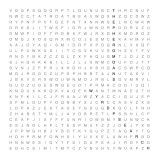
Walker claims that the album’s title is an expression of his frustration at the ubiquity of people claiming things are eerie or weird / wyrd in the present cultural milieu. The artwork for the record is designed as an actual word search too, a knowing nod to how we all grapple for meaning amongst the absurdity of each day. Leaning into ‘weird’ as a coping mechanism is not on The Pheromoans’ agenda however. This album holds little sway with the supernatural, it’s not enough. The overriding impression given by ‘Wyrd Psearch’ is of a band renewed with ideas. There’s no trouble finding the right words, they’re hitting their mark, keeping up with the commentary. ‘Wyrd Psearch’ is a document of The Pheromoans mastering their unquiet moment.
Heels & Souls Recordings roll into reissue number eight with a double dose of early '90s UK street soul magic, splitting the sides between two sought-after cuts from Elaine Vassell and 3rd Zone.
Step back to 1993, house music has hit, UK Soul is in full flow and its rawer, DIY street soul sibling is making its mark across the UK’s underground. Fuelled by accessible, affordable production gear and ignited through enthusiasm and an influx of ideas and sounds, two acts drew inspiration from a melting pot of genres they were exposed to, providing their take on soul as they saw it.
Up first, Elaine Vassell - ‘Never Give Up’. A rough breakbeat-driven, mid-tempo groover from a North West London production triple threat, made up of Longsy D, Pinky and Murray. Utilising Pinky’s home studio with its DX7, Juno 106, LinnDrum and 808, they masterminded a track that sits at the intersection between soulful house, hip hop and R&B. Its crunching drum loop, chest-rattling low-end and serene synth lines, lay the foundation for Elaine’s powerful yet emotive voice to take centre stage. ‘Never Give Up’ should have been a future classic, but never quite found its feet.
On the flip side another 1993 gem, as Sansel Ali and twin brothers Mark and Stephen Anglin joined forces to form 3rd Zone. Conceived in Mark’s makeshift bedroom studio, the trio laid down their first foray into recorded music, ‘You Stole My Heart’. Originally promoed as a limited whitelabel in 1991, it officially landed on the group's one and only EP ‘No Real Reason' in '93.
Armed with a handful of synth modules, a drum machine and a Korg M1, Mark, Stephen and Sansel hit with a tough but tender, underground triumph. Part dance, part romance, layering synth strings, chunky breaks and M1 stabs underneath Sansel’s heartstrung vocals and Stephen’s hip house rap interlude, it provides another perfect example of house seen through the street soul prism.
Two timeless tracks that fly the flag for the fact that big studios and big budgets aren't necessary to create songs that really resonate. Each side also contains an alternate version, with the A housing a beatless reprise of ‘Never Give Up’ and the B a tougher, bassier remix of ‘You Stole My Heart’.
Licensed from Pinky Music and 3rd Zone respectively and remastered from the original DATs by Justin Drake.
- A1: Rocco808, Randy Marx, Grp & Yoshiya Terayama Not On The Sidelines - Street Fighter 6 Main Theme 3:30
- A2: Randy Marx, Grp & Yoshiya Terayama Reinvent The Game - Variation A 1:55
- A3: Yoshiya Terayama Fighting Ground - Menu 2:14
- A4: Yoshiya Terayama Fighting Ground - Menu Composure Remix 1:29
- A5: Yoshiya Terayama Fighting Ground - Menu Burning Remix 1:08
- A6: Shigeyuki Kameda Genbu Temple - Stage Battle 3:17
- A7: Shigeyuki Kameda Down & Out - Extreme Battle 1:14
- A8: Shigeyuki Kameda Back & Forth - Extreme Battle 1:22
- A9: Shigeyuki Kameda Rules & Regulations - Extreme Battle 1:43
- A10: Shigeyuki Kameda Heaven & Hell - Extreme Battle 1:31
- A11: Shigeyuki Kameda Smash & Grab - Extreme Battle 1:22
- A12: Shigeyuki Kameda Normal Battle - Extreme Battle 2:12
- B1: Larry Herron & Yoshiya Terayama World Tour - Menu Hit The Streets 0:59
- B2: Yasumasa Kitagawa Body Shop 2:22
- B3: Yasumasa Kitagawa World Tour - Tutorial 2:03
- B4: Yasumasa Kitagawa Metro City (Day) 1:37
- B5: Yasumasa Kitagawa Metro City Downtown - Stage Battle 4:47
- B6: Yasumasa Kitagawa One And Only 2:28
- B7: L I O, Cecilia Stalin & Yasumasa Kitagawa All Over The World 4:20
- B8: Yoshiya Terayama Colliding Forces - Bosch's Theme 3:42
- C1: Yoshiya Terayama Taking Aim - Luke's Theme 2:57
- C2: Shigeyuki Kameda Mr. Top Player - Jamie's Theme 3:23
- C3: Yoshiya Terayama Walk With Grace - Manon's Theme 3:12
- C4: Yoshiya Terayama Ninjastar Pop - Kimberly's Theme 3:14
- C7: Shigeyuki Kameda Diosa Del Sol - Lily's Theme 3:50
- D1: Yoshiya Terayama The Plunderer - Jp's Theme 3:08
- D2: Shigeyuki Kameda Årachnid** - Juri's Theme 3:32
- D3: Daniel K. Solovitz & Chris B. Harris All Right! - Dee Jay's Theme 3:51
- D4: Shigeyuki Kameda R.e.d. - Zangief's Theme 4:16
- D5: Shigeyuki Kameda Kumadori - E. Honda's Theme 3:19
- D6: Shigeyuki Kameda Zilra Zilra - Blanka's Theme 4:16
- E1: Shigeyuki Kameda Viator - Ryu's Theme 3:56
- E2: Yoshiya Terayama Sharpened Sonic - Guile's Theme 2:36
- E3: Shigeyuki Kameda Overtrip - Cammy's Theme 3:02
- E4: Yoshiya Terayama Spirit Of The Flame - Ken's Theme 3:11
- E5: Yasumasa Kitagawa Not A Little Girl - Chun-Li's Theme 3:48
- E6: Yoshiya Terayama The Great Sunlight - Dhalsim's Theme 2:50
- E7: Yoshiya Terayama Training Room - Stage Battle 3:51
- F1: Yoshiya Terayama & Katsuhisa Asari Battle Hub 8:31
- F2: Yoshiya Terayama & Katsuhisa Asari Battle Hub - Stage Battle 3:52
- F3: Shigeyuki Kameda Carrier Byron Taylor - Stage Battle 3:16
- F4: Haruki Yamada Ranger's Hut - Stage Battle 3:28
- F5: Shigeyuki Kameda Barmaley Steelworks - Stage Battle 3:42
- G1: Shigeyuki Kameda Bathers Beach - Stage Battle 3:49
- G2: Shigeyuki Kameda Dhalsimer Temple - Stage Battle 3:40
- G3: Haruki Yamada Old Town Market - Stage Battle 3:39
- G4: Shigeyuki Kameda King Street - Stage Battle 3:10
- G5: The Sound Room & Shigeyuki Kameda Tian Hong Yuan - Stage Battle 3:53
- G6: Yoshiya Terayama Thunderfoot Settlement - Stage Battle 3:38
- H1: Haruki Yamada Fête Foraine - Stage Battle 3:02
- C5: Vaughn Faison, Gabby Byrd & Yoshiya Terayama Bushin Ninjastar Cypher - Kimberly's Super Art 2:38
- H2: Shigeyuki Kameda Colosseo - Stage Battle 3:27
- H3: Yasumasa Kitagawa The Macho Ring - Stage Battle 3:37
- H4: Yasumasa Kitagawa Suval'hal Arena - Stage Battle 3:38
- H5: Yoshiya Terayama Bushin Ninjastar Cypher - Instrumental 1:28
- H6: Grp & Yoshiya Terayama Not On The Sidelines - Instrumental 3:29
- H7: Grp & Yoshiya Terayama Reinvent The Game - Instrumental 1:55
- H8: Yasumasa Kitagawa All Over The World - Instrumental 2:13
- C6: Shigeyuki Kameda Pankration - Marisa's Theme 3:40
Im Juni 2023 wurde "Street Fighter 6" veröffentlicht und bricht seitdem Verkaufsrekorde. Nun erscheint der Hip-Hop geladene Soundtrack von Yoshiya Terayama und CAP-JAMS mit Beiträgen von Künstlern wie GRP, Shigeyuki Kameda, Daniel K. Solovitz, Chris B. Harris, Yasumasa Kitagawa, The Sound Room, Haruki Yamada und Katsuhisa Asari bei Sony Masterworks. Tauchen Sie mit diesem Sammlerstück in die Welt des Fighting Ground ein und lassen Sie sich von der musikalischen Energie von "Street Fighter 6" verzaubern! Die limitierte 4 LP-Box enthält ein 28-seitiges Art Book, eine Slipmat und ein Stickersheet.
French pianist Dorian Dumont is an exceptionally gifted, Brussels-based jazzman and member of electronic experimentalists, ECHT! In 2021, he released his debut solo album 'APHEXionS' - a challenging exercise of solo piano focussed entirely on the music of one of the most influential and important artists in contemporary electronic music, Richard James, aka Aphex Twin. Dumont's sophomore album, 'to the APhEX', released 23rd February via W.E.R.F. Records, continues that fascination with his musical hero and acts as a musical love letter of sorts - a groundbreaking experience, where the enchanting world of classical piano collides with the electronic brilliance of Aphex Twin. Richard James' music serves as a starting point for Dumont's musical developments which are sometimes composed and often improvised, letting him find his playing field around the concepts and the poetics of the genius of electro music. Contrary to what one would expect, there are no electronics involved but Dumont carefully transcribes a wide selection of Aphex Twin's music to the grand piano, giving the songs a whole new dimension. Dumont starts from the melody lines and rhythmic structures found in the original tracks but builds on them, deconstructing pieces and adding his own improvisations. Lovingly recreated, the songs take on a completely new dimension, and it exposes both the genius and musicality of Aphex Twin and Dumont himself. "Aphex Twin is a fascinating artist and character. At first, I started transcribing his pieces just to understand them. I then sat on my acoustic piano for the pleasure of hearing these pieces that I loved so much only to realize that in the end I was improvising, I was playing. In short: I was having fun. That's how this project was born: through pleasure and games. The challenge then was to develop the concept of this project to find my own playground and my own responses around the musical principles of Mr. Richard James, in order to make this project a celebration on my own terms."
Always curious about new sounds and cultivating eclecticism, 'to the APhEX' stays truthful to the minimalistic aesthetics from the original tracks. From the unruly, emotionally stirring '180db_ 130' to the simple beauty of 'Windowlicker', Dumont is part of a new generation of musicians who have no intention of sticking to the rules. Dumont dances across the keys, perfectly capturing the mood and feeling of Aphex Twin, where classical meets electronic. Elsewhere, 'PAPAT4 155[pineal mix]' is stripped to the core showcasing Dumont's ingenuity, while 'Avril 14th' and album finale '#3 (Rhubarb)', unfolds with delicate piano, evoking a sense of tranquil introspection.
Born in Montpellier where he studied classical piano at the Conservatory, in 2005, Dumont achieved the highest distinctions in piano and chamber music. With a broadening interest in jazz and improvised music, he moved to Brussels in 2008 and after studying in the Jazz sections at the Royal Conservatory of Brussels then at the Koninklijk Conservatorium van Brussel, he obtained his master's degree in 2013. In recent years, he has played an integral part of the critically acclaimed four-piece 'ECHT!' which breaks the boundaries between jazz, electronic music and hip-hop. In addition, Dumont also participates in numerous other projects across various genres including 'Edges' with Guillaume Vierset, Jim Black, and Anders Christensen or 'Easy Pieces' with Ben Sauzereau and Hendrik Lasure. He also collaborates with bands including Juicy, Vaague, Kuna Maze, and Pol Belardi's Force, among others.
[a] A1. 180db_ [130]
[d] A4. PAPAT4 [155][pineal mix]
Following the huge succes of “Serious”, remixed by Michael Gray, we now dive into the enchanting world of “Joy & Pain,” a timeless masterpiece penned by the legendary Frankie Beverly of Maze-fame. The brilliant Donna Allen and expertly remixed by the maestro himself, Dr Packer. With his trademark nu disco groove, Dr Packer unleashes an irresistible sonic force, propelling you into a realm where Donna effortlessly takes the reins with her divine R&B prowess. Together, they embark on an awe-inspiring journey, catapulting you into the very heart of dance floor ecstasy. Dr Packer unveils a package of unparalleled excellence, breathing new life into this classic gem and ensuring its enduring legacy. Get ready to surrender to the irresistible allure of pure dance floor heaven!
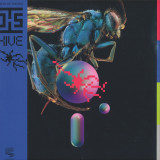
In Frank Herbert’s 1973 novel Hellstrom’s Hive, the Dune writer tells of a sinister narrative surrounding the maverick scientist Nils Hellstrom, who has created subterranean Hive of 50,000 insect-human hybrid life-forms. Ultimately his plan being for the inhabitants of the Hive to usurp humanity and take over the world. The decade thus far may not have seen anything quite so daunting, but it’s provided more than its fair share of challenges. Yet in such dystopian environments, Teeth Of The Sea flourish. This band has created a kaleidoscopic inner world all its own in Hive, their sixth and most outlandish album. Fundamental to Teeth Of The Sea’s mission thus far is that this band can go anywhere and make short work of any obstacles in their path. Inspiration flowed into Hive from all dimensions, with the band’s sphere of influence expanding to take in everything from Italo-disco to minimal techno, from dubbed-out studio madness to their most brazen forays thus far into pop songwriting. Here is a headspace where the psychic charges from records by Labradford, Nurse With Wound, Vangelis, The Knife, Nine Inch Nails and John Barry can happily co-exist. Hive is more than just a transformative force from subterranean origins. It’s an alchemical headspace where monochrome animates into vivid colour. It may not be a carefully ordered insectoid militia set to overthrow society, but it’s a transmission which transcends anything Teeth Of The Sea have thus far offered in their time on Earth. Step inside Hive, if you dare
- A1: Lab Technicians - We Gave U Life
- A2: Aural Exciter - U = Euphoria
- A3: Original Clique - "F" (Whistle Mix)
- B1: Pierrepoint - Tonnerre
- B2: A.e.k. - Lick It
- B3: Zubbizerretta - Wake The Town (Somnabulist Mix)
- C1: Estudiantes - Let The Music Into Your Mind
- C2: Zeco - The Witch Trials
- C3: Big Showdown - They're Here
- D1: The Rhythm Squad - Animal House (Original Mix)
- D2: The Rhythm Squad - Manhunt (Instrumental)
- D3: Nine-L - Islands, Part 2
volume II[25,17 €]
Tony Boninsegna: Notes From The Underground 1986-1994 (Volumes 1 and 2) Cold Blow / Musique Pour La Danse
The story of dance music is littered with hidden heroes and underground activists whose immense contributions have been overlooked, ignored and under-documented. Tony Boninsegna, a producer who made and released countless classic cuts and forgotten gems during the acid house and rave era, is one such example.
Melding elements of all that was popular in underground clubs at the time to create his own dancefloor-friendly sound worlds, Boninsegna amassed a huge catalogue between 1986 and '94, while hiding his involvement via an array of oddball aliases and opaque pseudonyms. Boninsegna's story first came to light four years ago when he appeared in Join The Future: Bleep Techno and the Birth of British Bass Music, Matt Anniss's critically acclaimed alternative history of UK dance music in the rave era. Now Cold Blow has joined forces with Musique Pour La Danse to deliver a much-needed anthology of his greatest productions and
co-productions - many rare or hard-to-find - for the first time.
Featuring 24 restored and remastered tracks stretched across two volumes on vinyl and digital, including a handful of previously unreleased tracks and mixes, and accompanied by detailed sleeve notes by Anniss, Notes From The Underground 1986-1994 is a joyful celebration of one of British dance music's most under-appreciated artists. The full breadth and depth of Boninsegna's rave-ready catalogue, as well as an indication of
the sheer volume of aliases he utilised during the period, is explored in detail across the two-part compilation.
Fittingly, volume one features two previously unreleased recordings that mark his earliest explorations of the emerging house sound (both as The Rhythm Squad, with Richard Compton), alongside touchstone releases such as Zeco's 'The Witch Trials' (a 1989 production that marked his first outing on vinyl), celebrated workouts recorded with regular collaborator Mykey Tee (Lab Technicians' bleep-inspired 'We Gave U Life', Big Showdown's epic 'They're Here' and AEK's mind-mangling, bleep & breaks number 'Lick It'), and genuinely overlooked gems (the proto-tribal house of Pierrepoint's acid-smothered 'Tonnerre' and saucer-eyed rush of Estudiantes' 'Let The Music Into Your Mind').
It all adds up to the definitive musical retrospective of a genuine underground, rave-era hero whose time in the spotlight may finally have arrived.
- A1: Clan Of Xymox - Stranger (Demo)
- A2: Det Gylne Triangel - Maskindans
- A3: Zahgurim - The Living Room
- B1: The Human League - 4Jg
- B2: Liaisons Dangereuses - Dias Cortas
- B3: Sociedades En Tetra Brik - Detector Martenot (Original Version)
- C1: Batang Frisco - Sewing Machine
- C2: Chris And Cosey - Hybrid C
- C3: Im Namen Des Volkes - Alles Ist Gewinn
- D1: Stephen Huss - Infinity Sign
- D2: Richard Bone - Alternate Music For The Hindenberg Lounge
repressed !
Birthed at the turn of the ‘80s, synth and wave music has remained a constant force over the last four decades, with a recent spike in interest in the sound offering further proof of its’ timeless, out-of-this-world quality. It’s against this backdrop that Dutch DJ Interstellar Funk presents his celebration of the style, “Artificial Dancers – Waves of Synth”.
A bumper compilation bristling with obscure and hard-to-find gems, the set sees the Artificial Dance label founder joining the dots between synthesizer and drum machine-driven tracks in a variety of subtly different styles. It’s the result of hundreds of hours spent digging through dusty old records, tapes, and the Bandcamp accounts of DIY musicians who have been active since the sound’s first boom in the early 1980s.
The 11-track set draws on tracks made and released at different times over the last 40 years, with the earliest cut committed to tape in 1978 and the most recent in 2018. While the tracks date from the ‘80s, ‘90s, noughties and 2010s, the showcased cuts are united by a primitive but futuristic quality that makes dating them difficult. In many cases, it’s hard to tell which tracks were made in the early 1980s and which were conjured up in 21st century studios.
As you’d expect, highlights are plentiful with a number of the most unknown or sought-after cuts appearing on vinyl for the first time. In this category you’ll find the Human League’s odd but inspired early number “4JG”, a near mythical 1982 live version of Liasons Dangereuses’ “Dias Cortas” (previously only available on a VHS video) and Chris and Cosey’s “Hybrid C”, a brilliant mid-’90s cut plucked from their CD-only album “Skimble Skamble”. You’ll also find a rare demo version of Clan of Xymox’s Dutch darkwave classic “Stranger”, which became a club smash across Europe in 1983.
Interstellar Funk has also chosen to showcase tracks by a range of DIY producers and lesser-known artists. These include Californian band Batang Frisco, who self-released a sole private press album in 1986 (their contribution, “Sewing Machine”, is dedicated to founder member Bill DiMichele, who passed away this year), Matthias Schuster’s Im Namen Des Volkes project – which contributes the previously unreleased 2014 track “Alles Ist Gewinn” – and Zahgurim, a short-lived early ‘80s act who reunited in 2018 to record their first new material since 1983.
If that wasn’t enough to set pulses racing, the compilation also showcases a solo track by sadly departed Psyche member Stephen Huss. Nobody is quite sure when Huss recorded “Infinity Sign”, but we can confirm this is the first time that one of his solo productions has ever appeared on vinyl.
The Sex featuring members of Mercenary God and No Suicide. A mixture of different elements with a rock substrate for an uncategorized result. Another Post-Punk gem from the 80's Italian North-Eastern scene.
My adventure buddies? The silent, enigmatic Patti, former singer of the mysterious No Suicide, and the young, faithful Chris, a passionate Police fan, we met on the battlefield and he immediately became my brother. For him, learning to play the bass was a way to get close to Sting, in other words, just one step below Paradise. Patti instead played keyboards as an extension of her mysterious and glacial presence, so still and distant that the audience sometimes wondered if she was real. And then there was my fixation for the drum machine, a futuristic device which could transform the drumming sweat into an invisible, yet physical, dreamlike pulsation. A particular combination of characters and a special astral conjunction, that’s what you need to get a nucleus source of sonic emotions, and in some ways this is what we were. You could clearly feel it during the concerts. When at the end of ‘81 My Mercenary God lost their drummer and had to disband, I felt clearly that the music had already changed.
Our old 70’s rock ‘n’ roll sound was no longer representative of the day. We were like some sort of yesterday’s newspaper. Thus I Sex was born (later The Sex). According to Freudian thought that sees sexual instinct as the driving force behind every (creative or destructive) human act. And in fact we immediately started creating, destroying, assembling and deconstructing our sound. Suddenly “tomorrow became now”. It was an outburst of creative independence in the form of homemade cassettes put together with makeshift tools, at least until the arrival of the legendary 4 track recorder. I was 19 years old, Chris was only 17. Nothing more than kids after all. Yet we were already veterans, veterans of a lost war. Wise, naive, disillusioned dreamers, everything and the opposite of everything. But, above all, we were totally devoted to our creative delirium up to the point of losing touch with reality, crossing limits, breaking down barriers and almost bordering on madness. Perhaps we were just too involved, especially if in relationship with what we could receive in return. We always spread our energies as if there was no future. We unconsciously felt that we had to live in the moment, now or never, and in retrospect it really was like that, and this is why these songs exist now. Songs created with the intent to tell an inner universe that is, now as then, far from any convention.
FOLLOWING THEIR RECENT REUNION, THE DELGADOS REISSUE THEIR FOURTH STUDIO ALBUM HATE ON COLOURED VINYL AND CD TO MARK ITS 21st ANNIVERSARY
Ushering in a new era of emotionally vulnerable and cinematic songwriting for celebrated Glasgow group The Delgados, 2002’s Hate is the group’s most ambitious recorded statement to date. Recorded amidst a backdrop of personal change and international crisis, Hate’s internal alchemy transmogrifies darkness into light. It’s an enclosed universe full of tragedy and magic, a swirling galaxy of lush orchestration, misanthropy dealt with kindness and black humour. Above all it showed a band coming to terms with their fragility with a new power and grace.
In Hate, the band’s ambition saw them striving to reflect the breadth of human experience, both the joy and tragedy of living in tumultuous times. Initially commissioned by The Barbican in London to compose music for a film about artist Joe Coleman, the instrumental music that instigated Hate was laden with darkness from the outset. The Delgados’ worldview has always been informed by nuance, an oblique but incisive lyrical perspective but on Hate a new rawness is woven throughout the songs. Coleman’s original subject matter - portraits of troubled historical figures like Ed Gein, Mary Bell and Jayne Mansfield - influenced the tonality of the music but the songs were written against a backdrop of international tumult and personal life changes for the band members. Beginning writing sessions following a family bereavement in drummer Paul Savage’s family, Hate was then recorded while both Alun Woodward and co-singer/guitarist Emma Pollock were expecting new additions to their young families, the latter with drummer Paul Savage. In the background to the recording process were the attacks on the World Trade Center of September 2001 and their aftermath. In this context, it’s remarkable that an album was made at all, let alone one so grand and compassionate. It’s a masterclass in restraint and imagination.
Hate sounds like the world in all its ugly glory. Recorded in Glasgow and New York with Tony Doogan, Dave Fridmann and the band as producers and using over 20 additional musicians, Hate grabs the baton from the group’s breakthrough critical and commercial success The Great Eastern. Bolder, broader and more all-encompassing than anything the band had previously attempted, the album’s palette is furnished by a string section, brass and reed instrumentation, a choir and electronic elements augmenting the core group of Emma Pollock, Alun Woodward, Paul Savage and Stewart Henderson. Far from being over the top, the group’s skill is in attention to detail, in honing and refining each arrangement, allowing each element its space.
It’s a fine balancing act that pays massive dividends. Woodward’s new lyrical vulnerability is spotlighted on tracks like The Drowning Years, which throws elegiac string arrangements against the narrative of characters living in darkness, punctuated by couplets that bring a real-life documentary feel to the narrative. All Rise brings a black comedy to the idea of a confessional before a transcendent, choir-led refrain brings ecstatic resolution to Woodward’s vocal in its highest register. On the single All You Need Is Hate, Woodward’s trick of subverting the Beatles standard showcases the dark humour at the centre of Hate. Here The Delgados’ perversity is in full flow, nurturing a glowing light from darkness, the resolving melody and Fridmann production recalling contemporaries The Flaming Lips (whose Michael Ivins assisted in mixing) or Mercury Rev. The perversity is the surging serotonin induced by the group while singing the lines “Hate is everywhere, inside your mother’s heart and you will find it there. You ask me what you need? Hate is all you need.”
It’s a dark magic that pervades Hate, indeed it’s almost the driving force throughout the album. Flipping minor to major and back again, Favours is fuelled by fear and violence before blasting into the heavens with the gauche line “and you’re feeling fine,” operating in stark contrast to the verses’ tone. Album opener The Light Before We Land finds Emma Pollock in the aftermath of recent family trauma. Her vocal is effortless; a study in steady restraint against the massive, Fridmann-patented drum sound powering Savage’s playing and Henderson’s instantly recognisable melodic basslines. Coming In from the Cold is Pollock in full flight, lifted to the heavens by wide-screen, instrumental texture. Her presence on Hate highlights her knack for lyrical impressionism, the timbre of her voice lending itself to drama while always retaining a mystique. Never Look At The Sun, inspired by the Coleman painting The Big Bang Theory (itself an explosives-themed study), revels in paranoia, her performance ringing out in the eye of the storm conjured by the swirling arrangements. It reaches the peak of a redemptive arc while seemingly parodying the very idea of redemption.
Hate was the sound of The Delgados completely fulfilling their potential, a fully realised vision buoyed by the weight of coming through a darkness into light. For its 21st anniversary, the album is being reissued on the band’s own Chemikal Underground on coloured vinyl and CD. Hate is all you need
"Known for their unique blend of punk rock, post-punk, folk, alternative rock and all kinds of musical sub-cultures, New Model Army refuses to belong to any club or style. Formed in Bradford in 1980, the band's lineup has changed over the years, with Justin Sullivan being the constant and central figure. They have released numerous albums and continue to tour and record music, maintaining a dedicated fanbase. Their music often addresses themes related to social and political issues, personal struggles, and the human condition, making them a significant presence in the alternative rock and post-punk music scenes. The 2019 studio album “From Here” ranked # 13 in the UK Album charts, and the 2023 live album “Sinfonia” hit #1 in the UK Music Video-Charts, making it the highest charting album in the band’s history.
Described as ""Dark Motown"" by Justin himself, “Unbroken” features a diverse collection of tracks that touch on topics ranging from social and political commentary to deeply personal reflections. The album is a powerful and emotionally intense body of work ranging from rebellious tracks as “I Did Nothing Wrong”, to contemplative songs like “First Summer After”. With this album, the band continues to push the boundaries of their signature sound while staying true to the themes that have made them a force to be reckoned with in the music world. “Unbroken” is the first studio album since 2019’s long-player “From Here” and the 16th studio album of the band. It will is available in as a CD Hardcover Mediabook, Heavyweight Black LP Gatefold"