quête:off my rocker

Genres
Tout
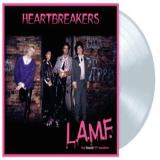
HEARTBREAKERS - L.A.M.F. THE FOUND '77 MASTERS
  • 1: Born To Lose
  • 2: Baby Talk
  • 3: All By Myself
  • 4: I Wanna Be Loved
  • 5: It's Not Enough
  • 6: Chinese Rocks
  • 7: Get Off The Phone
  • 8: Pirate Love
  • 9: One Track Mind
  • 10: I Love You
  • 11: Goin' Steady
  • 12: Let Go
  • 13: Can't Keep My Eyes On You
  • 14: Do You Love Me

50 years ago, Nancy Spungeon reviewed the Heartbreakers relaunch gig for New York Rocker. They"d hired bassist Billy Rath to replace Richard Hell and written new songs. This was the genesis of the L.A.M.F. story. FOUND IN AN ATTIC - a copy master of the original 1977 Track Records tape, without "mud"! This classic punk album, recorded in London by the band featuring New York Dolls Johnny Thunders and Jerry Nolan, along was universally condemned in the music press for having a "muddy mix" - later found to be a mastering fault. When Track went bust the following year, manager Leee Black Childers burgled the Track Records" Carnaby Street 3rd floor office and liberated the tapes that belonged to him and the band. He found everything - except for the master-tape, which remained undiscovered until last year. Other releases had been from outtakes or remixes. First released for RSD in 2021 with not enough copies, and has been unavailable for three years. Now reissued to satisfy the demand for this latterly discovered, acclaimed recording.

pré-commande12.06.2026

il devrait être publié sur 12.06.2026

19,96
Various - Wild Style (Special Edition) (2x12")

GATEFOLD VINYL 2LP - TRANSPARENT BLUE + ORANGE, A2 Colour Poster, 5x Film Set Photos, Flexi Disc, Sticker Sheet

Blurring the lines between fiction and documentary, the seminal film Wild Style, directed by Charlie Ahearn and developed alongside Fred Braithwaite aka Fab Five Freddy, offered an iconic snapshot of the emerging New York hip hop scene in the early ‘80s. Considered one of the first hip hop films, it documents the styles, culture, attitudes, and most importantly, the music of this evolving era. The accompanying soundtrack remains one of the most influential in hip hop history, featuring a who’s who of artists who stood out during the movement’s nascent block party days.

“Making hip hop’s first and most beloved feature film, Wild Style, with Charlie Ahearn and creating the original music is one of my proudest accomplishments.” - Fab 5 Freddy

In celebration of Arrow Films restoring the original Wild Style film in 4K, Mr Bongo is proud to present this special-edition reissue package. The release comes as a double LP pressed on transparent blue and orange vinyl, offering a freshly curated tracklist that brings together the finest songs from previous editions, the full sought-after instrumental album, and Kenny Dope’s top edits. Also included are an A2 colour poster, five film set photos, a flexi disc containing Fantastic Freaks Live at the Dixie, and a Wild Style sticker sheet.

Originally released on Animal Records, founded by Chris Stein of Blondie fame, the soundtrack focuses on the hip hop scene as it evolved from the streets to the recording studio. Co-produced by Stein and Braithwaite, it features the Double Trouble pairing of Rodney Cee and KK Rockwell, The Chief Rocker himself Busy Bee, and the mighty line-ups of both The Cold Crush Brothers and The Fantastic Freaks, to name but a few. The music offers a transportive glimpse into the streets of the South Bronx, capturing the free-form, roaming nature of the film - it’s rough around the edges, but utterly absorbing.

Behind those foundational voices of hip hop’s first wave was a selection of backing beats that have underpinned and influenced the genre ever since. Easily mistaken for lifted breakbeats from old records, the songs on the Wild Style soundtrack are all unique creations. Overseen by Braithwaite and Stein, with Stein also on guitar and effects, they were intended as a homage to those early breakbeats. Drummer Lenny “Ferrari” Ferraro, who played for Aretha Franklin before emerging on the punk scene, and bassist David Harper laid down many of the iconic grooves, two somewhat forgotten participants in shaping a legendary sound.

Over time, the Wild Style soundtrack, with its Charlie Chase and Grand Wizard Theodore scratches, recurring sounds and motifs, and indelible lyrics, has become a hip hop touchstone: endlessly sampled and referenced, the bedrock of so much music to follow. It perfectly encapsulated the essence of the film, the scene, and hip hop’s emergence from the Bronx to the attention of the wider world. It was, and remains, the blueprint.

En stock

Disponible en stock et prêt pour l'expédition

38,45
Hiss Golden Messenger - Quietly Blowing It

"Hiss Golden Messenger delivers anthems for our times."
The Independent

"MC Taylor offers up soulful Dylan-esque country rockers about the impact of the system on ordinary lives."
The Guardian 4/5

En stock

Disponible en stock et prêt pour l'expédition

21,64
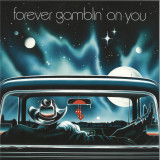
Various - Forever Gamblin’ On You LP

A full tank of gas, the gentle glow from the radio dial, & stretches of open highway await, Forever Gamblin’ On You meanders through miles of soulful AOR, funky folk, & dusty soft rock obscurities. A follow up to Sky Dust Drifter, this compilation was gleaned from American private press oddities & rarities of the 70s & 80s, all of which are seeing their first official reissues on this album. A celebration of love, rebirth, and exploration radiating like the warmth of a loved one from the passenger seat.

Featuring “Feeling The Fire”, a jazzy, AOR grooving declaration of love and desire taken from the sole release from The Mad Brother. The compilations’ title track “Forever Gamblin On You” by Petroc And Pals, features an echo-laden folk rock recollection of hard feelings delivered with swelling guitar in a mournful soft psychedelia. Angie Pepper’s “Miss You Too Much” dwells on a past love, rolling along with an effortlessly cool rhythm section, while Roy McComas croons of his manifested “angel of love” on the swirling psych folk rocker “Girl Of My Dreams”.

Forever Gamblin’ On You unfolds as a hopeful yet equally melancholic collection of nomadic anthems, primed for a memorable journey along the back roads of familiar American landscapes.

En stock

Disponible en stock et prêt pour l'expédition

26,85
Oracle Sounds - Oracle Sounds vol 2

The second ultra limited installment of Richard Norris' journeys into the outer reaches of dub has landed.

Mixing influences from roots reggae to On U Sound to Basic Channel and beyond, these six tracks offer warm and lush sonic landscapes to sink into.

En stock

Disponible en stock et prêt pour l'expédition

21,43
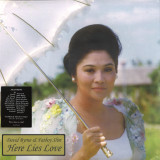
DAVID BYRNE & FATBOY SLIM - HERE LIES LOVE LP 2x12"
 
22

David Byrne & Fatboy Slim’s acclaimed 2010 album Here Lies Love receives its first-ever vinyl release to coincide with a new production opening on Broadway this summer. Here Lies Love is a double-disc song cycle – improbably poignant, decidedly surreal, surprisingly thought provoking – about the rise and fall of the Philippines' notorious Imelda Marcos. It was conceived by David Byrne; composed by Byrne and DJ/recording artist Fatboy Slim, AKA Norman Cook; and performed by a dream cast drawn from the worlds of indie rock, alt country, R&B and pop. Byrne's taste in collaborators is as imaginative as it is impeccable, including Cyndi Lauper (who recounts, to lighthearted disco beats, Imelda's courtship with Ferdinand Marcos), Steve Earle (as the power-hungry Ferdinand), Dap-Kings vocalist Sharon Jones (recalling Imelda's introduction into New York society) and Natalie Merchant (as spurned Imelda confidante Estrella, anticipating the onset of martial law). Along with vocals turns from such stars as Tori Amos and the B-52's Kate Pierson, Byrne works with rising indie rockers St. Vincent and My Brightest Diamond; New York chanteuses Nellie McKay and Martha Wainwright; and dance-music divas Róisín Murphy and Santigold. Byrne himself appears as the voice of imperialistic America on ‘American Troglodyte’, a send-up that wouldn't have seemed out of places in Talking Heads' True Stories.


Byrne originally envisioned this as a musical theatre piece, to be mounted in disco and nightclub settings, reflecting the globe-trotting Marcos' taste for such velvet-roped spots as Studio 54 and Regine's. In 2006, he performed work-in-progress versions to enthusiastic audiences at New York City's Carnegie Hall and the Adelaide Festival in Australia. While plans for a US theatrical production continued to evolve, he delivered this unique recording. The award-winning theatrical production eventually premiered at The Public Theater in New York in 2013, travelled to London’s National Theater for a sold-out run (2014–15), and was remounted at the Seattle Repertory Theater (2017).


Here Lies Love has an effervescent disco feel, redolent of Fatboy Slim's own dance-floor anthems, with warm undercurrents of the Latin rhythms that have percolated through Byrne's recent solo work. The sunny arrangements act in counterpoint to the reality of the Marcos' increasingly repressive regime, reflecting the imagined inner life of the glamour-obsessed Imelda. Explains Byrne, "For me, the darker side of the excesses are, for the most part, a matter of record. A lot of the audience is going to come with that knowledge already. What's more of a challenge is to get inside the head of the person who was behind all of that, and understand what made them tick." Byrne offers no judgment and avoids the obvious – there is no mention of Imelda's infamous shoe collection.


Many of Byrne's lyrics are, astonishingly enough, constructed from actual Imelda quotes, including the project's title, the words that Imelda, now returned to the Philippines from US-assisted exile in Hawaii, would like to have inscribed on her gravestone. In addition to his new liner note, Byrne illustrates the story with archival photos. In a detailed preface, he reveals what drew him to this subject and the bumpy route he took to launch the project and, ultimately, record this album. The booklet is indeed a page-turner, just as Here Lies Love is a wonderfully old-school album that rewards start-to-finish listening. Once again, Byrne – beloved as musician, thinker and bicyclist-about-town – reveals the breadth and singularity of his vision.


The new production of Here Lies Love will premiere at the Broadway Theatre in New York City. Performances begin June 17, ahead of an official opening night on July 20. Tony Award winner Alex Timbers (direction) and Olivier Award nominee Annie-B Parson (choreography) reunite with Byrne (concept, music, and lyrics) and Fatboy Slim (music) to bring Here Lies Love to Broadway, continuing a ten-plus year collaboration on the project. Tom Gandey and J Pardo contribute additional music. Here Lies Love is produced on Broadway by Hal Luftig, Patrick Catullo, Diana DiMenna for Plate Spinner Productions, Clint Ramos, and Jose Antonio Vargas. The staging at the Broadway Theatre will transform the venue’s traditional proscenium floor space into a dance club environment, where audiences will stand and move with the actors. A wide variety of standing and seating options will be available throughout the theatre’s reconstructed space. The producers of Here Lies Love said, “As a team of binational American producers – Filipinos among us – we are thrilled to bring Here Lies Love to Broadway! We welcome everyone to experience this singularly exuberant piece of theatre. The history of the Philippines is inseparable from the history of the United States, and as both evolve, we cannot think of a more appropriate time to stage this show. See you on the dance floor!”


David Byrne’s recent works include the launch of Reasons to be Cheerful, an online magazine focused on solutions-oriented stories about problems being solved all over the world (2019); Joan of Arc: Into the Fire, a theatrical exploration of the historical heroine that premiered at the Public Theater in New York (2017); The Institute Presents: NEUROSOCIETY, a series of interactive environments created in conjunction with PACE Arts + Technology that question human perception and bias (2016); Contemporary Color, an event inspired by the American folk tradition of color guard and performed at Brooklyn’s Barclays Center and Toronto’s Air Canada Centre (2015); Here Lies Love; Love This Giant, a studio album and worldwide tour created with St. Vincent (2012); and How Music Works, a book about the history, experience, and social aspects of music (2012).


Byrne curated Southbank Centre’s annual Meltdown festival in London in 2015. A co-founder of the group Talking Heads (1976–88), he has released eight studio albums as a solo artist and worked on multiple other projects, including collaborations with Brian Eno, Twyla Tharp, Robert Wilson, and Jonathan Demme, among others. He also founded the highly respected record label Luaka Bop. Recognition of Byrne’s various works include Obies, Drama Desk, Lortel, and Evening Standard awards for Here Lies Love; an Oscar, Grammy, and Golden Globe for the soundtrack to Bernardo Bertolucci’s The Last Emperor; and induction into the Rock and Roll Hall of Fame with Talking Heads. Byrne’s work as a visual artist has been published and exhibited since his college days, including photography, filmmaking, and writing. He lives in New York City. In addition to 2019’s cast album for American Utopia on Broadway, Nonesuch has released eight other David Byrne records since 2003, including 2018’s American Utopia studio album and two versions of his musical Here Lies Love.


q C6. Please Don't feat. Santi White Santigold

En stock

Disponible en stock et prêt pour l'expédition

46,18
Various / Bill Brewster - Late Night Tales Presents After Dark Vespertine LP 2x12"

This July the esteemed scribe, proper DJ, and discreetly deft twiddler Bill Brewster, drops the latest instalment in his ‘After Dark’ series, for Late Night Tales.

A throbbing, louche and leisurely affair, groove is very much at the heart of this freestyle selection, a vibe which Bill de- scribes as “a basement, a red light and a sound system. Or, as the Beastie’s once rapped, slow and low, that is the tempo”.

There’s Hawaiian drum machine bossa balearica from Island Band, percussive afro post punk from Czech jazz singer Jana Koubkova, and breathy-bubbling-dubwise-slap-bass-soul from Debbe& The Code.

There’s also sultry deep house mood music from Lanowa, infectious bouncy jazz funk breaks from Canada High, and Nail’s life affirming re-edit of singer songwriter Gilbert O Sullivan’s electro pop gem ‘So What’.

Bill’s own studio skills are present and correct too, featuring an undulating bassy version of country troubadour Jeb Loy Nichols, reworked along Alex Tepper under their Hotel Motel moniker, and a chugged-up squelchy disco take on Khruang- bin, this time paired with Raj Gupta, as Mang Dynasty.

Chock full of exclusives, tracks are either completely brand new, or available digitally for the first time, whilst others are wallet-rinsing rarities if purchased elsewhere. Whichever way you slice it though, every tune is a highlight, working equally well as standalone nuggets, or within Bill’s fluidly cohesive mix.

Whether he’s taking the roof off a club with his unique selec- tion of deep and tough house music, enchanting a backroom with a genre-bending set of disco, Balearic, rock and hip hop or playing chillout music in a bay in Croatia, Bill Brewster is the man for all occasions.

In a former life, Bill was a punk rocker, a chef and also the co-editor of football magazine When Saturday Comes but has been a record nerd all of his life. He began DJing in the 1980s, but came into his own in the early 1990s, particularly during a two-year stint in New York running DMC’s office, where nights at the Sound Factory and hanging out with Danny Tenaglia gave him the musical grounding you can still hear in his music today.

Bill was also one of the founding residents at Fabric in London, a position he held for five years. There are few still playing regularly today that have his dedication, eclecticism and encyclopedic knowledge of music.

His parallel life is as a writer, and with his long-term part- ner-in-crime Frank Broughton, they have written four books together, including the acclaimed ‘Last Night A DJ Saved My Life’ (latest edition published last July), ‘How To DJ (Prop- erly)’ and ‘The Record Players’.

He has been working in the industry’s fringes for over 40 years including the running of various labels from Twisted UK and Forensic in the ’90s to Disco Sucks and Anorak in the noughties.

He is one of NTS radio’s new residents for 2023 and his ‘Low Life Loves You’ show is available on the first Tuesday of every month.

En stock

Disponible en stock et prêt pour l'expédition

25,17
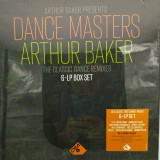
Various - Arthur Baker Presents Dance Masters (6x12")
 
35

This latest instalment of ARTHUR BAKER Presents DANCE MASTERS finds the production/ song-writing/ remixing maestro taking the spotlight for a long overdue snapshot of his own classic 12” mixes during a crucial evolution of dance music, club
and pop culture.

“I’ve always felt like I was on a mission to make music from the time I heard Motown, Philly and Sly and the Family Stone. My mission started as a hobby and still feels like one now. You’ve got to keep on pushing and hustling. It can be a drag sometimes but
if you really love what you’re doing, it’s worth the work. I still really love what I do.”

Arthur Baker helped codify the remixer as artist. His genre-fluid approach to projects
has resulted in a joyous myriad of classics that spans many decades. This ’80’s focused DANCE MASTERS collection offers a welcome glimpse at Baker’s illustrious career and many long out-of-print 12” versions and previously unavailable mixes.

This 35-track, six LP expanded edition includes a wide array of selections from the likes of Robbie Nevil’s “C’est La Vie,” Fleetwood Mac’s “Big Love,” Neneh Cherry’s “Buffalo Stance”, Jeffrey Osborne “Soweto”, Freeez “I.O.U”, Rockers Revenge “Walking On Sunshine” and of course the juggernaut “Planet Rock” with Afrika Bambaataa & Soulsonic Force.

Complete with in-depth liner notes by Bill Coleman, track by track notes written by Arthur Baker himself, previously unseen session photos from Arthur’s personal archives and a signed insert.

All tracks remastered by Nick Robbins at Sound Mastering

En stock

Disponible en stock et prêt pour l'expédition

78,19
Lennie De Ice - We Are I.E. - Remixes EP

Much deserved, remastered reissue of ‘We Are I.E.’ by Lennie De Ice, arguably the first proto jungle tune, now coming correct with fresh remixes from Solo & Blades alongside Borai, as well as the sought-after Horsepower Productions remix.

Released in 1991 on I.E. Records, an imprint based out of De Underground Records, a store in London’s Forest Gate run by Mike De Underground alongside Uncle 22 and Randall, it famously featured elements that paved the way for the Jungle sound. Centered around the Amen break, ragga style basslines, vinyl spinbacks and gun shot samples, it stood out as something different back in ’91, A certified classic, rinsed on dancefloors everywhere and anywhere, from back in the day to the present.

Solo & Blades are the first of the new versions, hitting hard with a heavyweight jungle remix, as Borai steps up with a beefy bassline rework. Horsepower Productions killer and sought after remix rounds off the package.


DJ Feedback:

Foul Play
Moving Shadow
"All the remixes totally land, great package, respectfully done. gonna hear a lot of these over the summer I think."

Jerome Hill
Super Rhythm Trax, Don't, Kool FM
"Was a little sceptical seeing these were remixes as its such an iconic track - BUT fair play ! Borai and Ed Solo & Blades both knocked it out of the park and i'll be playing both these, plus replacing my personal (slightly. crusty) vinyl rip of the original ! Bigups !!"

Om Unit
"Untouchable until now tbh"

jd Twitch
optimo
"even though I have probably heard it ten thousand times you can't beat the original. remixes are cool though."

Louise Chen
"this hits so hard it's tough choosing a fave mix!"

Emerald
BBC 1xtra/ Rinse FM
"Yeeeeeh found the dubstep remix vinyl of this in barcelona recently"

Werdna (Circular Jaw)
"Classic, lovely to see Hooj bringing in the big guns for the remixes. These are going off!"

Cortese
"Sick breaks on this one"

Truss/ MPIA3/ Overmono
"wicked"

Oli Warwick
Crack/ RA/ International Orange/ JunoJuno Plus
"Absolutely seminal bomb drop here, and the remixes are no joke either!"

Chris Farrell
"Always good to see this come round again, original and borai mix for me"

Smolny
"CLASICK !"

Doc Martin
Sublevel USA/Fabric UK.
"Complete Rave Warehouse Flashbacks!!!!"

Lil Mofo
The Trilogy Tapes / Tokyo
"wow!"

Moody Boyz
all over the worldstudio rockers records
"classic tune feeling the Filter Dread Remix"

Ciel
Rinse FM / Refuge Worldwide
"really nice collection of tunes!"

dop
"love the original"

En stock

Disponible en stock et prêt pour l'expédition

13,87
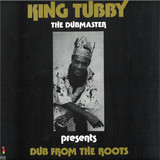
King Tubby - Dub From The Roots

Tubby did three original dub albums, “Dub From The Roots, “The Roots Of Dub” and the third is “Brass Rockers” with Tommy McCook ’pon the flying cymbals. Where he mixed it with the horn going in and out in a dub way and one named “Shalom Dub” you can call Tubby’s too because he mixed the versions as they were off the forty fives.

King Tubby and Producer Bunny “Striker” Lee are intertwined in the birth of Dub Music. After discovering a mistake that made a “serious joke” (more of which later…) they went on to release the first pressings of this new musical genre namely “Dub Music”. Tubby’s vast knowledge of electronics and Bunny’s vast catalogue of rhythms would lay the foundations of what today is taken as a standard…. The Remix / Version cuts to an existing vocal tune.

Osborne “King Tubby” Ruddock was born in Kingston, Jamaican the 28th January 1941 and grew up in the High Holborn Street area of downtown Kingston. He studied electronics at Kingston’s National Technical College and also on two correspondence courses from the USA. When he had qualified, Tubby began repairing radios and other electrical appliances in a shack in the back yard of his mother’s home. His work in the early days included winding transformers and building amplifiers for Kingston’s Sound Systems. Tubby built his first Sound System in 1957 playing jazz and Rhythm and Blues at local weddings and birthday parties His reputation as a man who knew and understood both electronics and music grew steadily and as the sixties drew to a close. Tubby purchased his own basic two track equipment. He installed this alongside his dub cutting machine, a homemade mixing console and his impressive collection of Jazz albums in the back bedroom of his home at 18 Dromilly Avenue which he christened his music room.

Dynamic Sounds upgraded to sixteen track recording in 1972 and Tubby purchased, again with the help of a deal brokered by Bunny Lee. The old four track equipment and the MCI console from their Studio B. The four tracks now gave him far wider scope to work with and he began to create a new musical form where the bass and drum parts were brought up while the faders allowed Tubby to ease the vocal and rhythm in and out of the mix. It was only a matter of time before Tubby’s dub plate experiments began to make it on to vinyl and the first ever long playing King Tubby releases would feature a collection of his mixes to a selection of Striker’s rhythms. So please sit back and enjoy this historic set of sounds. Lovingly restored and with a few extra gems added to the CD editions. These releases were the first to carry the name of King Tubby and the first to credit the great musicians that contributed so much to the rhythms that made these albums possible.

Hope you enjoy the set……

En stock

Disponible en stock et prêt pour l'expédition

13,40
VARIOUS - BROWN ACID: THE TWENTY-SECOND TRIP LP

Just as you were getting your head straight coming off the 21st Trip … Brown Acid dose # 22 drops, continuing to fry your mind in a revolving trap-door Twilight Zone alternate world of early hard rock… populated by real life characters so far out they can look like a cheesy wedding band but sound like Blue Cheer! Uncanny! This music comes at you from many angles. Teens in a garage colliding with booze, drugs and girls for the first time, lounge lizard hustlers with snazzy stage clothes and fuzz boxes… gnarly backwoods troublemakers meet blow dried glam rock wannabes here, seamlessly clobbering your head with sound rather than each other! An electric post-psychedelic bar brawl for your mind awaits, unfasten your seat belt, crank it up and fly! Sounds Synonymous "Babylon" out of Flint, Michigan 1969 rip the devastating Blue Cheer classic a new one, immediately swarming you with organ swells and distortion before collapsing into a tuff funk groove, a psychedelic James Brown vibe shot through with dirty howling fuzz guitar, vocals nailing the messed up but confident relaxed sneering attitude of the original Cheer eruption. The Bumps "Shining" from Seattle 1969 resides right at the transition of ‘60s psych into early prog, well constructed, no diluting things artsy fartsy style, a compelling heavy riff, spacious vocal harmony hook floating above a turbulent take on getting your shit together and shining like a star. Fat chance, but you can dream, the band did and their dreams kick ass across time to right now or you wouldn’t be here.

Coulda been a hit back then, definitely a hit now. Riverside "Farmer" explodes out of Austin, Texas 1974, economical but brilliantly structured riffs and power chords, intense dynamic tension/release, fantastic screaming leads over shifting angles of attack during the middle break… it’s all here with a detached confidence in the vocal that swaggers back in time to the late ‘60s in its proto-heavy psych adjacent assault. Cincinnati Joe & Mad Lydia "Get It Together" for real in Cincinnati, Ohio 1970. The song says everything you need to know: “You may think that you’re the very best, miles and miles ahead of the rest, but be sure when you’re put to the test you get it together!” These words are deployed in a manner similar to Peter Green’s “Oh Well”, intermittently stated between killer gnarly guitar and gushy organ attacks. Bar band heaven and hell rolled up into one big ball, the vocals get all the way out there! Straight Up "Fire" takes the monster 1968 Crazy World Of Arthur Brown hit into faithfully executed but surreally minimalist territory, Minneapolis, Minnesota 1974. Genius version of a key song that presciently cuts to the chase regarding Brown Acid’s incinerations of psychedelic idealism, you’re gonna burn, burn, burn… as that moment climaxes you can gawk at their preposterous flashy lounge band stage outfits and realize side one must end because everything is totally scorched into eternity. Scrap Iron "Poopsie" is a primitive two chord stomper with spiraling fuzz and organ riffs, singer marking his territory caveman style. “Poopsie, you’re my woman” he commands, but gets weirdly insecure she’ll blow him off at the altar by the end of each verse. Snarly wah-wah ices this toxic cake out of Carteret, New Jersey 1973. Focused delivery so single-mindedly crude it creates an inescapable instant brain-worm. Lady "Live Show Tigers" is amongst the most potently life affirming trash rockers you’ll ever hear, one outrageously triumphant but fiercely sloppy anthem about living it up like a star, strutting the stage glammed up New York Dolls drag style but with a Dictators sense of humor. Tasty slightly off kilter guitar leads all through, going serendipitously berserk on the fade. Picture disc single out of L.A. 1980. Fantastic fun rock star rock at a very raw local street level where any time is party time.

Killer Frog "Hard Times" on Masochist Records from Chicago, Illinois 1972 takes less than two minutes, an action packed James Gang style bar band rocker with a bit of punky sneer in the face of misfortune. These guys never even heard of flower power. They are killer frogs. Good Humore "Killer" does kill in stripped down hard rock trio style, Warren, Michigan 1976. No frills guitar, bass and drums groove tight, snaky primordial riff, snarly licks. “She’s a killer of a woman, knows just what she’s doing…” The singer knows she’s a femme-fatale roadhouse predator but she’s so hot the inevitable wreckage seems a bargain. Ride it out like the extended jam on the fade knowing she’ll be back for more! Sarawest "Space Rider" winds up the 22nd Trip lost in a twisted two chord space adventure from the point of view of an alien visiting our planet seeking knowledge but finding out we are stupidly destroying ourselves, so he gotta split sneering back at us like we wasted his time “I got no time for loving… I wanna be a space rider, space rider”. Toronto, Canada 1974, a vibe lurking in some strange but funny void between late ‘60s outsider garage psychedelic rock complete with reverb-y acid guitar leads and late ‘70s retro-futuristic D.I.Y wisecracking from inner space… taking the piss out of outer space!

pré-commande12.05.2026

il devrait être publié sur 12.05.2026

30,67
VARIOUS - BROWN ACID: THE TWENTY-SECOND TRIP LP
  • A1: Sounds Synonymous ? Babylon
  • A2: Flint, Michigan ? 1969
  • A3: The Bumps ? Shining
  • A4: Seattle, Washington ? 1969
  • A5: Riverside ? Farmer
  • A6: Austin, Texas ? 1974
  • A7: Cincinnati Joe And Mad Lydia ? Get It Together
  • A8: Cincinnati, Ohio ? 1970
  • A9: Straight Up ? Fire
  • A10: Minneapolis, Minnesota ? 1974
  • B1: Scrap Iron ? Poopsie
  • B2: Carteret, New Jersey ? 1973
  • B3: Lady ? Live Show Tigers
  • B4: Los Angeles, California ? 1980
  • B5: Killer Frog ? Hard Times
  • B6: Chicago, Illinois ? 1972
  • B7: Good Humore ? Killer
  • B8: Warren, Michigan ? 1976
  • B9: Sarawest ? Space Rider
  • B10: Toronto, Ontario ? 1974
également disponible

RANDOM COLOUR VINYL[30,67 €]


Just as you were getting your head straight coming off the 21st Trip … Brown Acid dose # 22 drops, continuing to fry your mind in a revolving trap-door Twilight Zone alternate world of early hard rock… populated by real life characters so far out they can look like a cheesy wedding band but sound like Blue Cheer! Uncanny! This music comes at you from many angles. Teens in a garage colliding with booze, drugs and girls for the first time, lounge lizard hustlers with snazzy stage clothes and fuzz boxes… gnarly backwoods troublemakers meet blow dried glam rock wannabes here, seamlessly clobbering your head with sound rather than each other! An electric post-psychedelic bar brawl for your mind awaits, unfasten your seat belt, crank it up and fly! Sounds Synonymous "Babylon" out of Flint, Michigan 1969 rip the devastating Blue Cheer classic a new one, immediately swarming you with organ swells and distortion before collapsing into a tuff funk groove, a psychedelic James Brown vibe shot through with dirty howling fuzz guitar, vocals nailing the messed up but confident relaxed sneering attitude of the original Cheer eruption. The Bumps "Shining" from Seattle 1969 resides right at the transition of ‘60s psych into early prog, well constructed, no diluting things artsy fartsy style, a compelling heavy riff, spacious vocal harmony hook floating above a turbulent take on getting your shit together and shining like a star. Fat chance, but you can dream, the band did and their dreams kick ass across time to right now or you wouldn’t be here.

Coulda been a hit back then, definitely a hit now. Riverside "Farmer" explodes out of Austin, Texas 1974, economical but brilliantly structured riffs and power chords, intense dynamic tension/release, fantastic screaming leads over shifting angles of attack during the middle break… it’s all here with a detached confidence in the vocal that swaggers back in time to the late ‘60s in its proto-heavy psych adjacent assault. Cincinnati Joe & Mad Lydia "Get It Together" for real in Cincinnati, Ohio 1970. The song says everything you need to know: “You may think that you’re the very best, miles and miles ahead of the rest, but be sure when you’re put to the test you get it together!” These words are deployed in a manner similar to Peter Green’s “Oh Well”, intermittently stated between killer gnarly guitar and gushy organ attacks. Bar band heaven and hell rolled up into one big ball, the vocals get all the way out there! Straight Up "Fire" takes the monster 1968 Crazy World Of Arthur Brown hit into faithfully executed but surreally minimalist territory, Minneapolis, Minnesota 1974. Genius version of a key song that presciently cuts to the chase regarding Brown Acid’s incinerations of psychedelic idealism, you’re gonna burn, burn, burn… as that moment climaxes you can gawk at their preposterous flashy lounge band stage outfits and realize side one must end because everything is totally scorched into eternity. Scrap Iron "Poopsie" is a primitive two chord stomper with spiraling fuzz and organ riffs, singer marking his territory caveman style. “Poopsie, you’re my woman” he commands, but gets weirdly insecure she’ll blow him off at the altar by the end of each verse. Snarly wah-wah ices this toxic cake out of Carteret, New Jersey 1973. Focused delivery so single-mindedly crude it creates an inescapable instant brain-worm. Lady "Live Show Tigers" is amongst the most potently life affirming trash rockers you’ll ever hear, one outrageously triumphant but fiercely sloppy anthem about living it up like a star, strutting the stage glammed up New York Dolls drag style but with a Dictators sense of humor. Tasty slightly off kilter guitar leads all through, going serendipitously berserk on the fade. Picture disc single out of L.A. 1980. Fantastic fun rock star rock at a very raw local street level where any time is party time.

Killer Frog "Hard Times" on Masochist Records from Chicago, Illinois 1972 takes less than two minutes, an action packed James Gang style bar band rocker with a bit of punky sneer in the face of misfortune. These guys never even heard of flower power. They are killer frogs. Good Humore "Killer" does kill in stripped down hard rock trio style, Warren, Michigan 1976. No frills guitar, bass and drums groove tight, snaky primordial riff, snarly licks. “She’s a killer of a woman, knows just what she’s doing…” The singer knows she’s a femme-fatale roadhouse predator but she’s so hot the inevitable wreckage seems a bargain. Ride it out like the extended jam on the fade knowing she’ll be back for more! Sarawest "Space Rider" winds up the 22nd Trip lost in a twisted two chord space adventure from the point of view of an alien visiting our planet seeking knowledge but finding out we are stupidly destroying ourselves, so he gotta split sneering back at us like we wasted his time “I got no time for loving… I wanna be a space rider, space rider”. Toronto, Canada 1974, a vibe lurking in some strange but funny void between late ‘60s outsider garage psychedelic rock complete with reverb-y acid guitar leads and late ‘70s retro-futuristic D.I.Y wisecracking from inner space… taking the piss out of outer space!

pré-commande12.05.2026

il devrait être publié sur 12.05.2026

30,67
Guilty Razors - Complete Recordings 1977 - 1978

UILTY RAZORS, BONA FIDE PUNKS.


Writings on the topic that go off in all directions, mind-numbing lectures given by academics, and testimonies, most of them heavily doctored, from those who “lived through that era”: so many people today fantasize about the early days of punk in our country… This blessed moment when no one had yet thought of flaunting a ridiculous green mohawk, taking Sid Vicious as a hero, or – even worse – making the so-called alternative scene both festive and boorish. There was no such thing in 1976 or 1977, when it wasn’t easy to get hold of the first 45s by the Pistols or the Clash. Few people were aware of what was happening on the fringes of the fringes at the time. Malcolm McLaren was virtually unknown, and having short hair made you seem strange. Who knew then that rock music, which had taken a very bad turn since the early 1970s, would once again become an essential element of liberation? That, thanks to short and fast songs, it would once again rediscover that primitive, social side that was so hated by older generations? Who knew that, besides a few loners who read the music press (it was even better if they read it in English) and frequented the right record stores? Many of these formed bands, because it was impossible to do otherwise. We quickly went from listening to the Velvet Underground to trying to play the Stooges’ intros. It’s a somewhat collective story, even though there weren’t many people to start it.
The Guilty Razors were among those who took part in this initial upheaval in Paris. They were far from being the worst. They had something special and even released a single that was well above the national average. They also had enough songs to fill an album, the one you’re holding. In everyone’s opinion, they were definitely not among the punk impostors that followed in their wake. They were, at least, genuine and credible.

Guilty Razors, Parisian punk band (1975-1978). To understand something about their somewhat linear but very energetic sound, we might need to talk about the context in which it was born and, more broadly, recall the boredom (a theme that would become capital in punk songs) coupled with the desire to blow everything off, which were the basis for the formation of bands playing a rejuvenated rock music ; about the passion for a few records by the Kinks or the early Who, by the Stooges, by the Velvet mostly, which set you apart from the crowd.
And of course, we should remember this new wave, which was promoted by a few articles in the specialized press and some cutting-edge record stores, coming from New York or London, whose small but powerful influence could be felt in Paris and in a handful of isolated places in the provinces, lulled to sleep by so many appalling things, from Tangerine Dream to President Giscard d’Estaing...
In 1975-76, French music was, as almost always, in a sorry state ; it was still dominated by Johnny Hallyday and Sylvie Vartan. Local rock music was also rather bleak, apart from Bijou and Little Bob who tried to revive this small scene with poorly sound-engineered gigs played to almost no one.
In the working class suburbs at the time, it was mainly hard rock music played to 11 that helped people forget about their gruelling shifts at the factory. Here and there, on the outskirts of major cities, you still could find a few rockers with sideburns wearing black armbands since the death of Gene Vincent, but it wasn’t a proper mass movement, just a source of real danger to anyone they came across who wasn't like them. In August 1976, a festival unlike any other took place in Mont-de-Marsan – the First European Punk Festival as the poster said – with almost as many people on stage as in the audience. Yet, on that day, a quasi historical event happened, when, under the blazing afternoon sun, a band of unknowns called The Damned made an unprecedented noise in the arena, reminiscent of the chaotic Stooges in their early adolescence. They were the first genuine punk band to perform in our country: from then on, anything was possible, almost anything seemed permissible.

It makes sense that the four+1 members of Guilty Razors, who initially amplified acoustic guitars with crappy tape recorder microphones, would adopt punk music (pronounced paink in French) naturally and instinctively, since it combines liberating noise with speed of execution and – crucially – a very healthy sense of rebellion (the protesters of May 1968 proclaimed, and it was even a slogan, that they weren’t against old people, but against what had made them grow old. In the mid-1970s, it seemed normal and obvious that old people should now ALSO be targeted!!!).
At the time, the desire to fight back, and break down authority and apathy, was either red or black, often taking the form of leafleting, tumultuous general assemblies in the schoolyard, and massive or shabby demonstrations, most of the time overflowing with an exciting vitality that sometimes turned into fights with the riot police. Indeed, soon after the end of the Vietnam War and following Pinochet’s coup in Chile, all over France, Trotskyist and anarcho-libertarian fervour was firmly entrenched among parts of the educated youth population, who were equally rebellious and troublemakers whenever they had the chance. It should also be noted that when the single "Anarchy in the UK" was first heard, even though not many of us had access to it, both the title and its explosive sound immediately resonated with some of those troublemakers crying out for ANARCHY!!! Meanwhile, the left-wing majority still equated punks with reckless young neo-Nazis. Of course, the widely circulated photos in the mainstream press of Siouxsie Sioux with her swastikas didn’t necessarily help to win over the theorists of the Great Revolution. It took Joe Strummer to introduce The Clash as an anti-racist, anti-fascist and anti-ignorance band for the rejection of old-school revolutionaries to fade a little.

The Lycée Jean-Baptiste Say at Porte d’Auteuil, despite being located in the very posh and very exclusive 16th arrondissement of Paris, didn’t escape these "committed" upheavals, which doubled as the perfect outlet for the less timid members of this generation.
“Back then, politics were fun,” says Tristam Nada, who studied there and went on to become Guilty Razors’ frontman. “Jean-Baptiste was the leftist high-school in the neighbourhood. When the far right guys from the GUD came down there, the Communist League guys from elsewhere helped us fight them off.”
Anything that could challenge authority was fair game and of course, strikes for just about any reason would lead to increasingly frequent truancy (with a definitive farewell to education that would soon follow). Tristam Nada spent his 10th and 11th unfinished grades with José Perez, who had come from Spain, where his father, a janitor, had been sentenced to death by Franco. “José steered my tastes towards solid acts such as The Who. Like most teenagers, I had previously absorbed just about everything that came my way, from Yes to Led Zeppelin to Genesis. I was exploring… And then one day, he told me that he and his brother Carlos wanted to start a rock band.” The Perez brothers already played guitar. “Of course, they were Spanish!”, jokes their singer. “Then, somewhat reluctantly, José took up the bass and we were soon joined by Jano – who called himself Jano Homicid – who took up the rhythm guitar.” Several drummers would later join this core of not easily intimidated young guys who didn’t let adversity get the better of them.

The first rehearsals of the newly named Guilty Razors took place in the bedroom of a Perez aunt. There, the three rookies tried to cover a few standards, songs that often were an integral part of their lives. During a first, short gig, in front of a bewildered audience of tough old-school rockers, they launched into a clunky version of the Velvet Underground's “Heroin”. Challenge or recklessness? A bit of both, probably… And then, step by step, their limited repertoire expanded as they decided to write their own songs, sung in a not always very accurate or academic English, but who cared about proper grammar or the right vocabulary, since what truly mattered was to make the words sound as good as possible while playing very, very fast music? And spitting out those words in a language that left no doubt as to what it conveyed mattered as well.
Trying their hand a the kind of rock music disliked by most of the neighbourhood, making noise, being fiercely provocative: they still belonged to a tiny clique who, at this very moment, had chosen to impose this difference. And there were very few places in France or elsewhere, where one could witness the first stirrings of something that wasn’t a trend yet, let alone a movement.

In the provinces, in late 1976 or early 1977, there couldn’t be more than thirty record stores that were a bit more discerning than average, where you could hear this new kind of short-haired rock music called “punk”. The old clientele, who previously had no problem coming in to buy the latest McCartney or Aerosmith LP, now felt a little less comfortable there…
In Paris, these enlightened places were quite rare and often located nex to what would become the Forum des Halles, a big shopping mall. Between three aging sex workers, a couple of second-hand clothes shops, sellers of hippie paraphernalia and small fashion designers, the good word was loudly spread in two pioneering places – propagators of what was still only a new underground movement. Historically, the first one was the Open Market, a kind of poorly, but tastefully stocked cave. Speakers blasted out the sound of sixties garage bands from the Nuggets compilation (a crucial reference for José Perez) or the badly dressed English kids of Eddie and the Hot Rods. This black-painted den was opened a few years earlier by Marc Zermati, a character who wasn’t always in a sunny disposition, but always quite radical in his (good) choices and his opinions. He founded the independent label Skydog and was one of the promoters of the Mont-de-Marsan punk festivals. Not far from there was Harry Cover, another store more in tune with the new New York scene, which was amply covered in the house fanzine, Rock News (even though it was in it that the photos of the Sex Pistols were first published in France).
It was a favorite hang-out of the Perez brothers and Tristam Nada, as the latter explained. “It’s at Harry Cover’s that we first heard the Pistols and Clash’s 45s, and after that, we decided to start writing our first songs. If they could do it, so could we!”
The sonic shocks that were “Anarchy in the UK”, “White Riot” or the Buzzcocks’s EP, “Spiral Scratch” – which Guilty Razors' sound is reminiscent of – were soon to be amplified by an unparalleled visual shock. In April 1977, right after the release of their first LP, The Clash performed at the Palais des Glaces in Paris, during a punk night organised by Marc Zermati. For many who were there, it was the gig of a lifetime…
Of course, Guilty Razors and Tristam were in the audience: “That concert was fabulous… We Parisian punks were almost all dressed in black and white, with white shirts, skinny leather ties, bikers jackets or light jackets, etc. The Clash, on the other hand, wore colourful clothes. Well, the next day, at the Gibus, you’d spot everyone who had been at this concert, but they weren’t wearing anything black, they were all wearing colours.”

It makes sense to mention the Gibus club, as Guilty Razors often played there (sometimes in front of a hostile audience). It was also the only place in Paris that regularly scheduled new Parisian or Anglo-Saxon acts, such as Generation X, Siouxsie and the Banshees, the Slits, and Johnny Thunders who would become a kind of messed-up mascot for the venue. A little later, in 1978, the Rose Bonbon – formerly the Nashville – also attracted nightly owls in search of electric thrills… In 1977, the iconic but not necessarily excellent Asphalt Jungle often played at the Gibus, sometimes sharing the bill with Metal Urbain, the only band whose aura would later transcend the French borders (“I saw them as the French Sex Pistols,” said Geoff Travis, head of their British label Rough Trade). Already established in this small scene, Metal Urbain helped the young and restless Guilty Razors who had just arrived. Guitarist for Metal Urbain Hermann Schwartz remembers it: “They were younger than us, we were a bit like their mentors even if it’s too strong a word… At least they were credible. We thought they were good, and they had good songs which reminded of the Buzzcocks that I liked a lot. But at some point, they started hanging out with the Hells Angels. That’s when we stopped following them.”

The break-up was mutual, since, Guilty Razors, for their part, were shocked when they saw a fringe element of the audience at Metal Urbain concerts who repeatedly shouted “Sieg Heil” and gave Nazi salutes. These provocations, even still minor (the bulk of the skinhead crowd would later make their presence felt during concerts), weren’t really to the liking of the Perez brothers, whose anti-fascist convictions were firmly rooted. Some things are non-negotiable.
A few months earlier (in July 1978), Guilty Razors had nevertheless opened very successfully for Metal Urbain at the Bus Palladium, a more traditonally old-school rock night-club. But, as was sometimes the case back then, the night turned into a mass brawl when suburban rockers came to “beat up punks”.

Back then, Parisian nights weren’t always sweet and serene.

So, after opening as best as they could for The Jam (their sound having been ruined by the PA system), our local heroes were – once again – met outside by a horde of greasers out to get them. “Thankfully,” says Tristam, “we were with our roadies, motorless bikers who acted as a protective barrier. We were chased in the neighbouring streets and the whole thing ended in front of a bar, with the owner coming out with a rifle…”
Although Tristam and the Perez brothers narrowly escaped various, potentially bloody, incidents, they weren’t completely innocent of wrongdoing either. They still find amusing their mugging of two strangers in the street for example (“We were broke and we simply wanted to buy tickets for the Heartbreakers concert that night,” says Tristam). It so happened that their victims were two key figures in the rock business at the time: radio presenter Alain Manneval and music publisher Philippe Constantin. They filed a complaint and sought monetary compensation, but somehow the band’s manager, the skilful but very controversial Alexis, managed to get the complaint withdrawn and Guilty Razors ended up signing with Constantin with a substantial advance.

They also signed with Polydor and the label released in 1978 their only three-track 45, featuring “I Don't Wanna be A Rich”, “Hurts and Noises” and “Provocate” (songs that exuded perpetual rebellion and an unquenchable desire for “class” confrontation). It was a very good record, but due to a lack of promotion (radio stations didn’t play French artists singing in English), it didn’t sell very well. Only 800 copies were allegedly sold and the rest of the stock was pulped… Initially, the three tracks were to be included on a LP that never came to be, since they were dropped by Polydor (“Let’s say we sometimes caused a ruckus in their offices!” laughs Tristam.) In order to perfect the long-awaited LP, the band recorded demos of other tracks. There was a cover of Pink Floyd's “Lucifer Sam” from the Syd Barrett era – proof of an enduring love for the sixties’ greats –, “Wake Up” a hangover tale and “Bad Heart” about the Baader-Meinhof gang, whose actions had a profound impact on the era and on a generation seeking extreme dissent... On the album you’re now discovering, you can also hear five previously unreleased tracks recorded a bit later during an extended and freezing stay in Madrid, in a makeshift studio with the invaluable help of a drummer also acting as sound engineer. He was both an enthusiastic old hippie and a proper whizz at sound engineering. Here too, certain influences from the fifties and sixties (Link Wray, the Troggs) are more than obvious in the band’s music.

Shortly after a final stormy and rather barbaric (on the audience’s side) “Punk night” at the Olympia in June 1978, Tristam left the band ; his bandmates continued without him for a short while.

But like most pioneering punk bands of the era, Guilty Razors eventually split up for good after three years (besides once in Spain, they’d only played in Paris). The reason for ceasing business activities were more or less the same for everyone: there were no venues outside one’s small circuit to play this kind of rock music, which was still frightening, unknown, or of little interest to most people. The chances of recording an LP were virtually null, since major labels were only signing unoriginal but reassuring sub-Téléphone clones, and the smaller ones were only interested in progressive rock or French chanson for youth clubs. And what about self-production? No one in our small safety-pinned world had thought about it yet. There wasn’t enough money to embark on that sort of venture anyway.

So yes, the early days of punk in France were truly No Future!
pas en stock

Commandez maintenant et nous commanderons l'article pour vous chez notre fournisseur.

21,43

Derniere entrée: 60 jours
King Tubby - The Roots Of Dub

“Tubby did three original dub albums, ‘Dub From The Roots’. ‘The Roots of Dub’ and the third is ‘Brass Rockers’ with Tommy McCook ‘pon the flying cymbals. Where he mixed it with the horn going in and out in a dub way and one named ‘Shalom Dub’ you can call Tubby’s too because he mixed the versions as they were off forty fives’’

Bunny ‘Striker’ Lee

King Tubby and Producer Bunny ‘Striker’ Lee are intertwined in the birth of Dub Music. After discovering a mistake that made a ‘serious joke’ (more of which later...) they went on to release the first pressings of this new musical genre namely ‘Dub Music’. Tubby’s vast knowledge of electronics and Bunny’s vast catalogue of rhythms would lay the foundations of what today is taken as a standard... the Remix / Version cuts to an existing vocal tune.

Osbourne ‘King Tubby’ Ruddock was born in Kingston, Jamaica on 28th January 1941 and grew up in the High Holborn Street area of downtown Kingston. He studied electronics at Kingston’s National Technical College and also on two correspondence courses from the U.S.A... When he had qualified Tubby began repairing radios and other electrical appliances in a shack in the back yard of his mother’s home. His work in the early days included winding transformers and building amplifiers for Kingston’s Sound Systems. Tubby built his first Sound System in 1957 playing jazz and Rhythm & Blues at local weddings and birthday parties. His reputation as a man who knew and understood both electronics and music grew steadily and as the sixties drew to a close. Tubby
purchased his own basic two track equipment. He installed this alongside his dub cutting machine, a home-made mixing console, and his impressive collection of jazz albums in the back bedroom of his home at 18 Dromilly Avenue which he christened his music room.

Tubby and Striker were at Treasure Isle Studio’s one day while Ruddy from Spanish Town was working with the engineer Byron Smith....

“Tubby and myself was talking when Ruddy was cutting some dub but Smithy (engineer) made a mistake through we were talking and forgot to put in the voice. It was two track recording in those days. Ruddy said ‘No Man! Make it stay! and so they cut the rhythm. When I went over to Ruddy’s that Saturday night a dance was in progress and when they played the vocal to the tune... then he said we’re going to play ‘Part Two’. They never called it ‘Version’..and then he played the rhythm track. The song was a catchy song and everybody started to sing along and the deejay started to toast so everything went down well. On Monday morning I went up and I said ‘Tubbs the mistake we made was a serious joke.It mash up Spanish Town! The people went wild. So you have to start to do that now ‘cause when the man put on the ‘Part Two’ everyone start singing this song. It played about twenty times. I said you try Tubbs!’...Well the next Saturday night now when Tubby strung up down the farm U Roy said he’s going to play ‘Part Two’ but Tubby did it different now. He started with the voice then dropped it out and let the rhythm run and then he brought in the voice in the middle and from there Tubby started to get really popular.’’
Bunny ‘Striker’ Lee

Dynamic Sounds upgraded to sixteen track recording in 1972 and Tubby purchased, again with the help of a deal brokered by Bunny Lee. The old four track equipment and the MCI console from their Studio B. The four tracks now gave him far wider scope to work with and he began to create a new musical form where the bass and drum parts were brought up while the faders allowed Tubby to ease the vocal and rhythm in and out of the mix. It was only a matter of time before Tubby’s dub plate experiments began to make it on to vinyl and the first ever long-playing King Tubby releases would feature a collection of his mixes to a selection of Strikers rhythms. So please sit back and enjoy this historic set of sounds. Lovingly restored and with a few extra gems added to the CD Editions. These releases were the first to carry the name of King Tubby and the first to credit the great musicians that contributed so much to the rhythms that made these albums possible.

pas en stock

Commandez maintenant et nous commanderons l'article pour vous chez notre fournisseur.

13,24

Last In: 3 months ago
The Mars Volta - Noctourniquet

The Mars Volta

Noctourniquet

2x12inch4250795604969
CLOUDS HILL
30.01.2026
  • A1: The Whip Hand
  • A2: Aegis
  • A3: Dyslexicon
  • B1: Empty Vessels Make The Loudest Sound
  • B2: The Malkin Jewel
  • B3: Lapochka
  • C1: In Absentia
  • C2: Imago
  • C3: Molochwalker
  • C4: Trinkets Pale Of Moon
  • D1: Vedamalady
  • D2: Noctourniquet
  • D3: Zed And Two Naughts

Noctourniquet And then everything went black, at least for a while, at least for The Mars Volta. In the months and years following their fifth full-length, Octahedron, Omar kept on at his usual fearsome creative pace. In fact, he ramped up his output considerably, starting up his own Rodriguez Lopez Productions label and releasing a slew of solo albums. It was a practice he’d begun shortly after De-Loused’s release, with his solo debut A Manual Dexterity: Soundtrack Volume One, but as the decade reached its close, Omar grew to rely upon his solo recordings as an outlet for his prolific creativity, these albums often exploring musical pastures far beyond even The Mars Volta’s wide-ranging parameters. Before choosing to release music under his own name, Omar would always play it to Cedric first, to see if the frontman thought it had potential to become Mars Volta music. Shortly after Octahedron’s completion, Cedric flagged one batch of tracks Omar had cut with Deantoni Parks, a brilliant drummer and composer who’d briefly occupied the Mars Volta drumstool in-between Jon Theodore and Thomas Pridgen’s tenures, and whose volcanic creativity and unique, unpredictable approach to rhythm and composition had quickly made him one of Omar’s favourite artistic foils.

As with the music that made up Octahedron, the new tracks Cedric had optioned for The Mars Volta often veered far from the riotous, Grand Guignol visions of their earlier releases. It possessed the punchy, song-based focus of Octahedron, though this was a considerably darker, more menacing strain of pop, with synthesisers figuring heavily in the productions. Cedric took the tracks in 2009 and set about writing songs to the music. But no more new Mars Volta music would be heard until 2012. The years that passed in-between were nonetheless momentous, and busy, witnessing an unexpected reunion of the members of At The Drive-In, and Cedric joining his own side-project, Anywhere. But there wasn’t any sign of life within the Mars Volta until Omar, Cedric and their bandmates took to the road for a series of live shows in the spring of 2011, billed as The Omar Rodriguez-Lopez Group, debuting the songs that would become Noctourniquet. The album followed the next year, and it remains one of The Mars Volta’s finest, its electronic textures staking out unfamiliar but fertile new ground.

An unsettling, subtly turbulent listen, Noctourniquet found Cedric sketching out a story about “some sort of device that stops the darkness from bleeding”, drawing influence variously from the nursery rhyme Solomon Grundy, the Greek myth of Hyacinthus and the song Birth, School, Work, Death by British underground rockers The Godfathers. It was an album of dystopian futurism, signalled by the paranoid cyber-rock of opener The Whip Hand and its unnerving chorus, “That’s when I disconnect from you”. But it was also an album of inspired, unexpected moves and uncanny invention, like how Dyslexicon seemed to eerily evoke Blondie’s Rapture, before rushing headlong into its bruising chorus, tempos shifting restlessly throughout like quaking earth beneath the listener’s feet, or how Aegis put a brave new spin on The Mars Volta’s trademark rewiring of salsa’s overdriven passions, or how Cedric had never sounded as scary as he did on The Malkin Jewel’s mutant burlesque shuffle. Tracks like Molochwalker were sleek and concise in a way The Mars Volta had never really attempted before – which was all part of Omar’s plan.

“It had all been guitar, guitar, guitar, overdubs, everything fighting for space in the same frequency,” he explains. “So for Noctourniquet, it was all about subtracting elements, of sticking to how I made demos.” Deantoni’s presence helped revivify the group, playing against cliché and expectation, and taking each song in unexpected directions. “I’d beatbox a rhythm for him to play, to go with my guitar part, and he’d come back with three or four alternate options. It was so great.” Similarly, Cedric had never sung better than on Noctourniquet, staking out a fearsome spectrum from the chilling Tom Waitsian growl of The Malkin Jewel to the keening, beautiful vocalisation on Vedamalady, rising to match some of Omar’s most deft, most immediately effective and melodic songs yet. Indeed, Noctourniquet is the sound of a band discovering new ways to do familiar things, renewing their commitment to their mission, finding fresh inspiration a decade in, and shaking off any complacency that might have come with ten years of acclaim and success.

pré-commande30.01.2026

il devrait être publié sur 30.01.2026

27,69
King Tubby And The Aggrovators - Shalom Dub
 
16

2024 Reissue

“Tubby did three original dub albums, ‘Dub From The Roots’. ‘The Roots of Dub’ and the third is ‘Brass Rockers’ with Tommy McCook ‘pon the flying cymbals. Where he mixed it with the horn going in and out in a dub way and one named ‘Shalom Dub’ you can call Tubby’s too because he mixed the versions as they were off forty fives’’
Bunny ‘Striker‘ Lee

King Tubby and Producer Bunny ‘Striker’ Lee are intertwined in the birth of Dub Music. After discovering a mistake that made a ‘serious joke’ ( more of which later...) they went on to release the first pressings of this new musical genre namely ‘Dub Music’. Tubby’s vast knowledge of electronics and Bunny’s vast catalogue of rhythms would lay the foundations of what today is taken as a standard... the Remix / Version cuts to an existing vocal tune.

Osbourne ‘King Tubby’ Ruddock was born in Kingston, Jamaica on 28th January 1941 and grew up in the High Holborn Street area of downtown Kingston. He studied electronics at Kingston’s National Technical College and also on two correspondence courses from the U.S.A... When he had qualified Tubby began repairing radios and other electrical appliances in a shack in the back yard of his mother’s home. His work in the early days included winding transformers and building amplifiers for Kingston’s Sound Systems. Tubby built his first Sound System in 1957 playing jazz and Rhythm & Blues at local weddings and birthday parties. His reputation as a man who knew and understood both electronics and music grew steadily and as the sixties drew to a close. Tubby purchased his own basic two track equipment. He installed this alongside his dub cutting machine, a home made mixing console and his impressive collection of Jazz albums in the back bedroom of his home at 18 Dromilly Avenue which he christened his music room.

Tubby and Striker were at Treasure Isle Studio’s one day while Ruddy from Spanish Town was working with the engineer Byron Smith....

“Tubby and myself was talking when Ruddy was cutting some dub but Smithy (engineer) made a mistake through we were talking and forgot to put in the voice. It was two track recording in those days. Ruddy said ‘No Man! Make it stay! and so they cut the rhythm. When I went over to Ruddy’s that Saturday night a dance was in progress and when they played the vocal to the tune... then he said we’re going to play ‘Part Two’. They never called it ‘Version’..and then he played the rhythm track. The song was a catchy song and everybody started to sing along and the deejay started to toast so everything went down well. On Monday morning I went up and I said ‘Tubbs the mistake we made was a serious joke.It mash up Spanish Town! The people went wild. So you have to start to do that now ‘cause when the man put on the ‘Part Two’ everyone start singing this song. It played about twenty times. I said you try Tubbs!’...Well the next Saturday night now when Tubby strung up down the farm U Roy said he’s going to play ‘Part Two’ but Tubby did it different now. He started with the voice then dropped it out and let the rhythm run and then he brought in the voice in the middle and from there Tubby started to get really popular.’’
Bunny ‘Striker’ Lee

Dynamic Sounds upgraded to sixteen track recording in 1972 and Tubby purchased, again with the help of a deal brokered by Bunny Lee. The old four track equipment and the MCI console from their Studio B. The four tracks now gave him far wider scope to work with and he began to create a new musical form where the bass and drum parts were brought up while the faders allowed Tubby to ease the vocal and rhythm in and out of the mix. It was only a matter of time before Tubby’s dub plate experiments began to make it on to vinyl and the first ever long playing King Tubby releases would feature a collection of his mixes to a selection of Strikers rhythms. So please sit back and enjoy this historic set of sounds. Lovingly restored and with a few extra gems added to the CD Editions. These releases were the first to carry the name of King Tubby and the first to credit the great musicians that contributed so much to the rhythms that made these albums possible.

pas en stock

Commandez maintenant et nous commanderons l'article pour vous chez notre fournisseur.

13,40

Last In: 7 months ago
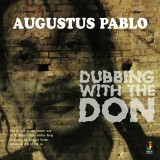
Augustus Pablo - Dubbing With The Don
  • A1: Skank On Dub
  • A2: Way Out Rockers
  • A3: Pablo's Express
  • A4: Pablo's Happy Feeling
  • A5: Soldier Man Dub
  • A6: Well Frozen Dub
  • A7: Sweet Cassava Dub
  • B1: Talking Dub
  • B2: Pablo's Connection
  • B3: Skanking With Pablo
  • B4: Pablo's Delight
  • B5: Death Trap Dub
  • B6: Rockers Downtown
  • B7: New Train Dub

2024 Repress
If anyone in the reggae circles could be described as having their own sound it would have to be Mr Augustus Pablo, born Horace Swaby 1954 St Andrew Jamaica. He took the humble melodica a wind blown mouth keyboard and made it shine.

His musical journey started one sunny day in 1969. Walking into Herman Chin- loy's Aquarius Records shop and on playing his melodica so impressed its owner that he was taken off to Randy's Studio 17, the very next day to cut his first record 'Iggy Iggy'. But it was his second tune under the guidance of Clive Chin again cut at Randy's, the seminal 'Java ' that put the young Augustus Pablo on the map. Clive Chin continued his work producing Pablo's debut album 'THIS IS AUGUSTUS PABLO' . An instrumental affair on which the neo-mystical ''Far East'' sound synonymous with Pablo's work emerged.

Having worked with most of the top producers of the time,Lee Perry,Keith Hudson, Bunny Lee, Augustus decided to set up his own label "Rockers", named after his brothers sound system. Where many of his tunes would first be heard.The label came to define a new and exciting chapter in reggae history.Even when versioning acknowledged classic Studio One rhythms there was a precious maturity and depth to Pablo's productions that kept him at the top throughout the late 1970s and into the 1980s. His 'King Tubby meets the Rockers Uptown' set which featured some of these rhythms reworked; Swing EasySkanking Easy, Frozen SoulFrozen Dub, stands as one of the true dub classic albums of any reggae education.

This set of dubs are taken from his classic 70's period.All rare dubs straight from the masters. You may have heard the tune, but not these versions. So sit back and enjoy the Original Rocker..... STILL SOUNDS SWEET.

RESPECT....JAH FLOYD.

pré-commande17.10.2025

il devrait être publié sur 17.10.2025

13,24
King Tubby - Lost Treasures LP

Born Osborne Ruddock in Kingston in 1941, he grew up around High Holborn Street in Kingston, before moving to the new Waterhouse district in 1955. His electronic genius grew from working and fixing radios and TV sets. A natural progression led to working with amplifiers, and starting his own sound system, 'Tubby's Home Town Hi-Fi'. A very competitive games i the late 60's. You were as good as the EXCLUSIVE records you played.
Tubby discovered during his time cutting discs for Duke Reid's Treasure Isle set up, that by dropping vocals/instruments in and out of the backing tracks, you could invent new versions of existing old tunes. These early versions tried and tested on his sound system went down so well that he invested in a four track mixing console with delay echo effects, sliders and phasing units and so began King Tubby's 'Studio Of Dub' at 18 Drummlie Avenue, Kinston 11 , Jamaica...His Home.....
This is where all the producers would bring their tracks for Tubby to put his magic over. Most tracks that came out in Jamaica from here on in would carry a 'Version' on it's B- Side more than likely a Tubby Dub.
One of the producers who used him the most was Bunny Striker Lee, who's labels Jackpot, Justice and Attack all carried Tubby's mixes/versions on their flip sides.
Our collection here, all taken from original master tapes you might have heard the tracks before but not these versions....Lost in the vaults till now. So sit back and enjoy the dub master at work.

RESPECT.... JAH FLOYD

Track 1 CHERRY'S DUB
We start off with a very early version of Eric Donaldson's 'Cherry O Baby'.
This version was recorded at Dynamic Sounds, in 1971 and has remained lost on master tape until now.

Track 2 FRENEMY DUB
This classic rhythm known as 'Mad Mad World' and 'Crying in the Ghetto' both voiced by Winston Jarret
got worked on by Tubby as an exclusive mix for his sound system. Released here for the first time featuring
the late, great Jacob Miller on dubbed vocal.

Track 3 FALLING FOR DUB
A version here of Cornell Campbell's 'My Whole World is Falling Down' Tubby in fine form.

Track 4 DUB ON THE STREET AGAIN
Yes my friend The Street Again finds Cornell Campbell's vocal dubbed King Tubby Style Nice Rockers drums from Sly Dunbar.


Track 5 DECEIVING THE DUB
Sly and Robbie dubbing up Delroy Wilson's ' So Long Jenny' with King Tubby at the boards

pas en stock

Commandez maintenant et nous commanderons l'article pour vous chez notre fournisseur.

13,40

Last In: 21 months ago
IDA	MARIA - SEVEN DEADLY SINS +3
  • Envy
  • More
  • Lust
  • Lazy
  • Pride
  • Still Angry
  • I Pushed Too Hard
  • Melancholia
  • Pussy And Money
  • Who Will Save Rock And Roll

Glow in the dark vinyl. Ida Maria returns in full force with Seven Deadly Sins + 3, a riotous, confessional, and deeply personal punk-rock opus that confronts our ugliest truths with blistering honesty and a wicked grin. Written and recorded with her longtime core band - Jan Ole Kristensen, Ruben Fredheim Oma and Alf Magne Hillestad, - alongside producer Martin Selen and engineer Hans Petter Heggli, Seven Deadly Sins + 3 is as immediate as it is fearless. From the volcanic fury of "STILL ANGRY" (co-written with Finnish rocker Joonas Parkkonen) to the unhinged groove of "LAZY", a brutally honest take on shame, duty and the paradox of living in a world that preaches modesty while idolizing fame and fortune. As such each track is a sin dissected, and shouted out loud with no remorse. DO NOT expect a sermon! - this is Ida Maria. It's punk rock, baby. For nearly two decades, Ida has set her own rules, building a legacy that resists every attempt at softening her edges. From her breakout debut Fortress Round My Heart to viral anthems like "I Like You So Much Better When You're Naked," her music has always offered a kind of sonic confessional - messy, bold, and impossible to ignore. With Seven Deadly Sins + 3, Ida Maria offers more than just a rock album - it's a confessional booth, a punch in the gut, and a kitchen table chat with a friend who's seen some things and still comes back with laughter, love, and rock'n'roll.

pré-commande26.09.2025

il devrait être publié sur 26.09.2025

38,61
Wishbone Ash - Argus LP 2x12"
  • A1: Time Was
  • B1: Sometime World
  • B2: Blowin' Free
  • C1: The King Will Come
  • C2: Leaf And Stream
  • D1: Warrior
  • D2: Throw Down The Sword

Wishbone Ash reigned supreme through the 1970s — centered on inspired musicianship, joyful spirit and inventive songs. Their concerts were uplifting and their recorded work sublime. Argus remains a stunning high point in the band's startling repertoire. Argus was a 1972 tour de force, a hard-rocking masterpiece that has gone on to have a huge impact on rock bands moving forward. If you've never heard Argus, you've surely heard music that it inspired.

The British quartet's trademark harmony guitars became a touchstone for many: Thin Lizzy, Iron Maiden, Opeth, and Lynyrd Skynyrd have all acknowledged an Ash influence, and tracks such as Lizzy's "The Boys Are Back in Town," Maiden's "The Trooper," and even Steely Dan's "Reeling in the Years" all have twin-guitar moments that hark back to Argus. But Wishbone Ash were different from the start. They were never strictly a hard rock band; their soaring vocal harmonies and musical grandeur placed them close to progressive rock.

But they weren't strictly prog either: They had no keyboards, no real classical influence and weren't into side-long suites. Their roots were in the blues, and their calling card was twin lead guitars in harmony (played in the original lineup by Ted Turner and Andy Powell). Even the hardest Ash rockers — like "Blowin' Free," the most famous track from Argus — had an ethereal touch. They could rock the big stages, but they did it with subtlety and grace. This is reflected perfectly in the classic album sleeve by prog-associated designers Hipgnosis: The front cover shows a Greek sentry — the "argus" of the title — staring off into the distance. It's a mythic, old-world kind of image until you look closely at the back cover, and see that he's heralding the arrival (or perhaps watching the departure) of a spaceship.

Two worlds colliding. Exactly what the band and album were all about. By the time of Argus, Wishbone Ash were stars in England and cult heroes among Anglophiles in the US. What made Argus a step forward was its flow of moods. The songs don't run together, but there's an emotional connecting thread from the album's somber beginning to its heroic end. The band insisted at the time that lyrics were something of an afterthought: Shortly after its release, main lyricist Martin Turner told NME that he wrote them mainly to fit the mood of the music: "The music that was coming out was very English, very medieval, and the lyrics had to reflect that." Added Powell at the time, "The expression comes out in the guitars. We wouldn't play it if it didn't express something." Now, Analogue Productions has applied all of its vaunted craft and technical expertise to make this epic album shine! Two 45 RPM LPs pressed on virtually silent 180-gram vinyl at Quality Record Pressings make the remastered audio sparkle. Quieter lyrical sentiments and softer musical passages are rendered precisely, while majestic riffs and fist-waving anthems fully reveal the energy of the music! Argus isn't just another rock record — it's a journey through a sonic landscape rich with depth, emotion and technical prowess. It's the album that solidified Wishbone Ash as masters of twin guitar harmony. Discerning audiophiles will find Argus an essential addition to their record collection. It's a masterclass in sound engineering that fully captures the intricate interplay of dual guitars with pristine clarity and a warmth that only analog recordings can provide.

pré-commande31.08.2025

il devrait être publié sur 31.08.2025

88,19
Articles par page:
N/ABPM
Vinyl