Steve Leach's Balearic beach-funk beast Ocean Potion, recorded with the Crystal Grass Orchestra is an absolutely ace, Ned Doheny-adjacent funky AOR / blue-eyed soul BBQ classic from 1976.
Who is Steve Leach, you ask? None other than Seasick Steve in a previous life! A French-only release on Philips, it's a hugely immediate, pop-funk firecracker. It features a wonderfully lush, full orchestral sound throughout, underpinning Steve's gorgeous voice and an army of brilliant backing vocalists.
The supporting cast is phenomenal and is arguably the salient reason this is such a fantastic record. We're talking legendary players from the French scene (think Arpadys, Voyage, Kongas, CCPP, Giant, Swing Family) such as Don Ray with his arranger-conductor hat on as well as synths, Marc Chantereau on percussion, Slim Pezin on guitar, André Ceccarelli on drums, Christian Padovan on bass and Pierre Halation on flute.
With these snakes behind the scenes, it remains a mystery how Ocean Potion is so relatively unknown. Hopefully, this long overdue reissue rectifies this and puts a stop to people dropping $200 on it.
Triumphant, horn-forward opener "The Light Of The Mind" has that uniquely Ned Doheny fidgety funk feel with a fantastically irresistible chorus and great harmonies. Just magic. The insouciant, swaggering "Hey! Hey! What You Doin To Me" is straight up white-hot feel-good funk with by turns sweeping and stabbing strings and a neck-snapping break. Crucial. Coming off like something off The Beach Boy's Surf's Up or Holland (including a sneaky "reason to live" reference that surely nods to "The Trader") is the brilliantly ominous, driving wall of sound of "Take Strength". Cavernous drums, urgent strings and a staggeringly good vocal performance make this a real highlight amongst an album of highlights. The blissful folk-funk of "The Lady Of The Sea" is a real naked heartbreaker, melancholic vibes and a beautiful flute line complementing each other perfectly. Side A closes out with "All My Life", a groovy island-funk white-reggae-tinged lilter which just about lands the right side of acceptable.
Side B opens with the gorgeous "You're The Only One Girl" before the propulsive Philly soul of "At Least We Got Love" elegantly glides into focus. Pulsing beats and piano working with that irresistible orchestra of grass. Glacial ballad "All Love's Children" has a deep New Orleans soul feel that truly soars whilst the breezy "Get Out In The Sun" owes a debt to "Crocodile Rock". It's pure pop for now people and wouldn't have been out of place on a late 70s Nick Lowe effort. Deep late-period Beach Boys gem "Golden Hues" is another heavy melancholic down lifter that really beguiles before the real reason you're all here. Pastoral closer "I Meditate Each Day" is just beautiful, and likely the reason this reissue is giving you that special feeling. Another gorgeous flute-led, folk-funk groover, it featured in a memorable mix from the Creme2laCreme crew (Raphael Top-Secret, Jerome Qpchan and Antoine Kogut) live on Red Light Radio over a decade ago and has been top of many heads' wants list never since. Just mellow out.
As ever, the audio for Ocean Potion has been carefully remastered by Be With regular Simon Francis, ensuring it sounds better than ever. Cicely Balston's expert skills have made sure nothing is lost in the cut whilst the records have been pressed to the highest possible standard at Record Industry in Holland. The original, iconic sleeve featuring a topless Steve reclining next to his piano on a flatbed truck on the beach (of course?!) has been restored here at Be With HQ as the finishing touch to this long overdue re-issue.
Buscar:off the record
‘Les Cigales’ takes its’ sonic cues from the structure of film and TV music from the 1960s and 70s, channelling the influence of film composers such as Francois de Roubaix and David Axelrod, whilst also sitting somewhere between the washed out, sun-soaked sonics of Surprise Chef and Robohands. As the EP unwinds, its narrative reflects a love story, full of longing, melancholy and drama, connecting with the story of Gyptis and Protis – the founding myth of Marseilles – whose love broke convention and welcomed the arrival of foreign people on French soil.
The project follows The Offline’s debut album ‘La couleur de la mer’, released in November 2023, which saw him create his own soundtrack to a film yet to be made. Inducing images of manorial, fog- swept villas at the seas edge, silhouetted sailing boats and cigar-chomping villains attempting to thwart the mission of an imaginary hero, the record is a masterfully composed sonic journey. ‘Les Cigales’ sees him continue to build upon a distinctive sound that moves from dramatic cues to fragile romanticism, incorporating psychedelic spaciness, retro soul and hip-hop sensibilities informed by his extensive record collection.
Exactly 15 years ago, the two goats Goatfreed and Goatleeb Udder landed on Earth from the distant planet of planet GoatEborg to honor us with hard sounds. Some extraterrestrial acts have already tried to gain a foothold on earth, always with the intention of world domination, but only the prominent pair of brothers have been able to do so so far. With their last two studio albums, the band made it into the official the official German album charts - with their groovy sound somewhere between death metal and grindcore. The debut album "Back From The Goats" was released on CD & Digital on 30.10.2009. Now, for the 15th anniversary of the record, the album will be released on vinyl for the first time.
Strange Power!, the fifth record from Durham, NC-based songwriter and poet Anne Malin Ringwalt, emerges from the darkest waters of the self into a world remade. Releasing in conjunction with her second book of poetry, What Floods (Inside the Castle, Oct. 2024), Strange Power! overflows with Ringwalt's teeming and sensuous personal symbolry: glowing lilacs and gentle queens, dolphins wild and girls who grew up brave _ T.S. Eliot sung by Cat Power, backed by Mount Eerie. She sings: "I rose up from water." Ringwalt writes and performs with the authority of a lifetime spent harnessing the alchemy of storytelling; her belief in the power of words to heal and transform is palpable in each achingly- delivered lyric. Made amidst profound inner and outer change, Strange Power! also sees Ringwalt taking up the role of self-producer for the first time, mirroring and supporting the record's Orphic quest by gathering contributions from a coterie of friends wielding an electric range of American instruments. Violins, vibraphones, drum machines, electric guitars dappled with spring reverb, wind-blown shells, and a host of other numinous sounds form an unfurling and shadowy world which was then carefully honed during the mixing process (shepherded by Michael Cormier-O'Leary and Lucas Knapp) _ settling the final record in an eerie meridian between spareness and verdancy. The result is a beguiling and darkly blooming realm: the sound of a personal cosmos being remade, piece by piece. Ringwalt is at the height of her spirit as both songwriter-poet and singer, her willowy voice by turns conjuring and keening as she reckons with her deep past and the stories told since. Opening track "The Pines" sets the stage for a record of truly life-long scope: "I was a child, now I hold her / I was asleep for many years." Some songs, like the gorgeous "North Carolina" and "The Saint," were written as early as 2013 but, Ringwalt says, "insisted upon being remembered" as the record took shape; in its final form, they serve as inciting moments of self-discovery before the journey to come. "The Visionary" recalls one of Ringwalt's earliest musical breakthroughs _ her re-rendering of an Emily Brontë poem into a song at age 15 _ and, she says, "`cites' the melody of that song in the context of this new one _ a holding of the past and present and every layer in between/beyond, in utter solitude _ a solitude that reflects certain aspects of abandon as a child and an adult..." This unusually lengthy time-scale lends Strange Power! a deeply moving sense of narrative fullness. Stretches of the record _ particularly the "Judgment Day" ? "River" ? "Lilac Bloom" trifecta that form the black heart of Side 1 _ may recall familiar wanderings of personal underworlds such as Mount Eerie's Lost Wisdom Pt. 2 or Neil Young's Ditch Trilogy. Yet this hollowed landscape is in turn exorcized by the a capella "I Know," in which Ringwalt sings "I won't be gutted by you / For giving and trying to heal / I won't be gutted, I am not a fool / I deserve a love that is new" before the song concludes with a piano passage that recalls hymnal music _ suggesting a faith in life itself to offer new beginnings. Side 2 features some of Ringwalt's most powerfully introspective writing to date, as the songwriter casts off myth after myth in her search for personal transformation. By the final song, "Stories," the energy that has been gathering all throughout the record breaks loose as Ringwalt reflects: "I wrote so many stories, not knowing what the end was." But at this stage in the journey, we know there is no such thing as an ending; if the healing process is never complete, the storyteller's strange power is what finally offers liberation.
Something About Livingis an album of live recordings by experimental jazz composer/multi-instrumentalist Robert Stillman. The music was captured over the course of Stillman's time as the solo support act for The Smile (Thom Yorke, Jonny Greenwood, Tom Skinner). The album weaves excerpts from various theater and arena shows along the tour's North American routing into a seamless whole, creating a 40-minute program that represents an expanded version of Stillman's ever-transforming live set.
Something About Livingis the product of a steady, on-stage evolution that happened over the course of the nearly 60 shows opening for the Smile across the EU, UK, US, Canada and Mexico. However, the creative origins of the set began in relative isolation during the pandemic, through Stillman's work on projects like his multi-media installationUnseen Forcesand his monthly broadcast for Margate Radio, both of which drew upon solo improvisation using saxophone, cassettes, Yamaha DX7 synthesizer, and effects.
"At the time The Smile asked whether I'd like to open for them on their first tour, I felt like I'd already been preparing without really knowing it," says Stillman. "I'd been doing this music constantly, but always for a hypothetical audience" During the pandemic, Stillman's solo set-up served as the research lab where he worked on all the concepts he was interested in: solo improvisation, creating and manipulating cassettes, FM synthesis, analogue delays chains, no-input mixing, and non-metric rhythmic pulses. So when he was offered the first Smile tour, the idea was to bring "the lab" onto the stage.
What Stillman could not have prepared for was the experience of playing in venues with capacities of up to ten thousand listeners. "The first tour was in summer 2022, so not that long after the worst of the pandemic, when I had pretty much made peace with the idea that I might never be able to perform for an audience again. Then all of a sudden I found myself in front of huge numbers of people, and felt the massive responsibility of being with an audience, of this thing I'd done alone for so longactually being witnessed, and it was completely overwhelming!" On the flip-side, Stillman also recalls, was a new appreciation of how powerful the live performance was as a social phenomenon. "It's a cliche, but also true: the moment of making and hearing music in a shared time and space has a very specific meaning and power; there was a sense that everyone in the venue was necessary to make it real, regardless of what they were doing, or how they felt about it. There was an inevitability about it that I'd never fully appreciated."
Over the course of the tours that followed, Stillman transformed this appreciation of the shared moment into an ethic of spontaneity that guided the development of his live set. "An important reference for this set has always been an Animal Collective show I saw when I first moved to New York, probably in 2001 or so, that has always set the high-water mark for what I wanted to do live- they were improvising a lot, and out of what would seem to be absolute chaos they'd find their way to something structured, and then back out again into the unknown. It was so thrilling to witness".
ThoughSomething About Livingcompiles recordings from different dates along the tour, Stillman has edited and mixed them into a work that seeks to reflect the ebb and flow between 'chaos and control' that characterizes his live set. Among the compositions featured are some from previous album releases ("Time of Waves", "What I Owe", "What Does it Mean to Be American") as well as some new compositions ("The Dream of Waking", "Renaissance 2.0," and the title track, "Something About Living").
The album/track title "Something About Living" is a reference to a line from Stillman's favorite film,My Dinner With André: "André Gregory is explaining the value of life experiences that, as he says, are'to do with living'.That really struck me, the way he articulated it. I strongly believe live music situations can ask these kinds of questions, for performers and audiences. I hope that's reflected in this music."
[a] 01: Time of Waves (Live in Miami FL) [Live]
[b] 02: What Does It Mean to Be American (Live in Forest Hills NY) [Live]
[c] 03: The Dream of Waking (Live in St Augustine FL) [Live]
[d] 04: Something About Living (Live in Richmond VA) [Live]
[e] 05: What I Owe (Live in Chesterfield MO) [Live]
[f] 06: Renaissance 2.0 (Live in Chesterfield MO) [Live]
Belgian saxophonist, composer, and producer Mattias De Craene (Nordmann, MDCIII) announces a new solo album, ‘A House Where I Dream,’ on VIERNULVIER Records. On his second album, he delivers a highly personal and healing journey, presented as an alternative soundtrack to the 1973 cult film ‘The Holy Mountain.’
The record will be released on October 11 on vinyl LP and through all digital platforms.
"The Holy Mountain" is a surreal Mexican film from 1973 directed, written, and produced by Alejandro Jodorowsky, who also stars in the film. The film holds a prominent place in avant-garde cinema and explores themes such as spirituality, mysticism, and the quest for enlightenment. It is in this vein that ‘A House Where I Dream’ is crafted.
“My mind and soul - and thus my music - come home to this motion picture” - Mattias De Craene
The album will be presented live with the film on October 16 at Videodroom during Film Fest Gent.
ABOUT THE ALBUM
With hypnotic tape loops, grainy textures, and mesmerizing saxophone, Mattias De Craene creates possible worlds that herald a spiritual transformation. From the Scottish Highlands and desolate mountains to the deepest recesses of the soul, this music has the power to create cinematic landscapes that transcend time and space. The sound of these 8 tracks is closely related to the minimalist compositions of Terry Riley, but the work of contemporary artists like KMRU or William Basinski is also drawn from the same material.
Above all, this album is a deeply personal journey and unintentionally serves as a metaphor for De Craene's ascent of his own mountain. For the Videodroom festival by Arts Center VIERNULVIER, the saxophonist began working on a new soundtrack for the film ‘The Holy Mountain’ in 2023, but his body and mind abruptly called him to a halt, forcing him to take a professional break. However, this project never left him, leading to an honest and raw quest to find himself as both a person and an artist, with Jodorowsky as a companion de route and music as an anchor. It initiated a long process of dismantling, searching, healing and back again. The album not only provides a sanctuary for dreaming to all who listen, but for its creator it also serves as both an outcry of despair and a source of comfort during challenging times.
All the tracks on 'A House Where I Dream' share an unfiltered grain of life, as one can almost feel the damp breath of the saxophone blowing.
The album opens with the three-part strong 'Transcention,' where the hypnotic interplay between soprano sax and lo-fi tape loops leads to higher realms of the mind and soul.
Alternating between deep frequencies and farout folk modalities, this mantra-like triptych acquires an alchemical character and ultimately transcends time and space.
In the ethereal 'Away,' one can peer into an abyss of resonance while a saturated tenor sax lends guidance in the spirit of Terry Riley's productions. 'You and Me' also bathes in a similar atmosphere, albeit in the vein of healing 90s ambient as granular sax tones converge with celestial chants. 'Gazing Upwards Towards The Sky,' offers different shades of blue as a slumbering tenor sax is juxtaposed to swift sax patterns. On 'A Stranger That Moved Me,' beauty lands in a soft and subtle manner, while the closing track 'Shepherd's Glow' drifts like a mountain wind flaring up at the darkest hour of the night.
The artwork is created by Gent-based artist Sam Timmerman, who portrays the world of 'A House Where I Dream' with playful repetition and mystique.
Love Is A Flame In The Dark is the debut album by experimental songwriter Karl D’Silva. A raw labour of love, a towering spire of twisted steel, tenderness and becoming, it’s a body of songs that belies the virtuoso talents of an artist whose reputation has been built on collaborating with various avant garde underground luminaries. Self-recorded at home in Rotherham and pulsing with the conviction of a true believer, these songs burst out of their self-consciousness to meet life head on, bristling with energy, 10 glimpses of the human spirit in the darkness.
Recorded throughout 2021 - 2023 and mixed in Leeds with engineer Ross Halden, D’Silva has constructed a Pop language for himself. Mutated songs that owe a small debt to the post-Industrial music of Cabaret Voltaire, Nine Inch Nails and Coil, they’re nonetheless powered by a vigorous tenderness, earnestness and D’Silva’s knack for melody. Each song is meticulously sound-designed, using synthesised sounds created from scratch married with D’Silva’s virtuoso playing on saxophone and guitar. The songs on Love Is A Flame In The Dark are unabashed, earnest love letters to living, requiems for a world fading away and small gestures of solidarity in the face of entropy.
Until now, D’Silva’s fingerprints could be found on live dates with Thurston Moore, Oren Ambarchi, Hardcore pioneers Siege and Rian Treanor as well as recordings by previous groups Trumpets Of Death and Drunk In Hell. Primarily associated with the alto saxophone in his improvisation work, Love Is A Flame In The Dark features a dizzying array of instrumentation, all played by D’Silva. D’Silva’s current membership of the group Vanishing may be a good touchstone for the dense, sonically thrilling world-building on the album but the most
striking instrument, perhaps, is D’Silva’s voice. With a soulful, rasping timbre resulting from prolonged intubation as a new-born, his vocal is both fearless and tender. On the soaring, electronic body mover Wild Kiss, thundering percussion is in service to Karl’s voice full of desire, arching up into a flayed falsetto. It’s a trick repeated on Flowers Start To Cry, where it’s deployed against the backdrop of layers of ripping alto and thudding drum programming that recall Nine Inch Nails’ visceral production, if they were covering a Prince hit. These songs capture the essence of 2024’s Karl D’Silva music; pure physicality
breaking down to reveal a shining, compassionate vulnerability.
The full breadth of Karl D’Silva’s instrumental prowess is in evidence from the off. On The Outside imagines blooming out of personal apocalypse with a soundscape of synth, saxophone worthy of any late 60s Free Jazz blower and crushing sound design. Entropy is planet-sized synth pop, Nowhere Left To Run uses midi-string orchestration to tell a story of light emerging from the dark. It’s a theme picked up
throughout the album: The Butcher is a political parable, the narrator holding power to account with grotesque, brutal imagery. It’s on a track
like Real Life that the true message emerges, however. D’Silva is peering through the layers of artifice, struggle and the fog of daily
living to find a life full of energy, connection and light. Each song here is a route into this light, out of the darkness.
The debut recording from the duo of multi-award-winning Scottish author David Keenan and Bruce Russell, the guitarist from the greatest underground rock band of the late 20th century, New Zealand’s The Dead C, was recorded live in Christchurch, NZ, as part of the WORD festival in August 2023. A series of live improvised settings that pair readings from Keenan’s monolithic and critically-acclaimed modernist masterpiece, Monument Maker (White Rabbit 2021), with guitar and electronics from Russell, the music takes off on the kind of post-VU fantasy of punk-primitive free music posited by Russell in projects like A Handful of Dust while expanding on Russell’s no-technique blues w/scalpel sharp riffs and aformal blats of pure electricity that match the religious eroto-mania of the text. Keenan reads w/shamanistic intensity and with a sonorous, incantatory rhythm, while Russell conjures the very ghost of the book straight out of the air. Think the early Patti Smith/Lenny Kaye spoken word/guitar jams informed by religious painting, Bach cantatas, Pierre Reverdy, Goya, Charles Olson, Arthur Doyle and Rudolph Grey. Features full colour photography by musician and artist Heather Leigh taken in-situ during the writing of Monument Maker in France in 2018. Bruce Russell is a practitioner in sound, who for forty years has been a member of The Dead C and A Handful of Dust. He mixes rock, electro-acoustics, noise and improvisation in equal measures. Also directed two of New Zealand’s vanguard independent labels, Xpressway and Corpus Hermeticum. His solo guitar practice reconfigures the blues as a form of improvisational auto-destruction. He is also a writer and his next book is titled ‘Rock’n’roll: my part in its downfall’. David Keenan is the author of six novels; This is Memorial Device (Faber & Faber) which won the London Magazine Prize for Debut Fiction and was shortlisted for the Gordon Burn Prize; For the Good Times (Faber & Faber), which won the Gordon Burn Prize and was shortlisted for the Encore Award for Second Novels; Xstabeth (White Rabbit), which was shortlisted for the Dublin Literary Prize; The Towers The Fields The Transmitters (White Rabbit); Monument Maker (White Rabbit), which was a Rough Trade Book of the Year; and Industry of Magic & Light (White Rabbit). Edna O’Brien has said of him “I sometimes think David Keenan dreams aloud. His prose has the effortless, enigmatic, unsettling quality of dreams… reading him feels like being cut open to the accompanying sound of ecstatic music.”
Thirty years after it was released on CD and cassette, Fuemana’s cult classic New Urban Polynesian album is finally available on vinyl. Born from the blood, sweat and tears of the late great Polynesian renaissance man Phil Fuemana and his family and friends, Fuemana’s music transports the listener back to the autumn and winter days of 1994 in the antipodes, where they turned love, loss, grief and acceptance into the finest R&B/street soul album ever recorded in Aotearoa New Zealand.
Fuemana spent several late nights tracking one-take sessions at The Lab Recording Studio with engineers Simon Taylor, Chris Sinclair and Mark Tierney. From there, New Urban Polynesian came together quickly. Across the album, Phil showed off his prodigious skills as a multi-instrumentalist and producer, playing most of the smooth, sophisticated, and heartfelt music himself. In the studio, he shared the lead with Christina and Matty J, supported by a cast of backing vocalists, musicians and guest vocalists, including a young Carly Binding.
From the lush openings of their soulful Roberta Flack, Donny Hathaway, and Stevie Wonder covers ‘Closer’ and ‘Rocket Love’ to the misty new jack swing serenade of his original ‘Seasons,’ Phil’s goal was to craft material that would let the music industry know the Fuemanas had arrived while also inspiring the next generation.
In 1995, the Fuemana family’s youngest sibling, Pauly, borrowed the initials from Ōtara Millionaires Club and began performing as OMC. Not long after, he changed everything for New Zealand music by recording the feelgood guitar-laced Polynesian pop global mega-hit ‘How Bizarre’ with producer Alan Jansson.
Consumed by a desire to do more musically, Phil established Urban Pacifika Records, where he launched the careers of a new wave of Pacific hip-hop and R&B talent, including Lost Tribe, Moizna, AKA Brown, and Sani Sagala, aka Dei Hamo.
In 2005, Phil tragically passed away from a heart attack aged 41. Five years later, Pauly, equally tragically, joined him after an extended battle with a rare neurological disorder, leaving Tony and Chirstina to grieve and make sense of their family’s extraordinary story.
When New Urban Polynesian first hit record store shelves in 1994, the Fuemanas dedicated the album to their father, Takiula Fuemana. Three decades later, it has expanded in meaning to become a remembrance of their youngest brother Pauly and a celebration of the life and times of their big-hearted big brother, Mr. Fuemana, Mr. Phil Fuemana.
Words by Martyn Pepperell in conversation with Tony & Christina Fuemana.
Gazebo Records feel honoured for the opportunity to share this important album for our inaugural release, now available for the first time on vinyl with remastering by Mikey Young.
All proceeds from this record flowing to the Fuemana family.
The Post-Punk Synth Alchemists return with new album ‘Strange Loops’. With blistering rhythms and searing bass, AK/DK return with their highly anticipated fourth album, ‘Strange Loops’. It builds on the momentum of their previous release; Shared Particles, which sold out of the Dinked edition even before its release and achieved no. 7 in the Indie Record Store charts. Known for their trademark motorik energy and riotous joy, AK/DK are back, and for the first time, they’ve introduced guest vocalists into the fray. This new release sees the drum and synth duo collaborate with three exciting artists: the musician TVAM, punk poet - Thick Richard, and I Am Fya; sound artist. The angular guitars and spaced-out vocals of TVAM intertwine with the duo’s driving beats and convulsing synths, resulting in the pulsating Devo-esque powerhouse of ‘Square Route’. The two bands have been crossing paths on festival line ups for a while now and it seemed inevitable that they should join forces. I Am Fya’s usual experimental textures and sound-collage is temporarily put to one side on ‘Pull Up’. For this deep and heavy sub-rattling cut; I Am Fya and AK/DK lean heavily into sound system bass and dancehall style. Her febrile and powerful vocals interweave with tectonic sub bass and stuttering rhythms, sounding like Missy Elliot jamming with a modular synth. Manchester’s very own Thick Richard adds his lyrical, jet-black humour to the track ‘Nobody Shouts’. Their collaboration began when the band invited the punk poet up for an impromptu improvisation during their set at Beatherder festival 2020. It went down so well that they had to record it; learning the track from fan footage online. This is nothing new for AK/DK, creating powerful improvised moments for those lucky enough to be in the audience. Strange Loops presents two distinct halves of music. The A side offers sure-fire bangers that will linger in your ears and have you pounding the dance floor, while the B side delves into more experimental and ambient territories with completely live takes from the studio, reflecting the duo’s love of ‘70s German Kosmische bands. “We always had more ambient experimental tracks on our records, and wanted to give them a spotlight on this release” says the band’s Gee Sowerby. Their previous releases have earned accolades such as BBC 6 Music’s ‘Album Of The Day’ and impressed judges on Steve Lamacq’s Roundtable, solidifying their reputation as pioneers in their genre. It’s on stage where AK/DK truly come to life. Their electrifying performances, characterised by joyous live-looping of keyboards, drums, and distorted whoops, have made them a fervent fan favourite for over a decade. They’ve left an indelible mark on audiences at festivals like End Of The Road, Blue Dot, and Green Man, winning over new audiences wherever they play. With Strange Loops, AK/DK continue to push boundaries and defy expectations, reinforcing their status as one of the most dynamic and innovative acts in the scene
“Friends, they are my ticket out of this place I am in… feels like nothing more than a dirt bike vacation stop between Phoenix and San Diego.” Dirt Bike Vacation—for Worried Songs Records—explores the sonic world of the late amateur guitar player, Charles ‘Poppy Bob’ Walker, through a captivating set of instrumental songs made in the mid-1980s. Recorded on a single-track, Marantz field recorder, the project is a transportive document of Walker’s days spent as a meatpacking employee in Yuma, Arizona and the dailiness of that existence: driving to work, sitting in his backyard, walking around drunkenly, unwinding on the couch with a friend. These sketches, showing an experimental tendency, are surprisingly ahead of their time; some exhibit ad hoc tape delay (“Granite Bluffs,” “Goodbye YMCA”), while others make use of primitive overdubbing (“Continuation to Moon Doctor”). Not dissimilar to works such as Bruce Langhorne’s The Hired Hand soundtrack, Walker’s guitar playing is melodic, texturally rich and beautifully sober. On a musical tour from Nashville to Los Angeles, musician-archivist, Cameron Knowler, uncovered these songs from a series of dusty cassette tapes housed at a branch of the Yuma County Library. Originally tipped off by cryptic metadata entries found through an online finding aid, Knowler requested a sound sample and was immediately drawn in by their eerie, yet hopeful nature: “I didn’t care what they sounded like at first, but once I heard just a few seconds, I had to find out everything I could about Charles, who he was, and if he was still alive.” As it turns out, the two had miraculously crossed paths over 20 years prior when Cameron was a young boy accompanying his mother, a gem trader, on a biyearly sojourn to Quartzsite, a town 80 miles north of Yuma: “Charles, sitting down and smoking in a recliner, withdrawn, held what I now understand to be a mid-1990s Martin D-28 guitar. Unlike other old-timers, his instrument was sharply tuned and had a nice sound, even to my young and uncalibrated ears. Though his left hand showed signs of highly developed arthritis, his musical ideas were animated by a palpably deep understanding of fretboard anatomy, arrangement and harmony.” Sorting through the index cards associated with these tapes, Knowler was able to gain a detailed sense of most recording’s provenance, whereabouts and time: Walker’s Datsun pickup truck chugging along boiling hot Interstate 80, the Marine Corps Air Station parking lot, the Eastern Wetlands on the banks of the Colorado River, a fishing trip to Martinez Lake. Trying to reduce the amount of his own subjectivities coloring the work, Cameron constructed titles and track sequences by borrowing information gleaned from Charles’ handwritten notes: “I tried to organize everything by time of day, giving the listener the sense of how a Yuma day might sound and feel like, and each song title—even the record itself—is borrowed from his own words.” This proved no small task, as many notecards had to be deciphered and then coupled with their native tapes which needed extensive restoration treatments. The result is a project very much out of the blue, and one that is intensely personal to Knowler, having grown up in the same town under similar circumstances. “It feels like a part of my own journey as a guitarist reckoning with the defining marks of a gothic border town,” he remarks. “At the time I would’ve met Walker, I didn’t have much outside influence, but he has been in there all the while.” In their current form, the tracks combine to create a sonic journey that boldly contributes to the traditions of acoustic guitar soli, archival digs and field recordings all the same; most importantly, it is a creative document which shows a day-in-the-life of a man grappling with the human experience under a ubiquitous Yuma sun.
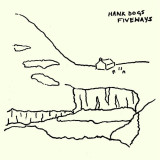
Hank Dogs – Andy Allan, his partner Piano and Lily, Andy’s daughter from a previous relationship - started out at folk clubs in London in the early 1990s before going worldwide in 1998 when legendary producer and late 60s Folk Rock guru, Joe Boyd declared them the first British act he'd loved in 30 years. Their debut album ‘Bareback’ saw them touring the US with Joan Baez and winning fans with their quiet, haunting sound featuring ethereal vocal harmonies, strong traces of blues and Celtic music and Allan’s fluid acoustic finger-picking recalling UK folk guitarists such as John Renbourn. Another part of their appeal, particularly in the States, was their ‘Carter Family’ image but then, when Andy and Piano split-up in real life, so did the band. A follow up album ‘Half Smile’ appeared in 2002 but this turned out to be their swansong. However, the story was not quite over yet.. a third unreleased album ‘Fiveways’ had been recorded before they went their separate ways and now it’s finally seeing the light of day on South London label Scratchy Records, plus the band are re-uniting for some long overdue gigs to celebrate the release. ‘Fiveways’ contains much of the Hank Dogs’ trademark English folk/US country-straddling sound. Piano’s voice bounces between early Suzanne Vega, Tracey Thorn and Mary Margaret O’Hara with occasional hints of Dolores Cranberry and Bridget St. John, while underneath the acoustic guitars run freeform tangled and Lily’s backing vocals add sky. Stand out track ‘Logic’ with its pensive lyrics and haunting guitar line recalls the way Suzanne Vega (her again) could sometimes make songs stand still in their tracks but it’s the dreamy ‘Nut’ that really captures the mood “You had me when I was sweet as a nut.. Not sweet enough” sings Piano. This is the sound of two ex-lovers still able to work together but unable to hide the odd dig here and there.. like a follow up album a couple of years later on from ‘Blood On The Tracks’. Andy sings a few songs too including the raggedy, swashbuckling ‘Gazetteer’ revolving around a ‘Pre-CBS Maple neck Sunburst bought off The Pretty Things’ and hinting at a whole lifetime of music biz escapades from watching his dad Elkan Allan produce 60s TV show ‘Ready Steady Go’ to a stint on bass in The Professionals along with Steve Jones and Paul Cook. Next year the story carries on with his long-running South East London ‘Easycome’ club night featuring in US TV queen Lena Dunham’s new Netflix series ‘Too Much’. Towards the end of the album an angelic setting of Dylan Thomas’s ‘Do Not Go Gentle Into That Good Night’ in the song ‘Nod’ recalls Christmas TOTP number ones from days gone by and captures Hank Dogs ability to transport the listener. This album is definitely one for the dreamers. FFO Pentangle, The Innocence Mission and William Blake
Marbled[15,76 €]
2017 album now available at a cheaper price. Limited colour vinyl 12” (Marled colour) DL card included is for indie stores only. Standard LP + DL. CD digipack. Under license from Lakeshore Records. A Fire Records release. Back in 2006, Richard Linklater’s film adaptation of Philip K Dick’s sci-fi novel A Scanner Darkly was greeted with suspicion. No one had done justice to the “master” (Bladerunner, Minority Report, Total Recall, The Adjustment Bureau had or have all met with mixed reviews). And, movies attempting to conjure up the effects of drugs were met with derision from the stoned cognoscenti. How could a story of dependence on Substance D (“Death” for short) be created with multi-million dollar stars in the frame anyway? Linklater had a plan; He’d use rotoscoping (an effect that falls somewhere between Kiki Picasso’s sketches brought to life and Disney on ‘ludes). The celebrities would be shrouded in mystery, in fact Keanu Reeves’ skin suit would make him almost invisible at times, a mumbling wreck swaying centre stage. A waste of talent? A waste of money? To complete the experience, a left field musical score was needed to ensure that everything wasn’t as it seemed. The phone books are full of creative composers but Graham Reynolds And His Golden Arm Trio jumped off the page. The band name is from a Frank Sinatra film where he plays a drug-addled muso. Perfect. Graham Reynolds works in extremes, he’s collaborated with DJ Spooky, the Austin Symphony Orchestra and with live film collage creator Luke Savisky. More importantly his Golden Arm Trio are never three and never the same people twice. For the movie he created short sound bytes – a surf-like instrumental, a country-tinged breather, the sound of stuttering insects crawling through your hair. The resultant soundscape is itchy and scratchy, full of mood swings and musical metaphors, an ever changing and unpredictable set of highs littered with reflective undertones and occasional soft, almost super numb realities. THE SOUNDTRACK: “Strands of post-rock, electronica, jazz, and vintage rock are woven and recombined throughout the album for unusual juxtapositions.” All Musi // “A tactile, emotional resonance often missing in contemporary scoring.” Soundtrack.ne // The music in isolation is bold and uncompromising, shifting as it moves through genres and sounds. THE COMPOSER : Graham Reynolds works in extremes; Short take moments of sound – whether it be a surf-like instrumental, a country-tinged breather or the sound of stuttering insects crawling through your hair – are all in his tick box. The resultant soundscape is itchy and scratchy, full of mood swings and musical metaphors, an ever changing and unpredictable set of highs littered with reflective undertones and occasional soft, almost super numb realities.
- Little Drummer Bolero
- Sleepwalking Through Christmas
- Me And Maurice
- Christmas Time Rhyme
- Waiting For Snow
- We Could Have This (Feat Lindsey Kraft)
- The Christmas Song
- The Bell That Couldn T Jingle
- Xmas Aye Eye
- You Don T Have To Be A Santa Claus
“Christmas is constant,” says Ben Folds. “Allowing you to take stock of what’s different, to understand who you are and all the ways you’ve grown and changed.” That notion lies at the heart of Folds’ brilliantly titled new holiday collection, Sleigher. Built on an eclectic mix of originals and reimagined classics, the album examines thepassage of time through the lens of Christmas, reflecting on memory, loss, and longing as it explores the variety of ways the yuletide season marks the chapters of our lives. The songs are playful here, full of humor and cheer, but they’re also laced with an inescapable sense of melancholy, a looming darkness that always seems to hover around the periphery of those late December nights. Folds’ performances, meanwhile, flirt with the standards while stretching the boundaries of tradition, at times offering up flashes of Vince Guaraldi and Burt Bacharach while still remaining true to Folds’ singularly virtuosic brand of off-kilter indie pop. The result is not so much a Ben Folds Christmas record as it is a Ben Folds record set at Christmas, a meditation on the inexorable turning of the calendar and our ever changing selves as observed at the most wonderful—and challenging—time of the year.
Somehow, 15 years has passed since I worked on A Colour For Autumn.
This recording was, in many ways, a critical one for me. In some respects, it rounded out a period of work that was focused on a particular marriage of thematics and harmony. Like For Varying Degrees Of Winter, it dwelled on old world impressions of the seasons, something that, in the southern hemisphere, isn’t intrinsically part of our way of approaching place. I think it was this incongruity with my own lived experience that kick started the interest in making these recordings.
The intention had originally been to take Vivaldi head-on , as the holder of the Four Seasons terrain (I jest of course), but shortly after completing this album, it became resoundingly clear that even in the old world, seasonality was a thing that was known ‘then’, and unknowable ‘now’.
Climate change, as a lived experience and not merely as a ‘possibility’, suddenly came into focus with reports flooding in about the climatic dynamics since the turn of the century and events like the Black Saturday fires here in Australia. It felt like, and continues to feel like, seasonality as some predictable measure of our world is relegated to the ‘before’ times. This record is not about these climatic shifts however, more a recognition of how we have used patterns and predictability to guide us over the centuries and perhaps a realisation that the way forward is not the path we have known historically.
Listening back to the record with fresh ears, a process made completely delightful by Stephan Mathieu who has carefully remastered it, I am struck by how minimal some of the structures were. There are moments that strike me as uncharacteristically patient and even generous, allowing one element to hold without interference. I’m grateful to still feel a deep connection to this edition and to the people and places that helped shape it.
I hope you find some sense of your place here. It’s offered with that intention and invitation.
- A1: Dee Dee Sharp - Comin' Home, Baby
- A2: Chubby Checker - (At The) Discotheque
- A3: Christine Cooper - Heartaches Away My Boy
- A4: Bobby Paris - Night Owl
- A5: Vickie Baines - Country Girl
- A6: The Tymes - Here She Comes
- A7: Orlons - Envy (In My Eyes)
- A8: Jerry Jackson - It's Rough Out There
- B1: Yvonne Baker - You Didn't Say A Word
- B2: Chubby Checker - You Just Don't Know (What You Do To Me)
- B3: Bunny Sigler - Girl Don't Make Me Wait
- B4: Frankie Beverly & The Butlers - Because Of My Heart
- B5: Damon Fox - Packing Up
- B6: Janie Grant - My Heart, Your Heart
- B7: Dee Dee Sharp - Deep Dark Secret
- B8: Evie Sands - Picture Me Gone
For the Northern Soul collector few places rival Detroit as a source for quality, rare records. But Philadelphia comes pretty close and it is the city of brotherly love that produced America's number one independent record label... the mighty Cameo-Parkway. Here, for the first time, we present the very best that that iconic company has to offer.From the Wheel to Wigan, to the Weekender and beyond, the sound of Cameo-Parkway has packed the dance floors across the UK for over 50 years. From the opening bars of Dee Dee Sharp's driving cover of Mel Tormé's Comin' Home Baby' it's easy to see why the label is so highly prized by collectors and dancers alike and why this unique vinyl tribute will touch the hearts of the faithful! All of the classics are here: Chubby Checker, Christine Cooper, Bobby Paris, Yvonne Baker, Bunny Sigler, Jerry Jackson etc etc. The difficulty has been in deciding what to leave out, not what to include, maybe a second volume later in the year One thing is for certain, 1.2 million YouTube viewers just love Cameo-Parkway!
REISSUE of Sun And Sail Club sophomore album. The name might be the Sun and Sail club, but you'll find no yacht rock here. Instead of Michael McDonald, we have Bad Brains. Kenny Loggins? Hall and Oats? More like Matt Pike and Lemmy Fucking Kilmister. "The Great White Dope" is featuring members of Kyuss, Fu Manchu, and the Adolescents, containing 10 riff-filled tracks of high energy, bullshit-free punk and sleaze. The song writing on 'The Great White Dope' steers away from the experimental direction of their previous release, and it's laser focused on one thing: unapologetically rocking your face off. The vocoder is gone and they've recruited singer Tony Adolescent, who delivers balls to the wall vocals with no added effects or frills. The production, like the music itself, is loud, heavy, and beautifully simple. "This record is a direct result of my wife telling me she was pregnant with our son. As a first time father, panic set in and I wrote the album in two hours. I wasn't sure if I'd have a lot of time once he was born so I crammed as many frantic riffs into one album as possible. Looking back it's funny to listen to now, but at the time I was on a mission. Everyone killed it on this record and we recruited Tony Adolescent on vocals which is unreal to me." - Bob Balch
After a nine year hiatus SUN AND SAIL CLUB are back and they've come back swinging! This album is more aggressive than the previous album, as if that was even possible. Same line-up as before featuring Scott Reeder (FU MANCHU/SMILE) on drums, Scott Reeder (KYUSS/THE OBSESSED/FIREBALL MINISTRY) on bass, Bob Balch (FU MANCHU/SLOWER/BIG SCENIC NOWHERE/YAWNING BALCH) on guitar and Tony Adolescent (THE ADOLESCENTS) on vocals. The album starts with a mellow jazz guitar piece and then proceeds to rip your face off until the end of the album, which closes with another solo jazz guitar piece. "Shipwrecked" is their strongest album yet. Fully realized and to the point. Fast and dissonant. "This album is a compilation of riffs collected over a nine year period. Most of the songs were written last year but some of them have been floating around for a while. There is a general sense of unease throughout. I wanted to make an album that went one step further than "The Great White Dope." The songs are faster and more intense at times. It's basically the soundtrack of me beating the shit out of my guitar. Then you factor in Scott Reeder on drums, Scott Reeder on bass and Tony Adolescent on vocals and you've got something more than I could have imagined by myself. This album is raw and pummeling. If you're a glutton for punishment this might be your desert Island record." - Bob Balch Recorded at Jim Monroe's The Racket Room, Casa De Balch, and Scott Reeder's The Sanctuary
Red vinyl, limited to 300 copies. After a nine year hiatus SUN AND SAIL CLUB are back and they've come back swinging! This album is more aggressive than the previous album, as if that was even possible. Same line-up as before featuring Scott Reeder (FU MANCHU/SMILE) on drums, Scott Reeder (KYUSS/THE OBSESSED/FIREBALL MINISTRY) on bass, Bob Balch (FU MANCHU/SLOWER/BIG SCENIC NOWHERE/YAWNING BALCH) on guitar and Tony Adolescent (THE ADOLESCENTS) on vocals. The album starts with a mellow jazz guitar piece and then proceeds to rip your face off until the end of the album, which closes with another solo jazz guitar piece. "Shipwrecked" is their strongest album yet. Fully realized and to the point. Fast and dissonant. "This album is a compilation of riffs collected over a nine year period. Most of the songs were written last year but some of them have been floating around for a while. There is a general sense of unease throughout. I wanted to make an album that went one step further than "The Great White Dope." The songs are faster and more intense at times. It's basically the soundtrack of me beating the shit out of my guitar. Then you factor in Scott Reeder on drums, Scott Reeder on bass and Tony Adolescent on vocals and you've got something more than I could have imagined by myself. This album is raw and pummeling. If you're a glutton for punishment this might be your desert Island record." - Bob Balch Recorded at Jim Monroe's The Racket Room, Casa De Balch, and Scott Reeder's The Sanctuary