Our third release and first vinyl release is the EP ‘Hell’ from the french producer and live performer OKKOTO.
Producing for more than 10 years, he already has a solid reputation on the hardcore scene with his duo Iridium both for their releases (The Third Movement/Heresy) and live performances (X-Massacre,
Hardkase, Heresy, Konkoly Open Air…)
For his solo project, he delivers a powerful industrial hardtechno with hardcore and metal influences.
The EP includes two remixes by Métaraph and 6EJOU.
Search:ok ma
- A1: Endlich Wieder Da Wo Es Beginnt 3:01
- A2: Die Kids Sind Alright 2:38
- A3: Fest Der Liebe 3:46 Feat. Sebastian Krumbiege
- A4: Selber Überlebt 3:12 Feat. Milleniumkid
- A5: Es Regnet Hirn 3:14 Feat. Paula Carolina
- A6: Unterwasserliebe 3:42
- B1: Gute Menschen 4:04
- B2: Hellwach 3:55
- B3: Epilog 4:13
- B4: Cold Brew 4:23 Feat. Lotte
- B5: Stadt Ohne Meer 4:05
- B6: Verschwende Mich With Querbeat 4:49
Die von der Zeit als "Klassensprecher einer ganzen Generation" betitelten und von hunderttausenden Festivalbesuchenden in Deutschland, Österreich und der Schweiz als einer der besten Live Acts bezeichnete Band OK KID, sind NACH 10 Jahren "Endlich wieder da wo es beginnt"! Wenn OK KID 10 Jahre Jubiläum feiern, merkt man erst selbst, wie alt man doch geworden ist. Ist das wirklich schon eine Dekade her, dass man zu "Kaffee warm" seinen Liebeskummer im braunen NASS ertränkt hat und sich bei "Stadt ohne Meer" freude-taumelnd in den Armen lag?! Yes, it is. Apropos STADT OHNE MEER: Seit 5 Jahren haben die KIDS ihr eigenes Festival in besungener Stadt Gießen. Dort, wo für die KIDS der Startpunkt ihrer fulminanten Karriere war. Doppeltes Jubiläum also. Es hätte keinen besseren Ort und Zeitpunkt geben können, um ihr neues Album "Endlich wieder da wo es beginnt", genau an diesem Ort, anzukündigen. Wie der Name schon anmuten lässt: Ein Hybrid aus Vergangenheit und Zukunft. Neue Songs, überraschende Kollabos und Klassiker im neuen Soundgewand.
"The Dive is a 2023 scuba-diving movie, starring Sophie Lowe (Medieval) and Louisa Krause (Billions), with much of the footage – underwater and topside – shot in the popular diving destination of Malta. Directed by Maximilian Erlenwein and written by Erlenwein with Joachim Heden, The Dive focuses on two sisters, Drew and May, whose dive together off the rocky shoreline is abruptly cut short when a landslide above water sends a cascade of boulders down on top of them, leaving May trapped down at 28m by the debris. With dangerously low levels of oxygen and cold temperatures, it is up to her sister to fight for her life. The score to The Dive is composed by Volker Bertelmann & Raffael Seyfried. Bertelmann is a German composer who is also known under the name Hauschka. In 2022, he won an Academy Award and BAFTA for his work on All Quiet on the Western Front. For the soundtrack for The Dive, he teamed up with Raffael Seyfried, who previously scored the acclaimed 2018 drama series Patrick Melrose. The Dive is available as a limited edition on turquoise coloured vinyl."
Dive by Various Artists, released 25 January 2024, includes the following tracks: "Do You Hear That", "Go To The Surface", "Ship", "Are You OK" and more.
This version of Dive comes as a 1xLP.
The vinyl is pressed as a turquoise disc.
Christian Thielemann&Wiener Philharmoniker
Neujahrskonzert 2024 / New Year's Concert 2024 / Concert du...
- A1: Erzherzog Albrecht-Marsch, Op. 136 3:03
- A2: Wiener Bonbons, Walzer, Op. 307 9:47
- A3: Figaro-Polka, Op. 320 4:14
- B1: Für Die Ganze Welt, Walzer 7:03
- B2: Ohne Bremse, Polka Schnell, Op. 238 2:18
- B3: Waldmeister: Ouvertüre 10:13
- C1: Ischler Walzer 7:55
- C2: Nachtigall-Polka, Op. 222 4:08
- C3: Die Hochquelle, Polka Mazur, Op. 114 4:42
- D1: Neue Pizzicato-Polka, Op. 449 3:39
- D2: Estudiantina-Polka 1:56
- D3: Wiener Bürger, Walzer, Op. 419 6:51
- E1: Quadrille, Wab 121 (Arr. For Orchestra By Wolfgang Dörner) 5:41
- E2: Glædeligt Nytaar! 2:05
- E3: Delirien, Walzer, Op. 212 9:06
- F1: Jockey-Polka, Op. 278 1:42
- F2: Neujahrsgruß / New Year's Address / Allocution Du Nouvel An 1:12
- F3: An Der Schönen Blauen Donau, Walzer, Op. 314 9:46
- F4: Radetzky-Marsch, Op. 228 3:52
Kein anderes Konzert wird auf der ganzen Welt mit so viel Spannung erwartet wie das alljährliche Neujahrskonzert aus Wien. In diesem Jahr wird das Mega-Klassik-Event in über 90 Länder übertragen und von mehreren Millionen Menschen verfolgt.Am Pult des Neujahrskonzerts 2024 steht Christian Thielemann, Chefdirigent der Sächsischen Staatskapelle Dresden und künftiger Nachfolger von Daniel Barenboim an der Berliner Staatsoper Unter den Linden. Thielemann ist den Wiener Philharmonikern seit dem Jahre 2000 musikalisch eng verbunden, und 2019 leitete er erstmals eines ihrer Neujahrskonzerte. Darüber hinaus dirigiert er das Orchester regelmäßig in Abonnementkonzerten im Wiener Musikverein, bei den Salzburger Festspielen sowie auf Tourneen in Japan, China, Europa und den USA. Nach der Referenz-Einspielung eines gemeinsamen Zyklus sämtlicher Beethoven-Symphonien begannen die Wiener Philharmoniker und Christian Thielemann noch während der Pandemie mit der Arbeit an einer Gesamtaufnahme der Symphonien von Anton Bruckner, die im Oktober 2023 bei Sony Classical erschien.Bruckner wird auch im Neujahrskonzert 2024 mit einer dortigen Erstaufführung seiner Quadrille op. 212 geehrt.
If the Corona pandemic and the accompanying concert bans have at least one good thing going for them, it's the extra time musicians have to write songs and live out their creativity. This circumstance was also the driving force for the SAMURAI PIZZA CATS, who come from the Electric Callboy environment. Frontman Sebastian Fischer was behind the microphone in their predecessor band Her Smile In Grief, whose line-up also included Daniel "Danskimo" Haniß, who is now celebrating success as guitarist, songwriter and producer of Electric Callboy. The contact between the two never broke off and so Daniel also produced Sebastian's later band Fall Of Gaia in recent years, whose former drummer and multi-instrumentalist Stefan Buchwald is also involved in this new project - family business from downtown Castrop Rauxel! So while Stefan contributes the music, Sebastian writes the lyrics and Daniel, as a creatively involved producer, ensures a well-rounded overall result. Okay, before we try your patience any further, let's talk about the elephant in the room: the band name. The SAMURAI PIZZA CATS have named themselves after a Japanese anime series from the early nineties. Why? Stupid question! Of course, because they are fearless warriors on their instruments, love to eat pizza and like cats! And maybe a little bit because they have soft spots for anime and silly band names - but only maybe. Rumour also has it that "Banzai! Smack! Meow!" is an onomatopoeic description of the band's sound.
nehan is a Japanese free improvisation & avant-garde rock quintet formed in August 2022. Their performances are initiated by a 9hz brain wave emitted from a testee who has been brought into a deep meditative state via either hypnosis or acupuncture - a very relaxed but very alert state. nehan doesn"t begin until the testee has gotten into the state of "nothingness." It is only then that the improvisation can begin. The role of improvisation has been key to all the musical projects of Masaki Batoh. In 2010, as Batoh was winding down the activity of his long-standing "heavy chamber folk" group, Ghost, he became involved in the design of a machine to generate sonic data based on brain waves. An acupuncturist as well as a musician by trade, his interest was spurred by the rhythms of the body and the brain, and a desire to access the "pulses" of brain waves to initiate improvisations. Following the release of Brain Pulse Music, Batoh toured Japan, the US and Europe, making demonstrations of his process using a local volunteer and guest performers, when available. Today, nehan arrive at their performance space prepared with a Brain Pulse testee, bringing a wide array of instruments including gongs, timpani, tabla and other drums and percussion, Crumhorn, bagpipes, mellotron, oscillators and additional sound effects. Their performance is a transformative electro-acoustic display that passes through the prism of music styles, from east to west, from traditional folk and classical to rock, jazz, and avant electronic. While nehan"s performance presentation invokes a sense of ritual, they understand their process as being far removed from any type of spiritual endeavor - it has nothing to do with eastern thinking or any kind of religious ceremony - this is an action of improvisation, occurring in reality between the five musicians on stage, in response to the brain waves of an individual. For the personnel of nehan, Masaki Batoh asked players with whom he had good previous experiences in improvisation: Futoshi Okano (Ghost, Acid Mothers Temple, The Silence), Haruo Kondo (Espvall & Batoh) and Junzo Tateiwa (Ghost), along with female Brain Pulse testee Gozen on oscillators. The performance here, recorded live in August of 2022 at GOK SOUND in Tokyo, demonstrates their communal dedication to the improvisation. The players act as listeners and musicians simultaneously, inspired to make extended pieces of music out of the "nothingness" of brain waves. The possibilities of nehans"s chosen approach are almost infinite; an evening with nehan is only the beginning of their journey.
Nach dem 2022er Erfolgsalbum "Go Steady" kehren die Londoner Ska-Pop-Punker BUSTER SHUFFLE auf die Bühne zurück und bringen eine brandneue Buster-Hymne mit, die den Titel "Hold Back The Rebels" trägt. Als Jet am Ende des Lockdowns umzog, stellte er fest, dass er einen sehr ungewöhnlichen neuen Nachbarn hatte. Im Garten des Nachbarn lebte nämlich ein Truthahn, ein sehr, sehr lautstarker Vogel (Tag und Nacht). Diese lärmende Meleagridinae (gerne googeln) hat schon so manche Tasse Tee im Garten verdorben. Es musste etwas unternommen werden, und so bereitete Jet seine geliebte Katze und seinen Hund (die Rebellen) auf ein "Attentat über den Zaun" vor. Als seine Frau von Jets Vorhaben erfuhr, griff sie in letzter Minute ein und befahl ihm, die Rebellen zurückzuhalten". Bei der Produktion der 7-Inch-Single und der Tournee wurden und werden keine Truthähne verletzt. Der Nachbarschaftsstreit wurde friedlich beigelegt. Fresssack! Nur 500 Exemplare von 'Hold Back The Rebels', auf der B-Seite der ebenfalls brandneue Song "Then Like Thunder", werden auf 7-Inch-Öko-Vinyl gepresst und nur bei Buster Shuffle-Live-Shows und über Cargo/375Media erhältlich sein! Buster Shuffle still goin' steady!
tapetopia 004 The Leipzig band Neu Rot represented a singular phenomenon within the alternative music reservoir of the GDR. As with so many bands that cultivated a more sophisticated sound in the late 80s, Neu Rot’s beginnings had been in punk rock. But, with a remarkable rigour against itself, the band steadily worked its way towards post-rock. This thorough process came to fruition in 1988 with the production of the tape “Halt An”. It had been preceded by the band’s struggle for its very own means and their technical feasibility. Neu Rot’s pilgrimage to its own centre was not unimpeded. The band’s name was perceived by the GDR’s cultural watchdogs as an erratic chain of associations between the suspicious word “Neu” and the ideological signal colour red. The band was legal, but its lyrics were deemed illegal. The edition of “Halt An” was somewhere between over fifty and under one hundred copies. Jörg Stein (voc, g, casio sk-1, yamaha ps-2) Karsten Maaß (bg, voc) Anke Mehlhorn (vl, casio sk-1) Henrik Eiler (dr, voc, casio sk-1) Produced by Mike Stolle & Jörg Stein Lyrics by Jörg Stein, except „Sometimes“ and for „Die Schlange“ by Christoph Wielepp Tape artwork by Daniel Schörnig Tape cover photos by Daniel Schörnig Published by Henryk Gericke Liner notes by Henryk Gericke Remastered by Black Flag Mastering/ Friedemann Kootz © Music by Neu Rot except „Sometimes“ (traditional) recorded Oktober 1988, Leipzig Thanks to: Mike Stolle, Adrian Neumann, Nikolaus Michael, Horst Pfaff, Andreas Berger, Christoph Wielepp, Daniel Schörnig and to the unknown roommate Lachmund Christian Andersen, Michael Barthel, Sarah Baumann, Ralph Gabriel, Ronald Galenza, Jakob Geisler, Ulrike Geisler, Gerd Gericke, Elke Grabinski, Gabriele Herzog, Egmont Hesse, Sabine Jansen, Siegfried Männer, Bettina Matten-Gericke, Christian Morin, Frank Siewert, Philipp Strobel, Christoph Tannert, Stefan Widdess, Margarete Wohlan In memory of Michael Pfaff.
Irgendwo zwischen Planet Punk, Milchstraße Retro-Pop, Mikrokosmos New Wave und Hinterwelt Thüringen befindet sich das Universum MAMORÉ. Es sendet schrille Signale aus, wird Tag und Nacht von einer rosaroten Sonne beleuchtet. MAMORÉ ist ein Ort, an dem alles erlaubt ist: Zu feierlichen Synth-Melodien und schroffen Rockgitarren wird simultan ruppiger Pogo, romantischer Paartanz und Bowie-esker Hüftschwung praktiziert. Drama und Behaglichkeit, Anachronismus und Innovation, Herzschmerz und Augenzwinkern aggregieren hier zu einem blumigen Gefühlsgewirr. Im Zentrum des Treibens: Fünf in extravagante Outfits aus der Vintage-Kleiderkiste gewandete junge Männer, die hin und wieder selbst nicht so ganz fassen können, was um sie passiert.
Jetzt, im Dezember 2023, legen MAMORÉ endlich ihren langersehnten ersten, nach dem Bandnamen betitelten Langspieler vor. »MAMORÉ« ist eine wilde Experience, ein heißkaltes Wechselbad — hier tippelnd-euphorisch, konsonant und tanzbar, da abgründig-absurd, schnell und kalt. Was alle zehn Anspielstationen eint, ist ihre nonchalante Eingängigkeit: MAMORÉ haben Hits gemacht, die eigentlich gar keine sein wollen, sich keineswegs anbiedern und trotzdem im Ohr bleiben. In manchen Momenten erinnert ihr Album an die ersten Veröffentlichungen der Band Abwärts, hin und wieder scheinen die frühen Die Ärzte durchzuschimmern — und doch ist »MAMORÉ« in seiner Attitüde stets eigenwillig, modern und neu. Der in neuer Bandbesetzung re- ecordete, von hysterischen Klangmustern gespickte Opener »Voll im Visier« signalisiert direkt, wo die Reise hingeht: »MAMORÉ« piepst, knallt und explodiert fortwährend, klingt dabei voll und gravitätisch.
Im bittersüß-verträumten »Du fehlst« crashen harte Brüche in sanfte Schlager-Ästhetik, in »Ich Sehe Dich« treffen raue Gitarrenriffs auf NDW-typisches Synthie-Spiel. Die Neuauflagen der 2021 veröffentlichten Stücke »Meine Liebe Nicht« und »S.O.S« gehen der von seichtem Piano-Spiel eingeläuteten Dark-Wave-Schnulze »Pfeil Ins Herz« voraus. Die bereits erschienene Single »Wolke 7« baut in den Parts kitzelnde Spannung auf, um in Richtung Hook wie ein Vulkan auszubrechen — und auch die darauffolgende Punk-Hymne »Melancholie«, ein Feature mit NNDW-Sternchen Gwen Dolyn, schraubt sich in ihrer Dynamik von Sekunde zu Sekunde weiter hoch. Im Zuge vom hallig-darken, Gitarren-getragenen »Die Hatz« erreicht das Rabbit Hole »MAMORÉ« seinen tiefsten Winkel, bevor das abschließende »Keine Bewegung« dort anknüpft, wo die LP begonnen hat: Auf der klammen Tanzfläche einer Diskothek. »MAMORÉ« kreist inhaltlich stetig um das Thema Zweisamkeit — inmitten von Liebeskummer und Euphorie, gebrochenen Herzen und kochendem Blut, »Rennen gegen Einsamkeit«, Nervendoktor und Oktobertristesse liefert das Album ein geballtes ABC der Gefühlsausbrüche.
- A1: Please Come Out
- A2: Wicked
- B1: Working With
- IB2: N My Head
- C1: Got Your Money
- C2: Didn't You Know
- D1: Two-Door
- E1: Memory Lane
- E2: Good Girls And Boys
- F1: All I Want From You
- F2: Don't Sell Rock
- G1: What Yours
- G2: Tweets
- H1: You Check
- H2: Hero Forever
- I1: Don't Pick Up
- I2: You Don't Know Me Anymore
- J1: Tenderly With You
- J2: Now Let's Wait
Sasu Ripatti's complete "Dancefloor Classics" series. Music for imaginary dancefloors, released on Ripatti's own label Rajaton.
”Look up, into the light” she said, while the camera shutter clicked. ”Like this? Does it look holy?” His neck felt stiff. Her reply: ”Yes, just like that. What do you mean holy? Like religious? ”No, more like trying to look very far, somewhere beyond what we can see.” ”Okay, stand still, I’m going to come close to you now. The light hits your face great.” click, click, click.
He noticed her fingernails. They were not polished. Natural. Even somewhat rugged, as if something wore out the fingers slightly. What had these hands held besides the camera? What made the edges of her fingernails drift off?
He thought it’s weird to look straight into the camera. The photographer had closed her left eye, the one not looking into the lens. Then it opened, she looked up, perusing the surroundings, then she closed her eye again, then looked up, closed, looking up, very quickly. It all seemed very professional. Maybe she calculated the light, making sure it’s close to perfect. ”What will these photos look like?” – the thought popped into his head briefly. It was liberating to think it wouldn’t matter.
”What’s that song playing?” he asked. ”Wait a sec, Ol’ Dirty Bastard?” she replied. ”Oh yeah, right. But the sample?” ”Hey, could you look up again, like that. No, lower.”
New directions: ”Look out from the window, turn left.” ”My left or yours?” ”Yours, I always try to think from the direction of my model.” How professional! This is a good shoot, so natural. Should I worry about how the photos look like? No, I don’t want to. His thoughts bounced around. What would the story be like? It’s a big newspaper, everyone will read it. Maybe someone drinks coffee and eats a stroopwafel while they do it. Will they place the waffle on top of the mug for a brief while, so that it gets hot and the syrup melts a little? Then it feels wet, and you can bend the cookie.
She broke his train of thought off midway through: ”Now turn right, but look left, and slightly up, but don’t turn your face right.” ”Umm, like this? Sounds like a set of pilates instructions.” she laughed ”You do pilates?” ”Yeah, it’s hard sometimes. Have you tried?” ”No”, she said. ”I’m not good for sports that are done in groups.” ”Yeah, but in pilates you can just be inside your mind, drowning in your private thoughts.”
”What are you thinking in pilates?” she asked, taking more photos. ”Well, mostly just which way is right. And which left.” click, click.
Q&A with Sasu Ripatti:
1) Tell us something about the EP series ”Dancefloor Classics”, what’s the idea and what can we expect?
I’ve been slowly writing these sort of dance music pieces and finally curated them together for a conceptual release. I like to create music for a dancefloor that exists only in my imagination and doesn’t try to suck up to the standardized reality.
2) Your vinyl format is 10” which is quite special (as opposed to LP / 12”). Why did you choose it?
It’s my favourite format, absolutely. The size is perfect, and you can make it sound really good @ 45 rpm. And you still can make great artwork.
3) You seem interested in sampling/repurposing, what does it mean to you as an artist to approach something already existing from a new angle? How does the source material inform you about the approach to take?
I guess i could flip it around and just say I’ve outgrown synths or electronic sounds to a great extend, and having gotten rid off all my synths already good while ago I’ve used samples as my main source material a lot. It’s obvious on this series that i’ve sampled existing music, but I also sample instruments and things in the studio and resample my own library that I have built over the years, it’s quite large. To me the end result matters, not so much how I get there. Once I have something on my keyboard and play around, it’s all an instrument, though with sampling other music it becomes a really interesting and complex one as you’re possibly playing rhythm, but also harmonic content and maybe hooks or whatever, all at once.
I never sample premeditadedly, like listening to records and looking for that mindblowing 3 sec part. I just throw the cards in the air and see what lands where, just full intuition and hopefully zero mind involved, playing tons of stuff, trying things, just recording hours of stuff. Then comes the interesting part to listen to hours of mostly crazy stuff and finding that mindblowing 3 sec part.
4) What is your relationship with the dancefloor (conceptually and/or in experiences / as a performer)?
Very complicated. I have never really felt comfortable on a dancefloor but have always wanted to. There’s something in club music, in theory, that really speaks to me. It has never really materialized for me – speaking mainly from a performer’s point of view who goes to check on a dancefloor for a moment after a concert. I never have DJ’d or felt much interest towards it. But again, I love the idea and concept of DJing. As well as producing music for imaginary DJs. Lately, as in the past 10+ years, I haven’t even performed in any sort of club spaces. So my relationship to the dancefloor is quite removed and reduced, but there’s quite a bit of passion and interest left.
All tracks composed and produced by Sasu Ripatti.
Artwork & photography by Marc Hohmann.
Mastering by Stephan Mathieu for Schwebung Mastering.
Vinyl cut by SST Brueggemann.
Publishing by WARP Music Ltd.
- A1: アヴちゃん (Avu-Chan
- A2: Siiickbrain Feat. Pussy Riot - Power
- A3: Engelbert Humperdinck - I'm Forever Blowing Bubbles
- A4: Alejandro Sanz - La Despedida
- A5: Upsahl - My Time To Shine
- A6: 奥田 民生 (Tamio Okuda) - Kill Me Pretty
- A7: Big Fella - Couple Of Fruits
- B1: カルメン·マキ (Carmen Maki) - Tokiniwa Hahano Naikono Yoni
- B2: Shuggie Otis - Sweet Thang
- B3: Song For Memories - Five Hundred Miles
- B4: 麻倉未稀 (Miki Asakura) - Holding Out For A Hero
- B5: 坂本 九 (Kyu Sakamoto) - Sukiyaki
- B6: Rare Earth - I Just Want To Celebrate
- B7: Dominic Lewis - Momomon
WHITE COLOURED VINYL[31,89 €]
Bullet Train is the 2022 American action-comedy film by the Deadpool 2-director David Leitch and is based on the 2010 novel Maria Beetle, written by Kōtarō Isaka. In Bullet Train, Brad Pitt stars as Ladybug, an unlucky assassin determined to do his job peacefully after one too many gigs gone off the rails. Fate, however, may have other plans, as Ladybug's latest mission puts him on a collision course with lethal adversaries from around the globe - all with connected, yet conflicting, objectives - on the world's fastest train...and he's got to figure out how to get off.
The film features a number of original tracks. Most notably, the film contains Japanese language covers of "Stayin' Alive" by Bee Gees and "Holding Out for a Hero" by Bonnie Tyler. Composer Dominic Lewis noted that the film's soundtrack represents "all vibe and no technique".
For the first time, the soundtrack for Bullet Train is available on vinyl and comes in different editions, all based on the characters in the movie. All editions include a 4-page booklet, but each edition contains an exclusive Bullet Train boarding pass with corresponding picture of the character. This is the limited edition on Lemon coloured vinyl.
a A1. アヴちゃん (AVU-CHAN QUEEN BEE) - STAYIN' ALIVE
[a] A1. アヴちゃん (AVU-CHAN [QUEEN BEE]) - STAYIN' ALIVE
The official new edition from this rare and great Afrobeat & Soukous masterpiece from Nigeria !
"Vibro Success Intercontinental Orchestra was an extraordinary group from the Central African Republic, founded by the sax player Rodolphe 'Beckers' Bekpa, also known as Master Békers, in the late 60's. The band achieved surprising domestic success after Beckers introduced the first drums to the Congolese Rumba rhythm. His innovation proved to be wildly popular so they were hired as the resident band of “ciel d’Afrique au Km5”, a night club in Bangui. The club was renowned as the temple of the Olympic Réal football team's fans and that visibility propelled them into becoming the official national orchestra.
1970 marked beginning of the band's international fame . Their fame spread beyond national borders until they became so popular that invitations began to arrive from nearby countries like Cameroon and Chad, the former of which the band would then tour that same year. The success of their performances prompted a further tour in 1972. According to Rodolphe Bépka, the audience enthusiasm Vibro encountered was bewildering. "We filled the old military stadium in Yaoundé in 1970, in 1972 the new Amadou Haïdjo stadium ... We are running with great success in the cities.” Their popularity was also growing in Chad, where they would tour several times through the early and mid 70's.
Towards the end of 1976, Vibro Success decided to take their music global and introduce Central African music to listeners worldwide. It worked. The turning point came in Nigeria. There the group achieved extraordinary success, with live performances followed by contracts with local labels like Scottie and Ben/Clover resulting in hit releases. Most of their LP's were originally released on this later label, Ben Limited, owned by Ben Okonkwo.
Ben, also known as Clover Sounds, brought a great number of the biggest bands from the country to market, bands like The Apostles, Akwassa,The Doves, Aktion, The Visitors, Mansion, Folk 77 and many others. Nearly all those groups started their recording careers in the label's studios based in the commercial heart of Aba, Abia State, one of Southeastern Nigeria’s largest cities. Aba at that time was a flourishing city, an important crossroads of people and culture with an intensive and active and cutting edge live music and nightlife.
But after that golden era the group began to lose its popularity. In the 1980's they returned to Bangui and resumed their old-time gigs in dance halls there - only to realize that their music didn't have the appeal it used to. Making matters worse, the domestic economic downturn accelerated, forcing the orchestra to slowly end its activities . Vibro Succès Intercontinental Orchestra disappeared at the end of the 80s and most of its members died in the 90s.
We discovered this LP during our first trip to Nigeria in 2016. While traveling in the east to meet up with a musician, we stopped for a night in a village. As often happens in Nigeria, information has a way of traveling fast. The news that a couple of white guys looking for records had arrived in the village the day before spread like light. When we awoke, we found a couple of elderly music lovers in the hall of our hotel with a little pile of records for sale. The nice cover of the “Drunkard” album was right on top!
At first we thought it was just another really good soukous album made by Vibro Success but after we heard “Drunkard” - we knew we had stumbled onto something very special. That was the “easy” part. Soon after, we had the idea of reissuing this LP and that was a bit harder. There were no credits on the cover and not much information about Vibro Succès. We started to ask to our friends to ask around, see if somebody knew them or the producer. That's when sadly we discovered that Ben Okonkwo had passed. So with no leads to follow and seemingly without any possibility of making progress on the matter, we "gave up" and returned to Italy.
A couple years later, in the summer of 2019, we found ourselves again in Aba. This time we had the chance to meet Nnamdi Okonkwo, the eldest son of the late Ben Okonkwo. After Nnamdi's mother and family agreed, he was glad to cooperate with us for the re-release of this special album."
Trailblazing instrumental synth pop experiments created to soundtrack Japan’s booming 1980s cartoon and comic industries. The brightly futuristic instrumentals on this collection reflect the mindset of composers and musicians who believed in a technological future where everything was possible.
In the late 1980s Japan experienced a brief but heady period where societal changes combined with new-found wealth to open up a world of possibilities. A huge influx of cash - artificially created by slashed interest rates after an agreement with the US to weaken the dollar relative to the yen - resulted in the inflation of real estate and stock market at a rapid pace. While the economic bubble it created was unprecedented and impossible to sustain, for a while money was in plentiful supply.
The musical genre City Pop reflected the aspirations of the country’s booming leisure class. Video games flourished with Nintendo's 1983 launch of their Family Computer (or FamiCom). Studio Ghibli was founded 1985 to later became one of the most famous and respected animation studios in the world, and Anime and Manga were established as major forms of entertainment for all generations of the Japanese public.
Music was no mere footnote to the anime and manga boom: the two forms of media often went hand in hand, and not simply through the presence of background melodies. With generous budgets available, even two-dimensional static manga comics could be released with an accompanying soundtrack of original music known as an ‘Image Album’.
Composer and arranger Kazuhiko Izu was one such beneficiary of this open budget approach. Written to accompany artist Katsuhiro Otomo’s manga comic Domu, the composer and arranger took advantage of the world-leading (and wallet-busting) Japanese synthesiser technology available at King Records’ fully equipped studio. Featured on this compilation, A3: Act 2 Scene 26 reflected the story’s sci fi themes with a blazingly futuristic yet warmly funky slice of synth pop that presents a joyful celebration of synthesisers and their seemingly endless possibilities.
Kan Ogasawara was another composer who made early mastery of the litany of synthesisers, drum machines and sequencers that had become available. Two tracks written to accompany the 1985 period manga Yume No Ishibumi are featured here; Honowo’s experimental electronic textures add spice to a jaunty electro pop melody that recalls the Rah band’s 1983 hit Messages From Stars; the jazz-tinged Utage rounds out Ogasawara’s shimmering synth textures with beautifully crafted backing from legendary musicians Yuji Toriyama (guitar), Pecker (percussion) and Jun Fukamachi (piano).
Before becoming one of the pioneers of Japanese Kankyo Ongaku (Ambient Music), Takashi Kokubo worked on the proto techno track Kiki (Jungle At Night). It was put together for the 1984 anime film Shonen Keniya (Kenya Boy) using some of the most expensive music technologies available at the time. This Africa-Inspired dance track offers a contemporary parallel to the early techno music that young Detroit based producers were then creating using cheap Japanese Roland drum machines and synthesisers.
This is the first compilation of Japanese anime and manga soundtracks curated by Kay Suzuki and Rintaro Sekizuka from Vinyl Delivery Service (a Tokyo based online record shop which also operates in East London's renowned wine and hifi shop Idle Moments). With a cover by artist Kazuki Takakura and two pages of liner notes, this vinyl only compilation of music never before released outside of Japan, captures a vital aural snapshot of an era whose forward-thinking sounds went hand in hand with cutting edge technology.
- A1: Airbag (Remastered)
- A2: Paranoid Android (Remastered)
- A3: Subterranean Homesick Alien (Remastered)
- B1: Exit Music (For A Film) (Remastered)
- B2: Let Down (Remastered)
- B3: Karma Police (Remastered)
- C1: Fitter Happier (Remastered)
- C2: Electioneering (Remastered)
- C3: Climbing Up The Walls (Remastered)
- C4: No Surprises (Remastered)
- D1: Lucky (Remastered)
- D2: The Tourist (Remastered)
- E1: I Promise
- E2: Man Of War
- E3: Lift
- E4: Lull (Remastered)
- E5: Meeting In The Aisle (Remastered)
- F1: Melatonin (Remastered)
- F2: A Reminder (Remastered)
- F3: Polyethylene (Parts 1 + 2) (Remastered)
- F4: Pearly* (Remastered)
- F5: Palo Alto (Remastered)
- F6: How I Made My Millions (Remastered)
2x LP[31,89 €]
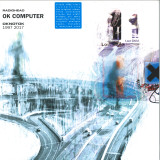
Rescued from defunct formats, prised from dark cupboards and brought to light after two decades in cold storage... OKNOTOK will be issued on June 23rd through XL Recordings, coinciding (roughly) with the original 1997 release date(s) of Radiohead's landmark third album OK COMPUTER.
OKNOTOK features the original OK COMPUTER twelve track album, eight B-sides, and the Radiohead completist's dream: 'I Promise,' 'Lift,' and 'Man Of War.' The original studio recordings of these three previously unreleased and long sought after OK COMPUTER era tracks finally receive their first official issue on OKNOTOK. All material on OKNOTOK is newly remastered from the original analogue tapes.
- A1: The Statement 2 34
- A2: Remind 'Em Feat Quavo 3 21
- A3: Beach Ball Feat Bia 2 24
- A4: Ok With Cool & Dre Feat Young Thug 4 06
- A5: Could It Be You Feat Blxst & Yung Bleu 3 06
- B1: Luxury Life Feat Coi Leray / The Whole Darn Family 2 18
- B2: Big Everything Feat Dababy & T-Pain 4 00
- B3: Roboshotta Feat Burna Boy 2 01
- B4: Tings 3 07
- B5: The Return Of Mansa Musa Feat Swizz Beatz & Blackway 3 25
- C1: Stand Up Feat Jnr Choi 3 46
- C2: Open Wide Feat Chris Brown & Shenseea 2 47
- C3: Hold Up 2 13
- C4: The Hive Feat Giggs 2 49
- C5: Homage Feat Kodak Black 3 09
- D1: Legend Feat Morray 3 52
- D2: Slide 3 39
- D3: Legacy Feat Cie, Trillian & Rai4 12
- D4: If You Don't Know Now You Know Pt 2 Feat. Big Tigger 5 19
Busta Rhymes bereitet sich auf die Veröffentlichung seines 11. Studioalbums vor, das erste seit "Extinction Level Event 2: The Wrath Of God", das 2020 erschien. Das Projekt trägt den witzigen Titel "BlockBusta". Er stellt sicher, dass das Album seinem Titel gerecht wird und einen echten Blockbuster abliefert. Dazu hat die Rap-Legende drei weitere Legenden als ausführende Produzenten für das Projekt gewonnen. Pharrell, Timbaland und Swizz Beatz, drei der legendärsten Produzenten der Rap-Geschichte, sind alle an Bord, um mit Busta zusammenzuarbeiten.
Claude Sicre ist einer der Pioniere der Verteidigung und Anerkennung der okzitanischen Kultur, französicher Chansonier, auch bekannt als Mitglied der Fabulous Trobadors, und positiver Mensch. Es ist ein Projekt, das Francis Cabrel sehr am Herzen lag. Er wollte ein Lied als Hymne an seine Stadt, seine Region komponieren. Neben dem musikalischen Aspekt hat Francis auch das Cover gemalt, das Video gezeichnet und produziert. Mit der gleichen Logik wird dieses Sammlerstück natürlich auch in einer unabhängigen Struktur (u.a. Label/Vertriebe) veröffentlicht. Hier ein paar Worte von Francis Cabrel: "Das Wortspiel ist so klein, wie die Figur groß ist. Ein Stück von Sicre (Claude), oder "sucre" (Zucker), also Positivität, Wohlwollen, Humor, Gelehrsamkeit all das in deinem schwarzen Kaffee.....ein Tag in Toulouse beginnt." Es ist eine Hommage an diese Stadt, die mir sehr am Herzen liegt. Zwischen der Rue Caraman und der Rue Matabiau habe ich dort meine ersten Lieder gesungen und aufgenommen. Da der Platz nicht ausreicht, möchte ich ihnen hier danken, insbesondere Richard und Daniel Seff, Jean-Pierre Mader, Michel Art Mengo, Émile, Images und Gold, all denen, die das Chanson aus der Region Toulouse so groß gemacht haben, nach dem großen Claude, dem alle folgen. Einseitig bespielte 7'-Vinyl-Single mit dem Titel Une Morceau De Sicre, die Farbe der Platte hier ist Ozean-Blau.
It would be difficult to find a band that is more self-aware than longtime touring band Lucero. Since forming in Memphis in the late 90's, Lucero’s base musical hallmarks have remained similar to the band’s initial sound established with their first record The Attic Tapes. In the history of their expansive discography, Lucero has evolved and embraced everything from southern rock to Stax-inspired Memphis soul, whilst simultaneously maintaining their distinctive sonic foundations. Years later, dedicated fans of the group still flock to hear the band's punchy driving rhythms, punk-rooted guitar licks, and Iyrics that evoke the whiskey drenched sentimentality of Americana singer-songwriters. For their twelfth record, Should've Learned by Now, Lucero drew on a lot of work from their past. Literally. By adapting songs and guitar parts that had been left over from the group’s previous two albums, Lucero was able to construct one of its most comprehensive works to date. “I had a particular sound | was looking for on each record and there was no room for any goofy tock & roll or cute witticisms or even simply upbeat songs.” Said primary lyricist and frontman, Ben Nichols. “But now finally, it was time to revisit all of that stuff and get it out in the world, That's how we got to the appropriately for-us titled album Should've Learned by Now. The album is basically about how we know we are fuckups and I guess we are ok with that.” Produced by Grammy Award-winning engineer, Matt Ross-Spang, the album is a punchy, rock and roll record that utilizes the more mature production stylings the group developed over time, and combines it with the first-person introspectiveness that the band is known and loved for. From its original Ben Nichols-designed cover art to its credits, the album is a reflection of a band that knows itself, Should've Learned by Now bridges the gap musically between “old Lucero” and “new Lucero” in a manner which affixes the band’s position as the perfect intersection of punk initiative with hard-earned artistry. It's an album that recognizes the past in its sound and content, but leaves the door wide open to the future and for the lessons still in store
Das letzte Werk von Kevin Coyne, eingespielt zwischen April und Oktober 2004 im MUSICATION Studio Nürnberg. Leider verstarb der Künstler, der nie ein Star sein wollte, im Dezember 2004 und konnte die Veröffentlichung seines Werkes nicht mehr miterleben. Begleitet wurde er bei der Aufnahme von Andreas Blüml und Michael Lipton (Akustik- und E-Gitarre), Harry Hirschmann (Bass) und letztendlich Werner Steinhauser am Schlagzeug, der maßgeblich an der Produktion beteiligt war. Dass dieses Album das letzte von über 50 Vorgängern sein sollte, konnte zu dem Zeitpunkt niemand ahnen. Umso mehr verdiente es den Preis der Deutschen Schallplattenkritik, der ihm posthum 2006 verliehen wurde. Nach zahllosen Tourneen und Auftritten, vornehmlich in seiner Wahlheimat Deutschland, wohin es ihn in den Achtzigern verschlagen hatte, hinterlässt er eine treue Fangemeinde, die den rebellischen, manchmal kauzigen, aber immer authentischen Musiker, Lyriker, Maler und Buchautor aus UK, niemals vergessen wird. Aus einem seiner letzten Interviews vor seinem Tod: "Lieder zu schreiben ist ein bisschen eine technische Übung, vor allem aber eine Form der Selbsttherapie. Auch wenn ich nicht in die Liga der Stars vordringen wollte, so war es mir doch wichtig, mir einen Namen zu machen."
- A1: Movimento Da Cidade 02 27
- A2: Meus Guardados 03 02
- A3: Batuque De Índio 02 21
- A4: Adão Pecou 03 03
- A5: Mensagem Ao Divino 02 14
- A6: Pedido A Padre Cicero 02 58
- A7: Pedida A São Jorge 02 33
- B1: Sinhá Olímpia 02 14
- B2: Baião Macumba 02 27
- B3: O Criador 02 30
- B4: Evolução 02 48
- B5: Garganta De Cera 02 30
- B6: Visite O Terreiro 02 31
- B7: Bate Malva 02 17
- B8: Nêgo São 02 10
"Der aus Belém do Para im Norden des Landes stammende Ary Lobo war bereit, seinen Wahlkampf im Süden des Landes zu beginnen und machte sich im Oktober 1955 auf den Weg nach Rio de Janeiro. Dort stieß er auf die üblichen Vorurteile des Südens gegenüber Sängern aus dem Norden, und erst nachdem er Gadé, einen angesehenen Pianisten, kennen gelernt hatte, konnte er sich ein Vorsingen bei Rádio Mauá sichern. Doch diese Chance hätte sich beinahe in eine Katastrophe verwandelt, da er in einem so schwachen Zustand zu dieser Sitzung erschien, dass er nicht auftreten konnte. Die unzureichende und unregelmäßige Ernährung hatte seine Atmung beeinträchtigt, so dass es unmöglich war, seiner Stimme die nötige Kraft zu verleihen. Glücklicherweise wurde das Vorsingen verschoben, und bei seinem zweiten Versuch konnte er sich einen Fünfmonatsvertrag mit dem Sender sichern, wo er als Samba-Sänger bekannt wurde. Als sein Ruf wuchs, wurde er bei RCA unter Vertrag genommen im Juni 1956." Die Musikszene in Rio wurde auf den Newcomer aufmerksam, der die Persönlichkeit eines nordöstlichen Sängers mit tiefen Wurzeln im afro-brasilianischen Erbe pflegte. Er begann das neue Jahrzehnt mit dem Album "Aqui mora o ritmo" (Hier lebt der Rhythmus), das 1960 veröffentlicht wurde und von vielen als sein bestes Werk bezeichnet wird. Wie so viele Genres erlebte auch der Forró seine Blütezeit, aber Ende der 1960er Jahre begann seine Popularität zu schwinden, und Ary Lobo war gezwungen, auf der Suche nach Arbeitsmöglichkeiten von einer Stadt in die andere zu ziehen. Schließlich kam er nach Fortaleza, wo er bis zu seinem Tod im Jahr 1980 lebte. Unter den Sängern und Songschreibern, die in den 1950er Jahren aus Pará hervorgingen, erlangte Ary Lobo einen für seine Zeit einzigartigen nationalen Ruhm.