Suche:om unit friend of day

Styles
Alle
  • 1
MADALA KUNENE & SIBUSILE XABA - KWANTU

Bringing together the elder statesman of the Zulu guitar Madala Kunene and internationally acclaimed Sibusile Xaba, kwaNTU pulls two generations of South African guitar mastery into a single point of focus. Under-represented on recordings outside of South Africa, Madala Kunene (b. 1951), the ‘King of the Zulu Guitar’, is revered as the greatest living master of the Zulu guitar tradition. Sibusile Xaba, whose collaboration with Mushroom Hour Half Hour reaches back to his first recording in 2017 (Open Letter To Adoniah/Unlearning), has garnered international acclaim for his unique voice and virtuoso guitar stylings, which bring together multiple South African guitar lineages in an original, spiritualised fusion. Collaborating with Mushroom Hour and New Soil for kwaNTU, the two players come together to weave a filigree sonic fabric which reaches down to the heartwood of Zulu guitar music but moves resolutely outward, building on the past to create a deeply rooted statement about present conditions and future travels. kwaNTU – which can be roughly translated ‘the place of the life-spirit’ – is also conclave of teacher and student, as Xaba has been taught by Kunene for the last decade. Meditative, rich and sonically sui generis, kwaNTU finds these two musicians linking up within the inimitable space of sound and spirit that they share through Kunene’s teaching.

The great masters of South African music have not all had equal exposure. For many years the generation of musicians who were exiled during apartheid took centre stage, as the regime made it very difficult for those at home to be heard. More recently, a new cohort of important voices, especially in jazz, has broken through to international consciousness. But for the generation of musicians in between – those who shone like beacons in the most difficult final years of apartheid and immediately afterward – international recognition has been slow in coming.

Madala Kunene, ‘the King of the Zulu Guitar’, is among this number. A revered figure for current generations of South African musicians, Kunene began his recording career in 1990, at the bitter end of apartheid, with a now classic self-titled LP for David Marks’ storied Third Ear imprint. Born in 1951 in Cato Manor, near Durban, he had determined to be a musician from early childhood, and by the time he first entered a recording studio he had already had a long career as a popular performer. His virtuoso absorption and transformation of the venerable Zulu maskanda guitar tradition and his richly spiritualised approach to music immediately marked him out as someone special, and in the years that followed, Kunene cemented his position as one of South Africa’s musical elders. He is without doubt the grand master of the Zulu guitar tradition, but his sound and sensibility ranges far beyond it into varied sonic terrain, and he has collaborated with a wide range of musicians both at home and abroad. Now in his mid-seventies, he remains a shining light for those that are making music in contemporary South Africa.

‘He is really an amazing person,’ says the guitarist Sibusile Xaba, who has been mentored by Kunene for over a decade, and now invites a collaboration with him on kwaNTU. ‘As a mentor, he's really powerful in showing us the way. For us to have this opportunity to make music together and have a project together is really a blessing to me.’

Xaba himself grew up in Newcastle, KwaZulu-Natal, where his mother had been in a band and his father sang in a church choir, and from early childhood Xaba played homemade tin guitars. He only later realised that music was his calling. ‘I just loved music. I was fortunate. My parents loved music. And when it was time for me to leave home and go to study outside Newcastle, I knew that music was what I wanted to do. There was no second option. It was just music.’ Moving to Pretoria to study music formally, Xaba committed himself to his craft, developing a unique style that draws on both US jazz masters such as Wes Montgomery and Jim Hall, and the rich and varied heritage of the South African guitar, from inspirational jazz players such as Allen Kwela and Enoch Mthalane, to the music of the Malombo groups and Dr. Philip Tabane (Xaba has previously collaborated with Dr. Tabane’s late son, Thabang), and the Zulu guitar tradition embodied by Kunene.

‘I was really in love with the jazz guitar, I really admired it, and I was digging a lot in that direction,’ says Xaba, recalling his first encounter with Kunene’s music, over a decade ago. ‘And then one day on my timeline, Kunene popped up, and I was like – “What's this sound?” I was so connected to it. It really touched me deep. I started checking out his records, and then I found out he's from the same region as I am, which is Zululand.’ After Kunene played a show at the Afrikan Freedom Station in Johannesburg, Xaba make contact with him, and visited him at home in Durban. They struck up a friendship, and Xaba became the elder’s student, as Kunene began to pass on his knowledge and his inimitable way of playing.

kwaNTU is a tribute to this relationship and the deep learning that has defined it. The album was recorded in Zululand in the town of Utrecht, at a cultural centre called Kwantu Village, which gives its name to the album. ‘It's such a broad word,’ Xaba says, ‘but the elders teach us that Ntu is basically an energy, almost chi, an energy, a force that all living beings have within them. It's a living energy, so kwaNTU is like, almost the place of this energy.’ The two men sequestered themselves for five days of jamming, improvising and planning, and then the session was recorded in one take over a single night, with Gontse Makhene joining on percussion and backing vocals and Fakazile on vocals. Other voices and overdubs were later added in the studio in Johannesburg.

The result is a rich and meditative recording that finds two generations in a deeply engaged dialogue. Teaching and passing on his knowledge, the elder Kunene has brought Xaba into a space of sound and knowledge that they now share; Xaba’s own practice of deep communion with nature and his dedication to his musical craft make him the perfect interlocutor for Kunene. The result is an album that foregrounds the two musicians engaged at the highest levels of responsive listening, sympathetic unity, and collaborative concentration. Bringing an elder statesman of South African music to an international listening audience for the first time in decades by pairing him with one of South Africa’s most important new voices, kwaNTU is a meeting of generations and a powerful demonstration of musical lineage and continuity.

‘Before music, there is sound,’ Xaba observes, speaking of Kunene’s unique approach to music. ‘And sound is like a common compartment…it's not restricted to particular people or particular geographic places, you know what I mean? It's sound. Everybody can hear it. So when he constructs that sound into music, I think everybody resonates with the energy behind his construction of sound into song. Here at home, we really love him for preserving our history through the guitar, through his stories as well the music, the songs that he writes. We really, really admire him.’

Auf Lager

Bei uns am Lager und sofort versandfertig

23,95
Om Unit - Acid Dub Studies

Om Unit

Acid Dub Studies

12inchADS001
Om Unit
20.05.2025

2025 Repress

Jim Coles once again turns the tide towards a new horizon and travels further into the echo chamber. Leading on from the much-lauded ‘Secret Location’ mini-album with Seekersinternational, one-offs such as ‘Open Palms dub’ (Dub Stuy) and other teasings, ‘Acid Dub Studies’ is the fully-fledged result of the merging of the calligraphic expression of the 303 Acid bassline with the stern sway of Dub Reggae and the hazier edges of Dub Techno and Ambient music.

For those who have been paying close attention, this project will come as a welcome return to the vulnerability and playfulness of early Om Unit records such as his sub-radar single from 2010 ‘Lightgrids/Lavender’ (All City Records) or the unearthed chugging ambience of ‘Friend of Day’ (Idle Hands) and indeed in some sense draws from similar wellsprings as moments on 2013’s Bass classic ‘Threads’.

Whilst being perhaps an ‘interim project’ this is still a vital and important expression of exploration and playfulness. A study in the true sense and borne out of a subtle but pervasive frustration with the rigidity found in musical words he has up to now been cohabiting, Acid Dub Studies comes from the pressing need to break with perceived expectation and to explore an honest and natural space away from the genre labels and tags that had been often lazily applied to his sizeable catalogue of music.

With no desire to reinvent the wheel, rather to paint pictures in an honest framework, the LP was crafted using a medley of classic analogue mixing techniques inspired as much by the adventurous dubbing of Adrian Sherwood as by the inward-delving haze of Scott Monteith’s Deadbeat project. Created during a period of lonely introspective walks through his home town of Bristol, the cover art is a photograph of some of the iron kerbstones that are found almost exclusively in the characterful and hardy city which were installed in the late 1800’s to protect pavements from cart wheels. Something about the permanence of those iron slabs and cobblestones inspired a sense of comfort and determination.

Acid Dub Studies is due for release as yet another self-released label-free project leading on from recent EP titles ‘Violet’ and ‘Submerged’ both of which hinted at some of the shapes found in this full length album.

Once again Jim has shown a rare convincing adaptability that few electronic artists can embody. Another step on the journey of personal and creative curiosity that fans are sure to appreciate.

Auf Lager

Bei uns am Lager und sofort versandfertig

23,49
Mark Ernestus' Ndagga Rhythm Force - Khadim

Khadim is a stunning reconfiguration of the Ndagga Rhythm Force sound. The instrumentation is radically pared down. The guitar is gone; the concatenation of sabars; the drum-kit. Each of the four tracks hones in on just one or two drummers; otherwise the sole recorded element is the singing; everything else is programmed. Synths are dialogically locked into the drumming. Tellingly, Ernestus has reached for his beloved Prophet-5, a signature go-to since Basic Channel days, thirty years ago. Texturally, the sound is more dubwise; prickling with effects. There is a new spaciousness, announced at the start by the ambient sounds of Dakar street-life. At the microphone, Mbene Diatta Seck revels in this new openness: mbalax diva, she feelingly turns each of the four songs into a discrete dramatic episode, using different sets of rhetorical techniques. The music throughout is taut, grooving, complex, like before; but more volatile, intuitive and reaching, with turbulent emotional and spiritual expressivity.

Not that Khadim represents any kind of break. Its transformativeness is rooted in the hundreds upon hundreds of hours the Rhythm Force has played together. Nearly a decade has passed since Yermande, the unit's previous album. Every year throughout that period — barring lockdowns — the group has toured extensively, in Europe, the US, and Japan. With improvisation at the core of its music-making, each performance has been evolutionary, as it turns out heading towards Khadim. “I didn’t want to simply continue with the same formula," says Ernestus. “I preferred to wait for a new approach. Playing live so many times, I wanted to capture some of the energy and freedom of those performances.” Though several members of the touring ensemble sit out this recording — sabar drummers, kit-drummer, synth-player — their presence abides in the structure and swing of the music here.

Lamp Fall is a homage to Cheikh Ibra Fall, founder of the Baye Fall spiritual community. The mosque in the city of Touba is known as Lamp Fall, because the main tower resembles a lantern. Soy duggu Touba, moom guey séen / When you enter Touba, he is the one who greets you. After a swift, incantatory start Mbene sings with reflective seriousness. Her voice swirls with reverb, over a tight, funky, propulsive interplay between synth and drums, threaded with one-two jabs of bass. Cheikh Ibra Fall mi may way, mo diayndiou ré, la mu jëndé ko taalibe... Cheikh Ibra Fall amo morome, aboridial / Cheikh Ibra Fall shows the way forward, he gives us strength, he gathers his disciples... Overflowing with grace, Cheikh Ibra Fall has no equal.

Interwoven with Wolof proverbs, Dieuw Bakhul is a recriminatory song about treachery, lies, and back-biting. Over moody, roiling synths and ominous, lean bass, Mbene throws out fluttering scraps of vocal, as if re-running old conversations in her head. The music shadows her despair to the verge of breakdown, at one moment seemingly so lost in thought and memories, that it threatens to disintegrate. Bayilene di wor seen xarit ak seen an da ndo... Dieuw bakhul, dieuw ñaw na / Stop judging your friends and companions... A lie is no good, a lie is ugly.

Khadim is a show-stopper; currently the centrepiece of Ndagga Rhythm Force live performances. The song is dedicated to Cheikh Ahmadou Bamba, aka Khadim, founder of the Mouride Sufi order. Serigne Bamba mi may wayeu / Serigne Bamba is the one who makes me sing. The verses name-check revered members of his family and brotherhood, like Sokhna Diarra, Mame Thierno, and Serigne Bara. Though Islam has been practised in Senegal for a millennium, it wasn’t until the start of the twentieth century that it began to thoroughly permeate ordinary Senegalese society, hand-in-hand with anti-colonialism. The verses here recall Bamba’s banishment by the French to Gabon, and later to Mauritania, in those foundational times. During exile, his captors once introduced a lion to his cell: gaïnde gua waf, dieba lu ci Cheikhoul Khadim / the lion doesn’t budge, it gives itself over to Cheikh Khadim. Deep, surging bass, steady kick-drum, and simple, reverbed chords on the off-beat lend the feel and impetus of steppers reggae. A reed plays snatches of a traditional Baye Fall melody; the dazzling polyrhythmic drumming is by Serigne Mamoune Seck. Mbene compellingly blends percussive vocalese, narrative suspense, exultant praise, introspection, and grievance.

Nimzat is a devotional tribute to Cheikh Sadbou, a contemporary of Bamba, buried in a mausoleum in Nizmat, in southern Mauritania. Way nala, kagne nala... souma danana fata dale / I call upon you and wonder about you... If I am overwhelmed, come to my aid. The town holds special significance for Khadr Sufism. An annual pilgrimage there is conducted to this day. The rhythm is buoyantly funky; the mood is sombre, reined-in, foreboding. Punctuated by peals of thunder, Mbene sings with restrained, intense reverence; huskily confidential, steadfast. Nanu dem ba Nimzat, dé ba sali khina / Let us go to Nimzat, to seal our devotion.

Mbene Diatta Seck: vocals.
Bada Seck: bougarabou, thiol, mbeung mbeung bal, tungune.
Serigne Mamoune Seck: bougarabou, khine, mbeung mbeung, tungune.
Text by Mark Ainley (Honest Jons).
Mastered by Rashad Becker.
Everything else by Mark Ernestus.

nicht am Lager

Bestelle jetzt und wir bestellen den Artikel für dich beim Lieferanten.

22,65

Last In: vor 4 Monaten
Tartine de Clous - Compter Les Dents

Tartine De Clous

Compter Les Dents

12inchOKRAÏNA#18
Okraïna
30.03.2025

'It begins with a shoebox of mysterious provenance, full of recordings from the Vendée department on France’s western seaboard: songs of love and war, life and death, played out on land and sea. Songs passed down and sung by ordinary men and women, gracefully delivered with the poetic economy which unites the folk song of all peoples.

Next it takes a group of contemporary musicians to make selections from this treasure trove and sing these old songs anew; to sing them for their beauty, of course, and to reclaim the people’s tradition from those who would seek to exploit it for nefarious political ends. Who better for this task than Tartine de Clous, a singing trio from Vendée’s neighbouring department of Charente-Maritime, who burst into national and international consciousness with their debut album "Sans Folklore" in 2015? The result of their shoebox rummagings, the new album "Compter les dents", recorded in 2019 and finally seeing the light of day, is bound to delight old fans and win them many new ones.

Time makes many’s the alteration, and "Compter les dents" finds 'les garçons' - Geoffroy Dudouit, Thomas Georget and Guillaume Maupin - in a different state of being from their debut release. The trio, friends since youth, have certainly matured between albums, as one would expect; consequently the newer performances are more considered and poised, unfolding with a patient confidence. A relaxed domesticity prevails, something to do with the fact that the album was entirely recorded chez les amis, in contrast to the first album, which was mostly recorded at live performances in bars and night-spots across France.

Lending gravitas to the grain of their voices we mark a deepened richness, doubtless born of the various vicissitudes of daily existence which these gentlemen - and we too as citizens of this turmoiled globe - have weathered in the intervening years. Not too dissimilar, in fact,
from some of the vicissitudes detailed in those old Vendée songs. Plus 'ça change', right?

There’s a greater complexity and subtlety to their unique three-part harmonising, too. Their voices mesh in even stronger - almost telepathic - 'fraternité' than ever before: now commanding and mighty as a full-rigged counter-vessel, now gentle and lulling as a mother’s
cradle-croon, or as the whisper in a lover’s ear.

Three legendary figures of French traditional music, now sadly departed, preside as tutelary spirits over Compter les dents. They are: the late Claude Flagel, musician and ethnomusicologist; and the late Jean-Loup Baly of the well-known 1970s band Mélusine. Most of the album was recorded by Claude in the Brussels home he shared with his late wife Lou Flagel. The album is dedicated to the memory of Jean-Loup, Claude and Lou.

For the first time there are several guest instrumentalists working their magic to expand the Tartine de Clous sound. Jean-Loup plays a characterful accordéon on the song ‘La Veuve'. The other guests are: Maurice Artus (voice), Robert Thébaut (violin), Quentin Manfroy (piccolo, contrabassoon), Marceau Portron (cigar box guitar). Their contributions add even more conviviality to that which the trio of singers already share, a sensation which will doubtless be shared by those who happen to find a place in their lives for "Compter les dents".'

Liner notes by Alasdair Roberts.

vorbestellen30.03.2025

erscheint voraussichtlich am 30.03.2025

22,27
Om Unit - The Canopy (Armageddon Style) / Mystic 808

It’s always a joy to release music from friends, and ZamZam 91 is our first collab with a dear one, Jim Coles AKA Om Unit. It’s impossible to frame the breadth and depth of such a storied career in bass music in just a couple lines- so suffice to say that releases over decades on a who’s-who of seminal labels including Exit, Fabric, Planet Mu and of course his own Cosmic Bridge have cemented his rep as an absolute force in production and DJing across any number of genres and sub genres.

Coles’ roots in Bristol and deep love of dub and reggae - made beautifully explicit on his recent Acid Dub Studies LPs - come through strong on both sides. “The Canopy (Armageddon Style)” opens with ravey, arpeggiated synths worthy of Vangelis, punctuated by a brooding piano chord, building steadily into a dark and utterly apocalyptic steppers guaranteed to storm & batter down Babylon walls inside and out.

“Mystic 808” is a deep meditation, a slow stepper that ices down the furious energy of the A side and drops the tempo to suit. Recalling the heady days of original late 90s/early 2000s UK Dub - as well as early dub techno - stabs and melody caress, restrained percussion swims and multiplies in reverb and echo, orbits locked to the gravitational force of the massive and truly timeless bassline. Proper sound system material that will satisfy the heart and soul long after the dance is done.

nicht am Lager

Bestelle jetzt und wir bestellen den Artikel für dich beim Lieferanten.

11,56

Last In: vor 11 Monaten
Mocky - Goosebumps Per Minute Vol. 1

Mocky

Goosebumps Per Minute Vol. 1

12inchHEAVYSHEET020LP
Heavy Sheet
14.02.2023

Following up last year's orchestral album opus “Overtones For The Omniverse", Mocky has been releasing a number of upbeat and uplifting instrumental tracks and now collects them as "Goosebumps Per Minute, Volume 1" on classic vinyl and digital. Putting his vocals and songwriting to the side for this project, Mocky employs harps, horns, and 70’s analogue synths to provide a funky soundtrack that spreads a little of that California sunshine in the listeners direction. Built around Mocky's signature basslines and ensemble vocal arrangements that include his son Telly and his daughter Lulu, all recorded to his vintage ampex tape machine, Mocky did away with the normal metronomic BPM calculations in modern production and instead measured his music in "GPM" (the tempo at which music transmits Goosebumps) - and on top of a multitude of summery bass, drums & strings perfection, Vicky Farewell drops a blistering Rhodes solo on "Flutter" and Carlos Niño lends a percussive hand on the sublime "Iridescence”. Todd M. Simon handles the horn duties, and Liza Wallace infuses the dance tracks with live harp which recalls the floating approach of Alice Coltrane. Titles like "Refractions", "Wavelengths" or "Conduction" are hinting at a scientific approach to creating the conditions for "Goosebumps Per Minute" - his own calculus for the timing of how and when to hit and strum the things in his studio to make it raw & funky.

The songs were also inspired by his time hanging out at the Goldline bar in LA’s Highland Park. “Throughout the pandemic it was the one place I could go and sit outside and hear incredible music as I listened to my friend DJ Phonecalls playing from the Goldline's vinyl collection. He would be dropping these uplifting funk and disco cuts - and at the end of the night I would go home to my studio and make a track and upload it to my Bandcamp and the streaming services immediately … It reminded me of my time in Tokyo's vinyl bars so "Goosebumps Per Minute" owes a lot to that inspiring culture as well“.

About Mocky:
Performer, producer, songwriter, composer and multi-instrumentalist, Dominic "Mocky" Salole came to prominence in the Berlin electronic scene of the mid 2000s, releasing three acclaimed solo albums and co-writing and producing classics like Jamie Lidell's "Multiply" and Feist's "The Reminder". In 2009, his music took a jazz-inflected turn to the acoustic with the release of "Saskamodie" and in 2011 Mocky relocated to Los Angeles, where he quickly established himself as a co-writer with uncommon credentials collaborating with L.A.’s brightest breakthrough artists like Kelela, Joey Dosik, Vulfpeck or Moses Sumney. Mocky channeled those new creative energies into his fifth full length album "Key Change" and four digital mixtapes/EPs "The Moxtapes" Vol. IIV. After co-producing and co-writing Feist's "Pleasure" and Kelela's "Take Me Apart", in 2018 Mocky released two albums: "Music Save Me (One More Time)" and "A Day At United", an instrumental jazz album, recorded in a single day. In 2019 Mocky delved into soundtrack work by collaborating with legendary Anime director Shinichiro Watanabe on the first two seasons of the breakthrough show “Carole and Tuesday” (Netflix) for which he won Best Score at the Anime Awards. In 2020 he started a new Single series with 2 releases featuring the portugese singer Liliana Andrade and in 2021 he released his orchestral album "Overtones For The Omniverse" and started a series of funky instrumentals under "Goosebumps Per Minute".

nicht am Lager

Bestelle jetzt und wir bestellen den Artikel für dich beim Lieferanten.

19,79

Last In: vor 12 Monaten
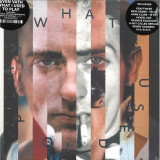
Sven Väth - What I Used To Play (12x12" boxset)
 
36

For this uniquely personal retrospective spread over twelve vinyl discs, Sven Väth takes us back to the early days of his DJ career. On What I Used To Play we meet great pioneers of electronic music, gifted percussionists, obscure wave bands, and innovative producers of a bygone 'new electronic' era. Rough beats and irresistible grooves from the identification stage of house, techno, and acid remind us not just how far electronic music has evolved over the past four decades, but how great it was to dance to EBM, techno, and house for the very first time.

If there is one protagonist of the electronic music scene who has remained curious, innovative and at the very cutting edge of music for over four decades, it's Sven Väth. His multi-layered artist albums and Sound of the Season mix compilations have been defining the genre for over two decades, and even today, he is constantly on the lookout for the next top tune to add to the highlights of his next set. At least, that's the case when he's not producing them himself as an artist or remixer. "Actually, it's always been part of my DNA to think ahead," and nothing had been further from his mind than looking back at his past, but when in spring of 2020 the international DJ circuit had to be scaled down to virtually zero, the 'restless traveler' suddenly had time. Time to stop and reflect on "how it actually was back then, at the very beginning of my career..."

"It was a great trip and with every track, beautiful memories came flooding back".
In the London apartment, he had just moved into, Sven has set up a "little music room", where he cocooned himself for several days, "to look way back for the first time and review my musical journey through the eighties, so to speak."

The interim result was six thematically oriented playlists with a grand total of 120 tracks from 'early 80s' to 'Balearic late 80s', together with excursions into afrobeat, European new wave, and EBM sounds and a few epochal techno/house tracks from the USA in between. From these 'Best of Sven Väth's favorites', the project What I Used To Play crystallized. Sven remembers how the Cocoon team reacted to his proposal: "They found the idea of making a compilation out of it MEGA from the beginning and everyone said 'Sven, go for it', but then, of course, the work really started, namely, to clear the rights and to get clean sounding masters of the up to 40-year-old tracks. There was also disappointment, of course. We couldn't clear certain titles because the rights holders in the USA had fallen out with each other or simply disappeared from the scene. In short, it wasn't easy, but now I can safely say we got the most important tracks."

Finally, after two years of research, curation, design, and administrative fine-tuning, the "little retrospective" from 1981 to 1990 is available. The exquisitely packaged, and three-kilo heavy box set is not only physically impressive, WIUTP is also the definitive record of Sven Väth's musical development. On each of the twenty-four sides of vinyl, you can trace track by track, what influenced him during which phase, and how he took off as a DJ from his parents' Queen's Pub straight into the spotlight at Dorian Gray. There and at Vogue (later OMEN), Sven became the style-defining player in the DJ booth that he still is today.


1981 - 1990: Future Sounds of Now

In the early eighties, the crowd in clubs like Vogue and Dorian Gray danced to what nowadays we call 'dance classics' - mainly disco, funk, soul, and chart pop. It was up to a new generation of DJs, including Sven Väth, the youngest protagonist in the Rhine-Main area at the time, to create their own club-ready music mix. Good new tracks and potential floor-fillers were rarities that had to be sought out and found, in order to prove oneself worthy.
Without MP3s, internet streaming, or other digital download possibilities, music didn't just gravitate to the DJ, instead, it had to be tracked down. In well-stocked record stores in Frankfurt and Wiesbaden or even in Amsterdam, London, or New York, Sven and friends sourced the material for countless magical nights. On WIUTP we can follow Sven's very personal journey through this wild, innovative era in which synth-pop, funk, hip-hop, and disco were successively replaced as 'club music' by house, techno, acid, and breakbeat. By the end of the decade, it was clear to see that these once exotic 'fringe' phenomena would soon become 'mass' phenomena.


Early 80s

Dirty Talk by the Italian-American duo Klein & M.B.O. represents the most innovative phase of the Italo-disco genre in the early eighties like no other track. Mario Boncaldo (I) and Tony Carrasco relied entirely on the original synthetic drum and percussion sounds of the Roland TR-808, coupled with the raunchy vocals of Rossana Casale and guitar accents of Davide Piatto. Of course, other tracks from this period were also influential in style, most notably Unit by Logic System, which worked as the perfect soundtrack to the laser lighting system at the legendary Dorian Gray club. With stomping beats and robotic rap interludes, Bostich by Yello also belongs on Sven's eternal playlist - after all, it caught the attention of Afrikaa Bambaataa, who invited the Swiss duo to perform at the Roxy in New York in 1983.


EBM Wave - Mid 80s

From today's point of view, the almost ten-minute-long, downtempo track Giant by Matt Johnson's band project The The, would probably not be considered an obvious club classic. However, a closer (re)listen reveals the rhythmic intricacies of the percussion overdubs by JG Thirlwell (aka Foetus) on Johnson's composition, and it becomes clear why this exceptional piece of music is one of Sven's absolute favorites. Other classics from this phase include Kaw-Liga by the mysterious The Residents, the hypnotic-synthetic Our Darkness by Anne Clark (and David Harrow), and last but not least, the somber, monotonous anthem Where Are You? by 16Bit, one of Sven Väth's projects together with Michael Münzing, Luca Anzilotti from 1986.


US House - Late 80s

You certainly can't talk about Chicago house without mentioning Frankie Knuckles. The resident DJ at the Warehouse not only gave the name to an entire genre, but also produced epochal floor fillers on the Trax label like the timeless Your Love, sung (and moaned) by Jamie Principle. Acid house protagonists Phuture also hail from Chicago, and on We Are Phuture (also released on Trax) we hear the chirping acid sounds of the legendary Roland TB-303 in full effect. Another featured classic is No UFO's by Detroit's Model 500 aka Juan Atkins, who is rightly considered the 'Godfather of Techno' even if the genre-defining track from 1985 still breathes with the spirit of hip-hop and electro from the first breakdance era.


Afrobeat

Le Serpent, by Algerian-born Abdelmadjid Guemguem, is a track that sounds completely different from everything else on WIUTP. Made in 1978, it's a monumental, rousing groove created without bass or synths, just with five congas! Even though Guem sadly passed away in 2021, his immortal, acoustic beats are understood all over the world and will continue to enrich many thousands of DJ sets for years to come. Another classic that not only Sven appreciates beyond measure is Hugh Masekela's Don't Go Lose it, Baby. In addition to being one of the most important jazz pioneers, the trumpeter and freedom fighter from Johannesburg was very experimental, integrating electronic sounds into his music in later years, in a similar vein to Miles Davis and Herbie Hancock. Dutch jazz pianist Jasper van't Hof's afrobeat project Pili Pili has also aged well. The trance-like, almost sixteen-minute-long track of the same name, manages to fill a whole side on the seventh of twelve vinyl discs in the WIUTP box.


UK-US-Euro - Late 80s

Time for a change of scene, in the truest sense of the word, and from a musical perspective, this section is like landing on another planet. First up is Andrew Weatherall's classic remix of Primal Scream's Loaded, featuring the iconic Peter Fonda sample (lifted from the 1966 biker film Wild Angels) that came to personify the mood triggered by the British Second Summer of Love in the late eighties: "We wanna be free to do what we wanna do, and we wanna get loaded...". This period also saw the emergence of M/A/R/R/S whose only single, 1987's Pump Up The Volume, became a club classic with support from DJ legend CJ Mackintosh. In this most eclectic of sections, we also encounter New York house and reggae producer Bobby Konders and his seminal Nervous Acid.


Balearic - Late 80s

Those who know him, know that Sven had already lost his heart to the 'magic island' of Ibiza as a teenager, so with that in mind, the WIUTP project couldn't end without a Balearic chapter. Inspired by Manuel Göttsching's E2-E4, the immortal, eponymously titled Sueño Latino belongs in there without question. Equally popular on the island was, and still is Break 4 Love by Raze, which thinking about it, would also fit perfectly into the house chapter. Last, but not least, there's an overdue reunion with Sven Väth himself, in his role as frontman of the successful Frankfurt trio OFF. Together with Michael Münzing and Luca Anzilotti (later of Snap!) this 'Organization For Fun' created the off-the-wall club hit Electric Salsa in 1986 which incidentally turned into an international chart smash, putting Sven in the enviable position of having to decide between pop stardom and a DJ career. Well, we all know how that decision turned out and the rest, as they say, is history. A not insignificant part of his story is What I Used To Play. Enjoy!

nicht am Lager

Bestelle jetzt und wir bestellen den Artikel für dich beim Lieferanten.

184,83

Last In: vor 10 Monaten
Omnium Gatherum - Origin

Omnium Gatherum

Origin

12inch19439930461
Century Media Records
05.11.2021

Hungry for some modern melodic death metal with ridiculously catchy pop influences? Well, your dinner has just been served. This steaming nine-course setting is called "Origin" and it is honoringly brought into the table by the renowned Finnish heavy metal band Omnium Gatherum. Omnium Gatherum – OG for close friends – has been offering remarkable pieces of melodic death metal for already twenty-five shining years. While storming through these ferocious decades, Omnium Gatherum has convinced worldwide legions of heavy metal lovers by releasing unstoppable musical onslaughts and touring relentlessly all over the world. "Any sort of popularity hasn't come overnight for OG, and rising to that "next level" has sometimes taken a considerably long time, but one thing has been set in stone: progress has been inevitable. In other words: a lot of great things have happened along the way but the journey hasn't been the easiest one", says longtime singer Jukka Pelkonen. ... And recent times are no exception. Contrary to what you might think, we are not talking about a global scourge that gripped the entire world about a year and a half ago. "Although most of the things around "Origin" have been really good – we have never had so much time to compose and sharpen the material for instance –, there have been some serious roadblocks as well. This, of course, has not come as a big surprise as OG was not born under the happiest stars", laughs guitarist extraordinaire and the band founder Markus Vanhala. "Above all, our dear fans should know that since the previous studio effort "The Burning Cold" (2018), half of the band's line-up has changed. I would say quite surprisingly as we haven't really had any major problems, at least to my knowledge." "This internal turmoil lifted dark clouds into the band's vast sky and everything was falling apart... well, for a few hours at least. After that, as many times before, we decided to turn these difficulties into something better!" Before the arrival of "Origin", Omnium Gatherum's colourful discography features eight studio albums, but the newcomer does not pale in comparison. The truth is, in fact, quite the opposite... By the stylish, majestic and melodic splendor of "Origin", it really feels like the band's original style called AORDM – adult oriented death metal – has reached its peak. Well, so far... "Over the years, OG's material has been deliberately moving further away from the anxiety of the windy Northern shores and traditional melodeath's gloomy despair. These days our music is a powerful mixture of older deadly roots and newer AOR-vibes that you get while listening to Survivor and driving a Corvette along the sunny shores of Miami of us, we will not forget the original enthusiasm for playing heavy metal... And therefore we will never give up!"

vorbestellen05.11.2021

erscheint voraussichtlich am 05.11.2021

28,53
  • 1
Artikel pro Seite:
N/ABPM
Vinyl